
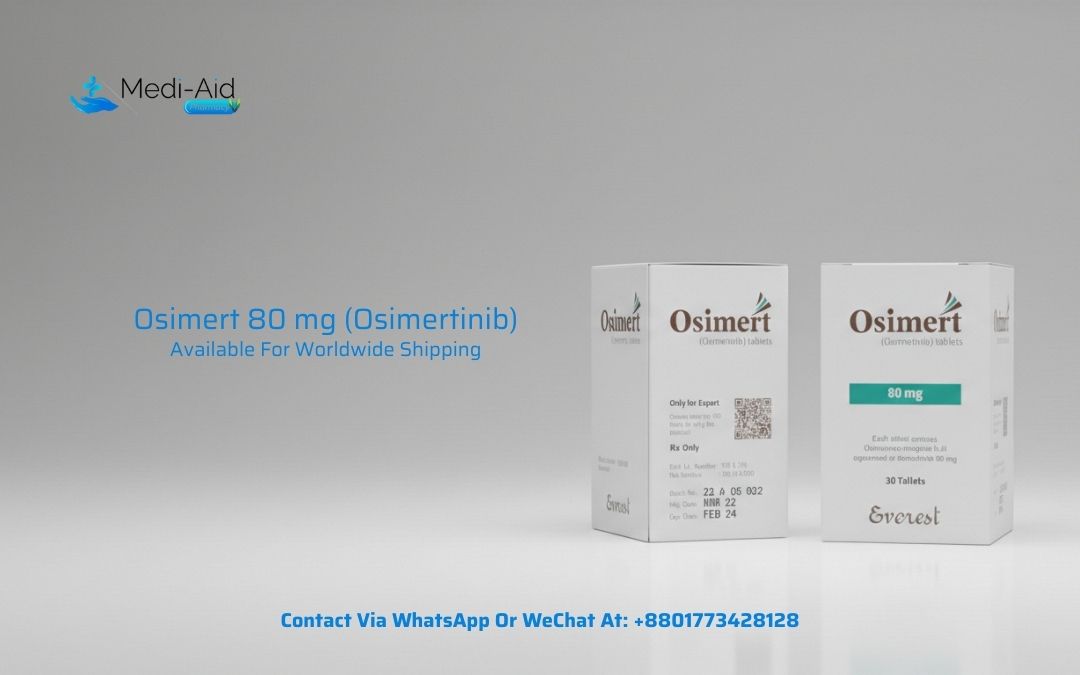
Osimert 80 mg has emerged as a groundbreaking targeted therapy for patients diagnosed with epidermal growth factor receptor (EGFR) mutation-positive non-small cell lung cancer (NSCLC). As a third-generation tyrosine kinase inhibitor, Osimertinib offers hope to patients seeking effective treatment options with improved tolerability profiles compared to conventional chemotherapy and earlier-generation EGFR inhibitors.
For patients searching for Osimert 80 mg online or researching treatment alternatives, this comprehensive guide provides evidence-based information about efficacy, safety, administration protocols, and accessibility options. Understanding these critical aspects empowers patients and caregivers to engage in informed discussions with their oncology teams.
What Is Osimert 80 Mg And How Does It Work?
Active Pharmaceutical Composition
Osimert Tablet 80 mg contains Osimertinib mesylate as its active ingredient, formulated to deliver precise therapeutic concentrations for optimal cancer cell inhibition. Each tablet is engineered for consistent bioavailability and predictable pharmacokinetics.
Mechanism Of Action
Osimertinib functions through several sophisticated pathways:
Primary Actions:
- Irreversibly binds to mutant EGFR tyrosine kinase domains
- Selectively targets exon 19 deletions and L858R mutations
- Inhibits T790M resistance mutation effectively
- Demonstrates superior blood-brain barrier penetration
Clinical Advantages:
- Spares wild-type EGFR, reducing toxicity
- Prevents cancer cell proliferation and survival signals
- Induces apoptosis in malignant cells
- Controls central nervous system metastases
Clinical Indications And Patient Selection
FDA-Approved Treatment Scenarios
The Osimert 80 mg is indicated for multiple clinical applications:
First-Line Therapy:
- Metastatic NSCLC with EGFR exon 19 deletions
- Metastatic NSCLC with EGFR exon 21 L858R substitution mutations
- Locally advanced disease not amenable to curative treatment
Second-Line Therapy:
- Disease progression on first or second-generation EGFR-TKIs
- Confirmed T790M resistance mutation positive NSCLC
Adjuvant Treatment:
- Post-surgical resection in stage IB-IIIA EGFR-mutant NSCLC
- Reduces recurrence risk after complete tumor removal
Diagnostic Requirements Before Treatment
Essential Testing:
- Tissue or liquid biopsy for EGFR mutation confirmation
- Next-generation sequencing or PCR-based assays
- T790M mutation testing for second-line candidates
- Comprehensive molecular profiling
Dosage Administration And Treatment Protocol
Standard Dosing Guidelines
| Patient Category | Dose | Timing | Treatment Duration |
| First-line metastatic | 80 mg | Once daily | Until progression/toxicity |
| T790M+ progression | 80 mg | Once daily | Until progression/toxicity |
| Adjuvant post-surgery | 80 mg | Once daily | 3 years or until recurrence |
| Dose reduction level 1 | 40 mg | Once daily | If toxicity occurs |
Administration Best Practices
Optimal Consumption:
- Take at approximately the same time each day
- Can be administered with or without food
- Swallow tablets whole with water
- Do not break, crush, or chew tablets
Missed Dose Protocol:
- If less than 12 hours until next dose: skip missed dose
- If more than 12 hours remaining: take immediately
- Never double doses to compensate
Special Population Considerations
Renal Impairment:
- Mild to moderate: No adjustment required
- Severe: Use with caution, monitor closely
Hepatic Dysfunction:
- Mild (Child-Pugh A): No adjustment needed
- Moderate (Child-Pugh B): Monitor liver function regularly
- Severe (Child-Pugh C): Insufficient data, use cautiously
Geriatric Patients:
- No specific dose modifications based solely on age
- Assess overall functional status and comorbidities
Clinical Efficacy And Evidence-Based Outcomes
Landmark Trial Results
FLAURA Study Highlights
The groundbreaking FLAURA trial established Osimertinib as superior first-line therapy:
Key Findings:
- Median progression-free survival: 18.9 months vs. 10.2 months (comparator)
- Objective response rate: 80%
- Duration of response: 17.2 months
- Overall survival: 38.6 months median
- CNS progression reduction: 82% risk reduction
ADAURA Adjuvant Trial
Revolutionary results for post-surgical treatment:
Outcomes:
- 2-year disease-free survival: 89% vs. 52% (placebo)
- 83% reduction in recurrence risk
- Benefits across all disease stages (IB-IIIA)
- CNS recurrence prevention demonstrated
Real-World Evidence
Post-marketing surveillance and real-world data confirm:
- Consistent efficacy across diverse patient populations
- Maintained quality of life during treatment
- Effectiveness in elderly and frail patients
- Long-term responders exceeding 3+ years
Side Effects Management And Safety Profile
Common Adverse Reactions
Dermatological Effects (25-40%):
- Dry skin requiring emollient therapy
- Mild to moderate rash (papulopustular)
- Nail changes and paronychia
- Pruritus management with antihistamines
Gastrointestinal Symptoms (20-35%):
- Diarrhea (usually Grade 1-2)
- Nausea and decreased appetite
- Oral mucositis
- Weight loss considerations
Hematologic Changes:
- Thrombocytopenia in 10-15% of patients
- Anemia requiring monitoring
- Neutropenia (generally mild)
Serious Adverse Events Requiring Monitoring
Cardiac Complications:
- QTc prolongation (periodic ECG monitoring)
- Baseline ECG before initiation
- Electrolyte monitoring and correction
Pulmonary Toxicity:
- Interstitial lung disease/pneumonitis (rare but serious)
- Immediate evaluation for new dyspnea or cough
- Chest imaging if ILD suspected
- Permanent discontinuation if confirmed
Ocular Effects:
- Keratitis symptoms monitoring
- Corneal disorders in rare cases
- Ophthalmologic evaluation when needed
Toxicity Management Strategies
| Adverse Event | Grade 1-2 | Grade 3 | Grade 4 |
| Diarrhea | Continue, antidiarrheals | Hold until ≤Grade 1, resume at 40mg | Discontinue permanently |
| Rash | Topical therapy, continue | Hold until ≤Grade 1, reduce dose | Discontinue permanently |
| ILD/Pneumonitis | Hold, investigate | Discontinue permanently | Discontinue permanently |
| QTc prolongation | Monitor closely | Hold, correct electrolytes | Discontinue permanently |
Osimert 80 Mg (Osimertinib) Price And Accessibility
Understanding Treatment Costs
The Osimert 80 mg (Osimertinib) Price varies based on multiple factors:
Price Determinants:
- Geographic location and market dynamics
- Healthcare insurance coverage and formulary tier
- Generic vs. branded availability
- Pharmacy type (specialty vs. retail)
- Government subsidies and reimbursement programs
Financial Assistance Programs
Patient Support Options:
- Manufacturer patient assistance programs
- Copay cards reducing out-of-pocket expenses
- Non-profit foundation grants
- International pharmacy alternatives
How To Get Current Pricing Information
For accurate Osimert 80 mg online pricing and purchasing options:
Contact our pharmacy specialists: WhatsApp/WeChat: +8801773428128
Services Provided:
- Transparent, competitive pricing quotes
- Worldwide shipping arrangements
- Authenticity verification and guarantees
- Confidential consultations
- Prescription processing assistance
Drug Interactions And Precautions
Significant Drug Interactions
Strong CYP3A4 Inducers (AVOID):
- Rifampin and rifabutin
- Phenytoin and carbamazepine
- St. John’s Wort supplements
- Phenobarbital
Medications Prolonging QTc Interval:
- Azithromycin and fluoroquinolones
- Class IA and III antiarrhythmics
- Certain antipsychotics
- Ondansetron and methadone
Contraindications
Absolute Contraindications:
- Hypersensitivity to Osimertinib or excipients
- Pregnancy (Category D – fetal harm risk)
- Severe baseline QTc prolongation (>500 msec)
Relative Contraindications:
- Severe hepatic impairment
- Uncontrolled cardiac arrhythmias
- Recent myocardial infarction
Monitoring Requirements During Treatment
Baseline Assessments
Pre-Treatment Evaluation:
- Complete blood count with differential
- Comprehensive metabolic panel
- Liver function tests (AST, ALT, bilirubin)
- Electrocardiogram with QTc measurement
- Pregnancy testing (women of childbearing potential)
- Baseline chest imaging (CT scan)
Ongoing Monitoring Schedule
Regular Surveillance:
- CBC every 4-6 weeks initially
- Liver function monthly for first 3 months
- ECG if cardiac risk factors present
- Clinical assessment at each visit
- Imaging per institutional protocols (typically every 6-12 weeks)
Response Assessment
Evaluation Methods:
- CT scans using RECIST 1.1 criteria
- Clinical symptom improvement tracking
- Tumor marker monitoring (if initially elevated)
- Quality of life assessments
Comparative Analysis With Other EGFR Inhibitors
First-Generation TKIs
Gefitinib and Erlotinib Comparison:
- Osimertinib shows superior PFS and OS
- Better CNS activity with Osimertinib
- Lower incidence of rash and diarrhea
- No T790M resistance coverage with first-generation
Second-Generation TKIs
Afatinib Comparison:
- Osimertinib demonstrates better tolerability
- Superior activity in brain metastases
- Head-to-head trials favor Osimertinib
- Different adverse event profiles
Why Osimert 80 Mg Is Preferred
Clinical Advantages:
- Only EGFR-TKI proven to improve overall survival
- Adjuvant indication unique to Osimertinib
- Lower treatment discontinuation rates
- Comprehensive mutation coverage
Patient Counseling And Quality Of Life
Essential Patient Education
Treatment Adherence:
- Importance of daily consistency
- Setting medication reminders
- Communication about adherence barriers
- Never alter dosing without medical guidance
Lifestyle Modifications:
- Smoking cessation strongly recommended
- Adequate hydration (2-3 liters daily)
- Balanced nutrition despite appetite changes
- Sun protection and skincare routines
Quality Of Life Considerations
Patient-Reported Outcomes:
- Maintained functional status during treatment
- Symptom control superior to chemotherapy
- Fewer treatment-related hospitalizations
- Longer time to quality of life deterioration
Supportive Care Measures:
- Nutritional counseling and support
- Physical therapy for maintaining strength
- Psychological support services
- Palliative care integration when appropriate
Resistance Mechanisms And Future Directions
Understanding Acquired Resistance
Common Resistance Pathways:
- MET amplification (15-20% of cases)
- HER2 amplification
- BRAF mutations
- PIK3CA alterations
- Small cell transformation
Emerging Treatment Strategies
Investigational Approaches:
- Osimertinib plus chemotherapy combinations
- Osimertinib with immunotherapy agents
- Fourth-generation EGFR inhibitors
- Novel combination targeted therapies
Ongoing Clinical Trials:
- FLAURA2: Osimertinib plus chemotherapy
- MARIPOSA: Head-to-head comparisons
- Combinations with antiangiogenic agents
- Biomarker-driven treatment selection
FAQs
Is Osimert 80 Mg Suitable For All Lung Cancer Patients?
No, Osimert Tablet 80 mg is specifically indicated for EGFR mutation-positive NSCLC. Molecular testing confirming EGFR mutations (exon 19 deletion, L858R, or T790M) is mandatory before initiating treatment.
How Long Does Osimert Treatment Typically Last?
Treatment continues until disease progression or unacceptable toxicity. Clinical trials show median treatment durations of 16-20 months, though many patients remain on therapy for years with ongoing benefit.
Can I Purchase Osimert 80 Mg Online Safely?
Yes, when sourcing from licensed, reputable international pharmacies that require valid prescriptions. Verify authenticity and licensing before purchasing.
What Happens If I Miss Multiple Doses?
Contact your oncologist immediately. Missing multiple doses may compromise treatment efficacy. Never take extra doses to compensate for missed tablets.
Are There Generic Versions Of Osimert Available?
Generic Osimertinib formulations are available in some markets, offering cost savings while maintaining therapeutic equivalence. Discuss options with your healthcare provider.
Storage And Handling Instructions
Proper Storage Conditions
Storage Requirements:
- Room temperature storage (20-25°C / 68-77°F)
- Protect from moisture and direct light
- Keep in original container
- Store out of reach of children and pets
Stability Information:
- Do not use beyond expiration date
- Discard if tablets appear discolored or damaged
- Avoid storing in bathroom or humid environments
Safe Handling Practices
For Patients and Caregivers:
- Wash hands before and after handling
- Avoid crushing or breaking tablets
- Use gloves if handling broken tablets
- Pregnant women should avoid direct contact
Conclusion
Osimert 80 mg (Osimertinib) represents the gold standard in EGFR-mutant NSCLC treatment, offering unprecedented survival benefits and quality of life improvements. Its superior efficacy, manageable safety profile, and CNS activity have established it as the preferred choice for both first-line metastatic disease and adjuvant therapy following surgical resection.
For patients exploring treatment options or seeking information about Osimert 80 mg online availability and Osimert 80 mg (Osimertinib) Price, partnering with experienced oncology teams and reputable pharmacies ensures optimal outcomes.
Take The Next Step In Your Treatment Journey
Get personalized pricing information and expert guidance: WhatsApp/WeChat: +8801773428128
Our specialized team offers:
- Competitive international pricing
- Prescription verification services
- Secure worldwide shipping
- Confidential consultations
- Authenticity guarantees
Visit our product page: Osimert 80 mg (Osimertinib)
Medical Disclaimer: This content is for educational purposes only and does not replace professional medical advice. Osimertinib requires prescription and supervision by qualified oncology specialists. Always consult your healthcare provider before starting, modifying, or discontinuing cancer treatment.