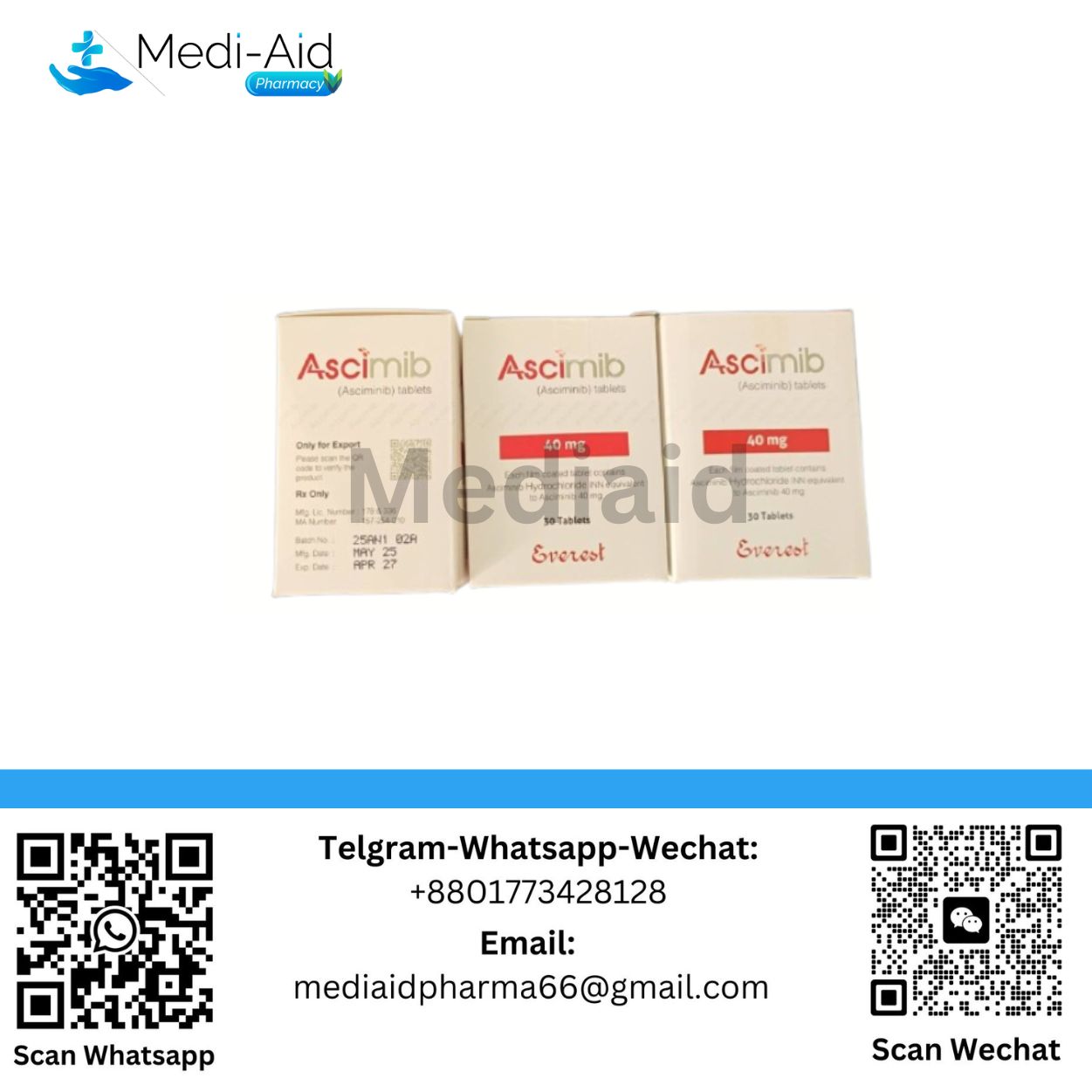
Ascimib 40 mg
| Product Name | : Ascentib (Asciminib 40mg) |
| Generic Name | : Asciminib |
| Formulation | :Tablet |
| Available Pack Size | : 60’s Pot |
| Available Strengths | : 40mg |
| Registrations | : Bangladesh |


Product Description
Ascentib (Asciminib) 40mg: A Targeted Treatment for Philadelphia Chromosome-Positive Chronic Myeloid Leukemia (Ph+ CML)
Introduction:
Ascentib 40mg (Asciminib), also known by its generic name Scemblix, is a prescription medication used to treat patients with Philadelphia chromosome-positive chronic myeloid leukemia (Ph+ CML) in the chronic phase (CP), who have previously been treated with two or more tyrosine kinase inhibitors (TKIs). Asciminib is also indicated for patients with Ph+ CML in chronic phase who harbor the T315I mutation, which makes the cancer resistant to many existing TKIs. Approved under accelerated approval based on major molecular response (MMR), Ascentib offers a promising solution for patients who have not responded to other therapies. Manufactured by Ziska Pharma Ltd. in Bangladesh, Ascentib is a significant advancement in CML treatment.
Understanding Asciminib:
Ascentib contains Asciminib, a highly selective ABL1 tyrosine kinase inhibitor that specifically targets the myristoyl pocket of the BCR-ABL1 fusion protein, a key driver of Ph+ CML. Unlike traditional TKIs that bind to a different site on the BCR-ABL1 protein, Asciminib’s unique binding site helps overcome resistance caused by mutations, including the difficult-to-treat T315I mutation. By blocking the function of the BCR-ABL1 protein, Asciminib prevents the uncontrolled proliferation of CML cells, thereby helping to reduce tumor burden and improve patient outcomes.
Dosage and Administration:
The recommended dosage of Ascentib 40mg varies depending on the patient’s condition:
-
For Chronic Phase CML: The standard dosage is 80 mg once daily or 40 mg twice daily (approximately 12-hour intervals). The dose should be taken at approximately the same time each day for consistency.
Important Administration Instructions:
-
Ascentib should be taken orally with a glass of water.
-
Food intake should be avoided for at least 2 hours before and 1 hour after taking Ascentib to ensure proper absorption.
-
If a dose is missed, do not take a double dose. Take the next dose at the usual time.
Interactions and Contraindications:
Ascentib may interact with several other medications. To avoid adverse effects, it is important to inform your healthcare provider of all medications you are currently taking, including over-the-counter drugs and supplements. Special care should be taken with medications that affect the CYP3A enzyme system, as they may alter Asciminib levels in the blood.
-
CYP3A inhibitors (e.g., ketoconazole, ritonavir) may increase Asciminib levels, requiring dose adjustments.
-
CYP3A inducers (e.g., rifampin, carbamazepine) may decrease Asciminib levels, reducing its efficacy.
Pregnancy and Breastfeeding: Ascentib is contraindicated during pregnancy and breastfeeding due to potential risks to the fetus or infant. Women who are pregnant or planning to become pregnant should consult their healthcare provider before starting treatment. Adequate contraception should be used during therapy.
Side Effects:
While Ascentib is generally well-tolerated, some common side effects may include:
-
Fatigue
-
Nausea
-
Headache
-
Diarrhea
-
Muscle pain or cramps
Serious side effects, although rare, include:
-
Hematologic Toxicity: Decreased blood counts, including neutropenia or thrombocytopenia, which may increase the risk of infections or bleeding.
-
QT Interval Prolongation: Asciminib may cause changes to the electrical activity of the heart, which could lead to serious arrhythmias.
Patients should promptly report any unusual symptoms such as severe fatigue, fever, or signs of infection to their healthcare provider.
Precautions and Warnings:
-
Patients with heart disease, liver conditions, or low blood counts should use Asciminib with caution. Regular blood tests and heart monitoring may be necessary during treatment.
-
If you are taking other medications that affect the CYP3A enzyme system, such as antifungals or antibiotics, inform your doctor, as they can interact with Asciminib.
Use in Special Populations:
For patients with renal or hepatic impairment, dose adjustments may be necessary. Please consult a healthcare professional to determine the most appropriate dosage.
Overdose Effects:
In case of overdose, immediate medical intervention is required. Overdose symptoms may include extreme fatigue, dizziness, and gastrointestinal symptoms like nausea or vomiting. Medical professionals will closely monitor the patient and provide supportive care as needed.
Storage Conditions:
Store Ascentib 40mg at room temperature in a cool, dry place, away from direct sunlight. Keep the medication out of reach of children. The recommended storage temperature is below 30°C (86°F).
Conclusion:
Ascentib 40mg (Asciminib) represents a significant advancement in the treatment of Philadelphia chromosome-positive chronic myelogenous leukemia (Ph+ CML). It offers a targeted, effective treatment for patients with the T315I mutation or those who have failed previous therapy with other tyrosine kinase inhibitors. While generally well-tolerated, potential side effects and drug interactions should be monitored closely. Always consult with your healthcare provider to ensure the best treatment outcomes.