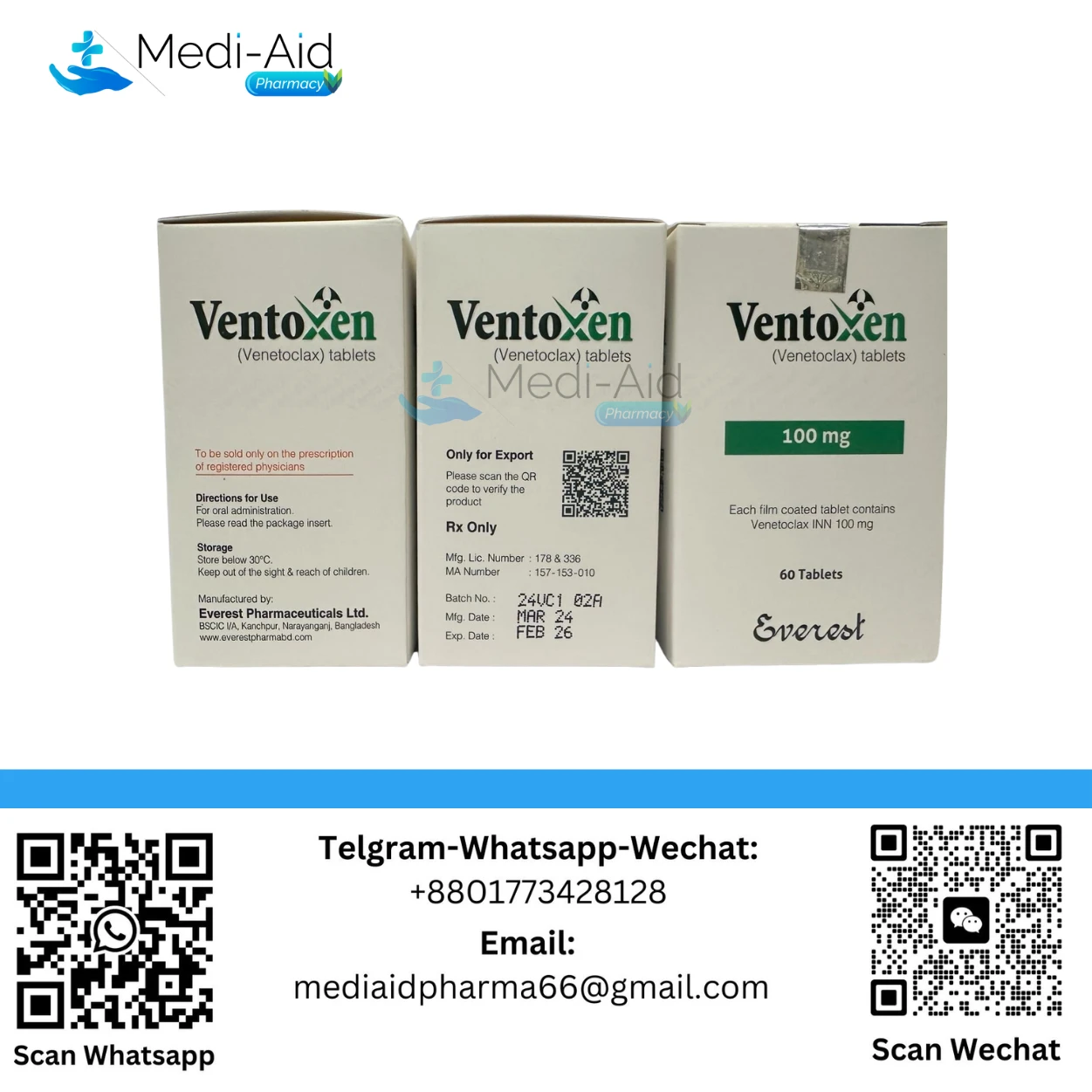
Ventoxen 100 mg (Venetoclax)
| Product Name | : Ventoxen (Venetoclax) |
| Generic Name | : Venetoclax |
| Formulation | : |
| Available Pack Size | : |
| Available Strengths | : 100mg |
| Registrations | : Bangladesh |


Product Description
Ventoxen 100 mg (Venetoclax): A Breakthrough Treatment for Chronic Lymphocytic Leukemia (CLL)
Ventoxen 100 mg (Venetoclax) is a groundbreaking oral medication used in the treatment of chronic lymphocytic leukemia (CLL) and other forms of hematologic malignancies. Known for its powerful mechanism of action, Ventoxen offers an essential treatment option for patients with CLL who have not responded to other therapies. In this guide, we will explore the pharmacology, dosage, administration, potential interactions, side effects, and precautions associated with Ventoxen, highlighting its effectiveness in targeting the B-cell lymphoma 2 (BCL-2) protein to promote cancer cell death.
Understanding Venetoclax:
Ventoxen 100 mg (Venetoclax) is an oral medication that contains Venetoclax, a selective BCL-2 inhibitor. It is specifically designed to block the anti-apoptotic protein BCL-2, which is often overexpressed in CLL cells, enabling these cells to survive longer than normal. By inhibiting BCL-2, Ventoxen promotes apoptosis (programmed cell death) in these cancerous cells, leading to reduced tumor burden.
-
Venetoclax: Venetoclax is a highly specific inhibitor of BCL-2, a protein that helps cancer cells evade apoptosis. By binding to BCL-2, Venetoclax effectively disrupts the survival signal, inducing cancer cell death. This targeted action allows for effective treatment with minimal impact on normal, healthy cells.
Dosage and Administration:
The recommended dosage of Ventoxen 100 mg is based on the patient's condition and response to therapy.
-
For Chronic Lymphocytic Leukemia (CLL): The typical starting dose is 20 mg once daily for the first 7 days, then gradually increased to a maximum dose of 400 mg once daily. The dose may be adjusted based on patient tolerance and blood cell counts.
-
For other indications, the dosage may vary, and it is essential to follow the healthcare provider’s guidance.
Interactions and Contraindications:
Ventoxen may interact with several medications, particularly those that affect the cytochrome P450 system, such as:
-
Strong CYP3A inhibitors (e.g., ketoconazole, ritonavir): These may increase Ventoxen levels, requiring dose adjustments.
-
Strong CYP3A inducers (e.g., rifampin, phenytoin): These can lower Ventoxen concentrations, potentially reducing its effectiveness.
Pregnancy and breastfeeding: Ventoxen is contraindicated during pregnancy and breastfeeding due to potential risks to the fetus or infant. It is recommended that pregnant women or women planning pregnancy consult their healthcare provider before starting treatment. Contraception should be used during therapy.
Side Effects:
While Ventoxen is generally well-tolerated, some common side effects include:
-
Neutropenia (low white blood cell count)
-
Diarrhea
-
Fatigue
-
Nausea
-
Anemia
Serious side effects, although rare, include:
-
Tumor Lysis Syndrome: A potentially life-threatening condition caused by the rapid breakdown of tumor cells.
-
Infections: Due to a reduction in immune cells, patients may be at an increased risk of infections.
Patients should immediately report symptoms such as fever, chills, or unusual fatigue to their healthcare provider.
Precautions and Warnings:
Patients with a history of tumor lysis syndrome, renal impairment, or cardiovascular disease should use Ventoxen with caution. Close monitoring is essential for these patients, particularly during the first few weeks of treatment. Additionally, Ventoxen should not be co-administered with strong CYP3A inhibitors without appropriate dose adjustments.
Use in Special Populations:
For patients with severe renal impairment (eGFR <30 mL/min/1.73 m²), dose adjustments may be required. It is important to consult with a healthcare professional for an individualized treatment plan.
Overdose Effects:
In case of overdose, immediate medical attention is required. Symptoms of overdose may include extreme fatigue, dizziness, and gastrointestinal issues like nausea or diarrhea. Prompt medical intervention is crucial.
Storage Conditions:
Store Ventoxen 100 mg in a cool, dry place, away from direct sunlight. Keep it out of reach of children. The recommended storage temperature is below 30°C (86°F).
Conclusion:
Ventoxen 100 mg (Venetoclax) offers a promising treatment option for patients with Chronic Lymphocytic Leukemia (CLL) and other hematologic malignancies. By targeting the BCL-2 protein, Ventoxen promotes the apoptosis of cancer cells, leading to effective tumor reduction with minimal impact on healthy cells. However, potential drug interactions, side effects, and contraindications should be closely monitored. Always consult with a healthcare provider to ensure safe and effective treatment.