
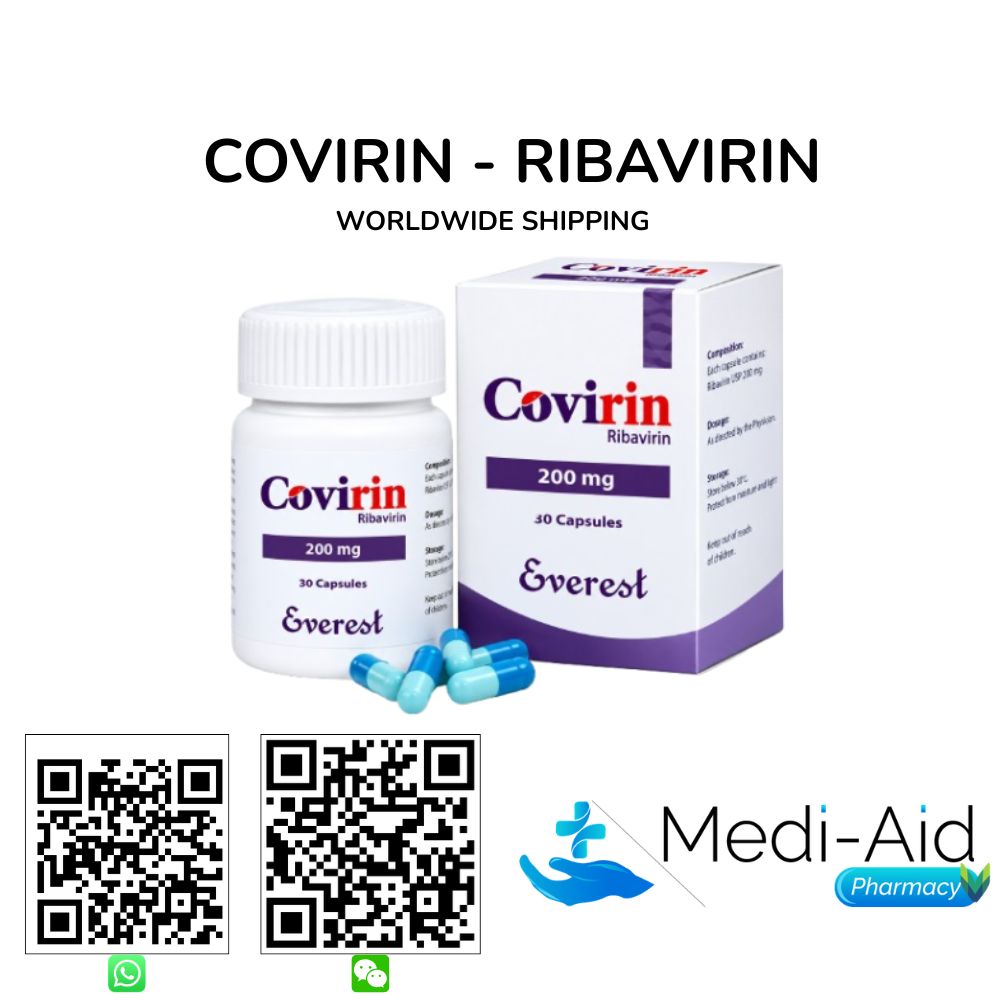
Description
Covirin 200 MG (Ribavirin) is a synthetic guanosine nucleoside analog with broad-spectrum antiviral activity, containing Ribavirin INN, a well-established antiviral agent that inhibits HCV replication through multiple simultaneous mechanisms including inosine monophosphate dehydrogenase (IMPDH) inhibition, direct suppression of the hepatitis C virus RNA-dependent RNA polymerase (NS5B), viral RNA mutagenesis via lethal error-catastrophe, and immunomodulatory Th1/Th2 immune balance shifting; supplied as oral capsules, 200 mg strength, in a 30-capsule container and manufactured by Everest Pharmaceuticals Ltd. in Bangladesh.
Ribavirin INN has been a foundational component of combination hepatitis C treatment for over two decades: used as part of combination regimens with pegylated interferon alfa (pegIFN alfa-2a or alfa-2b) and, in selected populations and genotypes, alongside certain direct-acting antiviral (DAA) regimens such as sofosbuvir-based combinations. Covirin 200 MG capsules support weight-based ribavirin dosing (1000 mg per day for patients weighing less than 75 kg and 1200 mg per day for patients weighing 75 kg or more), administered twice daily with food as part of a prescriber-directed combination regimen for chronic hepatitis C virus (HCV) infection in adults. Ribavirin must never be used as HCV monotherapy; its antiviral contribution is realized exclusively within combination regimens, where it materially improves sustained virologic response (SVR) rates across HCV genotypes.
Searching for Covirin 200 MG Ribavirin? Mediaid Pharmacy lists this product across its hepatitis C medicines, antiviral medicines, and Everest Pharmaceuticals portfolios and ships it worldwide.
Basic Product Information of Covirin 200 MG (Ribavirin)
| Brand Name | Covirin 200 MG (Ribavirin) |
| Product Name | Covirin |
| Generic Name | Ribavirin INN |
| Drug Class | Synthetic Guanosine Nucleoside Analog; Broad-Spectrum Antiviral; Hepatitis C Antiviral Agent; IMPDH Inhibitor; HCV NS5B RNA-Dependent RNA Polymerase Inhibitor; Viral RNA Mutagen; Immunomodulatory Antiviral |
| Formulation | Oral Capsule |
| Available Strength | 200 mg per capsule |
| Available Pack Size | 30 Capsules per Container |
| Dosing | Chronic Hepatitis C (in combination with pegIFN or DAA regimens): Weight-based oral dosing twice daily with food. Patients weighing less than 75 kg: 1000 mg per day (400 mg in the morning plus 600 mg in the evening). Patients weighing 75 kg or more: 1200 mg per day (600 mg in the morning plus 600 mg in the evening). Total daily dose and regimen duration are determined by HCV genotype, combination partner, and the prescribing hepatologist. |
| Manufacturer | Everest Pharmaceuticals Ltd., Bangladesh |
| Country of Origin | Bangladesh |
| Originator Reference Brand | Copegus (Ribavirin 200 mg capsules/tablets, by Genentech/Roche, approved by the U.S. FDA in 2002 for chronic HCV in combination with pegylated interferon alfa-2a); Rebetol (Ribavirin 200 mg capsules, by Schering-Plough, approved in 1998 for chronic HCV in combination with interferon alfa-2b). Both originator brands contain Ribavirin INN as the active pharmaceutical ingredient. Covirin is manufactured by Everest Pharmaceuticals Ltd. in Bangladesh and is supplied through Mediaid Pharmacy for international procurement. |
| Global Supplier | Mediaid Pharmacy, Worldwide Shipping Available |
| Storage Conditions | Store at room temperature (20 degrees C to 25 degrees C); excursions permitted between 15 degrees C and 30 degrees C. Keep in the original packaging and protect from moisture and light. Keep out of the reach of children. |
How Covirin (Ribavirin) Works: Multi-Mechanism Antiviral Activity Against Hepatitis C Virus
Ribavirin INN is a synthetic guanosine nucleoside analog with broad-spectrum antiviral activity against RNA and DNA viruses. In the context of chronic hepatitis C virus (HCV) infection, Ribavirin does not function as a single-target antiviral; instead, it exerts antiviral activity through at least four distinct but complementary mechanisms that collectively suppress HCV replication and potentiate the antiviral effect of combination partners. After oral administration, Ribavirin is rapidly absorbed and phosphorylated intracellularly, in a sequential three-step process analogous to nucleoside analog activation, to ribavirin monophosphate (RMP), ribavirin diphosphate (RDP), and ribavirin triphosphate (RTP).
Each phosphorylation product contributes to a specific arm of Ribavirin’s antiviral activity: RMP accumulates to high concentrations and serves as the primary substrate for IMPDH inhibition; RTP is incorporated into viral RNA; and Ribavirin at the cellular pharmacokinetic level drives immunomodulatory Th1/Th2 rebalancing. Uniquely, Ribavirin accumulates extensively in erythrocytes (red blood cells), where phosphorylated forms are trapped due to the absence of dephosphorylating enzymes in mature RBCs; this erythrocyte accumulation is both the pharmacokinetic basis for Ribavirin’s long half-life (approximately 12 days) and the primary mechanism underlying its characteristic hemolytic anemia toxicity.
The four primary mechanisms of Ribavirin antiviral activity against HCV are:
1. IMPDH Inhibition (Guanosine Pool Depletion): Ribavirin monophosphate (RMP) is a potent competitive inhibitor of inosine monophosphate dehydrogenase (IMPDH), the rate-limiting enzyme in the de novo biosynthesis of guanosine triphosphate (GTP). Inhibition of IMPDH by RMP depletes intracellular GTP pools in infected hepatocytes, starving HCV NS5B RNA-dependent RNA polymerase (RdRp) of the guanosine nucleotide substrate required for viral RNA strand synthesis. This mechanism selectively impairs viral RNA synthesis without proportionally affecting host cell GTP-dependent processes, because rapidly replicating viruses depend more critically on de novo nucleotide synthesis than do differentiated host cells.
2. Direct NS5B RdRp Inhibition: Ribavirin triphosphate (RTP) acts as a competitive inhibitor of the HCV NS5B RNA-dependent RNA polymerase, the central enzymatic machinery of HCV genome replication. RTP competes with natural GTP for incorporation into the nascent HCV RNA strand; when RTP is incorporated, the fidelity of downstream viral RNA synthesis is compromised.
3. Viral RNA Mutagenesis (Lethal Mutagenesis): Ribavirin is a viral RNA mutagen: when RTP is misincorporated into HCV RNA by the error-prone NS5B RdRp, it introduces point mutations at a frequency exceeding the error threshold tolerable by the viral quasispecies. This viral error catastrophe accelerates the accumulation of lethal mutations across the HCV genome at a rate that drives the viral population below the replication threshold. The lethal mutagenesis mechanism is particularly significant for high-replication-rate RNA viruses like HCV, which already operate near the mutation tolerance limit.
4. Immunomodulation (Th1/Th2 Shift): Ribavirin shifts the cytokine balance in HCV-infected patients from a Th2-dominant immune profile (characterized by interleukin-4 and interleukin-10 production, which favor viral persistence) toward a Th1-dominant profile (characterized by interferon-gamma and interleukin-2 production, which support antiviral cell-mediated immunity). This Th1 shift amplifies the immunostimulatory antiviral signal of pegylated interferon alfa and enhances the host immune response to HCV-infected hepatocytes. Together, these four mechanisms position Ribavirin as a uniquely multidimensional antiviral component in HCV combination therapy. For the full range of hepatitis C combination antivirals available at Mediaid Pharmacy, visit the hepatitis C medicines collection.
Covirin 200 MG (Ribavirin): Indications, Dosing, and Key Safety Information
| Approved Indication | Chronic Hepatitis C Virus (HCV) Infection (Combination Therapy): Covirin (Ribavirin) is indicated for use in combination with pegylated interferon alfa (pegIFN alfa-2a or pegIFN alfa-2b) and/or direct-acting antiviral (DAA) agents for the treatment of chronic hepatitis C virus (HCV) infection in adults. Ribavirin is not approved and is not effective as monotherapy for chronic HCV; it must always be used as a component of a multi-drug combination regimen directed by a hepatologist or infectious disease specialist. The specific combination regimen, treatment duration, and patient eligibility criteria are determined by HCV genotype, fibrosis stage, prior treatment history, and renal function. |
| Recommended Dose | Chronic HCV (in combination with pegIFN alfa-2a): Body weight less than 75 kg: 1000 mg per day (400 mg in the morning + 600 mg in the evening) Body weight 75 kg or more: 1200 mg per day (600 mg in the morning + 600 mg in the evening) Chronic HCV (in combination with certain DAA regimens, as specified by prescribing information): |
| Dose Modification | Dose reductions and interruptions are required when hemoglobin falls below defined thresholds during Ribavirin therapy:
If hemoglobin drops below 10 g/dL in patients without cardiac disease: reduce the Ribavirin dose to 600 mg per day (200 mg in the morning and 400 mg in the evening). If hemoglobin drops below 8.5 g/dL or falls by 2 g/dL or more over any 4-week period in patients with a history of stable cardiac disease: discontinue Ribavirin permanently. If hemoglobin drops below 12 g/dL after 4 weeks on the reduced 600 mg dose (in non-cardiac patients): discontinue Ribavirin. Dose modification for renal impairment: Covirin (Ribavirin) is contraindicated in patients with creatinine clearance (CrCl) below 50 mL/min due to accumulation of Ribavirin and its metabolites, which substantially increases the risk of severe hemolytic anemia. Consult the treating hepatologist and nephrologist for any Ribavirin dose modification decision. |
| Missed Dose | If a Covirin dose is missed, take it with food as soon as possible on the same day it is remembered. If it is not remembered until the following day, skip the missed dose and resume the regular twice-daily schedule. Do not double up doses to compensate for a missed dose. Maintain consistent twice-daily dosing to sustain adequate plasma Ribavirin concentrations for antiviral efficacy throughout the combination treatment course. |
| Key Warnings and Precautions | Teratogenicity and Contraception Requirements (BLACK BOX WARNING): Ribavirin causes significant teratogenic and embryocidal effects in all animal species tested at doses well below human therapeutic levels. Ribavirin is absolutely contraindicated in female patients who are pregnant and in male patients whose female partners are pregnant. Female patients of childbearing potential and female partners of male patients receiving Ribavirin must use two reliable forms of effective contraception simultaneously during treatment and for 6 months after the last dose. A negative pregnancy test is required immediately before initiating therapy, monthly during the treatment period, and for 6 months post-completion. Male patients must be informed that Ribavirin is present in semen and that they must use a condom during sexual activity throughout treatment and for 6 months after stopping Covirin.
Hemolytic Anemia (BLACK BOX WARNING): Hemolytic anemia is the primary dose-limiting toxicity of Ribavirin, resulting from selective accumulation of phosphorylated Ribavirin in erythrocytes and subsequent oxidative membrane damage leading to hemolysis. Hemoglobin decreases by 2 to 3 g/dL within the first 1 to 2 weeks of therapy and can be severe. Complete blood counts (CBC) including hemoglobin must be obtained at baseline, at weeks 2 and 4, and at regular intervals thereafter throughout the Covirin treatment period. Patients with pre-existing cardiac disease are at elevated risk for serious cardiac events secondary to Ribavirin-induced anemia. Renal Impairment Contraindication: Covirin (Ribavirin) is contraindicated in patients with creatinine clearance below 50 mL/min (severe renal impairment or end-stage renal disease) due to accumulation of Ribavirin and its metabolites, which markedly amplifies hemolytic anemia risk. Assess renal function before initiating and periodically during Covirin therapy. Pulmonary Events: Pulmonary infiltrates, pneumonitis, and pulmonary hypertension, including fatal cases, have been reported during Ribavirin and pegylated interferon combination therapy. If a patient develops fever, cough, dyspnea, or other respiratory symptoms during Covirin treatment, perform chest imaging and pulmonary evaluation; discontinue therapy if clinically indicated. Dental and Periodontal Disorders: Dry mouth associated with Ribavirin therapy can damage dental and oral mucosal health over prolonged treatment courses. Advise patients to brush teeth twice daily, maintain oral hygiene, and have dental evaluations before and during therapy. |
| Common Adverse Reactions | The most commonly reported adverse reactions during Ribavirin-containing combination therapy (occurring in 20% or more of patients in Phase 3 registration trials) include fatigue, headache, rigors, fever, nausea, myalgia (muscle pain), insomnia, and anemia (hemolytic). Additional frequently reported reactions include depression, alopecia (hair loss), rash, pruritus (itching), dyspnea (shortness of breath), cough, and decreased appetite. Laboratory abnormalities include decreased hemoglobin and hematocrit (due to hemolytic anemia), neutropenia, thrombocytopenia, elevated bilirubin, and elevated uric acid (hyperuricemia). Monitor complete blood count (including hemoglobin), liver function tests, uric acid, renal function, and thyroid function at baseline and at regular intervals throughout Covirin therapy. Patients should not drive or operate machinery if they experience significant fatigue, dizziness, or visual disturbances during treatment. |
| Drug Interactions | Didanosine (ddI): Co-administration of Ribavirin with didanosine is contraindicated. Ribavirin inhibits phosphorylation of didanosine to its active triphosphate form, but simultaneously increases ddI intracellular concentrations, leading to a risk of fatal hepatic decompensation, lactic acidosis, pancreatitis, and peripheral neuropathy from mitochondrial toxicity.
Zidovudine (AZT): Ribavirin antagonizes the phosphorylation of zidovudine (AZT) to its active triphosphate form, potentially reducing AZT antiviral efficacy in HIV/HCV co-infected patients. Additionally, the combination worsens anemia. Avoid co-administration; select alternative HIV nucleoside backbone agents in patients requiring concurrent HCV and HIV therapy. Stavudine (d4T): Similar to zidovudine, Ribavirin may antagonize stavudine phosphorylation and increase mitochondrial toxicity risk; avoid co-administration. Azathioprine: Ribavirin inhibits the metabolic pathway of azathioprine at the level of inosine monophosphate dehydrogenase (IMPDH), increasing azathioprine metabolite accumulation and the risk of severe pancytopenia. Avoid concurrent use; monitor blood counts closely if co-administration cannot be avoided. Disclose all antiretroviral, immunosuppressant, and nucleoside analog medications to the treating hepatologist before initiating Covirin 200 MG (Ribavirin) combination therapy. |
| Renal Impairment | Ribavirin and its metabolites are substantially excreted by the kidney. Covirin (Ribavirin) is contraindicated in patients with creatinine clearance (CrCl) below 50 mL/min, including patients with end-stage renal disease (ESRD) on hemodialysis, due to marked accumulation of Ribavirin and its nucleoside metabolites, leading to amplified hemolytic anemia, cardiotoxicity, and other systemic toxicities. No dose adjustment guidance supports safe Ribavirin use below the CrCl 50 mL/min threshold. Assess renal function (serum creatinine, eGFR/CrCl) at baseline and periodically during Covirin treatment. Patients with mild to moderate renal impairment (CrCl 50 mL/min or above) should be monitored more frequently for hemoglobin declines and signs of Ribavirin accumulation toxicity. |
| Pregnancy and Lactation | Ribavirin is absolutely contraindicated in pregnancy. Ribavirin has demonstrated significant teratogenic and embryocidal effects in all animal species tested, at doses substantially below human therapeutic levels. Female patients of childbearing potential must use two reliable forms of effective contraception simultaneously during Covirin therapy and for 6 months after the last dose. Male patients with female partners of childbearing potential must also use effective contraception (including a condom) during therapy and for 6 months after stopping Covirin. Monthly pregnancy testing is mandatory during treatment and for 6 months post-completion. It is not known whether Ribavirin is excreted in human breast milk. Due to the potential for serious adverse reactions in nursing infants from Ribavirin exposure, breastfeeding is not recommended during Covirin treatment and for at least 6 months after the last dose. Consult the treating hepatologist and obstetrician immediately if pregnancy is suspected or confirmed during Ribavirin therapy. |
Who Should Use Covirin 200 MG (Ribavirin)?
Covirin 200 MG (Ribavirin) is intended for adult patients with chronic hepatitis C virus (HCV) infection who have been prescribed a Ribavirin-containing combination regimen by a hepatologist or infectious disease specialist. Ribavirin is not an appropriate standalone treatment for HCV and does not produce sustained virologic response (SVR) as monotherapy; its clinical role is as a synergistic combination partner that meaningfully increases SVR rates when added to pegylated interferon alfa or to specific direct-acting antiviral regimens where Ribavirin is component-specified.
Chronic HCV infection is a global health priority: the World Health Organization (WHO) estimates that approximately 58 million people live with chronic HCV infection worldwide, with approximately 1.5 million new infections occurring annually, and untreated chronic HCV carries a 15 to 30% lifetime risk of progressing to cirrhosis, at which point the annual risk of hepatocellular carcinoma (HCC) is 2 to 4% per year.
Clinical settings where Ribavirin (Covirin) is still prescribed: While all-oral, interferon-free DAA regimens now represent the first-line treatment for most HCV genotypes in high-income settings, Ribavirin continues to be prescribed in combination with specific DAA regimens for defined patient populations and HCV genotype-treatment combinations. Ribavirin is used alongside sofosbuvir-based DAA regimens (such as sofosbuvir plus ledipasvir or sofosbuvir plus daclatasvir) in HCV genotype 1 or 3 patients with advanced fibrosis or cirrhosis (Child-Pugh A or B) when interferon-free DAA regimens alone may yield suboptimal SVR rates, particularly in treatment-experienced patients or those with decompensated liver disease.
In settings where pan-genotypic interferon-free DAA combinations are not yet accessible or affordable for all patients, pegIFN plus Ribavirin combination therapy or pegIFN plus first-generation DAA plus Ribavirin triple therapy remains a treatment option for HCV genotype 2 and certain genotype 3 treatment-naive patients. Patient selection exclusion criteria for Ribavirin: Ribavirin must not be initiated in patients with creatinine clearance below 50 mL/min; hemoglobin below 10 g/dL at baseline; uncontrolled or severe psychiatric disease, particularly severe depression or active suicidal ideation; autoimmune hepatitis; decompensated cirrhosis (Child-Pugh B or C) unless under specialist guidance within a DAA-based rescue protocol; active or planned pregnancy in the patient or their partner; and patients who cannot reliably comply with the mandatory contraception requirements. Hepatology centers and specialist practices sourcing Covirin alongside compatible DAA and pegIFN combination agents can browse the complete hepatitis C medicines portfolio and the antiviral medicines collection at Mediaid Pharmacy before requesting a consolidated supply quotation for the full HCV treatment regimen.
Global Supplier: Mediaid Pharmacy Worldwide Shipping for Covirin 200 MG (Ribavirin)
Mediaid Pharmacy is a Dhaka-based supplier of specialty antiviral and hepatology medicines with worldwide shipping to patients, hepatology clinics, hospitals, international distributors, and healthcare providers across all regions. Covirin 200 MG (Ribavirin), manufactured by Everest Pharmaceuticals Ltd. in Bangladesh, is supplied as oral capsules, 200 mg per capsule, 30 capsules per container, with pricing quotations, stock confirmation, full product documentation, and end-to-end international delivery tracking for every order.
The 30-capsule container format supports the dispensing and monthly procurement of weight-based Ribavirin regimens: patients on a 1000 mg per day regimen (5 capsules per day) cycle through one container in 6 days, while the container format allows hepatology pharmacies and procurement teams to calculate monthly container requirements precisely based on the prescribed daily dose and total treatment duration (typically 12 to 24 weeks for pegIFN-based regimens).
Hepatologists and gastroenterologists prescribing Ribavirin-containing combination regimens; hospital pharmacy and formulary teams; international distributors supplying HCV treatment programs; and individual patients seeking access to Covirin can contact the Mediaid Pharmacy team through WhatsApp, phone, or WeChat for all inquiries regarding Ribavirin stock availability, current pricing, and international delivery timelines. Procurement teams co-sourcing Covirin with pegylated interferon alfa products or complementary DAA agents can browse the complete hepatitis C medicines collection and the Everest Pharmaceuticals medicines portfolio before requesting a consolidated quotation.
Why Choose Covirin 200 MG (Ribavirin) from Mediaid Pharmacy?
Covirin 200 MG (Ribavirin) provides hepatologists, gastroenterologists, infectious disease specialists, and HCV-treating clinicians with a well-characterized, multi-mechanism antiviral component backed by over two decades of Phase 3 clinical data across multiple HCV genotypes and combination regimens. Ribavirin’s proven ability to increase sustained virologic response (SVR) rates in combination with pegylated interferon alfa is established across HCV genotypes 1 through 6: in the pivotal PEGASYS/Copegus Phase 3 registration trials, the addition of Ribavirin to pegIFN alfa-2a increased SVR rates from approximately 29% (pegIFN monotherapy) to approximately 46% in genotype 1 patients, and from approximately 69% to approximately 76% in genotype 2 and 3 patients, establishing that Ribavirin’s contribution to combination SVR rates represents a clinically substantial absolute improvement that cannot be replicated by pegIFN alone in the majority of HCV patient populations.
In the DAA era, Ribavirin continues to improve SVR12 rates in defined patient subgroups: in the NEUTRINO trial evaluating sofosbuvir plus pegIFN plus Ribavirin for treatment-naive genotype 1, 4, 5, and 6 patients, SVR12 rates of 90% were achieved in 12 weeks, including in genotype 1 patients historically requiring 48 weeks of pegIFN-based therapy. The weight-based dosing architecture of Ribavirin 200 mg capsules (each capsule delivering a discrete 200 mg unit, with total daily doses of 1000 mg or 1200 mg administered as two divided twice-daily doses with morning and evening meals) allows precise individualized weight-based dosing adjustments and dose reduction steps (from full dose to 600 mg per day) required during hemoglobin-triggered dose modifications, giving hepatologists the granular control that fixed-dose tablet formulations do not provide.
The 30-capsule container of Covirin gives hepatology pharmacies and patients a manageable supply unit that supports the dispensing arithmetic of weight-based ribavirin regimens, and multiple containers can be procured in advance to cover the 12 to 48 week treatment durations required by different HCV genotype and combination regimen combinations. Covirin is manufactured by Everest Pharmaceuticals Ltd. in Bangladesh and is available through Mediaid Pharmacy with full product documentation, specialist supply coordination, and worldwide shipping. To explore the full range of Everest pharma antiviral and hepatology products available at Mediaid Pharmacy, visit the Everest Pharmaceuticals medicines section and the hepatitis C medicines portfolio, and contact the team for a personalized supply quotation.
Frequently Asked Questions About Covirin 200 MG (Ribavirin)
What is Covirin 200 MG (Ribavirin) used for?
Covirin 200 MG (Ribavirin) is a synthetic guanosine nucleoside analog antiviral used in combination with pegylated interferon alfa (pegIFN alfa-2a or alfa-2b) and/or specific direct-acting antiviral (DAA) agents for the treatment of chronic hepatitis C virus (HCV) infection in adults. Ribavirin works through at least four complementary antiviral mechanisms: inhibition of inosine monophosphate dehydrogenase (IMPDH) to deplete GTP pools required for HCV RNA synthesis; direct inhibition of HCV NS5B RNA-dependent RNA polymerase; viral RNA mutagenesis leading to lethal error catastrophe in the HCV replicating population; and immunomodulatory shifting of the Th1/Th2 cytokine balance toward Th1, amplifying the host antiviral immune response. Ribavirin must never be used as monotherapy for HCV and is not effective against HCV when administered alone. Covirin is manufactured by Everest Pharmaceuticals Ltd. in Bangladesh and is available through Mediaid Pharmacy with worldwide shipping.
What is the generic name of Covirin?
The generic name of Covirin is Ribavirin INN. Covirin is the brand name registered by Everest Pharmaceuticals Ltd. for Ribavirin manufactured in Bangladesh. Covirin is formulated as oral capsules in a single strength of 200 mg, supplied in a 30-capsule container that supports weight-based dosing across the 1000 mg per day and 1200 mg per day dose levels used in combination HCV regimens. The originator reference brands are Copegus (Genentech/Roche, FDA approved 2002 for use with pegIFN alfa-2a) and Rebetol (Schering-Plough, FDA approved 1998 for use with interferon alfa-2b). Mediaid Pharmacy distributes Covirin globally with worldwide shipping to patients, hepatology centers, hospitals, and specialist clinics.
What is the dose of Covirin 200 MG (Ribavirin) for hepatitis C?
The dose of Covirin (Ribavirin) for chronic hepatitis C is weight-based, taken orally twice daily with food (morning and evening meals). In combination with pegylated interferon alfa-2a: patients weighing less than 75 kg receive a total daily dose of 1000 mg (400 mg with the morning meal and 600 mg with the evening meal), corresponding to 5 Covirin 200 mg capsules per day. Patients weighing 75 kg or more receive a total daily dose of 1200 mg (600 mg in the morning and 600 mg in the evening), corresponding to 6 Covirin 200 mg capsules per day. Treatment duration varies by HCV genotype and combination partner, ranging from 12 weeks to 48 weeks as directed by the prescribing hepatologist. Dose reductions to 600 mg per day are required if hemoglobin drops below defined thresholds during therapy. Always take Covirin capsules with food to maximize bioavailability and minimize gastrointestinal adverse effects.
What are the side effects of Covirin 200 MG Ribavirin?
The most significant adverse reaction of Covirin (Ribavirin) is hemolytic anemia, resulting from selective accumulation of phosphorylated Ribavirin in erythrocytes, which causes oxidative membrane damage and hemolysis; hemoglobin typically falls by 2 to 3 g/dL within the first 1 to 2 weeks of therapy. Other commonly reported adverse reactions during Ribavirin-containing combination therapy include fatigue, headache, rigors, fever, nausea, myalgia, insomnia, depression, alopecia (hair loss), rash, pruritus, dyspnea, cough, and decreased appetite. Laboratory abnormalities include neutropenia, thrombocytopenia, elevated bilirubin, and elevated uric acid. Ribavirin-containing regimens also carry a teratogenicity risk, requiring strict dual contraception for both patients and their partners throughout therapy and for 6 months after completion. Always discuss the complete safety profile, contraception requirements, and monitoring schedule with the treating hepatologist before starting Covirin therapy. For the full range of hepatitis C treatment medicines at Mediaid Pharmacy, explore the complete HCV medicines collection.
Is Covirin 200 MG Ribavirin safe during pregnancy or while breastfeeding?
No. Ribavirin is absolutely contraindicated in pregnancy. Animal studies demonstrate significant teratogenic and embryocidal effects at doses well below human therapeutic levels, and Ribavirin is classified as a known human teratogen. Female patients of childbearing potential must use two reliable forms of effective contraception simultaneously during Covirin therapy and for 6 months after the last dose. Male patients must use effective contraception (including a condom) throughout treatment and for 6 months after stopping Covirin, because Ribavirin is present in semen and can expose female partners to the drug. A confirmed negative pregnancy test is required before initiating therapy, monthly during treatment, and for 6 months after completion. If pregnancy occurs during Ribavirin therapy despite precautions, the treating hepatologist and obstetrician must be notified immediately. Breastfeeding is also not recommended during Covirin treatment and for at least 6 months post-completion, due to the potential for serious adverse reactions in nursing infants.
How does Ribavirin improve hepatitis C treatment outcomes in combination therapy?
Ribavirin improves hepatitis C treatment outcomes in combination regimens through its four complementary antiviral mechanisms acting simultaneously on the HCV replication cycle. In the pivotal registration trials of pegylated interferon alfa-2a plus Ribavirin (PEGASYS/Copegus trials), the addition of Ribavirin to pegIFN alfa-2a increased SVR rates from approximately 29% with pegIFN monotherapy to approximately 46% in HCV genotype 1 patients, and from approximately 69% to approximately 76% in HCV genotype 2 and 3 patients, establishing clinically significant SVR improvements that cannot be achieved with pegIFN alone. In the sofosbuvir plus pegIFN plus Ribavirin triple combination (NEUTRINO trial), 90% SVR12 was achieved in 12 weeks in treatment-naive HCV genotype 1, 4, 5, and 6 patients. Ribavirin also serves as a response modifier in certain all-oral DAA regimens for cirrhotic or treatment-experienced patients, where its addition to 12-week DAA regimens produces SVR rates equivalent to 24-week DAA-only treatment, reducing overall treatment burden. For the complete Everest pharma medicines range available at Mediaid Pharmacy, visit the Everest Pharmaceuticals medicines collection.
What drugs cannot be taken with Ribavirin (Covirin)?
Several important drug interactions require avoidance or careful management with Covirin (Ribavirin). Didanosine (ddI) is contraindicated with Ribavirin: co-administration increases the risk of fatal lactic acidosis, hepatic failure, and pancreatitis from ddI mitochondrial toxicity. Zidovudine (AZT) should not be co-administered with Ribavirin due to mutual antagonism of phosphorylation, potential reduction in AZT antiviral efficacy, and worsened anemia risk. Stavudine (d4T) carries a similar mitochondrial toxicity risk when combined with Ribavirin and should be avoided. Azathioprine co-administration with Ribavirin may cause severe pancytopenia through IMPDH-mediated accumulation of toxic azathioprine metabolites; monitor blood counts closely if concomitant use cannot be avoided. Patients receiving HIV antiretroviral therapy who also require HCV treatment with Ribavirin should discuss antiretroviral regimen adjustment with their treating infectious disease specialist and hepatologist before initiating Covirin to select a Ribavirin-compatible antiretroviral backbone.
Can I order Covirin 200 MG Ribavirin online with worldwide shipping?
Yes. Mediaid Pharmacy supplies Covirin 200 MG (Ribavirin) to patients, hepatology centers, hospitals, gastroenterology clinics, infectious disease units, and healthcare providers globally. Contact Mediaid Pharmacy via WhatsApp, phone, or WeChat at +8801773428128, or email info@mediaidpharmacy.com for pricing, current stock availability, and international delivery details for your country.
Order Covirin 200 MG (Ribavirin) with Worldwide Shipping
Phone / WhatsApp / WeChat: +8801773428128 | Email: info@mediaidpharmacy.com


Reviews
There are no reviews yet.