
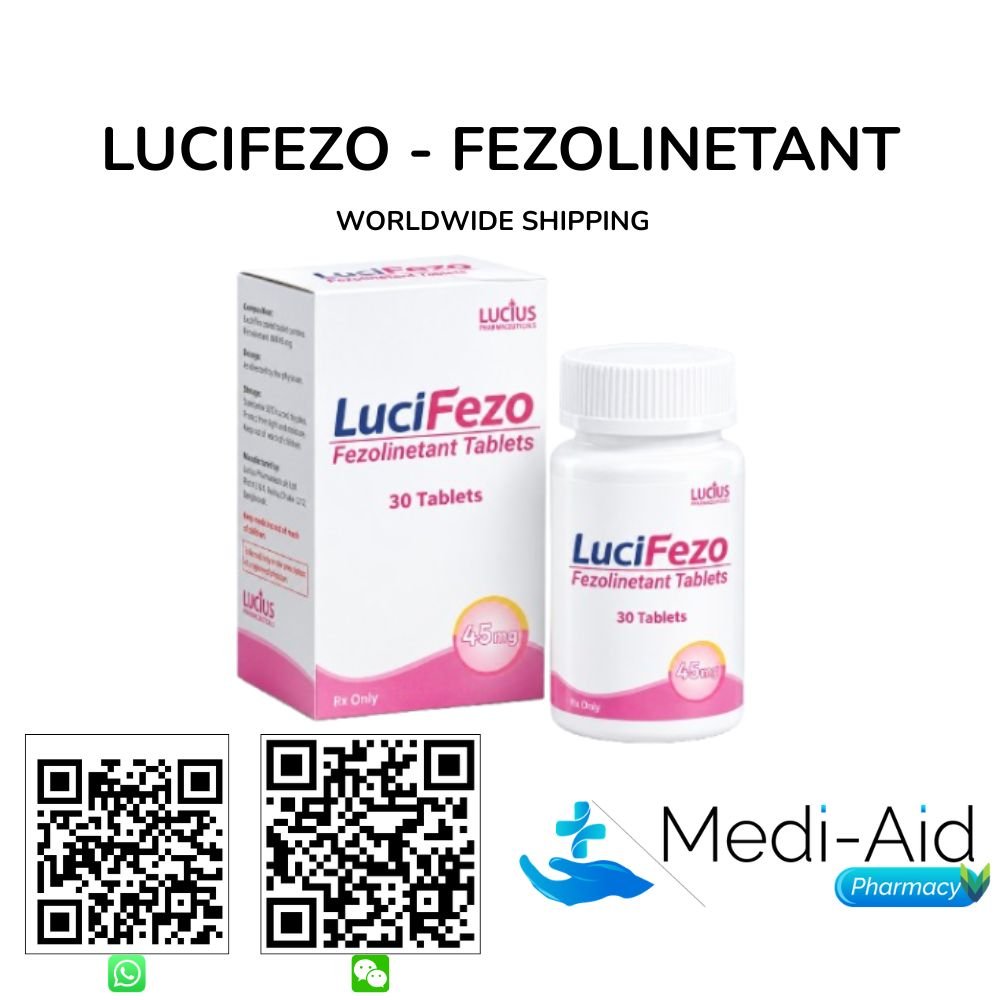
Description
LuciFezo 45 MG (Fezolinetant) is a first-in-class once-daily oral non-hormonal selective neurokinin 3 receptor (NK3R) antagonist a small-molecule hypothalamic thermoregulatory modulator that selectively blocks neurokinin B (NKB) binding on kisspeptin/neurokinin B/dynorphin (KNDy) neurons in the hypothalamic thermoregulatory centre, restoring the normal thermoregulatory set point dysregulated by menopausal estrogen decline, and thereby reducing the frequency and severity of moderate-to-severe vasomotor symptoms (VMS) including hot flashes and night sweats that define the cardinal menopausal VMS syndrome supplied as film-coated tablets in 45 mg strength in a 30-tablet pot and manufactured by Lucius Pharmaceuticals (Lao) Co., Ltd. in Laos.
Its active ingredient, fezolinetant INN, is the world’s first approved non-hormonal NK3R antagonist for menopausal VMS providing a hormone-free mechanism of action fundamentally distinct from estrogen-based hormone replacement therapy (HRT), selective serotonin reuptake inhibitors (SSRIs), and serotonin-norepinephrine reuptake inhibitors (SNRIs) achieving clinically meaningful reduction in hot flash frequency and severity without systemic estrogen exposure or the associated hormonal risks.
In the pivotal Phase 3 SKYLIGHT 1 and SKYLIGHT 2 trials (pooled 1,022 women with moderate-to-severe VMS), fezolinetant 45 mg met all four co-primary endpoints: VMS frequency reduction versus placebo reached −2.55 per day at Week 4 (p<0.001) and −2.53 per day at Week 12 (p<0.001) in the SKYLIGHT 2 trial, with VMS severity also significantly reduced at both timepoints, establishing statistically significant and clinically meaningful superiority over placebo as the first approved non-hormonal NK3R antagonist for menopausal vasomotor symptoms.
Searching for LuciFezo 45 MG Fezolinetant? Mediaid Pharmacy lists this product across its menopause medicines and Lucius Pharmaceuticals portfolios and ships it worldwide.
Basic Product Information of LuciFezo 45 MG (Fezolinetant)
| Brand Name | LuciFezo 45 MG (Fezolinetant) |
| Product Name | LuciFezo |
| Generic Name | Fezolinetant INN |
| Drug Class | First-in-Class Oral Non-Hormonal Selective Neurokinin 3 Receptor (NK3R) Antagonist; KNDy Neuron Modulator; Hypothalamic Thermoregulatory Modulator; Vasomotor Symptom (VMS) Agent; Menopausal Hot Flash Therapy; Non-Estrogen Menopause Medicine; Neurokinin B (NKB) Pathway Inhibitor; CYP1A2-Metabolised Oral Small Molecule |
| Formulation | Film-Coated Tablet |
| Available Strengths | 45 mg per tablet |
| Available Pack Size | 30 Tablets per Pot |
| Dosing & Dose Modification | Recommended dose: Fezolinetant is administered as one 45 mg film-coated tablet orally once daily, at the same time each day, with or without food. No dose titration is required. The 30-tablet pot of LuciFezo provides a standard one-month supply aligned to the once-daily dosing schedule. Hepatic impairment: Fezolinetant is not recommended in patients with any degree of hepatic impairment, including mild, moderate, or severe impairment, due to the risk of hepatotoxicity. Liver function tests (LFTs) must be performed at baseline and monitored at 3 months, 6 months, and as clinically indicated throughout treatment. Interrupt or permanently discontinue LuciFezo if clinically significant liver enzyme elevations occur. Renal impairment: No dose adjustment is required in patients with mild-to-moderate renal impairment. LuciFezo is not recommended in patients with severe renal impairment or end-stage renal disease. Drug interactions: Fezolinetant is primarily metabolised by cytochrome P450 1A2 (CYP1A2) co-administration with strong CYP1A2 inhibitors (e.g., fluvoxamine, ciprofloxacin) is contraindicated as it substantially increases fezolinetant plasma concentrations. Moderate CYP1A2 inhibitors should be used with caution. CYP1A2 inducers may reduce fezolinetant efficacy. Disclose all concomitant medications to the treating physician before initiating LuciFezo. Always consult the treating gynaecologist or menopause specialist before initiating LuciFezo 45 MG (Fezolinetant) in any patient. |
| Primary Indications | Treatment of moderate-to-severe vasomotor symptoms (VMS) including hot flashes and night sweats associated with menopause, in women aged 40 years and older. LuciFezo (Fezolinetant) is used as a once-daily oral non-hormonal therapy. Each treatment decision must account for menopausal status, hepatic function, renal function, concomitant CYP1A2-interacting medications, and individual patient risk profile always consult the full prescribing information and the treating gynaecologist or menopause specialist. |
| Manufacturer | Lucius Pharmaceuticals (Lao) Co., Ltd., Laos |
| Country of Origin | Laos |
| Originator Reference Brand | VEOZAH® (fezolinetant tablets, by Astellas Pharma US, Inc. FDA-approved May 13, 2023, as the first non-hormonal NK3R antagonist approved in the United States for the treatment of moderate-to-severe vasomotor symptoms due to menopause; approved by the European Medicines Agency as Veoza® in December 2023). VEOZAH®/Veoza® contains fezolinetant INN as the active pharmaceutical ingredient in the same first-in-class oral non-hormonal selective NK3R antagonist drug class. LuciFezo is manufactured by Lucius Pharmaceuticals (Lao) Co., Ltd. in Laos and is supplied through Mediaid Pharmacy for international procurement. |
| Global Supplier | Mediaid Pharmacy, Worldwide Shipping Available |
| Storage Conditions | Store at room temperature (20°C to 25°C; excursions permitted 15°C to 30°C). Keep in the original packaging and protect from moisture. Keep out of the reach of children. |
How LuciFezo (Fezolinetant) Works: First-in-Class Non-Hormonal Selective NK3R Antagonism for Menopausal Vasomotor Symptoms
Fezolinetant INN is the world’s first approved oral non-hormonal selective neurokinin 3 receptor (NK3R) antagonist a structurally novel small molecule that targets the hypothalamic thermoregulatory centre by blocking neurokinin B (NKB) binding on kisspeptin/neurokinin B/dynorphin (KNDy) neurons in the arcuate nucleus of the hypothalamus. KNDy neurons are the primary neuroendocrine integrators of the gonadal sex hormone feedback axis and the primary mediators of the menopausal vasomotor symptom reflex.
Under normal premenopausal conditions, circulating estrogen suppresses NKB signalling on KNDy neurons, maintaining a stable thermoregulatory set point and preventing aberrant thermogenic firing that drives hot flashes. Menopausal decline in circulating estrogen removes this inhibitory constraint NKB binds unopposed to NK3R on KNDy neurons, triggering neuronal hyperactivation, aberrant downstream signalling to the thermoregulatory centre in the preoptic area of the hypothalamus, inappropriate peripheral vasodilation, and the characteristic sudden onset of cutaneous heat dissipation and sweating that defines a moderate-to-severe VMS episode.
Vasomotor symptoms including hot flashes and night sweats affect approximately 75–80% of women during menopausal transition; moderate-to-severe VMS occurs in an estimated 35–45% of menopausal women and can persist for more than a decade after the final menstrual period, profoundly impairing sleep quality, daytime functioning, occupational performance, and health-related quality of life.
Fezolinetant exploits a pharmacologically precise NK3R blockade strategy: by selectively and potently blocking NK3R on KNDy neurons in the hypothalamic thermoregulatory centre, fezolinetant interrupts the NKB-mediated neuronal hyperactivation cascade at its origin, restoring the normal sensitivity of the thermoregulatory set point, and reducing both the frequency and severity of menopausal hot flashes without employing exogenous estrogen or progestogen, without suppressing the hypothalamic-pituitary-ovarian axis systemically, and without the hormonal safety concerns associated with menopausal hormone therapy (MHT).
The clinical consequence of NK3R antagonism by fezolinetant is a rapid, measurable, dose-dependent reduction in VMS frequency and severity, with improvement detectable as early as Week 1 of treatment and maintained through 52 weeks of therapy in the Phase 3 clinical trial programme. In the pivotal Phase 3 SKYLIGHT 1 and SKYLIGHT 2 trials two global, randomised, double-blind, placebo-controlled Phase 3 clinical trials enrolling over 1,000 women aged 40–65 years with moderate-to-severe VMS (minimum average seven or more moderate-to-severe hot flashes per day) fezolinetant 45 mg once daily met all four co-primary endpoints across both trials.
In the SKYLIGHT 2 trial, fezolinetant 45 mg achieved a least squares mean reduction in VMS frequency versus placebo of −2.55 per day at Week 4 (p<0.001) and −2.53 per day at Week 12 (p<0.001), with VMS severity also significantly reduced at both primary timepoints. The pooled SKYLIGHT 1 and SKYLIGHT 2 analysis confirmed an overall VMS frequency efficacy of −2.51 (95% CI, −3.20 to −1.82) for fezolinetant 45 mg versus placebo at Week 12, with a pooled mean percentage improvement in VMS frequency of 22.51% above placebo across the programme. Improvement in VMS frequency and severity was observed by Week 1 and maintained through the full 52-week SKYLIGHT 2 study period including in the active treatment extension period demonstrating durable and sustained NK3R antagonism with once-daily dosing.
The key pharmacological differentiator of fezolinetant versus hormone therapy, SSRIs, SNRIs, and gabapentinoids is its targeted, non-hormonal, hypothalamic mechanism: fezolinetant acts directly at the molecular origin of the menopausal VMS reflex the NKB/NK3R axis in KNDy neurons without systemic estrogen exposure, without antidepressant pharmacology, and without sedative or anticonvulsant mechanisms, providing a hormone-free pharmacological option for women who cannot or choose not to use hormone therapy. Fezolinetant is primarily metabolised by cytochrome P450 1A2 (CYP1A2) and is eliminated largely via hepatic metabolism; its clinical activity is governed by its CNS-penetrant NK3R occupancy in the hypothalamic thermoregulatory centre throughout the once-daily dosing interval. For the complete range of menopause medicines at Mediaid Pharmacy, browse the full portfolio for worldwide shipping.
LuciFezo 45 MG (Fezolinetant): Indications, Dosing, and Key Safety Information
| Approved Indications | Menopausal Vasomotor Symptoms (VMS): Treatment of moderate-to-severe vasomotor symptoms hot flashes and night sweats associated with menopause, in women aged 40 years and older. LuciFezo (Fezolinetant) is administered as an oral once-daily non-hormonal therapy. Limitation of use: Fezolinetant is not recommended in patients with any degree of hepatic impairment due to the risk of drug-induced liver injury. Monitor hepatic function before and during LuciFezo treatment and discontinue immediately if clinically significant liver enzyme elevations occur consult the treating gynaecologist or menopause specialist for patient selection and monitoring guidance. |
| Recommended Dose | Women aged 40 years and older with moderate-to-severe menopausal VMS: Fezolinetant is dosed as one 45 mg film-coated tablet orally once daily, with or without food, at the same time each day. No dose titration is required. LuciFezo 45 mg film-coated tablets must be swallowed whole do not crush, split, or chew. Administer at a consistent time each day to maintain steady-state NK3R occupancy in the hypothalamic thermoregulatory centre and optimise VMS control throughout the dosing interval. LuciFezo is contraindicated in patients with hepatic impairment of any degree and must not be co-administered with strong CYP1A2 inhibitors. |
| Dose Modification | No dose adjustment is required in patients with mild-to-moderate renal impairment. LuciFezo is not recommended in severe renal impairment or end-stage renal disease. No dose adjustment is established for hepatic impairment fezolinetant is not recommended in patients with any degree of hepatic impairment. No dose adjustment is required based on age alone within the approved indication population. |
| Warnings & Precautions | Hepatotoxicity (Drug-Induced Liver Injury): Clinically significant elevations in liver enzymes, including cases of drug-induced liver injury, have been reported in patients treated with fezolinetant. Perform LFTs (ALT, AST, bilirubin, alkaline phosphatase) at baseline before initiating LuciFezo, at 3 months, at 6 months, and as clinically indicated thereafter. Interrupt or permanently discontinue LuciFezo if clinically significant liver enzyme elevations are observed. LuciFezo is not recommended in patients with any degree of pre-existing hepatic impairment, including mild, moderate, or severe hepatic impairment.
CYP1A2 Drug Interactions: Fezolinetant is primarily metabolised by CYP1A2. Co-administration of LuciFezo with strong CYP1A2 inhibitors (including fluvoxamine, ciprofloxacin, and other strong CYP1A2 inhibitors) is contraindicated, as these agents substantially increase fezolinetant plasma exposure and hepatotoxicity risk. Use moderate CYP1A2 inhibitors with caution and with enhanced LFT monitoring. CYP1A2 inducers (e.g., smoking, rifampicin) may reduce LuciFezo plasma concentrations and diminish therapeutic efficacy. Pregnancy: Fezolinetant is not recommended during pregnancy. The safety of fezolinetant in human pregnancy has not been established. Women of reproductive potential should use effective contraception during LuciFezo treatment. Notify the treating specialist immediately if pregnancy is suspected or confirmed during LuciFezo therapy and discontinue promptly pending specialist review. Lactation: It is unknown whether fezolinetant is excreted in human breast milk. The potential for adverse reactions in breastfed infants cannot be excluded. The benefit-risk balance of breastfeeding during LuciFezo treatment must be assessed by the treating physician. Always consult the current full prescribing information for the complete and updated safety profile. |
| Common Adverse Reactions | Abdominal pain, diarrhoea, insomnia, back pain, hot flush (paradoxical), and elevated hepatic enzymes (ALT, AST). In the pooled SKYLIGHT 1 and SKYLIGHT 2 safety dataset (1,022 women), the overall incidence of treatment-emergent adverse events was comparable between fezolinetant 45 mg (39.7%), fezolinetant 30 mg (38.8%), and placebo (38.6%), indicating a favourable safety and tolerability profile consistent with placebo. Hepatic enzyme elevations including clinically significant ALT and AST increases have been reported and require active monitoring with LFTs at baseline and at defined intervals throughout LuciFezo treatment. Most adverse reactions were mild-to-moderate in severity and did not result in treatment discontinuation. Always discuss the complete safety profile, hepatic monitoring schedule, CYP1A2 drug interaction risk, renal function status, and contraception requirements with the treating gynaecologist or menopause specialist before and throughout LuciFezo treatment. |
| Drug Interactions | Fezolinetant is primarily metabolised by cytochrome P450 1A2 (CYP1A2) and has a defined drug interaction profile governed by CYP1A2 inhibition and induction. Strong CYP1A2 inhibitors (fluvoxamine, enoxacin, ciprofloxacin): Co-administration is contraindicated these agents substantially increase fezolinetant plasma exposure, increasing hepatotoxicity risk. Do not initiate LuciFezo in any patient receiving a strong CYP1A2 inhibitor; if a strong CYP1A2 inhibitor is required during LuciFezo therapy, discontinue LuciFezo before initiating the inhibitor. Moderate CYP1A2 inhibitors: Use with caution; more frequent LFT monitoring is warranted. CYP1A2 inducers (rifampicin, cigarette smoking): May reduce fezolinetant plasma concentrations and reduce therapeutic efficacy of LuciFezo counsel patients to report changes in smoking status. Hormonal contraceptives: No clinically significant interaction has been established, but discuss contraceptive co-administration with the treating gynaecologist. Disclose all concomitant medications, herbal products, and supplements to the treating physician before initiating LuciFezo. |
| Hepatic Impairment | Fezolinetant is not recommended in patients with any degree of hepatic impairment mild, moderate, or severe. Monitor liver function tests (ALT, AST, total bilirubin, alkaline phosphatase) at baseline before initiating LuciFezo, at 3 months, at 6 months, and as clinically indicated throughout treatment. Interrupt or permanently discontinue LuciFezo if ALT or AST exceeds 3× the upper limit of normal (ULN) with symptoms of liver injury, if bilirubin exceeds 2× ULN, or if liver enzyme elevations are accompanied by jaundice, fatigue, or right upper quadrant pain. Consult the treating gynaecologist or menopause specialist for individualised guidance in patients with any history of hepatic disease or elevated baseline LFTs before initiating LuciFezo therapy. |
| Pregnancy & Lactation | The safety of fezolinetant in human pregnancy has not been established. LuciFezo is not recommended during pregnancy. Women of reproductive potential must use effective contraception during LuciFezo treatment. A pregnancy test should be considered before initiating LuciFezo in women of reproductive potential. It is unknown whether fezolinetant is excreted in human breast milk; the potential for adverse effects in breastfed infants cannot be excluded. The benefit-risk balance of breastfeeding during LuciFezo treatment must be assessed by the treating physician. Notify the treating specialist immediately if pregnancy occurs during fezolinetant treatment and discontinue LuciFezo promptly pending specialist review. |
Who Should Use LuciFezo 45 MG (Fezolinetant)?
LuciFezo 45 MG (Fezolinetant) is indicated for women aged 40 years and older with moderate-to-severe vasomotor symptoms associated with menopause a syndrome characterised at the neurobiological level by NKB-mediated KNDy neuron hyperactivation in the hypothalamic thermoregulatory centre secondary to menopausal estrogen withdrawal, producing the recurrent, disabling episodes of sudden heat perception, cutaneous flushing, and sweating (hot flashes and night sweats) that define moderate-to-severe VMS.
Moderate-to-severe VMS affects approximately 35–45% of menopausal women and persists for more than a decade after the final menstrual period in a significant proportion of those affected, impairing sleep quality, daytime productivity, occupational performance, mood, and overall health-related quality of life.
First, women aged 40 years and older in the menopausal transition or postmenopause who experience seven or more moderate-to-severe hot flashes per day the minimum VMS frequency enrolled in the SKYLIGHT 1 and SKYLIGHT 2 Phase 3 clinical trials represent the primary clinical population for LuciFezo Fezolinetant 45 mg, supported by statistically significant Phase 3 trial evidence demonstrating VMS frequency reduction of −2.55 per day at Week 4 (p<0.001) and −2.53 per day at Week 12 (p<0.001) versus placebo in SKYLIGHT 2.
Second, menopausal women who are not candidates for hormone therapy including women with hormone-sensitive cancers (breast cancer, endometrial cancer), a personal or family history of thromboembolic disease, cardiovascular contraindications to estrogen, or who have made an informed choice to pursue non-hormonal VMS management represent a population where fezolinetant’s non-hormonal, non-estrogenic mechanism of action delivers a pharmacologically distinct and clinically validated alternative to menopausal hormone therapy (MHT), SSRIs, and SNRIs.
Third, women who have previously tried and failed to achieve adequate VMS control with SSRIs (e.g., paroxetine, escitalopram), SNRIs (e.g., venlafaxine), gabapentin, or other non-hormonal agents and for whom a mechanism-specific NK3R antagonist targeting the hypothalamic thermoregulatory pathway offers a rationally differentiated therapeutic intervention may receive LuciFezo as an evidence-based pharmacological option, pending physician assessment of hepatic function and CYP1A2 drug interaction risk.
Fourth, women’s health clinics, menopause specialist centres, gynaecology departments, and primary care practices co-managing menopausal patients with complex comorbidities, polypharmacy, or hormone therapy contraindications who require access to fezolinetant 45 mg film-coated tablets through a reliable international supplier with worldwide shipping capability can source LuciFezo through Mediaid Pharmacy.
LuciFezo is not recommended in patients with any degree of hepatic impairment, is contraindicated with strong CYP1A2 inhibitors, and is not recommended in severe renal impairment or during pregnancy or breastfeeding. Menopause clinics co-sourcing LuciFezo alongside other specialty menopause or women’s health medicines can browse the Mediaid Pharmacy menopause medicines portfolio for the full selection available for international delivery.
Global Supplier: Mediaid Pharmacy Worldwide Shipping for LuciFezo 45 MG (Fezolinetant)
Mediaid Pharmacy is a Dhaka-based supplier of specialty menopause medicines, women’s health treatments, and rare or access-restricted pharmaceutical products with worldwide shipping to patients, menopause specialist clinics, gynaecology departments, hospital pharmacy departments, women’s health programmes, and international distributors across all regions. LuciFezo 45 MG (Fezolinetant), manufactured by Lucius Pharmaceuticals (Lao) Co., Ltd. in Laos, is supplied as 30 tablets per pot in 45 mg strength with pricing quotations, stock confirmation, full product documentation, and end-to-end international delivery tracking for every order.
The 30-tablet pot format of LuciFezo provides menopause specialist programmes with a practical one-month supply unit aligned to the once-daily dosing schedule for fezolinetant 45 mg, simplifying procurement planning for practices managing patients on continuous long-term non-hormonal VMS therapy. Menopause specialist centres, women’s health clinics, gynaecology departments, hospital pharmacy departments co-sourcing oral targeted menopause therapies, international distributors, and individual patients seeking fezolinetant 45 mg online can contact the Mediaid Pharmacy team through WhatsApp, phone, or WeChat for all enquiries regarding Fezolinetant 45 mg tablets for menopausal VMS including current stock availability, current pricing, and international delivery timelines to their country.
Procurement teams co-sourcing LuciFezo with other specialty menopause or women’s health medicines can browse the complete Mediaid Pharmacy menopause medicines collection and the Lucius Pharmaceuticals medicines portfolio before requesting a consolidated quotation.
Why Choose LuciFezo 45 MG (Fezolinetant) from Mediaid Pharmacy?
LuciFezo 45 MG (Fezolinetant) delivers the world’s first approved oral non-hormonal NK3R antagonist for moderate-to-severe menopausal vasomotor symptoms a first-in-class hypothalamic thermoregulatory modulator backed by the landmark Phase 3 SKYLIGHT 1 and SKYLIGHT 2 clinical trials that establish fezolinetant as the first non-hormonal drug approved in the United States targeting the neurobiological origin of menopausal hot flashes the NKB/NK3R/KNDy neuron axis with evidence of sustained VMS frequency and severity reduction maintained through 52 weeks of therapy.
In the SKYLIGHT 1 and SKYLIGHT 2 trials (pooled 1,022 women aged 40–65 with moderate-to-severe VMS), fezolinetant 45 mg met all four co-primary endpoints across both trials: statistically significant reduction in VMS frequency and VMS severity at Week 4 and Week 12 versus placebo, with a pooled VMS frequency reduction of −2.51 per day (95% CI −3.20 to −1.82) at Week 12 versus placebo with improvement detectable as early as Week 1 and maintained through the 52-week SKYLIGHT 2 extension period, confirming durable long-term NK3R antagonism with once-daily fezolinetant 45 mg.
Fezolinetant’s non-hormonal NK3R antagonist mechanism is fundamentally distinct from menopausal hormone therapy (MHT), SSRIs, SNRIs, gabapentinoids, and clonidine achieving targeted modulation of KNDy neuron activity at the hypothalamic thermoregulatory centre without systemic estrogen exposure, without progestogen co-administration, without antidepressant pharmacology, without sedative side effects, and without the hormonal contraindications that exclude a large proportion of symptomatic menopausal women from hormone therapy. The 30-tablet once-daily pot of LuciFezo in the 45 mg film-coated tablet format provides women’s health clinics and menopause specialist practices with a clean, predictable one-month supply unit with no titration complexity and no weight-based dose calculation, ensuring simple prescribing, dispensing, and patient adherence for long-term non-hormonal VMS management.
LuciFezo is manufactured by Lucius Pharmaceuticals (Lao) Co., Ltd. in Laos and is available through Mediaid Pharmacy with full product documentation, specialist supply coordination, and worldwide shipping from Dhaka. To source additional Lucius Pharmaceuticals women’s health and specialty medicines, visit the Mediaid Pharmacy Lucius Pharmaceuticals medicines section and the menopause medicines portfolio, and contact the team for a personalised quotation.
Frequently Asked Questions About LuciFezo 45 MG (Fezolinetant)
What is LuciFezo 45 MG (Fezolinetant) used for?
LuciFezo 45 MG (Fezolinetant) is the world’s first approved oral non-hormonal selective neurokinin 3 receptor (NK3R) antagonist, used for the treatment of moderate-to-severe vasomotor symptoms (VMS) including hot flashes and night sweats associated with menopause, in women aged 40 years and older. LuciFezo works by selectively blocking NK3R on KNDy neurons in the hypothalamic thermoregulatory centre, preventing neurokinin B (NKB) from triggering the neuronal hyperactivation cascade that produces menopausal hot flashes, thereby reducing VMS frequency and severity without hormonal mechanisms. The originator brand for fezolinetant is VEOZAH® (Astellas Pharma US FDA-approved May 13, 2023, as the first non-hormonal NK3R antagonist for menopausal VMS). LuciFezo, manufactured by Lucius Pharmaceuticals (Lao) Co., Ltd. in Laos, is available through Mediaid Pharmacy with worldwide shipping to patients, menopause specialist clinics, and women’s health programmes.
What is the generic name of LuciFezo?
The generic name of LuciFezo is fezolinetant INN. LuciFezo is the brand name registered by Lucius Pharmaceuticals (Lao) Co., Ltd. for fezolinetant manufactured in Laos. LuciFezo is formulated as film-coated tablets in 45 mg strength, supplied in a 30-tablet pot format. The originator reference brand is VEOZAH® (Astellas Pharma US FDA-approved May 2023) and Veoza® (Astellas EMA-approved December 2023). Mediaid Pharmacy distributes LuciFezo globally with worldwide shipping to patients, menopause specialist centres, gynaecology clinics, hospital pharmacy departments, and women’s health programmes managing menopausal VMS.
What is the difference between LuciFezo (Fezolinetant) and VEOZAH (Fezolinetant)?
LuciFezo and VEOZAH® both contain fezolinetant INN as the active pharmaceutical ingredient and share the same first-in-class non-hormonal selective NK3R antagonist mechanism of action for menopausal VMS. VEOZAH® is the originator brand developed and marketed by Astellas Pharma US, Inc., approved by the FDA on May 13, 2023, as the first non-hormonal NK3R antagonist approved in the United States for moderate-to-severe vasomotor symptoms due to menopause; it is also approved in the European Union as Veoza® by Astellas since December 2023. LuciFezo is manufactured by Lucius Pharmaceuticals (Lao) Co., Ltd. in Laos and is supplied in the 45 mg film-coated tablet strength in a 30-tablet pot, available through Mediaid Pharmacy for international procurement by menopause specialist centres and patients in regions where VEOZAH® may be unavailable or cost-prohibitive. For the full range of menopause medicines at Mediaid Pharmacy, visit the Mediaid Pharmacy menopause medicines collection.
How is LuciFezo 45 MG (Fezolinetant) administered?
LuciFezo (Fezolinetant) is administered orally as one 45 mg film-coated tablet once daily, with or without food, at the same time each day. No dose titration is required fezolinetant 45 mg is the approved therapeutic dose. LuciFezo 45 mg film-coated tablets must be swallowed whole; do not crush, split, or chew the tablet. If a dose is missed, take it as soon as remembered on the same day; if not remembered until the next day, skip the missed dose and continue with the next scheduled daily dose do not take two doses in one day. Always perform liver function tests (LFTs) at baseline and at 3 months, 6 months, and as clinically indicated during LuciFezo treatment, and always consult the treating gynaecologist or menopause specialist before starting or adjusting LuciFezo therapy.
What are the side effects of LuciFezo 45 MG (Fezolinetant)?
The most commonly reported adverse reactions of fezolinetant across the SKYLIGHT Phase 3 clinical trial programme include abdominal pain, diarrhoea, insomnia, back pain, and hot flush. In the pooled safety analysis of SKYLIGHT 1 and SKYLIGHT 2 (1,022 women), the overall incidence of treatment-emergent adverse events was comparable between fezolinetant 45 mg (39.7%) and placebo (38.6%), reflecting a tolerability profile closely aligned with placebo. The most clinically important adverse event associated with fezolinetant is hepatotoxicity clinically significant elevations in ALT, AST, and bilirubin have been reported; liver function tests must be monitored at baseline, 3 months, 6 months, and throughout LuciFezo treatment, and the drug must be discontinued promptly if clinically significant liver enzyme elevations occur. Always discuss the complete safety profile, hepatic monitoring plan, CYP1A2 drug interaction risk, contraception requirements, and renal function status with the treating gynaecologist or menopause specialist before and throughout LuciFezo treatment.
How effective is Fezolinetant (LuciFezo) for menopausal hot flashes and night sweats?
Fezolinetant has demonstrated statistically significant and clinically meaningful efficacy in moderate-to-severe menopausal VMS across the Phase 3 SKYLIGHT programme the largest clinical trial dataset supporting approval of a non-hormonal NK3R antagonist for menopausal vasomotor symptoms. In SKYLIGHT 1 and SKYLIGHT 2 (two Phase 3, randomised, double-blind, placebo-controlled trials enrolling over 1,000 women aged 40–65 with a minimum average of seven moderate-to-severe VMS per day), fezolinetant 45 mg met all four co-primary endpoints across both trials. In SKYLIGHT 2, fezolinetant 45 mg achieved a least squares mean VMS frequency reduction versus placebo of −2.55 per day at Week 4 (p<0.001) and −2.53 per day at Week 12 (p<0.001), with VMS severity also significantly reduced at both timepoints. Improvement in VMS frequency and severity was detectable as early as Week 1 and maintained through 52 weeks in the active extension study. Pooled SKYLIGHT 1 and SKYLIGHT 2 analysis confirmed an overall efficacy of −2.51 (95% CI −3.20 to −1.82) for fezolinetant 45 mg versus placebo at Week 12. LuciFezo delivers the same active ingredient fezolinetant INN in the 45 mg film-coated tablet format, sourced through Mediaid Pharmacy with worldwide shipping. For the complete menopause medicines range at Mediaid Pharmacy, browse the full portfolio.
Is LuciFezo 45 MG (Fezolinetant) safe during pregnancy or while breastfeeding?
LuciFezo (Fezolinetant) is not recommended during pregnancy, as the safety of fezolinetant in human pregnancy has not been established. Women of reproductive potential must use effective contraception during LuciFezo treatment. A pregnancy test should be considered before initiating LuciFezo in women of reproductive potential. Breastfeeding is not recommended during LuciFezo treatment because it is unknown whether fezolinetant is excreted in human breast milk and the potential for adverse effects in breastfed infants cannot be excluded. If pregnancy occurs during fezolinetant treatment, the treating gynaecologist or menopause specialist must be notified immediately and LuciFezo should be discontinued promptly pending specialist review. Consult the treating specialist before starting LuciFezo in any woman of reproductive potential and review the current prescribing information for the most up-to-date reproductive safety guidance.
Can I order LuciFezo 45 MG (Fezolinetant) online with worldwide shipping?
Yes. Mediaid Pharmacy supplies LuciFezo 45 MG (Fezolinetant) to patients, menopause specialist clinics, gynaecology departments, women’s health programmes, hospital pharmacy departments, and healthcare providers globally. Contact Mediaid Pharmacy via WhatsApp, phone, or WeChat at +8801773428128, or email info@mediaidpharmacy.com for pricing, current stock availability, and international delivery details for your country.
Order LuciFezo 45 MG (Fezolinetant) with Worldwide Shipping
Phone / WhatsApp / WeChat: +8801773428128 | Email: info@mediaidpharmacy.com
Reviews
There are no reviews yet.