
Description
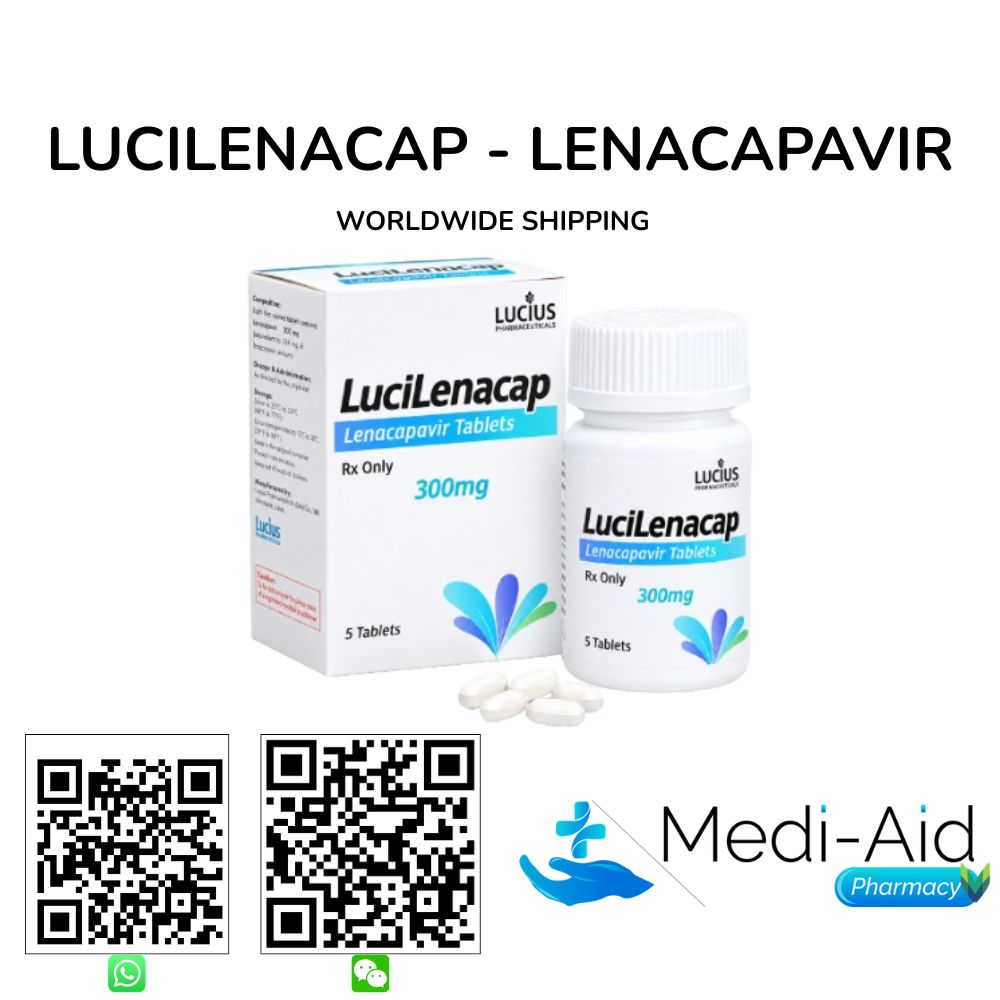
LuciLenacap 300 MG (Lenacapavir) is a first-in-class HIV-1 capsid inhibitor film-coated tablet manufactured by Lucius Pharmaceuticals (Lao) Co., Ltd. in Laos and supplied as 5 tablets per pot. Lenacapavir is the first antiretroviral agent approved to target the HIV-1 capsid protein a completely novel mechanism of action that distinguishes it from all prior antiretroviral drug classes (integrase strand transfer inhibitors, reverse transcriptase inhibitors, protease inhibitors, entry inhibitors, and pharmacokinetic boosters).
Lenacapavir disrupts the HIV-1 replication cycle at multiple distinct stages simultaneously by binding to a conserved hydrophobic groove at the hexameric interface of the HIV-1 capsid protein, interfering with capsid core uncoating, nuclear import of the pre-integration complex via host nuclear pore factors CPSF6 and NUP153, and HIV-1 virion assembly and maturation. The oral tablet formulation of LuciLenacap (300 mg per tablet) is used exclusively to establish the oral loading dose at treatment initiation Day 1 (600 mg = 2 × 300 mg tablets orally, co-administered with a subcutaneous lenacapavir injection 927 mg) and Day 2 (300 mg = 1 × 300 mg tablet orally) enabling rapid achievement of therapeutic lenacapavir plasma concentrations before transitioning to the long-acting subcutaneous maintenance formulation (927 mg every 26 weeks).
In the pivotal Phase 2/3 CAPELLA trial, 88.9% of lenacapavir-treated heavily treatment-experienced adults with multidrug-resistant HIV-1 achieved the primary virologic response endpoint at Day 15, compared to 22.2% in the placebo arm (p<0.0001); approximately 77% achieved HIV-1 RNA below 50 copies/mL at Week 52 with lenacapavir plus an optimized background regimen (OBR). Searching for LuciLenacap 300 MG Lenacapavir? Mediaid Pharmacy supplies LuciLenacap within its HIV medicines and Lucius Pharmaceuticals medicines portfolios with worldwide shipping.
Basic Product Information of LuciLenacap 300 MG (Lenacapavir)
| Brand Name | LuciLenacap 300 MG (Lenacapavir) |
| Product Name | LuciLenacap |
| Generic Name | Lenacapavir (International Nonproprietary Name, INN); also referred to by the investigational designations GS-6207 and GS-CA1 in preclinical and early-phase clinical literature |
| Drug Class | First-in-Class HIV-1 Capsid Inhibitor (CAI); Long-Acting Antiretroviral Agent; Multimodal HIV-1 Replication Cycle Inhibitor targeting capsid-dependent stages of nuclear import, uncoating, and virion assembly |
| Formulation | Film-Coated Tablet (Oral; for use as oral loading dose only not intended for ongoing daily oral maintenance therapy) |
| Available Strength | 300 mg Lenacapavir per film-coated tablet |
| Available Pack Size | 5 Tablets per Pot (providing the complete 3-tablet oral loading course over Day 1 and Day 2 with 2 additional tablets per pot) |
| Therapeutic Category | HIV Medicines; Antiretroviral Agents; First-in-Class HIV-1 Capsid Inhibitor; Long-Acting Antiretroviral Therapy; Lucius Pharmaceuticals Medicines |
| Approved Indication | HIV-1 Infection (Heavily Treatment-Experienced): Treatment of HIV-1 infection in adults with multidrug-resistant HIV-1 who are failing their current antiretroviral regimen due to resistance, intolerance, or safety considerations, in combination with an optimized background regimen (OBR). Lenacapavir is active against HIV-1 strains resistant to all other antiretroviral drug classes due to its completely novel capsid-targeted mechanism of action. |
| Oral Loading Dose | Day 1: 600 mg orally (2 × LuciLenacap 300 mg tablets) + lenacapavir 927 mg subcutaneous injection at a separate anatomical site, administered on the same day. Day 2: 300 mg orally (1 × LuciLenacap 300 mg tablet). No further oral lenacapavir tablets after Day 2. Maintenance: Lenacapavir subcutaneous injection 927 mg every 26 weeks (approximately 6 months) thereafter. |
| Manufacturer | Lucius Pharmaceuticals (Lao) Co., Ltd., Laos |
| Country of Origin | Laos (Lao People’s Democratic Republic) |
| Originator Reference Brand | Sunlenca (Lenacapavir 300 mg film-coated tablets and 927 mg/1.5 mL subcutaneous injection solution, by Gilead Sciences, Inc.), approved by the U.S. FDA on August 22, 2022, for the treatment of HIV-1 infection in adults with multidrug-resistant HIV-1 who are failing their current antiretroviral regimen. LuciLenacap contains Lenacapavir INN at the same approved oral tablet strength (300 mg per tablet), manufactured by Lucius Pharmaceuticals (Lao) Co., Ltd. in Laos and supplied through Mediaid Pharmacy for international procurement. |
| Global Supplier | Mediaid Pharmacy, Worldwide Shipping Available |
| Storage Conditions | Store at controlled room temperature (20°C to 25°C); excursions permitted between 15°C and 30°C. Keep in the original pot with the lid tightly closed. Protect from moisture. Keep out of the reach of children. |
What Is LuciLenacap 300 MG (Lenacapavir)?
LuciLenacap 300 MG (Lenacapavir) is a first-in-class HIV-1 capsid inhibitor film-coated tablet for the treatment of HIV-1 infection in heavily treatment-experienced (HTE) adults with multidrug-resistant (MDR) HIV-1, manufactured by Lucius Pharmaceuticals (Lao) Co., Ltd. in Laos. Each LuciLenacap tablet contains 300 mg of Lenacapavir a synthetic, small-molecule inhibitor that binds selectively to the HIV-1 capsid protein and disrupts multiple critical, capsid-dependent stages of the HIV-1 replication cycle.
Lenacapavir is the first antiretroviral agent to target the HIV-1 capsid protein and the first HIV medicine to belong to the capsid inhibitor (CAI) drug class, placing it structurally and mechanistically outside all five prior antiretroviral drug classes. Because lenacapavir’s binding site on the capsid protein hexameric groove is distinct from the target sites of integrase strand transfer inhibitors (INSTIs), reverse transcriptase inhibitors (NRTIs and NNRTIs), protease inhibitors (PIs), entry inhibitors, and pharmacokinetic boosters, lenacapavir retains antiviral activity against HIV-1 strains harboring resistance-associated substitutions (RASs) to any or all of these drug classes, making it a uniquely valuable option for HTE patients who have exhausted conventional antiretroviral options.
LuciLenacap 300 MG tablets represent the Lucius Pharmaceuticals (Lao) formulation of the oral lenacapavir component the same active ingredient as the originator brand Sunlenca (Gilead Sciences, Inc., U.S. FDA approved August 22, 2022) at the same oral tablet strength of 300 mg. The oral tablet formulation of lenacapavir is used specifically and exclusively during treatment initiation to deliver the oral loading dose that rapidly saturates lenacapavir plasma concentrations to the therapeutic range:
Day 1 (600 mg orally = 2 × LuciLenacap 300 mg tablets, plus a 927 mg subcutaneous injection on the same day) and Day 2 (300 mg orally = 1 × LuciLenacap 300 mg tablet). This loading protocol achieves steady-state lenacapavir concentrations within 48 hours, after which the long-acting subcutaneous formulation (lenacapavir 927 mg injection every 26 weeks) maintains therapeutic plasma drug levels for the six-month interval between injections.
The 5-tablet pot of LuciLenacap provides the complete 3-tablet oral loading course plus 2 additional tablets per pack. In the pivotal Phase 2/3 CAPELLA trial, lenacapavir plus optimized background regimen (OBR) achieved HIV-1 RNA below 50 copies/mL in approximately 77% of heavily treatment-experienced adults at Week 52, demonstrating clinically meaningful virologic suppression in a population that had exhausted standard antiretroviral options. LuciLenacap is available globally through Mediaid Pharmacy’s HIV treatment medicines portfolio with worldwide shipping.
Mechanism of Action of LuciLenacap: First-in-Class HIV-1 Capsid Inhibition at Multiple Replication Stages
LuciLenacap 300 MG (Lenacapavir) exerts antiviral activity through a unique, multimodal mechanism of action targeting the HIV-1 capsid (CA) protein the structural component that assembles into the conical core protecting the viral RNA genome and its associated enzymes within newly formed HIV-1 virions. No approved antiretroviral agent in any prior drug class acts on the HIV-1 capsid protein; the mechanistic novelty of lenacapavir is the principal basis for its retained activity against HIV-1 strains resistant to all other antiretroviral drug classes.
HIV-1 Capsid Protein Binding The Lenacapavir Binding Site: The HIV-1 capsid core is composed of approximately 1,500 copies of the CA protein (encoded by the HIV-1 gag gene), which assemble into a lattice of hexameric and pentameric rings through extensive protein-protein interactions at the CA N-terminal domain (NTD) and C-terminal domain (CTD) interfaces. Lenacapavir binds to a highly conserved hydrophobic pocket located at the interface between adjacent CA monomers within the hexameric unit specifically at the inter-subunit groove between two neighboring NTD-CTD interfaces.
This binding site is distinct from the sites targeted by earlier, non-clinical-stage capsid-targeting compounds and is conserved across diverse HIV-1 clades and genotypes, consistent with the broad cross-clade antiviral activity of lenacapavir observed in cell-based resistance testing. By occupying this hexameric interface groove with high affinity, lenacapavir stabilizes the capsid lattice in a state incompatible with the normal dynamic conformational changes required for each of three capsid-dependent stages of the HIV-1 replication cycle.
Stage 1 Inhibition of Capsid Uncoating (Early Replication): After HIV-1 virion fusion with the target cell membrane and cytoplasmic entry, the capsid core must undergo controlled, stepwise disassembly (uncoating) to release the reverse transcription complex (RTC) the viral RNA genome, reverse transcriptase, integrase, and associated viral proteins into the cytoplasm for the initiation of reverse transcription. The precise timing and spatial regulation of uncoating is critical: premature or excessively delayed uncoating prevents productive infection. Lenacapavir-bound capsid lattices exhibit altered uncoating kinetics either accelerated or inhibited depending on the concentration disrupting the coordination between uncoating, reverse transcription, and nuclear import that is required for productive HIV-1 replication at this early post-entry stage.
Stage 2 Inhibition of Nuclear Import (Pre-Integration): Unlike most other retroviruses, HIV-1 can infect non-dividing cells by transporting the reverse transcription-completed pre-integration complex (PIC) through the intact nuclear pore complex (NPC) into the nucleus a process that requires direct interaction between the intact HIV-1 capsid core and nuclear pore complex proteins, specifically CPSF6 (cleavage and polyadenylation specificity factor subunit 6) and NUP153 (nucleoporin 153). These host nuclear factors bind to the same hexameric interface groove on the CA surface where lenacapavir binds. Lenacapavir directly competes with CPSF6 and NUP153 for binding to the CA hexameric groove, blocking the host factor-capsid interactions required for HIV-1 nuclear pore trafficking and nuclear import of the PIC, and thereby preventing chromosomal integration at this pre-integration stage.
Stage 3 Inhibition of Virion Assembly and Maturation (Late Replication): In the late phase of HIV-1 replication, newly synthesized CA monomers must undergo ordered self-assembly and condensation to form the conical capsid core within budding immature virions. This assembly process requires the same inter-hexameric CA-CA protein-protein interactions at the NTD-CTD interface that lenacapavir occupies. By inserting into the hexameric groove and stabilizing or distorting the inter-CA interactions at this site, lenacapavir disrupts the lattice geometry required for proper capsid core condensation during virion maturation, resulting in production of morphologically aberrant, non-infectious HIV-1 particles that cannot establish productive infection in new target cells. This late-stage inhibitory effect is mechanistically distinct from the maturation inhibitor class but achieves the same virologic outcome production of non-infectious virions through a different CA-targeted pathway.
LuciLenacap 300 MG (Lenacapavir): Dosing by Patient Setting and Clinical Phase
| Clinical Phase / Patient Population | LuciLenacap Regimen | CAPELLA Trial Outcome Reference |
| Treatment initiation Oral loading (Day 1) | 600 mg orally (2 × LuciLenacap 300 mg tablets) administered at any time of day with or without food, on the same day as a lenacapavir 927 mg subcutaneous injection at a separate anatomical site (abdomen preferred). The oral tablets and SC injection on Day 1 together constitute the complete initiation loading dose required to achieve therapeutic lenacapavir plasma concentrations within 24 hours. | Day 15 primary endpoint: 88.9% ≥0.5 log10 HIV-1 RNA reduction (lenacapavir arm) vs 22.2% (placebo arm); p<0.0001 [CAPELLA randomized cohort, n=72] |
| Treatment initiation Oral loading (Day 2) | 300 mg orally (1 × LuciLenacap 300 mg tablet) administered approximately 24 hours after the Day 1 oral dose. No further oral lenacapavir tablets after Day 2 completion. Swallow tablets whole do not crush or split the film-coated tablet. | Oral loading establishes steady-state lenacapavir concentrations rapidly; steady state achieved within 48 hours of Day 1 initiation |
| Maintenance dosing (after Day 2 completion) | Lenacapavir 927 mg subcutaneous injection every 26 weeks (approximately every 6 months). LuciLenacap oral tablets are NOT administered during the maintenance phase. The 26-week injection interval aligns with the pharmacokinetic profile of subcutaneous lenacapavir, which maintains drug concentrations above the protein-adjusted 95% effective concentration (PA-EC95) throughout the full 26-week inter-injection interval. No oral tablet supplement is required between SC injections in patients who are adherent to the every-26-week injection schedule. | Week 52 virologic suppression (HIV-1 RNA <50 copies/mL): approximately 77% [CAPELLA randomized + open-label cohort] |
| Re-initiation after missed SC injection (>1 week late, within Week 27) | If the scheduled SC injection is administered within 1 week before or after the target date, administer SC injection only no oral re-loading required. If the SC injection is more than 1 week late (before Week 27), administer oral re-loading: 600 mg orally (Day 1) + 300 mg orally (Day 2) + SC injection 927 mg on Day 1, using LuciLenacap 300 mg tablets for the re-loading oral doses. Confirm protocol with the HIV specialist. | Re-loading protocol per prescribing guidelines; LuciLenacap 5-tablet pot supports one complete loading or re-loading course |
| Renal impairment (any degree) | No dose adjustment required for mild, moderate, or severe renal impairment. Lenacapavir is not renally eliminated to a clinically meaningful extent. Administer the standard oral loading dose (Day 1: 600 mg, Day 2: 300 mg) and standard SC maintenance dose (927 mg every 26 weeks) without modification regardless of renal function. | No dose adjustment needed at any CrCl level |
| Mild to moderate hepatic impairment (Child-Pugh A or B) | No clinically significant alteration in lenacapavir pharmacokinetics at Child-Pugh A or B. Standard oral loading and SC maintenance dosing without modification. Monitor hepatic function at baseline and periodically throughout treatment for signs of hepatotoxicity. | No dose adjustment needed; monitor hepatic function |
| General Dosing Notes | Swallow LuciLenacap tablets whole with water. Tablets may be taken with or without food on Day 1 and Day 2. Do not crush, split, or chew the film-coated tablets. The 5-tablet pot of LuciLenacap supports one complete oral loading course (3 tablets) with 2 additional tablets per pack, or one complete re-loading course if a scheduled SC maintenance injection is substantially delayed. Lenacapavir must always be used in combination with an optimized background regimen (OBR) of other antiretroviral agents selected based on the patient’s current resistance profile; lenacapavir is not approved for use as monotherapy for HIV-1. The treating HIV specialist or infectious disease physician determines LuciLenacap suitability, reviews the drug interaction profile, and establishes the monitoring schedule including confirming the first scheduled SC injection date 26 weeks after initiation before initiating treatment. | |
LuciLenacap 300 MG (Lenacapavir): Drug Interactions, Special Populations, and Important Safety Warnings
| Drug Interactions Pharmacokinetic Basis | Lenacapavir is metabolized primarily by CYP3A4/3A5-mediated oxidative metabolism and UGT1A1/1A3-mediated glucuronidation in the liver; it is a substrate of the efflux transporters P-glycoprotein (P-gp) and breast cancer resistance protein (BCRP). As an inhibitor, lenacapavir moderately inhibits CYP3A and inhibits the drug transporters OCT1, OCT2, MATE1, OATP1B1, and OATP1B3. Lenacapavir is a weak inducer of CYP2B6. These dual roles as a CYP3A/transporter substrate and a CYP3A/transporter inhibitor result in clinically significant bidirectional interactions that require evaluation against all co-medications before initiating LuciLenacap.
Contraindicated co-medications (strong CYP3A inducers): Rifampin, rifapentine (anti-tuberculosis agents; potent P-gp and CYP3A4/3A5 inducers) reduce lenacapavir AUC by approximately 80% or more, resulting in plasma lenacapavir concentrations below the therapeutic range with loss of virologic efficacy and risk of resistance emergence; absolutely contraindicated. Carbamazepine, phenytoin, phenobarbital, oxcarbazepine (antiepileptic agents; CYP3A/P-gp inducers) substantially reduce lenacapavir exposure; contraindicated. St. John’s Wort (Hypericum perforatum) a potent herbal CYP3A inducer that reduces lenacapavir concentrations unpredictably; contraindicated. Not recommended co-medications: Rifabutin reduces lenacapavir AUC (moderate CYP3A/P-gp inducer); not recommended for routine co-administration with lenacapavir. Etravirine CYP3A inducer component may reduce lenacapavir exposure; evaluate clinical benefit-risk before co-administering. Lenacapavir as a CYP3A inhibitor increased exposure of co-administered CYP3A substrates: Lenacapavir moderately inhibits CYP3A and may significantly increase plasma concentrations of drugs primarily metabolized by CYP3A, including: Simvastatin and lovastatin risk of dose-dependent myopathy and rhabdomyolysis; contraindicated. Tacrolimus, cyclosporine, sirolimus (calcineurin and mTOR inhibitors) substantially increased exposure; therapeutic drug monitoring required for all three agents when co-administered with lenacapavir. Ergotamine and dihydroergotamine risk of vasospastic toxicity (ergotism); avoid co-administration. Other narrow-therapeutic-index CYP3A substrates (certain benzodiazepines, immunosuppressants, antifungals) consult interaction database before co-prescribing. Lenacapavir as an OATP1B1/1B3 inhibitor increased exposure of hepatic uptake transporter substrates: Statins transported by OATP1B1/1B3 (rosuvastatin, atorvastatin, pravastatin) lenacapavir inhibits hepatic statin uptake, increasing statin plasma concentrations and muscle toxicity risk; use the lowest effective statin dose with monitoring, or consider an alternative statin not primarily dependent on OATP1B1/1B3 transport (fluvastatin). Methotrexate OATP1B inhibition by lenacapavir may alter methotrexate hepatic uptake; monitor closely in co-administered patients. Antacids and polyvalent cation-containing supplements: No clinically significant pharmacokinetic interaction with lenacapavir tablets reported; standard administration timing without mandatory separation. Disclose all prescription medications, non-prescription drugs, herbal supplements, vitamins, and dietary aids to the treating HIV specialist before initiating LuciLenacap. |
| Renal Impairment | LuciLenacap 300 MG (Lenacapavir) does not require dose adjustment for any degree of renal impairment, including mild (CrCl 60–89 mL/min), moderate (CrCl 30–59 mL/min), and severe (CrCl below 30 mL/min) renal impairment. The pharmacokinetic rationale for this is that lenacapavir undergoes predominantly hepatic metabolism via CYP3A and UGT1A1/1A3, with less than 1% of an administered oral dose excreted unchanged in urine; renal function therefore does not materially affect lenacapavir plasma exposure. This pharmacokinetic profile distinguishes lenacapavir from renally-eliminated antiretroviral agents (tenofovir disoproxil fumarate, emtricitabine, abacavir metabolite elimination) that require dose adjustment or are contraindicated in patients with CrCl below defined thresholds. The ability to administer LuciLenacap without dose modification in patients with severe renal impairment or end-stage renal disease (ESRD) provides an important treatment option for heavily treatment-experienced HIV-1 patients who also have concurrent nephropathy a population often excluded from or requiring modified dosing of standard antiretroviral backbone agents. General renal function assessment at baseline is still recommended as part of the pre-treatment clinical workup. |
| Hepatic Impairment | Lenacapavir pharmacokinetics in patients with mild (Child-Pugh A) and moderate (Child-Pugh B) hepatic impairment show no clinically significant alteration in lenacapavir AUC or Cmax compared to patients with normal hepatic function, and no dose adjustment of LuciLenacap is required for these patient populations. In patients with severe hepatic impairment (Child-Pugh C), lenacapavir pharmacokinetics have not been adequately studied, and the safety and dosing in this population are not established; LuciLenacap should be used with caution and only if the clinical benefit is judged to outweigh the uncertainty, under the supervision of the treating HIV specialist and hepatologist. Hepatotoxicity specifically elevations in hepatic transaminases (ALT, AST) has been reported in patients receiving lenacapavir; hepatic function must be monitored at baseline and periodically throughout the treatment course. In HIV-1 patients with concurrent hepatitis B virus (HBV) or hepatitis C virus (HCV) co-infection, baseline and ongoing hepatic function monitoring is particularly important, as these co-infections independently elevate the risk of transaminase elevations and hepatic decompensation during antiretroviral therapy. |
| Immune Reconstitution Inflammatory Syndrome (IRIS) | Immune reconstitution inflammatory syndrome (IRIS) has been reported in HIV-1 patients initiating antiretroviral therapy, including lenacapavir-containing regimens. IRIS is defined as a paradoxical inflammatory response to previously subclinical, treated, or recently acquired opportunistic infections (e.g., Mycobacterium avium complex, cytomegalovirus, Pneumocystis jirovecii pneumonia, tuberculosis) or autoimmune disorders (e.g., Graves’ disease, polymyositis, Guillain-Barré syndrome) that occurs in the weeks to months following initiation of effective antiretroviral therapy as immune function reconstitutes. In heavily treatment-experienced patients initiating lenacapavir after periods of advanced immunodeficiency and viral replication, the risk of IRIS may be higher than in treatment-naive patients starting their first antiretroviral regimen, given the degree of prior immune deterioration. Most IRIS cases can be clinically managed without interruption of lenacapavir; the treating HIV specialist must evaluate and manage any clinical deterioration occurring in the weeks to months after LuciLenacap initiation in the context of possible IRIS before attributing deterioration to antiretroviral drug toxicity or treatment failure. |
| Pregnancy and Lactation | Human data on the safety of lenacapavir in pregnancy are currently limited. Animal reproductive toxicology studies with lenacapavir did not demonstrate embryofetal developmental toxicity at exposures relevant to human clinical doses, but adequate and well-controlled studies in pregnant people living with HIV have not been conducted. Lenacapavir is not currently listed in DHHS Perinatal Guidelines as a preferred or alternative antiretroviral agent for pregnant individuals due to insufficient human pregnancy safety and pharmacokinetic data at this time. The treating HIV specialist, maternal-fetal medicine specialist, and obstetrician should jointly evaluate the risks and benefits of initiating or continuing a lenacapavir-containing regimen during pregnancy or the periconception period on an individualized basis. Regarding lactation: HIV-1 can be transmitted through breast milk; the WHO and CDC both recommend that HIV-positive individuals not breastfeed when safe, feasible, affordable, sustainable, and acceptable replacement feeding alternatives are available. Whether lenacapavir is excreted in human breast milk and at what concentrations has not been established; lenacapavir is not recommended during breastfeeding based on current evidence. Consult the treating HIV specialist and obstetrician before initiating, continuing, or modifying any lenacapavir-containing regimen during pregnancy or the periconception period. |
Who Should Use LuciLenacap 300 MG (Lenacapavir)?
LuciLenacap 300 MG (Lenacapavir) is indicated for heavily treatment-experienced (HTE) adults with multidrug-resistant (MDR) HIV-1 infection who are failing their current antiretroviral regimen and who need additional antiretroviral activity that no currently available drug class in their regimen can provide. An estimated 10–15% of the 39.9 million people globally living with HIV (UNAIDS, 2023) harbor HIV strains with resistance to one or more antiretroviral drug classes, and a subset of the most treatment-experienced patients face multidrug resistance across three or more classes simultaneously a clinical situation that lenacapavir is uniquely positioned to address because of its completely novel mechanism of action.
Heavily treatment-experienced HIV-1 patients with multidrug resistance represent the approved population for lenacapavir and the primary LuciLenacap target group. These are patients who have been treated with multiple prior antiretroviral regimens, have accumulated resistance-associated substitutions (RASs) to INSTIs, NRTIs/NNRTIs, and/or protease inhibitors, and are failing their current regimen with detectable viral replication (HIV-1 RNA above the limit of quantification on two consecutive measurements).
Because lenacapavir targets the HIV-1 capsid protein a viral structural component not addressed by any prior antiretroviral drug class lenacapavir retains antiviral activity against HIV-1 strains bearing RASs to all currently approved drug classes, including strains with pan-INSTI resistance, triple-class resistance, and pre-existing lenacapavir-class-naive resistance backgrounds. In the CAPELLA trial, enrolled patients had prior exposure to a median of 10 antiretroviral agents across multiple classes, and lenacapavir delivered clinically meaningful virologic suppression in 77% of this profoundly treatment-experienced population at Week 52.
HIV-1 patients who require a long-acting antiretroviral backbone either due to tolerability concerns with daily oral regimens, adherence challenges associated with daily pill burden, or the desire to minimize visible daily medication-taking also benefit from the lenacapavir regimen structure: after the 2-day oral loading phase using LuciLenacap tablets, lenacapavir maintenance is delivered via subcutaneous injection only every 26 weeks (twice-yearly), making lenacapavir the longest-acting injectable antiretroviral agent currently approved.
HIV-1 patients with pre-existing renal impairment who require a new antiretroviral component but cannot tolerate or do not qualify for tenofovir-based backbone components due to renal concerns are also well-served by lenacapavir, since its entirely hepatic elimination route requires no dose adjustment at any degree of renal impairment. Patients who are NOT appropriate for LuciLenacap (lenacapavir) include: those with known lenacapavir resistance-associated substitutions (primary capsid substitutions at positions L56I, M66I, Q67H/K/R, K70H/N/R/S/T, N74D, A105T, T107N, A204D, H87P, or similar positions that reduce lenacapavir susceptibility in phenotypic testing); those receiving contraindicated strong CYP3A inducers (rifampin, rifapentine, carbamazepine, phenytoin, phenobarbital, St. John’s Wort); those requiring co-administration of simvastatin, lovastatin, ergotamine, or dihydroergotamine; those with severe hepatic impairment (Child-Pugh C) where lenacapavir pharmacokinetics are not established; and those with HIV-2 infection (lenacapavir activity against HIV-2 has not been established).
HIV treatment centers and procurement programs sourcing LuciLenacap for their patient population can explore the complete antiretroviral medicines for multidrug-resistant HIV and the full Lucius Pharmaceuticals medicines portfolio at Mediaid Pharmacy before requesting a consolidated supply quotation.
Global Supplier: Mediaid Pharmacy Worldwide Shipping for LuciLenacap 300 MG (Lenacapavir)
Mediaid Pharmacy is a Dhaka-based specialty antiviral medicines supplier with worldwide shipping capability, serving patients, HIV treatment centers, infectious disease clinics, hospitals, NGO treatment programs, and international healthcare providers across all regions. LuciLenacap 300 MG (Lenacapavir), manufactured by Lucius Pharmaceuticals (Lao) Co., Ltd. in Laos, is supplied as film-coated tablets in a 5-tablet pot with pricing quotations, stock availability confirmation, full product documentation, certificate of analysis, and end-to-end international delivery tracking for every order.
The 5-tablet pot of LuciLenacap provides the complete oral loading dose required at lenacapavir treatment initiation 3 tablets used over Day 1 (600 mg) and Day 2 (300 mg) plus 2 additional tablets per pack to support re-loading situations where a scheduled subcutaneous maintenance injection is substantially delayed and oral re-initiation is clinically indicated. Individual HIV-1 patients, infectious disease physicians and HIV specialists managing HTE multidrug-resistant caseloads, hospital formulary and procurement departments managing lenacapavir access programs, NGO treatment program procurement coordinators, and international distributors can contact Mediaid Pharmacy through WhatsApp, phone, or WeChat for all inquiries regarding LuciLenacap 300 MG Lenacapavir stock availability, current pricing, and international delivery timelines to specific destination countries. Procurement teams co-sourcing LuciLenacap with other HIV antiretroviral agents, opportunistic infection prophylaxis, or Lucius Pharmaceuticals specialty medicines can browse the complete HIV medicines portfolio and the Lucius Pharmaceuticals medicines collection at Mediaid Pharmacy before requesting a combined quotation.
Why Choose LuciLenacap 300 MG (Lenacapavir) from Mediaid Pharmacy?
LuciLenacap 300 MG (Lenacapavir) gives HIV specialists, infectious disease physicians, treatment program coordinators, and heavily treatment-experienced HIV-1 patients access to the first and only approved HIV-1 capsid inhibitor a drug that operates through a mechanism of action entirely distinct from all prior antiretroviral classes and provides antiviral activity against HIV-1 strains resistant to INSTIs, NRTIs, NNRTIs, protease inhibitors, and entry inhibitors manufactured by Lucius Pharmaceuticals (Lao) Co., Ltd. in Laos and available globally through Mediaid Pharmacy. The four clinical attributes that distinguish LuciLenacap (lenacapavir) from all other antiretroviral options are its unprecedented mechanism of action, its demonstrated efficacy in the most treatment-experienced HIV-1 patients, its long-acting subcutaneous maintenance dosing interval, and its pharmacokinetic freedom from renal dose adjustment.
First-in-class mechanism of action targeting the HIV-1 capsid protein is the defining clinical attribute of lenacapavir. By binding to the conserved hexameric interface groove of the HIV-1 capsid protein and disrupting capsid-dependent nuclear import, uncoating, and virion assembly simultaneously at three separate stages of the replication cycle, lenacapavir acts at viral targets that have never been addressed by any prior antiretroviral agent. This mechanistic novelty translates directly into clinical activity against strains that are resistant to every other available antiretroviral drug class a property of unique value in HTE patients where cross-resistance across prior drug classes has exhausted all other options.
Clinically validated efficacy in heavily treatment-experienced multidrug-resistant HIV-1 was demonstrated in the CAPELLA Phase 2/3 trial, the most rigorous randomized controlled trial conducted specifically in this population: lenacapavir plus OBR achieved 88.9% virologic response at Day 15 (vs 22.2% for placebo, p<0.0001) and approximately 77% HIV-1 RNA below 50 copies/mL at Week 52 results that established lenacapavir as the most virologically effective rescue therapy available for MDR HIV-1 patients in contemporary antiretroviral guidelines.
Twice-yearly subcutaneous maintenance dosing (every 26 weeks after the oral loading phase completed with LuciLenacap tablets on Day 1 and Day 2) is the longest injection interval of any approved long-acting antiretroviral agent currently available requiring only two clinic visits per year for maintenance injections and eliminating the daily oral pill burden entirely after treatment initiation, a meaningful adherence and quality-of-life advantage for patients managing complex, multi-drug rescue regimens.
No renal dose adjustment at any level of renal impairment reflects lenacapavir’s hepatic metabolism and near-zero renal excretion, making LuciLenacap a reliable antiretroviral component for HTE patients with concurrent chronic kidney disease, diabetic nephropathy, or hypertensive renal damage populations frequently represented among older, longer-treated HIV-1 patients. LuciLenacap is manufactured by Lucius Pharmaceuticals (Lao) Co., Ltd. in Laos and is available through Mediaid Pharmacy with full product documentation, specialist supply coordination, and worldwide shipping.
To source additional Lucius Pharmaceuticals antiretroviral medicines or to review the complete range of HIV medicines available at Mediaid Pharmacy, visit the Lucius Pharmaceuticals antiretroviral medicines section and contact the Mediaid Pharmacy team for a personalized quotation.
Frequently Asked Questions About LuciLenacap 300 MG (Lenacapavir)
What is LuciLenacap 300 MG (Lenacapavir) used for?
LuciLenacap 300 MG (Lenacapavir) is a first-in-class HIV-1 capsid inhibitor indicated for the treatment of HIV-1 infection in heavily treatment-experienced (HTE) adults with multidrug-resistant HIV-1 who are failing their current antiretroviral regimen due to resistance, intolerance, or safety concerns. The oral tablet formulation (300 mg per tablet) is used specifically during treatment initiation to deliver the oral loading dose: Day 1 (600 mg = 2 × 300 mg tablets) co-administered with a subcutaneous lenacapavir injection (927 mg), and Day 2 (300 mg = 1 × 300 mg tablet). Lenacapavir inhibits the HIV-1 capsid protein at multiple stages of the viral replication cycle simultaneously capsid uncoating, nuclear import of the pre-integration complex, and virion assembly and maturation through a mechanism completely distinct from all prior antiretroviral drug classes, enabling activity against HIV-1 strains resistant to INSTIs, NRTIs, NNRTIs, protease inhibitors, and entry inhibitors. In the pivotal Phase 2/3 CAPELLA trial, 88.9% of lenacapavir-treated HTE adults achieved the primary virologic response at Day 15 vs 22.2% of placebo recipients; approximately 77% achieved HIV-1 RNA below 50 copies/mL at Week 52. LuciLenacap is manufactured by Lucius Pharmaceuticals (Lao) Co., Ltd. in Laos and is available through Mediaid Pharmacy with worldwide shipping to patients, HIV clinics, hospitals, and healthcare providers globally.
What is the generic name of LuciLenacap?
The generic name of LuciLenacap is Lenacapavir (International Nonproprietary Name, INN). LuciLenacap is the brand name registered by Lucius Pharmaceuticals (Lao) Co., Ltd. for the Lenacapavir 300 mg film-coated tablet manufactured in Laos, supplied as 5 tablets per pot. The originator reference brand is Sunlenca (Lenacapavir, Gilead Sciences, Inc.), approved by the U.S. FDA on August 22, 2022, as the first and only HIV-1 capsid inhibitor for the treatment of HIV-1 infection in heavily treatment-experienced adults with multidrug-resistant HIV-1. LuciLenacap contains Lenacapavir INN at the same approved oral tablet strength (300 mg per tablet) as the Sunlenca oral tablet formulation. For the complete range of Lucius Pharmaceuticals medicines available at Mediaid Pharmacy, explore the Lucius Pharmaceuticals product collection.
What is the oral loading dose of LuciLenacap 300 MG (Lenacapavir)?
The oral loading regimen for LuciLenacap 300 MG (Lenacapavir) is: Day 1 600 mg orally (2 × 300 mg tablets), administered with or without food, co-administered on the same day with a lenacapavir 927 mg subcutaneous injection at a separate anatomical site. Day 2 300 mg orally (1 × 300 mg tablet). No further oral lenacapavir is administered after Day 2. Maintenance dosing consists entirely of subcutaneous lenacapavir injection (927 mg) every 26 weeks (approximately 6 months). LuciLenacap oral tablets are not intended for ongoing daily use the 5-tablet pot provides one complete oral loading course (3 tablets) plus 2 additional tablets per pack for possible re-loading situations. Always confirm the complete lenacapavir initiation and maintenance schedule with the treating HIV specialist before initiating LuciLenacap.
What are the side effects of LuciLenacap 300 MG (Lenacapavir)?
Adverse reactions associated with lenacapavir oral tablets (LuciLenacap) during the Day 1 and Day 2 loading phase include nausea, diarrhea, abdominal discomfort, and headache; these are generally mild to moderate in severity and transient. Important safety warnings associated with lenacapavir include: hepatotoxicity (transaminase elevations reported hepatic function must be monitored before and during treatment); immune reconstitution inflammatory syndrome (IRIS paradoxical inflammatory response in patients initiating antiretroviral therapy after periods of immune deficiency); and significant drug interactions via CYP3A inhibition and OATP1B1/1B3 transporter inhibition (increased concentrations of co-administered CYP3A and OATP1B substrates see the drug interactions section). Note that injection site reactions (nodule, erythema, pain, induration) are associated with the subcutaneous maintenance formulation of lenacapavir, not with the oral LuciLenacap tablets specifically. For the full range of HIV treatment medicines at Mediaid Pharmacy, explore the complete HIV medicines collection.
Can LuciLenacap 300 MG (Lenacapavir) be used in patients with renal impairment?
LuciLenacap 300 MG (Lenacapavir) does not require dose adjustment for patients with any degree of renal impairment mild (CrCl 60–89 mL/min), moderate (CrCl 30–59 mL/min), or severe (CrCl below 30 mL/min) because lenacapavir is eliminated primarily through hepatic metabolism (CYP3A and UGT1A1/1A3) rather than renal excretion; less than 1% of the oral dose is excreted unchanged in urine. This makes LuciLenacap a valuable antiretroviral option in heavily treatment-experienced HIV-1 patients who have concurrent chronic kidney disease, end-stage renal disease, or who cannot tolerate renal-elimination-dependent antiretroviral backbone agents. Standard oral loading (Day 1: 600 mg, Day 2: 300 mg) and subcutaneous maintenance (927 mg every 26 weeks) dosing is administered without modification regardless of renal function status. For additional HIV antiretroviral treatment options at Mediaid Pharmacy, explore the HIV medicines portfolio.
What drugs interact with LuciLenacap 300 MG (Lenacapavir)?
Contraindicated co-medications with LuciLenacap (Lenacapavir) are strong CYP3A inducers: rifampin and rifapentine (reduce lenacapavir AUC by approximately 80%, causing loss of virologic efficacy contraindicated); carbamazepine, phenytoin, phenobarbital, oxcarbazepine (substantially reduce lenacapavir plasma concentrations contraindicated); and St. John’s Wort (potent herbal CYP3A inducer contraindicated). Co-medications contraindicated due to lenacapavir’s CYP3A inhibitory effect on these substrates: simvastatin and lovastatin (risk of rhabdomyolysis contraindicated); ergotamine and dihydroergotamine (risk of vasospastic toxicity contraindicated). Not recommended co-medications: rifabutin (reduces lenacapavir exposure; avoid routine co-use). Drugs requiring monitoring or dose modification: tacrolimus, cyclosporine, sirolimus (all substantially increased by lenacapavir CYP3A inhibition therapeutic drug monitoring required); rosuvastatin, atorvastatin, pravastatin (OATP1B1/1B3 inhibition by lenacapavir increases statin concentrations use the lowest effective dose with monitoring). Disclose all medications and supplements to the treating HIV specialist before initiating LuciLenacap. For additional Lucius Pharmaceuticals antiretroviral products, visit the Lucius Pharmaceuticals medicines collection.
Can I order LuciLenacap 300 MG (Lenacapavir) online with worldwide shipping?
Yes. Mediaid Pharmacy supplies LuciLenacap 300 MG (Lenacapavir) by Lucius Pharmaceuticals (Lao) Co., Ltd. to patients, HIV treatment centers, infectious disease clinics, cancer hospitals, NGO treatment programs, and healthcare providers globally. Contact Mediaid Pharmacy via WhatsApp, phone, or WeChat at +8801773428128, or email info@mediaidpharmacy.com for pricing, current stock availability, and international delivery details for your country.
Order LuciLenacap 300 MG (Lenacapavir) with Worldwide Shipping
Phone / WhatsApp / WeChat: +8801773428128 | Email: info@mediaidpharmacy.com
Reviews
There are no reviews yet.