
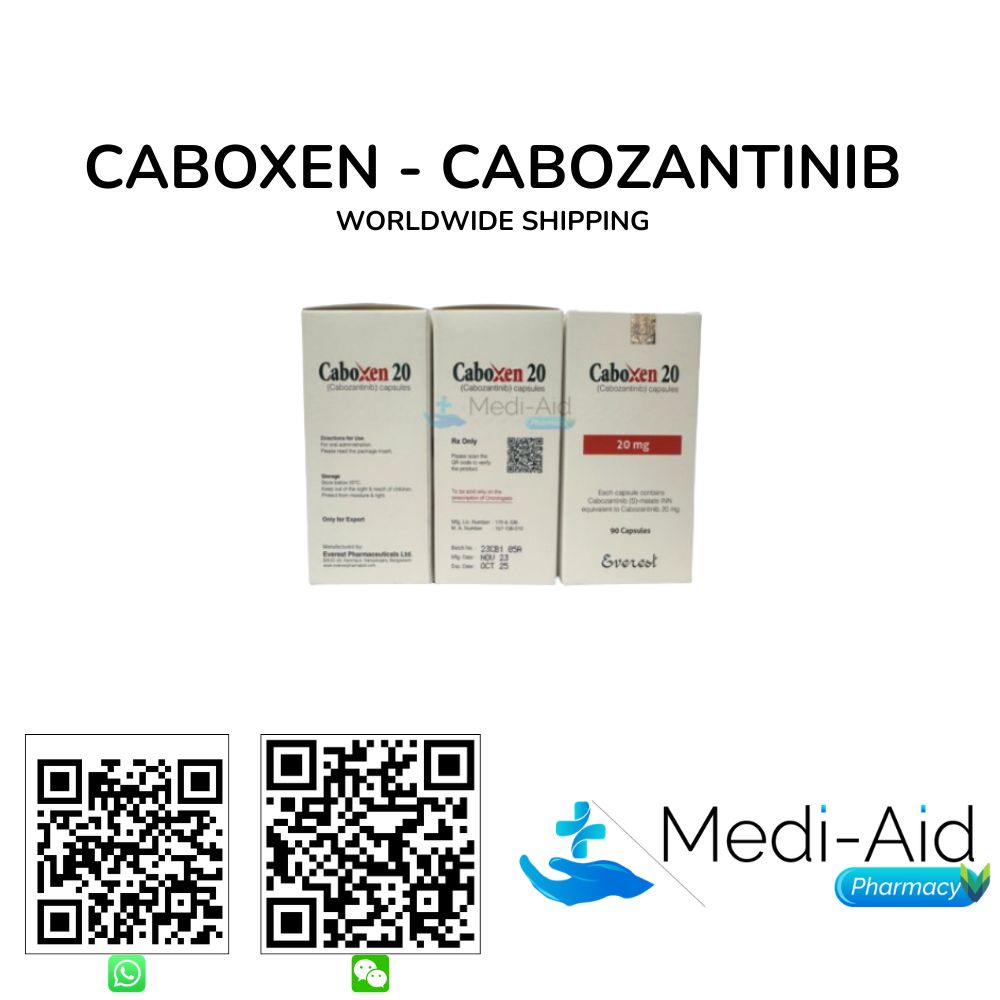
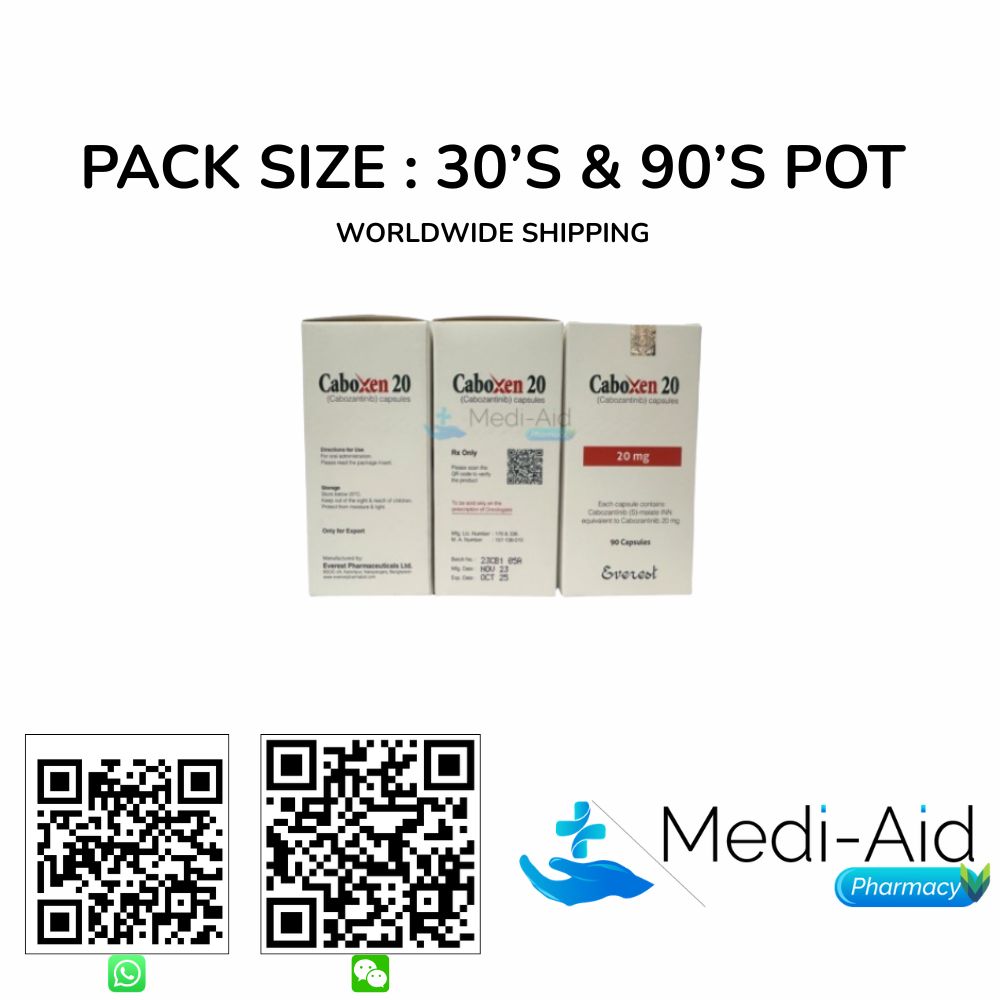
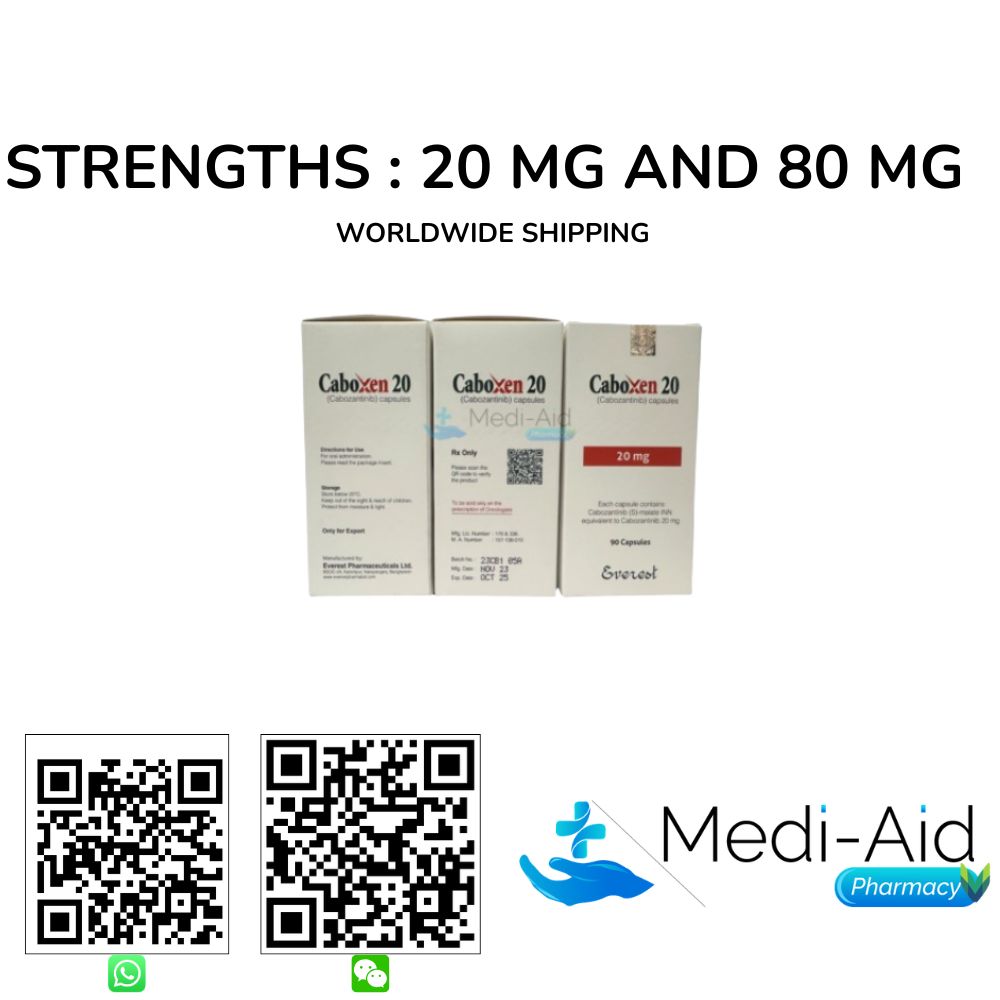
Caboxen 20 MG And 80 MG (Cabozantinib)
Product Name : Caboxen
Generic Name : Cabozantinib
Formulation : Capsule
Available Pack Size : 30’s & 90’s
Available Strengths : 20 mg and 80 mg
Registrations : Bangladesh

Product Information
Caboxen 20 MG & 80 MG (Cabozantinib) is a multi-receptor tyrosine kinase inhibitor (TKI) that simultaneously targets VEGFR2, MET, AXL, RET, KIT, TYRO3, MER, TIE2, FLT3, and TRKB the principal kinase drivers of tumour angiogenesis, invasive growth, and therapy resistance in advanced solid malignancies. Cabozantinib exerts its anti-tumour effect by blocking VEGFR2-dependent tumour neo-vascularisation, MET-driven invasive escape from VEGFR-targeted therapy, and AXL-mediated immune evasion and metastatic progression, producing simultaneous suppression of angiogenic signalling and oncogenic kinase activity across multiple tumour types. As part of Mediaid Pharmacy’s comprehensive oncology and specialty medicines portfolio, Caboxen 20 MG and 80 MG gives patients and oncologists access to internationally validated, multi-targeted cabozantinib therapy. Caboxen 20 mg and 80 mg capsules are registered in Bangladesh and globally supplied by Mediaid Pharmacy with worldwide shipping.
Basic Product Information of Caboxen 20 MG & 80 MG (Cabozantinib)
| Brand Name | Caboxen 20 MG & 80 MG (Cabozantinib) |
| Generic Name | Cabozantinib |
| Drug Class | Multi-Receptor Tyrosine Kinase Inhibitor (VEGFR2 / MET / AXL / RET Inhibitor) |
| Available Strengths | 20 mg and 80 mg |
| Formulation | Capsule |
| Pack Size | 30 Capsules per Pack; 90 Capsules per Pack |
| Primary Indications | Progressive Metastatic Medullary Thyroid Cancer (MTC); Advanced Renal Cell Carcinoma (RCC); Previously Treated Hepatocellular Carcinoma (HCC) |
| Regulatory Approvals | USFDA Approved (Medullary Thyroid Cancer, Renal Cell Carcinoma, Hepatocellular Carcinoma). EMA Approved. |
| Originator Brands | Cometriq (Capsule / MTC) and Cabometyx (Tablet / RCC, HCC) by Exelixis / Ipsen |
| Global Supplier | Mediaid Pharmacy Worldwide Shipping Available |
| Registration | Bangladesh |
| Storage Conditions | Store below 30°C in a dry place away from direct light and moisture. Keep out of the reach of children. |
How Caboxen 20 MG & 80 MG Works Multi-Receptor Tyrosine Kinase Inhibition Mechanism
Cabozantinib, the active ingredient in Caboxen 20 MG and 80 MG, is a small-molecule, multi-receptor tyrosine kinase inhibitor (TKI) with potent inhibitory activity against a broad panel of receptor tyrosine kinases (RTKs) central to tumour angiogenesis, growth, survival, and metastatic dissemination. Cabozantinib’s primary molecular targets include Vascular Endothelial Growth Factor Receptor 2 (VEGFR2), Hepatocyte Growth Factor Receptor (MET), and AXL receptor tyrosine kinase, in addition to RET, KIT, TYRO3, MER, TIE2, FLT3, and TRKB. By simultaneously suppressing these interconnected oncogenic and angiogenic signalling pathways, Cabozantinib produces a multi-dimensional anti-tumour effect that single-target VEGFR inhibitors cannot replicate. Solid tumours most susceptible to cabozantinib including renal cell carcinoma (RCC), medullary thyroid cancer (MTC), and hepatocellular carcinoma (HCC) are characterised by pathological co-activation of VEGFR, MET, and AXL, which drives angiogenesis, invasion, and resistance to prior targeted therapies.
Cabozantinib’s mechanistic advantage over first-generation VEGFR-targeting agents such as sunitinib and sorafenib derives from its ability to block the MET-driven compensatory escape mechanism the primary molecular pathway by which tumours overcome VEGFR2 suppression and acquire resistance to anti-angiogenic monotherapy. When VEGFR2 is blocked, HGF/MET signalling is upregulated as a tumour survival mechanism, restoring angiogenesis and promoting invasive growth; cabozantinib blocks both axes simultaneously, preventing this escape. AXL inhibition confers an additional benefit by suppressing immune evasion AXL activation on tumour cells and tumour-associated macrophages reduces NK cell activity and CD8+ T-cell infiltration within the tumour microenvironment, and AXL blockade by cabozantinib restores innate and adaptive anti-tumour immune surveillance. Mediaid Pharmacy’s oncology medicines catalogue includes a broad range of targeted kinase inhibitors and precision oncology agents used alongside cabozantinib in comprehensive solid tumour management.
In the landmark EXAM trial in progressive metastatic medullary thyroid cancer, cabozantinib delivered a median progression-free survival (PFS) of 11.2 months versus 4.0 months for placebo a hazard ratio of 0.28 representing a 72% reduction in disease progression risk. In the METEOR trial in advanced renal cell carcinoma following prior antiangiogenic therapy, cabozantinib achieved a median overall survival (OS) of 21.4 months versus 16.5 months for everolimus, with a median PFS of 7.4 months versus 3.8 months establishing cabozantinib as the benchmark second-line RCC agent. In the CABOSUN trial in intermediate- and poor-risk treatment-naïve advanced RCC, cabozantinib demonstrated a median PFS of 8.6 months versus 5.3 months for sunitinib (HR 0.48), establishing first-line superiority over the prior standard-of-care VEGFR TKI in this population.
Approved Indications for Caboxen 20 MG & 80 MG (Cabozantinib)
Caboxen 20 MG and 80 MG (Cabozantinib) is indicated across three distinct solid tumour settings where multi-kinase VEGFR/MET/AXL inhibition delivers clinically significant outcomes:
|
Progressive Metastatic Medullary Thyroid Cancer (MTC) USFDA and EMA approved for adult patients with progressive, unresectable, locally advanced or metastatic medullary thyroid cancer (MTC). MTC is a calcitonin-secreting neuroendocrine malignancy driven by RET proto-oncogene mutations in both sporadic and hereditary (MEN2) forms, and by RET-independent oncogenic signalling in RET-wild-type tumours. In the EXAM trial, cabozantinib reduced the risk of progression or death by 72% versus placebo (HR 0.28), with a median PFS of 11.2 months versus 4.0 months the largest PFS gain demonstrated by any single agent in progressive MTC at the time of approval. |
Advanced Renal Cell Carcinoma (RCC) First-Line and Second-Line USFDA approved for adult patients with advanced renal cell carcinoma. In the second-line setting, the METEOR trial demonstrated cabozantinib achieved a median OS of 21.4 months versus 16.5 months for everolimus (HR 0.66) following prior antiangiogenic therapy. In the first-line CABOSUN trial, cabozantinib produced a median PFS of 8.6 months versus 5.3 months for sunitinib (HR 0.48) in intermediate- and poor-risk patients, establishing superiority over the prior VEGFR TKI standard of care in this risk group. |
|
Previously Treated Hepatocellular Carcinoma (HCC) USFDA approved for adult patients with hepatocellular carcinoma who have previously received sorafenib. In the CELESTIA trial, cabozantinib significantly improved median OS to 10.2 months versus 8.0 months for placebo (HR 0.76) in sorafenib-experienced HCC patients, with a median PFS of 5.2 months versus 1.9 months providing a meaningful second-line systemic therapy option in a setting historically lacking effective treatments beyond best supportive care. |
Flexible Capsule Dosing 20 MG and 80 MG Strengths The Caboxen 20 MG and 80 MG capsule strengths enable precise dose titration across the full therapeutic dose range. The standard 140 mg daily dose (for MTC) is achieved using one 80 mg capsule plus three 20 mg capsules. Dose reductions to 100 mg daily (one 80 mg + one 20 mg) and 60 mg daily (three 20 mg capsules) are facilitated without tablet manipulation or splitting each dose step is assembled from the available Caboxen capsule strengths. |
Key Clinical Benefits of Caboxen 20 MG & 80 MG (Cabozantinib)
|
72% Reduction in MTC Progression Risk EXAM Trial In the EXAM phase III trial of progressive metastatic medullary thyroid cancer, cabozantinib produced a median PFS of 11.2 months versus 4.0 months for placebo (HR 0.28, p<0.001) a 72% reduction in the risk of disease progression or death. This remains the most significant single-agent PFS improvement demonstrated in progressive MTC, establishing cabozantinib as the global standard systemic therapy for this rare thyroid malignancy. |
Superior OS in Post-Antiangiogenic RCC METEOR Trial In the METEOR trial of advanced RCC following prior VEGFR-targeted therapy, cabozantinib achieved a median OS of 21.4 months versus 16.5 months for everolimus (HR 0.66, p=0.00026) and a median PFS of 7.4 months versus 3.8 months (HR 0.51). Both PFS and OS were statistically superior making cabozantinib the benchmark agent for second-line RCC treatment following antiangiogenic therapy failure. |
First-Line RCC Superiority Over Sunitinib CABOSUN Trial In the CABOSUN randomised trial of treatment-naïve intermediate- and poor-risk advanced RCC, cabozantinib produced a median PFS of 8.6 months versus 5.3 months for sunitinib (HR 0.48, p=0.0008). The objective response rate was 20% versus 9% for sunitinib establishing cabozantinib’s first-line superiority over the previous VEGFR TKI standard of care in unfavourable-risk RCC. |
|
Simultaneous VEGFR/MET/AXL Blockade Addressing Resistance Mechanisms Cabozantinib’s unique multi-kinase pharmacology addresses the two primary mechanisms by which tumours escape VEGFR-only blockade: MET upregulation (compensatory angiogenic rescue) and AXL-mediated immune evasion and invasion. By targeting all three kinase axes simultaneously, cabozantinib produces deeper and more durable anti-tumour control than VEGFR-selective agents in sunitinib- and sorafenib-refractory solid tumours. |
Meaningful OS Benefit in Second-Line HCC CELESTIA Trial In the CELESTIA trial of sorafenib-experienced hepatocellular carcinoma, cabozantinib produced a median OS of 10.2 months versus 8.0 months for placebo (HR 0.76, p=0.005) and a median PFS of 5.2 months versus 1.9 months (HR 0.44) providing a statistically and clinically significant second-line option in advanced HCC, a setting where effective systemic options remain limited. |
Oral Once-Daily Administration with Precise Dose Adjustment Cabozantinib is administered orally once daily, eliminating intravenous chemotherapy infusion requirements. The availability of both 20 MG and 80 MG capsule strengths in Caboxen enables oncologists to execute the full dose reduction protocol from the standard 140 mg starting dose to 100 mg and then 60 mg precisely and without tablet splitting or manipulation, ensuring accurate dosing at every reduction step. |
How to Take Caboxen 20 MG & 80 MG (Cabozantinib) Dosage Guidelines
Route of Administration: Oral (taken by mouth) once daily, on an empty stomach patients must not eat for at least 2 hours before and 1 hour after each dose. Cabozantinib capsules must be swallowed whole and must not be opened, crushed, or dissolved. If a dose is missed, it should only be taken if the next scheduled dose is more than 12 hours away.
Standard Adult Starting Dose Medullary Thyroid Cancer (MTC): 140 mg orally once daily (one 80 mg Caboxen capsule + three 20 mg Caboxen capsules). Continue until disease progression or unacceptable toxicity. Do not administer Caboxen with food; the fasted dosing requirement is mandatory for cabozantinib due to clinically significant food-effect on absorption (high-fat meals increase cabozantinib AUC by approximately 57%).
First Dose Reduction 100 mg Once Daily: One 80 mg Caboxen capsule + one 20 mg Caboxen capsule once daily. Indicated for Grade 3 or higher adverse reactions, Grade 2 adverse reactions that are intolerable despite supportive management, or any adverse reactions requiring dose reduction per the prescribing oncologist’s clinical judgement.
Second Dose Reduction 60 mg Once Daily: Three 20 mg Caboxen capsules once daily. Indicated when the patient cannot tolerate 100 mg once daily and continued therapy is clinically appropriate. Permanently discontinue Caboxen (Cabozantinib) if the patient cannot tolerate 60 mg once daily.
Strong CYP3A4 Inhibitor Co-Administration: Reduce the Caboxen (Cabozantinib) dose by 40 mg when co-administered with a strong CYP3A4 inhibitor (such as ketoconazole, itraconazole, clarithromycin, atazanavir, nelfinavir, ritonavir, saquinavir, telithromycin, or voriconazole). Resume the dose used prior to initiation of the strong CYP3A4 inhibitor 2–3 days after discontinuing the inhibitor.
Strong CYP3A4 Inducer Co-Administration: Increase the Caboxen (Cabozantinib) dose by 40 mg when co-administered with a strong CYP3A4 inducer (such as rifampicin, carbamazepine, phenytoin, phenobarbital, or St. John’s Wort). Resume the dose used prior to initiation of the strong CYP3A4 inducer 2–3 days after discontinuing the inducer. Do not exceed 180 mg daily.
Hepatic and Renal Impairment: Reduce the starting Caboxen dose to 80 mg once daily in patients with mild or moderate hepatic impairment (Child-Pugh A or B). Cabozantinib is not recommended in patients with severe hepatic impairment (Child-Pugh C) as no clinical data are available. No dose adjustment is required for patients with mild to moderate renal impairment; use with caution in severe renal impairment.
Clinical Monitoring Requirements During Caboxen (Cabozantinib) Treatment
Regular clinical monitoring is mandatory throughout Caboxen (Cabozantinib) treatment. Oncologists must monitor for gastrointestinal perforations and fistulae the most clinically critical serious adverse reaction, reported in approximately 3% of patients; Caboxen must be permanently discontinued if a perforation or Grade 4 fistula is confirmed. Severe haemorrhage including fatal pulmonary, gastrointestinal, and genitourinary haemorrhages was reported in approximately 3% of cabozantinib-treated patients in EXAM; permanent discontinuation is required for Grade 3 or higher haemorrhage. Arterial and venous thromboembolic events, including myocardial infarction, cerebrovascular accident, pulmonary embolism, and deep vein thrombosis, have been reported and require prompt evaluation and treatment interruption or discontinuation per severity. Hypertension should be monitored throughout treatment with blood pressure assessments before initiation and regularly during therapy; uncontrolled hypertension despite antihypertensive therapy requires dose reduction or temporary interruption. Hepatotoxicity including elevation of ALT, AST, and bilirubin requires liver function testing before initiation and periodically during treatment; hepatotoxicity Grade 3 or higher requires dose interruption and reduction upon recovery. Palmar-Plantar Erythrodysesthesia Syndrome (PPES), also known as hand-foot syndrome, is among the most common dose-limiting dermatological toxicities and should be actively monitored and managed with dose modification, urea-based emollients, and wound care as clinically indicated.
Drug Interactions and Important Safety Information for Caboxen (Cabozantinib)
Strong CYP3A4 inducers including rifampicin, carbamazepine, phenytoin, phenobarbital, St. John’s Wort (Hypericum perforatum), rifabutin, and rifapentine significantly reduce cabozantinib plasma exposure and must be avoided during Caboxen treatment wherever clinically possible, as they reduce cabozantinib area under the curve (AUC) by approximately 77%. When co-administration of a strong CYP3A4 inducer cannot be avoided, the Caboxen dose should be increased by 40 mg per day as described in dosing guidelines, and the prior dose resumed within 2–3 days of inducer discontinuation. Strong CYP3A4 inhibitors including ketoconazole, itraconazole, clarithromycin, ritonavir, and grapefruit/grapefruit juice increase cabozantinib plasma concentrations substantially and must be avoided or used with a corresponding dose reduction of 40 mg daily, with clinical vigilance for toxicity intensification.
Cabozantinib is a substrate and inhibitor of P-glycoprotein (P-gp) and Breast Cancer Resistance Protein (BCRP). Co-administration with P-gp or BCRP substrates with narrow therapeutic indices including digoxin, methotrexate, topotecan, and irinotecan may increase the plasma concentrations and toxicity risk of these agents; use the lowest effective doses and monitor closely. Cabozantinib may additionally potentiate the effects of anticoagulant agents including warfarin, as haemorrhagic risk is compounded by concurrent anticoagulation therapy; regular INR monitoring is essential if warfarin co-administration is clinically unavoidable. Patients must disclose all current medications, supplements, and herbal preparations to their oncologist before initiating Caboxen therapy.
Side Effects and Precautions of Caboxen 20 MG & 80 MG (Cabozantinib)
|
Common Side Effects Diarrhoea (reported in approximately 64% of EXAM patients) Palmar-Plantar Erythrodysesthesia Syndrome / PPES (hand-foot syndrome) Nausea and vomiting Decreased appetite and weight loss Fatigue and asthenia Stomatitis and oral mucositis Hypertension (blood pressure elevation) Constipation Hair colour changes (depigmentation) Dysgeusia (taste disturbance) and dysphonia |
Serious Warnings and Precautions Gastrointestinal Perforations and Fistulae reported in approximately 3% of patients; permanently discontinue if confirmed. Fatal cases have been reported. Severe Haemorrhage including fatal pulmonary, gastrointestinal, and genitourinary haemorrhage reported in approximately 3% of patients. Permanently discontinue for Grade 3 or higher haemorrhage or any fatal haemorrhagic event. Arterial and Venous Thromboembolism including fatal myocardial infarction, cerebrovascular accidents, pulmonary embolism, and deep vein thrombosis. Permanently discontinue for arterial thromboembolic events. Wound Healing Complications cabozantinib must be held for at least 28 days before scheduled surgery and must not be resumed until adequate wound healing is confirmed. Osteonecrosis of the Jaw (ONJ) particularly in patients with history of bisphosphonate use, dental procedures, or poor oral hygiene. Dental examination and any required invasive dental procedures must be completed before initiating Caboxen therapy. Embryo-Foetal Toxicity cabozantinib may cause foetal harm. Female patients must use highly effective contraception during treatment and for 4 months after the final dose. Not recommended during pregnancy or breastfeeding. |
Who Should Use Caboxen 20 MG & 80 MG (Cabozantinib)?
Caboxen 20 MG and 80 MG (Cabozantinib) is indicated for adult patients across three oncology settings: adults with progressive, unresectable, locally advanced or metastatic medullary thyroid cancer (MTC) with documented radiographic progression; adults with advanced renal cell carcinoma (RCC) either as first-line therapy in intermediate- or poor-risk patients or following prior antiangiogenic therapy; and adults with hepatocellular carcinoma (HCC) who have previously received sorafenib and have documented disease progression. Patients must have confirmed histological or cytological diagnosis and be assessed as having adequate hepatic function (Child-Pugh A or B), cardiac function, and blood pressure control before initiating Caboxen therapy. For MTC patients, assessment of RET mutation status is strongly recommended to inform prognosis and therapy sequencing, though RET mutation status is not a prerequisite for cabozantinib eligibility. Caboxen is prescribed exclusively by oncologists and endocrine oncology specialists with expertise in targeted therapy for solid tumours. A comprehensive baseline assessment including liver function tests, renal function, blood pressure, wound healing status, and dental evaluation is mandatory before commencing therapy. For patients requiring a complete portfolio of targeted oncology therapies including agents used in combination or sequentially with cabozantinib in RCC, HCC, and thyroid cancer management Mediaid Pharmacy’s oncology specialty medicines portfolio provides a comprehensive range of precision cancer treatments sourced from verified international manufacturers.
Global Supplier: Mediaid Pharmacy Worldwide Shipping for Caboxen 20 MG & 80 MG (Cabozantinib)
Mediaid Pharmacy is a trusted global supplier of specialty oncology and targeted therapy medications. Caboxen 20 MG and 80 MG (Cabozantinib) is available through Mediaid Pharmacy with reliable worldwide shipping to South Asia, the Middle East, Africa, Southeast Asia, Europe, and beyond. Our specialist team provides complete order support including pricing quotations, stock availability confirmation, regulatory and import documentation, and end-to-end international delivery tracking. Contact Mediaid Pharmacy directly via WhatsApp, phone, or WeChat for all enquiries regarding Caboxen (Cabozantinib) availability, pack size options (30’s and 90’s), pricing, and international delivery to your country.
Why Choose Caboxen 20 MG & 80 MG (Cabozantinib) from Mediaid Pharmacy?
Caboxen 20 MG and 80 MG represents a clinically proven and globally accessible cabozantinib formulation for patients with progressive MTC, advanced RCC, and previously treated HCC the three solid malignancies for which cabozantinib has demonstrated statistically significant survival benefit in phase III randomised trials. The availability of both the 20 MG and 80 MG capsule strengths is a critical pharmacological necessity: together, they enable oncologists to administer the full standard 140 mg starting dose (one 80 mg + three 20 mg capsules) and execute the two-step dose reduction protocol to 100 mg (one 80 mg + one 20 mg) and 60 mg (three 20 mg) with precision, without tablet manipulation or splitting. Supplied in 30-capsule and 90-capsule pack sizes, Caboxen accommodates both monthly dispensing cycles and longer-supply prescriptions, supporting continuity of therapy for patients maintained on chronic cabozantinib dosing across all approved indications. Distributed globally by Mediaid Pharmacy with worldwide shipping, Caboxen gives patients and oncology teams in both developed and emerging healthcare markets access to fully validated cabozantinib multi-kinase inhibitor therapy. For patients and oncologists requiring a comprehensive range of targeted solid tumour and oncology medicines, Mediaid Pharmacy’s oncology medicines section provides a complete portfolio of specialty cancer treatments sourced from verified manufacturers. For any patient or oncologist seeking a proven, accessible, and precisely dosed cabozantinib option, Caboxen 20 MG and 80 MG from Mediaid Pharmacy is the trusted choice.
Frequently Asked Questions About Caboxen 20 MG & 80 MG (Cabozantinib)
What is Caboxen 20 MG & 80 MG (Cabozantinib) used for?
Caboxen 20 MG and 80 MG is a multi-receptor tyrosine kinase inhibitor (TKI) used to treat three types of advanced solid tumours: progressive metastatic medullary thyroid cancer (MTC) in adult patients with documented radiographic progression; advanced renal cell carcinoma (RCC) in adults either as first-line treatment in intermediate- or poor-risk disease or following prior antiangiogenic therapy; and hepatocellular carcinoma (HCC) in adults who have previously been treated with sorafenib. Cabozantinib works by simultaneously blocking VEGFR2, MET, AXL, RET, and other receptor tyrosine kinases that drive tumour angiogenesis, invasive growth, and resistance to prior targeted therapies.
What is the correct starting dose of Caboxen (Cabozantinib) for medullary thyroid cancer?
The standard starting dose of Caboxen (Cabozantinib) for progressive metastatic medullary thyroid cancer is 140 mg orally once daily, taken on an empty stomach (no food for at least 2 hours before and 1 hour after the dose). This 140 mg dose is assembled using one 80 mg Caboxen capsule and three 20 mg Caboxen capsules. If dose reduction is required due to adverse reactions, the dose is reduced first to 100 mg once daily (one 80 mg + one 20 mg capsule) and then to 60 mg once daily (three 20 mg capsules). Always follow your prescribing oncologist’s exact instructions.
What strengths and pack sizes is Caboxen (Cabozantinib) available in?
Caboxen is available as 20 mg and 80 mg cabozantinib capsules, supplied in pack sizes of 30 capsules and 90 capsules. Both the 20 MG and 80 MG capsule strengths are required to construct the standard 140 mg starting dose and to execute the two-step dose reduction protocol (140 mg → 100 mg → 60 mg) precisely. The 90-capsule pack supports a longer dispensing supply, reducing the frequency of pharmacy visits for patients on chronic cabozantinib therapy.
Why must Caboxen (Cabozantinib) be taken on an empty stomach?
Cabozantinib must be taken on an empty stomach because food particularly high-fat meals increases cabozantinib plasma exposure (AUC) by approximately 57%, significantly altering the pharmacokinetic profile and increasing the risk of adverse reactions at the standard dose. Patients must not eat for at least 2 hours before and at least 1 hour after each Caboxen dose. Grapefruit and grapefruit juice must also be avoided throughout treatment, as grapefruit is a strong CYP3A4 inhibitor and will substantially increase cabozantinib plasma concentrations.
What are the most serious side effects of Caboxen (Cabozantinib)?
The most clinically serious adverse reactions associated with Caboxen (Cabozantinib) include gastrointestinal perforations and fistulae (approximately 3% of patients, potentially fatal), severe haemorrhage including pulmonary and gastrointestinal bleeding (approximately 3% of patients), arterial and venous thromboembolic events including myocardial infarction and cerebrovascular accidents, hypertensive crisis, Grade 3–4 hepatotoxicity, wound healing complications, and osteonecrosis of the jaw. Common adverse reactions include diarrhoea, palmar-plantar erythrodysesthesia syndrome (PPES/hand-foot syndrome), nausea, fatigue, decreased appetite, stomatitis, and hypertension. All patients must be clinically monitored throughout therapy and must report any new or worsening symptoms promptly to their oncologist.
Does Caboxen (Cabozantinib) require RET mutation testing before starting treatment?
RET mutation testing is not a mandatory prerequisite for initiating Caboxen (Cabozantinib) in medullary thyroid cancer cabozantinib is approved for progressive metastatic MTC regardless of RET mutation status, as it demonstrated clinical benefit in both RET mutation-positive and RET-wild-type MTC patients in the EXAM trial. However, RET mutation testing is strongly recommended at diagnosis as part of a comprehensive molecular profiling assessment to guide therapy sequencing, identify candidates for selective RET inhibitors (such as selpercatinib or pralsetinib), and inform hereditary risk assessment (RET germline mutations cause MEN2 syndromes). Your oncologist will determine the appropriate molecular testing strategy for your individual case.
Is Caboxen (Cabozantinib) safe during pregnancy or while breastfeeding?
No. Caboxen (Cabozantinib) is not recommended during pregnancy or breastfeeding. Based on its mechanism of action and animal study data, cabozantinib may cause foetal harm, including embryo-foetal lethality and teratogenicity. Female patients of childbearing potential must use highly effective contraception during Caboxen treatment and for at least 4 months after the final dose. Male patients with female partners of childbearing potential should also use effective contraception during treatment and for at least 4 months after the final dose. Cabozantinib should not be used during breastfeeding; it is not known whether cabozantinib or its metabolites are excreted in human breast milk. Consult your oncologist before starting Caboxen if you are pregnant, planning to conceive, or currently breastfeeding.
Can I order Caboxen 20 MG & 80 MG (Cabozantinib) online with worldwide shipping?
Yes. Mediaid Pharmacy supplies Caboxen 20 MG and 80 MG (Cabozantinib) to patients and healthcare providers globally, in both 30-capsule and 90-capsule pack sizes, with worldwide shipping. Contact Mediaid Pharmacy via WhatsApp, phone, or WeChat at +8801773428128, or send an email enquiry to info@mediaidpharmacy.com for pricing, stock availability, import documentation support, and international delivery details for your country.
Order Caboxen 20 MG & 80 MG (Cabozantinib) with Worldwide Shipping
Phone / WhatsApp / WeChat: +8801773428128 | Email: info@mediaidpharmacy.com
Related products
-
Alecnib 150 MG (Alectinib)
-
Olanib 50 MG (Olaparib INN )
-
Hepanib 200 MG (Sorafenib)
-
Laronib 25MG & 100MG (Larotrectinib)
-
Tofaxen 5 MG (Tofacitinib)
-
Olaparix 150MG (Olaparib)
-
Regonix 40MG ( Regorafenib )
-
Lapanix 250 MG (Lapatinib)
-
Mavixen 100 MG / 40 MG (Glecaprevir / Pibrentasvir )
-
Osimert 80 MG (Osimertinib)