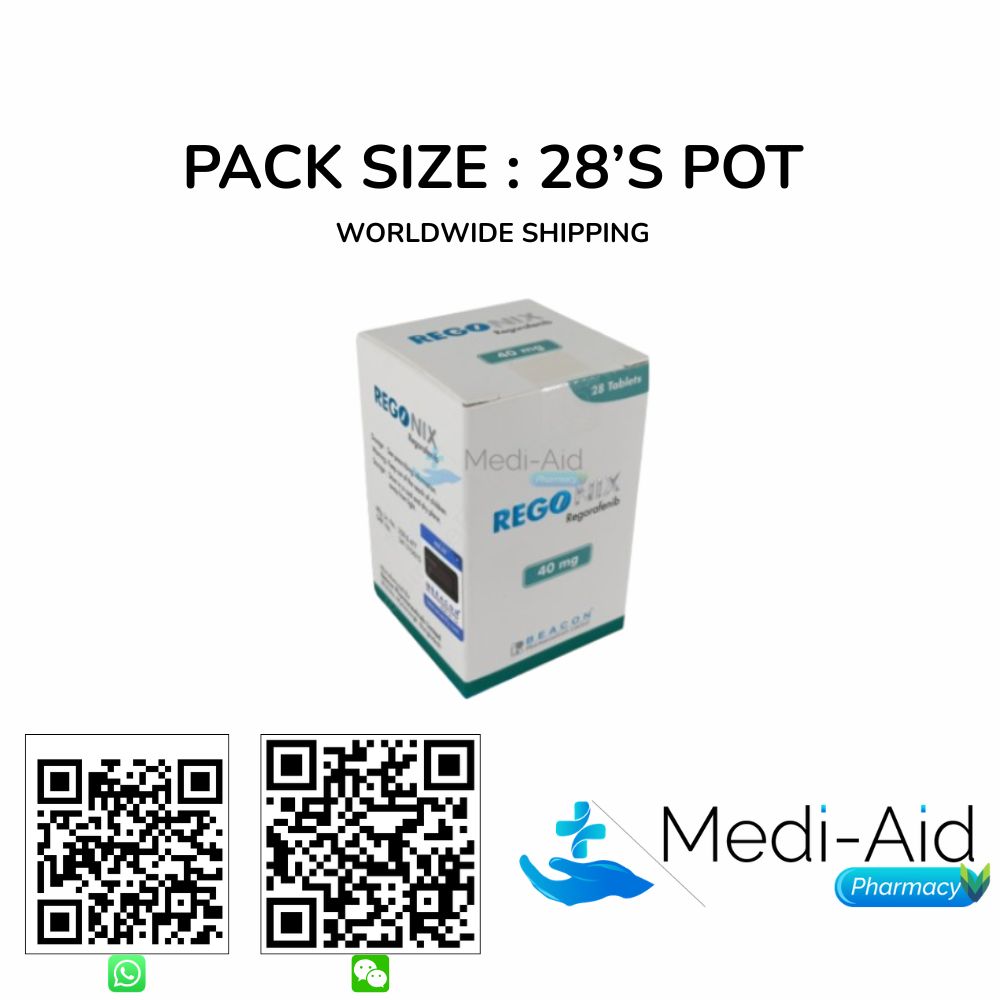
Regonix 40MG ( Regorafenib )
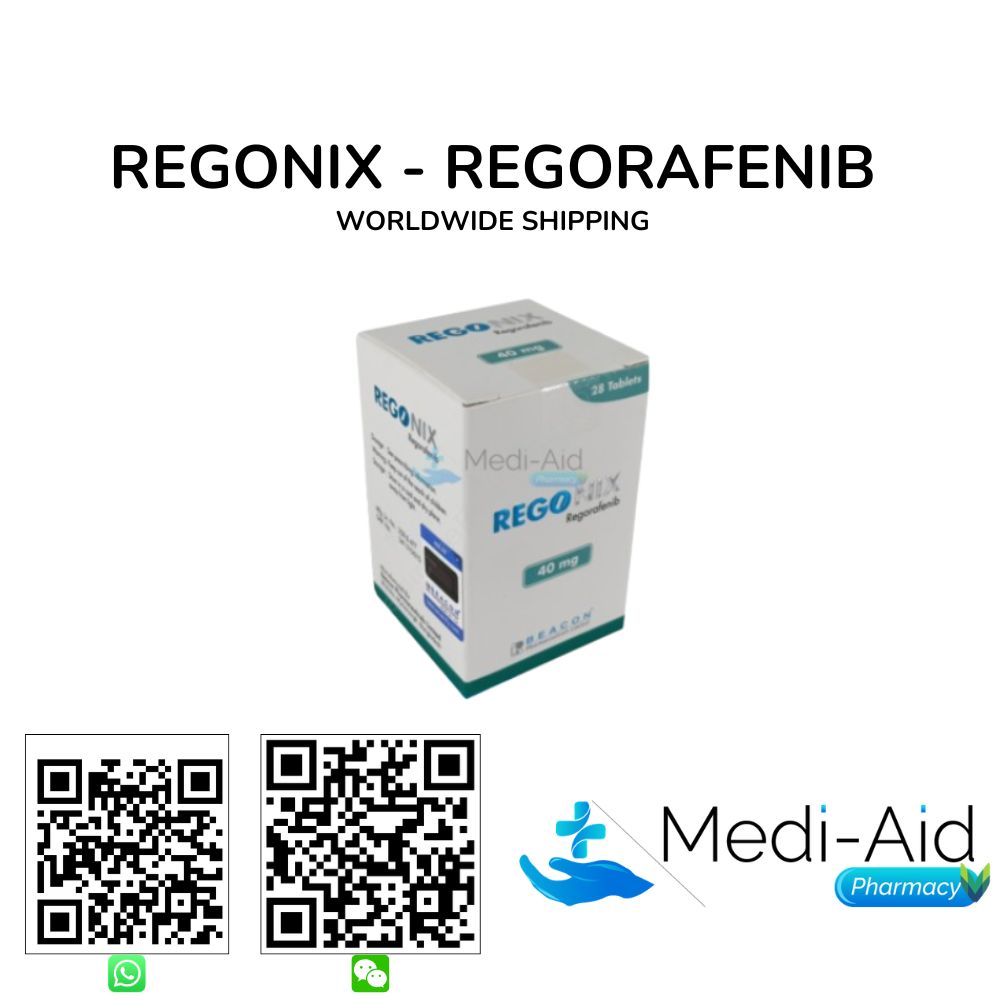
Product Name: Regonix ( Regorafenib )
Generic Name: Regorafenib
Formulation: Tablet
Available Pack Size: 28’s
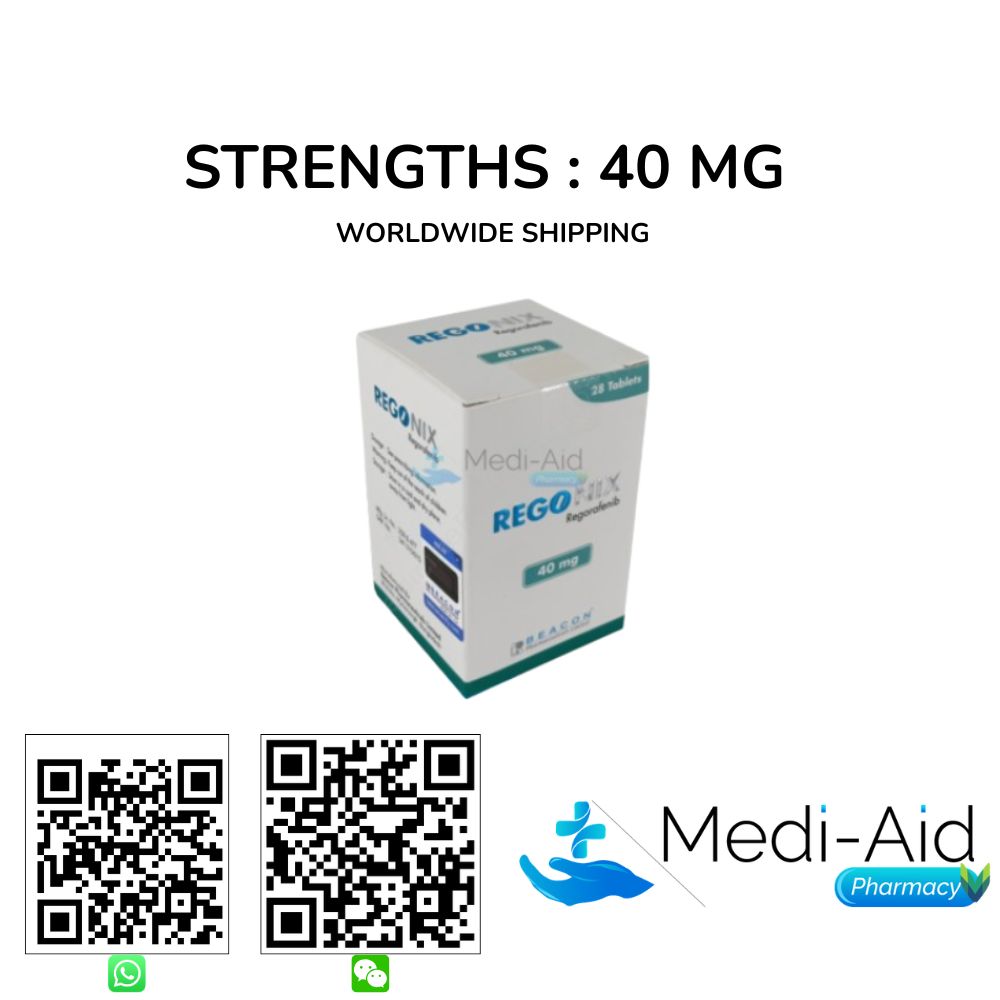
Available Strengths: 40mg
Registrations: Bangladesh

Product Information
Regonix 40MG (Regorafenib) is a potent oral multi-kinase inhibitor with a uniquely broad kinase-inhibition profile spanning tumour angiogenesis, oncogenesis, tumour microenvironment signalling, metastasis, and tumour immunity pathways simultaneously. It inhibits VEGFR-1, VEGFR-2, VEGFR-3, TIE2, PDGFR-α, PDGFR-β, FGFR-1, FGFR-2, KIT, RET, RAF-1, BRAF, BRAFV600E, and CSF1R a target coverage that distinguishes Regorafenib from narrower-spectrum agents. Regonix is indicated as monotherapy for adult patients with metastatic colorectal cancer (mCRC) previously treated with standard therapies, unresectable or metastatic gastrointestinal stromal tumours (GIST) refractory to imatinib and sunitinib, and hepatocellular carcinoma (HCC) previously treated with sorafenib. Oncologists seeking a comprehensive oncology and targeted cancer medicines portfolio including agents for colorectal cancer, GIST, and liver cancer management can review the full Mediaid Pharmacy oncology range. Regonix is registered in Bangladesh and globally supplied by Mediaid Pharmacy with worldwide shipping.
Basic Product Information of Regonix 40MG (Regorafenib)
| Brand Name | Regonix (Regorafenib) |
| Generic Name | Regorafenib INN (as Regorafenib Monohydrate) |
| Drug Class | Oral Multi-Kinase Inhibitor ATC code L01EX05. Targets: VEGFR1/2/3, TIE2, PDGFR-α/β, FGFR1/2, KIT, RET, RAF-1, BRAF, BRAFV600E, CSF1R |
| Available Strength | 40mg |
| Formulation | Film-Coated Tablet |
| Pack Size | 28 Tablets per Pack (one full 4-week treatment cycle) |
| Dosing Schedule | 160mg (four 40mg tablets) once daily 3 weeks on / 1 week off per 4-week cycle |
| Primary Indications | Metastatic colorectal cancer (mCRC) after prior therapies; unresectable/metastatic GIST after imatinib and sunitinib; hepatocellular carcinoma (HCC) after sorafenib |
| Regulatory Approvals | USFDA Approved (September 2012 mCRC; February 2013 GIST; April 2017 HCC). EMA Approved. Health Canada Approved. Registered in Bangladesh. |
| Originator Brand | Stivarga by Bayer AG |
| Global Supplier | Mediaid Pharmacy Worldwide Shipping Available |
| Registration | Bangladesh |
| Storage Conditions | Store below 30°C. Keep in original container with desiccant. Do not store above 30°C or expose to light and moisture. Keep out of the reach of children. |
How Regonix 40MG (Regorafenib) Works Broad Multi-Kinase Inhibition Across Four Oncological Pathways
Regorafenib, the active ingredient in Regonix 40MG, is a small-molecule oral multi-kinase inhibitor structurally related to sorafenib differing by a single fluorine atom on the central phenyl ring that produces significantly greater potency against angiogenic receptors including VEGFR-2 and FGFR-1 as a direct consequence of this structural modification. Regorafenib simultaneously inhibits at least 17 clinically relevant kinases across four distinct oncological domains: tumour angiogenesis via VEGFR-1, VEGFR-2, VEGFR-3, and TIE2; tumour oncogenesis via KIT, RET, RAF-1, BRAF, and BRAFV600E; tumour metastasis and stroma via PDGFR-α, PDGFR-β, FGFR-1, FGFR-2, and VEGFR-3; and tumour immunity regulation via CSF1R (Colony Stimulating Factor 1 Receptor) the pathway controlling tumour-associated macrophage (TAM) differentiation and immunosuppressive polarisation within the tumour microenvironment. This CSF1R-targeting dimension is unique among standard-approved kinase inhibitors for colorectal cancer and gives Regorafenib a degree of immunomodulatory activity that supports its emerging investigation in combination with immune checkpoint inhibitors.
Regorafenib is extensively metabolised in the liver by CYP3A4 and UGT1A9 into two pharmacologically active metabolites M-2 (BAY 75-7495) and M-5 (BAY 81-8752) both of which reach similar plasma concentrations to the parent compound at steady state and contribute to the overall anti-tumour activity. At the approved 160mg once-daily dose, regorafenib achieves a bioavailability of 70 to 83%, and its plasma protein binding is approximately 99.5% similar for both the parent compound and its active metabolites. The half-life ranges from 20 to 40 hours, enabling once-daily dosing. The structured 3-weeks-on / 1-week-off treatment cycle was specifically designed based on Phase I pharmacokinetic data to achieve sustained tumour growth suppression during the on-therapy period while providing the one-week recovery interval needed to manage cumulative toxicities particularly hand-foot skin reaction and hepatic effects and to allow patients to remain on therapy over multiple cycles without dose-limiting toxicity accumulation. The 28-tablet pack of Regonix 40MG contains exactly one complete treatment cycle: 21 treatment days at 160mg (84 tablets of 40mg 21 × four tablets) plus 7 off-treatment days. For oncologists seeking the broadest possible range of oncology and specialty cancer medicines, including agents for gastrointestinal, hepatic, and colorectal malignancies, Mediaid Pharmacy’s oncology portfolio provides global access with worldwide supply.
Approved Indications for Regonix 40MG (Regorafenib)
Regonix (Regorafenib) 40MG is approved as monotherapy for the following oncological conditions in adult patients:
|
Metastatic Colorectal Cancer (mCRC) Refractory Setting (CORRECT + CONCUR Trials) Regonix is indicated for adult patients with metastatic colorectal cancer (mCRC) who have been previously treated with, or are not considered candidates for, all available standard therapies including fluoropyrimidine-based chemotherapy (5-FU/capecitabine), oxaliplatin, irinotecan, anti-VEGF therapy (bevacizumab), and, if RAS wild-type, anti-EGFR therapy (cetuximab or panitumumab). This is the most established indication, approved by USFDA in September 2012 based on the Phase III CORRECT trial (760 patients; HR 0.77; p=0.0052), which demonstrated a median overall survival of 6.4 months versus 5.0 months for placebo a 29% reduction in risk of death and a disease control rate of 44% versus 15%. The Phase III CONCUR trial confirmed these results in an Asian population (HR 0.55; OS 8.8 vs 6.3 months). EMA approved. |
Unresectable or Metastatic GIST After Imatinib and Sunitinib (GRID Trial) Regonix is indicated for adult patients with locally advanced, unresectable, or metastatic gastrointestinal stromal tumours (GIST) who have progressed on or are intolerant to prior treatment with imatinib and sunitinib. Regorafenib’s potent inhibition of mutated KIT the principal oncogenic driver in the majority of GIST cases underpins its activity in this population. The Phase III GRID trial (199 patients) demonstrated a significant improvement in progression-free survival with Regorafenib versus placebo (4.8 vs 0.9 months; HR 0.27; p<0.0001). USFDA approved February 2013; EMA approved. |
|
Hepatocellular Carcinoma (HCC) After Sorafenib (RESORCE Trial) Regonix is indicated for adult patients with hepatocellular carcinoma (HCC) who have been previously treated with sorafenib. Importantly, RESORCE enrolled patients who had tolerably progressed on sorafenib specifically requiring that patients had received at least 400mg of sorafenib per day for at least 20 of the last 28 days before progression. The Phase III RESORCE trial (573 patients) demonstrated a median overall survival of 10.6 months versus 7.8 months for placebo (HR 0.63; 95% CI 0.50–0.79; p<0.0001) establishing Regorafenib as the first agent to show an OS benefit in post-sorafenib HCC. USFDA approved April 2017; EMA approved. |
Paediatric GIST and Future Indications In some regulatory jurisdictions, Regorafenib has paediatric approval or expanded access for paediatric soft-tissue sarcomas and GIST. Ongoing clinical investigation is evaluating Regorafenib in combination with immune checkpoint inhibitors (e.g., nivolumab, pembrolizumab) leveraging its CSF1R-mediated immunomodulatory effects in the tumour microenvironment as well as in gastric cancer and other solid tumours, potentially broadening its therapeutic reach beyond the three currently approved indications. |
Key Clinical Benefits of Regonix 40MG (Regorafenib)
|
Broadest Kinase Target Coverage of Any Approved Colorectal Cancer TKI Regorafenib inhibits at least 17 kinases across angiogenesis (VEGFR1-3, TIE2), oncogenesis (KIT, RET, RAF-1, BRAF, BRAFV600E), stroma and metastasis (PDGFR-α/β, FGFR1/2), and tumour immunity (CSF1R) simultaneously shutting down multiple escape pathways and resistance mechanisms that limit the effectiveness of narrower-spectrum agents in heavily pre-treated solid tumours. |
CORRECT Trial Proven OS Benefit in Refractory mCRC In the pivotal Phase III CORRECT trial (760 patients), Regorafenib reduced the risk of death by 23% (HR 0.77; p=0.0052) and improved median OS from 5.0 to 6.4 months with a disease control rate of 44% versus 15% for placebo representing a meaningful, statistically significant and clinically consistent survival benefit in patients who had exhausted all prior standard treatment options. |
RESORCE First Agent to Demonstrate OS Benefit Post-Sorafenib in HCC The Phase III RESORCE trial established Regorafenib as the first systemic therapy to demonstrate a significant overall survival benefit (10.6 vs 7.8 months; HR 0.63; p<0.0001) in patients with HCC who had progressed on sorafenib creating a sequential sorafenib → regorafenib treatment continuum for advanced liver cancer and establishing a new standard of care in the second-line HCC setting. |
|
GRID Trial 82% Reduction in Disease Progression Risk in GIST In the Phase III GRID trial, Regorafenib produced an 82% reduction in the risk of disease progression or death versus placebo in patients with imatinib/sunitinib-refractory GIST (HR 0.27; PFS 4.8 vs 0.9 months; p<0.0001) the largest relative risk reduction ever demonstrated in a phase III GIST trial, driven primarily by Regorafenib’s potent inhibition of secondary KIT mutations that drive acquired resistance to prior TKIs. |
Cycle-Matched 28-Tablet Pack for Uninterrupted Therapy The 28-tablet pack of Regonix 40MG is precisely matched to one complete 4-week treatment cycle 21 treatment days at 160mg per day (four tablets × 21 days = 84 tablets total, covering doses for one cycle across both treatment and the off week) eliminating partial-pack waste and supporting seamless cycle-by-cycle dispensing in clinical practice without excess stock or re-order mid-cycle. |
Registered in Bangladesh Affordable Access to Stivarga-Equivalent Therapy Regonix (Regorafenib) is registered in Bangladesh and distributed globally by Mediaid Pharmacy, delivering the same multi-kinase inhibition as Stivarga (Bayer) at a significantly lower cost making late-line colorectal cancer, GIST, and liver cancer treatment financially accessible to patients in South Asia, the Middle East, Africa, and other markets where the originator product price is prohibitive. |
How to Take Regonix 40MG (Regorafenib) Dosage and Administration Guidelines
Route and Timing: Oral taken once daily at the same time each day. Tablets must be swallowed whole with water. Regonix must be taken with a low-fat meal containing less than 30% fat content. A high-fat meal (approximately 50% fat) increases Regorafenib and metabolite exposure significantly and must be avoided. A fasted state similarly alters pharmacokinetics and is not recommended. Taking Regonix consistently with a light, low-fat breakfast is the most practical approach.
Standard Recommended Dose: 160mg (four 40mg tablets of Regonix) once daily for the first 3 weeks of each 4-week treatment cycle, followed by 1 week off therapy. This 3-weeks-on / 1-week-off schedule constitutes one full treatment cycle. Treatment should continue until disease progression or unacceptable toxicity.
Missed Dose: If a dose is missed, it may be taken on the same day as soon as the patient remembers provided it is still the same calendar day. Do not take two doses on the same day to compensate for a missed dose. Resume the regular schedule on the following day.
First Dose Reduction (120mg): Reduce Regonix to 120mg (three 40mg tablets) once daily for the first occurrence of Grade 3 hand-foot skin reaction (HFSR), Grade 3 or 4 symptomatic hepatotoxicity (AST/ALT elevation with bilirubin elevation above 2× ULN), or Grade 3 hypertension uncontrolled by antihypertensive therapy.
Second Dose Reduction (80mg): Reduce Regonix to 80mg (two 40mg tablets) once daily for recurrent Grade 3 HFSR after first dose reduction, or for other persistent Grade 3 toxicities at 120mg. If toxicity cannot be managed at 80mg, permanently discontinue Regonix.
Strong CYP3A4 Inhibitors: Avoid concomitant use of strong CYP3A4 inhibitors (e.g., clarithromycin, ketoconazole, itraconazole, posaconazole, grapefruit, grapefruit juice, Seville oranges) as they significantly increase Regorafenib and active metabolite plasma concentrations. If co-administration is clinically unavoidable, reduce the Regonix dose to 80mg once daily.
Strong CYP3A4 Inducers: Avoid strong CYP3A4 inducers (e.g., rifampin, rifapentine, carbamazepine, phenytoin, phenobarbital, St. John’s Wort) as they markedly reduce Regorafenib plasma exposure and may compromise anti-tumour efficacy.
Hepatic Impairment: No dose adjustment required for mild (Child-Pugh Class A) or moderate (Child-Pugh Class B) hepatic impairment, though close liver function monitoring is essential. Regonix is not recommended in patients with severe hepatic impairment (Child-Pugh Class C). If severe drug-induced hepatotoxicity develops during treatment, permanently discontinue Regonix.
Renal Impairment and Paediatric Use: No dose adjustment is required for patients with mild to severe renal impairment. Data are limited for end-stage renal disease requiring dialysis. The safety and efficacy in patients under 18 years of age have not been established for the approved adult indications; use is not recommended in the paediatric population outside of clinical trials.
Clinical Monitoring Requirements During Regonix (Regorafenib) Treatment
Comprehensive clinical monitoring is mandatory throughout Regonix treatment. Liver function tests (LFTs) including AST, ALT, alkaline phosphatase, and total bilirubin must be checked at baseline and at minimum every 2 weeks during the first 2 months, then at least monthly thereafter. In the CORRECT trial, elevations in bilirubin (≥Grade 3) occurred in 8% and ALT elevation (≥Grade 3) in 5% of patients; any patient with AST or ALT exceeding 20× the upper limit of normal (ULN) or AST/ALT exceeding 3× ULN with concurrent bilirubin exceeding 2× ULN warrants permanent discontinuation. Blood pressure must be monitored at baseline and at least weekly during the first 6 weeks of treatment; hypertension must be controlled before initiating each cycle and throughout therapy Grade 3 hypertension requires dose reduction and/or antihypertensive escalation. Complete blood count (CBC) including haemoglobin, neutrophil count, and platelet count should be monitored regularly, as anaemia, neutropenia, and thrombocytopenia have been observed. Patients must be assessed for clinical signs and symptoms of hand-foot skin reaction (HFSR), which is the most clinically significant dose-limiting toxicity and typically appears within the first cycle; early dermatological management with emollients, dose interruption, and dose reduction is key to maintaining patients on therapy. Thyroid function tests (TSH) should be checked at baseline and periodically, as hypothyroidism may occur. Patients must be monitored for signs of haemorrhage, gastrointestinal perforation or fistula, wound healing complications, Reversible Posterior Leukoencephalopathy Syndrome (RPLS), and cardiac ischaemia and infarction.
Drug Interactions and Important Safety Information for Regonix (Regorafenib)
Regorafenib is primarily metabolised by CYP3A4 and UGT1A9. Strong CYP3A4 inhibitors including clarithromycin, ketoconazole, itraconazole, posaconazole, voriconazole, nefazodone, ritonavir, and grapefruit or grapefruit juice substantially increase plasma concentrations of Regorafenib and its active metabolites M-2 and M-5; avoid their co-administration wherever possible. If clinically unavoidable, reduce the Regonix dose to 80mg once daily during the period of co-administration. Strong CYP3A4 inducers including rifampin, rifapentine, rifabutin, carbamazepine, phenytoin, phenobarbital, and St. John’s Wort significantly reduce Regorafenib plasma exposure; avoid concomitant use, as adequate therapeutic drug levels cannot reliably be maintained.
Regorafenib is also an inhibitor of UGT1A1 and UGT1A9 and may increase the systemic exposure of drugs primarily eliminated by glucuronidation via these pathways (e.g., irinotecan, its active metabolite SN-38). Clinicians must review the full concomitant medication list carefully before initiating Regonix, particularly in patients receiving other anticancer agents, anticoagulants, or drugs with narrow therapeutic index that are UGT1A1/UGT1A9 or CYP3A4 substrates. Warfarin and other coumarins require more frequent INR monitoring during Regonix treatment. Patients must inform their treating oncologist of all current medications, dietary supplements, and herbal products before starting therapy.
Side Effects and Precautions of Regonix (Regorafenib)
|
Common Side Effects (≥30% Incidence) Hand-Foot Skin Reaction (HFSR / Palmar-Plantar Erythrodysaesthesia) the most clinically significant dose-limiting toxicity; all grades in 47–56% of patients, Grade 3 in 17% in the CORRECT trial; typically appears in cycle 1 Fatigue and asthenia often early onset; present in >30% of patients across all three approved indications Diarrhoea Grade 3 in 7–10% of patients Decreased appetite and weight loss Hypertension Grade 3 in 7–11% of patients; requires close BP monitoring, antihypertensive management, and dose adjustment Elevated liver enzymes (AST, ALT, bilirubin) Grade 3 in 5–8%; hepatotoxicity monitoring mandatory every 2 weeks in the first 2 months Rash and skin desquamation all grades in 26% of patients in CORRECT; Grade 3 in 6% Stomatitis and oral mucositis Dysphonia (voice changes) Hypothyroidism monitor TSH throughout treatment |
Serious Warnings and Precautions Hepatotoxicity severe and fatal cases have been observed. Mandatory LFT monitoring at baseline and every 2 weeks for the first 2 months. Permanently discontinue if AST or ALT exceeds 20× ULN, or if AST/ALT exceeds 3× ULN with concurrent bilirubin exceeding 2× ULN. Not recommended in Child-Pugh Class C hepatic impairment. Haemorrhagic events including fatal haemorrhage have been reported. Do not initiate Regonix in patients with recent or active significant bleeding. Monitor closely for signs of haemorrhage throughout treatment. Gastrointestinal perforation and fistula formation potentially life-threatening. Permanently discontinue if GI perforation or life-threatening fistula occurs. Use with extreme caution in patients with prior abdominal surgery or known GI inflammation. Hypertension may be severe or difficult to control. Blood pressure must be controlled before each cycle begins. Permanently discontinue in patients with hypertensive crisis unresponsive to antihypertensive therapy. Cardiac ischaemia and myocardial infarction reported in approximately 1.2% of patients. Suspend Regonix in patients who develop new or worsening cardiac ischaemia or myocardial infarction; do not restart until fully recovered. Reversible Posterior Leukoencephalopathy Syndrome (RPLS) rare but potentially fatal; presents with headache, seizure, visual disturbance, confusion, or hypertension. Permanently discontinue if RPLS is confirmed. Wound healing impairment withhold Regonix at least 2 weeks before elective surgery. Do not restart until adequate wound healing is confirmed. Not recommended during pregnancy or breastfeeding. Effective contraception is required for both female and male patients during treatment and for at least 2 months (females) and 2 weeks (males) after the final dose. Regonix contains soya-derived lecithin; do not use in patients with hypersensitivity to peanut or soya. |
Who Should Use Regonix 40MG (Regorafenib)?
Regonix is indicated for adult oncology patients with metastatic colorectal cancer (mCRC) who have progressed on or are ineligible for all available standard therapies including fluoropyrimidine, oxaliplatin, irinotecan, anti-VEGF (bevacizumab), and, if RAS wild-type, anti-EGFR (cetuximab or panitumumab) therapies; patients with unresectable or metastatic gastrointestinal stromal tumours (GIST) following progression on or intolerance to both imatinib and sunitinib; and patients with hepatocellular carcinoma (HCC) who have been previously treated with sorafenib and who had tolerable disease progression on that agent. Regonix must be prescribed and supervised by a qualified medical oncologist or gastroenterological oncologist experienced in anticancer therapy. A pre-treatment assessment including liver function tests, blood pressure, CBC, thyroid function, cardiac evaluation, and full review of concomitant medications for CYP3A4 and UGT1A9 interactions is mandatory before initiating therapy. Oncologists and healthcare providers requiring comprehensive access to oncology and targeted cancer medicines including agents for gastrointestinal malignancies, prior-line therapies compatible with Regorafenib, and other specialty oncology treatments can consult Mediaid Pharmacy’s complete portfolio for worldwide availability and supply.
Registration and Supply: Regonix 40MG (Regorafenib) Bangladesh Registration
Regonix (Regorafenib) 40MG is a registered oncology medicine in Bangladesh, produced under pharmaceutical manufacturing standards required for domestic registration and international export. Bangladesh has emerged as an increasingly significant generic pharmaceutical manufacturing base for oncology and specialty medicines, with multiple manufacturers operating under international quality frameworks for export to regulated markets in Asia, Africa, the Middle East, and beyond. Regonix is available through Mediaid Pharmacy for international supply providing oncologists, hospitals, and patients worldwide with a more affordable pathway to Regorafenib-based treatment at a fraction of the originator Stivarga (Bayer) cost, without compromising on drug identity, strength, or dosing precision.
Global Supplier: Mediaid Pharmacy Worldwide Shipping for Regonix (Regorafenib)
Mediaid Pharmacy is a trusted global supplier of specialty oncology and targeted therapy medications. Regonix (Regorafenib) 40MG is available through Mediaid Pharmacy with reliable worldwide shipping to South Asia, the Middle East, Africa, Europe, and beyond. Our team provides full order support including pricing, availability confirmation, documentation, and delivery tracking for oncologists, hospitals, and patients requiring Regonix internationally. Contact Mediaid Pharmacy directly via WhatsApp, phone, or WeChat for enquiries about availability, pricing, and delivery to your country.
Why Choose Regonix 40MG (Regorafenib) from Mediaid Pharmacy?
Regonix 40MG delivers the same active ingredient as Stivarga (Bayer) Regorafenib with the same uniquely broad multi-kinase inhibition profile across 17 kinase targets spanning four oncological pathways, at a significantly more affordable price. The depth of its clinical trial evidence is exceptional: a statistically significant OS benefit in refractory mCRC (CORRECT; HR 0.77; p=0.0052), an 82% risk reduction in GIST progression (GRID; HR 0.27; p<0.0001), and the first proven OS benefit in post-sorafenib HCC (RESORCE; HR 0.63; p<0.0001) across three independent Phase III trials covering three distinct cancer types. The cycle-matched 28-tablet pack aligns precisely with the standard 3-weeks-on / 1-week-off treatment schedule, supporting uninterrupted cycle-by-cycle dispensing and patient management. Registered in Bangladesh and distributed globally by Mediaid Pharmacy, Regonix ensures that patients in markets where Stivarga’s originator pricing is inaccessible have a proven, affordable late-line treatment option for colorectal cancer, GIST, and liver cancer. For the full range of oncology medicines including colorectal cancer treatments, GIST management agents, and hepatocellular carcinoma therapies available through Mediaid Pharmacy worldwide, visit the oncology medicines page.
Frequently Asked Questions About Regonix 40MG (Regorafenib)
What is Regonix 40MG (Regorafenib) used for?
Regonix 40MG (Regorafenib) is an oral multi-kinase inhibitor approved for three oncological indications: metastatic colorectal cancer (mCRC) after failure of standard therapies including fluoropyrimidine, oxaliplatin, irinotecan, anti-VEGF, and anti-EGFR treatments; locally advanced, unresectable, or metastatic gastrointestinal stromal tumours (GIST) following prior treatment with imatinib and sunitinib; and hepatocellular carcinoma (HCC) previously treated with sorafenib. It simultaneously inhibits at least 17 protein kinases across angiogenesis, oncogenesis, metastasis/stroma, and tumour immunity pathways blocking tumour growth, vasculature formation, and the immunosuppressive tumour microenvironment.
What is the correct dose of Regonix (Regorafenib) and how is it taken?
The recommended dose of Regonix is 160mg (four 40mg tablets) taken orally once daily for 3 weeks followed by 1 week off, constituting one 4-week treatment cycle. Tablets must be swallowed whole with water and taken with a low-fat meal (less than 30% fat content) at the same time each day. Do not take Regonix while fasting or with a high-fat meal. Dose reductions to 120mg (three tablets) and then 80mg (two tablets) once daily are used to manage adverse reactions such as hand-foot skin reaction, hepatotoxicity, or hypertension. Always follow your treating oncologist’s dosing and monitoring instructions exactly.
What strength and pack size is Regonix (Regorafenib) available in?
Regonix is available as 40mg film-coated tablets in a pack of 28 tablets. The 28-tablet pack is specifically designed to align with one complete 4-week treatment cycle covering 21 days of active therapy at 160mg per day (four 40mg tablets) plus the 7-day off period enabling seamless, cycle-matched dispensing without partial-pack waste or mid-cycle restocking.
Is Regonix the same as Stivarga (Regorafenib by Bayer)?
Yes. Regonix contains the same active ingredient as Stivarga Regorafenib in the same 40mg film-coated tablet strength and the same 3-weeks-on / 1-week-off treatment cycle design. Regonix is registered in Bangladesh and distributed globally by Mediaid Pharmacy, delivering the same broad multi-kinase inhibition across VEGFR, TIE2, PDGFR, FGFR, KIT, RET, RAF, BRAF, and CSF1R pathways as Stivarga, at a more accessible cost for patients in markets where the originator drug price is prohibitive.
What are the most common side effects of Regonix (Regorafenib)?
The most common side effects of Regonix (occurring in 30% or more of patients) include hand-foot skin reaction (HFSR), fatigue, diarrhoea, decreased appetite, hypertension, and infections. HFSR characterised by painful blistering, redness, and peeling of the palms and soles is the most clinically significant dose-limiting toxicity and typically appears during the first treatment cycle. Elevated liver enzymes (AST, ALT, bilirubin), rash, stomatitis, dysphonia, and hypothyroidism are also frequently observed. Serious risks include severe hepatotoxicity (including fatal cases), haemorrhage, gastrointestinal perforation, cardiac ischaemia, and Reversible Posterior Leukoencephalopathy Syndrome (RPLS). Always consult your oncologist for a complete individual risk assessment before and during Regonix treatment.
What liver function monitoring is required during Regonix (Regorafenib) treatment?
Liver function tests AST, ALT, and total bilirubin must be checked at baseline before starting Regonix and at minimum every two weeks during the first two months of treatment, then at least monthly thereafter. Severe and fatal hepatotoxicity has been reported in clinical trials. Any patient with AST or ALT exceeding 20× ULN, or AST/ALT exceeding 3× ULN with concurrent bilirubin exceeding 2× ULN, requires permanent discontinuation of Regonix. Regonix must not be used in patients with severe hepatic impairment (Child-Pugh Class C) or untreated biliary obstruction.
Does Regonix (Regorafenib) interact with CYP3A4 medications or grapefruit?
Yes. Regorafenib is primarily metabolised by CYP3A4 and UGT1A9. Strong CYP3A4 inhibitors including clarithromycin, ketoconazole, itraconazole, and grapefruit or grapefruit juice significantly increase Regorafenib plasma concentrations and increase toxicity risk. Reduce the Regonix dose to 80mg once daily if co-administration is unavoidable and grapefruit products must be avoided throughout treatment. Strong CYP3A4 inducers including rifampin, carbamazepine, phenytoin, and St. John’s Wort significantly reduce Regorafenib exposure and should be avoided. Regonix also inhibits UGT1A1 and UGT1A9 and may increase the exposure of co-administered drugs eliminated by these pathways, including irinotecan and its metabolite SN-38.
Can I order Regonix 40MG (Regorafenib) online with worldwide shipping?
Yes. Mediaid Pharmacy supplies Regonix (Regorafenib) 40MG to patients, oncologists, hospitals, and healthcare facilities globally with worldwide shipping. Contact Mediaid Pharmacy via WhatsApp, phone, or WeChat at +8801773428128, or send your enquiry to info@mediaidpharmacy.com for pricing, stock availability, and delivery details for your country.
Order Regonix 40MG (Regorafenib) with Worldwide Shipping
Phone / WhatsApp / WeChat: +8801773428128 | Email: info@mediaidpharmacy.com