
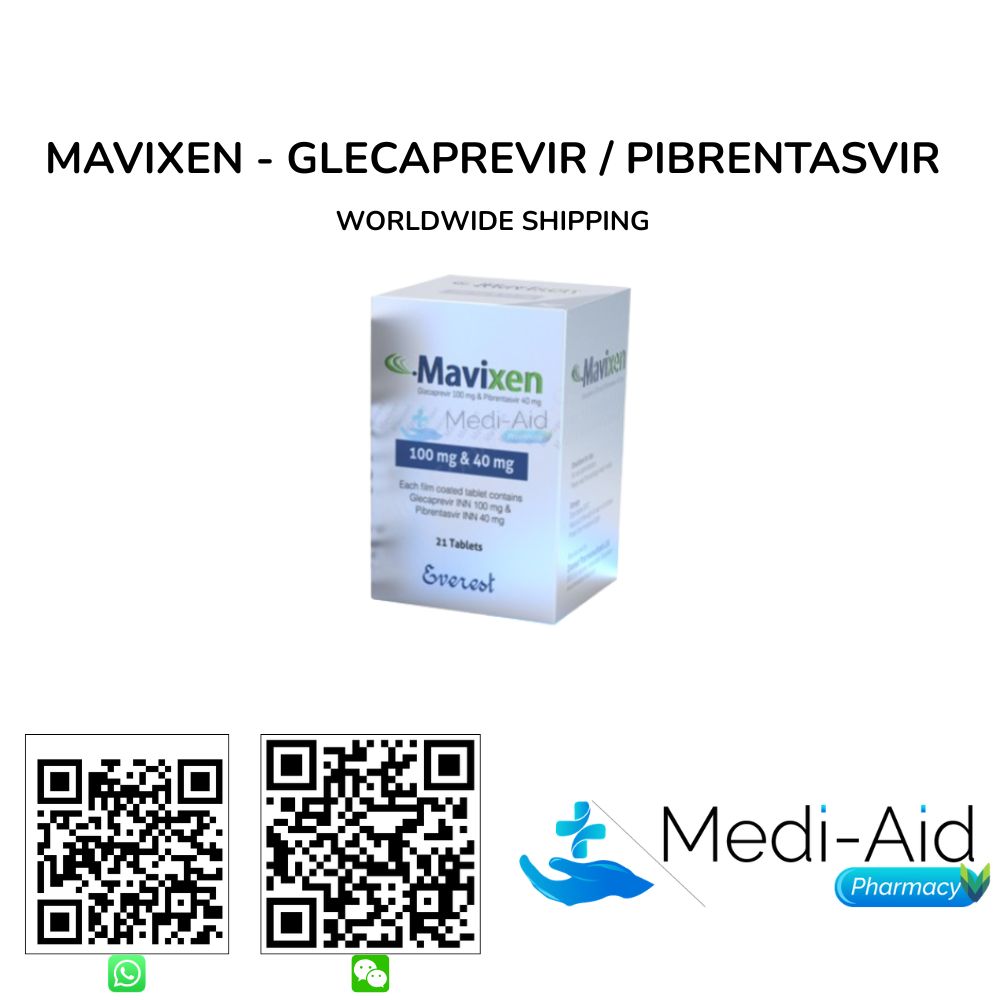


Mavixen 100 MG / 40 MG (Glecaprevir / Pibrentasvir )
Product Name : Mavixen
Generic Name : Glecaprevir 100 mg/Pibrentasvir 40 mg
Formulation : Tablet
Available Pack Size : 30’s Pot
Available Strengths : 40mg & 100mg
Registrations : Export Only

Product Information
Mavixen 100 MG/40 MG (Glecaprevir/Pibrentasvir) is a pangenotypic, fixed-dose combination direct-acting antiviral (DAA) engineered to deliver sustained virologic response (SVR12) the internationally accepted criterion for hepatitis C functional cure across all six major hepatitis C virus (HCV) genotypes (GT1 through GT6). Glecaprevir (100 mg per tablet), a pan-genotypic NS3/4A serine protease inhibitor, and Pibrentasvir (40 mg per tablet), a pan-genotypic NS5A replication complex inhibitor, simultaneously target two structurally distinct and independently essential stages of the HCV replication cycle, creating a dual-mechanism, high genetic barrier regimen that achieves SVR12 rates exceeding 97% across all HCV genotypes and key patient subgroups in the pivotal ENDURANCE and EXPEDITION clinical trial series.
The recommended daily dose of three Mavixen tablets (Glecaprevir 300 mg / Pibrentasvir 120 mg) taken together once daily with food delivers the therapeutically validated drug exposure required for pan-genotypic viral suppression. The landmark 8-week treatment duration for treatment-naive patients without cirrhosis across all six HCV genotypes positions Mavixen 100 MG/40 MG as the shortest-duration, fully pangenotypic, interferon-free HCV cure regimen among currently approved direct-acting antiviral combinations.
Mavixen 100 MG/40 MG is indicated for chronic HCV infection in adults and adolescents aged 12 years and older (weighing ≥45 kg), encompassing treatment-naive patients of any genotype, pegylated interferon (Peg-IFN) and/or ribavirin (RBV)-experienced patients, sofosbuvir (SOF)-experienced patients without prior NS5A inhibitor or NS3/4A protease inhibitor failure, and patients with severe renal impairment including those on haemodialysis without dose modification. Mediaid Pharmacy supplies Mavixen 100 MG/40 MG (Glecaprevir/Pibrentasvir) as part of its comprehensive oncology and specialty medicines portfolio, with worldwide shipping to licensed importers, hepatology hospitals, and healthcare distributors. Mavixen 100 MG/40 MG tablets are registered for export and globally supplied by Mediaid Pharmacy.
Basic Product Information of Mavixen 100 MG/40 MG (Glecaprevir/Pibrentasvir)
| Brand Name | Mavixen 100 MG/40 MG (Glecaprevir/Pibrentasvir) |
| Generic Name | Glecaprevir 100 mg / Pibrentasvir 40 mg |
| Drug Class | Pan-Genotypic NS3/4A Serine Protease Inhibitor (Glecaprevir) + NS5A Replication Complex Inhibitor (Pibrentasvir) / Pangenotypic Fixed-Dose Direct-Acting Antiviral (DAA) Combination / Chronic HCV Infection Treatment |
| Available Strengths | Glecaprevir 100 mg / Pibrentasvir 40 mg per tablet (recommended daily dose: 3 tablets once daily with food = Glecaprevir 300 mg / Pibrentasvir 120 mg total daily) |
| Formulation | Tablet |
| Pack Size | 30 Tablets per Pot (30’s Pot) |
| Primary Indications | Chronic Hepatitis C Virus (HCV) Infection Genotypes 1, 2, 3, 4, 5, and 6 in adults and adolescents aged ≥12 years weighing ≥45 kg; treatment-naive (any genotype, with or without compensated cirrhosis); Peg-IFN ± ribavirin ± sofosbuvir-experienced (without prior NS5A inhibitor or NS3/4A protease inhibitor failure); patients with severe renal impairment including those on haemodialysis (no dose adjustment required) |
| Regulatory Approvals | Export Only |
| Originator Brand | Maviret / Mavyret (Glecaprevir/Pibrentasvir) by AbbVie |
| Global Supplier | Mediaid Pharmacy Worldwide Shipping Available |
| Registration | Export Only |
| Storage Conditions | Store below 30°C in a dry place away from direct light and moisture. Keep out of the reach of children. |
How Mavixen 100 MG/40 MG Works Dual-Target Pan-Genotypic HCV Inhibition Mechanism
Glecaprevir, the NS3/4A protease inhibitor component of Mavixen 100 MG/40 MG, targets the HCV NS3/4A serine protease the bifunctional viral enzyme responsible for cleaving the HCV polyprotein precursor at four cis- and trans-cleavage sites (NS3/NS4A, NS4A/NS4B, NS4B/NS5A, and NS5A/NS5B junctions), generating the mature non-structural viral proteins NS4A, NS4B, NS5A, and NS5B required for assembly of the intracellular HCV replication complex.
By engaging the NS3/4A catalytic serine residue with high-affinity, selective binding, glecaprevir blocks HCV polyprotein processing and prevents the intracellular assembly of the viral replication apparatus. Glecaprevir achieves potent pan-genotypic NS3/4A inhibition through a macrocyclic P1–P3 chemical scaffold that engages conserved catalytic residues across all six HCV genotypes (GT1 through GT6), producing uniform NS3/4A protease inhibitory activity irrespective of viral genotype, subtype, or the single-position resistance-associated substitutions (RASs) that limit the efficacy of first-generation NS3/4A protease inhibitors such as simeprevir, paritaprevir, and grazoprevir.
Pibrentasvir, the NS5A inhibitor component of Mavixen 100 MG/40 MG, targets HCV NS5A the multifunctional zinc-binding phosphoprotein that functions as the essential structural scaffold of the HCV membranous web replication complex and simultaneously orchestrates intracellular HCV RNA replication and extracellular virion assembly. Pibrentasvir binds to Domain I of NS5A with picomolar affinity, disrupting NS5A dimerisation and membrane association and collapsing the replication complex architecture.
Unlike first-generation NS5A inhibitors (ledipasvir, daclatasvir, ombitasvir, and velpatasvir), pibrentasvir maintains potent pan-genotypic NS5A inhibitory activity against the clinically prevalent resistance-associated substitutions (RASs) at NS5A positions Y93H, L31M/V, Q30E/H/R, and A92K across GT1 through GT6 providing a significant pharmacological advantage in patients harbouring pre-existing NS5A RASs that diminish first-generation NS5A inhibitor efficacy.
The combination of glecaprevir and pibrentasvir in Mavixen creates a high genetic barrier to HCV resistance: simultaneous emergence of resistance-conferring mutations at both the independent NS3/4A and NS5A viral targets during the compressed 8-week treatment course is pharmacologically negligible, confirmed by the near-zero on-treatment breakthrough rates observed across the Mavixen pivotal trial programme. Clinicians managing patients with chronic HCV infection can access Mavixen 100 MG/40 MG alongside a comprehensive range of specialty hepatology and oncology agents through Mediaid Pharmacy’s oncology medicines catalogue.
In the landmark pivotal clinical trial programme for glecaprevir/pibrentasvir, Mavixen 100 MG/40 MG demonstrated SVR12 rates of 99.1% in GT1 treatment-naive patients without cirrhosis (ENDURANCE-1, 8 weeks), 99.7% in GT2 treatment-naive patients without cirrhosis (ENDURANCE-2, 8 weeks), 95.3% in GT3 treatment-naive patients without cirrhosis (ENDURANCE-3, 8 weeks), ≥99% in GT4/5/6 treatment-naive patients without cirrhosis (ENDURANCE-4, 8 weeks), and 99.0% in treatment-naive patients with compensated cirrhosis across all genotypes (EXPEDITION-1, 12 weeks).
The EXPEDITION-4 trial established an SVR12 rate of 98.1% in patients with severe chronic kidney disease (estimated glomerular filtration rate [eGFR] <30 mL/min/1.73 m²) or on haemodialysis, confirming that Mavixen requires no dose adjustment for any degree of renal impairment the only approved interferon-free pangenotypic DAA regimen validated at this level of SVR12 efficacy in a dedicated Phase III dialysis trial.
Approved Indications for Mavixen 100 MG/40 MG (Glecaprevir/Pibrentasvir)
Mavixen 100 MG/40 MG (Glecaprevir/Pibrentasvir) is indicated for chronic HCV infection across four principal patient population categories, spanning all six HCV genotypes and multiple prior treatment experience profiles:
|
HCV Genotypes 1, 2, 4, 5, and 6 Treatment-Naive, With or Without Compensated Cirrhosis Mavixen 100 MG/40 MG is indicated for treatment-naive adults and adolescents with HCV genotypes 1, 2, 4, 5, or 6, with or without compensated cirrhosis (Child-Pugh A). SVR12 rates of 99.1% (GT1, ENDURANCE-1), 99.7% (GT2, ENDURANCE-2), and ≥99% (GT4/5/6, ENDURANCE-4) were demonstrated at 8 weeks in patients without cirrhosis, establishing these genotypes as the highest SVR12 response subgroups in the Mavixen clinical programme. Treatment-naive patients with compensated cirrhosis (GT1/2/4/5/6) achieve SVR12 rates of 99.0% at 12 weeks (EXPEDITION-1). |
HCV Genotype 3 Treatment-Naive, With or Without Compensated Cirrhosis Mavixen 100 MG/40 MG is indicated for treatment-naive GT3 patients without cirrhosis at 8 weeks (SVR12 95.3%, ENDURANCE-3) and GT3 patients with compensated cirrhosis at 12 weeks (SVR12 97.5%, SURVEYOR-2 Part 4). HCV genotype 3 is the second-most-prevalent genotype globally and has historically been the most challenging to treat with first-generation DAA combinations; glecaprevir/pibrentasvir SVR12 rates in GT3 represent the highest documented efficacy for this genotype with an 8-week interferon-free regimen. |
|
Peg-IFN ± Ribavirin ± Sofosbuvir-Experienced Patients (NS5A-Naive and NS3/4A PI-Naive) Mavixen is indicated for patients who previously received pegylated interferon (Peg-IFN) alone, ribavirin (RBV) alone, or Peg-IFN/RBV combination therapy, or sofosbuvir-based therapy without an NS5A inhibitor or NS3/4A protease inhibitor, and did not achieve SVR12. Treatment durations range from 8 weeks (GT1/4/5/6 without cirrhosis) to 12 weeks (GT3 without cirrhosis; GT1 with compensated cirrhosis) to 16 weeks (GT3 with compensated cirrhosis), determined by genotype and cirrhosis status per prescribing clinician assessment. |
Severe Renal Impairment and Haemodialysis Patients Any HCV Genotype, No Dose Adjustment Mavixen 100 MG/40 MG requires no dose adjustment in patients with any degree of renal impairment, including severe chronic kidney disease (eGFR <30 mL/min/1.73 m²) and end-stage renal disease (ESRD) patients on haemodialysis. In the EXPEDITION-4 trial the only dedicated Phase III HCV DAA study in dialysis patients glecaprevir/pibrentasvir achieved SVR12 in 98.1% of patients, establishing Mavixen as the preferred pangenotypic treatment for the high-prevalence HCV/chronic kidney disease (CKD) co-morbid population where renally-eliminated DAA regimens require dose modification or are contraindicated. |
Key Clinical Benefits of Mavixen 100 MG/40 MG (Glecaprevir/Pibrentasvir)
|
8-Week Pan-Genotypic HCV Cure for Treatment-Naive Patients All 6 Genotypes Mavixen 100 MG/40 MG (Glecaprevir/Pibrentasvir) is the only approved pangenotypic HCV regimen achieving SVR12 in 8 weeks for treatment-naive patients without cirrhosis across all six HCV genotypes simultaneously. This 8-week duration is the shortest approved full-course pan-genotypic HCV cure, reducing total pill burden, patient treatment fatigue, and total medication cost compared with all 12-week pangenotypic regimens. |
99.1% SVR12 in GT1 and 99.7% SVR12 in GT2 ENDURANCE-1 and ENDURANCE-2 In ENDURANCE-1 (GT1, treatment-naive, no cirrhosis, 8 weeks), glecaprevir/pibrentasvir achieved SVR12 in 99.1% of patients by intent-to-treat analysis. In ENDURANCE-2 (GT2, treatment-naive, no cirrhosis, 8 weeks), SVR12 was 99.7% the highest on-treatment SVR12 rates documented for any HCV GT1 or GT2 pangenotypic DAA regimen at 8 weeks in Phase III trials. |
95.3% SVR12 in GT3 Without Cirrhosis at 8 Weeks ENDURANCE-3 In ENDURANCE-3 (GT3, treatment-naive, no cirrhosis, 8 weeks), glecaprevir/pibrentasvir achieved SVR12 in 95.3% of patients the highest SVR12 rate reported for HCV genotype 3 with an 8-week interferon-free regimen. GT3 has historically been the most treatment-resistant HCV genotype; the 97.5% SVR12 at 12 weeks in GT3 with cirrhosis (SURVEYOR-2 Part 4) further confirms glecaprevir/pibrentasvir as the preferred pan-genotypic standard-of-care option across all GT3 subpopulations. |
|
99.0% SVR12 in Compensated Cirrhosis Across All Genotypes EXPEDITION-1 In EXPEDITION-1 (treatment-naive, compensated cirrhosis [Child-Pugh A], all HCV genotypes, 12 weeks), glecaprevir/pibrentasvir achieved SVR12 in 99.0% of patients, demonstrating that the high SVR12 rates observed in non-cirrhotic patients are fully maintained in compensated cirrhosis with a 12-week Mavixen course. Compensated cirrhosis has historically been associated with lower SVR12 rates and longer required durations with earlier DAA regimens. |
98.1% SVR12 in Severe Renal Impairment and Dialysis EXPEDITION-4 In EXPEDITION-4 (HCV patients with severe CKD [eGFR <30 mL/min/1.73 m²] or on haemodialysis, all genotypes, 12 weeks), glecaprevir/pibrentasvir achieved SVR12 in 98.1% of patients without dose adjustment. HCV infection affects approximately 5–8% of CKD patients and up to 10% of dialysis patients globally, making the lack of renal dose adjustment a clinically decisive advantage for Mavixen over ribavirin-based or renally-cleared DAA alternatives. |
Truly Pangenotypic No Mandatory Genotype Testing Required for Regimen Selection Mavixen 100 MG/40 MG delivers clinically meaningful SVR12 rates across all six HCV genotypes with a single fixed daily dose (3 tablets once daily with food), eliminating genotype-specific regimen selection. In resource-limited settings, Mavixen enables treatment initiation without mandatory pre-treatment genotype testing, streamlining the hepatitis C elimination pathway and reducing diagnostic costs that have historically delayed access to curative antiviral therapy. |
How to Take Mavixen 100 MG/40 MG (Glecaprevir/Pibrentasvir) Dosage Guidelines
Route of Administration and Recommended Daily Dose: Oral (taken by mouth) once daily with food. The recommended adult and adolescent (≥12 years, ≥45 kg) daily dose is three (3) Mavixen 100 MG/40 MG tablets taken together as a single daily dose with food, providing a total daily intake of Glecaprevir 300 mg and Pibrentasvir 120 mg. Food co-administration is mandatory: taking Mavixen without food significantly reduces both glecaprevir and pibrentasvir plasma exposures and must be avoided. Mavixen tablets must be swallowed whole and must not be crushed, dissolved, or chewed. If a dose is missed, patients should take the missed dose as soon as possible on the same calendar day. If the next scheduled dose is on the following day, skip the missed dose and resume the regular once-daily schedule. Do not double the dose to compensate for a missed dose.
Treatment Duration Treatment-Naive, No Cirrhosis (Any HCV Genotype, GT1 through GT6): 8 weeks (3 Mavixen tablets once daily for 56 consecutive days = approximately 168 tablets total = approximately 6 pots of 30 tablets per complete course). The 8-week treatment duration for treatment-naive, non-cirrhotic patients across all six HCV genotypes is the primary positioning advantage of Mavixen 100 MG/40 MG over all other approved pangenotypic DAA regimens.
Treatment Duration Treatment-Naive WITH Compensated Cirrhosis (Child-Pugh A): GT1, GT2, GT4, GT5, and GT6 patients with compensated cirrhosis: 8 weeks (per updated prescribing information; verify with current local product label and treating physician). GT3 patients with compensated cirrhosis: 12 weeks (3 Mavixen tablets once daily for 84 days = approximately 252 tablets = approximately 9 pots of 30 tablets per complete course).
Treatment Duration Peg-IFN ± Ribavirin ± Sofosbuvir-Experienced Patients (NS5A-Naive, NS3/4A PI-Naive): GT1, GT4, GT5, and GT6 experienced patients without cirrhosis: 8 weeks. GT1 experienced patients with compensated cirrhosis: 12 weeks. GT2 and GT3 experienced patients without cirrhosis: 12 weeks. GT3 experienced patients with compensated cirrhosis: 16 weeks (3 Mavixen tablets once daily for 112 days = the longest approved Mavixen course). Always follow the prescribing clinician’s exact treatment duration instructions based on documented HCV genotype, treatment history, and cirrhosis status confirmed by validated diagnostic methods (liver elastography, FIB-4, or liver biopsy).
Atazanavir Co-Administration (Contraindicated): Co-administration of Mavixen (Glecaprevir/Pibrentasvir) with atazanavir whether as standalone HIV treatment or within an atazanavir-boosted antiretroviral regimen is absolutely contraindicated due to significant glecaprevir plasma concentration increases that substantially elevate hepatotoxicity risk. HIV-positive patients with HCV co-infection who require Mavixen must have their antiretroviral regimen reviewed; if atazanavir is present, it must be replaced with a non-contraindicated alternative before Mavixen initiation.
Hepatic and Renal Impairment Dose Considerations: Mavixen 100 MG/40 MG is contraindicated in patients with moderate or severe hepatic impairment (Child-Pugh B or C) and in patients with any prior history of hepatic decompensation. No dose adjustment is required for any category of renal impairment, including severe CKD (eGFR <30 mL/min/1.73 m²) and end-stage renal disease requiring haemodialysis. Mavixen has not been studied and is not recommended in patients with prior decompensated liver disease (ascites, hepatic encephalopathy, variceal bleeding). Always follow the prescribing hepatologist’s exact dose and treatment duration instructions.
Clinical Monitoring Requirements During Mavixen (Glecaprevir/Pibrentasvir) Treatment
Comprehensive baseline and on-treatment laboratory monitoring is mandatory before and throughout Mavixen 100 MG/40 MG (Glecaprevir/Pibrentasvir) therapy. Before initiating Mavixen, prescribing clinicians must complete the following assessments without exception: Hepatitis B virus (HBV) serology HBsAg, anti-HBc (total or IgG), and anti-HBs is mandatory for all patients (Boxed Warning). HBV treatment-induced immune reconstitution can trigger HBV reactivation in patients with active HBV infection (HBsAg-positive) or, less commonly, in patients with resolved infection (HBsAg-negative, anti-HBc-positive).
HBsAg-positive patients must receive appropriate HBV antiviral prophylaxis (typically entecavir or tenofovir-based) initiated before or concurrently with Mavixen and continued per hepatology specialist guidance throughout the Mavixen course and post-treatment surveillance period. Anti-HBc-positive (HBsAg-negative) patients require periodic HBV DNA monitoring throughout the Mavixen course and the 12-week post-treatment follow-up period.
HCV RNA quantitative PCR (viral load) at baseline is required to confirm active HCV viraemia and establish a reference for on-treatment and post-treatment virological assessment. HCV genotyping and subtyping should be performed at baseline to determine the genotype-specific treatment duration applicable to each patient; while Mavixen’s pangenotypic activity eliminates genotype-dependence in regimen selection, genotyping directly determines whether the 8-, 12-, or 16-week course applies. The definitive clinical endpoint is HCV RNA undetectable at post-treatment week 12 (SVR12), confirming virological cure.
Liver function tests (serum ALT, AST, alkaline phosphatase, and total bilirubin) must be obtained at baseline; mild transient unconjugated hyperbilirubinaemia may occur during Mavixen therapy due to glecaprevir-mediated inhibition of the hepatic transporter UGT1A1 and does not represent hepatotoxicity. Hepatic fibrosis staging by liver elastography (FibroScan/transient elastography), FIB-4 index, APRI, or liver biopsy is required to confirm cirrhosis status and assign the correct treatment duration.
Renal function assessment (eGFR or serum creatinine) is recommended at baseline to document renal impairment category; no dose adjustment is required for any renal impairment category. Complete review of all concomitant medications including prescription drugs, over-the-counter products, herbal supplements, and antiretrovirals (in HIV co-infected patients) must be performed before Mavixen initiation to identify and manage clinically significant drug-drug interactions, particularly statin contraindications, atazanavir co-administration, and CYP3A4/P-gp inducer exposure.
Drug Interactions and Important Safety Information for Mavixen (Glecaprevir/Pibrentasvir)
Atazanavir (Absolutely Contraindicated): Co-administration of Mavixen (Glecaprevir/Pibrentasvir) with atazanavir as standalone HIV therapy or as a component of a cobicistat- or ritonavir-boosted atazanavir antiretroviral regimen is absolutely contraindicated. Atazanavir substantially increases glecaprevir plasma concentrations through combined hepatic uptake transporter inhibition (OATP1B1/1B3) and efflux transporter inhibition (P-gp/BCRP), significantly elevating hepatotoxicity risk. HIV-positive/HCV co-infected patients who require Mavixen treatment must have atazanavir replaced with a pharmacokinetically compatible alternative antiretroviral agent such as dolutegravir-, bictegravir-, or raltegravir-based regimens before Mavixen initiation.
Strong CYP3A4 and P-gp Inducers (Rifampicin Contraindicated; Carbamazepine, Phenytoin, Phenobarbital, St. John’s Wort Not Recommended): Potent inducers of CYP3A4 and/or P-glycoprotein including rifampicin (rifampin), carbamazepine, phenytoin, oxcarbazepine, phenobarbital, and St. John’s Wort (Hypericum perforatum) significantly reduce glecaprevir and pibrentasvir plasma exposures by accelerating their elimination, potentially reducing virological efficacy and SVR12 probability below the therapeutic threshold. Co-administration with rifampicin is contraindicated; co-administration with carbamazepine, phenytoin, phenobarbital, oxcarbazepine, and St. John’s Wort is not recommended. Clinicians must substitute all CYP3A4/P-gp inducer-based therapies with alternatives of lower inducing potential before starting Mavixen.
Statins (Multiple Contraindications and Dose Restrictions Review Required for All Patients): Glecaprevir and pibrentasvir inhibit the hepatic uptake transporters OATP1B1 and OATP1B3, as well as the efflux transporters P-gp and BCRP. Co-administration with HMG-CoA reductase inhibitors (statins) that are OATP1B1/1B3 and/or BCRP substrates may significantly increase statin plasma concentrations, elevating myopathy and rhabdomyolysis risk. Atorvastatin, lovastatin, and simvastatin are contraindicated with Mavixen due to marked statin plasma concentration increases. Rosuvastatin co-administration results in a significant rosuvastatin AUC increase and is also contraindicated or must be used at the lowest dose with close monitoring per local label. Fluvastatin is not recommended. Pravastatin may be co-administered at the lowest effective dose with monitoring for myopathy symptoms. Clinicians must conduct a complete statin medication review and implement appropriate statin substitution or dose reduction before prescribing Mavixen to any statin-treated patient.
Cyclosporine, Digoxin, and Narrow Therapeutic Index P-gp/OATP Substrates: Cyclosporine used in post-transplant HCV patients is a potent OATP1B1 and P-gp inhibitor that significantly increases glecaprevir plasma exposure; co-administration with cyclosporine at doses above 100 mg/day is not recommended due to elevated hepatotoxicity risk; cyclosporine ≤100 mg/day may be used with close monitoring. Hepatologists managing post-transplant HCV patients on high-dose cyclosporine must consider alternative DAA regimens or nephrology consultation for cyclosporine dose modification before initiating Mavixen.
Digoxin (P-gp substrate) plasma concentrations may be elevated by glecaprevir/pibrentasvir-mediated P-gp inhibition; digoxin serum levels must be measured before and periodically during Mavixen treatment. Dabigatran etexilate (direct oral anticoagulant; P-gp substrate) exposure may be increased; the combination should be used with caution and clinical monitoring for bleeding risk. All patients must provide a complete and accurate medication history including prescription drugs, over-the-counter agents, herbal preparations, and nutritional supplements to their hepatologist before starting Mavixen therapy.
Side Effects and Precautions of Mavixen 100 MG/40 MG (Glecaprevir/Pibrentasvir)
|
Common Side Effects Headache most frequently reported adverse reaction; approximately 17% of patients across clinical trials Fatigue and asthenia approximately 12–13% of patients Nausea approximately 9–10% of patients Diarrhoea and gastrointestinal discomfort Pruritus (skin itching) more common in patients with advanced fibrosis or cirrhosis Insomnia Mild indirect (unconjugated) hyperbilirubinaemia due to glecaprevir-mediated UGT1A1 transporter inhibition; typically asymptomatic and not a clinical sign of hepatotoxicity or liver injury |
Serious Warnings and Precautions Hepatitis B Virus (HBV) Reactivation risk of fatal fulminant hepatitis in HBV/HCV co-infected patients; mandatory HBsAg/anti-HBc screening and HBV prophylaxis or monitoring is required before and during Mavixen therapy (Boxed Warning). Immediately evaluate any patient developing jaundice, elevated bilirubin, or signs of hepatitis during Mavixen treatment. Hepatic Decompensation Mavixen is contraindicated in patients with moderate or severe hepatic impairment (Child-Pugh B or C) and in patients with any history of hepatic decompensation; progressive liver failure risk in this population. Statin-Induced Myopathy and Rhabdomyolysis multiple statins are contraindicated with Mavixen; complete statin medication review and substitution required before prescribing Mavixen to any statin-treated patient. Drug-Induced Liver Injury (DILI) rare cases of clinically significant ALT/AST elevation have been reported; hepatology monitoring recommended in patients co-administered hepatotoxic medications. HIV/HCV Co-Infection complete antiretroviral regimen review mandatory before Mavixen initiation; atazanavir-based ART is contraindicated. Dolutegravir-, bictegravir-, or raltegravir-based regimens are preferred in HCV/HIV co-infected patients requiring Mavixen. Pregnancy and Breastfeeding clinical safety data for glecaprevir/pibrentasvir in human pregnancy are limited; Mavixen is not recommended during pregnancy. Breastfeeding is not recommended during Mavixen treatment as it is unknown whether glecaprevir or pibrentasvir is excreted in human breast milk. Women of childbearing potential should use effective contraception during Mavixen therapy. |
Who Should Use Mavixen 100 MG/40 MG (Glecaprevir/Pibrentasvir)?
Mavixen 100 MG/40 MG (Glecaprevir/Pibrentasvir) is indicated for adults and adolescents aged 12 years and older (weighing ≥45 kg) with chronic hepatitis C virus (HCV) infection across a broad spectrum of clinical presentations: treatment-naive patients infected with any HCV genotype (GT1 through GT6) with or without compensated cirrhosis (Child-Pugh A); patients who previously received and did not achieve SVR12 with pegylated interferon (Peg-IFN) alone, ribavirin (RBV) alone, or the combination of Peg-IFN/RBV provided they have not previously been treated with an NS5A replication complex inhibitor or an NS3/4A protease inhibitor; patients who received sofosbuvir-based therapy without an NS5A inhibitor or NS3/4A protease inhibitor and did not achieve SVR12; and patients with severe renal impairment (eGFR <30 mL/min/1.73 m²) or those requiring haemodialysis, for whom renally-cleared DAA regimens require dose modification or are not recommended.
Mavixen 100 MG/40 MG is contraindicated in patients with moderate or severe hepatic impairment (Child-Pugh B or C), in patients with any documented history of hepatic decompensation (ascites, hepatic encephalopathy, or variceal haemorrhage), and in patients previously treated with both an NS5A replication complex inhibitor and an NS3/4A protease inhibitor who did not achieve SVR12. Prescribing must be performed by or under the direct supervision of a hepatologist, gastroenterologist, or infectious disease specialist experienced in the management of chronic HCV infection and direct-acting antiviral therapy. For institutions and distributors requiring a comprehensive range of specialty hepatology, antiviral, and oncology medicines, Mediaid Pharmacy’s oncology and specialty medicines portfolio provides a complete range of targeted treatments sourced from verified international manufacturers.
Global Supplier: Mediaid Pharmacy Worldwide Shipping for Mavixen 100 MG/40 MG (Glecaprevir/Pibrentasvir)
Mediaid Pharmacy is a trusted global supplier of specialty antiviral and hepatology medications, supplying Mavixen 100 MG/40 MG (Glecaprevir/Pibrentasvir) with reliable worldwide shipping to South Asia, the Middle East, Africa, Southeast Asia, Europe, and beyond. Mavixen 100 MG/40 MG is registered for export and supplied in a 30-tablet pot (30’s Pot); a standard 8-week treatment course (3 tablets/day × 56 days = 168 tablets) requires approximately 6 pots, a 12-week course (252 tablets) requires approximately 9 pots, and a 16-week course (336 tablets) requires approximately 12 pots of 30 tablets. Our specialist team provides complete order support including pricing quotations, stock availability confirmation, regulatory and import documentation, certificate of analysis, and end-to-end international delivery tracking. Contact Mediaid Pharmacy directly via WhatsApp, phone, or WeChat for all enquiries regarding Mavixen 100 MG/40 MG availability, pricing, and international delivery arrangements for your country.
Why Choose Mavixen 100 MG/40 MG (Glecaprevir/Pibrentasvir) from Mediaid Pharmacy?
Mavixen 100 MG/40 MG (Glecaprevir/Pibrentasvir) represents a clinically proven and globally accessible glecaprevir/pibrentasvir formulation for the complete spectrum of chronic HCV patients treatment-naive and treatment-experienced, cirrhotic and non-cirrhotic, renally impaired and dialysis-dependent delivering SVR12 rates exceeding 97% across all six HCV genotypes in the pivotal ENDURANCE, EXPEDITION, and SURVEYOR-2 clinical trial series. The pangenotypic activity of Mavixen, delivered through a single fixed daily dose of three tablets (Glecaprevir 300 mg / Pibrentasvir 120 mg total) once daily with food, eliminates the need for genotype-specific regimen selection and reduces pre-treatment diagnostic requirements in resource-limited healthcare settings where HCV genotyping infrastructure may be unavailable or cost-prohibitive.
The 8-week treatment duration for treatment-naive patients without cirrhosis across all genotypes the shortest approved full-course pangenotypic HCV cure reduces total tablets per 8-week course to approximately 168, minimising patient fatigue, treatment dropout risk, and total antiviral medication cost per complete course of therapy. The 30-tablet pot design accommodates the flexible dispensing requirements of treatment courses spanning 8, 12, or 16 weeks and supports both institutional supply to hepatology centres and gastroenterology clinics and individual patient dispensing in all international markets.
Distributed globally by Mediaid Pharmacy with worldwide shipping, Mavixen 100 MG/40 MG gives patients and hepatology teams in both established and emerging healthcare markets access to validated, third-generation glecaprevir/pibrentasvir direct-acting antiviral therapy. For clinicians requiring a comprehensive range of specialty hepatology, antiviral, and oncology medicines alongside Mavixen, Mediaid Pharmacy’s oncology medicines section provides a complete portfolio of specialty treatments sourced from verified international manufacturers. For any hepatologist, gastroenterologist, or infectious disease specialist seeking a proven, pan-genotypic, and globally accessible glecaprevir/pibrentasvir option, Mavixen 100 MG/40 MG from Mediaid Pharmacy is the trusted clinical choice.
Frequently Asked Questions About Mavixen 100 MG/40 MG (Glecaprevir/Pibrentasvir)
What is Mavixen 100 MG/40 MG (Glecaprevir/Pibrentasvir) used for?
Mavixen 100 MG/40 MG (Glecaprevir/Pibrentasvir) is a pangenotypic, fixed-dose combination direct-acting antiviral (DAA) indicated for the treatment of chronic hepatitis C virus (HCV) infection in adults and adolescents aged 12 years and older (weighing ≥45 kg) across all six major HCV genotypes (GT1 through GT6). Mavixen is indicated for treatment-naive patients with or without compensated cirrhosis (any genotype), pegylated interferon (Peg-IFN) and/or ribavirin (RBV) and/or sofosbuvir (SOF)-experienced patients without prior NS5A inhibitor or NS3/4A protease inhibitor treatment failure, and patients with severe renal impairment including those on haemodialysis, without the need for dose adjustment. The primary clinical objective of Mavixen therapy is sustained virologic response (SVR12) the international standard definition of hepatitis C cure, defined as HCV RNA remaining undetectable 12 weeks after completing treatment.
What is the correct dose of Mavixen 100 MG/40 MG (Glecaprevir/Pibrentasvir)?
The recommended dose of Mavixen (Glecaprevir/Pibrentasvir) for adults and adolescents aged ≥12 years and weighing ≥45 kg is three (3) Mavixen 100 MG/40 MG tablets taken together as a single dose once daily with food, providing a total daily dose of Glecaprevir 300 mg and Pibrentasvir 120 mg. Mavixen tablets must be swallowed whole and taken with food at every dose; food co-administration is required because it significantly increases both glecaprevir and pibrentasvir plasma exposure to therapeutically necessary concentrations. The total daily dose and tablet count do not change across treatment durations (8, 12, or 16 weeks); only the duration of therapy varies based on HCV genotype, treatment history, and cirrhosis status.
How long is the treatment course with Mavixen (Glecaprevir/Pibrentasvir), and how many pots are needed?
The Mavixen treatment duration is determined by HCV genotype, prior treatment history, and cirrhosis status. Treatment-naive patients without cirrhosis of any HCV genotype require 8 weeks (56 days × 3 tablets/day = 168 tablets = approximately 6 pots of 30 tablets per complete course). Treatment-naive patients with compensated cirrhosis (GT3) and most Peg-IFN ± RBV-experienced patients require 12 weeks (84 days = approximately 252 tablets = approximately 9 pots). GT3 Peg-IFN ± RBV-experienced patients with compensated cirrhosis require 16 weeks (112 days = approximately 336 tablets = approximately 12 pots). Always follow the prescribing hepatologist’s treatment duration instructions based on confirmed genotype and cirrhosis status.
Which HCV genotypes does Mavixen (Glecaprevir/Pibrentasvir) treat, and does it require genotype testing?
Mavixen 100 MG/40 MG (Glecaprevir/Pibrentasvir) is active against all six major HCV genotypes: GT1, GT2, GT3, GT4, GT5, and GT6, including all major subtypes within each genotype. The pan-genotypic activity of glecaprevir (NS3/4A inhibitor) and pibrentasvir (NS5A inhibitor) across GT1 through GT6 means that the regimen three tablets once daily with food does not change based on HCV genotype. HCV genotyping is recommended before treatment, however, because genotype and cirrhosis status together determine the correct treatment duration (8, 12, or 16 weeks). In resource-limited settings where genotyping is unavailable, clinicians may initiate Mavixen empirically, applying a conservative duration of 12 weeks pending genotype confirmation.
Can Mavixen (Glecaprevir/Pibrentasvir) be used in patients with kidney disease or on dialysis?
Yes. Mavixen 100 MG/40 MG (Glecaprevir/Pibrentasvir) requires no dose adjustment for any degree of renal impairment, including severe chronic kidney disease (eGFR <30 mL/min/1.73 m²) and end-stage renal disease (ESRD) patients on haemodialysis. Both glecaprevir and pibrentasvir are primarily eliminated via biliary/faecal excretion, not renal clearance, meaning renal function does not affect their pharmacokinetics. In the EXPEDITION-4 Phase III trial dedicated to HCV patients with severe CKD or on dialysis Mavixen achieved SVR12 in 98.1% of patients at 12 weeks, the highest SVR12 rate reported in this population in a Phase III DAA trial. Mavixen is the only approved pangenotypic DAA validated at this efficacy level in a dedicated dialysis trial without dose adjustment.
What are the most serious warnings and contraindications for Mavixen (Glecaprevir/Pibrentasvir)?
The most clinically critical safety concern for Mavixen (Glecaprevir/Pibrentasvir) is hepatitis B virus (HBV) reactivation in HBV/HCV co-infected patients, which can cause fatal fulminant hepatitis and hepatic failure this risk carries a Boxed Warning on the reference product label. All patients must be tested for HBsAg, anti-HBc, and anti-HBs before Mavixen initiation; HBsAg-positive patients require HBV antiviral prophylaxis. Mavixen is contraindicated in patients with moderate or severe hepatic impairment (Child-Pugh B or C) and in any patient with a history of hepatic decompensation. Co-administration with atazanavir and rifampicin is contraindicated. Multiple statins (atorvastatin, lovastatin, simvastatin) are contraindicated with Mavixen due to risk of statin-induced myopathy and rhabdomyolysis from markedly elevated statin plasma concentrations. Mavixen is not recommended during pregnancy or breastfeeding.
What drugs interact with Mavixen (Glecaprevir/Pibrentasvir) and should be avoided?
Mavixen (Glecaprevir/Pibrentasvir) has clinically significant interactions with several medication classes. Atazanavir (HIV antiretroviral): contraindicated substantially increases glecaprevir levels. Rifampicin (antibiotic): contraindicated significantly reduces glecaprevir/pibrentasvir plasma concentrations. Carbamazepine, phenytoin, phenobarbital, and St. John’s Wort: not recommended reduce drug exposure and efficacy. Atorvastatin, lovastatin, and simvastatin: contraindicated significantly increased statin levels elevate myopathy/rhabdomyolysis risk. Cyclosporine at doses >100 mg/day: not recommended. Digoxin: monitor digoxin levels glecaprevir/pibrentasvir increase digoxin exposure via P-gp inhibition. All patients must provide a complete medication history to their hepatologist before starting Mavixen to enable a comprehensive drug-drug interaction review.
Can I order Mavixen 100 MG/40 MG (Glecaprevir/Pibrentasvir) online with worldwide shipping?
Yes. Mediaid Pharmacy supplies Mavixen 100 MG/40 MG (Glecaprevir/Pibrentasvir) to licensed importers, hepatology hospitals, gastroenterology centres, infectious disease departments, and registered healthcare distributors globally, in 30-tablet pots, with worldwide shipping. Contact Mediaid Pharmacy via WhatsApp, phone, or WeChat at +8801773428128, or send an email enquiry to info@mediaidpharmacy.com for pricing, stock availability, import documentation support, and international delivery details for your country.
Order Mavixen 100 MG/40 MG (Glecaprevir/Pibrentasvir) with Worldwide Shipping
Phone / WhatsApp / WeChat: +8801773428128 | Email: info@mediaidpharmacy.com
Related products
-

Sofoxen 400 MG (Sofosbuvir)
-

Baricinix 2MG & 4MG (Baricitinib)
-

Obetix 5 MG (Obeticholic Acid)
-
Velpanex 400 MG And 100 MG (Sofosbuvir)
-

Hepanib 200 MG (Sorafenib)
-

Elopag 50MG (Eltrombopag)
-
Lenvaxen 4 MG And 10 MG (Lenvatinib)
-

Ponaxen 15MG & 45MG (Ponatinib)
-
Caboxen 20 MG And 80 MG (Cabozantinib)
-

Crizotinib 250MG (Crizonix)