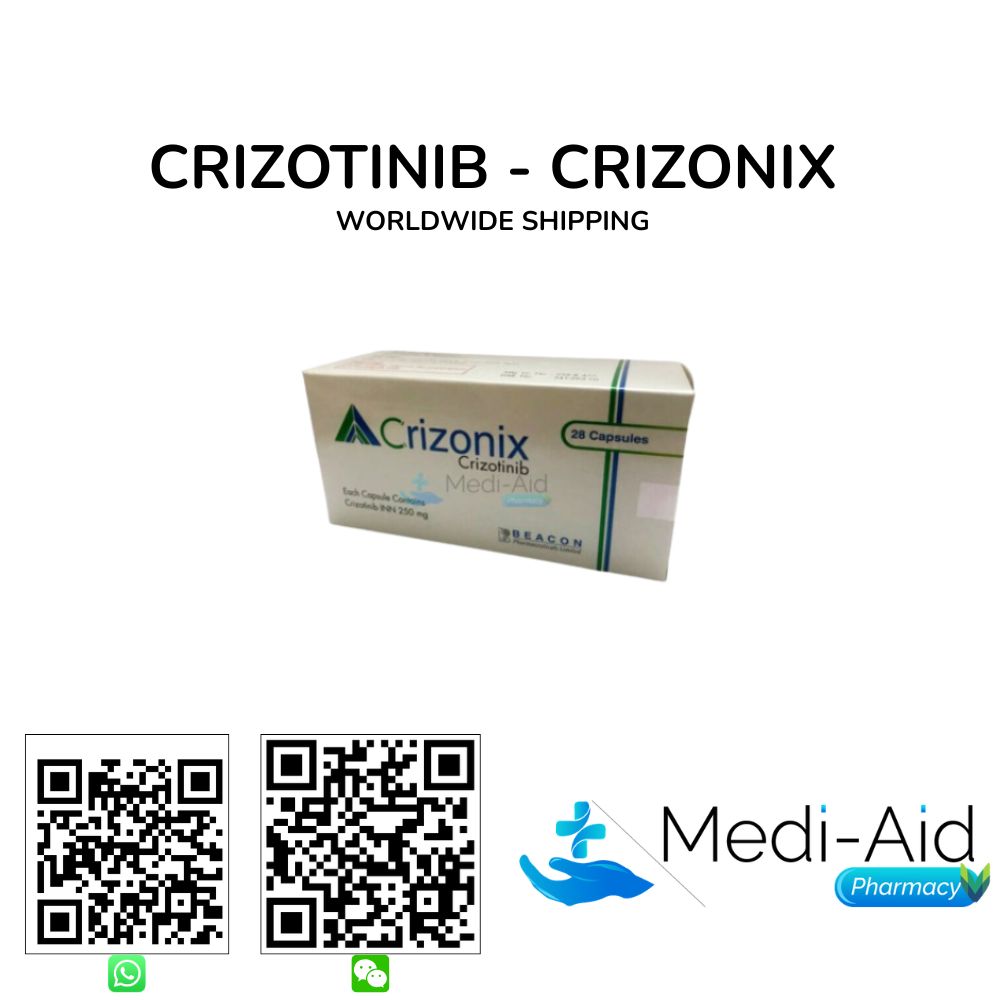
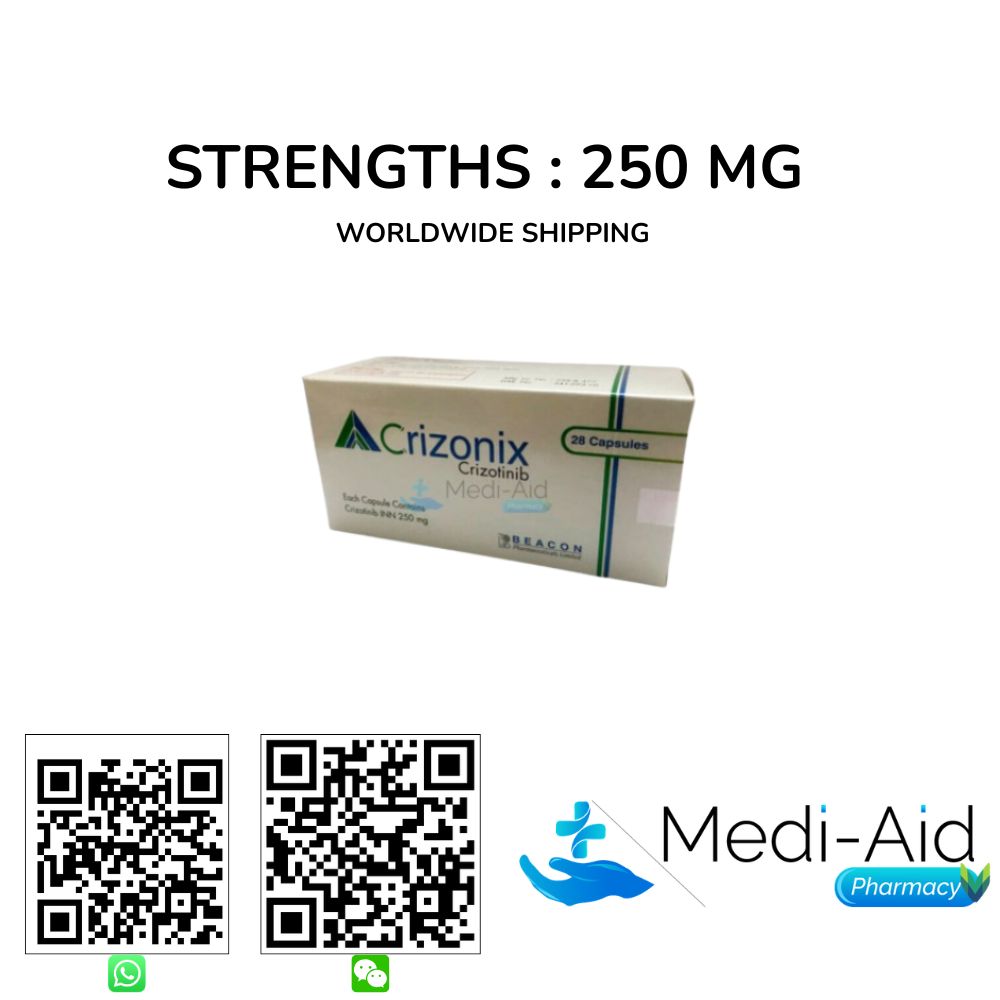
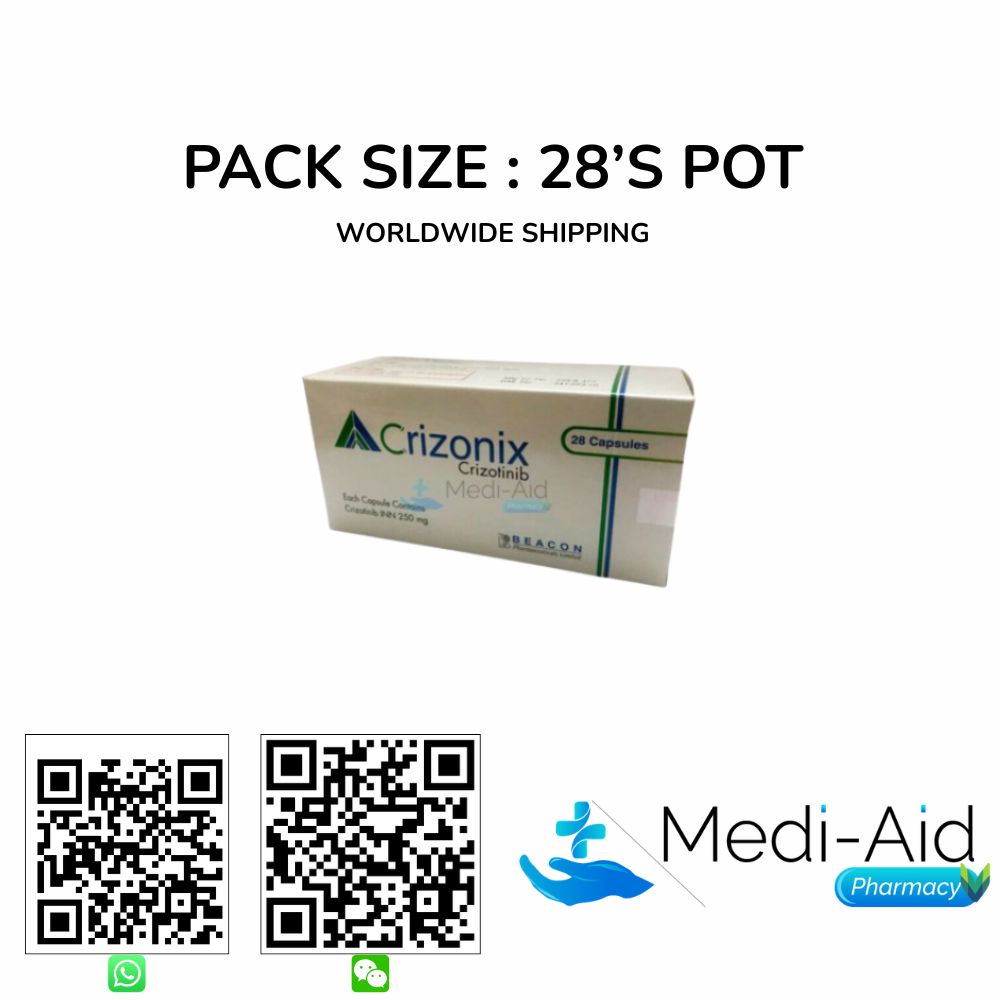
Crizotinib 250MG (Crizonix)
Product Name : Crizotinib (Crizonix)
Generic Name : Crizotinib
Formulation : Capsule
Available Pack Size : 28’s
Available Strengths : 250mg
Registrations : 08.07.2021

Product Information
Crizonix 250MG (Crizotinib) is a potent and selective Anaplastic Lymphoma Kinase (ALK), c-ros oncogene 1 (ROS1), and Mesenchymal-Epithelial Transition factor (MET) tyrosine kinase inhibitor indicated for the treatment of adult patients with locally advanced or metastatic ALK-positive or ROS1-positive non-small cell lung cancer (NSCLC). Crizotinib competitively inhibits ALK, ROS1, and MET receptor tyrosine kinases at nanomolar concentrations, blocking constitutive oncogenic signalling driven by ALK and ROS1 chromosomal rearrangements and suppressing tumour cell proliferation, survival, and metastatic spread. Patients and oncologists seeking a comprehensive range of oncology and targeted cancer medicines can review Mediaid Pharmacy’s complete oncology portfolio for availability and global supply. Crizonix is manufactured by Beacon Pharmaceuticals Ltd., Bangladesh and globally supplied by Mediaid Pharmacy with worldwide shipping.
Basic Product Information of Crizonix 250MG (Crizotinib)
| Brand Name | Crizonix (Crizotinib) |
| Generic Name | Crizotinib INN |
| Drug Class | Selective ALK, ROS1, and MET Tyrosine Kinase Inhibitor |
| Available Strengths | 250mg |
| Formulation | Hard Capsule |
| Pack Size | 28 Capsules per Pack |
| Primary Indication | Locally advanced or metastatic ALK-positive NSCLC (first-line and previously treated); Metastatic ROS1-positive NSCLC |
| Regulatory Approvals | USFDA Approved (August 2011 ALK-positive NSCLC; March 2016 ROS1-positive NSCLC). EMA Approved. Health Canada Approved. |
| Originator Brand | Xalkori by Pfizer |
| Manufacturer | Beacon Pharmaceuticals Ltd., Mymensingh, Bangladesh |
| Global Supplier | Mediaid Pharmacy Worldwide Shipping Available |
| Registration Date | 08/07/2021 |
| Storage Conditions | Store below 30°C in a dry place away from light and moisture. Keep out of the reach of children. |
How Crizonix 250MG (Crizotinib) Works ALK, ROS1, and MET Kinase Inhibition and Anti-Tumour Mechanism
Crizotinib, the active ingredient in Crizonix 250MG, is a first-in-class selective inhibitor of Anaplastic Lymphoma Kinase (ALK), c-ros oncogene 1 (ROS1), and Mesenchymal-Epithelial Transition factor (MET) receptor tyrosine kinases. In a subset of non-small cell lung cancer (NSCLC) tumours representing approximately 3–7% of all NSCLC cases for ALK rearrangements and 1–2% for ROS1 rearrangements chromosomal translocations generate constitutively active oncogenic fusion proteins such as EML4-ALK or CD74-ROS1 that drive pathological proliferation, survival, and metastasis through persistent downstream signalling. Crizotinib was developed as the first targeted therapy to selectively block these oncogenic kinase drivers in molecular-profiled NSCLC patients.
Crizotinib works by binding competitively to the ATP-binding pocket of ALK, ROS1, and MET receptor tyrosine kinases, preventing ATP from engaging the catalytic site and thereby blocking receptor autophosphorylation and downstream signal transduction through the RAS/MAPK, PI3K/AKT, and JAK/STAT pathways. By inhibiting these oncogenic kinases at nanomolar concentrations, Crizonix disrupts the constitutive proliferative signalling that sustains tumour growth in ALK-rearranged and ROS1-rearranged NSCLC. Preclinical studies demonstrated that Crizotinib induced G1 cell cycle arrest and apoptosis in ALK-positive tumour cell lines and reduced tumour xenograft volume by more than 90% within four weeks of treatment initiation.
The exceptional sensitivity of ALK-positive and ROS1-positive NSCLC tumours to kinase inhibition underpins the objective response rates of 65–74% observed in Phase III clinical trials of Crizotinib. The MET inhibitory activity of Crizotinib may also contribute to anti-tumour efficacy in NSCLC tumours with MET gene amplification or exon 14 skipping mutations. Tumour biomarker status must be confirmed as ALK-positive or ROS1-positive using a validated diagnostic method including FISH (Vysis ALK Break Apart FISH Probe Kit, FDA-approved), immunohistochemistry (IHC), or next-generation sequencing (NGS) before initiating Crizonix therapy. Oncologists seeking the complete range of targeted oncology medicines for lung cancer and other malignancies can review Mediaid Pharmacy’s oncology portfolio for worldwide supply.
Approved Indications for Crizonix 250MG (Crizotinib)
Crizonix (Crizotinib) 250mg is indicated for the following oncological conditions in adult patients:
|
ALK-Positive NSCLC First-Line Monotherapy Crizonix is indicated for the first-line treatment of adult patients with locally advanced or metastatic ALK-positive NSCLC. The pivotal Phase III PROFILE 1014 trial (343 patients) demonstrated that Crizotinib achieved a median progression-free survival (PFS) of 10.9 months versus 7.0 months for pemetrexed-based platinum chemotherapy (HR 0.45; p<0.0001), with an objective response rate (ORR) of 74% versus 45%. USFDA approved (expanded indication). |
ALK-Positive NSCLC Previously Treated Crizotinib is approved for adult patients with locally advanced or metastatic ALK-positive NSCLC who have received at least one prior chemotherapy regimen. The Phase III PROFILE 1007 trial (347 patients) demonstrated a median PFS of 7.7 months with Crizotinib versus 3.0 months for single-agent chemotherapy (HR 0.49; p<0.001), with ORR of 65% versus 20%. USFDA initially approved August 2011. |
|
ROS1-Positive Metastatic NSCLC Crizotinib is approved for the treatment of adult patients with metastatic ROS1-positive NSCLC. In the PROFILE 1001 expansion cohort (50 ROS1-positive patients), Crizotinib produced an objective response rate of 72% and a median PFS of 19.2 months reflecting the exceptional sensitivity of ROS1-rearranged NSCLC to targeted ROS1 kinase inhibition. USFDA approved March 2016. |
Mandatory Biomarker Testing Prerequisite All indications for Crizonix (Crizotinib) require laboratory confirmation of ALK or ROS1 positivity using a validated diagnostic assay prior to treatment initiation. Accepted methods include FDA-approved FISH testing (Vysis ALK Break Apart FISH Probe Kit), immunohistochemistry (IHC), or next-generation sequencing (NGS). Crizotinib must not be initiated without biomarker confirmation by an accredited pathology laboratory. |
Key Clinical Benefits of Crizonix (Crizotinib) 250mg
|
Potent ALK, ROS1, and MET Inhibition Crizotinib inhibits ALK, ROS1, and MET receptor tyrosine kinases at nanomolar concentrations, blocking constitutive oncogenic signalling in ALK-rearranged and ROS1-rearranged NSCLC tumours. Its focused kinase selectivity profile minimises off-target inhibition compared to non-selective multi-kinase agents, contributing to a predictable and manageable adverse event profile. |
PROFILE 1014 Proven First-Line Superiority In the landmark Phase III PROFILE 1014 trial, Crizotinib achieved a median PFS of 10.9 months versus 7.0 months for chemotherapy (HR 0.45; p<0.0001) and ORR of 74% in treatment-naive ALK-positive NSCLC establishing Crizotinib as a first-line standard of care and the regulatory benchmark for ALK-targeted therapy clinical development worldwide. |
Dual ALK-Positive and ROS1-Positive Indication Crizotinib is the only first-generation TKI approved for both ALK-positive and ROS1-positive NSCLC two molecularly distinct oncogenic drivers. The 72% ORR and 19.2-month median PFS in ROS1-positive NSCLC (PROFILE 1001) reflects the structural homology between the ROS1 and ALK kinase domains that makes ROS1-rearranged NSCLC exquisitely sensitive to Crizotinib. |
|
Convenient Oral Capsule Formulation Crizonix is available as a 250mg hard capsule taken twice daily with or without food enabling outpatient oral administration without intravenous infusion or hospital-based chemotherapy delivery. The 28-capsule pack provides a standardised 14-day treatment supply at the full twice-daily dosing schedule, simplifying prescription and dispensing management. |
Affordable Generic Alternative to Xalkori Crizonix contains the same active ingredient as Xalkori (Pfizer) in the same 250mg capsule formulation, at a dramatically reduced cost bringing proven ALK-targeted and ROS1-targeted lung cancer therapy within financial reach for patients in both developing and developed markets who require continuous long-term targeted treatment. |
WHO-GMP and cGMP Certified Manufacturing Crizonix is produced by Beacon Pharmaceuticals Ltd. under WHO-GMP, cGMP, and ISO-certified manufacturing standards the same quality framework applied to Beacon’s internationally exported oncology and specialty medicines portfolio, verified for consistency, purity, and bioequivalence with the originator product. |
How to Take Crizonix 250MG (Crizotinib) Dosage and Administration Guidelines
Route of Administration: Oral hard capsules swallowed whole with a glass of water, with or without food. Capsules must not be crushed, dissolved, or opened. Swallow capsules intact to maintain the correct drug release profile.
Standard Recommended Dose: 250mg taken orally twice daily (total daily dose: 500mg), administered approximately 12 hours apart. If a dose is missed and the next scheduled dose is more than 6 hours away, take the missed dose as soon as possible. If vomiting occurs after taking a dose, do not take an additional dose; resume the next dose at the scheduled time.
First Dose Reduction for Toxicity: Reduce to 200mg twice daily for management of Grade 3 or higher haematological or non-haematological toxicities requiring dose modification. Resume at the reduced dose once toxicity resolves to Grade 1 or baseline.
Second Dose Reduction for Toxicity: Reduce to 150mg twice daily if adverse effects persist or recur following the first dose reduction. Crizonix should be permanently discontinued if the patient cannot tolerate 150mg twice daily.
Renal Impairment: No starting dose adjustment is required for patients with mild or moderate renal impairment. For severe renal impairment (creatinine clearance [CrCl] below 30 mL/min, not requiring dialysis), reduce the starting dose to 250mg once daily. Use with caution in patients with end-stage renal disease; limited pharmacokinetic data are available for this population.
Hepatic Impairment: No starting dose adjustment is required for patients with mild to moderate hepatic impairment. Crizotinib has not been formally studied in patients with severe hepatic impairment (Child-Pugh Class C); use with caution and under close oncologist supervision in this population. Monitor liver function closely throughout treatment regardless of baseline hepatic function.
CYP3A4/5 Inhibitor Co-Administration: Avoid concomitant use of strong CYP3A4/5 inhibitors including ketoconazole, itraconazole, clarithromycin, atazanavir, ritonavir, and voriconazole as these agents significantly increase Crizotinib plasma concentrations and toxicity risk. If co-administration is unavoidable, reduce the Crizotinib dose and monitor closely. Avoid grapefruit and grapefruit juice throughout the entire course of treatment.
Paediatric Use: The safety and efficacy of Crizotinib in patients under 18 years of age have not been established. Crizonix is not recommended for use in the paediatric population.
Clinical Monitoring Requirements During Crizonix (Crizotinib) Treatment
Regular clinical monitoring is essential throughout Crizonix treatment. Liver function tests (LFTs) including ALT, AST, and total bilirubin must be monitored every 2 weeks during the first 2 months of treatment, then monthly and as clinically indicated; Grade 3 transaminase elevations require Crizotinib interruption pending recovery, and Grade 4 elevations or concurrent bilirubin elevation require permanent discontinuation. Pulmonary assessment is critical throughout treatment: any new or worsening respiratory symptoms including dyspnoea, cough, or fever must be evaluated promptly for Interstitial Lung Disease (ILD) or pneumonitis; withhold Crizonix pending investigation and permanently discontinue if Grade 3 or higher ILD or pneumonitis is confirmed. ECG and electrolyte monitoring are required at baseline and periodically during treatment; hypokalaemia and hypomagnesaemia must be corrected before initiating Crizotinib and throughout therapy, as uncorrected electrolyte abnormalities substantially increase QTc prolongation risk.
Heart rate (HR) and blood pressure require regular monitoring; symptomatic bradycardia (HR below 60 bpm) or Grade 3–4 cardiac bradycardia requires dose interruption, reduction, or permanent discontinuation based on severity, reversibility, and whether a causative concomitant agent can be identified and discontinued. Ophthalmic assessment should be performed for any new or worsening visual symptoms photopsia, blurred vision, diplopia, or vitreous floaters, which occur in approximately 60% of patients and patients must be advised not to drive or operate heavy machinery if visual disturbances are present. Complete blood count (CBC) should be monitored periodically throughout treatment, as Grade 3–4 neutropenia occurs in approximately 11% of patients and Grade 3–4 lymphopenia in approximately 48% of patients. Patients must be assessed throughout treatment for signs of severe hepatotoxicity, ILD/pneumonitis, QTc prolongation leading to ventricular arrhythmia, symptomatic bradycardia, severe or complete visual loss, and embryo-fetal toxicity risk in patients of reproductive potential.
Drug Interactions and Important Safety Information for Crizonix (Crizotinib)
Crizotinib is both a substrate and a time-dependent inhibitor of hepatic CYP3A4/5 enzymes. Strong CYP3A4/5 inhibitors including ketoconazole, itraconazole, clarithromycin, atazanavir, indinavir, nefazodone, nelfinavir, ritonavir, saquinavir, telithromycin, voriconazole, and grapefruit juice substantially increase Crizotinib plasma concentrations and must be avoided during Crizonix therapy. Strong CYP3A4/5 inducers including rifampicin, carbamazepine, phenytoin, phenobarbital, and St. John’s Wort significantly reduce Crizotinib plasma exposure and clinical efficacy; concomitant use must be avoided wherever clinically feasible.
Crizotinib is itself a strong inhibitor of CYP3A4, meaning it can substantially increase plasma concentrations of CYP3A4-substrate co-medications including certain statins, calcineurin inhibitors, benzodiazepines, and ergot alkaloids. Dosing adjustments or substitution may be necessary for CYP3A4-sensitive substrates with a narrow therapeutic index. Agents known to prolong the QTc interval including Class IA and III antiarrhythmics, haloperidol, methadone, moxifloxacin, and certain antiretrovirals should be avoided due to additive QTc prolongation risk. Agents that cause bradycardia including beta-blockers, non-dihydropyridine calcium channel blockers, clonidine, and digoxin require careful co-administration monitoring and HR assessment when used with Crizotinib. Patients must declare all current medications, over-the-counter supplements, and herbal products to their treating oncologist before initiating Crizonix therapy.
Side Effects and Precautions of Crizonix (Crizotinib)
|
Common Side Effects (>20% Incidence) Vision disorders: photopsia, blurred vision, diplopia, vitreous floaters (approximately 60% of patients the most characteristic adverse effect of Crizotinib) Nausea (approximately 55% of patients) Diarrhoea (approximately 43% of patients) Vomiting (approximately 40% of patients) Oedema / Peripheral oedema (approximately 40% of patients) Constipation (approximately 42% of patients) Elevated transaminases / hepatotoxicity (LFT elevation in up to 36% of patients) Fatigue (approximately 27% of patients) Decreased appetite (approximately 30% of patients) Dysgeusia / altered taste sensation (approximately 26% of patients) Bradycardia monitor heart rate regularly; avoid concomitant bradycardia-inducing agents |
Serious Warnings and Precautions Hepatotoxicity drug-induced liver injury including fatal hepatic failure reported in approximately 0.1% of patients. Monitor LFTs every 2 weeks during the first 2 months; permanently discontinue for Grade 4 elevations or Grade 3 with concurrent bilirubin elevation. Interstitial Lung Disease (ILD) / Pneumonitis reported in approximately 2.9% of patients; fatal cases have been documented. Withhold Crizotinib for Grade 2 or higher ILD/pneumonitis; permanently discontinue if Grade 3–4 ILD or pneumonitis is confirmed. QTc Prolongation clinically significant QTc interval prolongation can lead to ventricular tachyarrhythmia including Torsades de Pointes. Avoid concomitant QT-prolonging agents; monitor ECG and electrolytes regularly throughout treatment. Severe Visual Loss rare (approximately 0.2% incidence) but potentially irreversible; includes complete loss of vision in one or both eyes. Perform ophthalmological evaluation promptly; permanently discontinue Crizotinib if new-onset severe visual loss occurs. Bradycardia symptomatic bradycardia (heart rate below 60 bpm; Grade 3–4 in approximately 5% of patients). Avoid co-administration of other bradycardic agents; interrupt, reduce, or discontinue Crizotinib based on severity and reversibility. Embryo-Fetal Toxicity Crizotinib can cause fetal harm based on its mechanism of action and animal data. Advise female patients of reproductive potential to use effective contraception during treatment and for at least 45 days after the final dose. Male patients with female partners of reproductive potential should use effective contraception during treatment and for at least 90 days after the final dose. |
Who Should Use Crizonix 250MG (Crizotinib)?
Crizonix (Crizotinib) 250mg is indicated for adult patients with locally advanced or metastatic ALK-positive non-small cell lung cancer (NSCLC) whether as first-line treatment in patients with no prior systemic therapy for advanced disease, or as subsequent targeted therapy in patients with prior platinum-based chemotherapy. Crizonix is also indicated for adult patients with metastatic ROS1-positive NSCLC confirmed by a validated diagnostic method. In contemporary thoracic oncology practice, reflex molecular testing for ALK and ROS1 rearrangements at the time of diagnosis is recommended for all patients with advanced non-squamous NSCLC, enabling immediate initiation of targeted therapy in biomarker-positive patients. Next-generation ALK inhibitors including alectinib, brigatinib, and lorlatinib are now widely used in the first-line ALK-positive setting in many guidelines due to superior CNS penetration and improved acquired resistance profiles; oncologists should select therapy based on current guideline recommendations, patient performance status, and prior treatment history. Crizonix must be prescribed and supervised by a qualified oncologist or thoracic oncology specialist with experience in targeted anticancer therapies and molecular NSCLC management. A comprehensive pre-treatment assessment including confirmatory ALK or ROS1 biomarker testing, liver function tests, ECG with QTc measurement, and baseline cardiac evaluation is mandatory before initiating therapy. Oncologists requiring a comprehensive source for oncology specialty medicines including ALK inhibitors, precision lung cancer therapeutics, and other targeted cancer treatments can consult Mediaid Pharmacy’s oncology portfolio for availability and worldwide supply.
Manufacturer: Beacon Pharmaceuticals Ltd., Bangladesh
Beacon Pharmaceuticals Ltd. is a leading pharmaceutical manufacturer based in Mymensingh, Bangladesh and the number one oncology and specialty medicine company in the country. Beacon was the first company in Bangladesh to export cancer medicines and currently exports to markets across Asia, Africa, Europe, and Latin America. With more than 200 generic drugs and 65 oncology products in its portfolio, Beacon operates under strict WHO-GMP, cGMP, and ISO-certified manufacturing standards. Crizonix (Crizotinib) 250mg is one of Beacon’s core targeted oncology products, offering a high-quality, bioequivalent, and cost-accessible alternative to Xalkori (Pfizer) enabling oncologists and patients worldwide to access proven ALK-targeted and ROS1-targeted NSCLC therapy without financial barriers to long-term treatment continuity.
Global Supplier: Mediaid Pharmacy Worldwide Shipping for Crizonix (Crizotinib)
Mediaid Pharmacy is a trusted global supplier of specialty oncology and targeted therapy medications. Crizonix (Crizotinib) 250mg is available through Mediaid Pharmacy with reliable worldwide shipping to South Asia, the Middle East, Africa, Europe, and beyond. Our team provides full order support including pricing, availability confirmation, documentation, and delivery tracking for oncologists, hospitals, and patients requiring Crizonix internationally. Contact Mediaid Pharmacy directly via WhatsApp, phone, or WeChat for enquiries about availability and delivery to your country.
Why Choose Crizonix (Crizotinib) from Mediaid Pharmacy?
Crizonix represents a clinically validated and cost-accessible option for the targeted treatment of ALK-positive and ROS1-positive non-small cell lung cancer. As the generic bioequivalent of Xalkori (Pfizer), Crizonix delivers the same active ingredient Crizotinib with the same proven ALK, ROS1, and MET tyrosine kinase inhibition mechanism, at a dramatically lower price. The 250mg hard capsule formulation in a standardised 28-capsule pack provides a full 14-day twice-daily treatment supply per pack, simplifying prescription management, dispensing, and patient adherence tracking for oncologists and pharmacy teams. Manufactured by Beacon Pharmaceuticals Ltd. under WHO-GMP and cGMP standards, and distributed globally by Mediaid Pharmacy, Crizonix is the trusted choice for oncologists and patients worldwide seeking proven ALK/ROS1-targeted NSCLC therapy without financial barriers to sustained treatment. For the complete range of oncology medicines available from Mediaid Pharmacy, including next-generation ALK inhibitors and other lung cancer treatments, visit our oncology medicines page.
Frequently Asked Questions About Crizonix 250MG (Crizotinib)
What is Crizonix 250MG (Crizotinib) used for?
Crizonix (Crizotinib) 250mg is a selective ALK, ROS1, and MET tyrosine kinase inhibitor indicated for adult patients with locally advanced or metastatic ALK-positive NSCLC as first-line treatment or after prior chemotherapy and for adult patients with metastatic ROS1-positive NSCLC. Crizotinib works by blocking the constitutive oncogenic signalling driven by ALK and ROS1 chromosomal rearrangements, suppressing tumour cell proliferation and inducing apoptosis in biomarker-confirmed NSCLC. Confirmed ALK or ROS1 positivity by a validated diagnostic method is mandatory before initiating treatment.
What is the recommended dose of Crizonix (Crizotinib)?
The recommended dose of Crizonix is 250mg taken orally twice daily (total daily dose 500mg), approximately 12 hours apart, with or without food. Capsules must be swallowed whole without crushing or dissolving. If a dose is missed and the next dose is more than 6 hours away, the missed dose may be taken; if the next dose is within 6 hours, skip the missed dose and continue with the scheduled regimen. Dose reductions to 200mg twice daily and then 150mg twice daily are used to manage significant toxicity. Always follow your prescribing oncologist’s exact instructions.
What strength and pack size is Crizonix (Crizotinib) available in?
Crizonix is available in 250mg hard capsules supplied in a pack of 28 capsules. At the standard dose of 250mg twice daily, one pack of 28 capsules provides a 14-day treatment supply. Two packs of 28 capsules (56 capsules total) are required to cover a standard 28-day monthly treatment cycle at the full twice-daily dosing schedule.
Is Crizonix the same as Xalkori (Crizotinib by Pfizer)?
Yes. Crizonix is the generic equivalent of Xalkori (Pfizer). Both products contain the same active ingredient Crizotinib in the same 250mg capsule dosage form. Crizonix is manufactured by Beacon Pharmaceuticals Ltd. under WHO-GMP-certified standards in Bangladesh and delivers the same clinical ALK, ROS1, and MET tyrosine kinase inhibition mechanism as Xalkori, at a significantly lower cost making sustained targeted NSCLC treatment financially accessible for patients worldwide.
What are the most common side effects of Crizonix (Crizotinib)?
The most characteristic and common side effects of Crizonix include vision disorders (photopsia, blurred vision, diplopia, vitreous floaters in approximately 60% of patients, making it the most distinctive adverse effect of Crizotinib), nausea (~55%), diarrhoea (~43%), vomiting (~40%), peripheral oedema (~40%), constipation (~42%), elevated liver transaminases (~36%), fatigue (~27%), decreased appetite (~30%), dysgeusia (~26%), and bradycardia. Serious risks include hepatotoxicity (fatal in ~0.1%), interstitial lung disease/pneumonitis (~2.9%), QTc prolongation, severe visual loss (~0.2%), and embryo-fetal toxicity. Always consult your prescribing oncologist for a complete individual risk assessment before and throughout Crizonix treatment.
Does Crizotinib require ALK or ROS1 testing before starting treatment?
Yes. Confirmed ALK or ROS1 positivity by a validated diagnostic assay is mandatory before initiating Crizonix (Crizotinib). Accepted testing methods include FDA-approved fluorescence in situ hybridization (FISH) using the Vysis ALK Break Apart FISH Probe Kit, immunohistochemistry (IHC) using a validated antibody, or a next-generation sequencing (NGS) panel that includes ALK rearrangement and ROS1 rearrangement detection. Testing must be performed on tumour tissue (biopsy or surgical specimen) or, where validated, on circulating tumour DNA (ctDNA) by an accredited or CLIA-certified laboratory. Crizotinib must not be prescribed to patients who have not undergone confirmatory biomarker testing.
Does Crizonix (Crizotinib) require dose adjustment for kidney or liver problems?
For renal impairment: no starting dose adjustment is required for mild or moderate renal impairment; for severe renal impairment (CrCl below 30 mL/min, not requiring dialysis), reduce the starting dose to 250mg once daily. For hepatic impairment: no starting dose adjustment is required for mild to moderate hepatic impairment; Crizotinib has not been formally studied in severe hepatic impairment (Child-Pugh Class C) and should be used with caution under close oncologist supervision in this population, with regular LFT monitoring. Always discuss kidney and liver function with your prescribing oncologist before starting treatment.
Can I order Crizonix 250MG (Crizotinib) online with worldwide shipping?
Yes. Mediaid Pharmacy supplies Crizonix (Crizotinib) 250mg to patients, oncologists, and healthcare facilities globally with worldwide shipping. Contact Mediaid Pharmacy via WhatsApp, phone, or WeChat at +8801773428128, or send your enquiry to info@mediaidpharmacy.com for pricing, stock availability, and delivery details for your country.
Order Crizonix 250MG (Crizotinib) with Worldwide Shipping
Phone / WhatsApp / WeChat: +8801773428128 | Email: info@mediaidpharmacy.com