
Description
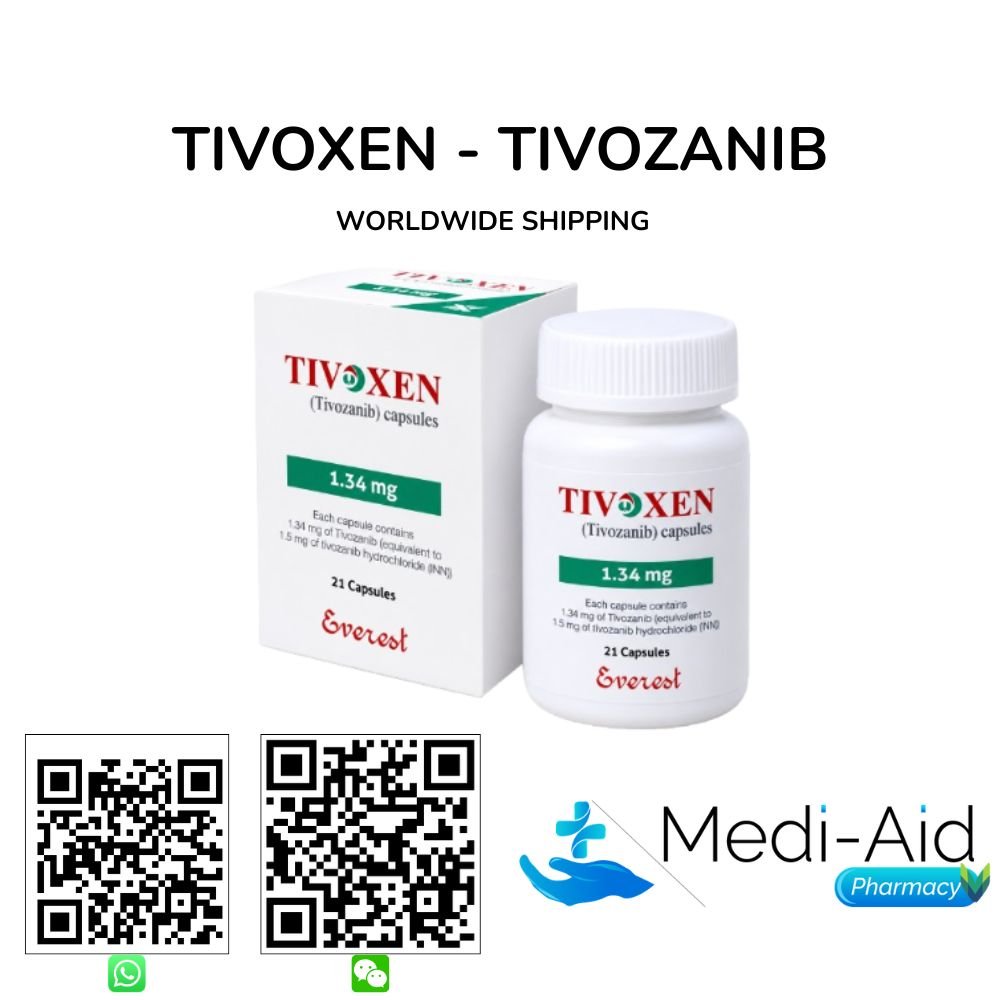
Tivoxen 1.34 MG (Tivozanib) is an oral, highly selective VEGFR tyrosine kinase inhibitor (TKI) hard capsule available in a 1.34 mg strength, supplied in a pack of 21 capsules per pot, manufactured by Everest Pharmaceuticals Ltd. of Bangladesh. The active ingredient, tivozanib, selectively inhibits all three vascular endothelial growth factor receptors VEGFR-1, VEGFR-2, and VEGFR-3 with sub-nanomolar potency (IC₅₀ values: VEGFR-1: 0.21 nM, VEGFR-2: 0.16 nM, VEGFR-3: 0.24 nM), delivering a mechanistically focused anti-angiogenic profile that suppresses pathogenic tumour neo-vascularisation at all three VEGF receptor nodes simultaneously.
The reference-label dosing schedule for tivozanib is 1.34 mg once daily (OD) for 21 consecutive days, followed by 7 days off, within a 28-day treatment cycle achieved with 1 × Tivoxen 1.34 MG capsule per day on each of the 21 treatment days, making the 21-capsule pot a precisely cycle-aligned supply unit with zero overage or shortfall at the starting dose.
In the pivotal Phase III TIVO-3 trial, tivozanib 1.34 mg OD (21 days on/7 days off) significantly extended median progression-free survival (PFS) to 5.6 months versus 3.9 months with sorafenib (HR 0.73; 95% CI 0.56–0.94; P=0.016) in patients with relapsed or refractory advanced renal cell carcinoma (RCC) following two or more prior systemic therapies, with an objective response rate (ORR) of 18% versus 8% for sorafenib. In the Phase III TIVO-1 trial, tivozanib delivered a median PFS of 11.9 months versus 9.1 months with sorafenib (HR 0.797; 95% CI 0.639–0.993; P=0.042) in treatment-naïve advanced RCC patients, with an ORR of 33% versus 23%.
Searching for Tivoxen 1.34 MG Tivozanib? Mediaid Pharmacy stocks this product within its comprehensive kidney cancer medicines portfolio and ships worldwide.
Basic Product Information of Tivoxen 1.34 MG (Tivozanib)
| Brand Name | Tivoxen 1.34 MG (Tivozanib) |
| Product Name | Tivoxen |
| Generic Name | Tivozanib |
| Drug Class | Selective VEGFR Tyrosine Kinase Inhibitor (TKI); Pan-VEGFR (VEGFR-1/2/3) Inhibitor; Anti-Angiogenic Targeted Oncology Agent; Kinase Inhibitor (Bis-aryl urea class) |
| Formulation | Hard Capsule |
| Available Strength | 1.34 mg per capsule |
| Available Pack Size | 21 Capsules per pot (1 capsule/day × 21 treatment days = one complete on-treatment period of a single 28-day cycle at the reference-label starting dose) |
| Primary Indication | Advanced Renal Cell Carcinoma (RCC) relapsed or refractory after two or more prior systemic therapies (FDA reference label); Advanced RCC including first-line treatment of adult patients (EMA reference label). Specific approved indications vary by jurisdiction; prescribers must confirm locally approved label before initiating therapy. |
| Reference-Label Starting Dose | 1.34 mg once daily (OD) for 21 days followed by 7 days off = 1 × Tivoxen 1.34 MG capsule per day for 21 consecutive days, then 7 days treatment-free; taken with or without food |
| Manufacturer / Brand | Everest Pharmaceuticals Ltd., Bangladesh (Everest Pharma) |
| Country of Origin | Bangladesh |
| Categories | Everest Pharmaceuticals Medicines, Kidney Cancer Medicines, Oncology Medicines |
| Storage Conditions | Store below 30°C in a dry place, protected from light and moisture. Keep out of the reach of children. |
| Global Supplier | Mediaid Pharmacy Worldwide Shipping Available |
How Tivoxen 1.34 MG (Tivozanib) Works: Pan-VEGFR Inhibition with Sub-Nanomolar Selectivity Across VEGFR-1, VEGFR-2, and VEGFR-3
Tivozanib, the active ingredient in Tivoxen 1.34 MG, is an orally bioavailable, highly selective VEGFR tyrosine kinase inhibitor (TKI) belonging to the bis-aryl urea chemical class. Tivozanib is mechanistically differentiated from first- and second-generation VEGFR TKIs including sunitinib, sorafenib, and pazopanib by its exceptionally high selectivity for all three VEGF receptors (VEGFR-1, VEGFR-2, and VEGFR-3) with sub-nanomolar potency and minimal clinically significant off-target kinase inhibition at therapeutic plasma concentrations. A VEGFR tyrosine kinase inhibitor refers to a small-molecule drug that competitively occupies the ATP-binding domain of VEGF receptor kinases, preventing autophosphorylation, receptor activation, and downstream propagation of pro-angiogenic VEGF signalling.
Tivozanib achieves pan-VEGFR inhibition with reported IC₅₀ values of 0.21 nM (VEGFR-1), 0.16 nM (VEGFR-2), and 0.24 nM (VEGFR-3) potencies 10- to 100-fold more selective for VEGFR than for other kinase targets at equivalent plasma concentrations. Each Tivoxen 1.34 MG hard capsule contains tivozanib hydrochloride monohydrate equivalent to 1.34 mg of tivozanib free base, delivering the reference-label starting dose of 1.34 mg OD with a single capsule per day on each of the 21 treatment days within a 28-day cycle.
The oncological rationale for tivozanib’s highly selective pan-VEGFR inhibition in advanced renal cell carcinoma (RCC) is grounded in the central role of VEGF pathway dysregulation in RCC biology. Clear cell RCC the most common histological subtype, accounting for approximately 70–80% of advanced RCC cases is characterised by inactivation or loss of function of the von Hippel-Lindau (VHL) tumour suppressor gene, which occurs in up to 90% of sporadic clear cell RCC tumours. VHL gene inactivation prevents the hypoxia-inducible factor (HIF) complex from being tagged for ubiquitin-mediated degradation, resulting in constitutive HIF-1α and HIF-2α accumulation, transcriptional overactivation of VEGF-A, VEGF-B, VEGF-C, and VEGFR genes, and consequently sustained, pathological VEGF-driven tumour neo-angiogenesis.
Tivozanib blocks this oncogenic VEGF signalling axis at all three receptor nodes simultaneously: VEGFR-2 is the primary mediator of VEGF-A-driven endothelial cell proliferation, survival, and vascular permeability in RCC tumours; VEGFR-1 modulates endothelial cell migration and monocyte/macrophage-mediated pro-angiogenic signalling; and VEGFR-3 mediates tumour-associated lymphangiogenesis and metastatic lymph node dissemination. By simultaneously suppressing all three VEGF receptor pathways with equivalent sub-nanomolar potency, Tivoxen 1.34 MG achieves complete VEGF pathway blockade without the incomplete receptor coverage that can allow VEGFR-mediated tumour vascular escape with less pan-selective agents. Oncologists managing advanced RCC programmes can review the full range of kidney cancer targeted therapy medicines at Mediaid Pharmacy, including Tivoxen 1.34 MG Tivozanib, for comprehensive RCC treatment planning.
In the pivotal Phase III TIVO-3 trial 350 patients with relapsed or refractory advanced RCC after two or more prior systemic therapies tivozanib 1.34 mg OD (21 days on/7 days off; achievable as 1 × Tivoxen 1.34 MG capsule per day) significantly improved median PFS to 5.6 months versus 3.9 months with sorafenib (HR 0.73; 95% CI 0.56–0.94; P=0.016), with an ORR of 18% versus 8% for sorafenib and a disease control rate of 73% versus 58%. In the Phase III TIVO-1 trial 517 patients with advanced RCC (including treatment-naïve and one-prior-therapy cohorts) tivozanib 1.34 mg OD extended median PFS to 11.9 months versus 9.1 months with sorafenib in the treatment-naïve subpopulation (HR 0.797; 95% CI 0.639–0.993; P=0.042), with an ORR of 33% versus 23% and a disease control rate of 79% versus 67%. The tivozanib dose for each patient is determined and adjusted by the treating oncologist; Tivoxen 1.34 MG capsules must be prescribed and administered under the supervision of a qualified oncology specialist.
Approved Indications of Tivozanib Tivoxen 1.34 MG Reference Label
Tivozanib is approved in multiple jurisdictions for advanced renal cell carcinoma (RCC) in adult patients. The 1.34 mg hard capsule formulation of Tivoxen, with its 21-capsule pot, supports the reference-label starting dose and cycle structure across the approved indications. Prescribers must confirm the exact locally approved indications on the tivozanib product label before initiating therapy, as specific label language varies by regulatory jurisdiction.
|
Relapsed or Refractory Advanced Renal Cell Carcinoma (RCC) After Two or More Prior Systemic Therapies (FDA Reference Label) Tivozanib is indicated for adult patients with relapsed or refractory advanced RCC following two or more prior systemic therapies, per the FDA reference label. Reference-label starting dose: 1.34 mg once daily (OD) for 21 consecutive days, followed by 7 days off (28-day cycle) = 1 × Tivoxen 1.34 MG capsule per day for 21 days. The TIVO-3 Phase III trial confirmed median PFS of 5.6 months versus 3.9 months with sorafenib (HR 0.73; P=0.016) and ORR of 18% versus 8% in this patient population. Oncologists can review the complete range of advanced RCC targeted therapy medicines at Mediaid Pharmacy, including Tivoxen 1.34 MG, for relapsed/refractory RCC programme planning. |
Advanced Renal Cell Carcinoma (RCC) Including First-Line Treatment Adult Patients (EMA Reference Label) Per the EMA reference label, tivozanib is indicated for the treatment of adult patients with advanced RCC, including treatment-naïve patients in the first-line setting. Reference-label starting dose: 1.34 mg once daily (OD) for 21 consecutive days, followed by 7 days off (28-day cycle). The TIVO-1 Phase III trial confirmed median PFS of 11.9 months versus 9.1 months with sorafenib in treatment-naïve advanced RCC patients (HR 0.797; P=0.042), with ORR of 33% versus 23%. Oncologists managing first-line or multi-line kidney cancer treatment programmes at Mediaid Pharmacy can source Tivoxen 1.34 MG alongside other VEGFR TKI options. |
Tivozanib Dose Modification Framework: How Tivoxen 1.34 MG Capsules Cover the Reference-Label Starting Dose and Cycle Structure
The reference label for tivozanib mandates stepwise dose reductions to manage treatment-emergent adverse events including hypertension, fatigue, diarrhoea, and proteinuria across all approved indications. Tivoxen 1.34 MG hard capsules provide precise reference-label dose coverage at the starting dose level, with a single capsule per day on each of the 21 treatment days within a 28-day cycle, perfectly matching the standard cycle-aligned 21-capsule pot format. For dose reduction steps requiring 0.89 mg, a separate 0.89 mg strength capsule is required; prescribers should plan the full dose modification pathway at treatment initiation. The table below maps each reference-label dose level to the precise Tivoxen 1.34 MG capsule requirements. All dose modifications must be directed and supervised by the treating oncologist; never alter the dose without an explicit clinical instruction.
| Indication & Regimen | Dose Level | Daily Dose & Schedule | Tivoxen 1.34 MG Capsule Count per Cycle |
| Advanced RCC All Approved Indications | Starting Dose | 1.34 mg OD 21 days on / 7 days off (28-day cycle) | 1 capsule/day × 21 days = 21 capsules per cycle (1 pot of Tivoxen 1.34 MG per 28-day cycle) |
| Reduction 1 | 0.89 mg OD 21 days on / 7 days off (28-day cycle) | Requires 0.89 mg strength capsule; plan alongside Tivoxen 1.34 MG sourcing at treatment initiation (per oncologist direction) | |
| Reduction 2 | 0.89 mg OD continuous (every day, no 7-day off period) | Requires 0.89 mg strength capsule; continuous daily dosing without scheduled treatment break (per oncologist direction) |
Key Clinical Benefits of Tivoxen 1.34 MG (Tivozanib)
|
TIVO-3 Phase III: Statistically Significant PFS Advantage in Relapsed/Refractory RCC 5.6 Months vs 3.9 Months and 27% Reduction in Progression or Death Risk The TIVO-3 Phase III trial established tivozanib 1.34 mg OD (21 days on/7 days off) as a superior option versus sorafenib in relapsed or refractory advanced RCC after two or more prior therapies: median PFS 5.6 vs 3.9 months (HR 0.73; 95% CI 0.56–0.94; P=0.016), ORR 18% vs 8%, and disease control rate 73% vs 58%. Tivoxen 1.34 MG delivers the full TIVO-3 reference dose with one capsule per day, with the 21-capsule pot providing a perfectly cycle-aligned supply for the 21-day on-treatment period. |
TIVO-1 Phase III: First-Line RCC PFS Benefit 11.9 Months vs 9.1 Months in Treatment-Naïve Patients and ORR of 33% The TIVO-1 Phase III trial confirmed tivozanib 1.34 mg OD superiority versus sorafenib in treatment-naïve advanced RCC: median PFS 11.9 vs 9.1 months (HR 0.797; 95% CI 0.639–0.993; P=0.042), ORR 33% vs 23%, and disease control rate 79% vs 67%. These data support tivozanib’s EMA-approved label for adult patients with advanced RCC including treatment-naïve patients, delivered at the same 1.34 mg OD/21-day on-treatment dose achievable with Tivoxen 1.34 MG. |
Sub-Nanomolar Pan-VEGFR Selectivity Mechanistically Differentiated from Less Selective VEGFR TKIs With IC₅₀ Values of 0.21, 0.16, and 0.24 nM Across VEGFR-1, VEGFR-2, and VEGFR-3 Tivozanib’s IC₅₀ values of 0.21 nM (VEGFR-1), 0.16 nM (VEGFR-2), and 0.24 nM (VEGFR-3) deliver potent pan-VEGFR suppression at plasma concentrations achievable with the 1.34 mg once-daily dose. This high selectivity for VEGFR over off-target kinases at therapeutic levels mechanistically differentiates tivozanib from multi-kinase inhibitors with broader off-target profiles, contributing to a clinically distinct adverse event pattern and supporting complete on-target VEGFR pathway coverage in VHL-deficient clear cell RCC tumours. |
Clinical Monitoring Requirements During Tivoxen 1.34 MG (Tivozanib) Treatment
Blood pressure monitoring is the primary safety requirement throughout tivozanib therapy at all dose levels. Hypertension is the most common adverse event associated with tivozanib, occurring in approximately 44–46% of patients at any grade and in approximately 26% at Grade 3 or higher in the TIVO-3 trial. The reference label requires blood pressure measurement before initiating tivozanib and regular monitoring throughout each treatment cycle; anti-hypertensive therapy should be initiated or intensified promptly when hypertension develops.
Blood pressure must be well controlled before starting tivozanib. Grade 3 hypertension (systolic BP ≥160 mmHg or diastolic BP ≥100 mmHg, despite anti-hypertensive therapy) requires tivozanib dose interruption followed by dose reduction upon restart; Grade 4 hypertensive crisis requires permanent discontinuation. Using Tivoxen 1.34 MG, the treating oncologist implements dose adjustments as specified in the reference-label dose modification algorithm.
Cardiac function monitoring: tivozanib may cause decreased left ventricular ejection fraction (LVEF); baseline echocardiographic or MUGA scan assessment is recommended in patients with pre-existing cardiac risk factors or prior cardiotoxic therapy, with periodic monitoring throughout treatment. Thyroid function monitoring (TSH) is required at baseline and periodically throughout treatment with tivozanib, as hypothyroidism is reported in approximately 8–14% of tivozanib-treated patients; thyroid hormone replacement should be initiated promptly when hypothyroidism is confirmed.
Proteinuria monitoring: urinalysis for proteinuria is required before initiating tivozanib and periodically throughout treatment, as VEGFR inhibition impairs glomerular endothelial cell function; Grade 3 proteinuria (urinary protein ≥3.5 g/24 hours or urine protein-to-creatinine ratio ≥3.5) requires dose modification as per the reference-label algorithm. Hepatic function monitoring (LFTs): baseline and periodic liver function testing including ALT, AST, alkaline phosphatase, and total bilirubin is required throughout tivozanib therapy; Grade 3–4 hepatotoxicity requires dose modification or permanent discontinuation depending on severity and reversibility.
Electrolyte monitoring: potassium, magnesium, and calcium must be corrected and maintained within normal reference ranges throughout treatment, as VEGFR TKI-associated hypertension and QTc prolongation risk are exacerbated by electrolyte abnormalities. Oncologists managing patients on tivozanib who also require supportive agents can review the full selection of oncology medicines at Mediaid Pharmacy for comprehensive RCC programme support.
Drug Interactions and Important Safety Information for Tivoxen 1.34 MG (Tivozanib)
The most clinically significant pharmacokinetic drug interaction risk for tivozanib involves CYP3A4 inducers. Tivozanib is primarily metabolised by CYP3A4; strong CYP3A4 inducers including rifampicin, carbamazepine, phenytoin, phenobarbital, dexamethasone (at anti-inflammatory doses), and St. John’s Wort (Hypericum perforatum) significantly increase tivozanib metabolism and reduce systemic exposure, potentially compromising clinical anti-tumour activity.
Co-administration of rifampicin has been shown to reduce tivozanib AUC by approximately 48%; avoidance of strong CYP3A4 inducers is preferred where clinically feasible throughout the treatment period. Strong CYP3A4 inhibitors (ketoconazole, itraconazole, voriconazole, ritonavir-boosted HIV protease inhibitors, clarithromycin) may increase tivozanib systemic exposure and amplify toxicity risk particularly hypertension and proteinuria requiring heightened clinical vigilance when these combinations cannot be avoided.
P-glycoprotein (P-gp) substrate interactions: tivozanib is a P-gp inhibitor at clinically relevant plasma concentrations. Co-administration with P-gp substrates particularly digoxin, which has a narrow therapeutic index may result in clinically meaningful increases in P-gp substrate systemic exposure; digoxin plasma concentrations should be monitored when tivozanib is co-administered, with digoxin dose adjustment as clinically required.
QT interval-prolonging agents: tivozanib may prolong the QTc interval in a concentration-related manner; concurrent use of antiarrhythmic agents (amiodarone, sotalol, quinidine), fluoroquinolone antibiotics (moxifloxacin, ciprofloxacin), macrolide antibiotics (azithromycin, clarithromycin), antipsychotics, anti-emetics (ondansetron, domperidone), and other QTc-prolonging medications further amplifies this risk and requires electrolyte optimisation (potassium, magnesium, calcium) and ECG monitoring, particularly in patients with pre-existing cardiac disease or electrolyte abnormalities.
Warfarin anticoagulation: tivozanib increases both arterial thromboembolic event risk and haemorrhage risk, as with all VEGFR TKIs; patients on warfarin require more frequent INR monitoring throughout tivozanib therapy, with warfarin dose adjustments as clinically directed. Patients must disclose all concomitant medications including over-the-counter supplements and herbal preparations to their treating oncologist before and during Tivoxen 1.34 MG therapy. Teams requiring concurrent oncology agents alongside tivozanib-based kidney cancer regimens at Mediaid Pharmacy can contact the team for multi-medicine sourcing support.
Side Effects and Precautions of Tivoxen 1.34 MG (Tivozanib)
|
Common Side Effects Hypertension (approximately 44–46% any grade; approximately 26% Grade 3+ in TIVO-3; the most common and clinically important adverse event with tivozanib at all dose levels; requires blood pressure optimisation before treatment initiation and regular monitoring throughout each cycle; managed with anti-hypertensive therapy and dose modification) Fatigue and asthenia (approximately 28–37%; often multifactorial contributed to by anaemia, disease burden, reduced appetite, and thyroid dysfunction; managed with symptom support, dose modification, and assessment and correction of contributing causes including hypothyroidism) Diarrhoea (approximately 20–23%; typically mild to moderate; managed with anti-diarrhoeal agents, hydration, and dose modification as clinically required) Decreased appetite and weight loss (approximately 19%; patient nutritional assessment and dietetic support are recommended throughout treatment) Nausea (approximately 19%; typically manageable with anti-emetic support and dietary modification; not commonly requiring dose modification) Dysphonia / hoarseness (approximately 20%; a characteristic VEGFR TKI-associated adverse event; not dose-limiting in most patients; patient counselling recommended at treatment initiation) Peripheral oedema (approximately 13%; peripheral oedema without cardiac origin; managed with elevation, compression, and dose modification as clinically required) Hypothyroidism (approximately 8–14%; regular TSH monitoring required; managed with levothyroxine replacement therapy initiated promptly upon confirmed diagnosis) Stomatitis/mucositis (~12%); proteinuria (~9–11%); anaemia (~12%); back pain (~12%); abdominal pain (~10%); constipation (~12%); headache (~11%) |
Serious Warnings and Precautions Severe hypertension and hypertensive crisis: Grade 3 hypertension (≥160/100 mmHg despite anti-hypertensive therapy) requires tivozanib dose interruption and blood pressure optimisation; upon restart, reduce dose to 0.89 mg OD. Grade 4 hypertensive crisis requires permanent discontinuation. Blood pressure must be well controlled before initiating tivozanib and monitored regularly throughout each treatment cycle. Cardiac dysfunction and decreased LVEF: clinically significant decreases in left ventricular ejection fraction (LVEF) have been reported with tivozanib. Baseline cardiac function assessment is recommended in patients with pre-existing cardiac risk factors; LVEF monitoring should continue periodically throughout treatment. Symptomatic or severe Grade 3–4 cardiac dysfunction requires dose interruption or permanent discontinuation depending on severity. Arterial thromboembolic events (ATE): serious ATEs including myocardial infarction, cerebrovascular accident, and transient ischaemic attack have been reported with VEGFR TKIs including tivozanib. Patients with known coronary artery disease, prior ATE history, or multiple cardiovascular risk factors require individualised benefit-risk assessment; Grade 3+ ATE generally requires permanent discontinuation. Haemorrhage: serious and potentially fatal haemorrhagic events have been reported with VEGFR TKIs at all approved dose levels. Grade 3–4 haemorrhage requires immediate treatment interruption; life-threatening haemorrhage requires permanent discontinuation. Patients on concurrent anticoagulation require heightened monitoring. Reversible Posterior Leukoencephalopathy Syndrome (RPLS): RPLS a neurological emergency presenting with headache, seizures, visual disturbance, and confusion has been reported with tivozanib. Any patient developing neurological symptoms should be evaluated urgently; confirmed RPLS requires immediate and permanent tivozanib discontinuation. Wound healing complications: tivozanib may impair wound healing. Tivozanib should be held for at least 24 days before elective surgery and resumed after confirmed adequate wound healing, as directed by the treating oncologist and surgeon. Embryo-fetal toxicity: tivozanib can cause fetal harm based on its mechanism of action and nonclinical reproductive toxicology data. Females of reproductive potential must use effective contraception during treatment and for at least 1 month after the final dose. Males with female partners of reproductive potential must use effective contraception during treatment and for at least 1 month after the last dose. Breastfeeding is not recommended during treatment and for at least 1 month after the final dose. |
Who Should Use Tivoxen 1.34 MG (Tivozanib)?
Tivoxen 1.34 MG (Tivozanib) is indicated for adult patients with advanced renal cell carcinoma (RCC): (1) per the FDA reference label, patients with relapsed or refractory advanced RCC who have failed two or more prior systemic therapies; and (2) per the EMA reference label, adult patients with advanced RCC including treatment-naïve patients in the first-line setting. The 1.34 mg hard capsule formulation with its 21-capsule pot is clinically appropriate for any adult patient requiring the reference-label starting dose of 1.34 mg OD on a 21-day on/7-day off cycle.
For patients who require dose reduction to the 0.89 mg level, a separate 0.89 mg strength capsule is required; oncologists should plan the full dose modification pathway at treatment initiation to ensure uninterrupted supply continuity. Clear cell RCC with confirmed VHL pathway involvement represents the primary histological context in which tivozanib’s pan-VEGFR mechanism delivers the most direct anti-angiogenic benefit, though tivozanib has also demonstrated activity in non-clear cell RCC histologies in observational and investigational settings.
Oncologists must assess baseline cardiovascular function, blood pressure, left ventricular ejection fraction (LVEF), hepatic and renal function, urinary protein excretion, thyroid function (TSH), and all concomitant QTc-prolonging or CYP3A4-modifying medications before prescribing tivozanib at any dose level. Patients who are pregnant, planning a pregnancy, or of reproductive potential without adequate contraception require mandatory pre-therapy counselling before initiating tivozanib. Oncologists seeking comprehensive targeted agent support across kidney cancer programmes can review the full range of kidney cancer medicines at Mediaid Pharmacy, including Tivoxen 1.34 MG Tivozanib for advanced RCC therapy planning.
Global Supplier: Mediaid Pharmacy Worldwide Shipping for Tivoxen 1.34 MG (Tivozanib)
Mediaid Pharmacy is a Dhaka-based supplier of oncology and specialty medicines with worldwide shipping capacity. Tivoxen 1.34 MG (Tivozanib) manufactured by Everest Pharmaceuticals Ltd. of Bangladesh, formulated as hard capsules in 21-capsule pots is stocked and available for international supply. All orders are supported by pricing quotations, stock confirmation, and end-to-end delivery tracking. Hospitals, specialist oncology and urology/nephrology oncology clinics, cancer centres, distributors, and patients in countries where tivozanib is approved can contact the Mediaid Pharmacy team through WhatsApp, phone, or WeChat for all enquiries about oral tivozanib capsules for advanced renal cell carcinoma at Mediaid Pharmacy including current stock availability, pricing, and international delivery timelines. Institutions and distributors sourcing multiple oncology medicines in a single consolidated shipment can request a combined quotation from the Mediaid Pharmacy team after browsing the full catalogue.
Why Choose Tivoxen 1.34 MG (Tivozanib) from Mediaid Pharmacy?
Tivoxen 1.34 MG is manufactured by Everest Pharmaceuticals Ltd. of Bangladesh and delivers tivozanib the highly selective pan-VEGFR kinase inhibitor whose 1.34 mg OD/21-day on-treatment schedule anchored the TIVO-3 Phase III trial (27% reduction in progression or death risk; median PFS 5.6 vs 3.9 months; HR 0.73; P=0.016 in relapsed/refractory advanced RCC after 2+ prior therapies; ORR 18% vs 8%) and the TIVO-1 Phase III trial (median PFS 11.9 vs 9.1 months in treatment-naïve advanced RCC; HR 0.797; P=0.042; ORR 33% vs 23%). The defining procurement advantage of sourcing Tivoxen 1.34 MG from Mediaid Pharmacy is complete reference-label cycle alignment from a single tivozanib supplier: the 21-capsule pot provides precisely the number of capsules required for one complete 21-day on-treatment period of a 28-day cycle, with zero overage at the starting dose.
Each pot of Tivoxen 1.34 MG directly maps to one cycle’s treatment-day supply eliminating the partial-pot management and stock reconciliation challenges inherent to cycle-misaligned pack formats. Mediaid Pharmacy supplies Tivoxen 1.34 MG in its 21-capsule pot format with worldwide shipping, specialist supply support, and documentation for customs clearance as required. Every order is initiated with a prescription-based enquiry to maintain supply aligned with the treating oncologist’s clinical plan. For oncology programmes requiring a broader panel of targeted and supportive agents, the full Mediaid Pharmacy oncology medicines catalogue is available to browse, and the team can be contacted directly for consolidated multi-medicine quotations.
Frequently Asked Questions About Tivoxen 1.34 MG (Tivozanib)
What is Tivoxen 1.34 MG and what is its generic name?
Tivoxen 1.34 MG is a branded generic tivozanib hard capsule manufactured by Everest Pharmaceuticals Ltd. of Bangladesh. The generic name of Tivoxen 1.34 MG is tivozanib the same active ingredient as the originator medicine Fotivda (tivozanib hydrochloride monohydrate), originally developed by AVEO Oncology and approved by the FDA (2021) and EMA (2017) for advanced renal cell carcinoma (RCC). Each Tivoxen 1.34 MG hard capsule contains tivozanib hydrochloride monohydrate equivalent to 1.34 mg of tivozanib free base. The 21-capsule pot of Tivoxen 1.34 MG provides precisely one complete on-treatment period (21 days) of a 28-day cycle at the reference-label starting dose of 1.34 mg once daily, making Tivoxen 1.34 MG a clinically cycle-aligned, cost-accessible generic tivozanib option for oncology programmes treating advanced RCC patients worldwide.
How does tivozanib work in advanced renal cell carcinoma (RCC)?
Tivozanib works by selectively inhibiting all three vascular endothelial growth factor receptors VEGFR-1, VEGFR-2, and VEGFR-3 with sub-nanomolar potency (IC₅₀ 0.21, 0.16, and 0.24 nM respectively), blocking VEGF-driven tumour neo-angiogenesis at all three receptor nodes simultaneously. In advanced renal cell carcinoma, particularly clear cell RCC, inactivation of the von Hippel-Lindau (VHL) tumour suppressor gene leads to constitutive overexpression of VEGF, making VEGFR-driven angiogenesis the primary mechanism sustaining tumour growth, survival, and metastatic spread. By competitively occupying the ATP-binding domains of all three VEGF receptors with exceptionally high selectivity, tivozanib prevents VEGF-mediated endothelial cell activation, tumour vascular proliferation, and lymphangiogenesis starving the tumour of the neo-vascular supply required for continued growth. This high selectivity for VEGFR over off-target kinases at therapeutic plasma concentrations differentiates tivozanib mechanistically from less selective VEGFR TKIs and contributes to a clinically distinct adverse event profile.
How should Tivoxen 1.34 MG (Tivozanib) capsules be taken?
Tivoxen 1.34 MG (Tivozanib) capsules are taken orally at the dose and schedule prescribed by the treating oncologist. The reference-label starting dose is 1.34 mg once daily 1 × Tivoxen 1.34 MG capsule per day for 21 consecutive days, followed by 7 days without treatment (a 28-day treatment cycle). Tivozanib can be taken with or without food; however, taking the capsule at the same time each day is recommended to maintain consistent plasma exposure. Capsules should be swallowed whole with a glass of water and must not be opened, crushed, chewed, or dissolved before swallowing. If a dose is missed and more than 12 hours remain until the next scheduled dose, the missed dose can still be taken; if fewer than 12 hours remain until the next dose, the missed dose should be skipped, and the next capsule taken at the regularly scheduled time. Patients must not double the next dose to compensate for a missed dose. Any concerns about administration or dose timing should be reported to the treating oncologist immediately.
What are the most common side effects of Tivoxen 1.34 MG (Tivozanib)?
The most common side effects of tivozanib across the TIVO-3 and TIVO-1 Phase III trials and all approved dose levels include hypertension (44–46% any grade; 26% Grade 3+; the most common and clinically important adverse event), fatigue and asthenia (28–37%), diarrhoea (20–23%), decreased appetite (19%), nausea (19%), dysphonia or hoarseness (20%), peripheral oedema (13%), hypothyroidism (8–14%), stomatitis (12%), anaemia (12%), and proteinuria (9–11%). Hypertension is the most distinctive and clinically important adverse event associated with tivozanib, requiring blood pressure optimisation before treatment initiation and regular monitoring throughout each cycle, with prompt initiation or intensification of anti-hypertensive therapy when hypertension develops and dose modification when Grade 3 or higher hypertension occurs. Hypothyroidism occurs more frequently with tivozanib than with some other VEGFR TKIs and requires TSH monitoring and prompt levothyroxine replacement when confirmed. Adverse event frequency is related to tivozanib systemic exposure; the reference-label dose modification algorithm permits stepwise reductions from 1.34 mg OD to 0.89 mg OD (21 days on/7 days off) and then to 0.89 mg continuous. All adverse events should be reported promptly to the treating oncologist for individualised clinical management.
What is the evidence base for tivozanib in advanced renal cell carcinoma (RCC)?
The pivotal evidence for tivozanib in advanced RCC is derived from two Phase III randomised controlled trials. The TIVO-3 trial enrolled 350 patients with advanced RCC who had progressed on or following two or more prior systemic therapies (including prior VEGFR TKI and checkpoint inhibitor therapy in many patients). Tivozanib 1.34 mg OD (21 days on/7 days off) significantly extended median PFS versus sorafenib 400 mg BID (5.6 months vs 3.9 months; HR 0.73; 95% CI 0.56–0.94; P=0.016), with ORR of 18% vs 8% and disease control rate of 73% vs 58%. These data supported FDA approval of tivozanib in 2021 for relapsed or refractory advanced RCC after two or more prior systemic therapies. The TIVO-1 trial enrolled 517 patients with advanced RCC (treatment-naïve or one prior non-VEGFR TKI therapy); in the treatment-naïve subpopulation, tivozanib delivered significantly superior PFS versus sorafenib (11.9 vs 9.1 months; HR 0.797; 95% CI 0.639–0.993; P=0.042), with ORR of 33% vs 23% and disease control rate of 79% vs 67%. These TIVO-1 data supported EMA approval of tivozanib for adult patients with advanced RCC, including treatment-naïve patients in the first-line setting. Tivoxen 1.34 MG delivers the reference-label tivozanib dose used in both pivotal trials at 1 capsule per day on each of the 21 treatment days.
Is Tivoxen 1.34 MG (Tivozanib) safe during pregnancy or while breastfeeding?
No. Tivozanib including in the Tivoxen 1.34 MG hard capsule formulation can cause fetal harm based on its mechanism of action (VEGFR inhibition is essential for normal fetal vascular development) and confirmed nonclinical reproductive and developmental toxicology data demonstrating embryotoxicity and fetal vascular malformations at exposures within the human therapeutic range. Females of reproductive potential must use effective contraception during treatment with Tivoxen 1.34 MG and for at least 1 month after the final dose. Males with female partners of reproductive potential must also use effective contraception during treatment and for at least 1 month after the last dose. Breastfeeding is not recommended during treatment and for at least 1 month after the final dose, as it has not been established whether tivozanib or its metabolites are excreted in human breast milk, and the risk of harm to the breastfed infant cannot be excluded given tivozanib’s pharmacological profile. Patients who are pregnant, planning a pregnancy, or breastfeeding must discuss their individual circumstances with their treating oncologist before initiating tivozanib therapy.
Can I order Tivoxen 1.34 MG (Tivozanib) online with worldwide shipping?
Yes. Mediaid Pharmacy supplies Tivoxen 1.34 MG (Tivozanib) manufactured by Everest Pharmaceuticals Ltd. of Bangladesh, hard capsules, 21 capsules per pot to oncology centres, hospitals, distributors, and patients globally. Contact Mediaid Pharmacy via WhatsApp, phone, or WeChat at +8801773428128, or email info@mediaidpharmacy.com, for pricing on Tivoxen 1.34 MG, current stock availability, and international delivery details for your country. Oncology teams sourcing Tivoxen 1.34 MG Tivozanib alongside other targeted agents can browse the complete range of kidney cancer medicines at Mediaid Pharmacy and request a consolidated multi-medicine quotation. All orders are supported by prescription verification, pricing documentation, and customs clearance support as required for international shipments.
Order Tivoxen 1.34 MG (Tivozanib) with Worldwide Shipping
Phone / WhatsApp / WeChat: +8801773428128 | Email: info@mediaidpharmacy.com
Reviews
There are no reviews yet.