
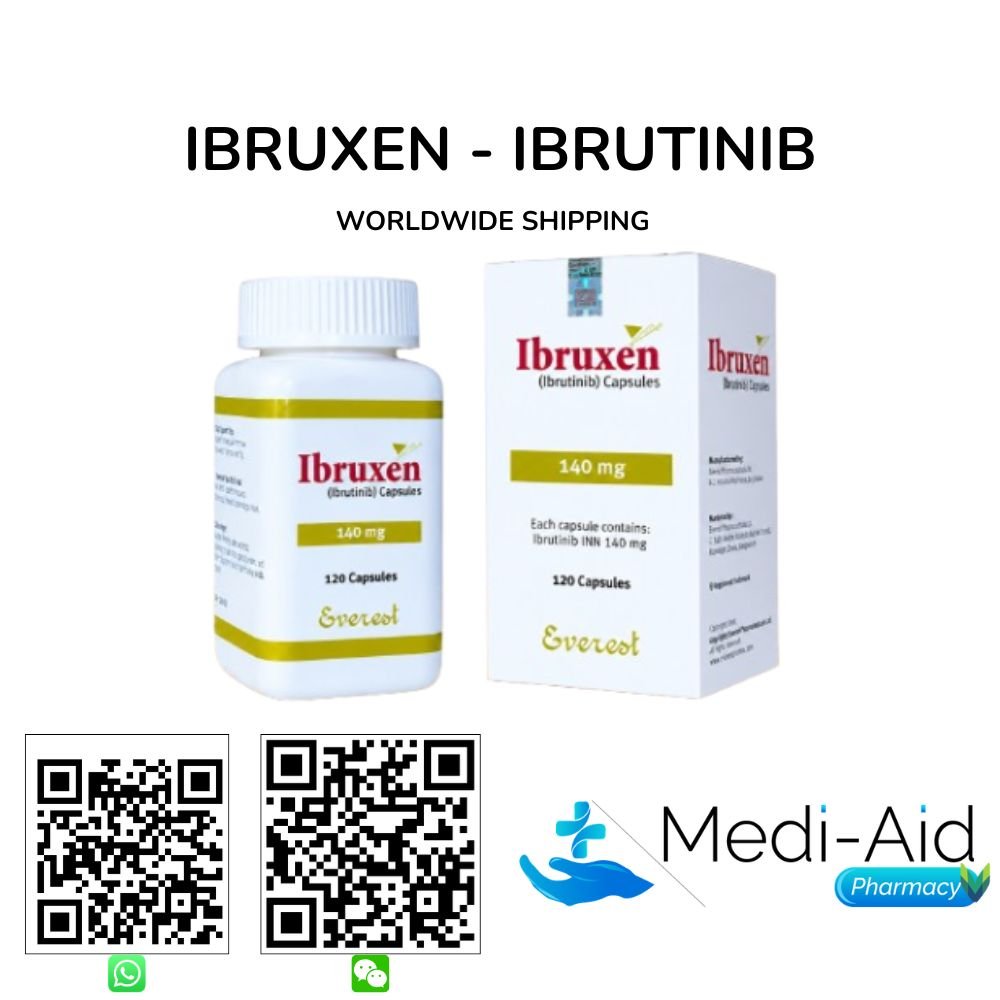
Description
Ibruxen 140 MG (Ibrutinib) is an oral, first-in-class covalent Bruton’s tyrosine kinase (BTK) inhibitor hard capsule available in a 140 mg strength, supplied in a pack of 120 capsules per pot, manufactured by Everest Pharmaceuticals Ltd. of Bangladesh. The active ingredient, ibrutinib, is a highly selective, potent, irreversible covalent BTK inhibitor that permanently inactivates Bruton’s tyrosine kinase (BTK) by forming a covalent bond with Cysteine-481 (Cys481) in the BTK ATP-binding domain, completely abolishing B-cell receptor (BCR) signal transduction through the NF-κB, PI3K/AKT, and RAS/ERK/MAPK pro-survival and pro-proliferative pathways that drive malignant B-cell expansion, chemoresistance, and lymph node microenvironment adhesion in chronic lymphocytic leukaemia (CLL), small lymphocytic lymphoma (SLL), mantle cell lymphoma (MCL), Waldenström’s macroglobulinaemia (WM), marginal zone lymphoma (MZL), and chronic graft-versus-host disease (cGVHD).
The reference-label starting dose of ibrutinib for CLL/SLL, Waldenström’s macroglobulinaemia, and chronic graft-versus-host disease is 420 mg once daily (QD), achieved with 3 × Ibruxen 140 MG capsules taken together once daily, with or without food, delivering approximately 40 days of continuous therapy from a single 120-capsule pot. For mantle cell lymphoma (MCL) and marginal zone lymphoma (MZL), the reference-label dose is 560 mg once daily (QD) 4 × Ibruxen 140 MG capsules once daily providing a full 30-day supply. In the pivotal Phase III RESONATE-2 trial in treatment-naïve CLL patients aged ≥65 years, ibrutinib at 420 mg QD delivered a progression-free survival (PFS) hazard ratio of 0.16 (95% CI 0.09–0.28; p<0.0001) versus chlorambucil, with a 5-year PFS rate of 70% versus 12%, confirming ibrutinib’s sustained long-term efficacy as a frontline BTK inhibitor.
The 5-year overall survival (OS) rate in RESONATE-2 reached 83% with ibrutinib versus 68% with chlorambucil, and the overall response rate was 92% with ibrutinib versus 37% with chlorambucil. The OS and PFS benefit was consistent across cytogenetic subgroups including patients with del(11q) confirming ibrutinib’s clinical activity independent of adverse cytogenetics in treatment-naïve CLL. Searching for Ibruxen 140 MG Ibrutinib? Mediaid Pharmacy stocks this product within its comprehensive leukemia medicines catalogue and ships worldwide.
Basic Product Information of Ibruxen 140 MG (Ibrutinib)
| Brand Name | Ibruxen 140 MG (Ibrutinib) |
| Product Name | Ibruxen |
| Generic Name | Ibrutinib |
| Drug Class | First-Generation Covalent Bruton’s Tyrosine Kinase (BTK) Inhibitor; B-Cell Receptor (BCR) Signalling Pathway Inhibitor; Targeted Oncology Agent for B-Cell Malignancies (CLL, SLL, MCL, WM, MZL, cGVHD) |
| Formulation | Hard Capsule |
| Available Strength | 140 mg per capsule |
| Available Pack Size | 120 Capsules per pot (~40-day supply at the reference-label CLL/SLL/WM/cGVHD dose of 3 capsules/day [420 mg QD]; 30-day supply at the MCL/MZL dose of 4 capsules/day [560 mg QD]) |
| Primary Indications | Chronic Lymphocytic Leukaemia (CLL) / Small Lymphocytic Lymphoma (SLL); Mantle Cell Lymphoma (MCL); Waldenström’s Macroglobulinaemia (WM); Marginal Zone Lymphoma (MZL); Chronic Graft-Versus-Host Disease (cGVHD) in Adult Patients |
| Reference-Label Starting Doses | CLL/SLL, WM, MZL, cGVHD: 420 mg QD = 3 × Ibruxen 140 MG capsules once daily | MCL: 560 mg QD = 4 × Ibruxen 140 MG capsules once daily; taken with or without food; swallowed whole with water |
| Manufacturer / Brand | Everest Pharmaceuticals Ltd., Bangladesh |
| Country of Origin | Bangladesh |
| Categories | Leukemia Medicines, Lymphoma Medicines, Oncology Medicines |
| Storage Conditions | Store below 25°C in a dry place, protected from light and moisture. Keep out of the reach of children. |
| Global Supplier | Mediaid Pharmacy Worldwide Shipping Available |
How Ibruxen 140 MG (Ibrutinib) Works: Covalent BTK Inhibition, BCR Pathway Extinction, and Bone Marrow Microenvironment Disruption in B-Cell Malignancies
Ibrutinib, the active ingredient in Ibruxen 140 MG, is an orally bioavailable, first-in-class, irreversible covalent inhibitor of Bruton’s tyrosine kinase (BTK) the non-receptor tyrosine kinase that serves as the obligate signalling node downstream of the B-cell receptor (BCR) in normal B-cell development and in the pathological BCR signalling that drives malignant B-cell survival across multiple haematological tumour types. Ibrutinib inactivates BTK through the formation of an irreversible covalent bond at Cysteine-481 (Cys481) in the BTK ATP-binding pocket, permanently suppressing BTK kinase activity and completely severing the BCR → BTK → PLCγ2 → PKCβ → NF-κB axis and the BCR → BTK → PI3K → AKT → mTOR pro-survival axis that sustain malignant B-cell clonal expansion and apoptosis resistance.
An irreversible covalent kinase inhibitor refers to a targeted agent that forms a permanent, non-dissociable bond with its target enzyme in ibrutinib’s case via nucleophilic addition (Michael addition) of Cys481 to ibrutinib’s acrylamide electrophilic warhead ensuring that kinase suppression persists until new BTK protein is resynthesised de novo, providing sustained target engagement that is independent of fluctuations in plasma drug concentration between doses. Ibrutinib’s biochemical BTK IC₅₀ is approximately 0.5 nM, confirming deep subnanomolar potency at its primary target. Each Ibruxen 140 MG hard capsule manufactured by Everest Pharmaceuticals Ltd. contains ibrutinib equivalent to 140 mg, with the CLL/SLL/WM/cGVHD reference-label dose of 420 mg QD delivered by taking 3 capsules once daily with or without food.
Tonic BCR signalling in CLL where autonomous, ligand-independent BCR activation sustains constitutive PI3K/AKT/mTOR and NF-κB pro-survival signalling without requiring exogenous antigen is the primary oncogenic vulnerability that ibrutinib exploits. In mantle cell lymphoma (MCL), BCR signalling cooperates with cyclin D1 overexpression (driven by the t(11;14) chromosomal translocation) to maintain proliferative activity; ibrutinib’s BTK blockade disrupts both the BCR survival signal and the downstream ERK/MAPK axis that stabilises cyclin D1 expression, delivering antiproliferative activity that is mechanistically distinct from cytotoxic chemotherapy. In Waldenström’s macroglobulinaemia (WM), the MYD88 L265P somatic mutation present in approximately 90–95% of WM patients constitutively activates IRAK4-mediated signalling converging on BTK and NF-κB; ibrutinib’s dual blockade of this MYD88 L265P→IRAK4→BTK→NF-κB axis explains its particularly high response rates in MYD88 L265P-mutated WM.
Bone marrow and lymph node microenvironment disruption represents a pharmacodynamically critical secondary mechanism of ibrutinib: BTK inhibition abolishes CXCL12/CXCR4- and CXCL13/CXCR5-mediated B-cell homing and VLA-4 integrin-mediated adhesion to bone marrow stromal cells, mobilising malignant B-cells from their protective niches into the peripheral circulation. This microenvironmental displacement is the mechanistic basis of the characteristic transient lymphocytosis observed in CLL patients initiating ibrutinib a benign pharmacodynamic phenomenon that must not be misinterpreted as disease progression and that typically resolves within 3–12 months of continuous therapy. In the RESONATE trial (391 R/R CLL patients), ibrutinib 420 mg QD (achievable as 3 × Ibruxen 140 MG capsules once daily) delivered PFS HR 0.22 (p<0.0001) versus ofatumumab. Oncologists managing B-cell lymphoma patients can review the full range of lymphoma medicines at Mediaid Pharmacy, including Ibruxen 140 MG Ibrutinib, for comprehensive programme planning.
In addition to BTK, ibrutinib inhibits a panel of structurally related kinases at clinically relevant plasma concentrations, including ITK (interleukin-2-inducible T-cell kinase; IC₅₀ approximately 10.7 nM), TEC, BLK, TXK, and HER2/ErbB2. Off-target ITK inhibition contributes to ibrutinib’s immunomodulatory effects on the tumour microenvironment shifting T-cell differentiation towards a Th1 phenotype and is mechanistically linked to the collagen-induced platelet aggregation impairment that underlies ibrutinib’s characteristic bleeding and bruising profile. The ibrutinib dose for each individual patient must be determined and adjusted by the treating haematologist or oncologist; Ibruxen 140 MG capsules must be prescribed and administered under the supervision of a qualified haematology-oncology specialist.
Approved Indications of Ibrutinib Ibruxen 140 MG Reference Label
Ibrutinib holds regulatory approval across multiple B-cell malignancy indications in the United States (FDA), European Union (EMA), and numerous other countries globally. The 140 mg hard capsule formulation of Ibruxen, supplied in a 120-capsule pot, supports the full reference-label dose range across all approved indications from 140 mg QD (1 capsule) through 420 mg QD (3 capsules) to 560 mg QD (4 capsules) without requiring supplementary capsule strengths. Prescribers must confirm the exact locally approved indication and dose on the ibrutinib product label before initiating therapy, as label language and approved combinations vary by regulatory jurisdiction.
|
CLL / SLL First-Line and Relapsed or Refractory in Adult Patients Ibrutinib is approved for adult patients with CLL/SLL as monotherapy or in combination with rituximab, obinutuzumab, or venetoclax in both the first-line and relapsed/refractory settings, including patients with del(17p) or TP53 mutation where chemoimmunotherapy is ineffective. Reference-label dose: 420 mg QD = 3 × Ibruxen 140 MG capsules once daily. RESONATE-2 five-year data confirmed PFS HR 0.16 (p<0.0001) and OS HR 0.56 (p=0.0145) versus chlorambucil in treatment-naïve CLL. Oncologists can review the complete range of CLL and leukaemia treatment medicines at Mediaid Pharmacy for comprehensive programme planning. |
Mantle Cell Lymphoma (MCL) Relapsed or Refractory; at Least One Prior Therapy Ibrutinib is indicated for adult patients with MCL who have received at least one prior line of therapy, as well as in older newly diagnosed MCL patients in combination with bendamustine and rituximab (SHINE trial: PFS HR 0.75; p=0.011; median PFS 80.6 vs 52.9 months). Reference-label R/R MCL dose: 560 mg QD = 4 × Ibruxen 140 MG capsules once daily; the 120-capsule pot provides a full 30-day supply at this dose. Pivotal Phase II MCL data demonstrated ORR 68% (CR 21%) with median duration of response 17.5 months. Haematologists seeking MCL-targeted agents can review mantle cell lymphoma medicines at Mediaid Pharmacy. |
|
Waldenström’s Macroglobulinaemia (WM) Treatment-Naïve and Relapsed/Refractory Ibrutinib is indicated for adult patients with WM as monotherapy or in combination with rituximab, for previously treated patients or treatment-naïve patients for whom standard chemoimmunotherapy is not appropriate. Reference-label dose: 420 mg QD = 3 × Ibruxen 140 MG capsules once daily. The iNNOVATE Phase III trial (ibrutinib + rituximab versus placebo + rituximab in WM) demonstrated 30-month PFS of 82% versus 28% (HR 0.20; p<0.0001) and ORR 92% versus 47%. MYD88 L265P-mutated WM patients demonstrate higher major response rates than MYD88 wild-type patients, confirming the importance of MYD88 mutation status in WM ibrutinib prescribing decisions. |
Marginal Zone Lymphoma (MZL) and Chronic Graft-Versus-Host Disease (cGVHD) Ibrutinib is approved for previously treated adult patients with MZL at 560 mg QD (4 × Ibruxen 140 MG capsules once daily), and for adult patients with cGVHD who have failed one or more lines of systemic therapy at 420 mg QD (3 × Ibruxen 140 MG capsules once daily). In the pivotal cGVHD Phase Ib/II trial, ibrutinib 420 mg QD delivered an ORR of 67% (CR 21%) in steroid-dependent, multiply pretreated cGVHD patients establishing ibrutinib as the first BTK inhibitor approved for this indication. Prescribers must confirm the locally approved label for each indication before initiating Ibruxen 140 MG therapy. |
Ibruxen 140 MG (Ibrutinib) Dosing: Reference-Label Dose Schedule and Modification Algorithm by Indication
The 140 mg hard capsule strength of Ibruxen provides complete reference-label dose coverage across all approved ibrutinib indications from a single capsule format. Doses from 140 mg QD through 560 mg QD are achievable as 1, 2, 3, or 4 Ibruxen 140 MG capsules taken together once daily, without requiring supplementary capsule strengths. All doses are administered orally, once daily, at approximately the same time each day, with or without food. Capsules must be swallowed whole with water; they must not be opened, broken, or chewed, as disrupting capsule integrity alters ibrutinib dissolution and absorption.
| Indication | Ibrutinib Dose (mg QD) | Ibruxen 140 MG Capsules Per Day | Days Supply from 120-Capsule Pot |
| CLL / SLL (1st line and R/R) | 420 mg QD | 3 capsules once daily | ~40 days |
| MCL (R/R; ≥1 prior therapy) and MZL | 560 mg QD | 4 capsules once daily | 30 days |
| Waldenström’s Macroglobulinaemia (WM) | 420 mg QD | 3 capsules once daily | ~40 days |
| Chronic Graft-Versus-Host Disease (cGVHD) | 420 mg QD | 3 capsules once daily | ~40 days |
| Dose Reduction Step 1 (CLL/SLL/WM/cGVHD) | 280 mg QD | 2 capsules once daily | 60 days |
| Dose Reduction Step 1 (MCL/MZL) | 420 mg QD | 3 capsules once daily | ~40 days |
| Dose Reduction Step 2 (all indications) | 140 mg QD | 1 capsule once daily | 120 days |
Safety Monitoring Requirements for Ibruxen 140 MG (Ibrutinib) Therapy
Cardiac arrhythmia and blood pressure monitoring represent the most time-critical safety obligations throughout ibrutinib therapy. Atrial fibrillation (AF) and atrial flutter are reported across Phase III trials at an incidence of approximately 6–16%, with risk increasing proportionally with patient age and cumulative treatment duration. A resting ECG and comprehensive cardiovascular history must be obtained before initiating Ibruxen 140 MG in all patients; patients with pre-existing cardiac risk factors (prior AF, valvular disease, coronary artery disease, or uncontrolled hypertension) require cardiologist evaluation before ibrutinib initiation. Any new-onset palpitations, dyspnoea, lightheadedness, or chest discomfort during therapy must trigger an urgent ECG. Ibrutinib must be interrupted for confirmed new-onset AF or atrial flutter and may only be resumed at the same or a reduced dose following specialist cardiology review; persistent or recurrent AF after rechallenge requires permanent discontinuation. Hypertension requiring pharmacological intervention develops in approximately 14–29% of patients on long-term ibrutinib, with incidence rising significantly after 12 months of continuous therapy; blood pressure monitoring at each clinical review visit is mandatory throughout treatment duration.
Haemorrhagic risk assessment and perioperative management: ibrutinib’s off-target inhibition of TEC and ITK kinases impairs collagen-induced platelet aggregation, conferring an antiplatelet mechanism that is additive to any thrombocytopenia from disease or prior therapy. Grade ≥3 haemorrhagic events including intracranial haemorrhage, subdural haematoma, and gastrointestinal bleeding are reported in approximately 1–6% of patients across Phase III trials. Patients must be counselled on the signs of significant bleeding before initiating therapy; ibrutinib must be held for a minimum of 3–7 days prior to any scheduled surgical procedure and restarted only after confirmed haemostasis. The treating oncologist must perform an individualised benefit–risk evaluation before co-prescribing any anticoagulant or antiplatelet agent alongside Ibruxen 140 MG, as warfarin is contraindicated by the reference label and direct oral anticoagulant (DOAC) combinations require specific monitoring.
Infectious complications monitoring: ibrutinib-treated patients carry increased susceptibility to bacterial, viral (including hepatitis B reactivation and varicella-zoster), and opportunistic infections. HBV serology (HBsAg and anti-HBc) must be established in all patients before initiating ibrutinib; HBsAg-positive patients require prophylactic antiviral therapy before, during, and for several months after treatment completion. Opportunistic infection prophylaxis including PJP prophylaxis with trimethoprim-sulfamethoxazole and antifungal prophylaxis in high-risk patients should be prescribed according to institutional guidelines and patient immunosuppression status. Complete blood count (CBC) with differential at baseline and periodically during therapy is required to detect treatment-emergent neutropenia, thrombocytopenia, and anaemia. Second primary malignancy surveillance: non-melanoma skin cancer and other second primary malignancies have been reported with ibrutinib; annual dermatological review and appropriate cancer surveillance are recommended for all long-term ibrutinib-treated patients. Oncologists managing patients on ibrutinib requiring supportive or combination agents can review the full selection of targeted oncology medicines at Mediaid Pharmacy for comprehensive programme support.
Drug Interactions and Important Safety Information for Ibruxen 140 MG (Ibrutinib)
The dominant pharmacokinetic drug interaction risk for ibrutinib centres on its metabolism as a major CYP3A4 substrate and its transport by P-glycoprotein (P-gp). Strong CYP3A4 inducers including rifampicin, rifabutin, carbamazepine, phenytoin, phenobarbital, and St. John’s Wort markedly accelerate ibrutinib hepatic metabolism, reducing systemic ibrutinib exposure by up to approximately 90% (rifampicin) and potentially abrogating antitumour efficacy at the prescribed dose. Concurrent use of strong CYP3A4 inducers with Ibruxen 140 MG should be avoided wherever clinically possible; where unavoidable, dose escalation under oncologist supervision and plasma drug monitoring should be considered.
Strong CYP3A4 inhibitors represent the most practically significant interaction class in routine haematology-oncology practice, as the antifungals most commonly used for prophylaxis and treatment in immunocompromised haematology patients including posaconazole (up to 24-fold ibrutinib AUC increase), voriconazole, itraconazole, ketoconazole, and fluconazole are potent CYP3A4 inhibitors that substantially amplify ibrutinib systemic exposure and toxicity risk including AF, major haemorrhage, and myelosuppression. The reference label recommends dose reduction to 140 mg QD (1 × Ibruxen 140 MG capsule) when strong CYP3A4 inhibitors such as posaconazole or voriconazole cannot be avoided; moderate CYP3A4 inhibitors (diltiazem, erythromycin, fluconazole, aprepitant) require dose reduction to 280 mg QD (2 × Ibruxen 140 MG capsules) with vigilant clinical monitoring throughout the co-administration period.
Anticoagulant and antiplatelet interactions: ibrutinib’s intrinsic platelet inhibition via off-target ITK and TEC kinase blockade is substantially amplified by co-administration of vitamin K antagonists (warfarin contraindicated per the reference label), direct oral anticoagulants (DOACs: apixaban, rivaroxaban, dabigatran, edoxaban require individualised benefit–risk assessment and intensified monitoring), and antiplatelet agents (aspirin, clopidogrel, ticagrelor). The combination of ibrutinib with DOACs or antiplatelet agents must only be undertaken with explicit oncologist-initiated benefit–risk discussion, documentation, and a clear monitoring protocol for haemorrhagic events. P-gp inhibitors including certain antifungals and HIV antiretrovirals increase ibrutinib bioavailability and require clinical monitoring and dose adjustment at initiation and throughout co-administration.
Venetoclax combination: when Ibruxen 140 MG is used in combination with venetoclax (e.g., for CLL/SLL as per approved combination protocols), tumour lysis syndrome (TLS) risk is amplified and mandatory TLS prophylaxis protocols including venetoclax dose ramp-up, intensive hydration, uric acid monitoring, and electrolyte correction must be strictly followed per the treating oncologist’s protocol. QTc-prolonging co-medications including certain antiarrhythmics, fluoroquinolone antibiotics, macrolides, and antipsychotics warrant ECG monitoring when co-administered with ibrutinib due to the additive cardiac risk context. All patients must disclose their complete medication list including over-the-counter medicines, herbal supplements, and vitamins to their haematologist-oncologist before and throughout Ibruxen 140 MG therapy. Oncology teams sourcing concurrent medicines alongside ibrutinib-based B-cell leukaemia treatment programmes at Mediaid Pharmacy can contact the team for multi-medicine consolidated supply.
Side Effects and Precautions of Ibruxen 140 MG (Ibrutinib)
|
Common Side Effects Diarrhoea (approximately 43%); the most frequently reported gastrointestinal adverse event in ibrutinib-treated patients; typically Grade 1–2 and manageable with loperamide, hydration, and dietary modification; Grade 3 events in approximately 3–5% requiring dose modification Upper respiratory tract infections (approximately 34%); sinusitis, nasopharyngitis, and pneumonia are the most clinically significant infection subtypes; vigilance for opportunistic pathogens including PJP and invasive aspergillosis in immunocompromised patients is required throughout therapy Fatigue (approximately 40%); peripheral oedema (approximately 35%); bruising and contusion (approximately 19–30%); musculoskeletal pain including arthralgia and myalgia (approximately 30–37%) the last being a distinctive ibrutinib-class adverse event most prominent in the first months of therapy Nausea (approximately 28%); stomatitis (approximately 17%); rash and dermatological reactions including acneiform dermatitis (approximately 25–27%); headache (approximately 13%); dizziness (approximately 11%) Neutropenia (approximately 19–26%); thrombocytopenia (approximately 17–23%); anaemia (approximately 12–17%); CBC with differential monitoring at baseline, monthly for the first 6 months, and periodically thereafter is mandatory throughout treatment Atrial fibrillation and flutter (approximately 6–16%, increasing with age and treatment duration); hypertension (approximately 14–29%); transient lymphocytosis at therapy initiation (a benign pharmacodynamic phenomenon in CLL patients; must not be misinterpreted as disease progression) |
Serious Warnings and Precautions Fatal and serious haemorrhagic events: Grade ≥3 major bleeding events including intracranial haemorrhage (subdural haematoma), gastrointestinal haemorrhage, and haemoptysis reported in approximately 1–6% of ibrutinib-treated patients. Warfarin co-administration is contraindicated; anticoagulant and antiplatelet combinations require individualised benefit–risk assessment. Ibrutinib must be held ≥3–7 days perioperatively. Atrial fibrillation and atrial flutter: reported in 6–16% of patients; fatal ventricular arrhythmias have been rarely reported. Baseline ECG and cardiovascular history required before initiation; ECG monitoring required during treatment for symptomatic patients or those with new cardiac symptoms. Cardiology evaluation required before ibrutinib reinitiation after AF event. Permanent discontinuation required for unmanageable arrhythmia. Serious infections and HBV reactivation: fatal infections including bacterial sepsis, PJP pneumonia, and invasive fungal infections reported. HBV serology (HBsAg and anti-HBc) must be established before ibrutinib initiation; antiviral prophylaxis required for HBsAg-positive patients. Herpes zoster reactivation is common; prophylactic antiviral therapy (aciclovir or valaciclovir) should be considered in high-risk patients. Hypertension: Grade 3 or higher hypertension requiring urgent antihypertensive intervention has been reported. Blood pressure monitoring at baseline and regular intervals throughout therapy is mandatory; antihypertensive agents should be initiated and titrated promptly for sustained systolic BP >140 mmHg or diastolic BP >90 mmHg during ibrutinib treatment. Second primary malignancies: non-melanoma skin cancers and other haematological and solid malignancies have been reported in ibrutinib-treated patients. Annual dermatological review and routine age-appropriate cancer screening are recommended throughout the treatment period. Embryo-fetal toxicity: ibrutinib can cause fetal harm. Females of reproductive potential must use effective contraception during treatment and for 1 month after the final dose; males with female partners of reproductive potential must also use contraception during treatment and for 1 month after the final dose. Breastfeeding is contraindicated during treatment and for 2 months post-dose. |
Who Should Use Ibruxen 140 MG (Ibrutinib)?
Ibruxen 140 MG (Ibrutinib) is indicated for adult patients with the following B-cell malignancies: CLL or SLL in the first-line or relapsed/refractory setting, including patients with high-risk features such as del(17p) or TP53 mutation where standard chemoimmunotherapy delivers inadequate efficacy; mantle cell lymphoma (MCL) after at least one prior therapy or in first-line older MCL patients in combination; Waldenström’s macroglobulinaemia (WM) in treatment-naïve or relapsed/refractory patients; previously treated marginal zone lymphoma (MZL); and chronic graft-versus-host disease (cGVHD) after failure of one or more systemic therapy lines. The 140 mg hard capsule and 120-capsule pot of Ibruxen cover all reference-label dose levels from 140 mg to 560 mg QD without requiring any other ibrutinib capsule strength including dose reductions to 280 mg QD (2 capsules) and 140 mg QD (1 capsule) making Ibruxen 140 MG a procurement-efficient generic ibrutinib formulation for multi-indication haematology programmes.
Before prescribing Ibruxen 140 MG, treating haematologists and oncologists must assess: baseline cardiovascular status (resting ECG, blood pressure, cardiac history, AF risk factors); CBC with differential; hepatic function panel (ALT, AST, bilirubin, alkaline phosphatase); renal function; HBV serology (HBsAg, anti-HBc); bleeding history and concurrent anticoagulant or antiplatelet use; and the complete concomitant medication list (CYP3A4 inhibitors/inducers, QTc-prolonging agents, P-gp inhibitors). Patients with pre-existing uncontrolled AF, recent significant haemorrhage, severe hepatic impairment (Child-Pugh C), or active HBV requiring antiviral initiation require specialist multi-disciplinary evaluation before ibrutinib is commenced. Oncologists seeking comprehensive targeted agent support across leukaemia and lymphoma treatment programmes can review the complete range of lymphoma and B-cell malignancy medicines at Mediaid Pharmacy, including Ibruxen 140 MG Ibrutinib by Everest Pharmaceuticals Ltd.
Global Supplier: Mediaid Pharmacy Worldwide Shipping for Ibruxen 140 MG (Ibrutinib)
Mediaid Pharmacy is a Dhaka-based supplier of oncology and specialty medicines with established worldwide shipping capacity. Ibruxen 140 MG (Ibrutinib) manufactured by Everest Pharmaceuticals Ltd. of Bangladesh formulated as hard capsules in 120-capsule pots is stocked and available for international supply. All orders are supported by stock confirmation, pricing quotations, and end-to-end delivery tracking for international shipments. Hospitals, specialist haematology-oncology centres, CLL, MCL, and WM treatment programmes, wholesale distributors, and patients in countries where ibrutinib is approved can contact Mediaid Pharmacy through WhatsApp, phone, or WeChat for all enquiries about generic ibrutinib capsules for CLL, SLL, and B-cell leukaemia at Mediaid Pharmacy, including current stock availability, per-unit pricing, and international freight timelines for your destination. Institutions and distributors sourcing multiple oncology medicines in a consolidated shipment can request a combined multi-product quotation directly from the Mediaid Pharmacy team.
Why Choose Ibruxen 140 MG (Ibrutinib) from Mediaid Pharmacy?
Ibruxen 140 MG is manufactured by Everest Pharmaceuticals Ltd. of Bangladesh and delivers ibrutinib the first-in-class covalent BTK inhibitor whose 420 mg QD dose underpins a Phase III evidence base spanning five approved indications and whose long-term durability is best demonstrated by RESONATE-2 seven-year follow-up data: PFS HR 0.16 (p<0.0001), 7-year PFS rate approximately 59% versus 9% for chlorambucil, and 7-year OS rate approximately 78% versus 61% confirming sustained ibrutinib efficacy across years of continuous therapy in treatment-naïve CLL. The defining procurement advantage of sourcing Ibruxen 140 MG from Mediaid Pharmacy is complete reference-label dose coverage from a single Everest Pharmaceuticals generic ibrutinib formulation: the single 140 mg capsule strength delivers 420 mg QD (3 capsules; CLL/SLL/WM/cGVHD starting dose), 560 mg QD (4 capsules; MCL/MZL starting dose), 280 mg QD (2 capsules; first dose reduction), and 140 mg QD (1 capsule; second dose reduction), covering the entire reference-label prescribing and dose modification range without requiring a second capsule strength.
Mediaid Pharmacy supplies Ibruxen 140 MG in its 120-capsule pot format with worldwide shipping, prescription-verified order processing, and customs and importation documentation as required for international oncology medicine delivery. Every order is initiated with a prescription confirmation to ensure supply aligns with the treating oncologist’s clinical plan and local regulatory requirements. For oncology programmes requiring a broader panel of targeted, haematological, and supportive agents, the full Mediaid Pharmacy oncology medicines catalogue is available to browse, and the team can be contacted directly for consolidated multi-medicine quotations and volume supply arrangements.
Frequently Asked Questions About Ibruxen 140 MG (Ibrutinib)
What is Ibruxen 140 MG and what is its generic name?
Ibruxen 140 MG is a branded generic ibrutinib hard capsule manufactured by Everest Pharmaceuticals Ltd. of Bangladesh. The generic name of Ibruxen 140 MG is ibrutinib the same active ingredient as the originator medicine Imbruvica (ibrutinib), developed by Pharmacyclics Inc. and Janssen Biotech Inc. and first approved by the US FDA in November 2013 for the treatment of mantle cell lymphoma (MCL). Ibrutinib subsequently received FDA approvals for CLL/SLL (2014, expanded 2016), Waldenström’s macroglobulinaemia (2015), marginal zone lymphoma (2017), chronic graft-versus-host disease (2017), and additional combination-based CLL/SLL approvals. Each Ibruxen 140 MG hard capsule contains ibrutinib equivalent to 140 mg. The 120-capsule pot of Ibruxen 140 MG provides approximately 40 days of continuous therapy at the reference-label CLL/SLL/WM/cGVHD dose of 420 mg QD (3 capsules per day) and a full 30-day supply at the MCL/MZL reference-label dose of 560 mg QD (4 capsules per day), making Ibruxen 140 MG a clinically aligned, cost-accessible generic ibrutinib option for haematology-oncology programmes worldwide.
How should Ibruxen 140 MG (Ibrutinib) capsules be taken?
Ibruxen 140 MG (Ibrutinib) hard capsules are taken orally once daily at the dose prescribed by the treating haematologist or oncologist. The reference-label dose for CLL/SLL, WM, and cGVHD is 420 mg QD 3 × Ibruxen 140 MG capsules taken together once daily. The reference-label dose for MCL and MZL is 560 mg QD 4 × Ibruxen 140 MG capsules once daily. Ibrutinib can be administered with or without food; however, patients should avoid grapefruit, grapefruit juice, and Seville oranges throughout the course of Ibruxen 140 MG therapy, as these foods contain furanocoumarins that moderately inhibit intestinal CYP3A4 and may increase ibrutinib plasma exposure unpredictably. Capsules must be swallowed whole with a full glass of water opening, crushing, or chewing the capsule must be avoided. If a dose is missed on the same day it is due, it should be taken as soon as remembered on that day; if it is not remembered until the following day, the missed dose must be skipped entirely and the regular schedule resumed doubling up doses is not permitted. Patients must inform their oncologist immediately of any new medications particularly antifungals, antivirals, antibiotics, herbal preparations, or supplements before or during Ibruxen 140 MG therapy.
What are the most common side effects of Ibruxen 140 MG (Ibrutinib)?
The most common side effects of ibrutinib reported across Phase III trials in CLL, MCL, and WM include diarrhoea (approximately 43%), fatigue and asthenia (approximately 40%), musculoskeletal pain including arthralgia and myalgia (approximately 30–37%), upper respiratory tract infection (approximately 34%), peripheral oedema (approximately 35%), bruising and contusion (approximately 19–30%), nausea (approximately 28%), rash (approximately 25–27%), stomatitis (approximately 17%), headache (approximately 13%), and dizziness (approximately 11%). Atrial fibrillation (approximately 6–16%) and hypertension (approximately 14–29%) are the most clinically significant cardiovascular adverse events requiring mandatory monitoring throughout treatment. Grade ≥3 haemorrhagic events are reported in approximately 1–6% of patients. Neutropenia (approximately 19–26%) and thrombocytopenia (approximately 17–23%) require CBC monitoring throughout therapy. The reference-label dose modification pathway permits stepwise reductions from 420 mg QD (3 capsules) to 280 mg QD (2 capsules) and then to 140 mg QD (1 capsule) using Ibruxen 140 MG capsules. Any concerns about side effects must be reported immediately to the treating oncologist.
What is the evidence base for ibrutinib in Waldenström’s macroglobulinaemia (WM)?
The evidence base for ibrutinib in Waldenström’s macroglobulinaemia (WM) rests on two pivotal trials. The Phase Ib/II single-arm study (PCYC-1118E) enrolled 63 patients with previously treated WM receiving ibrutinib 420 mg QD as monotherapy; the ORR was 90.5%, with a major response rate (at least partial response) of 73%, and the 2-year PFS rate was 69.1%. The Phase III iNNOVATE trial (NCT02165397) enrolled 150 WM patients (symptomatic, treatment-naïve or relapsed/refractory) and randomised them 1:1 to ibrutinib + rituximab versus placebo + rituximab; the primary endpoint of PFS at 30 months was 82% with ibrutinib + rituximab versus 28% with placebo + rituximab (HR 0.20; 95% CI 0.11–0.38; p<0.0001), with ORR 92% versus 47%. Critically, the PFS benefit of ibrutinib-containing therapy was observed across MYD88 L265P-mutated patients (the dominant WM genotype, ~90–95% of patients) and MYD88 wild-type patients, although major response rates and response kinetics are more favourable in MYD88 L265P-mutated disease. CXCR4 mutation co-occurring with MYD88 L265P is associated with attenuated initial response kinetics but does not preclude ibrutinib efficacy with extended treatment duration. Ibruxen 140 MG delivers ibrutinib at the PCYC-1118E and iNNOVATE reference dose of 420 mg QD 3 capsules once daily from a 120-capsule pot (~40-day supply).
Is Ibruxen 140 MG (Ibrutinib) safe during pregnancy or while breastfeeding?
No. Ibrutinib including in the Ibruxen 140 MG hard capsule formulation manufactured by Everest Pharmaceuticals Ltd. can cause fetal harm based on its mechanism of action and confirmed nonclinical developmental toxicology data showing embryotoxicity, fetotoxicity, and teratogenicity in multiple animal species at exposures at or below the human therapeutic range. Females of reproductive potential must use effective, non-hormonal contraception during treatment with Ibruxen 140 MG and for at least 1 month after the final dose, as ibrutinib may reduce the efficacy of some hormonal contraceptives through CYP3A4 induction of steroid metabolism. Males with female partners of reproductive potential must also use reliable contraception during treatment and for at least 1 month after the final dose. Breastfeeding is not recommended during treatment and for at least 2 months after the final dose, as it has not been established whether ibrutinib or its pharmacologically active metabolite PCI-45227 are excreted in human breast milk. Any patient who is pregnant, planning a pregnancy, or currently breastfeeding must discuss their individual clinical circumstances with their treating haematologist-oncologist before initiating or continuing Ibruxen 140 MG ibrutinib therapy.
How does ibrutinib work in del(17p) and TP53-mutated CLL where chemotherapy fails?
Del(17p) and TP53 mutation affecting approximately 7–10% of treatment-naïve and 25–50% of relapsed/refractory CLL patients are the highest-risk cytogenetic and molecular features in CLL and confer primary resistance to purine analogue-based chemoimmunotherapy (fludarabine, cyclophosphamide) by abrogating p53-dependent DNA damage-induced apoptosis. Ibrutinib’s mechanism of action bypasses the p53 apoptotic pathway entirely: BTK inhibition induces cell-cycle arrest and apoptosis via p53-independent mechanisms including suppression of pro-survival NF-κB and PI3K/AKT signalling and loss of BCR-derived survival signals, explaining why ibrutinib retains full clinical efficacy in del(17p)- and TP53-mutated CLL where alkylating agents and purine analogues have no meaningful activity. In the RESONATE trial, the PFS benefit of ibrutinib over ofatumumab was consistent across the del(17p)/TP53-mutated subgroup (HR 0.25; 95% CI 0.14–0.45) confirming that del(17p)/TP53 mutation does not attenuate ibrutinib’s clinical activity and that ibrutinib remains the preferred targeted therapy for high-risk CLL regardless of del(17p) or TP53 mutation status. Ibruxen 140 MG 420 mg QD (3 capsules once daily) delivers ibrutinib at the RESONATE reference dose for this highest-risk CLL patient population.
Can I order Ibruxen 140 MG (Ibrutinib) online with worldwide shipping?
Yes. Mediaid Pharmacy supplies Ibruxen 140 MG (Ibrutinib) manufactured by Everest Pharmaceuticals Ltd. of Bangladesh hard capsules, 120 capsules per pot to oncology centres, hospitals, wholesale distributors, and patients globally. Contact Mediaid Pharmacy via WhatsApp, phone, or WeChat at +8801773428128, or by email at info@mediaidpharmacy.com, for pricing on Ibruxen 140 MG Ibrutinib, current stock confirmation, and international delivery timelines for your destination country. Oncology teams sourcing Ibruxen 140 MG Ibrutinib alongside other targeted agents for CLL, lymphoma, and haematological malignancy programmes can browse the complete range of oncology medicines at Mediaid Pharmacy and request a consolidated multi-medicine quotation. All international orders are supported by prescription verification, export documentation, and customs clearance assistance as required.
Order Ibruxen 140 MG (Ibrutinib) with Worldwide Shipping
Phone / WhatsApp / WeChat: +8801773428128 | Email: info@mediaidpharmacy.com
Reviews
There are no reviews yet.