
Description
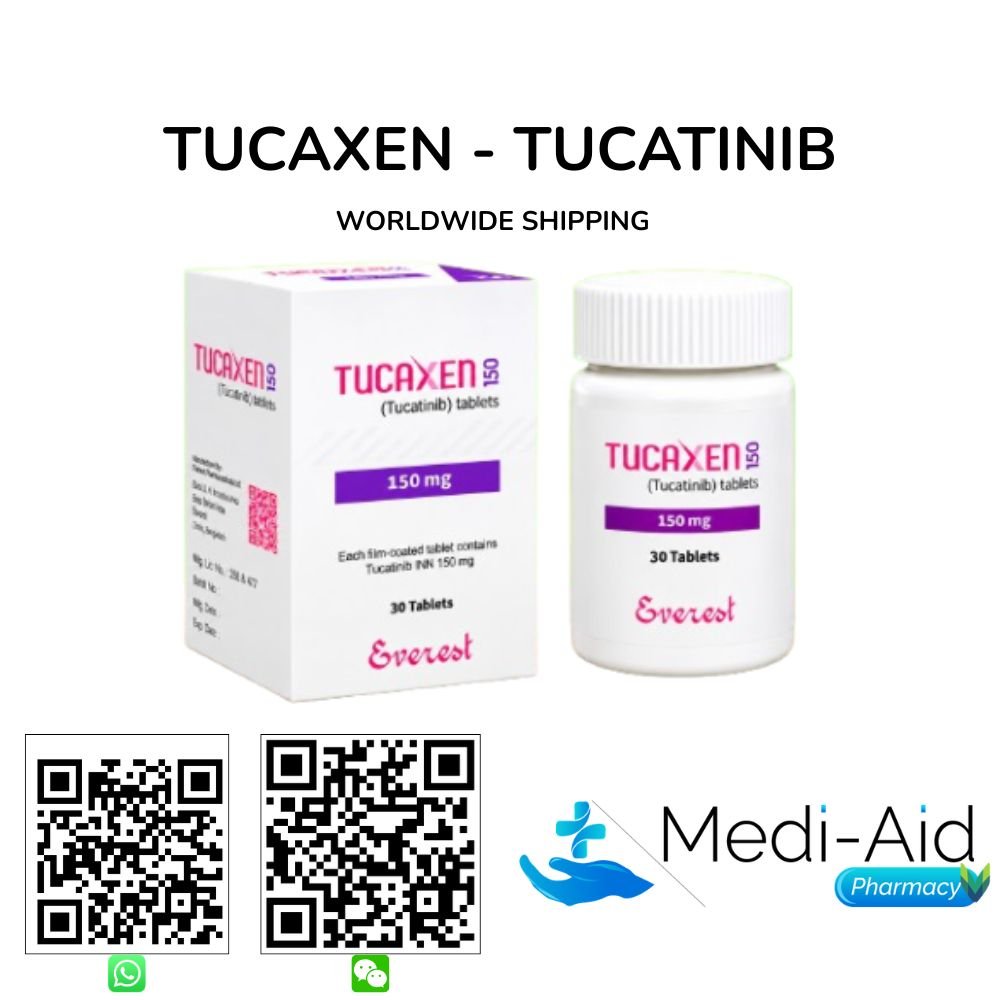
Tucaxen 150 MG (Tucatinib) is a highly selective, orally bioavailable small-molecule tyrosine kinase inhibitor (TKI) of human epidermal growth factor receptor 2 (HER2 / ErbB2) a targeted antineoplastic agent that binds to and irreversibly inhibits the kinase domain of HER2, blocking HER2-mediated autophosphorylation and transphosphorylation of downstream signaling intermediates, suppressing activation of the PI3K/AKT and MAPK/ERK oncogenic survival pathways, arresting HER2-amplified tumor cell proliferation and inducing apoptosis, with approximately 500- to 1,000-fold greater selectivity for HER2 (ErbB2) over EGFR (ErbB1/HER1) compared to lapatinib and neratinib, thereby minimizing EGFR-mediated off-target toxicities including severe skin rash and diarrhea supplied as 150 mg film-coated tablets, 30 tablets per box/bottle, and manufactured by Everest Pharmaceuticals Ltd., Bangladesh.
Tucatinib, the active pharmaceutical ingredient of Tucaxen, is approved in combination with trastuzumab and capecitabine for the treatment of HER2-positive unresectable locally advanced or metastatic breast cancer, including patients with brain metastases, who have received one or more prior anti-HER2-based regimens in the metastatic setting establishing tucatinib as the first HER2-selective TKI to demonstrate both progression-free survival (PFS) and overall survival (OS) benefit in heavily pre-treated HER2-positive metastatic breast cancer including patients with active brain metastases in a randomized Phase 2 trial.
The recommended dose of Tucaxen (Tucatinib) is 300 mg (two 150 mg tablets) orally twice daily (BID), administered continuously with or without food in combination with trastuzumab 6 mg/kg IV every 21 days (following an 8 mg/kg loading dose) and capecitabine 1,000 mg/m² orally twice daily on Days 1–14 of each 21-day cycle, until disease progression or unacceptable toxicity. The pivotal Phase 2 HER2CLIMB trial (NCT02614794; n=612; randomized, double-blind, placebo-controlled) established the clinical foundation for tucatinib approval: in heavily pre-treated patients with HER2-positive unresectable locally advanced or metastatic breast cancer who had received prior taxane, trastuzumab, pertuzumab, and ado-trastuzumab emtansine (T-DM1) with 48% of enrolled patients having active or stable brain metastases tucatinib + trastuzumab + capecitabine achieved a median progression-free survival of 7.8 months versus 5.6 months (hazard ratio [HR] 0.54; 95% confidence interval [CI] 0.42–0.71; p<0.00001) and a median overall survival of 21.9 months versus 17.4 months (HR 0.66; 95% CI 0.50–0.87; p=0.005) compared to placebo + trastuzumab + capecitabine; in the brain metastasis subgroup, tucatinib achieved a median intracranial PFS of 9.9 months versus 4.2 months (HR 0.32; 95% CI 0.22–0.48; p<0.00001), establishing tucatinib as an active CNS-penetrating HER2 TKI with clinically meaningful efficacy in HER2-positive breast cancer brain metastases.
Important: The most clinically significant adverse reactions of tucatinib are diarrhea, hepatotoxicity (ALT and AST elevations), and palmar-plantar erythrodysesthesia (PPE; in combination with capecitabine). Diarrhea occurred in 81% of patients (Grade 3: 12%); implement antidiarrheal prophylaxis and management per institutional guidelines; withhold tucatinib for Grade 2 diarrhea not controlled within 24 hours; permanently discontinue for Grade 4 diarrhea.
Liver function tests (ALT, AST, bilirubin) must be monitored before initiating tucatinib, every 3 weeks during the first 3 months of treatment, and as clinically indicated thereafter; Grade 3 or 4 ALT or AST elevations require tucatinib dose modification or permanent discontinuation based on recurrence and severity. Tucatinib is a potent inhibitor of CYP3A and CYP2C8 and a P-glycoprotein (P-gp) substrate; avoid concomitant use with strong CYP2C8 inhibitors (increase tucatinib AUC approximately 2.3-fold), strong CYP3A or CYP2C8 inducers, and use caution with sensitive CYP3A substrates with a narrow therapeutic index.
Tucatinib can cause embryo-fetal toxicity; females of reproductive potential must use effective non-hormonal contraception during tucatinib treatment and for at least 1 week after the last dose. Do not substitute tucatinib for other HER2-targeted agents without confirmed indication-specific prescribing and clinical benefit-risk assessment. Searching for Tucaxen 150 MG Tucatinib? Mediaid Pharmacy lists this product across its oncology medicines, breast cancer medicines, and Everest Pharmaceuticals medicines portfolios and ships it worldwide.
Basic Product Information of Tucaxen 150 MG (Tucatinib)
| Brand Name | Tucaxen 150 MG (Tucatinib) Bangladesh-manufactured by Everest Pharmaceuticals Ltd.; tucatinib is also marketed internationally as Tukysa (tucatinib) by Seagen/Pfizer in multiple global markets; Tucaxen is the branded generic formulation of tucatinib 150 mg film-coated tablets for the international oncology market |
| Product Name | Tucaxen (branded generic tucatinib 150 mg film-coated tablets by Everest Pharmaceuticals Ltd., Bangladesh) |
| Generic Name | Tucatinib (INN; also designated ONT-380 and ARRY-380 during preclinical and early clinical development by Array BioPharma and Oncobiologics, subsequently acquired and developed by Cascadian Therapeutics / Seattle Genetics [now Seagen, acquired by Pfizer in 2023]; a highly selective, orally bioavailable small-molecule inhibitor of the HER2 [ErbB2] tyrosine kinase domain; tucatinib competitively occupies the ATP-binding cleft of the HER2 kinase domain, inhibiting HER2 autophosphorylation [at Tyr1221/1222 and Tyr1248] and receptor transphosphorylation, disrupting downstream RAS-MAPK/ERK and PI3K-PDK1-AKT signaling cascades that drive proliferation, cell survival, and anti-apoptotic gene expression in HER2-amplified tumor cells; tucatinib’s exceptional selectivity for HER2 over EGFR [ErbB1] approximately 500- to 1,000-fold greater than its selectivity for EGFR fundamentally distinguishes its pharmacological and clinical toxicity profile from lapatinib [dual HER1/HER2 TKI] and neratinib [pan-ErbB TKI], which cause significantly greater EGFR-mediated diarrhea and dermatological toxicity; in HER2-positive breast cancer, HER2 gene amplification drives constitutive HER2 receptor overexpression and homodimerization / heterodimerization with HER3 [ErbB3], activating PI3K/AKT/mTOR and MAPK/ERK oncogenic survival pathways tucatinib disrupts this HER2-mediated oncogenic signaling axis, working synergistically with trastuzumab [HER2 extracellular domain-targeted monoclonal antibody] and capecitabine [fluoropyrimidine prodrug with intratumoral thymidine phosphorylase-mediated activation]; tucatinib also demonstrates meaningful CNS penetration and intracranial antitumor activity, as evidenced in the HER2CLIMB brain metastasis subgroup [n=291; intracranial PFS HR 0.32; 95% CI 0.22–0.48; p<0.00001], establishing it as a clinically active HER2 TKI for HER2-positive breast cancer brain metastases; developed by Seattle Genetics [Seagen] and commercialized as Tukysa internationally; FDA initial approval: April 17, 2020; expanded approval for HER2-positive colorectal cancer: January 19, 2023) |
| Drug Class | HER2 Tyrosine Kinase Inhibitor (HER2 TKI); Highly Selective Oral ErbB2 Kinase Inhibitor; Small-Molecule Anti-HER2 Targeted Therapy; CNS-Penetrating HER2 TKI; HER2-Positive Metastatic Breast Cancer Targeted Oral Therapy; Anti-HER2 Combination Partner (with Trastuzumab and Capecitabine; or with T-DM1); HER2-Positive Breast Cancer Brain Metastasis Active Agent; HER2-Positive Colorectal Cancer Targeted Oral Therapy; Antineoplastic Targeted Agent; Post-Pertuzumab and Post-T-DM1 HER2-Positive Metastatic Breast Cancer Precision Oral Therapy |
| Formulation | Film-coated tablets for oral administration may be taken with or without food; swallow whole do not crush, chew, or split tablets; take at approximately the same time each day for each of the twice-daily (BID) doses, maintaining approximately 12-hour intervals between doses; if a dose is missed by ≥6 hours or vomiting occurs after a dose, skip that dose and take the next dose at the scheduled time do not take an additional dose to replace the missed or vomited dose; administer tucatinib 300 mg BID continuously in combination with trastuzumab 6 mg/kg IV every 21 days (following a loading dose of 8 mg/kg IV on Day 1 of Cycle 1) and capecitabine 1,000 mg/m² orally twice daily on Days 1–14 of each 21-day cycle; the capecitabine component must be taken within 30 minutes after the end of a meal (morning and evening); tucatinib is dosed independently of the capecitabine meal-timing requirement and may be taken with or without food |
| Available Strengths | 50 mg and 150 mg film-coated tablets; the recommended daily dose of tucatinib is 300 mg twice daily (600 mg total daily dose), administered as two 150 mg tablets per dose; the availability of both 50 mg and 150 mg tablet strengths enables precise dose reductions in the event of clinically significant toxicity: first dose reduction to 250 mg BID (one 150 mg tablet + two 50 mg tablets per dose), and second dose reduction to 200 mg BID (one 150 mg tablet + one 50 mg tablet per dose); dose reductions are implemented for Grade 2 diarrhea not controlled within 24 hours despite antidiarrheal therapy, Grade 3 or 4 diarrhea, Grade 3 or 4 ALT or AST hepatotoxicity, Grade 3 or 4 palmar-plantar erythrodysesthesia (PPE), and other severe or intolerable Grade 3 or 4 adverse reactions; permanently discontinue tucatinib if unable to tolerate the 200 mg BID dose level; no dose adjustment is required for mild or moderate renal impairment (eGFR ≥30 mL/min/1.73 m²); avoid use in patients with severe renal impairment (eGFR <30 mL/min/1.73 m²) due to accumulation of the capecitabine metabolite; no dose adjustment of tucatinib is required for mild or moderate hepatic impairment; tucatinib has not been studied in patients with severe hepatic impairment |
| Available Pack Size | 30 tablets per box/bottle; at the recommended dose of 300 mg twice daily (two 150 mg tablets per dose × 2 doses per day = 4 tablets per day), one 30-tablet box supplies 7.5 days of therapy; for a complete 21-day treatment cycle with the capecitabine component, patients require approximately 4 boxes per 28-day calendar month (120 tablets per month ÷ 30 tablets per box); hospital pharmacies, oncology treatment centers, and patient access programs typically procure Tucaxen 150 MG on a monthly basis corresponding to continuous daily dosing without scheduled treatment breaks for the tucatinib component; the 50 mg strength is procured alongside the 150 mg strength for patients requiring dose reductions to 250 mg BID or 200 mg BID, enabling precise combination of the two tablet strengths without wastage; institutions managing multiple patients on tucatinib-based regimens calculate monthly procurement by multiplying the number of active patients at each dose level by the corresponding tablet quantity per 28-day month (120 tablets/month at 300 mg BID; 80 tablets/month of 150 mg + 80 tablets/month of 50 mg at 250 mg BID; 60 tablets/month of 150 mg + 60 tablets/month of 50 mg at 200 mg BID) |
| Dosing Schedule | Recommended Dose: Tucatinib 300 mg (two 150 mg tablets) orally twice daily (BID), taken continuously (every day without scheduled treatment breaks). Combination Partners: (1) Trastuzumab 6 mg/kg IV every 21 days (after an 8 mg/kg IV loading dose on Day 1 of Cycle 1); and (2) Capecitabine 1,000 mg/m² orally twice daily on Days 1–14 of each 21-day cycle, taken within 30 minutes after a meal. Duration: Continue until disease progression or unacceptable toxicity. Dose Reductions for Toxicity: First dose reduction: 250 mg BID; second dose reduction: 200 mg BID; permanently discontinue tucatinib if toxicity is intolerable or recurs at the 200 mg BID dose level. Mandatory Safety Assessments Before and During Treatment: Obtain liver function tests (ALT, AST, total bilirubin) before initiating tucatinib; at Weeks 3, 6, 9, 12 (every 3 weeks for the first 3 months); and as clinically indicated thereafter. Monitor closely for diarrhea; initiate antidiarrheal therapy (e.g., loperamide) at the first sign of loose stools; withhold tucatinib for Grade 2 diarrhea not controlled within 24 hours; permanently discontinue for Grade 4 diarrhea. Assess for PPE (palmar-plantar erythrodysesthesia) at each clinical visit during capecitabine co-administration; modify doses of tucatinib and capecitabine independently based on the toxicity attributed to each agent. Assess for signs of hepatotoxicity at each monitoring visit; withhold or permanently discontinue tucatinib for Grade 3 or 4 ALT or AST elevations based on severity and recurrence per prescribing label. Drug Interaction Screening: Review all concomitant medications for strong CYP2C8 inhibitors (e.g., gemfibrozil avoid), strong CYP3A or CYP2C8 inducers (e.g., rifampin, carbamazepine, phenytoin avoid), and sensitive CYP3A or CYP2C8 substrates with narrow therapeutic index (e.g., midazolam, paclitaxel monitor and consider dose reduction of the substrate). |
| Primary Indications | HER2-POSITIVE UNRESECTABLE LOCALLY ADVANCED OR METASTATIC BREAST CANCER:
Tucatinib + Trastuzumab + Capecitabine Post-Anti-HER2 Therapy (HER2CLIMB): Tucatinib 300 mg BID in combination with trastuzumab and capecitabine for adults with HER2-positive unresectable locally advanced or metastatic breast cancer who have received ≥1 prior anti-HER2-based regimen in the metastatic setting, including patients with brain metastases (HER2CLIMB; NCT02614794; n=612; heavily pre-treated with prior taxane, trastuzumab, pertuzumab, and T-DM1; 48% with active or stable brain metastases): median PFS 7.8 vs. 5.6 months (HR 0.54; 95% CI 0.42–0.71; p<0.00001); OS 21.9 vs. 17.4 months (HR 0.66; 95% CI 0.50–0.87; p=0.005); in brain metastasis subgroup: intracranial PFS HR 0.32 (95% CI 0.22–0.48; p<0.00001); FDA approval: April 17, 2020. Tucatinib + Ado-Trastuzumab Emtansine (T-DM1) Second-Line (HER2CLIMB-02): Tucatinib 300 mg BID in combination with T-DM1 (ado-trastuzumab emtansine) for HER2-positive unresectable locally advanced or metastatic breast cancer (HER2CLIMB-02; NCT03975647; n=463; previously treated with trastuzumab and taxane): median PFS 9.5 vs. 7.4 months (HR 0.52; 95% CI 0.40–0.67; p<0.0001); FDA approval: February 2025. HER2-POSITIVE COLORECTAL CANCER: Tucatinib + Trastuzumab Previously Treated HER2-Positive mCRC (MOUNTAINEER): Tucatinib 300 mg BID in combination with trastuzumab for adults with RAS wild-type, HER2-positive unresectable or metastatic colorectal cancer who have received prior fluoropyrimidine-, oxaliplatin-, and irinotecan-based chemotherapy (MOUNTAINEER; NCT03043313): ORR 38.1% (95% CI 26.8–50.3%); median DOR 12.4 months; FDA approval: January 19, 2023. |
| Manufacturer / Brand | Everest Pharmaceuticals Ltd., Headquartered in Dhaka, Bangladesh; Country of Origin: Bangladesh; Tucaxen is Everest Pharmaceuticals Ltd.’s branded formulation of tucatinib 150 mg film-coated tablets; Everest Pharmaceuticals Ltd. is a Bangladesh-based pharmaceutical manufacturer producing a range of oncology, targeted therapy, and specialty medicines for the domestic and international markets; the active pharmaceutical ingredient tucatinib was originally developed by Seattle Genetics (Seagen, now Pfizer) and is commercialized internationally as Tukysa; Brand: Everest Pharma; Categories: Breast Cancer Medicines, Everest Pharmaceuticals Medicines, Oncology Medicines |
| Global Supplier | Mediaid Pharmacy Dhaka, Bangladesh; Phone / WhatsApp: +8801773428128; Email: info@mediaidpharmacy.com; worldwide shipping to patients, oncology departments, HER2-positive breast cancer treatment programs, hospital pharmacies, oncology day units, patient access programs, and international distributors |
Mediaid Pharmacy Global Supplier of Tucaxen 150 MG (Tucatinib) with Worldwide Shipping
Mediaid Pharmacy is a Dhaka-based supplier of specialty targeted oncology, breast cancer, HER2-positive metastatic breast cancer, and rare disease medicines with worldwide shipping to patients, oncology departments, infusion units, HER2-positive metastatic breast cancer treatment programs, hospital pharmacies, oncology day units, patient access programs, and international distributors across all regions. Tucaxen 150 MG (Tucatinib), manufactured by Everest Pharmaceuticals Ltd. in Bangladesh, is supplied as 150 mg film-coated tablets, 30 tablets per box/bottle, with pricing quotations, stock confirmation, full product documentation, shipping arrangements, and end-to-end international delivery tracking for every order.
The procurement planning significance of the 30-tablet box format is directly tied to tucatinib’s continuous twice-daily dosing architecture: at the recommended dose of 300 mg BID (four 150 mg tablets per day), patients require approximately 4 boxes of Tucaxen 150 MG per 28-day calendar month; for institutions managing multiple patients simultaneously across different treatment cycles, monthly procurement is calculated by multiplying the number of active tucatinib-receiving patients at the standard 300 mg BID dose by 4 boxes per patient per month, with adjustments for patients on dose-reduced regimens (250 mg BID or 200 mg BID) who require additional 50 mg tablet quantities.
HER2-positive metastatic breast cancer programs managing long-duration tucatinib-based therapy; HER2-positive breast cancer centers sourcing tucatinib for the HER2CLIMB triple combination (tucatinib + trastuzumab + capecitabine) or the HER2CLIMB-02 doublet combination (tucatinib + T-DM1); hospital formulary procurement departments co-sourcing Tucaxen 150 MG and 50 MG with trastuzumab, capecitabine, and other targeted oncology medicines; and individual patients and families sourcing tucatinib for HER2-positive metastatic breast cancer treatment can contact the Mediaid Pharmacy team through WhatsApp, phone, or email for Tucaxen 150 MG stock availability, current pricing, shipping options, and international delivery timelines.
Why Choose Tucaxen 150 MG (Tucatinib) from Mediaid Pharmacy?
Tucaxen (Tucatinib) from Everest Pharmaceuticals Ltd. delivers the validated HER2 kinase inhibitory mechanism of a clinically proven oral breast cancer targeted therapy the first and only highly HER2-selective tyrosine kinase inhibitor to demonstrate statistically significant progression-free survival and overall survival improvement in heavily pre-treated HER2-positive metastatic breast cancer, including patients with active brain metastases, in a randomized Phase 2 trial (HER2CLIMB), addressing the HER2-amplified tumor subtype representing approximately 15–20% of all invasive breast cancers supplied as 150 mg film-coated oral tablets, 30 tablets per box, enabling convenient twice-daily oral self-administration without the IV infusion infrastructure required for the antibody-based HER2-targeted agents (trastuzumab, pertuzumab) used as tucatinib’s combination partners. Tucatinib is pharmacologically and clinically distinguished across the HER2-positive metastatic breast cancer treatment landscape by four evidence-based attributes.
First, tucatinib is the most HER2-selective small-molecule TKI approved for HER2-positive breast cancer, with approximately 500- to 1,000-fold greater selectivity for HER2 (ErbB2) over EGFR (ErbB1) compared to lapatinib (dual HER1/HER2 TKI; approximately 2-fold HER2/EGFR selectivity) and neratinib (pan-ErbB inhibitor with significant EGFR and HER4 activity), resulting in meaningfully lower rates of EGFR-mediated dermatological toxicity (Grade 3 rash: <1% with tucatinib vs. 2–6% with lapatinib and 7–14% with neratinib) while maintaining potent HER2 inhibition across all HER2-amplified tumor cell compartments including the central nervous system; tucatinib’s favorable selectivity profile translates to a tolerability advantage in combination with capecitabine and trastuzumab, permitting sustained dosing through the cumulative treatment course required for metastatic disease management.
Second, tucatinib is the only HER2 TKI with prospectively demonstrated, statistically significant intracranial antitumor activity in a randomized controlled trial, with HER2CLIMB establishing a 68% reduction in the risk of intracranial disease progression or death in HER2-positive breast cancer patients with brain metastases (intracranial PFS HR 0.32; 95% CI 0.22–0.48; p<0.00001; median intracranial PFS 9.9 vs. 4.2 months) a clinically critical distinguishing attribute given that HER2-positive metastatic breast cancer is associated with a 30–55% lifetime risk of developing brain metastases, a site of disease progression historically excluded from most pivotal breast cancer trials but specifically included in HER2CLIMB (48% of enrolled patients had active or stable brain metastases); tucatinib + trastuzumab + capecitabine is therefore established as a preferred systemic treatment option for HER2-positive metastatic breast cancer with active brain metastases per international treatment guidelines.
Third, tucatinib’s combination regimen with trastuzumab and capecitabine demonstrated a 34% reduction in the risk of death (OS HR 0.66; 95% CI 0.50–0.87; p=0.005; median OS 21.9 vs. 17.4 months) in a heavily pre-treated HER2-positive mBC population that had all received prior trastuzumab, pertuzumab, and T-DM1 the standard first-line and second-line anti-HER2 doublet and conjugate regimens respectively establishing tucatinib as an effective third-line and beyond option that extends life expectancy in patients who have exhausted prior standard HER2-targeted therapies; the HER2CLIMB OS benefit was consistent across subgroups regardless of prior treatment history, hormone receptor status, and brain metastasis status.
Fourth, tucatinib’s adverse effect profile dominated by diarrhea (81%; Grade 3: 12%), hepatic enzyme elevations (ALT elevation 45%; AST elevation 43%), and palmar-plantar erythrodysesthesia from the capecitabine component (63%; Grade 3: 13%) is comprehensively manageable through structured antidiarrheal prophylaxis and dose modification protocols, liver function test monitoring at defined early-treatment timepoints, and capecitabine dose adjustment independent of tucatinib dosing, enabling experienced oncology teams to maintain tucatinib therapy across the prolonged treatment course required for HER2-positive metastatic breast cancer management without premature permanent discontinuation in most patients.
To source the complete range of HER2-targeted breast cancer medicines, oncology targeted therapies, and specialty oncology medicines, visit the Mediaid Pharmacy breast cancer medicines portfolio, the oncology medicines collection, and the Everest Pharmaceuticals medicines range, and contact the team for a personalized quotation and international shipping confirmation.
Frequently Asked Questions About Tucaxen 150 MG (Tucatinib)
What is Tucaxen 150 MG (Tucatinib) used for?
Tucaxen 150 MG (Tucatinib) is an oral, highly selective HER2 tyrosine kinase inhibitor (TKI) used in combination with trastuzumab and capecitabine for the treatment of HER2-positive unresectable locally advanced or metastatic breast cancer in adults who have received one or more prior anti-HER2-based regimens in the metastatic setting, including patients with brain metastases. Tucatinib is also approved in combination with trastuzumab for HER2-positive, RAS wild-type unresectable or metastatic colorectal cancer in patients who have received prior fluoropyrimidine-, oxaliplatin-, and irinotecan-based chemotherapy. The HER2-positive breast cancer indication covers patients previously treated with the standard sequential anti-HER2 regimens: trastuzumab (first-line combination), pertuzumab (first-line combination), and T-DM1 (second-line), making tucatinib a validated third-line option in the established HER2-positive mBC treatment sequence. The HER2CLIMB trial (NCT02614794; n=612; randomized Phase 2) provided the clinical basis for tucatinib’s approval across all breast cancer patient subgroups, including patients with brain metastases who represent a critical unmet need in HER2-positive metastatic breast cancer. HER2CLIMB key results: PFS 7.8 vs. 5.6 months (HR 0.54; p<0.00001); OS 21.9 vs. 17.4 months (HR 0.66; p=0.005); intracranial PFS HR 0.32 (p<0.00001) in brain metastasis subgroup. Tucaxen 150 MG, manufactured by Everest Pharmaceuticals Ltd. in Bangladesh, is available through Mediaid Pharmacy with worldwide shipping to patients and HER2-positive breast cancer treatment programs globally.
What is the generic name of Tucaxen?
The generic name (International Nonproprietary Name, INN) of Tucaxen is tucatinib (also designated ONT-380 and ARRY-380 during preclinical and early clinical development). Tucatinib is a highly selective, orally bioavailable small-molecule inhibitor of the HER2 (ErbB2) tyrosine kinase domain. Its mechanism of action selective competitive inhibition of the HER2 ATP-binding cleft, preventing HER2 autophosphorylation and downstream PI3K/AKT and MAPK/ERK oncogenic pathway activation in HER2-amplified tumor cells targets the HER2-driven proliferative machinery that characterizes HER2-positive breast cancer, in which HER2 gene amplification drives constitutive HER2 receptor overexpression and persistent oncogenic signal transduction. Tucatinib is mechanistically distinct from monoclonal antibody-based anti-HER2 agents: trastuzumab (Herceptin) binds the HER2 extracellular subdomain IV, mediating antibody-dependent cellular cytotoxicity (ADCC) and receptor internalization; pertuzumab (Perjeta) binds HER2 extracellular subdomain II, blocking HER2-HER3 heterodimerization; ado-trastuzumab emtansine [T-DM1] delivers cytotoxic DM1 (emtansine) intracellularly via HER2-targeted antibody-drug conjugate internalization; trastuzumab deruxtecan [T-DXd] delivers a topoisomerase I inhibitor payload via HER2 ADC with a high drug-to-antibody ratio and demonstrated bystander effect. Within the oral HER2 TKI class, tucatinib (Tucaxen), lapatinib (Tykerb), and neratinib (Nerlynx) all inhibit HER2 kinase activity but differ critically in selectivity profiles: tucatinib is approximately 500- to 1,000-fold more selective for HER2 over EGFR than lapatinib (dual HER1/HER2) or neratinib (pan-ErbB), resulting in a meaningfully reduced EGFR-mediated toxicity burden. Tucatinib was developed by Seattle Genetics (Seagen, now Pfizer) and is commercialized internationally as Tukysa; Tucaxen is the branded generic formulation of tucatinib 150 mg tablets manufactured by Everest Pharmaceuticals Ltd. in Bangladesh. Mediaid Pharmacy distributes Tucaxen 150 MG Tucatinib globally with worldwide shipping to patients, oncology programs, and hospital pharmacies.
What are the side effects of Tucaxen (Tucatinib)?
The most clinically significant adverse effects of tucatinib are diarrhea, hepatotoxicity (ALT and AST elevations), and palmar-plantar erythrodysesthesia (PPE; hand-foot syndrome, primarily from the capecitabine component). Diarrhea is the most common adverse reaction: all-grade diarrhea occurred in 81% of patients receiving tucatinib + trastuzumab + capecitabine in HER2CLIMB; Grade 3 diarrhea occurred in 12%; diarrhea management requires early antidiarrheal therapy initiation (loperamide recommended at the first sign of loose stools), tucatinib dose modification for Grade 2 diarrhea not controlled within 24 hours, and permanent discontinuation for Grade 4 diarrhea; tucatinib’s HER2 selectivity limits the EGFR-mediated component of diarrhea that contributes to lapatinib’s higher all-grade diarrhea incidence (65–72%). Hepatotoxicity: ALT elevation occurred in 45% of patients (Grade 3: 8%; Grade 4: <1%); AST elevation in 43% (Grade 3: 5%; Grade 4: <1%); mandatory liver function test monitoring is required before initiating tucatinib, every 3 weeks during the first 3 months of treatment, and as clinically indicated; withhold or permanently discontinue tucatinib for Grade 3 or 4 ALT or AST elevations based on severity and recurrence per prescribing label. Palmar-Plantar Erythrodysesthesia (PPE): 63% all-grade (Grade 3: 13%) primarily attributed to the capecitabine component; managed through capecitabine dose modification independent of tucatinib dose adjustment, urea-based topical creams, and avoidance of pressure and heat. Nausea: 58%. Fatigue: 45%. Vomiting: 36%. Stomatitis: 32%. Decreased appetite: 25%. Anemia: 21%. Peripheral neuropathy: 14%. Interstitial Lung Disease/Pneumonitis: reported; monitor for new or worsening respiratory symptoms; permanently discontinue for Grade 3 or 4 ILD/pneumonitis. All patients initiating Tucaxen (Tucatinib) should have baseline liver function tests (ALT, AST, bilirubin) assessed, full concomitant medication review for CYP2C8 inhibitor and CYP3A/CYP2C8 inducer interactions, and treatment initiated under the supervision of a qualified oncologist experienced in managing HER2-targeted therapy toxicities and capecitabine-associated adverse effects.
How effective is Tucaxen (Tucatinib) for HER2-positive metastatic breast cancer?
Tucatinib demonstrated statistically significant and clinically meaningful progression-free survival (PFS) and overall survival (OS) benefits in HER2-positive unresectable locally advanced or metastatic breast cancer in the pivotal Phase 2 HER2CLIMB trial the first randomized controlled trial to prospectively demonstrate antitumor activity of a HER2 TKI in patients with active brain metastases. HER2CLIMB (NCT02614794; Phase 2; n=612; tucatinib + trastuzumab + capecitabine vs. placebo + trastuzumab + capecitabine; heavily pre-treated with prior taxane, trastuzumab, pertuzumab, and T-DM1; 48% of enrolled patients had active or stable brain metastases): Primary endpoint (PFS in first 480 patients; investigator assessment by RECIST v1.1): median PFS 7.8 vs. 5.6 months (HR 0.54; 95% CI 0.42–0.71; p<0.00001), representing a 46% reduction in the risk of disease progression or death. Overall Survival (pre-specified secondary endpoint in all 612 patients): median OS 21.9 vs. 17.4 months (HR 0.66; 95% CI 0.50–0.87; p=0.005), representing a 34% reduction in the risk of death a clinically and statistically significant OS benefit in a heavily pre-treated population who had all received three prior lines of anti-HER2 therapy. Brain Metastasis Subgroup (n=291; 48% of total trial population): Intracranial PFS HR 0.32 (95% CI 0.22–0.48; p<0.00001; median intracranial PFS 9.9 vs. 4.2 months); CNS-PFS (combined intracranial progression or death) HR 0.32 (95% CI 0.22–0.48; p<0.00001) establishing tucatinib as the most active systemic HER2 TKI for HER2-positive breast cancer brain metastases in a randomized setting. HER2CLIMB-02 (NCT03975647; Phase 3; n=463; tucatinib + T-DM1 vs. placebo + T-DM1; second-line): Median PFS 9.5 vs. 7.4 months (HR 0.52; 95% CI 0.40–0.67; p<0.0001); FDA approval: February 2025. Tucaxen 150 MG (Tucatinib) is available through Mediaid Pharmacy with worldwide shipping; visit the breast cancer medicines collection for the complete HER2-positive targeted therapy portfolio.
What is the difference between Tucaxen (Tucatinib) and other HER2-targeted therapies lapatinib, neratinib, and trastuzumab deruxtecan for HER2-positive metastatic breast cancer?
Tucatinib (Tucaxen), lapatinib (Tykerb), neratinib (Nerlynx), and trastuzumab deruxtecan (Enhertu; T-DXd) all target HER2-positive breast cancer but differ fundamentally in their mechanisms of action, selectivity profiles, CNS activity, efficacy data, and adverse effect profiles. HER2 Selectivity: Tucatinib is approximately 500- to 1,000-fold more selective for HER2 (ErbB2) over EGFR (ErbB1) than lapatinib (dual HER1/HER2 TKI) or neratinib (irreversible pan-ErbB TKI with EGFR, HER2, and HER4 activity); this selectivity advantage translates into significantly lower rates of EGFR-mediated dermatological toxicity (Grade 3 rash: <1% with tucatinib vs. 2–6% with lapatinib and 7–14% with neratinib) while maintaining potent HER2 kinase inhibition; trastuzumab deruxtecan (T-DXd) operates via a different mechanism entirely a HER2-targeted antibody-drug conjugate (ADC) delivering a topoisomerase I inhibitor (DXd) payload with a high drug-to-antibody ratio (8:1) and bystander killing effect, requiring IV infusion every 3 weeks and carrying a unique safety concern of interstitial lung disease (ILD; all grades 10.5%; Grade 3–5: 1.0% in DESTINY-Breast01). CNS Activity: Tucatinib has the strongest randomized evidence base for CNS activity of any HER2 TKI, with HER2CLIMB demonstrating intracranial PFS HR 0.32 (p<0.00001) in patients with active or stable brain metastases; lapatinib has modest CNS activity (single-arm CNS response rates 6–21% in prior studies); neratinib + capecitabine showed CNS ORR 49% in the TBCRC 022 single-arm trial; T-DXd showed CNS activity in DESTINY-Breast12 (CNS ORR 71.7% in brain metastasis subgroup; median CNS-PFS 17.3 months), establishing T-DXd as an emerging CNS-active option but without the head-to-head comparison to tucatinib. Line of Therapy: Tucatinib (HER2CLIMB triple combination) is primarily used in the third-line or later setting after prior trastuzumab, pertuzumab, and T-DM1; tucatinib + T-DM1 (HER2CLIMB-02) is used in the second-line setting; T-DXd (DESTINY-Breast03) has displaced T-DM1 as the preferred second-line therapy; lapatinib is now rarely used following the established superiority of T-DXd in earlier lines; neratinib is primarily used in the extended adjuvant setting after trastuzumab-based adjuvant therapy. Route of Administration: Tucatinib, lapatinib, and neratinib are all oral agents administered at home without IV infusion center visits; T-DXd and other antibody-based HER2 agents (trastuzumab, pertuzumab, T-DM1) require IV infusion administration. Visit the Mediaid Pharmacy oncology medicines collection for the complete HER2-targeted therapy and breast cancer oncology portfolio, including Tucaxen 150 MG Tucatinib and other HER2-positive breast cancer medicines available with worldwide shipping.
Is Tucaxen (Tucatinib) safe during pregnancy or while breastfeeding?
Tucaxen (Tucatinib) can cause embryo-fetal toxicity based on its mechanism of action and nonclinical reproductive toxicology findings tucatinib should not be used during pregnancy. HER2 signaling is essential for normal cardiac development, fetal organogenesis, and placentation; inhibition of HER2 kinase activity by tucatinib is expected to disrupt these critical developmental processes. Nonclinical animal reproductive toxicity studies demonstrated embryotoxicity and fetotoxicity at clinically relevant exposures. Contraception requirement: Females of reproductive potential must use effective non-hormonal contraception during tucatinib treatment and for at least 1 week after the last dose, reflecting tucatinib’s plasma elimination half-life of approximately 8.5 hours; note that tucatinib inhibits CYP3A4, which may alter the metabolism of hormonal contraceptives therefore, non-hormonal contraception methods are recommended during treatment; males with female partners of reproductive potential should use effective contraception during treatment and for at least 1 week after the last dose. Verify pregnancy status with a pregnancy test before initiating Tucaxen in all females of reproductive potential. Tucatinib should be immediately discontinued if pregnancy is confirmed during treatment. Breastfeeding: There are no data on the presence of tucatinib in human breast milk or its effects on the breastfed infant or milk production; because of the potential for serious adverse reactions in breastfed infants, breastfeeding is not recommended during tucatinib treatment and for at least 1 week after the last dose. Note that the capecitabine and trastuzumab components of the tucatinib combination regimen carry their own independent reproductive and lactation safety concerns that must also be considered. Fertility: The effects of tucatinib on human fertility have not been fully characterized; nonclinical studies have not been conducted specifically to assess tucatinib’s impact on fertility, but HER2 signaling plays a role in gonadal development and function. All aspects of reproductive planning, contraceptive requirements, and fertility counseling should be discussed with the treating oncologist before initiating tucatinib-based therapy.
Can I order Tucaxen 150 MG (Tucatinib) online with worldwide shipping?
Yes. Mediaid Pharmacy supplies Tucaxen 150 MG (Tucatinib), film-coated tablets, 30 tablets per box/bottle, manufactured by Everest Pharmaceuticals Ltd. in Bangladesh, to patients, HER2-positive metastatic breast cancer oncology departments, HER2 TKI treatment programs, hospital pharmacies, oncology day units, patient access programs, and healthcare providers globally. Tucaxen 150 MG tablets do not require refrigerated cold-chain shipping (unlike IV biologic agents such as trastuzumab, pertuzumab, or T-DM1), which significantly simplifies international logistics tablets are shipped with temperature-protective packaging appropriate for the destination country’s climate conditions. Contact Mediaid Pharmacy via WhatsApp, phone, or email at +8801773428128, or email info@mediaidpharmacy.com for pricing, current stock availability of both Tucaxen 150 MG and Tucaxen 50 MG (for dose reductions), shipping options, and international delivery details for your country. Prescription documentation is required for tucatinib dispensing in accordance with applicable regulatory requirements. For the complete portfolio of Everest Pharmaceuticals medicines available with worldwide shipping, visit the Mediaid Pharmacy Everest Pharmaceuticals medicines page.
Order Tucaxen 150 MG (Tucatinib) with Worldwide Shipping
Phone / WhatsApp: +8801773428128 | Email: info@mediaidpharmacy.com

Reviews
There are no reviews yet.