
Description
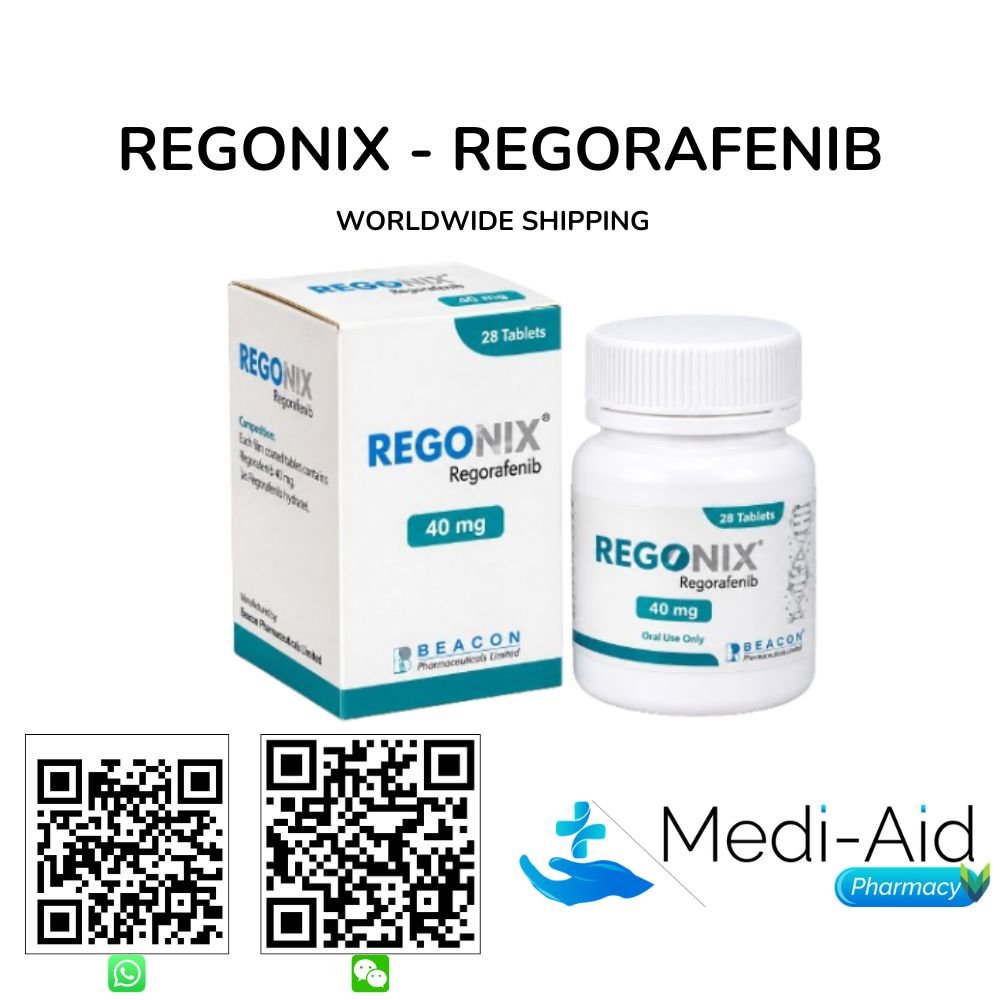
Regonix 40 MG (Regorafenib) is a potent, orally bioavailable, small-molecule multi-kinase inhibitor that simultaneously blocks a broad and clinically validated spectrum of protein kinases governing tumor angiogenesis, oncogenic proliferation, and the tumor microenvironment a targeted oral multi-kinase inhibitor that inhibits vascular endothelial growth factor receptors 1, 2, and 3 (VEGFR1, VEGFR2, VEGFR3), TIE2 (TEK), platelet-derived growth factor receptors alpha and beta (PDGFR-α, PDGFR-β), fibroblast growth factor receptors 1 and 2 (FGFR1, FGFR2), KIT, RET, RAF-1, BRAF, and BRAF V600E thereby suppressing tumor angiogenesis (via VEGFR1–3 and TIE2 blockade), stromal cell signaling (via PDGFR and FGFR blockade), and oncogenic kinase-driven proliferation (via KIT, RET, and RAS/RAF/MEK/ERK MAPK pathway suppression) across three distinct and histologically separate solid tumor indications supplied as film-coated tablets of 40 mg strength in a pack of 28 tablets per bottle/box, and manufactured by Beacon Pharmaceuticals PLC, Bangladesh.
Regorafenib, the active pharmaceutical ingredient of Regonix, is an oral multi-kinase inhibitor with three separate approved oncology indications supported by positive Phase 3 randomized controlled survival data: previously treated metastatic colorectal cancer (mCRC) in patients previously treated with fluoropyrimidine-, oxaliplatin-, and irinotecan-based chemotherapy, an anti-VEGF therapy, and, if RAS wild-type, an anti-EGFR therapy; locally advanced, unresectable, or metastatic gastrointestinal stromal tumor (GIST) in patients previously treated with imatinib and sunitinib; and hepatocellular carcinoma (HCC) in patients previously treated with sorafenib establishing regorafenib as one of the few oral oncology agents carrying regulatory approvals across colorectal cancer, GIST, and liver cancer, all backed by independent Phase 3 survival evidence.
The recommended dose of Regonix (Regorafenib) is 160 mg orally once daily for the first 21 days of each 28-day treatment cycle (four 40 mg tablets taken together once daily with a low-fat breakfast containing less than 30% fat); regorafenib is administered on a 21-days-on/7-days-off cycle until disease progression or unacceptable toxicity, with dose reductions implemented in 40 mg decrements (160 mg → 120 mg → 80 mg) for toxicity management per NCI CTCAE version 5.0; a low-fat meal is required regorafenib must not be taken on an empty stomach or with a high-fat meal.
The pivotal Phase 3 CORRECT trial (NCT01103323; published in The Lancet 2013; n=760; regorafenib + best supportive care versus placebo + best supportive care in previously treated mCRC) demonstrated a statistically significant improvement in the primary endpoint of median overall survival (OS) of 6.4 months (95% CI, 5.9–7.3) versus 5.0 months (95% CI, 4.4–5.8) with placebo (HR 0.77; 95% CI, 0.64–0.94; p=0.0052). The pivotal Phase 3 RESORCE trial (NCT01774344; published in The Lancet 2017; n=573; regorafenib versus placebo in HCC after sorafenib) achieved a statistically significant improvement in median OS of 10.6 months (95% CI, 9.1–12.1) versus 7.8 months (95% CI, 6.3–8.8) (HR 0.63; 95% CI, 0.50–0.79; p<0.0001). The pivotal Phase 3 GRID trial (NCT01271712; published in The Lancet 2013; n=199; regorafenib versus placebo in GIST after imatinib and sunitinib failure) established a median progression-free survival (PFS) of 4.8 months versus 0.9 months (HR 0.27; 95% CI, 0.19–0.39; p<0.0001).
Important: The most clinically significant adverse reactions of regorafenib are severe and fatal hepatotoxicity (including fatal hepatic failure), severe and sometimes fatal hemorrhage, infections, gastrointestinal perforation and fistula, hand-foot skin reaction (HFSR/palmar-plantar erythrodysesthesia syndrome), hypertension, cardiac ischemia and infarction, and reversible posterior leukoencephalopathy syndrome (RPLS).
Monitor liver function tests (ALT, AST, total bilirubin) every 2 weeks for the first 2 months of treatment, then monthly and as clinically indicated; withhold regorafenib for Grade 2 hepatotoxicity (ALT/AST >3× ULN) persisting beyond 2 weeks despite dose reduction; permanently discontinue for Grade 4 hepatotoxicity, AST or ALT >20× ULN, or AST/ALT >3× ULN with concurrent bilirubin >2× ULN. Monitor blood pressure weekly for the first 6 weeks of treatment and then every cycle; withhold for Grade 3 hypertension; permanently discontinue for hypertensive crisis.
Interrupt regorafenib for Grade 3 hand-foot skin reaction (HFSR); reduce dose for Grade 3 HFSR occurring a first or second time; permanently discontinue for Grade 3 HFSR occurring a third time. Permanently discontinue regorafenib for severe or life-threatening hemorrhage, GI perforation or fistula, confirmed RPLS, nephrotic syndrome, or any Grade 4 adverse reaction. Regorafenib is a CYP3A4 substrate and inhibitor of UGT1A1 and UGT1A9 avoid strong CYP3A4 inducers (rifampin, phenytoin, carbamazepine, St. John’s Wort) and strong CYP3A4 inhibitors; avoid grapefruit juice; use caution with UGT1A1 and UGT1A9 substrates.
Do not substitute Regonix 40 MG Regorafenib for sorafenib, cabozantinib, lenvatinib, or other multi-kinase inhibitors without confirmed indication-specific prescribing and benefit-risk assessment by the treating oncologist. Searching for Regonix 40 MG Regorafenib? Mediaid Pharmacy lists this product across its oncology medicines, colorectal cancer medicines, GIST medicines, liver cancer medicines, and Beacon Pharmaceuticals medicines portfolios and ships it worldwide.
Basic Product Information of Regonix 40 MG (Regorafenib)
| Brand Name | Regonix 40 MG (Regorafenib) Bangladesh-manufactured by Beacon Pharmaceuticals PLC; regorafenib is also marketed internationally as Stivarga® (regorafenib) by Bayer AG in the United States (FDA approval September 27, 2012 for mCRC; FDA approval February 25, 2013 for GIST; FDA approval April 27, 2017 for HCC), the European Union (EMA approval August 2013 for mCRC; EMA approval October 2013 for GIST), and other global markets; Regonix is the branded generic formulation of regorafenib 40 mg film-coated tablets manufactured by Beacon Pharmaceuticals PLC in Bangladesh, supplied through authorized international pharmaceutical distribution channels, providing accessible regorafenib therapy for previously treated mCRC, GIST, and HCC patients worldwide |
| Product Name | Regonix (branded regorafenib film-coated tablets, 40 mg per tablet, 28 tablets per bottle/box, manufactured by Beacon Pharmaceuticals PLC, Bangladesh) |
| Generic Name | Regorafenib (INN; also designated BAY 73-4506 during preclinical and early clinical development by Bayer AG; a small-molecule multi-kinase inhibitor with a broad and clinically validated kinase inhibition profile targeting: VEGFR1 (IC50 13 nM), VEGFR2 (IC50 4.2 nM), VEGFR3 (IC50 46 nM), TIE2 (IC50 311 nM), PDGFR-α (IC50 22 nM), PDGFR-β (IC50 29 nM), FGFR1 (IC50 71 nM), FGFR2 (IC50 76 nM), KIT (IC50 7 nM), RET (IC50 1.5 nM), RAF-1 (IC50 2.5 nM), BRAF (IC50 28 nM), and BRAF V600E (IC50 19 nM); regorafenib’s simultaneous inhibition of VEGFR1–3 and TIE2 disrupts tumor vasculogenesis and endothelial cell survival; PDGFR and FGFR blockade suppresses stromal cell signaling and growth factor-driven tumor microenvironment support; KIT, RET, and RAF-1/BRAF inhibition targets oncogenic kinase drivers present in GIST, colorectal cancer, and HCC; regorafenib is a structural fluorinated analog of sorafenib the addition of a fluorine atom at the aniline ring significantly increases potency at VEGFR2 and broadens kinase selectivity to include TIE2, RET, PDGFR-α, and FGFR; regorafenib is metabolized primarily by CYP3A4 and UGT1A9 to two active metabolites: M-2 (N-oxide, plasma half-life ~25–30 hours) and M-5 (N-oxide/N-desmethyl, plasma half-life ~51–68 hours); parent compound plasma half-life approximately 20–30 hours; regorafenib was developed by Bayer AG; FDA initial approval for mCRC: September 27, 2012; subsequently approved for GIST: February 25, 2013; subsequently approved for HCC: April 27, 2017; included in NCCN Clinical Practice Guidelines for Colon Cancer, Rectal Cancer, Soft Tissue Sarcoma/GIST, and Hepatocellular Carcinoma) |
| Drug Class | Oral Multi-Kinase Inhibitor (Multi-Targeted Kinase Inhibitor); Anti-Angiogenic Oral Targeted Therapy (VEGFR1/2/3 and TIE2 Inhibitor); Anti-Stromal Kinase Inhibitor (PDGFR-α/β, FGFR1/2); Oncogenic Kinase Inhibitor (KIT, RET, RAF-1, BRAF, BRAF V600E); RAS/RAF/MEK/ERK MAPK Pathway Inhibitor (via RAF-1 and BRAF blockade); Oral Targeted Therapy for Previously Treated Metastatic Colorectal Cancer; Oral Targeted Therapy for Previously Treated Gastrointestinal Stromal Tumor (GIST) after Imatinib and Sunitinib; Oral Targeted Therapy for Previously Treated Hepatocellular Carcinoma after Sorafenib; Multi-Indication Oral Oncology Kinase Inhibitor with Phase 3 OS Benefit in mCRC and HCC and Phase 3 PFS Benefit in GIST; Anti-Tumor Microenvironment and Anti-Angiogenic Kinase Inhibitor; Biomarker-Unselected Oral Anti-Cancer Agent (no companion diagnostic required for mCRC, GIST, or HCC indications) |
| Formulation | Film-coated tablets for oral administration take 160 mg (four 40 mg tablets) orally once daily with a low-fat breakfast (a meal containing less than 30% fat; the specific low-fat breakfast used in Phase 3 clinical trials was two slices of white toast with 1 tablespoon of low-fat margarine and 1 tablespoon of jelly, 8 ounces of skimmed milk, and one apple; a low-fat meal significantly increases regorafenib systemic exposure relative to fasting therefore, a low-fat meal is required; a high-fat meal should be avoided as it alters the pharmacokinetic profile relative to the low-fat meal condition under which clinical efficacy was established); swallow tablets whole do not crush, dissolve, or chew tablets; take at approximately the same time each day during the 21-day on-treatment period; if a dose is missed, take the missed dose on the same day do not take two doses on the same day to make up a missed dose; if vomiting occurs after a dose, do not repeat the dose on that day take the next dose at the regularly scheduled time; Regonix 40 MG: each film-coated tablet contains regorafenib 40 mg; at the standard 160 mg once-daily dose, four 40 mg tablets are taken together per day; dose reductions in 40 mg decrements (160 mg → 120 mg → 80 mg) allow sequential tablet count reduction from four to three to two tablets per day; store at room temperature, 20°C–25°C (68°F–77°F), excursions permitted 15°C–30°C (59°F–86°F), in original sealed container to protect from moisture; keep out of reach of children |
| Available Strengths | 40 mg film-coated tablet the 40 mg tablet strength is the standard dispensing unit for regorafenib, enabling the full 160 mg standard dose and both dose reduction levels in 40 mg decrements across all three approved indications: Standard dose (all indications): 160 mg once daily = four 40 mg tablets; first dose reduction: 120 mg once daily = three 40 mg tablets; second dose reduction: 80 mg once daily = two 40 mg tablets; permanently discontinue regorafenib if the patient cannot tolerate 80 mg once daily; dose reductions are triggered by Grade 3 or 4 adverse events including hand-foot skin reaction (HFSR/palmar-plantar erythrodysesthesia), hepatotoxicity, hypertension, hemorrhage, GI perforation or fistula, and other Grade 3 or 4 adverse reactions per NCI CTCAE v5.0; no body-weight-based dose adjustment is required regorafenib is administered as a fixed daily oral dose; special populations: no initial dose adjustment required for mild renal impairment or mild hepatic impairment (Child-Pugh A); use with caution in moderate hepatic impairment (Child-Pugh B); do not use in patients with severe hepatic impairment (Child-Pugh C) regorafenib has not been studied in this population and is not recommended given the hepatotoxicity risk |
| Available Pack Size | 28 tablets per bottle/box at the standard dose of 160 mg once daily (four 40 mg tablets per day), one bottle of 28 tablets provides a 7-day supply; a complete 21-day on-treatment period within one 28-day cycle requires three bottles (84 tablets at standard dose); for a full 28-day cycle (21 days on + 7 days off), three bottles of 28 tablets per cycle are required; hospital formulary procurement teams and oncology programs typically calculate monthly procurement at three bottles per 28-day cycle for each patient maintained at the full 160 mg dose; for patients dose-reduced to 120 mg (three tablets/day), three bottles cover the 21-day treatment period (63 tablets used, 21 remaining); for patients dose-reduced to 80 mg (two tablets/day), two bottles cover the 21-day on-treatment period (42 tablets) with procurement adjusted accordingly; contact Mediaid Pharmacy for pack-size-specific stock availability confirmation and procurement guidance for Regonix 40 MG |
| Dosing Schedule | Metastatic Colorectal Cancer (mCRC) Standard Dosing: Regorafenib 160 mg orally once daily with a low-fat breakfast for Days 1–21 of each 28-day cycle; continue until disease progression or unacceptable toxicity; patient must have been previously treated with fluoropyrimidine-, oxaliplatin-, and irinotecan-based chemotherapy, an anti-VEGF therapy (bevacizumab, aflibercept, or ramucirumab), and, if RAS wild-type, an anti-EGFR therapy (cetuximab or panitumumab); no companion diagnostic is required regorafenib is applicable regardless of RAS, RAF, or BRAF mutation status. Gastrointestinal Stromal Tumor (GIST) Standard Dosing: Regorafenib 160 mg orally once daily with a low-fat breakfast for Days 1–21 of each 28-day cycle; continue until disease progression or unacceptable toxicity; patient must have been previously treated with imatinib mesylate and sunitinib malate. Hepatocellular Carcinoma (HCC) Standard Dosing: Regorafenib 160 mg orally once daily with a low-fat breakfast for Days 1–21 of each 28-day cycle; continue until disease progression or unacceptable toxicity; patient must have been previously treated with sorafenib and have demonstrated sorafenib tolerability. Dose Reduction Schedule (all indications): First reduction: 120 mg once daily (three 40 mg tablets); second reduction: 80 mg once daily (two 40 mg tablets); permanently discontinue for inability to tolerate 80 mg. Mandatory Safety Monitoring: Liver function tests (ALT, AST, total bilirubin, alkaline phosphatase) every 2 weeks for the first 2 months, then monthly; blood pressure monitoring weekly for the first 6 weeks, then every cycle; thyroid function at baseline and periodically; dermatological assessment for HFSR at every visit during first two cycles. Drug Interaction Alert: Avoid strong CYP3A4 inducers (rifampin reduces regorafenib AUC ~50%); avoid strong CYP3A4 inhibitors (ketoconazole increases regorafenib AUC ~33%); avoid grapefruit juice; use caution with UGT1A1/UGT1A9 substrates regorafenib inhibits UGT1A1 and UGT1A9, potentially increasing plasma levels of bilirubin and SN-38 (active irinotecan metabolite). |
| Primary Indications | PREVIOUSLY TREATED METASTATIC COLORECTAL CANCER (mCRC):
Regorafenib Previously Treated mCRC (CORRECT Trial; Phase 3; NCT01103323; The Lancet 2013; n=760; primary endpoint OS): Regorafenib 160 mg once daily on Days 1–21 of each 28-day cycle in patients with mCRC previously treated with fluoropyrimidine-, oxaliplatin-, and irinotecan-based chemotherapy, an anti-VEGF therapy, and an anti-EGFR therapy (if RAS wild-type): median OS 6.4 months (95% CI, 5.9–7.3) vs. 5.0 months (95% CI, 4.4–5.8) (HR 0.77; 95% CI, 0.64–0.94; p=0.0052); DCR 41.0% vs. 14.9%; median PFS 1.9 vs. 1.7 months (HR 0.49; 95% CI, 0.42–0.58; p<0.0001); FDA approval September 27, 2012. The confirmatory CONCUR trial (Phase 3; NCT01584830; Asian population; n=204) achieved median OS 8.8 vs. 6.3 months (HR 0.55; 95% CI, 0.40–0.77; p=0.0001) and median PFS 3.2 vs. 1.7 months (HR 0.31; p<0.0001). No companion diagnostic is required regorafenib is applicable to all previously treated mCRC patients regardless of RAS/RAF/BRAF mutation status, including KRAS-mutant tumors not eligible for anti-EGFR therapy. PREVIOUSLY TREATED GASTROINTESTINAL STROMAL TUMOR (GIST): Regorafenib Previously Treated GIST (GRID Trial; Phase 3; NCT01271712; The Lancet 2013; n=199; primary endpoint PFS): Regorafenib 160 mg once daily on Days 1–21 of each 28-day cycle in patients with GIST after failure of imatinib and sunitinib: median PFS 4.8 months (95% CI, 4.0–5.6) vs. 0.9 months (95% CI, 0.9–1.1) (HR 0.27; 95% CI, 0.19–0.39; p<0.0001); DCR 52.6% vs. 9.1%; FDA approval February 25, 2013. GIST is predominantly driven by activating mutations in KIT (~70–80%) or PDGFRA (~10%); regorafenib’s potent inhibition of KIT (IC50 7 nM) and PDGFR-α/β (IC50 22–29 nM) provides on-target suppression of the dominant oncogenic drivers in KIT- and PDGFRA-mutant GIST tumors resistant to both imatinib and sunitinib. PREVIOUSLY TREATED HEPATOCELLULAR CARCINOMA (HCC): Regorafenib Previously Treated HCC (RESORCE Trial; Phase 3; NCT01774344; The Lancet 2017; n=573; primary endpoint OS): Regorafenib 160 mg once daily on Days 1–21 of each 28-day cycle in patients with HCC who progressed on or were intolerant to sorafenib: median OS 10.6 months (95% CI, 9.1–12.1) vs. 7.8 months (95% CI, 6.3–8.8) (HR 0.63; 95% CI, 0.50–0.79; p<0.0001); median PFS 3.1 vs. 1.5 months (HR 0.46; 95% CI, 0.37–0.56; p<0.0001); ORR (mRECIST) 10.6% vs. 4.1%; DCR 65.2% vs. 36.1%; FDA approval April 27, 2017 the first Phase 3-proven second-line systemic therapy for advanced HCC following sorafenib progression. |
| Manufacturer / Brand | Beacon Pharmaceuticals PLC, Bangladesh; Country of Origin: Bangladesh; Regonix is Beacon Pharmaceuticals PLC’s branded formulation of regorafenib 40 mg film-coated tablets; Beacon Pharmaceuticals PLC is a Bangladesh-based pharmaceutical manufacturer producing a range of oncology, targeted therapy, and specialty medicines for the domestic and international markets; the active pharmaceutical ingredient regorafenib was originally developed by Bayer AG and is commercialized internationally as Stivarga®; Categories: Colorectal Cancer Medicines, GIST Medicines, Liver Cancer Medicines, Oncology Medicines |
| Storage | Store at room temperature, 20°C–25°C (68°F–77°F); excursions permitted to 15°C–30°C (59°F–86°F); store in original sealed container to protect from moisture; keep out of reach of children; standard ambient-temperature shipping is acceptable for Regonix (Regorafenib) film-coated tablets cold-chain refrigerated shipping is not required; Mediaid Pharmacy ships Regonix 40 MG internationally using validated ambient-temperature pharmaceutical packaging appropriate for destination country transit conditions and regional climate requirements |
Global Supplier: Mediaid Pharmacy Worldwide Shipping for Regonix 40 MG (Regorafenib)
Mediaid Pharmacy is a Dhaka-based supplier of specialty oral multi-kinase inhibitors, colorectal cancer medicines, GIST medicines, liver cancer targeted therapies, and oral oncology agents with worldwide shipping to patients, oncology departments, outpatient oncology clinics, colorectal cancer treatment programs, GIST programs, hepatocellular carcinoma treatment programs, hospital pharmacies, oncology day units, patient access programs, and international distributors across all regions.
Regonix 40 MG (Regorafenib), manufactured by Beacon Pharmaceuticals PLC in Bangladesh, is supplied as film-coated tablets (40 mg per tablet, 28 tablets per bottle/box), with pricing quotations, stock confirmation, full product documentation, and end-to-end international delivery tracking for every order. The 28-tablet bottle format aligns directly with regorafenib’s clinical dosing architecture: at the standard dose of 160 mg once daily (four tablets/day), three bottles per patient per 28-day treatment cycle are required; this per-cycle procurement structure is consistent across mCRC, GIST, and HCC treatment programs globally.
Colorectal cancer programs procuring regorafenib for previously treated mCRC patients who have exhausted fluoropyrimidine-, oxaliplatin-, irinotecan-, anti-VEGF–, and anti-EGFR-based prior-line options; GIST programs sourcing regorafenib as third-line targeted therapy after imatinib and sunitinib failure; HCC programs co-sourcing regorafenib as second-line therapy after sorafenib progression; hospital formulary procurement departments sourcing Regonix as part of targeted oncology medicines portfolios; and individual patients and families sourcing regorafenib for previously treated metastatic colorectal cancer can contact the Mediaid Pharmacy team through WhatsApp, phone, or email for Regonix 40 MG stock availability, current pricing, shipping options, and international delivery timelines.
Why Choose Regonix 40 MG (Regorafenib) from Mediaid Pharmacy?
Regonix (Regorafenib) from Beacon Pharmaceuticals PLC delivers the validated oral multi-kinase inhibitor mechanism of a clinically proven three-indication oncology agent the oral component of three FDA-approved regorafenib regimens across three separate Phase 3 randomized survival trials in metastatic colorectal cancer (CORRECT), GIST (GRID), and hepatocellular carcinoma (RESORCE) supplied as 40 mg film-coated oral tablets, 28 tablets per bottle/box, enabling convenient once-daily outpatient oral administration on the clinically validated 21-days-on/7-days-off dosing schedule without IV infusion requirements, cold-chain logistics, or institutional infusion suite access. Regorafenib is pharmacologically and clinically distinguished across the targeted oncology landscape by four evidence-based attributes.
First, regorafenib’s triple-indication clinical evidence base comprising three independent Phase 3 randomized controlled trials each demonstrating statistically significant primary endpoint results positions it as one of the most broadly validated oral oncology agents across three biologically distinct cancer types: CORRECT (mCRC; OS HR 0.77; p=0.0052) confirmed its survival benefit in the most heavily pretreated, biomarker-unselected colorectal cancer population with no remaining targeted therapy options; GRID (GIST; PFS HR 0.27; p<0.0001) established a dramatic PFS advantage in a rare tumor type driven by KIT and PDGFRA kinase mutations directly targetable by regorafenib’s kinase inhibition profile; and RESORCE (HCC; OS HR 0.63; p<0.0001) established regorafenib as the first Phase 3-proven second-line systemic therapy for advanced HCC after sorafenib failure each trial addressing a distinct tumor type, distinct patient selection criteria, and distinct biological regorafenib target mechanism, collectively confirming the breadth and translational consistency of regorafenib’s multi-kinase inhibition across solid tumor oncology.
Second, regorafenib’s applicability to the full mCRC population without a companion diagnostic test regardless of RAS, RAF, BRAF, MSI-H, HER2, NTRK, or KRAS G12C mutation status provides a universally accessible treatment option for the biomarker-unselected majority of heavily pretreated mCRC patients who have exhausted all prior-line targeted therapy options: in an mCRC treatment landscape increasingly segmented by molecular subgroups (BRAF V600E: encorafenib + cetuximab; MSI-H/dMMR: pembrolizumab; HER2: trastuzumab deruxtecan; KRAS G12C: sotorasib + panitumumab or adagrasib + cetuximab; NTRK: larotrectinib or entrectinib), regorafenib remains available to the entire previously treated mCRC population regardless of which biomarker profile is present the CORRECT and CONCUR trials collectively enrolled patients across KRAS mutant and wild-type subgroups with consistent OS benefit, confirming biomarker-independent activity.
Third, regorafenib was the first systemic therapy to demonstrate an overall survival benefit in second-line HCC following sorafenib progression the RESORCE trial (The Lancet 2017) established a 2.8-month OS improvement (HR 0.63; p<0.0001) in patients who had tolerated and progressed on sorafenib, with regorafenib’s potent inhibition of VEGFR2 (IC50 4.2 nM), VEGFR3, TIE2, and RET providing direct anti-angiogenic and oncogenic suppression in sorafenib-refractory HCC where tumor vascularity and RET/FGFR signaling remain dominant progression drivers; the RESORCE data established regorafenib as the reference standard second-line HCC agent in NCCN, ESMO, AASLD, and EASL guidelines and formed the control arm basis for subsequent HCC trials, confirming its landmark status in liver cancer medicine.
Fourth, regorafenib’s oral, once-daily, fixed-dose 21/7 schedule and room-temperature stability through Beacon Pharmaceuticals PLC’s manufacturing provide practical treatment management and supply chain advantages for oncology programs globally once-daily oral home administration eliminates the need for IV infusion clinic visits; fixed 160 mg dosing eliminates weight-based calculation complexity; the structured 21/7 cycle with two sequential 40 mg dose reduction levels provides oncologists with a predictable, manageable safety framework; Beacon Pharmaceuticals PLC’s Bangladesh manufacturing ensures supply continuity and affordability for patients and programs in lower-resource settings and emerging markets globally; ambient-temperature shipping of Regonix 40 MG avoids the cost and logistical complexity of cold-chain pharmaceutical transport, enabling reliable international delivery across all geographic regions.
To source the complete range of regorafenib for metastatic colorectal cancer, GIST-targeted therapies, liver cancer medicines, and Beacon Pharmaceuticals oncology portfolio, visit the Mediaid Pharmacy colorectal cancer medicines portfolio, the GIST medicines collection, the liver cancer medicines collection, the oncology medicines collection, and the Beacon Pharmaceuticals medicines range, and contact the team for a personalized quotation and international shipping confirmation.
Frequently Asked Questions About Regonix 40 MG (Regorafenib)
What is Regonix 40 MG (Regorafenib) used for?
Regonix 40 MG (Regorafenib) is an oral multi-kinase inhibitor with three separate FDA-approved oncology indications. Indication 1 Previously Treated Metastatic Colorectal Cancer (mCRC): Regorafenib 160 mg once daily (Days 1–21 of each 28-day cycle) for adult patients with mCRC previously treated with fluoropyrimidine-, oxaliplatin-, and irinotecan-based chemotherapy, an anti-VEGF therapy, and (if RAS wild-type) an anti-EGFR therapy; the CORRECT Phase 3 trial demonstrated median OS 6.4 vs. 5.0 months (HR 0.77; p=0.0052); no companion diagnostic is required; FDA approval September 2012. Indication 2 Previously Treated GIST: Regorafenib 160 mg once daily (Days 1–21 of each 28-day cycle) for locally advanced, unresectable, or metastatic GIST in patients previously treated with imatinib and sunitinib; the GRID Phase 3 trial demonstrated median PFS 4.8 vs. 0.9 months (HR 0.27; p<0.0001); regorafenib’s KIT (IC50 7 nM) and PDGFR-α/β (IC50 22–29 nM) inhibition directly targets the oncogenic drivers of KIT- and PDGFRA-mutant GIST; FDA approval February 2013. Indication 3 Previously Treated Hepatocellular Carcinoma (HCC): Regorafenib 160 mg once daily (Days 1–21 of each 28-day cycle) for adult patients with HCC who have been previously treated with sorafenib; the RESORCE Phase 3 trial demonstrated median OS 10.6 vs. 7.8 months (HR 0.63; p<0.0001) the first survival benefit demonstrated in second-line HCC following sorafenib; FDA approval April 2017. Regonix 40 MG (Regorafenib), manufactured by Beacon Pharmaceuticals PLC in Bangladesh, is available through Mediaid Pharmacy with worldwide shipping to patients and previously treated mCRC treatment programs and hepatocellular carcinoma treatment programs globally.
What is the generic name of Regonix?
The generic name (International Nonproprietary Name, INN) of Regonix is regorafenib (also designated BAY 73-4506 during preclinical and early clinical development by Bayer AG). Regorafenib is a small-molecule multi-kinase inhibitor that simultaneously and potently inhibits a broad spectrum of protein kinases VEGFR1, VEGFR2, VEGFR3, TIE2, PDGFR-α, PDGFR-β, FGFR1, FGFR2, KIT, RET, RAF-1, BRAF, and BRAF V600E covering anti-angiogenic (VEGFR1–3, TIE2), anti-stromal (PDGFR, FGFR), and anti-proliferative (KIT, RET, RAS/RAF/MAPK) tumor dependencies in a single oral agent. Its mechanism simultaneous blockade of tumor angiogenesis, oncogenic kinase signaling, and stromal cell support across multiple kinase targets produces broad multi-pathway suppression across tumor types that remain dependent on angiogenesis and multiple overlapping oncogenic signaling networks (mCRC, GIST, HCC). Regorafenib is mechanistically distinct from single-target VEGFR inhibitors, anti-VEGF biologics (bevacizumab), BRAF-selective inhibitors (vemurafenib, encorafenib), MEK inhibitors (binimetinib), anti-EGFR antibodies (cetuximab, panitumumab), KRAS G12C inhibitors (sotorasib, adagrasib), and immune checkpoint inhibitors. Regorafenib is a structural fluorinated analog of sorafenib, modified to increase potency at VEGFR2 and broaden kinase selectivity to include TIE2, RET, PDGFR-α, and FGFR. Regorafenib was developed by Bayer AG and is marketed globally as Stivarga®; Regonix is the branded generic formulation manufactured by Beacon Pharmaceuticals PLC in Bangladesh. Mediaid Pharmacy distributes Regonix 40 MG Regorafenib by Beacon Pharmaceuticals globally with worldwide shipping to patients, oncology programs, and hospital pharmacies.
What are the side effects of Regonix (Regorafenib)?
The most clinically significant adverse reactions of regorafenib are severe and fatal hepatotoxicity (including fatal hepatic failure), hemorrhage, infections, GI perforation and fistula, hand-foot skin reaction (HFSR/palmar-plantar erythrodysesthesia syndrome), hypertension, cardiac ischemia and infarction, and reversible posterior leukoencephalopathy syndrome (RPLS). Hepatotoxicity (Most Critical Safety Concern): severe and fatal hepatic failure has been reported fatal cases occurred predominantly in patients with pre-existing hepatic dysfunction; Grade 3–4 AST/ALT elevations in approximately 5–10% of patients; monitor LFTs every 2 weeks during the first 2 months, then monthly; withhold for Grade 2 hepatotoxicity persisting >2 weeks; permanently discontinue for Grade 4 or AST/ALT >20× ULN, or >3× ULN plus bilirubin >2× ULN; use with extreme caution in patients with pre-existing hepatic impairment. Hand-Foot Skin Reaction (HFSR): all-grade HFSR in approximately 45% of patients; Grade 3 in approximately 17% the most common Grade 3 adverse reaction; proactive management with urea-based topical creams, dose modification, and supportive care is essential; permanently discontinue for Grade 3 HFSR occurring a third time. Hypertension: all-grade in approximately 30% of patients; Grade 3 in approximately 8%; monitor weekly for 6 weeks; manage with antihypertensive therapy; withhold for Grade 3; permanently discontinue for hypertensive crisis. Hemorrhage: severe and fatal hemorrhage events reported; Grade 3+ in approximately 3–4%; permanently discontinue for life-threatening hemorrhage. Infections: all-grade in approximately 31%; Grade 3+ in approximately 9%; monitor for signs and symptoms of infection throughout treatment. Cardiac Ischemia and Infarction: occurred in approximately 1.2% of patients; withhold for new or worsening cardiac ischemia or infarction. GI Perforation and Fistula: permanently discontinue. RPLS: permanently discontinue for confirmed RPLS. Most Common Adverse Reactions (≥30% in CORRECT trial): asthenia/fatigue (64%), HFSR (45%), mucositis/stomatitis (33%), diarrhea (34%), decreased appetite (30%), hypertension (30%), dysphonia (30%), and infection (31%). All patients initiating Regonix (Regorafenib) should have baseline LFTs, blood pressure, ECOG performance status, and thyroid function assessed, with treatment initiated under the supervision of a qualified oncologist experienced in managing oral multi-kinase inhibitor toxicities.
How effective is Regonix (Regorafenib) for previously treated metastatic colorectal cancer?
Regorafenib demonstrated a clinically and statistically significant OS benefit in the pivotal Phase 3 CORRECT trial in heavily pretreated mCRC the first oral multi-kinase inhibitor to demonstrate survival benefit in this biomarker-unselected, heavily pretreated mCRC population. CORRECT Trial (Phase 3; NCT01103323; The Lancet 2013; n=760; primary endpoint OS): median OS 6.4 months (95% CI, 5.9–7.3) vs. 5.0 months (95% CI, 4.4–5.8) (HR 0.77; 95% CI, 0.64–0.94; p=0.0052); DCR 41.0% vs. 14.9%; median PFS 1.9 vs. 1.7 months (HR 0.49; p<0.0001); OS benefit observed across all pre-specified subgroups including KRAS mutant and wild-type, geographic regions (North America, Europe, Australia, Asia), and number of prior lines of therapy confirming the biomarker-independent and geographically consistent nature of regorafenib’s mCRC activity. CONCUR Trial (Phase 3; NCT01584830; Asian population; n=204): median OS 8.8 vs. 6.3 months (HR 0.55; 95% CI, 0.40–0.77; p=0.0001); median PFS 3.2 vs. 1.7 months (HR 0.31; p<0.0001) confirming OS benefit with a numerically larger magnitude in the Asian mCRC population. Real-World Evidence: post-marketing real-world studies (RERACT, ISAURA, and others) have demonstrated that HFSR occurrence during regorafenib treatment is associated with improved OS in some analyses, suggesting HFSR may serve as a potential on-treatment pharmacodynamic marker of clinically active regorafenib exposure, consistent with the drug-target engagement producing both therapeutic and dermatological effects through VEGFR and PDGFR inhibition. Clinical Context: Regorafenib is unique in being available to all previously treated mCRC patients regardless of biomarker profile providing a treatment option for the biomarker-unselected majority of heavily pretreated patients who have exhausted targeted therapy options. Regonix 40 MG (Regorafenib) is available through Mediaid Pharmacy; visit the colorectal cancer medicines collection and oncology medicines collection for the complete regorafenib and oral multi-kinase inhibitor portfolio.
How is Regonix (Regorafenib) used for GIST, and why is it effective after imatinib and sunitinib failure?
Regorafenib’s efficacy in GIST after imatinib and sunitinib failure is mechanistically grounded in its potent inhibition of KIT and PDGFRA kinases the dominant oncogenic drivers in the majority of GIST tumors at concentrations achievable within the standard 160 mg daily dose. GRID Trial (Phase 3; NCT01271712; The Lancet 2013; n=199; primary endpoint PFS): regorafenib 160 mg once daily on Days 1–21 versus placebo in patients with GIST who had progressed on or were intolerant to imatinib and sunitinib: median PFS 4.8 months (95% CI, 4.0–5.6) vs. 0.9 months (95% CI, 0.9–1.1) (HR 0.27; 95% CI, 0.19–0.39; p<0.0001) a greater than 5-fold PFS advantage; DCR 52.6% vs. 9.1%; disease control rate more than five times higher than placebo; FDA approval February 25, 2013. Mechanistic Rationale for GIST Activity: GIST is predominantly driven by KIT exon 11 mutations (~60%), KIT exon 9 mutations (~10%), and PDGFRA mutations (~8%); imatinib resistance in GIST typically develops through secondary KIT mutations in the kinase domain (exon 13, 14, or 17) that reduce imatinib binding; sunitinib covers some secondary KIT resistance mutations (exons 13/14) but not others (exons 17/18); regorafenib’s KIT inhibition profile (IC50 7 nM) and PDGFR-α/β inhibition (IC50 22–29 nM) provide coverage against multiple KIT kinase domain conformations, explaining its activity in imatinib- and sunitinib-refractory GIST tumors; regorafenib additionally inhibits RET and FGFR, which may contribute activity in GIST tumors with activation of these alternative kinase pathways at progression. Place in Therapy: Regorafenib is established as the standard third-line option for advanced GIST in NCCN, ESMO, and other major oncology guidelines following imatinib and sunitinib failure; avapritinib and ripretinib are additional approved options in later lines, with ripretinib specifically approved in fourth-line or later GIST. Visit the Mediaid Pharmacy GIST medicines collection for the complete GIST-targeted therapy portfolio including Regonix 40 MG (Regorafenib) and other kinase inhibitors for gastrointestinal stromal tumor.
Is Regonix (Regorafenib) safe during pregnancy or while breastfeeding?
Regonix (Regorafenib) can cause embryo-fetal harm based on its mechanism of action and nonclinical animal reproductive toxicology findings regorafenib should not be used during pregnancy. VEGFR inhibition, PDGFR inhibition, and RAS/RAF/MAPK pathway suppression are expected to disrupt critical embryonic and fetal developmental processes dependent on angiogenesis, vasculogenesis, organ vascularization, and MAPK-regulated organogenesis; nonclinical animal reproductive and developmental toxicology studies demonstrated embryotoxic and fetotoxic findings at regorafenib exposures below the clinical therapeutic dose, confirming the reproductive toxicity potential of regorafenib. Contraception requirement: women of reproductive potential must use effective contraception during regorafenib treatment and for 2 months after the last dose; verify pregnancy status before initiating Regonix in all women of reproductive potential; male patients with female partners of reproductive potential must use effective contraception during treatment and for 2 months after the final dose. Breastfeeding: it is unknown whether regorafenib or its active metabolites (M-2, M-5) are present in human breast milk; because of the potential for serious adverse reactions in breastfed infants from multi-kinase inhibition, breastfeeding is not recommended during treatment and for 2 weeks after the last dose. Fertility: nonclinical studies suggest potential adverse effects on male and female reproductive organs based on the roles of VEGFR and PDGFR signaling in reproductive organ function; discuss fertility preservation options with the treating oncologist prior to initiating regorafenib. All aspects of reproductive planning, contraceptive requirements, and fertility counseling should be discussed with the treating oncologist before starting regorafenib therapy.
Can I order Regonix 40 MG (Regorafenib) online with worldwide shipping?
Yes. Mediaid Pharmacy supplies Regonix 40 MG (Regorafenib), film-coated tablets, 28 tablets per bottle/box, manufactured by Beacon Pharmaceuticals PLC in Bangladesh, to patients, previously treated mCRC treatment programs, GIST oncology departments, hepatocellular carcinoma treatment programs, oral targeted therapy protocols, hospital pharmacies, oncology day units, patient access programs, and healthcare providers globally. As an oral tablet formulation stored at room temperature, Regonix does not require cold-chain refrigerated shipping, allowing straightforward international logistics with standard secure pharmaceutical packaging appropriate for the destination country’s transit conditions and regulatory requirements. Contact Mediaid Pharmacy via WhatsApp, phone, or email at +8801773428128, or email info@mediaidpharmacy.com for pricing, current stock availability for Regonix 40 MG, shipping options, and international delivery details for your country. Prescription documentation is required for regorafenib dispensing in accordance with applicable regulatory requirements in the destination country. For the complete portfolio of Beacon Pharmaceuticals medicines and oncology medicines available with worldwide shipping, visit the respective collection pages on the Mediaid Pharmacy website.
Order Regonix 40 MG (Regorafenib) with Worldwide Shipping
Phone / WhatsApp: +8801773428128 | Email: info@mediaidpharmacy.com
Reviews
There are no reviews yet.