
Description
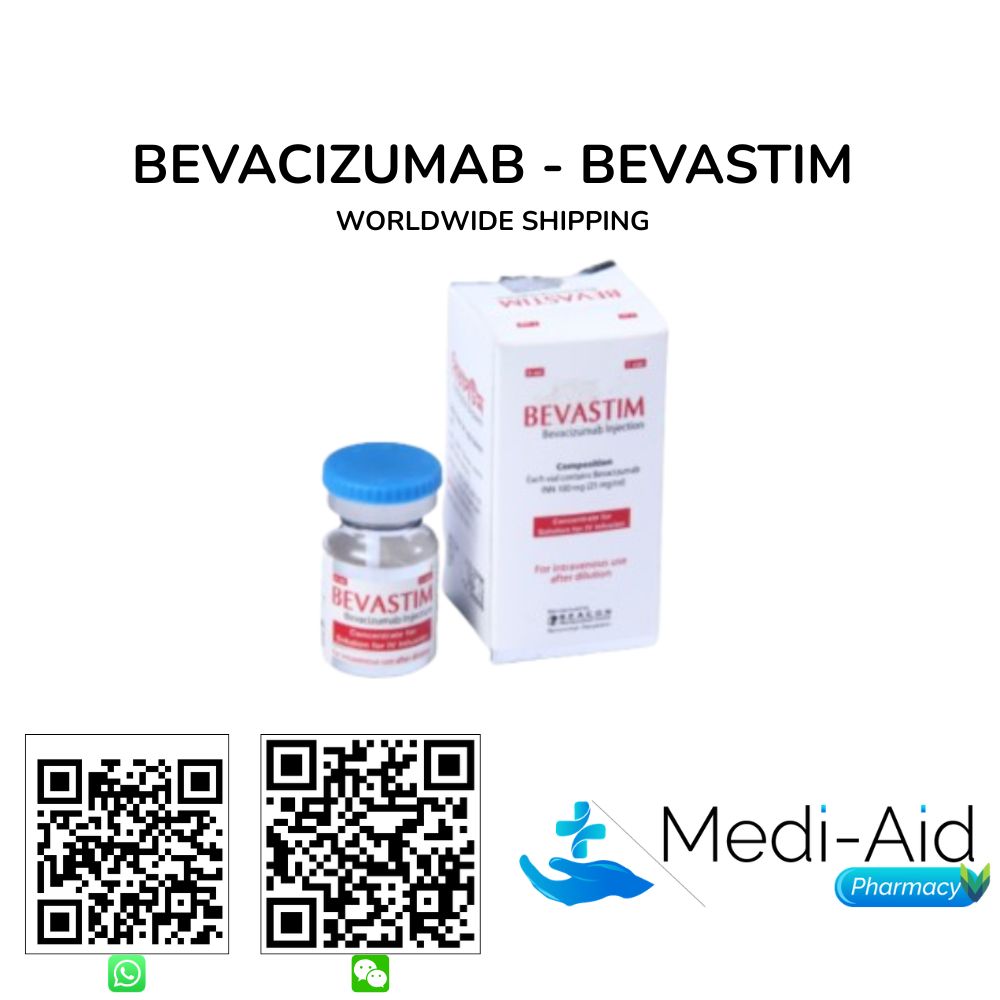
Bevastim (Bevacizumab) 100mg & 400mg is an anti-angiogenic monoclonal antibody, administered by intravenous infusion under the supervision of a qualified oncology team, used in combination with chemotherapy or other anticancer agents for a range of solid tumours, including colorectal, lung, kidney, cervical, ovarian, and liver cancers, as well as certain brain tumours. It works by blocking VEGF (vascular endothelial growth factor), cutting off the signal tumours use to grow new blood vessels and starving them of the blood supply they need to grow and spread. Manufactured for the Bangladesh market and globally supplied by Mediaid Pharmacy with worldwide shipping.
Important: Bevacizumab is a complex biologic (monoclonal antibody), not a small-molecule generic. Terms such as “biosimilar” or “equivalent” for a biologic refer to demonstrated similarity in structure, function, and clinical performance under an appropriate regulatory pathway — please confirm and disclose the specific comparability/biosimilarity data and approval basis for Bevastim, as this differs materially from standard small-molecule bioequivalence and should be represented accurately to buyers and prescribers.
Basic Product Information of Bevastim (Bevacizumab) 100mg & 400mg
| Brand Name | Bevastim (Bevacizumab) — please confirm brand/generic naming before publishing; see note above |
| Generic Name | Bevacizumab INN |
| Drug Class | Anti-VEGF Monoclonal Antibody (Angiogenesis Inhibitor) |
| Available Strengths | 100mg/4mL and 400mg/16mL (25mg/mL concentration in each vial) |
| Formulation | Sterile Solution for Intravenous Infusion (Injection Vial) |
| Pack Size | 1’s (single vial per pack), available in 100mg and 400mg vial sizes. The number and combination of vials used per infusion depends on the patient’s body weight and prescribed dose. |
| Primary Indication | Multiple Solid Tumours, in Combination with Chemotherapy or Other Anticancer Agents (see Indications below) |
| Regulatory Approvals | Originator (Avastin) USFDA and EMA Approved across numerous oncology indications. Please confirm the specific regulatory status and approved indications for Bevastim itself. |
| Originator Brand | Avastin by Genentech/Roche |
| Manufacturer | [Manufacturer name to be confirmed], Bangladesh |
| Global Supplier | Mediaid Pharmacy, Worldwide Shipping Available |
| Registration | Registered in Bangladesh |
| Storage Conditions | Store refrigerated between 2°C and 8°C, in the original carton to protect from light. Do not freeze or shake. Requires an unbroken cold chain from manufacture through delivery — please confirm cold-chain shipping capability before ordering. |
How Bevastim (Bevacizumab) Works
Bevastim contains Bevacizumab, a monoclonal antibody that binds to and neutralises VEGF (vascular endothelial growth factor), a signalling protein that tumours release to trigger the growth of new blood vessels, a process known as angiogenesis. Tumours depend on this new blood supply for the oxygen and nutrients they need to grow beyond a small size and to spread to other parts of the body.
By binding VEGF before it can reach its receptors on blood vessel cells, Bevastim blocks new blood vessel formation around the tumour, helping to starve it of blood supply and slow its growth. This is a different mechanism from conventional chemotherapy, which is why Bevastim is typically used in combination with chemotherapy or other targeted or immunotherapy agents rather than as a stand-alone treatment.
Bevastim is administered as an intravenous infusion by trained healthcare professionals in a hospital or oncology infusion setting. The first infusion is typically given over about 90 minutes; if well tolerated, later infusions may be given more quickly, per the treating institution’s protocol. It is not self-administered and is not intended for home use.
Indications for Bevastim (Bevacizumab)
The originator molecule, Bevacizumab, has been approved across a range of cancers, always in combination with chemotherapy or another anticancer agent. Approved indications, lines of therapy, and combination partners vary by country and are updated periodically; representative tumour types include:
|
Metastatic Colorectal Cancer In combination with fluoropyrimidine-based chemotherapy, for metastatic disease. Not indicated for adjuvant use after surgery. |
Non-Squamous NSCLC In combination with chemotherapy, for unresectable, locally advanced, recurrent, or metastatic non-squamous non-small cell lung cancer. |
|
Recurrent Glioblastoma; Renal Cell Carcinoma For adults with recurrent glioblastoma, and for metastatic renal cell carcinoma in combination with interferon alfa. |
Cervical, Ovarian, and Liver Cancer Persistent, recurrent, or metastatic cervical cancer with chemotherapy; epithelial ovarian, fallopian tube, or primary peritoneal cancer with chemotherapy in various settings; and unresectable or metastatic hepatocellular carcinoma in combination with an anti-PD-L1/PD-1 agent. |
This list is representative, not exhaustive. The exact approved indication, line of therapy, and combination regimen for any individual patient must be confirmed against current, country-specific prescribing information and determined by the treating oncologist.
Benefits of Bevastim (Bevacizumab)
|
Distinct Anti-Angiogenic Mechanism Works by cutting off tumour blood supply rather than directly killing cells, complementing chemotherapy, targeted therapy, and immunotherapy. |
Broad Oncology Applicability The originator molecule is approved across numerous solid tumour types, one of the most widely used anti-angiogenic agents in oncology. |
Two Vial Sizes for Flexible Dosing Available as 100mg and 400mg vials, allowing hospital pharmacies to prepare individualised, weight-based doses with less product wastage. |
|
Long-Established Clinical Track Record The originator has been in oncology use since 2004, giving prescribers extensive real-world experience with its efficacy and safety profile. |
Cost-Accessible Option Positioned as a more affordable route to anti-VEGF therapy than the originator brand, subject to confirmation of comparability data. |
WHO-GMP and cGMP Certified Manufactured under strict WHO-GMP, cGMP, and ISO-certified standards, ensuring every batch of Bevastim meets consistent quality and safety requirements. |
Administration of Bevastim (Bevacizumab)
Route: Intravenous (IV) infusion only, following dilution per the treating institution’s pharmacy protocol. The first infusion is generally given over approximately 90 minutes; subsequent infusions may be shortened if well tolerated.
Who administers it: Must be prepared and administered by trained healthcare professionals in a hospital or oncology infusion setting. Not for self-administration or home use.
Typical dosing: Dosed by body weight (mg/kg), commonly in the range of 5mg/kg to 15mg/kg, given every 2 or 3 weeks depending on the specific indication and combination regimen. The exact dose, interval, and combination partners must be individualised by the treating oncologist for the specific approved indication.
Around surgery: Bevastim must be withheld for at least 28 days before any elective surgery, and should not be started or resumed for at least 28 days after major surgery, and not until the surgical wound is fully healed.
Duration: Continued, in combination with the prescribed regimen, until disease progression, unacceptable toxicity, or completion of a planned treatment course, as determined by the treating oncologist.
Boxed Warning: Gastrointestinal Perforation, Surgery and Wound Healing Complications, and Haemorrhage
Bevastim carries an FDA-style boxed warning covering three serious risks. Gastrointestinal perforation, sometimes fatal, has occurred in a small but consistent proportion of patients; discontinue permanently if this occurs. Wound healing and surgical complications, including fatal cases, are increased with Bevastim; timing around surgery must strictly follow the 28-day withholding rules above. Severe or fatal haemorrhage can occur, including coughing up blood, gastrointestinal bleeding, and bleeding in the brain; Bevastim should not be given to patients with recent serious bleeding or coughing up of blood, and it should never be used in squamous NSCLC due to a markedly higher bleeding risk in that specific histology. Bevastim must only be prescribed and administered by, or under the direct supervision of, an oncologist experienced in anti-angiogenic therapy, in a facility equipped to manage these complications.
Monitoring and Other Precautions
Beyond the boxed warning risks, regular monitoring during Bevastim treatment includes blood pressure, given the risk of significant, sometimes severe hypertension, and urine protein, given the risk of proteinuria and, rarely, nephrotic syndrome. Your healthcare provider will also watch for arterial and venous thromboembolic events (such as stroke, heart attack, or blood clots), signs of heart failure particularly if combined with anthracycline chemotherapy, rare posterior reversible encephalopathy syndrome (PRES), and infusion-related reactions during and after each dose. Report any severe abdominal pain, unusual bleeding, coughing up blood, chest pain, sudden severe headache, vision changes, seizures, or leg swelling to the care team immediately.
Drug Interactions and Important Information
As a monoclonal antibody, Bevacizumab is not metabolised through the cytochrome P450 system, so classic small-molecule drug interactions are not expected. However, combining Bevastim with anthracycline-based chemotherapy may increase the risk of cardiac toxicity, and combining it with sunitinib or other agents affecting wound healing or blood pressure may compound those specific risks. Bevastim is not indicated for use in squamous NSCLC due to a substantially higher risk of serious pulmonary haemorrhage in that tumour type.
Women of childbearing potential should use effective contraception during treatment and for 6 months after the final dose, given the risk of fetal harm and reported effects on ovarian function. Always inform your physician of all medications, prior surgery, and planned procedures before starting Bevastim.
Side Effects and Precautions
|
Common Side Effects Epistaxis (nosebleed), usually minor Hypertension Headache Proteinuria Taste alteration and dry skin Rhinitis Back pain and fatigue |
Serious Warnings and Precautions Gastrointestinal perforation and fistula formation (Boxed Warning). Wound healing and surgical complications (Boxed Warning). Severe or fatal haemorrhage (Boxed Warning). Arterial and venous thromboembolic events, including stroke and heart attack. Severe hypertension, nephrotic syndrome, and posterior reversible encephalopathy syndrome. Embryo-fetal toxicity and ovarian failure risk. |
Who Should Use Bevastim (Bevacizumab)?
Bevastim is intended for adult patients with an eligible, confirmed cancer diagnosis matching one of the approved indications for Bevacizumab, as determined by an oncologist, and always given alongside chemotherapy or another approved combination agent. It is administered exclusively in a hospital or specialist oncology infusion setting by trained healthcare professionals equipped to manage bleeding, perforation, and wound-related complications. A careful surgical history and baseline blood pressure, urine protein, and cardiovascular assessment are required before starting treatment.
Manufacturer
Bevastim (Bevacizumab) is manufactured in Bangladesh under strict WHO-GMP, cGMP, and ISO-certified standards. [Please confirm the exact manufacturer name, and the specific comparability/biosimilarity data or approval basis, so this section and the claims above can be made fully accurate before publishing.]
Global Supplier: Mediaid Pharmacy with Worldwide Shipping
Mediaid Pharmacy is a trusted global supplier of specialty oncology medications. We ensure Bevastim (Bevacizumab) is accessible to hospitals and healthcare providers worldwide through reliable, cold-chain worldwide shipping. Whether you are located in South Asia, the Middle East, Africa, Europe, or beyond, Mediaid Pharmacy provides fast and reliable delivery with full order support. Contact us directly via WhatsApp, phone, or WeChat for pricing, availability, and delivery enquiries.
Why Choose Bevastim (Bevacizumab) from Mediaid Pharmacy?
Bevastim offers hospitals and oncology centres a route to anti-VEGF therapy that reflects the same active substance and mechanism of action as Avastin by Genentech/Roche, at a more accessible price point. Manufactured under WHO-GMP and cGMP standards and distributed globally by Mediaid Pharmacy, Bevastim aims to widen access to angiogenesis-inhibiting cancer therapy for cancer centres worldwide. As with any biologic product, institutions should review the specific comparability data supporting Bevastim before adoption into clinical use.
Frequently Asked Questions About Bevastim (Bevacizumab)
What is Bevastim (Bevacizumab) used for?
Bevastim is an anti-VEGF monoclonal antibody used in combination with chemotherapy or other anticancer agents to treat several solid tumours, including metastatic colorectal cancer, non-squamous non-small cell lung cancer, recurrent glioblastoma, renal cell carcinoma, cervical cancer, ovarian cancer, and hepatocellular carcinoma. It works by blocking the tumour’s ability to form new blood vessels. The specific approved indication depends on the cancer type, stage, and combination regimen.
How is Bevastim (Bevacizumab) given?
Bevastim is given as an intravenous infusion in a hospital or oncology infusion centre by trained healthcare staff, generally alongside chemotherapy or another approved agent. It is never self-administered at home. Dosing is weight-based and typically repeated every 2 or 3 weeks, depending on the specific regimen.
What strengths and pack size is Bevastim available in?
Bevastim is supplied as single-use vials in two sizes, 100mg/4mL and 400mg/16mL (25mg/mL concentration), packed as 1’s (one vial per pack). The hospital pharmacy selects and combines vial sizes to prepare the exact weight-based dose calculated for each patient.
Is Bevastim the same as Avastin (Bevacizumab by Genentech/Roche)?
Bevastim contains the same active substance, Bevacizumab, and is intended as a more affordable route to anti-VEGF therapy. However, biologic medicines such as monoclonal antibodies are compared to their originator through biosimilarity/comparability studies rather than simple bioequivalence testing used for small-molecule generics. Hospitals and prescribers should review the specific analytical, non-clinical, and clinical comparability data for Bevastim before use.
What are the most serious risks with Bevastim (Bevacizumab)?
Bevastim carries a boxed warning for three risks: gastrointestinal perforation, wound healing and surgical complications, and severe or fatal haemorrhage. Treatment must be timed carefully around any surgery, and it is not used in patients with recent serious bleeding or in squamous non-small cell lung cancer, where bleeding risk is markedly higher. Other risks include high blood pressure, blood clots, and kidney protein loss. Always consult the treating oncologist for a complete assessment of individual risks and benefits.
Is Bevastim safe during pregnancy?
No. Bevastim is not recommended during pregnancy, as it can cause fetal harm based on its mechanism of action and animal data. Effective contraception is required during treatment and for 6 months after the final dose. Please consult the treating physician before starting treatment if pregnancy is a possibility.
Can hospitals order Bevastim (Bevacizumab) with worldwide shipping?
Yes. Mediaid Pharmacy supplies Bevastim (Bevacizumab) 100mg and 400mg globally with cold-chain worldwide shipping. Contact us via WhatsApp, phone, or WeChat at +8801773428128 or email us at info@mediaidpharmacy.com to enquire about pricing, availability, cold-chain logistics, and delivery to your country.
Order Bevastim (Bevacizumab) 100mg & 400mg with Worldwide Shipping
Phone / WhatsApp / WeChat: +8801773428128 | Email: info@mediaidpharmacy.com
Reviews
There are no reviews yet.