
Description
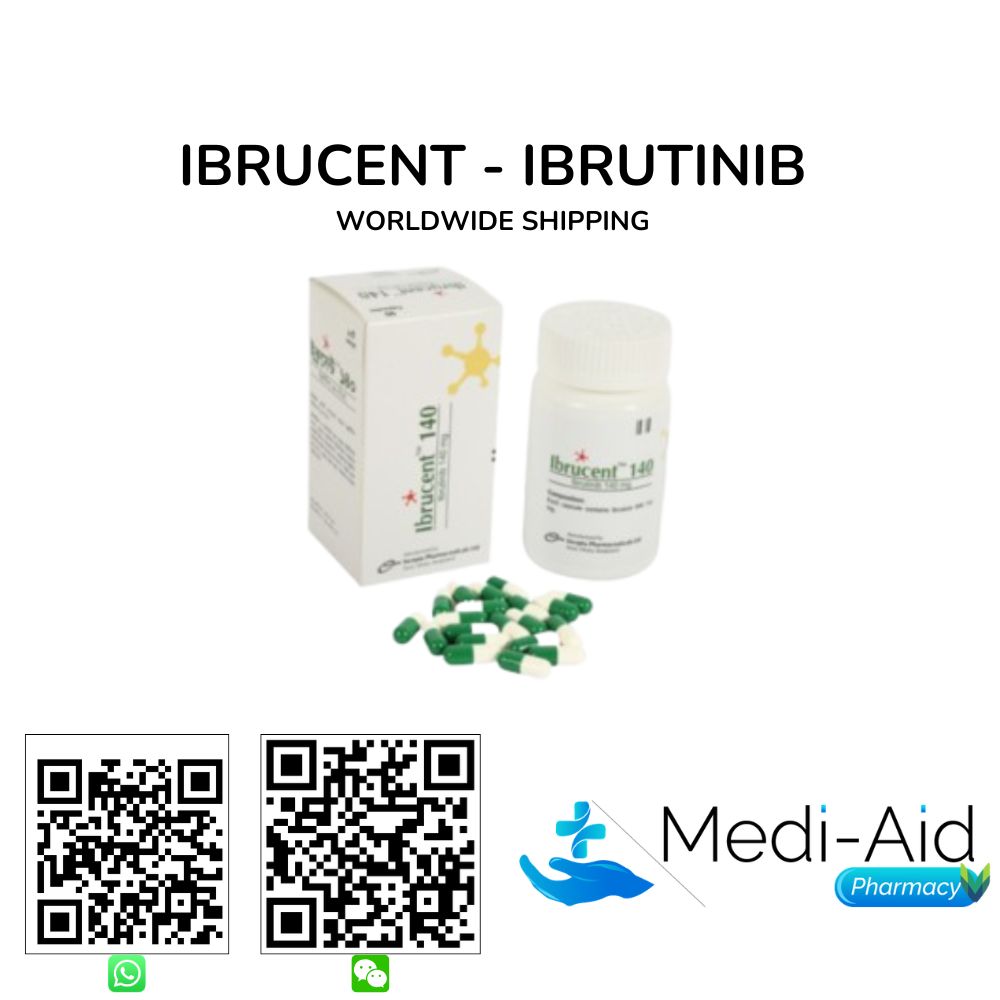
Ibrucent (Ibrutinib) 140mg is a first-in-class, once-daily oral Bruton’s Tyrosine Kinase (BTK) inhibitor used to treat Chronic Lymphocytic Leukaemia/Small Lymphocytic Lymphoma (CLL/SLL), Waldenstrom’s Macroglobulinemia (WM), and Chronic Graft-Versus-Host Disease (cGVHD) in adult patients. It works by irreversibly binding to BTK and blocking B-cell receptor signalling, a pathway that malignant B-cells depend on for survival, proliferation, and migration. Global supplier: Mediaid Pharmacy with worldwide shipping.
Basic Product Information of Ibrucent (Ibrutinib) 140mg
| Brand Name | Ibrucent (Ibrutinib) |
| Generic Name | Ibrutinib INN |
| Drug Class | Bruton’s Tyrosine Kinase (BTK) Inhibitor |
| Available Strengths | 140mg |
| Formulation | Capsule |
| Pack Size | 90 Capsules per Pack (one-month supply at standard dose) |
| Primary Indication | CLL/SLL (including with 17p deletion), Waldenstrom’s Macroglobulinemia, Chronic GVHD |
| Regulatory Approvals | USFDA Approved (CLL/SLL, CLL/SLL with 17p deletion, WM, cGVHD). EMA Approved (CLL/SLL, WM). |
| Originator Brand | Imbruvica by Janssen / Pharmacyclics (AbbVie) |
| Manufacturer | [Manufacturer name to be confirmed], Bangladesh |
| Global Supplier | Mediaid Pharmacy, Worldwide Shipping Available |
| Registration | Registered in Bangladesh |
| Storage Conditions | Store below 30 degrees Celsius. Keep in a dry place away from light and moisture. Keep out of the reach of children. |
How Ibrucent (Ibrutinib) Works
Ibrucent contains Ibrutinib, a small-molecule inhibitor of Bruton’s Tyrosine Kinase (BTK). BTK is a key signalling enzyme in the B-cell receptor (BCR) pathway, which malignant B-lymphocytes rely on for survival, proliferation, trafficking, chemotaxis, and adhesion. In conditions such as CLL/SLL and Waldenstrom’s Macroglobulinemia, this pathway is persistently activated, driving uncontrolled growth of abnormal B-cells.
Ibrutinib works by forming a covalent bond with a cysteine residue in the BTK active site, irreversibly inhibiting its enzymatic activity. By blocking this signal, Ibrucent interrupts the downstream pathways that allow malignant B-cells to survive and multiply, leading to reduced tumour burden and disease control.
Unlike intravenous chemotherapy regimens, Ibrucent is a convenient once-daily oral capsule, offering patients an effective, targeted treatment option that can be taken at home. It may be used as monotherapy or combined with other agents such as rituximab, obinutuzumab, or bendamustine, depending on the treating physician’s regimen.
Indications for Ibrucent (Ibrutinib)
Ibrucent (Ibrutinib) is indicated for the following conditions:
|
Chronic Lymphocytic Leukaemia / SLL For adult patients with CLL or small lymphocytic lymphoma (SLL), as first-line treatment or in the relapsed/refractory setting, as monotherapy or in combination with rituximab, obinutuzumab, or bendamustine and rituximab (BR). |
CLL/SLL with 17p Deletion For adult patients with CLL/SLL harbouring the high-risk 17p deletion cytogenetic abnormality, a subgroup that historically responds poorly to conventional chemoimmunotherapy. |
|
Waldenstrom’s Macroglobulinemia For adult patients with WM, a rare B-cell lymphoma, as monotherapy or in combination with rituximab. Ibrutinib was the first therapy specifically approved for this condition. |
Chronic Graft-Versus-Host Disease For adult and paediatric patients (1 year and older) with cGVHD after failure of one or more lines of prior systemic therapy, following allogeneic stem cell transplantation. |
Benefits of Ibrucent (Ibrutinib) 140mg
|
First Once-Daily Oral BTK Inhibitor Ibrucent offers patients a convenient capsule-based, targeted therapy that can be taken at home, as an alternative to intravenous chemotherapy regimens. |
Broad Haemato-Oncology Use Approved for CLL/SLL (including 17p deletion), Waldenstrom’s Macroglobulinemia, and chronic GVHD, giving physicians a versatile targeted-therapy option across several B-cell disorders. |
Established Disease Control Ibrutinib has a well-documented efficacy profile from pivotal clinical trials in both treatment-naive and previously treated patients across its approved indications. |
|
Affordable Alternative to Imbruvica Ibrucent contains the same active ingredient as Imbruvica, at a significantly lower cost, making long-term oncology treatment more financially accessible. |
Combination Therapy Compatible Can be used as monotherapy or combined with rituximab, obinutuzumab, or bendamustine and rituximab, giving physicians flexibility in treatment planning. |
WHO-GMP and cGMP Certified Manufactured under strict WHO-GMP, cGMP, and ISO-certified standards, ensuring every batch of Ibrucent meets consistent quality, safety, and efficacy requirements. |
How to Take Ibrucent (Ibrutinib)
Route: Oral, taken by mouth
Standard dose for CLL/SLL (with or without 17p deletion): 420mg once daily (three 140mg capsules), as monotherapy or in combination with rituximab, obinutuzumab, or bendamustine and rituximab.
Standard dose for Waldenstrom’s Macroglobulinemia: 420mg once daily, as monotherapy or in combination with rituximab.
Standard dose for Chronic GVHD: 420mg once daily for adults and paediatric patients 12 years and older, continued until progression, recurrence of underlying malignancy, or unacceptable toxicity.
Administration: Swallow capsules whole with a glass of water, at about the same time each day. Do not open, break, or chew the capsules. Can be taken with or without food.
Missed dose: Take the missed dose as soon as possible on the same day, then resume the normal schedule the following day. Do not take two doses to make up for a missed one.
Hepatic impairment: 140mg once daily in patients with mild hepatic impairment (Child-Pugh Class A); 70mg once daily in patients with moderate hepatic impairment (Child-Pugh Class B). Ibrucent is not recommended for patients with severe hepatic impairment (Child-Pugh Class C).
CYP3A inhibitor co-administration: Reduce the dose to 140mg once daily if a strong or moderate CYP3A inhibitor must be co-administered. Avoid grapefruit and Seville oranges during treatment, as these contain CYP3A inhibitors.
Paediatric use: Safety and efficacy have not been established in patients under 1 year of age. Established for cGVHD in paediatric patients 1 year and older using weight/body-surface-area-based dosing; not established for CLL/SLL or WM in children.
Monitoring and Dosage Adjustments
Regular monitoring is essential during Ibrucent treatment. Your healthcare provider will monitor complete blood counts for neutropenia, thrombocytopenia, and anaemia, blood pressure for treatment-emergent hypertension, and cardiac status for signs of atrial fibrillation or other arrhythmias. Monitoring also includes assessment for bleeding or bruising, signs of infection, tumour lysis syndrome risk in patients with high tumour burden, and periodic skin examinations for second primary malignancies. Report any unusual bleeding, fever, palpitations, or signs of infection to your doctor immediately.
Drug Interactions and Important Information
Ibrutinib is metabolised primarily by CYP3A. Avoid concomitant use of strong or moderate CYP3A inhibitors such as ketoconazole, clarithromycin, itraconazole, voriconazole, diltiazem, and verapamil where possible; if unavoidable, the Ibrucent dose should be reduced to 140mg once daily. Avoid strong CYP3A inducers such as rifampin, carbamazepine, phenytoin, and St. John’s Wort, as these can significantly reduce Ibrutinib plasma levels and efficacy.
Ibrucent may increase the risk of bleeding when combined with anticoagulants or antiplatelet agents; use with caution and inform your physician of all such medications. Narrow-therapeutic-range P-gp or BCRP substrates such as digoxin or methotrexate should be spaced at least 6 hours apart from Ibrucent dosing. Avoid live vaccines during treatment. Always inform your physician of all medications, supplements, and herbal products you are currently taking before starting Ibrucent.
Side Effects and Precautions
|
Common Side Effects Diarrhoea Fatigue Musculoskeletal pain Nausea Bruising Rash Upper respiratory tract infections Constipation and peripheral oedema |
Serious Warnings and Precautions Haemorrhage, including major bleeding events. Use with caution in patients on anticoagulants or antiplatelets. Serious infections, including fungal, viral, and bacterial infections. Report fever or signs of infection immediately. Cytopenias including neutropenia, thrombocytopenia, and anaemia. Cardiac arrhythmias, including atrial fibrillation and flutter. Hypertension. Blood pressure should be monitored regularly. Second primary malignancies and tumour lysis syndrome in high tumour burden patients. Not recommended during pregnancy or breastfeeding; embryo-fetal toxicity. |
Who Should Use Ibrucent (Ibrutinib)?
Ibrucent is suitable for adult patients diagnosed with CLL or SLL, including those with the high-risk 17p deletion, adult patients with Waldenstrom’s Macroglobulinemia, and adult and eligible paediatric patients with chronic graft-versus-host disease following failure of prior systemic therapy. It is prescribed by haematologists, oncologists, and transplant physicians experienced in managing B-cell malignancies and post-transplant complications. A thorough medical assessment including blood counts, cardiac evaluation, and liver function testing is required before initiating treatment.
Manufacturer
Ibrucent (Ibrutinib) is manufactured in Bangladesh under strict WHO-GMP, cGMP, and ISO-certified standards, offering an affordable and bioequivalent alternative to Imbruvica by Janssen/Pharmacyclics (AbbVie) at a fraction of the cost. [Please confirm the exact manufacturer name so it can be added here and in the specs table above.]
Global Supplier: Mediaid Pharmacy with Worldwide Shipping
Mediaid Pharmacy is a trusted global supplier of specialty oncology and haematology medications. We ensure Ibrucent (Ibrutinib) is accessible to patients and healthcare providers worldwide through reliable worldwide shipping. Whether you are located in South Asia, the Middle East, Africa, Europe, or beyond, Mediaid Pharmacy provides fast and reliable delivery with full order support. Contact us directly via WhatsApp, phone, or WeChat for pricing, availability, and delivery enquiries.
Why Choose Ibrucent (Ibrutinib) from Mediaid Pharmacy?
Ibrucent represents an important treatment option for patients with B-cell malignancies and chronic GVHD. As the generic equivalent of Imbruvica by Janssen/Pharmacyclics (AbbVie), it delivers the same active ingredient, Ibrutinib, with the same proven BTK inhibition mechanism at a dramatically more affordable price. Manufactured under WHO-GMP and cGMP standards and distributed globally by Mediaid Pharmacy, Ibrucent gives patients worldwide access to high-quality targeted oncology therapy without the financial burden of brand-name alternatives. For patients and physicians seeking a proven, affordable, and accessible Ibrutinib option with worldwide delivery, Ibrucent from Mediaid Pharmacy is the trusted choice.
Frequently Asked Questions About Ibrucent (Ibrutinib)
What is Ibrucent (Ibrutinib) used for?
Ibrucent (Ibrutinib) is a BTK inhibitor used to treat chronic lymphocytic leukaemia/small lymphocytic lymphoma (CLL/SLL), including cases with the 17p deletion, Waldenstrom’s Macroglobulinemia (WM), and chronic graft-versus-host disease (cGVHD) in adults. It works by blocking the B-cell receptor signalling that malignant B-cells depend on to survive and multiply.
How should I take Ibrucent (Ibrutinib)?
Ibrucent is taken orally once daily, with or without food, at about the same time each day. The standard dose for CLL/SLL, WM, and cGVHD is 420mg once daily, taken as three 140mg capsules swallowed whole with water. Dose reductions apply for hepatic impairment or when certain interacting medications must be co-administered. Always follow your prescribing physician’s exact instructions.
What strength is Ibrucent (Ibrutinib) available in?
Ibrucent is available as a 140mg capsule, supplied in packs of 90 capsules. Since the standard daily dose is three 140mg capsules (420mg), each pack provides approximately one month of treatment at the standard dose.
Is Ibrucent the same as Imbruvica (Ibrutinib by Janssen/AbbVie)?
Yes. Ibrucent is the generic equivalent of Imbruvica. Both contain the same active ingredient, Ibrutinib, in the same dosage form and strength. Ibrucent delivers the same clinical benefits as Imbruvica at a significantly lower cost, making it a more accessible option for patients worldwide.
What are the side effects of Ibrucent (Ibrutinib)?
Common side effects include diarrhoea, fatigue, musculoskeletal pain, nausea, bruising, rash, and upper respiratory tract infections. Serious but less common risks include haemorrhage, serious infections, cytopenias, cardiac arrhythmias, hypertension, and second primary malignancies. Always consult your physician for a complete assessment of your individual risks and benefits before starting treatment.
Can Ibrucent be used with rituximab or other medications?
Yes. Ibrucent can be used as monotherapy or in combination with rituximab, obinutuzumab, or bendamustine and rituximab, depending on the indication and treatment plan. However, strong or moderate CYP3A inhibitors and inducers can significantly affect Ibrutinib levels, so all concomitant medications should be reviewed with your prescribing physician.
Is Ibrucent (Ibrutinib) safe during pregnancy or breastfeeding?
No. Ibrucent is not recommended during pregnancy or breastfeeding due to the risk of embryo-fetal toxicity. Women of childbearing potential must use effective contraception during treatment and for a period after the final dose as advised by their physician. Please consult your physician before starting treatment if you are pregnant, planning to become pregnant, or breastfeeding.
Can I order Ibrucent (Ibrutinib) online with worldwide shipping?
Yes. Mediaid Pharmacy supplies Ibrucent (Ibrutinib) 140mg globally with worldwide shipping. Contact us via WhatsApp, phone, or WeChat at +8801773428128 or email us at info@mediaidpharmacy.com to enquire about pricing, availability, and delivery to your country.
Order Ibrucent (Ibrutinib) 140mg with Worldwide Shipping
Phone / WhatsApp / WeChat: +8801773428128 | Email: info@mediaidpharmacy.com
Reviews
There are no reviews yet.