Description
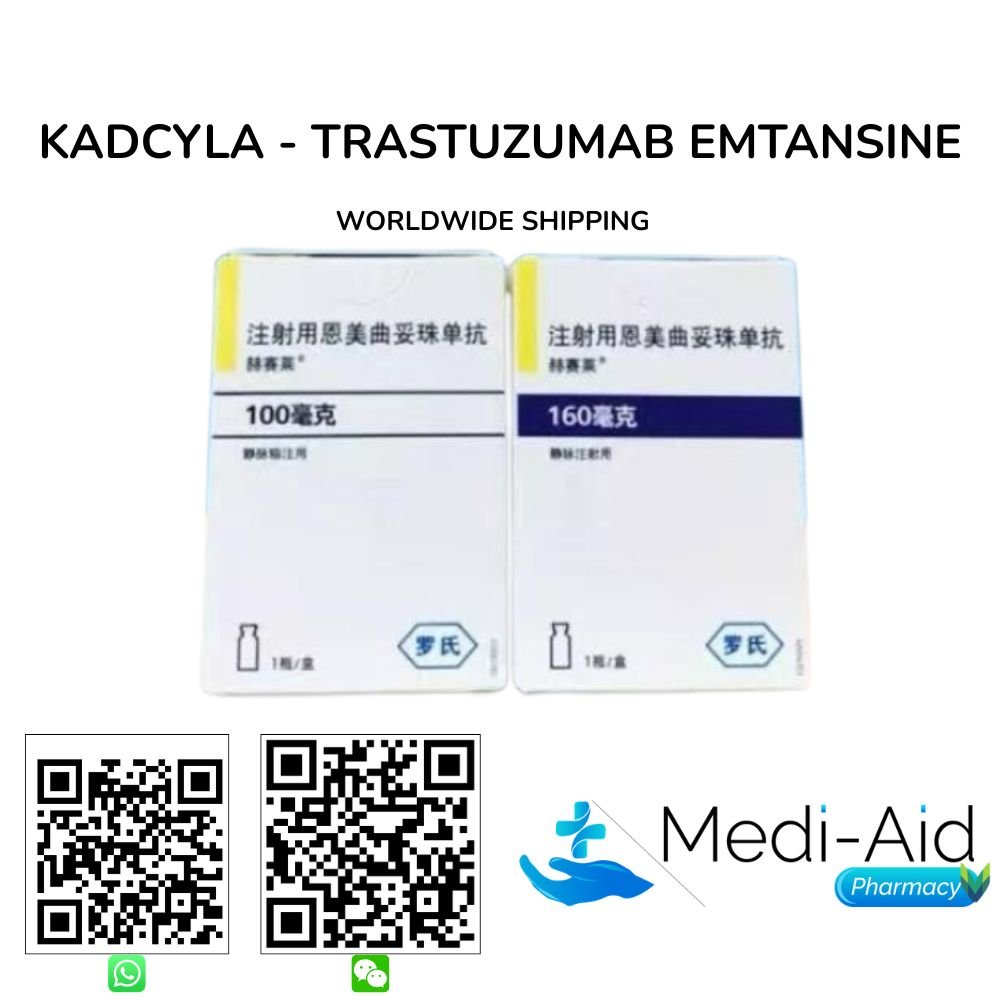
Kadcyla 100 MG & 160 MG (Trastuzumab emtansine) is a first-in-class HER2-targeted antibody-drug conjugate (ADC) and targeted oncology agent a precision biologic that covalently links trastuzumab, an anti-HER2 (human epidermal growth factor receptor 2) monoclonal antibody, to emtansine (DM1), a potent maytansinoid microtubule inhibitor, via a stable non-cleavable thioether linker (MCC), enabling selective intracellular delivery of the cytotoxic DM1 payload directly into HER2-overexpressing tumour cells upon receptor-mediated endocytosis, thereby combining trastuzumab’s HER2 signalling inhibition and antibody-dependent cell-mediated cytotoxicity (ADCC) with the potent microtubule-disrupting activity of emtansine in a single targeted molecule supplied as lyophilised powder for intravenous infusion in 100 mg and 160 mg strengths in 1 vial per box and manufactured by Roche in China-market packaging (Chinese brand name: 赫赛莱).
Its active pharmaceutical ingredient, trastuzumab emtansine INN, is indicated as monotherapy for HER2-positive metastatic breast cancer previously treated with trastuzumab and a taxane, and as adjuvant monotherapy for residual invasive HER2-positive early breast cancer following neoadjuvant taxane-based and HER2-targeted therapy. Kadcyla is administered at the standard trastuzumab emtansine dose of 3.6 mg/kg intravenously every 3 weeks (Q3W), with the first infusion given over 90 minutes and subsequent infusions, if the preceding infusion was well tolerated, given over 30 minutes.
In HER2-positive metastatic breast cancer, the Phase 3 EMILIA trial (n=991) demonstrated that Kadcyla delivered a median progression-free survival (PFS) of 9.6 months versus 6.4 months with lapatinib plus capecitabine (HR 0.65; p<0.001) and a median overall survival (OS) of 29.9 months versus 25.9 months (HR 0.75; p<0.001). In HER2-positive early breast cancer with residual invasive disease after neoadjuvant therapy, the Phase 3 KATHERINE trial (n=1,486) demonstrated that Kadcyla reduced the risk of invasive disease recurrence or death by 50% compared with trastuzumab (HR 0.50; p<0.001), with 3-year invasive disease-free survival (iDFS) of 88.3% versus 77.0%. Important: Kadcyla carries Black Box Warnings for hepatotoxicity including nodular regenerative hyperplasia of the liver and fatal hepatic failure and for embryo-foetal toxicity.
Left ventricular dysfunction and severe infusion-related reactions, including fatal hypersensitivity and anaphylaxis, have also been reported; monitor LVEF before initiation and at regular intervals throughout Kadcyla therapy. Searching for Kadcyla 100 MG & 160 MG Trastuzumab emtansine? Mediaid Pharmacy lists this product across its oncology medicines, breast cancer medicines, and Roche medicines portfolios and ships it worldwide.
Basic Product Information of Kadcyla 100 MG & 160 MG (Trastuzumab emtansine)
| Brand Name | Kadcyla 100 MG & 160 MG (Trastuzumab emtansine) |
| Product Name | Kadcyla |
| Chinese Package Name | 赫赛莱 (Hèsāilái) |
| Generic Name | Trastuzumab emtansine INN (also referred to as ado-trastuzumab emtansine or T-DM1) |
| Drug Class | HER2-Targeted Antibody-Drug Conjugate (ADC); Anti-HER2 Monoclonal Antibody Conjugate; Microtubule Inhibitor (Maytansinoid DM1 Payload); Targeted Oncology Agent; Antineoplastic Agent; Biologic Antineoplastic |
| Formulation | Lyophilised Powder for Concentrate for Solution for Infusion (Intravenous; IV infusion only not for IV push or bolus administration) |
| Available Strengths | 100 mg per vial; 160 mg per vial (both strengths contain trastuzumab emtansine at the same drug-to-antibody ratio [DAR] of approximately 3.5 DM1 molecules per trastuzumab molecule; the two vial sizes allow accurate dose preparation across the range of patient body weights at the 3.6 mg/kg Q3W dosing schedule) |
| Available Pack Size | 1 vial per box (100 mg vial or 160 mg vial; vials are used in combination to prepare the exact weight-based dose of 3.6 mg/kg for each individual patient; reconstitute each vial with sterile water for injection to yield a 20 mg/mL concentrate) |
| Dosing Schedule | All HER2+ Breast Cancer Indications (metastatic and early/adjuvant): Trastuzumab emtansine 3.6 mg/kg intravenously every 3 weeks (Q3W; 21-day cycle). Administer as an intravenous infusion only do not administer as an IV push or bolus. First infusion: infuse over 90 minutes and observe for infusion-related reactions for at least 90 minutes after the end of infusion. Subsequent infusions (if the preceding infusion was tolerated without infusion-related reactions): infuse over 30 minutes and observe for at least 30 minutes. Continue Kadcyla until disease progression (metastatic setting) or until completion of 14 cycles (early breast cancer/adjuvant setting), or until unacceptable toxicity. Consult the treating oncologist for dose modification guidance in the event of hepatotoxicity, thrombocytopenia, peripheral neuropathy, or infusion-related reactions. Dose reductions are to 3.0 mg/kg (first reduction) and 2.4 mg/kg (second reduction); do not re-escalate after dose reduction. |
| Primary Indications | (1) HER2-Positive Metastatic Breast Cancer (mBC) Second-Line: Trastuzumab emtansine monotherapy for the treatment of adults with HER2-positive, unresectable locally advanced or metastatic breast cancer who previously received trastuzumab and a taxane, separately or in combination. Patients should have either received prior therapy for locally advanced or metastatic disease, or developed disease recurrence during or within six months of completing adjuvant therapy. (FDA first approval: February 22, 2013; based on Phase 3 EMILIA trial.)
(2) HER2-Positive Early Breast Cancer (eBC) Adjuvant with Residual Invasive Disease: Trastuzumab emtansine monotherapy as adjuvant treatment of adults with HER2-positive early breast cancer who have residual invasive disease in the breast or lymph nodes following neoadjuvant taxane-based and HER2-targeted therapy. (FDA approval: May 3, 2019; based on Phase 3 KATHERINE trial.) |
| Market Packaging | China (Chinese package name: 赫赛莱) |
| Manufacturer / Brand | Roche (F. Hoffmann-La Roche Ltd. / Genentech, Inc.; originator and sole manufacturer of Kadcyla / trastuzumab emtansine; first FDA approval February 22, 2013 for HER2+ metastatic breast cancer; subsequent FDA approval May 3, 2019 for adjuvant HER2+ early breast cancer with residual invasive disease after neoadjuvant therapy; EMA approval November 15, 2013) |
| Global Supplier | Mediaid Pharmacy, Worldwide Shipping Available |
| Storage Conditions | Store unconstituted vials under refrigeration at 2°C to 8°C (36°F to 46°F). Do not freeze. Keep in the original carton to protect from light. Reconstituted solution (20 mg/mL): store at 2°C to 8°C and use within 4 hours of reconstitution; do not freeze. Diluted infusion solution: use immediately or store at 2°C to 8°C for no more than 4 hours. Keep out of the reach of children. |
How Kadcyla (Trastuzumab emtansine) Works: HER2-Targeted ADC Delivery, DM1 Microtubule Inhibition, and Dual-Mechanism Tumour Kill in HER2+ Breast Cancer
Trastuzumab emtansine (Kadcyla) is an intravenously administered HER2-targeted antibody-drug conjugate (ADC) whose mechanism of action integrates two distinct and pharmacologically complementary antitumour mechanisms HER2-directed monoclonal antibody activity and potent intracellular cytotoxic payload delivery into a single targeted molecule.
The ADC architecture of Kadcyla consists of three structural components: (1) trastuzumab, a recombinant humanised anti-HER2 IgG1 monoclonal antibody identical in amino acid sequence to the originator trastuzumab (Herceptin®); (2) emtansine (DM1), a semi-synthetic maytansinoid natural product derivative that binds tubulin at the vinca alkaloid binding site and is approximately 20- to 200-fold more cytotoxic than conventional chemotherapy agents including taxanes and vinca alkaloids; and (3) a stable non-cleavable thioether linker, succinimidyl-4-(N-maleimidomethyl)cyclohexane-1-carboxylate (MCC/SMCC), that covalently attaches DM1 molecules to lysine residues on the trastuzumab antibody at a drug-to-antibody ratio (DAR) of approximately 3.5 DM1 molecules per trastuzumab molecule.
This conjugate architecture ensures that DM1 too potent for systemic administration as a free molecule is delivered specifically to HER2-overexpressing tumour cells, minimising systemic cytotoxic exposure and conferring a therapeutic window that free emtansine cannot provide.
The mechanism of Kadcyla’s antitumour activity proceeds through a defined intracellular trafficking sequence. First, the trastuzumab component of Kadcyla binds with high affinity to subdomain IV of the HER2 extracellular domain on the surface of HER2-overexpressing tumour cells the same epitope targeted by unconjugated trastuzumab triggering receptor-mediated endocytosis of the HER2-Kadcyla complex into early endosomes. Second, endosomal trafficking delivers the internalised complex to lysosomes, where lysosomal acidification and proteolytic enzymes (cathepsins and other lysosomal hydrolases) degrade the trastuzumab antibody backbone and the MCC linker-containing catabolites, releasing the cytotoxic DM1-containing catabolites (primarily lysine-MCC-DM1) into the intracellular milieu.
Third, the released DM1-containing catabolites bind to tubulin at the vinca alkaloid binding site on β-tubulin subunits, suppressing microtubule dynamic instability the cycle of polymerisation and depolymerisation required for mitotic spindle assembly. DM1-induced microtubule stabilisation arrests dividing tumour cells in the G2/M phase of the cell cycle and triggers mitotic catastrophe-driven apoptosis in HER2-overexpressing breast cancer cells. Crucially, the non-cleavable MCC linker in Kadcyla prevents premature extracellular DM1 release, maintaining the systemic tolerability that allows Kadcyla to be administered at pharmacologically active doses in clinical practice.
In parallel with intracellular DM1 delivery, Kadcyla retains the full mechanistic repertoire of the unconjugated trastuzumab antibody component. Trastuzumab binding to HER2 subdomain IV inhibits HER2 extracellular domain shedding, prevents ligand-independent HER2 dimerisation with other HER family members (EGFR/HER1, HER3, HER4), suppresses HER2-driven activation of the PI3K/Akt survival signalling pathway, and recruits immune effector cells natural killer (NK) cells, macrophages, and neutrophils to HER2-overexpressing tumour cells via Fc receptor engagement, triggering ADCC-mediated tumour cell lysis.
This dual mechanism intracellular DM1-driven mitotic arrest plus trastuzumab-mediated HER2 signalling inhibition and ADCC is pharmacologically distinct from unconjugated trastuzumab alone, trastuzumab plus pertuzumab, lapatinib-based regimens, and the next-generation ADC trastuzumab deruxtecan (T-DXd, Enhertu®), which employs a cleavable linker and a topoisomerase I inhibitor payload (DXd) rather than the non-cleavable MCC-DM1 system of Kadcyla, conferring different resistance profiles, bystander-effect characteristics, and safety signatures between the two HER2-targeted ADCs.
Clinical Safety Profile of Kadcyla 100 MG & 160 MG (Trastuzumab emtansine)
| Black Box Warnings | Hepatotoxicity: Serious hepatotoxicity, including liver failure and death, has been reported in patients treated with Kadcyla. Monitor serum transaminases (ALT, AST) and bilirubin before initiating Kadcyla and prior to each dose. Reduce dose, interrupt, or permanently discontinue Kadcyla based on severity of hepatic impairment per dosing guidelines. Nodular regenerative hyperplasia (NRH) of the liver, a rare condition that can lead to non-cirrhotic portal hypertension, has been identified in patients receiving Kadcyla; diagnose NRH by liver biopsy.
Embryo-Foetal Toxicity: Kadcyla can cause embryo-foetal harm when administered to a pregnant woman based on the mechanism of action of both trastuzumab (HER2-mediated effects on foetal kidney development) and DM1 (cytotoxicity to rapidly proliferating foetal cells). Females of reproductive potential must use effective contraception during Kadcyla treatment and for 7 months after the final dose. |
| Serious Warnings and Precautions | Left Ventricular Dysfunction (LVD): Kadcyla can cause subclinical and clinical cardiac failure. Assess LVEF by echocardiogram or MUGA scan before initiating Kadcyla and at regular intervals (every 3 months during treatment). Withhold Kadcyla for LVEF <40% or symptomatic heart failure; discontinue permanently if LVEF does not recover to ≥45%.
Severe Infusion-Related Reactions / Hypersensitivity: Serious and fatal infusion-related reactions including hypersensitivity and anaphylaxis have been reported with Kadcyla. Interrupt the infusion for infusion-related reactions and monitor patients until resolution; permanently discontinue Kadcyla for life-threatening infusion-related reactions. Monitor patients during and for at least 90 minutes (first infusion) or 30 minutes (subsequent infusions) after each infusion. Haemorrhage: Severe haemorrhage, including fatal cases, has been reported with Kadcyla. Use caution in patients with thrombocytopenia or receiving anticoagulant therapy. |
| Common Adverse Reactions | In patients with HER2+ metastatic breast cancer (EMILIA trial, Kadcyla arm): fatigue, nausea, musculoskeletal pain, thrombocytopenia, headache, increased transaminases (AST/ALT), constipation, epistaxis, peripheral neuropathy, and arthralgias. Grade 3/4 adverse events in EMILIA: thrombocytopenia (Grade 3: 7.2%; Grade 4: 7.0%), elevated ALT (Grade 3: 2.9%), elevated AST (Grade 3: 4.3%), peripheral neuropathy (Grade 3: 2.2%), fatigue (Grade 3: 3.0%), and hypokalemia. In HER2+ early breast cancer (KATHERINE trial, Kadcyla arm): thrombocytopenia, fatigue, nausea, increased transaminases, musculoskeletal pain, peripheral neuropathy, headache, and epistaxis. Thrombocytopenia is the most clinically significant haematological adverse reaction of Kadcyla and requires platelet count monitoring before each dose; the nadir typically occurs on Day 8 of each 21-day cycle with recovery to Grade ≤1 by Day 15 in most patients. Grade ≥3 peripheral neuropathy (sensory or motor) requires Kadcyla dose interruption until resolution to Grade ≤2, followed by dose reduction. |
| Drug Interactions | The DM1 component of trastuzumab emtansine is primarily metabolised by CYP3A4 and to a minor extent by CYP3A5; DM1 is also a P-glycoprotein (P-gp) substrate. Strong CYP3A4 inhibitors (ketoconazole, itraconazole, voriconazole, clarithromycin, ritonavir, grapefruit products): increase DM1 systemic exposure and the risk of Kadcyla toxicity avoid concurrent use; if co-administration is unavoidable, delay Kadcyla initiation until 3 elimination half-lives of the CYP3A4 inhibitor have elapsed. Strong CYP3A4 inducers (rifampicin, carbamazepine, phenytoin, phenobarbital, St John’s Wort): may reduce DM1 exposure and Kadcyla efficacy avoid concurrent use. Anticoagulants and antiplatelet agents: Kadcyla-induced thrombocytopenia increases haemorrhagic risk in patients receiving warfarin, direct oral anticoagulants (DOACs), aspirin, or other antiplatelet agents monitor closely and manage thrombocytopenia proactively. The trastuzumab component of Kadcyla does not involve CYP enzyme metabolism; the interaction liability of Kadcyla is driven by the small-molecule DM1 payload. Disclose all concomitant medications to the treating oncologist before initiating Kadcyla. |
| Pregnancy & Lactation | Kadcyla can cause embryo-foetal harm when administered to a pregnant woman: the trastuzumab antibody component is expected to cross the placenta and, based on its mechanism (HER2 inhibition), may cause oligohydramnios, oligohydramnios sequence, and foetal renal toxicity analogous to that documented with unconjugated trastuzumab; the DM1 payload adds direct cytotoxic risk to rapidly proliferating foetal cells. Kadcyla is contraindicated during pregnancy. Females of reproductive potential must use effective non-hormonal or hormonal contraception during Kadcyla treatment and for 7 months after the final dose. Males with female partners of reproductive potential should use effective contraception during Kadcyla treatment and for 4 months after the final dose. Verify pregnancy status with a serum or urine pregnancy test before initiating Kadcyla in females of reproductive potential. If a patient becomes pregnant while receiving Kadcyla, promptly report the exposure to Roche and immediately discontinue Kadcyla; monitor the patient for oligohydramnios. It is not known whether trastuzumab emtansine or its metabolites are present in human breast milk; breastfeeding is not recommended during Kadcyla treatment and for 7 months after the last dose due to the potential for serious adverse reactions in the nursing infant. Discuss reproductive counselling, fertility preservation if relevant, and contraceptive requirements with the treating oncologist before initiating Kadcyla. |
Who Should Use Kadcyla 100 MG & 160 MG (Trastuzumab emtansine)?
Kadcyla (Trastuzumab emtansine) is indicated across two clinically distinct settings of HER2-positive breast cancer, both defined by confirmed HER2 protein overexpression (IHC 3+ by immunohistochemistry) or HER2 gene amplification (by FISH, CISH, or other validated in situ hybridisation assay) as a mandatory eligibility gateway, collectively representing the HER2-positive breast cancer subtype approximately 15–20% of all breast cancers for whom HER2-targeted therapy has fundamentally transformed outcomes over two decades and for whom Kadcyla’s ADC mechanism delivers potent intracellular cytotoxic activity that unconjugated HER2-targeted antibodies cannot provide.
First, adults with HER2-positive metastatic breast cancer who have received prior trastuzumab and a taxane represent the foundational second-line approved indication for Kadcyla: the Phase 3 EMILIA trial (n=991), comparing Kadcyla monotherapy against the then-standard second-line regimen of lapatinib plus capecitabine, demonstrated a median PFS of 9.6 months versus 6.4 months (HR 0.65; 95% CI 0.55–0.77; p<0.001) and a median OS of 29.9 months versus 25.9 months (HR 0.75; 95% CI 0.64–0.88; p<0.001) the first Phase 3 trial in HER2+ metastatic breast cancer to demonstrate a statistically significant OS benefit with a second-line regimen at the time of analysis. The objective response rate (ORR) in EMILIA was 43.6% with Kadcyla versus 30.8% with lapatinib-capecitabine. Patients who had previously received prior pertuzumab in the neoadjuvant or adjuvant setting remain eligible for second-line Kadcyla provided they meet the trastuzumab and taxane prior exposure criteria.
Second, adults with HER2-positive early breast cancer who have residual invasive disease in the breast or axillary lymph nodes after neoadjuvant taxane-based and HER2-targeted therapy represent the KATHERINE-based adjuvant indication the indication that has had the most transformative impact in terms of patient volume and long-term survival benefit: patients who do not achieve pathological complete response (pCR) after neoadjuvant therapy remain at substantially elevated risk of recurrence, and the Phase 3 KATHERINE trial (n=1,486) established that switching from adjuvant trastuzumab to adjuvant Kadcyla in this residual-disease population reduced the risk of invasive disease recurrence or death by 50% (HR 0.50; 95% CI 0.39–0.64; p<0.001), with 3-year iDFS of 88.3% versus 77.0% and 3-year distant recurrence-free interval (DRFI) of 89.7% versus 83.0% a practice-changing result that established Kadcyla as the global standard of care in the post-neoadjuvant residual-disease setting.
Kadcyla is not appropriate in the absence of confirmed HER2 positivity; in HER2-positive metastatic breast cancer as first-line therapy (where trastuzumab-pertuzumab-taxane [CLEOPATRA regimen] is the established first-line standard); in patients with active hepatic impairment (AST/ALT >2.5× ULN at baseline without hepatic metastases, or >5× ULN with hepatic metastases); or in patients with active cardiac disease or LVEF <50% without specialist cardio-oncology co-management. Breast oncology departments, HER2+ breast cancer treatment programmes managing both early and metastatic disease settings, hospital formulary teams, and patients and families sourcing Kadcyla in regions where cost or availability presents barriers can browse the Mediaid Pharmacy breast cancer medicines portfolio, the oncology medicines collection, and the Roche medicines range for the complete selection available with worldwide delivery.
Global Supplier: Mediaid Pharmacy Worldwide Shipping for Kadcyla 100 MG & 160 MG (Trastuzumab emtansine)
Mediaid Pharmacy is a Dhaka-based supplier of specialty targeted oncology, breast cancer, and rare disease medicines with worldwide shipping to patients, breast oncology departments, HER2-positive breast cancer treatment programmes (both early and metastatic), hospital pharmacies, oncology day units, and international distributors across all regions. Kadcyla (Trastuzumab emtansine), manufactured by Roche in China-market packaging (Chinese name: 赫赛莱), is supplied as lyophilised powder for IV infusion in 100 mg and 160 mg single-use glass vials 1 vial per box with pricing quotations, stock confirmation, full product documentation including cold-chain shipping verification, and end-to-end international delivery tracking for every order.
The two-vial-size system (100 mg and 160 mg) is a clinical necessity for accurate weight-based dosing: at 3.6 mg/kg Q3W, a 45 kg patient requires 162 mg per dose (one 160 mg vial plus a partial 100 mg vial), while a 70 kg patient requires 252 mg per dose (one 160 mg vial and partial second 160 mg vial or one 100 mg vial); Mediaid Pharmacy supplies both vial sizes to allow pharmacy teams to prepare each individual patient dose precisely without avoidable wastage. HER2-positive breast oncology centres managing patients in the KATHERINE-indication adjuvant setting (14 cycles of Kadcyla; one cycle every 21 days); HER2+ metastatic breast cancer departments treating second-line and beyond disease; hospital oncology formulary and procurement teams; international oncology patient access programmes; and individual patients and families accessing Kadcyla trastuzumab emtansine in regions where cost-prohibitive pricing or limited availability creates access barriers can contact the Mediaid Pharmacy team through WhatsApp, phone, or WeChat for all enquiries regarding Kadcyla stock availability, current pricing, cold-chain shipping options, and international delivery timelines.
Procurement teams co-sourcing Kadcyla with other Roche oncology biologic agents or targeted breast cancer medicines can browse the complete Mediaid Pharmacy oncology medicines collection and the Roche medicines portfolio before requesting a consolidated quotation.
Why Choose Kadcyla 100 MG & 160 MG (Trastuzumab emtansine) from Mediaid Pharmacy?
Kadcyla (Trastuzumab emtansine) provides HER2-positive breast oncologists and multidisciplinary treatment teams with a Phase 3-validated, first-in-class HER2-targeted antibody-drug conjugate whose non-cleavable MCC-DM1 conjugate architecture is mechanistically distinct from every other HER2-targeted agent class in clinical use including unconjugated anti-HER2 monoclonal antibodies (trastuzumab, pertuzumab), small-molecule HER2 tyrosine kinase inhibitors (lapatinib, neratinib, tucatinib), bispecific antibodies (zanidatamab), and the next-generation cleavable-linker topoisomerase-I-payload ADC trastuzumab deruxtecan (T-DXd/Enhertu®) conferring a structurally unique intracellular DM1 microtubule toxin delivery mechanism whose non-cleavable linker chemistry prevents bystander-effect payload release into surrounding normal tissues and whose HER2-selectivity directly mirrors the well-validated subdomain-IV binding site of trastuzumab.
The clinical evidence foundation for Kadcyla spans two paradigm-changing Phase 3 trials. The EMILIA trial made Kadcyla the first HER2-targeted agent in history to demonstrate a statistically significant overall survival benefit in second-line HER2+ metastatic breast cancer: the 4.0-month absolute median OS improvement (29.9 versus 25.9 months; HR 0.75; p<0.001) over lapatinib-capecitabine then the standard of care established Kadcyla as the global second-line reference treatment in HER2+ mBC and earned its 2013 FDA approval.
The KATHERINE trial then established Kadcyla in a new and arguably more clinically impactful indication the post-neoadjuvant adjuvant setting by demonstrating a 50% reduction in the risk of invasive disease recurrence or death (HR 0.50; p<0.001) with Kadcyla versus continued trastuzumab in patients with residual invasive disease after neoadjuvant therapy: the 11.3-percentage-point absolute improvement in 3-year iDFS (88.3% versus 77.0%) represents a practice-changing outcome that ESMO and ASCO clinical guidelines have enshrined as the standard of care for this high-risk post-neoadjuvant population. Importantly, while trastuzumab deruxtecan (T-DXd) has demonstrated superiority over Kadcyla in the second-line HER2+ metastatic setting (DESTINY-Breast03: mPFS 28.8 versus 6.8 months; HR 0.33), no T-DXd approval exists for the KATHERINE post-neoadjuvant adjuvant indication meaning Kadcyla remains the sole evidence-based standard of care for patients with residual HER2+ early breast cancer after neoadjuvant therapy, a setting of substantial unmet curative need.
The intravenous administration of Kadcyla at 3.6 mg/kg every 3 weeks a once-per-cycle infusion of 30–90 minutes offers a significantly lower dosing frequency than daily oral targeted agents, with the added advantage of confirmed drug delivery under supervised healthcare team administration, which is particularly relevant in the 14-cycle adjuvant Kadcyla regimen where treatment adherence directly determines long-term iDFS outcomes. Kadcyla is manufactured by Roche and is available through Mediaid Pharmacy as 100 mg and 160 mg lyophilised vials in China-market packaging (赫赛莱) with full cold-chain documentation, specialist supply coordination, and worldwide shipping from Dhaka.
To source additional Roche oncology and HER2-targeted medicines, visit the Mediaid Pharmacy Roche medicines section and the breast cancer medicines portfolio, and contact the team for a personalised quotation.
Frequently Asked Questions About Kadcyla 100 MG & 160 MG (Trastuzumab emtansine)
What is Kadcyla (Trastuzumab emtansine) used for?
Kadcyla (Trastuzumab emtansine) is a HER2-targeted antibody-drug conjugate (ADC) indicated for two settings of HER2-positive breast cancer: (1) monotherapy for adults with HER2-positive, unresectable locally advanced or metastatic breast cancer (HER2+ mBC) who previously received trastuzumab and a taxane representing the second-line metastatic indication approved based on the EMILIA trial (mPFS 9.6 vs 6.4 months; mOS 29.9 vs 25.9 months); and (2) adjuvant monotherapy for adults with HER2-positive early breast cancer who have residual invasive disease in the breast or lymph nodes after neoadjuvant taxane-based and HER2-targeted therapy representing the KATHERINE-trial-based adjuvant indication (3-year iDFS 88.3% vs 77.0%; HR 0.50). Kadcyla delivers its antitumour effect through a dual mechanism: intracellular release of the DM1 microtubule inhibitor payload following HER2-mediated endocytosis, combined with trastuzumab-mediated HER2 signalling inhibition and ADCC. Kadcyla is manufactured by Roche and is available through Mediaid Pharmacy in China-market packaging (Chinese name: 赫赛莱) as 100 mg and 160 mg lyophilised vials for IV infusion with worldwide shipping.
What is the generic name of Kadcyla?
The generic name of Kadcyla is trastuzumab emtansine INN, also designated ado-trastuzumab emtansine (the “ado-” prefix in the US naming convention distinguishes it from unconjugated trastuzumab) and commonly abbreviated T-DM1 in the clinical and scientific literature. Kadcyla is the originator brand name registered by Roche (F. Hoffmann-La Roche Ltd. / Genentech, Inc.) for trastuzumab emtansine. The China-market packaging carries the Chinese brand name 赫赛莱 (Hèsāilái). Kadcyla is supplied in two vial strengths 100 mg and 160 mg both formulated as lyophilised powder for reconstitution and IV infusion at 20 mg/mL, administered at 3.6 mg/kg Q3W. Unlike small-molecule oncology drugs for which bioequivalent generics are routinely developed, Kadcyla is a complex biologic ADC; no approved biosimilar or generic version of trastuzumab emtansine has received regulatory clearance as of 2024, and Roche / Genentech remains the sole manufacturer. Mediaid Pharmacy distributes Kadcyla (Trastuzumab emtansine) globally with worldwide shipping to patients, breast oncology clinics, hospital pharmacies, and HER2+ breast cancer treatment programmes.
What is the difference between Kadcyla (T-DM1) and Enhertu (trastuzumab deruxtecan / T-DXd)?
Kadcyla (trastuzumab emtansine, T-DM1) and Enhertu (trastuzumab deruxtecan, T-DXd) are both HER2-targeted antibody-drug conjugates sharing the same trastuzumab antibody backbone but differing fundamentally in linker chemistry, cytotoxic payload, drug-to-antibody ratio (DAR), and approved indications. Kadcyla employs a non-cleavable thioether MCC linker with a maytansinoid DM1 microtubule-inhibitor payload at a DAR of approximately 3.5, and its non-cleavable linker prevents bystander-effect DM1 release into surrounding cells. Enhertu (T-DXd) uses a cleavable tetrapeptide linker with a topoisomerase I inhibitor DXd payload at a high DAR of approximately 8, and its cleavable linker enables bystander killing of HER2-low tumour cells adjacent to HER2-high cells the pharmacological basis for T-DXd’s activity in HER2-low breast cancer, a setting where Kadcyla is not approved. In the second-line HER2+ metastatic breast cancer setting (where both are approved), the Phase 3 DESTINY-Breast03 trial demonstrated T-DXd superiority over Kadcyla (mPFS 28.8 vs 6.8 months; HR 0.33), making T-DXd the preferred second-line standard of care in this setting per updated ESMO and ASCO guidelines. However, Kadcyla remains the sole approved ADC for the post-neoadjuvant adjuvant indication (KATHERINE trial) where T-DXd has not received approval and continues as the standard of care for patients with residual HER2+ early breast cancer after neoadjuvant therapy. Visit the Mediaid Pharmacy breast cancer medicines collection for the full HER2-targeted treatment range.
How is Kadcyla 100 MG & 160 MG (Trastuzumab emtansine) administered?
Kadcyla is administered as an intravenous infusion only it must never be administered as an IV push, IV bolus, or by any other parenteral route. Calculate the individual patient dose at 3.6 mg/kg based on actual body weight; if body weight changes by more than 10%, recalculate the dose. Reconstitute the Kadcyla lyophilised powder by slowly injecting sterile water for injection (5 mL for 100 mg vial; 8 mL for 160 mg vial) to yield a 20 mg/mL concentrate; swirl gently do not shake. Withdraw the required volume of reconstituted Kadcyla and dilute into a 250 mL bag of 0.9% sodium chloride (normal saline) for infusion; do not use dextrose solutions. Administer the first infusion over 90 minutes and observe the patient for infusion-related reactions and fever/chills for at least 90 minutes after infusion completion. If the first infusion is well tolerated, administer subsequent infusions over 30 minutes with at least 30 minutes of post-infusion observation. If infusion-related reactions or hypersensitivity occur: slow the infusion rate or interrupt; administer antihistamines, corticosteroids, and antipyretics as clinically indicated; permanently discontinue Kadcyla for life-threatening reactions. Do not mix Kadcyla with other drugs in the same infusion bag. Check platelet count (thrombocytopenia monitoring) and liver function tests (LFTs) and LVEF before initiating each cycle. All dose modifications reductions to 3.0 mg/kg or 2.4 mg/kg Q3W for hepatotoxicity, thrombocytopenia, or peripheral neuropathy must be directed by the treating oncologist; do not re-escalate after dose reduction.
What are the side effects of Kadcyla (Trastuzumab emtansine)?
The most clinically significant adverse effects of Kadcyla (trastuzumab emtansine) are thrombocytopenia, hepatotoxicity (elevated transaminases and, rarely, nodular regenerative hyperplasia), peripheral neuropathy, left ventricular dysfunction, and infusion-related reactions. Thrombocytopenia is the predominant dose-limiting haematological adverse event: in the EMILIA trial, Grade 3 thrombocytopenia occurred in 7.2% and Grade 4 in 7.0% of Kadcyla-treated patients; the platelet nadir typically occurs on Day 8 of each 21-day cycle and recovers by Day 15, allowing the 3-week dosing cycle to proceed without treatment delay in most patients. Hepatotoxicity manifesting as Grade 3 AST elevation occurred in 4.3% and Grade 3 ALT elevation in 2.9% of EMILIA patients; a rare but serious hepatic complication is nodular regenerative hyperplasia (NRH), which can cause non-cirrhotic portal hypertension and requires liver biopsy for definitive diagnosis suspected NRH necessitates permanent Kadcyla discontinuation. Peripheral neuropathy (predominantly sensory) occurred in all grades in approximately 21% of EMILIA patients; Grade 3 peripheral neuropathy requires dose interruption until improvement to Grade ≤2. Left ventricular dysfunction (LVEF decline) has been reported; baseline and periodic LVEF monitoring by echocardiogram or MUGA scan is mandatory. Pulmonary toxicity including interstitial lung disease (ILD) and pneumonitis has been reported, including fatal cases. Other common adverse reactions include fatigue, nausea, musculoskeletal pain, headache, constipation, and epistaxis. Always establish baseline platelet count, LFTs, and LVEF before initiating Kadcyla and monitor throughout treatment under the supervision of an experienced oncologist.
How effective is Trastuzumab emtansine (Kadcyla) for HER2-positive breast cancer?
Trastuzumab emtansine (Kadcyla) has demonstrated clinically significant and statistically robust efficacy in two randomised Phase 3 trials across its approved indications. In HER2-positive metastatic breast cancer, the Phase 3 EMILIA trial (n=991; Kadcyla versus lapatinib plus capecitabine in patients previously treated with trastuzumab and a taxane) achieved a median PFS of 9.6 months versus 6.4 months (HR 0.65; 95% CI 0.55–0.77; p<0.001), median OS of 29.9 versus 25.9 months (HR 0.75; 95% CI 0.64–0.88; p<0.001), and an ORR of 43.6% versus 30.8% making Kadcyla both the first second-line HER2+ mBC therapy to demonstrate a Phase 3 OS benefit and a major step forward from prior standard-of-care regimens. A pre-specified subgroup analysis of patients with prior pertuzumab exposure (the TH3RESA trial, n=602) further supported Kadcyla’s efficacy in patients who had received two or more prior HER2-targeted regimens: TH3RESA demonstrated a median PFS of 6.2 months versus 3.3 months (HR 0.53; p<0.0001) with Kadcyla versus physician’s choice therapy. In HER2-positive early breast cancer, the Phase 3 KATHERINE trial (n=1,486; Kadcyla versus trastuzumab adjuvant therapy in patients with residual invasive disease after neoadjuvant therapy) delivered the most practice-defining result: a 50% reduction in the risk of invasive disease recurrence or death (HR 0.50; 95% CI 0.39–0.64; p<0.001) and an absolute 3-year iDFS improvement of 11.3 percentage points (88.3% vs 77.0%), establishing Kadcyla as the global standard of care post-neoadjuvant and transforming management of the high-risk residual-disease breast cancer population. These results establish trastuzumab emtansine as one of the most clinically impactful ADCs in oncology. Kadcyla is available through Mediaid Pharmacy with worldwide shipping; visit the oncology medicines collection for the full targeted therapy portfolio.
Is Kadcyla (Trastuzumab emtansine) safe during pregnancy or while breastfeeding?
Kadcyla (trastuzumab emtansine) is contraindicated during pregnancy. The trastuzumab antibody component crosses the placenta during the second and third trimesters, and based on the documented reproductive toxicity of unconjugated trastuzumab can cause oligohydramnios, foetal renal tubular dysplasia, and neonatal renal failure via HER2 pathway inhibition in foetal kidney development. The DM1 payload component adds direct cytotoxic risk to rapidly proliferating foetal cells through microtubule inhibition. If Kadcyla exposure occurs during pregnancy, promptly report the case to Roche and the relevant pharmacovigilance authority; monitor the patient for oligohydramnios with serial ultrasound examinations and consider additional foetal testing as clinically indicated. Females of reproductive potential must use effective contraception during Kadcyla treatment and for 7 months after the last dose; this 7-month washout period reflects the 5 half-life persistence of the trastuzumab antibody component plus the reproductive risk window. Male patients with female partners of reproductive potential should use effective contraception during treatment and for 4 months after the last dose. Verify pregnancy status with a serum or urine test before initiating Kadcyla in females of reproductive potential. It is not known whether trastuzumab emtansine, DM1, or DM1-containing catabolites are present in human breast milk; breastfeeding is not recommended during Kadcyla therapy and for 7 months after the last dose. Discuss all aspects of reproductive planning, fertility preservation, and contraceptive requirements with the treating oncologist before starting Kadcyla.
Can I order Kadcyla 100 MG & 160 MG (Trastuzumab emtansine) online with worldwide shipping?
Yes. Mediaid Pharmacy supplies Kadcyla 100 MG and 160 MG (Trastuzumab emtansine) 1 vial per box, lyophilised powder for IV infusion, China-market packaging (赫赛莱), manufactured by Roche to patients, HER2-positive breast oncology and medical oncology departments, adjuvant and metastatic breast cancer treatment centres, hospital pharmacies and oncology day units, patient access programmes, and healthcare providers globally. Contact Mediaid Pharmacy via WhatsApp, phone, or WeChat at +8801773428128, or email info@mediaidpharmacy.com for pricing, current stock availability, cold-chain shipping options, and international delivery details for your country.
Order Kadcyla 100 MG & 160 MG (Trastuzumab emtansine) with Worldwide Shipping
Phone / WhatsApp / WeChat: +8801773428128 | Email: info@mediaidpharmacy.com