
Description
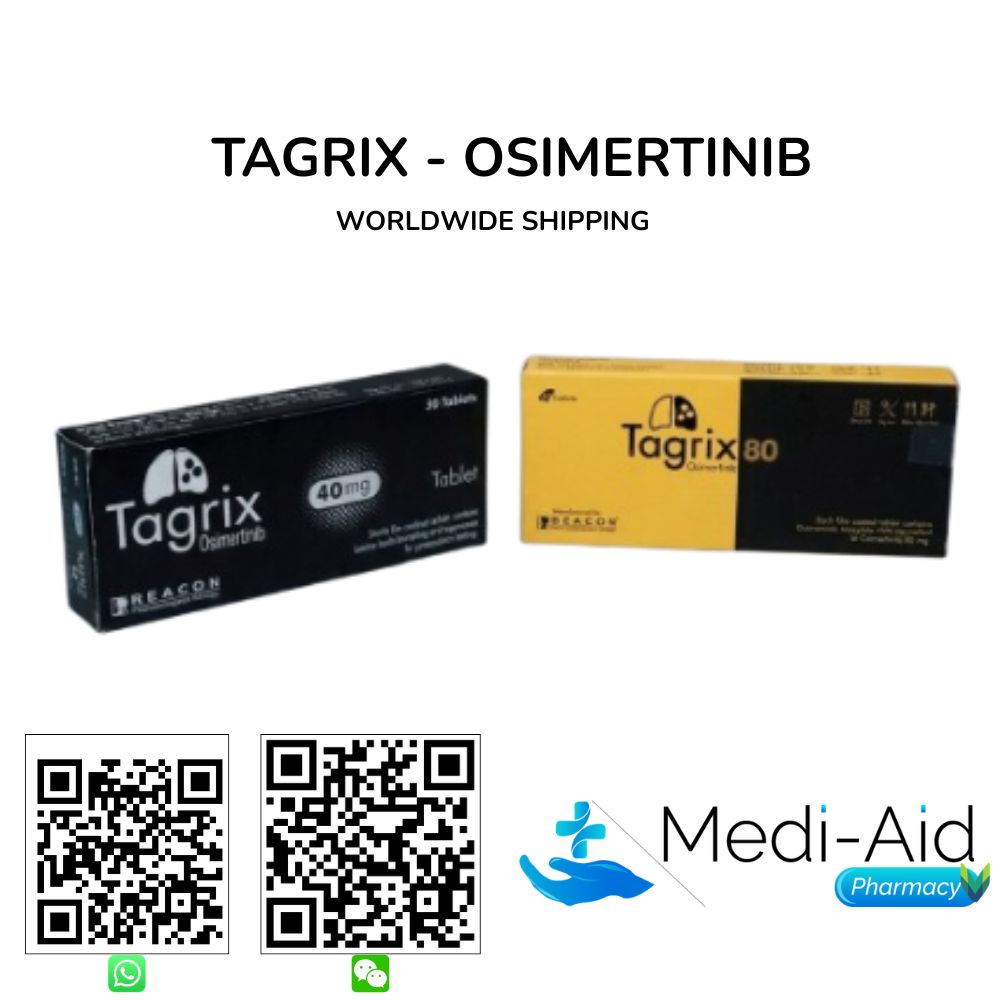
Tagrix 40 MG & 80 MG (Osimertinib) is a third-generation, mutant-selective, irreversible epidermal growth factor receptor tyrosine kinase inhibitor (EGFR TKI) a precision oral oncology agent that simultaneously targets EGFR-sensitizing mutations (exon 19 deletions and L858R) and the T790M resistance mutation, while selectively sparing wild-type EGFR supplied as film-coated tablets in 40 mg and 80 mg strengths in a 30-tablet pack and manufactured by Beacon Pharmaceuticals Limited. Its active ingredient, osimertinib INN, forms an irreversible covalent bond with cysteine 797 (Cys797) in the EGFR kinase domain, permanently blocking the ATP-binding site and suppressing EGFR-driven downstream signaling through RAS-MAPK and PI3K-AKT pathways that drive tumor proliferation, survival, and progression in EGFR-mutant non-small cell lung cancer (NSCLC).
Tagrix is dispensed in two dose strengths 40 mg and 80 mg enabling oncologists to prescribe the standard 80 mg once-daily therapeutic dose and to manage tolerability-driven dose reductions to 40 mg once daily from the same product without needing a separate formulation. Each 30-tablet pack supplies a full 30-day treatment course at either dose level. In the pivotal Phase 3 FLAURA trial in 556 treatment-naïve, EGFR-mutant advanced NSCLC patients, osimertinib delivered a median progression-free survival (PFS) of 18.9 months versus 10.2 months with first-generation EGFR TKIs (erlotinib or gefitinib) a 54% reduction in the risk of disease progression or death (HR 0.46; p<0.0001) and a median overall survival (OS) of 38.6 months versus 31.8 months (HR 0.80). In the Phase 3 AURA3 trial in 419 EGFR T790M mutation-positive, previously treated NSCLC patients, osimertinib achieved a median PFS of 10.1 months versus 4.4 months with platinum/pemetrexed chemotherapy a 70% reduction in the risk of disease progression or death (HR 0.30; p<0.001) with an objective response rate (ORR) of 71% versus 31%.
In the Phase 3 ADAURA trial in resected EGFR-mutant NSCLC, adjuvant osimertinib reduced the risk of disease recurrence or death by 83% in stage II–IIIA patients (HR 0.17; p<0.0001). Searching for Tagrix 40 MG & 80 MG Osimertinib? Mediaid Pharmacy lists this product across its lung cancer medicines, oncology medicines, and Beacon Pharmaceuticals portfolios and ships it worldwide.
Basic Product Information of Tagrix 40 MG & 80 MG (Osimertinib)
| Brand Name | Tagrix 40 MG & 80 MG (Osimertinib) |
| Product Name | Tagrix (Osimertinib) |
| Generic Name | Osimertinib INN |
| Drug Class | Third-Generation Mutant-Selective Irreversible EGFR Tyrosine Kinase Inhibitor (EGFR TKI); T790M Resistance Mutation Inhibitor; CNS-Penetrant Targeted Lung Cancer Agent; Antineoplastic Agent; Precision Oncology Agent |
| Formulation | Film-Coated Tablet (Oral) |
| Available Strengths | 40 mg per tablet and 80 mg per tablet |
| Available Pack Size | 30 Tablets per Pack (30-day supply at either the standard 80 mg once-daily dose or the reduced 40 mg once-daily dose) |
| Therapeutic Dose & Dose Reduction | Standard dose: 80 mg once daily (1× Tagrix 80 MG tablet). Dose reduction for tolerability: 40 mg once daily (1× Tagrix 40 MG tablet). The dual-strength design of Tagrix enables the treating oncologist to reduce from 80 mg to 40 mg without requiring a separate product, using the same 30-tablet pack format. Permanently discontinue if 40 mg once daily is not tolerated. Treatment continues until disease progression or unacceptable toxicity. |
| Primary Indications | First-line treatment of adult patients with locally advanced or metastatic NSCLC with EGFR exon 19 deletions or exon 21 L858R substitution mutations; second-line treatment of adult patients with locally advanced or metastatic EGFR T790M mutation-positive NSCLC, whose disease has progressed on or after prior EGFR TKI therapy; adjuvant therapy after complete tumor resection in adult patients with stage IB–IIIA NSCLC whose tumors have EGFR exon 19 deletions or exon 21 L858R substitution mutations (ADAURA). Consult the full prescribing information and treating oncologist for indication-specific dosing and companion diagnostic requirements. |
| Registration Date | 01/01/2021 |
| Manufacturer | Beacon Pharmaceuticals Limited |
| Originator Reference Brand | Tagrisso® (osimertinib tablets, by AstraZeneca) FDA-approved November 2015 (accelerated, T790M+ NSCLC), March 2017 (full approval, T790M+ NSCLC), April 2018 (first-line EGFR-mutant NSCLC), and December 2020 (adjuvant NSCLC). Tagrix contains the same active ingredient osimertinib INN as the originator Tagrisso® tablet, manufactured by Beacon Pharmaceuticals Limited and available through Mediaid Pharmacy for international procurement. |
| Global Supplier | Mediaid Pharmacy, Worldwide Shipping Available |
| Storage Conditions | Store below 30°C. Keep in the original packaging to protect from moisture and light. Keep out of the reach of children. |
How Tagrix (Osimertinib) Works: Third-Generation Mutant-Selective EGFR Inhibition, T790M Resistance Coverage, and Superior CNS Penetration
Osimertinib INN is an orally bioavailable, third-generation, mutant-selective, irreversible epidermal growth factor receptor (EGFR) tyrosine kinase inhibitor (TKI) that addresses the two core limitations of first- and second-generation EGFR TKIs: acquired resistance driven by the EGFR T790M “gatekeeper” mutation, and poor central nervous system (CNS) penetration. In EGFR-mutant NSCLC, activating somatic mutations in exon 19 (exon 19 deletions, such as del E746-A750) and exon 21 (L858R substitution) of the EGFR gene drive constitutive EGFR kinase activity, producing unrestrained downstream RAS-MAPK and PI3K-AKT signaling that sustains tumor cell proliferation, survival, and metastatic spread.
First- and second-generation EGFR TKIs (erlotinib, gefitinib, afatinib) initially suppress this signal but invariably select for the T790M resistance mutation in exon 20, which arises in approximately 50–60% of patients after 10–13 months of first-generation TKI therapy by increasing ATP binding affinity at the kinase domain, T790M sterically outcompetes first-generation inhibitors and restores EGFR signaling despite continued TKI treatment. Osimertinib was specifically engineered to target both the sensitizing mutations (exon 19 deletions, L858R) and the T790M resistance mutation simultaneously, while preserving selectivity for mutant over wild-type EGFR demonstrating approximately 200-fold greater selectivity for T790M/L858R double-mutant EGFR compared with wild-type EGFR in preclinical kinase selectivity panels.
Osimertinib achieves irreversible EGFR inhibition by covalently bonding to cysteine 797 (Cys797) in the ATP-binding site of the EGFR kinase domain, permanently silencing EGFR-driven downstream signaling through both RAS-MAPK and PI3K-AKT pathways irrespective of the underlying sensitizing mutation or T790M co-mutation.
The CNS penetration advantage of osimertinib is a defining clinical characteristic that distinguishes it from all first- and second-generation EGFR TKIs. Brain metastases occur in 25–40% of patients with EGFR-mutant NSCLC during the course of treatment, and first-generation TKIs such as erlotinib and gefitinib achieve limited blood-brain barrier (BBB) penetration due to unfavorable molecular weight, efflux transporter activity, and pharmacokinetic limitations resulting in inadequate intracranial drug concentrations that allow CNS tumor progression even when systemic disease remains controlled.
Osimertinib’s physicochemical properties confer substantially superior BBB penetration: preclinical mouse brain distribution studies confirmed higher CNS tissue concentrations relative to plasma compared with erlotinib and gefitinib. In the FLAURA Phase 3 trial, osimertinib reduced the risk of CNS progression compared with first-generation TKIs (HR 0.48; 95% CI 0.26–0.86; p=0.014), with a CNS ORR of 66% versus 43% for the standard TKI comparator a clinically meaningful difference in intracranial disease control that translates directly into reduced risk of neurological morbidity and treatment discontinuation due to CNS progression. In the AURA3 Phase 3 trial, CNS PFS in patients with measurable CNS lesions was 11.7 months with osimertinib versus 5.6 months with platinum/pemetrexed chemotherapy (HR 0.32; p=0.004).
Pharmacokinetically, osimertinib exhibits dose-proportional systemic exposure with a long plasma half-life (t½) of approximately 48 hours, supporting once-daily oral dosing and maintaining sustained EGFR inhibition across the 24-hour dosing interval. Osimertinib is metabolized predominantly via CYP3A4 and CYP3A5; co-administration with strong CYP3A4 inducers (rifampicin, phenytoin, carbamazepine, St. John’s Wort) decreases osimertinib exposure and should be avoided if unavoidable, increase the osimertinib dose to 160 mg once daily. For the complete range of targeted lung cancer and oncology medicines at Mediaid Pharmacy, visit the lung cancer medicines collection.
Tagrix 40 MG & 80 MG (Osimertinib): Indications, Dosing, and Key Safety Information
| Approved Indications | First-Line Metastatic NSCLC: Adult patients with locally advanced or metastatic NSCLC whose tumors have EGFR exon 19 deletions or exon 21 L858R substitution mutations, as detected by an approved companion diagnostic test.
Second-Line T790M-Positive NSCLC: Adult patients with locally advanced or metastatic EGFR T790M mutation-positive NSCLC, whose disease has progressed on or after EGFR TKI therapy, as detected by an approved companion diagnostic test. Adjuvant NSCLC (ADAURA): Adjuvant therapy following complete tumor resection in adult patients with stage IB, II, or IIIA NSCLC whose tumors have EGFR exon 19 deletions or exon 21 L858R substitution mutations. |
| Recommended Dose | Standard dose (all indications): 80 mg orally once daily (1× Tagrix 80 MG tablet), with or without food, at the same time each day. Dose reduction for tolerability: Reduce to 40 mg once daily (1× Tagrix 40 MG tablet) for adverse reactions requiring dose modification. Swallow tablets whole with water; do not crush, split, dissolve, or chew. Treatment continues until disease progression or unacceptable toxicity (metastatic settings); adjuvant duration is 3 years or until recurrence, whichever comes first. |
| Companion Diagnostic Requirement | EGFR mutation testing by an approved companion diagnostic is required before initiating Tagrix in the metastatic and adjuvant settings. For the first-line and adjuvant indications, EGFR exon 19 deletions or exon 21 L858R must be confirmed by tumor tissue or plasma (liquid biopsy) testing. For the second-line T790M-positive indication, EGFR T790M mutation must be confirmed by tumor tissue or plasma testing; if plasma testing is T790M-negative, tumor tissue biopsy is recommended to rule out false-negative results. |
| Missed Dose | If a dose is missed and the next scheduled dose is more than 12 hours away, take the missed dose immediately and resume the regular once-daily schedule. If the next dose is due within 12 hours, skip the missed dose and resume at the next regularly scheduled time. Do not double the dose to compensate for a missed dose. |
| Key Warnings & Precautions | Interstitial Lung Disease (ILD) / Pneumonitis: ILD, including fatal cases, occurred in 3.7% of patients across clinical trials. Withhold Tagrix for any new or worsening respiratory symptoms pending investigation; permanently discontinue if ILD is confirmed.
QTc Interval Prolongation: QTc prolongation has occurred with osimertinib. Avoid use in patients with congenital long QT syndrome. Monitor ECG and electrolytes in patients with risk factors (concurrent QTc-prolonging drugs, hypokalemia, hypomagnesemia). Withhold for QTc >500 ms; resume at 40 mg once daily if QTc returns to <481 ms; permanently discontinue for QTc prolongation with life-threatening arrhythmia. Cardiomyopathy / Left Ventricular Ejection Fraction (LVEF) Decrease: A decrease in LVEF of ≥10 percentage points to below 50% occurred in 3.2% of osimertinib-treated patients. Conduct cardiac assessment including LVEF at baseline, and at 3-month intervals during treatment in patients with cardiac risk factors. Withhold for symptomatic congestive heart failure (CHF) or asymptomatic LVEF decrease ≥10% below baseline to <50%; permanently discontinue for confirmed CHF. Keratitis: Keratitis has been reported. Refer patients to an ophthalmologist promptly for any ocular symptoms (eye pain, light sensitivity, lacrimation, blurred vision). Withhold Tagrix pending ophthalmologic evaluation; manage per severity. Stevens-Johnson Syndrome and Erythema Multiforme Major: Severe skin reactions have been reported. Permanently discontinue Tagrix for confirmed Stevens-Johnson syndrome or erythema multiforme major. Embryo-Fetal Toxicity: Osimertinib can cause fetal harm. Females of reproductive potential must use effective contraception during Tagrix treatment and for at least 6 weeks after the final dose. Males with female partners of reproductive potential must use effective contraception during treatment and for at least 4 months after the final dose. Breastfeeding is not recommended during treatment and for at least 2 weeks after the final dose. |
| Common Adverse Reactions (≥20%) | Diarrhea (42%), rash (34%), dry skin (23%), nail toxicity (paronychia, 22%), stomatitis (20%), and fatigue. In the FLAURA trial, Grade 3 or higher adverse reactions with osimertinib occurred at a rate of 34% substantially lower than the 45% rate observed with standard first-generation EGFR TKI comparators confirming osimertinib’s more favorable tolerability profile due to reduced wild-type EGFR inhibition. Osimertinib had a lower rate of discontinuation due to adverse events (13%) than erlotinib or gefitinib (18%) in FLAURA. Diarrhea and rash are typically Grade 1–2 and manageable with dose modification and supportive care per oncologist guidance. |
| Drug Interactions | Osimertinib is a CYP3A4/3A5 substrate. Strong CYP3A4 inducers (rifampicin, phenytoin, carbamazepine, St. John’s Wort) significantly reduce osimertinib plasma exposure avoid concomitant use; if unavoidable, increase the Tagrix dose to 160 mg once daily. Resume 80 mg once daily 3 weeks after discontinuing the inducer. Strong CYP3A4 inhibitors (ketoconazole, itraconazole, clarithromycin) may increase osimertinib exposure no dose adjustment is currently required per the approved label, but monitor for increased adverse reactions. Osimertinib is also a CYP3A4 inducer and a BCRP (breast cancer resistance protein) and P-gp inhibitor it may increase the exposure of concomitant BCRP/P-gp substrates (e.g., rosuvastatin, fexofenadine); consider dose reduction of the concomitant substrate drug. Disclose all medications and supplements to the treating oncologist before initiating Tagrix. |
| Hepatic Impairment | No dose adjustment is required for mild hepatic impairment (Child-Pugh A) or moderate hepatic impairment (Child-Pugh B). Tagrix has not been studied in patients with severe hepatic impairment (Child-Pugh C); use with caution and consult the treating oncologist and hepatologist for guidance in this setting. |
| Pregnancy & Lactation | Osimertinib can cause embryo-fetal harm based on its mechanism of action as an EGFR inhibitor EGFR signaling is required for normal embryonic and placental development. Tagrix is not recommended during pregnancy. Females of reproductive potential must use effective contraception during Tagrix treatment and for at least 6 weeks after the final dose. Males with female partners of reproductive potential must use effective contraception during treatment and for at least 4 months after the final dose. Breastfeeding is not recommended during Tagrix treatment and for at least 2 weeks after the final dose. Consult the treating oncologist before initiating Tagrix if pregnant, planning a pregnancy, or breastfeeding. |
Who Should Use Tagrix 40 MG & 80 MG (Osimertinib)?
Tagrix 40 MG & 80 MG (Osimertinib) is indicated across three clinically defined NSCLC patient populations, spanning the first-line, second-line, and adjuvant treatment settings making osimertinib the most broadly indicated third-generation EGFR TKI across the full EGFR-mutant NSCLC disease continuum.
First, adult patients with first-line locally advanced or metastatic NSCLC whose tumors harbor EGFR exon 19 deletions or exon 21 L858R substitution mutations constitute the primary and most widely applicable indication, established by the FLAURA Phase 3 trial in 556 patients. The FLAURA data demonstrated that frontline osimertinib achieved a median PFS of 18.9 months nearly double the 10.2-month PFS with erlotinib or gefitinib with 89% of osimertinib-treated patients alive at 12 months versus 83% in the standard TKI arm, and a final OS of 38.6 months versus 31.8 months with first-generation TKIs (HR 0.80). Osimertinib’s superior CNS penetration is particularly clinically relevant in this setting: the FLAURA CNS sub-analysis demonstrated that osimertinib reduced the risk of CNS progression by 52% (HR 0.48) versus standard EGFR TKIs, making Tagrix the preferred first-line option for patients with EGFR-mutant NSCLC and existing or at-risk CNS metastases.
Second, adult patients with second-line locally advanced or metastatic EGFR T790M mutation-positive NSCLC who have progressed on or after prior EGFR TKI therapy represent the original approved indication. In the AURA3 Phase 3 trial, osimertinib achieved a median PFS of 10.1 months versus 4.4 months with platinum/pemetrexed chemotherapy a 70% reduction in disease progression risk (HR 0.30; p<0.001) with an ORR of 71% versus 31%, establishing Tagrix as the standard of care for T790M-positive NSCLC progression.
Third, adult patients with completely resected stage IB–IIIA NSCLC with confirmed EGFR exon 19 deletions or L858R mutations are eligible for adjuvant Tagrix, as established by the ADAURA Phase 3 trial, where osimertinib reduced the risk of disease recurrence or death by 83% in stage II–IIIA patients (HR 0.17; p<0.0001) and by 80% across stages IB–IIIA (HR 0.20; p<0.0001). Tagrix requires EGFR mutation testing by an approved companion diagnostic before initiation in all settings. It is contraindicated in patients with known hypersensitivity to osimertinib or any excipient, and requires baseline and periodic cardiac monitoring (LVEF, ECG) and close respiratory monitoring throughout treatment.
Thoracic oncologists, medical oncologists, and lung cancer specialists evaluating patients for EGFR-targeted therapy can browse the Mediaid Pharmacy lung cancer medicines and oncology medicines portfolios for the full selection of targeted agents available for international delivery.
Global Supplier: Mediaid Pharmacy Worldwide Shipping for Tagrix 40 MG & 80 MG (Osimertinib)
Mediaid Pharmacy is a Dhaka-based supplier of specialty oncology and precision medicine products with worldwide shipping to patients, oncology clinics, cancer hospitals, thoracic oncology centers, and international distributors across all regions. Tagrix 40 MG & 80 MG (Osimertinib), manufactured by Beacon Pharmaceuticals Limited, is supplied as 30 film-coated tablets per pack available in both 40 mg and 80 mg strengths with pricing quotations, stock confirmation, full product documentation, and end-to-end international delivery tracking for every order. The dual-strength supply format covers the full osimertinib dosing schedule: the standard 80 mg once-daily therapeutic dose across all three approved NSCLC indications, and the 40 mg once-daily dose for patients requiring tolerability-driven dose reduction, without the need for two separate product SKUs.
Thoracic oncology centers treating EGFR-mutant first-line NSCLC, lung cancer programs managing T790M-positive progression on prior EGFR TKI, adjuvant lung cancer treatment programs, hospital formulary teams, international distributors, and individual patients can contact the Mediaid Pharmacy team through WhatsApp, phone, or WeChat for all inquiries regarding Tagrix Osimertinib stock availability, current pricing, and international delivery timelines. Procurement teams co-sourcing Tagrix with other targeted oncology agents including companion diagnostic platforms, supportive oncology medications, or a broader lung cancer formulary can browse the complete Mediaid Pharmacy oncology medicines collection and the Beacon Pharmaceuticals medicines portfolio before requesting a consolidated quotation.
Why Choose Tagrix 40 MG & 80 MG (Osimertinib) from Mediaid Pharmacy?
Tagrix 40 MG & 80 MG (Osimertinib) provides thoracic oncologists and medical oncologists with a three-indication, CNS-penetrant, third-generation EGFR TKI backed by landmark Phase 3 evidence across all lines of EGFR-mutant NSCLC treatment a clinical breadth and depth of evidence that no first- or second-generation EGFR TKI achieves. The evidence base spans the FLAURA trial (first-line superior PFS and OS over erlotinib/gefitinib), AURA3 (second-line T790M-positive NSCLC with 70% progression risk reduction versus chemotherapy), and ADAURA (adjuvant 83% disease recurrence risk reduction in resected stage II–IIIA NSCLC) three distinct oncology settings, three positive Phase 3 trials, one active ingredient.
The mutant-selective mechanism of osimertinib approximately 200-fold selectivity for T790M/L858R EGFR versus wild-type EGFR directly accounts for Tagrix’s more favorable tolerability profile compared with first-generation EGFR TKIs: because wild-type EGFR inhibition is the primary driver of EGFR TKI class-effect toxicities (diarrhea, rash, mucositis), osimertinib’s selectivity reduces the intensity of these adverse effects while maintaining full on-target EGFR inhibition in mutant tumor cells. In FLAURA, Grade 3 or higher adverse events occurred in 34% of osimertinib patients versus 45% in the erlotinib/gefitinib arm, and treatment discontinuations due to adverse events were lower with osimertinib (13% versus 18%). The dual-strength design of Tagrix supplied as 30-tablet packs in both 40 mg and 80 mg is a clinically rational and operationally efficient formulary solution: the 80 mg tablet delivers the standard therapeutic dose for all three approved indications, while the 40 mg tablet enables seamless tolerability-driven dose reduction to 40 mg once daily without dispensing a new product or interrupting the monthly procurement cycle.
Each 30-tablet pack aligns precisely to a 30-day treatment supply, simplifying monthly procurement planning for thoracic oncology centers and international patients. Tagrix is manufactured by Beacon Pharmaceuticals Limited and is available through Mediaid Pharmacy with full product documentation, specialist supply coordination, and worldwide shipping from Dhaka. To source Beacon Pharmaceuticals oncology medicines or additional EGFR-targeted lung cancer agents, visit the Mediaid Pharmacy Beacon Pharmaceuticals medicines section and the lung cancer medicines portfolio, and contact the team for a personalized quotation.
Frequently Asked Questions About Tagrix 40 MG & 80 MG (Osimertinib)
What is Tagrix 40 MG & 80 MG (Osimertinib) used for?
Tagrix 40 MG & 80 MG (Osimertinib) is a third-generation, mutant-selective, irreversible EGFR TKI used for: (1) first-line treatment of locally advanced or metastatic NSCLC with EGFR exon 19 deletions or exon 21 L858R mutations; (2) second-line treatment of EGFR T790M mutation-positive NSCLC progressing on prior EGFR TKI therapy; and (3) adjuvant treatment following complete resection of stage IB–IIIA NSCLC with EGFR exon 19 deletions or L858R mutations. Osimertinib simultaneously targets sensitizing EGFR mutations and the T790M acquired resistance mutation, with superior CNS penetration compared with first-generation EGFR TKIs. The originator brand is Tagrisso® by AstraZeneca. Tagrix, manufactured by Beacon Pharmaceuticals Limited, is available through Mediaid Pharmacy with worldwide shipping.
What is the generic name of Tagrix?
The generic name of Tagrix is osimertinib INN. Tagrix is the brand name by Beacon Pharmaceuticals Limited for osimertinib formulated as film-coated tablets in 40 mg and 80 mg strengths, supplied in 30-tablet packs. The standard therapeutic dose is 80 mg once daily one Tagrix 80 MG tablet per day. A tolerability-driven dose reduction to 40 mg once daily is managed using the Tagrix 40 MG tablet, providing a complete 30-day supply at either dose from a single pack size. The originator reference brand is Tagrisso® by AstraZeneca. Mediaid Pharmacy distributes Tagrix globally with worldwide shipping to patients, oncology centers, cancer hospitals, and specialist clinicians.
What is the difference between Tagrix (Osimertinib) and Tagrisso (Osimertinib)?
Tagrix and Tagrisso® both contain osimertinib INN as the active pharmaceutical ingredient, share the same third-generation EGFR TKI mechanism of action, and are indicated for the same NSCLC treatment settings first-line EGFR-mutant metastatic NSCLC, second-line T790M-positive NSCLC, and adjuvant post-resection NSCLC. Tagrisso® is the originator brand manufactured by AstraZeneca and registered in the United States (FDA), European Union, Japan, and other major regulated markets in 40 mg and 80 mg tablet strengths. Tagrix is manufactured by Beacon Pharmaceuticals Limited and is available through Mediaid Pharmacy for international procurement by oncology centers and patients in regions where Tagrisso® may be unavailable or cost-prohibitive. For the full range of lung cancer targeted therapies at Mediaid Pharmacy, visit the lung cancer medicines collection.
What is the difference between Osimertinib (Tagrix) and first-generation EGFR TKIs like erlotinib or gefitinib?
Osimertinib (Tagrix) and first-generation EGFR TKIs (erlotinib, gefitinib) all target EGFR sensitizing mutations (exon 19 deletions and L858R) to suppress tumor growth in EGFR-mutant NSCLC but they differ fundamentally in three areas. First, osimertinib also targets the T790M acquired resistance mutation that develops in approximately 50–60% of patients after first-generation TKI treatment, while erlotinib and gefitinib cannot overcome T790M. Second, osimertinib demonstrates approximately 200-fold greater selectivity for mutant over wild-type EGFR, producing a more favorable tolerability profile with lower rates of Grade 3+ adverse events (34% vs. 45% in FLAURA). Third, osimertinib achieves superior CNS penetration compared with first-generation TKIs, reducing the risk of CNS progression in patients with EGFR-mutant NSCLC a clinically critical advantage given that brain metastases occur in 25–40% of EGFR-mutant NSCLC patients. The FLAURA Phase 3 trial confirmed that frontline osimertinib delivers a median PFS of 18.9 months versus 10.2 months and a median OS of 38.6 months versus 31.8 months compared with erlotinib or gefitinib.
How is Tagrix 40 MG & 80 MG (Osimertinib) administered?
Tagrix (Osimertinib) is administered orally once daily at 80 mg one Tagrix 80 MG tablet with or without food, at the same time each day. Swallow tablets whole with water; do not crush, split, dissolve, or chew the tablets. If tolerability-driven dose reduction is required, reduce to 40 mg once daily using the Tagrix 40 MG tablet. If a dose is missed and the next dose is more than 12 hours away, take the missed dose immediately and continue the regular once-daily schedule. If the next dose is due within 12 hours, skip the missed dose and resume at the next regular time never double dose. Avoid co-administration with strong CYP3A4 inducers (rifampicin, phenytoin, carbamazepine, St. John’s Wort) if unavoidable, increase the Tagrix dose to 160 mg once daily. For the adjuvant setting, continue treatment for 3 years unless disease recurrence or unacceptable toxicity occurs. Always consult the treating thoracic oncologist before adjusting, interrupting, or discontinuing Tagrix.
How effective is Osimertinib (Tagrix) for EGFR-mutant lung cancer?
Osimertinib has demonstrated landmark, statistically significant efficacy across three NSCLC settings in Phase 3 trials. In first-line EGFR-mutant metastatic NSCLC, the FLAURA trial (556 patients) showed osimertinib achieved a median PFS of 18.9 months versus 10.2 months with erlotinib or gefitinib (HR 0.46; p<0.0001), with a final median OS of 38.6 versus 31.8 months (HR 0.80) the longest OS reported for any first-line EGFR-targeted therapy. In second-line T790M-positive NSCLC, the AURA3 trial (419 patients) demonstrated median PFS of 10.1 months versus 4.4 months with platinum/pemetrexed chemotherapy (HR 0.30; p<0.001), with an ORR of 71% versus 31% and a CNS PFS benefit of 8.5 months versus 4.2 months in patients with CNS metastases. In the adjuvant ADAURA trial, osimertinib reduced the risk of disease recurrence or death by 83% in stage II–IIIA patients (HR 0.17; p<0.0001), with a median DFS of 65.8 months with osimertinib versus 21.9 months with placebo in this population. Tagrix delivers the same active ingredient osimertinib INN at the same reference doses, sourced through Mediaid Pharmacy with worldwide shipping. For the complete oncology medicines range at Mediaid Pharmacy, visit the oncology medicines collection.
What are the side effects of Tagrix 40 MG & 80 MG (Osimertinib)?
The most common adverse reactions of osimertinib occurring in ≥20% of patients include diarrhea (42%), rash (34%), dry skin (23%), nail disorders including paronychia (22%), stomatitis (20%), and fatigue. These are predominantly Grade 1–2 in severity and manageable with dose modification and supportive care. Serious but less common adverse reactions include interstitial lung disease or pneumonitis (3.7%, including fatal cases permanently discontinue if confirmed), QTc prolongation (withhold for QTc >500 ms), cardiomyopathy with decreased LVEF (3.2% monitor with periodic echocardiography), keratitis, Stevens-Johnson syndrome, and erythema multiforme. Compared with first-generation EGFR TKIs, osimertinib demonstrated a lower rate of Grade 3 or higher adverse events (34% versus 45%) in the FLAURA trial, reflecting its superior mutant-EGFR selectivity and reduced wild-type EGFR inhibition. Embryo-fetal toxicity is an established risk effective contraception is required for females during treatment and for 6 weeks after the final dose, and for males during treatment and for 4 months after the final dose. Always discuss the complete safety profile and individual risk factors with the treating oncologist before and throughout Tagrix treatment.
Is Tagrix 40 MG & 80 MG (Osimertinib) safe during pregnancy or while breastfeeding?
No. Osimertinib can cause embryo-fetal harm based on its mechanism of action as an EGFR inhibitor EGFR signaling is essential for normal placental and embryonic vascular and organ development, making inhibition during pregnancy a risk for serious fetal toxicity. Tagrix is not recommended during pregnancy. Females of reproductive potential must use effective contraception during Tagrix treatment and for at least 6 weeks after the final dose. Males with female partners of reproductive potential must use effective contraception during treatment and for at least 4 months after the final dose. Breastfeeding is not recommended during Tagrix treatment and for at least 2 weeks after the final dose. If pregnancy occurs during osimertinib treatment, the treating oncologist should be notified immediately. Consult the treating specialist before starting Tagrix if pregnant, planning a pregnancy, or breastfeeding.
Can I order Tagrix 40 MG & 80 MG (Osimertinib) online with worldwide shipping?
Yes. Mediaid Pharmacy supplies Tagrix 40 MG & 80 MG (Osimertinib) to patients, oncology centers, cancer hospitals, thoracic oncology programs, and healthcare providers globally. Contact Mediaid Pharmacy via WhatsApp, phone, or WeChat at +8801773428128, or email info@mediaidpharmacy.com for pricing, current stock availability, and international delivery details for your country.
Order Tagrix 40 MG & 80 MG (Osimertinib) with Worldwide Shipping
Phone / WhatsApp / WeChat: +8801773428128 | Email: info@mediaidpharmacy.com


Reviews
There are no reviews yet.