
Description
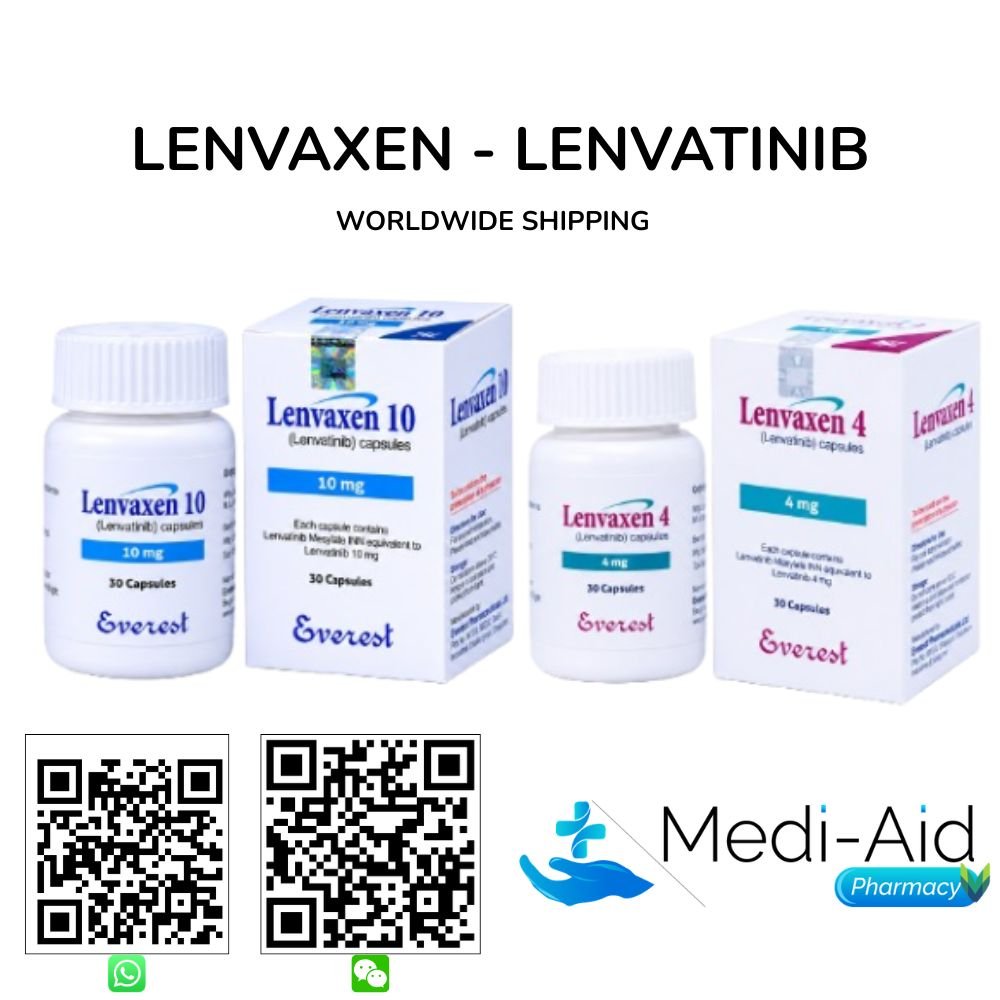
Lenvaxen 4 MG & 10 MG (Lenvatinib) are oral, multi-targeted receptor tyrosine kinase inhibitor (TKI) hard capsules available in two complementary strengths 4 mg and 10 mg each supplied in a pack of 30 capsules per pot, manufactured by Everest Pharmaceuticals Ltd. of Bangladesh. The active ingredient, lenvatinib, simultaneously inhibits vascular endothelial growth factor receptors (VEGFR1, VEGFR2, VEGFR3), fibroblast growth factor receptors (FGFR1–4), platelet-derived growth factor receptor alpha (PDGFRα), rearranged during transfection (RET) kinase, and KIT a mechanistically differentiated multi-kinase profile that suppresses pathogenic tumour angiogenesis, direct tumour cell proliferation, and immunomodulatory escape across multiple solid tumour types.
The clinical significance of the dual 4 mg + 10 mg capsule range is precision dosing: together, these two strengths enable oncologists to prescribe every standard lenvatinib starting dose and every reference-label dose reduction step across all approved indications including 24 mg for radioiodine-refractory DTC (2 × 10 mg + 1 × 4 mg), 12 mg for HCC in patients ≥60 kg (3 × 4 mg), 18 mg for RCC with everolimus (1 × 10 mg + 2 × 4 mg), and 8 mg for HCC in patients <60 kg (2 × 4 mg) using a single generic source. In the pivotal Phase III SELECT trial, lenvatinib 24 mg once daily delivered a median progression-free survival (PFS) of 18.3 months versus 3.6 months with placebo (HR 0.21; 99% CI 0.14–0.31; P<0.001) in radioiodine-refractory DTC, confirming lenvatinib as a global standard of care.
Searching for Lenvaxen 4 MG & 10 MG Lenvatinib? Mediaid Pharmacy stocks both strengths within its comprehensive oncology medicines portfolio and ships worldwide.
Basic Product Information of Lenvaxen 4 MG & 10 MG (Lenvatinib)
| Brand Name | Lenvaxen 4 MG & 10 MG (Lenvatinib) |
| Product Name | Lenvaxen |
| Generic Name | Lenvatinib |
| Drug Class | Multi-Targeted Receptor Tyrosine Kinase Inhibitor (VEGFR1–3, FGFR1–4, PDGFRα, RET, KIT); Antiangiogenic Targeted Oncology Agent |
| Formulation | Hard Capsule |
| Available Strengths | 4 mg and 10 mg (two capsule strengths available) |
| Available Pack Size | 30 Capsules per pot (each strength in a separate pot) |
| Primary Indications | Radioiodine-refractory Differentiated Thyroid Cancer (DTC); Unresectable Hepatocellular Carcinoma (HCC, first-line); Advanced Renal Cell Carcinoma (RCC) monotherapy and combination regimens |
| Dosing Advantage | Dual 4 mg + 10 mg capsule range enables all reference-label starting doses and all stepwise dose reductions across every approved indication from a single generic supplier |
| Manufacturer / Brand | Everest Pharmaceuticals Ltd. (Everest Pharma), Bangladesh |
| Country of Origin | Bangladesh |
| Categories | Kidney Cancer Medicines, Liver Cancer Medicines, Oncology Medicines, Thyroid Cancer Medicines |
| Storage Conditions | Store below 25°C in a dry place, protected from light and moisture. Keep out of the reach of children. |
| Global Supplier | Mediaid Pharmacy Worldwide Shipping Available for Both Strengths |
How Lenvaxen 4 MG & 10 MG (Lenvatinib) Works: Dual-Axis Anti-Angiogenic and Direct Anti-Tumour Kinase Inhibition
Lenvatinib, the shared active ingredient in Lenvaxen 4 MG and Lenvaxen 10 MG, is a novel, orally bioavailable, multi-targeted receptor tyrosine kinase (RTK) inhibitor belonging to the quinoline carboxamide chemical class. Lenvatinib blocks a structurally distinct set of kinase receptors compared to earlier anti-angiogenic agents: it simultaneously inhibits the full VEGFR family (VEGFR1, VEGFR2, VEGFR3), the complete FGFR family (FGFR1, FGFR2, FGFR3, FGFR4), platelet-derived growth factor receptor alpha (PDGFRα), rearranged during transfection (RET) kinase, and stem cell factor receptor (KIT).
A multi-targeted receptor tyrosine kinase inhibitor refers to a small-molecule drug that competitively occupies the ATP-binding domain of multiple receptor kinase proteins simultaneously, preventing autophosphorylation and downstream propagation of pro-tumour signalling cascades. Lenvatinib achieves potent inhibitory activity across its target kinase panel: IC₅₀ values of 4.0 nM (VEGFR2), 2.3 nM (VEGFR3), 4.7 nM (VEGFR1), 61 nM (FGFR1), 27 nM (FGFR2), 52 nM (FGFR3), and 43 nM (FGFR4) confirming selective, broad-spectrum multi-receptor suppression that sustains antiangiogenic and antitumour effects across all three approved solid tumour indications.
The two Lenvaxen capsule strengths 4 mg and 10 mg contain identical formulation compositions at their respective dose strengths, delivering the same pharmacokinetic profile and bioavailability per milligram, and are intended to be prescribed in combination by the treating oncologist to achieve the full range of indication-specific doses.
The oncological primacy of lenvatinib’s concurrent VEGFR and FGFR inhibition lies in its mechanistic coverage of the two dominant pro-angiogenic signalling axes simultaneously. VEGF-driven angiogenesis mediated through VEGFR2 and VEGFR3 is the dominant pathway for new blood vessel recruitment in most solid tumours; however, FGFR-driven angiogenesis and tumour cell proliferation constitute a primary resistance escape mechanism that develops under VEGFR-only inhibition. By blocking FGFR1–4 concurrently with VEGFR1–3, lenvatinib pre-empts this resistance pathway, delivering more durable disease control than achievable with pure VEGFR-selective agents such as sorafenib.
In differentiated thyroid cancer (DTC), this is clinically decisive: FGFR signalling is upregulated in multiple DTC subtypes and drives progression after radioiodine failure, and lenvatinib’s FGFR blockade directly suppresses this oncogenic axis. In hepatocellular carcinoma (HCC), lenvatinib’s simultaneous anti-VEGFR, anti-FGFR, and anti-KIT activity disrupts the complex pro-angiogenic microenvironment of HCC tumours. Oncologists building comprehensive liver cancer programmes can review the full range of liver cancer medicines at Mediaid Pharmacy, including lenvatinib in both 4 mg and 10 mg strengths, for first-line HCC therapy planning.
In the pivotal Phase III SELECT trial of radioiodine-refractory DTC 392 patients across 21 countries lenvatinib 24 mg once daily (achievable as 2 × 10 mg + 1 × 4 mg using Lenvaxen capsules) delivered a median PFS of 18.3 months versus 3.6 months with placebo (HR 0.21; 99% CI 0.14–0.31; P<0.001), an objective response rate (ORR) of 64.8%, and a 79% reduction in the risk of disease progression or death. In the Phase III REFLECT trial in unresectable HCC lenvatinib 12 mg once daily (3 × 4 mg for patients ≥60 kg) or 8 mg once daily (2 × 4 mg for patients <60 kg) lenvatinib demonstrated non-inferiority to sorafenib for overall survival (median OS 13.6 vs 12.3 months; HR 0.92) with significant superiority in PFS (7.4 vs 3.7 months; HR 0.66; P<0.001) and ORR (40.6% vs 12.4%), establishing lenvatinib as the first approved first-line alternative to sorafenib in unresectable HCC. The lenvatinib dose for each patient and indication is determined and adjusted by the treating oncologist; both Lenvaxen 4 MG and Lenvaxen 10 MG capsules must be prescribed by and taken under the supervision of a qualified oncology specialist.
Approved Indications of Lenvatinib Lenvaxen 4 MG & 10 MG Reference Label
Lenvatinib is approved in more than 70 countries across three primary oncology indications in adult patients. The dual 4 mg + 10 mg Lenvaxen capsule range supports all three indications. Prescribers must confirm the exact locally approved indications on the lenvatinib product label before initiating therapy, as specific label language varies by regulatory jurisdiction.
|
Radioiodine-Refractory Differentiated Thyroid Cancer (RAI-Refractory DTC) Monotherapy Lenvatinib is indicated as monotherapy for adult patients with locally recurrent or metastatic, progressive radioiodine-refractory DTC. Reference-label starting dose: 24 mg once daily = 2 × Lenvaxen 10 MG + 1 × Lenvaxen 4 MG capsules. The SELECT Phase III trial confirmed a median PFS of 18.3 months versus 3.6 months with placebo (HR 0.21; P<0.001) and ORR of 64.8%. Patients seeking thyroid cancer targeted treatment online can contact Mediaid Pharmacy for Lenvaxen 4 MG and 10 MG availability and worldwide delivery timelines. |
Unresectable Hepatocellular Carcinoma (HCC) First-Line Monotherapy Lenvatinib is indicated as first-line monotherapy for adults with unresectable HCC (Child-Pugh A) without prior systemic therapy. Reference-label starting dose: 12 mg once daily (body weight ≥60 kg) = 3 × Lenvaxen 4 MG capsules; 8 mg once daily (body weight <60 kg) = 2 × Lenvaxen 4 MG capsules. REFLECT Phase III data: median PFS 7.4 vs 3.7 months vs sorafenib (HR 0.66; P<0.001); ORR 40.6% vs 12.4%. Oncologists can review the full range of liver cancer medicines at Mediaid Pharmacy alongside Lenvaxen for HCC treatment planning. |
Advanced Renal Cell Carcinoma (RCC) Combination Regimens Lenvatinib is indicated for advanced RCC: 20 mg once daily in combination with pembrolizumab (first-line) = 2 × Lenvaxen 10 MG capsules; 18 mg once daily in combination with everolimus (after one prior anti-angiogenic therapy) = 1 × Lenvaxen 10 MG + 2 × Lenvaxen 4 MG capsules. Lenvatinib + everolimus Phase Ib/II data: median PFS 14.6 vs 5.5 months vs everolimus alone (HR 0.40; P=0.0005). The complete selection of kidney cancer medicines at Mediaid Pharmacy supports comprehensive RCC programme planning. |
Lenvatinib Dose Titration Framework: How Lenvaxen 4 MG & 10 MG Capsules Cover Every Reference-Label Dose
The reference label for lenvatinib mandates stepwise dose reductions to manage treatment-emergent adverse events including hypertension, proteinuria, hepatotoxicity, diarrhoea, and fatigue across all approved indications. The dual Lenvaxen 4 MG + 10 MG capsule range provides the complete combination matrix required to implement every standard starting dose and every protocol dose reduction without supplementary capsule sources. The table below maps each reference-label dose level to the precise Lenvaxen capsule combination required. All dose modifications must be directed and supervised by the treating oncologist; never alter the dose without an explicit clinical instruction.
| Indication & Regimen | Dose Level | Daily Dose | Lenvaxen Capsule Combination |
| RAI-Refractory DTC Monotherapy | Starting Dose | 24 mg | 2 × Lenvaxen 10 MG + 1 × Lenvaxen 4 MG |
| Reduction 1 | 20 mg | 2 × Lenvaxen 10 MG | |
| Reduction 2 | 14 mg | 1 × Lenvaxen 10 MG + 1 × Lenvaxen 4 MG | |
| Reduction 3 | 10 mg | 1 × Lenvaxen 10 MG | |
| Unresectable HCC Monotherapy (body weight ≥60 kg) | Starting Dose | 12 mg | 3 × Lenvaxen 4 MG |
| Reduction 1 | 8 mg | 2 × Lenvaxen 4 MG | |
| Reduction 2 | 4 mg | 1 × Lenvaxen 4 MG | |
| Reduction 3 | Discontinue | Per oncologist direction | |
| Unresectable HCC Monotherapy (body weight <60 kg) | Starting Dose | 8 mg | 2 × Lenvaxen 4 MG |
| Reduction 1 | 4 mg | 1 × Lenvaxen 4 MG | |
| Reduction 2 | Discontinue | Per oncologist direction | |
| Advanced RCC + Pembrolizumab (First-Line) | Starting Dose | 20 mg | 2 × Lenvaxen 10 MG |
| Reduction 1 | 14 mg | 1 × Lenvaxen 10 MG + 1 × Lenvaxen 4 MG | |
| Reduction 2 | 10 mg | 1 × Lenvaxen 10 MG | |
| Reduction 3 | 8 mg | 2 × Lenvaxen 4 MG | |
| Advanced RCC + Everolimus (Previously Treated) | Starting Dose | 18 mg | 1 × Lenvaxen 10 MG + 2 × Lenvaxen 4 MG |
| Reduction 1 | 14 mg | 1 × Lenvaxen 10 MG + 1 × Lenvaxen 4 MG | |
| Reduction 2 | 10 mg | 1 × Lenvaxen 10 MG | |
| Reduction 3 | 8 mg | 2 × Lenvaxen 4 MG |
Key Clinical Benefits of Lenvaxen 4 MG & 10 MG (Lenvatinib)
|
Complete Lenvatinib Dosing Coverage from a Single Generic Source All Indications, All Dose Levels The dual Lenvaxen 4 MG + 10 MG capsule range is the only configuration of a single lenvatinib generic that covers all five reference-label starting doses (24 mg, 20 mg, 18 mg, 12 mg, 8 mg) and all protocol dose reductions (down to 4 mg) across the full approved lenvatinib indication set DTC, HCC, and RCC from a single supplier. Hospitals and oncology clinics sourcing Lenvaxen 4 MG and 10 MG together eliminate the need to source multiple capsule strengths from separate suppliers, reducing supply chain complexity for lenvatinib prescribing programmes across all three tumour types. |
SELECT Phase III: 79% Reduction in Progression Risk 18.3-Month Median PFS at the 24 mg Starting Dose The SELECT Phase III trial confirmed that the 24 mg once-daily starting dose achievable with Lenvaxen as 2 × 10 mg + 1 × 4 mg reduced the risk of disease progression or death in RAI-refractory DTC by 79% versus placebo (median PFS 18.3 vs 3.6 months; HR 0.21; 99% CI 0.14–0.31; P<0.001) with an ORR of 64.8%. The 24 mg dose is specifically supported by the SELECT data as the validated starting dose for DTC; the dual Lenvaxen capsule range enables prescribers to initiate and maintain this dose without strength substitution or pharmacist compounding. |
REFLECT Phase III: Body-Weight-Based HCC Dosing Both 12 mg and 8 mg Achievable with 4 MG Capsules Alone The REFLECT Phase III trial which established lenvatinib as the first approved first-line alternative to sorafenib for unresectable HCC used a body-weight-adjusted starting dose: 12 mg/day for patients ≥60 kg (3 × Lenvaxen 4 MG capsules) and 8 mg/day for patients <60 kg (2 × Lenvaxen 4 MG capsules). Both HCC starting doses are achievable exclusively from the Lenvaxen 4 MG capsule, without requiring 10 MG capsules, giving HCC-focused oncology programmes maximum dosing flexibility and clinical alignment with the REFLECT study protocol. REFLECT data: median PFS 7.4 vs 3.7 months; HR 0.66; P<0.001; ORR 40.6% vs 12.4% vs sorafenib. |
Clinical Monitoring Requirements During Lenvaxen 4 MG & 10 MG (Lenvatinib) Treatment
Blood pressure monitoring is the primary and highest-frequency safety requirement throughout lenvatinib therapy, regardless of indication or dose. Hypertension defined as systolic BP ≥140 mmHg or diastolic BP ≥90 mmHg is the most frequently reported adverse event with lenvatinib, occurring in approximately 42–73% of patients, and was the most common reason for dose reduction in the SELECT, REFLECT, and RCC clinical trial programmes. The reference label requires blood pressure measurement before initiating lenvatinib and regular monitoring throughout treatment; anti-hypertensive therapy should be initiated or intensified promptly when hypertension develops.
Grade 3 hypertension (≥160/100 mmHg despite anti-hypertensive therapy) requires immediate dose interruption; Grade 4 hypertensive crisis requires permanent discontinuation. Using the Lenvaxen 4 MG + 10 MG capsule range allows the treating oncologist to implement precise dose-step reductions from 24 mg to 20 mg, 20 mg to 14 mg, 14 mg to 10 mg for DTC, for example using the exact dose-step increments specified in the reference label dose modification algorithm, without approximation.
Hepatic function monitoring is mandatory at baseline and throughout treatment, with elevated monitoring frequency for HCC patients who have underlying liver impairment predisposing to drug-related hepatotoxicity. The reference label requires liver function test (LFT) assessment ALT, AST, alkaline phosphatase, and total bilirubin at baseline, every 2 weeks for the first 2 months, then monthly thereafter. Grade 3–4 hepatotoxicity requires treatment interruption and assessment; Grade 4 hepatic failure requires permanent discontinuation. Renal function and urine protein monitoring: proteinuria occurs in approximately 34% of lenvatinib-treated patients and urine protein must be monitored by dipstick regularly; if ≥2+ proteinuria is detected on dipstick, a 24-hour urine protein collection is required, and lenvatinib must be interrupted if the 24-hour urine protein ≥2 g.
Thyroid function (TSH) must be assessed at baseline and periodically throughout treatment hypothyroidism occurs in 14–57% of patients depending on indication and prior thyroid status, most prominently in RCC patients with intact thyroid function prior to treatment. ECG monitoring is recommended for patients with risk factors for QTc prolongation, pre-existing cardiac disease, electrolyte abnormalities, or concurrent QTc-prolonging medications, as lenvatinib may prolong the QT interval. Oncologists managing patients on lenvatinib alongside immunotherapy agents (pembrolizumab) or mTOR inhibitors (everolimus) should monitor for overlapping toxicities including immune-related adverse events, pneumonitis, and infusion reactions from pembrolizumab, and mTOR-class toxicities (stomatitis, non-infectious pneumonitis, metabolic effects) from everolimus and can review the full selection of oncology combination therapy medicines at Mediaid Pharmacy for supportive agent needs.
Drug Interactions and Important Safety Information for Lenvaxen 4 MG & 10 MG (Lenvatinib)
The most clinically significant drug interaction risk for lenvatinib involves QT interval-prolonging agents. Lenvatinib itself may prolong the QTc interval in a concentration-dependent manner; concurrent use of antiarrhythmics (amiodarone, sotalol, dronedarone), fluoroquinolone or macrolide antibiotics (moxifloxacin, azithromycin, clarithromycin), antipsychotics, and other QTc-prolonging agents further amplifies this risk. Electrolyte correction specifically serum potassium, magnesium, and calcium must be optimised before initiating lenvatinib and monitored throughout therapy, as hypokalaemia and hypomagnesaemia independently prolong QTc and potentiate lenvatinib’s cardiac electrophysiological effects. CYP3A4 and aldehyde oxidase (AOX1) modulators represent the primary pharmacokinetic drug interaction risk: lenvatinib is metabolised by both aldehyde oxidase and CYP3A4, and strong CYP3A4 inhibitors (ketoconazole, itraconazole, ritonavir-boosted HIV medications) or strong CYP3A4 inducers (rifampicin, carbamazepine, phenytoin, St John’s Wort) may alter lenvatinib systemic exposure; avoidance of strong inducers is preferred where clinically feasible.
Pembrolizumab combination-specific interactions: when lenvatinib is used with pembrolizumab (first-line advanced RCC or advanced endometrial carcinoma regimens), clinicians must be alert to the additive risk of immune-related adverse events (irAEs) driven by PD-1 inhibition including immune-mediated hepatitis (which overlaps with lenvatinib’s hepatotoxic potential), immune-mediated nephritis (which overlaps with lenvatinib-induced renal toxicity), and immune-mediated pneumonitis; monitoring protocols for both agents must be implemented concurrently.
Everolimus combination-specific interactions: in the lenvatinib + everolimus regimen for previously treated RCC, everolimus is an mTOR inhibitor metabolised by CYP3A4 and a P-gp substrate; drug interactions affecting CYP3A4 activity can alter both lenvatinib and everolimus exposure simultaneously, requiring heightened pharmacokinetic vigilance.
Warfarin anticoagulation: lenvatinib increases arterial thromboembolic event risk and haemorrhage risk; patients on warfarin require more frequent INR monitoring, as bleeding risk and haemorrhage events have been reported. Patients must disclose all concomitant medications including over-the-counter supplements and herbal preparations to their treating oncologist before and during Lenvaxen 4 MG & 10 MG therapy. Teams requiring concurrent oncology agents alongside lenvatinib can review the complete list of kidney cancer and combination oncology medicines at Mediaid Pharmacy for sourcing support.
Side Effects and Precautions of Lenvaxen 4 MG & 10 MG (Lenvatinib)
|
Common Side Effects Hypertension (approximately 42–73% of patients; the most frequently reported adverse event with lenvatinib across all indications and dose levels; requires blood pressure monitoring before and throughout treatment) Diarrhoea (approximately 42–67%; the most common gastrointestinal adverse event; typically managed with anti-diarrhoeal agents and dose modification as clinically required) Fatigue and asthenia (approximately 36–67%; often multifactorial contributed to by anaemia, hypothyroidism, reduced appetite, and direct drug-related effects) Decreased appetite and weight loss (approximately 34–54%) Nausea (~24–47%) and vomiting (~16–36%) Stomatitis and oral mucositis (approximately 36–41%; relevant for all dose levels from 4 mg to 24 mg) Proteinuria (approximately 34%; requires regular urine dipstick monitoring; Grade 3 proteinuria [≥2 g/24 hours] requires dose interruption) Hypothyroidism (14–57% depending on indication; TSH monitoring throughout treatment required; thyroid hormone replacement initiated as clinically indicated) Palmar-plantar erythrodysaesthesia syndrome PPES / hand-foot skin reaction (~27–32%; managed with moisturising agents, dose modification, and dermatological assessment) Dysphonia voice changes (~24–31%); peripheral oedema (~21%); arthralgia (~21%) |
Serious Warnings and Precautions Severe hypertension and hypertensive crisis: Grade 3 hypertension (≥160/100 mmHg despite anti-hypertensive therapy) requires lenvatinib dose interruption using the reference-label dose modification algorithm achievable at every step with the Lenvaxen 4 MG + 10 MG combination. Grade 4 hypertensive crisis requires permanent discontinuation. Hepatotoxicity and hepatic failure: Grade 3–4 liver enzyme elevations and cases of hepatic failure including fatal outcomes, particularly in HCC patients have been reported. LFT monitoring every 2 weeks for the first 2 months, then monthly, is mandatory across all dose levels of Lenvaxen. Permanent discontinuation is required for Grade 4 hepatic failure. Arterial thromboembolic events (ATE): serious ATEs including myocardial infarction and cerebrovascular accident (Grade 3–4 rate ~2–3%) have been reported with lenvatinib at all approved dose levels. Lenvatinib must be permanently discontinued in patients who develop an ATE during treatment. Haemorrhage: serious and potentially fatal haemorrhagic events including tumour-related haemorrhage in HCC have been reported. Grade 3–4 haemorrhage requires immediate treatment interruption; life-threatening haemorrhage requires permanent discontinuation. Renal failure and impairment: renal failure, which may be fatal, has been reported. Creatinine and urine protein monitoring are required before initiating and throughout all lenvatinib dose levels. Grade ≥3 renal impairment requires dose interruption or permanent discontinuation based on severity and reversibility. Gastrointestinal perforation and fistula: GI perforation and fistulae have been reported across all lenvatinib-treated tumour types; permanent discontinuation is required if either event occurs. Embryo-fetal toxicity: lenvatinib causes fetal harm. Females of reproductive potential must use effective contraception during treatment and for ≥30 days after the final dose. Males with female partners of reproductive potential must use contraception during treatment and for ≥30 days after the last dose. Breastfeeding is not recommended during treatment or for ≥1 week after the final dose. |
Who Should Use Lenvaxen 4 MG & 10 MG (Lenvatinib)?
Lenvaxen 4 MG and Lenvaxen 10 MG (Lenvatinib) are indicated for adult patients across three oncology settings: (1) locally recurrent or metastatic, progressive radioiodine-refractory differentiated thyroid cancer (RAI-refractory DTC) as monotherapy at 24 mg once daily; (2) unresectable hepatocellular carcinoma (HCC, Child-Pugh A) as first-line monotherapy at 12 mg (≥60 kg) or 8 mg (<60 kg) once daily; and (3) advanced renal cell carcinoma (RCC) at 20 mg once daily with pembrolizumab (first-line) or at 18 mg once daily with everolimus (after one prior anti-angiogenic therapy).
The dual 4 mg + 10 mg capsule range is clinically appropriate for any patient requiring a lenvatinib starting dose or any stepwise dose reduction across these three indications the capsule combination table in this content specifies the precise Lenvaxen 4 MG and 10 MG capsule counts for each dose level. For DTC, lenvatinib must only be initiated in patients with confirmed radioiodine refractory disease per internationally accepted criteria. For HCC, lenvatinib is restricted to Child-Pugh A patients; those with Child-Pugh B or C hepatic impairment were excluded from REFLECT and lack sufficient evidence to support use.
Oncologists must assess baseline cardiovascular function, blood pressure, hepatic and renal function, urine protein, thyroid function (TSH), electrolytes (potassium, magnesium), and all concomitant QTc-prolonging medications before prescribing any Lenvaxen dose. Patients who are pregnant, planning a pregnancy, or of reproductive potential without adequate contraception require mandatory pre-therapy counselling. Oncologists seeking comprehensive targeted agent support across thyroid, liver, and kidney cancer programmes can review the full range of lenvatinib and thyroid cancer medicines at Mediaid Pharmacy.
Global Supplier: Mediaid Pharmacy Worldwide Shipping for Lenvaxen 4 MG & 10 MG (Lenvatinib)
Mediaid Pharmacy is a Dhaka-based supplier of oncology and specialty medicines with worldwide shipping capacity. Lenvaxen 4 MG and Lenvaxen 10 MG (Lenvatinib) both manufactured by Everest Pharmaceuticals Ltd. of Bangladesh, formulated as hard capsules in 30-capsule pots are stocked and available for international supply, individually or as a combined dual-strength order. All orders are supported by pricing quotations, stock confirmation, and end-to-end delivery tracking. Hospitals, specialist oncology and endocrinology clinics, cancer centres, distributors, and patients in countries where lenvatinib is approved can contact the Mediaid Pharmacy team through WhatsApp, phone, or WeChat for all enquiries about oral lenvatinib capsules for thyroid, liver, and kidney cancer including current stock availability for both 4 mg and 10 mg strengths, pricing, and international delivery timelines. Institutions and distributors sourcing multiple oncology medicines in a single consolidated shipment can request a combined quotation from the Mediaid Pharmacy team after browsing the full catalogue.
Why Choose Lenvaxen 4 MG & 10 MG (Lenvatinib) from Mediaid Pharmacy?
Lenvaxen 4 MG and Lenvaxen 10 MG are manufactured by Everest Pharmaceuticals Ltd. of Bangladesh and deliver lenvatinib the multi-kinase inhibitor whose 24 mg once-daily dose anchored the SELECT Phase III trial (79% reduction in progression risk vs placebo; median PFS 18.3 months vs 3.6 months; HR 0.21; P<0.001; ORR 64.8% in RAI-refractory DTC), whose 12 mg/8 mg body-weight-adjusted dose anchored the REFLECT Phase III trial (superior PFS and ORR vs sorafenib in unresectable HCC; median PFS 7.4 vs 3.7 months; HR 0.66; P<0.001), and whose 18 mg + everolimus combination delivered a median PFS of 14.6 months versus 5.5 months with everolimus alone in previously treated RCC (HR 0.40; P=0.0005).
The defining procurement advantage of sourcing Lenvaxen in both 4 mg and 10 MG capsule strengths from Mediaid Pharmacy is complete reference-label dosing coverage from a single generic supplier: every indication-specific starting dose and every protocol dose reduction step covering doses from 4 mg to 24 mg across DTC, HCC, and RCC is achievable through combinations of these two Lenvaxen capsule strengths without additional sourcing from alternative suppliers. Mediaid Pharmacy supplies both Lenvaxen strengths in their 30-capsule pot format with worldwide shipping from Dhaka, specialist supply support, and documentation for customs clearance as required. Every order is initiated with a prescription-based enquiry to maintain supply aligned with the treating oncologist’s clinical plan.
For oncology programmes requiring a broader panel of targeted and supportive agents, the full Mediaid Pharmacy Everest Pharma medicines catalogue is available to browse, and the team can be contacted directly for consolidated multi-medicine quotations.
Frequently Asked Questions About Lenvaxen 4 MG & 10 MG (Lenvatinib)
What is the difference between Lenvaxen 4 MG and Lenvaxen 10 MG (Lenvatinib)?
Lenvaxen 4 MG and Lenvaxen 10 MG are identical in their active ingredient (lenvatinib), formulation type (hard capsule), manufacturer (Everest Pharmaceuticals Ltd.), and pharmacokinetic profile per milligram the only difference is the capsule strength: 4 mg per capsule versus 10 mg per capsule. The clinical purpose of offering lenvatinib in both strengths is precision dose titration: the reference-label starting doses for lenvatinib’s approved indications 24 mg (DTC), 20 mg (RCC with pembrolizumab), 18 mg (RCC with everolimus), 12 mg (HCC ≥60 kg), and 8 mg (HCC <60 kg) and all protocol dose reduction steps (from 24 mg down to 4 mg) are achievable through combinations of Lenvaxen 4 MG and 10 MG capsules as directed by the treating oncologist. Having both strengths from a single supplier eliminates the need to source multiple lenvatinib capsule sizes from separate suppliers, simplifying procurement for multi-indication oncology programmes.
What is the generic name of Lenvaxen 4 MG & 10 MG?
The generic name of both Lenvaxen 4 MG and Lenvaxen 10 MG is lenvatinib. Lenvaxen is Everest Pharmaceuticals Ltd.’s branded generic formulation of lenvatinib the same active ingredient as the originator medicine Lenvima (lenvatinib), developed by Eisai Co., Ltd. and co-commercialised by Merck in certain markets. Lenvima is approved by the FDA, EMA, and other major regulatory agencies for radioiodine-refractory DTC, unresectable HCC, and advanced RCC. Lenvaxen 4 MG and 10 MG capsules, manufactured in Bangladesh by Everest Pharma, provide oncology teams worldwide with a generic source for lenvatinib in both capsule strengths required for complete indication-spanning dosing.
How many Lenvaxen 4 MG and 10 MG capsules are needed for the 24 mg DTC starting dose?
The reference-label starting dose for radioiodine-refractory DTC is 24 mg once daily. Using Lenvaxen capsules, 24 mg is achieved with 2 × Lenvaxen 10 MG capsules (20 mg) plus 1 × Lenvaxen 4 MG capsule (4 mg), totalling 24 mg per daily dose. This is the clinically validated starting dose confirmed in the SELECT Phase III trial (median PFS 18.3 months; ORR 64.8%). The 4 mg capsule strength is specifically required for the 24 mg DTC starting dose and for the 18 mg RCC + everolimus starting dose (1 × 10 mg + 2 × 4 mg = 18 mg). The treating oncologist determines the number of capsules of each strength to be taken and must be consulted before any change to the prescribed capsule combination.
What are the most common side effects of Lenvaxen 4 MG & 10 MG (Lenvatinib)?
The most common side effects of lenvatinib across both the 4 mg and 10 mg capsule strengths and all approved dose levels include hypertension (42–73%; the most frequently reported adverse event), diarrhoea (42–67%), fatigue (36–67%), decreased appetite and weight loss (34–54%), nausea (24–47%), stomatitis (36–41%), proteinuria (34%), hypothyroidism (14–57% depending on indication), palmar-plantar erythrodysaesthesia syndrome (27–32%), and voice changes (dysphonia; ~24–31%). Adverse event frequency is generally dose-dependent higher at the 24 mg DTC starting dose than at lower doses which is why the reference-label dose modification algorithm permits stepwise reductions using the 4 mg + 10 mg capsule combination matrix. Serious adverse events, including severe hypertension, hepatic failure, arterial thromboembolic events, haemorrhage, and renal failure, require immediate oncologist assessment and may necessitate dose interruption or permanent discontinuation. Consult your prescribing oncologist regarding your individual risk profile before and during treatment.
How should Lenvaxen 4 MG and 10 MG capsules be taken?
Lenvatinib capsules (Lenvaxen 4 MG and 10 MG) are taken orally once daily at the same time each day. Lenvatinib may be taken with or without food food does not significantly alter lenvatinib’s pharmacokinetic profile. When prescribed by the oncologist in a combined 4 mg + 10 mg capsule daily dose (e.g., 24 mg = 2 × 10 mg + 1 × 4 mg), all capsules of the prescribed daily dose are taken together at the same time. If a dose is missed and the missed dose cannot be taken within 12 hours of the scheduled time, it must be skipped; patients must not double the next dose to compensate for a missed dose. Patients must not open, crush, or chew lenvatinib hard capsules. Any swallowing difficulty should be reported to the treating oncologist to discuss alternative administration approaches such as dissolving the capsules in liquid as described in the reference label.
Is Lenvaxen 4 MG & 10 MG (Lenvatinib) safe during pregnancy or while breastfeeding?
No. Lenvatinib in both the 4 mg and 10 mg capsule form can cause fetal harm based on its mechanism of action and confirmed animal reproductive toxicology data, which demonstrated dose-dependent embryotoxicity, fetotoxicity, and teratogenicity at exposures within the human therapeutic range. Females of reproductive potential must use effective non-hormonal contraception (lenvatinib may reduce the efficacy of hormonal contraceptives) during treatment with Lenvaxen and for at least 30 days after the final dose. Males with female partners of reproductive potential must use effective contraception during treatment and for at least 30 days after the last dose. Breastfeeding is not recommended during treatment and for at least 1 week after the final dose, as it is not established whether lenvatinib or its metabolites are excreted in human breast milk. Patients who are pregnant, planning a pregnancy, or breastfeeding must discuss their individual circumstances with their treating oncologist before initiating therapy.
How is blood pressure monitored and managed during Lenvaxen (Lenvatinib) treatment?
Hypertension is the most common adverse event with lenvatinib at any dose level, occurring in 42–73% of patients across indications. The reference label requires blood pressure measurement before initiating lenvatinib with pre-existing hypertension optimised first and regular monitoring throughout treatment. Grade 2 hypertension (140–159/90–99 mmHg) is managed by initiating or intensifying anti-hypertensive therapy without lenvatinib dose change. Grade 3 hypertension (≥160/100 mmHg despite anti-hypertensive therapy) requires lenvatinib dose interruption and resumption at a reduced level using the protocol dose-reduction steps achievable precisely using the Lenvaxen 4 MG + 10 MG capsule combinations detailed in the dosing table above. Grade 4 hypertensive crisis requires permanent discontinuation. Preferred anti-hypertensive agents include ACE inhibitors, ARBs, and amlodipine; non-dihydropyridine CCBs carry additional QTc prolongation risk and should be selected with caution by the treating oncologist.
Can I order Lenvaxen 4 MG & 10 MG (Lenvatinib) online with worldwide shipping?
Yes. Mediaid Pharmacy supplies both Lenvaxen 4 MG and Lenvaxen 10 MG (Lenvatinib) manufactured by Everest Pharmaceuticals Ltd. of Bangladesh, hard capsules, 30 capsules per pot for each strength to oncology centres, hospitals, distributors, and patients globally. Contact Mediaid Pharmacy via WhatsApp, phone, or WeChat at +8801773428128, or email info@mediaidpharmacy.com, for pricing on individual strengths or dual-strength combined orders, current stock availability for both 4 mg and 10 mg, and international delivery details for your country. Oncology teams sourcing Lenvaxen alongside other targeted agents can browse the complete range of Everest Pharma lenvatinib and oncology medicines at Mediaid Pharmacy and request a consolidated multi-medicine quotation.
Order Lenvaxen 4 MG & 10 MG (Lenvatinib) with Worldwide Shipping
Phone / WhatsApp / WeChat: +8801773428128 | Email: info@mediaidpharmacy.com
Reviews
There are no reviews yet.