
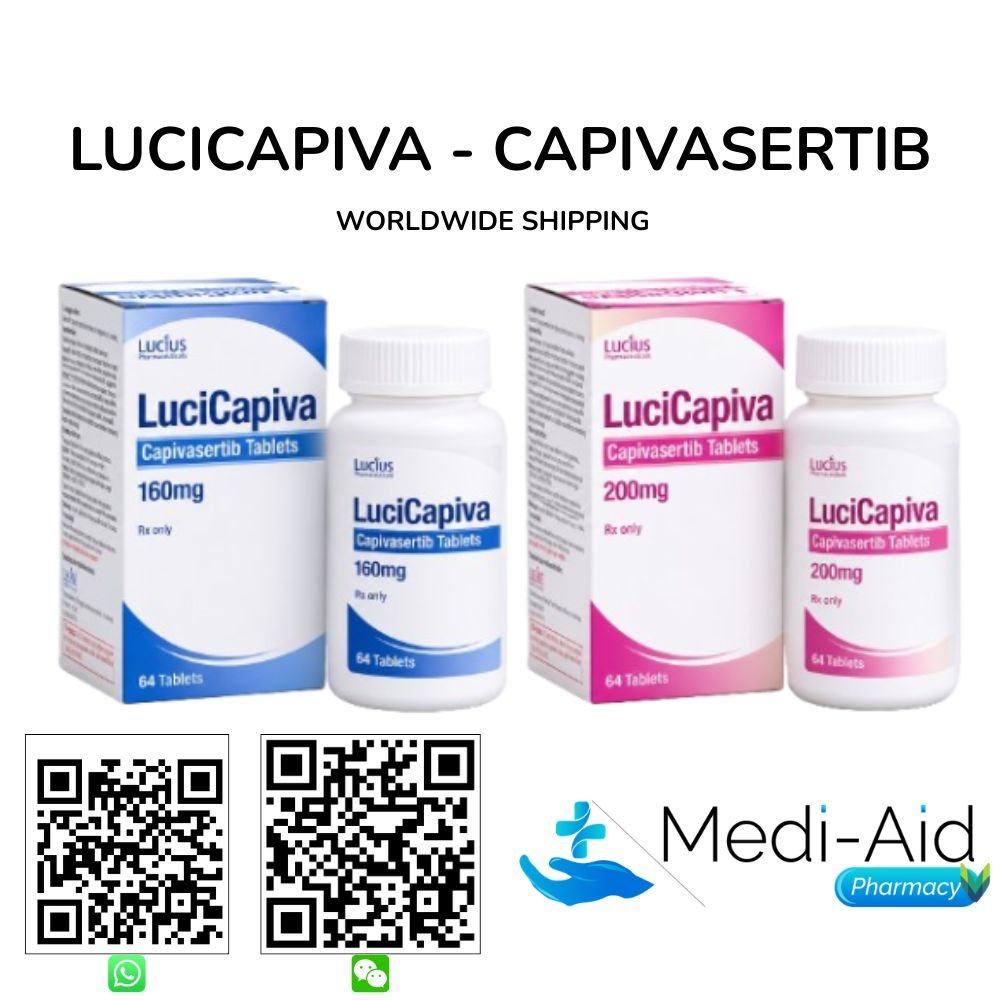
Description
LuciCapiva (Capivasertib) is an orally administered pan-AKT serine/threonine kinase inhibitor and targeted oncology agent a small-molecule inhibitor that simultaneously occupies the ATP-binding pocket of all three AKT isoforms (AKT1, AKT2, and AKT3), blocking AKT substrate phosphorylation and suppressing the PI3K/AKT/mTOR proliferative and survival signalling cascade in tumour cells harbouring activating PIK3CA or AKT1 mutations or PTEN loss-of-function alterations, and delivered on a pharmacologically designed intermittent 4-days-on/3-days-off dosing schedule that mitigates insulin-receptor-driven hyperglycaemia by preserving physiological AKT signalling in non-tumour pancreatic beta cells during rest days supplied as film-coated tablets in 160 mg and 200 mg strengths in a 60-tablet pot and manufactured by Lucius Pharmaceuticals (Lao) Co., Ltd. in Laos.
Its active pharmaceutical ingredient, capivasertib INN (also known by AstraZeneca development code AZD5363), is indicated in combination with fulvestrant for adult patients with hormone receptor (HR)-positive, HER2-negative locally advanced or metastatic breast cancer with one or more PIK3CA/AKT1/PTEN-alterations as detected by an FDA-approved companion diagnostic test, following progression on at least one endocrine-based regimen in the metastatic setting or recurrence on or within 12 months of completing adjuvant endocrine therapy. LuciCapiva 200 MG tablets deliver the standard starting dose of 400 mg (two 200 mg tablets) twice daily on an intermittent 4-days-on/3-days-off schedule; LuciCapiva 160 MG tablets provide the dose-reduced formulation at 320 mg (two 160 mg tablets) twice daily on the same 4/3 intermittent schedule for patients requiring a dose reduction due to toxicity.
Each 60-tablet pot supplies approximately 15 active dosing days (spanning approximately 26 calendar days of continuous treatment cycles) at the standard 400 mg BID dose. The FDA approval of capivasertib in combination with fulvestrant (November 16, 2023; NDA 216586; marketed as Truqap® by AstraZeneca in the originator brand) was supported by the Phase 3 CAPItello-291 trial (n=708), in which capivasertib plus fulvestrant demonstrated a median progression-free survival (PFS) of 7.2 months versus 3.6 months with placebo plus fulvestrant in the overall population (HR 0.60; 95% CI 0.51–0.71; p<0.001), and a median PFS of 7.3 months versus 3.1 months in the PIK3CA/AKT1/PTEN-altered biomarker-selected subgroup (HR 0.50; 95% CI 0.38–0.65; p<0.001) reflecting a 50% reduction in the risk of disease progression in AKT pathway-altered HR+/HER2- metastatic breast cancer.
Important: Capivasertib carries a clinically significant risk of hyperglycaemia (any grade ~68%; Grade 3/4 ~30% of patients), requiring mandatory HbA1c and fasting blood glucose assessment at baseline, fasting glucose monitoring every 2 weeks for the first 2 cycles, and ongoing monitoring thereafter, with insulin or oral antidiabetic therapy as clinically indicated; serious skin reactions including Grade 3+ rash or dermatitis occur in approximately 15% of patients and require prompt dermatological assessment and structured dose modification; diarrhoea of any grade occurs in approximately 72% of patients and requires proactive antidiarrhoeal management from treatment initiation. Searching for LuciCapiva 160 MG & 200 MG Capivasertib? Mediaid Pharmacy lists this product across its oncology medicines, breast cancer medicines, and Lucius Pharmaceuticals medicines portfolios and ships it worldwide.
Basic Product Information of LuciCapiva 160 MG & 200 MG (Capivasertib)
| Brand Name | LuciCapiva 160 MG & 200 MG (Capivasertib) |
| Product Name | LuciCapiva |
| Generic Name | Capivasertib INN (AZD5363; a selective, ATP-competitive, pan-AKT kinase inhibitor active across all three AKT protein isoforms AKT1, AKT2, and AKT3 inhibiting AKT serine/threonine phosphorylation activity regardless of upstream PIK3CA, AKT1, or PTEN mutational status) |
| Drug Class | Targeted Oncology Agent; Pan-AKT (AKT1/AKT2/AKT3) Serine/Threonine Kinase Inhibitor; PI3K/AKT/mTOR Pathway Inhibitor; ATP-Competitive Allosteric AKT Inhibitor; Small-Molecule Antineoplastic Agent |
| Formulation | Film-Coated Tablet (Oral) |
| Available Strengths | 160 mg capivasertib per film-coated tablet (dose-reduced formulation: two 160 mg tablets = 320 mg BID dose) and 200 mg capivasertib per film-coated tablet (standard starting dose: two 200 mg tablets = 400 mg BID dose) |
| Available Pack Size | 60 tablets per pot (at the standard 400 mg BID dose using LuciCapiva 200 MG 4 tablets per active day, 4 active days per week one 60-tablet pot supplies approximately 15 active dosing days, equivalent to approximately 26 calendar days of the 4-days-on/3-days-off intermittent treatment schedule; dosing schedule spans calendar weeks across the 4/3 on/off cycle requiring pharmacist-level cycle planning for continuous multi-cycle therapy) |
| Dosing Schedule | In combination with fulvestrant (HR+/HER2-negative locally advanced or metastatic breast cancer with PIK3CA/AKT1/PTEN alteration): Capivasertib 400 mg (two LuciCapiva 200 MG tablets) orally twice daily on an intermittent 4-days-on/3-days-off schedule (e.g., Monday through Thursday twice daily; Friday through Sunday rest), in combination with fulvestrant 500 mg administered intramuscularly on Days 1 and 15 of Cycle 1, then on Day 1 of each subsequent 28-day cycle. LuciCapiva may be taken with or without food. Swallow tablets whole; do not crush, break, or chew. Administer both daily doses approximately 12 hours apart to maintain consistent plasma capivasertib concentrations.
Dose reduction for toxicity: Reduce to 320 mg (two LuciCapiva 160 MG tablets) twice daily on the same 4/3 intermittent schedule for Grade 3 hyperglycaemia, Grade 3 rash, or Grade 3 diarrhoea requiring dose modification. A further reduction to 200 mg twice daily (one 200 MG tablet per dose) is permitted for persistent Grade 3 toxicity. Discontinue LuciCapiva permanently for Grade 4 hyperglycaemia, life-threatening rash, or inability to tolerate 200 mg BID after two reductions. All dose modifications must be directed by the treating oncologist. Administer prior doses of pre-menopausal patients’ LHRH agonist (e.g. goserelin) per guideline recommendations alongside fulvestrant co-therapy. |
| Primary Indication | HR-Positive/HER2-Negative Locally Advanced or Metastatic Breast Cancer with PIK3CA/AKT1/PTEN Alteration In Combination with Fulvestrant: Capivasertib in combination with fulvestrant for adult patients with hormone receptor (HR)-positive, HER2-negative locally advanced or metastatic breast cancer with one or more PIK3CA/AKT1/PTEN-alterations as detected by an FDA-approved companion diagnostic test, following progression on at least one endocrine-based regimen in the metastatic setting or recurrence on or within 12 months of completing adjuvant endocrine therapy. (FDA approval: November 16, 2023, NDA 216586; supported by Phase 3 CAPItello-291 trial; companion diagnostics: FoundationOne CDx [tissue] and Oncomine Dx Target Test [tissue].) |
| Originator Reference Brand | Truqap® (United States and rest of world; AstraZeneca; capivasertib 200 mg film-coated tablets; FDA approval November 16, 2023 for HR+/HER2- locally advanced or metastatic breast cancer with PIK3CA/AKT1/PTEN alterations in combination with fulvestrant). Both LuciCapiva and Truqap® contain capivasertib INN at their respective strengths in the same pan-AKT inhibitor drug class. LuciCapiva is manufactured by Lucius Pharmaceuticals (Lao) Co., Ltd. in Laos and is supplied through Mediaid Pharmacy for international procurement. |
| Manufacturer | Lucius Pharmaceuticals (Lao) Co., Ltd., Laos |
| Country of Origin | Laos |
| Global Supplier | Mediaid Pharmacy, Worldwide Shipping Available |
| Storage Conditions | Store at room temperature 15°C to 30°C (59°F to 86°F). Keep in the original pot with the lid tightly closed. Protect from moisture and light. Keep out of the reach of children. |
How LuciCapiva (Capivasertib) Works: Pan-AKT Isoform Inhibition, PI3K/AKT/mTOR Pathway Suppression, and Tumour Cell Cycle Arrest in PIK3CA/AKT1/PTEN-Altered HR+/HER2- Breast Cancer
Capivasertib INN is an orally administered targeted oncology agent whose mechanism of action is mechanistically distinct from endocrine therapies (aromatase inhibitors, fulvestrant), CDK4/6 inhibitors (palbociclib, ribociclib, abemaciclib), PI3K alpha-selective inhibitors (alpelisib), mTOR inhibitors (everolimus, temsirolimus), and anti-HER2 agents in all drug classes: capivasertib is a selective, reversible, ATP-competitive small-molecule inhibitor of the AKT serine/threonine kinase protein family that simultaneously blocks all three AKT isoforms AKT1 (PKBα), AKT2 (PKBβ), and AKT3 (PKBγ) at the kinase domain ATP-binding pocket, preventing AKT phosphorylation of downstream substrate proteins and shutting down the PI3K/AKT/mTOR signal transduction axis that drives tumour cell proliferation and survival in HR+/HER2- breast cancer with PIK3CA/AKT1/PTEN pathway activation.
The PI3K/AKT/mTOR pathway operates through a defined molecular sequence: phosphatidylinositol 3-kinase (PI3K) phosphorylates the membrane phospholipid PIP2 to generate PIP3, which recruits AKT to the plasma membrane via the AKT pleckstrin homology (PH) domain; membrane-bound AKT is then fully activated by dual phosphorylation at Thr308 (by PDK1) and Ser473 (by mTORC2). Activated AKT phosphorylates a broad array of downstream substrate proteins including TSC2 (relieving mTORC1 inhibition, accelerating protein synthesis and cell growth), BAD (suppressing apoptosis), FOXO transcription factors (preventing pro-apoptotic gene expression), GSK3β (promoting cell cycle entry), and MDM2 (destabilising p53-mediated tumour suppression).
In PIK3CA-mutant or PTEN-deficient breast cancer cells, PI3K activity is constitutively elevated, producing persistently high PIP3 levels that tonically activate AKT independent of upstream growth factor receptor stimulation decoupling tumour cell proliferation from extracellular growth signals and enabling resistance to endocrine therapy, CDK4/6 inhibitor therapy, and anti-HER2 targeted therapy. AKT1 Glu17Lys mutations, which lock AKT in a constitutively membrane-associated active state, represent a mechanistically equivalent activating mechanism occurring in approximately 4% of HR+ breast cancers, independently of PIK3CA status. Capivasertib addresses all three genetic drivers of PI3K/AKT pathway hyperactivation PIK3CA gain-of-function mutation, AKT1 gain-of-function mutation, and PTEN tumour suppressor loss through its pan-isoform AKT kinase domain inhibition, which operates downstream of PIK3CA/PI3K and therefore maintains efficacy regardless of which upstream alteration produces the pathway hyperactivation.
The intermittent 4-days-on/3-days-off dosing schedule of capivasertib represents a pharmacologically justified pharmacodynamic design rather than an arbitrary tolerance measure: AKT2 is the dominant isoform in insulin signalling in hepatocytes, skeletal muscle, and adipose tissue; pan-AKT inhibition with continuous dosing blocks insulin-receptor-pathway AKT activity in these non-tumour tissues, producing Type 2 diabetes-like hyperglycaemia requiring insulin therapy in approximately 30% of patients on continuous schedules. The intermittent schedule preserves sufficient AKT2-mediated insulin signalling recovery during 3 rest days per week to reduce the incidence and severity of Grade 3/4 hyperglycaemia to a clinically manageable level while maintaining tumour AKT1/AKT2/AKT3 suppression on the 4 active treatment days.
Pharmacodynamically, capivasertib at 400 mg BID produces near-complete inhibition of AKT substrate phosphorylation (as assessed by phospho-PRAS40 and phospho-GSK3β) in tumour tissue biopsy samples, confirming target engagement at the approved clinical dose. The end-point of capivasertib’s mechanism in HR+ breast cancer is complementary to fulvestrant: fulvestrant suppresses oestrogen receptor (ER)-dependent transcriptional activity, and capivasertib simultaneously blocks the AKT-driven ER-independent proliferative signalling that underlies endocrine resistance in PIK3CA/AKT1/PTEN-altered tumours, producing a mechanistically synergistic combination that targets both the ER transcriptional axis and the PI3K/AKT survival bypass pathway in parallel.
| Pharmacokinetics | Capivasertib is orally bioavailable with a time to peak plasma concentration (Tmax) of approximately 1–2 hours after administration. It can be taken with or without food; no clinically significant food effect on capivasertib exposure has been established (unlike some other kinase inhibitors). Plasma protein binding exceeds 99%. Capivasertib is primarily metabolised by CYP3A4 (major) and by CYP2D6 (minor); it does not undergo significant phase II conjugation to its primary pharmacological activity. Mean elimination half-life (T½) is approximately 3.5–4 hours, consistent with twice-daily dosing to maintain therapeutic plasma concentrations on active treatment days. Steady-state capivasertib plasma concentrations are reached within approximately 2 days of twice-daily dosing. Capivasertib is excreted predominantly via faeces (approximately 78%), with minor renal elimination (approximately 13%). |
| Biomarker Testing Requirement | PIK3CA/AKT1/PTEN-alteration status must be confirmed using an FDA-approved companion diagnostic test before initiating LuciCapiva (Capivasertib) therapy. FDA-approved companion diagnostics include the FoundationOne CDx assay (tissue-based next-generation sequencing; detects PIK3CA and AKT1 mutations and PTEN loss) and the Oncomine Dx Target Test (tissue-based). Pathogenic alterations qualifying for capivasertib therapy include: PIK3CA gain-of-function mutations (most commonly H1047R, E542K, E545K); AKT1 Glu17Lys (E17K) gain-of-function mutation; and PTEN loss (homozygous deletion, frameshift or nonsense mutation, or loss by IHC). Approximately 40% of HR+/HER2- metastatic breast cancer patients harbour at least one qualifying PI3K/AKT pathway alteration. Testing should be performed on the most recently available tumour tissue (metastatic biopsy preferred over archival primary sample where feasible) or on circulating tumour DNA (ctDNA) if tissue is unavailable or insufficient, using a validated liquid biopsy assay. Patients with KRAS mutations should not be treated with capivasertib as KRAS-driven RAS/MAPK pathway activation is insensitive to AKT inhibition and overlapping PIK3CA mutations in this context do not confer benefit. |
| Contraindications & Key Precautions | No formal absolute contraindications are listed in the prescribing information, but LuciCapiva (Capivasertib) is not appropriate for: patients with HR-negative or HER2-positive breast cancer regardless of PIK3CA/AKT1/PTEN status; patients without confirmed PIK3CA/AKT1/PTEN alteration by FDA-approved diagnostic testing; patients with poorly controlled Type 1 or Type 2 diabetes mellitus at baseline (HbA1c ≥8.0% or fasting glucose ≥160 mg/dL at baseline; these patients require glucose stabilisation before initiation); patients with severe hepatic impairment (Child-Pugh C), in whom capivasertib exposure is substantially increased and no adequate safety data exist; patients with known hypersensitivity to capivasertib or any excipient in the LuciCapiva formulation. Patients with a history of skin disorders, prior serious rash on other kinase inhibitors, or pre-existing autoimmune dermatological conditions require heightened dermatological monitoring from cycle 1. Patients with pre-existing interstitial lung disease should be monitored carefully given rare reports of ILD with AKT pathway inhibitors. All patients must have baseline HbA1c and fasting blood glucose documented before the first dose; patients with HbA1c 7.0–7.9% may initiate therapy with intensified glucose monitoring and a pre-emptive diabetic management plan. |
| Drug Interactions | Capivasertib is primarily metabolised by CYP3A4 and is therefore subject to significant pharmacokinetic drug interactions with CYP3A4 modulators. Strong CYP3A4 inhibitors (ketoconazole, itraconazole, voriconazole, posaconazole, clarithromycin, ritonavir and other HIV protease inhibitors, cobicistat-boosted regimens, grapefruit juice): substantially increase capivasertib plasma AUC (ketoconazole co-administration increased capivasertib AUC approximately 2.2-fold in pharmacokinetic studies) avoid concurrent use; if unavoidable, reduce LuciCapiva to 320 mg BID (two 160 mg tablets per dose) on the same 4/3 schedule and monitor closely for hyperglycaemia, rash, and diarrhoea. Moderate CYP3A4 inhibitors (diltiazem, verapamil, fluconazole, erythromycin, aprepitant): use with caution with enhanced toxicity monitoring; no dose adjustment currently mandated but heightened clinical vigilance is warranted. Strong CYP3A4 inducers (rifampicin, carbamazepine, phenytoin, phenobarbital, St John’s Wort/Hypericum perforatum): substantially reduce capivasertib plasma exposure and risk compromising antitumour efficacy avoid concurrent use. If a strong inducer cannot be avoided, consult the treating oncologist for guidance; capivasertib dose escalation beyond 400 mg BID is not established or recommended. Glucose-lowering agents and antidiabetic therapies: Capivasertib’s hyperglycaemia risk requires careful glucose monitoring when patients are co-managed with insulin, metformin, or sulfonylureas; LuciCapiva-induced hyperglycaemia may necessitate initiation or intensification of antidiabetic therapy during active treatment days. QTc-prolonging agents: Capivasertib has not demonstrated significant QTc prolongation in dedicated thorough QT studies; routine ECG monitoring is not mandated unless patient risk factors exist. Disclose all concomitant medications including supplements, herbal remedies, and over-the-counter antifungals to the treating oncologist before initiating LuciCapiva. |
| Pregnancy & Lactation | Based on capivasertib’s mechanism of action as a pan-AKT kinase inhibitor and animal reproductive toxicology data (embryo-foetal toxicity and malformations observed in animal studies at clinically relevant exposures), LuciCapiva (Capivasertib) may cause embryo-foetal harm when administered during pregnancy. No adequate and well-controlled human pregnancy studies exist. LuciCapiva must not be used during pregnancy. Females of reproductive potential must use effective contraception during LuciCapiva therapy and for at least 4 weeks after the final dose of capivasertib. Verify pregnancy status with a serum or urine beta-hCG test before initiating LuciCapiva in females of reproductive potential. When LuciCapiva is prescribed in combination with fulvestrant, note that fulvestrant is also contraindicated in pregnancy (Category X); the combined regimen contraception requirement is governed by fulvestrant’s separate reproductive guidance in conjunction with capivasertib’s 4-week washout. Male patients with female partners of reproductive potential must use effective contraception during LuciCapiva treatment and for the same 4-week period after the final dose. It is not known whether capivasertib or its metabolites are present in human breast milk; breastfeeding is not recommended during LuciCapiva treatment and for at least 4 weeks after the final dose due to the potential for serious adverse reactions in the nursing infant. Discuss all reproductive planning, contraceptive requirements, and fertility preservation considerations with the treating oncologist and reproductive medicine specialist before and throughout LuciCapiva therapy. |
Who Should Use LuciCapiva 160 MG & 200 MG (Capivasertib)?
LuciCapiva (Capivasertib) carries a single FDA-approved indication in HR+/HER2-negative locally advanced or metastatic breast cancer with PIK3CA/AKT1/PTEN pathway alteration, where capivasertib’s pan-AKT inhibition directly targets the molecular driver of endocrine resistance and tumour cell survival in this biomarker-defined population making PIK3CA/AKT1/PTEN alteration testing by FDA-approved companion diagnostic the non-negotiable clinical prerequisite for eligibility, with the two LuciCapiva dose strengths (200 mg standard, 160 mg reduced) serving distinct but sequential roles across the patient’s treatment course.
Adult patients with HR-positive, HER2-negative locally advanced or metastatic breast cancer confirmed to have one or more PIK3CA/AKT1/PTEN alterations by FDA-approved diagnostic testing, whose disease has progressed on at least one prior endocrine-based regimen in the metastatic setting or who have had disease recurrence within 12 months of completing adjuvant endocrine therapy, represent the sole evidence-based and regulatory-approved population for LuciCapiva (Capivasertib) in combination with fulvestrant.
The Phase 3 CAPItello-291 trial (n=708; capivasertib 400 mg BID 4/3 intermittent + fulvestrant 500 mg IM versus placebo + fulvestrant in HR+/HER2- metastatic breast cancer after CDK4/6 inhibitor and/or prior endocrine therapy) demonstrated that capivasertib plus fulvestrant more than doubled median PFS versus fulvestrant alone in the overall population (7.2 versus 3.6 months; HR 0.60; p<0.001), with the greatest benefit concentrated in the PIK3CA/AKT1/PTEN-altered biomarker-selected subgroup where median PFS was 7.3 months versus 3.1 months (HR 0.50; p<0.001) and the objective response rate (ORR) was 28% versus 9%. Approximately 60% of patients in CAPItello-291 had received prior CDK4/6 inhibitor therapy, establishing the role of capivasertib as an effective next-line strategy following CDK4/6 inhibitor plus endocrine therapy the current standard first-line for HR+ metastatic breast cancer particularly in patients with PIK3CA/AKT1/PTEN pathway-activated tumours where CDK4/6 inhibitor resistance is driven in part by PI3K/AKT pathway bypass signalling.
The PIK3CA-mutant subgroup represents the largest qualifying alteration category (PIK3CA activating mutations occurring in approximately 35–40% of HR+/HER2- metastatic breast cancers), and PIK3CA mutation is the alteration most commonly identified on tissue-based NGS and ctDNA liquid biopsy. The PTEN loss subgroup (PTEN homozygous deletion, frameshift, or nonsense mutation occurring in approximately 10–15% of HR+ breast cancers) is mechanistically distinct from PIK3CA mutation PTEN loss constitutively activates PI3K/AKT signalling by removing PIP3 phosphatase activity but responds equivalently to AKT inhibition in both preclinical models and the CAPItello-291 trial data.
The AKT1 E17K subgroup, though smaller in frequency (~4% of HR+ breast cancers), is particularly important because AKT1 E17K is a direct oncogenic driver that makes capivasertib the definitive mechanism-matched targeted therapy for this specific mutation. LuciCapiva 200 MG tablets are appropriate for patients initiating therapy at the standard 400 mg BID dose who have acceptable baseline glycaemic parameters (HbA1c <8.0%), no concurrent strong CYP3A4 inhibitors, and no prior history of severe kinase inhibitor rash. LuciCapiva 160 MG tablets are required for patients who develop Grade 3 hyperglycaemia, Grade 3 skin reactions, or Grade 3 diarrhoea requiring a first dose reduction from 400 mg to 320 mg BID, and serve as the continuation formulation for patients managed long-term at the reduced dose level.
LuciCapiva (Capivasertib) is not appropriate in: patients with HER2-positive breast cancer, regardless of PIK3CA/AKT1/PTEN alteration co-occurrence (HER2-positive disease has distinct standard-of-care pathways with anti-HER2 targeted therapy that take precedence); patients with HR-negative (triple-negative) breast cancer without concurrent HR positivity; patients with unconfirmed PIK3CA/AKT1/PTEN alteration status or those testing negative for all three qualifying alterations; patients with poorly uncontrolled baseline diabetes (HbA1c ≥8.0%) without a structured glucose stabilisation plan; patients with severe hepatic impairment (Child-Pugh C); patients with known hypersensitivity to capivasertib.
HR+/HER2-negative breast oncology departments managing post-CDK4/6 inhibitor metastatic patients who are PIK3CA/AKT1/PTEN pathway-alteration positive, medical oncology teams seeking fulvestrant-based oral combination regimens after prior endocrine therapy progression, hospital formulary and procurement teams sourcing capivasertib outside Truqap® originator brand accessibility or pricing constraints, and oncology patient access programmes can browse the Mediaid Pharmacy breast cancer medicines portfolio and the oncology medicines collection for the complete available range with worldwide delivery, and contact the team for pricing and stock enquiries.
Global Supplier: Mediaid Pharmacy Worldwide Shipping for LuciCapiva 160 MG & 200 MG (Capivasertib)
Mediaid Pharmacy is a Dhaka-based supplier of specialty targeted oncology, breast cancer, and rare disease medicines with worldwide shipping to patients, HR+/HER2-negative breast oncology departments, PIK3CA/AKT1/PTEN-altered metastatic breast cancer treatment programmes, hospital pharmacies, and international distributors across all regions. LuciCapiva (Capivasertib), manufactured by Lucius Pharmaceuticals (Lao) Co., Ltd. in Laos, is supplied as film-coated tablets in both 160 mg and 200 mg strengths in 60-tablet pots with pricing quotations, stock confirmation, full product documentation, and end-to-end international delivery tracking for every order. The availability of both LuciCapiva 200 MG (standard dose) and LuciCapiva 160 MG (dose-reduced) tablet strengths through a single supplier is clinically valuable: oncology pharmacies managing patients on capivasertib-fulvestrant combination therapy can source both dose-level formulations from Mediaid Pharmacy, ensuring uninterrupted dose-modification transitions without supply-chain disruption.
HR+/HER2-negative breast cancer treatment centres managing metastatic patients after CDK4/6 inhibitor and prior endocrine therapy progression; oncology departments running biomarker-stratified AKT pathway-directed breast cancer programmes; hospital oncology formulary and procurement teams seeking capivasertib supply at more accessible pricing relative to the Truqap® originator brand; international oncology patient access programmes; and individual patients and families seeking breast cancer targeted therapy medicines including capivasertib tablets for PIK3CA/AKT1/PTEN-altered HR-positive metastatic breast cancer can contact the Mediaid Pharmacy team through WhatsApp, phone, or WeChat for all enquiries regarding LuciCapiva Capivasertib stock availability, current pricing, and international delivery timelines. Procurement teams co-sourcing LuciCapiva with other Lucius Pharmaceuticals oncology medicines or related breast cancer targeted therapies can browse the complete Lucius Pharmaceuticals medicines portfolio and the oncology medicines collection before requesting a consolidated quotation.
Why Choose LuciCapiva 160 MG & 200 MG (Capivasertib) from Mediaid Pharmacy?
LuciCapiva (Capivasertib) provides HR+/HER2-negative breast oncologists and metastatic breast cancer treatment teams with the first and only FDA-approved pan-AKT inhibitor in oncology a class-defining oral targeted agent whose simultaneous AKT1/AKT2/AKT3 kinase domain inhibition addresses the entire PI3K/AKT/mTOR pathway activation mechanism regardless of whether the upstream driver is PIK3CA gain-of-function mutation, AKT1 E17K gain-of-function mutation, or PTEN tumour suppressor loss, providing a mechanism-matched treatment strategy that no other currently approved cancer medicine CDK4/6 inhibitor, alpelisib, everolimus, or anti-HER2 agent replicates.
The clinical evidence base supporting capivasertib’s therapeutic value is anchored in the Phase 3 CAPItello-291 trial (n=708), which is both the largest randomised controlled trial of a PI3K/AKT pathway inhibitor in HR+ metastatic breast cancer and the pivotal trial that established pan-AKT inhibition as a clinically validated, biomarker-directed therapeutic strategy in this disease setting. In the CAPItello-291 AKT pathway-altered subgroup the prescribing population for which LuciCapiva is indicated capivasertib plus fulvestrant delivered a 50% reduction in the risk of disease progression (HR 0.50; mPFS 7.3 versus 3.1 months) and tripled the objective response rate (28% versus 9%), with a clinically meaningful overall survival trend (median OS 26.0 versus 22.5 months in the overall population at the time of primary analysis) that establishes capivasertib-fulvestrant as the standard-of-care reference regimen for second-line PIK3CA/AKT1/PTEN-altered HR+/HER2- metastatic breast cancer in ASCO, ESMO, and NCCN guidelines.
A mechanistically and clinically distinguishing feature of capivasertib versus the alternative PI3K pathway inhibitor alpelisib (Piqray®) is capivasertib’s pan-AKT downstream mechanism: alpelisib is a PI3K alpha-selective catalytic subunit inhibitor acting upstream of AKT, active only in PIK3CA-mutant tumours and unable to address PTEN loss or AKT1 E17K alteration; capivasertib inhibits AKT directly, covering all three alteration types simultaneously. In the SOLAR-1 trial, alpelisib-fulvestrant in PIK3CA-mutant HR+/HER2- metastatic breast cancer demonstrated a median PFS of 11.0 months favourable versus capivasertib’s 7.3 months in the AKT-altered subgroup but SOLAR-1 enrolled a PIK3CA-mutant-only population and the absolute baseline patient characteristics differ, making cross-trial comparison unreliable.
Capivasertib’s coverage of PTEN loss and AKT1 E17K alongside PIK3CA mutations is a genuine prescribing advantage in patients with non-PIK3CA pathway activation. Additionally, the most dose-limiting toxicity of alpelisib hyperglycaemia due to on-target PI3K alpha inhibition in pancreatic function and glucose metabolism is also present with capivasertib but is substantially reduced in incidence and managed more effectively through the intermittent dosing schedule, which allows partial pancreatic AKT2 signalling recovery during rest days. The intermittent 4-days-on/3-days-off dosing of LuciCapiva also provides patients with structured rest-day windows during which treatment-emergent adverse events (rash, diarrhoea, fatigue) can be partially managed, supporting overall quality of life and treatment adherence in the outpatient setting.
The availability of both LuciCapiva 200 MG (standard dose) and 160 MG (reduced dose) tablet strengths through Mediaid Pharmacy ensures that oncology pharmacies can manage dose reduction transitions without product sourcing disruption, and that patients maintain continuous access to capivasertib at clinically appropriate dose levels across the entire treatment course. Patients and procurement teams sourcing additional Lucius Pharmaceuticals oncology medicines or related breast cancer therapies can visit the Lucius Pharmaceuticals medicines section and the breast cancer medicines portfolio, and contact the Mediaid Pharmacy team for a personalised quotation.
Frequently Asked Questions About LuciCapiva 160 MG & 200 MG (Capivasertib)
What is LuciCapiva 160 MG & 200 MG (Capivasertib) used for?
LuciCapiva (Capivasertib) is an orally administered pan-AKT kinase inhibitor indicated in combination with fulvestrant for adult patients with hormone receptor (HR)-positive, HER2-negative locally advanced or metastatic breast cancer with one or more PIK3CA/AKT1/PTEN-alterations as detected by an FDA-approved companion diagnostic test, following progression on at least one endocrine-based regimen in the metastatic setting or recurrence on or within 12 months of completing adjuvant endocrine therapy. Capivasertib inhibits all three AKT isoforms (AKT1, AKT2, AKT3) to suppress PI3K/AKT/mTOR-driven tumour proliferation and survival in PIK3CA-mutant, AKT1-mutant, and PTEN-deficient breast cancer cells the three major molecular drivers of endocrine resistance in HR+/HER2- metastatic breast cancer. The Phase 3 CAPItello-291 trial demonstrated that capivasertib plus fulvestrant delivered a median PFS of 7.3 months versus 3.1 months with fulvestrant alone (HR 0.50; p<0.001) in the PIK3CA/AKT1/PTEN-altered biomarker subgroup, and 7.2 versus 3.6 months (HR 0.60; p<0.001) in the overall trial population. Capivasertib is approved for the PIK3CA/AKT1/PTEN-altered biomarker-selected population. The originator brand is Truqap® (AstraZeneca; FDA approval November 16, 2023). LuciCapiva is manufactured by Lucius Pharmaceuticals (Lao) Co., Ltd. in Laos and is available from Mediaid Pharmacy as 160 mg and 200 mg film-coated tablets in 60-tablet pots with worldwide shipping.
What is the generic name of LuciCapiva, and who originally developed capivasertib?
The generic name of LuciCapiva is capivasertib INN (International Nonproprietary Name). Capivasertib was originally developed by AstraZeneca under the development compound code AZD5363 and is marketed by AstraZeneca as Truqap® in the United States, Europe, and other markets following FDA approval on November 16, 2023. LuciCapiva is the brand name registered by Lucius Pharmaceuticals (Lao) Co., Ltd. (Laos) for its capivasertib film-coated tablet formulations in 160 mg and 200 mg strengths. Both LuciCapiva and Truqap® contain capivasertib INN as the active pharmaceutical ingredient in the same pan-AKT inhibitor drug class with the same approved mechanism and indication. Capivasertib belongs to a chemical class of 4-amino pyrrolotriazine compounds and achieves its AKT inhibition by occupying the ATP-binding cleft common to all three AKT kinase domain isoforms. Mediaid Pharmacy distributes LuciCapiva (Capivasertib) globally with worldwide shipping to patients, breast oncology clinics, hospital pharmacies, and PIK3CA/AKT1/PTEN-altered HR-positive metastatic breast cancer treatment programmes.
What is the difference between LuciCapiva (Capivasertib), Piqray (Alpelisib), and Afinitor (Everolimus) for HR+ metastatic breast cancer?
Capivasertib (LuciCapiva), alpelisib (Piqray®), and everolimus (Afinitor®) all target the PI3K/AKT/mTOR signalling axis in HR+/HER2-negative metastatic breast cancer but act at distinct pathway nodes, require different biomarker profiles, and carry different toxicity signatures. Capivasertib is a pan-AKT inhibitor acting downstream of PI3K: it inhibits AKT1, AKT2, and AKT3 directly and is active in tumours with PIK3CA mutations, AKT1 E17K mutations, and PTEN loss all three major AKT pathway alteration types making it the broadest coverage inhibitor at the AKT node. Alpelisib (Piqray®) is a PI3K alpha-selective catalytic subunit (p110α) inhibitor acting upstream of AKT: it is approved in combination with fulvestrant for PIK3CA-mutant HR+/HER2- metastatic breast cancer (SOLAR-1 trial; mPFS 11.0 vs 5.7 months; HR 0.65; p<0.001) but is inactive in PTEN-loss and AKT1 E17K-mutant tumours because these alterations activate AKT downstream of or independently of the PI3K alpha subunit that alpelisib inhibits. Everolimus (Afinitor®) is an mTOR (mTORC1) inhibitor acting furthest downstream in the PI3K/AKT/mTOR cascade: it is approved in combination with exemestane for HR+ metastatic breast cancer (BOLERO-2 trial; mPFS 7.8 vs 3.2 months; HR 0.45; p<0.001) but does not require biomarker testing and is active regardless of PIK3CA/AKT1/PTEN status however, mTORC1 inhibition releases an AKT-activating negative feedback loop (S6K1 → IRS-1 → PI3K → AKT) that partially limits its efficacy, a limitation that upstream or mid-pathway inhibitors like alpelisib and capivasertib do not produce. Key toxicity differences: all three agents cause hyperglycaemia (on-target AKT2/mTORC1 pathway inhibition); capivasertib and alpelisib both carry rash risk; everolimus additionally causes stomatitis (~60%), pneumonitis (~17%), and significant immunosuppression. For the full range of PI3K/AKT pathway and breast cancer targeted therapy medicines, visit the Mediaid Pharmacy breast cancer medicines collection.
How is LuciCapiva 160 MG & 200 MG (Capivasertib) administered, and what is the 4-days-on/3-days-off intermittent schedule?
LuciCapiva film-coated tablets are administered orally, twice daily, with the two daily doses taken approximately 12 hours apart. The standard starting dose is 400 mg (two LuciCapiva 200 MG tablets per dose) BID. The dose-reduced dose is 320 mg (two LuciCapiva 160 MG tablets per dose) BID. LuciCapiva may be taken with or without food there is no fasted administration requirement; patients can take LuciCapiva consistently at the same times each day regardless of meal timing. Swallow LuciCapiva tablets whole; do not crush, break, or chew them. The defining and clinically critical feature of capivasertib dosing is the intermittent 4-days-on/3-days-off weekly schedule: patients take LuciCapiva twice daily on 4 consecutive days per week (e.g., Monday through Thursday) and take no capivasertib on the remaining 3 days per week (e.g., Friday through Sunday). This intermittent schedule is not a partial-week regimen by choice it is a pharmacodynamically designed necessity: continuous daily capivasertib administration blocks AKT2 in pancreatic beta cells, hepatocytes, and adipose tissue, producing severe insulin-resistance hyperglycaemia in the majority of patients; the 3-day rest window allows sufficient pancreatic AKT2-mediated insulin signalling recovery to prevent Grade 3/4 hyperglycaemia in most patients. If a dose is missed, skip the missed dose and take the next scheduled dose at the regular time; do not double the next dose to compensate. In the capivasertib-fulvestrant combination, fulvestrant 500 mg is given as two 250 mg intramuscular injections on Days 1 and 15 of Cycle 1, then on Day 1 of each subsequent 28-day cycle; capivasertib is taken orally on the 4/3 intermittent schedule throughout all 28 days of each cycle, running independently of the fulvestrant IM injection schedule. All dose modifications must be directed by the treating oncologist.
What are the side effects of LuciCapiva (Capivasertib)?
The most clinically significant adverse effects of capivasertib (LuciCapiva) are hyperglycaemia, rash/dermatitis, and diarrhoea all three representing on-target or class-related toxicities of pan-AKT/PI3K pathway inhibition with distinct management strategies. Hyperglycaemia is the most serious and monitoring-intensive toxicity: any-grade hyperglycaemia occurs in approximately 68% of patients on capivasertib-fulvestrant; Grade 3/4 hyperglycaemia (fasting glucose ≥250 mg/dL or symptomatic hyperglycaemia requiring insulin) occurs in approximately 29–30% of patients despite the intermittent dosing schedule. Management requires HbA1c and fasting glucose at baseline, fasting glucose checks every 2 weeks for the first 2 cycles, then monthly or as clinically indicated; patients with Grade 3 hyperglycaemia should withhold capivasertib and initiate or intensify antidiabetic therapy before resuming at the reduced 320 mg BID dose (using LuciCapiva 160 MG tablets). Rash or dermatitis (predominantly a maculopapular or follicular eruption, not the EGFR-class acneiform rash seen with lapatinib) occurs at any grade in approximately 75–76% of patients; Grade 3+ rash requiring dose modification occurs in approximately 15%. Dermatological assessment should be proactive from cycle 1; topical corticosteroids and antihistamines manage lower-grade rash, while Grade 3 events require capivasertib interruption. Diarrhoea of any grade occurs in approximately 72% of patients (Grade 3 in approximately 9%); proactive loperamide use at the first sign of loose stools reduces progression to Grade 3. Additional common adverse events include nausea (~45%), fatigue (~30%), stomatitis/mucositis, infections (including urinary tract infections and upper respiratory infections), peripheral oedema, and decreased appetite. All toxicity management, dose modifications, and glucose monitoring during LuciCapiva therapy must be supervised by an experienced oncologist with structured hyperglycaemia, dermatology, and gastrointestinal monitoring protocols throughout treatment.
How effective is Capivasertib (LuciCapiva) for HR+/HER2-negative metastatic breast cancer?
Capivasertib has demonstrated statistically significant and clinically meaningful efficacy in the Phase 3 CAPItello-291 trial (n=708; randomised, double-blind, placebo-controlled; capivasertib 400 mg BID 4/3 intermittent + fulvestrant 500 mg IM versus placebo + fulvestrant), the pivotal trial supporting its FDA approval in November 2023. In the overall patient population (with and without PIK3CA/AKT1/PTEN alteration), capivasertib plus fulvestrant delivered a median PFS of 7.2 months versus 3.6 months with placebo plus fulvestrant (HR 0.60; 95% CI 0.51–0.71; p<0.001) a 40% reduction in the risk of disease progression. In the biomarker-selected PIK3CA/AKT1/PTEN-altered subgroup (approximately 40% of the trial population, n~285), capivasertib-fulvestrant achieved a median PFS of 7.3 months versus 3.1 months (HR 0.50; 95% CI 0.38–0.65; p<0.001) a 50% reduction in disease progression risk with an ORR of 28% versus 9% and a clinical benefit rate of 51% versus 28%, confirming that biomarker alteration status substantially enriches the magnitude of capivasertib’s efficacy. Median overall survival (OS) in the overall population at the primary analysis was 26.0 months with capivasertib-fulvestrant versus 22.5 months with placebo-fulvestrant (HR 0.74; 95% CI 0.56–0.98), representing a 2.5-month OS numerical improvement and a 26% OS risk reduction a clinically meaningful trend that crossed statistical significance at the pre-specified threshold. In the AKT pathway-altered subgroup, median OS was 28.6 months versus 23.0 months (HR 0.69; 95% CI 0.49–0.96), a 5.6-month OS improvement. CAPItello-291 enrolled patients with up to 2 prior lines of endocrine therapy and approximately 60% with prior CDK4/6 inhibitor exposure, establishing capivasertib-fulvestrant as the evidence-based second- or third-line option for PIK3CA/AKT1/PTEN-altered HR+/HER2- metastatic breast cancer. Visit the oncology medicines collection at Mediaid Pharmacy for the full range of targeted breast cancer therapies.
Is LuciCapiva 160 MG & 200 MG (Capivasertib) safe during pregnancy or while breastfeeding?
Based on capivasertib’s mechanism of action as a pan-AKT serine/threonine kinase inhibitor and animal reproductive toxicology data in which embryo-foetal toxicity including structural malformations was observed in rat and rabbit studies at plasma exposures below the human clinical AUC at the 400 mg BID dose LuciCapiva (Capivasertib) may cause embryo-foetal harm and must not be used during pregnancy. Adequate and well-controlled human pregnancy studies are not available. LuciCapiva should not be initiated or continued during pregnancy. Females of reproductive potential must use effective contraception during LuciCapiva therapy and for at least 4 weeks after the final dose of capivasertib. Verify pregnancy status with a serum or urine beta-hCG test before initiating LuciCapiva in females of reproductive potential. When LuciCapiva is prescribed in combination with fulvestrant, note that fulvestrant carries its own separate reproductive toxicity labelling (fulvestrant is contraindicated in pregnancy based on animal data demonstrating foetal abnormalities); the combined regimen contraceptive period follows both agents’ requirements, with the longer of the two washout periods governing post-treatment contraception. Male patients with female partners of reproductive potential must use effective contraception during LuciCapiva treatment and for at least 4 weeks after the final dose. It is not known whether capivasertib or its metabolites are present in human breast milk; due to the potential for serious adverse reactions including hyperglycaemia, rash, and diarrhoea in the nursing infant from systemic capivasertib exposure, breastfeeding is not recommended during LuciCapiva treatment and for at least 4 weeks after the final dose. Discuss all reproductive planning, contraceptive requirements, fertility preservation options, and post-treatment washout timelines with the treating oncologist before and throughout LuciCapiva therapy.
Can I order LuciCapiva 160 MG & 200 MG (Capivasertib) online with worldwide shipping?
Yes. Mediaid Pharmacy supplies LuciCapiva 160 MG and 200 MG (Capivasertib) film-coated tablets in 60-tablet pots per strength, manufactured by Lucius Pharmaceuticals (Lao) Co., Ltd. in Laos, to patients, HR+/HER2-negative breast oncology departments, PIK3CA/AKT1/PTEN-altered metastatic breast cancer treatment centres, hospital pharmacies, oncology patient access programmes, and healthcare providers globally. Contact Mediaid Pharmacy via WhatsApp, phone, or WeChat at +8801773428128, or email info@mediaidpharmacy.com for pricing, current stock availability for both 160 mg and 200 mg strengths, and international delivery details for your country.
Order LuciCapiva 160 MG & 200 MG (Capivasertib) with Worldwide Shipping
Phone / WhatsApp / WeChat: +8801773428128 | Email: info@mediaidpharmacy.com




Reviews
There are no reviews yet.