
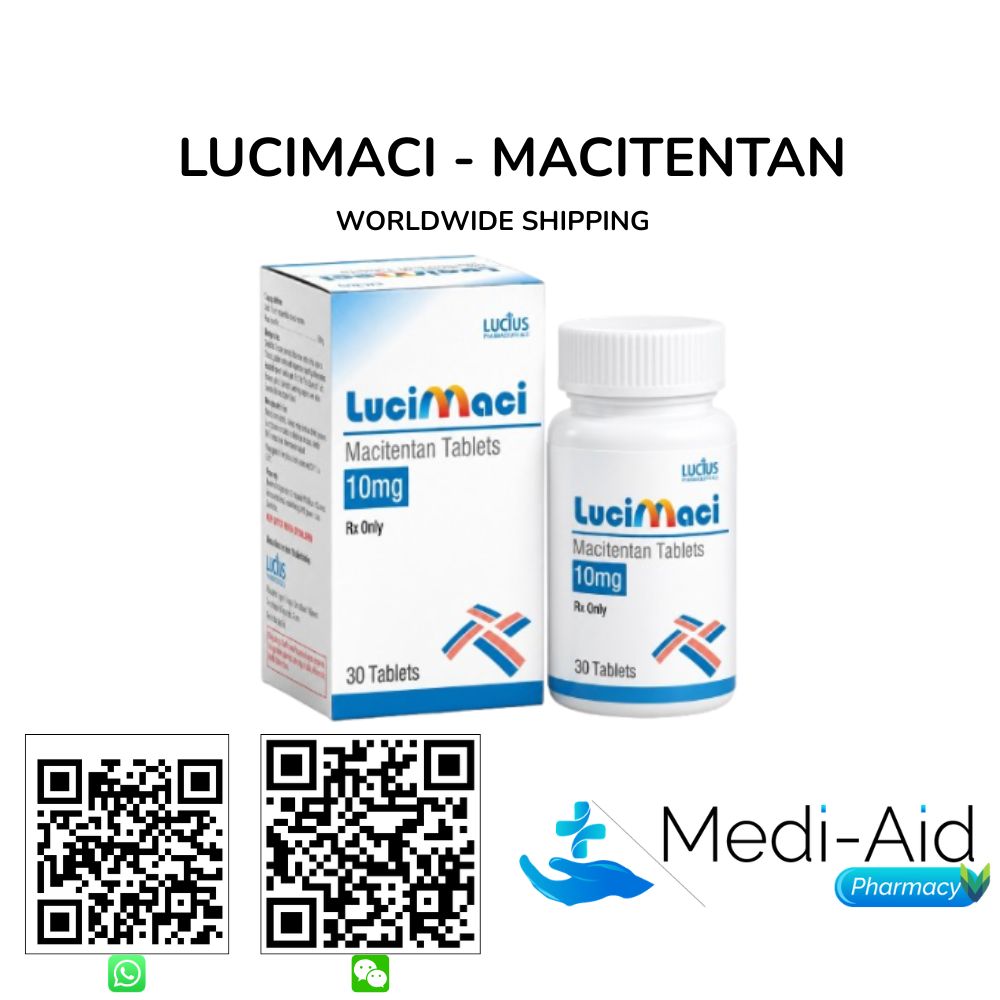
Description
LuciMaci 10 MG (Macitentan) is a tissue-targeting dual endothelin receptor antagonist (dual ETA and ETB receptor antagonist) an orally bioavailable, highly lipophilic, small-molecule agent engineered for deep tissue penetration and sustained endothelin receptor occupancy that blocks ET-1-driven pulmonary vasoconstriction and progressive vascular remodelling in pulmonary arterial hypertension (PAH) supplied as tablets in 10 mg strength in a 30-tablet pack and manufactured by Lucius Pharmaceuticals (Lao) Co., Ltd. in Laos. Its active ingredient, macitentan INN, simultaneously antagonises both endothelin type-A (ETA) and endothelin type-B (ETB) receptors on pulmonary arterial smooth muscle cells with high lipophilicity and slow receptor dissociation kinetics that sustain receptor blockade within the pulmonary vasculature, suppressing ET-1-mediated vasoconstriction, smooth muscle cell proliferation, and fibrotic vascular remodelling that progressively elevates pulmonary vascular resistance and right ventricular afterload in WHO Group 1 PAH.
In the landmark Phase 3 SERAPHIN trial the largest and longest randomised controlled trial ever conducted in PAH at the time of publication macitentan 10 mg once daily achieved a 45% reduction in the risk of the morbidity-mortality composite primary endpoint versus placebo (hazard ratio 0.55; 97.5% CI 0.39–0.76; p<0.0001) over a mean treatment duration of approximately 103 weeks across 742 patients with symptomatic PAH, marking the first ERA trial powered for a long-term morbidity-mortality outcome. Macitentan 10 mg also produced a placebo-corrected improvement in 6-minute walk distance (6MWD) of +24.8 metres at month 6 (p=0.0001) and a 51% relative reduction in the risk of worsening PAH events versus placebo. Searching for LuciMaci 10 MG Macitentan? Mediaid Pharmacy lists this product across its cardiovascular medicines, pulmonary arterial hypertension medicines, and Lucius Pharmaceuticals portfolios and ships it worldwide.
Basic Product Information of LuciMaci 10 MG (Macitentan)
| Brand Name | LuciMaci 10 MG (Macitentan) |
| Product Name | LuciMaci |
| Generic Name | Macitentan INN |
| Drug Class | Tissue-Targeting Dual Endothelin Receptor Antagonist (Dual ETA and ETB Receptor Antagonist); Endothelin Receptor Antagonist (ERA); Pulmonary Arterial Hypertension (PAH) Agent; Cardiovascular Agent; Morbidity-Mortality Reducing Pulmonary Vasodilator; Antiproliferative and Antifibrotic Vascular Agent |
| Formulation | Tablet (Oral) |
| Available Strengths | 10 mg per tablet |
| Available Pack Size | 30 Tablets per Pack |
| Dosing & Dose Modification | Approved dose: 10 mg once daily, orally, with or without food. LuciMaci (Macitentan) has a single approved dose of 10 mg once daily for PAH there is no approved dose escalation beyond 10 mg and no downward titration schedule. Strong CYP3A4 inducers: Avoid concomitant use with strong CYP3A4 inducers (e.g., rifampin) as these reduce macitentan plasma exposure by approximately 79% and may substantially reduce PAH efficacy. Strong CYP3A4 inhibitors: Concomitant use with strong CYP3A4 inhibitors (e.g., ketoconazole) increases macitentan exposure approximately 2-fold use with caution and monitor for adverse reactions. Swallow LuciMaci tablets whole do not crush, split, or chew. |
| Primary Indications | Pulmonary arterial hypertension (PAH, WHO Group 1) in adult patients to delay disease progression and reduce hospitalisation for PAH. LuciMaci (Macitentan) demonstrated efficacy as monotherapy and in combination with other PAH therapies (including phosphodiesterase type-5 [PDE5] inhibitors and inhaled or oral prostanoids) in the SERAPHIN Phase 3 trial, the first ERA trial powered for a long-term morbidity-mortality composite primary endpoint. Each treatment decision must account for WHO functional class, haemodynamic profile, concomitant PAH therapies, and reproductive status always consult the full prescribing information and the treating pulmonologist or cardiologist. |
| Manufacturer | Lucius Pharmaceuticals (Lao) Co., Ltd., Laos |
| Country of Origin | Laos |
| Originator Reference Brand | Opsumit® (macitentan 10 mg tablets, developed by Actelion Pharmaceuticals Ltd., a Janssen Pharmaceutical Companies of Johnson & Johnson company FDA-approved in the United States, October 2013; EMA-approved in the European Union, December 2013). Opsumit® contains macitentan INN as the active pharmaceutical ingredient in the same dual ETA and ETB endothelin receptor antagonist drug class. LuciMaci is manufactured by Lucius Pharmaceuticals (Lao) Co., Ltd. in Laos and is supplied through Mediaid Pharmacy for international procurement. |
| Global Supplier | Mediaid Pharmacy, Worldwide Shipping Available |
| Storage Conditions | Store at room temperature (15°C to 30°C). Keep in the original packaging and protect from moisture. Keep out of the reach of children. |
How LuciMaci (Macitentan) Works: Tissue-Targeting Dual ETA and ETB Endothelin Receptor Blockade in Pulmonary Arterial Hypertension
Macitentan INN is an orally bioavailable, sulfonamide-class, small-molecule antagonist engineered for high lipophilicity and sustained receptor occupancy that simultaneously blocks both endothelin type-A (ETA) and endothelin type-B (ETB) receptors the two G-protein-coupled receptor subtypes through which endothelin-1 (ET-1) drives its pathological vascular effects in pulmonary arterial hypertension (PAH) with an ETA inhibitory constant (Ki) of approximately 0.3 nM and an ETB Ki of approximately 3 nM, establishing macitentan as an ETA-preferring but genuinely dual endothelin receptor antagonist. ET-1 is a 21-amino acid peptide produced by vascular endothelial cells and is among the most potent and long-lasting vasoconstrictors in human physiology.
In PAH, ET-1 acts via ETA receptors on pulmonary arterial smooth muscle cells to drive sustained vasoconstriction, smooth muscle cell hypertrophy and proliferation, and progressive intimal and medial fibrosis pathological processes that together increase pulmonary vascular resistance (PVR), elevate mean pulmonary arterial pressure (mPAP), and impose progressive right ventricular pressure overload and hypertrophy ultimately leading to right heart failure. Macitentan was specifically designed through medicinal chemistry optimisation of its precursor bosentan to overcome a fundamental pharmacological limitation of earlier ERA agents: their rapid dissociation from plasma proteins and endothelin receptors in the aqueous environment of the bloodstream limited the sustained exposure of the drug within the lipid-rich milieu of pulmonary arterial smooth muscle tissue, where ET-1 acts.
Macitentan’s high lipophilicity (cLogP approximately 3.6) and low aqueous solubility enable deep tissue penetration into pulmonary vascular smooth muscle cells and prolonged receptor residence time meaning macitentan maintains high-level ETA and ETB receptor occupancy within the target tissue substantially longer than earlier less-lipophilic ERA molecules, providing more complete and sustained pathway inhibition at the site of pathological ET-1 signalling. Macitentan is metabolised in the liver primarily by CYP3A4 (and to a minor extent CYP2C19) to its active metabolite ACT-132577, which retains pharmacological ERA activity with lower potency than the parent compound and further extends the duration of endothelin receptor antagonism in the pulmonary vasculature; the contribution of ACT-132577 to the overall clinical effect of macitentan at the approved 10 mg dose has been estimated to account for approximately 40% of total endothelin receptor occupancy in preclinical receptor binding models.
The clinical consequence of sustained dual ETA and ETB blockade with tissue-targeting pharmacokinetics in PAH is a progressive, durable reduction in pulmonary vascular resistance, attenuation of pulmonary vascular remodelling, and reduction in the composite risk of PAH morbidity and mortality events outcomes that distinguish macitentan from predecessor ERA agents that demonstrated primarily short-term exercise capacity improvements without confirmed long-term morbidity-mortality benefit in adequately powered trials. The SERAPHIN Phase 3 trial (742 patients; up to 3.5 years of treatment; published in the New England Journal of Medicine, 2013) was designed with a composite morbidity-mortality primary endpoint the first such endpoint in an ERA Phase 3 trial and demonstrated that macitentan 10 mg once daily reduced the risk of this composite by 45% versus placebo (HR 0.55; 97.5% CI 0.39–0.76; p<0.0001), driven by a 51% relative reduction in worsening PAH events and a 50% relative reduction in hospitalisation for PAH.
Pharmacokinetically, macitentan exhibits dose-proportional, linear pharmacokinetics with a mean terminal elimination half-life (t½) of approximately 14 to 18 hours for the parent compound and approximately 48 hours for the active metabolite ACT-132577 together supporting reliable once-daily oral dosing with sustained plasma and tissue concentrations between doses. Macitentan is metabolised predominantly via CYP3A4; co-administration with strong CYP3A4 inducers (rifampin) reduces macitentan AUC by approximately 79% and should be avoided, while strong CYP3A4 inhibitors (ketoconazole) approximately double macitentan exposure and require cautious use with monitoring for adverse reactions including anaemia. Unlike bosentan, macitentan is not a significant inducer of CYP3A4 or other CYP enzymes and does not reduce the plasma concentrations of co-administered drugs such as oral contraceptives, warfarin, or sildenafil via enzyme induction a clinically important pharmacokinetic advantage for PAH patients frequently receiving combination therapy. For the complete range of cardiovascular and pulmonary hypertension medicines available at Mediaid Pharmacy, visit the cardiovascular medicines collection.
LuciMaci 10 MG (Macitentan): Indications, Dosing, and Key Safety Information
| Approved Indication | Pulmonary Arterial Hypertension (PAH, WHO Group 1): Treatment of adult patients with PAH to delay disease progression. Disease progression in the SERAPHIN trial was defined as a composite of worsening PAH (reduction in 6MWD, worsening WHO functional class, and need for additional PAH treatment), initiation of parenteral prostanoid therapy, lung transplantation, atrial septostomy, or death from any cause. Macitentan demonstrated efficacy as monotherapy and as combination therapy with background PAH treatments (including PDE5 inhibitors and inhaled prostanoids) in SERAPHIN, with 63.7% of enrolled patients receiving background PAH therapy at randomisation. |
| Recommended Dose | PAH: 10 mg once daily orally, with or without food (1× LuciMaci 10 MG tablet once daily). Single approved dose: 10 mg once daily is the single approved dose for PAH there is no approved dose escalation. Strong CYP3A4 inducers: Avoid concomitant use; rifampin reduces macitentan AUC by approximately 79%, substantially impairing efficacy. Strong CYP3A4 inhibitors: Ketoconazole and similar agents approximately double macitentan exposure use with caution and monitor for adverse reactions, particularly anaemia. Swallow LuciMaci tablets whole do not crush, split, or chew. |
| Dose Titration & Modification | Macitentan requires no dose titration; 10 mg once daily is the single approved dose initiated at treatment start without a run-in period. Dose reduction or discontinuation may be required for: confirmed pregnancy (contraindicated discontinue immediately); clinically significant haemoglobin decrease (anaemia requiring clinical intervention); hepatic aminotransferase elevations exceeding 3× upper limit of normal (ULN) with progressive or symptomatic liver injury; or known hypersensitivity to macitentan or any excipient. Unlike bosentan, macitentan does not require mandatory monthly liver function test (LFT) monitoring under its approved labelling, as the SERAPHIN trial demonstrated aminotransferase elevations ≥3×ULN in 3.4% of macitentan 10 mg patients versus 4.5% of placebo patients a rate not exceeding the background incidence in the study population. |
| Missed Dose | If a dose of LuciMaci (Macitentan) is missed, take it as soon as remembered on the same day. If not remembered until the following day, skip the missed dose and resume with the next scheduled once-daily dose. Do not take two doses within the same 24-hour period to compensate for a missed dose. Take LuciMaci at the same time each day to maintain consistent plasma and tissue macitentan concentrations and the sustained endothelin receptor occupancy that underpins its long-term efficacy in PAH. |
| Key Warnings & Precautions | Embryo-Fetal Toxicity (Contraindicated in Pregnancy): Macitentan is contraindicated in pregnancy. Endothelin receptor antagonists are teratogenic ET-1 signalling via ETA receptors is essential for normal cardiovascular and craniofacial foetal development during organogenesis, and dual ETA and ETB blockade during pregnancy may cause major congenital malformations and foetal death. Females of reproductive potential must use two reliable, complementary forms of contraception during LuciMaci treatment and for one month after the final dose. Perform a pregnancy test before initiating LuciMaci and monthly during treatment. Breastfeeding is not recommended during LuciMaci treatment.
Anaemia and Haemoglobin Decrease: Decreases in haemoglobin and haematocrit are the most clinically important haematological adverse reaction of macitentan. In the SERAPHIN trial, anaemia occurred in 13.2% of patients receiving macitentan 10 mg versus 3.4% with placebo; haemoglobin decreases below 8 g/dL occurred in 3.4% of macitentan 10 mg patients. Measure haemoglobin at baseline before initiating LuciMaci and periodically during treatment. LuciMaci is generally not recommended in patients with severe pre-existing anaemia (haemoglobin <8 g/dL). Discontinue or interrupt LuciMaci if clinically significant or symptomatic anaemia develops and manage according to clinical guidelines. Hepatotoxicity: Elevations in liver aminotransferases (ALT, AST) have been reported with ERA class agents. In the SERAPHIN trial, aminotransferase elevations ≥3×ULN occurred in 3.4% of macitentan 10 mg patients versus 4.5% on placebo, not demonstrating a drug-related hepatotoxicity signal. Nonetheless, monitor liver function tests if symptoms of hepatic injury develop (jaundice, fatigue, nausea, right upper quadrant pain). Discontinue LuciMaci if serum aminotransferases exceed 5×ULN or if clinical hepatic injury is confirmed. Pulmonary Oedema with Pulmonary Veno-Occlusive Disease (PVOD): Should signs of acute pulmonary oedema develop upon initiating LuciMaci, consider the possibility of underlying pulmonary veno-occlusive disease (PVOD). Macitentan is not recommended for patients with confirmed PVOD; discontinue immediately if PVOD is diagnosed. Drug Interaction Strong CYP3A4 Inducers: Rifampin, carbamazepine, phenytoin, and St. John’s Wort reduce macitentan plasma exposure by approximately 79% and must be avoided during LuciMaci treatment. Strong CYP3A4 inhibitors (ketoconazole, itraconazole) approximately double macitentan exposure use with caution throughout combined therapy. |
| Common Adverse Reactions (≥10%) | Anaemia (13.2% at 10 mg vs 3.4% placebo in SERAPHIN), nasopharyngitis (14.0% vs 10.9%), bronchitis (11.9% vs 8.9%), headache (13.6% vs 9.1%), and influenza (5.7% vs 4.6%). Anaemia is the most clinically significant adverse reaction requiring haemoglobin monitoring; it occurs more frequently with macitentan than with selective ETA antagonists (such as ambrisentan) or earlier dual ERA agents. Peripheral oedema and fluid retention class-effect reactions frequently seen with ambrisentan are not prominently associated with macitentan at the approved 10 mg dose, reflecting differences in ETB receptor subtype pharmacology between tissue-targeted macitentan and plasma-acting ERA agents. All adverse reactions should be discussed with the treating pulmonologist or cardiologist before and during LuciMaci treatment. |
| Drug Interactions | Macitentan is a CYP3A4 and CYP2C19 substrate. Strong CYP3A4 inducers (rifampin, carbamazepine, phenytoin, efavirenz, St. John’s Wort): rifampin reduces macitentan AUC by approximately 79% avoid concomitant use. Strong CYP3A4 inhibitors (ketoconazole, itraconazole, clarithromycin, ritonavir): approximately double macitentan AUC use with caution and monitor for anaemia and other adverse reactions. Sildenafil: No clinically significant pharmacokinetic interaction macitentan 10 mg and sildenafil can be co-administered without dose adjustment. Warfarin: No clinically significant pharmacokinetic interaction macitentan does not induce CYP2C9 and does not reduce warfarin exposure (unlike bosentan, which induces CYP2C9 and reduces warfarin exposure requiring INR monitoring and dose adjustment). Oral contraceptives: Macitentan does not induce CYP3A4 and does not reduce the plasma exposure of levonorgestrel or ethinyl oestradiol a key pharmacokinetic advantage over bosentan, which reduces oral contraceptive exposure. Disclose all concomitant medications to the treating pulmonologist or cardiologist before initiating LuciMaci. |
| Hepatic Impairment | Macitentan pharmacokinetics have been studied in patients with hepatic impairment. The unbound AUC of macitentan is increased approximately 30% in patients with mild (Child-Pugh A) hepatic impairment and approximately 50% in moderate (Child-Pugh B) impairment versus healthy subjects; no dose adjustment is recommended for mild to moderate hepatic impairment. LuciMaci is not recommended in patients with severe hepatic impairment (Child-Pugh C). Monitor aminotransferases at baseline and during treatment if hepatic symptoms develop. Consult the treating hepatologist, nephrologist, and pulmonologist for individualised guidance in patients with hepatic comorbidities. |
| Pregnancy & Lactation | Macitentan is contraindicated in pregnancy it is teratogenic and may cause major congenital malformations and foetal death. ET-1 signalling via ETA receptors is critical during cardiovascular and craniofacial foetal organogenesis; dual ETA and ETB blockade during pregnancy poses a serious developmental toxicity risk established in animal reproductive toxicology studies and consistent with the known class effect of endothelin receptor antagonists. Females of reproductive potential must use two reliable, complementary methods of contraception during LuciMaci treatment and for one month after the final dose. A pregnancy test must be performed before initiating LuciMaci and monthly during treatment. Note: Unlike bosentan, macitentan does not reduce the plasma concentrations of hormonal contraceptives via CYP3A4 induction, which means hormonal contraception (oral, injectable, or implantable) remains a valid contraceptive method during LuciMaci treatment, provided a second complementary method is used concurrently. Breastfeeding is not recommended during LuciMaci treatment and for an appropriate washout period thereafter. Notify the treating pulmonologist or cardiologist immediately if pregnancy occurs during macitentan treatment. |
Who Should Use LuciMaci 10 MG (Macitentan)?
LuciMaci 10 MG (Macitentan) is indicated for adult patients with pulmonary arterial hypertension (PAH, WHO Group 1) a life-limiting, progressive disease characterised by elevated pulmonary vascular resistance, right ventricular pressure overload, and without effective treatment, progressive right heart failure. PAH encompasses idiopathic PAH (iPAH), heritable PAH (hPAH), PAH associated with connective tissue disease (CTD-PAH, including systemic sclerosis [SSc-PAH], systemic lupus erythematosus, and mixed connective tissue disease), PAH associated with congenital heart disease (CHD-PAH), PAH associated with HIV infection (HIV-PAH), and portopulmonary hypertension all of which were enrolled across SERAPHIN and respond to macitentan’s dual endothelin receptor blockade.
First, adult PAH patients at any WHO Functional Class (FC II, III, or IV) are within the SERAPHIN-studied population, with FC III constituting the majority of enrolled patients (57%) making macitentan evidence-based across the full spectrum of symptomatic PAH. The SERAPHIN trial’s morbidity-mortality primary endpoint powered for disease progression, hospitalisation, and death is particularly relevant for PAH specialists seeking an ERA backed by long-term outcomes data rather than short-term exercise endpoints alone, as the 45% reduction in the morbidity-mortality composite over a mean of 103 weeks of follow-up provides durable evidence for LuciMaci’s disease-modifying impact.
Second, PAH patients receiving background PAH therapy 63.7% of SERAPHIN patients were on background therapy (primarily PDE5 inhibitors or inhaled prostanoids) at randomisation are an established population for adding macitentan as sequential combination ERA therapy, consistent with current ESC/ERS 2022 and AHA/ACC guidelines recommending sequential combination therapy for patients with an inadequate response to initial therapy. The benefit of macitentan 10 mg was consistent regardless of background therapy status in the SERAPHIN analysis, confirming the drug’s additive efficacy in both monotherapy-naive and background-treated PAH patients.
Third, PAH patients with connective tissue disease particularly SSc-PAH, one of the most clinically challenging PAH subtypes with higher mortality than iPAH were well-represented in SERAPHIN and responded to macitentan in exploratory subgroup analyses, making LuciMaci a relevant choice in rheumatology-cardiology shared care settings.
Fourth, patients requiring an ERA that does not induce CYP3A4 or CYP2C9 and therefore does not reduce the plasma concentrations of co-administered drugs including hormonal contraceptives, warfarin, or sildenafil benefit from macitentan’s non-inducing pharmacology compared with bosentan, which significantly reduces the exposure of all three via enzyme induction.
LuciMaci is contraindicated in pregnancy, in patients with severe hepatic impairment (Child-Pugh C), and in patients with severe pre-existing anaemia (haemoglobin <8 g/dL). Concomitant use with strong CYP3A4 inducers must be avoided. The treating pulmonologist or cardiologist must conduct a right heart catheterisation (RHC)-confirmed PAH diagnosis, WHO functional class assessment, six-minute walk test, and baseline haemoglobin and liver function assessment before initiating LuciMaci and must review all concomitant medications for CYP3A4 interactions before prescribing. PAH specialist centres co-sourcing LuciMaci alongside complementary cardiovascular agents can browse the Mediaid Pharmacy pulmonary arterial hypertension medicines and cardiovascular medicines portfolios for the full selection available for international delivery.
Global Supplier: Mediaid Pharmacy Worldwide Shipping for LuciMaci 10 MG (Macitentan)
Mediaid Pharmacy is a Dhaka-based supplier of specialty cardiovascular and pulmonary hypertension medicines with worldwide shipping to patients, PAH specialist centres, pulmonology clinics, cardiology units, rheumatology programmes managing CTD-PAH, and international distributors across all regions. LuciMaci 10 MG (Macitentan), manufactured by Lucius Pharmaceuticals (Lao) Co., Ltd. in Laos, is supplied as 30 tablets per pack in 10 mg strength with pricing quotations, stock confirmation, full product documentation, and end-to-end international delivery tracking for every order. The 10 mg strength is the single approved and SERAPHIN-validated dose of macitentan for PAH, enabling specialist PAH programmes to implement evidence-based dual endothelin receptor blockade in both monotherapy and sequential combination therapy contexts from a single supplier relationship without dose-strength stocking complexity.
PAH specialist centres, rheumatology-cardiology shared care programmes, pulmonary hypertension units, lung transplant programmes, and individual patients can contact the Mediaid Pharmacy team through WhatsApp, phone, or WeChat for all inquiries regarding LuciMaci Macitentan stock availability, current pricing, and international delivery timelines to their country. Procurement teams co-sourcing LuciMaci with other PAH agents or cardiovascular medicines can browse the complete Mediaid Pharmacy cardiovascular medicines collection and the Lucius Pharmaceuticals medicines portfolio before requesting a consolidated quotation.
Why Choose LuciMaci 10 MG (Macitentan) from Mediaid Pharmacy?
LuciMaci 10 MG (Macitentan) provides pulmonologists, cardiologists, and specialist PAH centres with the only ERA in its class backed by a powered long-term morbidity-mortality Phase 3 trial the SERAPHIN study, published in the New England Journal of Medicine (2013), which enrolled 742 PAH patients, followed them for up to 3.5 years (mean 103 weeks of treatment), and demonstrated that macitentan 10 mg once daily reduced the composite morbidity-mortality primary endpoint by 45% versus placebo (HR 0.55; 97.5% CI 0.39–0.76; p<0.0001) an outcome magnitude and follow-up duration that no predecessor ERA trial had achieved.
The SERAPHIN morbidity-mortality endpoint is clinically comprehensive: it captured worsening PAH (defined as a reduction in 6MWD ≥15% from baseline plus WHO FC worsening or need for additional PAH treatment), initiation of intravenous or subcutaneous prostanoid therapy, lung transplantation, atrial septostomy, and death from any cause covering the full spectrum of disease progression events that matter to PAH patients, their carers, and treating specialists.
Macitentan 10 mg reduced the risk of worsening PAH by 51% relative to placebo (HR 0.49; 97.5% CI 0.34–0.69; p<0.0001) and improved 6-minute walk distance by a placebo-corrected +24.8 metres at month 6 (p=0.0001), confirming that the long-term morbidity reduction was accompanied by clinically meaningful short-term exercise capacity improvement. Critically, the benefit of macitentan was consistent across the background therapy subgroups both in the 36.3% of patients receiving macitentan as monotherapy and in the 63.7% receiving it on top of background PAH therapy validating LuciMaci’s role in both first-line ERA-naive and sequential combination therapy settings per ESC/ERS 2022 and AHA/ACC PAH management guidelines.
Macitentan’s tissue-targeting pharmacology high lipophilicity enabling deep penetration into pulmonary arterial smooth muscle cells and sustained dual ETA and ETB receptor occupancy provides mechanistic differentiation from earlier ERA agents. Its non-CYP3A4-inducing metabolism eliminates the drug–drug interaction risks that limit bosentan use in combination therapy (reduced oral contraceptive efficacy, reduced warfarin exposure, reduced sildenafil exposure), and its anaemia-rather-than-oedema adverse reaction profile differs from ambrisentan, enabling clinician-guided patient selection based on individual comorbidity and tolerability profiles. LuciMaci is manufactured by Lucius Pharmaceuticals (Lao) Co., Ltd. in Laos and is available through Mediaid Pharmacy with full product documentation, specialist supply coordination, and worldwide shipping from Dhaka. To source additional Lucius Pharmaceuticals cardiovascular and PAH medicines, visit the Mediaid Pharmacy Lucius Pharmaceuticals medicines section and the pulmonary arterial hypertension medicines portfolio, and contact the team for a personalised quotation.
Frequently Asked Questions About LuciMaci 10 MG (Macitentan)
What is LuciMaci 10 MG (Macitentan) used for?
LuciMaci 10 MG (Macitentan) is a tissue-targeting dual ETA and ETB endothelin receptor antagonist used for the treatment of pulmonary arterial hypertension (PAH, WHO Group 1) in adult patients to delay disease progression, reduce hospitalisation for PAH, and improve exercise capacity. Macitentan is the only ERA approved based on a powered long-term morbidity-mortality composite primary endpoint, achieved in the SERAPHIN Phase 3 trial (45% risk reduction; HR 0.55; p<0.0001; published in NEJM, 2013). LuciMaci is used as monotherapy or in sequential combination with PDE5 inhibitors (sildenafil, tadalafil) or prostanoid pathway agents. The originator brand for macitentan is Opsumit® (Actelion Pharmaceuticals / Janssen). LuciMaci, manufactured by Lucius Pharmaceuticals (Lao) Co., Ltd. in Laos, is available through Mediaid Pharmacy with worldwide shipping to patients, PAH clinics, and specialist centres.
What is the generic name of LuciMaci?
The generic name of LuciMaci is macitentan INN. LuciMaci is the brand name registered by Lucius Pharmaceuticals (Lao) Co., Ltd. for macitentan manufactured in Laos. LuciMaci is formulated as oral tablets in 10 mg strength, supplied in a 30-tablet pack. The 10 mg strength is the single approved dose of macitentan for pulmonary arterial hypertension the same dose that produced a 45% morbidity-mortality risk reduction in the pivotal SERAPHIN Phase 3 trial. The originator reference brand is Opsumit® (Actelion Pharmaceuticals / Janssen, FDA-approved October 2013, EMA-approved December 2013). Mediaid Pharmacy distributes LuciMaci globally with worldwide shipping to patients, pulmonology centres, PAH specialist units, and cardiology hospitals.
What is the difference between LuciMaci (Macitentan) and Opsumit (Macitentan)?
LuciMaci and Opsumit® both contain macitentan INN as the active pharmaceutical ingredient and share the same tissue-targeting dual ETA and ETB endothelin receptor antagonist mechanism of action in pulmonary arterial hypertension. Opsumit® is the originator brand developed by Actelion Pharmaceuticals (a Janssen / Johnson & Johnson company), approved by the FDA in October 2013 and by the EMA in December 2013, supplied as 10 mg tablets. LuciMaci is manufactured by Lucius Pharmaceuticals (Lao) Co., Ltd. in Laos and is supplied in the 10 mg strength covering the single approved and SERAPHIN-validated dose available through Mediaid Pharmacy for international procurement by specialist centres and patients in regions where Opsumit® may be unavailable or cost-prohibitive. For the full range of pulmonary arterial hypertension medicines at Mediaid Pharmacy, visit the pulmonary arterial hypertension medicines collection.
How is LuciMaci 10 MG (Macitentan) administered?
LuciMaci (Macitentan) is administered orally once daily at the same time each day with or without food. The single approved dose is 10 mg once daily; there is no dose escalation or titration scheme for macitentan in PAH. Swallow LuciMaci tablets whole with water do not crush, split, or chew the tablets. If a dose is missed, take it as soon as remembered on the same day; if not remembered until the next day, skip the missed dose and resume with the next scheduled dose. Do not take two doses in one day. Avoid strong CYP3A4 inducers (rifampin, carbamazepine, phenytoin, St. John’s Wort) throughout treatment, as these reduce macitentan plasma exposure by approximately 79% and will substantially impair its PAH efficacy. Use strong CYP3A4 inhibitors (ketoconazole, itraconazole) with caution, as these approximately double macitentan exposure. Do not abruptly discontinue LuciMaci without consulting the treating pulmonologist or cardiologist, as PAH may progress with withdrawal of ERA therapy.
What are the side effects of LuciMaci 10 MG (Macitentan)?
The most common adverse reactions of macitentan reported in the SERAPHIN Phase 3 trial include anaemia (13.2% at 10 mg vs 3.4% placebo), nasopharyngitis (14.0% vs 10.9%), bronchitis (11.9% vs 8.9%), and headache (13.6% vs 9.1%). Anaemia is the most clinically significant haematological adverse reaction of macitentan haemoglobin monitoring at baseline and periodically during treatment is recommended, and LuciMaci is not recommended in patients with pre-existing severe anaemia (Hgb <8 g/dL). Peripheral oedema and fluid retention prominent adverse reactions of some other ERA agents including ambrisentan are not a notable adverse reaction pattern for macitentan at the approved 10 mg dose, reflecting its distinctive tissue-targeting pharmacology. Embryo-fetal toxicity is the most serious safety concern macitentan is contraindicated in pregnancy and requires two forms of effective contraception throughout treatment. Hepatic aminotransferase elevations occur at a rate similar to or below placebo in SERAPHIN, and mandatory monthly LFT monitoring is not required under the Opsumit® prescribing information, unlike bosentan. Always discuss the complete safety profile and monitoring plan with the treating pulmonologist or cardiologist before and throughout LuciMaci treatment.
How effective is Macitentan (LuciMaci) for pulmonary arterial hypertension?
Macitentan has demonstrated statistically significant and clinically meaningful long-term efficacy in PAH in the Phase 3 SERAPHIN trial, published in the New England Journal of Medicine (2013) the largest and longest ERA randomised controlled trial conducted in PAH. SERAPHIN enrolled 742 patients with symptomatic PAH across 151 centres in 39 countries and followed them for up to 3.5 years (mean treatment duration approximately 103 weeks). Macitentan 10 mg once daily reduced the risk of the morbidity-mortality composite primary endpoint by 45% versus placebo (HR 0.55; 97.5% CI 0.39–0.76; p<0.0001), driven by a 51% relative reduction in worsening PAH events and an approximately 50% relative reduction in hospitalisation for PAH. Macitentan also improved 6-minute walk distance by a placebo-corrected +24.8 metres at month 6 (p=0.0001) and significantly improved WHO functional class versus placebo. The benefit of macitentan was consistent whether patients were treated as monotherapy or in combination with background PAH therapy (PDE5 inhibitors or inhaled prostanoids), confirming the drug’s additive value in sequential combination therapy. LuciMaci delivers the same active ingredient macitentan INN at the SERAPHIN-validated 10 mg tablet dose, sourced through Mediaid Pharmacy with worldwide shipping. For the complete cardiovascular medicines range at Mediaid Pharmacy, visit the cardiovascular medicines collection.
Is LuciMaci 10 MG (Macitentan) safe during pregnancy or while breastfeeding?
No. Macitentan is contraindicated in pregnancy it is teratogenic and may cause major congenital malformations and foetal death. Endothelin receptor antagonists as a drug class carry a confirmed teratogenicity risk based on the critical role of ET-1 signalling via ETA receptors in normal cardiovascular and craniofacial foetal organogenesis; dual ETA and ETB blockade during gestation poses a serious developmental toxicity risk confirmed in animal reproductive toxicology studies. LuciMaci must not be used during pregnancy. Females of reproductive potential must use two reliable, complementary forms of contraception during LuciMaci treatment and for one month after the final dose. A pregnancy test must be performed before initiating LuciMaci and monthly during treatment. An important practical advantage: unlike bosentan, macitentan does not induce CYP3A4 and therefore does not reduce the plasma concentrations of hormonal contraceptives meaning oral, injectable, or implantable hormonal contraception remains pharmacologically effective as one of the two required contraceptive methods during LuciMaci treatment. Breastfeeding is not recommended during LuciMaci treatment and for a clinically appropriate washout period after the final dose. Notify the treating pulmonologist immediately if pregnancy occurs or is suspected during macitentan treatment.
Can I order LuciMaci 10 MG (Macitentan) online with worldwide shipping?
Yes. Mediaid Pharmacy supplies LuciMaci 10 MG (Macitentan) to patients, pulmonology centres, PAH specialist units, cardiology hospitals, rheumatology programmes managing CTD-PAH, and healthcare providers globally. Contact Mediaid Pharmacy via WhatsApp, phone, or WeChat at +8801773428128, or email info@mediaidpharmacy.com for pricing, current stock availability, and international delivery details for your country.
Order LuciMaci 10 MG (Macitentan) with Worldwide Shipping
Phone / WhatsApp / WeChat: +8801773428128 | Email: info@mediaidpharmacy.com


Reviews
There are no reviews yet.