
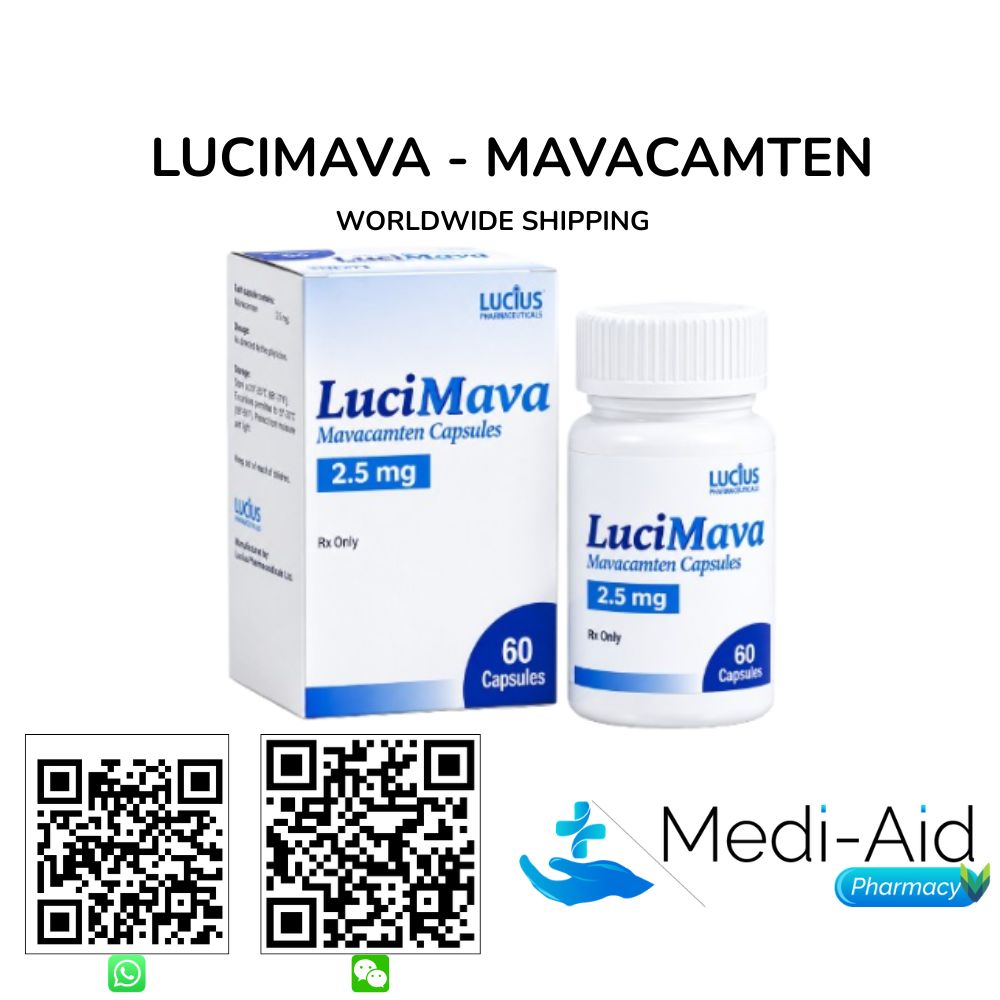
Description
LuciMava 2.5 MG (Mavacamten) is a first-in-class selective, allosteric cardiac myosin inhibitor an orally bioavailable, small-molecule targeted agent that reduces left ventricular outflow tract (LVOT) obstruction and myocardial hypercontractility by shifting cardiac myosin toward an energy-sparing super-relaxed (SRX) state in symptomatic obstructive hypertrophic cardiomyopathy (oHCM) supplied as capsules in 2.5 mg strength in a 60-capsule pack and manufactured by Lucius Pharmaceuticals (Lao) Co., Ltd. in Laos.
Its active ingredient, mavacamten INN, selectively inhibits cardiac myosin ATPase, decreasing the number of actin-myosin cross-bridges formed during systole, reducing dynamic LVOT obstruction, lowering left ventricular filling pressures, and improving diastolic function across the spectrum of symptomatic obstructive HCM. In the pivotal Phase 3 EXPLORER-HCM trial, mavacamten achieved the primary composite endpoint in 37% of patients versus 17% with placebo (p=0.0005), with significant reductions in peak LVOT gradient, NT-proBNP, and cardiac troponin I, alongside clinically meaningful improvement in Kansas City Cardiomyopathy Questionnaire (KCCQ) scores.
In the Phase 3 VALOR-HCM trial, mavacamten treatment reduced eligibility for septal reduction therapy (SRT) by 82% compared with placebo at week 16 (17% vs 77%; p<0.0001), establishing mavacamten as a guideline-relevant pharmacological alternative to invasive septal reduction in symptomatic oHCM patients who meet SRT criteria. Searching for LuciMava 2.5 MG Mavacamten? Mediaid Pharmacy lists this product across its cardiovascular medicines and Lucius Pharmaceuticals portfolios and ships it worldwide.
Basic Product Information of LuciMava 2.5 MG (Mavacamten)
| Brand Name | LuciMava 2.5 MG (Mavacamten) |
| Product Name | LuciMava |
| Generic Name | Mavacamten INN |
| Drug Class | Selective Allosteric Cardiac Myosin Inhibitor; Cardiac Myosin ATPase Inhibitor; Hypertrophic Cardiomyopathy (HCM) Agent; Cardiovascular Agent; Targeted Sarcomere Modulator; Anti-Obstructive HCM Therapy |
| Formulation | Capsule (Oral) |
| Available Strengths | 2.5 mg per capsule |
| Available Pack Size | 60 Capsules per Pack |
| Dosing & Dose Modification | Starting dose: 2.5 mg once daily, orally, with or without food. Dose titration: Dose is adjusted based on echocardiographic assessment of resting and Valsalva LVOT gradient and left ventricular ejection fraction (LVEF) at weeks 4, 8, and 12; doses may be up-titrated through 5 mg, 10 mg, and up to 15 mg once daily based on haemodynamic response and tolerability. CYP2C19 poor metabolisers: Dose adjustment and enhanced echocardiographic monitoring are required mavacamten exposure is significantly higher in CYP2C19 poor metabolisers. Strong/moderate CYP2C19 inhibitors or strong/moderate CYP3A4 inhibitors: Avoid co-administration; if unavoidable, reduce mavacamten dose and increase monitoring frequency. Do not exceed the echocardiography-guided dose. Swallow LuciMava capsules whole do not open, crush, or chew. Discontinue LuciMava if LVEF falls below 50%. |
| Primary Indications | Symptomatic obstructive hypertrophic cardiomyopathy (oHCM) in adult patients to improve functional capacity, reduce dynamic LVOT obstruction, and improve symptoms. LuciMava (Mavacamten) may be used to reduce the need for invasive septal reduction therapy (SRT) in eligible patients who meet SRT criteria, as demonstrated in the VALOR-HCM Phase 3 trial. Each treatment decision must account for LVEF, CYP2C19 metaboliser status, LVOT gradient, NYHA functional class, and concomitant medications always consult the full prescribing information and the treating cardiologist or HCM specialist. |
| Manufacturer | Lucius Pharmaceuticals (Lao) Co., Ltd., Laos |
| Country of Origin | Laos |
| Originator Reference Brand | CAMZYOS® (mavacamten capsules, by Bristol-Myers Squibb approved by the FDA in April 2022 for symptomatic obstructive HCM in adults). CAMZYOS® contains mavacamten INN as the active pharmaceutical ingredient in the same cardiac myosin inhibitor drug class. LuciMava is manufactured by Lucius Pharmaceuticals (Lao) Co., Ltd. in Laos and is supplied through Mediaid Pharmacy for international procurement. |
| Global Supplier | Mediaid Pharmacy, Worldwide Shipping Available |
| Storage Conditions | Store at room temperature (20°C to 25°C; excursions permitted 15°C to 30°C). Keep in the original packaging and protect from moisture. Keep out of the reach of children. |
How LuciMava (Mavacamten) Works: Selective Allosteric Cardiac Myosin Inhibition in Obstructive Hypertrophic Cardiomyopathy
Mavacamten INN is a first-in-class, orally bioavailable, small-molecule cardiac myosin inhibitor that selectively and allosterically inhibits cardiac myosin heavy chain (beta-myosin, MYH7) ATPase activity. Cardiac myosin is the molecular motor of the sarcomere the fundamental contractile unit of the heart. In healthy myocardium, myosin cycles between an energy-consuming disordered-relaxed (DRX) state, in which myosin heads are available to bind actin and generate force, and an energy-conserving super-relaxed (SRX) state, in which myosin heads are folded back against the thick filament backbone, sequestered from actin, and held in an ATP-sparing configuration.
In obstructive hypertrophic cardiomyopathy (oHCM) driven predominantly by gain-of-function sarcomere gene mutations in MYH7 (beta-myosin heavy chain) or MYBPC3 (myosin-binding protein C) an excess proportion of myosin heads remain in the DRX state, generating hypercontractility, elevated LVOT gradients, impaired diastolic relaxation, and elevated left ventricular filling pressures. Mavacamten binds allosterically to a pocket at the actin-binding interface of cardiac myosin, stabilising myosin in the SRX conformation, reducing the number of force-generating cross-bridges, decreasing myosin ATPase activity, and directly attenuating the sarcomeric hypercontractility that is the mechanistic root cause of LVOT obstruction and diastolic dysfunction in oHCM.
The clinical consequence of selective cardiac myosin inhibition in oHCM is a dose-dependent, echocardiographically measurable reduction in resting and provocable LVOT peak gradient, improvement in NYHA functional class, reduction in biomarkers of myocardial wall stress (NT-proBNP) and cardiomyocyte injury (cardiac troponin I), and improvement in patient-reported outcomes via the KCCQ. In the EXPLORER-HCM Phase 3 trial, mavacamten produced statistically and clinically significant reductions in resting peak LVOT gradient of 47 mmHg versus 10 mmHg with placebo (p<0.001) and Valsalva LVOT gradient of 49 mmHg versus 13 mmHg (p<0.001) at week 30, demonstrating that sarcomere-targeted myosin inhibition reverses the core pathophysiological driver of oHCM symptoms.
Pharmacokinetically, mavacamten exhibits dose-proportional pharmacokinetics with a long mean elimination half-life (t½) of approximately 6–9 days in extensive and intermediate CYP2C19 metabolisers, supporting once-daily oral dosing with gradual pharmacodynamic equilibration permitting echocardiography-guided dose titration. Mavacamten is predominantly metabolised by CYP2C19 (major) and CYP3A4 (minor); CYP2C19 poor metabolisers exhibit approximately 2-fold higher mavacamten exposure, necessitating reduced starting doses and more frequent echocardiographic monitoring. Mavacamten does not produce significant drug-induced liver injury at approved doses when monitoring protocols are followed. For the complete range of cardiovascular medicines available at Mediaid Pharmacy, visit the cardiovascular medicines collection.
LuciMava 2.5 MG (Mavacamten): Indications, Dosing, and Key Safety Information
| Approved Indications | Symptomatic Obstructive Hypertrophic Cardiomyopathy (oHCM): Treatment of adult patients with symptomatic oHCM to improve functional capacity and symptoms. LuciMava (Mavacamten) is also indicated to reduce the need for invasive septal reduction therapy (SRT) in symptomatic oHCM patients who meet SRT eligibility criteria, as established in the VALOR-HCM Phase 3 trial. |
| Recommended Starting Dose | Standard initiation (extensive or intermediate CYP2C19 metabolisers): 2.5 mg once daily orally, with or without food (1× LuciMava 2.5 MG capsule once daily). Poor CYP2C19 metabolisers: Initiate at 2.5 mg once daily with enhanced echocardiographic monitoring and a lower threshold for dose reduction. With strong/moderate CYP2C19 or CYP3A4 inhibitors: Avoid co-administration; if clinically necessary, initiate at 2.5 mg with close echocardiographic monitoring. Swallow LuciMava capsules whole do not open, crush, or chew. |
| Dose Titration & Modification | Echocardiographic assessment of resting and Valsalva LVOT gradient and LVEF must be performed at weeks 4, 8, and 12 to guide dose titration through 5 mg, 10 mg, and up to 15 mg once daily. Dose reduction or discontinuation is required if LVEF falls below 50%, if resting LVOT gradient falls below 20 mmHg, or if symptoms of systolic dysfunction develop. Resume LuciMava at a reduced dose after at least 4 weeks off-therapy if LVEF recovers to ≥55% and the patient’s clinical status supports reintroduction. Do not up-titrate beyond the echocardiography-guided target dose. |
| Missed Dose | If a dose of LuciMava (Mavacamten) is missed, take it as soon as remembered on the same day. If it is not remembered until the next day, skip the missed dose and resume with the next scheduled once-daily dose. Do not take two doses in one day to compensate for a missed dose. Take LuciMava at the same time each day to maintain consistent plasma concentrations within the therapeutic echocardiography-guided range. |
| Key Warnings & Precautions | Heart Failure / Systolic Dysfunction: Mavacamten reduces cardiac contractility and can cause systolic dysfunction and heart failure. LVEF must be assessed before initiation and at each echocardiographic monitoring visit. Discontinue LuciMava immediately if LVEF falls below 50% or if symptoms of heart failure develop. Do not initiate LuciMava in patients with LVEF <55% at baseline.
Embryo-Fetal Toxicity: Mavacamten may cause fetal harm. LuciMava is contraindicated in pregnancy. Females of reproductive potential must use effective contraception during LuciMava treatment and for 4 months after the final dose. Confirm absence of pregnancy before initiating therapy. Breastfeeding is not recommended during LuciMava treatment and for 4 months after the final dose. CYP2C19 and CYP3A4 Drug Interactions: Strong or moderate inhibitors of CYP2C19 (e.g., fluconazole, omeprazole, esomeprazole) or CYP3A4 (e.g., ketoconazole, itraconazole, clarithromycin, ritonavir) significantly increase mavacamten plasma exposure and risk of systolic dysfunction. Avoid co-administration. Strong CYP2C19 or CYP3A4 inducers (e.g., rifampin, carbamazepine, St. John’s Wort) markedly reduce mavacamten exposure and should be avoided. Negative Inotropic Interactions: Mavacamten has additive negative inotropic effects when combined with other negative inotropes including verapamil, diltiazem, and disopyramide; avoid concurrent use of these agents with LuciMava. Mandatory Echocardiographic Monitoring: Echocardiography is required before initiation and at weeks 4, 8, 12, and at each dose adjustment to assess LVEF and LVOT gradients. This monitoring protocol is essential for safe dose titration and early detection of systolic dysfunction. |
| Common Adverse Reactions (≥5%) | Dizziness, syncope, presyncope, dyspnoea, and reduced LVEF. Asymptomatic LVEF reduction occurred in approximately 6% of mavacamten-treated patients in EXPLORER-HCM; all cases were reversible upon dose interruption. Dizziness was among the most commonly reported adverse effects. These reactions are generally dose-dependent and manageable with echocardiography-guided dose modification under the treating cardiologist’s supervision. |
| Drug Interactions | Mavacamten is a substrate of CYP2C19 (major) and CYP3A4 (minor). Strong/moderate CYP2C19 inhibitors (fluconazole, omeprazole, esomeprazole, fluvoxamine): markedly increase mavacamten AUC avoid co-administration or use the lowest dose with enhanced monitoring. Strong/moderate CYP3A4 inhibitors (ketoconazole, itraconazole, clarithromycin, ritonavir, diltiazem, verapamil): significantly increase mavacamten exposure avoid co-administration. Strong/moderate CYP2C19 or CYP3A4 inducers (rifampin, carbamazepine, phenytoin, St. John’s Wort): markedly reduce mavacamten plasma levels, diminishing efficacy avoid co-administration. Negative inotropes (verapamil, diltiazem, disopyramide, beta-blockers at high doses): additive negative inotropic risk avoid concurrent use of verapamil, diltiazem, and disopyramide with mavacamten. Disclose all concomitant medications, supplements, and cardiac drugs to the treating cardiologist or HCM specialist before initiating LuciMava. |
| Hepatic Impairment | Mavacamten exposure is increased in patients with moderate hepatic impairment (Child-Pugh Class B); initiate at 2.5 mg once daily and apply enhanced echocardiographic monitoring. LuciMava is not recommended in patients with severe hepatic impairment (Child-Pugh Class C) as pharmacokinetic data in this population are limited. Consult the treating hepatologist and cardiologist for individualised guidance in patients with hepatic comorbidities. |
| Pregnancy & Lactation | Mavacamten may cause fetal harm based on animal reproductive studies demonstrating embryotoxicity and fetotoxicity. LuciMava is contraindicated in pregnancy. Females of reproductive potential must use effective contraception during LuciMava treatment and for 4 months after the final dose. Conduct a pregnancy test before initiating LuciMava. Breastfeeding is not recommended during LuciMava treatment and for 4 months after the final dose because of the potential for serious adverse effects in the breastfed infant. Notify the treating cardiologist or HCM specialist immediately if pregnancy occurs during mavacamten treatment. |
Who Should Use LuciMava 2.5 MG (Mavacamten)?
LuciMava 2.5 MG (Mavacamten) is indicated for adult patients with symptomatic obstructive hypertrophic cardiomyopathy (oHCM) a hereditary sarcomere disease characterised by asymmetric left ventricular hypertrophy, dynamic LVOT obstruction, diastolic dysfunction, elevated left ventricular filling pressures, and, if untreated, progressive symptoms of exertional dyspnoea, angina, presyncope, syncope, and risk of sudden cardiac death. oHCM is caused predominantly by gain-of-function mutations in sarcomere protein genes most commonly MYH7 (beta-myosin heavy chain) and MYBPC3 (myosin-binding protein C) that result in sarcomere hypercontractility and impaired myocardial relaxation as the upstream pathophysiological mechanism.
First, symptomatic oHCM patients in NYHA Functional Class II or III with a resting or provoked peak LVOT gradient of ≥30 mmHg who remain symptomatic despite maximally tolerated conventional pharmacotherapy (beta-blockers, non-dihydropyridine calcium channel blockers) constitute the primary indication population for LuciMava (Mavacamten). In EXPLORER-HCM (Phase 3, 251 patients), mavacamten achieved the primary composite endpoint comprising peak oxygen consumption and NYHA class improvement in 37% of patients versus 17% with placebo (p=0.0005), demonstrating that sarcomere-targeted therapy produces clinically meaningful, statistically significant benefit beyond conventional background therapy.
Second, symptomatic oHCM patients who meet invasive septal reduction therapy (SRT) eligibility criteria including surgical septal myectomy or alcohol septal ablation may receive LuciMava as a pharmacological alternative to or bridge before SRT, informed by the VALOR-HCM Phase 3 trial (112 patients), in which mavacamten treatment reduced SRT eligibility from 77% in the placebo group to 17% in the mavacamten group at week 16 (82% relative reduction; p<0.0001), with 55% of mavacamten-treated patients achieving NYHA Class I or II status and no longer meeting SRT criteria.
Third, oHCM patients who are not candidates for or who decline invasive SRT, or who have residual LVOT obstruction and symptoms after SRT, may benefit from LuciMava as long-term disease-modifying oral cardiac myosin inhibitor therapy. LuciMava is contraindicated in pregnancy, in patients with a baseline LVEF below 55%, and in patients receiving strong or moderate inhibitors of CYP2C19 or CYP3A4 unless unavoidable with dose adjustment. Mavacamten is not currently established for non-obstructive HCM.
The treating cardiologist or HCM specialist must confirm the oHCM diagnosis by echocardiography (resting or Valsalva LVOT gradient ≥30 mmHg), assess CYP2C19 metaboliser status, and review all concomitant medications particularly proton pump inhibitors (CYP2C19 inhibitors), antifungals, antiretrovirals, and negative inotropes before prescribing LuciMava. Specialist centres co-sourcing LuciMava alongside complementary cardiovascular medicines can browse the Mediaid Pharmacy cardiovascular medicines portfolio for the full selection available for international delivery.
Global Supplier: Mediaid Pharmacy Worldwide Shipping for LuciMava 2.5 MG (Mavacamten)
Mediaid Pharmacy is a Dhaka-based supplier of specialty cardiovascular medicines with worldwide shipping to patients, cardiology clinics, HCM specialist centres, advanced heart failure programmes, and international distributors across all regions. LuciMava 2.5 MG (Mavacamten), manufactured by Lucius Pharmaceuticals (Lao) Co., Ltd. in Laos, is supplied as 60 capsules per pack in 2.5 mg strength with pricing quotations, stock confirmation, full product documentation, and end-to-end international delivery tracking for every order.
The 2.5 mg strength is the established starting dose for mavacamten across its approved oHCM indication, enabling HCM specialist centres and cardiology programmes to initiate echocardiography-guided mavacamten therapy at the recommended starting dose before titration to the individualised maintenance dose based on echocardiographic response. HCM specialist centres, cardiology programmes managing oHCM-associated complications, advanced heart failure units, international distributors, and individual patients can contact the Mediaid Pharmacy team through WhatsApp, phone, or WeChat for all inquiries regarding LuciMava Mavacamten stock availability, current pricing, and international delivery timelines to their country.
Procurement teams co-sourcing LuciMava with other cardiovascular medicines can browse the complete Mediaid Pharmacy cardiovascular medicines collection and the Lucius Pharmaceuticals medicines portfolio before requesting a consolidated quotation.
Why Choose LuciMava 2.5 MG (Mavacamten) from Mediaid Pharmacy?
LuciMava 2.5 MG (Mavacamten) delivers a first-in-class, mechanistically targeted, guideline-relevant cardiac myosin inhibitor backed by two landmark Phase 3 clinical trials EXPLORER-HCM and VALOR-HCM that collectively establish mavacamten as the first sarcomere-directed pharmacotherapy to produce clinically meaningful, echocardiographically confirmed reversal of LVOT obstruction in symptomatic oHCM. In the EXPLORER-HCM Phase 3 trial (251 patients, 30-week treatment period), mavacamten achieved the primary composite functional endpoint in 37% of patients versus 17% with placebo (p=0.0005), produced a mean reduction in resting peak LVOT gradient of 47 mmHg versus 10 mmHg with placebo (p<0.001), and delivered a clinically meaningful improvement in KCCQ-Overall Summary Score of +14.9 points versus +5.4 points with placebo (p<0.001) demonstrating that mavacamten addresses both the haemodynamic substrate and patient-reported symptom burden of oHCM simultaneously.
The transformative VALOR-HCM Phase 3 trial (112 oHCM patients meeting SRT eligibility criteria) demonstrated that mavacamten reduced SRT eligibility from 77% to 17% at week 16 (82% relative reduction; p<0.0001), establishing mavacamten as the first pharmacological agent to reduce the need for invasive septal myectomy or alcohol septal ablation in eligible patients. Mavacamten’s sarcomere-direct mechanism selective allosteric inhibition of cardiac myosin ATPase, stabilisation of the energy-sparing SRX state, and reduction of excess cross-bridge formation differentiates it fundamentally from conventional symptomatic therapies (beta-blockers, verapamil, diltiazem, disopyramide) that address downstream adrenergic or calcium-dependent pathways without targeting the upstream sarcomere hypercontractility driving oHCM pathophysiology.
LuciMava is manufactured by Lucius Pharmaceuticals (Lao) Co., Ltd. in Laos and is available through Mediaid Pharmacy with full product documentation, specialist supply coordination, and worldwide shipping from Dhaka. To source additional Lucius Pharmaceuticals cardiovascular medicines, visit the Mediaid Pharmacy Lucius Pharmaceuticals medicines section and the cardiovascular medicines portfolio, and contact the team for a personalised quotation.
Frequently Asked Questions About LuciMava 2.5 MG (Mavacamten)
What is LuciMava 2.5 MG (Mavacamten) used for?
LuciMava 2.5 MG (Mavacamten) is a first-in-class selective cardiac myosin inhibitor used for the treatment of symptomatic obstructive hypertrophic cardiomyopathy (oHCM) in adult patients to improve functional capacity, reduce dynamic LVOT obstruction, improve symptoms, and reduce the need for invasive septal reduction therapy (SRT) in eligible patients. LuciMava targets the upstream sarcomere hypercontractility driving oHCM by allosterically stabilising cardiac myosin in the energy-sparing super-relaxed (SRX) state. The originator brand for mavacamten is CAMZYOS® (Bristol-Myers Squibb, FDA-approved April 2022). LuciMava, manufactured by Lucius Pharmaceuticals (Lao) Co., Ltd. in Laos, is available through Mediaid Pharmacy with worldwide shipping to patients, HCM specialist centres, and cardiology programmes.
What is the generic name of LuciMava?
The generic name of LuciMava is mavacamten INN. LuciMava is the brand name registered by Lucius Pharmaceuticals (Lao) Co., Ltd. for mavacamten manufactured in Laos. LuciMava is formulated as oral capsules in 2.5 mg strength, supplied in a 60-capsule pack. The 2.5 mg strength is the recommended starting dose for mavacamten in symptomatic oHCM, with dose titration to 5 mg, 10 mg, or 15 mg guided by echocardiographic assessment at weeks 4, 8, and 12. The originator reference brand is CAMZYOS® (Bristol-Myers Squibb). Mediaid Pharmacy distributes LuciMava globally with worldwide shipping to patients, HCM specialist centres, cardiology hospitals, and advanced heart failure programmes.
What is the difference between LuciMava (Mavacamten) and CAMZYOS (Mavacamten)?
LuciMava and CAMZYOS® both contain mavacamten INN as the active pharmaceutical ingredient and share the same first-in-class selective cardiac myosin inhibitor mechanism of action in symptomatic obstructive HCM. CAMZYOS® is the originator brand developed by MyoKardia (acquired by Bristol-Myers Squibb) and received FDA approval in April 2022 in 2.5 mg, 5 mg, 10 mg, and 15 mg capsule strengths for symptomatic oHCM in adults. LuciMava is manufactured by Lucius Pharmaceuticals (Lao) Co., Ltd. in Laos and is supplied in the 2.5 mg capsule strength the established starting dose for mavacamten therapy available through Mediaid Pharmacy for international procurement by specialist HCM centres and patients in regions where CAMZYOS® may be unavailable or cost-prohibitive. For the full range of cardiovascular medicines at Mediaid Pharmacy, visit the cardiovascular medicines collection.
How is LuciMava 2.5 MG (Mavacamten) administered?
LuciMava (Mavacamten) is administered orally once daily (at the same time each day), with or without food. The standard starting dose is 2.5 mg once daily. Dose titration to 5 mg, 10 mg, or up to 15 mg is guided by echocardiographic assessment of LVEF and LVOT gradients at weeks 4, 8, and 12. Swallow LuciMava capsules whole with water do not open, crush, or chew the capsules. If a dose is missed, take it as soon as remembered on the same day; if not remembered until the next day, skip the missed dose and continue with the next regularly scheduled dose. Do not take two doses in one day. Mandatory echocardiographic monitoring before initiation and at each titration visit is required for safe use. Do not abruptly discontinue LuciMava without consulting the treating cardiologist, as the long half-life (6–9 days) means the washout of drug effect is gradual; a planned interruption period of at least 4 weeks is needed before reintroduction following dose interruption for LVEF reduction.
What are the side effects of LuciMava 2.5 MG (Mavacamten)?
The most commonly reported adverse reactions of mavacamten in clinical trials include dizziness, presyncope, syncope, dyspnoea, and asymptomatic LVEF reduction. Asymptomatic LVEF reduction below 50% occurred in approximately 6% of mavacamten-treated patients in EXPLORER-HCM; all cases were reversible upon dose interruption, and no patients experienced overt systolic heart failure requiring hospitalisation with the echocardiographic monitoring protocol in place. Dizziness was the most frequently reported adverse event, likely related to the haemodynamic effects of LVOT gradient reduction and reduced systemic vascular resistance. Mavacamten does not cause significant hepatotoxicity at approved doses. The most serious risk is systolic dysfunction (heart failure) with LVEF reduction, requiring mandatory echocardiographic monitoring before initiation and throughout treatment. Always discuss the complete safety profile, CYP2C19 genotype implications, drug interaction risks, and echocardiographic monitoring requirements with the treating cardiologist or HCM specialist before and throughout LuciMava treatment.
How effective is Mavacamten (LuciMava) for obstructive hypertrophic cardiomyopathy?
Mavacamten has demonstrated statistically significant and clinically meaningful efficacy in oHCM across two major Phase 3 trials. In EXPLORER-HCM (251 patients, 30 weeks), mavacamten achieved the primary composite endpoint in 37% versus 17% placebo (p=0.0005), reduced resting peak LVOT gradient by a mean of 47 mmHg versus 10 mmHg with placebo (p<0.001), and improved KCCQ-Overall Summary Score by +14.9 versus +5.4 points (p<0.001); 27% of mavacamten patients achieved NYHA Class I status at week 30 versus 4% with placebo. In VALOR-HCM (112 patients meeting SRT eligibility criteria, 16 weeks), mavacamten reduced SRT eligibility from 77% to 17% (82% relative reduction; p<0.0001), with 55% of mavacamten-treated patients no longer meeting SRT criteria at week 16. LuciMava delivers the same active ingredient mavacamten INN at the approved 2.5 mg starting capsule dose, sourced through Mediaid Pharmacy with worldwide shipping. For the complete cardiovascular medicines range at Mediaid Pharmacy, visit the cardiovascular medicines collection.
Is LuciMava 2.5 MG (Mavacamten) safe during pregnancy or while breastfeeding?
No. Mavacamten may cause fetal harm based on animal reproductive studies demonstrating embryotoxicity and fetotoxicity. LuciMava must not be used during pregnancy. Females of reproductive potential must use effective contraception during LuciMava treatment and for 4 months after the final dose. A pregnancy test must be performed before initiating treatment. Breastfeeding is not recommended during LuciMava treatment and for 4 months after the final dose because of the potential for serious adverse effects in the breastfed infant. If pregnancy occurs during mavacamten treatment, the treating cardiologist or HCM specialist must be notified immediately and LuciMava discontinued. Consult the treating specialist before starting LuciMava in patients of reproductive potential.
Can I order LuciMava 2.5 MG (Mavacamten) online with worldwide shipping?
Yes. Mediaid Pharmacy supplies LuciMava 2.5 MG (Mavacamten) to patients, HCM specialist centres, cardiology hospitals, advanced heart failure programmes, and healthcare providers globally. Contact Mediaid Pharmacy via WhatsApp, phone, or WeChat at +8801773428128, or email info@mediaidpharmacy.com for pricing, current stock availability, and international delivery details for your country.
Order LuciMava 2.5 MG (Mavacamten) with Worldwide Shipping
Phone / WhatsApp / WeChat: +8801773428128 | Email: info@mediaidpharmacy.com


Reviews
There are no reviews yet.