Description
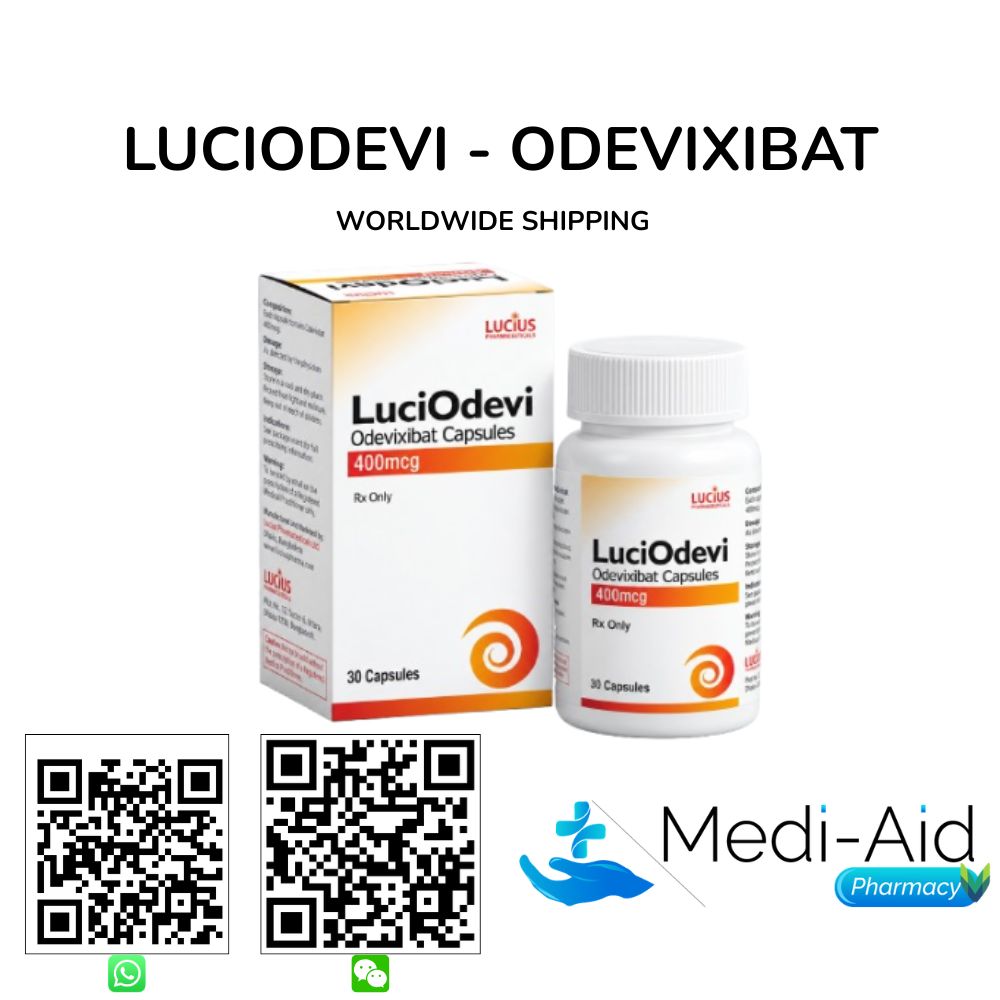
LuciOdevi 400 MCG (Odevixibat) is a first-in-class once-daily oral non-systemic reversible inhibitor of the ileal bile acid transporter (IBAT) a minimally absorbed, small-molecule gastrointestinal-acting agent that selectively and reversibly inhibits the apical sodium-dependent bile acid transporter (ASBT, encoded by SLC10A2) in the terminal ileum, blocking the enterohepatic recirculation of bile acids that drives the progressive hepatocellular injury, intractable pruritus, cholestasis, and liver fibrosis that define progressive familial intrahepatic cholestasis (PFIC) supplied as pellet capsules in 400 mcg strength in a 30-capsule pot and manufactured by Lucius Pharmaceuticals (Lao) Co., Ltd. in Laos.
Its active ingredient, odevixibat INN, acts locally in the gut with minimal systemic absorption plasma concentrations are generally below the limit of quantification at therapeutic doses to reduce hepatic bile acid load by interrupting reabsorption of bile acids from the terminal ileum, redirecting them into the colon for faecal excretion and thereby decreasing the toxic hepatic bile acid accumulation that underpins cholestatic liver disease in PFIC. In the pivotal Phase 3 PEDFIC 1 trial (62 patients, ages 6 months to 15.9 years), odevixibat met both primary endpoints: the proportion of positive pruritus assessments reached 53.5% in odevixibat-treated patients versus 28.7% with placebo (p=0.004), and 33.3% of odevixibat patients achieved a serum bile acid (sBA) response defined as a ≥70% reduction from baseline or sBA ≤70 µmol/L at Week 24 compared to 0% of placebo patients (p=0.003), establishing statistically significant and clinically meaningful superiority over placebo as the first approved oral IBAT inhibitor for PFIC.
Searching for LuciOdevi 400 MCG Odevixibat? Mediaid Pharmacy lists this product across its liver disease medicines and Lucius Pharmaceuticals portfolios and ships it worldwide.
Basic Product Information of LuciOdevi 400 MCG (Odevixibat)
| Brand Name | LuciOdevi 400 MCG (Odevixibat) |
| Product Name | LuciOdevi |
| Generic Name | Odevixibat INN |
| Drug Class | First-in-Class Non-Systemic Reversible Ileal Bile Acid Transporter (IBAT) Inhibitor; Oral Minimally Absorbed Enterohepatic Circulation Disruptor; Cholestatic Liver Disease Agent; PFIC Agent; ASBT Inhibitor; SLC10A2 Inhibitor; Bile Acid Modulator; Paediatric Liver Disease Medicine |
| Formulation | Oral Capsule / Pellet Capsule |
| Available Strengths | 400 mcg per capsule |
| Available Pack Size | 30 Capsules per Pot |
| Dosing & Dose Modification | Recommended dose: Odevixibat is dosed once daily orally on a weight-based basis starting dose 40 mcg/kg/day, with the option to escalate to a maximum of 120 mcg/kg/day based on clinical response and tolerability. LuciOdevi 400 mcg pellet capsules can be swallowed whole or the pellets can be opened and sprinkled onto soft food or non-carbonated water for patients unable to swallow capsules do not crush or chew the pellets. Hepatic impairment: Odevixibat is not recommended in patients with decompensated cirrhosis or severe hepatic impairment; exercise caution and monitor hepatic parameters closely in patients with advanced hepatic fibrosis. Drug interactions: Odevixibat may reduce the intestinal absorption of co-administered medications separate administration times where clinically relevant; consult the full prescribing information. Monitor fat-soluble vitamins (A, D, E, K) periodically during treatment and supplement as clinically indicated. LuciOdevi capsules must not be administered to patients on an exclusively liquid diet. Always consult the treating paediatric hepatologist or gastroenterologist before initiating LuciOdevi in any patient. |
| Primary Indications | Treatment of pruritus in patients 6 months of age and older with progressive familial intrahepatic cholestasis (PFIC). LuciOdevi (Odevixibat) is used as a once-daily oral therapy. Each treatment decision must account for PFIC subtype, hepatic impairment stage, fat-soluble vitamin status, body weight, concomitant medications, and surgical biliary diversion history always consult the full prescribing information and the treating paediatric hepatologist. |
| Manufacturer | Lucius Pharmaceuticals (Lao) Co., Ltd., Laos |
| Country of Origin | Laos |
| Originator Reference Brand | BYLVAY® (odevixibat capsules and pellets, by Ipsen / originally developed by Albireo Pharma FDA-approved July 2021 as the first drug approved in the United States for the treatment of pruritus in patients with PFIC aged 6 months and older; Ipsen acquired Albireo Pharma in March 2023). BYLVAY® contains odevixibat INN as the active pharmaceutical ingredient in the same first-in-class non-systemic reversible IBAT inhibitor drug class. LuciOdevi is manufactured by Lucius Pharmaceuticals (Lao) Co., Ltd. in Laos and is supplied through Mediaid Pharmacy for international procurement. |
| Global Supplier | Mediaid Pharmacy, Worldwide Shipping Available |
| Storage Conditions | Store at room temperature (20°C to 25°C; excursions permitted 15°C to 30°C). Keep in the original packaging and protect from moisture. Keep out of the reach of children. |
How LuciOdevi (Odevixibat) Works: First-in-Class Non-Systemic Reversible IBAT Inhibition in Progressive Familial Intrahepatic Cholestasis
Odevixibat INN is the world’s first approved oral non-systemic reversible inhibitor of the ileal bile acid transporter (IBAT) a structurally novel, minimally absorbed small molecule that acts exclusively within the gastrointestinal lumen to selectively block the apical sodium-dependent bile acid transporter (ASBT), encoded by the SLC10A2 gene, located on the brush-border membrane of enterocytes in the terminal ileum. IBAT is the primary transporter responsible for reabsorbing the majority of conjugated and unconjugated bile acids from the distal small intestine into the portal circulation, completing the enterohepatic circulation cycle that recycles approximately 95% of the bile acid pool with each digestive pass.
Progressive familial intrahepatic cholestasis (PFIC) is a group of rare autosomal recessive genetic liver diseases caused by loss-of-function mutations in genes encoding bile acid transport and regulatory proteins PFIC type 1 (ATP8B1/FIC1 deficiency), PFIC type 2 (ABCB11/BSEP deficiency), PFIC type 3 (ABCB4/MDR3 deficiency), and additional subtypes involving TJP2, NR1H4, and MYO5B all resulting in impaired bile acid secretion, progressive accumulation of toxic bile acids within hepatocytes, cholestatic liver injury, periportal fibrosis, cirrhosis, and liver failure. The hallmark symptom of PFIC intractable pruritus is driven by the accumulation of bile acids and their pruritogenic metabolites in hepatic, biliary, and systemic compartments; pruritus in PFIC is characteristically severe, debilitating, and frequently unresponsive to conventional antipruritic therapies, driving the majority of decisions to pursue surgical biliary diversion (SBD) or liver transplantation.
Odevixibat exploits a pharmacologically rational IBAT inhibition strategy: by reversibly and selectively blocking ASBT in the terminal ileum, odevixibat interrupts the enterohepatic recirculation of bile acids, redirecting a significantly greater fraction of the bile acid pool into the colon for faecal excretion, thereby reducing the hepatic bile acid load, lowering intrahepatic bile acid accumulation, decreasing serum bile acid (sBA) concentrations, and alleviating the downstream pruritic, cholestatic, and hepatotoxic consequences of PFIC.
The clinical consequence of IBAT inhibition in PFIC is a measurable, dose-dependent reduction in serum bile acid levels and progressive improvement in pruritus severity, quantified in clinical trials using validated observer-reported pruritus assessment instruments scored on a 0–4 scale. In the pivotal Phase 3 PEDFIC 1 trial the largest, global, randomised, double-blind, placebo-controlled Phase 3 clinical trial ever conducted in PFIC (62 paediatric patients, ages 6 months to 15.9 years, with PFIC type 1 or type 2) odevixibat met both primary endpoints: 53.5% of patients in the odevixibat arms achieved positive pruritus assessments versus 28.7% in the placebo arm (p=0.004), and 33.3% of odevixibat-treated patients achieved a serum bile acid response (sBAs ≤70 µmol/L or ≥70% reduction from baseline at Week 24) compared to 0% of placebo patients (p=0.003). As a key secondary endpoint, 42.9% of patients in the odevixibat arms achieved a clinically meaningful improvement in pruritus score (≥1.0 point reduction from baseline on the 0–4 scale) at Week 24 versus 10.5% in the placebo arm (p=0.018), and mean reduction in serum bile acids was 114.3 µmol/L in the odevixibat arms compared to an increase of 13.1 µmol/L in the placebo arm (p=0.002).
The key pharmacological differentiator of odevixibat versus systemic bile acid modulators, ursodeoxycholic acid, and surgical biliary diversion is its non-systemic mechanism: odevixibat acts entirely within the gastrointestinal tract with plasma concentrations generally below the limit of quantification at therapeutic doses, providing effective IBAT inhibition and bile acid pool reduction without significant systemic drug exposure.
Pharmacokinetically, odevixibat has an average half-life of approximately 2.36 hours and is eliminated largely unchanged; its pharmacodynamic activity reduction of enteric IBAT function governs the therapeutic reduction of enterohepatic bile acid recirculation throughout the once-daily dosing interval. For the complete range of liver disease medicines at Mediaid Pharmacy, browse the full portfolio for worldwide shipping.
LuciOdevi 400 MCG (Odevixibat): Indications, Dosing, and Key Safety Information
| Approved Indications | Progressive Familial Intrahepatic Cholestasis (PFIC): Treatment of pruritus in patients 6 months of age and older with PFIC. LuciOdevi (Odevixibat) is administered as an oral once-daily therapy. Limitation of use: Odevixibat may not be effective in PFIC type 2 patients with ABCB11 variants that result in complete absence of bile salt export pump (BSEP) protein expression consult the full prescribing information and the treating paediatric hepatologist for patient selection guidance. |
| Recommended Dose | Patients 6 months of age and older with PFIC: Odevixibat is dosed once daily orally on a weight-based basis. The starting dose is 40 mcg/kg/day once daily; the dose may be escalated to a maximum of 120 mcg/kg/day based on clinical response and tolerability. LuciOdevi 400 mcg pellet capsules may be swallowed whole or the capsule may be opened and the pellets sprinkled onto soft food (applesauce, yoghurt) or dispersed in a small volume of non-carbonated water immediately before administration do not crush or chew the pellets. Administer at the same time each day. LuciOdevi must not be given to patients on an exclusively liquid diet. |
| Dose Modification | No specific dose adjustment guidance has been established for mild or moderate hepatic impairment in PFIC patients based on pharmacokinetic studies alone; however, odevixibat is not recommended in patients with decompensated cirrhosis or severe hepatic impairment monitor hepatic function parameters closely throughout treatment. Fat-soluble vitamin levels (A, D, E, K) should be monitored periodically and supplemented as clinically required, as odevixibat-mediated reduction in bile acid enterohepatic recirculation may reduce intestinal fat-soluble vitamin absorption. Where odevixibat is co-administered with other oral medications, separate administration times where clinically relevant to reduce the potential for reduced intestinal drug absorption caused by bile acid disruption in the small intestine. |
| Missed Dose | If a dose of LuciOdevi is missed, administer it as soon as remembered on the same day. If the missed dose is not remembered until the following day, skip the missed dose and continue with the next scheduled dose at the regular time. Do not administer two doses of LuciOdevi on the same day to compensate for a missed dose. |
| Important Warnings and Precautions | Hepatic Decompensation: Odevixibat is not recommended in patients with decompensated cirrhosis or severe hepatic impairment. Monitor liver function tests (ALT, AST, bilirubin, GGT) at baseline and periodically during LuciOdevi treatment. Interrupt or discontinue LuciOdevi if clinically significant worsening of hepatic function is observed.
Fat-Soluble Vitamin Deficiency: Odevixibat-mediated reduction of enterohepatic bile acid recirculation may impair intestinal absorption of fat-soluble vitamins A, D, E, and K. Monitor fat-soluble vitamin levels at baseline and periodically throughout treatment. Supplement fat-soluble vitamins as clinically indicated to prevent deficiency-related complications including coagulopathy (vitamin K), rickets (vitamin D), and retinopathy (vitamin A). Worsening Liver Disease: LuciOdevi may not be effective in all PFIC subtypes and in certain PFIC type 2 patients with complete BSEP protein absence. If liver disease worsens, reassess the indication and consider alternative management including surgical biliary diversion or liver transplantation evaluation in consultation with the treating paediatric hepatology centre. Drug Interactions Intestinal Absorption: Odevixibat acts in the intestinal lumen and may reduce the absorption of concomitantly administered oral medications. Separate the administration of LuciOdevi from other oral medications by a clinically appropriate interval where absorption is critical. Consult the full prescribing information for specific interaction guidance. Liquid Diet Restriction: LuciOdevi capsules and pellets must not be administered to patients who are on an exclusively liquid diet, as pellet integrity and absorption characteristics require a solid or semi-solid food vehicle for safe and effective administration. Pregnancy: The safety of odevixibat in pregnancy has not been established; animal studies have shown some evidence of reproductive harm. LuciOdevi is not recommended in pregnancy. Females of reproductive potential should use effective contraception during treatment. Consult the treating specialist immediately if pregnancy is confirmed during LuciOdevi therapy. Lactation: It is not known whether odevixibat is excreted in human breast milk. The potential for serious adverse reactions in breastfed infants from odevixibat cannot be excluded. The benefit-risk balance of breastfeeding during LuciOdevi treatment should be discussed with the treating paediatric hepatologist. Always consult the current full prescribing information for the complete and updated safety profile. |
| Common Adverse Reactions | Diarrhoea, abdominal pain, liver enlargement (hepatomegaly), fat-soluble vitamin deficiency, and liver inflammation (hepatitis / elevated transaminases). Diarrhoea was the most frequently reported adverse event in the PEDFIC 1 Phase 3 trial but occurred at a single-digit rate and was generally mild in severity. Most adverse reactions were mild-to-moderate and did not result in treatment discontinuation. Worsening of hepatic parameters including elevation of ALT, AST, and direct bilirubin has been reported during odevixibat treatment; monitor hepatic function throughout therapy. Always discuss the complete safety profile, fat-soluble vitamin monitoring, hepatic parameters, concomitant medication interactions, and dietary restrictions with the treating paediatric hepatologist before and throughout LuciOdevi treatment. |
| Drug Interactions | Odevixibat acts locally in the intestinal lumen with minimal systemic absorption and is eliminated largely unchanged it has a limited systemic pharmacokinetic drug interaction profile. However, because odevixibat disrupts bile acid-mediated facilitation of fat and fat-soluble compound absorption in the small intestine, concomitant oral medications whose absorption is bile-acid dependent may have reduced bioavailability. Bile acid sequestrants (cholestyramine, colesevelam): may bind odevixibat in the gut and reduce its therapeutic activity administer LuciOdevi at least 4–6 hours before or after bile acid sequestrants if co-administration is clinically necessary. Fat-soluble vitamins and lipid-soluble medications: monitor levels and supplement as clinically required; odevixibat-mediated reduction in bile acid recycling may impair micellar solubilisation and absorption of lipophilic compounds. Disclose all concomitant medications, nutritional supplements, and herbal products to the treating paediatric hepatologist before initiating LuciOdevi. |
| Hepatic Impairment | Odevixibat is not recommended in patients with decompensated cirrhosis or severe hepatic impairment. Since PFIC patients inherently present with progressive hepatic disease, careful and regular monitoring of liver function tests (ALT, AST, total and direct bilirubin, GGT, coagulation parameters) is required throughout LuciOdevi treatment. Consult the treating paediatric hepatologist for individualised guidance in patients with significant hepatic fibrosis, portal hypertension, or declining synthetic liver function before initiating and during LuciOdevi therapy. |
| Pregnancy & Lactation | The safety of odevixibat in human pregnancy has not been established; animal reproductive toxicity studies have shown evidence of potential reproductive harm at clinically relevant exposures. LuciOdevi is not recommended during pregnancy. Females of reproductive potential must use effective contraception during LuciOdevi treatment and for the recommended period after the final dose. A pregnancy test should be performed before initiating LuciOdevi treatment in females of reproductive potential. The excretion of odevixibat into human breast milk is unknown; the potential for adverse effects in breastfed infants cannot be excluded. The benefit-risk balance of continuing breastfeeding during LuciOdevi treatment must be assessed by the treating paediatric hepatologist. Notify the specialist immediately if pregnancy occurs during odevixibat treatment and discontinue LuciOdevi promptly pending specialist review. |
Who Should Use LuciOdevi 400 MCG (Odevixibat)?
LuciOdevi 400 MCG (Odevixibat) is indicated for patients 6 months of age and older with progressive familial intrahepatic cholestasis (PFIC) a group of rare autosomal recessive genetic cholestatic liver diseases characterised at the molecular level by inherited defects in hepatocanalicular bile acid transport proteins, progressive intrahepatic bile acid accumulation, hepatocellular injury, intractable pruritus, cholestasis, periportal fibrosis, and ultimately cirrhosis and liver failure in the absence of effective treatment. PFIC affects an estimated 1–2 children per 100,000 live births, with approximately 15,000 PFIC patients worldwide, and is fatal if left untreated.
First, infants, children, and adolescents 6 months of age and older with a confirmed genetic or clinical diagnosis of PFIC type 1 (FIC1 deficiency), PFIC type 2 (BSEP deficiency), PFIC type 3 (MDR3 deficiency), or other PFIC subtypes who present with elevated serum bile acids and moderate-to-severe pruritus that is impairing sleep, growth, and quality of life represent the primary indication population for LuciOdevi Odevixibat 400 mcg. In the pivotal Phase 3 PEDFIC 1 trial, odevixibat achieved a positive pruritus response in 53.5% of treated patients versus 28.7% with placebo (p=0.004), and a serum bile acid response in 33.3% of treated patients versus 0% with placebo (p=0.003), establishing statistically significant superiority as the first approved oral IBAT inhibitor in PFIC.
Second, PFIC patients who have failed, are intolerant of, or are not suitable candidates for conventional symptomatic management with ursodeoxycholic acid (UDCA), rifampin, naltrexone, or cholestyramine and for whom a non-systemic, once-daily oral IBAT inhibitor targeting the root cause of bile acid accumulation is preferred over surgical biliary diversion as an initial medical therapy may receive LuciOdevi as an evidence-based pharmacological intervention.
Third, PFIC patients with significant quality-of-life burden attributable to intractable pruritus particularly those with severe sleep disruption, impaired growth and development, anxiety, and social limitation caused by constant itch represent a population where odevixibat’s demonstrated pruritus reduction in both the PEDFIC 1 and PEDFIC 2 trials provides clinically important symptomatic and hepatic benefit.
Fourth, paediatric hepatology centres and specialist PFIC programmes co-managing patients with rare cholestatic liver diseases including Alagille syndrome or biliary atresia for which odevixibat is under further clinical evaluation may source LuciOdevi through Mediaid Pharmacy pending local regulatory guidance. LuciOdevi is not recommended for patients on exclusively liquid diets, is not recommended in patients with decompensated cirrhosis or severe hepatic impairment, and requires PFIC type 2 BSEP expression status assessment before initiation due to potential reduced efficacy in complete BSEP-null patients.
Paediatric hepatology centres co-sourcing LuciOdevi alongside other specialty liver medicines can browse the Mediaid Pharmacy liver disease medicines portfolio for the full selection available for international delivery.
Global Supplier: Mediaid Pharmacy Worldwide Shipping for LuciOdevi 400 MCG (Odevixibat)
Mediaid Pharmacy is a Dhaka-based supplier of specialty liver disease and rare paediatric medicines with worldwide shipping to patients, paediatric hepatology clinics, PFIC specialist centres, hospital pharmacy departments, rare disease treatment units, and international distributors across all regions. LuciOdevi 400 MCG (Odevixibat), manufactured by Lucius Pharmaceuticals (Lao) Co., Ltd. in Laos, is supplied as 30 capsules per pot in 400 mcg strength with pricing quotations, stock confirmation, full product documentation, and end-to-end international delivery tracking for every order. The 30-capsule pot format of LuciOdevi provides paediatric hepatology programmes with a practical monthly supply unit compatible with the weight-based once-daily dosing schedule for odevixibat, simplifying procurement planning for PFIC treatment programmes requiring continuous long-term therapy.
Paediatric hepatology centres, rare liver disease programmes, specialist PFIC treatment units, hospital pharmacy departments co-sourcing oral targeted liver therapies, international distributors, and individual families of PFIC patients can contact the Mediaid Pharmacy team through WhatsApp, phone, or WeChat for all inquiries regarding Odevixibat 400 mcg capsules for PFIC including current stock availability, current pricing, and international delivery timelines to their country. Procurement teams co-sourcing LuciOdevi with other specialty liver disease or rare paediatric medicines can browse the complete Mediaid Pharmacy liver disease medicines collection and the Lucius Pharmaceuticals medicines portfolio before requesting a consolidated quotation.
Why Choose LuciOdevi 400 MCG (Odevixibat) from Mediaid Pharmacy?
LuciOdevi 400 MCG (Odevixibat) delivers the world’s first approved oral non-systemic IBAT inhibitor for progressive familial intrahepatic cholestasis a first-in-class minimally absorbed bile acid transporter inhibitor backed by the landmark Phase 3 PEDFIC 1 trial that establishes odevixibat as the first drug ever approved in the United States for the treatment of PFIC pruritus, supported by evidence that it also reduces the serum bile acid accumulation that drives cholestatic liver injury. In the PEDFIC 1 Phase 3 trial (62 randomised paediatric patients), odevixibat met both co-primary endpoints: 53.5% positive pruritus response rate versus 28.7% with placebo (p=0.004), and 33.3% serum bile acid response rate versus 0% with placebo (p=0.003) at Week 24 representing the first successful Phase 3 trial of an oral pharmacological therapy in PFIC to support regulatory approval (FDA, July 2021; subsequently approved in additional jurisdictions).
Mean reduction in serum bile acids was 114.3 µmol/L in odevixibat-treated patients compared to an increase of 13.1 µmol/L in placebo, with durable response observed in the ongoing PEDFIC 2 open-label extension study. Odevixibat’s non-systemic IBAT inhibition mechanism is fundamentally distinct from systemic immunosuppressants, ursodeoxycholic acid, and bile acid sequestrants achieving targeted interruption of the enterohepatic bile acid recirculation cycle at its initial intestinal step, with plasma concentrations generally undetectable at therapeutic doses, providing a gut-restricted pharmacological profile that avoids systemic drug exposure and associated systemic toxicity. The 30-capsule monthly pot of LuciOdevi in the 400 mcg pellet capsule format supporting both swallowed-whole and pellet-sprinkle administration modes for paediatric patients provides practical dosing flexibility essential for treating PFIC in infants and young children who cannot swallow intact capsules.
LuciOdevi is manufactured by Lucius Pharmaceuticals (Lao) Co., Ltd. in Laos and is available through Mediaid Pharmacy with full product documentation, specialist supply coordination, and worldwide shipping from Dhaka. To source additional Lucius Pharmaceuticals liver disease and specialty medicines, visit the Mediaid Pharmacy Lucius Pharmaceuticals medicines section and the liver disease medicines portfolio, and contact the team for a personalised quotation.
Frequently Asked Questions About LuciOdevi 400 MCG (Odevixibat)
What is LuciOdevi 400 MCG (Odevixibat) used for?
LuciOdevi 400 MCG (Odevixibat) is the world’s first approved oral non-systemic ileal bile acid transporter (IBAT) inhibitor, used for the treatment of pruritus in patients 6 months of age and older with progressive familial intrahepatic cholestasis (PFIC). LuciOdevi works by reversibly inhibiting the apical sodium-dependent bile acid transporter (ASBT/SLC10A2) in the terminal ileum, blocking the enterohepatic reabsorption of bile acids, reducing their hepatic accumulation, lowering serum bile acid concentrations, and alleviating the intractable pruritus and cholestatic liver injury that characterise PFIC. The originator brand for odevixibat is BYLVAY® (Ipsen, FDA-approved July 2021). LuciOdevi, manufactured by Lucius Pharmaceuticals (Lao) Co., Ltd. in Laos, is available through Mediaid Pharmacy with worldwide shipping to patients, PFIC specialist centres, and paediatric hepatology clinics.
What is the generic name of LuciOdevi?
The generic name of LuciOdevi is odevixibat INN. LuciOdevi is the brand name registered by Lucius Pharmaceuticals (Lao) Co., Ltd. for odevixibat manufactured in Laos. LuciOdevi is formulated as oral pellet capsules in 400 mcg strength, supplied in a 30-capsule pot format. The originator reference brand is BYLVAY® (Ipsen). Mediaid Pharmacy distributes LuciOdevi globally with worldwide shipping to patients, paediatric hepatology centres, rare liver disease clinics, and hospital pharmacy departments managing PFIC patients.
What is the difference between LuciOdevi (Odevixibat) and BYLVAY (Odevixibat)?
LuciOdevi and BYLVAY® both contain odevixibat INN as the active pharmaceutical ingredient and share the same first-in-class non-systemic reversible IBAT inhibitor mechanism of action in PFIC. BYLVAY® is the originator brand originally developed by Albireo Pharma and now marketed by Ipsen following their acquisition of Albireo in March 2023; it was approved by the FDA in July 2021 for pruritus in patients 6 months of age and older with PFIC. LuciOdevi is manufactured by Lucius Pharmaceuticals (Lao) Co., Ltd. in Laos and is supplied in the 400 mcg pellet capsule strength in a 30-capsule pot, available through Mediaid Pharmacy for international procurement by specialist PFIC centres and patients in regions where BYLVAY® may be unavailable or cost-prohibitive. For the full range of liver disease medicines at Mediaid Pharmacy, visit the Mediaid Pharmacy liver disease medicines collection.
How is LuciOdevi 400 MCG (Odevixibat) administered?
LuciOdevi (Odevixibat) is administered orally once daily at the same time each day. The dose is weight-based: 40 mcg/kg/day as the starting dose, with the option to escalate to a maximum of 120 mcg/kg/day based on clinical response. LuciOdevi 400 mcg pellet capsules may be swallowed whole or opened and the pellets sprinkled onto a small amount of soft food (such as applesauce or yoghurt) or dispersed in a small volume of non-carbonated water administer immediately after mixing. Do not crush or chew the pellets. Do not administer LuciOdevi to patients on an exclusively liquid diet. If a dose is missed, administer it as soon as remembered on the same day; if not remembered until the next day, skip the missed dose and continue with the next scheduled dose do not give two doses in one day. Always consult the treating paediatric hepatologist before adjusting the dose or discontinuing LuciOdevi.
What are the side effects of LuciOdevi 400 MCG (Odevixibat)?
The most commonly reported adverse reactions of odevixibat in the PEDFIC 1 Phase 3 trial include diarrhoea, abdominal pain, hepatomegaly (liver enlargement), fat-soluble vitamin deficiency, and hepatitis (elevated liver enzymes). Diarrhoea was the most frequent adverse event but occurred at a single-digit rate and was generally mild. Elevation of ALT, AST, and direct bilirubin has been reported monitor hepatic function throughout treatment. Fat-soluble vitamin levels (A, D, E, K) should be monitored periodically and supplemented as clinically indicated, as odevixibat may reduce intestinal absorption of fat-soluble vitamins. Always discuss the complete safety profile, hepatic monitoring plan, fat-soluble vitamin supplementation, dietary restrictions, and drug interaction potential with the treating paediatric hepatologist before and throughout LuciOdevi treatment.
How effective is Odevixibat (LuciOdevi) for progressive familial intrahepatic cholestasis (PFIC)?
Odevixibat has demonstrated statistically significant and clinically meaningful efficacy in PFIC in the Phase 3 PEDFIC 1 trial the largest global, randomised, double-blind, placebo-controlled Phase 3 trial ever conducted in PFIC (62 paediatric patients, ages 6 months to 15.9 years, with PFIC type 1 or type 2). Odevixibat achieved a positive pruritus response in 53.5% of treated patients versus 28.7% with placebo (p=0.004), and a serum bile acid response (sBAs ≤70 µmol/L or ≥70% reduction from baseline at Week 24) in 33.3% of treated patients versus 0% of placebo patients (p=0.003). Mean serum bile acid reduction was 114.3 µmol/L in odevixibat arms versus an increase of 13.1 µmol/L in placebo arms (p=0.002). Durable responses in both pruritus and serum bile acids were observed in the PEDFIC 2 open-label extension study. LuciOdevi delivers the same active ingredient odevixibat INN in the 400 mcg pellet capsule format, sourced through Mediaid Pharmacy with worldwide shipping. For the complete liver disease medicines range at Mediaid Pharmacy, browse the full portfolio.
Is LuciOdevi 400 MCG (Odevixibat) safe during pregnancy or while breastfeeding?
LuciOdevi (Odevixibat) is not recommended during pregnancy, as animal reproductive toxicity studies have shown evidence of potential harm at clinically relevant exposures. Females of reproductive potential must use effective contraception during LuciOdevi treatment and for the recommended period after the final dose. A pregnancy test should be performed before initiating LuciOdevi in females of reproductive potential. Breastfeeding is not recommended during LuciOdevi treatment because it is unknown whether odevixibat is excreted in human breast milk and the potential for adverse effects in breastfed infants cannot be excluded. If pregnancy occurs during odevixibat treatment, the treating paediatric hepatologist must be notified immediately. Consult the treating specialist before starting LuciOdevi in any patient of reproductive potential and review the current prescribing information for the most up-to-date reproductive safety guidance.
Can I order LuciOdevi 400 MCG (Odevixibat) online with worldwide shipping?
Yes. Mediaid Pharmacy supplies LuciOdevi 400 MCG (Odevixibat) to patients, paediatric hepatology clinics, PFIC specialist centres, rare liver disease treatment units, hospital pharmacy departments, and healthcare providers globally. Contact Mediaid Pharmacy via WhatsApp, phone, or WeChat at +8801773428128, or email info@mediaidpharmacy.com for pricing, current stock availability, and international delivery details for your country.
Order LuciOdevi 400 MCG (Odevixibat) with Worldwide Shipping
Phone / WhatsApp / WeChat: +8801773428128 | Email: info@mediaidpharmacy.com


Reviews
There are no reviews yet.