
Description
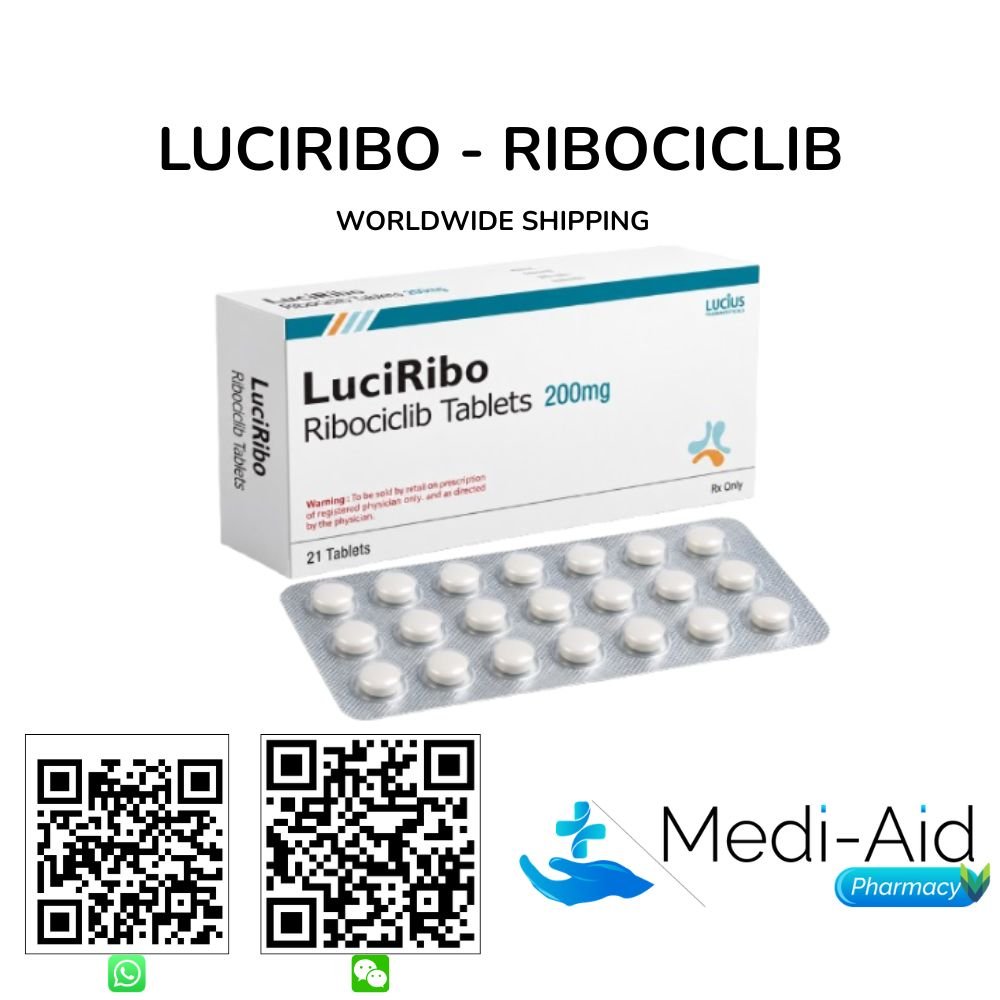
LuciRibo 200 MG (Ribociclib) is an orally bioavailable, selective, small-molecule cyclin-dependent kinase 4 and 6 (CDK4/6) inhibitor an ATP-competitive kinase inhibitor that selectively occupies the adenosine triphosphate (ATP)-binding pocket of CDK4 and CDK6, blocking CDK4/cyclin D1 and CDK6/cyclin D3 complex formation and thereby preventing phosphorylation of the retinoblastoma protein (Rb) at serine and threonine residues (Ser780, Ser795, Ser807/811, Thr821, Thr826), maintaining Rb in its hypophosphorylated, transcriptionally repressive state, sequestering E2F transcription factors, and enforcing G1-to-S phase cell cycle arrest in hormone receptor-positive (HR+) breast cancer cells supplied as film-coated tablets, 200 mg strength, 21 tablets per box, and manufactured by Lucius Pharmaceuticals (Lao) Co., Ltd. in Laos.
Ribociclib, the active pharmaceutical ingredient (API) of LuciRibo, holds FDA-approved indications for hormone receptor-positive (HR+), human epidermal growth factor receptor 2-negative (HER2-) breast cancer across three distinct clinical settings: (1) in combination with an aromatase inhibitor (AI) as initial endocrine-based therapy for premenopausal, perimenopausal, or postmenopausal women and adult men with HR+/HER2- advanced or metastatic breast cancer (MBC); (2) in combination with fulvestrant for HR+/HER2- advanced or metastatic breast cancer in postmenopausal women or adult men; and (3) in combination with a nonsteroidal aromatase inhibitor (NSAI) as adjuvant treatment for adult patients with HR+/HER2- early breast cancer (EBC) at high risk of recurrence (stage 2 or 3 disease) the third and most recent approval, granted in 2024, based on the Phase 3 NATALEE trial.
The pivotal Phase 3 MONALEESA-2 trial (NCT01958021) established first-line ribociclib plus letrozole as a standard-of-care regimen in postmenopausal HR+/HER2- MBC, demonstrating a median progression-free survival (PFS) of 25.3 months versus 16.0 months with placebo plus letrozole (HR 0.568; 95% CI 0.457–0.704; p<0.001) a 44% reduction in the risk of disease progression or death along with a statistically significant overall survival (OS) benefit, establishing ribociclib as the only CDK4/6 inhibitor to demonstrate statistically significant OS improvements across all three of its randomized Phase 3 trials in metastatic breast cancer (MONALEESA-2, MONALEESA-3, and MONALEESA-7). The recommended dose of ribociclib is 600 mg (three LuciRibo 200 MG film-coated tablets) once daily for 21 days followed by 7 days off (a 3-weeks-on/1-week-off schedule within a 28-day cycle); at this dose, one 21-tablet box of LuciRibo provides exactly one complete 21-day on-treatment period per cycle.
Important: Neutropenia is the primary and most frequent dose-limiting toxicity of ribociclib, with Grade 3 or 4 neutropenia occurring in approximately 59% of patients in the MONALEESA-2 trial; complete blood count (CBC) with differential must be monitored before initiating therapy, before each cycle, on Day 14 of the first two cycles, and as clinically indicated. QTc prolongation is a clinically significant cardiac risk of ribociclib requiring mandatory electrocardiogram (ECG) monitoring at baseline, on Day 14 of Cycle 1, at the beginning of Cycle 2, and as clinically indicated; ribociclib is contraindicated in patients with a baseline QTc interval greater than 450 ms.
Additional serious risks include hepatotoxicity (Grade 3 or higher ALT/AST elevations in approximately 10% of patients; LFT monitoring at baseline, every 2 weeks for the first 2 cycles, before each subsequent cycle, and as clinically indicated), interstitial lung disease (ILD)/pneumonitis, and embryo-fetal toxicity. Strong CYP3A4 inhibitors increase ribociclib plasma exposure and must be avoided or substituted with agents that have minimal CYP3A4 inhibitory activity; strong CYP3A4 inducers must be avoided as they substantially reduce ribociclib efficacy.
Concomitant use of drugs known to prolong the QT interval must be avoided throughout ribociclib therapy. Searching for LuciRibo 200 MG Ribociclib? Mediaid Pharmacy lists this product across its oncology medicines, breast cancer medicines, and Lucius Pharmaceuticals medicines portfolios and ships it worldwide.
Basic Product Information of LuciRibo 200 MG (Ribociclib)
| Brand Name | LuciRibo 200 MG (Ribociclib) |
| Product Name | LuciRibo |
| Generic Name | Ribociclib (developmental code LEE011; a selective, orally bioavailable, small-molecule CDK4/6 inhibitor and G1 cell cycle checkpoint enforcer belonging to the pyrido[3,4-d]pyrimidine class of cyclin-dependent kinase inhibitors; the originator brand is Kisqali, developed by Novartis Institutes for BioMedical Research (NIBR) under a research collaboration with Astex Pharmaceuticals and commercialized globally by Novartis Pharmaceuticals; initial FDA approval for HR+/HER2- advanced or metastatic breast cancer in combination with an aromatase inhibitor for postmenopausal women: 13 March 2017; second FDA approval expanded to pre/perimenopausal women and in combination with fulvestrant: 18 July 2018; third FDA approval for adjuvant treatment of HR+/HER2- early breast cancer at high risk of recurrence: 2024, based on NATALEE trial) |
| Drug Class | Selective CDK4/6 Inhibitor (Cyclin-Dependent Kinase 4 and 6 Inhibitor); Cell Cycle Inhibitor; G1/S Phase Cell Cycle Checkpoint Enforcer; Rb Phosphorylation Inhibitor; Pyrido[3,4-d]pyrimidine Derivative; Small-Molecule Kinase Inhibitor; Antineoplastic Agent; Targeted Oncology Agent; Oral Cancer Medicine; HR+/HER2- Breast Cancer Therapy; Endocrine Therapy Combination Partner; CDK Inhibitor |
| Formulation | Film-Coated Tablet (oral administration; may be taken with or without food consistent administration with or without food is recommended to maintain reproducible plasma drug levels; swallow tablets whole, do not crush, split, or chew; three 200 mg tablets are taken together as a single once-daily dose of 600 mg on each of the 21 treatment days within each 28-day cycle; if vomiting occurs after a dose, do not take an additional dose on that day resume the next scheduled dose the following day) |
| Available Strengths | 200 mg per film-coated tablet (LuciRibo 200 MG; the recommended starting dose of 600 mg/day requires three 200 mg tablets taken together once daily for 21 days; dose reductions for toxicity are achieved by reducing the number of 200 mg tablets: first reduction to 400 mg/day [two tablets], second reduction to 200 mg/day [one tablet]; permanently discontinue if unable to tolerate 200 mg/day) |
| Available Pack Size | 21 tablets per box (at the recommended starting dose of 600 mg once daily [three 200 mg tablets per day for 21 days], one box provides one complete 21-day on-treatment period per 28-day cycle; each 28-day treatment cycle requires one box of LuciRibo 200 MG, with 7 days off treatment at the end of each cycle requiring no tablets; at the first dose-reduced level of 400 mg/day [two tablets per day], one box provides 10 days of on-treatment supply and two boxes are needed per 21-day on-treatment period; at the second dose-reduced level of 200 mg/day [one tablet per day], one box provides one complete 21-day on-treatment period) |
| Dosing Schedule | Recommended Starting Dose: Ribociclib 600 mg (three LuciRibo 200 MG film-coated tablets) orally once daily on Days 1–21 of each 28-day cycle, followed by 7 days off treatment (Days 22–28). Taken with or without food at the same time each day. Combination Partners: Letrozole 2.5 mg/day continuously (throughout all 28 days) for the AI combination; fulvestrant 500 mg IM on Days 1, 15, and 29, then once monthly for the fulvestrant combination (with LHRH agonist in pre/perimenopausal patients); NSAI continuously for the adjuvant NATALEE indication. Mandatory Safety Monitoring: CBC with differential before initiating, before each cycle, on Day 14 of Cycles 1 and 2, and as clinically indicated; ECG at baseline, Day 14 of Cycle 1, beginning of Cycle 2, and as clinically indicated; LFTs at baseline, every 2 weeks for the first 2 cycles, before each subsequent cycle, and as clinically indicated. Dose Reduction for Toxicity (First Reduction): 400 mg once daily (two 200 mg tablets) on Days 1–21. Second Reduction: 200 mg once daily (one 200 mg tablet) on Days 1–21. Permanently discontinue if unable to tolerate 200 mg/day. Duration: Until disease progression or unacceptable toxicity for the metastatic indications; 3 years for the adjuvant NATALEE indication as studied. Important Drug Interaction Guidance: Avoid concomitant strong CYP3A4 inhibitors and inducers; avoid all QT-prolonging drugs throughout therapy; avoid concomitant use with strong CYP3A4-sensitive substrates with a narrow therapeutic index. Consult the treating oncologist for all dose modification decisions. |
| Primary Indications | (1) HR+/HER2- Advanced or Metastatic Breast Cancer in Combination with an Aromatase Inhibitor First-Line (MONALEESA-2 / MONALEESA-7): Ribociclib 600 mg/day (3 weeks on/1 week off) plus an aromatase inhibitor (AI) as initial endocrine-based therapy for premenopausal, perimenopausal, or postmenopausal women and adult men with HR+/HER2- advanced or metastatic breast cancer. Based on Phase 3 MONALEESA-2 (NCT01958021; n=668; postmenopausal): median PFS 25.3 months versus 16.0 months with placebo plus letrozole (HR 0.568; 95% CI 0.457–0.704; p<0.001) 44% risk reduction; statistically significant OS benefit demonstrated. And Phase 3 MONALEESA-7 (NCT02278120; n=672; pre/perimenopausal): median PFS 23.8 months versus 13.0 months (HR 0.553; 95% CI 0.441–0.694; p<0.001); statistically significant OS benefit demonstrated. Initial FDA approval: 13 March 2017; expanded to pre/perimenopausal: 18 July 2018.
(2) HR+/HER2- Advanced or Metastatic Breast Cancer in Combination with Fulvestrant First or Second Line (MONALEESA-3): Ribociclib 600 mg/day (3 weeks on/1 week off) plus fulvestrant 500 mg for postmenopausal women or adult men with HR+/HER2- advanced or metastatic breast cancer as initial therapy or after disease progression on prior endocrine therapy. Based on Phase 3 MONALEESA-3 (NCT02422615; n=726): median PFS 20.5 months versus 12.8 months with placebo plus fulvestrant (HR 0.593; 95% CI 0.480–0.732; p<0.001); statistically significant OS benefit demonstrated. FDA approval: 18 July 2018. (3) HR+/HER2- Early Breast Cancer Adjuvant Treatment at High Risk of Recurrence (NATALEE): Ribociclib 400 mg/day (3 weeks on/1 week off; reduced starting dose vs metastatic indication) plus a nonsteroidal aromatase inhibitor (NSAI) for adjuvant treatment of adult patients with HR+/HER2- stage 2 or 3 early breast cancer at high risk of recurrence. Based on Phase 3 NATALEE trial (NCT03701334): 28% reduction in risk of recurrence; 5-year data confirmed 29.1% risk reduction in distant disease-free survival. FDA approval: 2024. |
| Manufacturer / Brand | Lucius Pharmaceuticals (Lao) Co., Ltd., Country of Origin: Laos (originator molecule and brand Kisqali developed by Novartis Institutes for BioMedical Research [NIBR] under a research collaboration with Astex Pharmaceuticals, and commercialized globally by Novartis Pharmaceuticals Corporation; initial FDA approval for HR+/HER2- advanced or metastatic breast cancer in combination with an aromatase inhibitor for postmenopausal women: 13 March 2017; expanded FDA approval for pre/perimenopausal women and ribociclib plus fulvestrant: 18 July 2018; adjuvant FDA approval for HR+/HER2- early breast cancer at high risk of recurrence: 2024) |
| Global Supplier | Mediaid Pharmacy, Worldwide Shipping Available |
| Storage Conditions | Store below 30°C (86°F). Store in the original container with the lid tightly closed. Protect from moisture. Keep out of the reach of children. |
How LuciRibo (Ribociclib) Works: Selective CDK4/6 Inhibition, Retinoblastoma Protein Dephosphorylation, and G1 Cell Cycle Arrest in HR+/HER2- Breast Cancer
Ribociclib (LuciRibo) is a selective, ATP-competitive inhibitor of cyclin-dependent kinase 4 (CDK4) and cyclin-dependent kinase 6 (CDK6) the two serine/threonine kinases that form catalytically active complexes with D-type cyclins (cyclin D1, D2, and D3) and function as the primary enzymatic drivers of the G1-to-S phase transition in the mammalian cell cycle.
In hormone receptor-positive (HR+) breast cancer cells, estrogen receptor (ER) signaling transcriptionally upregulates cyclin D1 expression, which drives the formation of active CDK4/cyclin D1 and CDK6/cyclin D3 complexes. These activated CDK4/6-cyclin D complexes phosphorylate the retinoblastoma tumor suppressor protein (Rb) at multiple serine and threonine residues including Ser780, Ser795, Ser807/Ser811, Thr821, and Thr826 converting Rb from its hypophosphorylated (active, transcriptionally repressive) state to its hyperphosphorylated (inactivated) state.
Hyperphosphorylated Rb releases E2F transcription factors from their inhibitory Rb–E2F complexes, enabling E2F-driven transcription of S-phase entry genes including cyclin E, dihydrofolate reductase (DHFR), thymidine kinase, and CDC25A, thereby committing the cell to DNA synthesis and G1-to-S phase progression. CDK4/6 hyperactivation through cyclin D1 overexpression, CDK4/6 gene amplification, or Rb pathway loss of function is a defining molecular feature of HR+/HER2- breast cancer and represents the central vulnerability that ribociclib exploits.
Ribociclib binds selectively to the ATP-binding cleft of CDK4 and CDK6 through reversible, non-covalent interactions forming hydrogen bonds with the kinase hinge region residues (Val101 in CDK4; Val101 in CDK6) and hydrophobic contacts with the DFG activation loop without forming permanent covalent bonds, thereby maintaining kinase occupancy for the duration of plasma drug exposure without permanently inactivating CDK4/6. By occupying the ATP-binding site, ribociclib competitively blocks ATP binding and prevents the phosphotransfer reaction by which CDK4/6-cyclin D complexes phosphorylate Rb.
The functional consequence of ribociclib-mediated CDK4/6 inhibition is the maintenance of Rb in its hypophosphorylated, transcriptionally active state: hypophosphorylated Rb binds E2F transcription factors and recruits transcriptional repressor complexes including histone deacetylases (HDACs) and chromatin-remodeling proteins to E2F-regulated gene promoters, silencing S-phase entry gene transcription and enforcing G1 cell cycle arrest. This G1 arrest is cytostatic rather than cytotoxic in isolation: ribociclib halts cell division without direct induction of apoptosis, and restoration of CDK4/6 activity upon drug removal allows cell cycle re-entry.
The clinical rationale for combining ribociclib with endocrine therapy (aromatase inhibitors, fulvestrant) derives from their mechanistically complementary and synergistic antiproliferative effects: endocrine therapy reduces cyclin D1 transcription by blocking ER signaling at the upstream level, while ribociclib simultaneously prevents the downstream CDK4/6-mediated phosphorylation of Rb, producing deeper and more durable G1 arrest than either agent alone and delaying the emergence of endocrine-therapy resistance mechanisms, particularly those driven by CDK4/6-independent Rb hyperphosphorylation through amplification of cyclin E or CDK2.
Beyond its primary CDK4/6-Rb-E2F axis mechanism, emerging evidence from the MONALEESA clinical program and translational studies suggests that ribociclib may modulate additional cellular pathways beyond G1 arrest, including enhanced tumor immunogenicity through CDK4/6 inhibition-mediated upregulation of antigen presentation machinery (MHC-I) and suppression of DNMT3A-driven epigenetic silencing of immunostimulatory gene signatures, as well as potentiation of anti-tumor immune responses through direct effects on regulatory T cells (Tregs) and CD8+ cytotoxic T lymphocyte activity.
These immunomodulatory mechanisms may contribute to the sustained, durable responses including long-term PFS exceeding 4 years observed in approximately 23% of first-line HR+/HER2- MBC patients treated with ribociclib plus endocrine therapy across the pooled MONALEESA-2, MONALEESA-3, and MONALEESA-7 analysis presented at the 2025 San Antonio Breast Cancer Symposium (SABCS). The 3-weeks-on/1-week-off dosing schedule of ribociclib was specifically designed to allow neutrophil progenitor cell recovery in the bone marrow during the 7-day rest period, managing the CDK4/6 inhibitor class-effect of reversible neutropenia while preserving continuous tumor CDK4/6 pathway suppression throughout the treatment course when combined with continuously dosed endocrine therapy partners.
Who Should Use LuciRibo 200 MG (Ribociclib)?
LuciRibo 200 MG (Ribociclib) is indicated for adult patients across three distinct HR+/HER2- breast cancer clinical settings first-line metastatic disease in combination with an aromatase inhibitor, first- or second-line metastatic disease in combination with fulvestrant, and high-risk early breast cancer in the adjuvant setting in combination with a nonsteroidal aromatase inhibitor representing the broadest clinical indication footprint of any approved CDK4/6 inhibitor across the full spectrum of HR+/HER2- breast cancer from early-stage to metastatic disease. All ribociclib indications require confirmation of hormone receptor (HR) positivity (estrogen receptor [ER] and/or progesterone receptor [PR] expression of ≥1% by immunohistochemistry [IHC]) and confirmed HER2-negativity (IHC 0, IHC 1+, or IHC 2+/FISH-negative) by an approved diagnostic test before initiating LuciRibo therapy.
First, adult patients with HR+/HER2- advanced or metastatic breast cancer who have not received prior systemic therapy in the metastatic setting including both postmenopausal and premenopausal/perimenopausal patients (premenopausal and perimenopausal patients must receive concurrent ovarian suppression with an LHRH agonist such as goserelin or leuprolide) represent the MONALEESA-2 and MONALEESA-7-defined first-line combination AI indication for LuciRibo.
The Phase 3 MONALEESA-2 trial (NCT01958021) enrolled 668 postmenopausal women with HR+/HER2- advanced or metastatic breast cancer who had received no prior systemic therapy for advanced disease and randomized them 1:1 to ribociclib 600 mg/day (3 weeks on/1 week off) plus letrozole 2.5 mg/day continuously versus placebo plus letrozole. The primary endpoint of investigator-assessed PFS was met with a median PFS of 25.3 months in the ribociclib arm versus 16.0 months in the placebo arm (HR 0.568; 95% CI 0.457–0.704; p<0.001), representing a 44% reduction in the risk of disease progression or death.
Ribociclib plus letrozole also demonstrated a statistically significant overall survival benefit in the final MONALEESA-2 analysis the first CDK4/6 inhibitor to demonstrate OS benefit in a first-line Phase 3 MBC trial. The Phase 3 MONALEESA-7 trial (NCT02278120) confirmed equivalent first-line benefit in the premenopausal and perimenopausal population, enrolling 672 pre- or perimenopausal women with HR+/HER2- advanced breast cancer randomized 1:1 to ribociclib plus tamoxifen or a nonsteroidal aromatase inhibitor plus goserelin versus placebo, achieving a median PFS of 23.8 months versus 13.0 months (HR 0.553; 95% CI 0.441–0.694; p<0.001) and a statistically significant OS benefit establishing ribociclib as the only CDK4/6 inhibitor to demonstrate OS in both postmenopausal (MONALEESA-2) and premenopausal/perimenopausal (MONALEESA-7) Phase 3 first-line MBC trials.
Second, postmenopausal women and adult men with HR+/HER2- advanced or metastatic breast cancer suitable for fulvestrant-based endocrine therapy in both the first-line and second-line settings (after prior endocrine therapy) are candidates for the MONALEESA-3-defined ribociclib plus fulvestrant indication. The Phase 3 MONALEESA-3 trial (NCT02422615) enrolled 726 postmenopausal patients with HR+/HER2- advanced or metastatic breast cancer who had received no prior or one prior line of endocrine therapy (but no prior CDK4/6 inhibitor therapy) and randomized them 2:1 to ribociclib 600 mg/day plus fulvestrant 500 mg versus placebo plus fulvestrant.
The primary endpoint of BICR-assessed PFS was met with a median PFS of 20.5 months in the ribociclib arm versus 12.8 months in the placebo arm (HR 0.593; 95% CI 0.480–0.732; p<0.001), and a statistically significant OS benefit was demonstrated making ribociclib the first and only CDK4/6 inhibitor to show statistically significant OS in combination with fulvestrant in a Phase 3 trial. The PFS and OS benefits of ribociclib plus fulvestrant were consistent across both the first-line and second-line subpopulations in the MONALEESA-3 trial, supporting the use of this combination across both endocrine-naïve and prior-endocrine-therapy-treated metastatic patients.
Third, adult patients with HR+/HER2- early breast cancer with high-risk stage 2 or stage 3 disease including patients with node-positive disease and node-negative patients with high-risk disease characteristics are candidates for the NATALEE-defined adjuvant ribociclib plus NSAI indication. The Phase 3 NATALEE trial (NCT03701334) evaluated ribociclib 400 mg/day (3 weeks on/1 week off; a reduced starting dose compared to the metastatic setting) plus an NSAI versus NSAI alone in patients with HR+/HER2- early breast cancer at high risk of recurrence, including patients with stage 2 and stage 3 disease who had previously received or were candidates for chemotherapy, as well as stage 2 node-negative patients with high-risk genomic features.
The five-year NATALEE analysis demonstrated a 28% reduction in the risk of recurrence and a 29.1% risk reduction in distant disease-free survival with ribociclib plus NSAI versus NSAI alone, establishing adjuvant ribociclib as the only CDK4/6 inhibitor approved for the broadest early breast cancer population including both node-positive and high-risk node-negative stage 2 disease. Ribociclib is not indicated for: patients with HER2-positive breast cancer (ribociclib has no established efficacy in HER2-positive disease); patients with HR-negative (triple-negative) breast cancer; patients with a baseline QTc interval greater than 450 ms (ribociclib is contraindicated in this population due to QTc prolongation risk); patients with severe hepatic impairment (Child-Pugh C) without specialist supervision and dose modification; and patients who are pregnant.
HR+/HER2- advanced breast cancer oncology departments, adjuvant therapy programs for high-risk early breast cancer, hospital pharmacies managing breast cancer treatment protocols, and individual patients and families accessing oral targeted oncology medicines can contact Mediaid Pharmacy directly for LuciRibo 200 MG availability, pricing, and worldwide delivery.
Global Supplier: Mediaid Pharmacy Worldwide Shipping for LuciRibo 200 MG (Ribociclib)
Mediaid Pharmacy is a Dhaka-based supplier of specialty targeted oncology, breast cancer, and rare disease medicines with worldwide shipping to patients, HR+/HER2- breast cancer oncology departments, CDK4/6 inhibitor treatment programs, adjuvant and metastatic breast cancer treatment units, hospital pharmacies, oncology day units, patient access programs, and international distributors across all regions. LuciRibo 200 MG (Ribociclib), manufactured by Lucius Pharmaceuticals (Lao) Co., Ltd. in Laos, is supplied as 200 mg film-coated tablets in 21-tablet boxes, with pricing quotations, stock confirmation, full product documentation, and end-to-end international delivery tracking for every order.
The clinical and procurement significance of the 21-tablet box format is directly tied to ribociclib’s dosing architecture: at the recommended starting dose of 600 mg/day (three 200 mg tablets per day for 21 days), one box of LuciRibo 200 MG provides exactly one complete on-treatment period of a single 28-day treatment cycle, aligning the box size with the standard 3-weeks-on/1-week-off treatment cycle used by all oncology pharmacies, hospital formularies, and patient access programs managing ribociclib therapy globally.
For patients receiving the NATALEE adjuvant starting dose of ribociclib 400 mg/day (two 200 mg tablets per day for 21 days), one box provides 10 days of on-treatment supply and two boxes are needed per 21-day on-treatment period within each 28-day cycle. For patients dose-reduced to 200 mg/day (one tablet per day), one box provides one complete 21-day on-treatment period.
HR+/HER2- advanced breast cancer oncology departments managing first- or second-line CDK4/6 inhibitor programs; adjuvant oncology teams sourcing ribociclib for high-risk early breast cancer patients; hospital formulary procurement departments co-sourcing LuciRibo with other oral targeted oncology medicines; and individual patients and families accessing ribociclib for HR+/HER2- breast cancer treatment can contact the Mediaid Pharmacy team through WhatsApp, phone, or WeChat for LuciRibo 200 MG stock availability, current pricing, and international delivery timelines.
Why Choose LuciRibo 200 MG (Ribociclib) from Mediaid Pharmacy?
LuciRibo (Ribociclib) from Lucius Pharmaceuticals (Lao) Co., Ltd. delivers the validated selective CDK4/6 inhibition mechanism of ribociclib a molecule with three distinct FDA-approved indications spanning first-line HR+/HER2- MBC in combination with an AI (MONALEESA-2 and MONALEESA-7; FDA 2017 and 2018), first- or second-line HR+/HER2- MBC in combination with fulvestrant (MONALEESA-3; FDA 2018), and adjuvant treatment of high-risk HR+/HER2- early breast cancer in combination with an NSAI (NATALEE; FDA 2024) as a precisely formulated 200 mg oral film-coated tablet in a clinically aligned 21-tablet box providing exactly one complete 21-day on-treatment period per 28-day cycle at the recommended 600 mg/day starting dose. Ribociclib is pharmacologically and clinically distinguished within the CDK4/6 inhibitor class by four evidence-based attributes.
First, ribociclib is the only CDK4/6 inhibitor to demonstrate statistically significant overall survival (OS) benefit across all three of its randomized Phase 3 trials in advanced or metastatic breast cancer (MONALEESA-2, MONALEESA-3, and MONALEESA-7) a distinction that no other approved CDK4/6 inhibitor has achieved and that positions ribociclib as the CDK4/6 inhibitor with the most robust OS evidence base across the full spectrum of HR+/HER2- MBC populations, from postmenopausal women in the first-line AI-combination setting to premenopausal women receiving ovarian suppression to postmenopausal patients in the fulvestrant-combination setting at both first-line and second-line. The NCCN Clinical Practice Guidelines in Oncology (NCCN Guidelines®) for Breast Cancer designate ribociclib (Kisqali) as a Category 1 Preferred CDK4/6 inhibitor for first-line treatment of HR+/HER2- advanced breast cancer in combination with an AI and in combination with fulvestrant the highest evidence rating within the NCCN framework and as the only CDK4/6 inhibitor with a Category 1 Preferred designation for both node-positive and high-risk node-negative stage 2 early breast cancer in the adjuvant setting.
Second, ribociclib achieved a statistically significant OS benefit in the premenopausal and perimenopausal HR+/HER2- MBC population (MONALEESA-7) a clinical context in which breast cancer disproportionately affects women of reproductive age and in which the demonstration of an OS benefit by an oral CDK4/6 inhibitor combined with ovarian suppression and endocrine therapy establishes the CDK4/6-inhibitor-plus-endocrine-therapy platform as the new standard of care across all menopausal status groups, without restricting ribociclib’s proven OS benefit to postmenopausal patients alone.
Third, ribociclib is the only CDK4/6 inhibitor approved for the broadest adjuvant early breast cancer population including stage 2 node-negative patients with high-risk disease characteristics, beyond the traditionally node-positive-only early breast cancer adjuvant populations based on the NATALEE trial design, which enrolled a wider, higher-risk EBC population than other CDK4/6 inhibitor adjuvant trials, with five-year data confirming 28% risk reduction in recurrence and 29.1% reduction in distant disease-free survival events, and six-year ESMO 2026 OS data further reinforcing durable benefit.
Fourth, ribociclib is an orally self-administered, once-daily tablet taken for 21 consecutive days within each 28-day cycle, enabling complete outpatient management with the structured 7-day treatment-free rest period serving as both a tolerability safeguard for neutrophil recovery and an integrated quality-of-life benefit that allows patients to manage and anticipate their treatment schedule at home. The 600 mg starting dose (three LuciRibo 200 MG tablets taken together once daily on Days 1–21) and the 7-day rest interval are engineered into a clinical cycle that aligns naturally with standard oncology clinic visit schedules for toxicity monitoring and CBC assessment.
LuciRibo 200 MG is manufactured by Lucius Pharmaceuticals (Lao) Co., Ltd. and is available through Mediaid Pharmacy in 21-tablet boxes. To source the complete range of CDK4/6 inhibitor therapies, HR+ breast cancer medicines, and oncology medicines, visit the Mediaid Pharmacy breast cancer medicines portfolio, the oncology medicines collection, and the Lucius Pharmaceuticals medicines range, and contact the team for a personalized quotation.
Frequently Asked Questions About LuciRibo 200 MG (Ribociclib)
What is LuciRibo 200 MG (Ribociclib) used for?
LuciRibo 200 MG (Ribociclib) is an oral selective CDK4/6 (cyclin-dependent kinase 4 and 6) inhibitor with three FDA-approved indications in HR+/HER2- breast cancer: (1) in combination with an aromatase inhibitor (AI) as initial endocrine-based therapy for premenopausal, perimenopausal, or postmenopausal women and adult men with HR+/HER2- advanced or metastatic breast cancer based on Phase 3 MONALEESA-2 (median PFS 25.3 months vs 16.0 months; HR 0.568; p<0.001; 44% risk reduction; OS benefit demonstrated) and MONALEESA-7 (median PFS 23.8 months vs 13.0 months; HR 0.553; p<0.001; OS benefit demonstrated) FDA approval 13 March 2017, expanded 18 July 2018; (2) in combination with fulvestrant for postmenopausal HR+/HER2- advanced or metastatic breast cancer (first-line or second-line) based on Phase 3 MONALEESA-3 (median PFS 20.5 months vs 12.8 months; HR 0.593; p<0.001; OS benefit demonstrated) FDA approval 18 July 2018; and (3) in combination with an NSAI as adjuvant treatment for adult patients with HR+/HER2- stage 2 or 3 early breast cancer at high risk of recurrence based on Phase 3 NATALEE trial (28% reduction in risk of recurrence; 29.1% risk reduction in distant disease-free survival) FDA approval 2024. The recommended starting dose for the metastatic indications is 600 mg (three LuciRibo 200 MG tablets) once daily on Days 1–21 of each 28-day cycle. LuciRibo 200 MG, 21 tablets per box, is manufactured by Lucius Pharmaceuticals (Lao) Co., Ltd. in Laos and is available through Mediaid Pharmacy with worldwide shipping.
What is the generic name of LuciRibo?
The generic name of LuciRibo is ribociclib (developmental code LEE011). Ribociclib is an orally bioavailable, selective, small-molecule inhibitor of cyclin-dependent kinase 4 and 6 (CDK4/6), belonging to the class of pyrido[3,4-d]pyrimidine CDK inhibitors. Ribociclib prevents phosphorylation of the retinoblastoma protein (Rb) by CDK4/cyclin D1 and CDK6/cyclin D3 complexes, maintaining Rb in its active, transcriptionally repressive hypophosphorylated state, which sequesters E2F transcription factors and enforces G1 cell cycle arrest in HR+ breast cancer cells. Ribociclib is structurally and pharmacologically distinct from palbociclib and abemaciclib the other approved CDK4/6 inhibitors by its pyrido[3,4-d]pyrimidine core scaffold, its specific kinase selectivity profile, its 3-weeks-on/1-week-off dosing schedule, and its unique status as the only CDK4/6 inhibitor to demonstrate statistically significant overall survival benefit across all three of its Phase 3 randomized controlled trials in advanced breast cancer (MONALEESA-2, MONALEESA-3, and MONALEESA-7). The originator brand of ribociclib is Kisqali, developed by Novartis Institutes for BioMedical Research (NIBR) in collaboration with Astex Pharmaceuticals, with the first FDA approval on 13 March 2017. LuciRibo is manufactured by Lucius Pharmaceuticals (Lao) Co., Ltd. in Laos and is available as 200 mg film-coated tablets in 21-tablet boxes. Mediaid Pharmacy distributes LuciRibo (Ribociclib) globally with worldwide shipping to patients, breast cancer oncology departments, hospital pharmacies, and HR+/HER2- breast cancer treatment programs worldwide.
What is the difference between ribociclib, palbociclib, and abemaciclib for HR+/HER2- breast cancer?
Ribociclib (LuciRibo), palbociclib (Ibrance), and abemaciclib (Verzenio) are all oral CDK4/6 inhibitors approved for HR+/HER2- breast cancer but differ in molecular selectivity, dosing schedule, clinical evidence for overall survival, adjuvant approvals, and tolerability profiles. Ribociclib is a selective CDK4/6 inhibitor (pyrido[3,4-d]pyrimidine) taken once daily for 21 days followed by 7 days off (3-weeks-on/1-week-off) at 600 mg/day; it is the only CDK4/6 inhibitor to demonstrate statistically significant OS in all three of its Phase 3 trials (MONALEESA-2, MONALEESA-3, and MONALEESA-7) and the only CDK4/6 inhibitor approved for the broadest adjuvant early breast cancer population including high-risk stage 2 node-negative patients (NATALEE trial; FDA 2024). Palbociclib (a pyrido[2,3-d]pyrimidine CDK4/6 inhibitor) is taken once daily for 21 days followed by 7 days off at 125 mg/day but has not demonstrated a statistically significant OS benefit in any of its Phase 3 trials (PALOMA-2, PALOMA-3). Abemaciclib (a benzimidazole CDK4/6 and CDK2 inhibitor) is taken twice daily continuously (without a scheduled rest week) at 150 mg twice daily and is the only CDK4/6 inhibitor approved as monotherapy in heavily pretreated HR+/HER2- MBC; it demonstrated a DFS benefit in the adjuvant monarchE trial but in the node-positive early breast cancer population only, without the broader stage 2 node-negative high-risk population included in the NATALEE ribociclib approval. The primary toxicity profiles also differ: neutropenia is dose-limiting for both ribociclib and palbociclib (Grade 3/4 neutropenia ~59% and ~66%, respectively); diarrhea is the primary toxicity for abemaciclib (Grade 3 ~11%). QTc prolongation monitoring is specifically required for ribociclib but not for palbociclib or abemaciclib. Visit the Mediaid Pharmacy breast cancer medicines collection for the complete HR+/HER2- targeted therapy portfolio.
What are the side effects of LuciRibo (Ribociclib)?
The most clinically significant adverse effects of ribociclib are neutropenia, QTc prolongation, hepatotoxicity, and interstitial lung disease (ILD)/pneumonitis. Neutropenia is the primary and most frequent dose-limiting toxicity, occurring as Grade 3 or 4 neutropenia in approximately 59% of patients in the MONALEESA-2 trial; complete blood count (CBC) with differential must be monitored before initiating therapy, before each cycle, on Day 14 of the first two cycles, and as clinically indicated. Febrile neutropenia occurred in approximately 2% of patients; hold ribociclib for Grade 3 neutropenia (absolute neutrophil count [ANC] 500–999 cells/mm³) until ANC recovers to Grade 1 (≥1,000 cells/mm³) or higher. QTc prolongation is a class-specific cardiac risk of ribociclib that requires mandatory ECG monitoring at baseline, Day 14 of Cycle 1, beginning of Cycle 2, and as clinically indicated; ribociclib is contraindicated in patients with a baseline QTc >450 ms, and must be held for QTc >480 ms and permanently discontinued for QTc >500 ms or for QTc >480 ms with significant arrhythmia. Avoid all concomitant QT-prolonging agents. Hepatotoxicity: Grade 3 or higher ALT or AST elevations occurred in approximately 10% of patients; LFTs must be monitored at baseline, every 2 weeks for the first 2 cycles, before each subsequent cycle, and as clinically indicated. Nausea (45–51%), fatigue (36–37%), diarrhea (35%), headache, and alopecia (33–43%) are common and typically manageable with supportive care. Interstitial lung disease (ILD)/pneumonitis has been reported; permanently discontinue ribociclib for confirmed ILD/pneumonitis. Rash occurred in approximately 17% of patients. Always establish baseline CBC, liver function tests, electrolytes (including potassium, calcium, and magnesium), and ECG before initiating LuciRibo under the supervision of an experienced oncologist.
How is LuciRibo 200 MG (Ribociclib) administered?
Ribociclib (LuciRibo 200 MG) is administered orally, once daily, at the same time each day, with or without food consistent administration with or without food is recommended to maintain reproducible plasma drug levels. The approved starting dose for the metastatic indications is 600 mg (three LuciRibo 200 MG film-coated tablets) once daily on Days 1–21 of each 28-day cycle, followed by 7 days off treatment (Days 22–28). The adjuvant NATALEE indication uses a reduced starting dose of 400 mg (two LuciRibo 200 MG tablets) once daily on Days 1–21 of each 28-day cycle. All three tablets (or two tablets at the reduced dose) are taken together as a single once-daily dose. Swallow tablets whole; do not crush, split, or chew ribociclib tablets. If vomiting occurs after a dose, do not take an additional dose on the same day; resume the next scheduled dose the following day. Ribociclib is taken in combination with a continuously dosed endocrine therapy partner (aromatase inhibitor throughout all 28 days of the cycle; fulvestrant per standard IM injection schedule; or NSAI throughout all 28 days for the adjuvant indication). Premenopausal and perimenopausal patients must receive concurrent ovarian suppression with an LHRH agonist throughout ribociclib treatment. Mandatory safety monitoring before initiating and during treatment includes: CBC with differential (baseline, before each cycle, Day 14 of Cycles 1 and 2); ECG (baseline, Day 14 of Cycle 1, beginning of Cycle 2); LFTs (baseline, every 2 weeks for 2 cycles, then before each cycle); and electrolytes (baseline and as clinically indicated). Dose reductions follow a stepwise protocol: 400 mg/day (two 200 mg tablets), then 200 mg/day (one tablet); permanently discontinue if 200 mg/day is not tolerated. All dosing modifications must be directed by the treating oncologist.
Is LuciRibo (Ribociclib) safe during pregnancy or while breastfeeding?
LuciRibo (Ribociclib) can cause fetal harm and is contraindicated during pregnancy based on its mechanism of action and animal reproductive toxicology findings. Inhibition of CDK4/6-mediated cell cycle progression by ribociclib disrupts the rapid cellular proliferation required for normal embryonic organogenesis, placental development, and fetal tissue growth throughout all trimesters of gestation; animal studies demonstrated embryo-fetal lethality and malformations at exposures below the recommended human dose. Females of reproductive potential must use effective contraception during ribociclib treatment and for at least 3 weeks after the last dose. Males with female partners of reproductive potential should use effective contraception during ribociclib treatment and for at least 3 weeks after the last dose. Ribociclib may impair male fertility based on animal reproductive toxicology data showing testicular toxicity; advise male patients of this potential risk and discuss fertility preservation options including sperm banking with the treating oncologist before initiating therapy. There are no data on the presence of ribociclib or its metabolites in human breast milk; because of the potential for serious adverse reactions including myelosuppression and cell cycle disruption in a breastfed infant, breastfeeding is not recommended during ribociclib treatment and for at least 3 weeks after the last dose. Verify pregnancy status with a serum or urine pregnancy test before initiating LuciRibo in all females of reproductive potential. Discuss all aspects of reproductive planning, fertility counseling, and contraceptive requirements with the treating oncologist before starting ribociclib therapy.
Can I order LuciRibo 200 MG (Ribociclib) online with worldwide shipping?
Yes. Mediaid Pharmacy supplies LuciRibo 200 MG (Ribociclib), film-coated tablets, 21 tablets per box, manufactured by Lucius Pharmaceuticals (Lao) Co., Ltd. in Laos, to patients, HR+/HER2- breast cancer oncology departments, CDK4/6 inhibitor therapy programs, adjuvant and metastatic breast cancer treatment units, hospital pharmacies, oncology day units, patient access programs, and healthcare providers globally. Contact Mediaid Pharmacy via WhatsApp, phone, or WeChat at +8801773428128, or email info@mediaidpharmacy.com for pricing, current stock availability, shipping options, and international delivery details for your country.
Order LuciRibo 200 MG (Ribociclib) with Worldwide Shipping
Phone / WhatsApp / WeChat: +8801773428128 | Email: info@mediaidpharmacy.com

Reviews
There are no reviews yet.