
Description
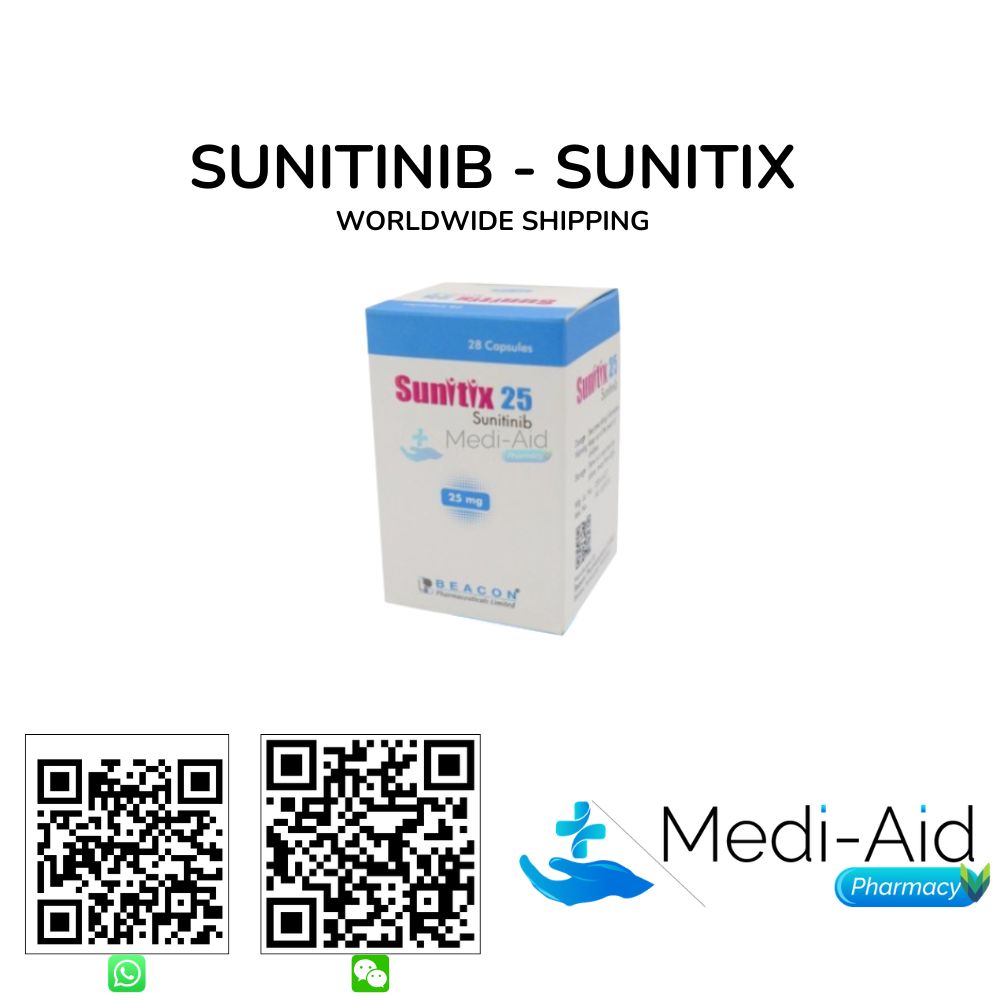
Sunitix 50MG (Sunitinib) is a potent multi-targeted receptor tyrosine kinase (RTK) inhibitor that simultaneously inhibits Vascular Endothelial Growth Factor Receptors (VEGFR-1, VEGFR-2, VEGFR-3), Platelet-Derived Growth Factor Receptors (PDGFR-α and PDGFR-β), c-Kit, FLT3, RET, and CSF-1R. Sunitix is indicated for the treatment of advanced Renal Cell Carcinoma (RCC), Gastrointestinal Stromal Tumour (GIST) after imatinib failure or intolerance, and progressive, well-differentiated Pancreatic Neuroendocrine Tumours (pNET) in adults with unresectable locally advanced or metastatic disease. By blocking both tumour angiogenesis and direct oncogenic receptor signalling, Sunitinib delivers dual anti-angiogenic and anti-tumour activity across multiple cancer types. Oncologists and patients seeking a comprehensive range of oncology and specialty cancer medicines can review Mediaid Pharmacy’s complete oncology portfolio. Sunitix is manufactured by Beacon Pharmaceuticals Ltd., Bangladesh and globally supplied by Mediaid Pharmacy with worldwide shipping.
Basic Product Information of Sunitix 50MG (Sunitinib)
| Brand Name | Sunitix (Sunitinib) |
| Generic Name | Sunitinib INN |
| Drug Class | Multi-Targeted Receptor Tyrosine Kinase Inhibitor (VEGFR-1, VEGFR-2, VEGFR-3, PDGFR-α, PDGFR-β, c-Kit, FLT3, RET, CSF-1R) |
| Available Strengths | 50mg |
| Formulation | Hard Capsule |
| Pack Size | 6 Capsules per Pack (1×6 Blister) |
| Primary Indications | Advanced Renal Cell Carcinoma (RCC) first-line; Gastrointestinal Stromal Tumour (GIST) post-imatinib; Progressive Pancreatic Neuroendocrine Tumour (pNET) |
| Regulatory Approvals | USFDA Approved (January 2006 RCC and GIST; May 2011 pNET). EMA Approved. Health Canada Approved. |
| Originator Brand | Sutent by Pfizer |
| Manufacturer | Beacon Pharmaceuticals Ltd., Mymensingh, Bangladesh |
| Global Supplier | Mediaid Pharmacy Worldwide Shipping Available |
| Registration Territories | Bangladesh, Sri Lanka, Nepal |
| Storage Conditions | Store below 25°C in a dry place away from light and moisture. Keep out of the reach of children. |
How Sunitix 50MG (Sunitinib) Works Multi-Targeted Kinase Inhibition, Anti-Angiogenic and Direct Anti-Tumour Mechanism
Sunitinib, the active ingredient in Sunitix 50MG, is a first-in-class oral multi-targeted receptor tyrosine kinase (RTK) inhibitor that simultaneously inhibits VEGFR-1, VEGFR-2, VEGFR-3, PDGFR-α, PDGFR-β, c-Kit (CD117), FLT3 (FMS-like Tyrosine Kinase 3), RET, and CSF-1R (Colony-Stimulating Factor 1 Receptor). This broad but clinically targeted kinase inhibition profile distinguishes Sunitinib from selective single-pathway TKIs and enables dual anti-tumour activity: direct anti-proliferative effects on tumour cells that express oncogenic kinases (particularly c-Kit in GIST and RET in certain tumour subtypes), and anti-angiogenic effects through VEGFR and PDGFR blockade that starve tumours of the blood supply required for growth and metastasis. VEGF-mediated pathological angiogenesis is a dominant driver of tumour progression across multiple solid tumour types, including clear-cell renal cell carcinoma (RCC), gastrointestinal stromal tumours (GIST), and pancreatic neuroendocrine tumours (pNET).
Sunitinib binds to the ATP-binding pocket of VEGFR, PDGFR, c-Kit, FLT3, and RET tyrosine kinases in a competitive manner, preventing ATP from engaging the catalytic site and blocking downstream phosphorylation cascades including the PI3K/AKT, MAPK/ERK, and STAT signalling pathways. In advanced RCC, persistent dysregulation of the VHL–HIF–VEGF axis in clear-cell tumours creates constitutive VEGF overexpression and pathological tumour vascularity; Sunitinib interrupts this axis at the receptor level. In GIST, oncogenic gain-of-function mutations in c-Kit or PDGFR-α drive tumour proliferation; Sunitinib inhibits both wild-type and several imatinib-resistant c-Kit mutant isoforms. Preclinical xenograft studies demonstrated that Sunitinib reduced tumour vascular density by greater than 70% and induced tumour regression in multiple solid tumour models within three weeks of treatment initiation.
Sunitinib has an active primary metabolite, SU12662 (N-desethyl sunitinib), which has a similar potency and kinase inhibition profile to the parent compound and contributes substantially to the total pharmacological activity of each dose. The combined active moiety (sunitinib + SU12662) achieves steady-state plasma concentrations within 10–14 days of the start of each treatment cycle. Oncologists can review the full portfolio of VEGFR inhibitors, targeted therapies, and oncology specialty medicines available from Mediaid Pharmacy for worldwide supply.
Approved Indications for Sunitix 50MG (Sunitinib)
Sunitix (Sunitinib) 50mg is indicated for the following oncological conditions in adult patients:
|
Advanced Renal Cell Carcinoma (RCC) First-Line Treatment Sunitix is indicated as first-line treatment for adult patients with advanced or metastatic clear-cell renal cell carcinoma (RCC). The pivotal Phase III trial (Motzer et al., NEJM 2007; N=750) demonstrated Sunitinib achieved a median PFS of 11 months versus 5 months for interferon-alfa (HR 0.42; p<0.001), with an ORR of 31% versus 6% and final OS of 26.4 months versus 21.8 months. USFDA approved January 2006. |
Gastrointestinal Stromal Tumour (GIST) Post-Imatinib Sunitix is indicated for adult patients with GIST after disease progression on, or intolerance to, imatinib mesylate. The Phase III placebo-controlled trial (Demetri et al., Lancet 2006; N=312) demonstrated Sunitinib extended time to tumour progression to 27.3 weeks versus 6.4 weeks for placebo (HR 0.33; p<0.0001), establishing Sunitinib as the standard second-line targeted therapy for imatinib-resistant GIST. USFDA approved January 2006. |
|
Progressive Pancreatic Neuroendocrine Tumours (pNET) Sunitinib is approved for progressive, well-differentiated pancreatic neuroendocrine tumours (pNET) in adults with unresectable, locally advanced or metastatic disease. The Phase III trial (Raymond et al., NEJM 2011; N=171) demonstrated a median PFS of 11.4 months with Sunitinib versus 5.5 months for placebo (HR 0.42; p<0.001), with ORR of 9.3% versus 0%. The recommended dose for pNET is 37.5mg once daily on a continuous schedule. USFDA approved May 2011. |
Specialist Assessment Required for All Indications Sunitix must be prescribed and initiated by a physician experienced in the use of anticancer therapies. For RCC, pathological confirmation of clear-cell histology is required. For GIST, prior treatment with imatinib and confirmation of disease progression or intolerance must be documented. For pNET, histopathological confirmation of well-differentiated (low- or intermediate-grade) tumour is required. Pre-treatment cardiac, hepatic, thyroid, and haematological assessment is mandatory. |
Key Clinical Benefits of Sunitix (Sunitinib) 50mg
|
Broadest Kinase Target Coverage of Any Approved TKI Sunitinib simultaneously inhibits nine receptor tyrosine kinases VEGFR-1/2/3, PDGFR-α/β, c-Kit, FLT3, RET, and CSF-1R delivering dual anti-angiogenic and direct anti-tumour activity across multiple oncogenic driver pathways in a single oral daily dose. This multi-kinase profile enables efficacy across three distinct tumour types (RCC, GIST, pNET) with a single compound. |
Phase III RCC Superiority Over Interferon-Alfa In the landmark Phase III first-line RCC trial (N=750), Sunitinib more than doubled median PFS to 11 months versus 5 months for interferon-alfa (HR 0.42; p<0.001) and delivered an ORR of 31% versus 6%, establishing it as the global standard of care for first-line metastatic clear-cell RCC and the benchmark comparator arm for all subsequent first-line RCC trials. |
Triple Oncological Indication RCC, GIST, and pNET Sunitinib is one of the few targeted agents with Phase III-proven efficacy and regulatory approval across three distinct oncological indications. This broad multi-tumour coverage reflects the fundamental role of VEGFR, PDGFR, and c-Kit signalling in diverse solid tumour types and makes Sunitinib an essential component of multidisciplinary oncology formularies worldwide. |
|
Distinctive Schedule 4/2 Dosing Regimen Sunitix 50mg follows the clinically validated Schedule 4/2 regimen for RCC and GIST: 50mg once daily for 4 consecutive weeks on, followed by 2 weeks off treatment forming a structured 6-week cycle. This intermittent schedule allows meaningful recovery from adverse effects during the rest phase, supporting better treatment tolerability and long-term adherence compared to continuous daily dosing with less active agents. |
Affordable Generic Alternative to Sutent Sunitix contains the same active ingredient as Sutent (Pfizer) in the same 50mg capsule formulation, at a dramatically reduced cost making first-line VEGFR-targeted RCC therapy and second-line GIST therapy financially accessible for patients in developing and developed markets who require continuous multi-cycle treatment spanning several months or years. |
WHO-GMP and cGMP Certified Manufacturing Sunitix is produced by Beacon Pharmaceuticals Ltd. under WHO-GMP, cGMP, and ISO-certified manufacturing standards the same quality framework applied across Beacon’s internationally exported oncology portfolio, verified for purity, potency, and bioequivalence with the originator product Sutent (Pfizer). |
How to Take Sunitix 50MG (Sunitinib) Dosage and Administration Guidelines
Route of Administration: Oral hard capsules swallowed whole with a glass of water, with or without food. Capsules must not be crushed, dissolved, or opened. Sunitinib can be taken at any time of day consistently; if a dose is missed, the patient should not take two doses on the same day.
Standard Dose for RCC and GIST (Schedule 4/2): 50mg once daily for 4 consecutive weeks (the treatment phase), followed by 2 weeks off treatment (the rest phase), forming a repeating 6-week cycle. This intermittent schedule known as Schedule 4/2 is the approved dosing regimen for advanced RCC and post-imatinib GIST. Treatment continues until disease progression or unacceptable toxicity.
Dose for Pancreatic Neuroendocrine Tumours (pNET): 37.5mg taken orally once daily on a continuous daily schedule without a planned rest period. Note: the 37.5mg dose for pNET requires appropriate capsule strengths; prescribing oncologists should confirm the available capsule configuration for pNET dosing.
First Dose Reduction for Toxicity (RCC/GIST): Reduce to 37.5mg once daily on the same Schedule 4/2 for management of significant adverse effects. Resume at 37.5mg once the toxicity resolves to Grade 1 or below.
Second Dose Reduction for Toxicity (RCC/GIST): Reduce to 25mg once daily on Schedule 4/2 if adverse effects persist or recur after the first dose reduction. Permanently discontinue Sunitix if the patient cannot tolerate 25mg per day.
Renal Impairment: No starting dose adjustment is required for patients with mild, moderate, or severe renal impairment, including patients with end-stage renal disease (ESRD) requiring dialysis. Dose adjustments during treatment should be based on individual tolerability and adverse event monitoring.
Hepatic Impairment: No starting dose adjustment is required for patients with mild (Child-Pugh Class A) or moderate (Child-Pugh Class B) hepatic impairment. Sunitinib has not been studied in patients with severe hepatic impairment (Child-Pugh Class C) and is not recommended in this population.
CYP3A4 Inhibitor Co-Administration: Avoid concomitant use of strong CYP3A4 inhibitors including ketoconazole, itraconazole, clarithromycin, atazanavir, ritonavir, and grapefruit juice as these substantially increase Sunitinib and SU12662 plasma exposure. If co-administration is unavoidable, consider reducing the Sunitinib dose to a minimum of 37.5mg per day. Avoid grapefruit and grapefruit juice throughout treatment.
Paediatric and Elderly Use: The safety and efficacy of Sunitinib in patients under 18 years of age have not been established; use is not recommended. No dose adjustment is required for elderly patients based on age alone, though close monitoring for adverse events is recommended given the higher likelihood of co-morbidities and polypharmacy in this population.
Clinical Monitoring Requirements During Sunitix (Sunitinib) Treatment
Regular and systematic clinical monitoring is essential throughout every cycle of Sunitix treatment. Cardiac monitoring is a priority: baseline left ventricular ejection fraction (LVEF) must be assessed by echocardiography or MUGA scan before initiating Sunitinib and repeated periodically during treatment; symptomatic or significant asymptomatic LVEF decline (≥20% from baseline) requires dose interruption or discontinuation. A baseline 12-lead ECG is required for QTc interval measurement; patients with congenital long QT syndrome, congestive heart failure, bradyarrhythmias, or electrolyte abnormalities are at elevated risk and require more frequent ECG monitoring. Blood pressure must be monitored before each treatment cycle and at regular intervals; Sunitinib-induced hypertension occurs in 15–34% of patients and requires antihypertensive therapy; severely uncontrolled hypertension requires temporary dose interruption.
Liver function tests (LFTs) including ALT, AST, total bilirubin, and alkaline phosphatase must be monitored at baseline and before each treatment cycle; if Grade 3–4 hepatotoxicity occurs, withhold Sunitinib pending investigation and permanently discontinue if severe drug-induced liver injury is confirmed. Thyroid function tests (TFTs) TSH, T3, and T4 must be assessed at baseline and at the start of each treatment cycle, as Sunitinib-induced hypothyroidism occurs in approximately 14–40% of patients and typically requires thyroid hormone replacement therapy; hyperthyroidism followed by hypothyroidism has also been reported. Complete blood count (CBC) must be monitored before each treatment cycle, as Grade 3–4 neutropenia and thrombocytopenia are observed in 10–20% of patients depending on the indication; dose modifications are required for severe myelosuppression. Patients must be assessed throughout treatment for signs of haemorrhagic events, thrombotic microangiopathy, gastrointestinal perforation or fistula, osteonecrosis of the jaw, adrenal insufficiency, and tumour lysis syndrome. Blood glucose should be monitored periodically, particularly in diabetic patients, as Sunitinib can cause significant hypoglycaemia in this population.
Drug Interactions and Important Safety Information for Sunitix (Sunitinib)
Sunitinib is metabolised primarily by hepatic CYP3A4 enzymes to its active metabolite SU12662. Strong CYP3A4 inhibitors including ketoconazole, itraconazole, clarithromycin, atazanavir, indinavir, nefazodone, nelfinavir, ritonavir, saquinavir, telithromycin, voriconazole, and grapefruit juice substantially increase the combined Sunitinib and SU12662 plasma exposure; ketoconazole co-administration increased Sunitinib AUC by approximately 49%. Strong CYP3A4 inducers including rifampicin, carbamazepine, phenytoin, phenobarbital, dexamethasone, and St. John’s Wort significantly reduce Sunitinib and SU12662 plasma concentrations and clinical efficacy; rifampicin reduced Sunitinib AUC by approximately 46%.
Concomitant use of agents known to prolong the QTc interval including Class IA and III antiarrhythmics, certain antipsychotics, tricyclic antidepressants, methadone, and fluoroquinolone antibiotics must be avoided due to additive QTc prolongation risk from Sunitinib. Patients receiving anticoagulants particularly warfarin require more frequent INR and prothrombin time monitoring throughout Sunitinib treatment, as the interaction is unpredictable and both supratherapeutic and subtherapeutic anticoagulation have been reported; low molecular weight heparin (LMWH) is preferred where anticoagulation is required. The combination of Sunitinib with bevacizumab was associated with increased mortality and dose-limiting toxicity in a Phase I RCC trial and must not be used. Patients must declare all current medications, supplements, and herbal products to their oncologist before starting Sunitix.
Side Effects and Precautions of Sunitix (Sunitinib)
|
Common Side Effects (>20% Incidence) Fatigue (approximately 54% of patients; Grade ≥3 in approximately 7%) Diarrhoea (approximately 40–44% of patients) Nausea (approximately 31% of patients) Mucositis / stomatitis (approximately 29–30% of patients) Palmar-Plantar Erythrodysesthesia (Hand-Foot Syndrome; approximately 14–29% of patients) Hypertension (approximately 15–34%; Grade ≥3 in approximately 4–13% depending on indication) Skin and hair discolouration characteristic yellow skin pigmentation and hair colour change (benign, from Sunitinib’s yellow pigment; reversible on dose interruption) Hypothyroidism (approximately 14–40% of patients; often develops during the first year of treatment) Decreased appetite and dysgeusia / altered taste (approximately 30% of patients combined) Myelosuppression neutropenia and thrombocytopenia require CBC monitoring each cycle |
Serious Warnings and Precautions Hepatotoxicity severe drug-induced liver injury, including fatal hepatic failure, has been reported. Monitor LFTs before each cycle; permanently discontinue for Grade 4 hepatic toxicity or drug-induced hepatic failure. Cardiac Toxicity decreased LVEF (approximately 13% of patients); symptomatic congestive heart failure (<1%); QTc prolongation and risk of Torsades de Pointes. Baseline and periodic echocardiography and ECG monitoring mandatory. Severe Hypertension Sunitinib commonly causes Grade 3–4 hypertension; blood pressure must be controlled to below 150/90 mmHg before dose escalation. Hypertensive crisis can occur and requires immediate intervention. Haemorrhagic Events tumour haemorrhage, gastrointestinal bleeding, pulmonary haemorrhage, and epistaxis have been reported. Use with caution in patients with active bleeding disorders or receiving anticoagulants. Adrenal Insufficiency clinical adrenal insufficiency has been reported in patients under stress (surgery, trauma, infection). Consider adrenal testing in patients with adrenal fatigue symptoms. Hypoglycaemia has been reported, particularly in diabetic patients. Embryo-Fetal Toxicity Sunitinib can cause fetal harm. Advise women of reproductive potential to use effective contraception during treatment and for at least 4 weeks after the final dose. Male patients should also use contraception during treatment and for 7 weeks after the final dose. |
Who Should Use Sunitix 50MG (Sunitinib)?
Sunitix (Sunitinib) 50mg is indicated for three distinct adult patient populations. In advanced Renal Cell Carcinoma (RCC), Sunitix is the first-line standard of care for patients with metastatic or unresectable clear-cell RCC who have not previously received systemic therapy for advanced disease; histopathological confirmation of clear-cell histology is required, as evidence in non-clear-cell RCC subtypes is limited. In Gastrointestinal Stromal Tumour (GIST), Sunitix is indicated for patients who have experienced disease progression on imatinib mesylate or who are intolerant of imatinib; prior documentation of imatinib treatment and progression is required, and oncologists should confirm c-Kit or PDGFR-α mutation status where possible to guide treatment decisions. In progressive Pancreatic Neuroendocrine Tumours (pNET), Sunitix is indicated for patients with well-differentiated, progressive, locally advanced or metastatic pNET; histopathological confirmation of well-differentiated (Grade 1 or 2) tumour morphology and NET origin in the pancreas is required before initiating therapy. Sunitix must be prescribed and supervised by a qualified oncologist with experience in targeted anticancer therapies and molecular oncology. A comprehensive pre-treatment assessment including cardiac evaluation (LVEF, ECG), LFTs, TFTs, CBC, blood pressure, and renal function is mandatory before initiating each patient on Sunitix. Healthcare providers seeking a comprehensive source for oncology specialty medicines including VEGFR inhibitors, targeted therapies for RCC, GIST, pNET, and other solid tumours can consult Mediaid Pharmacy’s oncology portfolio for global availability and worldwide supply.
Manufacturer: Beacon Pharmaceuticals Ltd., Bangladesh
Beacon Pharmaceuticals Ltd. is a leading pharmaceutical manufacturer based in Mymensingh, Bangladesh and the number one oncology and specialty medicine company in the country. Beacon was the first company in Bangladesh to export cancer medicines and currently exports to markets across Asia, Africa, Europe, and Latin America. With more than 200 generic drugs and 65 oncology products in its portfolio, Beacon operates under strict WHO-GMP, cGMP, and ISO-certified manufacturing standards. Sunitix (Sunitinib) 50mg is one of Beacon’s core targeted oncology products, offering a high-quality, bioequivalent, and cost-accessible alternative to Sutent (Pfizer) enabling oncologists and patients in Bangladesh, Sri Lanka, Nepal, and globally to access proven multi-kinase-targeted therapy across RCC, GIST, and pNET without the financial barriers of originator pricing.
Global Supplier: Mediaid Pharmacy Worldwide Shipping for Sunitix (Sunitinib)
Mediaid Pharmacy is a trusted global supplier of specialty oncology and targeted therapy medications. Sunitix (Sunitinib) 50mg is available through Mediaid Pharmacy with reliable worldwide shipping to South Asia, the Middle East, Africa, Europe, and beyond. Our team provides full order support including pricing, availability confirmation, documentation, and delivery tracking for oncologists, hospitals, and patients requiring Sunitix internationally. Contact Mediaid Pharmacy directly via WhatsApp, phone, or WeChat for enquiries about availability and delivery to your country.
Why Choose Sunitix (Sunitinib) from Mediaid Pharmacy?
Sunitix represents a clinically validated and cost-accessible option for the multi-targeted treatment of advanced RCC, imatinib-resistant GIST, and progressive pNET. As the generic bioequivalent of Sutent (Pfizer), Sunitix delivers the same active ingredient Sunitinib with the same proven VEGFR, PDGFR, c-Kit, FLT3, and RET inhibition mechanism, at a dramatically lower price that enables patients to sustain therapy across the multiple cycles required for optimal oncological benefit. The 50mg capsule formulation in a convenient 6-capsule pack allows flexible ordering aligned to the Schedule 4/2 treatment cycle structure, with Mediaid Pharmacy able to supply the quantities required for complete treatment cycles. Manufactured by Beacon Pharmaceuticals Ltd. under WHO-GMP and cGMP standards, and registered in Bangladesh, Sri Lanka, and Nepal, Sunitix is distributed globally by Mediaid Pharmacy as the trusted choice for oncologists and patients seeking proven multi-kinase-targeted therapy without financial barriers. For the complete range of oncology medicines available from Mediaid Pharmacy, including VEGFR inhibitors, GIST-targeted therapies, and other solid tumour treatments, visit our oncology medicines page.
Frequently Asked Questions About Sunitix 50MG (Sunitinib)
What is Sunitix 50MG (Sunitinib) used for?
Sunitix (Sunitinib) 50mg is a multi-targeted receptor tyrosine kinase inhibitor indicated for three oncological conditions in adult patients: (1) first-line treatment of advanced or metastatic Renal Cell Carcinoma (RCC); (2) treatment of Gastrointestinal Stromal Tumour (GIST) after disease progression on, or intolerance to, imatinib mesylate; and (3) treatment of progressive, well-differentiated Pancreatic Neuroendocrine Tumours (pNET) in patients with unresectable, locally advanced or metastatic disease. Sunitinib delivers dual anti-angiogenic and direct anti-tumour activity by inhibiting VEGFR, PDGFR, c-Kit, FLT3, RET, and CSF-1R kinases simultaneously.
What is the “4 weeks on, 2 weeks off” dosing schedule for Sunitix (Sunitinib)?
Schedule 4/2 refers to the approved dosing regimen for Sunitix in advanced RCC and GIST: 50mg once daily for 4 consecutive weeks (the active treatment phase), followed by 2 weeks off all Sunitinib doses (the rest phase), forming a 6-week treatment cycle. This cycle is then repeated until disease progression or unacceptable toxicity. The 2-week rest period allows recovery from cumulative adverse effects particularly fatigue, Hand-Foot Syndrome, mucositis, and myelosuppression and supports long-term treatment tolerability and adherence. For pNET, Sunitinib is given at 37.5mg continuously without a rest phase.
What strength and pack size is Sunitix (Sunitinib) available in?
Sunitix is available in 50mg hard capsules supplied in a pack of 6 capsules (1×6 blister pack). The 50mg strength covers the standard dose for advanced RCC and post-imatinib GIST on Schedule 4/2. Sunitix 50mg is registered in Bangladesh, Sri Lanka, and Nepal; contact Mediaid Pharmacy for supply to other territories worldwide.
Is Sunitix the same as Sutent (Sunitinib by Pfizer)?
Yes. Sunitix is the generic equivalent of Sutent (Pfizer). Both products contain the same active ingredient Sunitinib malate in the same 50mg capsule dosage form. Sunitix is manufactured by Beacon Pharmaceuticals Ltd. under WHO-GMP-certified standards in Bangladesh and delivers the same multi-targeted VEGFR, PDGFR, c-Kit, FLT3, RET, and CSF-1R tyrosine kinase inhibition profile as Sutent, at a significantly lower cost making multi-cycle targeted oncology treatment financially accessible for patients worldwide.
What are the most common side effects of Sunitix (Sunitinib)?
The most common side effects of Sunitix include fatigue (~54%), diarrhoea (~40–44%), nausea (~31%), mucositis/stomatitis (~29–30%), palmar-plantar erythrodysesthesia/Hand-Foot Syndrome (~14–29%), hypertension (~15–34%), characteristic yellow skin and hair discolouration (benign and reversible), hypothyroidism (~14–40%), decreased appetite, dysgeusia, vomiting, and myelosuppression (neutropenia, thrombocytopenia). Serious risks include hepatotoxicity, cardiac toxicity (decreased LVEF, heart failure), QTc prolongation, severe hypertension, haemorrhagic events, adrenal insufficiency, and embryo-fetal toxicity. Always consult your prescribing oncologist for a full individual risk assessment before and throughout Sunitix treatment.
Can Sunitix (Sunitinib) affect the heart?
Yes. Sunitinib can cause clinically meaningful cardiovascular toxicity. Decreased left ventricular ejection fraction (LVEF) occurs in approximately 13% of patients; symptomatic congestive heart failure has been reported in under 1% of patients. QTc interval prolongation can occur, creating a risk of ventricular arrhythmias including Torsades de Pointes. Baseline echocardiography or MUGA scan and a 12-lead ECG are required before initiating Sunitix, with periodic cardiac reassessment during treatment. Patients with pre-existing cardiac disease, prior anthracycline exposure, or significant cardiac risk factors require especially close cardiovascular monitoring throughout Sunitinib therapy. Dose interruption or permanent discontinuation is required for symptomatic heart failure, significant LVEF decline, or Grade 3–4 QTc prolongation.
Does Sunitix (Sunitinib) require dose adjustment for kidney or liver problems?
For renal impairment: no starting dose adjustment is required for mild, moderate, or severe renal impairment, or for patients with end-stage renal disease (ESRD) requiring dialysis; dose adjustments during treatment are based on individual tolerability. For hepatic impairment: no starting dose adjustment is required for mild or moderate hepatic impairment (Child-Pugh Class A or B); Sunitinib is not recommended in severe hepatic impairment (Child-Pugh Class C). LFTs must be monitored at baseline and before each treatment cycle regardless of baseline hepatic function. Always discuss kidney and liver function with your prescribing oncologist before starting Sunitix.
Can I order Sunitix 50MG (Sunitinib) online with worldwide shipping?
Yes. Mediaid Pharmacy supplies Sunitix (Sunitinib) 50mg to patients, oncologists, and healthcare facilities globally with worldwide shipping. Contact Mediaid Pharmacy via WhatsApp, phone, or WeChat at +8801773428128, or send your enquiry to info@mediaidpharmacy.com for pricing, stock availability, and delivery details for your country.
Order Sunitix 50MG (Sunitinib) with Worldwide Shipping
Phone / WhatsApp / WeChat: +8801773428128 | Email: info@mediaidpharmacy.com
Reviews
There are no reviews yet.