
Description
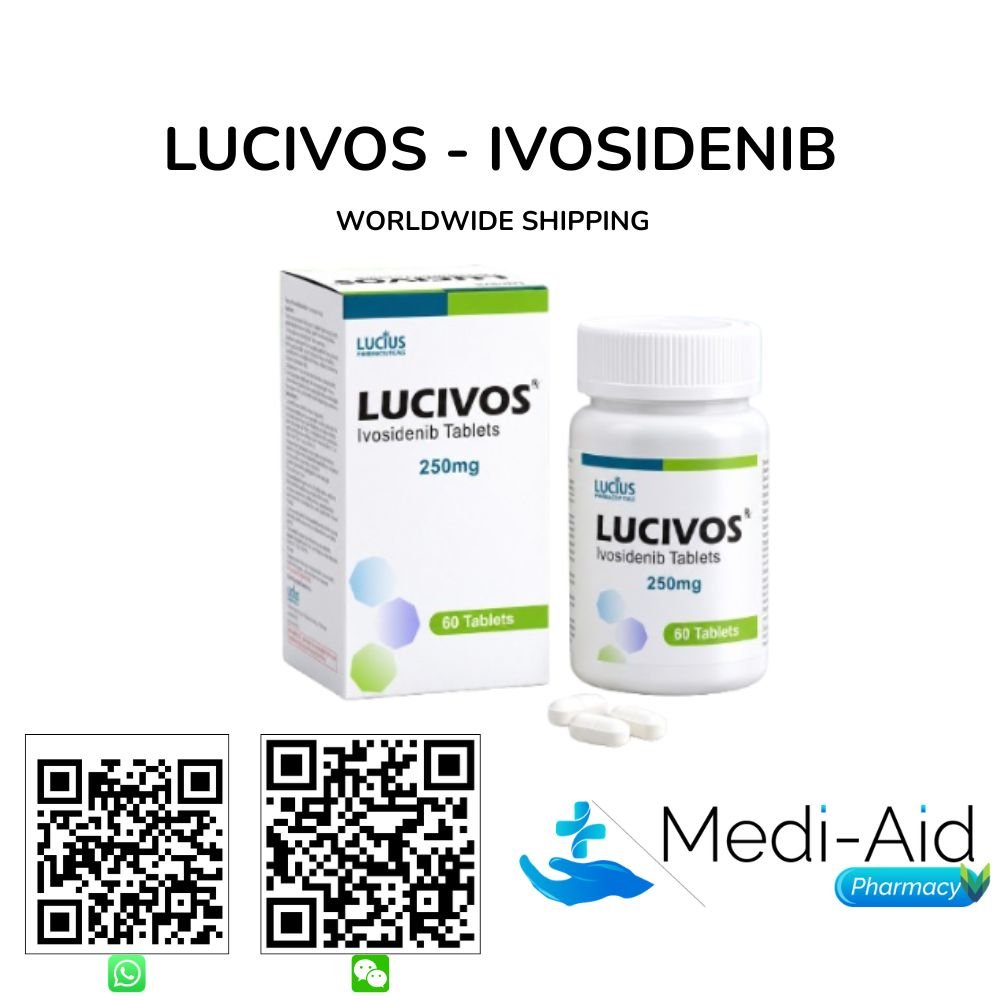
Lucivos 250 MG (Ivosidenib) is an orally administered first-in-class mutant isocitrate dehydrogenase-1 (IDH1) inhibitor and targeted oncology agent a selective small-molecule inhibitor of susceptible IDH1 R132 mutations that suppresses the neomorphic enzymatic activity of mutant IDH1, blocks the oncometabolite 2-hydroxyglutarate (2-HG) production that drives epigenetic dysregulation and hematopoietic differentiation arrest in IDH1-mutated malignancies, and restores normal myeloid differentiation in leukemic blast populations supplied as film-coated tablets in 250 mg strength in a 60-tablet pot and manufactured by Lucius Pharmaceuticals (Lao) Co., Ltd. in Laos.
Its active pharmaceutical ingredient, ivosidenib INN, is indicated as monotherapy and in combination for multiple IDH1-mutated oncological indications including relapsed or refractory acute myeloid leukaemia (AML), newly diagnosed AML in patients ineligible for intensive chemotherapy, and previously treated locally advanced or metastatic IDH1-mutated cholangiocarcinoma (bile duct cancer). Lucivos 250 MG film-coated tablets are administered at the standard ivosidenib dose of 500 mg once daily (two 250 mg tablets taken together) with each 60-tablet pot supplying 30 days of uninterrupted therapy at the full 500 mg/day maintenance dose.
The FDA approval of ivosidenib monotherapy for relapsed or refractory IDH1-mutated AML (July 2018) was supported by the Phase 1 open-label multi-centre study AG120-C-001, which enrolled 174 adults with relapsed or refractory IDH1-mutated AML; in the pivotal efficacy analysis, ivosidenib monotherapy achieved an overall response rate (ORR) of 41.6%, with complete remission (CR) in 21.6% and CR with partial haematological recovery (CRh) in 8.8% of treated patients. In cholangiocarcinoma, the Phase 3 ClarIDHy trial the first and only randomised Phase 3 trial in previously treated IDH1-mutated cholangiocarcinoma demonstrated that ivosidenib significantly improved median progression-free survival (2.7 months versus 1.4 months; HR 0.37; p<0.001) and prolonged median overall survival (10.8 versus 9.7 months; HR 0.69) compared with placebo. In newly diagnosed IDH1-mutated AML, the Phase 3 AGILE trial confirmed that ivosidenib in combination with azacitidine delivered a median overall survival of 24.0 months versus 7.9 months (HR 0.44; p=0.001) over azacitidine alone.
Important: Ivosidenib carries a risk of differentiation syndrome a potentially life-threatening condition characterised by rapid proliferation and differentiation of myeloid cells requiring clinical vigilance and prompt management; QTc interval prolongation and, rarely, Guillain-Barré syndrome have also been reported, requiring baseline ECG monitoring and clinical assessment before and throughout Lucivos therapy. Searching for Lucivos 250 MG Ivosidenib? Mediaid Pharmacy lists this product across its oncology medicines, leukemia medicines, and Lucius Pharmaceuticals portfolios and ships it worldwide.
Basic Product Information of Lucivos 250 MG (Ivosidenib)
| Brand Name | Lucivos 250 MG (Ivosidenib) |
| Product Name | Lucivos |
| Generic Name | Ivosidenib INN |
| Drug Class | Targeted Oncology Agent; First-in-Class Mutant Isocitrate Dehydrogenase-1 (IDH1) Inhibitor; Oncometabolite Suppressor (2-Hydroxyglutarate / 2-HG Inhibitor); Differentiation Agent; Small-Molecule Kinase-Independent Enzyme Inhibitor; Antineoplastic Agent |
| Formulation | Film-Coated Tablet (Oral) |
| Available Strengths | 250 mg per film-coated tablet |
| Available Pack Size | 60 Tablets per pot (30-day supply at the standard 500 mg/day dose) |
| Dosing Schedule | All IDH1-mutated Indications (AML monotherapy, AML + azacitidine combination, Cholangiocarcinoma monotherapy, MDS monotherapy): Ivosidenib 500 mg orally once daily (two Lucivos 250 MG film-coated tablets taken together once daily). Administer at approximately the same time each day, with or without food. Avoid concurrent use with strong or moderate CYP3A4 inducers unless no alternative exists. Continue Lucivos until disease progression or unacceptable toxicity. Consult the treating oncologist or haematologist for dose modification guidance in the event of adverse reactions or drug interactions. |
| Primary Indications | (1) Relapsed or Refractory Acute Myeloid Leukaemia (AML) IDH1-mutated: Monotherapy in adults with relapsed or refractory AML with a susceptible IDH1 mutation as detected by an FDA-approved companion diagnostic test.
(2) Newly Diagnosed AML IDH1-mutated (monotherapy): Monotherapy in adults with newly diagnosed IDH1-mutated AML who are ≥75 years of age or who have comorbidities that preclude the use of intensive induction chemotherapy. (3) Newly Diagnosed AML IDH1-mutated (combination): In combination with azacitidine for adults with newly diagnosed IDH1-mutated AML who are ineligible for intensive induction chemotherapy. (4) Previously Treated IDH1-mutated Cholangiocarcinoma (Bile Duct Cancer): Monotherapy in adults with locally advanced or metastatic cholangiocarcinoma with an IDH1 R132 mutation who have received at least one prior line of systemic therapy. (5) Relapsed or Refractory Myelodysplastic Syndromes (MDS) IDH1-mutated: Monotherapy in adults with R/R MDS with a susceptible IDH1 mutation (FDA approval October 2023). |
| Manufacturer | Lucius Pharmaceuticals (Lao) Co., Ltd., Laos |
| Country of Origin | Laos |
| Originator Reference Brand | Tibsovo® (ivosidenib tablets 250 mg, developed by Agios Pharmaceuticals, currently marketed by Servier first FDA-approved IDH1 inhibitor; received initial FDA approval on July 20, 2018 for R/R AML with IDH1 mutation; subsequently approved for newly diagnosed AML on May 2, 2019; for IDH1-mutated cholangiocarcinoma on August 25, 2021; in combination with azacitidine for newly diagnosed IDH1-mutated AML on May 25, 2022; and for R/R IDH1-mutated MDS on October 24, 2023). Both Lucivos and Tibsovo® contain ivosidenib INN as the active pharmaceutical ingredient at 250 mg per tablet in the same first-in-class mutant IDH1 inhibitor drug class. Lucivos is manufactured by Lucius Pharmaceuticals (Lao) Co., Ltd. in Laos and is supplied through Mediaid Pharmacy for international procurement. |
| Global Supplier | Mediaid Pharmacy, Worldwide Shipping Available |
| Storage Conditions | Store at room temperature (15°C to 30°C). Keep in the original packaging and protect from moisture and light. Keep out of the reach of children. |
How Lucivos (Ivosidenib) Works: Mutant IDH1 Inhibition, 2-Hydroxyglutarate Suppression, and Myeloid Differentiation Restoration
Ivosidenib INN is an orally administered targeted oncology agent whose mechanism of action is mechanistically distinct from conventional cytotoxic chemotherapy, VEGF pathway inhibitors, and all other antineoplastic drug classes in clinical use: ivosidenib is a selective, first-in-class, small-molecule inhibitor of mutated isocitrate dehydrogenase-1 (IDH1) carrying susceptible R132 point mutations the most common of which are IDH1 R132H, R132C, R132G, R132S, and R132L that arise in approximately 6–10% of acute myeloid leukaemia (AML) cases, approximately 13–20% of intrahepatic cholangiocarcinoma cases, and at lower frequencies in other haematological and solid tumour malignancies.
IDH1 (isocitrate dehydrogenase 1) is a cytoplasmic NADP+-dependent metabolic enzyme that normally catalyses the reversible oxidative decarboxylation of isocitrate to alpha-ketoglutarate (α-KG) in the tricarboxylic acid (TCA) cycle, producing NADPH as a cofactor. R132 mutations in IDH1 confer a neomorphic gain-of-function enzymatic activity: mutant IDH1 acquires the aberrant capacity to reduce α-KG to the oncometabolite 2-hydroxyglutarate (2-HG) a competitive inhibitor of α-KG-dependent dioxygenases, including TET2 DNA demethylases, Jumonji-C domain-containing histone demethylases (KDMs), and prolyl hydroxylase domain proteins (PHDs).
The consequence of 2-HG accumulation which can reach intracellular concentrations more than 100-fold higher than normal in IDH1-mutated malignancies is a global DNA and histone hypermethylation state that suppresses the expression of differentiation-associated genes, blocks haematopoietic progenitor cells in an undifferentiated blast state, and promotes leukaemogenesis. In cholangiocarcinoma and other IDH1-mutated solid tumours, 2-HG-driven epigenetic dysregulation similarly disrupts biliary epithelial differentiation, activates oncogenic signalling pathways, and sustains tumour cell proliferation.
Ivosidenib inhibits mutant IDH1 by binding at the allosteric dimer interface of the IDH1 homodimer a site distinct from the isocitrate binding site and stabilising the enzyme in an inactive closed conformation that prevents the neomorphic conversion of α-KG to 2-HG. Ivosidenib does not substantially inhibit wild-type IDH1 at therapeutic concentrations, conferring selectivity for the mutant enzyme. By suppressing mutant IDH1 enzymatic activity, ivosidenib reduces plasma and bone marrow 2-HG concentrations a pharmacodynamic biomarker directly correlating with IDH1 inhibition relieves the 2-HG-driven epigenetic block on differentiation, and enables arrested leukaemic blasts to resume terminal myeloid differentiation into mature granulocytes and monocytes.
This mechanism the restoration of normal cellular differentiation rather than direct cytotoxicity is the pharmacological basis for the clinical phenomenon of differentiation syndrome: as previously arrested blast cells are released from differentiation blockade and begin differentiating rapidly under ivosidenib treatment, a systemic inflammatory response may be triggered by the transient accumulation of maturing myeloid cells, manifesting as fever, dyspnoea, hypotension, pulmonary infiltrates, pleural and pericardial effusions, rapid weight gain, and oedema. Differentiation syndrome is a class effect of IDH inhibitors and a direct pharmacodynamic consequence of the differentiation restoration mechanism that also underlies ivosidenib’s antileukaemic efficacy.
The pharmacokinetic profile of ivosidenib is characterised by oral bioavailability with peak plasma concentrations (Tmax) achieved approximately 3 hours after oral administration. Ivosidenib is highly protein-bound (approximately 92–96%), undergoes primarily hepatic metabolism via CYP3A4 with minor contributions from CYP1A2, CYP2B6, CYP2C8, and CYP2C9, and is excreted predominantly via faeces (77%) with minor urinary elimination. Steady-state plasma concentrations are reached within approximately 14 days of daily dosing. Ivosidenib is a time-dependent inhibitor of CYP3A4 and is a known perpetrator in CYP3A4-mediated drug interactions it can reduce plasma concentrations of CYP3A4 substrates, including sensitive substrates such as midazolam, by approximately 56%; and can significantly reduce concentrations of azole antifungals and other co-administered CYP3A4-dependent medications.
Ivosidenib is a QTc-prolonging agent: a concentration-dependent increase in QTc interval was observed in clinical pharmacology studies, establishing QTc prolongation as a pharmacologically predictable effect requiring baseline electrocardiogram (ECG) monitoring and serial QTc assessments throughout therapy, with electrolyte monitoring and correction before and during Lucivos treatment. Strong or moderate CYP3A4 inducers (rifampicin, phenytoin, carbamazepine, efavirenz) substantially reduce ivosidenib plasma exposures and should be avoided during Lucivos therapy unless no therapeutic alternative exists. For the complete range of targeted oncology and haematology medicines available at Mediaid Pharmacy, visit the oncology medicines collection.
Lucivos 250 MG (Ivosidenib): Indications, Dosing, and Key Safety Information
| Approved Indications | (1) R/R AML with IDH1 mutation (monotherapy): Adults with relapsed or refractory AML harbouring a susceptible IDH1 mutation confirmed by an FDA-approved diagnostic test.
(2) Newly Diagnosed AML with IDH1 mutation monotherapy: Adults ≥75 years of age or with comorbidities precluding intensive induction chemotherapy. (3) Newly Diagnosed AML with IDH1 mutation combination: With azacitidine in adults ineligible for intensive induction chemotherapy (AGILE regimen; FDA approval May 2022). (4) Previously Treated IDH1-mutated Cholangiocarcinoma: Adults with locally advanced or metastatic intrahepatic or extrahepatic cholangiocarcinoma with an IDH1 R132 mutation who have received at least one prior line of systemic therapy (FDA approval August 2021; ClarIDHy trial). (5) R/R IDH1-mutated MDS: Adults with relapsed or refractory myelodysplastic syndromes harbouring a susceptible IDH1 mutation (FDA approval October 2023). |
| Recommended Dose All Indications | Ivosidenib 500 mg orally once daily: Administer two Lucivos 250 MG film-coated tablets together, once daily, at approximately the same time each day. May be taken with or without food. Swallow tablets whole do not crush or split. Continue Lucivos until disease progression, unacceptable toxicity, or in AML until haematopoietic stem cell transplantation. Do not interrupt or reduce the dose without the guidance of the treating haematologist or oncologist. For use with azacitidine in the AGILE regimen: administer azacitidine per its standard dosing protocol concurrently on Days 1–7 of each 28-day cycle; Lucivos is administered continuously at 500 mg once daily throughout all cycles. |
| Dose Modifications | Reduce dose to 250 mg once daily (one Lucivos 250 MG tablet) for: confirmed QTc interval >500 ms (after electrolyte correction and elimination of other QTc-prolonging agents); Grade ≥3 non-haematological adverse reactions that do not resolve within 3 weeks; or when ivosidenib must be co-administered with a strong or moderate CYP3A4 inhibitor (e.g., itraconazole, voriconazole, clarithromycin) where no alternative agent exists. Interrupt Lucivos for Grade 3 or higher differentiation syndrome and initiate corticosteroid therapy. Resume Lucivos at 500 mg once daily after resolution of differentiation syndrome to Grade ≤2. Permanently discontinue Lucivos for Grade 4 non-haematological toxicity after dose interruption and supportive treatment. No dose adjustment is recommended for renal impairment or mild-to-moderate hepatic impairment; data in severe hepatic impairment (Child-Pugh C) are limited use with caution and consult the treating oncologist. |
| Special Populations | Elderly Patients (≥75 years): Lucivos is specifically approved for use as monotherapy in newly diagnosed AML patients aged ≥75 years ineligible for intensive chemotherapy; no dose adjustment is required on the basis of age alone, but monitoring for QTc prolongation and differentiation syndrome should be applied with heightened vigilance. Renal Impairment: No dose adjustment is required for mild, moderate, or severe renal impairment; ivosidenib is minimally renally excreted. Hepatic Impairment: No dose adjustment is required for mild (Child-Pugh A) or moderate (Child-Pugh B) hepatic impairment; caution is advised in severe hepatic impairment (Child-Pugh C) due to limited pharmacokinetic data. Paediatric Patients: Safety and efficacy of ivosidenib have not been established in paediatric patients; Lucivos is not approved in patients under 18 years of age. |
| ⚠ KEY WARNING Differentiation Syndrome | Ivosidenib (Lucivos) can cause differentiation syndrome a potentially life-threatening condition arising from rapid proliferation and differentiation of IDH1-inhibited leukemic blast cells. In clinical trials, differentiation syndrome occurred in 25% of patients with newly diagnosed AML and 19% (34/179) of patients with relapsed or refractory AML treated with ivosidenib monotherapy. Differentiation syndrome may be fatal if untreated. Symptoms include fever, dyspnoea (with or without respiratory failure), unexplained rapid weight gain (≥10 lb/4.5 kg over 72 hours), new-onset pulmonary infiltrates on chest imaging, pleural or pericardial effusions, hypotension, progressive peripheral oedema, musculoskeletal pain, and renal failure. Differentiation syndrome typically manifests within the first 2 months of Lucivos therapy but may occur later.
Management: At first suspicion of differentiation syndrome, initiate corticosteroid therapy with dexamethasone 10 mg intravenously every 12 hours (or equivalent), and haemodynamic monitoring. Interrupt Lucivos for Grade 3 or higher differentiation syndrome. Resume Lucivos after improvement to Grade ≤2 upon resolution with corticosteroid treatment. Do not resume Lucivos for Grade 4 differentiation syndrome that does not resolve. QTc Prolongation: Ivosidenib causes concentration-dependent QTc interval prolongation. Obtain baseline 12-lead ECG, electrolytes (potassium, magnesium, calcium), and repeat ECG monitoring at least weekly for the first 3 weeks and monthly thereafter throughout Lucivos therapy. Correct hypokalaemia and hypomagnesaemia before initiating Lucivos. Interrupt Lucivos for confirmed QTc >500 ms and resume at a reduced dose of 250 mg once daily when QTc returns to ≤480 ms. Permanently discontinue for QTc prolongation associated with life-threatening arrhythmia. Guillain-Barré Syndrome: Rarely, ivosidenib has been associated with Guillain-Barré syndrome. Monitor patients for new or worsening neurological symptoms including ascending peripheral neuropathy, paraesthesia, difficulty walking, facial nerve palsy, or respiratory compromise. Discontinue Lucivos permanently in confirmed Guillain-Barré syndrome. |
| Additional Warnings & Precautions | IDH1 Mutation Testing Requirement: Lucivos must be used only in patients with a confirmed susceptible IDH1 mutation, detected by an FDA-approved companion diagnostic test. Do not initiate Lucivos therapy before IDH1 mutation status is confirmed.
Leukocytosis: White blood cell (WBC) count increases have been observed in patients with AML treated with ivosidenib as a consequence of the differentiation mechanism. Monitor full blood counts at regular intervals throughout therapy. Embryo-Foetal Toxicity: Based on findings from animal studies, Lucivos (Ivosidenib) can cause embryo-foetal harm when administered during pregnancy. Advise patients of reproductive potential to use effective contraception during Lucivos therapy and for at least 1 month after the last dose. Male patients with female partners of reproductive potential should use effective contraception during treatment and for at least 3 months after the last dose. Drug Interactions CYP3A4: Ivosidenib is both a CYP3A4 substrate and a time-dependent CYP3A4 inhibitor. Strong or moderate CYP3A4 inducers (rifampicin, phenytoin, carbamazepine, enzalutamide, St John’s Wort) significantly reduce ivosidenib plasma concentrations and should be avoided. Ivosidenib reduces plasma concentrations of sensitive CYP3A4 substrates, including hormonal contraceptives, certain antifungals, and some immunosuppressants review the full drug interaction profile before initiating Lucivos in patients on complex medication regimens. |
| Common Adverse Reactions | In patients with R/R and newly diagnosed AML: fatigue, nausea, arthralgia, diarrhoea, dyspnoea, oedema, electrocardiogram QTc prolongation, decreased appetite, constipation, cough, mucositis, peripheral oedema, leukocytosis, differentiation syndrome, and elevated bilirubin. In cholangiocarcinoma (ClarIDHy trial): fatigue, nausea, abdominal pain, cough, diarrhoea, ascites, anaemia, decreased appetite, and oedema. Haematological adverse reactions including anaemia, thrombocytopenia, and neutropenia are common in AML patients both as underlying disease features and as treatment-related effects monitor full blood counts throughout Lucivos therapy. Grade ≥3 adverse events with clinically significant frequency in AML trials include differentiation syndrome, QTc prolongation, fatigue, dyspnoea, and haematological toxicities. |
| Drug Interactions | Ivosidenib is a CYP3A4 substrate and a time-dependent CYP3A4 inhibitor (auto-induction mechanism). Strong CYP3A4 inducers (rifampicin, rifabutin, phenytoin, carbamazepine, phenobarbital, enzalutamide, St John’s Wort): substantially reduce ivosidenib plasma AUC avoid concurrent use. Strong or moderate CYP3A4 inhibitors (itraconazole, voriconazole, posaconazole, ketoconazole, clarithromycin, grapefruit products): increase ivosidenib exposure if co-administration is unavoidable, reduce Lucivos dose to 250 mg once daily. CYP3A4-sensitive substrates: Ivosidenib reduces exposures of sensitive CYP3A4 substrates exercise caution with co-administered CYP3A4-metabolised drugs with narrow therapeutic indices, including tacrolimus, sirolimus, cyclosporine, and certain antifungals. QTc-prolonging agents (sotalol, amiodarone, quinolone antibiotics, antipsychotics, ondansetron): additive QTc prolongation risk monitor ECG closely and avoid combinations where possible. Disclose all concomitant medications to the treating haematologist or oncologist before initiating Lucivos. |
| Pregnancy & Lactation | Based on animal reproductive toxicology data, ivosidenib may cause embryo-foetal harm when administered during pregnancy; adequate and well-controlled human pregnancy studies are not available. Lucivos is contraindicated in pregnancy unless the potential benefit to the patient clearly outweighs the risk to the foetus, under close specialist supervision with explicit documented risk-benefit assessment. Females of reproductive potential must use effective non-hormonal contraception (given ivosidenib’s CYP3A4 induction effect on hormonal contraceptives) during Lucivos therapy and for at least 1 month after the last dose. Male patients with female partners of reproductive potential should use effective contraception during treatment and for 3 months after the last dose. It is not known whether ivosidenib or its metabolites are excreted in human breast milk; breastfeeding is not recommended during Lucivos treatment and for at least 1 month after the final dose due to the risk of serious adverse effects in the nursing infant. Verify pregnancy status before initiating Lucivos in females of reproductive potential. |
Who Should Use Lucivos 250 MG (Ivosidenib)?
Lucivos (Ivosidenib) is indicated across multiple distinct IDH1-mutated oncological settings, all sharing the prerequisite of confirmed IDH1 R132 mutation status by an FDA-approved companion diagnostic test as a mandated gateway to treatment and collectively representing a biomarker-selected patient population whose malignancies are directly driven by the oncometabolic consequences of mutant IDH1 enzymatic activity, for whom ivosidenib’s targeted inhibition of the driving molecular alteration offers a pharmacologically rationalised treatment strategy distinct from empirical cytotoxic chemotherapy.
First, adults with relapsed or refractory IDH1-mutated acute myeloid leukaemia (AML) who have progressed on or are ineligible for standard induction chemotherapy constitute the seminal approved indication for ivosidenib: IDH1 mutations occur in approximately 6–10% of AML cases, representing a clearly defined and diagnostically accessible molecular subgroup for whom Lucivos delivers a mechanistically novel therapeutic option after conventional treatment failure. The pivotal Phase 1 multi-centre study AG120-C-001 (174 adults with R/R IDH1-mutated AML) established ivosidenib monotherapy’s overall response rate of 41.6%, with CR in 21.6% and CRh in 8.8%, including durable responses enabling a subset of patients to proceed to haematopoietic stem cell transplantation a clinically meaningful outcome in a historically poor-prognosis relapsed AML population.
Second, adults aged ≥75 years or with comorbidities precluding intensive chemotherapy who have newly diagnosed IDH1-mutated AML represent a major unmet clinical need: a large proportion of all newly diagnosed AML patients are elderly and ineligible for anthracycline-based induction regimens due to performance status, cardiac function, organ impairment, or patient preference, and ivosidenib as monotherapy or combined with azacitidine provides a well-tolerated, mechanistically rational targeted option for this population. The Phase 3 AGILE trial demonstrated a median overall survival of 24.0 months with ivosidenib plus azacitidine versus 7.9 months with azacitidine alone (HR 0.44; p=0.001) in newly diagnosed IDH1-mutated AML, establishing the combination as a category-changing treatment approach for fit but chemo-ineligible patients.
Third, adults with previously treated IDH1-mutated locally advanced or metastatic cholangiocarcinoma (bile duct cancer) who have received at least one prior line of systemic therapy represent the solid tumour indication for Lucivos: cholangiocarcinoma carries one of the poorest prognoses of all gastrointestinal malignancies, with limited second-line options after gemcitabine-based first-line chemotherapy, and IDH1 mutations (present in approximately 13% of cholangiocarcinoma cases) represent the first molecularly targetable alteration to achieve Phase 3 validation in this disease through the ClarIDHy trial (mPFS 2.7 vs 1.4 months; HR 0.37; mOS 10.8 vs 9.7 months).
Lucivos is not appropriate in the absence of a confirmed susceptible IDH1 mutation; in patients unwilling or unable to undergo required QTc and differentiation syndrome monitoring; or in patients with active cardiac arrhythmia or a baseline QTc >470 ms in females or >450 ms in males without specialist cardio-oncology co-management. Haematology and oncology departments, AML treatment programmes, biliary tract cancer centres, hospital formulary teams, and procurement specialists co-sourcing Lucivos alongside other targeted haematology or oncology agents can browse the Mediaid Pharmacy leukemia medicines portfolio, the bile duct cancer medicines collection, and the Lucius Pharmaceuticals medicines range for the full selection available for international delivery.
Global Supplier: Mediaid Pharmacy Worldwide Shipping for Lucivos 250 MG (Ivosidenib)
Mediaid Pharmacy is a Dhaka-based supplier of specialty targeted oncology, haematology, and rare disease medicines with worldwide shipping to patients, haematology and oncology departments, AML treatment programmes, IDH1-mutated cholangiocarcinoma specialist centres, MDS programmes, hospital pharmacies, and international distributors across all regions. Lucivos (Ivosidenib), manufactured by Lucius Pharmaceuticals (Lao) Co., Ltd. in Laos, is supplied as 250 mg film-coated tablets in a 60-tablet pot with pricing quotations, stock confirmation, full product documentation, and end-to-end international delivery tracking for every order.
The 60-tablet pot format provides a clinically practical 30-day supply at the standard ivosidenib dose of 500 mg/day (two 250 mg tablets once daily), allowing haematology pharmacy teams and procurement specialists to calculate supply quantities accurately across treatment cycles: a patient on continuous Lucivos therapy at 500 mg once daily requires two 60-tablet pots every 60 days; a patient dose-reduced to 250 mg once daily requires one 60-tablet pot every 60 days, providing flexibility for dose modification scenarios identified by the treating specialist.
Adult haematology and AML treatment units managing newly diagnosed and relapsed/refractory IDH1-mutated AML patients; hepatobiliary and gastrointestinal oncology centres treating IDH1-mutated cholangiocarcinoma; MDS management programmes; hospital oncology formulary and procurement teams; oncology patient access programmes; and individual patients and families accessing ivosidenib in regions where Tibsovo® is unavailable or cost-prohibitive can contact the Mediaid Pharmacy team through WhatsApp, phone, or WeChat for all enquiries regarding Lucivos Ivosidenib stock availability, current pricing, and international delivery timelines.
Procurement teams co-sourcing Lucivos with other targeted haematology, oncology, or bile duct cancer medicines can browse the complete Mediaid Pharmacy oncology medicines collection and the Lucius Pharmaceuticals medicines portfolio before requesting a consolidated quotation.
Why Choose Lucivos 250 MG (Ivosidenib) from Mediaid Pharmacy?
Lucivos (Ivosidenib) provides haematologists, oncologists, and IDH1-mutated malignancy treatment teams with a Phase 3-validated, first-in-class targeted agent whose allosteric mutant IDH1 inhibitor mechanism is pharmacologically distinct from every other oncology drug class in clinical use including BCL-2 inhibitors (venetoclax), hypomethylating agents (azacitidine, decitabine), FLT3 inhibitors (midostaurin, gilteritinib, quizartinib), hedgehog pathway inhibitors (glasdegib), immune checkpoint inhibitors (PD-1/PD-L1 antibodies), FGFR inhibitors (pemigatinib, infigratinib), and cytotoxic chemotherapy regimens conferring a molecularly rationalised therapeutic strategy for the biologically distinct IDH1-mutated subgroup of AML, MDS, and cholangiocarcinoma patients whose tumours express the oncometabolite-producing R132 mutant IDH1 enzyme.
The clinical evidence base supporting ivosidenib’s therapeutic value spans four FDA-approved indications across haematological and solid tumour malignancies: the pivotal Phase 1 AG120-C-001 study (174 adults with R/R IDH1-mutated AML) established an ORR of 41.6% (CR 21.6%, CRh 8.8%) with a median duration of response of 8.2 months in patients with R/R disease achieving meaningful durable remissions in a population for whom the objective response rate with salvage chemotherapy is typically 15–35%. For newly diagnosed AML, the Phase 3 AGILE trial demonstrated that ivosidenib combined with azacitidine extended median overall survival to 24.0 months versus 7.9 months with azacitidine alone (HR 0.44; p=0.001), delivering a more than three-fold improvement in median OS and establishing the ivosidenib-azacitidine combination as a new standard-of-care for fit but chemo-ineligible patients with newly diagnosed IDH1-mutated AML.
In cholangiocarcinoma, the Phase 3 ClarIDHy trial made ivosidenib the first and only approved targeted therapy in IDH1-mutated bile duct cancer, demonstrating statistically significant improvement in median progression-free survival (2.7 versus 1.4 months; HR 0.37; p<0.001) and a consistent overall survival benefit (10.8 versus 9.7 months; HR 0.69) in a disease setting where no prior targeted therapy had achieved Phase 3 validation. The oral once-daily administration of ivosidenib at 500 mg two Lucivos 250 MG tablets taken simultaneously once daily offers significant practical advantages over intravenous chemotherapy regimens in both haematological and solid tumour settings: patients can maintain ivosidenib therapy continuously as an outpatient treatment, avoiding the hospitalisations, infection risks, and quality-of-life burden associated with intensive chemotherapy cycles, particularly relevant for the elderly and co-morbid AML patient population for whom Lucivos is specifically approved as a frontline option.
Lucivos is manufactured by Lucius Pharmaceuticals (Lao) Co., Ltd. in Laos and is available through Mediaid Pharmacy as 250 mg film-coated tablets in a 60-tablet pot with full product documentation, specialist supply coordination, and worldwide shipping from Dhaka. To source additional Lucius Pharmaceuticals oncology and targeted therapy medicines, visit the Mediaid Pharmacy Lucius Pharmaceuticals medicines section and the oncology medicines portfolio, and contact the team for a personalised quotation.
Frequently Asked Questions About Lucivos 250 MG (Ivosidenib)
What is Lucivos 250 MG (Ivosidenib) used for?
Lucivos 250 MG (Ivosidenib) is a first-in-class mutant isocitrate dehydrogenase-1 (IDH1) inhibitor and targeted oncology agent indicated for five IDH1-mutated malignancies: (1) as monotherapy for relapsed or refractory (R/R) AML with a susceptible IDH1 mutation in adults; (2) as monotherapy for newly diagnosed IDH1-mutated AML in adults ≥75 years or ineligible for intensive induction chemotherapy; (3) in combination with azacitidine for newly diagnosed IDH1-mutated AML in adults ineligible for intensive chemotherapy (AGILE regimen); (4) as monotherapy for previously treated locally advanced or metastatic IDH1-mutated cholangiocarcinoma (bile duct cancer) in adults who have received at least one prior systemic therapy; and (5) as monotherapy for R/R IDH1-mutated myelodysplastic syndromes (MDS) in adults. Ivosidenib acts by selectively inhibiting mutant IDH1, suppressing the oncometabolite 2-hydroxyglutarate (2-HG), reversing the epigenetic block on myeloid differentiation, and enabling IDH1-mutated leukemic blasts to differentiate a mechanism known as differentiation therapy. The originator brand is Tibsovo® (Servier/Agios). Lucivos, manufactured by Lucius Pharmaceuticals (Lao) Co., Ltd. in Laos, is available through Mediaid Pharmacy with worldwide shipping.
What is the generic name of Lucivos?
The generic name of Lucivos is ivosidenib INN. Lucivos is the brand name registered by Lucius Pharmaceuticals (Lao) Co., Ltd. for ivosidenib manufactured in Laos. Lucivos is formulated as film-coated tablets in 250 mg strength, supplied in a 60-tablet pot equivalent to a 30-day supply at the standard ivosidenib dose of 500 mg once daily (two 250 mg tablets). The originator reference brand is Tibsovo® (ivosidenib 250 mg tablets, developed by Agios Pharmaceuticals and currently marketed by Servier), which received its first FDA approval on July 20, 2018 for relapsed or refractory IDH1-mutated AML. Mediaid Pharmacy distributes Lucivos globally with worldwide shipping to patients, haematology and oncology clinics, hospital pharmacies, and IDH1-mutated cancer treatment programmes.
What is the difference between Lucivos (Ivosidenib) and Tibsovo® (Ivosidenib)?
Lucivos and Tibsovo® both contain ivosidenib INN as the active pharmaceutical ingredient at 250 mg per tablet and share the same first-in-class mutant IDH1 inhibitor mechanism of action for the treatment of IDH1-mutated AML, cholangiocarcinoma, and MDS. Tibsovo® is the originator brand developed by Agios Pharmaceuticals and currently marketed by Servier, which received its initial FDA approval in July 2018 for R/R IDH1-mutated AML making ivosidenib the first FDA-approved IDH1 inhibitor and has since received FDA approval across five separate indications spanning AML, cholangiocarcinoma, and MDS. Lucivos is manufactured by Lucius Pharmaceuticals (Lao) Co., Ltd. in Laos and is available through Mediaid Pharmacy for international procurement by haematology centres, oncology departments, hospital pharmacies, and patients in regions where Tibsovo® may be unavailable or cost-prohibitive. For the full range of targeted oncology and leukemia medicines at Mediaid Pharmacy, visit the leukemia medicines collection.
How is Lucivos 250 MG (Ivosidenib) administered?
Lucivos is administered orally at the standard ivosidenib dose of 500 mg once daily take two Lucivos 250 MG film-coated tablets together at the same time each day. Lucivos tablets may be taken with or without food. Swallow the tablets whole do not crush, split, or chew them. Take Lucivos at a consistent time each day to maintain stable plasma ivosidenib concentrations throughout the 24-hour dosing cycle. Continue Lucivos until disease progression or unacceptable toxicity; in AML, Lucivos may be continued through haematopoietic stem cell transplantation if clinically appropriate per the treating specialist. If a dose is missed and it is within 12 hours of the scheduled time, take the missed dose as soon as possible; if more than 12 hours have elapsed, skip the missed dose and resume at the next scheduled time. Do not double-dose. In patients prescribed the dose-reduced regimen (250 mg once daily), take one Lucivos 250 MG tablet once daily. All dose modifications including reductions for QTc prolongation, differentiation syndrome, or CYP3A4 drug interactions must be directed by the treating haematologist or oncologist.
What are the side effects of Lucivos 250 MG (Ivosidenib)?
The most clinically significant adverse effects of ivosidenib (Lucivos) are differentiation syndrome, QTc interval prolongation, and rarely Guillain-Barré syndrome. Differentiation syndrome, a potentially life-threatening inflammatory reaction caused by rapid myeloid differentiation of IDH1-inhibited blast cells, occurred in 19–25% of AML patients in ivosidenib clinical trials; early signs include fever, new-onset dyspnoea, weight gain, pulmonary infiltrates, pleural effusions, hypotension, and oedema requiring prompt corticosteroid therapy and Lucivos interruption when Grade ≥3 severity is identified. QTc prolongation occurs in a concentration-dependent manner; baseline and serial ECG monitoring, with electrolyte correction, is mandatory throughout Lucivos therapy. Common adverse reactions in AML patients include fatigue, nausea, arthralgia, diarrhoea, oedema, decreased appetite, constipation, cough, leukocytosis, and elevated liver function tests. In cholangiocarcinoma patients in the ClarIDHy trial, common adverse reactions included fatigue, nausea, abdominal pain, cough, diarrhoea, ascites, anaemia, and decreased appetite. Always establish baseline ECG, electrolytes, and full blood count before initiating Lucivos and maintain structured monitoring throughout treatment with the treating haematologist or oncologist.
How effective is Ivosidenib (Lucivos) for IDH1-mutated AML and cholangiocarcinoma?
Ivosidenib has demonstrated clinically meaningful efficacy across its approved indications in multiple controlled and uncontrolled clinical trials. In relapsed or refractory IDH1-mutated AML, the pivotal Phase 1 study AG120-C-001 (174 adults) achieved an overall response rate of 41.6% (CR 21.6%, CRh 8.8%) with a median duration of response of 8.2 months a clinically meaningful outcome in pharmacoresistant relapsed AML where durable remissions are uncommon with conventional salvage therapy. In newly diagnosed IDH1-mutated AML, the Phase 3 AGILE trial (ivosidenib plus azacitidine versus azacitidine alone) demonstrated a median overall survival of 24.0 months versus 7.9 months (HR 0.44; p=0.001) a greater than three-fold improvement that established ivosidenib-azacitidine as a new standard of care in the frontline, chemo-ineligible setting. In IDH1-mutated cholangiocarcinoma, the Phase 3 ClarIDHy trial established statistically significant improvement in median progression-free survival (2.7 versus 1.4 months; HR 0.37; p<0.001) and a consistent overall survival benefit (10.8 versus 9.7 months; HR 0.69) making ivosidenib the first and only targeted therapy approved for IDH1-mutated bile duct cancer and an evidence-based second-line option in this molecularly selected subgroup. These findings supported FDA approvals beginning in July 2018 and establish ivosidenib as a cornerstone targeted agent across IDH1-mutated haematological and solid tumour malignancies. Lucivos delivers the same active ingredient ivosidenib INN in 250 mg film-coated tablets, sourced through Mediaid Pharmacy with worldwide shipping. Visit the oncology medicines collection for the full targeted therapy range.
Is Lucivos 250 MG (Ivosidenib) safe during pregnancy or while breastfeeding?
Based on animal reproductive toxicology data, ivosidenib may cause embryo-foetal harm when administered during pregnancy; no adequate and well-controlled human pregnancy studies are available. Lucivos should be used during pregnancy only if the potential clinical benefit of treating the underlying IDH1-mutated malignancy clearly outweighs the potential risk to the foetus, with documented specialist risk-benefit discussion. Females of reproductive potential must use effective non-hormonal contraception given ivosidenib’s CYP3A4 induction effect on hormonal contraceptives during Lucivos therapy and for at least 1 month after the last dose; male patients with female partners of reproductive potential should use effective contraception during treatment and for at least 3 months after the final dose. Verify pregnancy status with a serum pregnancy test before initiating Lucivos in females of reproductive potential. It is not known whether ivosidenib or its metabolites are excreted into human breast milk; breastfeeding is not recommended during Lucivos treatment or for at least 1 month after the last dose due to the potential for serious adverse effects in the nursing infant. Discuss pregnancy planning, contraceptive requirements, and reproductive intentions explicitly with the treating haematologist or oncologist before and throughout Lucivos therapy.
Can I order Lucivos 250 MG (Ivosidenib) online with worldwide shipping?
Yes. Mediaid Pharmacy supplies Lucivos 250 MG (Ivosidenib) 60 film-coated tablets per pot to patients, adult haematology and AML treatment departments, IDH1-mutated cholangiocarcinoma and bile duct cancer specialist centres, MDS management programmes, hospital pharmacies, and healthcare providers globally. Contact Mediaid Pharmacy via WhatsApp, phone, or WeChat at +8801773428128, or email info@mediaidpharmacy.com for pricing, current stock availability, and international delivery details for your country.
Order Lucivos 250 MG (Ivosidenib) with Worldwide Shipping
Phone / WhatsApp / WeChat: +8801773428128 | Email: info@mediaidpharmacy.com
Reviews
There are no reviews yet.