
Description
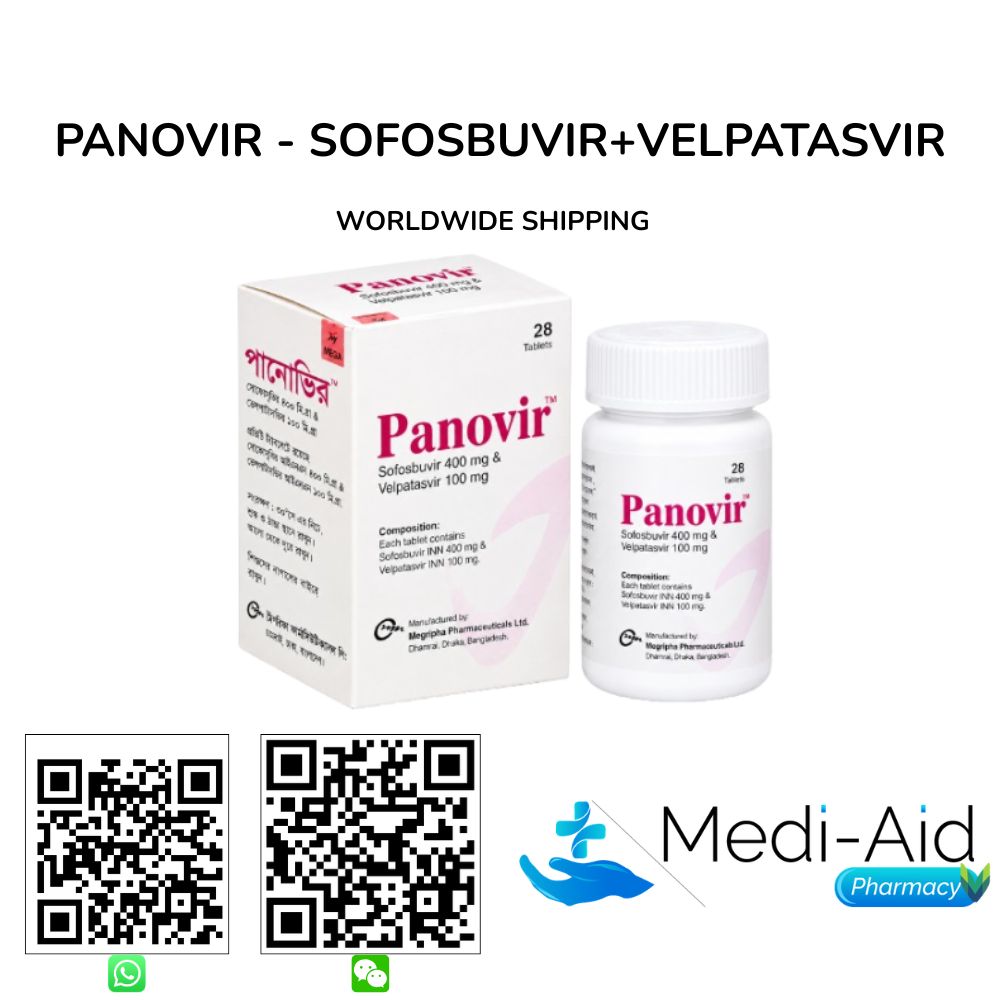
Panovir 100 MG (Sofosbuvir + Velpatasvir) is a pan-genotypic, ribavirin-free, all-oral, direct-acting antiviral (DAA) fixed-dose combination tablet containing Sofosbuvir (NS5B nucleotide polymerase inhibitor) and Velpatasvir (NS5A inhibitor, 100 mg), formulated as film-coated tablets, supplied in a 28-tablet pot and manufactured by Incepta Pharmaceuticals Ltd. in Bangladesh. Sofosbuvir is a phosphoramidate prodrug of the nucleotide analog uridine monophosphate that, after intracellular activation to Sofosbuvir triphosphate (GS-461203), inhibits the HCV NS5B RNA-dependent RNA polymerase (RdRp) by acting as a defective substrate and causing obligate chain termination of nascent HCV RNA. Velpatasvir inhibits the HCV NS5A phosphoprotein, a multifunctional protein required for both the formation of the HCV RNA replication complex and the assembly and release of new virions.
These two non-overlapping mechanisms deliver potent pan-genotypic antiviral coverage across all six major HCV genotypes (GT1 through GT6) with a high genetic barrier to resistance. The approved adult dose of Panovir is 1 tablet once daily with or without food for 12 weeks in patients with or without compensated cirrhosis. Critically, Panovir is also indicated with ribavirin for patients with decompensated cirrhosis (Child-Pugh B and C), covering a patient population excluded from many alternative pan-genotypic DAA regimens. In the pivotal Phase 3 ASTRAL program, Sofosbuvir + Velpatasvir achieved SVR12 rates of 95 to 99 percent across GT1 through GT6, and 94 percent in decompensated cirrhosis patients when combined with ribavirin in the ASTRAL-4 trial. Searching for Panovir 100 MG Sofosbuvir + Velpatasvir? Mediaid Pharmacy lists this product across its hepatitis C medicines, antiviral medicines, and Incepta Pharmaceuticals portfolios and ships it worldwide.
Basic Product Information of Panovir 100 MG (Sofosbuvir + Velpatasvir)
| Brand Name | Panovir 100 MG (Sofosbuvir + Velpatasvir) |
| Product Name | Panovir |
| Generic Name | Sofosbuvir + Velpatasvir INN (fixed-dose combination) |
| Drug Class | NS5B Nucleotide Polymerase Inhibitor (Sofosbuvir) + NS5A Inhibitor (Velpatasvir); Pan-Genotypic Direct-Acting Antiviral (DAA) Combination; Hepatitis C Antiviral Agent; HCV RNA-Dependent RNA Polymerase Inhibitor plus NS5A Inhibitor Combination |
| Formulation | Film-Coated Tablet (Oral Fixed-Dose Combination) |
| Available Strength | 100 mg (Sofosbuvir + Velpatasvir fixed-dose combination per tablet) |
| Available Pack Size | 28 Tablets per Pot (equivalent to a 4-week supply at the approved adult dose of 1 tablet once daily) |
| Therapeutic Category | Hepatitis C Medicines; Direct-Acting Antiviral Agents (DAAs); Antiviral Medicines; HCV NS5B Polymerase Inhibitor plus NS5A Inhibitor Combination; Incepta Pharmaceuticals Medicines |
| Approved Indication | Chronic Hepatitis C Virus (HCV) Infection: All major genotypes (GT1, GT2, GT3, GT4, GT5, and GT6) in adult patients, with or without compensated cirrhosis (Child-Pugh A), or with decompensated cirrhosis (Child-Pugh B and C) in combination with ribavirin; with or without HIV-1 co-infection |
| Dosing | Adults (all HCV genotypes, without cirrhosis or with compensated cirrhosis): 1 tablet of Panovir once daily with or without food for 12 weeks. Decompensated cirrhosis (Child-Pugh B or C): 1 tablet of Panovir once daily plus ribavirin (weight-based) for 12 weeks. Swallow tablets whole with water. Administer at the same time each day. |
| Manufacturer | Incepta Pharmaceuticals Ltd., Bangladesh |
| Country of Origin | Bangladesh |
| Originator Reference Brand | Epclusa (Sofosbuvir 400 mg / Velpatasvir 100 mg tablets, by Gilead Sciences, Inc., approved by the U.S. FDA on June 28, 2016, for chronic HCV infection across all genotypes GT1 through GT6). Panovir contains the same active pharmaceutical ingredients, Sofosbuvir and Velpatasvir INN, in the same fixed-dose combination class, manufactured by Incepta Pharmaceuticals Ltd. in Bangladesh and supplied through Mediaid Pharmacy for international procurement. |
| Global Supplier | Mediaid Pharmacy, Worldwide Shipping Available |
| Storage Conditions | Store at controlled room temperature (20 degrees C to 25 degrees C); excursions permitted between 15 degrees C and 30 degrees C. Keep in the original container with the lid tightly closed. Protect from moisture. Keep out of the reach of children. |
How Panovir (Sofosbuvir + Velpatasvir) Works: NS5B Polymerase Inhibition and NS5A Inhibition in Chronic HCV Infection
Sofosbuvir is an orally bioavailable phosphoramidate prodrug of the uridine nucleotide analog 2′-deoxy-2′-alpha-fluoro-2′-beta-C-methyluridine monophosphate. After oral administration, Sofosbuvir undergoes intracellular metabolic activation within hepatocytes through a series of phosphorylation steps to generate the pharmacologically active triphosphate form, GS-461203 (Sofosbuvir triphosphate). GS-461203 is a competitive inhibitor of the hepatitis C virus (HCV) NS5B RNA-dependent RNA polymerase (RdRp), the enzyme responsible for synthesizing new HCV RNA from the positive-sense single-stranded HCV RNA genome. GS-461203 competes with the natural substrate uridine-5′-triphosphate (UTP) for incorporation into the nascent HCV RNA strand by NS5B.
After GS-461203 is incorporated, its modified 2′ position prevents the addition of further nucleotides, causing obligate chain termination and halting HCV RNA synthesis. Critically, Sofosbuvir acts downstream of HCV polyprotein processing, directly at the RNA replication level, and its pan-genotypic activity is rooted in the high conservation of the NS5B active site across all HCV genotypes. The high selectivity of GS-461203 for HCV NS5B over human RNA and DNA polymerases, and over mitochondrial RNA polymerase, contributes to the favorable safety profile of Sofosbuvir and explains the absence of the mitochondrial toxicity historically associated with earlier nucleoside analogs used in other viral infections.
Velpatasvir is a second-generation, pan-genotypic inhibitor of the HCV NS5A phosphoprotein. NS5A is a zinc-binding phosphoprotein that is essential for two distinct and indispensable phases of the HCV lifecycle: first, NS5A forms the core of the membranous web replication complex, coordinating the assembly of the NS5B polymerase, NS4B, and other replication-associated proteins into a functional RNA replication factory within a modified endoplasmic reticulum membrane compartment; second, NS5A is required for the transfer of newly replicated HCV RNA genomes from the site of replication to the site of virion assembly adjacent to intracellular lipid droplets, where it interacts with the HCV core protein to initiate nucleocapsid formation. Velpatasvir inhibits both NS5A-dependent functions simultaneously with picomolar potency and demonstrates pan-genotypic activity against GT1 through GT6, including potent activity against the NS5A resistance-associated substitutions at positions 28, 30, 31, and 93 that confer high-level resistance to first-generation NS5A inhibitors such as Daclatasvir and Ledipasvir.
The combined pharmacological effect of Sofosbuvir and Velpatasvir is dual-target suppression of HCV replication: Sofosbuvir blocks new HCV RNA synthesis at the NS5B level, while Velpatasvir simultaneously disables the RNA replication complex assembly and virion packaging functions of NS5A. This orthogonal dual inhibition provides a high genetic barrier to resistance, as emergence of resistance requires the simultaneous acquisition of independent resistance mutations at two distinct and mechanistically unrelated viral targets. For the full range of hepatitis C treatment medicines at Mediaid Pharmacy, explore the complete HCV medicines collection.
Panovir 100 MG (Sofosbuvir + Velpatasvir): Indications, Dosing, and Key Safety Information
| Approved Indication | Chronic Hepatitis C Virus (HCV) Infection: Panovir (Sofosbuvir + Velpatasvir) is indicated for the treatment of adult patients with chronic HCV infection without cirrhosis, with compensated cirrhosis (Child-Pugh A), or with decompensated cirrhosis (Child-Pugh B and C, in combination with ribavirin) across all major genotypes: GT1, GT2, GT3, GT4, GT5, and GT6. Panovir is also indicated for adult patients with HCV and HIV-1 co-infection. |
| Recommended Dose | All HCV Genotypes (Adults, without cirrhosis or with compensated cirrhosis): 1 tablet of Panovir once daily with or without food for 12 weeks. Swallow the tablet whole with water. Administer Panovir at the same time each day to maintain consistent plasma concentrations of Sofosbuvir and Velpatasvir. |
| Treatment Duration by Patient Category | 12 Weeks (without ribavirin): Treatment-naive and treatment-experienced adults without cirrhosis or with compensated cirrhosis (Child-Pugh A) across GT1, GT2, GT3, GT4, GT5, and GT6. This includes patients with prior sofosbuvir-only treatment experience and those with prior NS3/4A protease inhibitor experience across most genotypes.
12 Weeks (with weight-based ribavirin): Adults with decompensated cirrhosis (Child-Pugh B or C) across GT1 through GT6. Ribavirin is dosed at 1,000 mg per day for patients weighing less than 75 kg, or 1,200 mg per day for patients weighing 75 kg or more, divided twice daily with food. In the ASTRAL-4 trial, this regimen achieved SVR12 of 94 percent in the decompensated cirrhosis population across GT1-6. 24 Weeks (without ribavirin): Alternative regimen for adults with decompensated cirrhosis (Child-Pugh B or C) who are ineligible for ribavirin due to contraindications such as severe anemia, end-stage renal disease, or intolerance. Consult the treating hepatologist for individualized treatment selection in this population. |
| Missed Dose | If a Panovir dose is missed and the patient remembers within 18 hours of the normally scheduled dose time, take the missed dose with or without food as soon as possible and resume the regular dosing schedule. If more than 18 hours have elapsed since the scheduled dose time, skip the missed dose and take the next Panovir dose at the regular time. Do not take 2 doses of Panovir on the same day to compensate for a missed dose. |
| Key Warnings and Precautions | Serious Symptomatic Bradycardia with Amiodarone Co-Administration: Severe symptomatic bradycardia, including cases requiring pacemaker intervention and one fatal case, has been reported when amiodarone is co-administered with sofosbuvir-containing regimens including Sofosbuvir + Velpatasvir. Co-administration of Panovir with amiodarone is contraindicated. If co-administration with amiodarone cannot be avoided due to lack of other therapeutic alternatives, cardiac monitoring in an inpatient setting for the first 48 hours of co-administration is required, followed by daily outpatient or self-monitoring for at least 2 weeks.
Risk of HBV Reactivation in HBV/HCV Co-Infected Patients: Hepatitis B virus (HBV) reactivation, in some cases resulting in fulminant hepatitis, hepatic failure, and death, has been reported in HCV-infected patients co-infected with HBV who received or completed HCV DAA therapy. Screen all patients for evidence of current or prior HBV infection by measuring HBsAg and hepatitis B core antibody (anti-HBc) before initiating Panovir. Monitor HBV/HCV co-infected patients for HBV reactivation during and following Panovir treatment and manage as clinically indicated. Decompensated Cirrhosis Monitoring: Patients with Child-Pugh B or C decompensated cirrhosis receiving Panovir with ribavirin require enhanced hepatic monitoring throughout treatment. Hepatic function, MELD score, and clinical status should be assessed at baseline and regularly during treatment. Discontinue Panovir if hepatic decompensation worsens significantly during treatment. Drug Interactions (P-gp/CYP Inducers, Acid-Reducing Agents, Amiodarone): Rifampin, carbamazepine, phenytoin, phenobarbital, oxcarbazepine, and St. John’s Wort are contraindicated, as these combined P-gp and CYP inducers substantially reduce both Sofosbuvir and Velpatasvir plasma exposure. Proton pump inhibitors (PPIs) significantly reduce Velpatasvir absorption and should be avoided; if PPI use is necessary, co-administer Panovir with food at the same time as the PPI at a dose equivalent to omeprazole 20 mg. Review all concomitant medications for interactions before initiating Panovir. |
| Common Adverse Reactions | The most commonly reported adverse reactions of Sofosbuvir + Velpatasvir in Phase 3 clinical trials (occurring in 5 percent or more of patients) include headache (22%), fatigue (15%), nausea (9%), and asthenia (5%). The majority of adverse events were mild to moderate in severity. In patients receiving Panovir with ribavirin (decompensated cirrhosis population), anemia is the most common additional adverse reaction consistent with ribavirin’s known hematologic effects. Serious adverse reactions: severe symptomatic bradycardia has been reported with sofosbuvir-containing regimens co-administered with amiodarone; this combination is contraindicated. Monitor all patients for signs of bradycardia if cardiac co-medications cannot be avoided. Always discuss the complete safety profile and individual risk factors with the treating hepatologist before and throughout Panovir treatment. |
| Drug Interactions | Sofosbuvir is a substrate of P-glycoprotein (P-gp) and breast cancer resistance protein (BCRP). Velpatasvir is a substrate of P-gp, BCRP, organic anion-transporting polypeptide 1B1/1B3 (OATP1B1/1B3), and CYP2B6, CYP2C8, and CYP3A4. Velpatasvir inhibits P-gp, BCRP, and OATP1B1/1B3 at clinical concentrations.
Contraindicated co-medications: Amiodarone (serious symptomatic bradycardia); Rifampin, rifabutin (markedly reduce SOF and VEL exposure via P-gp induction and CYP induction); Carbamazepine, phenytoin, phenobarbital, oxcarbazepine (reduce SOF and VEL exposure); St. John’s Wort; Tipranavir/ritonavir (reduces sofosbuvir AUC 76% and Velpatasvir AUC 82%). Acid-reducing agents (clinically important interaction specific to Velpatasvir): Proton pump inhibitors (PPIs) reduce Velpatasvir plasma exposure substantially and should be avoided. If PPI use is unavoidable, co-administer Panovir with food at the same time as the PPI at the lowest effective PPI dose (not exceeding the equivalent of omeprazole 20 mg). H2-receptor antagonists at doses equivalent to famotidine 40 mg twice daily can be used by separating administration from Panovir by 12 hours or co-administering simultaneously with Panovir and food. Antacids: separate administration by at least 4 hours. Other notable interactions: Tenofovir disoproxil fumarate (TDF) – Velpatasvir increases tenofovir plasma exposure via P-gp and BCRP inhibition; monitor for tenofovir-associated adverse reactions (renal function, bone mineral density). Rosuvastatin: increased rosuvastatin exposure (OATP1B1 inhibition by Velpatasvir) – use lowest effective dose with monitoring. Lovastatin and simvastatin: contraindicated. Disclose all medications, herbal supplements, antiretrovirals, cardiac medications, and acid suppressants to the treating hepatologist before initiating Panovir. |
| Renal Impairment | No dose adjustment is required for patients with mild (eGFR 60-89 mL/min/1.73 m2) or moderate (eGFR 30-59 mL/min/1.73 m2) renal impairment. Panovir is not recommended for patients with severe renal impairment (eGFR below 30 mL/min/1.73 m2) or end-stage renal disease (ESRD) requiring dialysis, due to insufficient safety and efficacy data for the sofosbuvir metabolite GS-331007, which accumulates significantly in patients with severe renal dysfunction. For HCV patients with severe renal impairment or ESRD requiring treatment, the treating nephrologist and hepatologist should conduct an individualized benefit-risk assessment and may consider alternative pan-genotypic DAA regimens where renal safety data are more established. Hepatic and renal function should be monitored in all patients receiving Panovir, particularly those with any degree of pre-existing renal impairment or those co-administered nephrotoxic agents. |
| Hepatic Impairment | No dose adjustment is required for mild hepatic impairment (Child-Pugh A, compensated cirrhosis); Panovir 1 tablet once daily for 12 weeks is used without ribavirin in this population. For patients with moderate hepatic impairment (Child-Pugh B, decompensated cirrhosis), Panovir 1 tablet once daily with weight-based ribavirin for 12 weeks is recommended. For patients with severe hepatic impairment (Child-Pugh C, decompensated cirrhosis), Panovir 1 tablet once daily with weight-based ribavirin for 12 weeks is recommended; for patients ineligible for ribavirin, 24 weeks of Panovir alone is an alternative. All patients with decompensated cirrhosis require close hepatic monitoring throughout treatment. This broad hepatic impairment indication, including Child-Pugh C, distinguishes Panovir from alternative pan-genotypic DAA regimens that are contraindicated in decompensated cirrhosis. Consult a transplant hepatologist for organ transplant patients receiving immunosuppressants before initiating Panovir. |
| Pregnancy and Lactation | Human pregnancy data for Sofosbuvir + Velpatasvir are limited. Animal reproductive toxicity studies with Sofosbuvir and Velpatasvir did not reveal evidence of fetal harm at clinically relevant exposures; however, adequate and well-controlled human data are not available. When Panovir is co-administered with ribavirin for decompensated cirrhosis, ribavirin is contraindicated during pregnancy and in female partners of male patients due to teratogenicity and embryolethality confirmed in multiple animal species; two forms of contraception must be used during and for a defined period after ribavirin treatment. It is not known whether Sofosbuvir or Velpatasvir is excreted in human breast milk. Consult the treating hepatologist and obstetrician before starting, continuing, or stopping Panovir during pregnancy or breastfeeding. |
Who Should Use Panovir 100 MG (Sofosbuvir + Velpatasvir)?
Panovir 100 MG (Sofosbuvir + Velpatasvir) is indicated for adult patients with chronic hepatitis C virus (HCV) infection across all major genotypes (GT1 through GT6), with or without cirrhosis, including patients with decompensated cirrhosis (Child-Pugh B and C) in combination with ribavirin. Chronic HCV infection affects approximately 50 million people worldwide according to the World Health Organization (WHO) and is the leading cause of liver cirrhosis, hepatocellular carcinoma (HCC), and liver transplantation in many countries. Panovir’s unique coverage across the full spectrum of hepatic impairment severity, including decompensated cirrhosis, makes it one of the most broadly applicable pan-genotypic DAA regimens currently available for managing the diverse HCV patient population encountered in hepatology practice.
Treatment-naive and treatment-experienced HCV patients without cirrhosis or with compensated cirrhosis (Child-Pugh A) across all six major genotypes represent the core target population for 12-week Panovir therapy without ribavirin. In the pivotal ASTRAL-1 trial (GT1, GT2, GT4, GT5, GT6, without cirrhosis or with compensated cirrhosis), Sofosbuvir + Velpatasvir achieved SVR12 in 99 percent of patients across these genotypes in 12 weeks. The ASTRAL-2 trial (GT2) confirmed SVR12 of 99 percent, establishing Sofosbuvir + Velpatasvir as superior to the prior GT2 standard of care (sofosbuvir plus ribavirin, which achieved only 94% SVR12). ASTRAL-3 (GT3, including treatment-experienced and cirrhotic patients) achieved SVR12 of 95 percent with SOF/VEL versus 80 percent with sofosbuvir plus ribavirin, confirming a significant efficacy advantage for the Panovir combination in the historically difficult-to-treat GT3 population.
Patients with decompensated cirrhosis (Child-Pugh B and C) are a critically important patient group for Panovir: the ASTRAL-4 trial evaluated Sofosbuvir + Velpatasvir with and without ribavirin for 12 weeks, or without ribavirin for 24 weeks, in HCV GT1-6 patients with Child-Pugh B or C decompensated cirrhosis. The SOF/VEL plus ribavirin 12-week arm achieved SVR12 of 94 percent, compared to 83 percent for SOF/VEL alone for 12 weeks, confirming the superior regimen for decompensated cirrhosis. This indication distinguishes Panovir from pan-genotypic DAA alternatives that are contraindicated or not recommended in Child-Pugh B and C patients.
HIV-1/HCV co-infected patients without cirrhosis or with compensated cirrhosis are also appropriate for Panovir: ASTRAL-5 achieved SVR12 in 95 percent of HCV GT1-4 patients with HIV-1 co-infection, subject to careful antiretroviral drug interaction screening, as several antiretroviral agents interact with Velpatasvir via CYP3A4 and OATP1B1.
Contraindications and patient selection considerations: Panovir is not recommended for patients with severe renal impairment (eGFR below 30 mL/min) or ESRD on hemodialysis due to accumulation of the sofosbuvir metabolite GS-331007. Patients on amiodarone must not receive Panovir due to the risk of severe symptomatic bradycardia. Patients taking rifampin, carbamazepine, phenytoin, or phenobarbital require anticonvulsant or antituberculosis medication reassessment before starting Panovir. Patients on proton pump inhibitors require specific co-administration timing guidance. Hepatology centers and procurement teams sourcing Panovir for their chronic HCV patient population can explore the complete hepatitis C medicines portfolio and direct-acting antiviral medicines range at Mediaid Pharmacy before requesting a consolidated supply quotation.
Global Supplier: Mediaid Pharmacy Worldwide Shipping for Panovir 100 MG (Sofosbuvir + Velpatasvir)
Mediaid Pharmacy is a Dhaka-based supplier of specialty antiviral and hepatology medicines with worldwide shipping to patients, hepatology clinics, hospitals, international distributors, and healthcare providers across all regions. Panovir 100 MG (Sofosbuvir + Velpatasvir), manufactured by Incepta Pharmaceuticals Ltd. in Bangladesh, is supplied as film-coated tablets, 28 tablets per pot, with pricing quotations, stock confirmation, full product documentation, and end-to-end international delivery tracking for every order. The 28-tablet pot corresponds directly to a 4-week supply at the approved adult dose of 1 tablet once daily, providing hepatology clinics, hospital pharmacies, and individual chronic HCV patients with a clearly defined monthly unit that simplifies procurement scheduling and prescription refill cycles for programs on standard 4-week ordering timelines.
For patients undergoing a full 12-week Panovir treatment course, 3 pots are required to complete the full regimen; for 24-week ribavirin-free decompensated cirrhosis courses, 6 pots are required. Mediaid Pharmacy coordinates consolidated order fulfillment with volume pricing and supply continuity assurance for multi-pot orders. Hepatologists, gastroenterologists, and liver specialists treating chronic HCV patients; hospital formulary and procurement teams; international distributors; and individual patients can contact the Mediaid Pharmacy team through WhatsApp, phone, or WeChat for all inquiries regarding Panovir Sofosbuvir Velpatasvir stock availability, current pricing, and international delivery timelines. Procurement teams co-sourcing Panovir 100 MG with other hepatology or antiviral medicines can browse the complete hepatitis C medicines collection and the Incepta Pharmaceuticals medicines portfolio at Mediaid Pharmacy before requesting a consolidated quotation for the full order.
Why Choose Panovir 100 MG (Sofosbuvir + Velpatasvir) from Mediaid Pharmacy?
Panovir 100 MG (Sofosbuvir + Velpatasvir) provides hepatologists, gastroenterologists, liver transplant specialists, and chronic HCV patients with a pan-genotypic, all-oral, fixed-dose DAA combination that delivers SVR12 rates of 95 to 99 percent across all six major HCV genotypes in 12 weeks and extends treatment options to patients with decompensated cirrhosis (Child-Pugh B and C) who are excluded from alternative pan-genotypic regimens. The Sofosbuvir component of Panovir represents the most extensively studied antiviral backbone in HCV treatment: Sofosbuvir has been co-formulated in multiple FDA-approved regimens since 2013 and has accumulated a real-world safety database spanning millions of treated patients globally, providing hepatologists with exceptional confidence in its long-term tolerability across diverse patient populations including those with advanced liver disease, renal dysfunction, and complex comorbidities.
The unique decompensated cirrhosis indication of Panovir is a clinically decisive advantage for hepatology programs managing advanced liver disease patients. A significant proportion of chronic HCV patients presenting for treatment globally have progressed to decompensated cirrhosis (Child-Pugh B or C) by the time of diagnosis, whether due to late presentation, delayed treatment access, or treatment failure of prior regimens. Panovir with ribavirin for 12 weeks achieves SVR12 of 94 percent in this high-risk population, offering a meaningful hepatic benefit with the potential to stabilize or improve MELD score, reduce the risk of hepatic complications, and in some cases obviate the need for liver transplantation when HCV-driven hepatic damage is the primary cause of decompensation.
The single-tablet, once-daily, food-independent regimen of Panovir is one of the simplest possible antiviral dosing schedules: no dose titration, no weight-based adjustment of Panovir itself (ribavirin is weight-based when co-administered), no food requirement, no genotype-specific dose variation, and no renal function grading for patients with eGFR of 30 mL/min or above. This simplicity directly supports adherence across the 12-week treatment course and reduces the prescription and dispensing burden for hepatology practices managing large patient caseloads.
The 28-tablet-per-pot pack format of Panovir provides a standard 4-week monthly supply at the 1-tablet-daily dose, directly matching the most common pharmacy dispensing and procurement cycle lengths and simplifying monthly inventory management for hospital formulary teams and community pharmacy programs. Panovir is manufactured by Incepta Pharmaceuticals Ltd., one of Bangladesh’s leading pharmaceutical manufacturers, and is available through Mediaid Pharmacy with full product documentation, specialist supply coordination, and worldwide shipping. To source additional Incepta hepatology and antiviral medicines or to review the complete range of hepatitis C treatment options available at Mediaid Pharmacy, visit the Incepta Pharmaceuticals medicines section and the hepatitis C medicines portfolio, and contact the Mediaid Pharmacy team for a personalized quotation.
Frequently Asked Questions About Panovir 100 MG (Sofosbuvir + Velpatasvir)
What is Panovir 100 MG (Sofosbuvir + Velpatasvir) used for?
Panovir 100 MG (Sofosbuvir + Velpatasvir) is a pan-genotypic direct-acting antiviral (DAA) fixed-dose combination used for the treatment of chronic hepatitis C virus (HCV) infection in adult patients across all six major genotypes (GT1, GT2, GT3, GT4, GT5, and GT6), with or without cirrhosis, including patients with decompensated cirrhosis (Child-Pugh B and C) when combined with ribavirin, and with or without HIV-1 co-infection. Sofosbuvir is an NS5B nucleotide polymerase inhibitor that, after intracellular activation to its triphosphate form GS-461203, competitively inhibits the HCV RNA-dependent RNA polymerase and causes obligate chain termination of nascent HCV RNA, blocking HCV RNA replication at the polymerase level. Velpatasvir is a pan-genotypic NS5A inhibitor that disrupts both the HCV RNA replication complex formation and virion assembly and release functions of the NS5A phosphoprotein. Together, these two complementary mechanisms deliver SVR12 rates of 95 to 99 percent across GT1 through GT6 in 12 weeks. Panovir is manufactured by Incepta Pharmaceuticals Ltd. in Bangladesh and is available through Mediaid Pharmacy with worldwide shipping to patients, hepatology centers, and hospital pharmacies globally.
What is the generic name of Panovir?
The generic name of Panovir is Sofosbuvir and Velpatasvir (International Nonproprietary Names, INN). Panovir is the brand name registered by Incepta Pharmaceuticals Ltd. for the Sofosbuvir + Velpatasvir fixed-dose combination manufactured in Bangladesh. Panovir 100 MG is supplied as film-coated tablets in a 28-tablet pot, equivalent to a 4-week supply at the approved adult dose of 1 tablet once daily with or without food. The originator reference brand is Epclusa (Gilead Sciences, Inc.), approved by the U.S. FDA on June 28, 2016, for chronic HCV infection across GT1 through GT6. Mediaid Pharmacy distributes Panovir globally with worldwide shipping to patients, hepatology centers, hospitals, gastroenterology clinics, and specialist practices.
Does Panovir (Sofosbuvir + Velpatasvir) treat all hepatitis C genotypes?
Yes. Panovir (Sofosbuvir + Velpatasvir) is a pan-genotypic direct-acting antiviral combination effective against all six major HCV genotypes (GT1 through GT6). In the Phase 3 ASTRAL clinical program, Sofosbuvir + Velpatasvir achieved SVR12 rates of 99 percent across GT1, GT2, GT4, GT5, and GT6 in treatment-naive patients without cirrhosis or with compensated cirrhosis (ASTRAL-1), 99 percent specifically in GT2 patients in ASTRAL-2, and 95 percent in GT3 patients including treatment-experienced and cirrhotic subgroups in ASTRAL-3. In the ASTRAL-4 trial for decompensated cirrhosis patients (GT1-6), Sofosbuvir + Velpatasvir with ribavirin for 12 weeks achieved SVR12 of 94 percent. These efficacy outcomes confirm that Panovir functions as a truly pan-genotypic treatment requiring no genotype-specific drug substitution, covering the most prevalent and geographically diverse HCV genotypes globally within a single uniform regimen. For the full range of hepatitis C treatment medicines at Mediaid Pharmacy, explore the complete HCV medicines collection.
What is the dose and treatment duration for Panovir 100 MG?
The recommended adult dose of Panovir (Sofosbuvir + Velpatasvir) is 1 tablet once daily with or without food. Treatment duration: 12 weeks without ribavirin for treatment-naive and treatment-experienced adults without cirrhosis or with compensated cirrhosis (Child-Pugh A) across GT1 through GT6; 12 weeks with weight-based ribavirin for adults with decompensated cirrhosis (Child-Pugh B or C) across GT1 through GT6, with ribavirin dosed at 1,000 mg per day for patients weighing less than 75 kg or 1,200 mg per day for patients weighing 75 kg or more, divided twice daily with food; and 24 weeks without ribavirin as an alternative for decompensated cirrhosis patients who are ineligible for ribavirin. Always confirm the treatment regimen and ribavirin co-administration requirement with the treating hepatologist based on each patient’s individual cirrhosis status, genotype, and prior treatment history before initiating Panovir.
What are the side effects of Panovir 100 MG (Sofosbuvir + Velpatasvir)?
The most commonly reported adverse reactions of Sofosbuvir + Velpatasvir in Phase 3 clinical trials include headache (22%), fatigue (15%), nausea (9%), and asthenia (5%). Most adverse events were mild to moderate in severity. In patients receiving Panovir with ribavirin (for decompensated cirrhosis), anemia is the most common additional adverse reaction. Most important serious adverse reaction: severe symptomatic bradycardia, including one reported fatal case and several requiring pacemaker implantation, has been associated with co-administration of sofosbuvir-containing regimens with amiodarone. Co-administration of Panovir with amiodarone is therefore contraindicated. Patients must disclose all cardiac medications to the treating hepatologist before initiating Panovir. HBV reactivation has been reported in HBV/HCV co-infected patients treated with HCV DAA regimens; screen all patients for HBV co-infection before initiating Panovir.
Can Panovir (Sofosbuvir + Velpatasvir) be used in patients with decompensated cirrhosis?
Yes. Panovir (Sofosbuvir + Velpatasvir) is one of the few approved pan-genotypic DAA options for patients with decompensated cirrhosis (Child-Pugh B and C), covering a high-risk patient population that is contraindicated or not recommended for several alternative pan-genotypic DAA regimens. The recommended regimen for decompensated cirrhosis is Panovir 1 tablet once daily with weight-based ribavirin for 12 weeks. In the ASTRAL-4 Phase 3 trial evaluating Sofosbuvir + Velpatasvir in Child-Pugh B and C patients across HCV GT1 through GT6, the 12-week Panovir plus ribavirin arm achieved SVR12 of 94 percent, confirming meaningful virologic efficacy even in patients with the most severe degree of hepatic dysfunction. Patients with decompensated cirrhosis who are ineligible for ribavirin may receive Panovir alone for 24 weeks as an alternative. All decompensated cirrhosis patients require specialist hepatologic management, close monitoring of MELD score and hepatic function, and assessment of the benefit of antiviral treatment in the context of liver transplantation listing. For the complete Incepta pharma product range at Mediaid Pharmacy, visit the Incepta Pharmaceuticals medicines collection.
Can I order Panovir 100 MG (Sofosbuvir + Velpatasvir) online with worldwide shipping?
Yes. Mediaid Pharmacy supplies Panovir 100 MG (Sofosbuvir + Velpatasvir) to patients, hepatology centers, cancer hospitals, gastroenterology clinics, and healthcare providers globally. Contact Mediaid Pharmacy via WhatsApp, phone, or WeChat at +8801773428128, or email info@mediaidpharmacy.com for pricing, current stock availability, and international delivery details for your country.
Order Panovir 100 MG (Sofosbuvir + Velpatasvir) with Worldwide Shipping
Phone / WhatsApp / WeChat: +8801773428128 | Email: info@mediaidpharmacy.com


Reviews
There are no reviews yet.