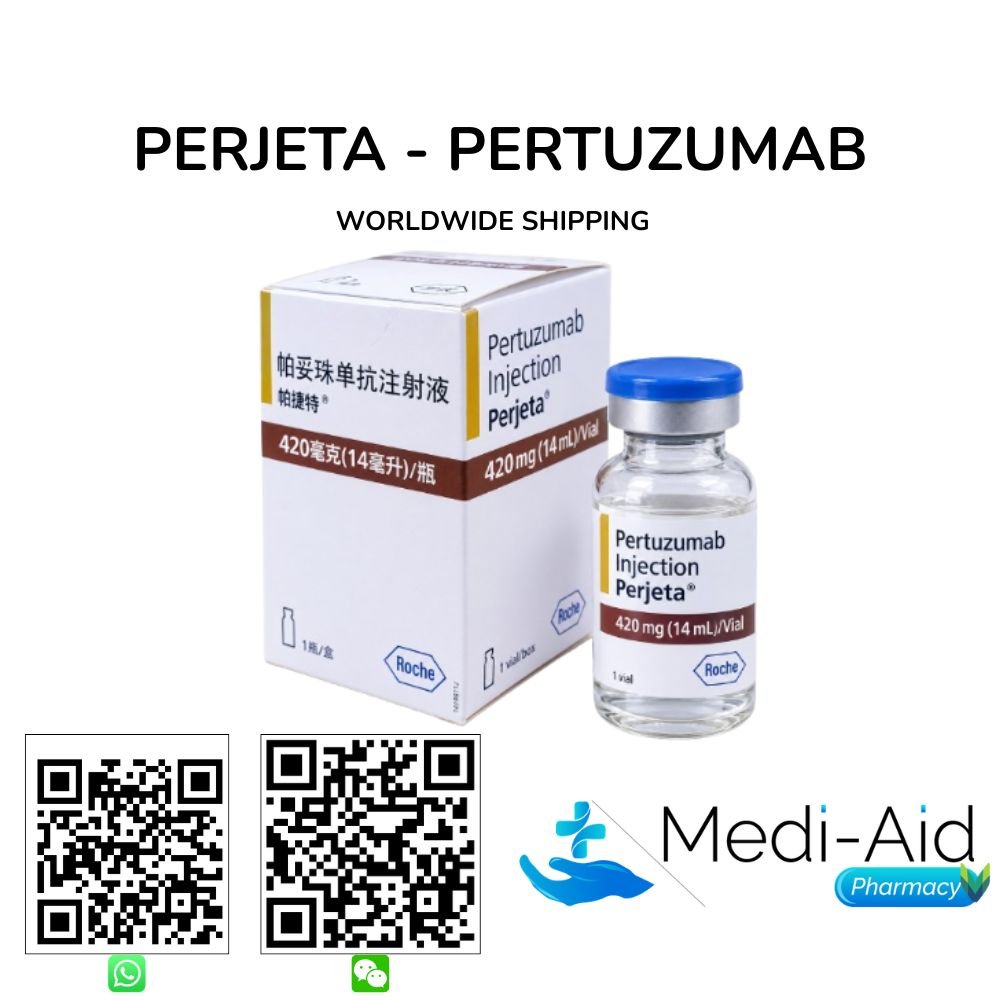
Description
Perjeta 420 MG/14 mL (Pertuzumab) is a recombinant humanized monoclonal antibody (IgG1 kappa) targeting the dimerization domain (domain II) of HER2 (human epidermal growth factor receptor 2/ErbB2) a targeted biologic therapeutic that sterically blocks HER2 heterodimerization with all other HER family members (EGFR/HER1, HER3, and HER4), thereby preventing ligand-driven activation of downstream PI3K/AKT and MAPK signaling cascades in HER2-overexpressing tumor cells, while also triggering antibody-dependent cellular cytotoxicity (ADCC) via its Fc region, and acting synergistically with trastuzumab (Herceptin), which binds to the juxtamembrane domain IV of HER2, to provide complementary and simultaneous dual-domain HER2 blockade supplied as a 420 mg/14 mL (30 mg/mL) sterile solution for intravenous infusion in a single-use vial, China-market packaging (帕捷特), and manufactured by Roche.
Pertuzumab, the active pharmaceutical ingredient of Perjeta, holds three FDA-approved indications across the HER2-positive breast cancer spectrum, covering first-line metastatic HER2-positive breast cancer, neoadjuvant treatment of HER2-positive locally advanced or early-stage breast cancer, and adjuvant treatment of HER2-positive early breast cancer establishing pertuzumab as the foundational anti-HER2 combination backbone at every disease stage from early resectable tumors through metastatic disease.
The recommended maintenance dose across all pertuzumab regimens is 420 mg (one Perjeta vial) administered as an intravenous infusion over 30 to 60 minutes every three weeks (Q3W), following a loading dose of 840 mg (two vials) administered over 60 minutes at cycle 1; pertuzumab is always administered before trastuzumab and before the chemotherapy partner (docetaxel, carboplatin, or paclitaxel depending on regimen) in all approved combination schedules.
The pivotal Phase 3 CLEOPATRA trial (NCT00567190; n=808) established first-line pertuzumab plus trastuzumab plus docetaxel as the global standard of care for HER2-positive metastatic breast cancer, achieving a median overall survival (OS) of 56.5 months versus 40.8 months with trastuzumab plus docetaxel plus placebo (hazard ratio [HR] 0.68; 95% CI 0.56–0.84; p<0.001; 32% reduction in the risk of death) the most significant OS improvement ever demonstrated in a Phase 3 trial of first-line HER2-positive metastatic breast cancer at the time of approval.
The Phase 3 APHINITY trial (NCT01358877; n=4,805) established adjuvant pertuzumab as the first anti-HER2 therapy beyond trastuzumab to demonstrate an invasive disease-free survival (iDFS) benefit in HER2-positive early breast cancer: at 6-year follow-up in the node-positive subgroup, iDFS was 90.6% versus 87.8% (HR 0.72; 95% CI 0.59–0.87), with a distant disease-free survival (DDFS) rate of 92.3% versus 89.1% (HR 0.70; 95% CI 0.55–0.89). The Phase 2 NeoSphere trial (NCT00545688) established neoadjuvant pertuzumab plus trastuzumab plus docetaxel as the regimen achieving the highest pathological complete response (pCR) rate of 45.8% versus 29.0% for trastuzumab plus docetaxel (p=0.0141) in previously untreated HER2-positive breast cancer, supporting the FDA’s accelerated approval for the neoadjuvant indication.
Important: Pertuzumab carries a BLACK BOX WARNING for cardiomyopathy assess left ventricular ejection fraction (LVEF) prior to initiating pertuzumab and at regular intervals (every 3 months during treatment and for up to 24 months following discontinuation of pertuzumab given with anthracycline-based regimens); withhold pertuzumab and trastuzumab for ≥3 weeks if LVEF drops to below 40% or falls to 40–45% with a ≥10 percentage point decrease from baseline, and permanently discontinue both agents if LVEF has not recovered to within normal range after two dose withholdings.
Pertuzumab carries a BLACK BOX WARNING for embryo-fetal toxicity pertuzumab can cause fetal harm based on its mechanism of action; verify pregnancy status of females of reproductive potential before initiating pertuzumab; advise females of reproductive potential to use effective contraception during treatment and for 7 months after the last dose. Infusion-related reactions (IRRs), including hypersensitivity reactions and anaphylaxis, have been reported with pertuzumab; observe patients in a facility equipped to manage anaphylaxis during and for 60 minutes after the first infusion and for 30 minutes after subsequent infusions; slow or interrupt the infusion rate and administer medical treatment for clinically significant IRRs; permanently discontinue pertuzumab for life-threatening hypersensitivity reactions.
The most common adverse reactions with pertuzumab in combination with trastuzumab and docetaxel (≥30% in CLEOPATRA) are diarrhea (68%), alopecia (61%), nausea (42%), fatigue (38%), rash (34%), and neutropenia (53%); febrile neutropenia occurred in 14% of pertuzumab-treated patients in CLEOPATRA. Left ventricular dysfunction (all grades) occurred in 4.4% of patients in the pertuzumab arm versus 8.3% in the control arm of CLEOPATRA at the final OS analysis; Grade 3 or higher symptomatic left ventricular systolic dysfunction (LVSD) occurred in 1.0% versus 1.9% of patients, respectively. Peripheral sensory neuropathy occurred in 32% of patients receiving pertuzumab in CLEOPATRA.
Do not substitute pertuzumab for or with ado-trastuzumab emtansine (T-DM1), trastuzumab deruxtecan (T-DXd), or other anti-HER2 agents without confirmed indication-specific prescribing. Searching for Perjeta 420 MG/14 mL Pertuzumab? Mediaid Pharmacy lists this product across its oncology medicines, breast cancer medicines, and Roche medicines portfolios and ships it worldwide.
Basic Product Information of Perjeta 420 MG/14 mL (Pertuzumab)
| Brand Name | Perjeta 420 MG/14 mL (Pertuzumab) [China: 帕捷特 (Pā jié tè)] |
| Product Name | Perjeta (Chinese package name: 帕捷特) |
| Generic Name | Pertuzumab (INN; also designated rhuMAb 2C4 and 2C4; a recombinant humanized IgG1 kappa monoclonal antibody produced by mammalian [Chinese hamster ovary, CHO] cell expression that binds specifically to subdomain II of the extracellular domain of HER2/ErbB2 receptor with high affinity, sterically inhibiting HER2 receptor heterodimerization with other members of the ErbB family including EGFR/HER1, HER3, and HER4, and thereby blocking ligand-initiated downstream PI3K/AKT and MAPK signaling; pertuzumab activates antibody-dependent cellular cytotoxicity [ADCC] via its Fc region and acts synergistically with trastuzumab, which binds to the juxtamembrane region of HER2 extracellular domain IV, providing simultaneous dual-epitope HER2 blockade; developed and commercialized by Roche/Genentech; first FDA approval: 8 June 2012 for first-line HER2-positive metastatic breast cancer in combination with trastuzumab and docetaxel [CLEOPATRA]; neoadjuvant FDA approval: 30 September 2013 [accelerated, NeoSphere]; adjuvant FDA approval: 19 December 2017 [accelerated, APHINITY, converted to regular approval based on updated iDFS data]) |
| Drug Class | Anti-HER2 Monoclonal Antibody; HER2 Dimerization Inhibitor; Recombinant Humanized IgG1 Kappa Monoclonal Antibody; ErbB2 Receptor-Targeted Biologic; Dual HER2 Blockade Agent (in combination with trastuzumab); HER Family Heterodimerization Inhibitor; PI3K/AKT and MAPK Pathway Blocker; ADCC-Activating Anti-HER2 Biologic; Targeted Biologic Antineoplastic Agent; Breast Cancer Biologic Therapy; HER2-Positive Metastatic Breast Cancer Medicine; Neoadjuvant HER2-Targeted Therapy; Adjuvant HER2-Positive Breast Cancer Medicine; Anti-ErbB2 Targeted Oncology Agent; Original Molecule Oncology Biologic |
| Formulation | Sterile solution for intravenous (IV) infusion only do not administer as an IV push or bolus injection; dilute in 250 mL 0.9% sodium chloride (normal saline) prior to infusion do not use 5% dextrose; administer using a polyethersulfone (PES) in-line or add-on filter (0.2 or 0.22 micron pore size); loading dose (Cycle 1): administer 840 mg IV over 60 minutes; maintenance dose (Cycle 2 onward): administer 420 mg IV over 30–60 minutes every 3 weeks (Q3W); do not administer pertuzumab as an IV push or bolus; observe the patient for 30–60 minutes after the loading dose infusion and for 30 minutes after all subsequent infusions before administering trastuzumab or the chemotherapy partner; if diluted infusion solution is not used immediately, store at 2°C to 8°C (36°F to 46°F) and use within 24 hours; pertuzumab is always administered first in the Q3W cycle, followed by trastuzumab, then chemotherapy; each vial is single-use discard any unused portion |
| Available Strengths | 420 mg/14 mL (30 mg/mL) per single-use vial the maintenance dose for all approved pertuzumab indications; the loading dose at Cycle 1 requires two vials (2 × 420 mg = 840 mg administered over 60 minutes); from Cycle 2 onward, one vial (420 mg) is administered every 3 weeks as the maintenance infusion; body-weight-based dose adjustment is not required for pertuzumab the flat fixed dose of 420 mg (maintenance) or 840 mg (loading) is used for all patients regardless of body weight or body surface area; no dose adjustment is required for renal impairment (mild to moderate); no dose adjustment has been established for hepatic impairment; pharmacokinetic data do not support dose adjustment in patients aged ≥65 years |
| Available Pack Size | 1 vial per carton (420 mg/14 mL; China-market packaging: 帕捷特); at the maintenance dose of 420 mg Q3W (one vial per cycle, one cycle every 21 days), one vial supplies one complete maintenance infusion cycle; at the loading dose of 840 mg (two vials per first cycle), procurement planning for the first cycle requires two vials; for a 12-month adjuvant or neoadjuvant course, the total vial requirement across the pertuzumab-containing cycles (combined with trastuzumab and chemotherapy, then trastuzumab alone for the remainder of the adjuvant course) is calculated by the treating oncologist and infusion pharmacist based on the number of Q3W pertuzumab cycles in the specific regimen; hospital pharmacies and oncology infusion units typically procure Perjeta on a per-cycle or monthly basis given the Q3W administration schedule and refrigerated cold-chain storage requirement |
| Dosing Schedule | Loading Dose (Cycle 1 only): Pertuzumab 840 mg (two vials) administered as IV infusion over 60 minutes, followed by trastuzumab 8 mg/kg IV over 90 minutes, then docetaxel (or paclitaxel or carboplatin, depending on regimen). Maintenance Dose (Cycle 2 onward, Q3W): Pertuzumab 420 mg (one vial) IV over 30–60 minutes every 21 days, followed by trastuzumab 6 mg/kg IV over 30–90 minutes, then chemotherapy partner. Duration by Indication: HER2-positive metastatic breast cancer (CLEOPATRA regimen): pertuzumab continued until disease progression or unacceptable toxicity; adjuvant HER2-positive early breast cancer (APHINITY regimen): pertuzumab given during the chemotherapy phase (docetaxel or docetaxel/carboplatin × 6 cycles, then trastuzumab alone completes a total of 1 year of HER2-targeted therapy); neoadjuvant HER2-positive breast cancer (NeoSphere/TRYPHAENA regimens): pertuzumab given during the neoadjuvant chemotherapy cycles (4–6 cycles pre-surgery), then trastuzumab continues postoperatively for a total of 1 year of HER2-targeted therapy. Mandatory Safety Monitoring Before and During Treatment: Assess LVEF prior to initiating pertuzumab, every 3 months during treatment, and every 6 months for 24 months after the last pertuzumab dose when given with anthracycline-containing regimens; verify pregnancy status before initiating in all females of reproductive potential; monitor for signs and symptoms of infusion-related reactions during and for 30–60 minutes following each infusion. Dose Modifications: Withhold pertuzumab (and trastuzumab) for ≥3 weeks if LVEF is below 40% or if LVEF is 40–45% with ≥10 percentage point decrease from baseline; permanently discontinue both agents if LVEF does not recover within 3 weeks of withholding; slow or interrupt infusion for significant IRRs; permanently discontinue for life-threatening hypersensitivity. Companion Diagnostic Requirement: Confirm HER2 protein overexpression (IHC 3+) or HER2 gene amplification (ISH/FISH/CISH positive) using an FDA-approved HER2 companion diagnostic test before initiating pertuzumab in all three approved indications; patients whose tumors do not have HER2 protein overexpression or HER2 gene amplification have not been shown to benefit from pertuzumab treatment. |
| Primary Indications | METASTATIC BREAST CANCER: (1) First-Line HER2-Positive Metastatic Breast Cancer (CLEOPATRA): Pertuzumab 420 mg Q3W (loading 840 mg) in combination with trastuzumab and docetaxel for adult patients with HER2-positive, metastatic breast cancer who have not received prior anti-HER2 therapy or chemotherapy for metastatic disease. Based on Phase 3 CLEOPATRA (NCT00567190; n=808): median OS 56.5 months versus 40.8 months (HR 0.68; 95% CI 0.56–0.84; p<0.001; 32% reduction in risk of death); median PFS 18.7 months versus 12.4 months (HR 0.69; 95% CI 0.58–0.81; p<0.001). FDA approval: 8 June 2012. EARLY-STAGE BREAST CANCER (NEOADJUVANT): EARLY-STAGE BREAST CANCER (ADJUVANT): |
| Manufacturer / Brand | Roche (F. Hoffmann-La Roche Ltd.), Country of Origin: Switzerland / China-market packaging (帕捷特); pertuzumab was developed and is commercialized globally by Roche/Genentech, with the monoclonal antibody manufactured via recombinant DNA technology using Chinese hamster ovary (CHO) cell culture; Perjeta was first approved by the FDA on 8 June 2012, becoming one of the foundational HER2-targeted combination partners that transformed the standard of care for HER2-positive breast cancer across all disease stages; Roche is the global leader in HER2-targeted oncology, also developing and commercializing trastuzumab (Herceptin), ado-trastuzumab emtansine (Kadcyla), and trastuzumab biosimilars |
| Global Supplier | Mediaid Pharmacy, Worldwide Shipping Available |
| Storage Conditions | Store at 2°C to 8°C (36°F to 46°F) in the original carton to protect from light. Do not freeze. Do not shake. Keep out of the reach of children. Cold-chain integrity must be maintained throughout storage and transport handle all international shipments with temperature-monitored cold-chain packaging (2–8°C). Diluted infusion solutions prepared in 0.9% sodium chloride may be stored at 2°C to 8°C for up to 24 hours; do not store diluted solution at room temperature. Discard vial after single use; discard any unused portion do not pool unused product from multiple vials. |
How Perjeta (Pertuzumab) Works: HER2 Dimerization Inhibition, Dual HER2 Blockade with Trastuzumab, and Downstream PI3K/AKT and MAPK Pathway Suppression in HER2-Positive Breast Cancer
Pertuzumab (Perjeta) achieves its antitumor effect through a mechanistically distinct and complementary mode of action relative to trastuzumab: whereas trastuzumab binds to the juxtamembrane domain IV of the HER2 extracellular domain and inhibits HER2 signaling principally by disrupting domain IV-mediated downstream activation and by triggering ADCC, pertuzumab binds specifically to subdomain II of the HER2 extracellular domain the dimerization arm and sterically prevents HER2 from forming heterodimers with any other member of the ErbB receptor family, including EGFR (HER1), HER3, and HER4. HER2-HER3 heterodimerization, the most potently oncogenic of all ErbB receptor pairings, is the primary ligand-driven signaling complex that pertuzumab disrupts: in HER2-overexpressing tumor cells, neuregulin-1 (NRG1/heregulin) binding to HER3 normally drives HER3-HER2 heterodimerization, activating robust PI3K/AKT and RAS/MAPK signaling cascades that drive tumor cell proliferation, survival, and resistance to apoptosis.
Pertuzumab’s binding to HER2 domain II inserts its CDR3 loop into the HER2 dimerization interface and blocks the conformational change in HER2 required for productive dimerization partner recruitment, thereby preventing ligand-activated HER2 receptor heterodimerization across all four ErbB pairings simultaneously. This mechanism is structurally and functionally non-redundant with trastuzumab’s domain IV binding trastuzumab does not block heterodimerization, while pertuzumab does not interfere with the domain IV trastuzumab epitope establishing the mechanistic rationale for the combination of pertuzumab and trastuzumab as a dual HER2 blockade strategy that suppresses HER2 signaling through two independent and non-overlapping mechanisms simultaneously.
The downstream consequence of pertuzumab-mediated HER2 dimerization blockade is the suppression of PI3K/p85/p110-AKT-mTOR and RAS-RAF-MEK-ERK signaling in HER2-overexpressing tumor cells pathways that are constitutively active in HER2-amplified breast cancer and that drive tumor cell survival, cell cycle progression (via cyclin D1 upregulation), inhibition of pro-apoptotic signaling (via BAD phosphorylation and BCL-2 family regulation), and resistance to chemotherapy-induced apoptosis.
Pertuzumab-mediated PI3K/AKT pathway suppression is synergistically enhanced when combined with trastuzumab, whose own domain IV binding mechanism additionally activates PTEN tumor-suppressor function and downregulates HER2 surface expression via receptor internalization, providing complementary pathway suppression from a mechanistically independent upstream intervention. Beyond direct receptor signaling blockade, pertuzumab activates antibody-dependent cellular cytotoxicity (ADCC) via its Fc region: the Fc domain of pertuzumab binds FcγRIII receptors on natural killer (NK) cells and other immune effector cells, triggering NK cell activation and cytolytic killing of HER2-overexpressing tumor cells.
The clinical synergy between pertuzumab-mediated ADCC and trastuzumab-mediated ADCC provides additive immune-mediated tumor killing in HER2-positive breast cancer, contributing to the clinical benefit of dual HER2 blockade beyond the direct anti-proliferative effects of receptor signaling inhibition. The CLEOPATRA trial’s demonstration of a 15.7-month improvement in median overall survival (56.5 versus 40.8 months; HR 0.68) with the addition of pertuzumab to trastuzumab and docetaxel the most substantial OS improvement ever achieved in a Phase 3 first-line HER2-positive metastatic breast cancer trial directly validates the mechanistic premise of dual HER2 blockade as clinically superior to single-agent HER2 inhibition by trastuzumab alone. Visit the Mediaid Pharmacy breast cancer medicines collection for the complete HER2-targeted therapy portfolio including pertuzumab and trastuzumab.
Global Supplier: Mediaid Pharmacy Worldwide Shipping for Perjeta 420 MG/14 mL (Pertuzumab)
Mediaid Pharmacy is a Dhaka-based supplier of specialty targeted oncology, breast cancer, HER2-positive cancer, and rare disease medicines with worldwide shipping to patients, oncology departments, infusion units, adjuvant and neoadjuvant breast cancer treatment programs, hospital pharmacies, oncology day units, patient access programs, and international distributors across all regions. Perjeta 420 MG/14 mL (Pertuzumab), manufactured by Roche in China-market packaging (帕捷特), is supplied as a 420 mg/14 mL single-use vial, with pricing quotations, stock confirmation, full product documentation, cold-chain shipping arrangements, and end-to-end international delivery tracking for every order.
The procurement planning significance of the 420 mg/14 mL vial format is directly tied to pertuzumab’s fixed Q3W dosing architecture: at the maintenance dose of 420 mg every 21 days (one vial per infusion cycle), procurement is calculated on a per-cycle or monthly basis; for institutions managing multiple patients simultaneously across different cycle days, monthly procurement planning typically accounts for the number of active pertuzumab-receiving patients multiplied by the number of Q3W cycles within that calendar month. For newly initiated patients, the first-cycle loading dose of 840 mg requires procurement of two vials (2 × 420 mg); from the second cycle onward, one vial per cycle every 21 days. For the APHINITY adjuvant regimen, the pertuzumab-containing cycles are the chemotherapy cycles (typically 6 × Q3W docetaxel/carboplatin/taxane cycles with concurrent pertuzumab and trastuzumab); the subsequent trastuzumab-only cycles completing the 1-year HER2-targeted course do not require additional pertuzumab vials.
HER2-positive metastatic breast cancer programs managing long-duration pertuzumab infusions until progression; adjuvant breast cancer therapy centers sourcing pertuzumab for high-risk early HER2-positive breast cancer patients; neoadjuvant oncology programs treating locally advanced HER2-positive breast cancer before surgery; hospital formulary procurement departments co-sourcing Perjeta with trastuzumab (Herceptin) and other targeted oncology medicines; and individual patients and families sourcing pertuzumab for HER2-positive breast cancer treatment can contact the Mediaid Pharmacy team through WhatsApp, phone, or WeChat for Perjeta 420 MG/14 mL stock availability, current pricing, cold-chain shipping options, and international delivery timelines.
Why Choose Perjeta 420 MG/14 mL (Pertuzumab) from Mediaid Pharmacy?
Perjeta (Pertuzumab) from Roche delivers the validated HER2 dimerization inhibition mechanism of the first and only FDA-approved anti-HER2 dimerization inhibitor a biologic with three FDA-approved indications spanning the full HER2-positive breast cancer disease spectrum (first-line metastatic, neoadjuvant, and adjuvant), including the landmark CLEOPATRA metastatic indication that produced the most significant overall survival improvement in the history of first-line HER2-positive metastatic breast cancer trials, and the APHINITY adjuvant indication establishing pertuzumab as the only anti-HER2 biologic beyond trastuzumab to demonstrate an iDFS and DDFS benefit in early HER2-positive breast cancer as a precisely manufactured 420 mg/14 mL (30 mg/mL) sterile IV infusion solution in a single-use vial, cold-chain packaged for global supply. Pertuzumab is pharmacologically and clinically distinguished across the HER2-targeted oncology landscape by four evidence-based attributes.
First, pertuzumab’s CLEOPATRA-based combination with trastuzumab and docetaxel produced the most significant overall survival improvement ever demonstrated in a Phase 3 first-line HER2-positive metastatic breast cancer trial the CLEOPATRA trial’s final OS analysis (HR 0.68; 95% CI 0.56–0.84; p<0.001) achieved a median OS of 56.5 months versus 40.8 months a 15.7-month improvement in median survival in a disease setting (HER2-positive metastatic breast cancer) where the median OS before the HER2-targeted era was approximately 20 months, and where trastuzumab monotherapy had brought median OS to approximately 25–29 months (H0648g trial). The CLEOPATRA overall survival data established that dual HER2 blockade with pertuzumab plus trastuzumab achieves a qualitative survival benefit unattainable with single-agent trastuzumab, translating the mechanistic rationale of non-redundant dual-domain HER2 blockade directly into the most clinically meaningful endpoint in oncology patient survival. At the final CLEOPATRA OS analysis, 37% of patients in the pertuzumab arm were alive versus 23% in the placebo arm at 8 years, confirming sustained long-term OS benefit of dual HER2 blockade in the first-line metastatic setting.
Second, pertuzumab is the only anti-HER2 agent beyond trastuzumab to demonstrate iDFS benefit in adjuvant treatment of HER2-positive early breast cancer the APHINITY trial’s 6-year follow-up in the clinically high-risk node-positive subgroup (iDFS 90.6% versus 87.8%; HR 0.72; DDFS 92.3% versus 89.1%; HR 0.70) established pertuzumab as the standard adjuvant HER2-targeted combination partner for node-positive or high-risk HER2-positive early breast cancer patients who are eligible to receive it in combination with trastuzumab-based chemotherapy, with the DDFS benefit being particularly clinically significant given the association between distant metastasis-free survival and long-term OS in early breast cancer.
Third, pertuzumab’s neoadjuvant NeoSphere pCR rate of 45.8% a 58% relative improvement in pCR versus trastuzumab plus docetaxel (29.0%; p=0.0141) established pertuzumab-trastuzumab-docetaxel as the most effective neoadjuvant regimen for achieving pathological complete response in HER2-positive breast cancer in the NeoSphere trial, with pCR serving as a validated surrogate endpoint for improved event-free survival and overall survival in HER2-positive early breast cancer; the NeoSphere and TRYPHAENA trials collectively established pertuzumab-based neoadjuvant dual HER2 blockade as the standard neoadjuvant backbone across HER2-positive locally advanced and high-risk early-stage breast cancer worldwide.
Fourth, pertuzumab’s fixed flat-dose, weight-independent 420 mg maintenance Q3W regimen eliminates body-weight dose calculation variability, simplifying oncology pharmacy preparation, reducing potential for dosing errors compared to weight-based antibody regimens, and enabling standardized procurement planning one vial per Q3W cycle per patient from Cycle 2 onward across any infusion center or hospital formulary globally. To source the complete range of HER2-targeted biologic therapies, breast cancer medicines, and oncology medicines, visit the Mediaid Pharmacy breast cancer medicines portfolio, the oncology medicines collection, and the Roche oncology medicines range, and contact the team for a personalized quotation and cold-chain shipping confirmation.
Frequently Asked Questions About Perjeta 420 MG/14 mL (Pertuzumab)
What is Perjeta 420 MG/14 mL (Pertuzumab) used for?
Perjeta 420 MG/14 mL (Pertuzumab) is an intravenous anti-HER2 monoclonal antibody with three FDA-approved indications across the HER2-positive breast cancer disease spectrum. First-line HER2-positive metastatic breast cancer (CLEOPATRA indication): pertuzumab 420 mg Q3W (loading 840 mg) in combination with trastuzumab and docetaxel, for patients who have not received prior anti-HER2 therapy or chemotherapy for metastatic disease; based on Phase 3 CLEOPATRA (n=808): median OS 56.5 months versus 40.8 months (HR 0.68; 95% CI 0.56–0.84; p<0.001; 32% risk reduction in death); median PFS 18.7 months versus 12.4 months (HR 0.69; p<0.001); FDA approval 8 June 2012. Neoadjuvant HER2-positive early or locally advanced breast cancer (NeoSphere indication): pertuzumab in combination with trastuzumab and docetaxel (NeoSphere regimen) or as part of pertuzumab-anthracycline regimens (TRYPHAENA), for patients with HER2-positive locally advanced, inflammatory, or early-stage breast cancer (tumor >2 cm or node-positive) as part of a complete neoadjuvant-adjuvant treatment plan; based on Phase 2 NeoSphere (n=417): pCR 45.8% versus 29.0% (p=0.0141); FDA accelerated approval 30 September 2013. Adjuvant HER2-positive early breast cancer (APHINITY indication): pertuzumab in combination with trastuzumab and chemotherapy, for patients at high risk of recurrence (node-positive or node-negative with hormone receptor-negative tumors); based on Phase 3 APHINITY (n=4,805): 6-year iDFS 90.6% versus 87.8% in node-positive patients (HR 0.72); DDFS HR 0.70 (95% CI 0.55–0.89); FDA approval 19 December 2017. All three indications require prior HER2-positive biomarker confirmation. Perjeta 420 MG/14 mL, manufactured by Roche in China-market packaging (帕捷特), is available through Mediaid Pharmacy with worldwide shipping.
What is the generic name of Perjeta?
The generic name (International Nonproprietary Name, INN) of Perjeta is pertuzumab (also designated rhuMAb 2C4 and 2C4 in development). Pertuzumab is a recombinant humanized IgG1 kappa monoclonal antibody produced by recombinant DNA technology in Chinese hamster ovary (CHO) cell cultures. Its mechanism of action binding to the dimerization subdomain (domain II) of HER2 extracellular domain and sterically blocking HER2 heterodimerization with EGFR (HER1), HER3, and HER4 is mechanistically distinct from all other FDA-approved anti-HER2 agents: trastuzumab (Herceptin) binds HER2 domain IV; ado-trastuzumab emtansine (Kadcyla) binds HER2 domain IV and delivers an intracellular cytotoxin; trastuzumab deruxtecan (Enhertu) binds domain IV and delivers a topoisomerase I inhibitor payload; tucatinib (Tukysa) and lapatinib (Tykerb) are small-molecule tyrosine kinase inhibitors of HER2 and EGFR intracellular domains; neratinib (Nerlynx) is an irreversible pan-HER tyrosine kinase inhibitor. Pertuzumab is the only FDA-approved agent that blocks HER2 dimerization from the extracellular domain II. Developed and commercialized by Roche/Genentech, pertuzumab received its first FDA approval on 8 June 2012 and has since been approved in three distinct breast cancer settings. The Chinese market brand name 帕捷特 (Pā jié tè) refers to Roche’s China-registered Perjeta. Mediaid Pharmacy distributes Perjeta 420 MG/14 mL (Pertuzumab) globally with worldwide shipping to patients, oncology infusion units, hospital pharmacies, and HER2-positive breast cancer treatment programs worldwide.
What is the difference between Perjeta (Pertuzumab) and Herceptin (Trastuzumab) for HER2-positive breast cancer?
Pertuzumab (Perjeta) and trastuzumab (Herceptin) are both anti-HER2 recombinant humanized monoclonal antibodies approved for HER2-positive breast cancer, but they bind to different epitopes on the HER2 extracellular domain and act through mechanistically non-redundant pathways which is precisely why their combination (dual HER2 blockade) is clinically superior to either agent alone. Trastuzumab binds to subdomain IV (the juxtamembrane region) of the HER2 extracellular domain: it inhibits HER2 signaling by preventing proteolytic cleavage of HER2 (p95-HER2 shedding), activates ADCC via its Fc region, activates PTEN tumor-suppressor activity, and downregulates surface HER2 by receptor internalization/degradation; trastuzumab does not block HER2 receptor dimerization. Pertuzumab binds to subdomain II (the dimerization domain) of the HER2 extracellular domain: it sterically blocks HER2 heterodimerization with EGFR (HER1), HER3, and HER4, preventing ligand-activated HER2-driven PI3K/AKT and MAPK signaling; pertuzumab also activates ADCC via its Fc region. Because their HER2 epitopes, binding sites, and downstream mechanisms are distinct and non-overlapping, the combination of pertuzumab and trastuzumab provides dual-domain, complementary HER2 blockade simultaneously blocking domain IV-mediated receptor activation and internalization (trastuzumab) and domain II-mediated receptor heterodimerization and ligand-driven downstream signaling (pertuzumab). This mechanistic rationale is clinically validated by CLEOPATRA (OS HR 0.68; 56.5 versus 40.8 months median OS) and APHINITY (iDFS HR 0.72 in node-positive patients) demonstrating that dual HER2 blockade with pertuzumab plus trastuzumab is superior to trastuzumab alone. Trastuzumab is approved as monotherapy and in combination across a broader indication portfolio (including HER2-positive gastric cancer); pertuzumab is approved only in combination with trastuzumab (and chemotherapy) and exclusively in breast cancer indications. Visit the Mediaid Pharmacy breast cancer medicines collection for the complete HER2-targeted biologic therapy portfolio including both pertuzumab and trastuzumab.
What are the side effects of Perjeta (Pertuzumab)?
The most clinically significant adverse effects of pertuzumab are cardiomyopathy (left ventricular dysfunction), infusion-related reactions, diarrhea, neutropenia, and embryo-fetal toxicity. Diarrhea is the most common adverse reaction, occurring in 68% of patients in CLEOPATRA (pertuzumab + trastuzumab + docetaxel arm); most diarrhea is low grade (Grade 1–2) and manageable with antidiarrheal therapy; Grade 3 diarrhea occurred in approximately 9% of patients. Alopecia occurred in 61% and nausea in 42% of pertuzumab-treated patients in CLEOPATRA; fatigue occurred in 38% and peripheral sensory neuropathy in 32%. Neutropenia occurred in 53% (Grade 3–4: 49%) in CLEOPATRA, driven predominantly by docetaxel in the combination regimen; febrile neutropenia occurred in 14% of pertuzumab-arm patients versus 8% in the placebo arm. Left ventricular dysfunction (all grades): 4.4% in the pertuzumab arm versus 8.3% in the placebo arm at the final CLEOPATRA OS analysis; Grade 3 or higher symptomatic LVSD: 1.0% (pertuzumab) versus 1.9% (placebo); LVEF monitoring at baseline and every 3 months during treatment is mandatory. Infusion-related reactions: occurred with the first pertuzumab infusion in approximately 13% of patients; most are mild (fever, chills, fatigue) and resolve with slowing or pausing the infusion; anaphylaxis and life-threatening hypersensitivity reactions require permanent discontinuation. Rash occurred in 34% of patients. Mucositis/stomatitis, myalgia, decreased appetite are also reported. Embryo-fetal toxicity (Black Box Warning): pertuzumab can cause fetal harm contraception is mandatory during treatment and for 7 months after the last dose. Always establish baseline LVEF assessment and confirm HER2-positive biomarker status before initiating Perjeta under the supervision of an experienced oncologist.
How effective is Perjeta (Pertuzumab) for HER2-positive metastatic breast cancer?
Pertuzumab demonstrated an unprecedented and statistically significant overall survival benefit in HER2-positive metastatic breast cancer in the Phase 3 CLEOPATRA trial (NCT00567190) the defining Phase 3 study establishing pertuzumab plus trastuzumab plus docetaxel as the global standard of care for first-line HER2-positive metastatic breast cancer. CLEOPATRA enrolled 808 patients with HER2-positive metastatic breast cancer who had not received prior anti-HER2 therapy or chemotherapy for metastatic disease and randomized them 1:1 to pertuzumab (loading 840 mg then 420 mg Q3W) plus trastuzumab (loading 8 mg/kg then 6 mg/kg Q3W) plus docetaxel (75 mg/m² Q3W for ≥6 cycles), versus trastuzumab plus docetaxel plus placebo. The primary endpoint (independent-review-facility-assessed PFS) was met at the initial analysis with a median PFS of 18.7 months versus 12.4 months (HR 0.69; 95% CI 0.58–0.81; p<0.001). The final OS analysis demonstrated a median OS of 56.5 months versus 40.8 months (HR 0.68; 95% CI 0.56–0.84; p<0.001; 32% reduction in the risk of death) a 15.7-month improvement in median overall survival representing the most substantial OS benefit ever demonstrated in a first-line HER2-positive metastatic breast cancer Phase 3 trial up to that point. At the final 8-year follow-up analysis, 37% of patients in the pertuzumab arm were alive compared to 23% in the control arm confirming that the dual HER2 blockade benefit of pertuzumab is durable and not limited to the initial treatment period. The objective response rate (ORR) was 80.2% versus 69.3% (p=0.001) in the pertuzumab versus placebo arms, and the median duration of response was 20.2 months versus 12.5 months. Perjeta 420 MG/14 mL (Pertuzumab) is available through Mediaid Pharmacy with worldwide shipping; visit the breast cancer medicines collection for the complete HER2-positive breast cancer therapy portfolio.
Is Perjeta (Pertuzumab) safe during pregnancy or while breastfeeding?
Perjeta (Pertuzumab) carries a BLACK BOX WARNING for embryo-fetal toxicity. Pertuzumab can cause fetal harm based on its mechanism of action and animal reproductive toxicology findings. HER2 signaling plays essential roles in cardiac development, normal cardiomyocyte maturation, and fetal organogenesis; inhibition of HER2 dimerization by pertuzumab disrupts these critical developmental processes. Animal reproductive toxicology studies in cynomolgus monkeys at doses approximating the human clinical dose demonstrated oligohydramnios, delayed fetal kidney development, and fetal death; these findings are consistent with the essential roles of HER2 in normal fetal renal development and cardiac maturation. Females of reproductive potential must use effective contraception during pertuzumab treatment and for 7 months after the last dose. The 7-month contraception requirement post-treatment reflects pertuzumab’s pharmacokinetic half-life and the time required for pertuzumab to clear to levels unlikely to cause fetal harm, as calculated by FDA. Pertuzumab should be discontinued immediately if pregnancy is confirmed during treatment. Verify pregnancy status with a serum pregnancy test before initiating Perjeta in all females of reproductive potential. There are no data on the presence of pertuzumab in human breast milk; because of the potential for serious adverse reactions including cardiac effects and growth inhibition in a breastfed infant exposed to pertuzumab via breast milk, breastfeeding is not recommended during pertuzumab treatment and for 7 months after the last dose. Discuss all aspects of reproductive planning, contraceptive requirements, and fertility counseling with the treating oncologist before starting pertuzumab therapy.
Do I need a HER2 test before receiving Perjeta (Pertuzumab)?
Yes. HER2 biomarker testing is a mandatory prerequisite before initiating Perjeta (Pertuzumab) for all three of its FDA-approved indications. Pertuzumab is indicated only for patients whose tumors are HER2-positive, defined as HER2 protein overexpression (immunohistochemistry [IHC] 3+) or HER2 gene amplification (in situ hybridization [ISH] positive, including FISH and CISH), confirmed using an FDA-approved companion diagnostic test. For the first-line HER2-positive metastatic breast cancer indication (CLEOPATRA), HER2 positivity must be confirmed in tumor tissue (primary or metastatic) by IHC 3+ or ISH amplification using an FDA-approved test such as the PATHWAY HER2 (4B5) assay, the HER2 FISH pharmDx assay, or the INFORM HER2 Dual ISH assay. For the neoadjuvant indication, HER2-positive status must be confirmed in the diagnostic core biopsy specimen. For the adjuvant APHINITY indication, HER2-positive status must be confirmed in the surgically resected tumor specimen. Patients with IHC 2+ results require reflex ISH testing (FISH/CISH) to confirm amplification status before pertuzumab eligibility is determined HER2 IHC 2+/ISH-negative patients are not eligible for pertuzumab treatment. HER2 testing is not optional it is a clinical and regulatory requirement for every pertuzumab indication. Patients with HER2-negative tumors have not been shown to benefit from pertuzumab, and pertuzumab should not be prescribed without confirmed HER2-positive biomarker status by an FDA-approved test. Contact Mediaid Pharmacy for Perjeta 420 MG/14 mL availability; your treating oncologist will determine the appropriate HER2 companion diagnostic test, interpret results, and confirm eligibility before initiating pertuzumab for HER2-positive breast cancer treatment.
Can I order Perjeta 420 MG/14 mL (Pertuzumab) online with worldwide shipping?
Yes. Mediaid Pharmacy supplies Perjeta 420 MG/14 mL (Pertuzumab), sterile solution for IV infusion, 1 vial per carton, manufactured by Roche in China-market packaging (帕捷特), to patients, HER2-positive breast cancer oncology departments, metastatic breast cancer infusion programs, adjuvant and neoadjuvant breast cancer treatment units, hospital pharmacies, oncology day units, patient access programs, and healthcare providers globally. Cold-chain shipping (2–8°C) is maintained throughout international delivery using temperature-monitored packaging and logistics partners experienced in biologic cold-chain management. Contact Mediaid Pharmacy via WhatsApp, phone, or WeChat at +8801773428128, or email info@mediaidpharmacy.com for pricing, current stock availability, cold-chain shipping options, and international delivery details for your country.
Order Perjeta 420 MG/14 mL (Pertuzumab) with Worldwide Shipping
Phone / WhatsApp / WeChat: +8801773428128 | Email: info@mediaidpharmacy.com