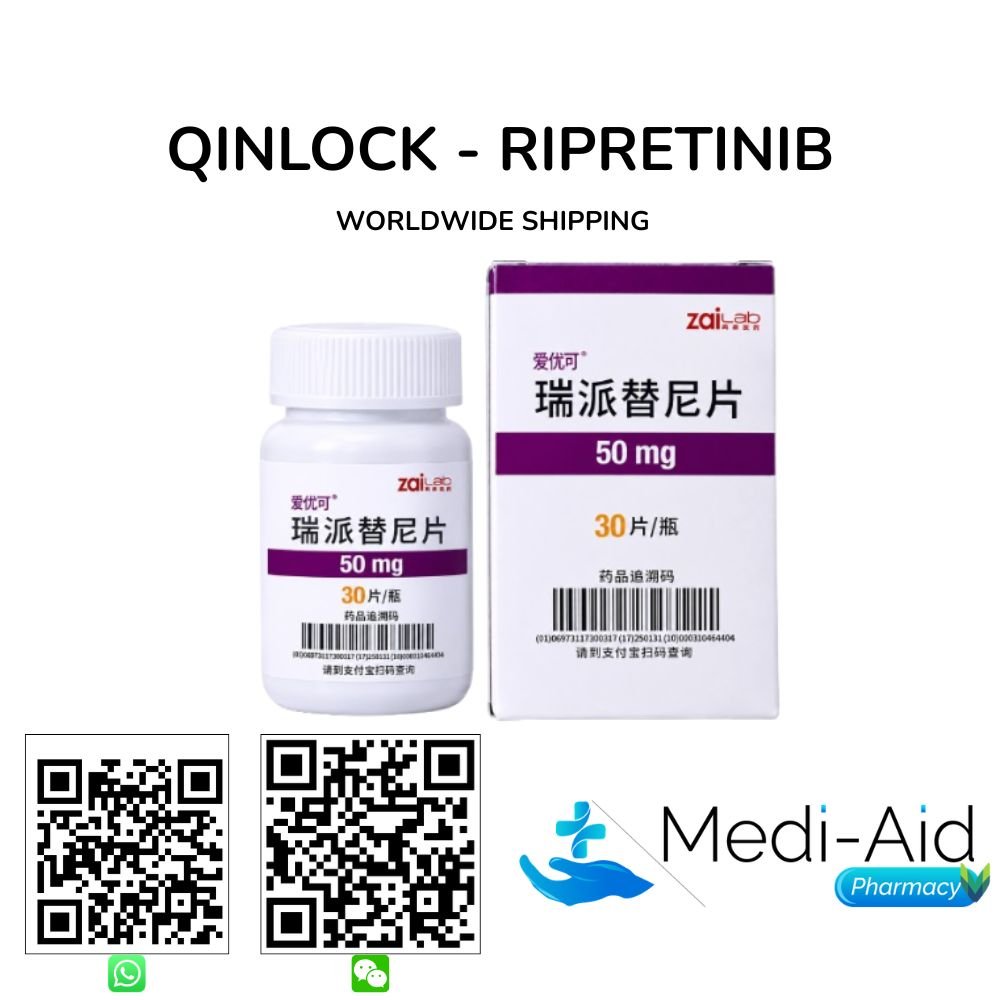
Description
Qinlock 50 MG (Ripretinib) 拨乐 (拨乐) is a novel oral switch-control tyrosine kinase inhibitor (TKI) engineered with a unique dual mechanism of action that simultaneously regulates the KIT and PDGFRα kinase switch pocket and activation loop, locking both kinases into an inactive conformation and thereby broadly inhibiting constitutively active KIT and PDGFRα mutant kinases across a wide spectrum of primary and secondary resistance mutations a first-in-class broad-spectrum KIT and PDGFRα inhibitor specifically designed to address the fundamental pharmacological challenge of GIST treatment: the progressive accumulation of heterogeneous secondary resistance mutations in the KIT kinase domain that renders each prior TKI (imatinib, sunitinib, regorafenib) sequentially ineffective; ripretinib’s switch-control mechanism directly addresses this challenge by binding both the switch pocket (C-terminal kinase regulatory region) and the activation loop (N-terminal kinase activation segment) simultaneously a pharmacologically distinct dual-binding site strategy that (i) prevents the activation loop from accessing the switch pocket, thereby locking KIT and PDGFRα in the inactive DFG-out conformation, and (ii) blocks kinase activation regardless of whether the primary oncogenic mutation is located in the juxtamembrane domain (exon 11), the ATP-binding domain (exon 9, 13, 14), or the activation loop (exon 17, 18) providing inhibitory coverage across the full spectrum of primary KIT driver mutations and the secondary resistance mutations that emerge under selective pressure from prior TKI therapy; this broad inhibitory profile pharmacologically distinguishes ripretinib from imatinib (DFG-out juxtamembrane binding), sunitinib (multi-target VEGFR/KIT DFG-out binding), regorafenib (multi-target DFG-out binding), and avapritinib (selective DFG-in active-conformation binding for PDGFRA D842V/KIT D816V) each of which covers a subset of KIT/PDGFRA mutations with differing resistance profiles that drive GIST progression through sequential lines of therapy; supplied as 50 mg film-coated tablets, 30 tablets per pack (China-market packaging), and commercialized by Zai Lab (NASDAQ: ZLAB; HKEX: 9688) in China under license from Deciphera Pharmaceuticals (the original innovator).
Ripretinib, the active pharmaceutical ingredient of Qinlock (拨乐), is an original molecule (first-in-class switch-control TKI) developed by Deciphera Pharmaceuticals and approved by the US FDA on May 15, 2020 making ripretinib the first drug specifically approved for the fourth-line treatment of advanced GIST, filling a critical unmet need for patients who had exhausted all three prior FDA-approved GIST therapies (imatinib, sunitinib, regorafenib) and previously had no approved treatment option; the China National Medical Products Administration (NMPA) approved Qinlock (拨乐) for China on March 31, 2021, with commercialization in China led by Zai Lab establishing Qinlock as the fourth-line GIST standard of care in China, where approximately 30,000 GIST patients are newly diagnosed each year (twice the combined US and European incidence); ripretinib received FDA Breakthrough Therapy Designation, Fast Track Designation, Orphan Drug Designation, and Priority Review for the fourth-line GIST indication.
The approved indication for Qinlock (Ripretinib) is: treatment of adult patients with advanced gastrointestinal stromal tumor (GIST) who have received prior treatment with three or more kinase inhibitors, including imatinib positioning ripretinib as the fourth-line or later-line standard of care for advanced GIST after failure of imatinib (first-line), sunitinib (second-line), and regorafenib (third-line). The recommended dose of Qinlock (Ripretinib) is 150 mg orally once daily (administered as three 50 mg tablets once daily), taken with or without food, administered continuously until disease progression or unacceptable toxicity; at the 50 mg tablet strength, the standard 150 mg daily dose requires three tablets per day; dose reductions are made in 50 mg decrements first reduction to 100 mg once daily (two 50 mg tablets), second reduction to 50 mg once daily (one 50 mg tablet); permanently discontinue if unable to tolerate 50 mg once daily; avoid strong CYP3A4 inducers (rifampicin, carbamazepine, phenytoin, St. John’s Wort) which reduce ripretinib plasma exposure; avoid strong CYP3A4 inhibitors (ketoconazole, itraconazole, clarithromycin) which increase ripretinib plasma exposure.
The pivotal Phase 3 INVICTUS trial (NCT03353753; randomized, double-blind, placebo-controlled, international, multicenter; N=129; 85 ripretinib vs. 44 placebo; ≥fourth-line advanced GIST after prior imatinib, sunitinib, and regorafenib; ripretinib 150 mg once daily; primary endpoint: PFS by blinded independent radiological review using modified RECIST) demonstrated that ripretinib statistically significantly and clinically meaningfully improved all primary and key secondary endpoints: median PFS of 6.3 months vs. 1.0 month for placebo (HR=0.15; 95% CI: 0.09–0.25; p<0.0001) an 85% reduction in the risk of disease progression or death; ORR of 9.4% vs. 0% for placebo; and median OS of 15.1 months vs. 6.6 months for placebo (HR=0.36; 95% CI: 0.21–0.62) establishing ripretinib as the new fourth-line standard of care for advanced GIST and the first approved therapy for patients who had previously exhausted all prior approved GIST treatments.
Important: The most clinically significant adverse reactions of ripretinib are cardiac dysfunction (decreased left ventricular ejection fraction [LVEF]), hypertension, cutaneous squamous cell carcinoma (cuSCC) and keratoacanthoma, impaired wound healing, hemorrhage, and embryo-fetal toxicity; monitor LVEF before initiation and periodically during treatment; withhold ripretinib for Grade 3 decreased LVEF, resume at reduced dose after recovery; permanently discontinue for Grade 4 decreased LVEF; monitor blood pressure regularly and treat hypertension with standard antihypertensives; withhold for Grade 3 hypertension; perform dermatologic evaluations prior to initiation and regularly during treatment for cuSCC and keratoacanthoma; withhold ripretinib for at least 1 week prior to elective surgery; do not administer for at least 2 weeks after major surgery; do not substitute Qinlock (Ripretinib) for imatinib, sunitinib, regorafenib, avapritinib, or other KIT/PDGFRA-targeted agents without confirmed indication-specific prescribing and clinical benefit-risk assessment by the treating oncologist.
Searching for Qinlock 50 MG Ripretinib? Mediaid Pharmacy lists this product across its oncology medicines, GIST medicines, and Zai Lab medicines portfolios and ships worldwide.
Basic Product Information of Qinlock 50 MG (Ripretinib) 拨乐
| Brand Name | Qinlock (US/global brand name, Deciphera Pharmaceuticals, Inc.); 拨乐 (Qin Le Chinese brand name, Zai Lab, China); ripretinib is an original molecule developed by Deciphera Pharmaceuticals, Inc. (NASDAQ: DCPH), Waltham, MA, USA, and approved by the US FDA on May 15, 2020 for fourth-line treatment of adult patients with advanced GIST the first drug specifically approved for this indication; Zai Lab (NASDAQ: ZLAB; HKEX: 9688) holds the exclusive commercialization rights for Qinlock (拨乐) in mainland China, Hong Kong, Macau, and Taiwan under a licensing agreement with Deciphera Pharmaceuticals; the China NMPA approved Qinlock (拨乐) on March 31, 2021; Qinlock is an original molecule (not a generic or biosimilar) ripretinib is the first and only switch-control KIT/PDGFRA inhibitor approved anywhere in the world; Qinlock (拨乐) China-market packaging: 50 mg film-coated tablets, 30 tablets per pack; this China-market packaging of Qinlock (拨乐) is supplied by Mediaid Pharmacy with worldwide shipping to patients and oncology programs outside China |
| Product Name | Qinlock (拨乐) ripretinib film-coated tablets, 50 mg per tablet, 30 tablets per pack; China-market packaging; Zai Lab |
| Generic Name | Ripretinib (INN; also known as DCC-2618; chemical name: 1-(4-bromo-5-(1-ethyl-7-(methylamino)-2-oxo-1,2-dihydro-1,6-naphthyridin-8-yl)-2-fluorophenyl)-3-phenylurea; ripretinib is a novel, first-in-class, orally bioavailable, small-molecule switch-control tyrosine kinase inhibitor (TKI) designed to broadly inhibit KIT and PDGFRα (platelet-derived growth factor receptor alpha) mutant kinases through a pharmacologically unique dual mechanism of action; KIT and PDGFRα are dual-switch kinases containing two critical regulatory regions: the switch pocket (C-terminal lobe) and the activation loop (N-terminal lobe); kinase activation requires the activation loop to access the switch pocket, transitioning the kinase from its inactive DFG-out conformation to its active DFG-in conformation; ripretinib was rationally designed to simultaneously bind both the switch pocket and the activation loop of KIT and PDGFRα locking the kinase in the inactive state and preventing downstream signaling and tumor cell proliferation regardless of which mutation is present; this dual-binding switch-control mechanism provides broad inhibitory coverage across wild-type KIT and PDGFRα, all KIT primary driver mutations (exon 11 juxtamembrane mutations the most common GIST driver mutation; exon 9 mutations; and other primary mutations in exons 13 and 14), all major secondary KIT resistance mutations in the ATP-binding domain (exons 13, 14) and activation loop (exons 17, 18) that drive resistance to imatinib, sunitinib, and regorafenib, and selected PDGFRα mutations; ripretinib was developed by Deciphera Pharmaceuticals, Inc. and received US FDA approval on May 15, 2020; ripretinib received FDA Breakthrough Therapy Designation, Fast Track Designation, Orphan Drug Designation, and Priority Review for fourth-line GIST; China NMPA approval: March 31, 2021 (Zai Lab); ripretinib is designated as an original molecule and is listed in NCCN Clinical Practice Guidelines for Soft Tissue Sarcoma as the recommended fourth-line therapy for advanced GIST) |
| Drug Class | First-in-Class Oral Switch-Control Tyrosine Kinase Inhibitor (TKI); Broad-Spectrum KIT and PDGFRα Mutant Kinase Inhibitor; Dual Switch Pocket and Activation Loop Kinase Inhibitor; Fourth-Line Advanced GIST Targeted Therapy; Post-Imatinib/Sunitinib/Regorafenib GIST Treatment; Small-Molecule Precision Oncology Agent; Oral KIT Secondary Resistance Mutation Inhibitor (Exons 13, 14, 17, 18); Original Molecule Oncology Product (Deciphera Pharmaceuticals / Zai Lab) |
| Formulation | Film-coated tablet for oral administration Qinlock (Ripretinib) may be taken with or without food; swallow tablets whole; take at approximately the same time each day; ripretinib is administered continuously (without scheduled rest periods or treatment breaks) at 150 mg (three 50 mg tablets) once daily until disease progression or unacceptable toxicity; if a dose is missed, the patient should not take an additional dose take the next dose at the regularly scheduled time the following day; in the event of vomiting after taking a dose, do not take an additional dose resume at the next regularly scheduled time; store at room temperature as directed per product labeling; Qinlock (拨乐) China-market film-coated tablets do not require cold-chain refrigerated shipping; standard ambient-temperature pharmaceutical packaging is appropriate for international shipping; avoid concomitant use of strong CYP3A4 inducers (rifampicin, carbamazepine, phenobarbital, phenytoin, St. John’s Wort) which significantly reduce ripretinib plasma AUC; avoid concomitant use of strong CYP3A4 inhibitors (ketoconazole, itraconazole, voriconazole, clarithromycin) which significantly increase ripretinib plasma AUC |
| Available Strength | 50 mg per film-coated tablet the 50 mg tablet strength enables all approved ripretinib doses and both dose reduction levels from a single tablet size: Standard dose: 150 mg once daily = three 50 mg tablets per day; First dose reduction: 100 mg once daily = two 50 mg tablets per day; Second dose reduction (minimum): 50 mg once daily = one 50 mg tablet per day; permanently discontinue ripretinib if the patient cannot tolerate 50 mg once daily; dose reductions are triggered by cardiac dysfunction (Grade 3 decreased LVEF), Grade 3 hypertension uncontrolled with antihypertensives, cutaneous squamous cell carcinoma/keratoacanthoma requiring dose modification, Grade 3 non-hematological toxicities, and other Grade 3/4 adverse reactions per prescribing information; no body-weight-based dose adjustment is required ripretinib is administered as a fixed daily oral dose; special populations: no dose adjustment required for mild, moderate, or severe renal impairment; no dose adjustment required for mild or moderate hepatic impairment (Child-Pugh A and B); use not established in severe hepatic impairment (Child-Pugh C); ripretinib has not been established as safe and effective in pediatric patients |
| Available Pack Size | 30 tablets per pack (China-market packaging) at the standard dose of 150 mg once daily (three 50 mg tablets per day), one pack of Qinlock 50 MG (30 tablets) provides a 10-day supply; a standard 30-day supply requires 3 packs (90 tablets) at the 150 mg daily dose; a 28-day supply requires approximately 3 packs (84 tablets consumed, 6 tablets remaining in the third pack); at the first dose reduction level of 100 mg daily (two 50 mg tablets per day), one pack provides a 15-day supply, and a 30-day supply requires 2 packs; at the minimum dose of 50 mg daily (one 50 mg tablet per day), one pack provides a 30-day supply; hospital formulary procurement teams and oncology programs typically calculate monthly procurement on the basis of the patient’s current active dose level; for patients on the standard 150 mg daily dose, 3 packs per 30-day treatment period are required; contact Mediaid Pharmacy for pack-size-specific stock availability confirmation and procurement guidance for Qinlock 50 MG (拨乐) |
| Dosing Schedule | Advanced GIST (≥Fourth-Line; After Imatinib, Sunitinib, and Regorafenib) Standard Dosing: Ripretinib 150 mg (three 50 mg tablets) orally once daily continuously without scheduled rest periods; administer until disease progression or unacceptable toxicity; approved for adult patients with advanced GIST who have received prior treatment with three or more kinase inhibitors, including imatinib; no KIT/PDGFRA companion diagnostic test is required as a prerequisite for ripretinib prescribing ripretinib is approved for fourth-line GIST regardless of the specific KIT or PDGFRA mutation subtype, as the switch-control mechanism provides broad inhibitory coverage across all major KIT primary and secondary resistance mutations.
Dose Reduction Schedule: From 150 mg (three 50 mg tablets) → first reduction to 100 mg once daily (two 50 mg tablets); second reduction to 50 mg once daily (one 50 mg tablet); permanently discontinue ripretinib if the patient cannot tolerate 50 mg once daily. Dose Reduction Triggers: Grade 3 decreased LVEF (withhold; resume at reduced dose after LVEF recovers to ≥Grade 1 or baseline); Grade 4 decreased LVEF (permanently discontinue); Grade 3 hypertension uncontrolled with antihypertensive therapy (withhold; resume at reduced dose when hypertension is controlled); symptomatic cardiac dysfunction; cuSCC or keratoacanthoma (excise lesion; continue ripretinib at same dose or consider dose reduction based on severity and recurrence); Grade 3 or 4 non-hematological toxicities not responding to supportive care; impaired wound healing (withhold for at least 1 week prior to elective surgery; resume at least 2 weeks after major surgery based on wound healing assessment). Mandatory Safety Monitoring: LVEF assessment by echocardiogram or MUGA scan before initiating ripretinib and periodically during treatment; blood pressure monitoring before initiation and regularly throughout treatment; dermatologic evaluation (clinical skin examination) before initiation and every 2 months during treatment for cuSCC and keratoacanthoma; pregnancy testing in females of reproductive potential before initiating ripretinib. |
| Primary Indication | ADVANCED GIST ≥FOURTH-LINE (AFTER IMATINIB, SUNITINIB, AND REGORAFENIB): FIRST DRUG SPECIFICALLY APPROVED FOR FOURTH-LINE GIST
Ripretinib Monotherapy ≥Fourth-Line Advanced GIST (INVICTUS; Phase 3; NCT03353753; randomized, double-blind, placebo-controlled, international, multicenter; N=129; 85 ripretinib 150 mg once daily vs. 44 placebo; primary endpoint: PFS by blinded independent radiological review using modified RECIST; key secondary endpoints: ORR and OS): Median PFS: 6.3 months (95% CI: 4.6–8.1) vs. 1.0 month (95% CI: 0.9–1.7) for placebo (HR=0.15; 95% CI: 0.09–0.25; p<0.0001) an 85% reduction in the risk of disease progression or death; ORR: 9.4% (ripretinib) vs. 0% (placebo); median OS: 15.1 months (ripretinib) vs. 6.6 months (placebo) (HR=0.36; 95% CI: 0.21–0.62) a 64% reduction in the risk of death; long-term update from INVICTUS (2021 CTOS): median PFS remained 6.3 months; ORR updated to 11.8% (95% CI: 5.8%–20.6%) vs. 0% for placebo; US FDA approval: May 15, 2020 (approved 3 months ahead of the PDUFA date under FDA’s Real-Time Oncology Review [RTOR] program); China NMPA approval: March 31, 2021 (Zai Lab). Clinical Context Defining the Fourth-Line GIST Population: Before ripretinib approval, patients with advanced GIST who had progressed through imatinib (first-line; median PFS ~20–24 months), sunitinib (second-line; median PFS ~5–6 months), and regorafenib (third-line; median PFS ~4.8 months) had no approved treatment option; this ≥fourth-line population faces compounded intratumoral and intertumoral KIT mutational heterogeneity, with individual tumors harboring polyclonal KIT resistance mutations spanning multiple exons simultaneously, making broad mutational coverage pharmacologically essential; ripretinib’s switch-control mechanism inhibiting KIT through the switch pocket and activation loop rather than through the ATP-binding site alone provides inhibitory activity against all major KIT primary mutations (exons 9, 11) and secondary resistance mutations (exons 13, 14, 17, 18) simultaneously, addressing the full spectrum of heterogeneous resistance mutations present at the fourth-line stage; this broad mechanism directly translated into the INVICTUS trial’s primary endpoint: a median PFS of 6.3 months vs. 1.0 month a 6.3-fold improvement in the most treatment-refractory GIST population ever studied in a Phase 3 randomized trial, establishing ripretinib as the first and only standard of care for fourth-line advanced GIST and transforming a stage of GIST management where no effective therapy previously existed. Phase 1 Dose-Expansion Activity Across Earlier Lines: In the Phase 1 study (NCT02571036), ripretinib 150 mg once daily demonstrated preliminary activity across earlier treatment lines in patients with GIST: second-line ORR 30% (22% confirmed); median PFS 42 weeks; third-line ORR 23% (13% confirmed); median PFS 40 weeks; ≥fourth-line ORR 11% (7% confirmed); median PFS 24 weeks confirming activity consistent with the INVICTUS Phase 3 results and supporting the mechanistic rationale for ripretinib across the full GIST treatment continuum. |
| Manufacturer / Commercializer | Zai Lab (NASDAQ: ZLAB; HKEX: 9688) China commercialization rights holder; ripretinib originally developed by Deciphera Pharmaceuticals, Inc. (NASDAQ: DCPH), Waltham, MA, USA |
| Country / Market | China China-market packaging (拨乐; Qinlock 50 mg film-coated tablets, 30 tablets per pack; Zai Lab); NMPA approved March 31, 2021 |
| Storage | Store at room temperature, 20°C–25°C (68°F–77°F); excursions permitted to 15°C–30°C (59°F–86°F); store in the original sealed pack; keep away from moisture, direct sunlight, and excessive heat; keep out of reach of children; standard ambient-temperature pharmaceutical shipping is appropriate for Qinlock (拨乐) film-coated tablets cold-chain refrigerated shipping is not required; Mediaid Pharmacy ships Qinlock 50 MG (拨乐) China-market packaging internationally using secure pharmaceutical packaging validated for destination country transit conditions |
Global Supplier: Mediaid Pharmacy Worldwide Shipping for Qinlock 50 MG (Ripretinib) 拨乐
Mediaid Pharmacy is a Dhaka-based supplier of specialty oral precision oncology therapies, original molecule GIST medicines, switch-control kinase inhibitors, and oral anti-cancer agents for rare and molecularly defined malignancies, with worldwide shipping to patients, oncology departments, fourth-line GIST treatment programs, hospital pharmacies, oncology day units, patient access programs, sarcoma treatment centers, and international distributors across all regions. Qinlock 50 MG (拨乐) (Ripretinib), China-market packaging, commercialized by Zai Lab in China under license from Deciphera Pharmaceuticals, Inc., is supplied as film-coated tablets (50 mg per tablet, 30 tablets per pack), with pricing quotations, stock confirmation, full product documentation, and end-to-end international delivery tracking for every order.
Qinlock (Ripretinib) is an orally administered, ambient-temperature-stable tablet formulation international shipping does not require cold-chain handling, enabling reliable worldwide supply to patients in diverse geographies. Advanced GIST treatment programs procuring ripretinib for fourth-line or later-line targeted therapy after imatinib, sunitinib, and regorafenib failure; sarcoma oncology departments sourcing the first approved fourth-line GIST standard of care; hospital formulary procurement departments sourcing Qinlock (拨乐) as part of targeted oncology medicines portfolios; and individual GIST patients and families sourcing ripretinib for fourth-line GIST after prior TKI failure can contact the Mediaid Pharmacy team through WhatsApp, phone, or email for Qinlock 50 MG stock availability, current pricing, shipping options, and international delivery timelines.
Why Choose Qinlock 50 MG (Ripretinib) 拨乐 from Mediaid Pharmacy?
Qinlock (Ripretinib) from Zai Lab / Deciphera Pharmaceuticals delivers the first and only switch-control KIT/PDGFRα inhibition mechanism approved for fourth-line GIST the first drug specifically approved to treat patients who have exhausted all prior FDA/NMPA-approved GIST therapies supplied as convenient film-coated tablets (50 mg, 30 tablets per pack; China-market packaging) with a simple once-daily continuous dosing regimen, enabling outpatient oral administration without IV infusion requirements, cold-chain logistics, or institutional infusion suite access. Ripretinib is pharmacologically and clinically distinguished across the GIST treatment landscape by four evidence-based attributes.
First, ripretinib’s switch-control dual-binding mechanism simultaneously occupying both the kinase switch pocket and the activation loop to lock KIT and PDGFRα in the inactive conformation is the pharmacological innovation that enables broad inhibitory activity across the full spectrum of KIT primary and secondary resistance mutations that accumulate through sequential TKI therapy, addressing the core mechanism of GIST multi-drug resistance that makes fourth-line treatment uniquely challenging. GIST treated sequentially with imatinib, sunitinib, and regorafenib develops compounding intratumoral KIT mutational heterogeneity individual patients’ tumors can simultaneously harbor KIT exon 11 primary mutations alongside secondary resistance mutations in exons 13 or 14 (ATP-binding domain) and exons 17 or 18 (activation loop), with different tumor clones carrying different secondary mutations; imatinib, sunitinib, and regorafenib all require the inactive DFG-out kinase conformation for binding and have differential sensitivity profiles against specific secondary mutations none provides coverage across all activation-loop secondary resistance mutations; ripretinib’s switch-pocket binding prevents activation-loop access regardless of which secondary mutation is present in the activation loop, while its activation-loop binding provides additional direct inhibition of activation-loop resistance mutations; this mechanistic breadth directly explains the 6.3-month median PFS in the INVICTUS trial ripretinib’s broad molecular coverage translating into durable clinical benefit in the most heavily pretreated GIST population studied in any Phase 3 randomized trial.
Second, the INVICTUS Phase 3 trial results median PFS 6.3 months vs. 1.0 month (HR=0.15; p<0.0001); median OS 15.1 months vs. 6.6 months (HR=0.36) established the most statistically and clinically compelling efficacy signal ever reported in a randomized Phase 3 trial for fourth-line GIST, transforming a disease stage characterized by complete absence of approved therapy into one with an established standard of care. The INVICTUS hazard ratio of 0.15 for PFS reflecting an 85% reduction in the risk of disease progression or death is among the most extreme HRs reported in any Phase 3 oncology trial, underscoring the magnitude of ripretinib’s benefit in the absence of effective alternative therapy; the median OS improvement from 6.6 months to 15.1 months (HR=0.36; a 64% reduction in mortality risk) demonstrates that ripretinib’s disease control translates directly into extended survival rather than merely delaying radiological progression; together, these data established ripretinib as the first drug to change the natural history of fourth-line advanced GIST a population that, without an approved therapy, faced median OS of approximately 6 months; FDA recognized this transformative evidence by approving ripretinib three months ahead of the PDUFA date under its Real-Time Oncology Review (RTOR) program, reserved for therapies with the most compelling benefit-risk profiles.
Third, ripretinib’s favorable tolerability profile with low rates of Grade 3/4 treatment-emergent adverse events, low discontinuation rates, and a manageable safety profile enabling durable once-daily continuous dosing is clinically important in the fourth-line GIST population, who have been exposed to multiple prior TKIs and have cumulative treatment-related toxicity burden that limits tolerance of additional high-toxicity regimens. In the INVICTUS trial, Grade 3/4 treatment-related adverse events were uncommon Grade 3/4 dry skin 11%, hypertension 7%, fatigue 2% with low rates of treatment discontinuation due to adverse events; the most common adverse reactions (alopecia, fatigue, nausea, abdominal pain, constipation, myalgia, diarrhea, decreased appetite, palmar-plantar erythrodysaesthesia, vomiting) were predominantly low-grade and manageable with standard supportive care; the absence of a boxed warning and the low Grade 3/4 toxicity rate distinguish ripretinib’s tolerability profile from prior-line GIST therapies, particularly sunitinib (which carries a hepatotoxicity boxed warning) and regorafenib (which has significant hepatotoxicity, hand-foot syndrome, and fatigue burden); this favorable tolerability enables patients to remain on ripretinib for extended periods a critical operational requirement in heavily pretreated patients who cannot sustain prolonged dose interruptions or reductions; Phase 1 intra-patient dose escalation (IPDE) data demonstrated that dose escalation from 150 mg once daily to 150 mg twice daily upon radiological progression extended median PFS2 by approximately 3.7 months with a similar safety profile, providing an additional tool for clinical management after first progression on ripretinib.
Fourth, Qinlock (拨乐) China-market packaging (50 mg film-coated tablets, 30 tablets per pack) provides complete dose management flexibility across the standard 150 mg dose, both dose reduction levels, and all dose transition levels from a single-strength product, enabling a simplified pharmaceutical supply chain without requiring multiple tablet strengths. Three 50 mg tablets deliver the standard 150 mg daily dose; two 50 mg tablets achieve the first dose reduction to 100 mg; one 50 mg tablet achieves the minimum dose of 50 mg all dose levels are achievable from a single tablet strength without supplementary products; the 30-tablet pack provides clean 10-day cycles per pack at the standard dose, simplifying procurement calculations for oncology programs and patients; Mediaid Pharmacy maintains stock of Qinlock 50 MG (拨乐) China-market packaging with reliable supply continuity to prevent treatment gaps in ongoing fourth-line GIST patient regimens.
To source Qinlock Ripretinib tablets and explore the complete portfolio of GIST-targeted medicines and oncology drugs available through Mediaid Pharmacy, visit the GIST medicines portfolio, the Zai Lab medicines collection, and the oncology medicines collection, and contact the team for a personalized quotation and international shipping confirmation.
Frequently Asked Questions About Qinlock 50 MG (Ripretinib) 拨乐
What is Qinlock (Ripretinib) used for?
Qinlock (拨乐) (Ripretinib) is an oral first-in-class switch-control KIT and PDGFRα inhibitor approved for a single GIST indication in both the US (FDA, May 15, 2020) and China (NMPA, March 31, 2021): treatment of adult patients with advanced gastrointestinal stromal tumor (GIST) who have received prior treatment with three or more kinase inhibitors, including imatinib. This indication positions ripretinib as the fourth-line or later-line treatment standard for advanced GIST after failure of imatinib (first-line), sunitinib (second-line), and regorafenib (third-line) making Qinlock the first drug specifically approved for this patient population, which previously had no approved therapy after exhausting all three prior-line GIST drugs. No KIT/PDGFRA companion diagnostic test is required before prescribing ripretinib the approval covers all GIST patients meeting the prior-therapy criteria regardless of KIT or PDGFRA mutation subtype, consistent with ripretinib’s broad switch-control mechanism that provides inhibitory coverage across all major KIT primary and secondary resistance mutations. INVICTUS Phase 3 efficacy: median PFS 6.3 months vs. 1.0 month (HR=0.15; p<0.0001); ORR 9.4% vs. 0%; median OS 15.1 months vs. 6.6 months (HR=0.36). Qinlock (拨乐) is available through Mediaid Pharmacy with worldwide shipping to patients and fourth-line GIST treatment programs globally.
What is the generic name of Qinlock? What is the Chinese name 拨乐?
The generic name (International Nonproprietary Name, INN) of Qinlock is ripretinib (also known as DCC-2618). 拨乐 (pronounced “Qin Le”) is the Chinese brand name for Qinlock in mainland China, commercialized by Zai Lab. Ripretinib is a novel, first-in-class, orally bioavailable, small-molecule switch-control tyrosine kinase inhibitor (TKI) that broadly inhibits KIT and PDGFRα (platelet-derived growth factor receptor alpha) mutant kinases through a pharmacologically unique dual mechanism of action targeting both the kinase switch pocket and the activation loop simultaneously locking KIT and PDGFRα in the inactive conformation and thereby blocking downstream signaling and tumor cell proliferation across a wide spectrum of KIT and PDGFRα primary driver mutations and secondary resistance mutations; this switch-control mechanism is mechanistically distinct from all prior GIST-approved TKIs: imatinib, sunitinib, and regorafenib all bind the KIT kinase in the inactive DFG-out conformation through the ATP-binding site alone, which limits their inhibitory coverage against secondary resistance mutations in the KIT activation loop (exons 17, 18); ripretinib’s simultaneous switch-pocket plus activation-loop binding provides inhibitory activity that covers these activation-loop secondary mutations directly. Ripretinib was developed by Deciphera Pharmaceuticals, Inc. (USA) and is the original molecule (not a generic); it is listed in NCCN Clinical Practice Guidelines as the recommended fourth-line therapy for advanced GIST. Mediaid Pharmacy distributes Qinlock (拨乐) Ripretinib by Zai Lab (China-market packaging) globally with worldwide shipping to patients, oncology programs, and hospital pharmacies.
What are the side effects of Qinlock (Ripretinib)?
Qinlock (Ripretinib) does not carry a boxed warning, distinguishing its safety profile from sunitinib (hepatotoxicity boxed warning) and imatinib. The most clinically significant adverse reactions of ripretinib that require active monitoring and management are cardiac dysfunction (decreased LVEF), hypertension, cutaneous squamous cell carcinoma (cuSCC) and keratoacanthoma, impaired wound healing, hemorrhage, and embryo-fetal toxicity. Cardiac Dysfunction (Decreased LVEF): Grade 3 decreased ejection fraction occurred in 2.6% of patients receiving ripretinib in INVICTUS who had baseline and post-baseline echocardiogram assessments; monitor LVEF by echocardiogram or MUGA scan before initiating ripretinib and periodically during treatment; withhold ripretinib for Grade 3 decreased LVEF until recovery to ≥Grade 1 or baseline, then resume at reduced dose; permanently discontinue for Grade 4 decreased LVEF. Hypertension: Grade 1–3 hypertension occurred in 14% of INVICTUS patients, including Grade 3 in 7%; monitor blood pressure before initiation and regularly during treatment; treat with standard antihypertensives; withhold for Grade 3 hypertension; permanently discontinue for life-threatening hypertension. Cutaneous Squamous Cell Carcinoma (cuSCC) and Keratoacanthoma: Perform dermatologic evaluations before initiation and every 2 months during treatment; excise lesions and continue ripretinib at same or reduced dose based on severity; this risk is shared by other KIT TKIs. Most Common Adverse Reactions (≥10% in INVICTUS; Ripretinib vs. Placebo): Alopecia (52% vs. 5%), fatigue (42% vs. 25%), nausea (38% vs. 23%), abdominal pain (36% vs. 23%), constipation (34% vs. 25%), myalgia (32% vs. 23%), diarrhea (28% vs. 23%), decreased appetite (26% vs. 18%), palmar-plantar erythrodysaesthesia syndrome (PPES/HFSR) (21% vs. 7%), and vomiting (20% vs. 11%); Grade 3/4 treatment-emergent adverse events were uncommon with ripretinib dry skin Grade 3/4 11%, hypertension Grade 3/4 7%, fatigue Grade 3/4 2% supporting a favorable tolerability profile relative to other GIST TKIs. Impaired Wound Healing: Withhold ripretinib for at least 1 week prior to elective surgery; do not administer for at least 2 weeks following major surgery based on adequate wound healing determination. All patients initiating Qinlock (Ripretinib) should have baseline LVEF, blood pressure, and dermatologic function assessed before treatment begins, with treatment initiated under the supervision of a qualified oncologist experienced in managing KIT/PDGFRA-targeted TKI toxicities.
How effective is Qinlock (Ripretinib) for fourth-line advanced GIST?
Ripretinib demonstrated unprecedented efficacy in fourth-line advanced GIST in the pivotal INVICTUS Phase 3 trial, achieving the most statistically compelling PFS improvement ever reported in a Phase 3 randomized trial for fourth-line GIST a disease stage where no approved therapy had previously existed. INVICTUS (Phase 3; NCT03353753; randomized, double-blind, placebo-controlled, international, multicenter; N=129; 85 ripretinib 150 mg once daily vs. 44 placebo; primary endpoint: PFS by blinded independent radiological review using modified RECIST): Median PFS: 6.3 months (95% CI: 4.6–8.1) vs. 1.0 month for placebo (HR=0.15; 95% CI: 0.09–0.25; p<0.0001); ORR: 9.4% (ripretinib) vs. 0% (placebo); median OS: 15.1 months vs. 6.6 months (HR=0.36; 95% CI: 0.21–0.62). Magnitude of Benefit: The HR of 0.15 for PFS reflects an 85% reduction in the risk of disease progression or death achieved in patients who had already failed three prior lines of approved GIST-targeted therapy; the 6.3-fold difference in median PFS (6.3 months vs. 1.0 month) and the near-doubling of median OS (15.1 months vs. 6.6 months) in this heavily pretreated population established ripretinib as the standard of care for fourth-line GIST globally. FDA Real-Time Oncology Review: The FDA approved ripretinib three months ahead of the PDUFA date under its RTOR program indicating the agency’s assessment of the INVICTUS data as representing exceptional benefit-risk; the approval was described by the FDA’s Dr. Richard Pazdur as providing “a new treatment option for patients who have exhausted all FDA-approved therapies for GIST.” Long-term INVICTUS update (2021 CTOS): median PFS remained 6.3 months; updated ORR 11.8% (95% CI: 5.8%–20.6%); OS benefit sustained. Qinlock 50 MG (拨乐) (Ripretinib) is available through Mediaid Pharmacy; visit the GIST medicines collection and oncology medicines collection for the complete GIST targeted therapy portfolio.
What is the difference between Qinlock (Ripretinib) and other GIST therapies (Imatinib, Sunitinib, Regorafenib, Avapritinib)?
Qinlock (Ripretinib), imatinib (Gleevec), sunitinib (Sutent/LuciSuni), regorafenib (Stivarga), and avapritinib (Ayvakit/LuciAvap) are all approved therapies for GIST but differ fundamentally in mechanism of action, molecular coverage, approved line of therapy, and clinical activity against specific GIST subtypes making them non-interchangeable. Mechanism: Ripretinib is the only switch-control TKI, binding both the KIT/PDGFRα switch pocket and activation loop simultaneously to lock the kinase in the inactive state a dual-binding mechanism providing broad inhibitory coverage across all major KIT primary and secondary resistance mutations; imatinib, sunitinib, and regorafenib all require the inactive DFG-out kinase conformation and bind through the ATP-binding site alone, with differing but overlapping secondary mutation coverage profiles; avapritinib selectively inhibits KIT D816V and PDGFRA D842V/exon 18 mutations through active DFG-in conformation binding a mechanistically distinct approach targeting activation-loop mutations in a different kinase conformation than ripretinib. Approved Line and Population: Imatinib = first-line KIT-mutated GIST and non-D842V PDGFRA mutations; sunitinib = second-line after imatinib failure (TTP 27.3 vs. 6.4 weeks); regorafenib = third-line after imatinib and sunitinib failure; ripretinib = fourth-line or later after imatinib, sunitinib, and regorafenib failure (PFS 6.3 vs. 1.0 months; HR=0.15); avapritinib = any line for PDGFRA exon 18-mutant GIST (ORR 84–89%), not fourth-line general GIST. Secondary Mutation Coverage: Ripretinib’s switch-control mechanism is specifically designed to cover the full spectrum of KIT activation-loop secondary resistance mutations (exons 17, 18) that most limit imatinib, sunitinib, and regorafenib at the fourth-line stage; this broad secondary mutation coverage is the core pharmacological rationale for ripretinib’s fourth-line positioning. Tolerability Comparison: Ripretinib has no boxed warning (vs. sunitinib’s hepatotoxicity boxed warning), low Grade 3/4 adverse event rates, and low treatment discontinuation rates a favorable tolerability profile critical in heavily pretreated fourth-line patients. Visit the Mediaid Pharmacy GIST medicines range and Zai Lab medicines collection for the complete fourth-line GIST targeted therapy portfolio.
Is Qinlock (Ripretinib) safe during pregnancy or while breastfeeding?
Qinlock (Ripretinib) can cause fetal harm based on its mechanism of action and nonclinical animal studies ripretinib should not be used during pregnancy. KIT and PDGFRα kinase signaling plays essential roles in embryonic and fetal development including vasculogenesis, hematopoiesis, and gonadal development; ripretinib’s broad inhibition of KIT and PDGFRα signaling is expected to disrupt these critical developmental processes; nonclinical animal reproductive and developmental toxicology studies demonstrated embryotoxicity and fetotoxicity with ripretinib at doses below the recommended clinical dose, confirming its reproductive toxicity risk; no clinical data are available on ripretinib use in human pregnancy; based on its mechanism-of-action embryo-fetal toxicity risk, ripretinib must not be used during pregnancy. Contraception requirement: Females of reproductive potential should use effective contraception during ripretinib treatment and for at least 1 week after the last dose; males with female partners of reproductive potential should use effective contraception during ripretinib treatment and for at least 1 week after the last dose; verify pregnancy status with a serum or urine pregnancy test before initiating Qinlock in all females of reproductive potential. Breastfeeding: No data are available on the presence of ripretinib or its metabolites in human breast milk, their effects on breastfed infants, or effects on milk production; because of the potential for serious adverse reactions from ripretinib in a breastfed infant, breastfeeding is not recommended during ripretinib treatment and for at least 1 week after the last dose. Fertility: Based on nonclinical findings, ripretinib may impair male fertility; discuss fertility preservation options with the treating oncologist before initiating ripretinib in patients of reproductive potential. All aspects of reproductive planning and contraceptive requirements should be discussed with the treating oncologist before starting Qinlock therapy.
Can I order Qinlock 50 MG (Ripretinib) 拨乐 online with worldwide shipping?
Yes. Mediaid Pharmacy supplies Qinlock 50 MG (拨乐) (Ripretinib), film-coated tablets, 30 tablets per pack, China-market packaging, commercialized by Zai Lab in China under license from Deciphera Pharmaceuticals, to patients, fourth-line GIST treatment programs, advanced GIST treatment centers, sarcoma oncology departments, hospital pharmacies, oncology outpatient clinics, patient access programs, and healthcare providers globally. As an oral tablet formulation stored at room temperature, Qinlock (拨乐) does not require cold-chain refrigerated shipping, allowing straightforward international logistics with standard secure pharmaceutical packaging appropriate for the destination country’s transit conditions and regulatory requirements. Contact Mediaid Pharmacy via WhatsApp, phone, or email at +8801773428128, or email info@mediaidpharmacy.com for pricing, current stock availability, international shipping options, and delivery details for your country. Prescription documentation is required for ripretinib dispensing in accordance with applicable regulatory requirements. For the complete portfolio of Zai Lab medicines and oncology medicines available with worldwide shipping, visit the respective collection pages on the Mediaid Pharmacy website.
Order Qinlock 50 MG (Ripretinib) 拨乐 with Worldwide Shipping
Phone / WhatsApp: +8801773428128 | Email: info@mediaidpharmacy.com