
Description
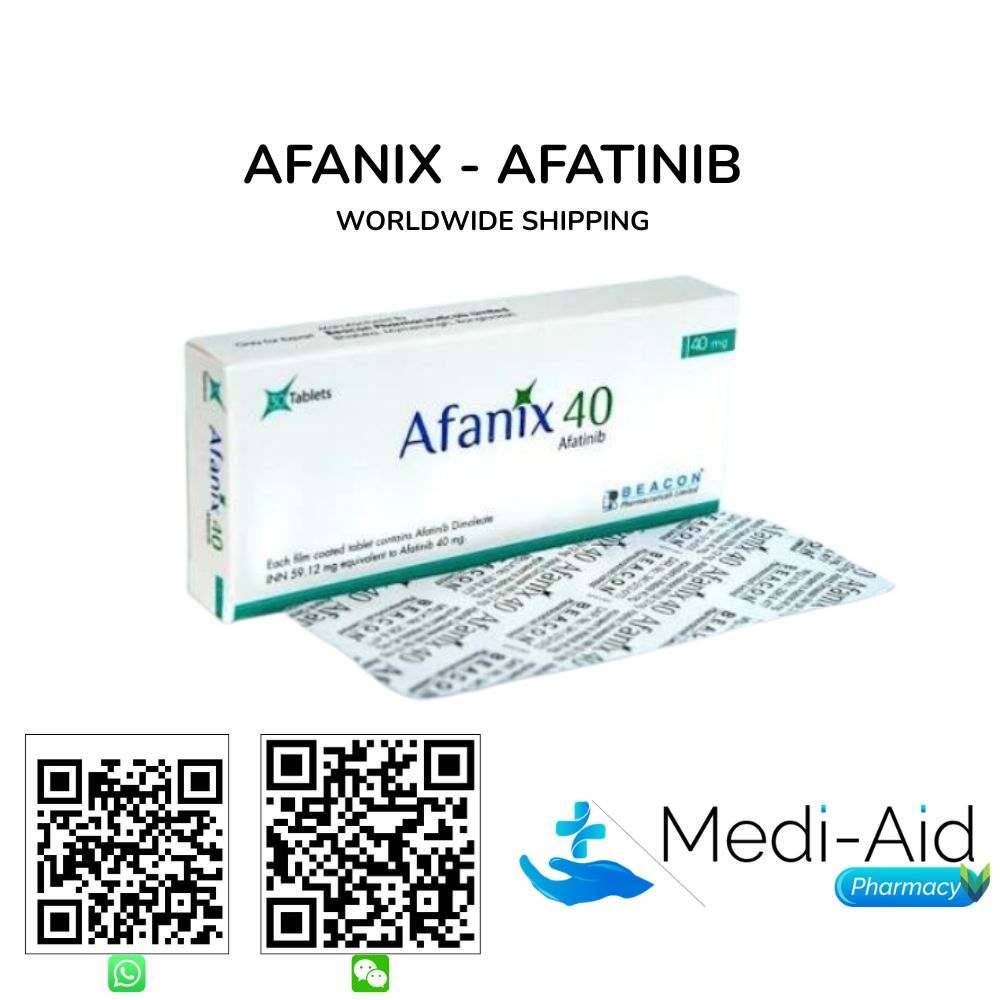
Afanix 40 MG (Afatinib) is an oral, second-generation irreversible ErbB family blocker supplied as a 40 mg tablet in a 30’s pack (3×10’s) and manufactured by Beacon Pharmaceuticals Ltd. in Bangladesh. Its active ingredient, afatinib dimaleate INN, selectively and irreversibly blocks all homo- and hetero-dimers formed by the ErbB family members EGFR (ErbB1), HER2 (ErbB2), ErbB3, and ErbB4 covalently binding to their intracellular kinase domains, permanently inactivating downstream MAPK and PI3K/AKT proliferation signalling, halting tumour cell growth, and inducing apoptosis. Afanix 40 MG (Afatinib) delivers the reference-label first-line starting dose of 40 mg once daily, as approved for adults with locally advanced or metastatic non-small cell lung cancer (NSCLC) harbouring activating epidermal growth factor receptor (EGFR) mutations, including exon 19 deletions (Del19) and the exon 21 L858R point mutation. In the pivotal LUX-Lung 3 Phase III trial, afatinib 40 mg once daily produced a median progression-free survival (PFS) of 11.1 months versus 6.9 months for platinum-based chemotherapy (HR 0.58; 95% CI 0.43–0.78; p=0.001) in EGFR mutation-positive NSCLC patients establishing afatinib as a first-line standard of care for this molecularly defined population. Searching for Afanix 40 MG Afatinib? Mediaid Pharmacy lists this product within its comprehensive lung cancer medicines portfolio, and ships it worldwide.
Basic Product Information of Afanix 40 MG (Afatinib)
| Brand Name | Afanix 40 MG (Afatinib) |
| Product Name | Afanix |
| Generic Name | Afatinib Dimaleate INN |
| Drug Class | Second-Generation Irreversible ErbB Family Blocker (Pan-ErbB Tyrosine Kinase Inhibitor), Targeted Oncology Agent |
| Formulation | Tablet |
| Available Strength | 40 mg |
| Available Pack Size | 30’s (3×10 tablets per pack) |
| Primary Indication | First-line treatment of locally advanced or metastatic NSCLC harbouring activating EGFR mutations (Del19 or L858R); metastatic squamous NSCLC progressing after platinum-based chemotherapy (reference starting dose: 40 mg once daily) |
| Manufacturer | Beacon Pharmaceuticals Ltd., Bangladesh |
| Registration | Bangladesh |
| Categories | Lung Cancer Medicines, Oncology Medicines |
| Originator Reference Brand | Giotrif / Gilotrif (afatinib) by Boehringer Ingelheim |
| Storage Conditions | Store in a dry place away from light and moisture, at the temperature printed on the pack. Keep out of the reach of children. |
| Global Supplier | Mediaid Pharmacy, Worldwide Shipping Available |
How Afanix 40 MG (Afatinib) Works: Irreversible Pan-ErbB Blockade in EGFR-Mutant NSCLC
Afatinib dimaleate INN, the active ingredient in Afanix 40 MG, is a second-generation, orally bioavailable, irreversible pan-ErbB tyrosine kinase inhibitor (TKI) that covalently and permanently binds to the intracellular kinase domains of all four members of the ErbB receptor family EGFR (ErbB1), HER2 (ErbB2), ErbB3, and ErbB4. A second-generation EGFR tyrosine kinase inhibitor is a targeted oncology drug class that differs from first-generation reversible EGFR TKIs (such as gefitinib and erlotinib) by forming an irreversible covalent bond with the Cys797 residue in the EGFR ATP-binding domain, permanently inactivating the kinase and blocking all downstream oncogenic signalling through the MAPK (RAS-RAF-MEK-ERK) and PI3K-AKT-mTOR proliferation pathways. By blocking all ErbB family homo- and hetero-dimers simultaneously, afatinib addresses a key escape mechanism exploited by tumour cells to bypass single-receptor inhibition.
Afanix 40 MG delivers the reference-label first-line starting dose of afatinib. At 40 mg once daily administered in a fasted state, afatinib achieves peak plasma concentration (Tmax) in approximately 2–5 hours and maintains sustained, irreversible suppression of EGFR, HER2, and HER4 phosphorylation throughout a 24-hour once-daily dosing interval. This irreversible binding mechanism is the fundamental pharmacological distinction between afatinib and first-generation reversible EGFR TKIs complete pathway shutdown persists even after the drug is cleared from the plasma compartment, because new receptor kinase molecules must be synthesised before signalling can resume. In EGFR-mutant NSCLC cell lines, afatinib at concentrations achieved with the 40 mg clinical dose induces robust G1 cell-cycle arrest, triggers caspase-dependent apoptosis, and inhibits EGFR-driven epithelial-to-mesenchymal transition (EMT). Oncologists building comprehensive programmes for EGFR-mutant lung cancer patients can review the full range of lung cancer medicines at Mediaid Pharmacy for companion and supportive therapies.
In the pivotal LUX-Lung 3 Phase III trial, afatinib at 40 mg once daily the dose delivered by Afanix 40 MG enrolled 345 patients with locally advanced or metastatic NSCLC harbouring EGFR activating mutations (Del19 or L858R). Afatinib produced a median PFS of 11.1 months versus 6.9 months for cisplatin/pemetrexed chemotherapy (HR 0.58; p=0.001). In the Del19 subgroup the most EGFR-dependent molecular subset median PFS reached 13.6 months with afatinib versus 6.9 months with chemotherapy. The companion LUX-Lung 6 trial in Asian patients confirmed these results (median PFS 11.0 vs 5.6 months; HR 0.28; p<0.0001), and the head-to-head LUX-Lung 7 trial demonstrated superior PFS (HR 0.73; p=0.017) and time to treatment failure for afatinib over gefitinib in treatment-naïve EGFR mutation-positive NSCLC establishing afatinib as a preferred choice over first-generation EGFR TKIs in molecularly selected patients.
Approved Indications of Afatinib 40 MG (Reference Label for Afanix 40 MG (Afatinib))
Afatinib dimaleate INN, the active ingredient in Afanix 40 MG, is approved for use across two distinct patient populations EGFR mutation-positive NSCLC as first-line therapy and squamous NSCLC after platinum-based chemotherapy. The 40 mg strength supports the first-line starting dose and serves as the anchor for the dose-escalation and dose-reduction strategy throughout the treatment course. Prescribers should confirm the exact locally approved indications on the Afanix product label before initiating therapy.
|
EGFR Mutation-Positive Locally Advanced or Metastatic NSCLC First-Line Therapy (40 mg Once Daily) Indicated as first-line monotherapy for adults with locally advanced or metastatic NSCLC harbouring activating EGFR mutations specifically exon 19 deletions (Del19) or the exon 21 L858R substitution confirmed by a validated EGFR mutation test. This approval, based on LUX-Lung 3 (median PFS 11.1 vs 6.9 months; HR 0.58) and LUX-Lung 6 (median PFS 11.0 vs 5.6 months; HR 0.28), established afatinib as the first irreversible pan-ErbB blocker approved for first-line EGFR-mutant NSCLC demonstrating superior PFS over platinum-based chemotherapy with a manageable, EGFR-inhibition-class adverse event profile. |
Metastatic Squamous NSCLC After Platinum-Based Chemotherapy and Dose-Reduction Context Afatinib 40 mg once daily is also indicated for the treatment of adults with metastatic squamous cell carcinoma of the lung (sqNSCLC) whose disease has progressed during or after platinum-based chemotherapy, based on the LUX-Lung 8 trial (median OS 7.9 vs 6.8 months for erlotinib; HR 0.81; p=0.0077). When dose reductions from the 40 mg starting dose are required due to adverse events, the first step is to 30 mg once daily and the second to 20 mg once daily. The 40 mg strength is therefore the essential starting pack for all afatinib-treated patients regardless of indication. For patients requiring dose-escalation to 50 mg (in tolerant patients at the discretion of the prescriber) or down-titration, a full range of strengths is needed. For the broader oncology medicines portfolio, visit Mediaid Pharmacy. |
Key Clinical Benefits of Afanix 40 MG (Afatinib)
|
Superior PFS Over Chemotherapy and First-Generation EGFR TKIs LUX-Lung 3 demonstrated a median PFS of 11.1 months for afatinib 40 mg versus 6.9 months for cisplatin/pemetrexed (HR 0.58; p=0.001), and LUX-Lung 7 showed superior PFS over gefitinib (HR 0.73; p=0.017). In the Del19 subgroup the most EGFR-driven molecular subset LUX-Lung 3 and 6 data combined demonstrated a statistically significant overall survival (OS) advantage for afatinib over chemotherapy (HR 0.78; p=0.0229), making afatinib the only second-generation EGFR TKI with a published OS benefit in this molecularly defined population. |
Irreversible Pan-ErbB Blockade Addresses Multiple Oncogenic Signals Simultaneously Unlike reversible first-generation EGFR TKIs that bind EGFR competitively and transiently, afatinib forms a permanent covalent bond with EGFR, HER2, and HER4 blocking all ErbB-family homo- and hetero-dimer signalling in a single agent. This mechanism prevents the shift to alternative ErbB heterodimerisation that mediates early resistance to first-generation agents and is the pharmacological rationale for the PFS advantage observed in LUX-Lung 7 over gefitinib in the head-to-head comparison. Sustained, irreversible ErbB suppression at the 40 mg once-daily dose maintains pathway silence throughout the full 24-hour dosing interval. |
Once-Daily Oral Dosing with Adaptive Dose Personalisation Afatinib 40 mg is administered once daily, simplifying adherence compared with twice-daily or food-restricted regimens. The reference label incorporates a structured dose-adjustment strategy escalation to 50 mg in tolerant patients (Grade ≤1 adverse events after 21 days) and reduction to 30 mg or 20 mg for toxicity providing clinicians with a flexible titration framework that maximises individual therapeutic exposure while managing class-effect toxicities such as diarrhoea and dermatological events. This personalised dosing approach translates to real-world clinical benefits for patients with EGFR mutation-positive NSCLC managed in ambulatory oncology settings. |
Dosage and Administration of Afanix 40 MG (Afatinib)
Administration Rule Must Be Taken on an Empty Stomach: Afatinib is a fasting-administration drug. Afanix 40 MG tablets must be taken at least 1 hour before or 3 hours after a meal. Food significantly reduces afatinib absorption: high-fat meals decrease peak plasma concentration (Cmax) by approximately 50% and area under the curve (AUC) by approximately 39%, potentially rendering a full dose sub-therapeutic. Swallow tablets whole with water do not crush, split, or chew. Afanix 40 MG should be taken at approximately the same time each day to maintain consistent drug exposure. If a dose is missed and it is more than 8 hours until the next scheduled dose, take the missed dose; if less than 8 hours remain, skip that dose and resume the next day at the normal time.
Starting Dose 40 mg Once Daily: The reference label recommends 40 mg once daily on a continuous, uninterrupted schedule as the first-line starting dose for EGFR mutation-positive locally advanced or metastatic NSCLC and for metastatic squamous NSCLC after platinum-based chemotherapy. One Afanix 40 MG tablet per day delivers the full validated reference dose. Afatinib is continued until disease progression, unacceptable toxicity, or patient withdrawal. Confirm EGFR mutation status using a validated assay (tumour tissue or plasma circulating tumour DNA) before initiating treatment.
Dose Escalation to 50 mg Once Daily: The reference label permits escalation from 40 mg to 50 mg once daily in patients who tolerate the 40 mg starting dose well defined as absence of Grade 2 or higher treatment-related adverse events for a minimum of 21 days from treatment initiation. Dose escalation is at the treating oncologist’s discretion and is intended to maximise afatinib exposure in patients with high tolerability. Never escalate beyond 50 mg once daily.
Dose Reduction Schedule for Toxicity Management (from 40 mg): If adverse events require dose modification, the reference label specifies the following stepwise reductions from the 40 mg starting dose: first reduction to 30 mg once daily; second reduction to 20 mg once daily if further modification is necessary. Dose modifications are guided by the NCI Common Terminology Criteria for Adverse Events (CTCAE) grade of the adverse event most commonly diarrhoea, cutaneous rash, stomatitis, or paronychia. Afatinib must be permanently discontinued if the adverse event cannot be managed at the 20 mg once-daily dose level. Temporarily withhold afatinib for Grade ≥3 diarrhoea, Grade ≥2 renal impairment, Grade ≥3 cutaneous reactions, suspected ILD, Grade 3 or higher stomatitis, or keratitis of any grade until the event resolves; then resume at the next lower dose.
Dose Adjustment for Strong P-gp Inhibitors and Inducers: Afatinib is a substrate of the P-glycoprotein (P-gp) efflux transporter. Co-administration with strong P-gp inhibitors (e.g., ritonavir, cyclosporine A, ketoconazole, itraconazole, erythromycin, verapamil, quinidine, tacrolimus, nelfinavir, saquinavir, amiodarone) increases afatinib exposure; if co-administration is unavoidable, reduce the afatinib daily dose by 10 mg. Strong P-gp inducers (e.g., rifampicin, carbamazepine, phenytoin, phenobarbital, St John’s Wort) decrease afatinib plasma concentrations; if co-administration is required, increase the afatinib daily dose by 10 mg as tolerated. Resume the original dose 2–3 days after the inducer is discontinued.
Clinical Monitoring Requirements During Afanix 40 MG (Afatinib) Treatment
Gastrointestinal monitoring specifically diarrhoea assessment is the primary ongoing safety requirement for afatinib therapy. Diarrhoea is the most frequently reported adverse event with afatinib at the 40 mg dose (reported in approximately 95% of patients in LUX-Lung 3, with Grade 3 events in 14.4%). The reference label requires patients to initiate loperamide at maximum approved doses (4 mg at onset of the first loose stool, then 2 mg with every subsequent loose stool up to 16 mg per day) and to contact their oncology team immediately if diarrhoea persists beyond 48 hours, is accompanied by fever, or is associated with signs of dehydration. Grade 2 diarrhoea persisting for more than 48 hours despite loperamide requires withholding afatinib and resuming at the next lower dose level after resolution to Grade ≤1. Adequate fluid replacement is essential to prevent dehydration-related acute kidney injury (AKI) in patients experiencing high-volume diarrhoea on continuous afatinib therapy.
Liver function tests (ALT, AST, and total bilirubin) must be performed at baseline and periodically throughout the treatment course, with increased frequency in patients experiencing symptoms of hepatotoxicity (jaundice, dark urine, right upper quadrant pain, or fatigue without an alternative explanation). Dermatological assessment including evaluation of acneiform rash, paronychia (nail fold infection or inflammation), palmar-plantar erythrodysaesthesia syndrome, and mucositis is required at every clinical review, as cutaneous toxicities are direct pharmacodynamic markers of EGFR inhibition and also the most common reasons for dose modification in clinical practice. Patients should be instructed on proactive skin care (gentle non-alkaline cleansers, urea-based moisturisers, sunscreen with SPF ≥30) before starting Afanix 40 MG to minimise Grade 2+ dermatological adverse events. Clinical evaluation for interstitial lung disease (ILD) or pneumonitis including chest X-ray or CT scan if new or worsening dyspnoea, cough, fever, or hypoxia develops must be incorporated into every clinical review, as ILD has been reported in approximately 1.5–3% of afatinib-treated patients (including fatal cases) across global clinical trial programmes. Renal function (serum creatinine and eGFR) must be monitored in patients experiencing persistent diarrhoea and in those with pre-existing renal impairment.
Drug Interactions and Important Safety Information for Afanix 40 MG (Afatinib)
The most clinically relevant pharmacokinetic drug interactions for afatinib 40 mg involve inhibitors and inducers of the P-glycoprotein (P-gp) efflux transporter afatinib’s primary transport mechanism rather than cytochrome P450 enzymes (afatinib undergoes minimal hepatic CYP450 metabolism). Strong P-gp inhibitors including ritonavir, cyclosporine A, ketoconazole, itraconazole, erythromycin, verapamil, quinidine, tacrolimus, nelfinavir, saquinavir, and amiodarone increase systemic afatinib exposure by reducing intestinal efflux and increasing oral bioavailability. When co-administration with a strong P-gp inhibitor is clinically unavoidable, the reference label requires reducing the afatinib daily dose by 10 mg (from 40 mg to 30 mg once daily). Strong P-gp inducers including rifampicin, carbamazepine, phenytoin, phenobarbital, and St John’s Wort reduce afatinib plasma concentrations by increasing intestinal efflux and reducing bioavailability; when co-administration is clinically necessary, the afatinib dose should be increased by 10 mg as tolerated, and the dose should be reduced to the original level 2–3 days after the inducer is discontinued.
Unlike many targeted oncology agents, afatinib’s metabolism is not primarily CYP3A4-dependent, reducing the number of conventional oncology co-medications that require pharmacokinetic dose adjustments. However, afatinib inhibits the breast cancer resistance protein (BCRP) transporter, which can increase the systemic exposure of co-administered BCRP substrates including rosuvastatin, sulfasalazine, and irinotecan and oncologists should exercise caution when prescribing these agents concurrently. Food interactions are clinically significant for afatinib: high-fat meals reduce Cmax by approximately 50%, making fasting administration (at least 1 hour before or 3 hours after a meal) an absolute requirement for consistent therapeutic drug levels a distinct difference from CDK4/6 inhibitors and some other oral oncology agents that may be taken without food restrictions. Patients must provide their oncology team with a complete medication list including all prescription drugs, over-the-counter products, vitamins, and herbal supplements before and throughout Afanix 40 MG treatment. Clinicians sourcing combination or supportive agents to accompany afatinib therapy can browse the full oncology medicines range at Mediaid Pharmacy.
Side Effects and Precautions of Afanix 40 MG (Afatinib)
|
Common Side Effects Diarrhoea (most common at the 40 mg starting dose proactive loperamide management is required from the first loose stool) Acneiform rash / dermatitis acneiformis (the most common dermatological adverse event; occurs in up to 90% of patients) Stomatitis and mucositis (aphthous ulcers of the oral mucosa) Paronychia (nail fold inflammation and infection of fingernails and toenails) Dry skin, pruritus, and palmar-plantar erythrodysaesthesia Decreased appetite and weight loss Nausea and vomiting Rhinorrhoea and epistaxis Elevated liver enzymes (ALT and AST) and hyponatraemia |
Serious Warnings and Precautions Diarrhoea and dehydration: proactive loperamide must be started at the first loose stool. Persistent Grade 2 diarrhoea (≥48 hours despite maximal loperamide), Grade ≥3 diarrhoea, or any Grade of diarrhoea associated with dehydration requires immediate afatinib withholding and oncology review. Dehydration-related acute kidney injury (AKI) has been reported with afatinib, including fatal cases. Severe cutaneous adverse reactions (SCARs): bullous, blistering, and exfoliating skin lesions including Stevens-Johnson syndrome (SJS) and toxic epidermal necrolysis (TEN) have been reported. Permanently discontinue afatinib in patients with Grade 4 skin reactions or any confirmed SJS/TEN. Promptly evaluate new-onset or worsening severe skin eruptions and do not rechallenge after confirmed SJS/TEN. Interstitial lung disease (ILD) / pneumonitis: ILD has been reported in approximately 1.5–3% of afatinib-treated patients, including fatal cases, across clinical trials and post-marketing settings. Withhold afatinib immediately if ILD is suspected; permanently discontinue for confirmed Grade 3 or 4 ILD or pneumonitis. Hepatotoxicity: liver function test (ALT, AST, bilirubin) elevations have been observed, including rare fatal cases. Perform liver function tests before initiating Afanix 40 MG and periodically throughout treatment; withhold or permanently discontinue based on severity of hepatic impairment. Keratitis: acute or worsening eye inflammation, lacrimation, photophobia, or blurred vision occurring during afatinib therapy should prompt immediate ophthalmological evaluation. Withhold afatinib for Grade ≥2 keratitis; permanently discontinue for Grade 3 or 4 keratitis or if keratitis fails to resolve to Grade 1 within 2 weeks at a reduced dose. Embryo-fetal toxicity: afatinib can cause fetal harm. Females of reproductive potential must use effective non-hormonal contraception during treatment and for at least 2 weeks after the final dose. Breastfeeding is not recommended during treatment and for 2 weeks after the final dose. |
Who Should Use Afanix 40 MG (Afatinib)?
Afanix 40 MG (Afatinib) is indicated for two distinct adult patient populations. The primary indication covers adult patients with locally advanced or metastatic non-small cell lung cancer (NSCLC) harbouring activating EGFR mutations confirmed by a validated tumour or liquid biopsy assay who are naïve to EGFR TKI therapy, where afatinib 40 mg once daily is the reference-label first-line starting dose validated in LUX-Lung 3 (median PFS 11.1 months; HR 0.58 over chemotherapy) and LUX-Lung 6 (median PFS 11.0 months; HR 0.28). The second indication covers adult patients with metastatic squamous cell carcinoma of the lung whose disease has progressed during or after platinum-based chemotherapy, where afatinib 40 mg once daily extended median overall survival to 7.9 months versus 6.8 months for erlotinib in LUX-Lung 8 (HR 0.81; p=0.0077). Afanix 40 MG is also clinically relevant as the starting-dose reference pack for the full afatinib dose titration ladder: patients whose oncologist escalates to 50 mg (if well-tolerated) or reduces to 30 mg or 20 mg during toxicity management will require multiple dose levels across their treatment course, making the 40 mg pack the universal starting point for all afatinib-treated patients. Oncologists should assess baseline liver function, EGFR mutation status, respiratory symptoms (to establish an ILD baseline), and ocular health before initiating Afanix 40 MG. For patients requiring supportive oncology medicines, companion targeted agents, or ancillary symptom management alongside their afatinib regimen, the Mediaid Pharmacy Beacon Pharmaceuticals medicines range and the broader oncology portfolio offer a comprehensive selection available for worldwide delivery.
Global Supplier: Mediaid Pharmacy Worldwide Shipping for Afanix 40 MG (Afatinib)
Mediaid Pharmacy is a Dhaka-based supplier of oncology and specialty medicines with worldwide shipping. Afanix 40 MG (Afatinib) manufactured by Beacon Pharmaceuticals Ltd. in Bangladesh is available in 30’s tablet packs (3×10’s), and all orders are supported by pricing quotations, stock confirmation, regulatory documentation, and end-to-end delivery tracking. Hospitals, specialist oncology clinics, distributors, and patients can contact the Mediaid Pharmacy team through WhatsApp, phone, or WeChat for all enquiries about Afanix 40 MG Afatinib stock, pricing, and international delivery timelines. Buyers sourcing the complete afatinib dose range 40 mg for first-line initiation and 30 mg or 20 mg for dose-reduction management or co-sourcing multiple oncology medicines in a single shipment can browse the complete lung cancer medicines collection before requesting a consolidated quotation.
Why Choose Afanix 40 MG (Afatinib) from Mediaid Pharmacy?
Afanix 40 MG (Afatinib) provides oncology teams with the reference-label first-line starting dose of afatinib the 40 mg once-daily dose that anchored the LUX-Lung 3 and LUX-Lung 6 trials, producing superior progression-free survival over platinum-based chemotherapy in EGFR mutation-positive NSCLC, and the dose at which LUX-Lung 7 demonstrated superiority over first-generation gefitinib (HR 0.73; p=0.017). Afanix 40 MG is manufactured by Beacon Pharmaceuticals Ltd., a Bangladesh-based pharmaceutical manufacturer registered in Bangladesh, and supplied in a 30’s tablet pack (3×10’s) a 30-day supply at the reference once-daily starting dose. The 40 mg strength is the universal reference dose for all afatinib-treated patients: it is the starting point for first-line EGFR-mutant NSCLC, the dose from which escalation to 50 mg or reduction to 30 mg/20 mg is guided by individual tolerability, and the pack required for the initial month of treatment regardless of the intended long-term dose level. Mediaid Pharmacy supplies Afanix 40 MG with full product documentation, specialist supply support, and worldwide shipping from Dhaka, with every order beginning from a prescription-based enquiry that aligns supply with clinical need. To source additional oncology medicines alongside Afanix 40 MG, visit the Mediaid Pharmacy oncology medicines section and contact the team for a personalised quotation.
Frequently Asked Questions About Afanix 40 MG (Afatinib)
What is Afanix 40 MG (Afatinib) used for?
Afanix 40 MG (Afatinib) is an oral, second-generation, irreversible pan-ErbB tyrosine kinase inhibitor (TKI) used as first-line therapy for adults with locally advanced or metastatic non-small cell lung cancer (NSCLC) harbouring activating EGFR mutations specifically exon 19 deletions (Del19) or the exon 21 L858R substitution confirmed by a validated molecular assay. Afatinib 40 mg once daily on a continuous fasted schedule is the reference-label starting dose, as validated in LUX-Lung 3 (median PFS 11.1 vs 6.9 months over chemotherapy; HR 0.58; p=0.001) and LUX-Lung 6. Afanix 40 MG is also indicated for adults with metastatic squamous NSCLC progressing after platinum-based chemotherapy, per LUX-Lung 8. Afatinib irreversibly blocks EGFR, HER2, and HER4 kinase domains, permanently inactivating downstream oncogenic signalling through the MAPK and PI3K-AKT pathways, halting tumour cell proliferation, and inducing apoptosis in EGFR-driven cancer cells.
What is the generic name of Afanix 40 MG?
The generic name of Afanix 40 MG is afatinib dimaleate INN. Afanix 40 MG is a 40 mg afatinib tablet formulation available in a 30’s pack (3×10 tablets), manufactured by Beacon Pharmaceuticals Ltd. in Bangladesh and registered in Bangladesh. The originator reference brand for afatinib is Giotrif in Europe and Gilotrif in the United States, both developed and commercialised by Boehringer Ingelheim.
What is the difference between afatinib and gefitinib or erlotinib for NSCLC?
Afatinib (Afanix 40 MG) is a second-generation, irreversible pan-ErbB TKI that forms a permanent covalent bond with EGFR, HER2, and HER4 kinase domains, blocking all ErbB-family signalling simultaneously. Gefitinib and erlotinib are first-generation, reversible, EGFR-selective TKIs that bind EGFR transiently and competitively without blocking HER2 or HER4. In the head-to-head LUX-Lung 7 trial, afatinib 40 mg demonstrated superior PFS (HR 0.73; p=0.017) and time to treatment failure over gefitinib in EGFR mutation-positive NSCLC attributed to its irreversible, broader ErbB blockade preventing early EGFR-bypass resistance mechanisms. The treating oncologist determines the appropriate EGFR TKI based on mutation subtype, tolerability profile, and locally approved indications.
Does Afanix 40 MG (Afatinib) need to be taken on an empty stomach?
Yes. Unlike several other oral oncology agents, Afanix 40 MG (Afatinib) must be taken in a fasted state at least 1 hour before or 3 hours after a meal. High-fat meals reduce afatinib peak plasma concentration (Cmax) by approximately 50% and area under the curve (AUC) by approximately 39%, which may compromise therapeutic drug exposure and efficacy. Afanix 40 MG tablets should be swallowed whole with water at approximately the same time each day and must not be crushed, split, or chewed. Patients should be counselled specifically on the food restriction before starting treatment, as inadvertent food co-administration is a common cause of sub-therapeutic afatinib exposure in clinical practice.
What are the side effects of Afanix 40 MG (Afatinib)?
Common side effects of afatinib 40 mg once daily include diarrhoea (the most frequently reported adverse event proactive loperamide management is required from the first loose stool), acneiform rash (reported in up to 90% of patients in clinical trials), stomatitis, paronychia, dry skin, decreased appetite, nausea, and elevated liver enzymes (ALT and AST). Serious adverse effects include severe diarrhoea leading to dehydration and acute kidney injury, severe cutaneous adverse reactions (including Stevens-Johnson syndrome and toxic epidermal necrolysis), interstitial lung disease or pneumonitis (including fatal cases), hepatotoxicity (including fatal cases), keratitis, and embryo-fetal toxicity. Proactive patient education on early diarrhoea management, skin care, and recognition of respiratory symptoms is a mandatory component of afatinib treatment initiation. Always consult your prescribing oncologist about your individual risk profile before and during treatment.
What strengths and pack sizes is Afanix (Afatinib) available in?
Afanix (Afatinib) manufactured by Beacon Pharmaceuticals Ltd. is currently available as a 40 mg tablet in a 30’s pack (3×10 tablets per pack), registered in Bangladesh. At the standard reference starting dose of 40 mg once daily, one 30’s pack provides a 30-day supply. Contact Mediaid Pharmacy for current stock availability, pricing, and worldwide shipping details for Afanix 40 MG Afatinib.
Does Afanix 40 MG (Afatinib) require EGFR mutation testing before use?
Yes. For the primary first-line NSCLC indication, afatinib is approved specifically for patients whose tumours harbour activating EGFR mutations exon 19 deletions (Del19) or the exon 21 L858R substitution confirmed by a validated diagnostic test performed on tumour tissue or circulating tumour DNA (liquid biopsy) before initiating treatment. Afatinib should not be initiated in EGFR mutation-negative NSCLC for the first-line indication, as clinical benefit is not established in mutation-unselected populations. For the squamous NSCLC post-chemotherapy indication, EGFR testing is not a prerequisite, but oncologists typically obtain EGFR status as part of standard molecular profiling. Your treating oncologist will arrange appropriate molecular testing and confirm eligibility before prescribing Afanix 40 MG.
Is Afanix 40 MG (Afatinib) safe during pregnancy or while breastfeeding?
No. Afatinib can cause fetal harm based on animal reproductive toxicity data and its mechanism of action irreversible ErbB family inhibition disrupts critical developmental signalling pathways in fetal tissues. Females of reproductive potential must use effective non-hormonal contraception during treatment with Afanix 40 MG and for at least 2 weeks after the final dose (hormonal contraceptives may have reduced efficacy with afatinib). Breastfeeding is not recommended during treatment and for at least 2 weeks after the final dose. Speak with your prescribing oncologist or specialist physician before starting treatment if you are pregnant, planning a pregnancy, or currently breastfeeding.
Can I order Afanix 40 MG (Afatinib) online with worldwide shipping?
Yes. Mediaid Pharmacy supplies Afanix 40 MG (Afatinib) to patients and healthcare providers globally. Contact Mediaid Pharmacy via WhatsApp, phone, or WeChat at +8801773428128, or email info@mediaidpharmacy.com for pricing, current stock availability, and international delivery details for your country.
Order Afanix 40 MG (Afatinib) with Worldwide Shipping
Phone / WhatsApp / WeChat: +8801773428128 | Email: info@mediaidpharmacy.com
Reviews
There are no reviews yet.