Description
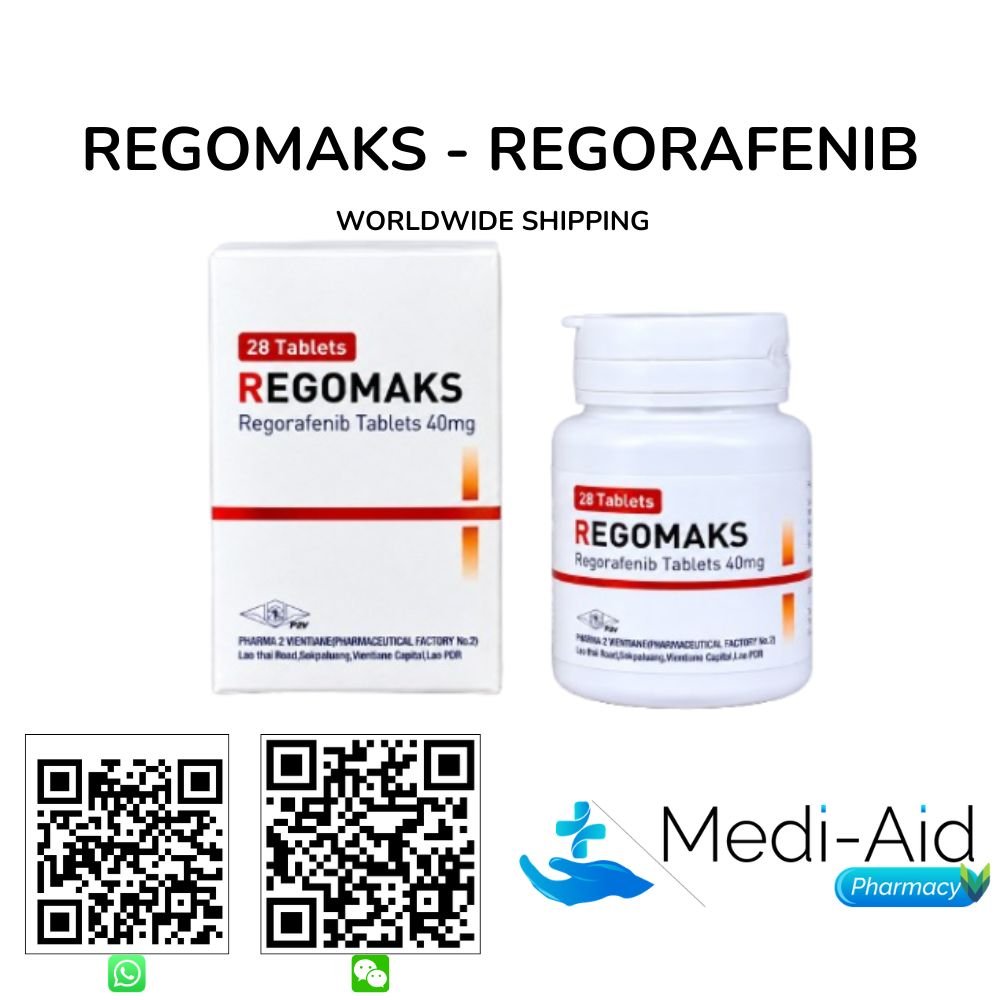
Regomaks 40 MG (Regorafenib) is a potent, orally bioavailable, multi-kinase inhibitor that simultaneously blocks a broad spectrum of protein kinases involved in tumor angiogenesis, oncogenesis, and the tumor microenvironment a targeted oral multi-targeted kinase inhibitor that inhibits vascular endothelial growth factor receptors 1, 2, and 3 (VEGFR1, VEGFR2, VEGFR3), TIE2 (TEK), platelet-derived growth factor receptors alpha and beta (PDGFR-α, PDGFR-β), fibroblast growth factor receptors 1 and 2 (FGFR1, FGFR2), KIT, RET, RAF-1, BRAF, and BRAF V600E thereby suppressing tumor angiogenesis (via VEGFR and TIE2 blockade), oncogenic signaling (via KIT, RET, and RAS/RAF/MEK/ERK pathway inhibition), and stromal cell signaling (via PDGFR and FGFR blockade) across multiple solid tumor indications supplied as film-coated tablets of 40 mg strength in a pack of 28 tablets per pot, marketed under the brand name Regomaks.
Regorafenib, the active pharmaceutical ingredient of Regomaks, is an oral multi-kinase inhibitor with three approved oncology indications spanning three histologically distinct solid tumor types: previously treated metastatic colorectal cancer (mCRC) in patients previously treated with fluoropyrimidine-, oxaliplatin-, and irinotecan-based chemotherapy, an anti-VEGF therapy, and, if RAS wild-type, an anti-EGFR therapy; locally advanced, unresectable, or metastatic gastrointestinal stromal tumor (GIST) in patients previously treated with imatinib and sunitinib; and hepatocellular carcinoma (HCC) in patients previously treated with sorafenib establishing regorafenib as one of the few approved oral oncology agents with regulatory approval across colorectal cancer, GIST, and liver cancer, all three indications supported by positive Phase 3 randomized controlled survival data.
The recommended dose of Regomaks (Regorafenib) is 160 mg orally once daily for the first 21 days of each 28-day cycle, taken with a low-fat breakfast (a meal containing less than 30% fat, such as toast with jam, apple juice, and low-fat milk the specific breakfast used in clinical trials); at the 40 mg tablet strength, the 160 mg daily dose requires four tablets taken together once daily; regorafenib is administered in 28-day cycles (21 days on treatment, 7 days off) until disease progression or unacceptable toxicity; dose reductions are implemented in 40 mg decrements (160 mg → 120 mg → 80 mg) for toxicity management per NCI CTCAE version 5.0; do not take regorafenib on an empty stomach or with a high-fat meal.
The pivotal Phase 3 CORRECT trial (NCT01103323; published in The Lancet 2013; n=760; regorafenib + best supportive care versus placebo + best supportive care in previously treated mCRC) established a statistically significant improvement in median overall survival (OS) of 6.4 months (95% CI, 5.9–7.3) versus 5.0 months (95% CI, 4.4–5.8) with placebo (HR 0.77; 95% CI, 0.64–0.94; p=0.0052). The pivotal Phase 3 RESORCE trial (NCT01774344; n=573; regorafenib versus placebo in HCC following sorafenib) achieved a statistically significant improvement in median OS of 10.6 months (95% CI, 9.1–12.1) versus 7.8 months (95% CI, 6.3–8.8) (HR 0.63; 95% CI, 0.50–0.79; p<0.0001). The pivotal Phase 3 GRID trial (NCT01271712; n=199; regorafenib versus placebo in GIST after imatinib and sunitinib failure) achieved a median progression-free survival (PFS) of 4.8 months versus 0.9 months (HR 0.27; 95% CI, 0.19–0.39; p<0.0001). Important: The most clinically significant adverse reactions of regorafenib are severe and fatal hepatotoxicity (including fatal hepatic failure), severe and sometimes fatal hemorrhage, infections, gastrointestinal perforation and fistula, hand-foot skin reaction (HFSR/palmar-plantar erythrodysesthesia syndrome), hypertension, cardiac ischemia and infarction, and reversible posterior leukoencephalopathy syndrome (RPLS).
Monitor liver function tests (ALT, AST, total bilirubin) every 2 weeks for the first 2 months of treatment, then monthly and as clinically indicated; withhold regorafenib for Grade 2 hepatotoxicity (ALT/AST >3× ULN) persisting beyond 2 weeks despite dose reduction; permanently discontinue for Grade 4 hepatotoxicity, AST or ALT >20× ULN, or AST/ALT >3× ULN with concurrent bilirubin >2× ULN. Monitor blood pressure weekly for the first 6 weeks of treatment and then every cycle or as clinically indicated; withhold regorafenib for Grade 3 hypertension; permanently discontinue for hypertensive crisis.
Interrupt regorafenib immediately for any unexplained Grade 3 hand-foot skin reaction; reduce dose for Grade 3 HFSR occurring for the first or second time; permanently discontinue for Grade 3 HFSR occurring for the third time. Permanently discontinue regorafenib for severe or life-threatening hemorrhage, GI perforation or fistula, confirmed RPLS, nephrotic syndrome, or any Grade 4 adverse reaction. Regorafenib is a CYP3A4 substrate and inhibitor of UGT1A1 and UGT1A9; avoid concomitant strong CYP3A4 inducers (rifampin, phenytoin, carbamazepine, St.
John’s Wort) and strong CYP3A4 inhibitors (ketoconazole, itraconazole, clarithromycin, grapefruit juice); use caution with UGT1A1 substrates (bilirubin, SN-38 irinotecan’s active metabolite which may accumulate with regorafenib co-administration). Do not substitute Regomaks 40 MG Regorafenib for sorafenib, cabozantinib, lenvatinib, or other multi-kinase inhibitors without confirmed indication-specific prescribing and benefit-risk assessment by the treating oncologist.
Searching for Regomaks 40 MG Regorafenib? Mediaid Pharmacy lists this product across its oncology medicines, colorectal cancer medicines, GIST medicines, and liver cancer medicines portfolios and ships it worldwide.
Basic Product Information of Regomaks 40 MG (Regorafenib)
| Brand Name | Regomaks marketed as a branded generic formulation of regorafenib 40 mg film-coated tablets; regorafenib is also marketed internationally as Stivarga® (regorafenib) by Bayer AG in the United States (FDA approval September 27, 2012 for mCRC; FDA approval February 25, 2013 for GIST; FDA approval April 27, 2017 for HCC), the European Union (EMA approval August 2013 for mCRC; EMA approval October 2013 for GIST), and other global markets; Regomaks is a branded generic formulation of regorafenib film-coated tablets (40 mg), supplied through authorized international pharmaceutical distribution channels, providing accessible regorafenib therapy for previously treated mCRC, GIST, and HCC patients globally |
| Product Name | Regomaks (branded regorafenib film-coated tablets, 40 mg per tablet, 28 tablets per pot) |
| Generic Name | Regorafenib (INN; also designated BAY 73-4506 during preclinical and early clinical development; a small-molecule multi-kinase inhibitor that simultaneously and potently inhibits multiple protein kinases critical to tumor angiogenesis, oncogenic signaling, and stromal support: VEGFR1 (IC50 13 nM), VEGFR2 (IC50 4.2 nM), VEGFR3 (IC50 46 nM), TIE2 (IC50 311 nM), PDGFR-α (IC50 22 nM), PDGFR-β (IC50 29 nM), FGFR1 (IC50 71 nM), FGFR2 (IC50 76 nM), KIT (IC50 7 nM), RET (IC50 1.5 nM), RAF-1 (IC50 2.5 nM), BRAF (IC50 28 nM), and BRAF V600E (IC50 19 nM); regorafenib’s breadth of kinase inhibition distinguishes it from single-target or dual-target agents, covering anti-angiogenic (VEGFR1-3, TIE2), anti-stromal (PDGFR, FGFR), and anti-proliferative (KIT, RET, RAS/RAF/MAPK) tumor dependencies simultaneously; regorafenib is a structural analog of sorafenib with an additional fluorine atom at the aniline ring, which increases its potency against VEGFR2 and alters its selectivity profile relative to sorafenib; regorafenib is metabolized primarily via CYP3A4 and UGT1A9 to two major active metabolites: M-2 (N-oxide) and M-5 (N-oxide/N-desmethyl), which have similar pharmacological activity to the parent compound; plasma half-life of regorafenib: approximately 20–30 hours; terminal half-life of M-2: approximately 25–30 hours; terminal half-life of M-5: approximately 51–68 hours; regorafenib was developed by Bayer AG; FDA initial approval for mCRC: September 27, 2012; subsequently approved for GIST and HCC; regorafenib is included in NCCN Clinical Practice Guidelines for Colon Cancer, Rectal Cancer, Soft Tissue Sarcoma/GIST, and Hepatocellular Carcinoma) |
| Drug Class | Oral Multi-Kinase Inhibitor (Multi-Targeted Kinase Inhibitor); Anti-Angiogenic Oral Targeted Therapy (VEGFR1/2/3, TIE2 Inhibitor); Anti-Stromal Kinase Inhibitor (PDGFR-α/β, FGFR1/2); Oncogenic Kinase Inhibitor (KIT, RET, RAF-1, BRAF, BRAF V600E); RAS/RAF/MEK/ERK MAPK Pathway Inhibitor (via RAF-1 and BRAF blockade); VEGF Pathway Downstream Suppressor (via VEGFR1-3 Inhibition); Oral Targeted Therapy for Previously Treated Metastatic Colorectal Cancer; Oral Targeted Therapy for Previously Treated GIST; Oral Targeted Therapy for Previously Treated Hepatocellular Carcinoma; Multi-Indication Oral Oncology Kinase Inhibitor; Anti-Tumor Microenvironment Kinase Inhibitor |
| Formulation | Film-coated tablets for oral administration take 160 mg (four 40 mg tablets) orally once daily with a low-fat breakfast (a meal containing less than 30% fat the specific low-fat breakfast used in Phase 3 clinical trials was two slices of white toast with 1 tablespoon of low-fat margarine and one tablespoon of jelly, 8 ounces of skimmed milk, and one apple; a high-fat meal significantly increases regorafenib AUC by approximately 36% and a low-fat meal increases AUC by approximately 48% compared to fasting a low-fat meal is required; a high-fat meal should be avoided); swallow tablets whole do not crush, dissolve, or chew tablets; take at approximately the same time each day; regorafenib is administered in 28-day cycles with a 21-days-on / 7-days-off schedule (Day 1 to Day 21: take regorafenib; Day 22 to Day 28: no regorafenib); if a dose is missed, take the missed dose on the same day do not take two doses on the same day to make up a missed dose; if vomiting occurs after a dose, do not repeat the dose resume at the next scheduled time; Regomaks 40 MG film-coated tablets: each tablet contains regorafenib 40 mg; at the standard dose of 160 mg once daily, four 40 mg tablets are taken together per day; dose reductions are implemented in 40 mg decrements: first reduction to 120 mg (three tablets), then to 80 mg (two tablets); store tablets at room temperature, 20°C–25°C (68°F–77°F), excursions permitted 15°C–30°C (59°F–86°F), in original sealed pot to protect from moisture; keep out of reach of children |
| Available Strengths | 40 mg film-coated tablet the 40 mg tablet strength is the standard dispensing unit for regorafenib, enabling the full 160 mg standard dose and both dose reduction levels in 40 mg decrements across all three approved indications: Standard dose (all three indications): 160 mg once daily = four 40 mg tablets; first dose reduction: 120 mg once daily = three 40 mg tablets; second dose reduction: 80 mg once daily = two 40 mg tablets; permanently discontinue regorafenib if the patient cannot tolerate 80 mg once daily; dose reductions are triggered by Grade 3 or 4 adverse events including hand-foot skin reaction (HFSR), hepatotoxicity, hypertension, hemorrhage, GI perforation or fistula, cardiac ischemia or infarction, RPLS, and other Grade 3 or 4 adverse reactions per NCI CTCAE v5.0; no body-weight-based dose adjustment is required regorafenib is administered as a fixed daily oral dose; special populations: no initial dose adjustment required for mild renal impairment or mild hepatic impairment (Child-Pugh A); use with caution in moderate hepatic impairment (Child-Pugh B); do not use in patients with severe hepatic impairment (Child-Pugh C) regorafenib has not been studied in this population and is not recommended |
| Available Pack Size | 28 tablets per pot at the standard dose of 160 mg once daily (four 40 mg tablets per day), one pot of 28 tablets provides exactly a 7-day supply, covering one full treatment week within a 28-day cycle; a complete 21-day on-treatment period within one 28-day cycle requires three pots (84 tablets total at 160 mg/day); a full 28-day cycle procurement (accounting for the 7-day off-treatment period) requires three pots of 28 tablets per cycle; hospital formulary procurement teams and oncology programs typically calculate monthly procurement at three pots per 28-day cycle for each patient maintained at the full 160 mg dose; for patients dose-reduced to 120 mg (three tablets/day), three pots cover 28 days with tablets remaining; for patients dose-reduced to 80 mg (two tablets/day), three pots cover the 21-day on-treatment period with significant surplus procurement may be adjusted downward; contact Mediaid Pharmacy for pack-size-specific stock availability confirmation and procurement guidance for Regomaks 40 MG |
| Dosing Schedule | Metastatic Colorectal Cancer (mCRC) Standard Dosing: Regorafenib 160 mg orally once daily with a low-fat breakfast for the first 21 days of each 28-day cycle; continue until disease progression or unacceptable toxicity; patient must have been previously treated with fluoropyrimidine-, oxaliplatin-, and irinotecan-based chemotherapy, an anti-VEGF therapy (bevacizumab, ramucirumab, or aflibercept), and, if RAS wild-type, an anti-EGFR therapy (cetuximab or panitumumab). Gastrointestinal Stromal Tumor (GIST) Standard Dosing: Regorafenib 160 mg orally once daily with a low-fat breakfast for the first 21 days of each 28-day cycle; continue until disease progression or unacceptable toxicity; patient must have been previously treated with imatinib mesylate and sunitinib malate. Hepatocellular Carcinoma (HCC) Standard Dosing: Regorafenib 160 mg orally once daily with a low-fat breakfast for the first 21 days of each 28-day cycle; continue until disease progression or unacceptable toxicity; patient must have been previously treated with sorafenib. Dose Reduction Schedule (all indications): First dose reduction: 120 mg once daily (three 40 mg tablets); second dose reduction: 80 mg once daily (two 40 mg tablets); permanently discontinue for inability to tolerate 80 mg once daily. Dose Reduction and Interruption Triggers (per NCI CTCAE v5.0): Withhold regorafenib for Grade 3 HFSR (first occurrence interrupt for a minimum of 7 days until resolution to Grade ≤1, then resume at reduced dose); Grade 2 hepatotoxicity (ALT or AST >3× and ≤5× ULN) persisting >2 weeks despite dose reduction; Grade 3 hypertension; Grade 3 hemorrhage; Grade 3 or higher cardiac ischemia or infarction; any Grade 4 non-hepatic adverse reaction. Permanent Discontinuation Criteria: Grade 4 hepatotoxicity; AST or ALT >20× ULN; AST/ALT >3× ULN with concurrent bilirubin >2× ULN; Grade 3 HFSR occurring for the third time (after two prior dose reductions); life-threatening or severe hemorrhage; GI perforation or fistula; confirmed RPLS; nephrotic syndrome; Grade 4 cardiac ischemia or infarction. Mandatory Safety Monitoring: Liver function tests (ALT, AST, total bilirubin, alkaline phosphatase) every 2 weeks for the first 2 months, then monthly and as clinically indicated; blood pressure monitoring weekly for the first 6 weeks, then every cycle; thyroid function at baseline and periodically; dermatological assessments for HFSR at every visit during first 2 cycles; baseline cardiac evaluation in patients at risk for cardiac ischemia. Drug Interactions: Avoid strong CYP3A4 inducers (rifampin reduces regorafenib AUC by approximately 50%); avoid strong CYP3A4 inhibitors (ketoconazole increases regorafenib AUC by approximately 33%); avoid grapefruit juice; use caution with UGT1A1 and UGT1A9 substrates (regorafenib inhibits UGT1A1 and UGT1A9, potentially increasing plasma concentrations of bilirubin and SN-38, the active metabolite of irinotecan). |
| Primary Indications | PREVIOUSLY TREATED METASTATIC COLORECTAL CANCER (mCRC):
Regorafenib Previously Treated mCRC (CORRECT Trial; Phase 3; NCT01103323; The Lancet 2013; n=760; regorafenib + BSC vs. placebo + BSC; primary endpoint OS): Regorafenib 160 mg once daily on Days 1–21 of each 28-day cycle in patients with mCRC previously treated with fluoropyrimidine-, oxaliplatin-, and irinotecan-based chemotherapy, an anti-VEGF therapy, and an anti-EGFR therapy (if RAS wild-type): median OS 6.4 months (95% CI, 5.9–7.3) vs. 5.0 months (95% CI, 4.4–5.8) (HR 0.77; 95% CI, 0.64–0.94; p=0.0052); DCR 41% vs. 15%; PFS HR 0.49 (95% CI, 0.42–0.58; p<0.0001); FDA approval September 27, 2012. The CONCUR trial (Phase 3; NCT01584830; Asian patient population; n=204; regorafenib vs. placebo) confirmed the OS benefit: median OS 8.8 months vs. 6.3 months (HR 0.55; 95% CI, 0.40–0.77; p=0.0001), confirming regorafenib’s benefit across global mCRC populations. Regorafenib is currently the only oral multi-kinase inhibitor with an approved indication for previously treated mCRC regardless of RAS/RAF/BRAF mutation status no companion diagnostic is required for the mCRC indication. PREVIOUSLY TREATED GASTROINTESTINAL STROMAL TUMOR (GIST): Regorafenib Previously Treated GIST (GRID Trial; Phase 3; NCT01271712; The Lancet 2013; n=199; regorafenib vs. placebo; primary endpoint PFS): Regorafenib 160 mg once daily on Days 1–21 of each 28-day cycle in patients with GIST after failure of imatinib and sunitinib: median PFS 4.8 months (95% CI, 4.0–5.6) vs. 0.9 months (95% CI, 0.9–1.1) (HR 0.27; 95% CI, 0.19–0.39; p<0.0001); DCR 52.6% vs. 9.1%; FDA approval February 25, 2013. GIST is a rare mesenchymal tumor of the GI tract driven predominantly by activating mutations in KIT (approximately 70–80%) or PDGFRA (approximately 10%); regorafenib’s potent inhibition of KIT (IC50 7 nM), PDGFR-α (IC50 22 nM), and PDGFR-β (IC50 29 nM) provides direct on-target inhibition of the dominant oncogenic drivers in GIST, explaining its clinical efficacy in KIT- and PDGFRA-mutant GIST tumors resistant to imatinib and sunitinib. PREVIOUSLY TREATED HEPATOCELLULAR CARCINOMA (HCC): Regorafenib Previously Treated HCC (RESORCE Trial; Phase 3; NCT01774344; The Lancet 2017; n=573; regorafenib vs. placebo; primary endpoint OS): Regorafenib 160 mg once daily on Days 1–21 of each 28-day cycle in patients with HCC who progressed on or were intolerant to sorafenib: median OS 10.6 months (95% CI, 9.1–12.1) vs. 7.8 months (95% CI, 6.3–8.8) (HR 0.63; 95% CI, 0.50–0.79; p<0.0001); median PFS 3.1 months vs. 1.5 months (HR 0.46; 95% CI, 0.37–0.56; p<0.0001); ORR (mRECIST) 10.6% vs. 4.1%; DCR 65.2% vs. 36.1%; FDA approval April 27, 2017. RESORCE was the first Phase 3 trial to demonstrate an OS benefit in second-line HCC following sorafenib failure, establishing regorafenib as the first approved second-line therapy for advanced HCC. |
| Storage | Store at room temperature, 20°C–25°C (68°F–77°F); excursions permitted to 15°C–30°C (59°F–86°F); store in original sealed pot to protect from moisture; keep out of reach of children; standard ambient-temperature shipping is acceptable for Regomaks (Regorafenib) film-coated tablets cold-chain refrigerated shipping is not required; Mediaid Pharmacy ships Regomaks 40 MG internationally using validated ambient-temperature pharmaceutical packaging appropriate for destination country transit conditions and regional climate requirements |
Global Supplier: Mediaid Pharmacy Worldwide Shipping for Regomaks 40 MG (Regorafenib)
Mediaid Pharmacy is a Dhaka-based supplier of specialty oral multi-kinase inhibitors, colorectal cancer medicines, GIST medicines, liver cancer medicines, and targeted oncology agents with worldwide shipping to patients, oncology departments, outpatient oncology clinics, colorectal cancer, GIST, and hepatocellular carcinoma treatment programs, hospital pharmacies, oncology day units, patient access programs, and international distributors across all regions.
Regomaks 40 MG (Regorafenib), supplied as film-coated tablets (40 mg per tablet, 28 tablets per pot), is offered with pricing quotations, stock confirmation, full product documentation, and end-to-end international delivery tracking for every order. Regomaks (Regorafenib) is an orally administered, ambient-temperature-stable tablet formulation international shipping does not require cold-chain handling, enabling reliable, cost-effective worldwide supply to patients in diverse geographies and clinical settings.
Colorectal cancer programs procuring regorafenib for previously treated mCRC patients who have exhausted prior-line options; GIST programs sourcing regorafenib as third-line targeted therapy after imatinib and sunitinib failure; hepatocellular carcinoma programs co-sourcing regorafenib as second-line therapy after sorafenib progression; hospital formulary procurement departments sourcing Regomaks as part of targeted oncology medicines and multi-kinase inhibitor portfolios; and individual patients and families sourcing regorafenib for previously treated metastatic colorectal cancer can contact the Mediaid Pharmacy team through WhatsApp, phone, or email for Regomaks 40 MG stock availability, current pricing, shipping options, and international delivery timelines.
Why Choose Regomaks 40 MG (Regorafenib) from Mediaid Pharmacy?
Regomaks (Regorafenib) delivers the validated oral multi-kinase inhibitor mechanism spanning anti-angiogenic, anti-oncogenic, and anti-stromal kinase inhibition the oral component of three FDA-approved regorafenib regimens across three separate Phase 3 randomized survival trials in metastatic colorectal cancer (CORRECT), GIST (GRID), and hepatocellular carcinoma (RESORCE) supplied as convenient film-coated tablets of 40 mg strength (28 tablets per pot) with a fixed 160 mg once-daily dosing schedule on a 21-days-on/7-days-off cycle, enabling outpatient administration without IV infusion requirements or cold-chain logistics. Regorafenib is pharmacologically and clinically distinguished across the targeted oncology landscape by four evidence-based attributes.
First, regorafenib holds the broadest tumor-type indication portfolio of any oral multi-kinase inhibitor with Phase 3 overall survival data across three distinct solid tumor types simultaneously the CORRECT trial established OS benefit in previously treated mCRC (median OS 6.4 vs. 5.0 months; HR 0.77; p=0.0052), the RESORCE trial established OS benefit in previously treated HCC after sorafenib (median OS 10.6 vs. 7.8 months; HR 0.63; p<0.0001), and the GRID trial established PFS benefit in third-line or later GIST after imatinib and sunitinib (median PFS 4.8 vs. 0.9 months; HR 0.27; p<0.0001); regorafenib’s three-indication approval profile reflects its breadth of kinase target coverage VEGFR1-3 and TIE2 for anti-angiogenic activity, KIT and PDGFR for oncogenic kinase suppression in GIST and CRC, RET and FGFR for additional oncogenic driver coverage, and RAF-1/BRAF for MAPK pathway suppression addressing multiple tumor dependencies simultaneously across three biologically distinct cancer types with a single oral drug.
Second, regorafenib’s survival benefit in previously treated mCRC is established regardless of RAS, RAF, BRAF, or any other molecular subgroup status no companion diagnostic is required, making regorafenib applicable to the full population of previously treated mCRC patients who have exhausted prior standard-of-care options including fluoropyrimidine-, oxaliplatin-, and irinotecan-based chemotherapy, anti-VEGF therapy, and (if RAS wild-type) anti-EGFR therapy; in an mCRC treatment landscape increasingly segmented by molecular biomarker subgroups (RAS, BRAF V600E, MSI-H, HER2, NTRK, KRAS G12C), regorafenib remains a biomarker-unselected option available to all comers providing treatment access for the large proportion of heavily pretreated mCRC patients who do not harbor actionable targeted therapy mutations; the CONCUR trial (Asian population; HR 0.55; p=0.0001) confirmed the CORRECT OS benefit across diverse global patient populations.
Third, regorafenib was the first systemic therapy approved for second-line HCC following sorafenib progression RESORCE (The Lancet 2017) established regorafenib as the first Phase 3-proven second-line HCC agent, demonstrating a 2.8-month OS improvement (HR 0.63; p<0.0001) in patients who had tolerated and progressed on sorafenib (a critical eligibility criterion reflecting adequate hepatic reserve for second-line treatment); regorafenib’s potent inhibition of VEGFR2 (IC50 4.2 nM), VEGFR3, TIE2, and RET all kinase targets mechanistically relevant to HCC angiogenesis and tumor vascular biology explains its clinical activity in a sorafenib-refractory HCC population where tumor vascularity remains a dominant driver of tumor progression; the RESORCE data established regorafenib as a standard second-line agent for advanced HCC in NCCN, ESMO, and AASLD/EASL guidelines and has been a reference arm in multiple subsequent HCC clinical trials.
Fourth, regorafenib’s oral, once-daily, fixed-dose 21/7 schedule and room-temperature stability provide practical treatment management advantages for outpatient oncology programs across all three approved indications unlike IV-administered biologics or antibody-drug conjugates, Regomaks 40 MG (Regorafenib) is taken orally at home without scheduled IV infusion visits; fixed dosing at 160 mg once daily eliminates weight-based dose calculation complexity; the structured 21-days-on/7-days-off cycle with two defined dose reduction levels (40 mg decrements to 120 mg and 80 mg) provides oncologists and patients with a predictable, manageable treatment framework; room-temperature storage and ambient-temperature shipping enable reliable international supply to patients in settings where specialty pharmaceutical cold-chain logistics present access barriers.
To source the complete range of regorafenib for metastatic colorectal cancer, GIST-targeted therapies, liver cancer medicines, and oral multi-kinase inhibitor oncology agents, visit the Mediaid Pharmacy colorectal cancer medicines portfolio, the GIST medicines collection, the liver cancer medicines collection, and the oncology medicines collection, and contact the team for a personalized quotation and international shipping confirmation.
Frequently Asked Questions About Regomaks 40 MG (Regorafenib)
What is Regomaks 40 MG (Regorafenib) used for?
Regomaks 40 MG (Regorafenib) is an oral multi-kinase inhibitor with three approved oncology indications across three solid tumor types. Indication 1 Previously Treated Metastatic Colorectal Cancer (mCRC): Regorafenib 160 mg once daily (Days 1–21 of each 28-day cycle) for adult patients with mCRC previously treated with fluoropyrimidine-, oxaliplatin-, and irinotecan-based chemotherapy, an anti-VEGF therapy, and (if RAS wild-type) an anti-EGFR therapy; the CORRECT Phase 3 trial demonstrated median OS 6.4 vs. 5.0 months (HR 0.77; p=0.0052); no companion diagnostic is required applicable to all previously treated mCRC patients regardless of RAS/RAF/BRAF status; FDA approval September 2012. Indication 2 Previously Treated Gastrointestinal Stromal Tumor (GIST): Regorafenib 160 mg once daily (Days 1–21 of each 28-day cycle) for locally advanced, unresectable, or metastatic GIST in patients previously treated with imatinib and sunitinib; the GRID Phase 3 trial demonstrated median PFS 4.8 vs. 0.9 months (HR 0.27; p<0.0001); regorafenib inhibits KIT (IC50 7 nM) and PDGFR-α/β (IC50 22–29 nM), which are the dominant oncogenic drivers in KIT- and PDGFRA-mutant GIST; FDA approval February 2013. Indication 3 Previously Treated Hepatocellular Carcinoma (HCC): Regorafenib 160 mg once daily (Days 1–21 of each 28-day cycle) for adult patients with HCC who have been previously treated with sorafenib; the RESORCE Phase 3 trial demonstrated median OS 10.6 vs. 7.8 months (HR 0.63; p<0.0001) the first survival benefit demonstrated in second-line HCC; FDA approval April 2017. Regomaks 40 MG (Regorafenib) is available through Mediaid Pharmacy with worldwide shipping to patients and previously treated mCRC treatment programs and GIST treatment programs globally.
What is the generic name of Regomaks?
The generic name (International Nonproprietary Name, INN) of Regomaks is regorafenib (also designated BAY 73-4506 during preclinical and early clinical development). Regorafenib is a small-molecule multi-kinase inhibitor that simultaneously and potently inhibits a broad spectrum of protein kinases VEGFR1, VEGFR2, VEGFR3, TIE2, PDGFR-α, PDGFR-β, FGFR1, FGFR2, KIT, RET, RAF-1, BRAF, and BRAF V600E covering anti-angiogenic, anti-oncogenic, and anti-stromal kinase targets in a single oral agent. Its mechanism simultaneous blockade of tumor vasculogenesis (VEGFR/TIE2), tumor stromal cell signaling (PDGFR/FGFR), and oncogenic kinase drivers (KIT, RET, RAF) produces a broad multi-pathway suppression across tumor types that remain dependent on angiogenesis and multiple overlapping oncogenic signaling networks. Regorafenib is mechanistically distinct from single-target VEGFR inhibitors (sorafenib acts similarly but with different kinase selectivity), anti-VEGF biologics (bevacizumab, ramucirumab), BRAF inhibitors (vemurafenib, encorafenib), MEK inhibitors (binimetinib, trametinib), anti-EGFR antibodies (cetuximab, panitumumab), and immune checkpoint inhibitors (pembrolizumab, nivolumab). Regorafenib is a structural fluorinated analog of sorafenib, modified to increase potency at VEGFR2 and broaden its kinase selectivity profile to include TIE2, RET, PDGFR-α, and FGFR expanding its clinical utility beyond sorafenib’s indication scope. Regorafenib was developed by Bayer AG and is marketed globally as Stivarga; Regomaks is a branded generic formulation of regorafenib. Mediaid Pharmacy distributes Regomaks 40 MG Regorafenib for hepatocellular carcinoma globally with worldwide shipping to patients, oncology programs, and hospital pharmacies.
What are the side effects of Regomaks (Regorafenib)?
The most clinically significant adverse reactions of regorafenib are severe and fatal hepatotoxicity, hemorrhage, infections, GI perforation and fistula, hand-foot skin reaction (HFSR), hypertension, cardiac ischemia and infarction, and reversible posterior leukoencephalopathy syndrome (RPLS). Hepatotoxicity (Most Critical Safety Concern): severe and fatal hepatic failure has been reported with regorafenib fatal cases occurred in patients with liver dysfunction or prior liver disease; Grade 3–4 AST/ALT elevations in 5–10% of patients; monitor LFTs every 2 weeks for the first 2 months, then monthly; withhold for Grade 2 hepatotoxicity persisting >2 weeks despite dose reduction; permanently discontinue for Grade 4 hepatotoxicity, AST/ALT >20× ULN, or AST/ALT >3× ULN with bilirubin >2× ULN; use with extreme caution in patients with pre-existing hepatic impairment. Hand-Foot Skin Reaction (HFSR/Palmar-Plantar Erythrodysesthesia Syndrome): all-grade HFSR in approximately 45% of patients; Grade 3 in approximately 17% the most common Grade 3 adverse reaction; characterized by painful, symmetrical keratoderma with callous-like blistering on palms and soles; manage proactively with urea-based creams, dose modification, and supportive care; withhold for Grade 3 HFSR; reduce dose after resolution; permanently discontinue for Grade 3 HFSR occurring a third time. Hypertension: all-grade in approximately 30% of patients; Grade 3 in approximately 8%; monitor blood pressure weekly for the first 6 weeks; manage with antihypertensive agents; withhold for Grade 3 hypertension. Hemorrhage: severe and fatal hemorrhage events reported across all indications; Grade 3 or higher in approximately 3–4% of patients; monitor for signs of bleeding throughout treatment; permanently discontinue for life-threatening hemorrhage. Cardiac Ischemia and Infarction: occurred in approximately 1.2% of patients in clinical trials; withhold regorafenib for new or worsening cardiac ischemia or infarction; permanently discontinue for Grade 4 cardiac ischemia or infarction. GI Perforation and Fistula: occurred in <1% of patients; permanently discontinue for GI perforation or fistula. RPLS: permanently discontinue for confirmed RPLS. Most Common Adverse Reactions (≥30% in CORRECT trial): asthenia/fatigue (64%), HFSR (45%), diarrhea (34%), decreased appetite (30%), hypertension (30%), mucositis/stomatitis (33%), dysphonia (30%), and infection (31%). All patients initiating Regomaks (Regorafenib) should have baseline LFTs, blood pressure, cardiac evaluation (for high-risk patients), and performance status assessed, with treatment initiated under the supervision of a qualified oncologist experienced in managing oral multi-kinase inhibitor toxicities.
How effective is Regomaks (Regorafenib) for previously treated metastatic colorectal cancer?
Regorafenib demonstrated a clinically and statistically significant OS benefit in the pivotal Phase 3 CORRECT trial in heavily pretreated mCRC establishing it as the first oral multi-kinase inhibitor to demonstrate survival benefit in this population. CORRECT Trial (Phase 3; NCT01103323; The Lancet 2013; n=760; regorafenib + BSC vs. placebo + BSC; primary endpoint OS): median OS 6.4 months (95% CI, 5.9–7.3) vs. 5.0 months (95% CI, 4.4–5.8) (HR 0.77; 95% CI, 0.64–0.94; p=0.0052); DCR 41.0% vs. 14.9%; median PFS 1.9 months vs. 1.7 months (HR 0.49; 95% CI, 0.42–0.58; p<0.0001); OS benefit observed across all pre-specified subgroups including KRAS mutant and KRAS wild-type patients, geographic region (North America, Europe, Australia, Asia), and number of prior lines of therapy. CONCUR Trial (Phase 3; NCT01584830; Asian population; n=204; regorafenib vs. placebo): median OS 8.8 months vs. 6.3 months (HR 0.55; 95% CI, 0.40–0.77; p=0.0001); median PFS 3.2 months vs. 1.7 months (HR 0.31; 95% CI, 0.22–0.44; p<0.0001) confirming the OS benefit with a numerically larger magnitude in an Asian mCRC population. RERACT Study (Real-World Evidence): real-world OS data from RERACT and other post-marketing studies generally aligned with CORRECT trial findings, with HFSR occurrence associated with improved OS in some real-world analyses suggesting that HFSR may serve as a potential on-treatment marker of regorafenib exposure and pharmacological activity. Clinical Context: BRAF/RAS mutation status, MSI-H/dMMR status, HER2 amplification, NTRK fusion, and KRAS G12C mutation define molecular subgroups with dedicated approved targeted therapies in mCRC; regorafenib is unique in being available to all previously treated mCRC patients regardless of biomarker profile providing a treatment option for the biomarker-unselected majority of heavily pretreated patients who have exhausted targeted therapy options. Regomaks 40 MG (Regorafenib) is available through Mediaid Pharmacy; visit the colorectal cancer medicines collection and oncology medicines collection for the complete regorafenib and oral multi-kinase inhibitor portfolio.
What is the difference between Regomaks (Regorafenib) and Sorafenib for cancer treatment?
Regorafenib (Regomaks) and sorafenib (Nexavar) are structurally related oral multi-kinase inhibitors regorafenib is a fluorinated structural analog of sorafenib but they differ significantly in their kinase selectivity profiles, approved indications, and clinical evidence bases. Structural and Kinase Selectivity Differences: regorafenib contains an additional fluorine atom at the aniline ring of the sorafenib scaffold, which increases its potency at VEGFR2 (regorafenib IC50 4.2 nM vs. sorafenib IC50 ~90 nM against VEGFR2), and expands its kinase inhibition to include TIE2, FGFR1/2, RET, and PDGFR-α with meaningful potency targets that sorafenib does not inhibit as potently; both agents inhibit RAF-1, BRAF, VEGFR1/2/3, KIT, and PDGFR-β, but with differing potency rankings across these shared targets. Approved Indications Overlap and Distinctions: sorafenib is approved for first-line advanced HCC, advanced renal cell carcinoma (RCC), and differentiated thyroid cancer (DTC) refractory to radioactive iodine; regorafenib is approved for second-line HCC after sorafenib (RESORCE), previously treated mCRC (CORRECT), and third-line GIST after imatinib and sunitinib (GRID); in HCC, regorafenib is specifically approved only for patients who have been previously treated with sorafenib the RESORCE trial enrollment required documented sorafenib tolerance meaning regorafenib and sorafenib are sequential agents in the HCC treatment continuum, not interchangeable alternatives at the same treatment line. HCC Sequencing: sorafenib or lenvatinib are standard first-line systemic HCC therapies; regorafenib, cabozantinib, and ramucirumab (AFP ≥400 ng/mL) are second-line options following sorafenib progression; regorafenib is not approved for HCC patients who have not received or who were intolerant to sorafenib. GIST Indication: sorafenib is not approved for GIST; regorafenib is the only agent in this structural class with a Phase 3-proven indication in imatinib- and sunitinib-refractory GIST. Visit the Mediaid Pharmacy liver cancer medicines collection and oncology medicines collection for the complete oral kinase inhibitor portfolio for HCC, mCRC, and GIST.
Is Regomaks (Regorafenib) safe during pregnancy or while breastfeeding?
Regomaks (Regorafenib) can cause embryo-fetal harm based on its mechanism of action and nonclinical animal reproductive toxicology findings regorafenib should not be used during pregnancy. VEGFR inhibition, PDGFR inhibition, and RAS/RAF/MAPK pathway suppression are expected to disrupt critical embryonic and fetal developmental processes dependent on angiogenesis, vasculogenesis, organ vascularization, and MAPK-regulated organogenesis; nonclinical animal studies demonstrated regorafenib-related findings consistent with embryo-fetal toxicity at exposures below the clinical therapeutic dose, confirming the reproductive and developmental toxicity potential of regorafenib. Contraception requirement: women of reproductive potential must use effective contraception during regorafenib treatment and for 2 months after the last dose; verify pregnancy status with a serum or urine pregnancy test before initiating Regomaks in all women of reproductive potential; male patients with female partners of reproductive potential must also use effective contraception during treatment and for 2 months after the last dose. Breastfeeding: it is unknown whether regorafenib or its active metabolites (M-2, M-5) are present in human breast milk, affect milk production, or cause harm to the breastfed infant; because of the potential for serious adverse reactions from multi-kinase inhibition in breastfed infants, breastfeeding is not recommended during regorafenib treatment and for 2 weeks after the last dose. Fertility: nonclinical studies indicate potential adverse effects on male and female reproductive organs based on VEGFR and PDGFR signaling roles in reproductive organ function; regorafenib’s effects on fertility in humans have not been formally studied; discuss fertility preservation options with the treating oncologist prior to initiating regorafenib. All aspects of reproductive planning, contraception requirements, and fertility counseling should be discussed with the treating oncologist before starting regorafenib therapy.
Can I order Regomaks 40 MG (Regorafenib) online with worldwide shipping?
Yes. Mediaid Pharmacy supplies Regomaks 40 MG (Regorafenib), film-coated tablets of 40 mg strength, supplied in pots of 28 tablets, to patients, previously treated mCRC treatment programs, GIST oncology departments, hepatocellular carcinoma treatment programs, oral targeted therapy protocols, hospital pharmacies, oncology day units, patient access programs, and healthcare providers globally. As an oral tablet formulation stored at room temperature, Regomaks does not require cold-chain refrigerated shipping, allowing straightforward international logistics with standard secure pharmaceutical packaging appropriate for the destination country’s transit conditions and regulatory requirements. Contact Mediaid Pharmacy via WhatsApp, phone, or email at +8801773428128, or email info@mediaidpharmacy.com for pricing, current stock availability for Regomaks 40 MG, shipping options, and international delivery details for your country. Prescription documentation is required for regorafenib dispensing in accordance with applicable regulatory requirements in the destination country. For the complete portfolio of GIST medicines and oncology medicines available with worldwide shipping, visit the respective collection pages on the Mediaid Pharmacy website.
Order Regomaks 40 MG (Regorafenib) with Worldwide Shipping
Phone / WhatsApp: +8801773428128 | Email: info@mediaidpharmacy.com