
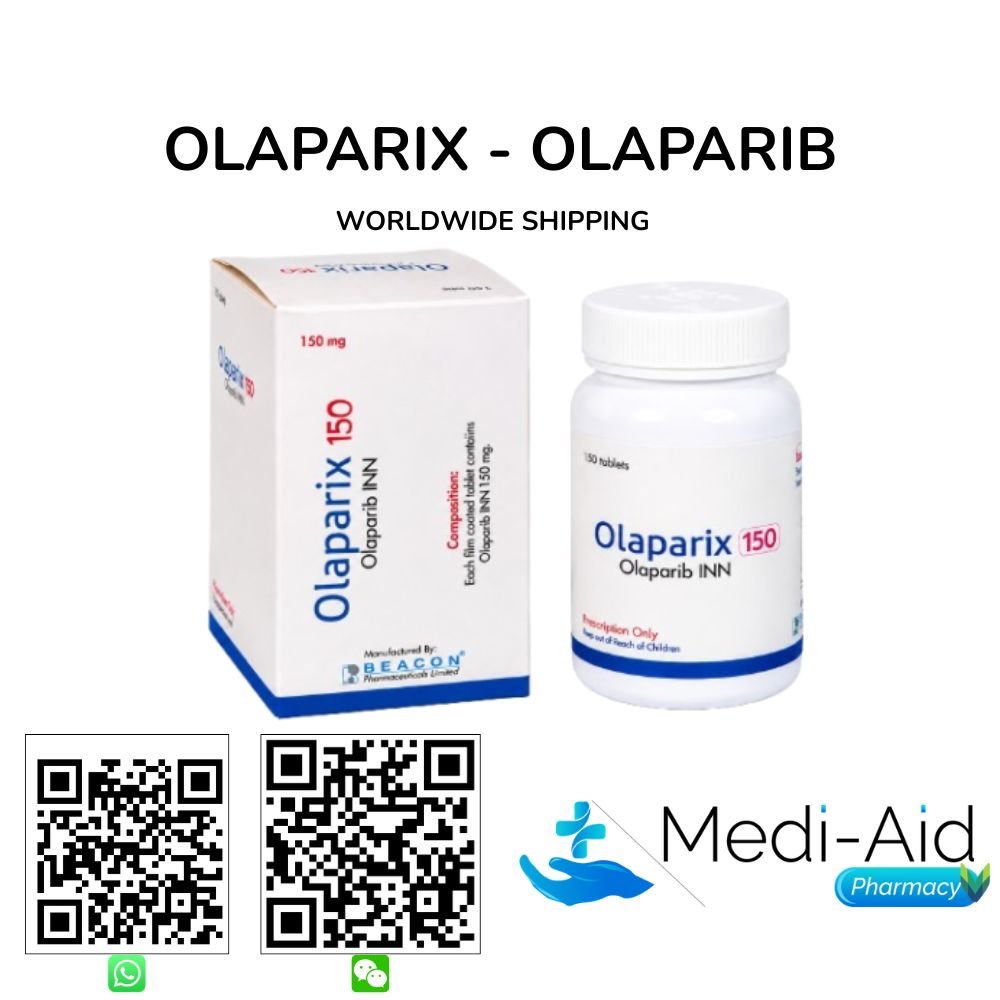
Description
Olaparix 150 MG (Olaparib) is an orally bioavailable, selective, small-molecule poly (ADP-ribose) polymerase (PARP) inhibitor specifically inhibiting PARP-1, PARP-2, and PARP-3 enzymes that traps PARP-DNA complexes at sites of single-strand DNA breaks, preventing PARP release and catalytic recycling, blocking base excision repair (BER), causing replication fork stalling and collapse into irreparable double-strand breaks (DSBs), and exploiting homologous recombination repair (HRR) deficiency in BRCA1/2-mutated tumor cells through the mechanism of synthetic lethality: in BRCA1/2-deficient cancer cells incapable of performing HRR, PARP trapping produces cytotoxic DSBs that cannot be resolved, selectively killing the tumor cell while sparing normal HRR-proficient tissues, supplied as film-coated tablets, 150 mg strength, 120 tablets per pot, and manufactured by Beacon Pharmaceuticals PLC in Bangladesh.
Olaparib, the active pharmaceutical ingredient (API) of Olaparix, holds multiple FDA-approved indications spanning four tumor types: (1) as adjuvant treatment for adult patients with deleterious or suspected deleterious germline BRCA-mutated (gBRCAm), HER2-negative high-risk early breast cancer (EBC) who have been treated with neoadjuvant or adjuvant chemotherapy, based on the Phase 3 OlympiA trial, with 6-year overall survival (OS) rates of 87.5% with olaparib versus 83.2% with placebo (HR 0.72; 95% CI 0.56–0.93) and 6-year invasive disease-free survival (IDFS) rates of 79.6% versus 70.3%; (2) as monotherapy for adult patients with deleterious or suspected deleterious gBRCAm, HER2-negative metastatic breast cancer (MBC) who have been previously treated with chemotherapy, based on the Phase 3 OlympiAD trial demonstrating median progression-free survival (PFS) of 7.0 months versus 4.2 months with standard chemotherapy (HR 0.58; 95% CI 0.43–0.80; p<0.001); (3) as maintenance therapy for adult patients with deleterious or suspected deleterious germline or somatic BRCA-mutated (gBRCAm or sBRCAm) advanced epithelial ovarian, fallopian tube, or primary peritoneal cancer in complete or partial response to first-line, platinum-based chemotherapy, based on the Phase 3 SOLO-1 trial demonstrating a median PFS of 56 months with olaparib versus 13.8 months with placebo (HR 0.30; 95% CI 0.23–0.41; p<0.0001) and 5-year PFS rates of 48% versus 21%; and (4) for adult patients with deleterious or suspected deleterious germline or somatic homologous recombination repair (HRR) gene-mutated metastatic castration-resistant prostate cancer (mCRPC) who have progressed following prior treatment with enzalutamide or abiraterone, based on the Phase 3 PROfound trial.
The recommended dose of olaparib is 300 mg (two Olaparix 150 MG film-coated tablets) orally twice daily, with or without food, for a total daily dose of 600 mg; at this dose, one 120-tablet pot of Olaparix 150 MG provides exactly one complete 30-day treatment supply per month. Important: Myelodysplastic Syndrome/Acute Myeloid Leukemia (MDS/AML) has been reported in approximately 1.2% of patients who received olaparib as a single agent or in combination; monitor patients for hematological toxicity at baseline and monthly thereafter, and discontinue olaparib if MDS/AML is confirmed.
Pneumonitis, including fatal cases, has occurred in patients receiving olaparib; interrupt olaparib treatment in patients with new or worsening respiratory symptoms and discontinue if pneumonitis is confirmed. Olaparib is embryo-fetal toxic; females of reproductive potential must use effective contraception during treatment and for 6 months after the last dose. Strong and moderate CYP3A inhibitors substantially increase olaparib plasma exposure and must be avoided; if unavoidable, reduce the olaparib dose to 100 mg twice daily with a strong CYP3A inhibitor or 150 mg twice daily with a moderate CYP3A inhibitor.
Strong and moderate CYP3A inducers substantially reduce olaparib plasma exposure and must be avoided. Searching for Olaparix 150 MG Olaparib? Mediaid Pharmacy lists this product across its oncology medicines, breast cancer medicines, ovarian cancer medicines, prostate cancer medicines, and Beacon Pharmaceuticals medicines portfolios and ships it worldwide.
Basic Product Information of Olaparix 150 MG (Olaparib)
| Brand Name | Olaparix 150 MG (Olaparib) |
| Product Name | Olaparix |
| Generic Name | Olaparib (developmental codes AZD2281 and KU-0059436; a selective, orally bioavailable, small-molecule inhibitor of poly (ADP-ribose) polymerase 1, 2, and 3 (PARP-1, PARP-2, PARP-3), belonging to the phthalazinone class of PARP inhibitors; olaparib exploits synthetic lethality in BRCA1/2-deficient tumors by trapping PARP-DNA complexes and blocking base excision repair, causing cytotoxic double-strand DNA breaks in HRR-deficient cancer cells; the originator brand is Lynparza, developed by KuDOS Pharmaceuticals (later acquired by AstraZeneca) and co-developed and co-commercialized globally by AstraZeneca and Merck (MSD); initial FDA approval for 4th-line treatment of gBRCAm advanced ovarian cancer: December 19, 2014 (accelerated); approval for gBRCAm, HER2-negative metastatic breast cancer: January 12, 2018; approval for 1st-line maintenance of gBRCAm/sBRCAm advanced ovarian cancer post-platinum chemotherapy: December 19, 2018; approval for gBRCAm metastatic pancreatic cancer maintenance: December 27, 2019; approval for HRR gene-mutated mCRPC post-ARPI therapy: May 19, 2020; approval for adjuvant treatment of gBRCAm, HER2-negative high-risk early breast cancer: August 11, 2022) |
| Drug Class | PARP Inhibitor (Poly (ADP-Ribose) Polymerase Inhibitor); PARP-1 / PARP-2 / PARP-3 Inhibitor; DNA Damage Response (DDR) Pathway Inhibitor; Synthetic Lethality-Based Antineoplastic Agent; HRR Deficiency Exploiter; BRCA1/2-Targeted Therapy; Phthalazinone Derivative; Small-Molecule Kinase Inhibitor; Base Excision Repair (BER) Inhibitor; Oral Targeted Oncology Agent; Germline BRCA-Mutated Cancer Therapy; Homologous Recombination Repair (HRR) Gene-Mutated Tumor Therapy |
| Formulation | Film-Coated Tablet (oral administration; may be taken with or without food consistent administration with or without food is recommended to maintain reproducible plasma drug levels; swallow tablets whole, do not crush, split, or chew; two 150 mg tablets are taken together as a single twice-daily dose of 300 mg, administered approximately 12 hours apart; if vomiting occurs after a dose, do not take an additional dose at that time resume the next scheduled dose at the regular time) |
| Available Strengths | 150 mg per film-coated tablet (Olaparix 150 MG; the recommended starting dose of 300 mg twice daily requires two 150 mg tablets taken together twice daily, 12 hours apart; dose reductions for toxicity follow a stepwise protocol: first reduction to 250 mg twice daily; second reduction to 200 mg twice daily; permanently discontinue if the 200 mg twice daily dose is not tolerated; for patients receiving concomitant strong CYP3A inhibitors, reduce the dose to 100 mg [not achievable with 150 mg tablets alone requires 100 mg formulation] twice daily; for moderate CYP3A inhibitors, reduce to 150 mg [one Olaparix 150 MG tablet] twice daily) |
| Available Pack Size | 120 tablets per pot (at the recommended starting dose of 300 mg twice daily [two 150 mg tablets twice daily = four 150 mg tablets per day], one pot of Olaparix 150 MG provides exactly one complete 30-day treatment supply; each 30-day treatment supply requires one pot of Olaparix 150 MG at the standard dose; at the first dose-reduced level of 250 mg twice daily, dose is not achievable with 150 mg tablets alone without splitting; at the moderate CYP3A inhibitor-adjusted dose of 150 mg twice daily [one tablet twice daily = two tablets per day], one pot provides a 60-day supply; the 120-tablet pot size aligns with standard monthly dispensing cycles used by oncology pharmacies, hospital formularies, and patient access programs managing olaparib therapy globally) |
| Dosing Schedule | Recommended Starting Dose: Olaparib 300 mg (two Olaparix 150 MG film-coated tablets) orally twice daily, approximately 12 hours apart, with or without food, taken continuously without a scheduled rest period. Adjuvant Early Breast Cancer (OlympiA indication): Continue for 1 year (12 months) unless disease recurrence or unacceptable toxicity occurs; treatment initiated after completion of neoadjuvant or adjuvant chemotherapy and local definitive therapy (surgery ± radiation). Metastatic and Maintenance Indications: Continue until disease progression or unacceptable toxicity. Mandatory Baseline Assessment: Complete blood count (CBC) with differential at baseline and monthly during treatment; liver function tests and creatinine at baseline; pregnancy test in females of reproductive potential before initiating therapy. Dose Reduction for Toxicity (First Reduction): 250 mg twice daily. Second Reduction: 200 mg twice daily. Permanently discontinue if the patient is unable to tolerate 200 mg twice daily. CYP3A Interaction Dose Adjustments: Avoid concomitant strong and moderate CYP3A inhibitors and inducers; if a moderate CYP3A inhibitor is unavoidable, reduce olaparib to 150 mg (one Olaparix 150 MG tablet) twice daily. Hepatic Impairment: Reduce to 200 mg twice daily in patients with moderate hepatic impairment (Child-Pugh B); avoid in patients with severe hepatic impairment (Child-Pugh C). Renal Impairment: Reduce to 200 mg twice daily in patients with severe renal impairment (creatinine clearance 15–29 mL/min). All dose modification decisions must be directed by the treating oncologist. |
| Primary Indications | (1) gBRCAm, HER2-Negative High-Risk Early Breast Cancer Adjuvant Treatment (OlympiA): Olaparib 300 mg twice daily for 1 year as adjuvant treatment for adult patients with deleterious or suspected deleterious germline BRCA1 or BRCA2 mutations and HER2-negative high-risk early breast cancer (stage II–III) who have completed neoadjuvant or adjuvant chemotherapy. Based on Phase 3 OlympiA (NCT02032823; n=1,836): primary endpoint of invasive DFS met (HR 0.58; 99.5% CI 0.41–0.82 at primary analysis); 4-year IDFS 82.7% vs 75.4% (HR 0.63); 4-year OS 89.8% vs 86.4% (HR 0.68; p=0.01); 6-year IDFS 79.6% vs 70.3%; 6-year OS 87.5% vs 83.2% (HR 0.72; 95% CI 0.56–0.93) olaparib is the first and only PARP inhibitor to demonstrate improved OS in early breast cancer. FDA approval: August 11, 2022.
(2) gBRCAm, HER2-Negative Metastatic Breast Cancer Monotherapy (OlympiAD): Olaparib 300 mg twice daily as monotherapy for adult patients with deleterious or suspected deleterious gBRCAm, HER2-negative metastatic breast cancer who have been previously treated with chemotherapy in the neoadjuvant, adjuvant, or metastatic setting (hormone receptor-positive patients must have received prior endocrine therapy or be considered inappropriate for endocrine therapy). Based on Phase 3 OlympiAD (NCT02000622; n=302): median PFS 7.0 months vs 4.2 months with physician’s choice of chemotherapy (HR 0.58; 95% CI 0.43–0.80; p<0.001) a 42% reduction in the risk of disease progression or death. FDA approval: January 12, 2018. (3) gBRCAm/sBRCAm Advanced Epithelial Ovarian, Fallopian Tube, or Primary Peritoneal Cancer First-Line Maintenance (SOLO-1): Olaparib 300 mg twice daily as maintenance monotherapy for adult patients with deleterious or suspected deleterious gBRCAm or sBRCAm advanced (FIGO stage III or IV) epithelial ovarian, fallopian tube, or primary peritoneal cancer in complete or partial response to first-line, platinum-based chemotherapy. Based on Phase 3 SOLO-1 (NCT01844986; n=391): median PFS 56 months (olaparib) vs 13.8 months (placebo) (HR 0.30; 95% CI 0.23–0.41; p<0.0001); 5-year PFS rate 48% vs 21%. FDA approval: December 19, 2018. (4) gBRCAm/sBRCAm Platinum-Sensitive Relapsed Ovarian Cancer Second-Line Maintenance (SOLO-2 / Study 19): Olaparib 300 mg twice daily as maintenance monotherapy for adult patients with deleterious or suspected deleterious gBRCAm, platinum-sensitive relapsed advanced ovarian, fallopian tube, or primary peritoneal cancer in complete or partial response to platinum-based chemotherapy. Based on Phase 3 SOLO-2 (NCT01874353; n=295): median PFS 19.1 months vs 5.5 months (HR 0.30; 95% CI 0.22–0.41; p<0.0001); median OS 51.7 months vs 38.8 months. FDA approval: August 17, 2017. (5) HRR Gene-Mutated Metastatic Castration-Resistant Prostate Cancer (PROfound): Olaparib 300 mg twice daily as monotherapy for adult patients with deleterious or suspected deleterious germline or somatic HRR gene-mutated mCRPC who have progressed following prior treatment with enzalutamide or abiraterone. Based on Phase 3 PROfound (NCT02987543): in the BRCA1/2-mutated cohort (Cohort A), median radiographic PFS 7.39 months (olaparib) vs 3.55 months (control) (HR 0.34; 95% CI 0.25–0.47; p<0.001). FDA approval: May 19, 2020. |
| Manufacturer / Brand | Beacon Pharmaceuticals PLC, Country of Origin: Bangladesh (originator molecule and brand Lynparza developed by KuDOS Pharmaceuticals, acquired by AstraZeneca, and co-developed and commercialized globally by AstraZeneca and Merck (MSD); initial FDA approval for gBRCAm advanced ovarian cancer 4th-line monotherapy: December 19, 2014; full approval for gBRCAm advanced ovarian cancer maintenance post-1L platinum chemotherapy: December 19, 2018; approval for gBRCAm, HER2-negative metastatic breast cancer: January 12, 2018; approval for gBRCAm metastatic pancreatic cancer maintenance: December 27, 2019; approval for HRR gene-mutated mCRPC post-ARPI therapy: May 19, 2020; approval for adjuvant treatment of gBRCAm, HER2-negative high-risk early breast cancer: August 11, 2022) |
| Global Supplier | Mediaid Pharmacy, Worldwide Shipping Available |
| Storage Conditions | Store below 30°C (86°F). Store in the original container with the lid tightly closed. Protect from moisture. Keep out of the reach of children. |
| Key Safety Warnings | MDS/AML: Myelodysplastic syndrome and/or acute myeloid leukemia have occurred in approximately 1.2% of patients who received olaparib (as monotherapy or in combination); most cases were fatal; monitor CBC at baseline and monthly; discontinue if MDS/AML is confirmed. Pneumonitis: Fatal pneumonitis has occurred; interrupt olaparib for new or worsening respiratory symptoms; permanently discontinue for confirmed pneumonitis. Embryo-Fetal Toxicity: Olaparib can cause fetal harm; females of reproductive potential must use effective non-hormonal contraception during treatment and for 6 months after the last dose; males with female partners of reproductive potential must use effective contraception during treatment and for 3 months after the last dose. VTE: Venous thromboembolic events (VTE), including pulmonary embolism, occurred in 8% of patients in combined mCRPC studies. CYP3A Drug Interactions: Strong and moderate CYP3A inhibitors increase olaparib plasma exposure; strong and moderate CYP3A inducers substantially decrease olaparib exposure; concomitant use with strong/moderate CYP3A inhibitors or inducers must be avoided unless dose adjustment is made as directed by the treating oncologist. |
| Categories | Breast Cancer Medicines, Oncology Medicines, Ovarian Cancer Medicines, Prostate Cancer Medicines |
Who is Olaparix 150 MG (Olaparib) Indicated For?
First, adult patients with deleterious or suspected deleterious germline BRCA1 or BRCA2 mutations and HER2-negative high-risk early breast cancer (stage II or stage III) who have completed neoadjuvant or adjuvant chemotherapy and local definitive therapy represent the OlympiA-defined adjuvant indication for Olaparix the first and highest-priority indication reflecting olaparib’s unique status as the only PARP inhibitor to demonstrate improved overall survival in early breast cancer.
The Phase 3 OlympiA trial (NCT02032823) enrolled 1,836 adult patients with gBRCAm, HER2-negative stage II–III breast cancer (triple-negative breast cancer or hormone receptor-positive disease with four or more positive nodes, or CPS+EG score ≥3) who had completed surgery and standard neoadjuvant or adjuvant chemotherapy, and randomized them 1:1 to olaparib 300 mg twice daily for 1 year versus placebo.
At the primary analysis, olaparib significantly improved invasive disease-free survival (HR 0.58; 99.5% CI 0.41–0.82). At 4 years of follow-up, olaparib produced IDFS rates of 82.7% versus 75.4% (HR 0.63; p<0.001), distant disease-free survival (DDFS) rates of 86.5% versus 79.1% (HR 0.57), and OS rates of 89.8% versus 86.4% (HR 0.68; p=0.01) establishing olaparib as the first PARP inhibitor to demonstrate a statistically significant OS benefit in any cancer type in the adjuvant setting.
The 6-year OlympiA update presented at SABCS 2024 confirmed sustained benefit: 6-year OS rates of 87.5% with olaparib versus 83.2% with placebo (HR 0.72; 95% CI 0.56–0.93), 6-year IDFS rates of 79.6% versus 70.3%, and 6-year DDFS rates of 83.5% versus 75.7% (HR 0.65; 95% CI 0.53–0.81). Germline BRCA1/2 mutation testing must be performed before initiating olaparib in this indication using an FDA-approved companion diagnostic.
Second, adult patients with deleterious or suspected deleterious germline BRCA1 or BRCA2 mutations and HER2-negative metastatic breast cancer who have been previously treated with chemotherapy in the neoadjuvant, adjuvant, or metastatic setting are candidates for the OlympiAD-defined olaparib monotherapy metastatic breast cancer indication. The Phase 3 OlympiAD trial (NCT02000622) enrolled 302 patients with gBRCAm, HER2-negative metastatic breast cancer (triple-negative or hormone receptor-positive with prior endocrine therapy) who had received no more than two prior chemotherapy regimens for metastatic disease and randomized them 2:1 to olaparib 300 mg twice daily versus physician’s choice of chemotherapy (capecitabine, vinorelbine, or eribulin).
The primary endpoint of PFS was met with a median PFS of 7.0 months in the olaparib arm versus 4.2 months in the chemotherapy arm (HR 0.58; 95% CI 0.43–0.80; p<0.001), representing a 42% reduction in the risk of disease progression or death, with objective response rates of 59.9% versus 28.8%. Hormone receptor-positive patients must have received prior endocrine therapy or be considered inappropriate for endocrine therapy to qualify for the OlympiAD metastatic breast cancer indication.
Third, adult patients with deleterious or suspected deleterious germline or somatic BRCA-mutated advanced epithelial ovarian, fallopian tube, or primary peritoneal cancer in complete or partial response to first-line platinum-based chemotherapy are candidates for the SOLO-1-defined first-line maintenance indication the ovarian cancer indication supported by the most compelling long-term PFS data of any PARP inhibitor in this setting.
The Phase 3 SOLO-1 trial (NCT01844986) enrolled 391 patients with BRCA-mutated (germline or somatic) advanced (FIGO stage III or IV) epithelial ovarian, fallopian tube, or primary peritoneal cancer in complete or partial response following completion of first-line platinum-based chemotherapy and randomized them 2:1 to olaparib 300 mg twice daily versus placebo. The primary endpoint of investigator-assessed PFS was met with a median PFS of 56 months in the olaparib arm versus 13.8 months in the placebo arm (HR 0.30; 95% CI 0.23–0.41; p<0.0001) a 70% reduction in the risk of disease progression or death and 5-year PFS rates of 48% versus 21%, establishing olaparib maintenance as the standard of care following first-line platinum-based chemotherapy in BRCA-mutated advanced ovarian cancer.
Additionally, patients with gBRCAm or sBRCAm platinum-sensitive relapsed ovarian cancer in complete or partial response to platinum rechallenge are eligible for the SOLO-2/Study 19-defined second-line maintenance indication (median PFS 19.1 months vs 5.5 months; HR 0.30; OS 51.7 months vs 38.8 months).
Fourth, adult patients with deleterious or suspected deleterious germline or somatic HRR gene-mutated metastatic castration-resistant prostate cancer who have progressed following prior treatment with enzalutamide or abiraterone are candidates for the PROfound-defined mCRPC indication for olaparib. The Phase 3 PROfound trial (NCT02987543) enrolled patients with mCRPC who had progressed on a prior androgen receptor pathway inhibitor (ARPI) therapy and whose tumors harbored at least one of 15 specified HRR gene mutations (including BRCA1, BRCA2, ATM, CDK12, CHEK2, FANCA, PPP2R2A, RAD51B, RAD51C, RAD51D, RAD54L, and others), stratifying patients into Cohort A (BRCA1/2 or ATM mutations) and Cohort B (other HRR gene mutations).
In Cohort A (BRCA1/2-mutated patients), olaparib produced a median radiographic PFS of 7.39 months versus 3.55 months (HR 0.34; 95% CI 0.25–0.47; p<0.001) and a confirmed objective response rate of 33.3% versus 2.3%. HRR gene mutation testing using an FDA-approved companion diagnostic must be performed before initiating olaparib in the mCRPC indication. Olaparib is not indicated for: patients with HER2-positive breast cancer; patients with HR-negative/HER2-negative (triple-negative) breast cancer without a confirmed BRCA1/2 mutation; patients with wild-type BRCA1/2 and wild-type HRR genes (no HRR mutation status confirmed); patients with severe hepatic impairment (Child-Pugh C) without specialist supervision and dose modification; and patients who are pregnant.
Oncology departments managing BRCA-mutated breast cancer treatment protocols, gynecologic oncology teams managing BRCA-mutated ovarian cancer maintenance therapy, genitourinary oncology departments managing HRR-mutated metastatic prostate cancer programs, and individual patients seeking access to oral targeted oncology medicines can contact Mediaid Pharmacy directly for Olaparix 150 MG availability, pricing, and worldwide delivery.
Global Supplier: Mediaid Pharmacy Worldwide Shipping for Olaparix 150 MG (Olaparib)
Mediaid Pharmacy is a Dhaka-based supplier of specialty targeted oncology, breast cancer, ovarian cancer, prostate cancer, and rare disease medicines with worldwide shipping to patients, gBRCAm breast cancer oncology departments, PARP inhibitor treatment programs, adjuvant and metastatic breast cancer treatment units, gynecologic oncology departments managing ovarian cancer maintenance therapy, genitourinary oncology departments managing HRR-mutated mCRPC programs, hospital pharmacies, oncology day units, patient access programs, and international distributors across all regions.
Olaparix 150 MG (Olaparib), manufactured by Beacon Pharmaceuticals PLC in Bangladesh, is supplied as 150 mg film-coated tablets in 120-tablet pots, with pricing quotations, stock confirmation, full product documentation, and end-to-end international delivery tracking for every order. The clinical and procurement significance of the 120-tablet pot format is directly tied to olaparib’s dosing architecture: at the recommended starting dose of 300 mg twice daily (two 150 mg tablets twice daily = four 150 mg tablets per day), one pot of Olaparix 150 MG provides exactly one complete 30-day treatment supply, aligning the pot size with standard monthly dispensing cycles used by all oncology pharmacies, hospital formularies, and patient access programs managing olaparib therapy globally.
For patients receiving olaparib at the moderate CYP3A inhibitor-adjusted dose of 150 mg twice daily (two tablets per day), one pot provides a 60-day supply. gBRCAm breast cancer oncology departments managing adjuvant and metastatic olaparib programs; gynecologic oncology teams sourcing olaparib for BRCA-mutated ovarian cancer maintenance; genitourinary oncology departments managing HRR gene-mutated mCRPC patients; hospital formulary procurement departments co-sourcing Olaparix with other oral targeted oncology medicines; and individual patients and families seeking access to olaparib for BRCA-mutated breast cancer treatment can contact the Mediaid Pharmacy team through WhatsApp, phone, or WeChat for Olaparix 150 MG stock availability, current pricing, and international delivery timelines.
Why Choose Olaparix 150 MG (Olaparib) from Mediaid Pharmacy?
Olaparix (Olaparib) from Beacon Pharmaceuticals PLC delivers the validated synthetic lethality mechanism of olaparib a molecule with the broadest and most evidence-rich approval portfolio of any PARP inhibitor across four tumor types: gBRCAm, HER2-negative high-risk early breast cancer (adjuvant, OlympiA; FDA 2022), gBRCAm, HER2-negative metastatic breast cancer (OlympiAD; FDA 2018), gBRCAm/sBRCAm advanced ovarian cancer maintenance (SOLO-1 and SOLO-2; FDA 2017 and 2018), and HRR gene-mutated mCRPC post-ARPI therapy (PROfound; FDA 2020) as a precisely formulated 150 mg oral film-coated tablet in a clinically aligned 120-tablet pot providing one complete 30-day treatment supply at the recommended 300 mg twice daily dose. Olaparib is pharmacologically and clinically distinguished within the PARP inhibitor class by four evidence-based attributes.
First, olaparib is the first and only PARP inhibitor to demonstrate a statistically significant overall survival (OS) benefit in an adjuvant early breast cancer setting a distinction that positions Olaparix as the PARP inhibitor with the most robust and mature OS evidence in early-stage BRCA-mutated breast cancer. The 6-year OlympiA data (SABCS 2024) confirmed OS rates of 87.5% with olaparib versus 83.2% with placebo (HR 0.72; 95% CI 0.56–0.93), with 6-year invasive DFS of 79.6% versus 70.3% and 6-year distant DFS of 83.5% versus 75.7%. These results establish olaparib as the standard of care adjuvant therapy for patients with gBRCAm, HER2-negative high-risk early breast cancer following completion of chemotherapy, with long-term OS data that no competing PARP inhibitor has yet replicated in the adjuvant setting. The NCCN Clinical Practice Guidelines in Oncology designate olaparib as a preferred Category 1 agent for adjuvant treatment in gBRCA-mutated HER2-negative high-risk early breast cancer.
Second, olaparib achieves the most durable first-line maintenance progression-free survival of any PARP inhibitor in BRCA-mutated advanced ovarian cancer, with SOLO-1 5-year PFS data of 48% versus 21% in the placebo arm and an updated median PFS of 56 months versus 13.8 months (HR 0.30) data representing a 70% reduction in the risk of disease progression or death sustained over nearly 5 years of median follow-up establishing olaparib as the PARP inhibitor with the deepest and most durable first-line ovarian maintenance evidence base and providing the longest measured median PFS in this population among the PARP inhibitor class.
Third, olaparib is the only PARP inhibitor with an approved indication in both BRCA-mutated metastatic breast cancer (OlympiAD) and gBRCAm, HER2-negative high-risk early breast cancer (OlympiA), covering the full breast cancer disease continuum from post-operative high-risk early-stage disease through metastatic recurrence no other PARP inhibitor or DNA damage response (DDR)-targeted agent has simultaneously demonstrated OS benefit across both the adjuvant early-stage breast cancer and metastatic breast cancer settings.
Fourth, olaparib is an orally self-administered, twice-daily film-coated tablet taken continuously without a scheduled rest period, enabling complete outpatient management with consistent twice-daily dosing that integrates into daily routine; the 300 mg twice-daily continuous schedule (four Olaparix 150 MG tablets per day) requires no on/off treatment cycles or infusion visits, and patients can self-administer with or without food, maximizing convenience and adherence for patients managing treatment across the adjuvant and metastatic settings. The 120-tablet pot size, providing exactly one 30-day supply at the standard dose, aligns naturally with standard monthly prescription refill cycles and oncology clinic visit schedules.
Olaparix 150 MG is manufactured by Beacon Pharmaceuticals PLC and is available through Mediaid Pharmacy in 120-tablet pots. To source the complete range of PARP inhibitor therapies, BRCA-targeted cancer medicines, and oral oncology medicines, visit the Mediaid Pharmacy breast cancer medicines portfolio, the ovarian cancer medicines collection, the oncology medicines collection, and the Beacon Pharmaceuticals medicines range, and contact the team for a personalized quotation.
Frequently Asked Questions About Olaparix 150 MG (Olaparib)
What is Olaparix 150 MG (Olaparib) used for?
Olaparix 150 MG (Olaparib) is an oral PARP inhibitor with multiple FDA-approved indications across four tumor types. In breast cancer: (1) adjuvant treatment for adult patients with gBRCAm, HER2-negative high-risk early breast cancer (stage II–III) following chemotherapy based on Phase 3 OlympiA (6-year OS 87.5% vs 83.2%; HR 0.72; 95% CI 0.56–0.93; 6-year IDFS 79.6% vs 70.3%) FDA approval August 11, 2022; (2) monotherapy for gBRCAm, HER2-negative metastatic breast cancer following prior chemotherapy based on Phase 3 OlympiAD (median PFS 7.0 vs 4.2 months; HR 0.58; p<0.001) FDA approval January 12, 2018. In ovarian cancer: (3) first-line maintenance for gBRCAm/sBRCAm advanced epithelial ovarian, fallopian tube, or primary peritoneal cancer in complete or partial response to first-line platinum-based chemotherapy based on Phase 3 SOLO-1 (median PFS 56 months vs 13.8 months; HR 0.30; 5-year PFS 48% vs 21%) FDA approval December 19, 2018; (4) second-line maintenance for gBRCAm platinum-sensitive relapsed ovarian cancer based on SOLO-2 (median PFS 19.1 vs 5.5 months; HR 0.30; OS 51.7 vs 38.8 months) FDA approval August 17, 2017. In prostate cancer: (5) monotherapy for HRR gene-mutated mCRPC following prior ARPI therapy based on Phase 3 PROfound (median rPFS 7.39 vs 3.55 months in BRCA1/2 cohort; HR 0.34; p<0.001) FDA approval May 19, 2020. The recommended dose is 300 mg (two Olaparix 150 MG tablets) twice daily. Olaparix 150 MG, 120 tablets per pot, is manufactured by Beacon Pharmaceuticals PLC in Bangladesh and is available through Mediaid Pharmacy with worldwide shipping.
What is the generic name of Olaparix?
The generic name of Olaparix is olaparib (developmental codes AZD2281 and KU-0059436). Olaparib is an orally bioavailable, selective, small-molecule inhibitor of poly (ADP-ribose) polymerase 1, 2, and 3 (PARP-1, PARP-2, PARP-3), belonging to the phthalazinone class of PARP inhibitors. Olaparib functions by trapping PARP-DNA complexes at single-strand DNA break sites, preventing PARP release and catalytic recycling, blocking base excision repair (BER), and causing replication-dependent double-strand breaks that cancer cells with BRCA1/2 mutations cannot repair through homologous recombination the mechanism of synthetic lethality. Olaparib is structurally and pharmacologically distinct from other approved PARP inhibitors (niraparib, rucaparib, talazoparib, veliparib) by its phthalazinone scaffold, its balanced PARP-trapping and catalytic inhibition potency profile, its approved indications spanning four tumor types (breast, ovarian, prostate, pancreatic), and its unique status as the first PARP inhibitor to demonstrate OS benefit in adjuvant early breast cancer (OlympiA). The originator brand of olaparib is Lynparza, developed by KuDOS Pharmaceuticals (acquired by AstraZeneca) and co-developed and commercialized globally by AstraZeneca and Merck (MSD), with the first FDA approval on December 19, 2014. Olaparix is manufactured by Beacon Pharmaceuticals PLC in Bangladesh and is available as 150 mg film-coated tablets in 120-tablet pots. Mediaid Pharmacy distributes Olaparix (Olaparib) globally with worldwide shipping to patients, breast cancer oncology departments, gynecologic oncology teams, genitourinary oncology departments, hospital pharmacies, and BRCA-mutated cancer treatment programs worldwide.
What is the difference between olaparib, niraparib, and talazoparib for BRCA-mutated cancer?
Olaparib (Olaparix), niraparib (Zejula), and talazoparib (Talzenna) are all oral PARP inhibitors approved in BRCA-mutated or HRR-deficient cancers, but differ in molecular class, PARP-trapping potency, dosing schedule, breadth of FDA approvals, and clinical evidence for overall survival. Olaparib is a phthalazinone PARP-1/2/3 inhibitor taken as 300 mg (two 150 mg tablets) twice daily continuously; it holds the broadest approval portfolio of any PARP inhibitor with five FDA-approved indications across breast cancer (adjuvant EBC and metastatic BC), ovarian cancer (first- and second-line maintenance), prostate cancer (mCRPC post-ARPI), and pancreatic cancer (gBRCAm metastatic maintenance); it is the only PARP inhibitor to demonstrate a statistically significant OS benefit in adjuvant early breast cancer (OlympiA 6-year OS HR 0.72) and in metastatic ovarian cancer maintenance (SOLO-2 OS 51.7 vs 38.8 months). Niraparib is a piperidine-based PARP-1/2 inhibitor taken once daily continuously at 200–300 mg/day; it is approved for ovarian cancer maintenance in both BRCA-mutated and HRD-positive populations (PRIMA trial) and gynecologic cancers in combination with pembrolizumab, but lacks approvals in breast cancer. Talazoparib is a benzamide PARP-1/2 inhibitor with the highest PARP-trapping potency in the class, taken at 1 mg once daily continuously; it is approved for gBRCAm, HER2-negative locally advanced or metastatic breast cancer (EMBRACA trial: PFS 8.6 vs 5.6 months; HR 0.54) but does not have approvals in ovarian or prostate cancer. Olaparib is specifically distinguished by its OS data in the OlympiA adjuvant breast cancer trial, its first-line ovarian maintenance PFS data from SOLO-1 (median 56 months), and its prostate cancer indication based on PROfound no other PARP inhibitor has demonstrated comparable breadth of approved indications or OS data across multiple tumor types. Visit the Mediaid Pharmacy breast cancer medicines collection for the complete BRCA-targeted therapy portfolio.
What are the side effects of Olaparix (Olaparib)?
The most clinically significant adverse effects of olaparib are myelodysplastic syndrome/acute myeloid leukemia (MDS/AML), pneumonitis, venous thromboembolism (VTE), and embryo-fetal toxicity. MDS/AML has occurred in approximately 1.2% of patients who received olaparib (as monotherapy or in combination); most cases were fatal; duration of therapy at onset ranged from less than 6 months to more than 4 years; monitor complete blood count (CBC) with differential at baseline and monthly during treatment; discontinue olaparib if MDS/AML is confirmed. Pneumonitis, including fatal cases, has been reported in patients receiving olaparib; interrupt olaparib in patients presenting with new or worsening respiratory symptoms (dyspnea, cough, fever) and investigate promptly; permanently discontinue if pneumonitis is confirmed. Venous Thromboembolism (VTE), including pulmonary embolism, occurred in 8% of patients in combined mCRPC studies (PROfound and PROpel); monitor for signs and symptoms of VTE throughout olaparib treatment. Nausea (approximately 77%), fatigue and asthenia (approximately 63%), anemia (approximately 44%), vomiting (approximately 40%), diarrhea (approximately 34%), decreased appetite (approximately 22%), and headache (approximately 25%) are common and typically manageable with supportive care; anemia is a clinically important toxicity requiring CBC monitoring, and Grade 3 or higher anemia occurred in approximately 15–25% of patients across trials. Dysgeusia, constipation, upper respiratory tract infections, and abdominal pain are also frequently reported. Embryo-fetal toxicity: olaparib can cause fetal harm based on its mechanism of action; females of reproductive potential must use effective non-hormonal contraception during treatment and for 6 months after the last dose; males with female partners of reproductive potential must use effective contraception during treatment and for 3 months after the last dose. Always establish baseline CBC, liver function tests, creatinine, and a pregnancy test (in females of reproductive potential) before initiating Olaparix under the supervision of an experienced oncologist.
How is Olaparix 150 MG (Olaparib) administered?
Olaparib (Olaparix 150 MG) is administered orally, twice daily, approximately 12 hours apart, at the same times each day, with or without food consistent administration with or without food is recommended to maintain reproducible plasma drug levels. The recommended starting dose is 300 mg (two Olaparix 150 MG film-coated tablets) orally twice daily, taken continuously without a scheduled treatment-free rest period. All tablets at each dose time (two tablets per dose) are taken together. Swallow tablets whole; do not crush, split, or chew olaparib tablets. If vomiting occurs after a dose, do not take an additional dose at that time; resume the next scheduled dose at the regular twice-daily time. Olaparib is administered as monotherapy in all approved breast cancer, ovarian cancer, and prostate cancer indications at the standard dose, except in the PROpel indication where it is combined with abiraterone and prednisone/prednisolone. Mandatory safety monitoring before initiating and during treatment includes: CBC with differential (baseline and monthly); liver function tests and creatinine (baseline); pregnancy test in females of reproductive potential (baseline). Dose reductions follow a stepwise protocol: first reduction to 250 mg twice daily; second reduction to 200 mg twice daily; permanently discontinue if 200 mg twice daily is not tolerated. For moderate CYP3A inhibitor co-administration (if unavoidable), reduce to 150 mg (one Olaparix 150 MG tablet) twice daily. For moderate hepatic impairment (Child-Pugh B) or severe renal impairment (CrCl 15–29 mL/min), reduce to 200 mg twice daily. For the adjuvant early breast cancer indication, olaparib is continued for 1 year (12 months) unless disease recurrence or unacceptable toxicity occurs; for all other indications, treatment continues until disease progression or unacceptable toxicity. All dosing modifications must be directed by the treating oncologist.
Is Olaparix (Olaparib) safe during pregnancy or while breastfeeding?
Olaparix (Olaparib) can cause fetal harm and is contraindicated during pregnancy based on its mechanism of action and animal reproductive toxicology findings. Inhibition of PARP-mediated DNA repair by olaparib disrupts the rapid cellular proliferation required for normal embryonic organogenesis, placental development, and fetal tissue growth throughout all trimesters of gestation; animal studies demonstrated embryo-fetal lethality and malformations at exposures below the recommended human dose. Females of reproductive potential must use effective non-hormonal contraception (olaparib may reduce the efficacy of hormonal contraceptives) during olaparib treatment and for at least 6 months after the last dose. Males with female partners of reproductive potential should use effective contraception during olaparib treatment and for at least 3 months after the last dose. Olaparib may impair male and female fertility based on animal reproductive toxicology data; patients should discuss fertility preservation options (including sperm banking for male patients and oocyte or embryo cryopreservation for female patients) with the treating oncologist before initiating therapy. There are no data on the presence of olaparib or its metabolites in human breast milk; because of the potential for serious adverse reactions including MDS/AML, hematological toxicity, and cell proliferation disruption in a breastfed infant, breastfeeding is not recommended during olaparib treatment and for at least 1 month after the last dose. Verify pregnancy status with a serum or urine pregnancy test before initiating Olaparix in all females of reproductive potential. Discuss all aspects of reproductive planning, fertility counseling, and contraceptive requirements with the treating oncologist before starting olaparib therapy.
Can I order Olaparix 150 MG (Olaparib) online with worldwide shipping?
Yes. Mediaid Pharmacy supplies Olaparix 150 MG (Olaparib), film-coated tablets, 120 tablets per pot, manufactured by Beacon Pharmaceuticals PLC in Bangladesh, to patients, gBRCAm breast cancer oncology departments, PARP inhibitor therapy programs, adjuvant and metastatic breast cancer treatment units, gynecologic oncology departments managing BRCA-mutated ovarian cancer maintenance, genitourinary oncology departments managing HRR gene-mutated mCRPC treatment programs, hospital pharmacies, oncology day units, patient access programs, and healthcare providers globally. Contact Mediaid Pharmacy via WhatsApp, phone, or WeChat at +8801773428128, or email info@mediaidpharmacy.com for pricing, current stock availability, shipping options, and international delivery details for your country.
Order Olaparix 150 MG (Olaparib) with Worldwide Shipping
Phone / WhatsApp / WeChat: +8801773428128 | Email: info@mediaidpharmacy.com




Reviews
There are no reviews yet.