
Description
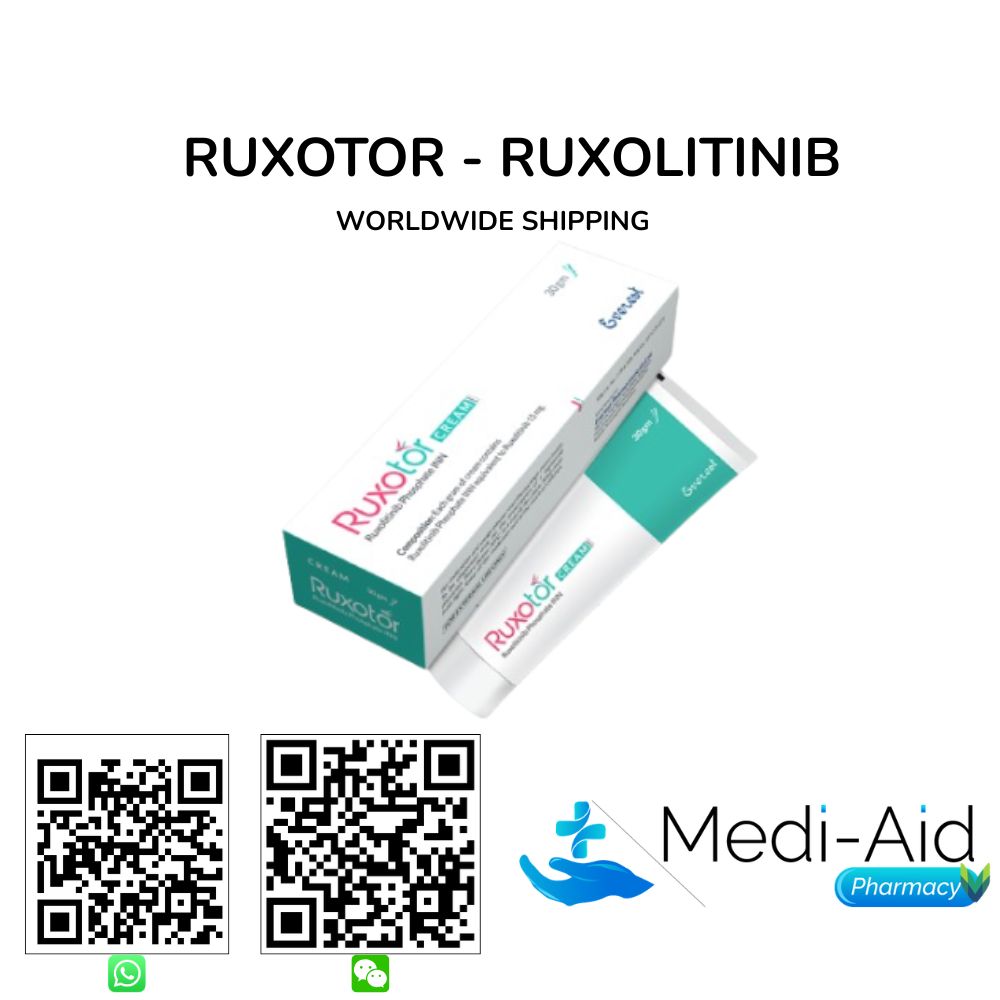
Ruxotor Cream 15 MG/G (Ruxolitinib) 30 G is a topical JAK1 and JAK2 inhibitor cream an externally applied, small-molecule targeted immunomodulatory agent that inhibits Janus kinase 1 (JAK1) and Janus kinase 2 (JAK2) at the site of skin application blocking cytokine-mediated JAK-STAT signalling of the IL-4, IL-13, IL-31, and IFN-gamma pathways that drive atopic dermatitis skin inflammation and the IFN-gamma and CXCL9/CXCL10-driven CD8+ T cell cytotoxic programme that destroys melanocytes and causes depigmentation in nonsegmental vitiligo supplied as a topical cream in 15 mg/g (1.5%) strength in a 30 g tube and manufactured by Everest Pharmaceuticals Ltd. in Bangladesh.
Its active ingredient, ruxolitinib INN, inhibits JAK1 and JAK2 to block downstream STAT1, STAT3, STAT5, and STAT6 phosphorylation and transcription of the Th2-driven (IL-4, IL-13, IL-31) inflammatory programme in atopic dermatitis and the IFN-gamma-driven (CXCL9, CXCL10, CXCL11) melanocyte-destructive programme in vitiligo following cutaneous absorption through compromised or intact skin. In the pivotal Phase 3 TRuE-AD1 trial, ruxolitinib cream 1.5% twice daily achieved an Investigator’s Global Assessment (IGA) treatment success score of 0 or 1 with at least a 2-point improvement from baseline in 53.8% of patients versus 15.1% with vehicle at Week 8 (p<0.0001), and in TRuE-AD2 achieved IGA treatment success in 51.3% versus 7.6% vehicle at Week 8 (p<0.0001), establishing the first topical JAK inhibitor for mild-to-moderate atopic dermatitis.
In the pivotal Phase 3 TRuE-V1 trial for nonsegmental vitiligo, ruxolitinib cream 1.5% twice daily achieved F-VASI75 (75% or greater improvement from baseline in facial Vitiligo Area Scoring Index) in 29.9% versus 7.5% vehicle at Week 24 (p<0.001), independently confirmed in TRuE-V2 with F-VASI75 in 30.9% versus 11.4% vehicle at Week 24 (p<0.001). Searching for Ruxotor Cream 15 MG/G Ruxolitinib 30 G? Mediaid Pharmacy lists this product across its dermatology medicines and Everest Pharmaceuticals portfolios and ships it worldwide.
Basic Product Information of Ruxotor Cream 15 MG/G (Ruxolitinib) 30 G
| Brand Name | Ruxotor Cream 15 MG/G (Ruxolitinib) 30 G |
| Product Name | Ruxotor |
| Generic Name | Ruxolitinib INN |
| Drug Class | Topical JAK1 and JAK2 Inhibitor; Janus Kinase Inhibitor; Topical Targeted Immunomodulatory Agent; Atopic Dermatitis Agent; Vitiligo Agent; Dermatology Agent; IL-4/IL-13/IL-31 Signalling Inhibitor; IFN-gamma Pathway Inhibitor; Th2 Cytokine Pathway Inhibitor; STAT Phosphorylation Inhibitor |
| Formulation | Topical Cream |
| Available Strengths | 15 mg/g (1.5%) ruxolitinib per gram of cream |
| Available Pack Size | 30 g tube |
| Dosing & Application Instructions | Atopic Dermatitis: Apply a thin layer of Ruxotor Cream to the affected skin area(s) twice daily. Do not use more than 60 g per week. Do not apply to more than 20% of body surface area (BSA). Nonsegmental Vitiligo: Apply a thin layer twice daily to affected depigmented areas of skin. General: For external use only do not apply to eyes, mouth, vaginal area, or open wounds. Wash hands after each application unless the hands are part of the treatment area. No systemic dose titration is required Ruxotor Cream 15 MG/G is applied at the same concentration for both approved indications. Renal or hepatic impairment: Systemic absorption of topically applied ruxolitinib is generally low; however, use with caution on large surface areas in patients with significant renal or hepatic impairment. Do not apply Ruxotor Cream under occlusive dressings unless directed by the treating dermatologist, as occlusion increases systemic absorption. Avoid use on areas of abraded, damaged, or severely compromised skin barrier beyond the treated disease area to minimise unintended systemic absorption. |
| Primary Indications | Atopic Dermatitis: Mild-to-moderate atopic dermatitis in adults and pediatric patients 12 years of age and older whose disease is not adequately controlled with topical therapies or when those therapies are not advisable. Nonsegmental Vitiligo: Nonsegmental vitiligo in adults and pediatric patients 12 years of age and older. Each treatment decision must account for disease severity, affected body surface area, skin barrier integrity, patient age, infection risk, and concomitant medications always consult the full prescribing information and the treating dermatologist. |
| Manufacturer | Everest Pharmaceuticals Ltd., Bangladesh |
| Country of Origin | Bangladesh |
| Originator Reference Brand | OPZELURA® (ruxolitinib cream 1.5%, by Incyte Corporation approved by the FDA in September 2021 for mild-to-moderate atopic dermatitis and in July 2022 for nonsegmental vitiligo, in each case for adults and pediatric patients 12 years and older). OPZELURA® contains ruxolitinib INN as the active pharmaceutical ingredient at 15 mg/g (1.5%) in the same topical JAK1/JAK2 inhibitor drug class. Ruxotor Cream is manufactured by Everest Pharmaceuticals Ltd. in Bangladesh and is supplied through Mediaid Pharmacy for international procurement. |
| Global Supplier | Mediaid Pharmacy, Worldwide Shipping Available |
| Storage Conditions | Store at room temperature (20°C to 25°C; excursions permitted 15°C to 30°C). Keep the tube tightly closed when not in use. Keep out of direct sunlight and away from heat. Keep out of the reach of children. Do not freeze. |
How Ruxotor Cream (Ruxolitinib) Works: Topical JAK1/JAK2 Inhibition in Atopic Dermatitis and Nonsegmental Vitiligo
Ruxolitinib INN is a selective inhibitor of Janus kinase 1 (JAK1) and Janus kinase 2 (JAK2) two non-receptor cytoplasmic tyrosine kinases that serve as essential intracellular signal transducers for a broad range of cytokine receptors involved in skin immune homeostasis and inflammatory disease. Ruxolitinib inhibits JAK1 and JAK2 by competitively occupying the ATP-binding site of their kinase domains, preventing catalytic phosphorylation of receptor-associated STAT (Signal Transducer and Activator of Transcription) proteins and thereby blocking cytokine-driven gene transcription programmes downstream of the cytokine receptor-JAK-STAT axis.
In atopic dermatitis (AD), the dominant pro-inflammatory cytokines driving the Th2-polarised skin inflammation, pruritus, and barrier dysfunction are IL-4, IL-13, IL-31, and TSLP all of which signal through receptor complexes that require JAK1 or JAK2 for STAT6 and STAT5 phosphorylation. Ruxolitinib applied topically to eczematous skin penetrates to the dermis, inhibits local JAK1/2 activity, blocks STAT6 phosphorylation downstream of IL-4 and IL-13, reduces keratinocyte chemokine production, and suppresses the itch-driving IL-31/JAK1/STAT5 axis that accounts for the intense pruritus defining active atopic dermatitis. In nonsegmental vitiligo, the dominant pathological programme is an IFN-gamma-driven CD8+ T cell attack on skin melanocytes mediated through JAK1/2-STAT1 signalling activating CXCL9 and CXCL10 production by keratinocytes, which recruits and sustains autoreactive CD8+ effector T cells in the epidermis that destroy melanocytes producing the characteristic white depigmented patches of vitiligo. Topical ruxolitinib penetrates to the dermal-epidermal junction, inhibits IFN-gamma-driven JAK1/2-STAT1 signalling, reduces CXCL9 and CXCL10 production, and disrupts the IFN-gamma-melanocyte destruction cycle, restoring the conditions for surviving melanocyte precursors to repopulate the epidermis and re-establish skin pigmentation.
The clinical consequence of topical JAK1/JAK2 inhibition in atopic dermatitis is rapid suppression of both the inflammatory component (erythema, lichenification, exudation, scaling) and the itch component (pruritus) of atopic dermatitis plaques, measured by Investigator’s Global Assessment (IGA), Eczema Area and Severity Index (EASI), and Patient-Oriented Eczema Measure (POEM). In TRuE-AD1 (n=327), ruxolitinib cream 1.5% twice daily achieved IGA treatment success in 53.8% versus 15.1% vehicle (p<0.0001) at Week 8, and a PP-NRS4 response (at least 4-point reduction in peak pruritus Numerical Rating Scale) in 52.2% versus 15.4% vehicle (p<0.0001).
The clinical consequence of topical JAK1/JAK2 inhibition in nonsegmental vitiligo is progressive restoration of facial and total body skin pigmentation, measured by F-VASI (Facial Vitiligo Area Scoring Index) and T-VASI (Total Vitiligo Area Scoring Index). In TRuE-V1 (n=165), ruxolitinib cream 1.5% twice daily achieved F-VASI75 in 29.9% versus 7.5% vehicle (p<0.001) at Week 24, with continued repigmentation response observed through Week 52 in the continuous treatment arm establishing that vitiligo repigmentation is a sustained process requiring longer treatment duration than atopic dermatitis.
The key pharmacological advantage of topical ruxolitinib versus systemic JAK inhibitors (oral baricitinib, oral upadacitinib) for atopic dermatitis is localised epidermal and dermal drug delivery: Ruxotor Cream delivers ruxolitinib directly to the site of skin inflammation with minimal systemic exposure at the approved usage conditions (up to 20% BSA, not more than 60 g per week), reducing the systemic immunosuppression burden compared to oral JAK inhibitors and enabling targeted cytokine pathway blockade at the skin lesion without requiring systemic drug exposure at therapeutic concentrations. For the complete range of dermatology medicines at Mediaid Pharmacy, browse the full portfolio for worldwide shipping.
Ruxotor Cream 15 MG/G (Ruxolitinib): Indications, Dosing, and Key Safety Information
| Approved Indications | Atopic Dermatitis (Eczema): Mild-to-moderate atopic dermatitis in adults and pediatric patients 12 years of age and older whose disease is not adequately controlled with topical therapies or when those therapies are not advisable.
Nonsegmental Vitiligo: Nonsegmental vitiligo in adults and pediatric patients 12 years of age and older. Ruxotor Cream (Ruxolitinib) is applied topically as a twice-daily cream to affected skin areas for both indications. |
| Recommended Dose | Atopic Dermatitis: Apply a thin layer of Ruxotor Cream to affected skin areas twice daily. Do not use more than 60 g per week. Do not apply to more than 20% body surface area (BSA). Nonsegmental Vitiligo: Apply a thin layer of Ruxotor Cream twice daily to the affected depigmented skin areas. No dose titration is required for either indication. For external use only do not use near eyes, mouth, or on mucous membranes. Wash hands after applying unless the hands are the treatment area. Take at consistent intervals (e.g., morning and evening) to maintain steady topical drug delivery to the treatment site. |
| Application Site Limits | For atopic dermatitis: do not apply Ruxotor Cream to more than 20% of body surface area and do not exceed 60 g per week. These limits exist to manage systemic ruxolitinib exposure from topical absorption. Exceeding these limits in patients with significantly compromised skin barriers may increase systemic drug exposure and the potential for systemic JAK inhibitor-class adverse effects. For vitiligo: apply to affected depigmented areas only; the BSA limitation is less rigid than for atopic dermatitis because vitiligo does not involve the same degree of barrier compromise, but patients with extensive vitiligo covering large BSA should consult their dermatologist regarding treatment area prioritisation and sequential regimens. |
| Important Warnings and Precautions | Serious Infections: Ruxolitinib may increase the risk of serious infections. Evaluate and treat active infections before initiating Ruxotor Cream. Interrupt treatment if a serious infection develops.
Malignancy: Ruxolitinib, as a member of the JAK inhibitor drug class, may increase the risk of malignancy, including lymphoma. Consider the benefit-risk profile in patients with a current or prior malignancy. The malignancy risk with topical ruxolitinib at approved usage levels is expected to be lower than with systemic JAK inhibitors due to limited systemic absorption. Major Adverse Cardiovascular Events (MACE): Ruxotor Cream carries a JAK inhibitor class-associated warning for MACE, including myocardial infarction and stroke. Use with caution in patients with known cardiovascular risk factors. Thrombosis: Deep vein thrombosis (DVT) and pulmonary embolism (PE) have been reported with JAK inhibitor class drugs. Use Ruxotor Cream with caution in patients at increased risk for thrombosis. HPA Axis Suppression: Topical ruxolitinib applied to large body surface areas may result in sufficient systemic absorption to cause hypothalamic-pituitary-adrenal (HPA) axis suppression, particularly in pediatric patients. Adhere to the BSA and weekly weight usage limits for atopic dermatitis. Evaluate patients for HPA axis suppression if they develop signs or symptoms of adrenal insufficiency during or after treatment. Live Vaccines: Avoid administration of live or live-attenuated vaccines during Ruxotor Cream treatment. Complete all recommended immunizations before starting therapy. Inactivated vaccines may be administered during treatment. Pregnancy and Lactation: Ruxotor Cream is not recommended during pregnancy. Avoid application to the breast area during breastfeeding to prevent infant exposure. Consult the current full prescribing information for complete safety guidance. |
| Common Adverse Reactions | Application site reactions (pain, pruritus, erythema, folliculitis at the application site), nasopharyngitis, diarrhea, headache, urticaria, and elevated creatine phosphokinase (CPK). Most adverse reactions with ruxolitinib cream in the TRuE-AD and TRuE-V Phase 3 trials were mild-to-moderate in severity. Application site reactions were the most commonly reported adverse events and were generally self-limited. No clinically significant changes in haemoglobin, white blood cell count, or platelet count were reported at rates requiring mandatory laboratory monitoring as a prescribing condition at the approved topical usage levels. Always discuss the complete safety profile, skin barrier status, infection risk, and BSA treatment scope with the treating dermatologist before and throughout Ruxotor Cream treatment. |
| Drug Interactions | Systemic drug interactions are limited when ruxolitinib cream is used as directed (up to 20% BSA, not more than 60 g per week) because systemic absorption is low under approved conditions. Fluconazole and other strong CYP3A4/CYP2C9 inhibitors: may increase systemic ruxolitinib exposure in patients using ruxolitinib cream on large BSA or with significantly compromised skin barriers monitor for increased JAK inhibitor-class adverse effects. Strong CYP3A4 inducers (rifampin, carbamazepine): may reduce systemic ruxolitinib plasma concentrations. Concomitant systemic immunosuppressants (systemic corticosteroids, cyclosporine, methotrexate, biologic agents): use with caution alongside Ruxotor Cream as the combined immunosuppressive burden may increase infection risk. Disclose all medications, supplements, and topical products being co-applied to the treating dermatologist before initiating Ruxotor Cream. |
| Renal and Hepatic Impairment | No dose adjustment is required for topical application in patients with mild-to-moderate renal or hepatic impairment when Ruxotor Cream is used within the recommended BSA and weekly weight limits. Systemic absorption from topical ruxolitinib is low under normal approved usage conditions. Use with caution in patients with severe renal impairment (eGFR <30 mL/min/1.73m²) or severe hepatic impairment (Child-Pugh C) who require treatment of extensive body surface areas, as reduced systemic clearance in these populations could result in higher systemic ruxolitinib exposure. Consult the treating dermatologist for individualised guidance in patients with significant renal or hepatic comorbidities. |
| Pregnancy & Lactation | Ruxotor Cream is not recommended during pregnancy, as ruxolitinib may cause fetal harm. Females of reproductive potential should discuss the benefit-risk profile with their treating dermatologist before initiating Ruxotor Cream. For breastfeeding patients, avoid applying Ruxotor Cream to the breast area to prevent infant oral exposure. Due to the potential for systemic absorption, particularly on compromised or large-area treated skin, breastfeeding patients should consult their dermatologist before initiating or continuing Ruxotor Cream treatment. Always consult the current full prescribing information and the treating specialist for the most up-to-date reproductive safety guidance. |
Who Should Use Ruxotor Cream 15 MG/G (Ruxolitinib) 30 G?
Ruxotor Cream 15 MG/G (Ruxolitinib) is indicated for adults and adolescents 12 years and older with mild-to-moderate atopic dermatitis not adequately controlled with topical therapies, and for adults and adolescents 12 years and older with nonsegmental vitiligo two distinct immune-mediated skin diseases driven by overlapping JAK-STAT cytokine pathways that topical ruxolitinib targets at the site of skin disease with localised JAK1 and JAK2 inhibition.
First, patients with mild-to-moderate atopic dermatitis characterised by eczematous, pruritic, and lichenified skin lesions affecting up to 20% of body surface area who have experienced inadequate disease control with topical corticosteroids, topical calcineurin inhibitors (tacrolimus, pimecrolimus), or topical PDE4 inhibitors (crisaborole), and who are not yet candidates for or have declined systemic therapy, represent the primary atopic dermatitis indication population for Ruxotor Cream. In TRuE-AD1 (n=327), ruxolitinib cream 1.5% twice daily achieved IGA treatment success (0 or 1) in 53.8% versus 15.1% vehicle (p<0.0001) at Week 8 and PP-NRS4 itch response in 52.2% versus 15.4% vehicle (p<0.0001), establishing the first topical JAK inhibitor approved for atopic dermatitis based on Phase 3 evidence.
Second, patients with nonsegmental vitiligo involving depigmented white macules and patches caused by autoimmune CD8+ T cell destruction of skin melanocytes driven by IFN-gamma/JAK1/2-STAT1/CXCL9/CXCL10 signalling represent the second primary indication population for Ruxotor Cream, particularly those with facial vitiligo where visible cosmetic impact and the high density of hair follicle melanocyte reservoirs for repigmentation make the face the most responsive treatment target. In TRuE-V1 (n=165), ruxolitinib cream 1.5% twice daily achieved F-VASI75 (at least 75% improvement in facial VASI score) in 29.9% versus 7.5% vehicle (p<0.001) at Week 24.
Third, pediatric patients aged 12 to 17 years with atopic dermatitis or vitiligo represent a population with particular clinical benefit, as Ruxotor Cream’s topical delivery minimises the systemic JAK inhibitor exposure that raises safety concerns with systemic oral agents in adolescents, while providing evidence-based targeted therapy for both conditions based on TRuE-AD and TRuE-V trial inclusion of adolescent patients.
Fourth, patients with atopic dermatitis who have failed or are intolerant to dupilumab (IL-4/IL-13 receptor antibody) or other biologics and prefer a topical maintenance or flare-management approach may benefit from the localised IL-4/IL-13/JAK1 blockade mechanism of Ruxotor Cream for focal residual lesions. Ruxotor Cream is not recommended during pregnancy; requires avoidance of occlusive dressings unless directed; and must not exceed 60 g per week or 20% BSA for atopic dermatitis. Dermatology centres and specialist skin disease clinics co-sourcing Ruxotor Cream alongside other systemic and topical therapies can browse the Mediaid Pharmacy dermatology medicines portfolio for the full selection available for international delivery.
Global Supplier: Mediaid Pharmacy Worldwide Shipping for Ruxotor Cream 15 MG/G (Ruxolitinib) 30 G
Mediaid Pharmacy is a Dhaka-based supplier of specialty dermatology and immunology medicines with worldwide shipping to patients, dermatology clinics, atopic dermatitis and vitiligo specialist centres, hospital pharmacy departments, paediatric dermatology units, and international distributors across all regions. Ruxotor Cream 15 MG/G (Ruxolitinib) 30 G, manufactured by Everest Pharmaceuticals Ltd. in Bangladesh, is supplied as a 30 g tube in 15 mg/g (1.5%) strength delivering ruxolitinib topical cream for twice-daily application at the approved concentration with pricing quotations, stock confirmation, full product documentation, and end-to-end international delivery tracking for every order. The 30 g tube format of Ruxotor Cream allows approximately two weeks of twice-daily treatment for moderate atopic dermatitis involvement when applied within the recommended BSA and weekly usage limits, simplifying procurement planning for dermatology programmes and individual patients requiring continuous treatment cycles.
Atopic dermatitis specialist centres, vitiligo clinics, paediatric dermatology units managing adolescent patients with eczema or vitiligo, hospital pharmacy departments co-sourcing topical targeted therapies, international distributors, and individual patients can contact the Mediaid Pharmacy team through WhatsApp, phone, or WeChat for all inquiries regarding Ruxotor Cream Ruxolitinib stock availability, current pricing, and international delivery timelines to their country. Procurement teams co-sourcing Ruxotor Cream with other specialty dermatology or systemic immunomodulatory medicines can browse the complete Mediaid Pharmacy dermatology medicines collection and the Everest Pharmaceuticals medicines portfolio before requesting a consolidated quotation.
Why Choose Ruxotor Cream 15 MG/G (Ruxolitinib) from Mediaid Pharmacy?
Ruxotor Cream 15 MG/G (Ruxolitinib) delivers the world’s first approved topical JAK inhibitor for both mild-to-moderate atopic dermatitis and nonsegmental vitiligo a first-in-class topically delivered JAK1/JAK2 inhibitor backed by four landmark Phase 3 trials (TRuE-AD1, TRuE-AD2, TRuE-V1, TRuE-V2) that establish ruxolitinib cream 1.5% as a clinically effective topical targeted therapy for two distinct immune-mediated skin diseases through a shared JAK-STAT pathway inhibition mechanism, delivered locally to the skin with minimal systemic drug exposure at approved usage levels. In TRuE-AD1 (n=327), ruxolitinib cream 1.5% twice daily achieved IGA treatment success in 53.8% versus 15.1% vehicle (p<0.0001) and PP-NRS4 itch response in 52.2% versus 15.4% vehicle (p<0.0001) at Week 8. TRuE-AD2 (n=303) independently confirmed IGA treatment success in 51.3% versus 7.6% vehicle (p<0.0001) at Week 8. For vitiligo, TRuE-V1 (n=165) demonstrated F-VASI75 in 29.9% versus 7.5% vehicle (p<0.001) and TRuE-V2 (n=157) confirmed F-VASI75 in 30.9% versus 11.4% vehicle (p<0.001) at Week 24. Ruxotor Cream’s dual-indication topical JAK1/JAK2 mechanism is fundamentally distinct from topical corticosteroids (which produce non-selective anti-inflammatory effects through glucocorticoid receptor activation) and topical calcineurin inhibitors (which target T cell activation via calcineurin-NFAT pathway blockade) delivering cytokine-pathway-specific suppression of IL-4/IL-13/IL-31 in atopic dermatitis and IFN-gamma/CXCL9/CXCL10 in vitiligo at the skin surface, with the systemic safety advantage of topical drug delivery over oral JAK inhibitors.
The 30 g tube format of Ruxotor Cream at the approved 15 mg/g (1.5%) concentration provides the same active ingredient concentration as the originator OPZELURA® reference product, manufactured by Everest Pharmaceuticals Ltd. in Bangladesh and supplied through Mediaid Pharmacy with worldwide shipping. To source additional Everest Pharmaceuticals dermatology and specialty medicines, visit the Mediaid Pharmacy Everest Pharmaceuticals medicines section and the dermatology medicines portfolio, and contact the team for a personalized quotation.
Frequently Asked Questions About Ruxotor Cream 15 MG/G (Ruxolitinib) 30 G
What is Ruxotor Cream 15 MG/G (Ruxolitinib) used for?
Ruxotor Cream 15 MG/G (Ruxolitinib) is the world’s first approved topical JAK1 and JAK2 inhibitor cream, used for two indications: (1) mild-to-moderate atopic dermatitis in adults and pediatric patients 12 years and older whose disease is not adequately controlled with topical therapies, and (2) nonsegmental vitiligo in adults and pediatric patients 12 years and older. Ruxotor Cream selectively inhibits JAK1 and JAK2 at the site of topical application, blocking STAT6 phosphorylation downstream of IL-4 and IL-13 in atopic dermatitis and STAT1 phosphorylation downstream of IFN-gamma in vitiligo. The originator brand for ruxolitinib cream 1.5% is OPZELURA® (Incyte Corporation, FDA-approved September 2021 for atopic dermatitis and July 2022 for vitiligo). Ruxotor Cream, manufactured by Everest Pharmaceuticals Ltd. in Bangladesh, is available through Mediaid Pharmacy with worldwide shipping to patients, atopic dermatitis centres, and dermatology clinics.
What is the generic name of Ruxotor Cream?
The generic name of Ruxotor Cream is ruxolitinib INN. Ruxotor is the brand name registered by Everest Pharmaceuticals Ltd. for ruxolitinib topical cream manufactured in Bangladesh. Ruxotor Cream is formulated as a topical cream in 15 mg/g (1.5%) strength, supplied in a 30 g tube sufficient for twice-daily topical application across an approved treatment area. The originator reference brand is OPZELURA® (Incyte Corporation). Mediaid Pharmacy distributes Ruxotor Cream globally with worldwide shipping to patients, dermatology centres, atopic dermatitis and vitiligo clinics, and hospital pharmacy departments.
What is the difference between Ruxotor Cream (Ruxolitinib) and OPZELURA (Ruxolitinib)?
Ruxotor Cream and OPZELURA® both contain ruxolitinib INN as the active pharmaceutical ingredient at 15 mg/g (1.5%) concentration and share the same topical JAK1 and JAK2 inhibitor mechanism of action for mild-to-moderate atopic dermatitis and nonsegmental vitiligo. OPZELURA® is the originator brand developed and marketed by Incyte Corporation, approved by the FDA in September 2021 for mild-to-moderate atopic dermatitis and in July 2022 for nonsegmental vitiligo in adults and adolescents 12 years and older. Ruxotor Cream is manufactured by Everest Pharmaceuticals Ltd. in Bangladesh and is supplied in the 15 mg/g (1.5%) cream strength in a 30 g tube, available through Mediaid Pharmacy for international procurement by dermatology specialist centres and patients in regions where OPZELURA® may be unavailable or cost-prohibitive. For the full range of dermatology medicines at Mediaid Pharmacy, browse the complete collection.
How is Ruxotor Cream 15 MG/G (Ruxolitinib) applied?
Ruxotor Cream (Ruxolitinib) is applied topically to the affected skin area(s) twice daily once in the morning and once in the evening by rubbing in a thin layer until fully absorbed. For atopic dermatitis: apply to affected areas involving up to 20% of body surface area and do not exceed 60 g per week. For nonsegmental vitiligo: apply to the affected depigmented skin twice daily. For external use only do not apply to eyes, mouth, or mucous membranes. Wash hands with soap and water after applying unless the hands are the treatment area. Do not apply Ruxotor Cream under occlusive dressings or bandages unless specifically instructed by the treating dermatologist. If a dose is missed, apply it as soon as remembered; if it is nearly time for the next application, skip the missed dose and resume the regular twice-daily schedule.
What are the side effects of Ruxotor Cream 15 MG/G (Ruxolitinib)?
The most commonly reported adverse reactions of ruxolitinib cream in the TRuE-AD and TRuE-V Phase 3 trials include application site reactions (pain, pruritus, erythema, and folliculitis at the treated skin site), nasopharyngitis, diarrhea, headache, and urticaria. Most adverse reactions were mild-to-moderate in severity and did not require treatment discontinuation. As a topical JAK inhibitor, Ruxotor Cream carries class-associated warnings for serious infections, malignancy, MACE, and thrombosis, though the risk of systemic adverse effects is lower than with oral JAK inhibitors when the cream is used within the approved BSA and weekly usage limits. HPA axis suppression is possible if the cream is applied to large surface areas, particularly in pediatric patients. Always discuss the complete safety profile, skin barrier status, treatment area extent, infection risk, and any concomitant immunosuppressant use with the treating dermatologist before and throughout Ruxotor Cream treatment.
How effective is Ruxolitinib Cream (Ruxotor) for atopic dermatitis and vitiligo?
Ruxolitinib cream 1.5% has demonstrated statistically significant and clinically meaningful efficacy in both atopic dermatitis and nonsegmental vitiligo across four pivotal Phase 3 trials. For atopic dermatitis: TRuE-AD1 achieved IGA treatment success in 53.8% versus 15.1% vehicle (p<0.0001) and TRuE-AD2 confirmed IGA treatment success in 51.3% versus 7.6% vehicle (p<0.0001) at Week 8. For vitiligo: TRuE-V1 achieved F-VASI75 in 29.9% versus 7.5% vehicle (p<0.001) and TRuE-V2 confirmed F-VASI75 in 30.9% versus 11.4% vehicle (p<0.001) at Week 24, with continued repigmentation observed through Week 52. Ruxotor Cream delivers the same active ingredient ruxolitinib INN at 15 mg/g (1.5%) at the approved concentration, sourced through Mediaid Pharmacy with worldwide shipping. For the complete dermatology medicines range at Mediaid Pharmacy, browse the full portfolio for international delivery.
Is Ruxotor Cream 15 MG/G (Ruxolitinib) safe during pregnancy or while breastfeeding?
Ruxotor Cream is not recommended during pregnancy, as ruxolitinib may cause fetal harm. Females of reproductive potential should discuss the benefit-risk profile of topical ruxolitinib treatment with their dermatologist before initiating Ruxotor Cream. For breastfeeding patients, avoid applying Ruxotor Cream to the nipple and areola area to prevent infant exposure through direct skin contact and potential oral ingestion. Due to the potential for systemic ruxolitinib absorption particularly in patients with extensive or severely disrupted skin barrier breastfeeding patients should consult their dermatologist before beginning or continuing Ruxotor Cream treatment. Consult the treating specialist and review the current full prescribing information for the most up-to-date reproductive and lactation safety guidance.
Can I order Ruxotor Cream 15 MG/G (Ruxolitinib) 30 G online with worldwide shipping?
Yes. Mediaid Pharmacy supplies Ruxotor Cream 15 MG/G (Ruxolitinib) 30 G to patients, dermatology clinics, atopic dermatitis and vitiligo specialist centres, paediatric dermatology units, hospital pharmacy departments, and healthcare providers globally. Contact Mediaid Pharmacy via WhatsApp, phone, or WeChat at +8801773428128, or email info@mediaidpharmacy.com for pricing, current stock availability, and international delivery details for your country.
Order Ruxotor Cream 15 MG/G (Ruxolitinib) 30 G with Worldwide Shipping
Phone / WhatsApp / WeChat: +8801773428128 | Email: info@mediaidpharmacy.com


Reviews
There are no reviews yet.