Afanix 40 MG (Afatinib)
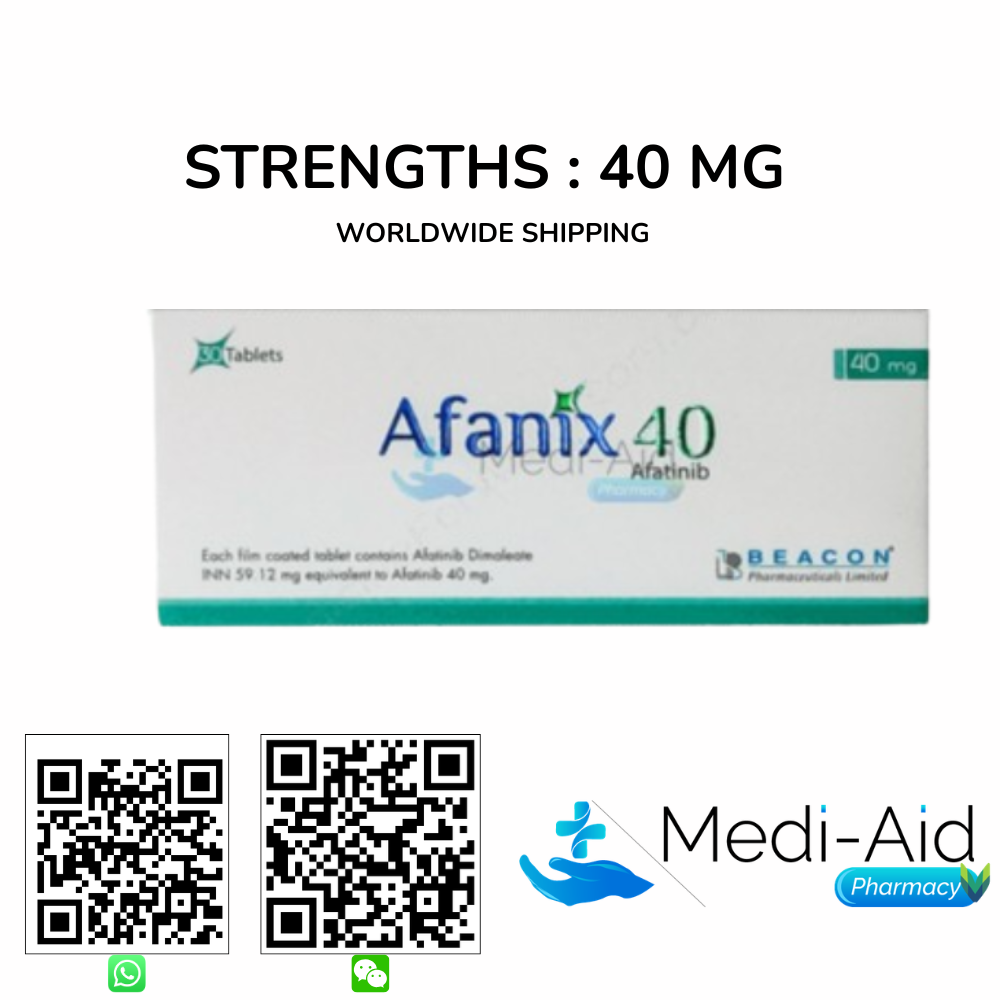
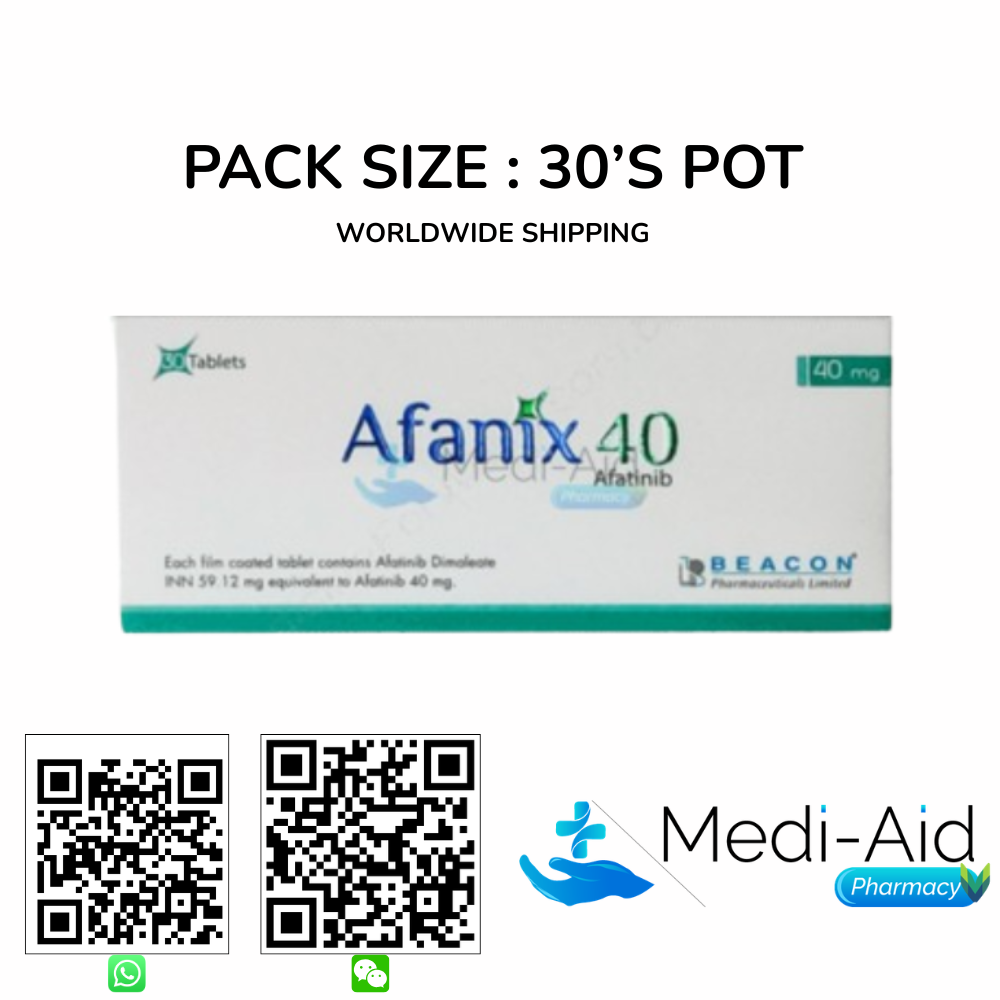
Product Name : Afanix (Afatinib)
Generic Name : Afatinib Dimaleate INN
Formulation : Tablet
Available Pack Size : 30’s (3×10’s)
Available Strengths : 40 mg
Registrations : Bangladesh

Product Information
Afanix 40 MG (Afatinib) is a second-generation irreversible pan-ErbB (ErbB family) receptor tyrosine kinase blocker indicated for the first-line treatment of adults with locally advanced or metastatic non-small cell lung cancer (NSCLC) harbouring activating EGFR mutations (exon 19 deletions or exon 21 L858R substitution), and for adults with locally advanced or metastatic squamous cell carcinoma of the lung (SqCLC) progressing after platinum-based chemotherapy. Unlike first-generation reversible EGFR inhibitors, Afatinib simultaneously and irreversibly inhibits EGFR (ErbB1), HER2 (ErbB2), and HER4 (ErbB4), providing sustained blockade of the entire activated ErbB signalling network driving tumour growth. Patients and oncologists seeking a full range of oncology and specialty cancer medicines can review Mediaid Pharmacy’s complete oncology portfolio. Afanix is manufactured by Beacon Pharmaceuticals Ltd., Bangladesh and globally supplied by Mediaid Pharmacy with worldwide shipping.
Basic Product Information of Afanix 40 MG (Afatinib)
| Brand Name | Afanix (Afatinib) |
| Generic Name | Afatinib Dimaleate INN |
| Drug Class | Second-Generation Irreversible Pan-ErbB Receptor Tyrosine Kinase Inhibitor (EGFR/ErbB1, HER2/ErbB2, HER4/ErbB4) |
| Available Strength | 40 mg |
| Formulation | Tablet |
| Pack Size | 30 Tablets per Pack (3 blister strips of 10 tablets each) |
| Primary Indications | First-line locally advanced or metastatic NSCLC with EGFR exon 19 deletions or exon 21 L858R mutations; locally advanced or metastatic squamous cell carcinoma of the lung after platinum-based chemotherapy |
| Regulatory Approvals | USFDA Approved (July 2013 EGFR-mutated NSCLC; April 2016 squamous cell carcinoma of the lung). EMA Approved. Health Canada Approved. |
| Originator Brand | Giotrif by Boehringer Ingelheim (marketed as Gilotrif in the United States) |
| Manufacturer | Beacon Pharmaceuticals Ltd., Mymensingh, Bangladesh |
| Global Supplier | Mediaid Pharmacy Worldwide Shipping Available |
| Registration | Bangladesh |
| Storage Conditions | Store below 25°C in a dry place away from light and moisture. Keep in original blister pack until point of use. Keep out of the reach of children. |
How Afanix 40 MG (Afatinib) Works Irreversible Pan-ErbB Inhibition and Anti-Tumour Mechanism in EGFR-Driven NSCLC
Afatinib, the active ingredient in Afanix 40 MG, is a second-generation irreversible inhibitor of the ErbB (HER) receptor tyrosine kinase family. The ErbB family comprises four structurally related transmembrane receptor tyrosine kinases: EGFR (ErbB1/HER1), HER2 (ErbB2), ErbB3 (HER3), and HER4 (ErbB4). Ligand binding to these receptors triggers homo- and heterodimerisation events that activate intracellular kinase domains, initiating downstream proliferative and anti-apoptotic signalling cascades including the RAS–MEK–ERK, PI3K–AKT–mTOR, and STAT3 pathways. In non-small cell lung cancer (NSCLC) harbouring activating EGFR mutations most commonly exon 19 deletions (del19) and the exon 21 L858R point substitution these mutations produce constitutively active EGFR kinase domains that drive autonomous tumour proliferation and survival independent of external growth factor stimulation. First-generation EGFR inhibitors (erlotinib, gefitinib) compete reversibly at the EGFR ATP-binding pocket; their inhibitory effect is concentration-dependent and extinguishable when plasma levels fall.
Afatinib overcomes the reversibility limitation by forming a covalent bond with Cysteine 797 (Cys797) of the EGFR kinase domain ATP-binding pocket, producing irreversible, time-dependent enzyme inactivation that is not overcome by drug clearance. The same mechanism applies simultaneously to HER2 (Cys805) and HER4 (Cys803), giving Afatinib broader and more sustained ErbB family blockade than first-generation agents targeting EGFR alone. Because ErbB3 lacks catalytic kinase activity of its own, Afatinib’s inhibition of ErbB1 and ErbB2 eliminates the heterodimerisation partners ErbB3 requires to signal, effectively disrupting ErbB3-mediated PI3K–AKT activation as well. This simultaneous multi-receptor irreversible blockade suppresses cross-activation and compensatory ErbB signalling that can emerge when only a single receptor is targeted, translating into more durable tumour growth suppression. Preclinical data demonstrate that Afatinib retains inhibitory activity against several uncommon EGFR mutations including G719X (exon 18), S768I (exon 20), and L861Q (exon 21) that are relatively insensitive to first-generation reversible agents.
In squamous cell carcinoma of the lung, ErbB pathway dysregulation including EGFR amplification, EGFR overexpression, and HER2 amplification is prevalent and provides the molecular rationale for pan-ErbB inhibition with Afatinib as a post-platinum strategy, even in the absence of specific activating EGFR point mutations. The clinical activity of Afatinib in squamous NSCLC was established in the LUX-Lung 8 trial against erlotinib, demonstrating superior progression-free survival and overall survival in a molecularly unselected squamous population. Mediaid Pharmacy’s oncology medicines portfolio includes Afanix alongside a comprehensive range of targeted therapies and specialty lung cancer medicines available for oncologists and patients worldwide.
Approved Indications for Afanix 40 MG (Afatinib)
Afanix (Afatinib) 40mg is indicated for the following thoracic oncology conditions in adult patients:
|
First-Line NSCLC with EGFR Exon 19 Deletions or Exon 21 L858R Mutations Afanix is the standard first-line treatment for adults with locally advanced or metastatic NSCLC harbouring EGFR exon 19 deletions (del19) or exon 21 L858R substitution mutations. In the pivotal Phase III LUX-Lung 3 trial (n=345, global), Afatinib improved median progression-free survival (PFS) to 11.1 months versus 6.9 months for cisplatin/pemetrexed (HR 0.58; p<0.001). Among patients with the two common EGFR mutations, median PFS extended to 13.6 months. A pooled overall survival (OS) analysis of LUX-Lung 3 and LUX-Lung 6 showed a significant OS advantage in exon 19 deletion patients treated with Afatinib: 31.7 months versus 20.7 months (HR 0.59; p=0.0003). USFDA approved July 2013; EMA approved. |
Squamous Cell Carcinoma of the Lung (SqCLC) After Platinum-Based Chemotherapy Afanix is indicated for adults with locally advanced or metastatic squamous cell carcinoma of the lung (SqCLC) who have progressed after platinum-based chemotherapy. In the pivotal Phase III LUX-Lung 8 trial (n=795), Afatinib improved median PFS to 2.6 months versus 1.9 months for erlotinib (HR 0.81; p=0.0103) and significantly improved median overall survival to 7.9 months versus 6.8 months (HR 0.81; p=0.0077). Afatinib is the only second-generation pan-ErbB inhibitor with demonstrated OS superiority over erlotinib in this squamous NSCLC population. USFDA approved April 2016; EMA approved. |
|
NSCLC with Uncommon EGFR Mutations (G719X, S768I, L861Q) Afatinib demonstrates clinical activity against selected uncommon EGFR mutations including exon 18 G719X, exon 20 S768I, and exon 21 L861Q that show limited sensitivity to first-generation reversible EGFR inhibitors (erlotinib, gefitinib). Regulatory approval for uncommon EGFR mutations has been granted in multiple jurisdictions based on retrospective efficacy data and the broader ErbB inhibition profile of Afatinib. EGFR mutation analysis by validated molecular diagnostic testing is mandatory before initiating Afanix in all NSCLC patients to confirm the specific mutation type and predict treatment benefit. |
First-Line NSCLC Asian Population Data (LUX-Lung 6) The Phase III LUX-Lung 6 trial (n=364, Asian population) confirmed Afatinib’s first-line superiority in EGFR-mutated NSCLC versus cisplatin/gemcitabine, achieving a median PFS of 11.0 months versus 5.6 months (HR 0.28; p<0.001) one of the most pronounced PFS hazard ratios reported in EGFR-targeted therapy trials. This trial is particularly relevant for patients in South and East Asian markets where EGFR mutation prevalence in NSCLC is substantially higher than in Western populations (approximately 40–60% versus 10–15%), making targeted therapy the backbone of first-line treatment for the majority of NSCLC diagnoses in these regions. |
Key Clinical Benefits of Afanix (Afatinib) 40 MG
|
Second-Generation Irreversible ErbB Blockade Afatinib simultaneously and irreversibly inhibits EGFR (ErbB1), HER2 (ErbB2), and HER4 (ErbB4) through covalent bonding at the ATP-binding site. This pan-ErbB blockade prevents the compensatory ErbB receptor cross-signalling that limits first-generation reversible agents (erlotinib, gefitinib), providing more complete and sustained suppression of ErbB-driven oncogenic pathway activity in EGFR-mutated NSCLC. |
OS Advantage in Exon 19 Deletion NSCLC The pooled overall survival analysis of LUX-Lung 3 and LUX-Lung 6 demonstrated a statistically significant OS advantage for Afatinib over platinum-based chemotherapy specifically in patients with EGFR exon 19 deletions: median OS 31.7 months versus 20.7 months (HR 0.59; p=0.0003) a clinically meaningful 11-month OS gain. This OS benefit distinguishes Afatinib as a proven survival-improving first-line option in exon 19 del NSCLC. |
Proven Superiority Over Erlotinib in Squamous NSCLC In LUX-Lung 8 (n=795), Afatinib demonstrated superior PFS (2.6 vs 1.9 months; HR 0.81; p=0.0103) and OS (7.9 vs 6.8 months; HR 0.81; p=0.0077) versus erlotinib in squamous cell carcinoma of the lung after platinum-based chemotherapy making Afatinib the only ErbB inhibitor to show a significant OS advantage over erlotinib in this setting. |
|
Activity Against Uncommon EGFR Mutations Afatinib’s irreversible ErbB inhibition mechanism provides clinically meaningful activity against uncommon EGFR mutations G719X (exon 18), S768I (exon 20), and L861Q (exon 21) in patients whose tumours are not driven by the common del19 or L858R mutations and who have limited alternative targeted treatment options. This broader mutation coverage is a distinct clinical advantage over first-generation reversible EGFR inhibitors. |
Convenient Once-Daily Oral Dosing Afanix 40mg is taken as a single oral tablet once daily, eliminating the need for intravenous infusion and enabling patients to maintain long-term targeted lung cancer treatment independently at home. The fixed 40mg starting dose with oncologist-guided escalation to 50mg or reduction to 30mg and 20mg supports individualised tolerability-based management across the full patient population. |
Affordable Generic Alternative to Giotrif Afanix contains the same active ingredient Afatinib Dimaleate as Giotrif (Boehringer Ingelheim) at a substantially lower cost, bringing second-generation EGFR-targeted therapy within financial reach for NSCLC patients in Asia, Africa, the Middle East, and other markets where Giotrif’s originator pricing creates barriers to long-term access. Manufactured by Beacon Pharmaceuticals Ltd. under WHO-GMP and cGMP standards. |
How to Take Afanix 40 MG (Afatinib) Dosage and Administration Guidelines
Route of Administration: Oral one 40mg tablet swallowed whole with water once daily. Afanix tablets must not be crushed, split, or chewed. Tablets should be taken at approximately the same time each day to maintain consistent plasma levels.
CRITICAL Food Interaction: Afanix must be taken on an empty stomach. The tablet must be taken at least 1 hour before eating or at least 3 hours after the last meal. Food significantly increases afatinib plasma exposure and may intensify toxicity. If a dose is missed and the next scheduled dose is more than 8 hours away, take the missed dose immediately; if fewer than 8 hours remain until the next dose, skip the missed dose and resume the normal schedule.
Standard Starting Dose: 40mg once daily for all approved indications (EGFR-mutated NSCLC first-line and squamous NSCLC after platinum-based chemotherapy). Treatment is continued until disease progression or unacceptable toxicity. Confirmed progression on Afanix should prompt discussion of next-line therapies including osimertinib for T790M-positive progression in EGFR-mutated NSCLC with the treating oncologist.
Dose Escalation to 50 MG: The dose may be increased to 50mg once daily if the 40mg starting dose is well tolerated (no adverse reaction at or above Grade 2 per CTCAE criteria) for at least 3 consecutive weeks of treatment. Not all patients are candidates for escalation; discuss with your prescribing oncologist based on individual tolerability assessment.
Dose Reduction for Toxicity: Reduce Afanix by 10mg per reduction step for Grade ≥3 adverse reactions, Grade 2 cutaneous reactions persisting beyond 7 days or intolerable at 40mg, Grade 2 diarrhoea persisting beyond 48 hours, or other confirmed Grade 2 adverse reactions intolerable to the patient. First reduction: 40mg → 30mg once daily. Second reduction: 30mg → 20mg once daily. Discontinue Afanix permanently if Grade ≥3 toxicity occurs at the 20mg dose level, or if interstitial lung disease (ILD) or severe cutaneous bullous reactions are confirmed at any dose.
Hepatic Impairment: No dose adjustment is required for mild (Child-Pugh Class A) or moderate (Child-Pugh Class B) hepatic impairment. Afanix is not recommended in patients with severe hepatic impairment (Child-Pugh Class C); if use is considered unavoidable, close clinical monitoring for adverse effects is mandatory throughout treatment.
Renal Impairment: No dose adjustment is required for mild (CrCl ≥60 mL/min) or moderate (CrCl 30–59 mL/min) renal impairment. Reduce the starting dose by 10mg (to 30mg once daily) for patients with severe renal impairment (CrCl 15–29 mL/min). Afanix is not recommended for patients with CrCl below 15 mL/min or for patients requiring renal dialysis, as safety data in these populations are insufficient.
P-gp Inhibitor Co-Administration: P-glycoprotein (P-gp) inhibitors including ritonavir, cyclosporine, ketoconazole, itraconazole, erythromycin, verapamil, and amiodarone increase afatinib plasma exposure and may intensify toxicity. When a P-gp inhibitor must be co-administered simultaneously with Afanix, reduce the Afanix dose by 10mg if not tolerated. When the P-gp inhibitor can be staggered (administered 6 or more hours before or after Afanix), no dose adjustment is required. Resume the previous Afanix dose 2–3 days after discontinuing the P-gp inhibitor.
Paediatric Use: The safety and efficacy of Afatinib in patients under 18 years of age have not been established. Use is not recommended in the paediatric population outside of clinical trial settings.
Clinical Monitoring Requirements During Afanix (Afatinib) Treatment
Systematic clinical monitoring is essential throughout Afanix therapy. Diarrhoea must be monitored from the first day of treatment; patients must receive instructions to initiate antidiarrhoeal therapy (loperamide 4mg at first sign, then 2mg after each loose stool; maximum 16mg/day) immediately at onset of loose stools. Grade ≥2 diarrhoea lasting longer than 48 hours despite antidiarrhoeal therapy requires Afanix dose interruption until recovery to Grade ≤1, followed by dose reduction. Skin and nail assessment should be performed at each clinic visit; acneiform rash typically emerges within the first week of treatment and is managed with topical and systemic antibiotics, emollients, and sun protection. Grade ≥3 or intolerable Grade 2 rash requires dose interruption. Pulmonary function assessment including history of dyspnoea, cough, and fever must be performed at every clinical visit to detect early ILD; any new unexplained pulmonary symptoms must trigger CT chest imaging, immediate Afanix interruption, and specialist evaluation. Liver function tests (LFTs) should be monitored periodically, as hepatic failure (including fatal cases) has been reported rarely with afatinib. Renal function should be evaluated at baseline and during treatment, particularly in patients who develop severe diarrhoea, vomiting, or clinical dehydration. Keratitis presenting as acute or worsening eye inflammation, lacrimation, light sensitivity, blurred vision, or eye pain requires prompt ophthalmological evaluation and Afanix interruption until assessment is complete.
Drug Interactions and Important Safety Information for Afanix (Afatinib)
Afatinib’s pharmacokinetic profile is distinct from most other kinase inhibitors: it is not primarily metabolised by CYP enzymes but is instead a substrate and inhibitor of the P-glycoprotein (P-gp) efflux transporter and breast cancer resistance protein (BCRP). This means that co-administration of P-gp inhibitors including cyclosporine, ritonavir, ketoconazole, itraconazole, erythromycin, verapamil, quinidine, and amiodarone increases afatinib plasma exposure and may amplify treatment toxicities, particularly diarrhoea and skin reactions. When simultaneous co-administration is unavoidable, reduce Afanix by 10mg; when the P-gp inhibitor can be staggered at least 6 hours from the Afanix dose, no adjustment is required.
P-gp inducers including rifampicin (rifampin), carbamazepine, phenobarbital, phenytoin, and St. John’s Wort substantially reduce afatinib plasma concentrations through enhanced P-gp-mediated efflux, potentially compromising clinical efficacy. If a P-gp inducer must be co-administered, the Afanix dose may be increased by 10mg (to 50mg once daily) from 2–3 days after the inducer is started; reduce back to the previous dose 2–3 days after the P-gp inducer is discontinued. The impact of P-gp inhibitors and inducers on afatinib pharmacokinetics is concentration-dependent on the timing of co-administration, so physicians must review the full prescribing information and the patient’s complete medication list including herbal supplements before starting and during Afanix therapy.
Side Effects and Precautions of Afanix (Afatinib)
|
Common Side Effects (>20% Incidence) Diarrhoea most frequent toxicity; Grade ≥3 in approximately 14–20% of patients. Onset typically within first week; early loperamide initiation is mandatory. Acneiform rash and pustular/papular skin reactions Grade ≥3 in approximately 16% of patients. Typically presents within 7–14 days of starting treatment on the face, chest, and upper back. Stomatitis and oral mucositis affects approximately 71% of patients; Grade ≥3 in approximately 9% Paronychia (nail bed inflammation and periungual infection) commonly affects fingers and toes; requires local wound care and antibiotics Dry skin (xeroderma) and pruritus Decreased appetite and weight loss Epistaxis (nosebleed) related to HER2 inhibition effects on mucosal vasculature Nausea and vomiting (less common than diarrhoea; Grade ≥3 in approximately 4%) |
Serious Warnings and Precautions Interstitial Lung Disease (ILD) / pneumonitis incidence approximately 0.7–3.3%; higher in Asian populations. Can be fatal. Permanently discontinue Afanix if ILD is confirmed; withhold immediately for any unexplained new pulmonary symptoms pending investigation. Severe diarrhoea with dehydration prolonged Grade ≥3 diarrhoea can cause acute kidney injury, electrolyte disturbances, and hypovolaemic shock. Proactive antidiarrhoeal management from day 1 is essential. Hospitalisation may be required for rehydration and electrolyte correction. Severe and life-threatening cutaneous reactions including Stevens-Johnson Syndrome (SJS) and Toxic Epidermal Necrolysis (TEN). Rare but reported. Permanently discontinue Afanix if bullous, blistering, or exfoliating skin reactions are confirmed. Hepatotoxicity including fatal hepatic failure, reported in less than 1% of patients. Monitor liver function tests periodically. Withhold Afanix for Grade ≥3 hepatotoxicity. Keratitis and corneal ulceration acute or worsening eye inflammation requires immediate ophthalmological referral. Withhold Afanix if keratitis is suspected and discontinue permanently if severe ulcerative keratitis is confirmed. Left ventricular dysfunction patients with pre-existing cardiac disease or prior anthracycline exposure are at elevated risk. Monitor cardiac function periodically and adjust accordingly. Not recommended during pregnancy or breastfeeding. Effective contraception required for women of childbearing potential during treatment and for at least 2 weeks after the final dose of Afanix. |
Who Should Use Afanix 40 MG (Afatinib)?
Afanix is indicated for adult patients with locally advanced or metastatic NSCLC whose tumours harbour confirmed EGFR exon 19 deletions or exon 21 L858R substitution mutations and who have not previously received EGFR-targeted therapy; for adults with NSCLC harbouring selected uncommon EGFR mutations (G719X, S768I, L861Q) where first-generation agents show limited activity; and for adults with locally advanced or metastatic squamous cell carcinoma of the lung who have progressed after platinum-based chemotherapy. EGFR mutation status must be confirmed by a validated molecular diagnostic assay (tissue or liquid biopsy) before initiating Afanix for the EGFR-mutated NSCLC indication. Afanix must be prescribed and supervised by a qualified thoracic oncologist or medical oncologist with experience in targeted lung cancer therapy. Pre-treatment assessment should include pulmonary function evaluation, liver function tests, renal function, cardiac evaluation (in at-risk patients), and ophthalmological baseline assessment for patients with pre-existing eye conditions. Physicians requiring a comprehensive source for oncology specialty medicines including EGFR inhibitors, ALK inhibitors, immunotherapy agents, and other targeted lung cancer treatments can consult Mediaid Pharmacy’s oncology portfolio for availability and worldwide supply.
Manufacturer: Beacon Pharmaceuticals Ltd., Bangladesh
Beacon Pharmaceuticals Ltd. is a leading pharmaceutical manufacturer based in Mymensingh, Bangladesh and the leading oncology and specialty medicine company in the country. Beacon was the first company in Bangladesh to export cancer medicines and currently exports to markets across Asia, Africa, Europe, and Latin America. With more than 200 generic drugs and 65 oncology products in its portfolio, Beacon operates under strict WHO-GMP, cGMP, and ISO-certified manufacturing standards. Afanix (Afatinib Dimaleate) 40mg tablets are one of Beacon’s core thoracic oncology products, offering a high-quality, bioequivalent, and affordable alternative to Giotrif (Boehringer Ingelheim) at a fraction of the originator cost without compromising on the purity, potency, or bioequivalence required for the treatment of EGFR-mutated non-small cell lung cancer and squamous cell carcinoma of the lung.
Global Supplier: Mediaid Pharmacy Worldwide Shipping for Afanix (Afatinib)
Mediaid Pharmacy is a trusted global supplier of specialty oncology and targeted therapy medications. Afanix (Afatinib Dimaleate) 40mg tablets (30 tablets per pack, 3×10 blister strips) are available through Mediaid Pharmacy with reliable worldwide shipping to South Asia, the Middle East, Africa, Europe, and beyond. Our team provides full order support including pricing, availability confirmation, documentation, and delivery tracking for oncologists, hospitals, and patients requiring Afanix internationally. Contact Mediaid Pharmacy directly via WhatsApp, phone, or WeChat for enquiries about availability and delivery to your country.
Why Choose Afanix (Afatinib) from Mediaid Pharmacy?
Afanix represents a clinically validated and cost-accessible option for the second-generation ErbB-targeted treatment of EGFR-mutated NSCLC and squamous cell carcinoma of the lung. As the generic bioequivalent of Giotrif (Boehringer Ingelheim), Afanix delivers the same active ingredient Afatinib Dimaleate with the same proven irreversible pan-ErbB (EGFR, HER2, HER4) inhibition mechanism and the same 40mg tablet formulation, at a dramatically lower price. The clinical evidence base for Afatinib is among the most robust in EGFR-targeted lung cancer therapy: a confirmed OS advantage of 11 months in exon 19 deletion NSCLC (LUX-Lung 3+6 pooled analysis), demonstrated superiority over erlotinib in squamous NSCLC (LUX-Lung 8), and approved clinical activity against uncommon EGFR mutations underserved by first-generation agents. Manufactured by Beacon Pharmaceuticals Ltd. under WHO-GMP and cGMP standards, and distributed globally by Mediaid Pharmacy, Afanix is the trusted choice for oncologists and patients worldwide seeking proven second-generation EGFR-targeted therapy without financial barriers. For the complete range of oncology medicines available from Mediaid Pharmacy, including other EGFR inhibitors, ALK/ROS1 inhibitors, immunotherapy agents, and platinum-based chemotherapy regimens for lung cancer, visit our oncology medicines page.
Frequently Asked Questions About Afanix 40 MG (Afatinib)
What is Afanix 40 MG (Afatinib) used for?
Afanix 40mg (Afatinib Dimaleate) is a second-generation irreversible pan-ErbB inhibitor indicated for the first-line treatment of adults with locally advanced or metastatic NSCLC harbouring EGFR exon 19 deletions or exon 21 L858R substitution mutations, and for adults with locally advanced or metastatic squamous cell carcinoma of the lung progressing after platinum-based chemotherapy. Afatinib irreversibly blocks EGFR (ErbB1), HER2 (ErbB2), and HER4 (ErbB4) simultaneously through covalent bonding, providing sustained suppression of the ErbB signalling network that drives tumour cell proliferation and survival in EGFR-driven NSCLC.
What is the recommended dose of Afanix (Afatinib) and does food affect it?
The recommended starting dose of Afanix is 40mg taken orally once daily on an empty stomach at least 1 hour before eating or at least 3 hours after the last meal. Food significantly increases afatinib plasma exposure and must be avoided around the time of dosing. The dose may be escalated to 50mg once daily if 40mg is well tolerated (no Grade 2 or higher adverse reactions) for at least 3 consecutive weeks. Dose reductions to 30mg and then 20mg are used to manage significant toxicity. Always follow your prescribing oncologist’s exact instructions.
What EGFR mutation types respond to Afanix (Afatinib)?
Afatinib is approved and most clinically active against the two common EGFR activating mutations exon 19 deletions (del19) and exon 21 L858R substitution which account for approximately 85–90% of all activating EGFR mutations in NSCLC. Afatinib also demonstrates clinical activity against selected uncommon EGFR mutations: exon 18 G719X, exon 20 S768I, and exon 21 L861Q. Afatinib is not indicated for EGFR exon 20 insertion mutations (which are resistant to standard ErbB inhibitors) or for patients with T790M resistance mutations as a primary treatment. EGFR mutation testing by a validated molecular diagnostic test is mandatory before initiating Afanix for EGFR-mutated NSCLC.
What pack size and strength is Afanix (Afatinib) available in?
Afanix is available in 40mg tablets supplied in a pack of 30 tablets (3 blister strips of 10 tablets each). The 40mg strength is the standard starting dose for all approved indications. Dose adjustment escalation to 50mg or reduction to 30mg and 20mg is made by the treating oncologist based on individual tolerability and adverse event assessment throughout treatment.
Is Afanix the same as Giotrif (Afatinib by Boehringer Ingelheim)?
Yes. Afanix is the generic equivalent of Giotrif (Boehringer Ingelheim; marketed as Gilotrif in the United States). Both products contain the same active ingredient Afatinib Dimaleate in the same 40mg tablet formulation and deliver the same irreversible pan-ErbB inhibition mechanism targeting EGFR, HER2, and HER4. Afanix is manufactured by Beacon Pharmaceuticals Ltd. under WHO-GMP-certified standards in Bangladesh at a significantly lower cost than Giotrif, making long-term second-generation EGFR-targeted NSCLC treatment more financially accessible worldwide.
What are the most common side effects of Afanix (Afatinib)?
The most common side effects of Afanix (Afatinib) include diarrhoea (Grade ≥3 in approximately 14–20% of patients), acneiform rash and skin reactions (Grade ≥3 in approximately 16%), stomatitis, paronychia, dry skin, decreased appetite, and epistaxis. Diarrhoea and rash typically emerge within the first week of treatment and require proactive management loperamide for diarrhoea and topical agents plus sun protection for rash from day 1. Serious risks include interstitial lung disease (ILD/pneumonitis), severe cutaneous bullous reactions, hepatotoxicity, keratitis, and dehydration from severe diarrhoea. Always consult your prescribing oncologist for a full individual risk assessment before and throughout Afanix treatment.
Does Afanix (Afatinib) require dose adjustment for liver or kidney problems?
No dose adjustment is required for mild (Child-Pugh A) or moderate (Child-Pugh B) hepatic impairment. Afanix is not recommended for patients with severe hepatic impairment (Child-Pugh C); close monitoring is required if use is considered unavoidable. For renal impairment: no adjustment is needed for mild to moderate impairment (CrCl ≥30 mL/min). Reduce the starting dose by 10mg (to 30mg once daily) for patients with severe renal impairment (CrCl 15–29 mL/min). Afanix is not recommended for CrCl below 15 mL/min or in dialysis patients. Always discuss all organ function results with your treating oncologist before starting therapy.
Can I order Afanix 40 MG (Afatinib) online with worldwide shipping?
Yes. Mediaid Pharmacy supplies Afanix 40mg (Afatinib Dimaleate) tablets (30 tablets per pack, 3×10 blister) to patients, oncologists, and healthcare facilities globally with worldwide shipping. Contact Mediaid Pharmacy via WhatsApp, phone, or WeChat at +8801773428128, or send your enquiry to info@mediaidpharmacy.com for pricing, stock availability, and delivery details for your country.
Order Afanix 40 MG (Afatinib) with Worldwide Shipping
Phone / WhatsApp / WeChat: +8801773428128 | Email: info@mediaidpharmacy.com