
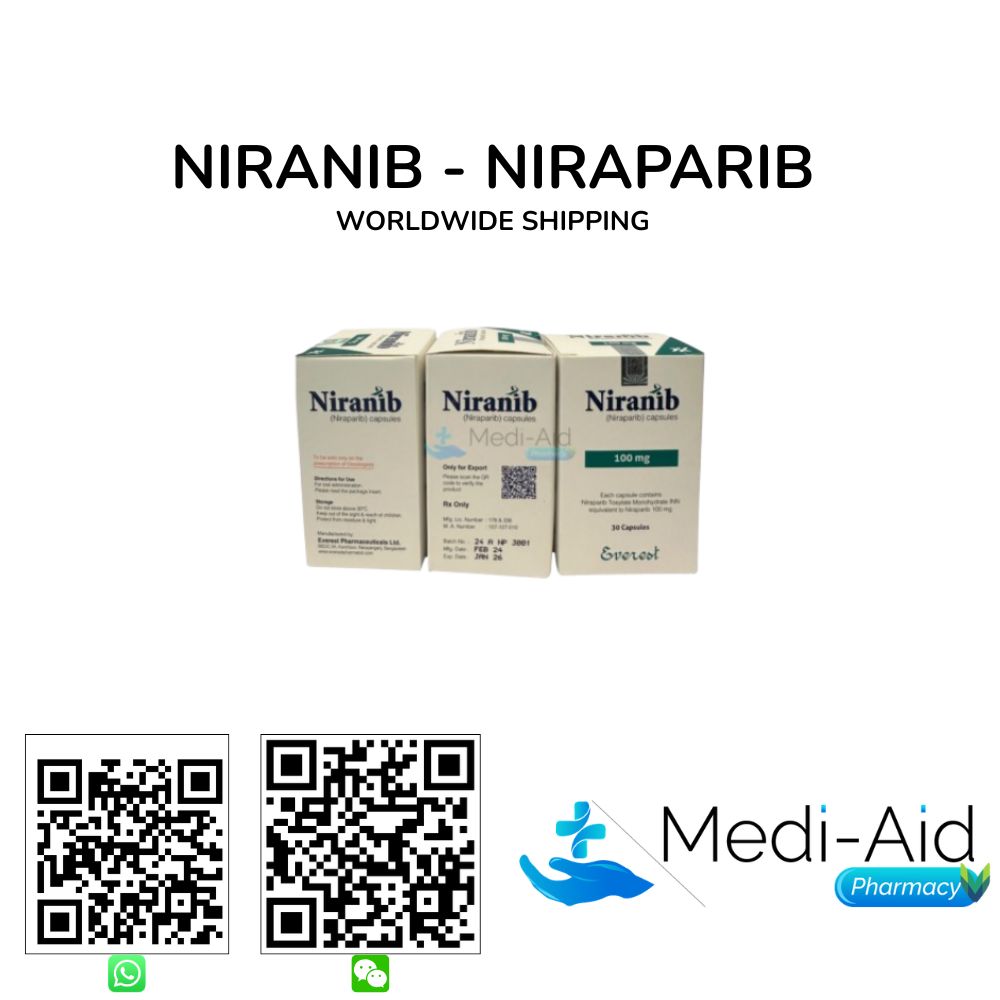
Niranib 140 MG (Niraparib)
Product Name : Niranib
Generic Name : Niraparib
Formulation : Capsule
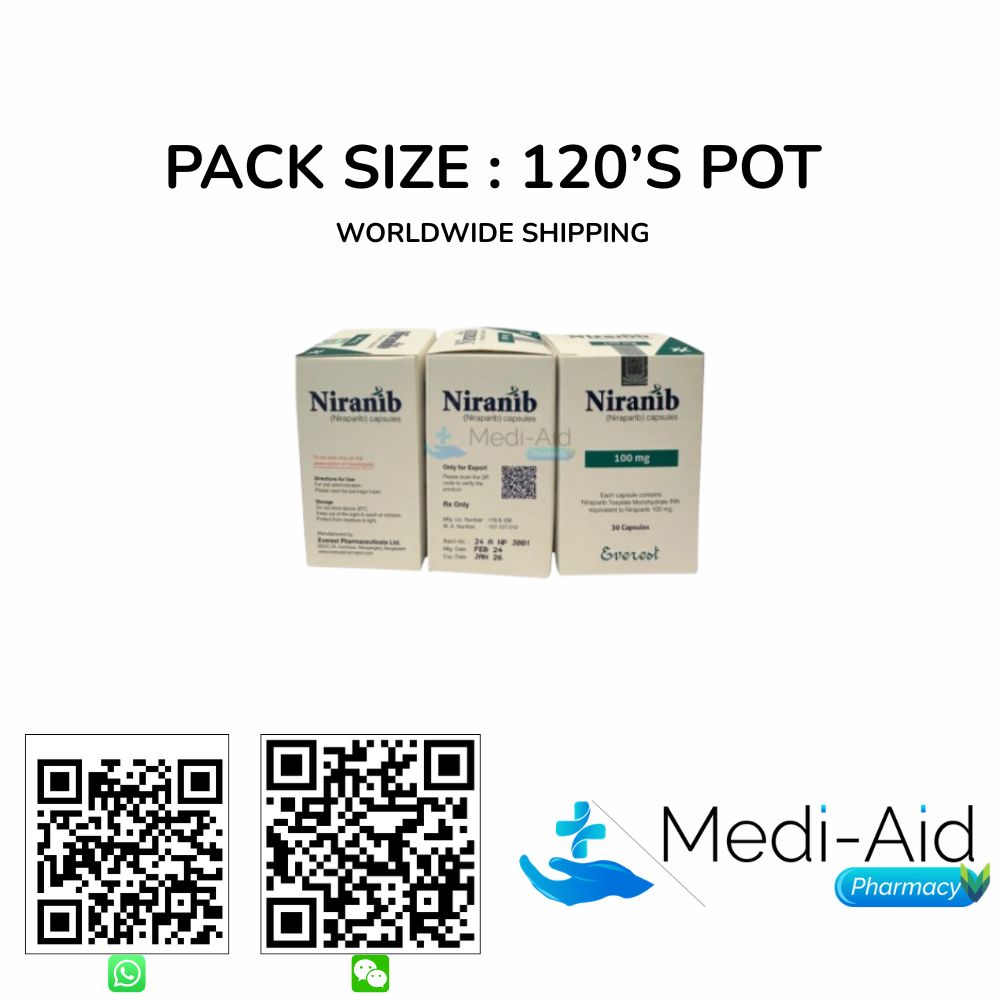
Available Pack Size : 120’s
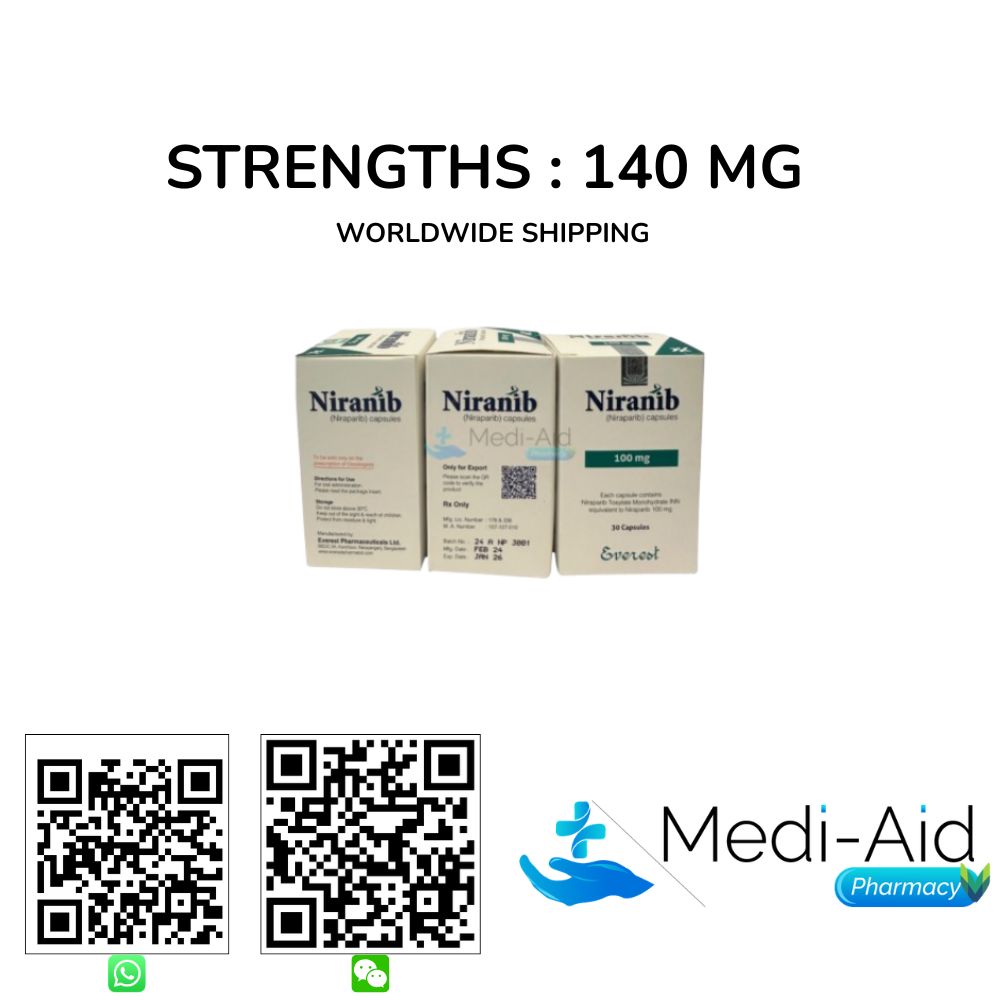
Available Strengths : 140 mg
Registrations : Bangladesh

Product Information
Niranib 140 MG (Niraparib) is an oral poly (ADP-ribose) polymerase (PARP) inhibitor supplied as a 140 mg capsule in a 120’s pack and registered in Bangladesh. Its active ingredient, niraparib, inhibits the PARP-1 and PARP-2 enzymes that repair single-strand DNA breaks, and it is used as maintenance therapy for advanced epithelial ovarian, fallopian tube, or primary peritoneal cancer after a complete or partial response to platinum-based chemotherapy. Niraparib works by trapping PARP enzymes on damaged DNA, which converts unrepaired single-strand breaks into lethal double-strand breaks and triggers cell death in tumor cells, especially those with homologous recombination deficiency (HRD). Searching for Niranib 140 MG Niraparib in Bangladesh or abroad? Mediaid Pharmacy lists this product within its comprehensive oncology and specialty medicines portfolio, and ships it worldwide.
Basic Product Information of Niranib 140 MG (Niraparib)
| Brand Name | Niranib 140 MG (Niraparib) |
| Product Name | Niranib |
| Generic Name | Niraparib |
| Drug Class | Poly (ADP-ribose) Polymerase (PARP) Inhibitor, Targeted Anticancer Therapy |
| Formulation | Capsule |
| Available Strength | 140 mg |
| Available Pack Size | 120’s (120 capsules per pack) |
| Primary Indication | Maintenance treatment of advanced epithelial ovarian, fallopian tube, or primary peritoneal cancer after response to platinum-based chemotherapy |
| Registrations | Bangladesh |
| Originator Reference Brand | Zejula (niraparib) by GlaxoSmithKline |
| Global Supplier | Mediaid Pharmacy, Worldwide Shipping Available |
| Storage Conditions | Store in a dry place away from light and moisture, at the temperature printed on the pack. Keep out of the reach of children. |
How Niranib 140 MG (Niraparib) Works: PARP Inhibition Mechanism
Niraparib, the active ingredient in Niranib 140 MG, is a selective inhibitor of PARP-1 and PARP-2. Poly (ADP-ribose) polymerase (PARP) is a family of nuclear enzymes that detect single-strand DNA breaks and recruit the base excision repair machinery to fix them. When a PARP enzyme is blocked, single-strand breaks persist, and each round of cell division converts them into double-strand breaks.
Healthy cells repair double-strand breaks through homologous recombination repair (HRR), a pathway that depends on functional BRCA1 and BRCA2 proteins. Tumors with BRCA1/2 mutations or homologous recombination deficiency (HRD) cannot complete this repair, so PARP inhibition pushes them toward cell death through a concept called synthetic lethality. Niraparib also traps PARP enzymes on DNA, which creates a physical lesion that is more toxic than enzyme inhibition alone. Roughly half of high-grade serous ovarian cancers show HRD, which is why biomarker testing is a central part of ovarian cancer care. Patients and oncologists building a complete treatment plan can review the wider oncology medicines catalogue at Mediaid Pharmacy for supportive and companion therapies.
In the pivotal NOVA trial (recurrent platinum-sensitive ovarian cancer), niraparib maintenance produced a median progression-free survival (PFS) of 21.0 months versus 5.5 months for placebo in the germline BRCA-mutated cohort (hazard ratio 0.27). In the non-germline BRCA HRD-positive cohort, median PFS was 12.9 months versus 3.8 months (hazard ratio 0.38). Niraparib is notable because it delivered PFS benefit across biomarker groups, including patients without BRCA mutations.
Approved Indications of Niraparib (Reference Label for Niranib 140 MG (Niraparib))
Niraparib, the active ingredient in Niranib 140 MG, is approved internationally as maintenance therapy in two adult ovarian cancer settings. Prescribers in Bangladesh should confirm the exact indications on the local Niranib product label.
|
First-Line Maintenance in Advanced Ovarian, Fallopian Tube, or Primary Peritoneal Cancer Approved as maintenance treatment for adult patients with advanced epithelial ovarian, fallopian tube, or primary peritoneal cancer who achieved a complete or partial response to first-line platinum-based chemotherapy. In the PRIMA trial, median PFS was 13.8 months with niraparib versus 8.2 months with placebo in the overall population (hazard ratio 0.62), and 21.9 months versus 10.4 months in the HRD-positive population (hazard ratio 0.43). |
Maintenance in Recurrent Platinum-Sensitive Ovarian, Fallopian Tube, or Primary Peritoneal Cancer Approved as maintenance treatment for adult patients with recurrent epithelial ovarian, fallopian tube, or primary peritoneal cancer who are in complete or partial response to platinum-based chemotherapy. The NOVA trial showed a median PFS of 21.0 months versus 5.5 months in the germline BRCA-mutated cohort (hazard ratio 0.27) and 9.3 months versus 3.9 months in the overall non-germline BRCA cohort (hazard ratio 0.45). |
Key Clinical Benefits of Niranib 140 MG (Niraparib)
|
Longer Progression-Free Survival After Chemotherapy In PRIMA, first-line niraparib maintenance extended median PFS to 13.8 months versus 8.2 months for placebo across all biomarker groups, giving patients more time without disease progression after platinum-based chemotherapy. |
Benefit in Patients With and Without BRCA Mutations Niraparib reduced the risk of progression or death in the germline BRCA-mutated cohort (hazard ratio 0.27), the HRD-positive cohort (hazard ratio 0.38), and the overall non-germline BRCA cohort (hazard ratio 0.45) in NOVA, so a negative BRCA result does not rule out benefit. |
Strongest Effect in HRD-Positive Tumors In PRIMA, the HRD-positive population reached a median PFS of 21.9 months on niraparib versus 10.4 months on placebo (hazard ratio 0.43), which makes HRD testing a valuable step when planning maintenance therapy. |
|
Once-Daily Oral Capsule Niranib 140 MG is taken by mouth once daily, which removes the need for infusion visits during maintenance and supports long-term adherence at home under regular oncologist follow-up. |
Few CYP450 Drug Interactions Niraparib is metabolized mainly by carboxylesterase enzymes rather than the CYP450 system, so clinically significant CYP-mediated drug interactions are uncommon compared with many other oral oncology drugs. |
Locally Registered Option in Bangladesh Niranib 140 MG is registered in Bangladesh and available in a 120’s pack through Mediaid Pharmacy, which improves access to niraparib maintenance for patients and hospitals in the region and beyond. |
How to Take Niranib 140 MG (Niraparib): Dosage Guidelines
Route of Administration: Oral. Swallow the capsule whole with water, once daily at the same time each day, with or without food. Bedtime dosing may reduce nausea for some patients. Do not open, crush, or chew the capsule. If a dose is missed or vomited, do not take an extra dose; take the next dose at the usual time.
Prescriber-Directed Dosing: The dose of Niranib 140 MG must be set by the treating oncologist. Niraparib products differ in strength and regimen, so patients must not switch between brands, strengths, or capsule and tablet forms without medical advice.
Reference Label Dosing (Originator Zejula): The originator label recommends a starting dose of 200 mg once daily for patients who weigh less than 77 kg or have a baseline platelet count below 150,000 per microliter, and 300 mg once daily for other patients. Dose reductions step down in 100 mg increments, and treatment is discontinued if the patient cannot tolerate 100 mg daily.
Duration of Treatment: Maintenance therapy continues until disease progression or unacceptable toxicity, as directed by the oncologist.
Adverse Reaction Management: For a hematologic or other significant adverse reaction, the oncologist will interrupt treatment for up to 28 days and then resume at a reduced dose once the reaction resolves.
Renal Impairment: No dose adjustment is required for mild to moderate renal impairment. Data in severe renal impairment and end-stage renal disease are limited, so use requires close supervision.
Hepatic Impairment: No dose adjustment is required for mild hepatic impairment. Moderate hepatic impairment may require a lower dose per the reference label, and data in severe hepatic impairment are limited.
Pediatric Use: The safety and efficacy of niraparib in patients under 18 years of age have not been established.
Clinical Monitoring Requirements During Niranib 140 MG (Niraparib) Treatment
Regular monitoring is mandatory during niraparib therapy. Hematologic toxicity (thrombocytopenia, anemia, and neutropenia) is the most common serious effect, and the reference label advises a complete blood count weekly during the first month, monthly for the next 11 months, and periodically afterward. Treatment should not start until hematologic toxicity from prior chemotherapy has recovered to grade 1 or better. Thrombocytopenia typically appears early, so the first month is the highest-risk window.
Hypertension, including hypertensive crisis, has been reported. The reference label advises monitoring blood pressure and heart rate at least weekly for the first two months, monthly for the first year, and periodically afterward, with antihypertensive therapy started or adjusted as needed. Myelodysplastic syndrome (MDS) and acute myeloid leukemia (AML) have been reported in a small percentage of patients, so persistent cytopenias should prompt referral for hematologic evaluation. Posterior reversible encephalopathy syndrome (PRES) is rare, and patients with headache, visual disturbance, confusion, or seizures need urgent assessment.
Drug Interactions and Important Safety Information for Niranib 140 MG (Niraparib)
Niraparib is cleared mainly by carboxylesterases rather than by CYP450 enzymes, so it is not expected to produce major pharmacokinetic interactions with CYP inhibitors or inducers. Even so, patients must give their oncologist a full list of prescription drugs, over-the-counter medicines, and herbal products before starting Niranib 140 MG. Myelosuppressive agents used alongside niraparib can worsen anemia, neutropenia, and thrombocytopenia, and they require closer blood count monitoring.
Anticoagulants and antiplatelet drugs deserve extra attention because niraparib can lower platelet counts and raise bleeding risk. Antihypertensive therapy may need adjustment because niraparib can raise blood pressure. Patients should avoid driving or operating machinery if they experience fatigue, dizziness, or reduced concentration. Female patients of reproductive potential must use effective contraception during treatment and for six months after the final dose, and women must not breastfeed during treatment and for one month after the final dose.
Side Effects and Precautions of Niranib 140 MG (Niraparib)
|
Common Side Effects Anemia and reduced red blood cell counts Thrombocytopenia (low platelet count) Neutropenia and leukopenia Nausea and vomiting Constipation and abdominal pain Fatigue and weakness Headache and insomnia Decreased appetite Hypertension (elevated blood pressure) Palpitations, shortness of breath, and back pain |
Serious Warnings and Precautions Myelosuppression: weekly blood counts in month one, then monthly through month twelve. Interrupt treatment and reduce the dose for significant cytopenias. Hypertension and hypertensive crisis: monitor blood pressure and heart rate regularly and treat promptly. MDS and AML: reported in a small percentage of patients. Refer persistent cytopenias for hematologic evaluation and discontinue if confirmed. PRES: rare. Seek urgent care for severe headache, visual changes, confusion, or seizures. Embryo-fetal toxicity: not recommended during pregnancy. Effective contraception is required during treatment and for six months after the final dose. |
Who Should Use Niranib 140 MG (Niraparib)?
Niranib 140 MG (Niraparib) is prescribed for adult women with advanced epithelial ovarian, fallopian tube, or primary peritoneal cancer who have achieved a complete or partial response to platinum-based chemotherapy, in the first-line or recurrent platinum-sensitive setting. Oncologists usually confirm response by imaging and CA-125 trends, and they often order BRCA and HRD testing to guide the maintenance choice, although niraparib has shown benefit regardless of biomarker status. A baseline complete blood count and blood pressure reading are required before the first dose. Niranib 140 MG is prescribed by gynecologic oncologists and medical oncologists experienced with PARP inhibitor therapy. For patients who need broader cancer care across tumor types, Mediaid Pharmacy’s oncology specialty medicines range offers a wide selection of targeted and supportive therapies.
Global Supplier: Mediaid Pharmacy Worldwide Shipping for Niranib 140 MG (Niraparib)
Mediaid Pharmacy is a Dhaka-based supplier of oncology and specialty medicines with worldwide shipping. Niranib 140 MG (Niraparib) is available in a 120’s capsule pack, and orders are supported by pricing quotations, stock confirmation, documentation, and delivery tracking. Hospitals, distributors, and patients can contact the Mediaid Pharmacy team through WhatsApp, phone, or WeChat for all questions about Niranib 140 MG Niraparib availability, pricing, and international delivery. Buyers who need several cancer medicines in one consignment can browse the full oncology medicine collection before requesting a combined quotation.
Why Choose Niranib 140 MG (Niraparib) from Mediaid Pharmacy?
Niranib 140 MG (Niraparib) gives oncology teams a Bangladesh-registered niraparib capsule for ovarian cancer maintenance therapy, backed by the PARP inhibitor evidence generated in the NOVA and PRIMA trials. Mediaid Pharmacy supplies it in a 120’s pack with clear product specifications, direct specialist support, and worldwide shipping. Every order starts with a prescription-based enquiry, which keeps supply aligned with clinical need. To compare niraparib with other targeted agents or to source additional cancer therapies, visit the Mediaid Pharmacy oncology medicines section, then contact our team for a personalized quotation.
Frequently Asked Questions About Niranib 140 MG (Niraparib)
What is Niranib 140 MG (Niraparib) used for?
Niranib 140 MG (Niraparib) is a PARP inhibitor capsule used as maintenance therapy for adult patients with advanced epithelial ovarian, fallopian tube, or primary peritoneal cancer who responded to platinum-based chemotherapy, in both the first-line and recurrent platinum-sensitive settings. Niraparib blocks PARP-1 and PARP-2, which stops tumor cells from repairing DNA damage and leads to cell death.
What is the generic name of Niranib?
The generic name of Niranib is niraparib. Niranib 140 MG is a capsule formulation available in a 120’s pack and registered in Bangladesh. The originator reference brand for niraparib is Zejula by GlaxoSmithKline.
What is the correct dose of Niranib 140 MG (Niraparib)?
The dose must be determined by your treating oncologist. The originator Zejula label recommends 200 mg once daily for patients under 77 kg or with a baseline platelet count below 150,000 per microliter, and 300 mg once daily for others, with reductions in 100 mg steps for adverse reactions. Because strengths and regimens differ between niraparib products, never change your brand, strength, or dose without medical advice.
What strengths and pack sizes is Niranib available in?
Niranib is available as a 140 mg capsule in a pack of 120 capsules. Contact Mediaid Pharmacy for current stock and shipping details.
What are the side effects of Niranib 140 MG (Niraparib)?
Common side effects include anemia, thrombocytopenia, neutropenia, nausea, constipation, fatigue, headache, insomnia, decreased appetite, and hypertension. Serious but less common effects include myelodysplastic syndrome, acute myeloid leukemia, and posterior reversible encephalopathy syndrome. Regular blood counts and blood pressure checks are mandatory throughout treatment, so consult your oncologist about your individual risk.
Does niraparib work if I do not have a BRCA mutation?
Yes. In the NOVA trial, niraparib improved progression-free survival in the germline BRCA-mutated cohort, the non-germline BRCA HRD-positive cohort, and the overall non-germline BRCA cohort. The benefit was largest in BRCA-mutated and HRD-positive tumors, so your oncologist may order BRCA and HRD testing to guide treatment.
How often are blood tests needed during niraparib treatment?
The reference label recommends a complete blood count weekly during the first month, monthly for the next 11 months, and periodically after that. Blood pressure and heart rate are monitored at least weekly for the first two months and monthly during the first year.
Is Niranib 140 MG safe during pregnancy or while breastfeeding?
No. Niraparib is not recommended during pregnancy and may cause fetal harm. Women of reproductive potential must use effective contraception during treatment and for six months after the final dose, and breastfeeding is not advised during treatment and for one month afterward. Speak with your oncologist before starting treatment if you are pregnant or planning pregnancy.
Can I order Niranib 140 MG (Niraparib) online with worldwide shipping?
Yes. Mediaid Pharmacy supplies Niranib 140 MG (Niraparib) to patients and healthcare providers globally. Contact Mediaid Pharmacy via WhatsApp, phone, or WeChat at +8801773428128, or email info@mediaidpharmacy.com for pricing, stock availability, and delivery details for your country.
Order Niranib 140 MG (Niraparib) with Worldwide Shipping
Phone / WhatsApp / WeChat: +8801773428128 | Email: info@mediaidpharmacy.com
Related products
-
Lenvaxen 4 MG And 10 MG (Lenvatinib)
-
Ponaxen 15MG & 45MG (Ponatinib)
-

Sofoxen 400 MG (Sofosbuvir)
-
Caboxen 20 MG And 80 MG (Cabozantinib)
-
Osimertinib(Tagrix) 40MG & 80MG -(Osimertinib)
-
Elopag 25 MG (Eltrombopag)
-
Ponatinix 15 MG (Ponatinib)
-
Baricinix 2MG & 4MG (Baricitinib)
-
Lapanix 250 MG (Lapatinib)
-
Tofaxen 5 MG (Tofacitinib)