
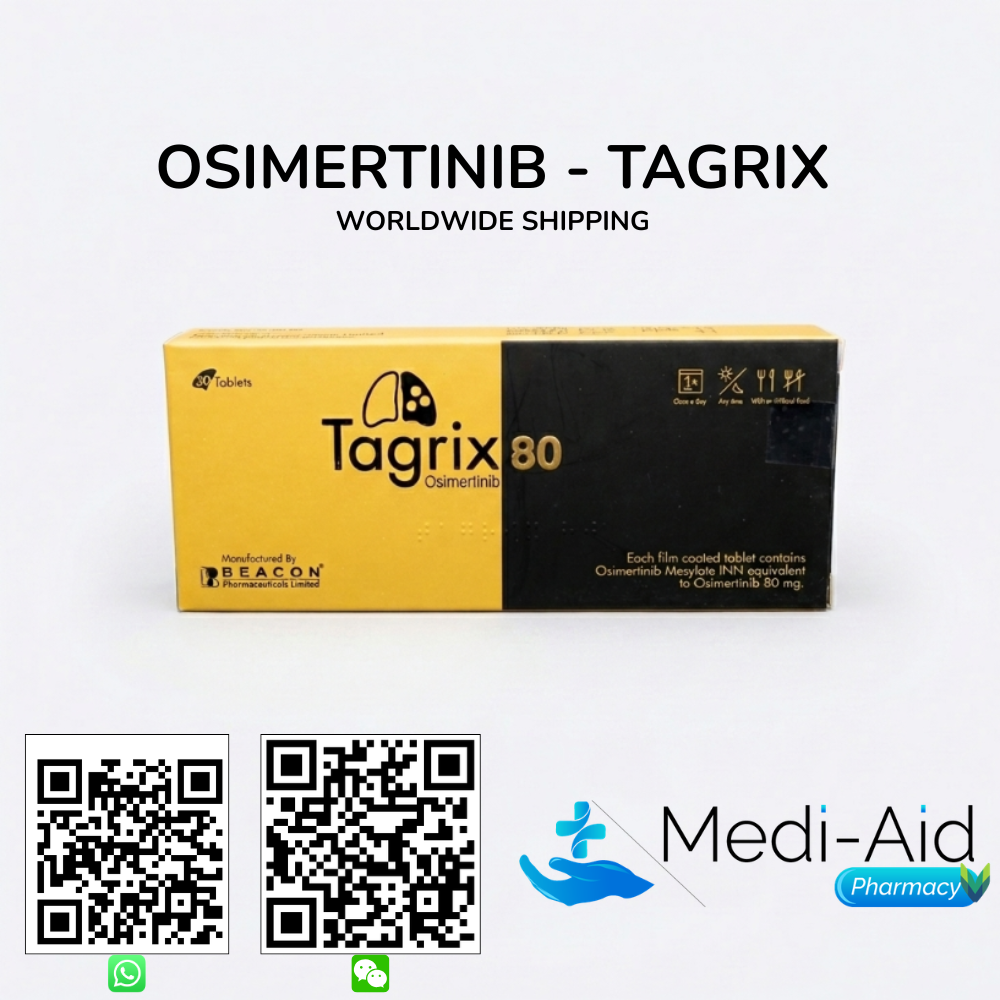
Osimertinib(Tagrix) 40MG & 80MG -(Osimertinib)
Product Name : Osimertinib(Tagrix)
Generic Name : Osimertinib
Formulation : Tablet
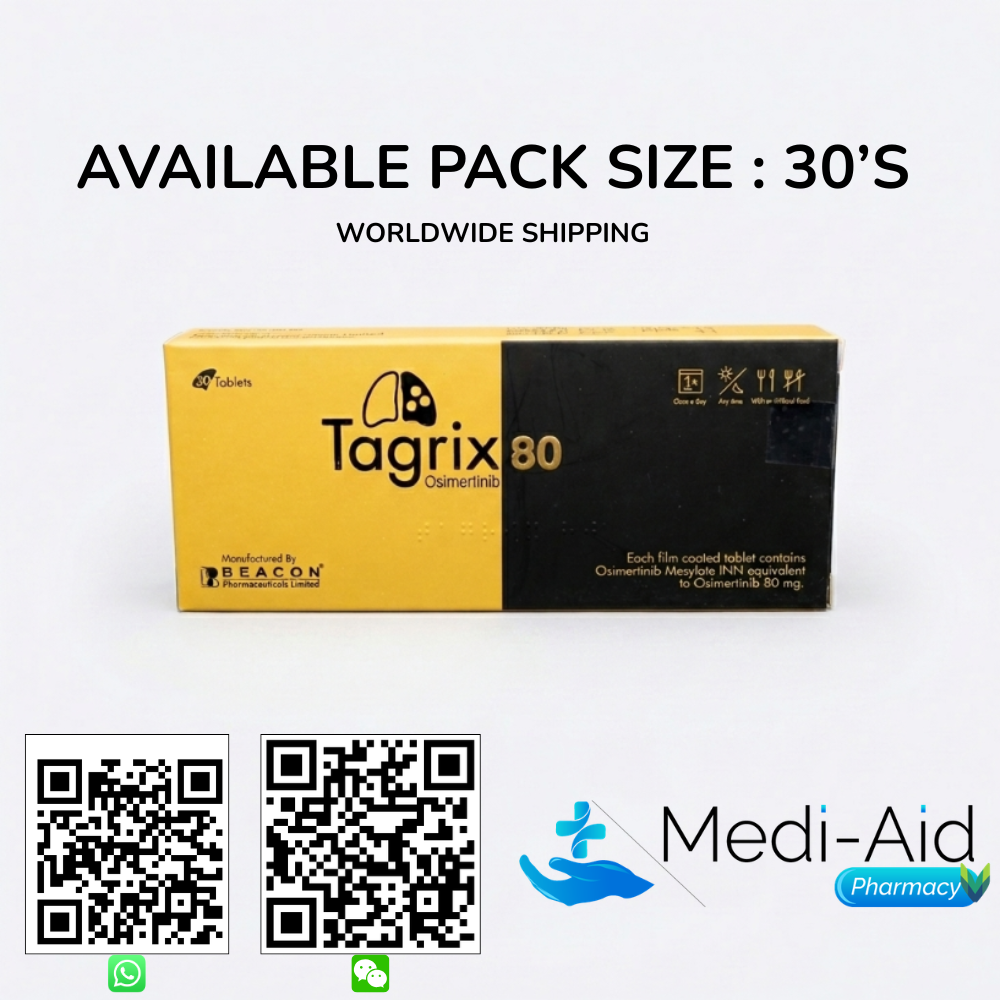
Available Pack Size : 30’s
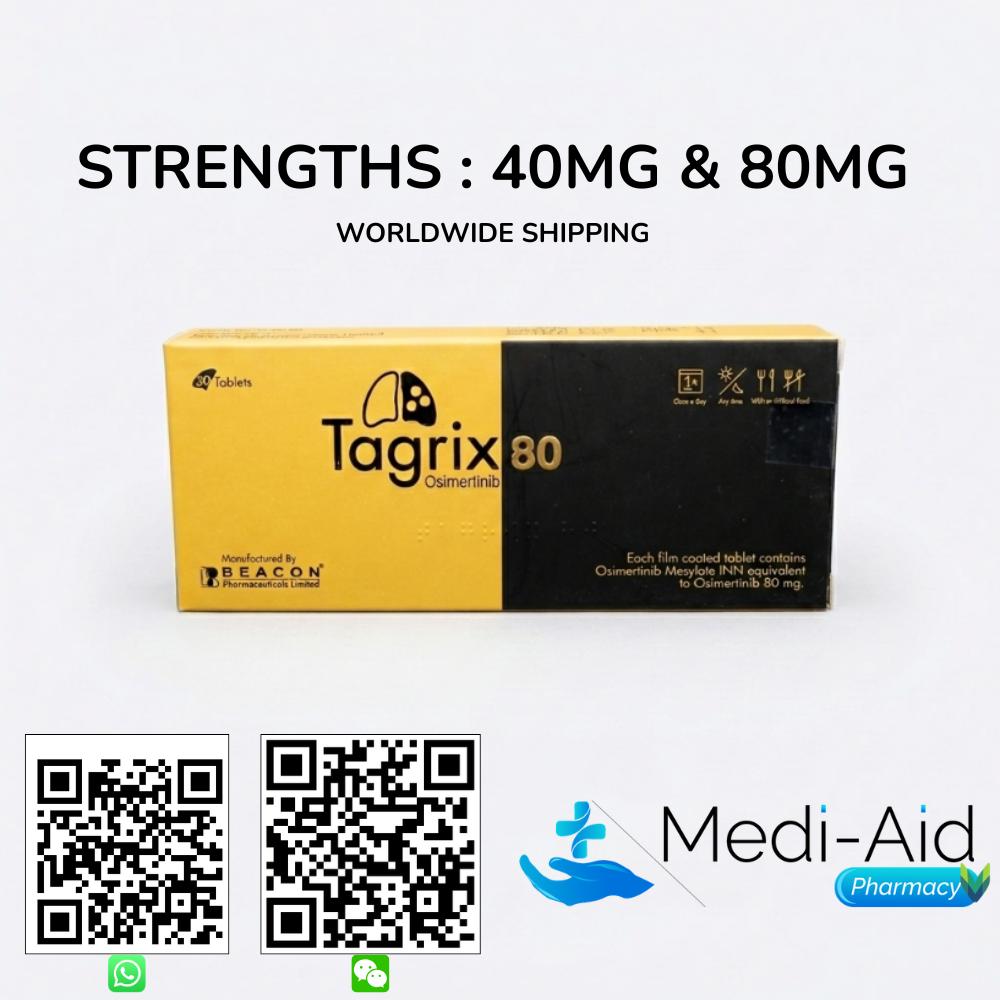
Available Strengths : 40mg & 80mg
Registrations : 01/01/2021

Product Information
Osimertinib Tagrix 40MG & 80MG (Osimertinib) is a third-generation, irreversible Epidermal Growth Factor Receptor (EGFR) tyrosine kinase inhibitor (TKI) indicated for patients with EGFR-mutated non-small cell lung cancer (NSCLC), including EGFR exon 19 deletions, exon 21 L858R substitution mutations, and the acquired T790M resistance mutation that drives failure of first- and second-generation EGFR TKI therapies. Osimertinib works by covalently and irreversibly binding to mutant EGFR kinase domains including T790M thereby blocking tumour cell proliferation, survival signalling, and metastatic progression driven by aberrant EGFR activity. As part of Mediaid Pharmacy’s comprehensive oncology and specialty medicines portfolio, Osimertinib Tagrix gives patients and oncologists access to this internationally validated precision lung cancer therapy. Tagrix 40mg and 80mg is globally supplied by Mediaid Pharmacy with worldwide shipping.
Basic Product Information of Osimertinib Tagrix 40MG & 80MG (Osimertinib)
| Brand Name | Osimertinib Tagrix 40MG & 80MG (Osimertinib) |
| Generic Name | Osimertinib |
| Drug Class | Third-Generation Irreversible EGFR Tyrosine Kinase Inhibitor (EGFR TKI) |
| Available Strengths | 40mg and 80mg |
| Formulation | Film-Coated Tablet |
| Pack Size | 30 Tablets per Pack |
| Primary Indication | EGFR-Mutated Non-Small Cell Lung Cancer (NSCLC) First-Line, T790M Second-Line, Adjuvant, and Stage III Unresectable |
| Regulatory Approvals | USFDA Approved (First-Line EGFR-Mutated NSCLC, T790M+ NSCLC, Adjuvant EGFR-Mutated NSCLC, Stage III Unresectable EGFR-Mutated NSCLC). EMA Approved. |
| Originator Brand | Tagrisso by AstraZeneca |
| Global Supplier | Mediaid Pharmacy Worldwide Shipping Available |
| Registration Date | 01/01/2021 |
| Storage Conditions | Store below 30°C in a dry place away from light and moisture. Keep out of the reach of children. |
How Osimertinib Tagrix 40MG & 80MG Works Irreversible EGFR TKI Mechanism
Osimertinib, the active ingredient in Tagrix 40MG and 80MG, is a third-generation, irreversible, mono-anilino-pyrimidine EGFR tyrosine kinase inhibitor. Epidermal Growth Factor Receptor (EGFR) is a transmembrane tyrosine kinase receptor that, when activated by activating mutations most commonly exon 19 deletions and the exon 21 L858R point mutation drives constitutive downstream signalling through the RAS/MAPK and PI3K/AKT/mTOR pathways, promoting uncontrolled tumour cell proliferation, survival, and metastasis. Approximately 10–15% of NSCLC patients in Western populations and 30–40% in East Asian populations harbour sensitising EGFR mutations, making EGFR the most clinically actionable driver mutation in lung cancer globally.
Osimertinib differs fundamentally from first-generation (erlotinib, gefitinib) and second-generation (afatinib, dacomitinib) EGFR TKIs through its ability to covalently and irreversibly bind to Cys797 in the ATP-binding cleft of the EGFR kinase domain. This irreversible binding mechanism produces sustained, near-complete blockade of mutant EGFR signalling. Critically, Osimertinib retains full inhibitory activity against the T790M gatekeeper mutation the acquired resistance mutation at exon 20 present in approximately 50–60% of patients who progress on first- or second-generation EGFR TKI therapy against which erlotinib and gefitinib have no clinically meaningful activity. Osimertinib’s selectivity for mutant EGFR over wild-type EGFR at therapeutic concentrations contributes to a more manageable tolerability profile compared to earlier-generation TKIs. Mediaid Pharmacy’s oncology medicines catalogue includes a broad range of targeted therapies that work alongside agents such as Osimertinib in comprehensive lung cancer management.
A defining pharmacological advantage of Osimertinib over its predecessors is its substantial central nervous system (CNS) penetration. Osimertinib crosses the blood-brain barrier at clinically meaningful concentrations, providing intracranial disease control in patients with brain metastases a common and prognostically significant complication in EGFR-mutated NSCLC that first-generation TKIs address inadequately. In the landmark FLAURA trial, Osimertinib demonstrated a median progression-free survival (PFS) of 18.9 months versus 10.2 months for gefitinib or erlotinib in first-line EGFR-mutated NSCLC a hazard ratio of 0.46 and a median overall survival (OS) of 38.6 months versus 31.8 months, establishing Osimertinib as the unambiguous global standard-of-care first-line EGFR TKI for NSCLC.
Approved Indications for Osimertinib Tagrix 40MG & 80MG (Osimertinib)
Osimertinib Tagrix 40mg and 80mg is approved across four distinct clinical settings in adult patients with EGFR-mutated non-small cell lung cancer:
|
First-Line EGFR-Mutated Locally Advanced or Metastatic NSCLC USFDA and EMA approved as first-line monotherapy for adult patients with locally advanced or metastatic NSCLC whose tumours harbour EGFR exon 19 deletions or exon 21 L858R substitution mutations, as detected by an approved companion diagnostic test. The FLAURA trial established Osimertinib’s superiority over first-generation EGFR TKIs with a median PFS of 18.9 months and median OS of 38.6 months the longest OS reported for any EGFR TKI in this setting. |
Second-Line T790M Mutation-Positive NSCLC USFDA and EMA approved for adult patients with locally advanced or metastatic EGFR T790M mutation-positive NSCLC who have progressed on or after EGFR TKI therapy. T790M is the most common acquired resistance mechanism to first- and second-generation EGFR TKIs, present in approximately 50–60% of progressive cases. In the AURA3 trial, Osimertinib achieved a median PFS of 10.1 months versus 4.4 months for platinum-pemetrexed chemotherapy in this population. |
|
Adjuvant Treatment of Early-Stage EGFR-Mutated NSCLC USFDA approved as adjuvant therapy for adult patients with stage IB, II, or IIIA NSCLC harbouring EGFR exon 19 deletions or exon 21 L858R mutations, following complete tumour resection with curative intent. In the ADAURA trial, Osimertinib reduced the risk of disease recurrence or death by 83% versus placebo in stage II–IIIA patients (HR 0.17), establishing it as the definitive adjuvant EGFR TKI following resection. |
Unresectable Stage III EGFR-Mutated NSCLC USFDA approved for adult patients with unresectable Stage III NSCLC harbouring EGFR exon 19 deletions or exon 21 L858R mutations whose disease has not progressed following platinum-based concurrent or sequential chemoradiation therapy. The LAURA trial demonstrated a median PFS of 39.1 months with Osimertinib versus 5.6 months on placebo (HR 0.16), a 84% reduction in disease progression risk. |
Key Clinical Benefits of Osimertinib Tagrix 40MG & 80MG (Osimertinib)
|
Superior PFS and OS Over First-Generation EGFR TKIs In the FLAURA trial, Osimertinib delivered a median PFS of 18.9 months versus 10.2 months for gefitinib or erlotinib (HR 0.46), and a median OS of 38.6 months versus 31.8 months the longest OS achieved by any EGFR TKI in first-line metastatic NSCLC. This dual PFS and OS superiority established Osimertinib as the global standard first-line EGFR TKI. |
Activity Against T790M Acquired Resistance Osimertinib is the only EGFR TKI with proven clinical activity against the T790M gatekeeper resistance mutation the most common resistance mechanism to first- and second-generation TKIs. In the AURA3 trial, Osimertinib achieved a median PFS of 10.1 months versus 4.4 months for chemotherapy in T790M-positive progressive NSCLC, rescuing patients with no other targeted options. |
Meaningful CNS Penetration and Intracranial Disease Control Osimertinib crosses the blood-brain barrier at clinically active concentrations, providing intracranial disease control in patients with brain metastases a frequent and life-limiting complication in EGFR-mutated NSCLC. In FLAURA, Osimertinib achieved a CNS progression-free survival hazard ratio of 0.48 versus gefitinib or erlotinib, nearly halving the risk of CNS progression. |
|
Landmark Adjuvant Recurrence Reduction ADAURA Trial In the ADAURA trial, adjuvant Osimertinib reduced the risk of disease recurrence or death by 83% in stage II–IIIA resected EGFR-mutated NSCLC (HR 0.17) and by 73% in the overall stage IB–IIIA population (HR 0.27). At 4 years, 90% of stage II–IIIA patients on Osimertinib were disease-free versus 48% on placebo a transformative outcome for the curative-intent resection setting. |
Once-Daily Oral Convenience Tagrix is administered orally once daily, with or without food, eliminating the need for intravenous chemotherapy or hospital infusion visits. This oral, once-daily regimen supports sustained long-term dosing across all approved settings first-line, second-line, adjuvant, and Stage III maintenance while maintaining patient quality of life and treatment adherence. |
Affordable Alternative to Tagrisso Osimertinib Tagrix 40mg and 80mg contains the same active ingredient as Tagrisso (AstraZeneca) at a substantially lower cost. Patients and healthcare systems globally gain access to the same validated irreversible EGFR TKI mechanism including T790M activity and CNS penetration without the financial burden of originator Tagrisso pricing, improving treatment access for EGFR-mutated NSCLC patients in both developed and emerging markets. |
How to Take Osimertinib Tagrix 40MG & 80MG (Osimertinib) Dosage Guidelines
Route of Administration: Oral taken by mouth once daily, with or without food, at the same time each day. If a dose is missed, it should be taken as soon as the patient remembers unless the next dose is due within 12 hours. Tagrix tablets should be swallowed whole and must not be crushed, split, or chewed. If swallowing is difficult, the tablet may be dispersed in 50mL of non-carbonated water without crushing and the dispersion swallowed immediately.
Standard Adult Dose (All Approved Indications): 80mg (one 80mg tablet) orally once daily. This dose is used for first-line locally advanced or metastatic EGFR-mutated NSCLC, T790M mutation-positive NSCLC, adjuvant post-resection treatment (for up to three years), and unresectable Stage III EGFR-mutated NSCLC following chemoradiation.
Dose Reduction to 40mg Once Daily: The Tagrix 40mg tablet is used when a dose reduction is clinically required due to adverse reactions. Dose reduction to 40mg once daily is indicated for: grade 3 or higher interstitial lung disease (ILD) or pneumonitis suspected but not confirmed (interrupt; if confirmed, permanently discontinue); QTc interval greater than 500ms on at least two separate ECGs (withhold until QTc is less than 481ms, then resume at 40mg); symptomatic congestive heart failure; or any other confirmed grade 3 or higher adverse reaction requiring dose reduction. Permanently discontinue Osimertinib if the patient cannot tolerate 40mg once daily.
Renal Impairment: No dose adjustment is required for patients with mild to moderate renal impairment (CrCl ≥30 mL/min). Caution is advised for patients with severe renal impairment (CrCl <30 mL/min), as clinical data are limited in this population.
Hepatic Impairment: No dose adjustment is required for patients with mild hepatic impairment (Child-Pugh Class A or total bilirubin 1–1.5 × ULN with any AST). No dose adjustment data are available for moderate or severe hepatic impairment; Osimertinib is not recommended in these patients.
Strong CYP3A Inducer Co-Administration: Avoid concomitant use of strong CYP3A inducers (such as rifampicin, carbamazepine, phenytoin, or St. John’s Wort) as these reduce Osimertinib plasma concentrations by approximately 78%, significantly compromising efficacy. If concurrent use is unavoidable, consider increasing the Osimertinib dose to 160mg once daily and revert to 80mg once daily 3 weeks after discontinuing the inducer.
Paediatric Use: The safety and efficacy of Osimertinib in patients under 18 years of age have not been established. Use in the paediatric population is not recommended.
Clinical Monitoring Requirements During Osimertinib Tagrix Treatment
Regular clinical monitoring is mandatory throughout Osimertinib Tagrix treatment. Oncologists must monitor for Interstitial Lung Disease (ILD) and Pneumonitis the most clinically significant pulmonary adverse reaction reported in approximately 3.9% of patients in FLAURA. Patients presenting with new or worsening respiratory symptoms (dyspnoea, cough, fever) must have Osimertinib withheld and undergo urgent chest imaging; confirmed ILD or pneumonitis requires permanent discontinuation. QTc prolongation must be monitored via serial ECG in patients with pre-existing QTc prolongation risk factors or those taking QT-prolonging co-medications; withhold Osimertinib if QTc exceeds 500ms and resume at 40mg once QTc normalises to below 481ms. Left ventricular ejection fraction (LVEF) monitoring is recommended at baseline and periodically during treatment, as Osimertinib has been associated with decreased LVEF and symptomatic heart failure in a subset of patients. Skin toxicity including rash, dry skin, and paronychia is common (reported in approximately 58% of patients in FLAURA) and should be managed proactively with topical therapies; dose reduction or interruption is rarely required for dermatological toxicity alone.
Drug Interactions and Important Safety Information for Osimertinib Tagrix
Strong CYP3A inducers including rifampicin, rifabutin, carbamazepine, phenytoin, phenobarbital, and St. John’s Wort must be avoided during Osimertinib Tagrix treatment wherever clinically possible. These agents reduce Osimertinib AUC by approximately 78%, substantially compromising therapeutic drug levels and efficacy. If a strong CYP3A inducer cannot be avoided, an Osimertinib dose increase to 160mg once daily should be considered. Strong or moderate CYP3A inhibitors (including itraconazole, ketoconazole, and clarithromycin) increase Osimertinib plasma exposure; no formal dose adjustment is mandated, but clinical vigilance for increased toxicity is warranted.
Osimertinib is an inhibitor of BCRP (Breast Cancer Resistance Protein) and P-glycoprotein (P-gp). Co-administration with substrates of BCRP (such as rosuvastatin, topotecan, irinotecan) or P-gp (such as digoxin, fexofenadine) may increase their plasma concentrations and associated toxicity risk; use the lowest effective doses of these substrates and monitor for adverse effects. Osimertinib may also prolong the QT/QTc interval; concomitant use with other QT-prolonging agents including certain antiarrhythmics (amiodarone, sotalol), antipsychotics, fluoroquinolones, and azole antifungals must be carefully evaluated and avoided where possible. Patients must inform their oncologist of all current medications before initiating Tagrix.
Side Effects and Precautions of Osimertinib Tagrix 40MG & 80MG (Osimertinib)
|
Common Side Effects Diarrhoea (reported in approximately 46% of FLAURA patients) Rash, dry skin, and dermatitis acneiform Paronychia (nail fold inflammation) Stomatitis and oral mucositis Fatigue and asthenia Nausea Decreased appetite Thrombocytopenia and leucopenia Elevated serum creatinine |
Serious Warnings and Precautions Interstitial Lung Disease (ILD) / Pneumonitis reported in approximately 3.9% of patients. Withhold immediately on suspicion; permanently discontinue if ILD or pneumonitis is confirmed. QTc Prolongation withhold if QTc exceeds 500ms on two consecutive ECGs; permanently discontinue if QTc prolongation occurs with signs or symptoms of life-threatening arrhythmia. Cardiomyopathy and Decreased LVEF monitor cardiac function at baseline and periodically. Withhold for symptomatic congestive heart failure; reduce dose to 40mg or discontinue based on severity. Keratitis rare but reported. Patients presenting with eye pain, photophobia, lacrimation, or blurred vision must be evaluated urgently by an ophthalmologist. Not recommended during pregnancy or breastfeeding. Effective contraception required during treatment and for six weeks (female patients) or four months (male patients) after the final dose. |
Who Should Use Osimertinib Tagrix 40MG & 80MG (Osimertinib)?
Osimertinib Tagrix is indicated for adult patients diagnosed with EGFR-mutated non-small cell lung cancer across four clinical settings: locally advanced or metastatic NSCLC with EGFR exon 19 deletions or exon 21 L858R mutations (first-line); T790M mutation-positive NSCLC following progression on prior EGFR TKI therapy (second-line); resected stage IB–IIIA EGFR-mutated NSCLC following complete tumour resection (adjuvant); and unresectable Stage III EGFR-mutated NSCLC following platinum-based chemoradiation. All patients must have EGFR mutation status confirmed by a validated companion diagnostic test either from tumour tissue biopsy or circulating tumour DNA (ctDNA) from a plasma sample before initiating treatment. The 40mg strength is reserved for patients requiring a clinician-directed dose reduction due to adverse reactions; oncologists should not initiate therapy at 40mg without clinical indication. Tagrix is prescribed exclusively by oncologists and thoracic medicine specialists with expertise in biomarker-driven lung cancer therapy. A baseline assessment including EGFR mutation testing, ECG, cardiac function evaluation, and pulmonary function review is mandatory before starting treatment. For patients requiring comprehensive oncology support across multiple cancer types and treatment modalities, Mediaid Pharmacy’s oncology specialty medicines portfolio provides a full range of targeted cancer therapies to support multidisciplinary lung cancer and oncology management.
Global Supplier: Mediaid Pharmacy Worldwide Shipping for Osimertinib Tagrix (Osimertinib)
Mediaid Pharmacy is a trusted global supplier of specialty oncology and targeted therapy medications. Osimertinib Tagrix 40mg and 80mg is available through Mediaid Pharmacy with reliable worldwide shipping to South Asia, the Middle East, Africa, Southeast Asia, Europe, and beyond. Our specialist team provides full order support including pricing quotations, stock availability confirmation, regulatory documentation, and end-to-end delivery tracking. Contact Mediaid Pharmacy directly via WhatsApp, phone, or WeChat for all enquiries regarding Tagrix availability, pricing, and international delivery.
Why Choose Osimertinib Tagrix (Osimertinib) from Mediaid Pharmacy?
Osimertinib Tagrix represents a clinically proven and globally accessible formulation of the world’s leading EGFR tyrosine kinase inhibitor for NSCLC. As an affordable generic equivalent of Tagrisso by AstraZeneca, Tagrix delivers the same active ingredient Osimertinib with the same validated third-generation EGFR inhibition mechanism, T790M activity, and CNS penetration that established Tagrisso as the international standard of care in EGFR-mutated NSCLC, at a dramatically more affordable price. The availability of both the 40mg and 80mg tablet strengths ensures oncologists have the dose flexibility required to initiate therapy at 80mg and manage any toxicity-driven dose reductions to 40mg precisely and without tablet manipulation. Distributed globally by Mediaid Pharmacy with worldwide shipping, Tagrix gives patients and oncology teams in both developed and emerging markets access to the full clinical benefit of Osimertinib without the financial barrier of originator Tagrisso pricing. For patients and oncologists requiring a comprehensive range of targeted lung cancer and oncology medicines, Mediaid Pharmacy’s oncology medicines section provides a complete portfolio of specialty cancer treatments sourced from verified manufacturers. For any patient or oncologist seeking a proven, affordable, and globally accessible Osimertinib treatment option, Osimertinib Tagrix from Mediaid Pharmacy is the trusted choice.
Frequently Asked Questions About Osimertinib Tagrix 40MG & 80MG (Osimertinib)
What is Osimertinib Tagrix 40MG & 80MG (Osimertinib) used for?
Osimertinib Tagrix 40mg and 80mg is a third-generation irreversible EGFR tyrosine kinase inhibitor used to treat EGFR-mutated non-small cell lung cancer (NSCLC) across four settings: first-line treatment of locally advanced or metastatic NSCLC with EGFR exon 19 deletions or exon 21 L858R mutations; second-line treatment of T790M mutation-positive NSCLC following prior EGFR TKI progression; adjuvant treatment of resected stage IB–IIIA EGFR-mutated NSCLC; and unresectable Stage III EGFR-mutated NSCLC following chemoradiation. Osimertinib works by covalently binding to mutant EGFR kinase domains including T790M blocking downstream tumour proliferation and survival signalling.
What is the correct dose of Osimertinib Tagrix (Osimertinib)?
The standard dose of Osimertinib Tagrix is 80mg (one 80mg tablet) orally once daily, applicable across all approved indications first-line metastatic NSCLC, T790M-positive second-line NSCLC, adjuvant post-resection (up to three years), and unresectable Stage III NSCLC following chemoradiation. If a dose reduction is required due to adverse reactions such as ILD, QTc prolongation, or grade 3 toxicity, the dose is reduced to 40mg once daily using the Tagrix 40mg tablet. Permanently discontinue if the patient cannot tolerate 40mg once daily. Always follow your prescribing oncologist’s exact dosing instructions.
What strengths and pack sizes is Osimertinib Tagrix available in?
Osimertinib Tagrix is available as 40mg and 80mg film-coated tablets, each supplied in a pack of 30 tablets a 30-day supply at the standard once-daily dosing schedule. The 80mg tablet is used for standard dosing across all approved indications. The 40mg tablet is used exclusively when a clinician-directed dose reduction is required due to treatment-related adverse reactions.
Is Osimertinib Tagrix the same as Tagrisso (Osimertinib by AstraZeneca)?
Yes. Osimertinib Tagrix contains the same active ingredient as Tagrisso Osimertinib in the same 40mg and 80mg film-coated tablet dosage form. Tagrix delivers the same third-generation irreversible EGFR TKI mechanism, including full activity against the T790M resistance mutation and clinically meaningful CNS penetration, as Tagrisso by AstraZeneca at a significantly more affordable price point for patients and healthcare systems worldwide.
What are the side effects of Osimertinib Tagrix (Osimertinib)?
Common side effects of Osimertinib Tagrix include diarrhoea, rash, dry skin, paronychia, stomatitis, fatigue, nausea, decreased appetite, and thrombocytopenia. Serious but less common adverse events include interstitial lung disease (ILD) or pneumonitis (approximately 3.9% of patients), QTc interval prolongation, decreased left ventricular ejection fraction (LVEF), symptomatic congestive heart failure, and keratitis. Regular monitoring with serial ECGs, cardiac imaging, and clinical review of respiratory symptoms is mandatory throughout treatment. Consult your oncologist for a full individual risk-benefit assessment before and during therapy.
Does Osimertinib Tagrix require EGFR mutation testing before treatment?
Yes. All patients must have their EGFR mutation status confirmed by a validated companion diagnostic before initiating Osimertinib Tagrix therapy. For first-line use, EGFR exon 19 deletion or exon 21 L858R substitution must be confirmed from tumour tissue or plasma ctDNA. For second-line T790M use, the T790M mutation must be confirmed from tumour biopsy or plasma ctDNA. Your oncologist will arrange the appropriate molecular diagnostic test before prescribing Tagrix.
Is Osimertinib Tagrix safe during pregnancy or while breastfeeding?
No. Osimertinib Tagrix is not recommended during pregnancy or breastfeeding. Based on its mechanism of action and preclinical data, Osimertinib may cause foetal harm when administered to pregnant women. Female patients of childbearing potential must use highly effective contraception during treatment and for six weeks after the final dose. Male patients with female partners of childbearing potential must use effective contraception during treatment and for four months after the final dose. Consult your oncologist before starting treatment if you are pregnant, planning to become pregnant, or currently breastfeeding.
Can I order Osimertinib Tagrix 40MG & 80MG (Osimertinib) online with worldwide shipping?
Yes. Mediaid Pharmacy supplies Osimertinib Tagrix 40mg and 80mg to patients and healthcare providers globally with worldwide shipping. Contact Mediaid Pharmacy via WhatsApp, phone, or WeChat at +8801773428128, or send an email enquiry to info@mediaidpharmacy.com for pricing, stock availability, and delivery details for your country.
Order Osimertinib Tagrix 40MG & 80MG (Osimertinib) with Worldwide Shipping
Phone / WhatsApp / WeChat: +8801773428128 | Email: info@mediaidpharmacy.com
Related products
-
Crizotinib 250MG (Crizonix)
-
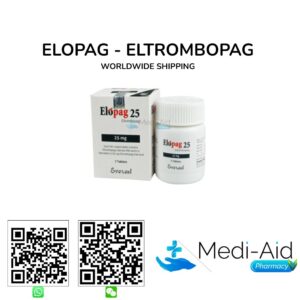
Elopag 50MG (Eltrombopag)
-
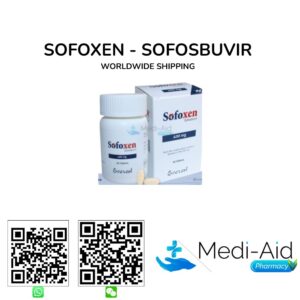
Sofoxen 400 MG (Sofosbuvir)
-
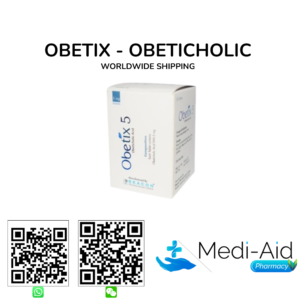
Obetix 5 MG (Obeticholic Acid)
-
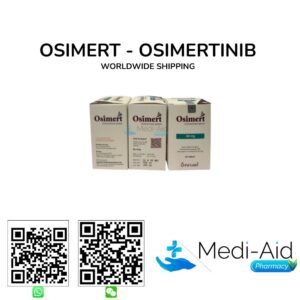
Osimert 80 MG (Osimertinib)
-
Ponaxen 15MG & 45MG (Ponatinib)
-
Afanix 40 MG (Afatinib)
-
Mavixen 100 MG / 40 MG (Glecaprevir / Pibrentasvir )
-
Ibrutix 140 MG (Ibrutinib)
-
Caboxen 20 MG And 80 MG (Cabozantinib)