
Description
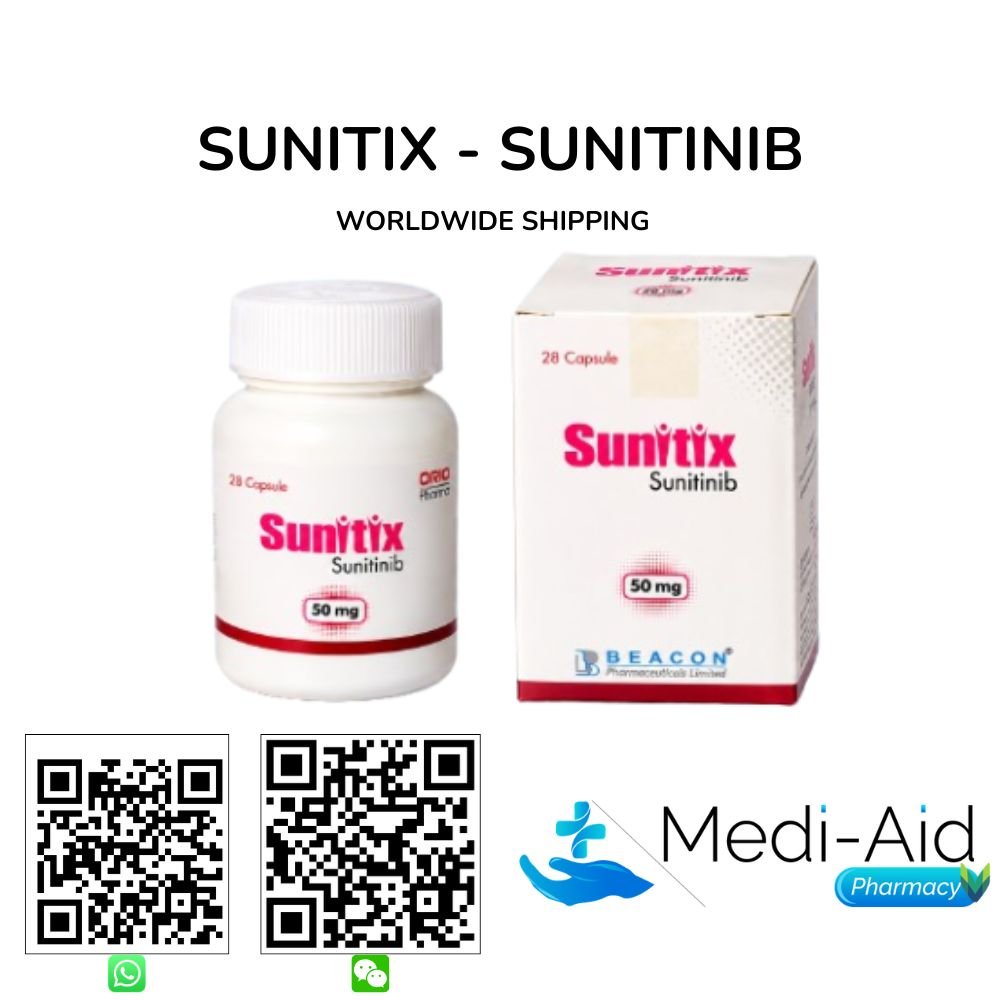
Sunitix 50 MG (Sunitinib) is an oral multi-targeted receptor tyrosine kinase inhibitor (TKI) a small-molecule kinase inhibitor that simultaneously targets multiple receptor tyrosine kinases (RTKs) involved in tumor-driven angiogenesis, tumor cell proliferation, and tumor cell survival, including vascular endothelial growth factor receptors (VEGFR1, VEGFR2, VEGFR3), platelet-derived growth factor receptors (PDGFR-α and PDGFR-β), KIT (CD117), FMS-like tyrosine kinase 3 (FLT3), colony-stimulating factor-1 receptor (CSF-1R), and the RET proto-oncogene indicated for the treatment of adults with unresectable and/or metastatic malignant gastrointestinal stromal tumor (GIST) after failure of imatinib treatment due to resistance or intolerance, advanced/metastatic renal cell carcinoma (mRCC), and unresectable or metastatic, well-differentiated pancreatic neuroendocrine tumors (pNET) with disease progression supplied as hard capsules in 50 mg strength in a 28-capsule pot and manufactured by Beacon Pharmaceuticals PLC in Bangladesh.
Its active ingredient, sunitinib INN, delivers simultaneous anti-angiogenic and direct antitumor activity by inhibiting the RTK signaling cascades that tumors exploit to stimulate their own blood vessel formation, sustain proliferative growth signals, and evade apoptotic cell death the fundamental oncogenic mechanisms that drive GIST, RCC, and pNET progression and metastasis. Sunitinib was the first cancer drug simultaneously approved by the FDA for two distinct oncological indications on January 26, 2006, and remains a guideline-recommended standard of care in GIST, RCC, and pNET treatment programmes worldwide. Searching for Sunitix 50 MG Sunitinib? Mediaid Pharmacy lists this product across its kidney cancer medicines and Beacon Pharmaceuticals portfolios and ships it worldwide.
Basic Product Information of Sunitix 50 MG (Sunitinib)
| Brand Name | Sunitix 50 MG (Sunitinib) |
| Product Name | Sunitix |
| Generic Name | Sunitinib INN |
| Drug Class | Oral Multi-Targeted Receptor Tyrosine Kinase Inhibitor (TKI); Anti-Angiogenic Agent; VEGFR Inhibitor; PDGFR Inhibitor; KIT Inhibitor; Anti-GIST Agent; Renal Cell Carcinoma Agent; Pancreatic Neuroendocrine Tumor (pNET) Agent; Oncology Medicine; Targeted Cancer Therapy |
| Formulation | Hard Capsule |
| Available Strengths | 50 mg per hard capsule |
| Available Pack Size | 28 Capsules per Pot |
| Dosing and Dose Modification | GIST and mRCC (Schedule 4/2): The recommended dose of sunitinib for GIST and metastatic renal cell carcinoma is 50 mg taken orally once daily for 4 consecutive weeks, followed by a 2-week rest period (the 4/2 schedule), constituting a complete 6-week treatment cycle. pNET: The recommended dose for pancreatic neuroendocrine tumors is 37.5 mg taken orally once daily without a scheduled rest period (continuous dosing). Dose modification: Dose modifications in 12.5 mg incremental steps are applied based on individual safety and tolerability; the daily dose for GIST and mRCC should not exceed 75 mg nor be reduced below 37.5 mg, and for pNET the minimum dose is 25 mg daily. CYP3A4 interactions: Co-administration with potent CYP3A4 inhibitors (ketoconazole, itraconazole, ritonavir, clarithromycin) increases sunitinib plasma concentrations and may necessitate dose reduction to a minimum of 37.5 mg daily for GIST and mRCC; co-administration with potent CYP3A4 inducers (rifampicin, carbamazepine, phenytoin, St. John’s Wort) may require dose increase to a maximum of 87.5 mg daily for GIST and mRCC. Always consult the treating oncologist before initiating Sunitix in any patient with cancer. |
| Primary Indications | Treatment of adults with: (1) unresectable and/or metastatic malignant gastrointestinal stromal tumor (GIST) after failure of imatinib treatment due to resistance or intolerance; (2) advanced/metastatic renal cell carcinoma (mRCC); and (3) unresectable or metastatic, well-differentiated pancreatic neuroendocrine tumors (pNET) with disease progression. Sunitix (Sunitinib) is administered as an oral hard capsule taken with or without food. Each treatment decision must account for prior therapy history, organ function, concomitant medications (particularly CYP3A4 modulators), cardiovascular risk, and thyroid function status. Always consult the full prescribing information and the treating oncologist. |
| Manufacturer | Beacon Pharmaceuticals PLC, Bangladesh |
| Country of Origin | Bangladesh |
| Originator Reference Brand | Sutent® (sunitinib malate capsules, by Pfizer Inc. FDA-approved January 26, 2006, as the first cancer drug simultaneously approved for two distinct indications: GIST after imatinib failure and advanced RCC; subsequently approved for pNET). Sutent® contains sunitinib malate as the active pharmaceutical ingredient in the same oral multi-targeted receptor tyrosine kinase inhibitor (TKI) drug class. Sunitix is manufactured by Beacon Pharmaceuticals PLC in Bangladesh and is supplied through Mediaid Pharmacy for international procurement. |
| Global Supplier | Mediaid Pharmacy, Worldwide Shipping Available |
| Storage Conditions | Store at room temperature (15°C to 30°C). Keep in the original packaging and protect from moisture and light. Keep out of the reach of children. |
How Sunitix (Sunitinib) Works: Oral Multi-Targeted Receptor Tyrosine Kinase Inhibition in GIST, RCC, and pNET
Sunitinib INN is an oral, small-molecule, multi-targeted receptor tyrosine kinase inhibitor (TKI) that simultaneously inhibits multiple receptor tyrosine kinases (RTKs) responsible for tumor-driven angiogenesis, tumor cell proliferation, and tumor cell survival. Sunitinib’s broad kinase inhibition profile encompasses vascular endothelial growth factor receptors 1, 2, and 3 (VEGFR1, VEGFR2, VEGFR3), platelet-derived growth factor receptors alpha and beta (PDGFR-α and PDGFR-β), stem cell factor receptor (KIT, also designated CD117), FMS-like tyrosine kinase 3 (FLT3), colony-stimulating factor-1 receptor (CSF-1R), and the rearranged during transfection (RET) proto-oncogene a pharmacological breadth that enables sunitinib to simultaneously suppress tumor vascularization and directly inhibit multiple oncogenic driver kinases active across gastrointestinal stromal tumor (GIST), metastatic renal cell carcinoma (mRCC), and pancreatic neuroendocrine tumor (pNET) biology. Sunitinib was the first cancer drug simultaneously approved by the FDA for two indications on January 26, 2006, establishing a new paradigm for multi-indication targeted oncology therapy.
Sunitinib’s dual anti-angiogenic and direct antitumor mechanism operates through two coordinated pharmacodynamic programs that collectively address the primary drivers of tumor growth in GIST, RCC, and pNET.
First, anti-angiogenic activity: sunitinib’s inhibition of VEGFR1, VEGFR2, VEGFR3, PDGFR-α, and PDGFR-β disrupts the vascular endothelial growth factor (VEGF) and platelet-derived growth factor (PDGF) signaling cascades that tumors use to stimulate new blood vessel formation (angiogenesis) and stabilize the tumor vasculature via pericyte recruitment starving the tumor of oxygen and nutrient supply and limiting metastatic spread through the vasculature. VEGFR2 is the primary transducer of VEGF-driven endothelial cell proliferation and survival; VEGFR1 and VEGFR3 regulate vascular and lymphangiogenic network formation; PDGFR-α and PDGFR-β regulate pericyte recruitment to stabilize newly formed tumor vessels. By simultaneously targeting all five receptors, sunitinib achieves broader and more durable anti-angiogenic suppression than single-VEGFR agents.
Second, direct antitumor activity: sunitinib’s inhibition of KIT (CD117) is mechanistically critical in GIST biology, where activating mutations in KIT exon 9, 11, 13, or 17 (or in PDGFRA exons 12 and 18 in KIT wild-type GIST) drive constitutive oncogenic RTK signaling that sustains GIST cell proliferation, survival, and resistance to apoptosis; sunitinib’s KIT and PDGFR-β inhibition overcomes the secondary imatinib resistance mutations (most commonly in KIT exon 13 or 14 the ATP-binding pocket, and exon 17 or 18 the activation loop) that cause GIST progression after imatinib therapy. For the complete range of GIST medicines at Mediaid Pharmacy, browse the full oncology portfolio for worldwide shipping options.
The clinical evidence for sunitinib’s mechanism of action across its three approved oncological indications is established by pivotal Phase 3 trials. In metastatic renal cell carcinoma, the pivotal Phase 3 trial (Study A6181034; N=750 treatment-naïve mRCC patients) comparing sunitinib versus interferon-alfa (IFN-α) demonstrated a statistically significant progression-free survival (PFS) advantage for sunitinib: median PFS 11 months with sunitinib versus 5 months with IFN-α (HR 0.42, p<0.001), with an objective response rate (ORR) of 27.5% for sunitinib versus 5.3% for IFN-α (p<0.001), establishing sunitinib as first-line standard of care in mRCC. In imatinib-resistant/intolerant GIST, the pivotal Phase 3 trial (N=312 imatinib-resistant or intolerant GIST patients) demonstrated a statistically significant time-to-tumor-progression (TTP) advantage for sunitinib over placebo: median TTP 27.3 weeks with sunitinib versus 6.4 weeks with placebo (HR 0.33, p<0.0001), and a clinically meaningful overall survival benefit confirmed by cross-over-adjusted analysis. In pancreatic neuroendocrine tumors, the pivotal Phase 3 trial demonstrated sunitinib more than doubled progression-free survival: median PFS 11.4 months with sunitinib versus 5.5 months with placebo (HR 0.418, p<0.001), leading the independent Data Monitoring Committee to recommend early trial termination for overwhelming efficacy.
Pharmacokinetically, sunitinib is rapidly absorbed after oral administration with or without food (Tmax approximately 6 to 12 hours), undergoes hepatic metabolism primarily by CYP3A4 to its principal active metabolite (SU12662, which has equipotent pharmacological activity to sunitinib), and has a combined terminal half-life of 40 to 60 hours for sunitinib and its active metabolite supporting the clinical rationale for the once-daily dosing schedule. For sunitinib hard capsules by Beacon Pharmaceuticals and international shipping options, contact Mediaid Pharmacy directly.
Sunitix 50 MG (Sunitinib): Indications, Dosing, and Key Safety Information
| Approved Indications | 1. Gastrointestinal Stromal Tumor (GIST): Treatment of adults with unresectable and/or metastatic malignant gastrointestinal stromal tumor (GIST) after failure of imatinib treatment due to resistance or intolerance. 2. Metastatic Renal Cell Carcinoma (mRCC): Treatment of adults with advanced/metastatic renal cell carcinoma (mRCC). 3. Pancreatic Neuroendocrine Tumors (pNET): Treatment of adults with unresectable or metastatic, well-differentiated pancreatic neuroendocrine tumors (pNET) with disease progression. Sunitix (Sunitinib) is administered orally with or without food. Treatment should be initiated by a physician experienced in the administration of anticancer agents. All treatment decisions must be individualized by the treating oncologist based on disease indication, prior therapy, organ function, and concomitant medications. |
| Recommended Dose | GIST and mRCC (Schedule 4/2): Sunitinib 50 mg taken orally once daily for 4 consecutive weeks, followed by a 2-week rest period, constituting one complete 6-week treatment cycle. pNET (Continuous Dosing): Sunitinib 37.5 mg taken orally once daily without a scheduled rest period. Sunitix hard capsules may be taken with or without food. Capsules should be swallowed whole and not crushed, chewed, or opened. If a dose is missed, the patient should not take an additional dose on that day; take the usual prescribed dose on the following day. Administer at approximately the same time each day for consistency. |
| Dose Modification | Tolerability-based adjustments: Dose modifications are applied in increments of 12.5 mg based on individual safety and tolerability. For GIST and mRCC, the daily dose should not exceed 75 mg nor be reduced below 37.5 mg. For pNET, the maximum dose administered in the Phase 3 pNET study was 50 mg daily and the minimum dose is 25 mg daily. CYP3A4 Inhibitors: Avoid co-administration with potent CYP3A4 inhibitors (ketoconazole, itraconazole, ritonavir, clarithromycin); if unavoidable, reduce sunitinib dose to 37.5 mg daily for GIST and mRCC (or 25 mg for pNET). CYP3A4 Inducers: Avoid co-administration with potent CYP3A4 inducers (rifampicin, carbamazepine, phenytoin, St. John’s Wort); if unavoidable, consider increasing sunitinib dose to 87.5 mg daily for GIST and mRCC (or 62.5 mg for pNET) with careful tolerability monitoring. Hepatic impairment: No starting dose adjustment is required for mild or moderate hepatic impairment (Child-Pugh A or B); sunitinib has not been studied in severe (Child-Pugh C) hepatic impairment and use is not recommended. Renal impairment: No starting dose adjustment is required for mild, moderate, or severe renal impairment or end-stage renal disease on haemodialysis. Always consult the treating oncologist before any dose modification. |
| Key Safety Warnings | Cardiovascular Events: Sunitinib has been associated with decreased left ventricular ejection fraction (LVEF), heart failure, cardiomyopathy, and myocarditis. Assess cardiac function at baseline and monitor patients during treatment for signs and symptoms of congestive heart failure. Interrupt or discontinue Sunitix in patients with clinical manifestations of cardiac failure.
Hypertension: Hypertension, including severe hypertension (systolic >200 mmHg or diastolic >110 mmHg), has been reported with sunitinib. Screen for hypertension before initiating therapy and monitor blood pressure regularly during treatment. If hypertension is not controlled with standard antihypertensive therapy, temporarily suspend Sunitix until blood pressure is adequately controlled. Hepatotoxicity: Sunitinib may cause liver enzyme elevations and, rarely, serious hepatic events including hepatic failure. Monitor liver function tests (ALT, AST, total bilirubin) at baseline, during each treatment cycle, and as clinically indicated. Interrupt or discontinue Sunitix for Grade 3 hepatotoxicity until resolution, then resume at a reduced dose. Haemorrhage: Haemorrhagic events, including serious and sometimes fatal cases of gastrointestinal, respiratory, urinary tract, and brain haemorrhage, have been reported. Epistaxis is the most commonly reported haemorrhagic adverse reaction. Tumour haemorrhage, sometimes associated with tumour necrosis, has been observed. Conduct routine assessment with complete blood counts and physical examination. QT Prolongation: Sunitinib has been shown to prolong the QTc interval in a concentration-dependent manner. Use with caution in patients with a history of QT prolongation, in patients taking antiarrhythmics, and in patients with pre-existing cardiac disease, bradycardia, or electrolyte disturbances. Monitor ECG and electrolytes in at-risk patients. Hypothyroidism: Hypothyroidism has been reported in sunitinib-treated patients. Monitor thyroid function (TSH) at baseline and periodically during treatment; initiate thyroid hormone replacement therapy as clinically indicated. Wound Healing Impairment: Sunitinib may impair wound healing. Withhold Sunitix for at least 3 to 4 weeks before elective surgery and do not restart until adequate wound healing is confirmed. Consult the treating oncologist for guidance on perioperative management. Severe Cutaneous Reactions: Cases of erythema multiforme (EM), Stevens-Johnson syndrome (SJS), and toxic epidermal necrolysis (TEN), some fatal, have been reported. Discontinue Sunitix if SJS or TEN is confirmed and do not restart. Always consult the current full prescribing information for the complete and most up-to-date safety profile. |
| Common Adverse Reactions | The most commonly reported adverse reactions with sunitinib in GIST and RCC clinical trials include fatigue, diarrhoea, nausea, vomiting, stomatitis/oral pain, and hand-foot skin reaction (palmar-plantar erythrodysesthesia syndrome, PPES). Skin discolouration (yellow skin), hair depigmentation, and altered taste are also frequently observed. Hypertension, decreased appetite (anorexia), dyspepsia, and abdominal pain are reported at meaningful frequencies. Haematological adverse reactions include decreased neutrophil counts, decreased platelet counts (thrombocytopenia), and anaemia complete blood counts should be performed at the beginning of each treatment cycle. Hypothyroidism requiring thyroid hormone replacement has been reported during sunitinib treatment. Most adverse reactions are not cumulative, are typically reversible, and generally do not result in treatment discontinuation. Always discuss the complete adverse reaction profile, monitoring schedule, contraindications, and drug interaction potential with the treating oncologist before and throughout Sunitix treatment. |
| Drug Interactions | Sunitinib is metabolized primarily by CYP3A4 to its active metabolite (SU12662). Potent CYP3A4 inhibitors (ketoconazole, itraconazole, ritonavir, clarithromycin, grapefruit juice): significantly increase sunitinib plasma concentrations; avoid co-administration or reduce Sunitix dose to 37.5 mg daily for GIST and mRCC (25 mg for pNET) if co-administration cannot be avoided. Potent CYP3A4 inducers (rifampicin, carbamazepine, phenytoin, St. John’s Wort): significantly decrease sunitinib plasma concentrations and may reduce therapeutic efficacy; avoid co-administration or consider increasing Sunitix dose to 87.5 mg daily for GIST and mRCC (62.5 mg for pNET) with careful monitoring. Anticoagulants: Patients receiving concomitant warfarin or acenocoumarol should be monitored periodically with complete blood counts, coagulation factors (PT/INR), and physical examination; consider substituting low-molecular-weight heparin (LMWH) in patients requiring anticoagulation during sunitinib therapy to avoid frequent INR monitoring. QT-prolonging agents: Use with caution when co-administering sunitinib with antiarrhythmic drugs or other medicinal products known to prolong the QTc interval. Disclose all concomitant medications, nutritional supplements, and herbal products to the treating oncologist before initiating Sunitix (Sunitinib). |
| Hepatic and Renal Impairment | No starting dose adjustment of Sunitix is required for patients with mild (Child-Pugh A) or moderate (Child-Pugh B) hepatic impairment. Sunitinib has not been formally studied in patients with severe hepatic impairment (Child-Pugh C) and its use in these patients is not recommended. Regular monitoring of liver function tests (ALT, AST, total bilirubin) is required throughout Sunitix treatment monitor at baseline, at the beginning of each treatment cycle, and as clinically indicated. No starting dose adjustment is required for patients with any degree of renal impairment (mild, moderate, or severe) or for patients with end-stage renal disease (ESRD) on haemodialysis, based on pharmacokinetic data; subsequent dose adjustments should be guided by individual safety and tolerability. Consult the treating oncologist for individualized guidance in patients with significant organ impairment or complex polypharmacy before initiating and during ongoing Sunitix therapy. |
| Pregnancy and Lactation | The safety of sunitinib in human pregnancy has not been established; animal reproductive toxicity studies have demonstrated adverse effects on embryo-fetal development including teratogenicity and fetotoxicity. Sunitix is not recommended during pregnancy and is contraindicated in women who are pregnant. Women of childbearing potential must use effective contraception during Sunitix treatment. Men being treated with sunitinib should also be advised to use effective contraception during treatment given the potential for adverse effects on male fertility and embryo development. It is not known whether sunitinib or its active metabolite (SU12662) are excreted in human breast milk; the potential for adverse effects on breastfed infants cannot be excluded. Breastfeeding should be discontinued during Sunitix treatment. Notify the treating oncologist immediately if pregnancy is confirmed during sunitinib treatment and discontinue Sunitix promptly pending specialist review and risk-benefit reassessment. |
Who Should Use Sunitix 50 MG (Sunitinib)?
Sunitix 50 MG (Sunitinib) is indicated for adults with imatinib-resistant or imatinib-intolerant unresectable/metastatic GIST, adults with advanced/metastatic renal cell carcinoma (mRCC), and adults with progressive unresectable or metastatic well-differentiated pancreatic neuroendocrine tumors (pNET) three distinct oncological indications where sunitinib’s oral multi-targeted receptor tyrosine kinase inhibition provides statistically significant and clinically meaningful survival benefits demonstrated in pivotal Phase 3 randomized controlled trials.
First, adult patients with unresectable and/or metastatic malignant gastrointestinal stromal tumor (GIST) who have experienced disease progression during prior imatinib mesylate treatment or who cannot tolerate imatinib due to adverse reactions represent the foundational GIST indication for Sunitix. GIST is driven in approximately 85% of cases by activating mutations in the KIT proto-oncogene (most commonly exon 11, followed by exon 9) or, in KIT wild-type tumors, by PDGFRA mutations kinase driver events that make GIST exquisitely sensitive to KIT/PDGFRA-targeted TKI therapy. Imatinib resistance in GIST arises through secondary KIT mutations in the ATP-binding pocket (exon 13 or 14) or the activation loop (exon 17 or 18) that prevent imatinib binding while leaving the tumor dependent on KIT signaling; sunitinib’s distinct binding mode and broader kinase inhibitory spectrum overcome the most common imatinib resistance mutations, providing clinically validated second-line activity. In the pivotal Phase 3 GIST trial (N=312, imatinib-resistant or intolerant patients), sunitinib achieved a statistically significant time-to-tumor-progression (TTP) of 27.3 weeks versus 6.4 weeks with placebo (HR 0.33, p<0.0001), establishing Sunitix as the standard second-line targeted therapy in imatinib-resistant or imatinib-intolerant GIST.
Second, adult patients with advanced/metastatic renal cell carcinoma (mRCC) where clear cell histology accounts for approximately 75% to 80% of cases and is characterized by frequent loss of the von Hippel-Lindau (VHL) tumor suppressor gene, leading to constitutive overexpression of hypoxia-inducible factor (HIF) target genes including VEGF and PDGF in whom anti-angiogenic VEGFR-targeted therapy is the cornerstone of systemic treatment. In the pivotal Phase 3 mRCC trial (N=750 treatment-naïve patients; Study A6181034), sunitinib achieved a median PFS of 11 months versus 5 months with interferon-alfa (HR 0.42, p<0.001) and an ORR of 27.5% versus 5.3% (p<0.001), establishing sunitinib as a first-line standard of care in mRCC for over a decade and the benchmark agent against which subsequent VEGFR TKIs and immune checkpoint inhibitor combination regimens have been evaluated. Oncology specialists, nephrological oncology units, urology departments managing advanced kidney cancer, and hospital pharmacy departments sourcing targeted kidney cancer medicines can browse the Mediaid Pharmacy kidney cancer portfolio for the full selection available for international delivery.
Third, adult patients with progressive, unresectable or metastatic, well-differentiated pancreatic neuroendocrine tumors (pNET) a relatively rare tumor type with an estimated incidence of 1 to 2 per 100,000 per year globally in whom sunitinib’s anti-angiogenic and direct antitumor kinase inhibition provides clinically meaningful disease control, with the pivotal Phase 3 pNET trial demonstrating sunitinib more than doubled PFS (11.4 months versus 5.5 months with placebo; HR 0.418, p<0.001) and prolonged overall survival (HR 0.409, p=0.0204), leading the independent Data Monitoring Committee to recommend early trial termination for overwhelming efficacy.
Medical oncology departments, GIST specialist centers, kidney cancer treatment programmes, neuroendocrine tumor (NET) units, and comprehensive cancer centers globally managing adult patients across these three sunitinib-indicated tumor types can browse the complete oncology medicines collection at Mediaid Pharmacy alongside Sunitix for consolidated international procurement. Sunitix is not approved for use in patients with lung cancer; always consult the treating oncologist for all Sunitix treatment decisions.
Global Supplier: Mediaid Pharmacy Worldwide Shipping for Sunitix 50 MG (Sunitinib)
Mediaid Pharmacy is a Dhaka-based specialty supplier of oncology medicines and targeted cancer therapies with worldwide shipping to patients, medical oncology departments, GIST specialist centers, kidney cancer treatment programmes, neuroendocrine tumor (NET) units, hospital pharmacy departments, and international distributors across all regions. Sunitix 50 MG (Sunitinib), manufactured by Beacon Pharmaceuticals PLC in Bangladesh, is supplied as 28 hard capsules per pot in the 50 mg strength, with comprehensive pricing quotations, real-time stock confirmation, full product documentation, and end-to-end international delivery tracking for every order. The 28-capsule pot format of Sunitix provides oncology treatment programmes with a practical supply unit aligned with the 4-week active treatment phase of the Schedule 4/2 dosing cycle used in GIST and mRCC, simplifying procurement planning for centres managing patients on continuous long-term sunitinib therapy.
Medical oncology departments, GIST and sarcoma specialist clinics, renal and urological oncology centers, neuroendocrine tumor treatment programmes, hospital pharmacy departments sourcing targeted oncology medicines, international distributors, and individual adult cancer patients prescribed sunitinib can contact the Mediaid Pharmacy team through WhatsApp, phone, or WeChat for all inquiries regarding sunitinib hard capsules for GIST and imatinib-resistant tumors including current pricing, stock availability, and international delivery timelines to their country. Procurement teams sourcing Sunitix alongside other targeted oncology medicines can browse the complete Mediaid Pharmacy oncology portfolio and the Beacon Pharmaceuticals medicines portfolio before requesting a consolidated international procurement quotation.
Why Choose Sunitix 50 MG (Sunitinib) from Mediaid Pharmacy?
Sunitix 50 MG (Sunitinib) delivers a proven, guideline-recommended oral multi-targeted TKI with over 18 years of clinical evidence across three distinct oncological indications the first cancer drug simultaneously FDA-approved for two indications on January 26, 2006, with Phase 3 trial data establishing statistically significant and clinically meaningful progression-free survival advantages in imatinib-resistant GIST, treatment-naïve mRCC, and progressive pNET. In the pivotal Phase 3 mRCC trial (N=750 treatment-naïve patients), sunitinib more than doubled progression-free survival versus interferon-alfa: median PFS 11 months with sunitinib versus 5 months with IFN-α (HR 0.42, p<0.001), with an ORR of 27.5% versus 5.3% (p<0.001). In the pivotal Phase 3 imatinib-resistant GIST trial (N=312), sunitinib increased median time-to-tumor-progression more than fourfold over placebo: median TTP 27.3 weeks with sunitinib versus 6.4 weeks with placebo (HR 0.33, p<0.0001). In the pivotal Phase 3 pNET trial, sunitinib more than doubled progression-free survival: median PFS 11.4 months with sunitinib versus 5.5 months with placebo (HR 0.418, p<0.001), with a significant overall survival benefit (HR 0.409, p=0.0204) findings so compelling that the independent Data Monitoring Committee recommended early trial termination for overwhelming efficacy.
Sunitinib’s broad-spectrum multi-kinase inhibition profile simultaneously targeting VEGFR1/2/3, PDGFR-α/β, KIT, FLT3, CSF-1R, and RET delivers both anti-angiogenic suppression of tumor vascularization and direct inhibition of oncogenic driver kinases active in GIST, RCC, and pNET pathobiology, providing a mechanistic breadth that single-target agents cannot replicate and that remains clinically validated across multiple tumor histologies. The combined half-life of sunitinib and its pharmacologically active metabolite SU12662 of 40 to 60 hours supports reliable once-daily oral dosing, and sunitinib’s oral bioavailability and food-independent absorption (Sunitix capsules may be taken with or without food) enables administration without the infusion infrastructure requirements of intravenous targeted therapies.
The 50 mg hard capsule format of Sunitix (28 capsules per pot) supports the clinically validated Schedule 4/2 dosing regimen for GIST and mRCC (50 mg once daily for 4 weeks on / 2 weeks off) and provides the starting-strength capsule from which 12.5 mg increment dose reductions to 37.5 mg daily (using the 50 mg capsule in combination with the 12.5 mg strength) or dose escalation adjustments can be managed in consultation with the treating oncologist. Sunitix is manufactured by Beacon Pharmaceuticals PLC in Bangladesh and is available through Mediaid Pharmacy with full product documentation, specialist supply coordination, and worldwide shipping from Dhaka.
To source additional targeted oncology and specialty medicines by Beacon Pharmaceuticals alongside Sunitix, visit the brand portfolio section and the oncology medicines portfolio at Mediaid Pharmacy and contact the procurement team for a personalized quotation including shipping timelines to your country or institution.
Frequently Asked Questions About Sunitix 50 MG (Sunitinib)
What is Sunitix 50 MG (Sunitinib) used for?
Sunitix (Sunitinib) is an oral multi-targeted receptor tyrosine kinase inhibitor (TKI) indicated for three cancer types: (1) adults with unresectable and/or metastatic malignant gastrointestinal stromal tumor (GIST) after failure of imatinib due to resistance or intolerance; (2) adults with advanced/metastatic renal cell carcinoma (mRCC); and (3) adults with unresectable or metastatic, well-differentiated pancreatic neuroendocrine tumors (pNET) with disease progression. Sunitix works by simultaneously inhibiting VEGFR1/2/3, PDGFR-α/β, KIT, FLT3, CSF-1R, and RET receptor tyrosine kinases blocking tumor angiogenesis and directly targeting oncogenic kinase-driven tumor cell proliferation and survival across all three indications. The originator brand for sunitinib is Sutent® (Pfizer; FDA-approved January 26, 2006). Sunitix, manufactured by Beacon Pharmaceuticals PLC in Bangladesh, is available through Mediaid Pharmacy with worldwide shipping to patients, oncology clinics, and GIST and advanced cancer treatment centers.
What is the generic name of Sunitix?
The generic name of Sunitix is sunitinib INN. Sunitix is the brand name registered by Beacon Pharmaceuticals PLC (Bangladesh) for sunitinib manufactured in Bangladesh. Sunitix is formulated as hard capsules in 50 mg strength, supplied in a 28-capsule pot format. The originator reference brand is Sutent® (Pfizer Inc.; sunitinib malate; FDA-approved January 26, 2006). Mediaid Pharmacy distributes Sunitix globally with worldwide shipping to patients, oncology departments, GIST specialist centers, kidney cancer treatment programmes, neuroendocrine tumor units, and hospital pharmacy departments managing adults with cancer requiring sunitinib therapy.
What is the difference between Sunitix (Sunitinib) and Sutent (Sunitinib)?
Sunitix and Sutent® both contain sunitinib INN as the active pharmaceutical ingredient and share the same oral multi-targeted receptor tyrosine kinase inhibitor (TKI) mechanism of action for GIST, mRCC, and pNET. Sutent® is the originator brand developed and commercialized by Pfizer Inc. and was FDA-approved on January 26, 2006 the first cancer drug ever simultaneously approved for two distinct indications as a 12.5 mg, 25 mg, 37.5 mg, and 50 mg hard capsule. Sunitix is manufactured by Beacon Pharmaceuticals PLC in Bangladesh and is supplied in the clinically established 50 mg hard capsule strength in a 28-capsule pot, available through Mediaid Pharmacy for international procurement by oncology centres and patients in regions where Sutent® may be unavailable or cost-prohibitive. For the full range of kidney cancer and targeted oncology medicines at Mediaid Pharmacy, browse the complete portfolio for worldwide shipping.
How is Sunitix 50 MG (Sunitinib) administered and what is the Schedule 4/2 dosing?
For GIST and metastatic renal cell carcinoma (mRCC), Sunitix 50 MG is administered orally once daily for 4 consecutive weeks, followed by a 2-week rest period (the “Schedule 4/2”), constituting one complete 6-week treatment cycle. For pancreatic neuroendocrine tumors (pNET), Sunitix is administered at 37.5 mg orally once daily without a scheduled rest period (continuous daily dosing). Sunitix hard capsules may be taken with or without food food does not significantly affect sunitinib bioavailability. Capsules should be swallowed whole and not crushed, chewed, or opened. If a dose is missed, do not take an additional dose on that day; take the next scheduled dose on the following day. The 60-day supply in a 28-capsule pot covers 28 days of the 50 mg once-daily active treatment phase of one Schedule 4/2 cycle. Always consult the treating oncologist before initiating, adjusting, or discontinuing Sunitix.
What are the side effects of Sunitix 50 MG (Sunitinib)?
The most commonly reported adverse reactions with sunitinib in GIST and RCC clinical trials include fatigue, diarrhoea, nausea, vomiting, stomatitis/oral pain, and hand-foot skin reaction (palmar-plantar erythrodysesthesia, PPES). Skin discolouration (yellow/sallow skin tone), hair depigmentation, and altered taste (dysgeusia) are also frequently observed. Hypertension requires monitoring and management with antihypertensive therapy during treatment. Haematological toxicities include decreased neutrophil counts, thrombocytopenia, and anaemia complete blood counts must be performed at the beginning of each treatment cycle. Hypothyroidism, requiring monitoring of TSH levels and initiation of thyroid hormone replacement, is reported during long-term sunitinib therapy. Serious but less frequent adverse reactions include decreased LVEF and cardiac failure, haemorrhagic events, QT prolongation, and rare severe cutaneous reactions (SJS, TEN). Most adverse reactions are not cumulative and are typically reversible without requiring permanent discontinuation. Always discuss the complete safety monitoring plan with the treating oncologist before and throughout Sunitix treatment.
How effective is Sunitinib (Sunitix) for GIST, kidney cancer, and pNET?
Sunitinib has established clinically significant and statistically meaningful efficacy across all three of its approved oncological indications in pivotal Phase 3 randomized controlled trials. In imatinib-resistant/intolerant GIST (N=312), sunitinib increased median time-to-tumor-progression more than fourfold over placebo (27.3 weeks versus 6.4 weeks; HR 0.33, p<0.0001). In treatment-naïve metastatic renal cell carcinoma (N=750), sunitinib more than doubled median PFS versus interferon-alfa (11 months versus 5 months; HR 0.42, p<0.001) with an ORR of 27.5% versus 5.3%. In progressive pNET (Phase 3 trial), sunitinib more than doubled median PFS versus placebo (11.4 months versus 5.5 months; HR 0.418, p<0.001) and significantly prolonged overall survival (HR 0.409, p=0.0204). Sunitix delivers the same active ingredient sunitinib INN in the clinically established 50 mg hard capsule format, manufactured by Beacon Pharmaceuticals PLC and sourced through Mediaid Pharmacy with worldwide shipping. For the complete targeted oncology medicines range at Mediaid Pharmacy, browse the full portfolio for international ordering.
Is Sunitix 50 MG (Sunitinib) safe during pregnancy or while breastfeeding?
Sunitix (Sunitinib) is not recommended during pregnancy. Animal reproductive toxicity studies have demonstrated teratogenicity and fetotoxicity at clinically relevant exposures; adequate and well-controlled studies in pregnant women have not been conducted. Women of childbearing potential must use effective contraception during Sunitix treatment. Men treated with sunitinib should also use effective contraception given potential adverse effects on embryo development. Breastfeeding is not recommended during Sunitix treatment because it is not known whether sunitinib or its active metabolite (SU12662) are excreted in human breast milk, and potential adverse effects on breastfed infants cannot be excluded. If pregnancy occurs during sunitinib treatment, the treating oncologist must be notified immediately and Sunitix should be discontinued promptly. Consult the treating specialist and review the current prescribing information before starting Sunitix in any patient of reproductive potential.
Can I order Sunitix 50 MG (Sunitinib) online with worldwide shipping?
Yes. Mediaid Pharmacy supplies Sunitix 50 MG (Sunitinib) to patients, medical oncology departments, GIST specialist centers, kidney cancer treatment programmes, neuroendocrine tumor units, hospital pharmacy departments, and healthcare providers globally across all regions. Contact Mediaid Pharmacy via WhatsApp, phone, or WeChat at +8801773428128, or email info@mediaidpharmacy.com for current pricing, real-time stock availability confirmation, and international delivery details for your country or institution.
Order Sunitix 50 MG (Sunitinib) with Worldwide Shipping
Phone / WhatsApp / WeChat: +8801773428128 | Email: info@mediaidpharmacy.com
Reviews
There are no reviews yet.