
Description
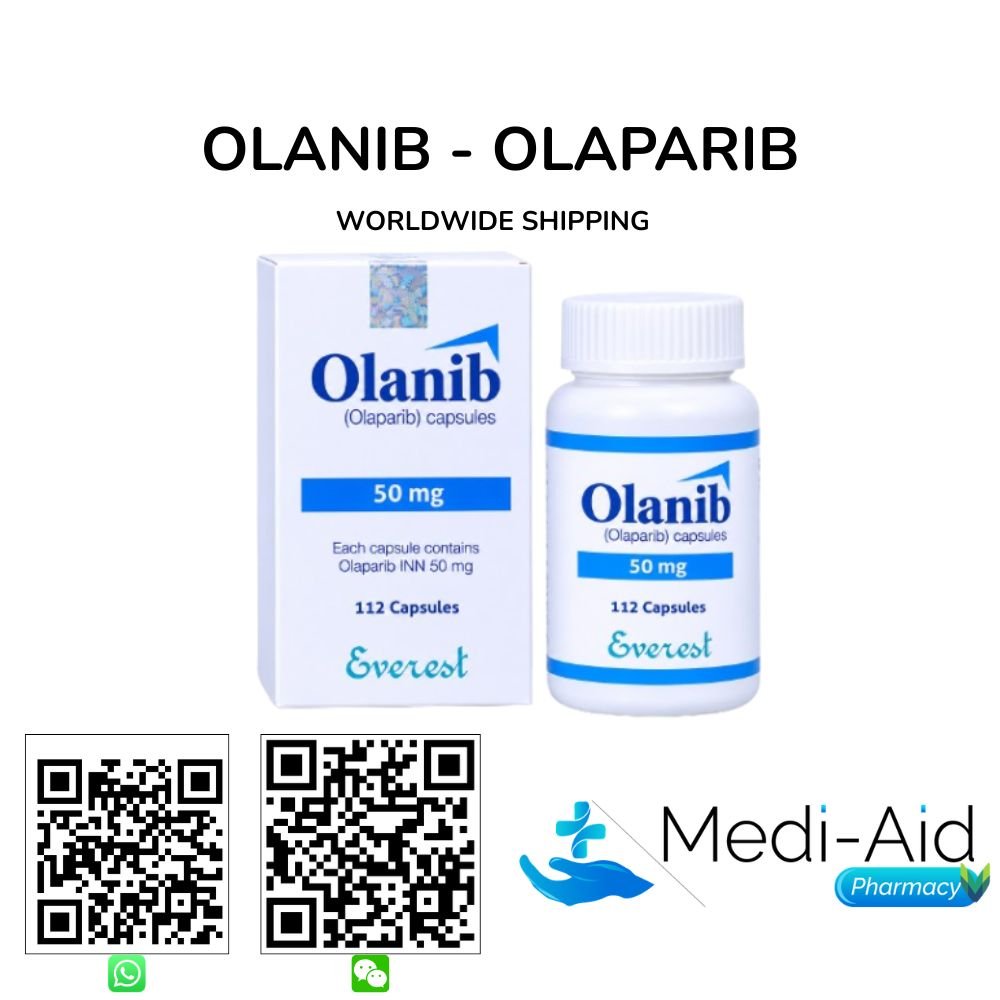
Olanib 50 MG (Olaparib) is an orally bioavailable, first-in-class, small-molecule poly(ADP-ribose) polymerase (PARP) inhibitor a PARP trapping agent that potently inhibits PARP1, PARP2, and PARP3 by occupying the NAD⁺-binding (catalytic) pocket of the PARP enzyme, trapping PARP–DNA complexes at single-strand DNA break sites, blocking base excision repair (BER) and single-strand break repair (SSBR), and collapsing stalled replication forks into cytotoxic double-strand DNA breaks (DSBs); in tumor cells harboring deleterious germline or somatic mutations in BRCA1, BRCA2, or other homologous recombination repair (HRR) pathway genes (ATM, CDK12, CHEK1/2, FANCA, PALB2, RAD51, and related loci), olaparib exploits the synthetic lethality principle the concurrent inactivation of both PARP-mediated single-strand repair and HRR-mediated double-strand repair renders BRCA-mutated and HRR-deficient cancer cells incapable of resolving accumulated replicative DNA damage, selectively driving tumor cell death while sparing HRR-proficient normal cells supplied as hard capsules, 50 mg per capsule, 112 capsules per pot, and manufactured by Everest Pharmaceuticals Ltd. in Bangladesh.
Olaparib, the active pharmaceutical ingredient (API) of Olanib, holds multiple FDA-approved indications spanning four tumor types: (1) first-line maintenance treatment of adults with deleterious or suspected deleterious germline or somatic BRCA1/2-mutated (gBRCA/sBRCA) advanced epithelial ovarian, fallopian tube, or primary peritoneal cancer in complete or partial response to first-line platinum-based chemotherapy (Phase 3 SOLO-1 trial; FDA approval December 2018) demonstrating a hazard ratio of 0.30 (95% CI 0.23–0.41; P<0.001) for progression-free survival (PFS) and statistically significant overall survival (OS) benefit with a 7-year OS rate of 67.0% versus 46.5% in the placebo arm; (2) maintenance treatment of adults with deleterious or suspected deleterious gBRCA-mutated recurrent epithelial ovarian, fallopian tube, or primary peritoneal cancer in complete or partial response to platinum-based chemotherapy (SOLO-2 / Study 19 trials; initial FDA capsule approval December 2014); (3) deleterious or suspected deleterious gBRCA-mutated, HER2-negative metastatic breast cancer (OlympiAD trial; FDA approval January 2018); (4) adjuvant treatment of adults with deleterious or suspected deleterious gBRCA-mutated, HER2-negative high-risk early breast cancer who completed definitive local treatment and neoadjuvant or adjuvant chemotherapy (OlympiA trial; FDA approval August 2022) demonstrating statistically significant OS benefit (4-year OS: 89.8% vs 86.4%; HR 0.68; P=0.009); and (5) adults with deleterious or suspected deleterious BRCA1/2-mutated metastatic castration-resistant prostate cancer (mCRPC) who have progressed following prior treatment with enzalutamide or abiraterone (PROfound trial; FDA approval May 2020) demonstrating a statistically significant OS benefit (median OS 19.1 vs 14.7 months; HR 0.69; P=0.02 in BRCA1/2 Cohort A).
The recommended dose for most indications is 400 mg (eight Olanib 50 MG hard capsules) orally twice daily with or without food, taken at approximately the same times each day, continuously until disease progression or unacceptable toxicity; at this dose, one 112-capsule pot provides a 7-day supply (8 capsules × 2 doses/day × 7 days = 112 capsules). Important: Myelodysplastic syndrome (MDS) and acute myeloid leukemia (AML) have been reported in approximately 1–2% of patients treated with olaparib; monitor patients with complete blood count (CBC) at baseline, monthly during treatment, and as clinically indicated, and permanently discontinue olaparib if MDS or AML is confirmed.
Pneumonitis, including fatal cases, has been reported; interrupt olaparib and investigate for pneumonitis in any patient presenting with new or worsening respiratory symptoms including dyspnea, cough, and fever. Olaparib causes embryo-fetal toxicity; females of reproductive potential must use effective contraception during treatment and for 6 months after the last dose. Venous thromboembolic events (VTEs), including pulmonary embolism, occurred at a higher rate in patients receiving olaparib (approximately 7%) compared to placebo (approximately 3%); monitor for signs and symptoms of VTE throughout therapy.
Strong CYP3A inhibitors substantially increase olaparib plasma exposure and must be avoided; if unavoidable, reduce Olanib dose to 150 mg twice daily. Strong and moderate CYP3A inducers substantially reduce olaparib efficacy and must be avoided throughout olaparib therapy. Searching for Olanib 50 MG Olaparib? Mediaid Pharmacy lists this product across its oncology medicines, ovarian cancer medicines, breast cancer medicines, prostate cancer medicines, and Everest Pharmaceuticals medicines portfolios and ships worldwide.
Basic Product Information of Olanib 50 MG (Olaparib)
| Brand Name | Olanib 50 MG (Olaparib) |
| Product Name | Olanib |
| Generic Name | Olaparib (developmental codes AZD2281 and KU-0059436; a first-in-class, orally bioavailable, potent, small-molecule inhibitor of poly[ADP-ribose] polymerase 1, 2, and 3 [PARP1/2/3], belonging to the phthalazinone class of PARP inhibitors; developed by KuDOS Pharmaceuticals [a Cambridge University spin-off company, subsequently acquired by AstraZeneca in 2006] and AstraZeneca; the originator brand is Lynparza, co-developed and co-commercialized globally by AstraZeneca and Merck & Co. [MSD outside North America] under a global development and commercialization agreement established in 2017; initial FDA approval for maintenance treatment of gBRCA-mutated advanced ovarian cancer as a monotherapy capsule formulation: 19 December 2014; subsequent FDA approvals: second-line and later platinum-sensitive recurrent ovarian cancer maintenance [2017 tablet formulation; capsule formulation approval 2014]; gBRCA-mutated HER2-negative metastatic breast cancer [January 2018]; first-line maintenance of gBRCA/sBRCA-mutated advanced ovarian cancer [December 2018]; first-line maintenance with bevacizumab for HRD-positive advanced ovarian cancer [May 2020]; gBRCA-mutated metastatic pancreatic adenocarcinoma maintenance [December 2019]; BRCA1/2-mutated mCRPC [May 2020]; adjuvant HER2-negative high-risk early breast cancer with gBRCA mutation [August 2022]) |
| Drug Class | PARP Inhibitor (Poly[ADP-Ribose] Polymerase Inhibitor); PARP1/PARP2/PARP3 Inhibitor; PARP–DNA Complex Trapping Agent; DNA Damage Response (DDR) Pathway Inhibitor; Homologous Recombination Deficiency (HRD)-Targeted Antineoplastic Agent; Synthetic Lethality-Exploiting Targeted Therapy (BRCA1/2 and HRR Gene Mutations); Phthalazinone Derivative Small-Molecule Kinase Inhibitor; First-in-Class Oral PARP Inhibitor; DNA Repair Pathway Inhibitor; Targeted Oncology Agent; Oral Cancer Medicine; BRCA1/2 Mutation-Directed Therapy |
| Formulation | Hard Capsule (oral administration; may be taken with or without food consistent administration with or without food is recommended to maintain reproducible plasma drug exposure; swallow capsules whole, do not crush, chew, dissolve, or open capsules; at the standard dose of 400 mg [eight 50 mg capsules] twice daily, all eight capsules are taken together as a single twice-daily dose; take doses approximately 12 hours apart at the same times each day; if vomiting occurs after a dose, do not take an additional dose on that day take the next scheduled dose at the scheduled time) |
| Available Strengths | 50 mg per hard capsule (Olanib 50 MG; the recommended standard dose of 400 mg twice daily requires eight 50 mg capsules per dose, 16 capsules per day; first dose reduction for adverse reactions: 200 mg twice daily [four 50 mg capsules per dose, 8 capsules per day]; second dose reduction: 100 mg twice daily [two 50 mg capsules per dose, 4 capsules per day]; permanently discontinue if unable to tolerate 100 mg twice daily; dose reduction for strong CYP3A inhibitor co-administration if unavoidable: 150 mg twice daily [three 50 mg capsules per dose]; dose reduction for moderate CYP3A inhibitor co-administration if unavoidable: 200 mg twice daily [four 50 mg capsules per dose]) |
| Available Pack Size | 112 capsules per pot (at the recommended standard dose of 400 mg twice daily [eight 50 mg capsules twice daily = 16 capsules per day], one pot of 112 capsules provides a 7-day supply; a standard 28-day monthly supply at 400 mg twice daily therefore requires 4 pots of Olanib 50 MG per month; at the first dose-reduced level of 200 mg twice daily [8 capsules per day], one pot provides 14 days of supply; at the second dose-reduced level of 100 mg twice daily [4 capsules per day], one pot provides 28 days of supply) |
| Dosing Schedule | Recommended Standard Dose: Olaparib 400 mg (eight Olanib 50 MG hard capsules) orally twice daily, taken approximately 12 hours apart at the same times each day, with or without food, continuously until disease progression or unacceptable toxicity (for metastatic and maintenance indications) or for 1 year for the adjuvant OlympiA indication. Germline BRCA Testing Requirement: BRCA1/2 mutation status must be confirmed by a validated FDA-approved test prior to initiating olaparib for all indications requiring germline BRCA selection; somatic BRCA testing by tumor biopsy is additionally required for the first-line ovarian cancer maintenance indication that includes somatic BRCA mutations. Dose Reduction for Adverse Reactions (First Reduction): 200 mg twice daily (four 50 mg capsules twice daily). Second Reduction: 100 mg twice daily (two 50 mg capsules twice daily). Permanently discontinue if unable to tolerate 100 mg twice daily. Dose Reduction for Strong CYP3A Inhibitor (If Unavoidable): Reduce to 150 mg twice daily (three 50 mg capsules twice daily). Dose Reduction for Moderate CYP3A Inhibitor (If Unavoidable): Reduce to 200 mg twice daily (four 50 mg capsules twice daily). Renal Impairment: Moderate renal impairment (CrCl 31–50 mL/min): reduce to 200 mg twice daily; severe renal impairment and end-stage renal disease: not recommended (insufficient data). Hepatic Impairment: Mild (Child-Pugh A): no dose adjustment; moderate (Child-Pugh B): 200 mg twice daily; severe (Child-Pugh C): not recommended. Important Drug Interactions: Avoid concomitant strong CYP3A4 inhibitors (e.g., itraconazole, ketoconazole, nefazodone, ritonavir, lopinavir, clarithromycin); avoid strong CYP3A4 inducers (e.g., rifampin, carbamazepine, phenytoin, St. John’s Wort); avoid moderate CYP3A4 inducers (e.g., bosentan, efavirenz, modafinil). All dosing modification decisions must be directed by the treating oncologist. |
| Primary Indications | (1) First-Line Maintenance Treatment of gBRCA/sBRCA-Mutated Advanced Ovarian, Fallopian Tube, or Primary Peritoneal Cancer SOLO-1: Olaparib 400 mg twice daily as monotherapy maintenance for adults with deleterious/suspected deleterious germline or somatic BRCA1/2-mutated advanced epithelial ovarian, fallopian tube, or primary peritoneal cancer in complete or partial response to first-line platinum-based chemotherapy. Based on Phase 3 SOLO-1 (NCT01844986; n=391): median PFS not reached in the olaparib arm versus 13.8 months in the placebo arm (HR 0.30; 95% CI 0.23–0.41; P<0.001) 70% reduction in the risk of disease progression or death. Seven-year OS analysis: 67.0% alive at 7 years in the olaparib arm versus 46.5% in the placebo arm (HR 0.55; 95% CI 0.40–0.76; P<0.001) statistically significant OS benefit. FDA approval: December 2018.
(2) Maintenance Treatment of Recurrent gBRCA-Mutated Platinum-Sensitive Ovarian Cancer SOLO-2: Olaparib 400 mg twice daily (capsule) as maintenance monotherapy for adults with deleterious/suspected deleterious gBRCA-mutated recurrent epithelial ovarian, fallopian tube, or primary peritoneal cancer in complete or partial response to platinum-based chemotherapy. Based on Phase 3 SOLO-2 (NCT01874353; n=295): median PFS 19.1 months versus 5.5 months with placebo (HR 0.30; 95% CI 0.22–0.41; P<0.0001) 70% reduction in the risk of progression; median OS 51.7 months versus 38.8 months (HR 0.74; 95% CI 0.54–1.00; P=0.054). Initial FDA capsule approval for recurrent gBRCA-mutated ovarian cancer: 19 December 2014. (3) gBRCA-Mutated, HER2-Negative Metastatic Breast Cancer OlympiAD: Olaparib 400 mg twice daily (capsule) for adults with deleterious/suspected deleterious gBRCA1/2-mutated, HER2-negative MBC who have received prior chemotherapy in the neoadjuvant, adjuvant, or metastatic setting (prior platinum-containing chemotherapy allowed; prior CDK4/6 inhibitor therapy permitted if HR+ disease). Based on Phase 3 OlympiAD (NCT02000622; n=302): median PFS 7.0 months versus 4.2 months with standard chemotherapy (HR 0.58; 95% CI 0.43–0.80; P<0.001); ORR 59.9% versus 28.8%. FDA approval: 12 January 2018. (4) Adjuvant Treatment of gBRCA-Mutated, HER2-Negative High-Risk Early Breast Cancer OlympiA: Olaparib for adults with deleterious/suspected deleterious gBRCA-mutated, HER2-negative high-risk early breast cancer who completed definitive local treatment and neoadjuvant or adjuvant chemotherapy. Based on Phase 3 OlympiA (NCT02032823; n=1,836): 4-year invasive disease-free survival (IDFS) 82.7% versus 75.4% with placebo (HR 0.63; 95% CI 0.50–0.78; P<0.001); 4-year OS 89.8% versus 86.4% (HR 0.68; 95% CI 0.47–0.97; P=0.009) statistically significant OS benefit. FDA approval: 11 August 2022. (5) BRCA1/2-Mutated Metastatic Castration-Resistant Prostate Cancer PROfound: Olaparib 400 mg twice daily for adults with deleterious/suspected deleterious BRCA1/2-mutated mCRPC who have progressed on prior enzalutamide or abiraterone. Based on Phase 3 PROfound Cohort A (BRCA1/2; NCT02987543; n=245): median radiographic PFS (rPFS) 7.4 months versus 3.6 months with enzalutamide or abiraterone crossover control (HR 0.34; 95% CI 0.25–0.47; P<0.001); median OS 19.1 months versus 14.7 months (HR 0.69; 95% CI 0.50–0.97; P=0.02) statistically significant OS benefit. FDA approval: 19 May 2020. |
| Manufacturer / Brand | Everest Pharmaceuticals Ltd., Country of Origin: Bangladesh (originator molecule and brand Lynparza developed by KuDOS Pharmaceuticals and AstraZeneca, co-commercialized globally by AstraZeneca and Merck & Co. [MSD outside North America]; initial FDA approval for maintenance treatment of gBRCA-mutated advanced ovarian cancer as olaparib 50 mg hard capsules: 19 December 2014; subsequent FDA approvals for ovarian cancer, breast cancer, pancreatic cancer, and prostate cancer through 2022) |
| Global Supplier | Mediaid Pharmacy, Worldwide Shipping Available |
| Storage Conditions | Store below 30°C (86°F). Store in the original container with the lid tightly closed. Protect from moisture and light. Keep out of the reach of children. |
How Olanib (Olaparib) Works: PARP Inhibition, PARP–DNA Complex Trapping, and Synthetic Lethality in BRCA-Mutated and HRR-Deficient Cancers
Olaparib (Olanib 50 MG) is a potent, first-in-class inhibitor of poly(ADP-ribose) polymerase 1, 2, and 3 (PARP1, PARP2, PARP3) nuclear DNA repair enzymes that detect and repair single-strand DNA breaks (SSBs) and serve as essential scaffolding proteins at DNA damage sites through their poly(ADP-ribosyl)ation (PARylation) activity. Under normal physiological conditions, PARP1 binds to SSB sites within chromosomal DNA, catalyzes the synthesis of poly(ADP-ribose) (PAR) chains on itself (auto-PARylation) and on adjacent chromatin proteins, recruits base excision repair (BER) and single-strand break repair (SSBR) machinery including XRCC1, DNA polymerase β, and DNA ligase III, and ultimately dissociates from the repaired DNA once the SSB is sealed.
This PAR-mediated dissociation from repaired DNA is critical: PARP1 must detach from the SSB site to allow completion of repair and to liberate the enzyme for the next repair cycle. Olaparib interferes with this dissociation mechanism by occupying the NAD⁺-binding (catalytic) pocket of PARP1, PARP2, and PARP3 the same pocket that binds the NAD⁺ substrate required for PAR chain synthesis blocking auto-PARylation and thereby trapping PARP–DNA complexes at SSB sites rather than allowing PARP to release from repaired DNA.
These trapped PARP–DNA complexes act as physical roadblocks on the DNA template: when the replication fork advances along the DNA strand and encounters a trapped PARP–DNA complex at an unrepaired SSB site, the SSB is converted into a double-strand DNA break (DSB) through fork collapse, generating a cytotoxic DSB lesion that is fundamentally distinct from and far more lethal than the original single-strand nick.
In cells with intact homologous recombination repair (HRR) activity including most normal somatic cells replication-associated DSBs generated by PARP trapping are efficiently resolved by the high-fidelity HRR pathway, in which BRCA1, BRCA2, PALB2, RAD51, and associated proteins coordinate end resection, RAD51-mediated strand invasion, template-directed DNA synthesis, and Holliday junction resolution using the sister chromatid as a homologous repair template during S and G2 phases of the cell cycle.
This HRR-mediated repair of PARP inhibitor-induced DSBs maintains genomic integrity in normal cells and accounts for the selective cancer-cell targeting mechanism of PARP inhibitors. In tumor cells carrying deleterious germline or somatic mutations in BRCA1, BRCA2, PALB2, ATM, CDK12, CHEK1, CHEK2, FANCA, RAD51C, RAD51D, or other HRR pathway genes a state collectively defined as homologous recombination deficiency (HRD) PARP inhibitor-induced replication-associated DSBs cannot be repaired by high-fidelity HRR.
HRD-positive cancer cells are instead forced to rely on error-prone alternative DSB repair pathways including non-homologous end joining (NHEJ), microhomology-mediated end joining (MMEJ), and fork reversal mechanisms; these error-prone pathways fail to faithfully restore genomic integrity at PARP inhibitor-induced DSBs, leading to progressive genomic instability, chromosomal rearrangements, unresolvable replication catastrophe, and ultimately cancer cell death.
This principle that simultaneous loss of two independent DNA repair pathways (PARP-mediated SSB repair and BRCA-mediated HRR) is selectively lethal to cells that lack both, while sparing cells with at least one intact pathway defines the synthetic lethality mechanism that underpins olaparib’s clinical anticancer activity and its selectivity for BRCA-mutated and HRD-positive tumors.
The BRCA1 and BRCA2 proteins serve as the central executors of HRR. BRCA1 facilitates DNA end resection at DSBs by recruiting the MRN complex (MRE11–RAD50–NBS1) and CtIP nuclease, generating 3′ single-stranded DNA (ssDNA) overhangs; BRCA2 directly loads the RAD51 recombinase onto RPA-coated ssDNA through its eight BRC repeats and C-terminal DNA-binding domain, displacing RPA and enabling RAD51 nucleofilament formation, which catalyzes strand invasion into the intact homologous chromatid template.
Loss of BRCA1 or BRCA2 function through germline mutation (the inherited gBRCA variant carried in all cells of the patient), somatic mutation arising de novo in the tumor, promoter hypermethylation causing epigenetic silencing, or reversion mutation within previously HRD-positive tumors produces an HRD phenotype specifically characterized by a mutational signature (Signature 3: tandem duplications, deletions at microhomology sites, and characteristic base substitution patterns) that reflects the genomic scars of unrepaired replication-associated DSBs.
Olaparib targets this HRD-associated genomic vulnerability with exquisite selectivity, explaining the strong clinical efficacy signal observed across BRCA1/2-mutated ovarian, breast, prostate, and pancreatic cancers in its registration Phase 3 trials and the relatively modest efficacy in BRCA-wild-type, HRR-proficient tumor populations. BRCA-mutated ovarian cancer oncology programs, gBRCA-mutated breast cancer treatment centers, BRCA1/2-mutated prostate cancer therapy units, and hospital pharmacies managing oral PARP inhibitor oncology medicines can contact Mediaid Pharmacy for Olanib 50 MG (Olaparib) availability, pricing, and worldwide delivery.
Who Should Use Olanib 50 MG (Olaparib)?
Olanib 50 MG (Olaparib) is indicated for adult patients across five distinct BRCA-mutated and HRR gene-mutated cancer clinical settings spanning first-line and recurrent ovarian cancer maintenance, metastatic and adjuvant breast cancer, metastatic castration-resistant prostate cancer, and metastatic pancreatic adenocarcinoma maintenance representing the broadest multi-tumor-type clinical indication footprint of any approved PARP inhibitor and the only PARP inhibitor to have demonstrated statistically significant overall survival (OS) benefit across ovarian cancer (SOLO-1), breast cancer (OlympiA), and prostate cancer (PROfound Cohort A).
All olaparib indications requiring BRCA selection mandate confirmed deleterious or suspected deleterious germline BRCA1/2 mutation status, determined by a validated FDA-approved companion diagnostic germline test prior to initiating Olanib therapy; the first-line ovarian cancer maintenance indication additionally includes patients with somatic (tumor) BRCA1/2 mutations identified by an FDA-approved tumor somatic BRCA test.
First, adult patients with deleterious or suspected deleterious germline or somatic BRCA1/2-mutated advanced epithelial ovarian, fallopian tube, or primary peritoneal cancer in complete or partial response to first-line platinum-based chemotherapy are the SOLO-1-defined first-line maintenance indication for Olanib. The Phase 3 SOLO-1 trial (NCT01844986) enrolled 391 patients with newly diagnosed, gBRCA- or sBRCA-mutated advanced (FIGO stage III–IV) ovarian, fallopian tube, or primary peritoneal cancer who had achieved a complete or partial response to first-line platinum-based chemotherapy and randomized them 2:1 to olaparib 400 mg twice daily versus placebo as maintenance monotherapy. The primary endpoint of investigator-assessed PFS demonstrated a hazard ratio of 0.30 (95% CI 0.23–0.41; P<0.001) a 70% reduction in the risk of disease progression or death with the median PFS not reached in the olaparib arm versus 13.8 months in the placebo arm at the primary analysis. The 7-year follow-up OS analysis of SOLO-1, presented at ESMO 2023, demonstrated a statistically significant OS benefit for the first time in first-line platinum-sensitive ovarian cancer maintenance, with 67.0% of patients in the olaparib arm alive at 7 years versus 46.5% in the placebo arm (HR 0.55; 95% CI 0.40–0.76; P<0.001) establishing olaparib as the only PARP inhibitor with long-term OS data in first-line gBRCA/sBRCA-mutated advanced ovarian cancer. For patients with recurrent platinum-sensitive gBRCA-mutated ovarian cancer, the Phase 3 SOLO-2 trial (NCT01874353) enrolled 295 patients who had received two or more prior platinum-based regimens and achieved a complete or partial response to their most recent platinum-based chemotherapy, demonstrating a median PFS of 19.1 months with olaparib versus 5.5 months with placebo (HR 0.30; 95% CI 0.22–0.41; P<0.0001).
Second, adult patients with deleterious or suspected deleterious gBRCA1/2-mutated, HER2-negative metastatic breast cancer, and adults with gBRCA-mutated HER2-negative high-risk early breast cancer, are candidates for the OlympiAD-defined metastatic breast cancer indication and the OlympiA-defined adjuvant early breast cancer indication for Olanib. The Phase 3 OlympiAD trial (NCT02000622) enrolled 302 patients with gBRCA1/2-mutated, HER2-negative MBC who had received up to two prior lines of chemotherapy in the metastatic setting and randomized them 2:1 to olaparib 400 mg twice daily versus standard single-agent chemotherapy (capecitabine, eribulin, or vinorelbine at investigator’s choice). Olaparib demonstrated a statistically significant improvement in median PFS of 7.0 months versus 4.2 months with chemotherapy (HR 0.58; 95% CI 0.43–0.80; P<0.001) with an objective response rate (ORR) of 59.9% versus 28.8%. The Phase 3 OlympiA trial (NCT02032823) established olaparib as the first and only PARP inhibitor with a proven OS benefit in breast cancer, enrolling 1,836 patients with gBRCA1/2-mutated, HER2-negative high-risk early breast cancer who had completed definitive local treatment and neoadjuvant or adjuvant chemotherapy and had either residual disease after neoadjuvant chemotherapy (triple-negative breast cancer [TNBC]) or pathological complete response with high-risk clinical features (HR+/HER2-) or were HR+/HER2- with ≥4 positive lymph nodes. Olaparib 300 mg twice daily (tablets) for 1 year demonstrated a 4-year IDFS of 82.7% versus 75.4% (HR 0.63; 95% CI 0.50–0.78; P<0.001) and a statistically significant OS benefit at 4-year follow-up (89.8% vs 86.4%; HR 0.68; 95% CI 0.47–0.97; P=0.009) the first PARP inhibitor to demonstrate an OS benefit in an adjuvant oncology setting. Ovarian cancer maintenance programs, HR+/HER2- and TNBC breast cancer oncology departments sourcing breast cancer PARP inhibitor medicines, and patients seeking access to olaparib for ovarian cancer treatment can contact Mediaid Pharmacy for Olanib 50 MG availability and worldwide supply.
Third, adult patients with deleterious or suspected deleterious BRCA1/2-mutated metastatic castration-resistant prostate cancer (mCRPC) who have progressed following prior enzalutamide or abiraterone therapy are the PROfound-defined indication for Olanib in prostate cancer. The Phase 3 PROfound trial (NCT02987543) enrolled 387 patients with HRR gene-mutated mCRPC across two cohorts Cohort A (BRCA1, BRCA2, and ATM mutations; n=245) and Cohort B (12 other prespecified HRR gene mutations; n=142) who had progressed on prior enzalutamide or abiraterone and randomized them 2:1 to olaparib 400 mg twice daily versus investigator’s choice of enzalutamide or abiraterone (the alternative AR-pathway inhibitor to the one given prior). In Cohort A (BRCA1/2 mutations), olaparib demonstrated a median rPFS of 7.4 months versus 3.6 months with AR-pathway inhibitor control (HR 0.34; 95% CI 0.25–0.47; P<0.001) a 66% reduction in the risk of radiographic progression or death and a statistically significant OS benefit with a median OS of 19.1 months versus 14.7 months (HR 0.69; 95% CI 0.50–0.97; P=0.02). Olaparib is not indicated for patients with mCRPC who have BRCA-wild-type, HRR-proficient tumors based on current FDA labeling, as clinical benefit is primarily demonstrated in BRCA1/2-mutated mCRPC; the FDA approval specifically covers BRCA1/2-mutated mCRPC based on Cohort A. Olanib is not indicated for and has no established clinical benefit in: patients without confirmed deleterious or suspected deleterious BRCA1/2 or relevant HRR gene mutations in olaparib-indicated tumor types (HRR-proficient tumors); patients with colorectal cancer, non-small cell lung cancer, or other tumor types not included in current FDA-approved olaparib indications; patients who are pregnant (olaparib causes embryo-fetal toxicity; pregnancy must be excluded before initiating treatment); and patients with moderate or severe renal impairment or severe hepatic impairment without oncologist-directed dose modification. BRCA1/2-mutated mCRPC oncology teams sourcing prostate cancer targeted therapy medicines and hospital pharmacies managing PARP inhibitor programs for HRR-mutated solid tumors can contact Mediaid Pharmacy directly for Olanib 50 MG (Olaparib) stock availability, current pricing, and international delivery timelines.
Global Supplier: Mediaid Pharmacy Worldwide Shipping for Olanib 50 MG (Olaparib)
Mediaid Pharmacy is a Dhaka-based supplier of specialty targeted oncology, ovarian cancer, breast cancer, prostate cancer, and rare disease medicines with worldwide shipping to patients, gBRCA-mutated ovarian cancer oncology departments, PARP inhibitor maintenance therapy programs, adjuvant and metastatic breast cancer treatment units, mCRPC BRCA-mutated prostate cancer programs, hospital pharmacies, oncology day units, patient access programs, and international distributors across all regions. Olanib 50 MG (Olaparib), manufactured by Everest Pharmaceuticals Ltd. in Bangladesh, is supplied as 50 mg hard capsules in 112-capsule pots, with pricing quotations, stock confirmation, full product documentation, and end-to-end international delivery tracking for every order.
The clinical and procurement significance of the 112-capsule pot format is directly tied to olaparib’s dosing architecture: at the recommended standard dose of 400 mg twice daily (eight 50 mg capsules twice daily = 16 capsules per day), one pot of Olanib 50 MG provides a 7-day supply of olaparib, and a standard 28-day monthly treatment supply requires 4 pots. This 7-day pot packaging format aligns with standard oncology pharmacy dispensing cycles, allowing hospital pharmacies, outpatient oncology pharmacies, and patient access program coordinators to manage Olanib supply in weekly increments that facilitate CBC monitoring, dose modification tracking, and clinical assessment scheduling aligned with the monthly blood count review cycle recommended during olaparib therapy.
For patients receiving the first dose-reduced level of 200 mg twice daily (8 capsules per day), one pot provides a 14-day supply; for patients at the second dose-reduced level of 100 mg twice daily (4 capsules per day), one pot provides a 28-day supply. gBRCA/sBRCA-mutated ovarian cancer oncology departments managing SOLO-1 and SOLO-2-aligned first-line and recurrent maintenance olaparib programs; adjuvant oncology teams sourcing olaparib for OlympiA-eligible high-risk early breast cancer patients; mCRPC oncology teams supplying Olanib for PROfound-eligible BRCA1/2-mutated prostate cancer patients; hospital formulary procurement departments co-sourcing Olanib with other oral targeted oncology medicines; and individual patients and families accessing olaparib for BRCA-mutated ovarian cancer treatment can contact the Mediaid Pharmacy team through WhatsApp, phone, or WeChat for Olanib 50 MG stock availability, current pricing, and international delivery timelines.
Why Choose Olanib 50 MG (Olaparib) from Mediaid Pharmacy?
Olanib (Olaparib) from Everest Pharmaceuticals Ltd. delivers the validated first-in-class PARP inhibition and synthetic lethality mechanism of olaparib a molecule with the most extensive FDA-approved multi-tumor indication portfolio of any approved PARP inhibitor, spanning five distinct clinical settings across four tumor types as a precisely formulated 50 mg hard capsule in a clinically aligned 112-capsule pot providing a 7-day supply at the recommended 400 mg twice-daily standard dose. Olaparib is pharmacologically and clinically distinguished within the PARP inhibitor class by four evidence-based attributes.
First, olaparib is the first and only PARP inhibitor to demonstrate statistically significant overall survival (OS) benefit in multiple independent Phase 3 trials across distinct cancer types including the 7-year OS benefit in SOLO-1 for first-line gBRCA/sBRCA-mutated advanced ovarian cancer maintenance (HR 0.55; P<0.001; 67.0% vs 46.5% alive at 7 years), the OS benefit in OlympiA for adjuvant gBRCA-mutated HER2-negative high-risk early breast cancer (HR 0.68; P=0.009; 89.8% vs 86.4% alive at 4 years the only PARP inhibitor to demonstrate an OS benefit in an adjuvant oncology setting), and the OS benefit in PROfound Cohort A for BRCA1/2-mutated mCRPC (HR 0.69; P=0.02; median OS 19.1 vs 14.7 months). This multi-tumor-type, multi-trial OS evidence base distinguishes olaparib from all other approved PARP inhibitors (niraparib, rucaparib, talazoparib), none of which has demonstrated statistically significant OS benefit across multiple Phase 3 registration trials.
Second, olaparib holds the broadest FDA-approved multi-tumor-type indication portfolio of any PARP inhibitor covering five distinct clinical settings across ovarian, breast, prostate, and pancreatic cancers the result of a systematic and productive Phase 3 development program (SOLO-1, SOLO-2, Study 19, OlympiAD, OlympiA, PROfound, and POLO trials) that defined the clinical benefit of PARP inhibition across the full spectrum of BRCA-mutated and HRD-positive malignancies, and a development timeline that established olaparib as the first PARP inhibitor to receive FDA approval in any cancer type (December 2014).
Third, olaparib is an orally self-administered, twice-daily capsule formulation taken continuously without scheduled rest periods unlike the 3-weeks-on/1-week-off schedule of some CDK4/6 inhibitors enabling complete outpatient management on a continuous daily regimen that maintains uninterrupted PARP inhibition, maximizes cumulative PARP-trapping cytotoxicity in BRCA-mutated tumor cells, and allows patients to self-administer treatment at home without hospital-scheduled on/off cycle coordination; the twice-daily dosing schedule with eight 50 mg hard capsules per dose is straightforward and enables flexible dose reduction to 200 mg or 100 mg twice daily using the same 50 mg capsule unit.
Fourth, the Olanib 50 MG capsule formulation from Everest Pharmaceuticals Ltd. provides access to the validated olaparib molecule through a Bangladesh-manufactured generic formulation, giving patients, oncology programs, and hospital pharmacies in cost-sensitive healthcare markets worldwide access to the clinical benefits of BRCA-directed PARP inhibition across the full range of FDA-approved olaparib indications ovarian cancer, breast cancer, prostate cancer, and beyond at accessible acquisition costs relative to originator Lynparza, while maintaining the standard 50 mg hard capsule dosage unit used in all pivotal olaparib Phase 3 trials. Olanib 50 MG is manufactured by Everest Pharmaceuticals Ltd. and is available through Mediaid Pharmacy in 112-capsule pots.
To source the complete range of PARP inhibitor therapies, BRCA-mutated cancer medicines, and targeted oncology agents, visit the Mediaid Pharmacy ovarian cancer medicines portfolio, the breast cancer medicines collection, the prostate cancer medicines range, the oncology medicines portfolio, and the Everest Pharmaceuticals medicines range, and contact the team for a personalized quotation.
Frequently Asked Questions About Olanib 50 MG (Olaparib)
What is Olanib 50 MG (Olaparib) used for?
Olanib 50 MG (Olaparib) is a first-in-class oral PARP (poly[ADP-ribose] polymerase) inhibitor with five FDA-approved indications across four tumor types: (1) first-line maintenance treatment of adults with gBRCA/sBRCA-mutated advanced ovarian, fallopian tube, or primary peritoneal cancer in complete or partial response to first-line platinum-based chemotherapy (SOLO-1; HR for PFS 0.30; P<0.001; 7-year OS 67.0% vs 46.5%; FDA December 2018); (2) maintenance treatment of adults with gBRCA-mutated recurrent platinum-sensitive ovarian cancer in complete or partial response to platinum-based chemotherapy (SOLO-2; median PFS 19.1 vs 5.5 months; HR 0.30; P<0.0001; initial capsule FDA approval December 2014); (3) gBRCA1/2-mutated, HER2-negative metastatic breast cancer in adults who have received prior chemotherapy (OlympiAD; median PFS 7.0 vs 4.2 months; HR 0.58; P<0.001; FDA January 2018); (4) adjuvant treatment of adults with gBRCA-mutated, HER2-negative high-risk early breast cancer who completed definitive local treatment and neoadjuvant or adjuvant chemotherapy (OlympiA; 4-year OS 89.8% vs 86.4%; HR 0.68; P=0.009; FDA August 2022); and (5) BRCA1/2-mutated mCRPC in adults who have progressed on prior enzalutamide or abiraterone (PROfound Cohort A; median OS 19.1 vs 14.7 months; HR 0.69; P=0.02; FDA May 2020). The recommended dose is 400 mg (eight Olanib 50 MG hard capsules) orally twice daily, taken approximately 12 hours apart. Olanib 50 MG, 112 capsules per pot, is manufactured by Everest Pharmaceuticals Ltd. in Bangladesh and is available through Mediaid Pharmacy with worldwide shipping.
What is the generic name of Olanib?
The generic name of Olanib is olaparib (developmental codes AZD2281 and KU-0059436). Olaparib is an orally bioavailable, potent, first-in-class, small-molecule inhibitor of poly(ADP-ribose) polymerase 1, 2, and 3 (PARP1/2/3), belonging to the phthalazinone class of PARP inhibitors. Olaparib acts by occupying the NAD⁺-binding (catalytic) pocket of PARP1, PARP2, and PARP3, trapping PARP–DNA complexes at sites of single-strand DNA breaks and generating cytotoxic replication-associated double-strand breaks that are selectively lethal in cancer cells with BRCA1/2 mutations or other homologous recombination repair (HRR) deficiencies through the synthetic lethality principle. Olaparib is structurally and pharmacologically distinguished from other approved PARP inhibitors niraparib (a 2,3-dihydro-1H-indazole carboxamide; Zejula), rucaparib (a tricyclic benzazepine indole; Rubraca), and talazoparib (a dihydropyridazinone; Talzenna) by its phthalazinone core scaffold, its specific PARP1/2/3 isoform inhibition profile, and its FDA-approved indication breadth spanning ovarian, breast, prostate, and pancreatic cancers. The originator brand of olaparib is Lynparza, developed by KuDOS Pharmaceuticals (acquired by AstraZeneca) and AstraZeneca, co-commercialized globally by AstraZeneca and Merck & Co. (MSD outside North America), with the first FDA approval on 19 December 2014. Olanib is manufactured by Everest Pharmaceuticals Ltd. in Bangladesh and is available as 50 mg hard capsules in 112-capsule pots. Mediaid Pharmacy distributes Olanib 50 MG (Olaparib) globally with worldwide shipping to patients, ovarian cancer oncology departments, breast cancer treatment programs, hospital pharmacies, and gBRCA-mutated cancer therapy programs worldwide.
What is the difference between olaparib (Olanib), niraparib, rucaparib, and talazoparib?
Olaparib (Olanib), niraparib (Zejula), rucaparib (Rubraca), and talazoparib (Talzenna) are all oral PARP inhibitors approved for BRCA-mutated cancers but differ in molecular structure, PARP isoform selectivity, PARP-trapping potency, FDA-approved indications, dosing schedules, and adverse effect profiles. Olaparib (Olanib 50 MG) is a phthalazinone derivative and moderate-potency PARP trapper dosed at 400 mg (eight 50 mg capsules) twice daily with the broadest FDA-approved multi-tumor-type indication portfolio spanning ovarian, breast, prostate, and pancreatic cancers, and the only PARP inhibitor to demonstrate statistically significant OS benefit across multiple Phase 3 trials (SOLO-1, OlympiA, PROfound Cohort A). Niraparib (Zejula) is a 2,3-dihydro-1H-indazole carboxamide PARP inhibitor dosed once daily (200 or 300 mg based on baseline body weight and platelet count) approved in ovarian cancer maintenance (frontline and recurrent) for all patients regardless of BRCA status when used in the HRD-positive or biomarker-unselected setting; it is not approved in breast or prostate cancer as of its current labeling. Rucaparib (Rubraca) is a tricyclic benzazepine indole PARP inhibitor previously approved in gBRCA/sBRCA-mutated recurrent ovarian cancer and in BRCA1/2-mutated mCRPC; AstraZeneca voluntarily withdrew Rubraca from the US market for most indications in 2022–2023, limiting its current availability. Talazoparib (Talzenna) is a dihydropyridazinone PARP inhibitor and the most potent PARP trapper among all approved PARP inhibitors, dosed at 1 mg once daily, approved only for gBRCA1/2-mutated, HER2-negative locally advanced or metastatic breast cancer (EMBRACA trial; median PFS 8.6 vs 5.6 months; HR 0.54; P<0.001) and not for ovarian cancer or prostate cancer. The primary adverse effect profile also differs: myelosuppression (anemia, neutropenia, thrombocytopenia) is a class effect for all PARP inhibitors; nausea and fatigue are most prominently associated with olaparib; thrombocytopenia and hypertension are the characteristic dose-limiting toxicities of niraparib; and anemia is the primary dose-limiting toxicity for talazoparib. Visit the Mediaid Pharmacy oncology medicines collection for the complete PARP inhibitor and targeted oncology portfolio.
What are the side effects of Olanib (Olaparib)?
The most common adverse effects of olaparib (Olanib) are nausea, fatigue, anemia, vomiting, diarrhea, and upper respiratory tract infections. Nausea is the most frequent adverse effect, occurring in approximately 74–77% of patients across the major Phase 3 trials (all grades); it is typically mild-to-moderate (Grade 1–2), onset commonly occurs in the first 2–4 weeks of treatment, and is manageable with antiemetics including ondansetron and metoclopramide; administration of olaparib with food may reduce nausea severity. Fatigue and asthenia occur in approximately 63–66% of patients (all grades) and are the second most common adverse effect class. Anemia (all grades) occurs in approximately 44% of patients and is the primary hematologic toxicity of olaparib Grade 3 or 4 anemia occurs in approximately 15–22% depending on the trial and indication; mean hemoglobin decrease of approximately 1.0 g/dL from baseline is observed; monitor CBC monthly and manage with dose modification and transfusion support as clinically indicated. Vomiting occurs in approximately 35–40%; diarrhea in approximately 34%; and decreased appetite in approximately 22%. Neutropenia (all grades) occurs in approximately 25–27% of patients, with Grade 3 or 4 neutropenia in approximately 7–9%. Thrombocytopenia (all grades) occurs in approximately 15–18%. Myelodysplastic syndrome (MDS) and acute myeloid leukemia (AML) have been reported in approximately 1–2% of patients treated with olaparib in clinical trials, with a median time to onset of approximately 8–11 months from treatment initiation; permanently discontinue olaparib if MDS/AML is confirmed. Pneumonitis, including fatal cases, has been reported in <1% of olaparib-treated patients; interrupt treatment and investigate for new or worsening respiratory symptoms. Venous thromboembolic events (VTEs), including deep vein thrombosis and pulmonary embolism, occurred in approximately 7% of olaparib-treated patients versus approximately 3% with placebo across Phase 3 trials; pulmonary embolism occurred in approximately 1% of olaparib patients. Elevated serum creatinine (mean increase approximately 0.3 mg/dL from baseline) reflects olaparib inhibition of tubular creatinine secretion rather than true nephrotoxicity in most cases; monitor renal function at baseline and periodically. Establish baseline CBC, comprehensive metabolic panel, and pregnancy test before initiating Olanib under supervision of an experienced oncologist.
How is Olanib 50 MG (Olaparib) administered?
Olaparib (Olanib 50 MG) is administered orally, twice daily, at approximately the same times each day (approximately 12 hours apart), with or without food consistent administration with or without food is recommended to maintain reproducible plasma drug exposure. The recommended standard dose for all current FDA-approved indications except the OlympiA adjuvant breast cancer indication (which uses the tablet formulation) is 400 mg (eight Olanib 50 MG hard capsules) orally twice daily, taken continuously without scheduled rest periods until disease progression or unacceptable toxicity. All eight capsules are taken together as a single twice-daily dose. Swallow capsules whole; do not crush, chew, dissolve, or open olaparib capsules. If vomiting occurs after a dose, do not take an additional dose on the same day; take the next scheduled dose at the regularly scheduled time the following dose period. At the standard 400 mg twice-daily dose, one pot of 112 Olanib 50 MG capsules provides a 7-day supply; patients require 4 pots per 28-day monthly supply. Mandatory safety monitoring before initiating and during olaparib therapy includes: CBC with differential at baseline, monthly during treatment, and as clinically indicated; and assessment for signs and symptoms of MDS/AML, pneumonitis, and VTE throughout therapy. BRCA1/2 mutation status must be confirmed by a validated FDA-approved companion diagnostic test before initiating Olanib for all BRCA-selected indications. Dose reductions follow a stepwise protocol: first reduction to 200 mg twice daily (four 50 mg capsules twice daily), then to 100 mg twice daily (two 50 mg capsules twice daily); permanently discontinue if 100 mg twice daily is not tolerated. All dosing modifications must be directed by the treating oncologist.
Is Olanib (Olaparib) safe during pregnancy or while breastfeeding?
Olanib (Olaparib) can cause fetal harm and must not be used during pregnancy. Olaparib inhibits PARP-mediated DNA repair a pathway that is essential for the high-rate cell proliferation required for normal embryonic organogenesis, placental development, and fetal tissue growth throughout all trimesters of gestation; animal reproductive toxicology studies in rats demonstrated embryo-fetal lethality and malformations at olaparib exposures below the recommended human therapeutic dose. Females of reproductive potential must use effective contraception during olaparib treatment and for 6 months after the last dose. Males with female partners of reproductive potential must use effective contraception during olaparib treatment and for 3 months after the last dose. Olaparib may impair male fertility based on animal reproductive toxicology data demonstrating spermatogenesis impairment; advise male patients of this potential risk prior to initiating therapy and discuss fertility preservation options including sperm banking with the treating oncologist before starting Olanib. It is not known whether olaparib or its metabolites are present in human breast milk; because of the potential for serious adverse reactions in a breastfed infant including myelosuppression and genomic instability breastfeeding is not recommended during olaparib treatment and for 1 month after the last dose. Verify pregnancy status with a serum or urine pregnancy test in all females of reproductive potential before initiating Olanib. Discuss all aspects of reproductive planning, fertility counseling, and contraceptive requirements with the treating oncologist before starting olaparib therapy.
Can I order Olanib 50 MG (Olaparib) online with worldwide shipping?
Yes. Mediaid Pharmacy supplies Olanib 50 MG (Olaparib), hard capsules, 112 capsules per pot, manufactured by Everest Pharmaceuticals Ltd. in Bangladesh, to patients, gBRCA/sBRCA-mutated ovarian cancer oncology departments, PARP inhibitor maintenance therapy programs, adjuvant and metastatic breast cancer treatment units, BRCA1/2-mutated mCRPC prostate cancer programs, hospital pharmacies, oncology day units, patient access programs, and healthcare providers globally. Contact Mediaid Pharmacy via WhatsApp, phone, or WeChat at +8801773428128, or email info@mediaidpharmacy.com for pricing, current stock availability, shipping options, and international delivery details for your country.
Order Olanib 50 MG (Olaparib) with Worldwide Shipping
Phone / WhatsApp / WeChat: +8801773428128 | Email: info@mediaidpharmacy.com

Reviews
There are no reviews yet.