
Description
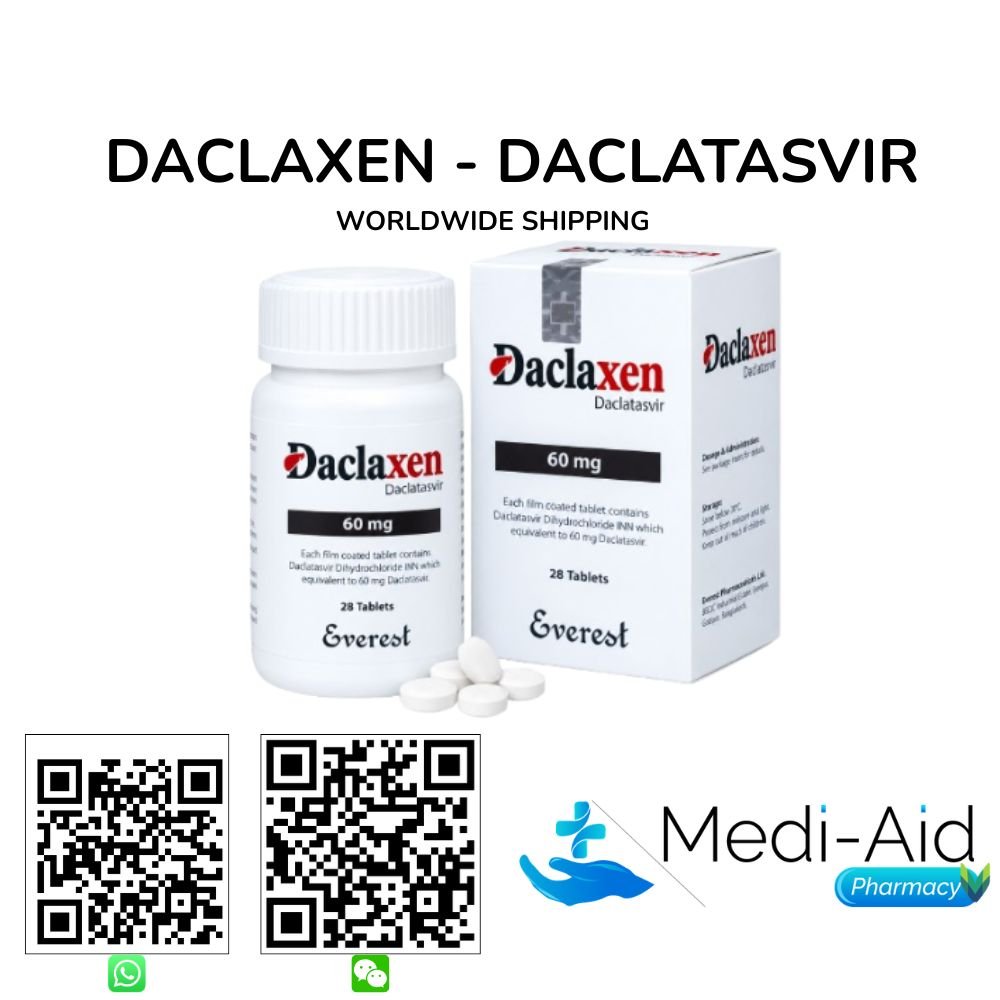
Daclaxen 60 MG (Daclatasvir) is a first-in-class NS5A replication complex inhibitor and direct-acting antiviral (DAA), containing Daclatasvir INN, a precision antiviral agent that blocks hepatitis C virus (HCV) replication and virion assembly by targeting the multifunctional NS5A protein disrupting HCV RNA replication complex formation, impairing NS5A hyperphosphorylation-regulated replication cycling, and interfering with HCV virion assembly and secretion; supplied as film-coated tablets in 30 mg and 60 mg strengths, 28 tablets per box, and manufactured by Everest Pharmaceuticals Ltd. in Bangladesh.
Daclatasvir INN is the active pharmaceutical ingredient in the global originator brand Daklinza (Bristol-Myers Squibb), approved by the U.S. FDA in July 2015. Daclaxen 60 MG is indicated for the treatment of chronic hepatitis C virus (HCV) infection in adults, used in combination with sofosbuvir (with or without ribavirin) across HCV genotypes 1 through 6, and in combination with pegylated interferon alfa plus ribavirin for selected genotypes and patient populations. The standard adult dose is 60 mg once daily, with dose adjustment to 30 mg or 90 mg once daily required when co-administered with specific CYP3A4 inhibitors or inducers, respectively.
Daclatasvir must never be used as HCV monotherapy; its antiviral potency is fully realized within combination DAA regimens, where sofosbuvir plus daclatasvir achieves sustained virologic response (SVR12) rates exceeding 97% in HCV genotype 1 patients and 89 to 96% in genotype 3 patients in Phase 3 trials. Searching for Daclaxen 60 MG Daclatasvir? Mediaid Pharmacy lists this product across its hepatitis C medicines and Everest Pharmaceuticals portfolios and ships it worldwide.
Basic Product Information of Daclaxen 60 MG (Daclatasvir)
| Brand Name | Daclaxen 60 MG (Daclatasvir) |
| Product Name | Daclaxen |
| Generic Name | Daclatasvir INN |
| Drug Class | NS5A Replication Complex Inhibitor; First-in-Class Direct-Acting Antiviral (DAA); Pan-Genotypic Hepatitis C Antiviral Agent; HCV NS5A Protein Inhibitor; Virion Assembly Inhibitor |
| Formulation | Film-Coated Tablet |
| Available Strengths | 30 mg per tablet; 60 mg per tablet |
| Available Pack Size | 28 Tablets per Box |
| Dosing | Chronic Hepatitis C (standard adult dose): 60 mg once daily orally, with or without food, in combination with sofosbuvir (with or without ribavirin) or with pegylated interferon alfa plus ribavirin. Dose adjustment to 30 mg once daily required with strong CYP3A4 inhibitors; dose adjustment to 90 mg once daily required with moderate CYP3A4 inducers. Total treatment duration and combination partners are determined by HCV genotype, cirrhosis status, prior treatment history, and the prescribing hepatologist. |
| Manufacturer | Everest Pharmaceuticals Ltd., Bangladesh |
| Country of Origin | Bangladesh |
| Originator Reference Brand | Daklinza (Daclatasvir 30 mg and 60 mg film-coated tablets, by Bristol-Myers Squibb, approved by the U.S. FDA on July 24, 2015, for treatment of chronic HCV genotype 3 infection in combination with sofosbuvir in adults; and granted WHO prequalification for pan-genotypic HCV use). Both originator and Daclaxen contain Daclatasvir INN as the active pharmaceutical ingredient. Daclaxen is manufactured by Everest Pharmaceuticals Ltd. in Bangladesh and is supplied through Mediaid Pharmacy for international procurement. |
| Global Supplier | Mediaid Pharmacy, Worldwide Shipping Available |
| Storage Conditions | Store at room temperature (20 degrees C to 25 degrees C); excursions permitted between 15 degrees C and 30 degrees C. Keep in the original packaging and protect from moisture and light. Keep out of the reach of children. |
How Daclaxen (Daclatasvir) Works: NS5A Inhibition and Multi-Stage HCV Replication Blockade
Daclatasvir INN is a first-in-class, picomolar-potency inhibitor of the hepatitis C virus (HCV) NS5A protein a nonstructural, multifunctional phosphoprotein that is essential at multiple stages of the HCV replication cycle. Unlike nucleoside analog antivirals that target a single enzymatic active site, daclatasvir targets NS5A at domain I, disrupting the protein’s ability to perform three distinct, mechanistically separable functions: viral RNA replication complex assembly on the endoplasmic reticulum membrane, regulation of replication efficiency through NS5A hyperphosphorylation cycling, and coordination of HCV virion assembly and secretion in association with the lipid droplet organelle.
Daclatasvir binds NS5A domain I with a dissociation constant (Kd) in the low picomolar range (reported EC50 values of 9 to 50 picomolar against HCV genotype 1 replicons in cell-based assays), making it among the most potent antivirals per molar concentration of any approved hepatitis C agent.
The three primary mechanisms of Daclatasvir (Daclaxen) antiviral activity against HCV are:
1. HCV RNA Replication Complex Disruption: The HCV NS5A protein nucleates the assembly of the viral RNA replication complex the membrane-associated macromolecular machinery comprising NS3, NS4A, NS4B, NS5A, and NS5B on the endoplasmic reticulum (ER) membrane within double-membrane vesicle (DMV) structures that protect viral RNA from host innate immune sensors. Daclatasvir binds NS5A domain I and prevents the correct oligomeric arrangement of NS5A dimers required for replication complex nucleation on the ER membrane. Without a properly assembled replication complex, HCV NS5B RNA-dependent RNA polymerase (RdRp) cannot initiate negative-strand RNA synthesis from the HCV positive-sense genomic RNA template, halting the first essential step of viral genome amplification.
2. NS5A Hyperphosphorylation Regulation Disruption: NS5A exists in two phosphorylation states basally phosphorylated (p56) and hyperphosphorylated (p58) and the ratio between these states, regulated by host cell kinases including CK1α and CK1δ acting on NS5A domain I serine residues, governs the switch between RNA replication and virion assembly phases of the HCV replication cycle. Daclatasvir disrupts NS5A hyperphosphorylation by sterically blocking CK1 access to NS5A domain I phosphorylation sites, locking NS5A in an antiviral conformation that impairs efficient transition between the replication and assembly phases and reduces the net output of both viral RNA copies and infectious virions per infected hepatocyte.
3. HCV Virion Assembly and Secretion Inhibition: Independent of its effects on replication complex formation, daclatasvir inhibits the trafficking of newly synthesized HCV RNA to lipid droplet-associated sites where core protein and NS5A coordinate virion packaging and budding. Daclatasvir disrupts NS5A’s interaction with the HCV core protein and impairs the lipid droplet localization of NS5A required for nucleocapsid envelopment and secretion of infectious HCV particles. This third mechanism means daclatasvir exerts antiviral pressure at both the intracellular replication stage and the extracellular virion release stage simultaneously a unique dual-phase suppression not achievable by NS5B polymerase inhibitors alone. The antiviral potency delivered by these three simultaneous mechanisms explains why sofosbuvir plus daclatasvir produces rapid, deep HCV RNA declines within 24 to 72 hours of treatment initiation, achieving HCV RNA below the lower limit of quantification (LLOQ) in the majority of patients by week 2 of therapy. For the complete range of direct-acting antiviral hepatitis C medicines available at Mediaid Pharmacy, visit the hepatitis C medicines collection.
Daclaxen 60 MG (Daclatasvir): Indications, Dosing, and Key Safety Information
| Approved Indication | Chronic Hepatitis C Virus (HCV) Infection (Combination Therapy): Daclaxen (Daclatasvir) is indicated for use in combination with sofosbuvir, with or without ribavirin, for the treatment of chronic HCV infection in adults across genotypes 1 through 6. Daclaxen is also used in combination with pegylated interferon alfa plus ribavirin for HCV genotype 4 in treatment-naive patients. Daclatasvir is not approved and is not effective as monotherapy for chronic HCV; it must always be used as a component of a multi-drug combination regimen directed by a hepatologist or infectious disease specialist. The specific combination regimen, treatment duration (12 or 24 weeks), and the addition of ribavirin are determined by HCV genotype, fibrosis or cirrhosis stage, prior treatment history, and renal function. |
| Recommended Dose | Standard adult dose: 60 mg once daily orally, with or without food.
With strong CYP3A4 inhibitors (atazanavir, clarithromycin, itraconazole, ketoconazole, ritonavir, saquinavir, telithromycin, voriconazole): reduce Daclaxen dose to 30 mg once daily. With moderate CYP3A4 inducers (efavirenz, etravirine, nevirapine, rifapentine, bosentan, modafinil): increase Daclaxen dose to 90 mg once daily (using one 60 mg tablet plus one 30 mg tablet). Always take Daclaxen tablets at approximately the same time each day and continue the full prescribed treatment course as directed by the hepatologist, even when HCV RNA becomes undetectable before completion. |
| Treatment Duration | HCV Genotype 1 (with sofosbuvir, treatment-naive or experienced, without cirrhosis): 12 weeks.
HCV Genotype 1 (with sofosbuvir, with compensated cirrhosis): 12 weeks (with ribavirin) or 24 weeks (without ribavirin), per guideline and prescriber judgment. HCV Genotype 3 (with sofosbuvir, without cirrhosis): 12 weeks. HCV Genotype 3 (with sofosbuvir, with compensated cirrhosis or treatment-experienced): 24 weeks, with or without ribavirin, per prescriber guidance. HCV Genotype 2, 4, 5, 6 (with sofosbuvir): 12 weeks. Exact duration is determined by the prescribing hepatologist based on the patient’s complete clinical profile. |
| Missed Dose | If a Daclaxen dose is missed and it is remembered within 20 hours of the scheduled time, take the missed dose as soon as possible. If more than 20 hours have passed, skip the missed dose and resume the regular once-daily schedule. Do not double up doses to compensate for a missed dose. Consistent once-daily dosing maintains adequate daclatasvir plasma trough concentrations required to sustain NS5A inhibition throughout the full treatment course. |
| Key Warnings and Precautions | Serious Symptomatic Bradycardia with Amiodarone Co-administration (BLACK BOX WARNING): Serious symptomatic bradycardia, including heart block and fatal cardiac arrest, has been reported when amiodarone is co-administered with sofosbuvir in combination with another DAA such as daclatasvir. Amiodarone is contraindicated in patients receiving Daclaxen in combination with sofosbuvir. For patients with no alternative to amiodarone, cardiac monitoring in an inpatient setting is required for the first 48 hours of co-administration; outpatient self-monitoring of heart rate is required daily for the first 2 weeks. Patients experiencing signs or symptoms of bradycardia (near-fainting, dizziness, lightheadedness, or shortness of breath) must seek immediate medical evaluation.
Risk of Hepatitis B Virus (HBV) Reactivation: HBV reactivation, sometimes resulting in fulminant hepatitis, hepatic failure, and death, has been reported in patients co-infected with HBV and HCV who were undergoing or had completed treatment with HCV DAAs. All patients must be screened for current or prior HBV infection (HBsAg, anti-HBc) before initiating Daclaxen. Patients with evidence of current or prior HBV infection require monitoring throughout DAA treatment and for several months after completion; anti-HBV therapy should be initiated if clinically indicated by the treating hepatologist. Drug-Drug Interactions via CYP3A4: Daclatasvir is a CYP3A4 substrate. Strong CYP3A4 inducers (rifampicin, carbamazepine, phenytoin, phenobarbital, St. John’s Wort) substantially reduce daclatasvir plasma concentrations to sub-therapeutic levels and are contraindicated with Daclaxen. Strong CYP3A4 inhibitors require dose reduction of Daclaxen to 30 mg once daily. Moderate CYP3A4 inducers require dose escalation to 90 mg once daily. Review all concomitant medications with the hepatologist before initiating Daclaxen. NS5A Resistance-Associated Substitutions (RASs): Baseline NS5A resistance-associated substitutions at specific positions in the NS5A domain I of HCV genotype 3 (particularly Y93H) are associated with reduced response to daclatasvir-containing regimens. In HCV genotype 3 patients with compensated cirrhosis or prior treatment failure, baseline NS5A resistance testing should be considered to guide regimen selection and the addition of ribavirin. |
| Common Adverse Reactions | In Phase 3 clinical trials (ALLY-3 and ALLY-2), the most commonly reported adverse reactions with sofosbuvir plus daclatasvir (occurring in 10% or more of patients) were headache, fatigue, nausea, and diarrhea. The overall safety and tolerability profile of sofosbuvir plus daclatasvir is substantially more favorable than interferon-based regimens; discontinuation due to adverse events in Phase 3 trials was rare (<1%). When Daclaxen is used in a three-drug regimen with sofosbuvir and ribavirin, adverse reactions associated with ribavirin including hemolytic anemia, insomnia, rash, and fatigue are superimposed on the daclatasvir and sofosbuvir tolerability profile and become more clinically prominent. Elevated lipase levels (asymptomatic) have been reported infrequently. Monitor liver function tests, HCV RNA, and complete blood count at baseline, week 4, week 8, end of treatment, and 12 weeks post-treatment to confirm SVR12. Report any cardiac symptoms (dizziness, palpitations, bradycardia) immediately to the treating hepatologist, particularly in any patient receiving amiodarone. |
| Drug Interactions | Amiodarone (Contraindicated): Co-administration of amiodarone with Daclaxen plus sofosbuvir is contraindicated due to the risk of fatal symptomatic bradycardia and cardiac arrest. This interaction is specific to the sofosbuvir-containing combination and requires amiodarone discontinuation before initiating Daclaxen plus sofosbuvir therapy.
Strong CYP3A4 Inducers (Contraindicated): Rifampicin, rifabutin, rifapentine, carbamazepine, phenytoin, phenobarbital, oxcarbazepine, and St. John’s Wort reduce daclatasvir plasma concentrations to sub-therapeutic levels and must not be co-administered with Daclaxen. Strong CYP3A4 Inhibitors (Dose Reduction Required): Atazanavir (with or without ritonavir or cobicistat), clarithromycin, itraconazole, ketoconazole, posaconazole, ritonavir, saquinavir, telithromycin, and voriconazole require Daclaxen dose reduction to 30 mg once daily due to increased daclatasvir plasma exposure. Moderate CYP3A4 Inducers (Dose Increase Required): Efavirenz, etravirine, nevirapine, bosentan, and modafinil reduce daclatasvir exposure by approximately 30 to 60% and require Daclaxen dose escalation to 90 mg once daily. P-gp Inducers: Potent P-glycoprotein inducers including rifampicin also reduce daclatasvir absorption and systemic exposure and are contraindicated for the same reason as strong CYP3A4 inducers. Disclose all antiretroviral, immunosuppressant, antiepileptic, antifungal, and herbal medications to the treating hepatologist before initiating Daclaxen 60 MG to ensure correct dose selection and to identify any contraindicated combinations. |
| Renal Impairment | No dose adjustment of daclatasvir is required in patients with any degree of renal impairment, including patients with end-stage renal disease (ESRD) on hemodialysis. Daclatasvir is primarily eliminated by CYP3A4-mediated hepatic metabolism rather than renal excretion; renal impairment does not meaningfully alter daclatasvir pharmacokinetics. When Daclaxen is used with sofosbuvir in patients with severe renal impairment (eGFR <30 mL/min/1.73 m²) or ESRD on dialysis, the sofosbuvir dose and safety considerations must be managed according to sofosbuvir prescribing information, which does recommend dose caution in severe renal impairment. Consult the treating hepatologist and nephrologist for the complete management approach in renally impaired patients requiring HCV DAA therapy. |
| Pregnancy and Lactation | Adequate and well-controlled studies of daclatasvir in pregnant women have not been conducted. Animal reproductive studies showed no daclatasvir-related fetal malformations at doses producing plasma exposures substantially exceeding clinical exposures, but human reproductive safety has not been established. Treatment of chronic HCV infection is generally deferred until after completion of pregnancy in most clinical guidelines, given that untreated chronic HCV rarely causes acute harm during the pregnancy period. When Daclaxen is prescribed in combination with ribavirin, the strict absolute contraindication of ribavirin in pregnancy and the comprehensive dual-contraception requirements for both the patient and their partner apply fully to the combination regimen; in this setting, pregnancy prevention requirements are governed by ribavirin’s teratogenicity profile rather than by daclatasvir alone. It is not known whether daclatasvir is excreted in human breast milk. Breastfeeding during Daclaxen therapy is not recommended due to the unknown potential for daclatasvir exposure and adverse effects in nursing infants. Consult the treating hepatologist and obstetrician immediately if pregnancy occurs or is planned during Daclaxen therapy. |
Who Should Use Daclaxen 60 MG (Daclatasvir)?
Daclaxen 60 MG (Daclatasvir) is intended for adult patients with chronic hepatitis C virus (HCV) infection who have been prescribed a daclatasvir-containing combination regimen by a hepatologist or infectious disease specialist. Daclatasvir is not an appropriate standalone treatment for HCV and does not produce sustained virologic response (SVR) as monotherapy; its clinical role is as a precision NS5A inhibitor that contributes pan-genotypic antiviral potency within combination DAA regimens, most commonly sofosbuvir plus daclatasvir.
The global HCV disease burden establishes the public health context for Daclaxen prescribing: the World Health Organization (WHO) estimates that approximately 58 million people live with chronic HCV infection worldwide, with approximately 1.5 million new infections occurring annually, and untreated chronic HCV carries a 15 to 30% lifetime risk of progressing to cirrhosis, at which point the annual risk of hepatocellular carcinoma (HCC) is 2 to 4% per year. Daclatasvir-based combination therapy targeting SVR12 eliminates ongoing viral replication and halts this progression trajectory in the majority of treated patients.
Clinical settings where Daclatasvir (Daclaxen) is prescribed: Sofosbuvir plus daclatasvir is a guideline-recognized regimen for HCV genotypes 1 through 6 in multiple international treatment guidelines, including WHO consolidated HCV guidelines, EASL (European Association for the Study of the Liver) recommendations, and national treatment protocols in multiple countries where daclatasvir-containing regimens have been incorporated into government HCV elimination programs. Daclaxen is particularly well-established in the following clinical settings:
(i) HCV genotype 3 infection, where sofosbuvir plus daclatasvir (12 weeks without cirrhosis; 24 weeks with compensated cirrhosis or treatment-experienced status, with or without ribavirin) is a primary recommended regimen addressing one of the historically most challenging-to-treat HCV genotypes;
(ii) HCV genotype 1 infection in settings where newer fixed-dose combination regimens (ledipasvir/sofosbuvir, glecaprevir/pibrentasvir, sofosbuvir/velpatasvir) are not accessible or affordable, where sofosbuvir plus daclatasvir achieves SVR12 rates of 97% or more in treatment-naive genotype 1 patients;
(iii) HCV/HIV co-infected patients, where the phase 3 ALLY-2 trial demonstrated 97% SVR12 with sofosbuvir plus daclatasvir in 12 weeks across all HCV genotypes in HIV-co-infected patients on antiretroviral therapy (with appropriate daclatasvir dose adjustment for CYP3A4-interacting antiretrovirals); and (iv) HCV patients with advanced liver disease or compensated cirrhosis where daclatasvir’s established efficacy and safety data across fibrosis stages provide a well-characterized treatment option.
Patient selection exclusion criteria for Daclaxen: Daclaxen must not be co-administered with strong CYP3A4 inducers; must not be combined with amiodarone in sofosbuvir-containing regimens; requires baseline HBV screening and monitoring due to HBV reactivation risk; and the prescribing hepatologist must review all concomitant HIV antiretroviral, antifungal, antiepileptic, and herbal medications before selecting the Daclaxen dose. Hepatology centers and specialist practices sourcing Daclaxen as part of a complete sofosbuvir-based HCV regimen can browse the full hepatitis C treatment medicines portfolio at Mediaid Pharmacy before requesting a consolidated supply quotation for the complete HCV treatment regimen.
Global Supplier: Mediaid Pharmacy Worldwide Shipping for Daclaxen 60 MG (Daclatasvir)
Mediaid Pharmacy is a Dhaka-based supplier of specialty antiviral and hepatology medicines with worldwide shipping to patients, hepatology clinics, hospitals, international distributors, and healthcare providers across all regions. Daclaxen 60 MG (Daclatasvir), manufactured by Everest Pharmaceuticals Ltd. in Bangladesh, is supplied as film-coated tablets in 60 mg strength (and 30 mg strength for dose-adjusted patients), 28 tablets per box, with pricing quotations, stock confirmation, full product documentation, and end-to-end international delivery tracking for every order.
The 28-tablet box format supports the monthly procurement arithmetic of once-daily daclatasvir regimens: patients completing 12-week (84-day) treatment courses require 3 boxes of 28 tablets, while patients on 24-week (168-day) regimens require 6 boxes, allowing hepatology pharmacies and procurement teams to calculate total supply requirements precisely based on the prescribed treatment duration and the combination of 60 mg and 30 mg strengths required for dose-adjusted patients.
Hepatologists and gastroenterologists prescribing sofosbuvir plus daclatasvir combination regimens; hospital pharmacy and formulary teams co-sourcing Daclaxen alongside sofosbuvir or ribavirin components; international distributors supplying HCV treatment programs at the national or regional level; and individual patients seeking access to affordable Daclatasvir 60 mg tablets can contact the Mediaid Pharmacy team through WhatsApp, phone, or WeChat for all inquiries regarding Daclaxen stock availability, current pricing, and international delivery timelines. Procurement teams co-sourcing Daclaxen with complementary sofosbuvir or ribavirin combination agents can browse the complete hepatitis C medicines collection and the Everest Pharmaceuticals medicines portfolio before requesting a consolidated quotation for a full HCV treatment regimen package.
Why Choose Daclaxen 60 MG (Daclatasvir) from Mediaid Pharmacy?
Daclaxen 60 MG (Daclatasvir) provides hepatologists, gastroenterologists, infectious disease specialists, and HCV-treating clinicians with a first-in-class NS5A inhibitor backed by Phase 3 registration-trial data across six HCV genotypes, a picomolar potency profile unmatched by NS5B polymerase inhibitors, and an established role in multiple international HCV treatment guidelines. Daclatasvir’s pan-genotypic NS5A inhibitory activity was established in the ALLY Phase 3 trial program: in the ALLY-3 trial (sofosbuvir plus daclatasvir, 12 weeks, genotype 3, treatment-naive and treatment-experienced patients), the combination achieved SVR12 rates of 90% in treatment-naive patients and 86% in treatment-experienced patients without cirrhosis, with lower SVR12 rates of 63% in cirrhotic treatment-experienced patients a finding that established the evidence base for 24-week ribavirin-containing extension in genotype 3 cirrhotic patients.
In the ALLY-2 trial (sofosbuvir plus daclatasvir, 12 weeks, all HCV genotypes in HIV-co-infected patients), SVR12 was achieved in 97% of treatment-naive patients establishing one of the highest-reported SVR12 rates for an HIV/HCV co-infection regimen in the Phase 3 literature. The once-daily film-coated tablet formulation of Daclaxen 60 MG provides a simple, food-independent dosing schedule that maximizes patient adherence over 12 to 24 week treatment courses; the 28-tablet box aligns to a standard 4-week monthly dispensing cycle; and the availability of the 30 mg strength as a separate pack gives clinicians the precision dosing flexibility required for CYP3A4 inhibitor-adjusted regimens without the need to split tablets. The availability of both 30 mg and 60 mg Daclaxen strengths from Mediaid Pharmacy means hepatology pharmacies can source the complete dose-adjustment toolkit for daclatasvir from a single international supplier eliminating the coordination complexity of multiple sourcing channels for the same active ingredient at different dose levels.
Daclaxen is manufactured by Everest Pharmaceuticals Ltd. in Bangladesh and is available through Mediaid Pharmacy with full product documentation, specialist supply coordination, and worldwide shipping. To explore the full range of Everest pharma antiviral and hepatology products available at Mediaid Pharmacy, visit the Everest Pharmaceuticals medicines section and the hepatitis C medicines portfolio, and contact the team for a personalized supply quotation for Daclaxen 60 MG Daclatasvir.
Frequently Asked Questions About Daclaxen 60 MG (Daclatasvir)
What is Daclaxen 60 MG (Daclatasvir) used for?
Daclaxen 60 MG (Daclatasvir) is a first-in-class NS5A replication complex inhibitor and direct-acting antiviral (DAA) used in combination with sofosbuvir with or without ribavirin for the treatment of chronic hepatitis C virus (HCV) infection in adults across genotypes 1 through 6. Daclatasvir blocks HCV replication through three simultaneous mechanisms: disruption of the NS5A-nucleated HCV RNA replication complex on the endoplasmic reticulum membrane; interference with NS5A hyperphosphorylation cycling that regulates the switch between viral RNA replication and virion assembly; and inhibition of HCV virion packaging and secretion at lipid droplet-associated assembly sites. Daclatasvir must never be used as monotherapy for HCV and is not effective against HCV when administered alone. Daclaxen is manufactured by Everest Pharmaceuticals Ltd. in Bangladesh and is available through Mediaid Pharmacy with worldwide shipping.
What is the generic name of Daclaxen?
The generic name of Daclaxen is Daclatasvir INN. Daclaxen is the brand name registered by Everest Pharmaceuticals Ltd. for Daclatasvir manufactured in Bangladesh. Daclaxen is formulated as film-coated tablets in two strengths 30 mg and 60 mg supplied in a 28-tablet box that supports once-daily dosing across both standard (60 mg) and CYP3A4 inhibitor-adjusted (30 mg) or CYP3A4 inducer-adjusted (90 mg, using one 60 mg plus one 30 mg tablet) dose levels. The originator reference brand is Daklinza (Bristol-Myers Squibb, FDA approved July 2015 for HCV genotype 3 in combination with sofosbuvir, and WHO-prequalified for pan-genotypic HCV treatment). Mediaid Pharmacy distributes Daclaxen globally with worldwide shipping to patients, hepatology centers, hospitals, and specialist clinics.
What is the dose of Daclaxen 60 MG (Daclatasvir) for hepatitis C?
The standard recommended dose of Daclaxen (Daclatasvir) for chronic hepatitis C is 60 mg taken orally once daily, with or without food. The dose is reduced to 30 mg once daily when Daclaxen is co-administered with strong CYP3A4 inhibitors such as atazanavir, clarithromycin, itraconazole, ketoconazole, or ritonavir, which increase daclatasvir plasma exposure. The dose is increased to 90 mg once daily (one 60 mg tablet plus one 30 mg tablet) when Daclaxen is co-administered with moderate CYP3A4 inducers such as efavirenz, etravirine, or nevirapine, which reduce daclatasvir exposure. Treatment duration ranges from 12 weeks (most genotypes without cirrhosis) to 24 weeks (genotype 3 with cirrhosis or treatment experience) as directed by the prescribing hepatologist. Always take Daclaxen at the same time each day and complete the full prescribed treatment course even when HCV RNA becomes undetectable early in therapy.
What are the side effects of Daclaxen 60 MG Daclatasvir?
Daclaxen (Daclatasvir) in combination with sofosbuvir is generally well tolerated, with a favorable adverse event profile relative to interferon-based regimens. The most commonly reported adverse reactions in Phase 3 clinical trials (ALLY-3, ALLY-2) include headache, fatigue, nausea, and diarrhea; these are typically mild-to-moderate in severity and infrequently lead to treatment discontinuation. When Daclaxen is used in a three-drug regimen with sofosbuvir and ribavirin particularly in genotype 3 patients with cirrhosis requiring 24 weeks of therapy ribavirin-associated adverse effects including hemolytic anemia, insomnia, rash, and decreased appetite become more prominent. The most critical safety signal for Daclaxen is symptomatic bradycardia, including reported fatal cardiac arrest cases, when daclatasvir is co-administered with sofosbuvir and amiodarone; amiodarone is contraindicated with this combination. Always discuss the complete safety profile and monitoring requirements with the treating hepatologist before starting Daclaxen therapy. For the full range of hepatitis C treatment medicines at Mediaid Pharmacy, explore the complete HCV medicines collection.
Is Daclaxen 60 MG Daclatasvir safe during pregnancy or while breastfeeding?
Adequate human data establishing the safety of daclatasvir during pregnancy are not available. Animal reproduction studies showed no teratogenicity or embryotoxicity at daclatasvir doses substantially exceeding clinical therapeutic exposures, but these results cannot fully predict human risk. In most clinical practice guidelines, treatment of chronic hepatitis C is deferred until after pregnancy is completed, since chronic HCV rarely causes acute harm during the gestational period and highly effective interferon-free DAA therapy can be safely initiated postpartum. When Daclaxen is co-prescribed with ribavirin, the absolute contraindication of ribavirin in pregnancy applies in full to the combination meaning dual effective contraception is mandatory for both the patient and their partner throughout therapy and for 6 months after the last dose of ribavirin, and monthly pregnancy testing is required. Breastfeeding is not recommended during Daclaxen treatment due to the unknown potential for daclatasvir exposure and adverse effects in nursing infants. Consult the treating hepatologist and obstetrician immediately if pregnancy is suspected or confirmed during Daclaxen therapy.
What HCV genotypes does Daclatasvir (Daclaxen) treat?
Daclatasvir (Daclaxen) demonstrates picomolar NS5A inhibitory activity against HCV genotypes 1 through 6 in cell-based replicon assays, establishing its pan-genotypic antiviral activity profile. In Phase 3 clinical trials: sofosbuvir plus daclatasvir achieved SVR12 rates of 97% in treatment-naive HCV genotype 1 patients (ALLY-2); 90% in treatment-naive genotype 3 patients and 86% in treatment-experienced genotype 3 patients without cirrhosis (ALLY-3); and 97% across all genotypes in HIV/HCV co-infected patients (ALLY-2). Daclaxen is particularly guideline-recommended for HCV genotype 3 the genotype historically most resistant to NS5A inhibitors from other classes where the established efficacy data from the ALLY trial program and WHO prequalification of daclatasvir have made sofosbuvir plus daclatasvir a primary HCV genotype 3 regimen in international treatment guidelines. For the complete Everest pharma medicines range available at Mediaid Pharmacy, visit the Everest Pharmaceuticals medicines collection.
What drugs cannot be taken with Daclatasvir (Daclaxen)?
Several important drug interactions require avoidance or careful management with Daclaxen (Daclatasvir). Strong CYP3A4 inducers including rifampicin, rifabutin, rifapentine, carbamazepine, phenytoin, phenobarbital, and St. John’s Wort are contraindicated with Daclaxen because they reduce daclatasvir plasma concentrations to sub-therapeutic levels, risking treatment failure and potential development of NS5A resistance-associated substitutions. Amiodarone is contraindicated in patients receiving Daclaxen in combination with sofosbuvir due to the risk of serious symptomatic bradycardia, cardiac block, and fatal cardiac arrest. Strong CYP3A4 inhibitors (atazanavir, clarithromycin, itraconazole, ketoconazole, ritonavir, saquinavir) are not contraindicated but require a Daclaxen dose reduction to 30 mg once daily. Moderate CYP3A4 inducers (efavirenz, etravirine, nevirapine) require a Daclaxen dose increase to 90 mg once daily. Patients receiving HIV antiretroviral therapy who also require HCV treatment with Daclaxen should discuss antiretroviral regimen review and daclatasvir dose adjustment with their treating infectious disease specialist and hepatologist before initiating Daclaxen to ensure appropriate CYP3A4 interaction management.
Can I order Daclaxen 60 MG Daclatasvir online with worldwide shipping?
Yes. Mediaid Pharmacy supplies Daclaxen 60 MG (Daclatasvir) and the 30 mg strength for dose-adjusted patients to patients, hepatology centers, hospitals, gastroenterology clinics, infectious disease units, and healthcare providers globally. Contact Mediaid Pharmacy via WhatsApp, phone, or WeChat at +8801773428128, or email info@mediaidpharmacy.com for pricing, current stock availability, and international delivery details for your country.
Order Daclaxen 60 MG (Daclatasvir) with Worldwide Shipping
Phone / WhatsApp / WeChat: +8801773428128 | Email: info@mediaidpharmacy.com


Reviews
There are no reviews yet.