
Description
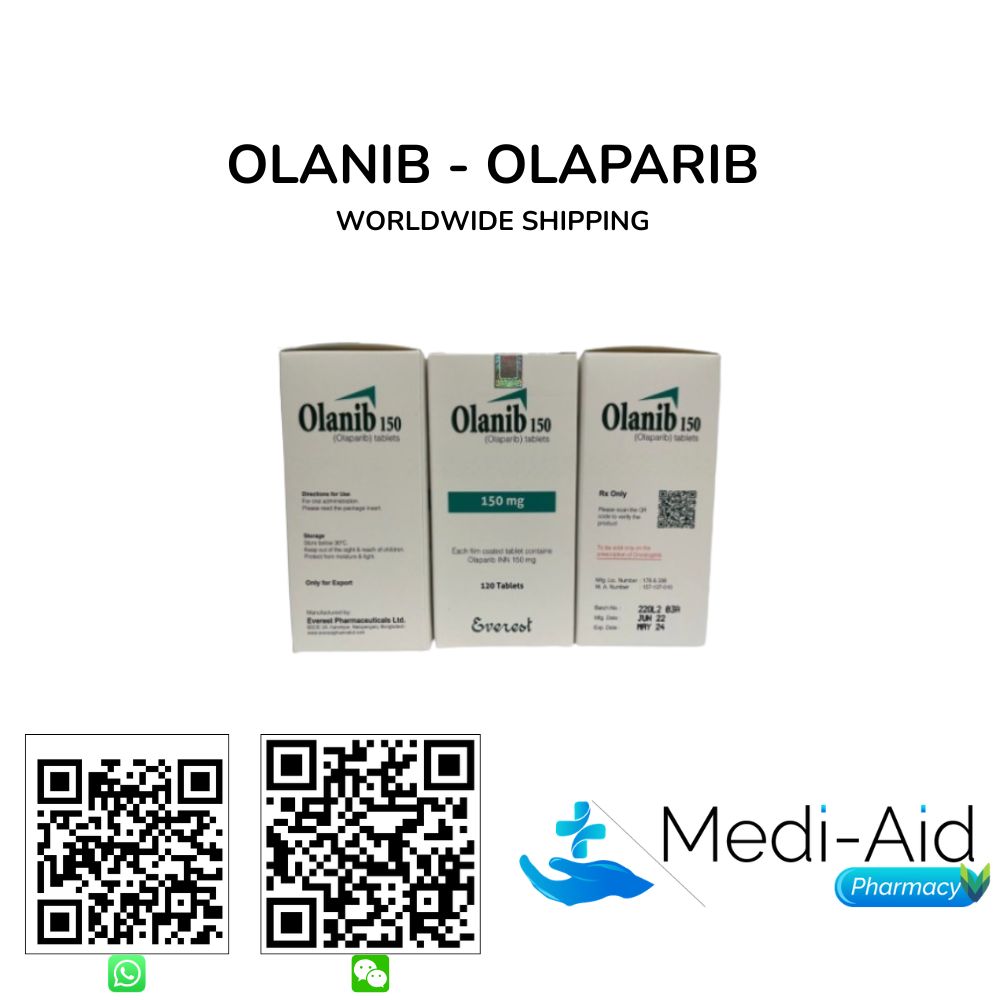
Olanib 150 (Olaparib) 150mg is a potent oral Poly (ADP-ribose) Polymerase (PARP1, PARP2 and PARP3) inhibitor used in the treatment of BRCA-mutated and homologous recombination deficient (HRD) ovarian, breast, pancreatic and prostate cancers. It works by trapping PARP enzymes on damaged DNA and blocking single-strand break repair, driving cancer cells with defective DNA-repair pathways towards cell death through a mechanism known as synthetic lethality. Manufactured by Everest Pharmaceuticals Ltd., Bangladesh and globally supplied by Mediaid Pharmacy with worldwide shipping.
Basic Product Information of Olanib 150 (Olaparib) 150mg
| Brand Name | Olanib 150 (Olaparib) |
| Generic Name | Olaparib INN, 150mg |
| Drug Class | Poly (ADP-Ribose) Polymerase Inhibitor (PARP1, PARP2 and PARP3 Inhibitor) |
| Available Strength | 150mg |
| Formulation | Film-Coated Tablet |
| Pack Size | 120 Tablets per Box (Approximately a 30-Day Supply at the Standard Dose) |
| Primary Indication | BRCA-Mutated / HRD-Positive Ovarian Cancer, Breast Cancer, Pancreatic Cancer and Prostate Cancer |
| Regulatory Approvals | USFDA Approved (Ovarian, Breast, Pancreatic and Prostate Cancer). EMA Approved (Ovarian, Breast, Pancreatic and Prostate Cancer). |
| Originator Brand | Lynparza by AstraZeneca (co-developed and co-marketed with Merck & Co.) |
| Manufacturer | Everest Pharmaceuticals Ltd., Dhaka, Bangladesh |
| Global Supplier | Mediaid Pharmacy, Worldwide Shipping Available |
| Registration Status | Export Only – Manufactured for International Markets |
| Storage Conditions | Store below 30 degrees Celsius. Keep in a dry place away from light and moisture. Keep out of the reach of children. |
How Olanib 150 (Olaparib) Works
Olanib 150 contains Olaparib, a potent oral inhibitor of the Poly (ADP-ribose) Polymerase (PARP1, PARP2 and PARP3) family of enzymes. PARP enzymes play an essential role in repairing single-strand breaks (SSBs) in DNA. When these breaks are not repaired, they progress to double-strand breaks (DSBs) during cell replication, which healthy cells normally correct through homologous recombination repair (HRR).
In tumours carrying BRCA1/BRCA2 mutations or other homologous recombination deficiencies (HRD), this repair pathway is impaired. Olaparib works by inhibiting PARP enzymatic activity and trapping PARP-DNA complexes, preventing single-strand break repair. In HRD tumour cells, the resulting accumulation of unrepaired DNA damage becomes lethal, a mechanism known as synthetic lethality, leading to selective destruction of cancer cells while sparing healthy tissue to a greater extent.
Olanib 150 is administered as a convenient oral tablet, offering an alternative to intravenous chemotherapy for maintenance and targeted treatment in patients whose tumours carry the relevant genetic biomarkers. Treatment eligibility is typically confirmed through BRCA or HRD biomarker testing prior to initiation.
Indications for Olanib 150 (Olaparib)
Olanib 150 (Olaparib) is indicated for the following conditions:
|
Ovarian Cancer As monotherapy for the maintenance treatment of adult patients with platinum-sensitive relapsed, high-grade epithelial ovarian, fallopian tube, or primary peritoneal cancer who are in complete or partial response to platinum-based chemotherapy, including first-line and recurrent settings. |
Breast Cancer As monotherapy for adult patients with deleterious or suspected deleterious germline BRCA-mutated, HER2-negative metastatic breast cancer previously treated with chemotherapy in the neoadjuvant, adjuvant, or metastatic setting. Germline BRCA mutation status must be confirmed before starting treatment. |
|
Pancreatic Cancer As maintenance treatment for adult patients with germline BRCA-mutated metastatic adenocarcinoma of the pancreas whose disease has not progressed on first-line platinum-based chemotherapy. |
Prostate Cancer For adult patients with homologous recombination repair (HRR) gene-mutated metastatic castration-resistant prostate cancer, used alone or in combination with abiraterone and prednisone/prednisolone. |
Benefits of Olanib 150 (Olaparib) 150mg
|
Targeted, Biomarker-Driven Therapy Olanib selectively targets cancer cells with BRCA mutations or HRD, offering a precision treatment approach that spares healthy DNA-repair-competent cells to a greater degree than conventional chemotherapy. |
Clean, Standard Tablet Dosing The 150mg strength matches the current standard Lynparza tablet formulation dose exactly, so the recommended 300mg twice-daily dose is reached with just two tablets per dose. |
Multi-Cancer Versatility Approved across four tumour types, ovarian, breast, pancreatic and prostate cancer, making Olanib one of the most broadly indicated PARP inhibitors available for BRCA and HRR-mutated malignancies. |
|
Affordable Alternative to Lynparza Olanib 150 contains the same active ingredient as Lynparza by AstraZeneca, at a significantly lower cost, making long-term PARP inhibitor therapy more financially accessible to patients worldwide. |
Combination Therapy Compatible Olanib can be used as monotherapy or in combination with agents such as bevacizumab or abiraterone, depending on tumour type, giving physicians flexibility in treatment planning. |
cGMP Certified Manufacturing Produced by Everest Pharmaceuticals Ltd. under cGMP-compliant manufacturing standards, helping ensure consistent quality, purity, and potency in every batch of Olanib tablets. |
How to Take Olanib 150 (Olaparib)
Route: Oral. Tablets should be swallowed whole and not chewed, crushed, dissolved, or divided.
Standard dose: 300mg (two 150mg tablets) taken twice daily, for a total daily dose of 600mg, continued until disease progression or unacceptable toxicity, exactly as directed by the prescribing oncologist.
With food: Can be taken with or without food, at approximately the same time each day, roughly 12 hours apart.
Missed dose: If a dose is missed, the next dose should be taken at its normal scheduled time; do not double up doses.
Renal impairment: No dose adjustment is required in mild renal impairment (creatinine clearance 51-80 mL/min). In moderate renal impairment (creatinine clearance 31-50 mL/min), a reduced dose is required; because the standard tablet dose-reduction steps use 100mg tablets in combination with 150mg tablets, please confirm the correct reduced-dose tablet combination with your prescribing oncologist or pharmacist. Olanib is not recommended in severe renal impairment or end-stage renal disease due to a lack of safety data.
Hepatic impairment: No dose adjustment is required in patients with mild or moderate hepatic impairment. Olanib is not recommended for patients with severe hepatic impairment due to a lack of safety data.
CYP3A4 interactions: Avoid strong or moderate CYP3A4 inhibitors where possible, as these increase Olaparib exposure and generally require a dose reduction. Avoid strong or moderate CYP3A4 inducers, as these decrease Olaparib exposure and may reduce effectiveness. Avoid grapefruit, grapefruit juice, Seville oranges, and Seville orange juice during treatment.
Paediatric use: The safety and efficacy of Olanib in children and adolescents have not been established. No data are currently available.
Monitoring and Dosage Adjustments
Regular monitoring is essential throughout Olanib treatment. Your oncologist will check complete blood counts at baseline and monthly thereafter to monitor for anaemia, neutropenia, and thrombocytopenia, and will watch for early signs of myelodysplastic syndrome or acute myeloid leukaemia. Monitoring also includes assessment for pneumonitis (new or worsening respiratory symptoms), venous thromboembolism, and periodic review of renal function. Treatment may be interrupted or dose-reduced to manage adverse reactions such as nausea, vomiting, diarrhoea, or anaemia. Report any unusual bruising, bleeding, persistent fatigue, breathlessness, or fever to your doctor immediately.
Drug Interactions and Important Information
Avoid concomitant use of Olanib with strong or moderate CYP3A4 inhibitors (such as itraconazole, clarithromycin, and certain protease inhibitors) or strong or moderate CYP3A4 inducers (such as rifampicin, carbamazepine, and phenytoin) where possible, as these significantly alter Olaparib plasma exposure. If co-administration cannot be avoided, dose adjustment as directed by the prescribing physician is required.
Use with caution alongside other myelosuppressive anticancer agents, as combined use may potentiate and prolong bone marrow suppression. Women of childbearing potential should use effective, non-hormonal contraception during treatment and for at least one month after the final dose. Always inform your physician of all medications, supplements, and herbal products you are currently taking before starting Olanib.
Side Effects and Precautions
|
Common Side Effects Nausea and vomiting Fatigue and general weakness Diarrhoea and indigestion Decreased appetite and taste changes Headache and dizziness Anaemia and mild low blood counts Cough and upper respiratory symptoms |
Serious Warnings and Precautions Myelodysplastic syndrome (MDS) and acute myeloid leukaemia (AML). Requires baseline and monthly blood count monitoring. Pneumonitis, including cases requiring treatment discontinuation. Venous thromboembolism, including deep vein thrombosis and pulmonary embolism. Severe anaemia or neutropenia that may require transfusion, dose interruption, or dose reduction. Embryo-foetal toxicity. Not recommended during pregnancy or breastfeeding. |
Who Should Use Olanib 150 (Olaparib)?
Olanib is suitable for adult patients with BRCA-mutated or HRD-positive ovarian, fallopian tube, or primary peritoneal cancer, HER2-negative BRCA-mutated breast cancer, germline BRCA-mutated metastatic pancreatic cancer, or HRR gene-mutated metastatic castration-resistant prostate cancer, as confirmed by an approved biomarker or genetic test. It is prescribed by medical oncologists and gynaecologic oncologists experienced in genomically-guided cancer therapy. A thorough medical assessment including BRCA/HRR testing, baseline blood counts, and renal and hepatic function is required before initiating treatment.
Manufacturer: Everest Pharmaceuticals Ltd.
Everest Pharmaceuticals Ltd. is a vertically integrated pharmaceutical company based in Dhaka, Bangladesh, focused on complex, technology-driven specialty medicines across oncology, hematology, nephrology, and virology. Operating under Bangladesh’s TRIPS/Doha Declaration exemption for least-developed countries, Everest manufactures advanced generics such as Olanib under cGMP-compliant standards, with the stated mission of making high-cost, life-saving medicines accessible and affordable to patients around the world. Olanib is one of Everest’s specialty oncology products, offering a bioequivalent alternative to Lynparza by AstraZeneca at a fraction of the cost.
Global Supplier: Mediaid Pharmacy with Worldwide Shipping
Mediaid Pharmacy is a trusted global supplier of specialty and oncology medications. We ensure Olanib 150 (Olaparib) is accessible to patients and healthcare providers worldwide through reliable worldwide shipping. Whether you are located in South Asia, the Middle East, Africa, Europe, or beyond, Mediaid Pharmacy provides fast and reliable delivery with full order support. Contact us directly via WhatsApp, phone, or WeChat for pricing, availability, and delivery enquiries.
Why Choose Olanib 150 (Olaparib) from Mediaid Pharmacy?
Olanib 150 represents an important, targeted option in the treatment of BRCA-mutated and HRD-positive cancers. As the generic equivalent of Lynparza by AstraZeneca, it delivers the same active ingredient, Olaparib, with the same proven PARP-inhibition mechanism at a dramatically more affordable price. Manufactured by Everest Pharmaceuticals Ltd. under cGMP-compliant standards and distributed globally by Mediaid Pharmacy, Olanib 150 gives patients and oncology centres worldwide access to precision cancer therapy without the financial burden of brand-name alternatives. For patients and physicians seeking a proven, affordable, and accessible Olaparib option with worldwide delivery, Olanib 150 from Mediaid Pharmacy is the trusted choice.
Frequently Asked Questions About Olanib 150 (Olaparib)
What is Olanib 150 (Olaparib) used for?
Olanib 150 (Olaparib) is a PARP inhibitor used to treat BRCA-mutated or HRD-positive ovarian cancer, HER2-negative BRCA-mutated breast cancer, germline BRCA-mutated metastatic pancreatic cancer, and HRR gene-mutated metastatic castration-resistant prostate cancer in adults. It works by blocking DNA-repair pathways in cancer cells that already carry defective repair machinery, leading to targeted cell death.
How should I take Olanib 150 (Olaparib)?
Olanib 150 is taken orally, with or without food, at consistent times roughly 12 hours apart. The standard dose is 300mg (two 150mg tablets) twice daily, for a total of 600mg per day. Always follow your prescribing oncologist’s exact instructions, as dosing is individualised to tumour type and patient tolerance.
What strength is Olanib 150 available in?
Olanib 150 is available in a 150mg film-coated tablet, supplied in a box of 120 tablets, which generally provides a full 30-day supply at the standard 300mg-twice-daily dose. A separate 50mg Olanib product is also available for other dosing scenarios.
Is Olanib 150 the same as Lynparza (Olaparib by AstraZeneca)?
Yes. Olanib 150 is the generic equivalent of Lynparza. Both contain the same active ingredient, Olaparib, and work through the same PARP-inhibition mechanism. Olanib is manufactured by Everest Pharmaceuticals Ltd. in Bangladesh and offers the same clinical mechanism as Lynparza at a significantly lower cost.
What are the side effects of Olanib 150 (Olaparib)?
Common side effects include nausea, fatigue, diarrhoea, decreased appetite, headache, and mild anaemia. Serious but less common risks include myelodysplastic syndrome/acute myeloid leukaemia, pneumonitis, venous thromboembolism, and severe low blood counts. Always consult your oncologist for a complete assessment of your individual risks and benefits before starting treatment.
Can Olanib 150 be combined with other cancer medications?
Olanib may be used as monotherapy or, depending on tumour type, in combination with agents such as bevacizumab or abiraterone, under close oncology supervision. It should be used cautiously with other myelosuppressive anticancer agents and should not be combined with strong CYP3A4 inhibitors or inducers without a physician-directed dose adjustment.
Is Olanib 150 (Olaparib) safe during pregnancy or breastfeeding?
No. Olanib is not recommended during pregnancy or breastfeeding due to the risk of embryo-foetal harm. Women of childbearing potential must use effective, non-hormonal contraception during treatment and for at least one month after the final dose. Please consult your physician before starting treatment if you are pregnant, planning to become pregnant, or breastfeeding.
Can I order Olanib 150 (Olaparib) online with worldwide shipping?
Yes. Mediaid Pharmacy supplies Olanib 150 (Olaparib) globally with worldwide shipping. Contact us via WhatsApp, phone, or WeChat at +8801773428128 or email us at info@mediaidpharmacy.com to enquire about pricing, availability, and delivery to your country.
Order Olanib 150 (Olaparib) with Worldwide Shipping
Phone / WhatsApp / WeChat: +8801773428128 | Email: info@mediaidpharmacy.com
Reviews
There are no reviews yet.