
Description
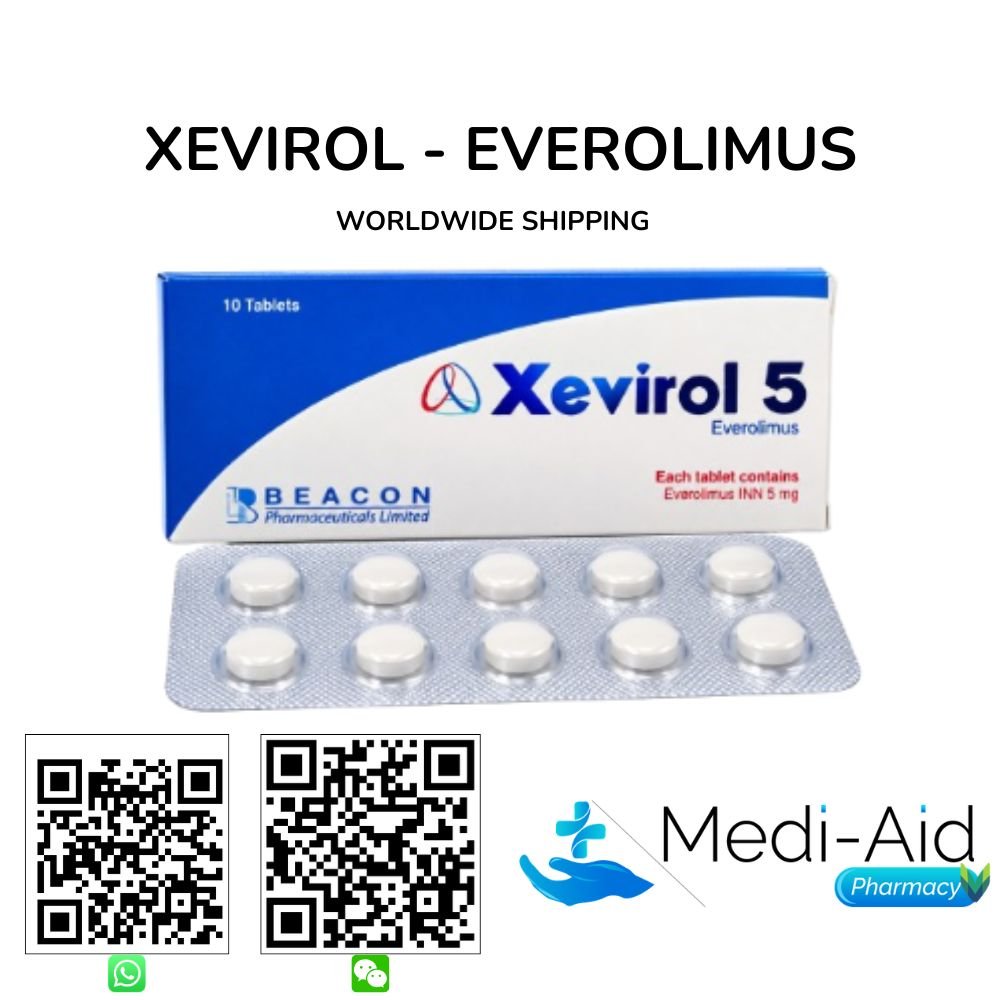
Xevirol 5 MG (Everolimus) is an orally bioavailable macrolide rapamycin analogue (rapalogue) and selective allosteric inhibitor of mTORC1 (mechanistic target of rapamycin complex 1) a targeted antineoplastic and immunosuppressive agent that binds with high affinity to the intracellular receptor FKBP12 (FK506-binding protein of 12 kDa), forming a gain-of-function FKBP12-everolimus inhibitory complex that allosterically suppresses mTORC1 serine/threonine kinase activity, blocking mTORC1-mediated phosphorylation of downstream effectors S6 kinase 1 (S6K1) and eukaryotic initiation factor 4E-binding protein 1 (4E-BP1), suppressing cap-dependent mRNA translation of cell cycle progression proteins (cyclin D1, c-Myc, CDK4), arresting tumor cell proliferation at the G1/S checkpoint, and reducing mTORC1-driven hypoxia-inducible factor 1-alpha (HIF-1α) expression to impair VEGF-mediated tumor angiogenesis supplied as 5 mg tablets, 10 tablets per box, and manufactured by Beacon Pharmaceuticals PLC, Bangladesh.
Everolimus, the active pharmaceutical ingredient of Xevirol, is approved across multiple oncology indications: for the treatment of hormone receptor-positive (HR+), HER2-negative advanced breast cancer in combination with exemestane after failure of letrozole or anastrozole; for advanced renal cell carcinoma (RCC) after failure of VEGFR-targeted therapy; for progressive neuroendocrine tumors (NET) of pancreatic origin (PNET); and for progressive, well-differentiated, non-functional NET of gastrointestinal or lung origin establishing everolimus as the most broadly approved mTOR inhibitor in oncology, with demonstrated progression-free survival (PFS) benefit across four distinct solid tumor types in separate Phase 3 randomized controlled trials.
The recommended dose of Xevirol (Everolimus) for all oncology indications is 10 mg (two 5 mg tablets) orally once daily, taken consistently with or without food at the same time each day, until disease progression or unacceptable toxicity. The pivotal Phase 3 BOLERO-2 trial (NCT00863655; n=724; randomized, double-blind, placebo-controlled) in HR+/HER2− advanced breast cancer demonstrated that everolimus 10 mg/day + exemestane 25 mg/day achieved a median progression-free survival of 10.6 months versus 4.1 months (hazard ratio [HR] 0.36; 95% confidence interval [CI] 0.27–0.47; p<0.001; local investigator assessment) compared to placebo + exemestane a 64% reduction in the risk of disease progression in patients with HR+/HER2− advanced breast cancer that had progressed on or after a non-steroidal aromatase inhibitor (letrozole or anastrozole); in advanced RCC, the Phase 3 RECORD-1 trial (NCT00410124; n=416) demonstrated a median PFS of 4.9 months versus 1.9 months (HR 0.33; 95% CI 0.25–0.43; p<0.0001) after VEGFR TKI failure; in advanced PNET, the Phase 3 RADIANT-3 trial (NCT00510068; n=410) demonstrated a median PFS of 11.0 months versus 4.6 months (HR 0.35; 95% CI 0.27–0.45; p<0.001).
Important: The most clinically significant adverse reactions of everolimus are non-infectious pneumonitis, infections, stomatitis, and metabolic abnormalities (hyperglycemia, hyperlipidemia). Non-infectious pneumonitis (mTOR inhibitor-associated pneumonitis) occurred in 14–19% of patients in clinical trials and may be severe or fatal; monitor for new or worsening respiratory symptoms (dyspnea, cough, hypoxia, pleural effusion, radiographic infiltrates); withhold everolimus for Grade 2 pneumonitis; permanently discontinue for Grade 4 pneumonitis; corticosteroids may be required.
Serious infections (bacterial, fungal, viral, including Pneumocystis jirovecii pneumonia [PJP]) occurred in up to 7% of patients; complete treatment of pre-existing invasive fungal infections before initiating everolimus. Stomatitis (oral mucositis) occurred in up to 67% of patients (Grade 3–4: 8%); manage with dexamethasone 0.5 mg/5 mL oral rinse (swish and spit); avoid alcohol- and hydrogen peroxide-containing mouthwashes.
Everolimus can cause severe hyperglycemia (Grade 3–4: 5%) and hyperlipidemia; monitor fasting blood glucose, cholesterol, and triglycerides before initiating and periodically thereafter. Everolimus is a CYP3A4 and P-glycoprotein (P-gp) substrate; strong CYP3A4/P-gp inhibitors increase everolimus exposure (up to 15-fold); avoid concomitant use or reduce everolimus dose to 2.5 mg once daily; strong CYP3A4/P-gp inducers (e.g., rifampin, St. John’s Wort) dramatically decrease everolimus exposure avoid concomitant use.
Everolimus can cause embryo-fetal toxicity; females of reproductive potential must use effective contraception during treatment and for 8 weeks after the last dose; males should use effective contraception during treatment and for 4 weeks after the last dose. Do not substitute everolimus for other mTOR inhibitors without confirmed indication-specific prescribing and clinical benefit-risk assessment.
Searching for Xevirol 5 MG Everolimus? Mediaid Pharmacy lists this product across its oncology medicines, breast cancer medicines, kidney cancer medicines, and Beacon Pharmaceuticals medicines portfolios and ships it worldwide.
Basic Product Information of Xevirol 5 MG (Everolimus)
| Brand Name | Xevirol 5 MG (Everolimus) Bangladesh-manufactured by Beacon Pharmaceuticals PLC; everolimus is also marketed internationally as Afinitor (everolimus; oncology indications) and Zortress/Certican (everolimus; transplant immunosuppression) by Novartis in multiple global markets; Xevirol is the branded generic formulation of everolimus 5 mg tablets for the international oncology market, manufactured by Beacon Pharmaceuticals PLC in Bangladesh |
| Product Name | Xevirol (branded generic everolimus 5 mg tablets by Beacon Pharmaceuticals PLC, Bangladesh) |
| Generic Name | Everolimus (INN; also designated RAD001 during preclinical and clinical development by Novartis; a semisynthetic macrolide lactone derived from sirolimus [rapamycin] by addition of a 2-hydroxyethyl group at position 40, conferring improved oral bioavailability and a shorter elimination half-life [approximately 30 hours] compared to sirolimus; everolimus binds with picomolar affinity to FKBP12 [FK506-binding protein 12], forming an FKBP12-everolimus complex that allosterically and selectively inhibits mTORC1 [mechanistic target of rapamycin complex 1] serine/threonine kinase activity by preventing substrate docking at the FATOR domain of mTOR; mTORC1 inhibition blocks phosphorylation of ribosomal protein S6 kinase 1 [S6K1] at Thr389 and 4E-BP1 [eukaryotic initiation factor 4E-binding protein 1] at Thr37/46 and Ser65/Thr70, suppressing cap-dependent translation initiation of mRNAs encoding cell cycle regulatory proteins [cyclin D1, c-Myc, CDK4/6], anti-apoptotic proteins [survivin, MCL-1], and angiogenic factors [HIF-1α → VEGF]; everolimus does not substantially inhibit mTORC2, though prolonged mTORC1 inhibition can indirectly attenuate mTORC2-mediated AKT Ser473 phosphorylation via S6K1 feedback relief; in HR+/HER2− breast cancer, PI3K/AKT/mTOR pathway activation occurring via PIK3CA mutation, PTEN loss, AKT1 mutation, or mTOR amplification drives endocrine resistance by bypassing estrogen receptor-dependent proliferative signaling; everolimus suppresses this resistance mechanism, restoring endocrine sensitivity in combination with exemestane; developed by Novartis [as RAD001] and commercialized as Afinitor for oncology and Zortress/Certican for transplant immunosuppression; FDA initial oncology approval [advanced RCC after VEGFR TKI failure]: March 30, 2009; HR+/HER2− advanced breast cancer approval [BOLERO-2]: July 20, 2012; advanced PNET approval [RADIANT-3]: May 5, 2011; non-functional GI or lung NET approval [RADIANT-4]: February 26, 2016) |
| Drug Class | mTOR Inhibitor (Mechanistic Target of Rapamycin Inhibitor); mTORC1 Allosteric Inhibitor; Rapamycin Analogue (Rapalogue); Oral Macrolide Serine/Threonine Kinase Inhibitor; PI3K/AKT/mTOR Pathway Inhibitor; HR+/HER2-Negative Advanced Breast Cancer Endocrine Resistance Reversal Agent (in combination with Exemestane); Advanced Renal Cell Carcinoma (RCC) Targeted Oral Therapy; Pancreatic Neuroendocrine Tumor (PNET) Targeted Oral Therapy; Gastrointestinal and Lung Neuroendocrine Tumor (NET) Targeted Oral Therapy; Antineoplastic Targeted Agent; Post-Aromatase Inhibitor and Post-VEGFR TKI Precision Oral Therapy |
| Formulation | Tablets for oral administration take consistently either always with food or always without food (food affects everolimus absorption: a high-fat meal reduces Cmax by 54% and AUC by 22%; a low-fat meal reduces Cmax by 42% and AUC by 32%; maintaining consistent food intake timing minimizes pharmacokinetic variability and is therefore strongly recommended); swallow whole do not crush, chew, or split tablets; if the tablet formulation cannot be swallowed, dissolve in water immediately before drinking (stir gently for approximately 7 minutes until dispersed, drink, then rinse glass with the same volume of water and drink immediately); take at approximately the same time each day; if a dose is missed by ≥6 hours, skip the missed dose and take the next dose at the scheduled time the following day do not double the dose; if vomiting occurs after a dose, do not take an additional dose on that day; administer everolimus 10 mg once daily (two 5 mg tablets) continuously in combination with exemestane 25 mg orally once daily (breast cancer indication), or as a single agent once daily for RCC, PNET, and NET indications |
| Available Strengths | 5 mg tablets per tablet; the recommended oncology dose of everolimus is 10 mg once daily (two 5 mg tablets per dose); the 5 mg tablet strength enables the first and only dose reduction level of 5 mg once daily (one 5 mg tablet per dose) for patients experiencing Grade 2 or recurrent Grade 2 adverse reactions including stomatitis, non-infectious pneumonitis, metabolic abnormalities, or other clinically significant toxicities; following resolution of a Grade 3 adverse reaction to Grade ≤1, everolimus may be resumed at 5 mg once daily; permanently discontinue everolimus for Grade 4 adverse reactions or for recurrent Grade 3 non-infectious pneumonitis; in patients receiving concomitant moderate CYP3A4 inhibitors (erythromycin, fluconazole, diltiazem, verapamil), reduce everolimus dose to 5 mg once daily; in patients in whom a strong CYP3A4 inhibitor cannot be avoided, reduce dose to 2.5 mg once daily (achieved by alternative 2.5 mg strength formulations if available); no body-weight-based dose adjustment is required; no dose adjustment is required for mild or moderate renal impairment or mild hepatic impairment (Child-Pugh A); reduce dose to 5 mg once daily for moderate hepatic impairment (Child-Pugh B); avoid use or reduce to 2.5 mg once daily for severe hepatic impairment (Child-Pugh C) based on benefit-risk assessment |
| Available Pack Size | 10 tablets per box; at the recommended dose of 10 mg once daily (two 5 mg tablets per day), one 10-tablet box supplies 5 days of therapy; for a complete 28-day calendar month of continuous once-daily dosing, patients require approximately 6 boxes of Xevirol 5 MG per month (60 tablets per month ÷ 10 tablets per box = 6 boxes per patient per month at the standard 10 mg dose); patients dose-reduced to 5 mg once daily (one tablet per day) require 3 boxes per month (30 tablets per month ÷ 10 per box); hospital pharmacies, oncology treatment centers, and patient access programs typically procure Xevirol 5 MG on a monthly basis corresponding to continuous once-daily dosing without scheduled treatment breaks; everolimus is administered continuously until disease progression or unacceptable toxicity, requiring sustained monthly procurement for the duration of clinically effective disease control; HR+/HER2− advanced breast cancer programs managing long-duration everolimus + exemestane therapy, RCC programs managing everolimus monotherapy, and NET/PNET programs on everolimus maintenance typically calculate monthly procurement by multiplying the number of active patients at each dose level by the corresponding box quantity per 28-day period (6 boxes/month at 10 mg; 3 boxes/month at 5 mg); institutions should account for treatment interruptions and dose reductions in procurement planning |
| Dosing Schedule | Recommended Dose (all oncology indications): Everolimus 10 mg (two 5 mg tablets) orally once daily, taken consistently with or without food (maintain consistent food status). Combination Partner (Breast Cancer): Exemestane 25 mg orally once daily continuously; premenopausal women should receive a GnRH agonist to achieve ovarian suppression before initiating everolimus + exemestane. Duration: Continue until disease progression or unacceptable toxicity. Dose Reductions for Toxicity: Reduce to 5 mg once daily for Grade 2 adverse reactions not resolving within 4 weeks, recurrent Grade 2 reactions, or upon resumption after a Grade 3 treatment hold; permanently discontinue for Grade 4 adverse reactions. Mandatory Safety Assessments Before and During Treatment: Obtain complete blood count (CBC), comprehensive metabolic panel (CMP), fasting blood glucose, fasting lipid panel (total cholesterol, LDL, HDL, triglycerides), and kidney function tests (serum creatinine, BUN) before initiating; repeat fasting glucose and lipid panel at 4–8 weeks after initiation and then periodically; monitor liver function tests periodically. Assess pulmonary function and obtain chest imaging (chest X-ray or CT) if the patient develops new or worsening respiratory symptoms at any time during treatment (monitor for non-infectious pneumonitis). Stomatitis Prophylaxis: Initiate dexamethasone 0.5 mg/5 mL oral rinse (swish and spit for approximately 2 minutes; do not swallow) four times daily from the first day of everolimus treatment; this prophylactic approach significantly reduces Grade 2–3 stomatitis incidence and severity compared to management after onset. Drug Interaction Screening: Review all concomitant medications for strong CYP3A4/P-gp inhibitors (avoid; if unavoidable, reduce everolimus to 2.5 mg/day), moderate CYP3A4 inhibitors (reduce everolimus to 5 mg/day), strong CYP3A4 inducers (avoid; if unavoidable, consider doubling everolimus dose up to 20 mg/day), and ACE inhibitors (increased risk of angioedema); avoid live vaccines during treatment. |
| Primary Indications | HR+/HER2-NEGATIVE ADVANCED OR METASTATIC BREAST CANCER:
Everolimus + Exemestane Post-Non-Steroidal Aromatase Inhibitor (BOLERO-2): Everolimus 10 mg once daily in combination with exemestane 25 mg once daily for postmenopausal women with HR+/HER2− advanced breast cancer whose disease had progressed on or after a non-steroidal aromatase inhibitor (letrozole or anastrozole) (BOLERO-2; NCT00863655; n=724; randomized, double-blind, Phase 3): median PFS 10.6 vs. 4.1 months by local investigator assessment (HR 0.36; 95% CI 0.27–0.47; p<0.001); median PFS 11.0 vs. 4.1 months by central radiological assessment (HR 0.38; 95% CI 0.31–0.48; p<0.001); FDA approval: July 20, 2012. Everolimus does not require biomarker preselection (e.g., PIK3CA mutation testing) for use in HR+/HER2− breast cancer, distinguishing it from PI3Kα inhibitor alpelisib (which mandates PIK3CA mutation confirmation) and AKT inhibitor capivasertib (which requires PIK3CA/AKT1/PTEN alteration confirmation). ADVANCED RENAL CELL CARCINOMA (RCC): Everolimus Monotherapy Post-VEGFR TKI (RECORD-1): Everolimus 10 mg once daily for adult patients with advanced RCC after failure of treatment with sunitinib, sorafenib, or both (RECORD-1; NCT00410124; n=416; randomized, double-blind, Phase 3): median PFS 4.9 vs. 1.9 months (HR 0.33; 95% CI 0.25–0.43; p<0.0001); FDA approval: March 30, 2009. NEUROENDOCRINE TUMORS (NET) PANCREATIC AND GI/LUNG: Everolimus Monotherapy Advanced PNET (RADIANT-3): Everolimus 10 mg once daily for adult patients with progressive, well-differentiated, non-functional neuroendocrine tumors of pancreatic origin (PNET) (RADIANT-3; NCT00510068; n=410; Phase 3): median PFS 11.0 vs. 4.6 months (HR 0.35; 95% CI 0.27–0.45; p<0.001); FDA approval: May 5, 2011. Everolimus Monotherapy Progressive Non-Functional GI or Lung NET (RADIANT-4): Everolimus 10 mg once daily for adult patients with progressive, well-differentiated, non-functional NET of gastrointestinal or lung origin (RADIANT-4; NCT01524783; n=302; Phase 3): median PFS 11.0 vs. 3.9 months (HR 0.48; 95% CI 0.35–0.67; p<0.0001); FDA approval: February 26, 2016. |
| Manufacturer / Brand | Beacon Pharmaceuticals PLC, Headquartered in Mymensingh, Bangladesh; Country of Origin: Bangladesh; Xevirol is Beacon Pharmaceuticals PLC’s branded formulation of everolimus 5 mg tablets; Beacon Pharmaceuticals PLC is a Bangladesh-based pharmaceutical manufacturer producing a range of oncology, targeted therapy, and specialty medicines for the domestic and international markets; the active pharmaceutical ingredient everolimus was originally developed by Novartis (as RAD001) and is commercialized internationally as Afinitor (oncology) and Zortress/Certican (transplant); Brand: Beacon; Categories: Beacon Pharmaceuticals Medicines, Breast Cancer Medicines, Kidney Cancer Medicines, Oncology Medicines |
| Global Supplier | Mediaid Pharmacy Dhaka, Bangladesh; Phone / WhatsApp: +8801773428128; Email: info@mediaidpharmacy.com; worldwide shipping to patients, oncology departments, HR+/HER2− breast cancer treatment programs, advanced RCC programs, NET/PNET treatment centers, hospital pharmacies, oncology day units, patient access programs, and international distributors |
Mediaid Pharmacy Global Supplier of Xevirol 5 MG (Everolimus) with Worldwide Shipping
Mediaid Pharmacy is a Dhaka-based supplier of specialty targeted oncology, breast cancer, kidney cancer, neuroendocrine tumor, and rare disease medicines with worldwide shipping to patients, oncology departments, infusion units, HR+/HER2− metastatic breast cancer treatment programs, advanced RCC programs, NET/PNET treatment centers, hospital pharmacies, oncology day units, patient access programs, and international distributors across all regions. Xevirol 5 MG (Everolimus), manufactured by Beacon Pharmaceuticals PLC in Bangladesh, is supplied as 5 mg tablets, 10 tablets per box, with pricing quotations, stock confirmation, full product documentation, shipping arrangements, and end-to-end international delivery tracking for every order.
The procurement planning significance of the 10-tablet box format is directly tied to everolimus’s once-daily continuous dosing architecture: at the recommended dose of 10 mg once daily (two 5 mg tablets per day), patients require approximately 6 boxes of Xevirol 5 MG per 28-day calendar month; for institutions managing multiple patients simultaneously across the HR+/HER2− breast cancer, RCC, and NET/PNET indications, monthly procurement is calculated by multiplying the number of active patients at the standard 10 mg dose by 6 boxes per month, with adjustments for patients on dose-reduced therapy at 5 mg once daily who require 3 boxes per month.
HR+/HER2− metastatic breast cancer programs managing long-duration everolimus + exemestane therapy after aromatase inhibitor failure; advanced RCC centers sourcing everolimus monotherapy for second-line and beyond treatment after VEGFR TKI progression; NET/PNET oncology programs managing everolimus maintenance therapy; hospital formulary procurement departments co-sourcing Xevirol 5 MG with exemestane and other targeted oncology medicines; and individual patients and families sourcing everolimus for HR-positive advanced breast cancer treatment can contact the Mediaid Pharmacy team through WhatsApp, phone, or email for Xevirol 5 MG stock availability, current pricing, shipping options, and international delivery timelines.
Why Choose Xevirol 5 MG (Everolimus) from Mediaid Pharmacy?
Xevirol (Everolimus) from Beacon Pharmaceuticals PLC delivers the validated mTORC1 inhibitory mechanism of a clinically proven oral targeted therapy the most broadly approved mTOR inhibitor in oncology, with demonstrated progression-free survival benefit in four distinct solid tumor types across four separate Phase 3 randomized controlled trials (BOLERO-2 in HR+/HER2− advanced breast cancer; RECORD-1 in advanced RCC; RADIANT-3 in advanced PNET; RADIANT-4 in non-functional GI or lung NET) supplied as 5 mg oral tablets, 10 tablets per box, enabling once-daily oral self-administration at home without IV infusion requirements, addressing the PI3K/AKT/mTOR pathway-driven resistance mechanism that underlies endocrine resistance in HR+/HER2− breast cancer and the mTOR pathway-dependent proliferation that characterizes RCC and neuroendocrine tumors. Everolimus is pharmacologically and clinically distinguished across the HR+/HER2− breast cancer and kidney cancer treatment landscapes by four evidence-based attributes.
First, everolimus is the only mTOR inhibitor with Phase 3 randomized evidence across four distinct solid tumor indications a breadth of clinical validation unmatched by any other mTOR pathway inhibitor currently approved; in HR+/HER2− breast cancer, the BOLERO-2 trial demonstrated a 64% reduction in the risk of disease progression (median PFS 10.6 vs. 4.1 months; HR 0.36; p<0.001) when everolimus + exemestane was compared to exemestane alone in patients whose disease had progressed on letrozole or anastrozole, establishing everolimus as the first approved agent to target the PI3K/AKT/mTOR endocrine resistance mechanism in this setting; in advanced RCC, RECORD-1 demonstrated a 67% reduction in the risk of disease progression (median PFS 4.9 vs. 1.9 months; HR 0.33; p<0.0001) after VEGFR TKI failure; in advanced PNET, RADIANT-3 demonstrated a 65% reduction in risk of progression (median PFS 11.0 vs. 4.6 months; HR 0.35; p<0.001); and in non-functional GI/lung NET, RADIANT-4 demonstrated a 52% reduction in risk of progression (median PFS 11.0 vs. 3.9 months; HR 0.48; p<0.0001) all in controlled Phase 3 trials supporting the breadth of its regulatory approvals.
Second, everolimus targets the PI3K/AKT/mTOR endocrine resistance pathway that is active in an estimated 25–40% of HR+/HER2− breast cancers with acquired aromatase inhibitor resistance, and uniquely does not require tumor biomarker preselection unlike PI3Kα inhibitor alpelisib (Piqray/Pivikto), which mandates PIK3CA mutation confirmation by a companion diagnostic test, and AKT inhibitor capivasertib (Truqap), which requires PIK3CA/AKT1/PTEN alteration confirmation; everolimus + exemestane is therefore applicable to any patient with HR+/HER2− advanced breast cancer who has progressed on a non-steroidal aromatase inhibitor, without prior molecular profiling requirements, enabling rapid clinical deployment without companion diagnostic infrastructure or testing delays.
Third, everolimus’s once-daily oral tablet formulation enables patient self-administration at home without IV infusion center visits, without refrigeration requirements during storage, and without the vascular access or infusion reaction monitoring required for IV biologic agents; the 5 mg tablet strength of Xevirol permits the single-step dose reduction to 5 mg once daily that is the standard toxicity management strategy for all everolimus-associated adverse reactions, without requiring a different tablet strength to be sourced separately simplifying dose modification logistics for patients, caregivers, and dispensing pharmacies.
Fourth, everolimus’s adverse effect profile dominated by stomatitis (67%; Grade 3–4: 8%), non-infectious pneumonitis (14–19%; Grade 3: 4%), hyperglycemia (50%), and hyperlipidemia (77% cholesterol elevation) is comprehensively manageable through prophylactic dexamethasone mouthwash (reducing stomatitis severity), structured pulmonary symptom monitoring with CT-guided assessment and early corticosteroid intervention for pneumonitis, antihyperglycemic therapy for metabolic abnormalities, and statin or fibrate therapy for dyslipidemia, enabling experienced oncology teams to maintain continuous everolimus exposure through the prolonged treatment course required for metastatic disease management while preserving patient quality of life.
To source the complete range of mTOR inhibitor breast cancer medicines, kidney cancer targeted therapies, neuroendocrine tumor medicines, and oncology targeted agents, visit the Mediaid Pharmacy breast cancer medicines portfolio, the kidney cancer medicines collection, the oncology medicines collection, and the Beacon Pharmaceuticals medicines range, and contact the team for a personalized quotation and international shipping confirmation.
Frequently Asked Questions About Xevirol 5 MG (Everolimus)
What is Xevirol 5 MG (Everolimus) used for?
Xevirol 5 MG (Everolimus) is an oral mTOR (mechanistic target of rapamycin) inhibitor used across four distinct oncology indications: (1) in combination with exemestane 25 mg once daily for the treatment of postmenopausal women with HR+/HER2− advanced breast cancer whose disease progressed on or after a non-steroidal aromatase inhibitor (letrozole or anastrozole) targeting the PI3K/AKT/mTOR endocrine resistance pathway that drives aromatase inhibitor escape; (2) as a single agent for the treatment of adults with advanced renal cell carcinoma (RCC) after failure of treatment with sunitinib, sorafenib, or both targeting the mTOR-driven survival and angiogenic signaling pathways that characterize clear cell RCC; (3) as a single agent for adults with progressive, well-differentiated, non-functional neuroendocrine tumors of pancreatic origin (PNET); and (4) as a single agent for adults with progressive, well-differentiated, non-functional neuroendocrine tumors of gastrointestinal or lung origin. Everolimus does not require tumor biomarker preselection for any of these indications, distinguishing it from PI3K pathway inhibitors (alpelisib, capivasertib) that mandate PIK3CA or AKT/PTEN mutation testing. BOLERO-2 (breast cancer; Phase 3; n=724): median PFS 10.6 vs. 4.1 months (HR 0.36; p<0.001). RECORD-1 (RCC; Phase 3; n=416): median PFS 4.9 vs. 1.9 months (HR 0.33; p<0.0001). RADIANT-3 (PNET; Phase 3; n=410): median PFS 11.0 vs. 4.6 months (HR 0.35; p<0.001). Xevirol 5 MG, manufactured by Beacon Pharmaceuticals PLC in Bangladesh, is available through Mediaid Pharmacy with worldwide shipping to patients and HR-positive advanced breast cancer treatment programs globally.
What is the generic name of Xevirol?
The generic name (International Nonproprietary Name, INN) of Xevirol is everolimus (also designated RAD001 during preclinical and clinical development by Novartis). Everolimus is an orally bioavailable macrolide rapamycin analogue (rapalogue) that selectively inhibits mTORC1 (mechanistic target of rapamycin complex 1) through formation of a high-affinity FKBP12-everolimus inhibitory complex. Its mechanism of action allosteric mTORC1 suppression → S6K1 and 4E-BP1 dephosphorylation → G1 cell cycle arrest and HIF-1α/VEGF-driven angiogenesis inhibition targets the mTOR-dependent proliferative and angiogenic survival mechanisms that drive progression in HR+/HER2− aromatase inhibitor-resistant breast cancer, clear cell RCC, and neuroendocrine tumors. Everolimus is mechanistically distinct from PI3K/AKT pathway inhibitors: alpelisib (Piqray) selectively inhibits PI3Kα (p110α), the upstream kinase that phosphorylates PIP2 to PIP3 to activate AKT; capivasertib (Truqap) inhibits all three AKT isoforms (AKT1, AKT2, AKT3) downstream of PI3K; everolimus inhibits mTORC1 further downstream of AKT, at the convergence point where PI3K/AKT, RAS/MAPK, and energy-sensing AMPK signals are integrated; this downstream positioning can limit feedback reactivation loops that restrict upstream PI3K or AKT inhibitor activity in some contexts. Within mTOR inhibitors, everolimus and temsirolimus (Torisel; IV rapamycin analogue) both inhibit mTORC1 selectively, but everolimus is orally bioavailable (temsirolimus requires IV infusion) and has demonstrated approval across a broader oncology indication set. Everolimus was developed by Novartis (as RAD001) and is commercialized internationally as Afinitor; Xevirol is the branded generic formulation of everolimus 5 mg tablets manufactured by Beacon Pharmaceuticals PLC in Bangladesh. Mediaid Pharmacy distributes Xevirol 5 MG Everolimus globally with worldwide shipping to patients, oncology programs, and hospital pharmacies.
What are the side effects of Xevirol (Everolimus)?
The most clinically significant adverse effects of everolimus are non-infectious pneumonitis, stomatitis, serious infections, and metabolic abnormalities including hyperglycemia and hyperlipidemia. Stomatitis (Oral Mucositis) is the most common adverse reaction: all-grade stomatitis/mucositis occurred in 67% of patients in BOLERO-2; Grade 3–4: 8%; prophylactic management with dexamethasone 0.5 mg/5 mL oral rinse (swish and spit four times daily, beginning with the first dose of everolimus) significantly reduces stomatitis severity and should be initiated before symptom onset; avoid alcohol- or hydrogen peroxide-containing mouthwashes, which worsen mucosal irritation. Non-Infectious Pneumonitis (mTOR Inhibitor-Associated Pneumonitis): 14–19% all-grade; Grade 3: 4%; a unique and potentially severe class effect of mTOR inhibitors; clinical presentations range from asymptomatic radiographic infiltrates to symptomatic dyspnea, cough, and hypoxia; fatal cases have been reported; evaluate patients with new or worsening respiratory symptoms; withhold everolimus for Grade 2 pneumonitis; treat with corticosteroids if Grade 2 or above; permanently discontinue for Grade 4 or recurrent Grade 3 pneumonitis. Infections: 50% all-grade; serious infections (Grade 3–4) 7%; including bacterial, fungal (aspergillosis, candidiasis), viral (HSV, VZV, CMV), and opportunistic (PJP) infections; complete treatment of pre-existing invasive fungal infections before initiating everolimus; prophylactic PJP prophylaxis may be considered in high-risk patients. Hyperglycemia: 50% all-grade; Grade 3–4: 5%; monitor fasting blood glucose; antidiabetic therapy (metformin, insulin) may be required. Hypercholesterolemia: 77% all-grade. Hypertriglyceridemia: 57% all-grade; Grade 3: 5%. Anemia: 92% all-grade; Grade 3–4: 6%. Fatigue: 31%. Diarrhea: 30% (Grade 3–4: 1–3%). Decreased Appetite: 30%. Rash: 59% (mostly Grade 1–2). Peripheral Edema: 25%. Nausea: 26%. Renal Failure: 15%. Thrombocytopenia: 23%. All patients initiating Xevirol (Everolimus) should have baseline CBC, comprehensive metabolic panel, fasting glucose, fasting lipid panel, and liver function tests assessed, and treatment initiated under the supervision of a qualified oncologist experienced in managing mTOR inhibitor toxicities and endocrine resistance in breast cancer, RCC, or NET/PNET.
How effective is Xevirol (Everolimus) for breast cancer and kidney cancer?
Everolimus demonstrated statistically significant and clinically meaningful progression-free survival (PFS) improvements across four Phase 3 randomized controlled trials covering four distinct tumor types a clinical evidence base that establishes it as the most broadly validated mTOR inhibitor in oncology. BOLERO-2 (HR+/HER2− Advanced Breast Cancer; NCT00863655; Phase 3; n=724; everolimus 10 mg/day + exemestane 25 mg/day vs. placebo + exemestane; postmenopausal women with progression on letrozole or anastrozole): median PFS 10.6 vs. 4.1 months by local investigator assessment (HR 0.36; 95% CI 0.27–0.47; p<0.001); median PFS 11.0 vs. 4.1 months by central radiological assessment (HR 0.38; 95% CI 0.31–0.48; p<0.001) a 62–64% reduction in the risk of disease progression, the largest relative PFS benefit of any endocrine resistance agent approved for this indication in the post-aromatase inhibitor setting at the time of approval. RECORD-1 (Advanced RCC; NCT00410124; Phase 3; n=416; everolimus 10 mg/day vs. placebo; after sunitinib or sorafenib failure): median PFS 4.9 vs. 1.9 months (HR 0.33; 95% CI 0.25–0.43; p<0.0001); 67% reduction in risk of disease progression; objective response rate 1% (complete or partial response); disease stabilization rate 67%; at a median follow-up of 4.6 months, the trial was stopped early by the independent data monitoring committee based on the magnitude of PFS benefit. RADIANT-3 (Advanced PNET; NCT00510068; Phase 3; n=410; everolimus 10 mg/day vs. placebo): median PFS 11.0 vs. 4.6 months (HR 0.35; 95% CI 0.27–0.45; p<0.001); 65% reduction in risk of disease progression; ORR 5% (everolimus) vs. 2% (placebo); median time to response 3.9 months; responses durable (median DOR 10.4 months). RADIANT-4 (Progressive Non-Functional GI or Lung NET; NCT01524783; Phase 3; n=302; everolimus 10 mg/day vs. placebo): median PFS 11.0 vs. 3.9 months (HR 0.48; 95% CI 0.35–0.67; p<0.0001); 52% reduction in risk of disease progression; PFS benefit was consistent across GI and lung NET subgroups. Xevirol 5 MG (Everolimus) is available through Mediaid Pharmacy with worldwide shipping; visit the kidney cancer medicines collection and the breast cancer medicines collection for the complete mTOR inhibitor and targeted therapy portfolio.
What is the difference between Xevirol (Everolimus) and other targeted therapies for HR+/HER2-negative breast cancer CDK4/6 inhibitors and PI3K/AKT inhibitors?
Everolimus (Xevirol), CDK4/6 inhibitors (ribociclib, palbociclib, abemaciclib), alpelisib (PI3Kα inhibitor), and capivasertib (AKT inhibitor) all target HR+/HER2− breast cancer through distinct mechanistic nodes in the PI3K/AKT/mTOR and cell cycle regulatory networks, and their current clinical positioning reflects different line-of-therapy settings and biomarker requirements. Mechanism and Pathway Target: Everolimus inhibits mTORC1 downstream of PI3K and AKT, at the central integrator of nutrient-sensing, growth factor, and oncogenic signaling; CDK4/6 inhibitors (ribociclib, palbociclib, abemaciclib) block cyclin D1-driven CDK4/6-mediated Rb phosphorylation and G1/S cell cycle progression directly, without affecting the PI3K/AKT/mTOR axis; alpelisib selectively inhibits PI3Kα (the p110α catalytic subunit encoded by PIK3CA) upstream of AKT and mTOR; capivasertib inhibits all three AKT isoforms between PI3K and mTOR. Biomarker Requirement: Everolimus does not require tumor biomarker testing before use it is applicable to all HR+/HER2− patients who have progressed on a non-steroidal aromatase inhibitor, regardless of PIK3CA/AKT/PTEN mutation status; CDK4/6 inhibitors similarly require no biomarker preselection; alpelisib mandates FDA-approved companion diagnostic confirmation of PIK3CA mutation (tumor or ctDNA); capivasertib requires confirmation of PIK3CA, AKT1, or PTEN alteration. Line-of-Therapy Positioning: CDK4/6 inhibitors + aromatase inhibitor or fulvestrant are established first-line and second-line standards; everolimus + exemestane is primarily used in the third-line or later post-AI, post-CDK4/6 inhibitor setting; alpelisib + fulvestrant and capivasertib + fulvestrant are used in PIK3CA/AKT/PTEN-altered tumors after CDK4/6 inhibitor + AI failure. Adverse Effect Profiles: Everolimus: stomatitis (67%), pneumonitis (14–19%), hyperglycemia (50%), hyperlipidemia (77%); CDK4/6 inhibitors: neutropenia (~60–66% Grade 3/4 for ribociclib/palbociclib; ~21% for abemaciclib), QT prolongation (ribociclib-specific), diarrhea (abemaciclib-specific); alpelisib: hyperglycemia (64%; Grade 3: 37% most severe metabolic toxicity in the class, requiring mandatory antidiabetic prophylaxis or treatment), diarrhea (58%), rash (52%); capivasertib: hyperglycemia, diarrhea, rash. Visit the Mediaid Pharmacy oncology medicines collection for the complete HR+/HER2-negative targeted therapy portfolio, including Xevirol 5 MG Everolimus and other breast cancer medicines available with worldwide shipping.
Is Xevirol (Everolimus) safe during pregnancy or while breastfeeding?
Xevirol (Everolimus) can cause embryo-fetal toxicity based on its mechanism of action and nonclinical reproductive toxicology findings everolimus should not be used during pregnancy. mTORC1 signaling is essential for normal placental development, embryogenesis, fetal organogenesis, and cell proliferation during development; inhibition of mTORC1 by everolimus is expected to critically disrupt these processes. Nonclinical animal reproductive studies demonstrated embryotoxicity and fetotoxicity (including increases in resorptions, pre- and post-implantation loss, and skeletal variations) at systemic exposures below the recommended human clinical dose. Contraception requirement (females): Females of reproductive potential must use effective contraception during everolimus treatment and for 8 weeks after the last dose, reflecting the extended tissue redistribution and elimination timeline of everolimus (elimination half-life approximately 30 hours); verify pregnancy status before initiating everolimus in all females of reproductive potential; immediately discontinue everolimus if pregnancy is confirmed during treatment. Contraception requirement (males): Males with female partners of reproductive potential should use effective contraception during everolimus treatment and for 4 weeks after the last dose. Breastfeeding: There are no data on the presence of everolimus in human breast milk or its effects on the breastfed infant or milk production; because of the potential for serious adverse reactions (including immunosuppression, infections, and metabolic abnormalities) in breastfed infants, breastfeeding is not recommended during everolimus treatment and for 2 weeks after the last dose. Male Fertility: Nonclinical studies demonstrated adverse effects on male reproductive organs (testes, epididymis, prostate) and sperm parameters at clinically relevant exposures; the clinical reversibility of these effects has not been fully characterized; males of reproductive potential should discuss fertility counseling with their oncologist before initiating everolimus. All aspects of reproductive planning, contraceptive requirements, and fertility counseling should be discussed with the treating oncologist before initiating everolimus-based therapy.
Can I order Xevirol 5 MG (Everolimus) online with worldwide shipping?
Yes. Mediaid Pharmacy supplies Xevirol 5 MG (Everolimus), 5 mg tablets, 10 tablets per box, manufactured by Beacon Pharmaceuticals PLC in Bangladesh, to patients, HR+/HER2− metastatic breast cancer oncology departments, advanced RCC treatment programs, NET/PNET oncology centers, mTOR inhibitor treatment programs, hospital pharmacies, oncology day units, patient access programs, and healthcare providers globally. Xevirol 5 MG tablets do not require refrigerated cold-chain shipping (unlike IV biologic agents), which significantly simplifies international logistics tablets are shipped with temperature-protective packaging appropriate for the destination country’s climate conditions. Contact Mediaid Pharmacy via WhatsApp, phone, or email at +8801773428128, or email info@mediaidpharmacy.com for pricing, current stock availability of Xevirol 5 MG, shipping options, and international delivery details for your country. Prescription documentation is required for everolimus dispensing in accordance with applicable regulatory requirements. For the complete portfolio of Beacon Pharmaceuticals medicines available with worldwide shipping, visit the Mediaid Pharmacy Beacon Pharmaceuticals medicines page.
Order Xevirol 5 MG (Everolimus) with Worldwide Shipping
Phone / WhatsApp: +8801773428128 | Email: info@mediaidpharmacy.com
Reviews
There are no reviews yet.