Description
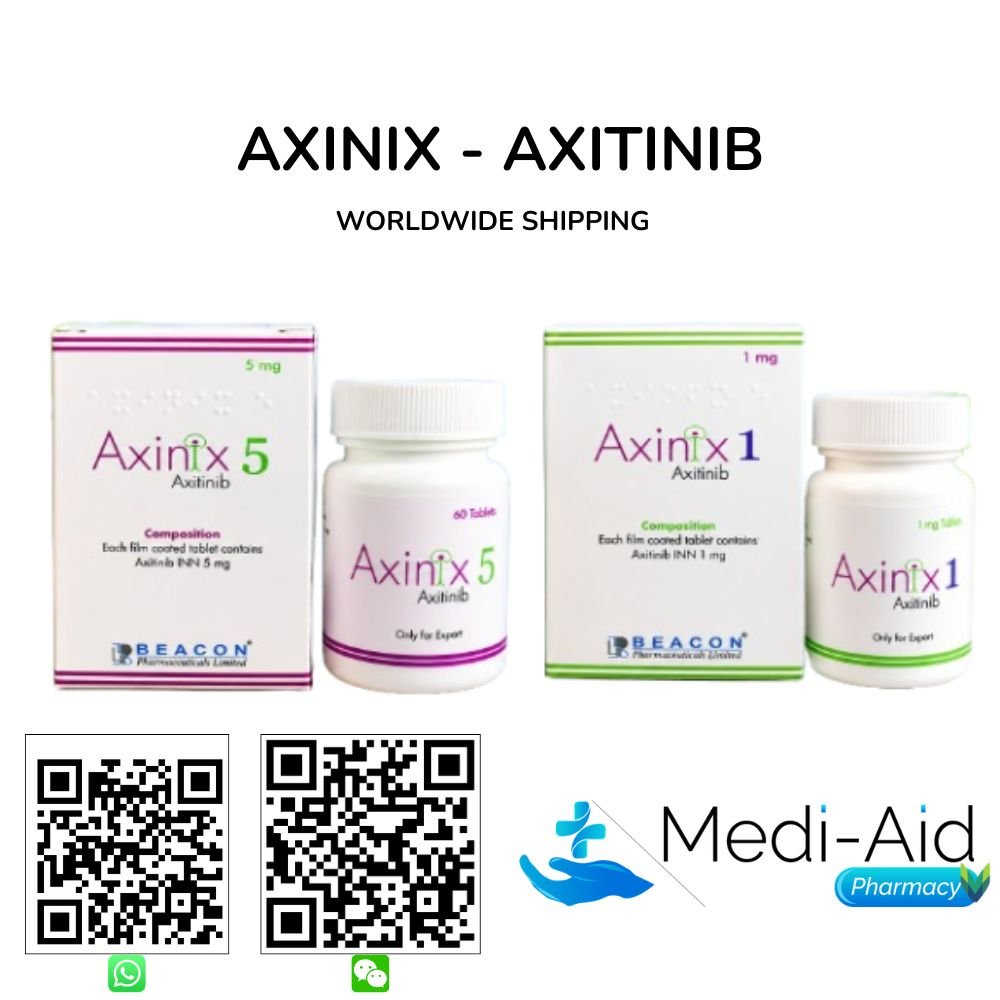
Axinix 1 MG & 5 MG (Axitinib) is a highly potent, orally bioavailable, second-generation selective small-molecule tyrosine kinase inhibitor (TKI) of vascular endothelial growth factor receptors VEGFR-1, VEGFR-2, and VEGFR-3 a precision antiangiogenic oncology agent that suppresses tumor neovascularization by blocking VEGF-driven endothelial cell proliferation, migration, vascular survival signaling, and new blood vessel formation required to sustain tumor growth in advanced renal cell carcinoma (RCC); axitinib’s inhibitory potency against VEGFR-1, VEGFR-2, and VEGFR-3 at sub-nanomolar concentrations is considerably higher than that of earlier-generation VEGFR inhibitors (sorafenib, sunitinib), establishing axitinib as one of the most selective and potent VEGFR-targeted TKIs in clinical oncology; axitinib additionally inhibits platelet-derived growth factor receptor-alpha (PDGFRα), platelet-derived growth factor receptor-beta (PDGFRβ), and stem cell factor receptor (c-KIT) at relevant clinical concentrations, providing complementary suppression of tumor pericyte signaling and vascular stabilization pathways; axitinib’s selectivity for VEGFR over other kinase targets minimizes off-target kinase inhibition and distinguishes its tolerability profile from broader-spectrum multi-kinase inhibitors, supplied as a film-coated tablet in strengths of 1 mg and 5 mg, available in 60 and 180 tablets per pot, and manufactured by Beacon Pharmaceuticals PLC, Bangladesh.
Axitinib, the active pharmaceutical ingredient of Axinix, is an FDA-approved oral VEGFR kinase inhibitor with three approved oncology indications in advanced renal cell carcinoma establishing axitinib as a standard-of-care antiangiogenic backbone for adult patients with advanced renal cell carcinoma (RCC) after failure of one prior systemic therapy (second-line monotherapy), for adult patients with advanced RCC in the first-line setting in combination with pembrolizumab (anti-PD-1 immune checkpoint inhibitor), and for adult patients with advanced RCC in the first-line setting in combination with avelumab (anti-PD-L1 immune checkpoint inhibitor) representing a clinically validated VEGFR-targeted therapy deployed across both monotherapy and combination immunotherapy-TKI regimens in the treatment of advanced kidney cancer.
The recommended dose of Axinix (Axitinib) is 5 mg orally twice daily, administered approximately 12 hours apart, with or without food, as monotherapy for second-line advanced RCC, and 5 mg orally twice daily in combination with pembrolizumab 200 mg intravenously every 3 weeks or avelumab 800 mg intravenously every 2 weeks for first-line advanced RCC; the 5 mg twice daily starting dose provides a convenient one-tablet-per-dose regimen at the 5 mg strength, while the 1 mg strength enables precise dose reductions in 1 mg steps; dose escalation to 7 mg twice daily and subsequently 10 mg twice daily is permitted in patients tolerating the starting dose without hypertension above Grade 2 or other dose-limiting adverse events; dose reductions proceed to 3 mg twice daily then 2 mg twice daily for adverse reactions; axitinib must be taken with a glass of water and swallowed whole without crushing or splitting; grapefruit and grapefruit juice must be avoided as they increase axitinib exposure via CYP3A4/5 inhibition; strong CYP3A4/5 inhibitors (ketoconazole, itraconazole, clarithromycin) should be avoided if unavoidable, the axitinib dose should be reduced by approximately half; strong CYP3A4/5 inducers (rifampin, phenytoin, carbamazepine, St. John’s Wort) should be avoided as they substantially reduce axitinib plasma exposure; axitinib should be stopped at least 24 hours prior to any scheduled surgical procedure due to impaired wound-healing risk.
The pivotal AXIS trial (NCT00678392), a randomized, controlled, open-label Phase III trial comparing axitinib versus sorafenib in 723 patients with advanced RCC after failure of one prior sunitinib- or cytokine-based systemic therapy, demonstrated a statistically significant improvement in median progression-free survival (PFS) of 6.7 months with axitinib versus 4.7 months with sorafenib (HR 0.665; 95% CI, 0.544–0.812; p<0.0001), with an objective response rate (ORR) of 19.4% for axitinib versus 9.4% for sorafenib establishing axitinib as the second-line standard of care in advanced RCC following prior sunitinib or cytokine therapy. In the first-line setting, the Phase III KEYNOTE-426 trial (NCT02853331), enrolling 861 patients with treatment-naive advanced clear cell RCC, demonstrated that pembrolizumab plus axitinib produced a confirmed ORR of 60.6% versus 39.6% with sunitinib monotherapy, with a 5-year median overall survival (OS) of 47.2 months versus 40.8 months with sunitinib (HR 0.84; 95% CI), establishing pembrolizumab plus axitinib as a cornerstone first-line standard of care for advanced clear cell RCC. FDA initially approved axitinib as second-line monotherapy for advanced RCC on January 27, 2012; first-line combination approvals with pembrolizumab and avelumab were granted on April 19, 2019 and May 14, 2019, respectively.
Important: The most clinically significant adverse reactions of axitinib are hypertension (including hypertensive crisis), arterial and venous thromboembolic events, hemorrhagic events, cardiac failure, gastrointestinal perforation and fistula formation, thyroid dysfunction, impaired wound healing, Reversible Posterior Leukoencephalopathy Syndrome (RPLS), proteinuria, hepatotoxicity, and embryo-fetal toxicity. Blood pressure must be well-controlled prior to initiating axitinib; monitor for hypertension throughout treatment and treat with standard antihypertensive agents; permanently discontinue axitinib for hypertensive crisis or persistent severe hypertension unresponsive to antihypertensive therapy.
Monitor thyroid function at baseline and throughout treatment; hypothyroidism occurs in a clinically meaningful proportion of patients and should be managed with thyroid hormone replacement therapy as clinically indicated. Withhold axitinib for at least 24 hours prior to elective surgery due to impaired wound-healing potential. Permanently discontinue axitinib if signs or symptoms of Reversible Posterior Leukoencephalopathy Syndrome (RPLS) develop. Monitor for proteinuria before initiation and periodically throughout treatment; withhold and reduce dose for moderate to severe proteinuria.
Axitinib can cause fetal harm when administered during pregnancy; females of reproductive potential must use effective contraception during treatment and for at least 1 week after the last dose; breastfeeding is not recommended during axitinib treatment and for at least 2 weeks after the last dose. Do not substitute Axinix 1 MG & 5 MG Axitinib for sunitinib, sorafenib, cabozantinib, lenvatinib, or other VEGFR/mTOR-targeted agents without confirmed indication-specific prescribing and clinical benefit-risk assessment by the treating oncologist.
Searching for Axinix 1 MG & 5 MG Axitinib? Mediaid Pharmacy lists this product across its oncology medicines, kidney cancer medicines, and Beacon Pharmaceuticals medicines portfolios and ships it worldwide.
Basic Product Information of Axinix 1 MG & 5 MG (Axitinib)
| Brand Name | Axinix manufactured and marketed by Beacon Pharmaceuticals PLC, Bangladesh; axitinib is also marketed internationally as Inlyta® by Pfizer Inc. (the original innovator company) in the United States (FDA second-line monotherapy approval: January 27, 2012; FDA first-line approval with pembrolizumab: April 19, 2019; FDA first-line approval with avelumab: May 14, 2019) and other global markets; Axinix by Beacon Pharmaceuticals PLC is a branded generic formulation of axitinib film-coated tablets available in 1 mg and 5 mg strengths, manufactured in Bangladesh and supplied through authorized international pharmaceutical distribution channels, providing accessible axitinib therapy for patients with advanced renal cell carcinoma requiring VEGFR-targeted antiangiogenic treatment globally |
| Product Name | Axinix (branded axitinib film-coated tablet, 1 mg and 5 mg per tablet, 60 and 180 tablets per pot, by Beacon Pharmaceuticals PLC, Bangladesh) |
| Generic Name | Axitinib (INN; a highly potent, selective, orally bioavailable second-generation small-molecule tyrosine kinase inhibitor of vascular endothelial growth factor receptors VEGFR-1, VEGFR-2, and VEGFR-3; axitinib was specifically engineered for high-affinity, selective VEGFR inhibition with sub-nanomolar IC50 values against VEGFR-1, VEGFR-2, and VEGFR-3, enabling potent suppression of VEGF-driven tumor angiogenesis the dominant vascular dependency of clear cell renal cell carcinoma driven by VHL tumor suppressor loss and constitutive HIF-1α/HIF-2α activation and downstream VEGF upregulation; axitinib additionally inhibits PDGFRα, PDGFRβ, and c-KIT at clinically relevant concentrations; axitinib’s VEGFR selectivity profile is considerably narrower than first-generation multi-kinase TKIs (sorafenib, sunitinib), with less off-target kinase inhibition of Raf, BRAF, MEK/ERK pathway kinases and other non-VEGFR targets, contributing to its distinctive tolerability profile; axitinib was developed by Pfizer Inc., USA; Inlyta tablets are available in 1 mg and 5 mg strengths in the innovator product; FDA initial approval (second-line advanced RCC monotherapy): January 27, 2012; FDA first-line combination approvals: April 19, 2019 (pembrolizumab) and May 14, 2019 (avelumab); axitinib received FDA Priority Review designation for its first-line combination approvals) |
| Drug Class | Selective VEGFR-1/2/3 Tyrosine Kinase Inhibitor (Second-Generation); Oral Antiangiogenic Agent for Advanced Renal Cell Carcinoma; VEGF Pathway-Targeted TKI; Small-Molecule Precision Oncology Agent for Advanced Kidney Cancer; Second-Line Advanced RCC Monotherapy Standard of Care; First-Line Advanced RCC Combination Partner (Anti-PD-1/PD-L1 Immunotherapy-TKI Backbone); PDGFRα/PDGFRβ/c-KIT Inhibitor; Orally Bioavailable VEGFR Kinase Inhibitor; ImmunOncology Combination TKI Backbone for Advanced Clear Cell RCC |
| Formulation | Film-coated tablet for oral administration take with or without food with a glass of water; swallow tablets whole do not crush, split, or chew; take at approximately the same time twice daily, approximately 12 hours apart; do not take with grapefruit or grapefruit juice, as these significantly increase axitinib plasma exposure via CYP3A4/5 inhibition and may increase the risk of adverse reactions; axitinib is administered on a continuous once-daily twice-daily schedule without scheduled treatment breaks until disease progression or unacceptable toxicity; if a dose is missed and the next scheduled dose is more than 6 hours away, take the missed dose as soon as remembered; if the next dose is due within 6 hours, skip the missed dose and resume at the next scheduled time; do not take a double dose to make up for a missed dose; if vomiting occurs after taking a dose, do not take an additional dose resume at the next regularly scheduled time; store at room temperature as directed per product labeling; avoid concomitant use of strong CYP3A4/5 inhibitors (ketoconazole, itraconazole, clarithromycin, nefazodone, ritonavir, indinavir, nelfinavir, atazanavir, delavirdine, voriconazole, telithromycin, grapefruit juice) if a strong CYP3A4/5 inhibitor must be used, reduce the axitinib dose by approximately half; avoid strong CYP3A4/5 inducers (rifampin, dexamethasone, phenytoin, carbamazepine, rifabutin, rifapentine, phenobarbital, St. John’s Wort); axitinib dose modification for hepatic impairment: reduce starting dose by approximately half for moderate hepatic impairment (Child-Pugh B); axitinib has not been studied in severe hepatic impairment; no routine dose adjustment required for renal impairment |
| Available Strengths | 1 mg and 5 mg film-coated tablets the dual-strength availability of Axinix enables the full clinically recommended dosing range, dose escalation, and all dose reduction levels from two tablet sizes: Standard starting dose: 5 mg twice daily = one 5 mg tablet twice daily; Dose escalation (if tolerated): 7 mg twice daily = one 5 mg tablet + one 1 mg tablet + one 1 mg tablet twice daily; Maximum escalation: 10 mg twice daily = two 5 mg tablets twice daily; First dose reduction: 3 mg twice daily = one 5 mg tablet – two 1 mg tablets OR three 1 mg tablets twice daily (use 1 mg tablets for precision dose titration); Second dose reduction: 2 mg twice daily = two 1 mg tablets twice daily; the 1 mg tablet strength is clinically essential for dose titration, escalation above 5 mg, and all sub-5 mg dose reduction levels, particularly for patients who cannot tolerate the 5 mg starting dose; the 5 mg tablet provides the convenient one-tablet-per-dose standard starting dose; the availability of both 1 mg and 5 mg strengths in Axinix enables complete dose management flexibility across all three approved indications and the full dose titration schedule without requiring alternative products; no body-weight-based dose adjustment is required axitinib is administered as a fixed twice-daily oral dose; special populations: reduce starting dose by approximately half for moderate hepatic impairment; no dose adjustment required for mild hepatic impairment or any degree of renal impairment based on population pharmacokinetic analyses; axitinib has not been studied in pediatric patients |
| Available Pack Size | 60 tablets per pot and 180 tablets per pot at the standard starting dose of 5 mg twice daily (two 5 mg tablets per day), one pot of Axinix 5 MG (60 tablets) provides a 30-day supply; one pot of Axinix 5 MG (180 tablets) provides a 90-day supply; at the 1 mg twice daily dose (two 1 mg tablets per day), one pot of Axinix 1 MG (60 tablets) provides a 30-day supply; for combination regimens with pembrolizumab or avelumab, monthly procurement of axitinib is typically calculated at 5 mg twice daily = 60 tablets of 5 mg per 30-day cycle from the 60-tablet pot, or 180 tablets from the 180-tablet pot for a 90-day supply; hospital oncology programs and procurement teams benefit from the 180-tablet pot size for 90-day cycle procurement, reducing packaging frequency and logistics per patient-cycle; contact Mediaid Pharmacy for pack-size-specific stock availability confirmation and procurement guidance for Axinix 1 MG and Axinix 5 MG |
| Dosing Schedule | Second-Line Advanced Renal Cell Carcinoma Monotherapy Standard Dosing: Axitinib 5 mg orally twice daily, approximately 12 hours apart, with or without food, after failure of one prior systemic therapy (sunitinib, cytokines, or other approved systemic therapy); administer continuously without scheduled treatment breaks until disease progression or unacceptable toxicity; dose escalation to 7 mg twice daily and subsequently 10 mg twice daily is permitted at intervals of two or more weeks in the absence of hypertension above Grade 2 or axitinib-related adverse events above Grade 2.
First-Line Advanced Renal Cell Carcinoma Combination with Pembrolizumab (KEYNOTE-426 Regimen): Axitinib 5 mg orally twice daily in combination with pembrolizumab 200 mg intravenously every 3 weeks; administer axitinib continuously; pembrolizumab may be administered for up to 24 months or until disease progression or unacceptable toxicity; dose escalation of axitinib above 5 mg twice daily may be considered at intervals of six weeks or longer when used in combination with pembrolizumab; manage immune-mediated adverse reactions from pembrolizumab per pembrolizumab prescribing information. First-Line Advanced Renal Cell Carcinoma Combination with Avelumab (JAVELIN Renal 101 Regimen): Axitinib 5 mg orally twice daily in combination with avelumab 800 mg intravenously every 2 weeks; administer axitinib continuously until disease progression or unacceptable toxicity; manage immune-related reactions from avelumab per avelumab prescribing information; permanently discontinue axitinib in combination with avelumab for Grade 3–4 major adverse cardiovascular events (MACE). Dose Reduction Schedule (All Indications): First dose reduction: 3 mg twice daily; Second dose reduction: 2 mg twice daily; Permanently discontinue axitinib if the patient cannot tolerate 2 mg twice daily. Dose Reduction Triggers: Persistent hypertension despite antihypertensive therapy; Grade 3 or 4 hypertension or hypertensive crisis; arterial or venous thromboembolic events; hemorrhagic events; cardiac failure (Grade 3–4); moderate to severe proteinuria; Grade 3 non-hematologic adverse reactions; concomitant use of strong CYP3A4/5 inhibitors (reduce dose by approximately half). Mandatory Safety Monitoring: Confirm and optimize blood pressure control before initiating axitinib; assess blood pressure regularly throughout treatment and treat hypertension as needed; monitor thyroid function at baseline and periodically throughout treatment; conduct liver function tests (ALT, AST, bilirubin) before initiation and periodically; monitor for proteinuria before initiation and periodically; assess for thromboembolic risk; perform pregnancy test in females of reproductive potential before initiating axitinib; withhold axitinib for at least 24 hours prior to any scheduled surgical procedure. |
| Manufacturer | Beacon Pharmaceuticals PLC, Bangladesh a leading Bangladeshi pharmaceutical manufacturer producing high-quality oncology generics including targeted therapy small molecules, cytotoxic agents, and supportive care medicines for domestic and international distribution |
| Country of Origin | Bangladesh |
| Categories | Beacon Pharmaceuticals Medicines | Kidney Cancer Medicines | Oncology Medicines |
Four Clinical and Practical Reasons to Source Axinix 1 MG & 5 MG (Axitinib) Through Mediaid Pharmacy
First, axitinib’s high-selectivity VEGFR-1/2/3 inhibition mechanism is the pharmacological foundation that makes it one of the most potent and clinically validated antiangiogenic agents in the treatment of advanced renal cell carcinoma. Clear cell RCC is uniquely dependent on VEGF-driven angiogenesis: loss-of-function mutations or methylation silencing of the VHL tumor suppressor gene present in approximately 70–80% of clear cell RCC cases result in constitutive HIF-1α and HIF-2α transcription factor stabilization, which drives overexpression of VEGF-A, VEGF-C, and VEGF-D as well as PDGF-B, creating a highly VEGF-dependent tumor vasculature; axitinib’s sub-nanomolar IC50 values against VEGFR-1, VEGFR-2, and VEGFR-3 (measured in the low picomolar to low nanomolar range, substantially more potent than sunitinib or sorafenib) allow for near-complete suppression of VEGFR kinase activity at clinically achievable plasma concentrations; existing tumor vascular density was reduced by approximately 80% after 7 days of axitinib treatment in clinical pharmacodynamic studies, demonstrating robust pharmacological activity that directly translates to clinical antitumor effects.
Second, the pivotal AXIS trial efficacy data establishing axitinib as second-line standard of care represent a clinically significant improvement in progression-free survival over sorafenib in an indication previously lacking a clearly superior second-line treatment option. The AXIS trial (NCT00678392) was a randomized, controlled, international, open-label Phase III trial enrolling 723 patients with advanced RCC after failure of one prior systemic therapy (sunitinib, cytokines, bevacizumab, or temsirolimus); axitinib 5 mg twice daily demonstrated a statistically significant improvement in median PFS of 6.7 months versus 4.7 months with sorafenib (HR 0.665; 95% CI 0.544–0.812; p<0.0001), with an ORR of 19.4% versus 9.4% the greatest PFS and ORR advantage was observed in patients who had received prior cytokine-based therapy (median PFS 12.1 months with axitinib versus 6.5 months with sorafenib) and in patients who received prior sunitinib (median PFS 4.8 months versus 3.4 months); the AXIS trial data established axitinib as the first targeted therapy to demonstrate superior PFS over an active comparator (sorafenib) in the second-line advanced RCC setting, earning its first FDA approval in January 2012 as a monotherapy standard of care following prior systemic therapy.
Third, the KEYNOTE-426 trial efficacy data establishing pembrolizumab plus axitinib as a first-line standard of care for advanced clear cell RCC represents one of the most clinically impactful combination regimen trials in kidney cancer, with 5-year follow-up data confirming durable long-term benefit. KEYNOTE-426 (NCT02853331) was a Phase III, randomized, open-label trial enrolling 861 patients with treatment-naive advanced clear cell RCC, randomly assigned 1:1 to pembrolizumab 200 mg every 3 weeks plus axitinib 5 mg twice daily versus sunitinib 50 mg once daily (4 weeks on, 2 weeks off); at a median study follow-up of 67.2 months (5-year final analysis published in Nature Medicine, 2025), pembrolizumab plus axitinib demonstrated sustained OS, PFS, and ORR benefits: confirmed ORR 60.6% versus 39.6% with sunitinib; median OS 47.2 months versus 40.8 months with sunitinib (HR 0.84; 95% CI 0.73–0.98); 36-month OS rate of 63% versus 54%; pembrolizumab plus axitinib was the first TKI/IO combination to demonstrate efficacy over sunitinib across all three primary endpoints (OS, PFS, and ORR) simultaneously, establishing it as a cornerstone of first-line advanced RCC treatment across all IMDC risk groups (favorable, intermediate, and poor risk); the 5-year final data confirm sustained, durable benefit and represent the longest reported follow-up of an anti-PD-1/VEGFR TKI combination in advanced RCC.
Fourth, the dual-strength availability of Axinix (1 mg and 5 mg) manufactured by Beacon Pharmaceuticals PLC provides complete dose management flexibility across all three approved RCC indications, covering the standard 5 mg starting dose, all dose escalation levels, and all dose reduction levels from two tablet sizes. The 5 mg tablet delivers the standard starting dose of one tablet twice daily a simple, patient-friendly once-per-dose regimen; the 1 mg tablet is clinically essential for all sub-5 mg dose reductions (3 mg = three 1 mg tablets twice daily; 2 mg = two 1 mg tablets twice daily) and for 1 mg dose escalation increments above 5 mg (6 mg, 7 mg, 8 mg, 9 mg, 10 mg can all be achieved by combining 5 mg and 1 mg tablets); this dual-strength flexibility simplifies hospital formulary stocking, pharmacist dispensing, patient education, and international procurement logistics; the 60-tablet and 180-tablet pot options give procurement teams flexibility for 30-day and 90-day supply cycle management respectively; Mediaid Pharmacy maintains stock of both Axinix 1 MG and Axinix 5 MG with reliable supply continuity to prevent treatment interruptions in ongoing patient regimens.
To source Axinix 1 MG & 5 MG Axitinib and explore the complete portfolio of kidney cancer-targeted medicines, VEGFR inhibitors, and oncology drugs manufactured by Beacon Pharmaceuticals, visit the Mediaid Pharmacy kidney cancer medicines portfolio, the oncology medicines collection, and the Beacon Pharmaceuticals medicines range, and contact the team for a personalized quotation and international shipping confirmation.
Frequently Asked Questions About Axinix 1 MG & 5 MG (Axitinib)
What is Axinix 1 MG & 5 MG (Axitinib) used for?
Axinix (Axitinib) is an oral selective VEGFR-1/2/3 tyrosine kinase inhibitor with three FDA-approved oncology indications in advanced renal cell carcinoma (RCC). Indication 1 Second-Line Advanced RCC Monotherapy: Axitinib 5 mg twice daily as a single agent for adult patients with advanced renal cell carcinoma after failure of one prior systemic therapy (sunitinib, cytokines, bevacizumab, or temsirolimus); axitinib is the validated second-line standard of care following the AXIS trial, demonstrating median PFS of 6.7 months versus 4.7 months with sorafenib (HR 0.665; p<0.0001); FDA approved January 27, 2012. Indication 2 First-Line Advanced RCC with Pembrolizumab: Axitinib 5 mg twice daily in combination with pembrolizumab 200 mg every 3 weeks for treatment-naive patients with advanced RCC; KEYNOTE-426 demonstrated ORR 60.6%, median OS 47.2 months versus 40.8 months with sunitinib at 5-year follow-up; FDA approved April 19, 2019. Indication 3 First-Line Advanced RCC with Avelumab: Axitinib 5 mg twice daily in combination with avelumab 800 mg every 2 weeks for treatment-naive patients with advanced RCC; JAVELIN Renal 101 demonstrated superior PFS over sunitinib; FDA approved May 14, 2019. Axinix 1 MG & 5 MG (Axitinib) is available through Mediaid Pharmacy with worldwide shipping to patients and advanced kidney cancer treatment programs globally.
What is the generic name of Axinix?
The generic name (International Nonproprietary Name, INN) of Axinix is axitinib. Axitinib is a highly potent, selective, orally bioavailable second-generation small-molecule tyrosine kinase inhibitor of VEGFR-1, VEGFR-2, and VEGFR-3, specifically engineered to suppress VEGF-driven tumor angiogenesis in advanced renal cell carcinoma a cancer type uniquely dependent on VEGF signaling due to VHL tumor suppressor loss driving constitutive HIF-1α/HIF-2α activation and downstream VEGF overexpression. Axitinib’s sub-nanomolar IC50 values against VEGFR-1, VEGFR-2, and VEGFR-3 make it considerably more potent than first-generation VEGFR TKIs, enabling near-complete VEGFR pathway suppression at clinically achievable plasma concentrations. Axitinib additionally inhibits PDGFRα, PDGFRβ, and c-KIT, providing complementary activity against tumor pericyte and stromal signaling. Axitinib is mechanistically distinct from mTOR inhibitors (everolimus, temsirolimus), immune checkpoint inhibitors (nivolumab, pembrolizumab, ipilimumab), and VEGFR inhibitors with broader kinase profiles (sunitinib, cabozantinib, lenvatinib) axitinib’s selectivity for VEGFR over non-VEGFR kinases minimizes off-target toxicities common to broader-spectrum agents. Axitinib was developed by Pfizer Inc., USA, and is marketed globally as Inlyta; Axinix is the branded generic formulation manufactured by Beacon Pharmaceuticals PLC in Bangladesh. Mediaid Pharmacy distributes Axinix 1 MG & 5 MG Axitinib by Beacon Pharmaceuticals globally with worldwide shipping to patients, oncology programs, and hospital pharmacies.
What are the side effects of Axinix (Axitinib)?
The most clinically significant adverse reactions of Axinix (Axitinib) are hypertension (including hypertensive crisis), arterial and venous thromboembolic events, hemorrhage, cardiac failure, gastrointestinal perforation and fistula formation, thyroid dysfunction, Reversible Posterior Leukoencephalopathy Syndrome (RPLS), proteinuria, hepatotoxicity, and embryo-fetal toxicity. Hypertension (Most Common Clinically Significant Toxicity): Hypertension is the most common dose-limiting toxicity of axitinib, occurring in 40–64% of patients depending on the regimen; Grade 3–4 hypertension occurred in approximately 16% of patients in the AXIS trial monotherapy setting; blood pressure must be well-controlled prior to initiating axitinib; monitor blood pressure regularly throughout treatment; treat hypertension with standard antihypertensive agents; reduce axitinib dose for persistent hypertension despite antihypertensive therapy; permanently discontinue for hypertensive crisis or severe hypertension unresponsive to medical management. Arterial and Venous Thromboembolic Events: Serious and fatal arterial thromboembolic events (myocardial infarction, stroke, TIA) have been observed with axitinib; use with caution in patients with pre-existing cardiovascular disease or risk factors; consider risk-benefit before initiating axitinib in patients at high thromboembolic risk. Thyroid Dysfunction: Hypothyroidism occurs in a clinically meaningful proportion of axitinib-treated patients (approximately 21%); monitor thyroid function before initiation and periodically throughout treatment; treat clinically apparent hypothyroidism with thyroid hormone replacement as indicated. Most Common (≥20%) Adverse Reactions (AXIS trial, axitinib monotherapy): Diarrhea, hypertension, fatigue, decreased appetite, nausea, dysphonia (hoarseness), palmar-plantar erythrodysesthesia (hand-foot syndrome), weight decreased, vomiting, asthenia, and constipation. Hand-Foot Syndrome: Palmar-plantar erythrodysesthesia occurred in approximately 27–32% of axitinib-treated patients; manage with dose modification and dermatologic supportive care; preventive measures include moisturizing creams, padded footwear, and avoidance of pressure on affected areas. Additional Notable Adverse Reactions: RPLS (permanently discontinue if signs or symptoms occur), gastrointestinal perforation and fistula formation, hemorrhagic events, impaired wound healing (stop axitinib at least 24 hours before scheduled surgery), proteinuria (monitor and reduce dose for moderate to severe proteinuria), and elevated liver enzymes (monitor ALT, AST, bilirubin before and during treatment). All patients initiating Axinix (Axitinib) should have baseline blood pressure, thyroid function, liver function tests, and cardiovascular risk assessment documented, with treatment initiated under the supervision of a qualified oncologist experienced in managing VEGFR-targeted therapy toxicities.
How effective is Axinix (Axitinib) for advanced kidney cancer?
Axitinib has demonstrated clinically meaningful and statistically significant efficacy across its three approved indications in advanced renal cell carcinoma. AXIS Trial Second-Line Monotherapy (NCT00678392; multicenter, randomized, open-label Phase III; n=723; axitinib 5 mg twice daily vs. sorafenib 400 mg twice daily; primary endpoint PFS by independent radiological review): Median PFS 6.7 months (axitinib) versus 4.7 months (sorafenib) HR 0.665 (95% CI, 0.544–0.812; p<0.0001); ORR 19.4% versus 9.4%; in the prior cytokine-therapy subgroup: median PFS 12.1 months (axitinib) versus 6.5 months (sorafenib); in the prior sunitinib subgroup: median PFS 4.8 months versus 3.4 months. KEYNOTE-426 Trial First-Line with Pembrolizumab (NCT02853331; Phase III; n=861; pembro 200mg q3w + axitinib 5mg BID vs. sunitinib; primary endpoints OS and PFS; 5-year final analysis published Nature Medicine 2025): ORR 60.6% versus 39.6%; median OS 47.2 months versus 40.8 months (HR 0.84); 36-month OS rate 63% versus 54%; pembrolizumab plus axitinib was the first TKI/IO combination to demonstrate simultaneous superiority on OS, PFS, and ORR versus sunitinib. JAVELIN Renal 101 First-Line with Avelumab (NCT02684006; Phase III; n=886; avelumab 800mg q2w + axitinib 5mg BID vs. sunitinib; primary endpoints PFS in PD-L1+ and overall): Demonstrated superior PFS over sunitinib in both PD-L1+ and overall populations. Axinix 1 MG & 5 MG (Axitinib) is available through Mediaid Pharmacy; visit the kidney cancer medicines collection and oncology medicines collection for the complete VEGFR-targeted therapy and immunotherapy-TKI combination portfolio.
What is the difference between Axinix (Axitinib) and other kidney cancer therapies (Sunitinib, Sorafenib, Cabozantinib, Lenvatinib)?
Axinix (Axitinib), sunitinib (Sutent), sorafenib (Nexavar), cabozantinib (Cabometyx), and lenvatinib (Lenvima) are all approved therapies for advanced renal cell carcinoma (RCC) but differ fundamentally in molecular selectivity profile, approved patient populations, combination partner options, and clinical activity making them non-interchangeable across different clinical contexts. Axitinib vs. Sunitinib VEGFR Selectivity and Tolerability Profile: Axitinib is a second-generation VEGFR-selective TKI with sub-nanomolar IC50 values against VEGFR-1/2/3 and markedly less off-target kinase inhibition compared to sunitinib (which also inhibits RET, CSF-1R, FLT3, and multiple additional kinases); axitinib’s narrower kinase profile is associated with a distinct tolerability profile lower rates of myelosuppression, mucositis, and hand-foot syndrome than sunitinib, with hypertension as the predominant dose-limiting toxicity; sunitinib is first-line monotherapy standard of care for metastatic RCC while axitinib monotherapy is FDA-approved specifically in the second-line setting after prior systemic therapy failure; in first-line combination regimens, axitinib is used with pembrolizumab or avelumab rather than as monotherapy, achieving substantially higher ORR (60.6% with pembrolizumab) than sunitinib monotherapy (39.6%). Axitinib vs. Sorafenib AXIS Trial Direct Comparison: Axitinib demonstrated superior PFS (6.7 vs. 4.7 months; HR 0.665; p<0.0001) and ORR (19.4% vs. 9.4%) over sorafenib in the second-line advanced RCC setting in the AXIS trial the only randomized Phase III trial directly comparing axitinib and sorafenib; sorafenib additionally inhibits Raf kinases (BRAF, CRAF) and other non-VEGFR targets absent from axitinib’s selectivity profile. Axitinib vs. Cabozantinib and Lenvatinib Mechanism and Line Distinctions: Cabozantinib additionally inhibits MET and AXL, providing additional mechanisms of action beyond VEGFR; lenvatinib additionally inhibits FGFR1–4; both are used in later-line settings and in combination regimens (lenvatinib + pembrolizumab, lenvatinib + everolimus); axitinib’s established clinical trial data as a first-line immunotherapy backbone (KEYNOTE-426, JAVELIN Renal 101) with the longest follow-up data (5-year KEYNOTE-426 final analysis) support its continued first-line combination use. Line of Therapy Context: Axitinib monotherapy is specifically approved in the second-line setting; axitinib in combination is first-line; sunitinib is first-line monotherapy; sorafenib is second-line; cabozantinib and lenvatinib combinations are used across multiple lines. Visit the Mediaid Pharmacy kidney cancer medicines range and Beacon Pharmaceuticals medicines collection for the complete kidney cancer targeted therapy portfolio.
Is Axinix (Axitinib) safe during pregnancy or while breastfeeding?
Axinix (Axitinib) can cause fetal harm when administered during pregnancy based on its mechanism of action and nonclinical animal reproductive toxicology data axitinib should not be used during pregnancy. VEGF and VEGFR signaling play essential roles in embryonic and fetal vascular development, placentation, and organogenesis; suppression of VEGFR kinase activity by axitinib is expected to disrupt these critical developmental processes; nonclinical animal reproductive and developmental toxicology studies demonstrated embryo-fetal toxicity at axitinib exposures in animals, confirming the reproductive toxicity potential. No clinical data are available on axitinib use in human pregnancy; based on its mechanism-of-action embryo-fetal toxicity risk, axitinib must not be used during pregnancy. Contraception requirement: Females of reproductive potential must use effective contraception during axitinib treatment and for at least 1 week after the last dose; males with female partners of reproductive potential must use condoms during treatment and for at least 1 week after the last dose; verify pregnancy status before initiating Axinix in all females of reproductive potential. Breastfeeding: No data are available on the presence of axitinib or its metabolites in human breast milk, their effects on a breastfed infant, or effects on milk production; because of the potential for serious adverse reactions from axitinib in a breastfed infant, breastfeeding is not recommended during axitinib treatment and for at least 2 weeks after the last dose. Fertility: Based on the essential role of VEGF/VEGFR signaling in reproductive organ vascularity and function, potential adverse effects on male and female fertility cannot be excluded; discuss fertility preservation options with the treating oncologist before initiating axitinib therapy in patients of reproductive potential. All aspects of reproductive planning and contraceptive requirements should be discussed with the treating oncologist before starting Axinix therapy.
Can I order Axinix 1 MG & 5 MG (Axitinib) online with worldwide shipping?
Yes. Mediaid Pharmacy supplies Axinix 1 MG & 5 MG (Axitinib), film-coated tablets, available in 60 and 180 tablets per pot, manufactured by Beacon Pharmaceuticals PLC, Bangladesh, to patients, advanced renal cell carcinoma treatment programs, kidney cancer treatment centers, oncology departments, hospital pharmacies, oncology outpatient clinics, patient access programs, and healthcare providers globally. As an oral tablet formulation stored at room temperature, Axinix does not require cold-chain refrigerated shipping, allowing straightforward international logistics with standard secure pharmaceutical packaging appropriate for the destination country’s transit conditions and regulatory requirements. Contact Mediaid Pharmacy via WhatsApp, phone, or email at +8801773428128, or email info@mediaidpharmacy.com for pricing, current stock availability for both 1 mg and 5 mg strengths, international shipping options, and delivery details for your country. Prescription documentation is required for axitinib dispensing in accordance with applicable regulatory requirements. For the complete portfolio of Beacon Pharmaceuticals medicines and oncology medicines available with worldwide shipping, visit the respective collection pages on the Mediaid Pharmacy website.
Order Axinix 1 MG & 5 MG (Axitinib) with Worldwide Shipping
Phone / WhatsApp: +8801773428128 | Email: info@mediaidpharmacy.com

Reviews
There are no reviews yet.