Description
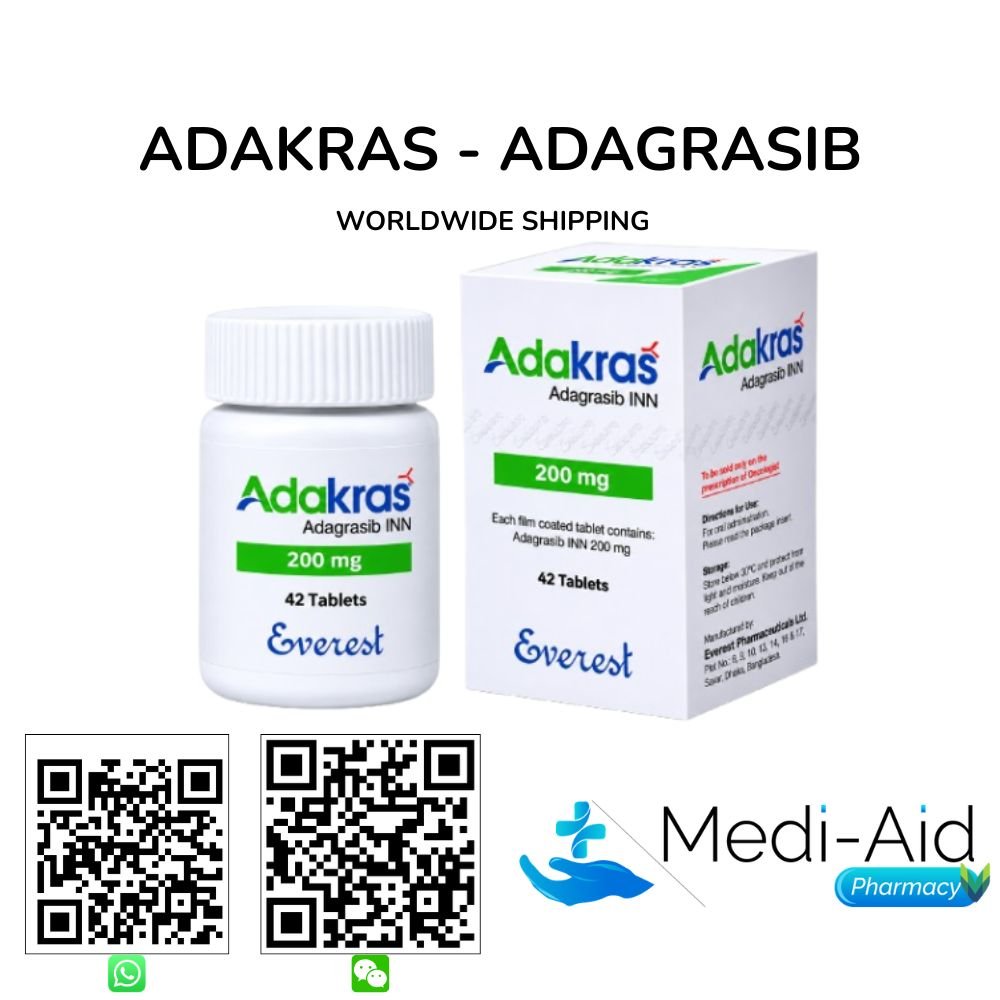
Adakras 200 MG (Adagrasib) is a highly selective, orally bioavailable, small-molecule, irreversible covalent inhibitor of Kirsten Rat Sarcoma viral oncogene homolog G12C (KRAS G12C) a mutant-selective antineoplastic targeted agent that covalently and irreversibly occupies the switch-II pocket (S-IIP) of the KRAS G12C mutant protein, forming a stable thioether bond with the mutant cysteine residue at codon 12, locking KRAS G12C in its inactive guanosine diphosphate (GDP)-bound state, preventing GDP-to-GTP exchange and the subsequent transition to the active GTP-bound conformation, thereby suppressing downstream oncogenic RAS-MAPK (RAF-MEK-ERK) and PI3K-AKT-mTOR signaling cascades that drive KRAS G12C-dependent tumor cell proliferation and survival supplied as 200 mg film-coated tablets, 42 tablets per pot, and manufactured by Everest Pharmaceuticals Ltd., Bangladesh.
Adagrasib, the active pharmaceutical ingredient of Adakras, is approved for the treatment of adult patients with KRAS G12C-mutated locally advanced or metastatic non-small cell lung cancer (NSCLC), as determined by an FDA-approved companion diagnostic test, who have received at least one prior systemic therapy; adagrasib is also approved in combination with cetuximab for adult patients with KRAS G12C-mutated locally advanced or metastatic colorectal cancer (CRC) who have received prior fluoropyrimidine-, oxaliplatin-, and irinotecan-based chemotherapy establishing adagrasib as the second FDA-approved KRAS G12C inhibitor for NSCLC (after sotorasib) and the first FDA-approved combination KRAS G12C inhibitor regimen for metastatic colorectal cancer.
The recommended dose of Adakras (Adagrasib) is 600 mg (three 200 mg tablets) orally twice daily, with or without food, administered continuously until disease progression or unacceptable toxicity; tablets should be swallowed whole and not crushed, chewed, or split; if a dose is missed, it should be skipped if more than 4 hours have elapsed from the expected dosing time; if vomiting occurs, do not take an additional dose but resume at the next scheduled time.
The pivotal Phase 2 registration-enabling cohort (Cohort A) of the multi-cohort, open-label KRYSTAL-1 trial (NCT03785249) evaluated single-agent adagrasib 600 mg orally twice daily in 116 patients with KRAS G12C-mutated NSCLC previously treated with platinum-based chemotherapy and immune checkpoint inhibitor therapy, achieving a confirmed overall response rate (ORR) of 43% (95% CI, 34%–53%) by blinded independent central review (BICR) per RECIST v1.1 criteria, with a median duration of response (DOR) of 8.5 months, a median progression-free survival (PFS) of 6.5 months (95% CI, 4.7–8.4), and a median overall survival (OS) of 12.6 months (95% CI, 9.2–19.2), with a 1-year OS rate of 51%; in a pooled analysis (n=132) of KRYSTAL-1 Phase 1/1b and Phase 2 NSCLC cohorts, adagrasib demonstrated an ORR of 44% and a disease control rate (DCR) of 81% with a median OS of 14.1 months and a 2-year OS rate of 31%.
Important: The most clinically significant adverse reactions of adagrasib are gastrointestinal toxicities (diarrhea, nausea, vomiting), QTc interval prolongation, hepatotoxicity, and interstitial lung disease (ILD)/pneumonitis. Diarrhea, nausea, and vomiting are the most frequently reported adverse reactions, occurring in the majority of patients; supportive care with antidiarrheals, antiemetics, and fluid replacement should be initiated promptly. QTc interval must be assessed by ECG before initiating adagrasib and periodically during treatment; withhold adagrasib for QTc absolute value greater than 500 ms or an increase of greater than 60 ms from baseline; permanently discontinue for QTc prolongation with signs or symptoms of serious arrhythmia; correct electrolyte abnormalities before and during treatment; avoid concomitant use with QTc-prolonging agents.
Liver function tests (ALT, AST) must be monitored before initiating and during adagrasib therapy; hepatotoxicity occurred in 37% of patients in pooled safety analyses; Grade 3 or 4 AST/ALT elevations in 7% of patients. Evaluate patients immediately for new or worsening respiratory symptoms; permanently discontinue adagrasib if ILD/pneumonitis is confirmed. Adagrasib is a strong CYP3A4 inhibitor; avoid concomitant use with strong CYP3A inducers; use caution with CYP3A substrates with narrow therapeutic indices.
Adagrasib requires a companion diagnostic test (FDA-approved KRAS G12C mutation assay) before initiating therapy. Do not substitute adagrasib for other KRAS G12C inhibitors without confirmed indication-specific prescribing and clinical benefit-risk assessment. Searching for Adakras 200 MG Adagrasib? Mediaid Pharmacy lists this product across its oncology medicines, lung cancer medicines, colorectal cancer medicines, and Everest Pharmaceuticals medicines portfolios and ships it worldwide.
Basic Product Information of Adakras 200 MG (Adagrasib)
| Brand Name | Adakras 200 MG (Adagrasib) Bangladesh-manufactured by Everest Pharmaceuticals Ltd.; adagrasib is also marketed internationally as Krazati (adagrasib) by Mirati Therapeutics (now part of Bristol Myers Squibb) in the United States and other global markets; Adakras is the branded generic formulation of adagrasib 200 mg film-coated tablets for the international market |
| Product Name | Adakras (branded generic adagrasib 200 mg film-coated tablets by Everest Pharmaceuticals Ltd., Bangladesh) |
| Generic Name | Adagrasib (INN; also designated MRTX849 during preclinical and clinical development by Mirati Therapeutics; a highly selective, orally bioavailable, small-molecule, irreversible covalent inhibitor of KRAS G12C [Kirsten Rat Sarcoma viral oncogene homolog, glycine-to-cysteine substitution at codon 12]; adagrasib selectively and covalently binds to the mutant cysteine-12 residue within the switch-II pocket [S-IIP] of the KRAS G12C protein a cryptic allosteric pocket uniquely accessible only when KRAS is in the GDP-bound inactive state forming an irreversible thioether bond that locks KRAS G12C in its inactive GDP-bound conformation; in this locked inactive state, KRAS G12C is unable to exchange GDP for GTP or bind effector proteins, thereby permanently suppressing RAS-MAPK [RAF-MEK-ERK] and PI3K-AKT-mTOR downstream oncogenic signaling pathways in KRAS G12C-mutant tumor cells; KRAS G12C is the most prevalent oncogenic KRAS mutation in non-small cell lung cancer [NSCLC], occurring in approximately 13–14% of patients with NSCLC, predominantly in former or current smokers; KRAS G12C mutations also occur in approximately 3–4% of colorectal cancer [CRC] cases and 1–2% of pancreatic ductal adenocarcinoma [PDAC] cases; adagrasib was designed with optimized pharmacokinetic properties, including high oral bioavailability, a long plasma half-life of approximately 24 hours enabling twice-daily dosing, extensive tissue distribution, and demonstrated central nervous system [CNS] penetration making adagrasib the first KRAS G12C inhibitor with clinical evidence of intracranial activity in patients with CNS metastases; developed by Mirati Therapeutics [as MRTX849]; FDA initial accelerated approval for KRAS G12C-mutated NSCLC: December 12, 2022; FDA accelerated approval for adagrasib + cetuximab in KRAS G12C-mutated CRC: June 2024) |
| Drug Class | KRAS G12C Inhibitor (Kirsten Rat Sarcoma G12C Mutant-Selective Covalent Inhibitor); Irreversible Small-Molecule KRAS Inhibitor; RAS GTPase Family Inhibitor; Switch-II Pocket (S-IIP) Allosteric Covalent Inhibitor; Oral Targeted Antineoplastic Agent; KRAS G12C-Mutated NSCLC Precision Oral Therapy; KRAS G12C-Mutated Colorectal Cancer Targeted Therapy (in combination with cetuximab); CNS-Penetrant KRAS Inhibitor; RAS-MAPK and PI3K-AKT Pathway Suppressor; Post-Chemotherapy and Post-Checkpoint Inhibitor KRAS G12C-Mutated NSCLC Targeted Oral Therapy; Antineoplastic Targeted Agent with Demonstrated Intracranial Activity in CNS Metastases |
| Formulation | Film-coated tablets for oral administration may be taken with or without food (taking with food is preferred to reduce nausea); swallow whole do not crush, chew, or split tablets; tablets are oval-shaped, white to off-white, with “200” debossed on one side; take at approximately the same time each day for each of the two daily doses (morning and evening, approximately 12 hours apart); if a dose is missed, skip the dose if more than 4 hours have elapsed from the expected dosing time and resume dosing at the next scheduled time; if vomiting occurs after taking a dose, do not take an additional dose on that day take the next dose at its regularly scheduled time; administer adagrasib continuously on a twice-daily schedule (no scheduled off-treatment days) in combination with or as monotherapy; when used in combination with cetuximab for KRAS G12C-mutated CRC, refer to the cetuximab prescribing information for cetuximab-specific dosing and administration details; adagrasib requires confirmation of a KRAS G12C mutation by an FDA-approved companion diagnostic test before initiating therapy |
| Available Strengths | 200 mg film-coated tablets per tablet the recommended daily dose of adagrasib is 600 mg twice daily (three 200 mg tablets per dose, taken twice daily, 12 hours apart; six 200 mg tablets total per day); the 200 mg tablet strength allows dose reductions to 400 mg twice daily (two 200 mg tablets per dose) as the first dose reduction, and to 600 mg once daily (three 200 mg tablets once daily) as the second dose reduction in the event of clinically significant toxicity; a maximum of two dose reductions are permitted; adagrasib should be permanently discontinued in patients who are unable to tolerate 600 mg once daily; dose reductions are implemented for Grade 3 or 4 adverse reactions including severe gastrointestinal toxicities (diarrhea, nausea, vomiting), clinically significant QTc interval prolongation, Grade 3 or 4 hepatotoxicity (AST/ALT elevations), confirmed interstitial lung disease/pneumonitis, and other Grade 3 or 4 adverse reactions per NCI CTCAE version 5.0; no body-weight-based dose adjustment is required; no clinically important pharmacokinetic differences are expected in patients with mild to severe renal impairment (Clcr 15 to <90 mL/minute); no specific dose adjustments are established for hepatic impairment |
| Available Pack Size | 42 tablets per pot; at the recommended dose of 600 mg twice daily (six 200 mg tablets per day), one 42-tablet pot supplies exactly 7 days (one week) of therapy at the full standard dose; for patients who have undergone dose reductions, one 42-tablet pot at 400 mg twice daily (four tablets per day) supplies 10.5 days of therapy, and at the second dose reduction level of 600 mg once daily (three tablets per day) supplies 14 days of therapy; hospital pharmacies, oncology treatment centers, and patient access programs typically procure Adakras 200 MG on a weekly or monthly basis; institutions managing multiple patients on adagrasib simultaneously typically calculate monthly procurement at 4 pots per patient per 28-day month at the standard 600 mg twice-daily dose, with adjustments for patients receiving dose-modified adagrasib at reduced dose levels; procurement planning should account for potential dose reductions and treatment interruptions that may reduce per-week tablet consumption in patients receiving dose-modified adagrasib at 400 mg twice daily or 600 mg once daily per day |
| Dosing Schedule | Recommended Dose: Adagrasib 600 mg (three 200 mg tablets) orally twice daily (approximately 12 hours apart), with or without food, administered continuously until disease progression or unacceptable toxicity. Companion Diagnostic Requirement: An FDA-approved test confirming KRAS G12C mutation status is required before initiating adagrasib. Combination Partners: (1) Monotherapy for KRAS G12C-mutated previously treated NSCLC; or (2) Cetuximab (refer to cetuximab prescribing information for dosing) for KRAS G12C-mutated previously treated metastatic CRC; additional combination trials are ongoing (e.g., KRYSTAL-7: adagrasib + pembrolizumab in NSCLC; KRYSTAL-17: adagrasib + pembrolizumab + chemotherapy). Duration: Continue until disease progression or unacceptable toxicity. Dose Reductions for Toxicity: First dose reduction: 400 mg twice daily; second dose reduction: 600 mg once daily; permanently discontinue adagrasib if Grade 3 or 4 adverse reactions persist or recur at the 600 mg once-daily dose level. Mandatory Safety Assessments Before and During Treatment: Obtain ECG to assess QTc interval before initiating adagrasib and periodically during treatment withhold for QTc absolute value greater than 500 ms or increase of greater than 60 ms from baseline; permanently discontinue for QTc prolongation with signs or symptoms of serious arrhythmia. Correct electrolyte abnormalities (potassium, calcium, magnesium) before initiating and monitor during treatment. Obtain liver function tests (ALT, AST) before initiating adagrasib and monitor periodically during treatment. Monitor patients for new or worsening respiratory symptoms indicative of ILD/pneumonitis. GI Toxicity Management: Initiate antidiarrheals, antiemetics, and fluid replacement supportive care promptly for diarrhea, nausea, and vomiting; withhold or reduce adagrasib dose based on severity per NCI CTCAE version 5.0. Drug Interactions: Avoid concomitant use with strong CYP3A inducers; use caution with strong CYP3A inhibitors (increase adagrasib exposure); administer antacids 2 hours before or more than 2 hours after adagrasib; administer H2 receptor antagonists 2 hours after adagrasib dose; for QTc-prolonging agents, the combination with adagrasib requires careful benefit-risk assessment and increased ECG monitoring frequency. |
| Primary Indications | KRAS G12C-MUTATED NON-SMALL CELL LUNG CANCER (NSCLC) PREVIOUSLY TREATED:
Adagrasib Monotherapy Previously Treated KRAS G12C-Mutated NSCLC (KRYSTAL-1): Adagrasib 600 mg orally twice daily as a single agent for the treatment of adult patients with KRAS G12C-mutated locally advanced or metastatic NSCLC, as confirmed by an FDA-approved companion diagnostic test, who have received at least one prior systemic therapy (KRYSTAL-1; NCT03785249; Phase 2 Cohort A; n=116; patients previously treated with platinum-based chemotherapy and immune checkpoint inhibitor therapy): confirmed ORR by BICR 43% (95% CI, 34%–53%); median DOR 8.5 months; median PFS 6.5 months (95% CI, 4.7–8.4); median OS 12.6 months (95% CI, 9.2–19.2); 1-year OS rate 51%; DCR 80%; FDA accelerated approval: December 12, 2022. In a pooled analysis (n=132) from KRYSTAL-1 Phase 1/1b NSCLC and Phase 2 Cohort A, adagrasib achieved an ORR of 44%, DCR of 81%, median DOR of 12.5 months, and 2-year OS rate of 31%; adagrasib also demonstrated intracranial ORR of 33.3% in 33 patients with previously treated stable CNS metastases establishing adagrasib as the first KRAS G12C inhibitor with demonstrated clinical activity in patients with active CNS metastases. KRAS G12C-MUTATED COLORECTAL CANCER (CRC) PREVIOUSLY TREATED: Adagrasib + Cetuximab Previously Treated KRAS G12C-Mutated Metastatic CRC (KRYSTAL-1): Adagrasib 600 mg twice daily in combination with cetuximab for adult patients with KRAS G12C-mutated locally advanced or metastatic CRC, as confirmed by an FDA-approved companion diagnostic test, who have received prior fluoropyrimidine-, oxaliplatin-, and irinotecan-based chemotherapy; FDA accelerated approval granted: June 2024; the combination of adagrasib + cetuximab is the first approved KRAS G12C inhibitor regimen for KRAS G12C-mutated colorectal cancer, addressing a patient population with no previously approved KRAS-targeted treatment options. Adagrasib monotherapy in KRAS G12C-mutated CRC (KRYSTAL-1 pooled data) achieved ORR of 17–19% and DCR >80%. KRAS G12C mutations occur in approximately 3–4% of CRC patients; adagrasib requires confirmation of KRAS G12C mutation by an FDA-approved companion diagnostic test before initiating therapy in both NSCLC and CRC settings. |
| Manufacturer / Brand | Everest Pharmaceuticals Ltd., Headquartered in Dhaka, Bangladesh; Country of Origin: Bangladesh; Adakras is Everest Pharmaceuticals Ltd.’s branded formulation of adagrasib 200 mg film-coated tablets; Everest Pharmaceuticals Ltd. is a Bangladesh-based pharmaceutical manufacturer producing a range of oncology, targeted therapy, and specialty medicines for the domestic and international markets; the active pharmaceutical ingredient adagrasib was originally developed by Mirati Therapeutics (designated MRTX849 during development) and is commercialized internationally as Krazati (adagrasib) by Bristol Myers Squibb following its acquisition of Mirati Therapeutics; SKU: everest-adakras; Categories: Colorectal Cancer Medicines, Everest Pharmaceuticals Medicines, Lung Cancer Medicines, Oncology Medicines |
Global Supplier: Mediaid Pharmacy Worldwide Shipping for Adakras 200 MG (Adagrasib)
Mediaid Pharmacy is a Dhaka-based supplier of specialty targeted oncology, lung cancer, colorectal cancer, KRAS G12C inhibitor, and rare disease medicines with worldwide shipping to patients, oncology departments, infusion units, KRAS G12C-mutated NSCLC and CRC treatment programs, hospital pharmacies, oncology day units, patient access programs, and international distributors across all regions. Adakras 200 MG (Adagrasib), manufactured by Everest Pharmaceuticals Ltd. in Bangladesh, is supplied as 200 mg film-coated tablets, 42 tablets per pot, with pricing quotations, stock confirmation, full product documentation, shipping arrangements, and end-to-end international delivery tracking for every order.
The procurement planning significance of the 42-tablet pot format is directly tied to adagrasib’s twice-daily continuous dosing architecture: at the recommended dose of 600 mg twice daily (six 200 mg tablets per day), one 42-tablet pot per patient provides exactly 7 days (one week) of therapy at the full standard dose; for institutions managing multiple patients simultaneously across different treatment stages, monthly procurement at the standard dose level is calculated by multiplying the number of active adagrasib-receiving patients by four pots per patient per 28-day month.
KRAS G12C-mutated NSCLC programs managing patients on post-chemotherapy, post-immunotherapy adagrasib monotherapy; KRAS G12C-mutated CRC programs co-sourcing adagrasib with cetuximab for the approved combination regimen; hospital formulary procurement departments sourcing Adakras 200 MG as part of targeted oncology medicines portfolios; and individual patients and families sourcing adagrasib for KRAS G12C-mutated NSCLC treatment can contact the Mediaid Pharmacy team through WhatsApp, phone, or email for Adakras 200 MG stock availability, current pricing, shipping options, and international delivery timelines.
Why Choose Adakras 200 MG (Adagrasib) from Mediaid Pharmacy?
Adakras (Adagrasib) from Everest Pharmaceuticals Ltd. delivers the validated KRAS G12C inhibitory mechanism of a clinically proven oral precision oncology agent the first KRAS G12C inhibitor with demonstrated clinical activity in patients with CNS metastases and the first approved KRAS G12C inhibitor combination regimen for metastatic colorectal cancer (adagrasib + cetuximab) supplied as 200 mg film-coated oral tablets, 42 tablets per pot, enabling convenient twice-daily oral self-administration without IV infusion infrastructure requirements for the adagrasib component of the regimen, targeting the KRAS G12C oncogenic driver that is present in approximately 13–14% of NSCLC cases and 3–4% of CRC cases globally. Adagrasib is pharmacologically and clinically distinguished across the KRAS G12C inhibitor and lung cancer targeted therapy landscape by four evidence-based attributes.
First, adagrasib is the first and only KRAS G12C inhibitor to demonstrate clinical intracranial activity in patients with CNS metastases a clinically critical differentiation from sotorasib (Lumakras), the first approved KRAS G12C inhibitor, which has limited CNS penetration data; in a cohort of 33 patients with previously treated stable CNS metastases in KRYSTAL-1, adagrasib achieved an intracranial ORR of 33.3%, establishing CNS penetration as a pharmacokinetically verified property; brain metastases are common in KRAS G12C-mutated NSCLC, affecting approximately 20–40% of patients with advanced NSCLC over the course of disease, making CNS-penetrant KRAS G12C inhibitor therapy a clinically significant treatment option for this population.
Second, adagrasib’s indication spans two molecularly defined cancer types NSCLC monotherapy and CRC in combination with cetuximab: the FDA accelerated approval for adagrasib + cetuximab in KRAS G12C-mutated metastatic CRC in June 2024 makes it the first FDA-approved targeted therapy specifically for KRAS G12C-mutated CRC, a mutation present in approximately 3–4% of CRC patients who previously had no approved KRAS-targeted treatment option; in KRYSTAL-1 pooled CRC cohort data, adagrasib + cetuximab combination achieved substantially higher ORR and clinical benefit than adagrasib monotherapy in CRC, consistent with the mechanistic rationale that EGFR inhibition by cetuximab prevents RAS pathway reactivation through EGFR-mediated feedback rescue signaling.
Third, adagrasib’s optimized pharmacokinetic design long half-life of approximately 24 hours, high oral bioavailability, extensive tissue distribution, and demonstrated CNS penetration enables continuous twice-daily oral self-administration without scheduled drug-free intervals, unlike ribociclib (21/7 schedule) or palbociclib (21/7 schedule); the continuous dosing schedule ensures sustained KRAS G12C target occupancy and suppression of downstream RAS-MAPK signaling throughout the full treatment period, without the cyclic target reactivation that could occur during off-treatment intervals; the 200 mg tablet strength of Adakras precisely accommodates the two permitted dose reductions (600 mg BID → 400 mg BID → 600 mg QD) without requiring additional tablet strengths.
Fourth, adagrasib’s safety profile dominated by GI toxicities (diarrhea, nausea, vomiting) manageable with standard supportive care, QTc prolongation addressed by baseline and periodic ECG monitoring, and hepatic enzyme elevations addressed by scheduled liver function testing is comprehensively managed through proactive monitoring protocols, enabling experienced oncology teams to identify, dose-modify, and manage adagrasib-related toxicities while maintaining treatment continuity in the majority of patients; Grade 3 or 4 treatment-related adverse events (TRAEs) occurred in approximately 30–45% of patients in KRYSTAL-1, with a discontinuation rate due to TRAEs of approximately 6.9%, consistent with manageable tolerability in a heavily pretreated KRAS G12C-mutated NSCLC population.
To source the complete range of KRAS G12C inhibitor medicines, lung cancer targeted therapies, colorectal cancer targeted therapies, and oncology medicines, visit the Mediaid Pharmacy lung cancer medicines portfolio, the colorectal cancer medicines collection, the oncology medicines collection, and the Everest Pharmaceuticals medicines range, and contact the team for a personalized quotation and international shipping confirmation.
Frequently Asked Questions About Adakras 200 MG (Adagrasib)
What is Adakras 200 MG (Adagrasib) used for?
Adakras 200 MG (Adagrasib) is an oral KRAS G12C inhibitor with two FDA-approved indications in KRAS G12C-mutated cancers. First, adagrasib is indicated as a monotherapy for the treatment of adult patients with KRAS G12C-mutated locally advanced or metastatic non-small cell lung cancer (NSCLC), as determined by an FDA-approved companion diagnostic test, who have received at least one prior systemic therapy (approved under accelerated approval, December 12, 2022, based on ORR and DOR from the KRYSTAL-1 trial). Second, adagrasib is indicated in combination with cetuximab for adult patients with KRAS G12C-mutated locally advanced or metastatic colorectal cancer (CRC), as determined by an FDA-approved companion diagnostic test, who have received prior fluoropyrimidine-, oxaliplatin-, and irinotecan-based chemotherapy (approved under accelerated approval, June 2024). Both indications require prior confirmation of a KRAS G12C mutation by an FDA-approved diagnostic assay; adagrasib should not be initiated in patients without confirmed KRAS G12C mutation status. KRYSTAL-1 Phase 2 Cohort A (NSCLC; n=116): confirmed ORR by BICR 43% (95% CI, 34%–53%); median DOR 8.5 months; median PFS 6.5 months; median OS 12.6 months; 1-year OS rate 51%. KRYSTAL-1 Pooled Analysis (NSCLC; n=132): ORR 44%, DCR 81%, median DOR 12.5 months, 2-year OS rate 31%, median OS 14.1 months. CNS Activity: intracranial ORR 33.3% in 33 patients with previously treated stable CNS metastases in KRYSTAL-1. Adakras 200 MG, manufactured by Everest Pharmaceuticals Ltd. in Bangladesh, is available through Mediaid Pharmacy with worldwide shipping to patients and KRAS G12C-mutated NSCLC treatment programs globally.
What is the generic name of Adakras?
The generic name (International Nonproprietary Name, INN) of Adakras is adagrasib (also designated MRTX849 during preclinical and clinical development by Mirati Therapeutics). Adagrasib is a highly selective, orally bioavailable, small-molecule, irreversible covalent inhibitor of KRAS G12C (Kirsten Rat Sarcoma viral oncogene homolog, glycine-to-cysteine substitution at codon 12). Its mechanism of action selective covalent occupancy of the switch-II pocket (S-IIP) of the KRAS G12C mutant protein, forming an irreversible thioether bond with the mutant cysteine-12 residue that locks KRAS G12C in its inactive GDP-bound state, suppressing downstream RAS-MAPK and PI3K-AKT oncogenic signaling targets the KRAS G12C-driven proliferation that characterizes KRAS G12C-mutated NSCLC and CRC. Adagrasib is mechanistically distinct from EGFR inhibitors (osimertinib, erlotinib, gefitinib), ALK inhibitors (alectinib, crizotinib), and RET inhibitors (selpercatinib), which target different oncogenic driver mutations in NSCLC. Within the KRAS G12C inhibitor class, adagrasib and sotorasib (Lumakras) both inhibit KRAS G12C through covalent switch-II pocket binding but differ in their structural binding interactions, half-life (adagrasib ~24 hours vs. sotorasib ~6 hours), dosing frequency (adagrasib twice daily vs. sotorasib once daily), CNS penetration (adagrasib demonstrated CNS activity; sotorasib limited CNS data), and approved indications (adagrasib: NSCLC monotherapy + CRC combination; sotorasib: NSCLC monotherapy). Adagrasib was developed by Mirati Therapeutics (as MRTX849) and is commercialized internationally as Krazati by Bristol Myers Squibb; Adakras is the branded generic formulation of adagrasib 200 mg tablets manufactured by Everest Pharmaceuticals Ltd. in Bangladesh. Mediaid Pharmacy distributes Adakras 200 MG Adagrasib globally with worldwide shipping to patients, oncology programs, and hospital pharmacies.
What are the side effects of Adakras (Adagrasib)?
The most clinically significant adverse reactions of adagrasib are gastrointestinal toxicities (diarrhea, nausea, vomiting), QTc interval prolongation, hepatotoxicity, and interstitial lung disease (ILD)/pneumonitis. Gastrointestinal Toxicities are the most frequently reported adverse reactions: in the pooled safety population of 366 patients in KRYSTAL-1 and KRYSTAL-12, 97.4% of patients experienced treatment-related adverse events (TRAEs), with GI reactions (diarrhea, nausea, vomiting) among the most common; Grade 3 GI events led to dose interruption or dose reduction in 29% of patients receiving single-agent adagrasib; supportive care with antidiarrheals (e.g., loperamide), antiemetics, and fluid replacement should be initiated promptly for GI reactions. QTc Interval Prolongation: adagrasib prolongs the QTc interval; baseline ECG assessment and periodic monitoring during treatment are required; withhold adagrasib for QTc absolute value greater than 500 ms or an increase of greater than 60 ms from baseline; permanently discontinue for QTc prolongation with signs or symptoms of serious arrhythmia; correct electrolyte abnormalities and avoid concomitant QTc-prolonging agents. Hepatotoxicity: occurred in 37% of patients in pooled safety analyses; Grade 3 or 4 AST or ALT elevations in 7% of patients; dose interruption or reduction for hepatotoxicity required in 12% of patients; monitor liver function tests at baseline and periodically during treatment. ILD/Pneumonitis: including potentially fatal cases; withhold adagrasib if ILD/pneumonitis is suspected; permanently discontinue if ILD/pneumonitis is confirmed at any grade. Most Common (≥20%) Adverse Reactions: diarrhea, nausea, fatigue, vomiting, musculoskeletal pain, hepatotoxicity (ALT/AST elevation), renal impairment, dyspnea, edema, decreased appetite, cough, pneumonia, dizziness, constipation, abdominal pain, and QTc interval prolongation. Laboratory Abnormalities: increased ALT (27.6%), increased blood creatinine (25.9%), increased AST (25%). All patients initiating Adakras (Adagrasib) should have baseline ECG, liver function tests, electrolytes, and renal function assessed, and treatment initiated under the supervision of a qualified oncologist experienced in managing KRAS G12C inhibitor and targeted therapy toxicities.
How effective is Adakras (Adagrasib) for KRAS G12C-mutated NSCLC?
Adagrasib demonstrated clinically meaningful and durable objective response rates, disease control, and overall survival in previously treated KRAS G12C-mutated locally advanced or metastatic NSCLC across the pivotal KRYSTAL-1 trial. KRYSTAL-1 Phase 2 Cohort A (NCT03785249; n=116; previously treated KRAS G12C-mutated NSCLC; 98.3% had received prior checkpoint inhibitor therapy concurrently with or following platinum chemotherapy; adagrasib 600 mg orally twice daily): confirmed ORR by BICR per RECIST v1.1: 43% (95% CI, 34%–53%); median DOR: 8.5 months; median PFS: 6.5 months (95% CI, 4.7–8.4); median OS: 12.6 months (95% CI, 9.2–19.2); DCR: 80%; 1-year OS rate: 51%. KRYSTAL-1 Pooled Analysis (n=132; Phase 1/1b NSCLC cohort + Phase 2 Cohort A): ORR 44%, DCR 81%, median DOR 12.5 months, median OS 14.1 months, 2-year OS rate 31% demonstrating that responses to adagrasib are durable beyond 2 years in a subset of patients. CNS Activity (n=33; previously treated stable CNS metastases in KRYSTAL-1): intracranial ORR 33.3% by modified RANO-BM criteria the first KRAS G12C inhibitor to demonstrate intracranial objective responses, addressing an unmet need in NSCLC patients with brain metastases. KRYSTAL-12 Confirmatory Phase 3 Study (NCT04685135; adagrasib vs. docetaxel in previously treated KRAS G12C-mutated NSCLC): topline results announced in April 2024 confirmed superiority of adagrasib over docetaxel, meeting the primary PFS endpoint, supporting conversion from accelerated to regular FDA approval. Adagrasib’s clinical responses are KRAS G12C mutation-dependent; responding only in KRAS G12C-mutant cancers with negligible activity in KRAS wild-type tumors. Adakras 200 MG (Adagrasib) is available through Mediaid Pharmacy with worldwide shipping; visit the colorectal cancer medicines collection and lung cancer medicines collection for the complete KRAS G12C targeted therapy portfolio.
What is the difference between Adakras (Adagrasib) and sotorasib (Lumakras) for KRAS G12C-mutated NSCLC?
Adagrasib (Adakras) and sotorasib (Lumakras/AMG 510) both belong to the KRAS G12C inhibitor class and are FDA-approved for previously treated KRAS G12C-mutated NSCLC, but they differ in several clinically significant ways. CNS Penetration and Intracranial Activity: Adagrasib is the only KRAS G12C inhibitor with demonstrated clinical intracranial activity achieving an intracranial ORR of 33.3% in 33 patients with previously treated stable CNS metastases in KRYSTAL-1; sotorasib has limited published CNS penetration data and no comparable intracranial efficacy dataset. Approved Indications: Adagrasib holds FDA approval in two cancer types (NSCLC monotherapy + CRC combination with cetuximab); sotorasib is FDA-approved only for KRAS G12C-mutated NSCLC as monotherapy. Half-Life and Dosing Schedule: Adagrasib has a plasma half-life of approximately 24 hours enabling twice-daily dosing (600 mg BID); sotorasib has a shorter half-life of approximately 6 hours and is administered once daily (960 mg QD); adagrasib’s longer half-life provides more sustained target coverage and plasma exposure. Efficacy in Pivotal Trials: Adagrasib in KRYSTAL-1 (n=116): ORR 43%, median PFS 6.5 months, median OS 12.6 months; sotorasib in CodeBreaK 100 (n=124): ORR 37%, median PFS 6.8 months, median OS 12.5 months similar efficacy parameters in cross-trial comparisons, though direct head-to-head data are not available. Confirmatory Phase 3 Data: KRYSTAL-12 (adagrasib vs. docetaxel) demonstrated superiority of adagrasib over docetaxel in previously treated KRAS G12C-mutated NSCLC; CodeBreaK 200 (sotorasib vs. docetaxel) demonstrated superiority of sotorasib over docetaxel in a similar setting. Drug Interactions: Adagrasib is a strong CYP3A4 inhibitor with significant interaction potential for CYP3A substrates; sotorasib is a CYP3A4 inducer with different interaction profiles. Visit the Mediaid Pharmacy oncology medicines collection for the complete KRAS G12C inhibitor and lung cancer targeted therapy portfolio, including Adakras 200 MG Adagrasib and other oncology medicines available with worldwide shipping.
Is Adakras (Adagrasib) safe during pregnancy or while breastfeeding?
Adakras (Adagrasib) can cause fetal harm based on its mechanism of action and nonclinical reproductive toxicology findings adagrasib should not be used during pregnancy. KRAS G12C inhibition and suppression of RAS-MAPK signaling is expected to disrupt critical embryonic and fetal developmental processes dependent on RAS pathway activity, including organogenesis, placentation, and fetal cell proliferation. Nonclinical animal reproductive toxicology studies did not demonstrate adverse developmental effects or embryo-fetal lethality at exposures below the human exposure at the recommended clinical dose of 600 mg twice daily; however, based on the mechanism of action, adagrasib is considered potentially embryotoxic and fetotoxic at clinically relevant human exposures. Contraception requirement: females of reproductive potential must use effective non-hormonal contraception during adagrasib treatment; note that adagrasib is a strong CYP3A4 inhibitor, which may increase plasma levels of hormonal contraceptives containing ethinyl estradiol and potentially increase their adverse effects; the interaction with progestin-only hormonal contraceptives should also be considered; non-hormonal contraceptive methods are generally preferred; males with female partners of reproductive potential should use effective contraception during treatment. Verify pregnancy status with a pregnancy test before initiating Adakras in all females of reproductive potential. Breastfeeding: it is unknown whether adagrasib or its metabolites are present in human breast milk or affect milk production or the breastfed infant; because of the potential for serious adverse reactions in breastfed infants from adagrasib exposure, breastfeeding is not recommended during adagrasib treatment and for at least 1 week after the last dose, reflecting adagrasib’s plasma elimination half-life of approximately 24 hours. Fertility: nonclinical studies suggest adagrasib may impair fertility; the clinical relevance and reversibility of these effects have not been fully established. All aspects of reproductive planning, contraceptive requirements, and fertility counseling should be discussed with the treating oncologist before initiating adagrasib therapy.
Can I order Adakras 200 MG (Adagrasib) online with worldwide shipping?
Yes. Mediaid Pharmacy supplies Adakras 200 MG (Adagrasib), film-coated tablets, 42 tablets per pot, manufactured by Everest Pharmaceuticals Ltd. in Bangladesh, to patients, KRAS G12C-mutated NSCLC oncology departments, KRAS G12C-mutated colorectal cancer treatment programs, hospital pharmacies, oncology day units, patient access programs, and healthcare providers globally. Adakras 200 MG tablets do not require refrigerated cold-chain shipping (unlike injectable biologics or biologics such as cetuximab), which simplifies international logistics for the oral component of KRAS G12C inhibitor regimens tablets are shipped with temperature-protective packaging appropriate for the destination country’s climate conditions. Contact Mediaid Pharmacy via WhatsApp, phone, or email at +8801773428128, or email info@mediaidpharmacy.com for pricing, current stock availability, shipping options, and international delivery details for your country. Prescription documentation and evidence of KRAS G12C mutation testing is required for adagrasib dispensing in accordance with applicable regulatory requirements. For the complete portfolio of Everest Pharmaceuticals medicines available with worldwide shipping, visit the Mediaid Pharmacy Everest Pharmaceuticals medicines page.
Order Adakras 200 MG (Adagrasib) with Worldwide Shipping
Phone / WhatsApp: +8801773428128 | Email: info@mediaidpharmacy.com
Reviews
There are no reviews yet.