
Description
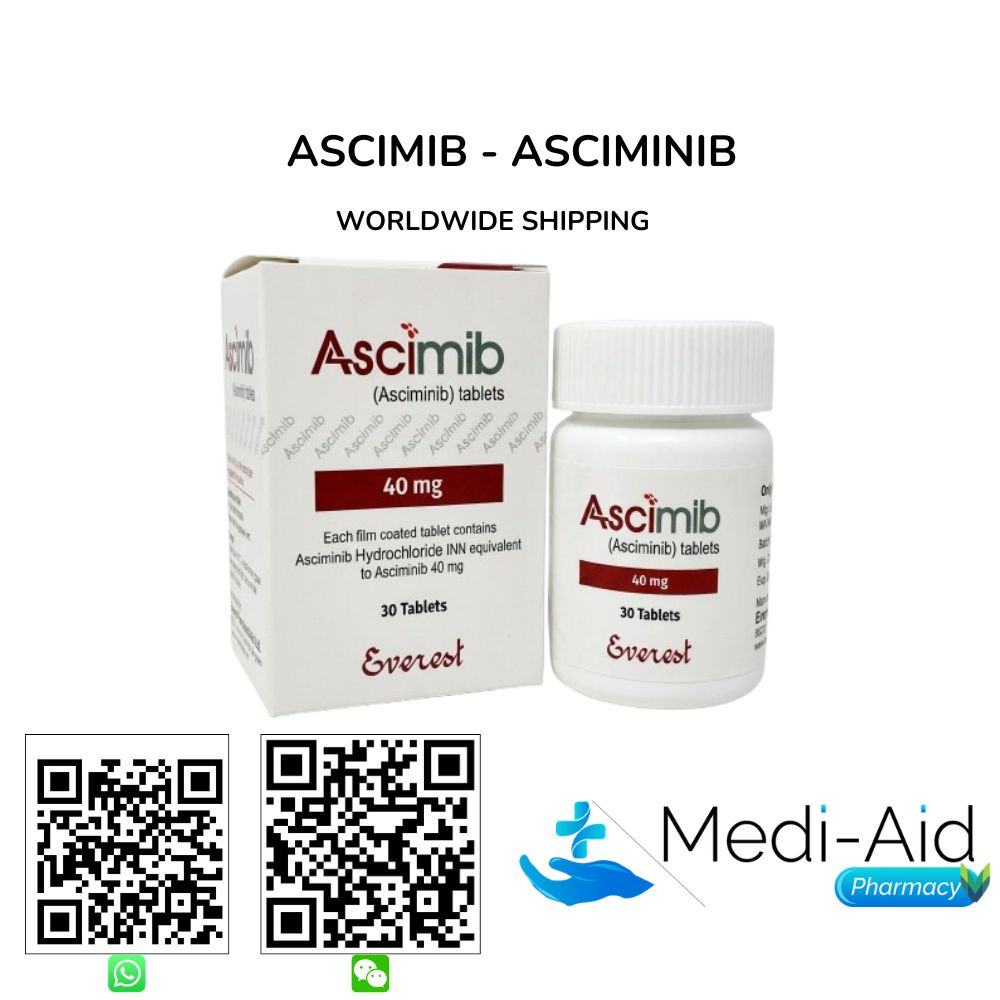
Ascimib 40 MG (Asciminib) is an oral STAMP inhibitor and allosteric BCR-ABL1 kinase inhibitor supplied as a 40 mg tablet in a 30’s pot and manufactured by Everest Pharmaceuticals Ltd. in Bangladesh. Its active ingredient, asciminib, is the first approved member of the STAMP (Specifically Targeting the ABL Myristoyl Pocket) inhibitor drug class, binding the myristoyl pocket of ABL1 kinase rather than the ATP-binding site targeted by all prior BCR-ABL1 tyrosine kinase inhibitors (TKIs), a mechanistically distinct allosteric binding mode that retains potent activity against the majority of BCR-ABL1 kinase domain mutations, including the T315I gatekeeper mutation that confers resistance to nearly all ATP-competitive TKIs.
The reference-label dose of asciminib for chronic myeloid leukemia in chronic phase (CML-CP) without the T315I mutation is 40 mg (one 40 mg tablet) taken orally twice daily on an empty stomach. In the pivotal ASCEMBL Phase 3 trial, asciminib 40 mg twice daily produced a major molecular response (MMR) rate of 25.5% at 24 weeks compared with 13.2% with bosutinib (odds ratio 2.27; 95% CI 1.10 to 4.70; p=0.029), a complete cytogenetic response (CCyR) rate of 40.8% versus 24.5% with bosutinib, and a significantly lower rate of treatment discontinuation due to adverse events (5.8% with asciminib versus 21.1% with bosutinib) in 233 adults with CML-CP previously treated with two or more prior TKIs. Searching for Ascimib 40 MG Asciminib? Mediaid Pharmacy lists this product within its comprehensive leukemia medicines portfolio and ships it worldwide.
Basic Product Information of Ascimib 40 MG (Asciminib)
| Brand Name | Ascimib 40 MG (Asciminib) |
| Product Name | Ascentib |
| Generic Name | Asciminib INN |
| Drug Class | STAMP Inhibitor (Specifically Targeting the ABL Myristoyl Pocket), Allosteric BCR-ABL1 Kinase Inhibitor, Targeted Oncology Agent |
| Formulation | Tablet |
| Available Strength | 40 mg |
| Available Pack Size | 30’s Pot (30 tablets per pot) |
| Primary Indications | CML in chronic phase (CML-CP) previously treated with two or more TKIs: reference dose 40 mg (one tablet) orally twice daily on an empty stomach (no food for at least 2 hours before and 1 hour after each dose), continuous schedule. CML-CP or accelerated phase (CML-AP) with BCR-ABL1 T315I mutation: reference dose 200 mg (five 40 mg tablets) orally twice daily on an empty stomach. Confirm BCR-ABL1 T315I mutation status by validated testing before initiating the 200 mg twice-daily T315I dose regimen. |
| Manufacturer | Everest Pharmaceuticals Ltd., Bangladesh |
| Registration | Bangladesh |
| Originator Reference Brand | Scemblix (asciminib) by Novartis |
| Global Supplier | Mediaid Pharmacy, Worldwide Shipping Available |
| Storage Conditions | Store in a dry place away from light and moisture, at the temperature printed on the pack. Keep out of the reach of children. |
How Ascimib 40 MG (Asciminib) Works: STAMP Inhibition and Allosteric BCR-ABL1 Blockade
Asciminib, the active ingredient in Ascimib 40 MG, is the world’s first approved STAMP inhibitor, an acronym standing for Specifically Targeting the ABL Myristoyl Pocket. This designation defines a mechanistically unique drug class that distinguishes asciminib from all five previously approved BCR-ABL1 tyrosine kinase inhibitors (imatinib, dasatinib, nilotinib, bosutinib, and ponatinib), each of which functions as an ATP-competitive inhibitor binding the ATP-binding site within the BCR-ABL1 kinase domain. Asciminib instead binds the myristoyl pocket, a deep hydrophobic regulatory site located at the C-terminal lobe of the ABL1 kinase domain, a site that is biologically accessible only in the ABL1 kinase and not in other tyrosine kinases, conferring exceptional target selectivity.
In the normal, non-oncogenic state, the myristoyl group at the N-terminus of ABL1 protein occupies this pocket in a cis-intramolecular interaction, clamping the kinase in an inactive conformation. BCR-ABL1, the oncogenic fusion protein produced by the Philadelphia chromosome translocation t(9;22)(q34;q11) that defines chronic myeloid leukemia (CML), lacks the N-terminal myristoyl group due to the fusion event, removing this intramolecular autoinhibitory mechanism and leaving BCR-ABL1 constitutively active. Asciminib re-establishes allosteric inhibition by occupying the now-unoccupied myristoyl pocket, restoring the inactive ABL1 kinase conformation, suppressing BCR-ABL1 kinase activity, and blocking the downstream JAK-STAT, RAS-MEK-ERK, and PI3K-AKT-mTOR signaling cascades that drive CML cell proliferation and survival.
Because asciminib does not bind the ATP-binding site, it retains potent anti-leukemic activity against the large majority of BCR-ABL1 kinase domain point mutations that cause resistance to ATP-competitive TKIs, including mutations at the P-loop, T315I gatekeeper position (at the 200 mg twice-daily dose), and SH3/SH2 regulatory domain mutations, providing an orthogonal mechanism of resistance circumvention.
Ascimib 40 MG delivers the 40 mg unit dose component of asciminib therapy. For CML-CP patients previously treated with two or more TKIs (the primary indication based on the ASCEMBL trial), the reference-label dose is 40 mg (one 40 mg tablet) administered orally twice daily on an empty stomach, with at least two hours of fasting before each dose and at least one hour without food after each dose, to ensure consistent drug absorption.
At 40 mg twice daily (two tablets per day), one 30’s pot of Ascimib 40 MG provides a 30-day supply. A critically important and mechanistically unique feature of asciminib is its ability to function in combination with ATP-competitive TKIs, producing synergistic anti-leukemic activity in preclinical BCR-ABL1-positive cell line models through simultaneous dual-site blockade of BCR-ABL1 kinase activity: asciminib at the myristoyl pocket and an ATP-competitive TKI at the ATP-binding site.
This combination concept has advanced into clinical investigation as a strategy to prevent the emergence of resistant clones, given that a BCR-ABL1 mutant resistant to myristoyl-pocket binding (such as the I502L/V506L asciminib resistance mutation) would retain full sensitivity to ATP-competitive TKIs, and vice versa. Oncologists building comprehensive programs for CML and related myeloid malignancies can review the complete range of leukemia medicines at Mediaid Pharmacy for companion and supportive therapies.
In the pivotal ASCEMBL Phase 3 randomized, open-label trial, asciminib 40 mg twice daily was compared with bosutinib 500 mg once daily in 233 adults with CML-CP previously treated with two or more TKIs; patients with documented BCR-ABL1 T315I mutations were excluded from ASCEMBL. The primary endpoint, MMR at 24 weeks per blinded central laboratory assessment, was achieved by 25.5% of asciminib-treated patients versus 13.2% of bosutinib-treated patients (odds ratio 2.27; 95% CI 1.10 to 4.70; p=0.029).
The complete cytogenetic response (CCyR) rate at 24 weeks was 40.8% with asciminib versus 24.5% with bosutinib. The rate of treatment discontinuation due to adverse events was dramatically lower with asciminib (5.8%) than with bosutinib (21.1%), reflecting the superior tolerability profile of asciminib compared with a third-generation ATP-competitive TKI in heavily pre-treated CML patients. These results established asciminib as a standard-of-care precision medicine option for adult CML-CP patients after failure of two or more prior TKIs, a patient population with historically limited and poorly tolerated second-line-plus options.
Approved Indications of Asciminib (Reference Label for Ascimib 40 MG (Asciminib))
Asciminib, the active ingredient in Ascimib 40 MG, carries reference-label indications across two distinct CML clinical settings: third-line-plus CML-CP (without T315I mutation) at 40 mg twice daily, and CML-CP or CML-AP with confirmed BCR-ABL1 T315I mutation at 200 mg twice daily. The 40 mg tablet strength of Ascimib directly supports the first-indication dose of 40 mg twice daily (one tablet per dose), and also enables the T315I-indication dose of 200 mg twice daily when five 40 mg tablets are administered per dose. Both dosing schedules require administration on an empty stomach. BCR-ABL1 T315I mutation testing by validated molecular assay is mandatory before prescribing the 200 mg twice-daily dose. Prescribers should confirm the exact locally approved indications on the Ascimib product label and applicable national hematology guidelines before initiating treatment.
|
CML-CP, Third-Line and Beyond Without T315I Mutation (40 mg Twice Daily) Indicated for adults with CML in chronic phase (CML-CP) previously treated with two or more BCR-ABL1 TKIs. The approval was based on the ASCEMBL Phase 3 trial (n=233): asciminib 40 mg twice daily produced an MMR rate of 25.5% at 24 weeks versus 13.2% with bosutinib (OR 2.27; p=0.029), a CCyR rate of 40.8% versus 24.5%, and a treatment discontinuation rate due to adverse events of 5.8% versus 21.1%. Patients with documented BCR-ABL1 T315I mutations were excluded from ASCEMBL; those patients require the 200 mg twice-daily T315I-specific dose. For a comprehensive selection of targeted agents used in CML and related myeloid malignancies, browse the leukemia medicines collection at Mediaid Pharmacy. |
CML-CP or CML-AP With BCR-ABL1 T315I Mutation (200 mg Twice Daily) Indicated for adults with CML in chronic phase (CML-CP) or accelerated phase (CML-AP) harboring a BCR-ABL1 T315I mutation regardless of the number of prior TKIs received. The T315I gatekeeper mutation confers resistance to imatinib, dasatinib, nilotinib, bosutinib, and most other ATP-competitive TKIs, leaving patients with historically very limited precision medicine options at the time of T315I detection. At the 200 mg twice-daily dose (five 40 mg tablets per dose), asciminib produces MMR rates of approximately 29 to 31% in T315I-positive CML-CP patients across available clinical data, establishing it as the preferred BCR-ABL1 inhibitor in this genomically defined, treatment-resistant population. BCR-ABL1 T315I mutation must be confirmed by validated molecular testing before initiating the 200 mg twice-daily dose. For broader oncology medicine sourcing alongside asciminib, explore the oncology medicines portfolio at Mediaid Pharmacy. |
Key Clinical Benefits of Ascimib 40 MG (Asciminib)
|
Superior MMR Rates and Dramatically Lower Toxicity-Driven Discontinuation Versus Bosutinib ASCEMBL demonstrated that asciminib 40 mg twice daily produced a statistically significantly higher MMR rate at 24 weeks compared with bosutinib (25.5% vs. 13.2%; OR 2.27; p=0.029) in TKI-pretreated CML-CP patients, representing a near-doubling of the molecular response rate over the active comparator. Equally important, only 5.8% of asciminib-treated patients discontinued treatment due to adverse events versus 21.1% in the bosutinib arm, a more than 3-fold difference in toxicity-driven withdrawal that directly translates into longer on-treatment duration and greater cumulative exposure to effective therapy in a population already burdened by multiple prior treatment lines. |
First-in-Class Myristoyl Pocket Binding: Activity Against T315I and Broad Mutation Coverage Asciminib’s STAMP mechanism targets the ABL myristoyl pocket rather than the ATP-binding site, preserving potent BCR-ABL1 inhibitory activity against the T315I gatekeeper mutation (at the 200 mg twice-daily dose) and the vast majority of kinase domain point mutations that drive ATP-competitive TKI resistance. This unique binding site means asciminib has a non-overlapping resistance profile with all approved ATP-competitive TKIs: mutations that abolish asciminib’s myristoyl-pocket binding (such as I502L and V506L) retain full sensitivity to ATP-competitive TKIs, enabling asciminib to serve as a rescue option after failure of imatinib, dasatinib, nilotinib, bosutinib, or ponatinib without cross-resistance in most clinical scenarios. |
30-Day Supply Per Pot and Twice-Daily Oral Administration Suited to Continuous CML Therapy At the reference-label dose of 40 mg twice daily (one tablet per dose, two tablets per day), each 30’s pot of Ascimib 40 MG provides a full 30-day supply, aligning with the standard monthly oncology dispensing cycle and simplifying supply logistics for patients receiving long-term continuous CML therapy. The once-per-tablet dose simplicity at the 40 mg twice-daily level reduces preparation burden compared with multi-tablet oncology dosing regimens, supporting adherence in patients who may be managing complex multi-drug CML treatment plans. The fasting requirement (no food 2 hours before and 1 hour after each dose) is achievable within routine daily scheduling for the majority of adult CML patients in the third-line-plus setting. |
Clinical Monitoring Requirements During Ascimib 40 MG (Asciminib) Treatment
Hematologic monitoring is the primary ongoing safety requirement during asciminib therapy. Myelosuppression, including thrombocytopenia (platelet count decrease), neutropenia, and anemia, is a pharmacological effect of BCR-ABL1 inhibition across the entire TKI class and is observed with asciminib at clinical doses. The reference label requires a complete blood count (CBC) with differential at baseline and monthly during the first three months of treatment, then periodically as clinically indicated thereafter.
Grade 3 thrombocytopenia (platelet count 25,000 to less than 50,000 per microliter) requires withholding asciminib until platelet count recovers to 50,000 per microliter or above, then restarting at a reduced dose; Grade 4 thrombocytopenia (platelet count below 25,000 per microliter) requires withholding asciminib until platelet count recovers to 75,000 per microliter or above before resuming, also at a reduced dose. Neutropenia management follows an analogous dose-modification algorithm based on absolute neutrophil count (ANC) thresholds.
Oncology nurses and hematologists must evaluate CBC trends at each visit, particularly during the first treatment cycle when myelosuppressive nadir is most likely, and adjust dose or schedule per the prescribing label guidelines. Patients should be counseled to report any unusual bruising, bleeding, signs of infection, or unexplained fatigue immediately to their oncology team.
Pancreatic enzyme monitoring is a mandatory safety assessment unique to asciminib among approved BCR-ABL1 inhibitors. The reference label requires serum lipase and amylase measurement at baseline and monthly during the first three months of treatment, then as clinically indicated thereafter. Asymptomatic grade 1 to 2 lipase or amylase elevation does not require dose modification but should trigger increased monitoring frequency; Grade 3 or 4 pancreatic enzyme elevation (with or without symptoms of pancreatitis including epigastric pain radiating to the back, nausea, or vomiting) requires dose withholding and clinical evaluation for acute pancreatitis before any decision to resume asciminib. Patients should be advised to maintain adequate hydration throughout therapy, limit alcohol consumption, and report any epigastric or upper abdominal pain promptly.
Cardiovascular monitoring is required throughout asciminib therapy because arterial occlusive events, including peripheral arterial occlusive disease (PAOD), ischemic cerebrovascular events, and cardiac ischemia, have been reported across the BCR-ABL1 TKI drug class. Asciminib prescribers should assess and optimize cardiovascular risk factors (hypertension, dyslipidemia, diabetes, smoking, and obesity) at baseline and throughout treatment; blood pressure measurement at every clinic visit is advisable. Electrocardiogram (ECG) monitoring for QTc prolongation, while less demanding with asciminib than with some other TKIs, should be performed at baseline and as clinically indicated in patients with pre-existing cardiac conduction abnormalities or who require co-administration of QTc-prolonging medications.
Drug Interactions and Important Safety Information for Ascimib 40 MG (Asciminib)
The most clinically significant drug interaction categories for asciminib involve CYP3A4 pathway agents, P-glycoprotein (P-gp) and BCRP substrates, and food and acid-suppressing medications. Asciminib is primarily metabolized by CYP3A4, with additional contributions from CYP2C9 and phase II glucuronidation pathways. Strong CYP3A4 inducers (including rifampin, rifabutin, carbamazepine, phenytoin, enzalutamide, and St. John’s Wort) significantly reduce asciminib plasma exposure, potentially rendering therapy sub-therapeutic; co-administration with strong CYP3A4 inducers should be avoided throughout the treatment course.
If a strong CYP3A4 inducer is clinically unavoidable, the treating oncologist should be aware that no validated dose adjustment has been established to reliably compensate for the interaction and should consider alternative medications. Strong CYP3A4 inhibitors (including azole antifungals such as ketoconazole, itraconazole, and voriconazole; macrolide antibiotics such as clarithromycin; and ritonavir-containing antiretroviral regimens) may increase asciminib plasma concentrations and potentially increase the risks of myelosuppression and pancreatitis; if co-administration is unavoidable, more frequent CBC and pancreatic enzyme monitoring is warranted.
Asciminib is an inhibitor of CYP2C9 at clinically relevant concentrations; co-administration with CYP2C9 substrates that have a narrow therapeutic index (including warfarin, phenytoin, and certain sulfonylurea antidiabetic agents) may increase the plasma concentrations of those co-medications, necessitating closer monitoring and potential dose adjustment of the CYP2C9 substrate drug. Asciminib is also a substrate and inhibitor of P-gp and BCRP efflux transporters; co-administration with P-gp inhibitors may increase asciminib exposure, while P-gp inducers (including rifampin) may reduce it. For patients co-administered BCRP substrate medications (including rosuvastatin and certain fluoroquinolone antibiotics), asciminib-mediated BCRP inhibition may increase their systemic exposure; monitoring for substrate drug toxicity and dose adjustment as needed are advisable.
The fasting requirement for asciminib (no food for at least 2 hours before and 1 hour after each dose) creates a clinically meaningful food-drug interaction that must be communicated clearly to every patient starting treatment: consuming food close to the dosing window significantly reduces asciminib bioavailability. Proton pump inhibitors (PPIs) and H2-receptor antagonists do not significantly affect asciminib absorption (asciminib solubility is not pH-dependent), making acid suppression management less complex for asciminib than for some other CML targeted agents. Patients must provide their hematologist or oncologist with a complete medication list, including all prescription drugs, over-the-counter products, vitamins, and herbal supplements, before and throughout Ascimib 40 MG treatment. Clinicians co-sourcing companion oncology or supportive care medicines alongside asciminib can browse the full oncology medicines range available at Mediaid Pharmacy.
Side Effects and Precautions of Ascimib 40 MG (Asciminib)
|
Common Side Effects Thrombocytopenia (platelet count decrease; the most common hematologic adverse event with asciminib 40 mg twice daily; mandatory monthly CBC monitoring is required during the first three months of treatment) Neutropenia and anemia (dose modification algorithm based on ANC and hemoglobin thresholds applies) Musculoskeletal pain (arthralgia, myalgia, and back pain; among the most frequently reported non-hematologic adverse events) Fatigue and asthenia Nausea Rash (skin rash or dermatitis; typically Grade 1 to 2; Grade 3 rash requires dose modification) Headache Hypertension (blood pressure monitoring at every clinic visit is recommended) Elevated serum lipase and/or amylase (asymptomatic enzyme elevation requires monthly monitoring; symptomatic elevation may indicate pancreatitis) Diarrhea, abdominal pain, and constipation |
Serious Warnings and Precautions Myelosuppression: CBC with differential required at baseline and monthly for the first 3 months, then periodically. Grade 3 thrombocytopenia (platelets 25,000 to less than 50,000/mcL) requires dose withhold until recovery to 50,000/mcL or above then resume at reduced dose; Grade 4 thrombocytopenia (platelets below 25,000/mcL) requires withhold until recovery to 75,000/mcL or above. Analogous ANC thresholds govern neutropenia dose modifications. Pancreatitis: serum lipase and amylase required at baseline and monthly for the first 3 months. Grade 3 or 4 enzyme elevation, or any symptomatic elevation consistent with pancreatitis (epigastric pain, nausea, vomiting), requires withholding asciminib and clinical evaluation before any decision to resume; may require permanent discontinuation for confirmed severe pancreatitis. Cardiovascular toxicity: arterial occlusive events including peripheral arterial occlusive disease (PAOD), cerebrovascular events, and cardiac ischemia have been reported with asciminib. Optimize cardiovascular risk factors (hypertension, dyslipidemia, diabetes, smoking) before and throughout treatment. Monitor blood pressure at every clinical visit. Discontinue asciminib for serious arterial occlusive events and reassess the benefit-risk of resuming therapy. Hypersensitivity reactions: serious hypersensitivity reactions have been reported with asciminib; permanently discontinue for Grade 3 or 4 hypersensitivity. Embryo-fetal toxicity: asciminib can cause fetal harm. Females of reproductive potential must use effective contraception during treatment and for at least 3 days after the final dose. Males with female partners of reproductive potential must use contraception during treatment and for at least 3 days after the last dose. Breastfeeding is not recommended during treatment and for at least 3 days after the final dose. |
Who Should Use Ascimib 40 MG (Asciminib)?
Ascimib 40 MG (Asciminib) is indicated for adult patients with CML in chronic phase (CML-CP) who have been previously treated with two or more BCR-ABL1 tyrosine kinase inhibitors, where asciminib monotherapy at 40 mg twice daily is the reference-label dose validated in the ASCEMBL Phase 3 trial (MMR rate 25.5% at 24 weeks vs. 13.2% with bosutinib; OR 2.27; p=0.029; CCyR rate 40.8% vs. 24.5%; treatment discontinuation due to adverse events 5.8% vs. 21.1% in 233 patients).
Ascimib 40 MG is also used at the 200 mg twice-daily dose (five 40 mg tablets per dose) for adult patients with CML-CP or CML-AP harboring a confirmed BCR-ABL1 T315I mutation, regardless of the number of prior TKIs received, where asciminib STAMP inhibition provides potent anti-leukemic activity against a mutation that is broadly resistant to all ATP-competitive BCR-ABL1 TKIs. BCR-ABL1 T315I mutation status must be confirmed by a validated molecular diagnostic assay before prescribing the 200 mg twice-daily dose; patients without T315I who have received fewer than two prior TKIs should be assessed for eligibility for earlier-line TKI options before starting asciminib.
Before initiating Ascimib 40 MG at either dose, prescribers should evaluate baseline CBC with differential, serum lipase and amylase, cardiovascular risk factor profile, blood pressure, and hepatic function. Asciminib must be taken on an empty stomach at all doses; patients should be counseled on the strict fasting requirement (no food for 2 hours before and 1 hour after each dose) before starting treatment. For patients requiring companion oncology medicines or supportive care agents alongside their asciminib regimen, the Mediaid Pharmacy Everest Pharmaceuticals medicines range and the broader oncology medicines portfolio offer a comprehensive selection available for worldwide delivery.
Global Supplier: Mediaid Pharmacy Worldwide Shipping for Ascimib 40 MG (Asciminib)
Mediaid Pharmacy is a Dhaka-based supplier of oncology and specialty medicines with worldwide shipping. Ascimib 40 MG (Asciminib), manufactured by Everest Pharmaceuticals Ltd. in Bangladesh, is available in 30’s pot tablet packs, and all orders are supported by pricing quotations, stock confirmation, regulatory documentation, and end-to-end delivery tracking. Hospitals, specialist hematology and oncology clinics, distributors, and patients can contact the Mediaid Pharmacy team through WhatsApp, phone, or WeChat for all inquiries about Ascimib 40 MG Asciminib stock, pricing, and international delivery timelines. Buyers sourcing asciminib for third-line-plus CML-CP programs, T315I mutation-directed CML therapy, or co-sourcing multiple oncology medicines in a single shipment can browse the complete leukemia medicines collection and the broader oncology medicines collection at Mediaid Pharmacy before requesting a consolidated quotation.
Why Choose Ascimib 40 MG (Asciminib) from Mediaid Pharmacy?
Ascimib 40 MG (Asciminib) provides hematology and oncology teams with the reference-label 40 mg unit dose of asciminib, the foundational tablet strength that enables the standard 40 mg twice-daily therapeutic dose validated in the ASCEMBL Phase 3 trial (25.5% MMR at 24 weeks and a 5.8% toxicity discontinuation rate in TKI-pretreated CML-CP patients) and supports the complete dose-reduction ladder as well as the T315I-specific 200 mg twice-daily regimen (five 40 mg tablets twice daily). At 40 mg twice daily (two tablets per day), the 30’s pot provides a full 30-day supply, matching the standard monthly oncology dispensing cycle and streamlining supply management for long-term continuous CML therapy. Ascimib 40 MG is manufactured by Everest Pharmaceuticals Ltd., a Bangladesh-based pharmaceutical manufacturer with registration in Bangladesh, and is supplied in a 30’s pot tablet pack suited to the continuous twice-daily dosing schedule required for both CML-CP and T315I-mutated CML indications. Mediaid Pharmacy supplies Ascimib 40 MG with full product documentation, specialist supply support, and worldwide shipping from Dhaka, with every order beginning from a prescription-based inquiry that aligns supply with clinical need. To source additional leukemia medicines, Everest Pharmaceuticals-branded products, or broader oncology medicines alongside Ascimib 40 MG, visit the Mediaid Pharmacy Everest Pharmaceuticals medicines section and contact the team for a personalized quotation.
Frequently Asked Questions About Ascimib 40 MG (Asciminib)
What is Ascimib 40 MG (Asciminib) used for?
Ascimib 40 MG (Asciminib) is an oral STAMP inhibitor and allosteric BCR-ABL1 kinase inhibitor indicated for adults with chronic myeloid leukemia in chronic phase (CML-CP) previously treated with two or more BCR-ABL1 tyrosine kinase inhibitors (TKIs), at a reference dose of 40 mg (one tablet) twice daily on an empty stomach, as validated in the ASCEMBL Phase 3 trial (MMR rate 25.5% vs. 13.2% with bosutinib at 24 weeks; OR 2.27; p=0.029). Asciminib is also used at 200 mg (five 40 mg tablets) twice daily for CML-CP or CML-AP patients with a confirmed BCR-ABL1 T315I mutation. Asciminib targets the ABL myristoyl pocket rather than the ATP-binding site, giving it a unique resistance profile that is non-overlapping with all ATP-competitive TKIs and retaining activity against the T315I gatekeeper mutation at the higher dose.
What is the generic name of Ascimib 40 MG?
The generic name of Ascimib 40 MG is asciminib INN. The product name listed in the Everest Pharmaceuticals catalog is Ascentib. Ascimib 40 MG is a tablet formulation available in a 30’s pot (30 tablets per pot), manufactured by Everest Pharmaceuticals Ltd. in Bangladesh. The originator reference brand for asciminib is Scemblix, developed and commercialized by Novartis. Mediaid Pharmacy distributes Ascimib 40 MG globally with worldwide shipping to patients and healthcare providers.
How many tablets of Ascimib 40 MG are taken per dose?
The standard reference-label dose for CML-CP (without T315I mutation) is 40 mg twice daily, requiring one Ascimib 40 MG tablet per dose (one tablet in the morning and one tablet in the evening, for a total of two tablets per day). At this dose, one 30’s pot provides a 30-day supply. For CML-CP or CML-AP patients with a BCR-ABL1 T315I mutation, the reference dose is 200 mg twice daily, requiring five Ascimib 40 MG tablets per dose (five tablets twice daily, for a total of ten tablets per day). At the T315I dose of 200 mg twice daily, one 30’s pot provides a 6-day supply. Always confirm the exact number of tablets per dose and the specific indication with your prescribing hematologist or oncologist before starting or adjusting treatment.
What is the difference between Ascimib (Asciminib) and Scemblix (Asciminib)?
Ascimib (asciminib) manufactured by Everest Pharmaceuticals Ltd. in Bangladesh and Scemblix (asciminib) manufactured by Novartis contain the same active ingredient, asciminib INN, at the same 40 mg strength. Scemblix is the originator brand name approved by the FDA for asciminib. Ascimib 40 MG is the Everest Pharmaceuticals-branded formulation supplied in a 30’s pot and distributed globally by Mediaid Pharmacy. The same reference doses apply to both: 40 mg twice daily for CML-CP without T315I and 200 mg twice daily for T315I-positive CML. Confirm prescribing requirements and local regulatory status with your treating hematologist or oncologist and the relevant regulatory authority in your country before initiating Ascimib therapy.
What are the side effects of Ascimib 40 MG (Asciminib)?
Common side effects of asciminib 40 mg twice daily include thrombocytopenia (the most common hematologic adverse event; mandatory monthly CBC monitoring is required), neutropenia, anemia, musculoskeletal pain (arthralgia, myalgia, back pain), fatigue, nausea, rash, headache, hypertension, elevated lipase and/or amylase, diarrhea, and abdominal pain. Serious adverse effects include severe myelosuppression requiring dose modification or discontinuation, pancreatitis (including Grade 3 to 4 pancreatic enzyme elevation), arterial occlusive events (peripheral arterial occlusive disease, cerebrovascular events, cardiac ischemia), hypersensitivity reactions, and embryo-fetal toxicity. Mandatory CBC, lipase, and amylase monitoring and cardiovascular risk factor optimization are required throughout the treatment period. Consult your prescribing hematologist or oncologist about your individual risk profile before and during treatment with Ascimib 40 MG.
Does Ascimib 40 MG (Asciminib) need to be taken on an empty stomach?
Yes. Ascimib 40 MG (Asciminib) must be taken on an empty stomach at all doses. The reference label specifies that no food should be consumed for at least 2 hours before each asciminib dose and for at least 1 hour after each dose. Food intake close to the dosing window significantly reduces asciminib bioavailability and is therefore prohibited. Patients should be clearly counseled on this fasting requirement before starting treatment and should plan their twice-daily dosing schedule around meal times to ensure compliance. Swallow Ascimib 40 MG tablets whole with water; do not crush, split, or chew. If a dose is missed, take it as soon as remembered on the same day unless less than 12 hours remain until the next scheduled dose, in which case skip the missed dose and resume the regular schedule; do not take two doses on the same day to compensate for a missed dose.
What monitoring tests are required during Ascimib 40 MG (Asciminib) treatment?
The reference label requires a complete blood count (CBC) with differential at baseline and monthly for the first 3 months, then periodically as clinically indicated. Serum lipase and amylase are required at baseline and monthly for the first 3 months, then as clinically indicated. Blood pressure must be assessed at every clinical visit throughout therapy; antihypertensive therapy should be initiated or optimized as needed. An electrocardiogram (ECG) should be performed at baseline and as clinically indicated for patients with pre-existing cardiac conditions or who require co-administration of QTc-prolonging agents. Cardiovascular risk factors (dyslipidemia, diabetes, smoking, and obesity) should be evaluated and managed at baseline and throughout treatment. Hepatic function testing is advisable at baseline. Your hematology or oncology team will specify the exact monitoring schedule based on your individual clinical status and any dose modifications that occur during treatment.
Is Ascimib 40 MG (Asciminib) safe during pregnancy or while breastfeeding?
No. Asciminib can cause fetal harm based on its mechanism of action; BCR-ABL1 pathway inhibition disrupts cellular signaling critical for normal fetal development. Females of reproductive potential must use effective contraception during treatment with Ascimib 40 MG and for at least 3 days after the final dose. Males with female partners of reproductive potential must also use contraception during treatment and for at least 3 days after the last dose. Breastfeeding is not recommended during treatment and for at least 3 days after the final dose. Speak with your prescribing hematologist or oncologist before starting treatment if you are pregnant, planning a pregnancy, or currently breastfeeding.
Can I order Ascimib 40 MG (Asciminib) online with worldwide shipping?
Yes. Mediaid Pharmacy supplies Ascimib 40 MG (Asciminib) to patients and healthcare providers globally. Contact Mediaid Pharmacy via WhatsApp, phone, or WeChat at +8801773428128, or email info@mediaidpharmacy.com for pricing, current stock availability, and international delivery details for your country.
Order Ascimib 40 MG (Asciminib) with Worldwide Shipping
Phone / WhatsApp / WeChat: +8801773428128 | Email: info@mediaidpharmacy.com
Reviews
There are no reviews yet.