
Description
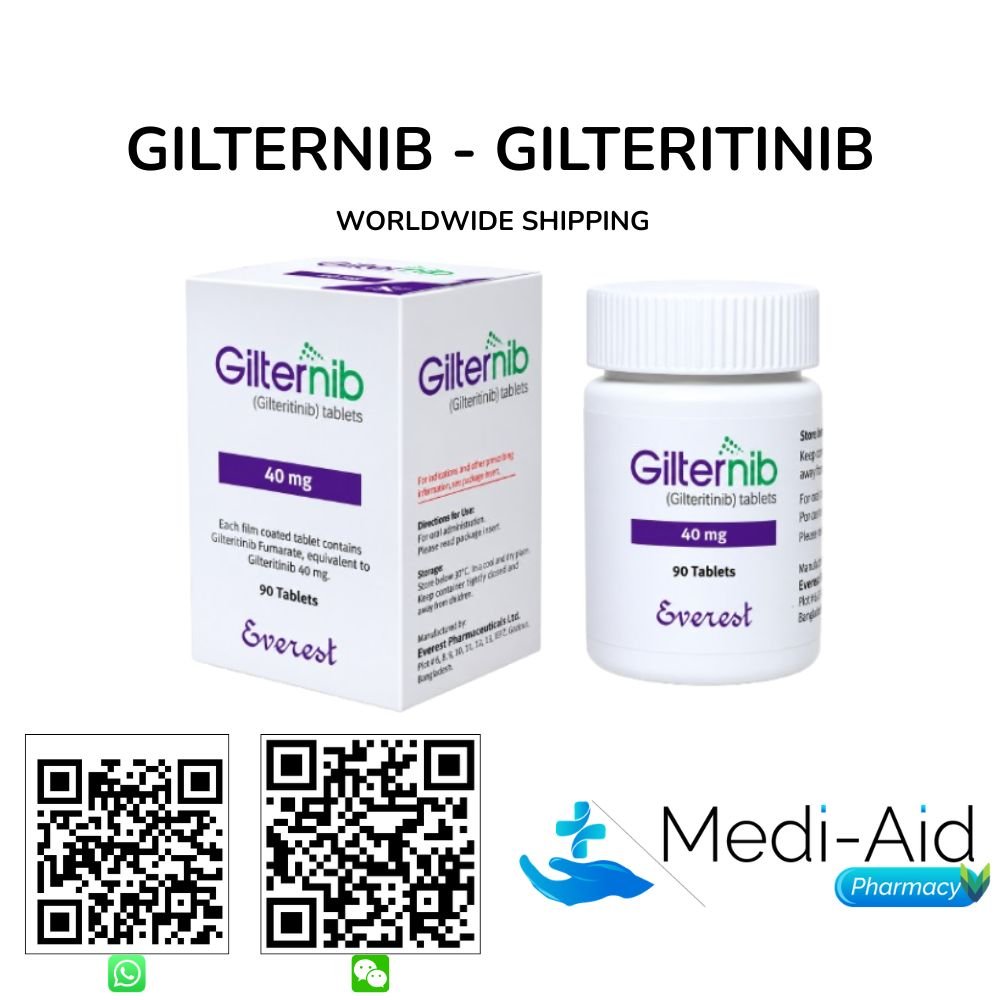
Gilternib 40 MG (Gilteritinib) is an oral, FLT3/AXL inhibitor film-coated tablet available in a 40 mg strength, supplied in a pack of 90 tablets per pot, manufactured by Everest Pharmaceuticals Ltd. of Bangladesh. The active ingredient, gilteritinib, is a highly selective, potent, Type I FLT3/AXL inhibitor that simultaneously suppresses both FLT3-internal tandem duplication (FLT3-ITD) and FLT3 tyrosine kinase domain (FLT3-TKD) mutations including D835 and I836 point mutations alongside AXL receptor tyrosine kinase, thereby blocking constitutive FLT3 signalling and AXL-mediated treatment resistance in FLT3-mutated acute myeloid leukaemia (AML) blast cells.
The reference-label starting dose of gilteritinib is 120 mg once daily (QD), achieved with 3 × Gilternib 40 MG tablets taken together once daily, with or without food, providing a full 30-day treatment cycle from a single 90-tablet pot. In the pivotal Phase III ADMIRAL trial, gilteritinib 120 mg QD delivered a median overall survival (OS) of 9.3 months versus 5.6 months with salvage chemotherapy (HR 0.64; 95% CI 0.49–0.83; P=0.0007) in adult patients with FLT3-mutated relapsed or refractory (R/R) AML, establishing gilteritinib as the global standard of care for FLT3-mutated R/R AML.
The composite complete remission rate (CRc, defined as complete remission [CR] plus complete remission with partial haematological recovery [CRh]) reached 54.3% with gilteritinib versus 21.8% with salvage chemotherapy, and the CR rate was 21.1% versus 10.5%. Searching for Gilternib 40 MG Gilteritinib? Mediaid Pharmacy stocks this product within its comprehensive oncology medicines portfolio and ships worldwide.
Basic Product Information of Gilternib 40 MG (Gilteritinib)
| Brand Name | Gilternib 40 MG (Gilteritinib) |
| Product Name | Gilternib |
| Generic Name | Gilteritinib |
| Drug Class | FLT3/AXL Inhibitor; Type I FLT3 Tyrosine Kinase Inhibitor (FLT3-ITD and FLT3-TKD); Targeted Oncology Agent for Acute Myeloid Leukaemia (AML) |
| Formulation | Film-Coated Tablet |
| Available Strength | 40 mg per tablet |
| Available Pack Size | 90 Tablets per pot (30-day supply at the reference-label starting dose of 3 tablets/day [120 mg QD]) |
| Primary Indication | Relapsed or Refractory Acute Myeloid Leukaemia (R/R AML) with FLT3 Mutation (FLT3-ITD and/or FLT3-TKD: D835, I836) in Adult Patients |
| Reference-Label Starting Dose | 120 mg once daily (QD) = 3 × Gilternib 40 MG tablets taken together once daily, with or without food; swallowed whole with water |
| Manufacturer / Brand | Everest Pharmaceuticals Ltd., Bangladesh |
| Country of Origin | Bangladesh |
| Categories | Everest Pharmaceuticals Medicines, Leukemia Medicines, Oncology Medicines |
| Storage Conditions | Store below 25°C in a dry place, protected from light and moisture. Keep out of the reach of children. |
| Global Supplier | Mediaid Pharmacy Worldwide Shipping Available |
How Gilternib 40 MG (Gilteritinib) Works: Dual FLT3/AXL Tyrosine Kinase Inhibition and Leukaemic Blast Cell Suppression in FLT3-Mutated AML
Gilteritinib, the active ingredient in Gilternib 40 MG, is an orally bioavailable, Type I FLT3/AXL dual inhibitor that selectively and potently suppresses constitutively activated FMS-like tyrosine kinase 3 (FLT3) and AXL receptor tyrosine kinase the two principal oncogenic drivers of leukaemic blast cell proliferation, survival, and therapeutic resistance in FLT3-mutated acute myeloid leukaemia (AML). Gilteritinib achieves its antileukaemic effect by occupying the ATP-binding domain of FLT3 in its active (DFG-in) conformation the defining characteristic of Type I kinase inhibitors thereby suppressing receptor autophosphorylation and completely blocking downstream propagation of the STAT5, PI3K/AKT, and RAS/MAPK/ERK pro-survival and pro-proliferative signalling cascades that sustain FLT3-mutated AML blast cell expansion.
A Type I FLT3 inhibitor refers to a small molecule that binds and inhibits FLT3 in both its activated (DFG-in) and inactivated (DFG-out) conformations, enabling coverage of both FLT3-ITD and FLT3-TKD point mutations a critical pharmacological distinction from first-generation FLT3 inhibitors such as sorafenib or midostaurin, which exhibit reduced or selective activity against FLT3-TKD mutations. Gilteritinib’s reported potency across its primary targets includes FLT3 at IC₅₀ approximately 0.29 nM and AXL at IC₅₀ approximately 0.73 nM confirming subnanomolar FLT3 inhibitory potency that sustains deep and durable target suppression at the 120 mg QD reference dose. Each Gilternib 40 MG film-coated tablet contains gilteritinib equivalent to 40 mg, with the standard reference-label dose of 120 mg QD delivered by taking 3 tablets once daily, with or without food.
FLT3-ITD mutations comprising approximately 20–30% of all adult AML cases generate constitutively active FLT3 receptor dimers through tandem duplication of the juxtamembrane domain, driving ligand-independent kinase activation and continuous STAT5 and PI3K/AKT/mTOR signalling that confers a proliferative and survival advantage to leukaemic blasts. FLT3-TKD mutations (D835 and I836 point mutations) represent approximately 7–10% of AML cases and generate constitutive FLT3 activation through direct disruption of the kinase activation loop a mechanism that confers intrinsic resistance to Type II FLT3 inhibitors but remains fully susceptible to gilteritinib’s Type I inhibitory mechanism.
AXL co-inhibition provides gilteritinib with a mechanistically distinct advantage over FLT3-selective agents: AXL receptor tyrosine kinase overexpression in FLT3-mutated AML serves as a primary mechanism of adaptive resistance to FLT3-selective inhibition, and gilteritinib’s simultaneous AXL suppression disrupts GAS6/AXL-mediated leukaemic stem cell survival and inhibits the AXL-driven FLT3 inhibitor resistance axis in the AML bone marrow microenvironment. In the pivotal Phase III ADMIRAL trial 371 adult patients with FLT3-mutated R/R AML gilteritinib 120 mg QD (achievable as 3 × Gilternib 40 MG tablets once daily) delivered a median OS of 9.3 months versus 5.6 months with salvage chemotherapy (HR 0.64; 95% CI 0.49–0.83; P=0.0007) and a CRc rate of 54.3% versus 21.8%. Oncologists managing patients with FLT3-mutated leukaemia can review the full range of leukemia medicines at Mediaid Pharmacy, including Gilternib 40 MG Gilteritinib, for comprehensive R/R AML treatment programme planning.
In the ADMIRAL trial which stratified patients by FLT3 mutation subtype (ITD vs TKD) and prior therapy gilteritinib demonstrated consistent OS benefit across both FLT3-ITD and FLT3-TKD mutation subgroups, confirming the clinical translation of its dual FLT3-ITD/FLT3-TKD inhibitory profile. The 1-year OS rate was 37.1% with gilteritinib versus 16.7% with salvage chemotherapy. Among patients who achieved CR or CRh, the median OS was substantially extended, confirming the clinical significance of deep haematological response as a surrogate endpoint in R/R AML. The gilteritinib dose for each patient must be determined and adjusted by the treating haematologist or oncologist; Gilternib 40 MG tablets must be prescribed and taken under the supervision of a qualified haematology-oncology specialist.
Approved Indication of Gilteritinib Gilternib 40 MG Reference Label
Gilteritinib is approved in numerous countries for the treatment of adult patients with FLT3-mutated relapsed or refractory AML. The 40 mg film-coated tablet formulation of Gilternib, with its 90-tablet pack size, supports the reference-label 120 mg QD starting dose and all protocol dose reduction and dose escalation steps. Prescribers must confirm the exact locally approved indication on the gilteritinib product label before initiating therapy, as specific label language varies by regulatory jurisdiction. FLT3 mutation status must be confirmed by a validated diagnostic test before initiating gilteritinib therapy.
|
Relapsed or Refractory AML with FLT3 Mutation (FLT3-ITD and FLT3-TKD) Adult Patients Gilteritinib is indicated as monotherapy for the treatment of adult patients with relapsed or refractory acute myeloid leukaemia (R/R AML) who have FLT3 mutations (FLT3-ITD and/or FLT3-TKD: D835, I836). Reference-label starting dose: 120 mg once daily (QD) = 3 × Gilternib 40 MG tablets per day, taken together with or without food. The ADMIRAL Phase III trial confirmed median OS of 9.3 vs 5.6 months (HR 0.64; P=0.0007) and CRc rate of 54.3% vs 21.8% versus salvage chemotherapy across FLT3-ITD and FLT3-TKD mutation subgroups. Oncologists can review the full range of leukaemia targeted therapy medicines at Mediaid Pharmacy alongside Gilternib for comprehensive R/R AML programme planning. |
FLT3 Mutation Testing Requirement Prerequisite for Gilteritinib Prescribing FLT3 mutation status (FLT3-ITD and FLT3-TKD) must be confirmed in AML blast cells using a validated, regulatory-approved molecular diagnostic assay such as PCR-based FLT3 genotyping or next-generation sequencing (NGS) before initiating gilteritinib therapy. FLT3-ITD allelic ratio and TKD point mutation status (D835, I836) determine eligibility and are required for prescriber compliance with the approved gilteritinib label. Approximately 20–30% of AML patients carry FLT3-ITD mutations and 7–10% carry FLT3-TKD mutations; combined FLT3 mutation frequency makes FLT3-mutated AML the largest molecularly defined AML subgroup. The complete selection of oncology medicines at Mediaid Pharmacy supports comprehensive haematology-oncology programme planning including gilteritinib-based R/R AML regimens. |
Gilteritinib Dose Modification Framework: How Gilternib 40 MG Tablets Cover Every Reference-Label Dose Level
The reference label for gilteritinib permits stepwise dose escalation to manage suboptimal early response and stepwise dose reductions to manage treatment-emergent adverse events including QT prolongation, differentiation syndrome, hepatotoxicity, and pancreatitis in R/R AML. The Gilternib 40 MG film-coated tablet enables complete reference-label dose coverage from the standard 120 mg QD starting dose through all protocol escalation and reduction steps, using 40 mg per tablet as the fundamental dose unit. The table below maps each reference-label dose level to the precise Gilternib 40 MG tablet count required. All dose modifications must be directed and supervised by the treating haematologist or oncologist; never alter the dose without an explicit clinical instruction.
| Indication & Regimen | Dose Level | Daily Dose | Gilternib 40 MG Tablet Count |
| R/R AML with FLT3 Mutation Adult Patients | Starting Dose | 120 mg QD (120 mg/day) | 3 tablets once daily (with or without food) |
| Escalation (Day 15 assessment, if no response and no toxicity) | 200 mg once daily (200 mg/day) | 5 tablets once daily (per oncologist direction) | |
| Reduction 1 | 80 mg once daily (80 mg/day) | 2 tablets once daily | |
| Reduction 2 | 40 mg once daily (40 mg/day) | 1 tablet once daily (per oncologist direction; discontinue if 40 mg not tolerated) |
Key Clinical Benefits of Gilternib 40 MG (Gilteritinib)
|
ADMIRAL Phase III: Overall Survival Advantage 9.3-Month Median OS and 36% Reduction in Death Risk vs Salvage Chemotherapy The ADMIRAL Phase III trial established gilteritinib 120 mg QD as the reference standard for FLT3-mutated R/R AML, confirming a 36% reduction in the risk of death versus salvage chemotherapy (median OS 9.3 vs 5.6 months; HR 0.64; 95% CI 0.49–0.83; P=0.0007) and a 1-year OS rate of 37.1% vs 16.7%. Among ADMIRAL patients who achieved CR or CRh, the median OS was substantially longer than the overall population, confirming the clinical value of deep haematological response. Gilternib 40 MG delivers the full 120 mg QD starting dose with 3 tablets once daily from a 90-tablet pot, providing a complete 30-day treatment cycle per pot. |
ADMIRAL Phase III: Composite Complete Remission Rate 54.3% CRc vs 21.8% with Salvage Chemotherapy Gilteritinib 120 mg QD achieved a composite complete remission rate (CRc = CR + CRh) of 54.3% versus 21.8% with salvage chemotherapy in the ADMIRAL trial representing more than a 2.5-fold improvement in deep haematological response. The CR rate was 21.1% vs 10.5% and the CRh rate was 33.2% vs 11.3%. The event-free survival (EFS) in responders further supports gilteritinib’s role as a clinically active targeted therapy for FLT3-mutated R/R AML. Gilteritinib’s dual FLT3-ITD/FLT3-TKD inhibitory profile delivered consistent CRc benefit across both mutation subgroups confirming its clinical utility regardless of FLT3 mutation subtype. |
Once-Daily Oral Dosing and Complete Reference-Label Dose Coverage from a Single 40 MG Tablet Strength Gilteritinib’s once-daily oral dosing regimen 3 × Gilternib 40 MG tablets QD at the 120 mg starting dose enables convenient, outpatient-compatible AML therapy without intravenous administration requirements. The 40 mg tablet strength enables precise dose escalation to 200 mg (5 tablets), first reduction to 80 mg (2 tablets), and second reduction to 40 mg (1 tablet) using the same Gilternib 40 MG product throughout the full dose modification and escalation pathway eliminating the need for supplementary tablet strengths. AXL co-inhibition (IC₅₀ ~0.73 nM) distinguishes gilteritinib from FLT3-selective agents by simultaneously suppressing a primary resistance mechanism active in the FLT3-inhibitor-refractory AML bone marrow microenvironment. |
Clinical Monitoring Requirements During Gilternib 40 MG (Gilteritinib) Treatment
QT interval monitoring is a primary safety requirement throughout gilteritinib therapy. Gilteritinib can prolong the QTc interval in a concentration-dependent manner; QTc prolongation ≥500 ms was reported in approximately 1% of patients in the ADMIRAL trial, with QTcF increases of >60 ms from baseline in approximately 2% of patients. A 12-lead ECG must be performed at baseline prior to initiating gilteritinib and on days 8 and 15 of cycle 1, and before the start of subsequent cycles. Electrolytes particularly potassium, magnesium, and calcium must be assessed and corrected to within normal limits before initiating gilteritinib and must be maintained throughout therapy. QTcF >500 ms requires gilteritinib dose interruption; persistent QTcF >500 ms after correction of electrolyte disturbances requires permanent dose reduction or discontinuation as directed by the treating oncologist. Concurrent use of QTc-prolonging agents must be avoided or managed with heightened electrocardiographic surveillance and electrolyte optimisation.
Differentiation syndrome monitoring is a critical safety requirement specific to gilteritinib therapy in AML. Differentiation syndrome a potentially fatal complication resulting from the rapid differentiation of leukaemic blasts induced by FLT3 inhibition has been reported in patients receiving gilteritinib, with onset typically within the first month of treatment. Signs and symptoms include fever, dyspnoea, hypoxia, pulmonary infiltrates, pleural or pericardial effusions, rapid weight gain, peripheral oedema, and hypotension. If differentiation syndrome is suspected, dexamethasone (10 mg IV every 12 hours) must be initiated immediately and gilteritinib interrupted until symptoms resolve. Prescribing clinicians and patients must be counselled to recognise and report differentiation syndrome symptoms urgently.
Hepatic function monitoring: liver enzyme elevations (AST/ALT) occur frequently during gilteritinib therapy; LFT assessment at baseline and periodically throughout treatment is required, with dose modification as directed by the treating oncologist for Grade 3–4 hepatotoxicity. Pancreatitis monitoring: gilteritinib has been associated with pancreatitis, requiring dose interruption and clinical evaluation for patients developing abdominal pain. Posterior Reversible Encephalopathy Syndrome (PRES): rare but serious neurological toxicity has been reported with gilteritinib; patients developing new-onset neurological symptoms including headache, visual disturbance, seizure, or altered consciousness require urgent neurological assessment and gilteritinib interruption. Oncologists managing patients on gilteritinib who also require supportive or combination agents can review the full selection of oncology medicines at Mediaid Pharmacy for comprehensive programme support.
Drug Interactions and Important Safety Information for Gilternib 40 MG (Gilteritinib)
The most clinically significant pharmacokinetic drug interaction risk for gilteritinib involves CYP3A4 modulators and P-glycoprotein (P-gp) inhibitors. Gilteritinib is primarily metabolised by CYP3A4 and is also a substrate of P-gp. Strong CYP3A4 inducers including rifampicin, carbamazepine, phenytoin, phenobarbital, and St. John’s Wort (Hypericum perforatum) significantly increase gilteritinib metabolism and reduce systemic exposure, potentially compromising antileukaemic efficacy; in the gilteritinib clinical pharmacology programme, rifampicin reduced gilteritinib AUC by approximately 70%. Avoidance of strong CYP3A4 inducers is preferred where clinically feasible; if unavoidable, dose escalation under oncologist supervision should be considered.
Strong CYP3A4 inhibitors including ketoconazole, itraconazole, voriconazole, posaconazole, clarithromycin, and ritonavir-boosted HIV medications may substantially increase gilteritinib systemic exposure and amplify toxicity risk; clinical vigilance, ECG monitoring, and dose interruption or reduction are required when these combinations cannot be avoided. Azole antifungals (voriconazole, posaconazole) are frequently used for prophylaxis or treatment in AML patients and represent the most common clinically encountered strong CYP3A4 inhibitor interaction in gilteritinib-treated patients.
P-glycoprotein (P-gp) inhibitors: agents that inhibit P-gp drug efflux including certain antifungals, HIV antiretrovirals, and amiodarone may increase gilteritinib plasma concentrations and require clinical monitoring. QT interval-prolonging agents: gilteritinib may prolong the QTc interval in a concentration-dependent manner; concurrent use of antiarrhythmics (amiodarone, sotalol, quinidine), fluoroquinolone antibiotics (moxifloxacin, ciprofloxacin), macrolide antibiotics (azithromycin, clarithromycin), antipsychotics (haloperidol, quetiapine), and other QTc-prolonging medications further amplifies QT prolongation risk and requires mandatory ECG monitoring and electrolyte correction.
5-HT3 receptor antagonists (ondansetron, granisetron, dolasetron) used for nausea and vomiting prophylaxis in AML treatment programmes also carry QT prolongation potential and require careful ECG monitoring when co-administered with gilteritinib. Moderate CYP3A4 inducers including efavirenz, etravirine, and rifabutin also reduce gilteritinib exposure and require increased clinical awareness. Patients must disclose all concomitant medications including over-the-counter supplements, antifungals, antiretrovirals, and herbal preparations to their treating haematologist-oncologist before and during Gilternib 40 MG therapy. Teams requiring concurrent oncology agents alongside gilteritinib-based leukaemia regimens at Mediaid Pharmacy can contact the team for multi-medicine sourcing support.
Side Effects and Precautions of Gilternib 40 MG (Gilteritinib)
|
Common Side Effects AST elevation (approximately 58%; the most frequently reported laboratory abnormality; requires mandatory LFT monitoring before and throughout treatment; Grade 3–4 AST elevation in approximately 10% of patients) ALT elevation (approximately 49%; requires LFT monitoring throughout therapy; Grade 3–4 ALT elevation in approximately 9% of patients; dose modification required for Grade 3–4 hepatotoxicity) Fatigue and asthenia (approximately 44%); often multifactorial, contributed to by disease burden, concurrent cytopenias, and direct drug-related effects Peripheral oedema (approximately 39%); fluid retention is common during gilteritinib therapy and must be monitored regularly; may overlap with early differentiation syndrome symptoms Nausea (approximately 37%) and diarrhoea (approximately 35%); typically mild to moderate and manageable with antiemetic and antidiarrhoeal agents, hydration, and dietary modification Myalgia and arthralgia (approximately 42%); musculoskeletal pain is a distinctive gilteritinib-associated adverse event; typically managed with analgesics and dose modification when Grade 3 or higher Constipation (approximately 28%); dyspnoea (approximately 26%); decreased appetite (approximately 25%); dizziness (approximately 22%) Febrile neutropenia (approximately 29%); stomatitis (approximately 20%); eye disorders including blurred vision (approximately 15%); hypotension (approximately 24%) |
Serious Warnings and Precautions Differentiation syndrome: a potentially fatal AML-specific toxicity reported in patients receiving gilteritinib, characterised by fever, dyspnoea, hypoxia, pulmonary infiltrates, pleural/pericardial effusions, rapid weight gain, peripheral oedema, and hypotension. Onset typically within the first month of treatment. Immediate dexamethasone (10 mg IV every 12 hours) and gilteritinib interruption are required upon suspicion; permanent discontinuation required if severe differentiation syndrome does not improve with corticosteroid therapy. QT prolongation: gilteritinib can prolong the QTc interval in a concentration-dependent manner. Mandatory baseline ECG and electrolyte assessment before initiation; ECG monitoring on days 8 and 15 of cycle 1 and before each subsequent cycle. QTcF >500 ms requires gilteritinib dose interruption; persistent prolongation requires dose reduction or permanent discontinuation. Avoid concurrent QTc-prolonging agents. Posterior Reversible Encephalopathy Syndrome (PRES): rare but serious neurological toxicity reported with gilteritinib. Any new-onset neurological symptoms including headache, seizure, lethargy, visual disturbance, or altered consciousness require urgent MRI assessment and immediate gilteritinib interruption. Confirmed PRES requires permanent discontinuation. Pancreatitis: gilteritinib has been associated with pancreatitis, including fatal cases. Patients developing abdominal pain require prompt clinical and biochemical evaluation (serum lipase and amylase); gilteritinib dose interruption required for Grade 3–4 pancreatitis, and discontinuation required if pancreatitis does not resolve or recurs. Hepatotoxicity and liver injury: Grade 3–4 AST/ALT elevations and drug-induced liver injury have been reported with gilteritinib. LFT monitoring at baseline and periodically throughout treatment is mandatory. Grade 3 hepatotoxicity requires dose interruption; Grade 4 hepatotoxicity or drug-induced liver failure requires immediate permanent discontinuation. Embryo-fetal toxicity: gilteritinib can cause fetal harm based on its mechanism of action and animal reproductive toxicology data. Females of reproductive potential must use effective contraception during treatment and for at least 6 months after the final dose. Males with female partners of reproductive potential must use effective contraception during treatment and for at least 4 months after the last dose. Breastfeeding is not recommended during treatment or for at least 2 months after the final dose. |
Who Should Use Gilternib 40 MG (Gilteritinib)?
Gilternib 40 MG (Gilteritinib) is indicated for adult patients with relapsed or refractory acute myeloid leukaemia (R/R AML) who have FLT3 mutations confirmed by a validated molecular diagnostic assay covering both FLT3-ITD and FLT3-TKD (D835 and I836) mutation subtypes. The 40 mg film-coated tablet formulation with a 90-tablet pot is clinically appropriate for any adult R/R AML patient requiring the reference-label 120 mg QD starting dose, dose escalation to 200 mg QD (if no response by Day 15 assessment and no prohibitive toxicity), or any stepwise dose reduction across the reference-label modification pathway the dosing table in this content specifies the precise Gilternib 40 MG tablet counts for each dose level.
Haematologists and oncologists must assess baseline FLT3 mutation status (confirmed by validated assay), ECG and QTc interval, electrolytes (potassium, magnesium, calcium), complete blood count (CBC), hepatic function (ALT, AST, bilirubin, alkaline phosphatase), renal function, serum lipase and amylase, and all concomitant medications including azole antifungals, antiretrovirals, QTc-prolonging agents, and CYP3A4 modulators before prescribing any gilteritinib dose. Patients who are pregnant, planning a pregnancy, or of reproductive potential without adequate contraception require mandatory pre-therapy counselling. Oncologists seeking comprehensive targeted agent support across leukaemia and haematological malignancy treatment programmes can review the full range of leukaemia medicines at Mediaid Pharmacy, including Gilternib 40 MG Gilteritinib for FLT3-mutated R/R AML after prior therapy.
Global Supplier: Mediaid Pharmacy Worldwide Shipping for Gilternib 40 MG (Gilteritinib)
Mediaid Pharmacy is a Dhaka-based supplier of oncology and specialty medicines with worldwide shipping capacity. Gilternib 40 MG (Gilteritinib) manufactured by Everest Pharmaceuticals Ltd. of Bangladesh, formulated as film-coated tablets in 90-tablet pots is stocked and available for international supply. All orders are supported by pricing quotations, stock confirmation, and end-to-end delivery tracking. Hospitals, specialist haematology and oncology clinics, cancer centres, leukaemia treatment programmes, distributors, and patients in countries where gilteritinib is approved can contact the Mediaid Pharmacy team through WhatsApp, phone, or WeChat for all enquiries about oral gilteritinib tablets for FLT3-mutated relapsed or refractory AML including current stock availability, pricing, and international delivery timelines. Institutions and distributors sourcing multiple oncology medicines in a single consolidated shipment can request a combined quotation from the Mediaid Pharmacy team after browsing the full catalogue.
Why Choose Gilternib 40 MG (Gilteritinib) from Mediaid Pharmacy?
Gilternib 40 MG is manufactured by Everest Pharmaceuticals Ltd. of Bangladesh and delivers gilteritinib the dual FLT3/AXL inhibitor whose 120 mg QD dose anchored the ADMIRAL Phase III trial (36% reduction in death risk; median OS 9.3 vs 5.6 months; HR 0.64; P=0.0007; CRc 54.3% vs 21.8%; 1-year OS 37.1% vs 16.7% vs salvage chemotherapy in FLT3-mutated R/R AML). The defining procurement advantage of sourcing Gilternib 40 MG from Mediaid Pharmacy is complete reference-label dosing coverage from a single generic gilteritinib supplier: the 40 mg tablet enables the full 120 mg QD starting dose (3 tablets once daily), dose escalation to 200 mg QD (5 tablets once daily) for suboptimal early responders without prohibitive toxicity, the first dose reduction to 80 mg QD (2 tablets once daily), and the second dose reduction to 40 mg QD (1 tablet once daily) covering the complete reference-label dose modification and escalation pathway without the need for supplementary tablet strengths.
Mediaid Pharmacy supplies Gilternib 40 MG in its 90-tablet pot format with worldwide shipping, specialist supply support, and documentation for customs clearance as required. Every order is initiated with a prescription-based enquiry to maintain supply aligned with the treating oncologist’s clinical plan. For oncology programmes requiring a broader panel of targeted and supportive agents, the full Mediaid Pharmacy oncology medicines catalogue is available to browse, and the team can be contacted directly for consolidated multi-medicine quotations.
Frequently Asked Questions About Gilternib 40 MG (Gilteritinib)
What is Gilternib 40 MG and what is its generic name?
Gilternib 40 MG is a branded generic gilteritinib film-coated tablet manufactured by Everest Pharmaceuticals Ltd. of Bangladesh. The generic name of Gilternib 40 MG is gilteritinib the same active ingredient as the originator medicine Xospata (gilteritinib), originally developed by Astellas Pharma and approved by the FDA (November 2018), EMA (2019), and other major regulatory agencies for the treatment of adult patients with relapsed or refractory AML with FLT3 mutations (FLT3-ITD and FLT3-TKD). Each Gilternib 40 MG film-coated tablet contains gilteritinib equivalent to 40 mg. The 90-tablet pot of Gilternib 40 MG provides a complete 30-day supply at the reference-label starting dose of 120 mg QD (3 tablets per day), making Gilternib 40 MG a clinically aligned, cost-accessible generic gilteritinib option for haematology-oncology programmes treating FLT3-mutated R/R AML patients worldwide.
How should Gilternib 40 MG (Gilteritinib) tablets be taken?
Gilternib 40 MG (Gilteritinib) tablets are taken orally at the dose and schedule prescribed by the treating haematologist or oncologist. The reference-label starting dose of gilteritinib is 120 mg once daily (QD) 3 Gilternib 40 MG tablets taken together once daily. Unlike many other oral TKIs with strict food-effect requirements, gilteritinib can be taken with or without food; however, patients should be consistent in their administration timing relative to meals. Tablets should be swallowed whole with a glass of water and must not be crushed, chewed, or split, as altering the tablet would substantially change the gilteritinib release and absorption profile. If a dose is missed and it is still on the same day, the missed dose should be taken as soon as remembered on that day. If the missed dose is not remembered until the next day, that missed dose should be skipped and the regular dosing schedule resumed patients must not take two doses on the same day to compensate for a missed dose. Patients must inform their treating oncologist immediately about any new concomitant medications particularly azole antifungals, antiretrovirals, or antibiotics that could interact with gilteritinib’s CYP3A4-mediated metabolism. Any concerns about administration should be reported to the treating oncologist immediately.
What are the most common side effects of Gilternib 40 MG (Gilteritinib)?
The most common side effects of gilteritinib across the ADMIRAL Phase III trial population and all dose levels include AST elevation (approximately 58%), ALT elevation (approximately 49%), fatigue and asthenia (approximately 44%), myalgia and arthralgia (approximately 42%), peripheral oedema (approximately 39%), nausea (approximately 37%), diarrhoea (approximately 35%), febrile neutropenia (approximately 29%), constipation (approximately 28%), dyspnoea (approximately 26%), decreased appetite (approximately 25%), hypotension (approximately 24%), dizziness (approximately 22%), stomatitis (approximately 20%), and eye disorders including blurred vision (approximately 15%). Differentiation syndrome a potentially life-threatening AML-specific toxicity is a distinctive and critical safety concern requiring urgent clinical recognition and immediate corticosteroid initiation. QT prolongation, pancreatitis, and posterior reversible encephalopathy syndrome (PRES) are serious but less common adverse events requiring immediate clinical intervention. The reference-label dose modification algorithm permits stepwise reductions from 120 mg QD to 80 mg QD and then to 40 mg QD using Gilternib 40 MG tablets. Consult your prescribing haematologist-oncologist regarding your individual risk profile before and during treatment.
What is the evidence base for gilteritinib in FLT3-mutated relapsed or refractory AML?
The pivotal evidence for gilteritinib in FLT3-mutated R/R AML is derived from the Phase III ADMIRAL trial (NCT02421939), which enrolled 371 adult patients with FLT3-mutated R/R AML (FLT3-ITD or FLT3-TKD: D835, I836; confirmed by central PCR testing; ECOG performance status 0–2; relapsed after one or two prior AML treatment lines, or refractory to initial induction chemotherapy). Patients were randomised 2:1 to gilteritinib 120 mg QD versus investigator-selected salvage chemotherapy (LoDAC, azacitidine, MEC, or FLAG-IDA). The primary endpoint of overall survival was met with statistical significance: median OS 9.3 months with gilteritinib versus 5.6 months with salvage chemotherapy (HR 0.64; 95% CI 0.49–0.83; P=0.0007). The 1-year OS rate was 37.1% with gilteritinib versus 16.7% with salvage chemotherapy. The CRc rate (CR + CRh) was 54.3% with gilteritinib versus 21.8% with salvage chemotherapy; the CR rate was 21.1% versus 10.5%. The OS benefit was consistent across both FLT3-ITD and FLT3-TKD mutation subgroups, confirming gilteritinib’s clinical activity regardless of FLT3 mutation subtype. Gilternib 40 MG delivers gilteritinib at the ADMIRAL trial reference dose of 120 mg QD, with 3 tablets once daily from a 90-tablet pot providing a complete 30-day treatment cycle.
Is Gilternib 40 MG (Gilteritinib) safe during pregnancy or while breastfeeding?
No. Gilteritinib including in the Gilternib 40 MG film-coated tablet formulation can cause fetal harm based on its mechanism of action (FLT3/AXL inhibition suppresses signalling pathways essential for normal fetal haematopoietic and vascular development) and confirmed animal reproductive toxicology data, which demonstrated embryotoxicity, fetotoxicity, and teratogenicity at exposures within or below the human therapeutic range. Females of reproductive potential must use effective contraception during treatment with Gilternib 40 MG and for at least 6 months after the final dose. Males with female partners of reproductive potential must also use effective contraception during treatment and for at least 4 months after the last dose, as it has not been established whether gilteritinib or its metabolites are present in semen. Breastfeeding is not recommended during treatment and for at least 2 months after the final dose, as it has not been established whether gilteritinib or its metabolites are excreted in human breast milk. Patients who are pregnant, planning a pregnancy, or breastfeeding must discuss their individual circumstances with their treating haematologist-oncologist before initiating gilteritinib therapy.
What makes gilteritinib different from first-generation FLT3 inhibitors like midostaurin or sorafenib?
Gilteritinib is a second-generation, Type I FLT3/AXL dual inhibitor that offers three pharmacologically distinct advantages over first-generation FLT3 inhibitors (midostaurin, sorafenib, quizartinib): (1) Dual FLT3-ITD and FLT3-TKD coverage gilteritinib’s Type I binding mechanism enables potent inhibition of both FLT3-ITD and FLT3-TKD (D835, I836) point mutations, whereas sorafenib and quizartinib (Type II inhibitors) exhibit markedly reduced activity against FLT3-TKD mutations, which are both primary resistance mechanisms and de novo therapeutic targets; (2) Subnanomolar FLT3 selectivity gilteritinib’s FLT3 IC₅₀ of approximately 0.29 nM and narrow kinase selectivity profile produce deep FLT3 target inhibition with a substantially cleaner off-target safety profile compared to multi-kinase non-selective agents such as midostaurin or sorafenib; (3) AXL co-inhibition gilteritinib simultaneously suppresses AXL receptor tyrosine kinase (IC₅₀ ~0.73 nM), which serves as a primary mechanism of adaptive resistance to FLT3-selective inhibition in the AML bone marrow microenvironment. Only gilteritinib has demonstrated Phase III OS superiority over salvage chemotherapy in FLT3-mutated R/R AML as monotherapy, confirming its position as the global standard of care in this clinical setting.
Can I order Gilternib 40 MG (Gilteritinib) online with worldwide shipping?
Yes. Mediaid Pharmacy supplies Gilternib 40 MG (Gilteritinib) manufactured by Everest Pharmaceuticals Ltd. of Bangladesh, film-coated tablets, 90 tablets per pot to oncology centres, hospitals, distributors, and patients globally. Contact Mediaid Pharmacy via WhatsApp, phone, or WeChat at +8801773428128, or email info@mediaidpharmacy.com, for pricing on Gilternib 40 MG Gilteritinib, current stock availability, and international delivery details for your country. Oncology teams sourcing Gilternib 40 MG Gilteritinib alongside other targeted agents can browse the complete range of oncology medicines at Mediaid Pharmacy and request a consolidated multi-medicine quotation. All orders are supported by prescription verification, pricing documentation, and customs clearance support as required for international shipments.
Order Gilternib 40 MG (Gilteritinib) with Worldwide Shipping
Phone / WhatsApp / WeChat: +8801773428128 | Email: info@mediaidpharmacy.com
Reviews
There are no reviews yet.