
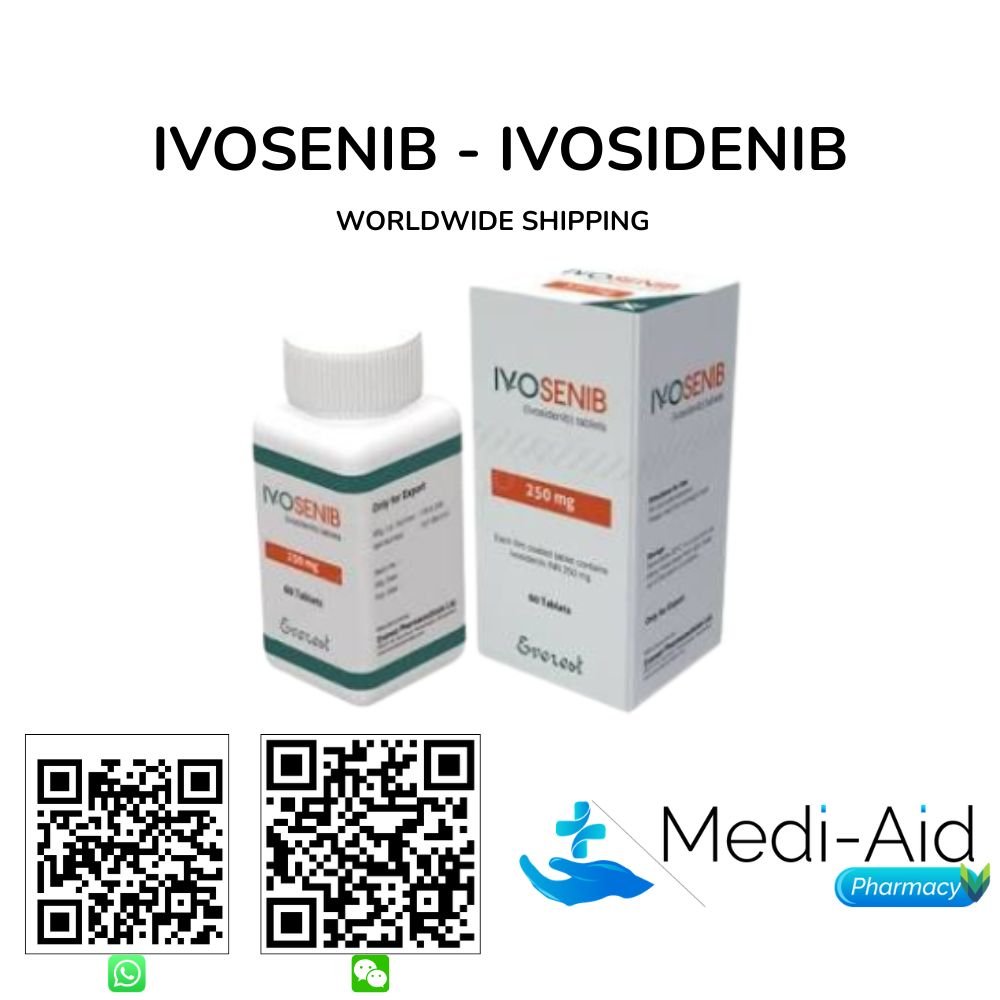
Description
Ivosenib 250 MG (Ivosidenib) is a first-in-class oral mutant IDH1 (isocitrate dehydrogenase-1) inhibitor film-coated tablet manufactured by Everest Pharmaceuticals Ltd. in Bangladesh, supplied as 60 tablets per pot. Ivosidenib is indicated for IDH1-mutant acute myeloid leukemia (AML) and IDH1-mutant cholangiocarcinoma (bile duct cancer). The recommended dose is 500 mg orally once daily (2 × 250 mg tablets). Available globally through Mediaid Pharmacy with worldwide shipping. Contact: +8801773428128 (WhatsApp/Phone/WeChat) | info@mediaidpharmacy.com.
| Brand Name | Ivosenib 250 MG (Ivosidenib) |
| Product Name | Ivosenib |
| Generic Name | Ivosidenib (International Nonproprietary Name, INN); investigational designation AG-120 in early-phase clinical literature |
| Drug Class | First-in-Class Mutant IDH1 Inhibitor (mIDH1 Inhibitor); Targeted Differentiation Therapy; Oral Oncology Agent; 2-Hydroxyglutarate (2-HG) Reducing Agent |
| Formulation | Film-Coated Tablet (Oral; for continuous daily oral administration until disease progression or unacceptable toxicity) |
| Available Strength | 250 mg Ivosidenib per film-coated tablet |
| Available Pack Size | 60 Tablets per Pot (30-day supply at the standard 500 mg once-daily dose of 2 × 250 mg tablets) |
| Therapeutic Category | Oncology Medicines; Leukemia Medicines; Bile Duct Cancer Medicines; IDH1 Inhibitors; Everest Pharmaceuticals Medicines |
| Approved Indications | 1. Relapsed/Refractory AML: Adults with relapsed or refractory AML with a susceptible IDH1 mutation (as detected by an FDA-approved companion diagnostic test). 2. Newly Diagnosed AML: Adults aged ≥75 years or with comorbidities precluding intensive induction chemotherapy, with IDH1-mutant AML, in combination with azacitidine. 3. Cholangiocarcinoma (Bile Duct Cancer): Previously treated adults with locally advanced or metastatic IDH1-mutant cholangiocarcinoma (post-gemcitabine/cisplatin). Ivosidenib requires prior IDH1 mutation testing by an approved companion diagnostic before initiation. |
| Recommended Dose | Standard Dose: 500 mg orally once daily (2 × Ivosenib 250 mg film-coated tablets), taken with or without food at approximately the same time each day. Continue until disease progression, unacceptable toxicity, or stem cell transplant conditioning. Dose Reduction: 250 mg once daily (1 × Ivosenib 250 mg tablet) for Grade 3 or higher QTc prolongation or severe differentiation syndrome. |
| Manufacturer | Everest Pharmaceuticals Ltd., Bangladesh |
| Country of Origin | Bangladesh |
| Originator Reference Brand | Tibsovo (Ivosidenib 250 mg film-coated tablets, Servier Pharmaceuticals LLC / Agios Pharmaceuticals, Inc.), approved by the U.S. FDA on July 20, 2018, as the first and only IDH1 inhibitor for relapsed or refractory AML with a susceptible IDH1 mutation; subsequently approved for newly diagnosed AML (May 2019) and IDH1-mutant cholangiocarcinoma (August 2021). Ivosenib contains Ivosidenib INN at the same 250 mg oral tablet strength, manufactured by Everest Pharmaceuticals Ltd. in Bangladesh and supplied through Mediaid Pharmacy for international procurement. |
| Global Supplier | Mediaid Pharmacy, Worldwide Shipping Available |
| Storage Conditions | Store at controlled room temperature (20°C to 25°C); excursions permitted between 15°C and 30°C. Keep in the original pot with the lid tightly closed. Protect from moisture and heat. Keep out of the reach of children. |
What Is Ivosenib 250 MG (Ivosidenib)?
Ivosenib 250 MG (Ivosidenib) is a first-in-class oral mutant IDH1 (isocitrate dehydrogenase-1) inhibitor film-coated tablet for the treatment of IDH1-mutant acute myeloid leukemia (AML) and IDH1-mutant cholangiocarcinoma (bile duct cancer), manufactured by Everest Pharmaceuticals Ltd. in Bangladesh. Each Ivosenib tablet contains 250 mg of Ivosidenib a potent, selective, small-molecule inhibitor that binds to and suppresses the neomorphic enzymatic activity of mutant IDH1 (mIDH1), reducing production of the oncometabolite 2-hydroxyglutarate (2-HG) to near-normal levels and restoring normal myeloid and biliary cell differentiation.
Ivosidenib is the first approved IDH1 inhibitor and the first oncology agent to target mutant IDH1 across both hematologic and solid tumor indications, placing it in a mechanistic category entirely distinct from conventional chemotherapy, immunotherapy, and all other approved targeted oncology agents. Because ivosidenib’s selectivity for mIDH1 over wild-type IDH1 exceeds 100-fold, it does not disrupt normal IDH1 enzymatic function in healthy tissues while achieving near-complete suppression of 2-HG in IDH1-mutant tumor cells.
Ivosenib 250 MG tablets represent the Everest Pharmaceuticals Ltd. formulation of the ivosidenib oral tablet the same active ingredient as the originator brand Tibsovo (Servier Pharmaceuticals LLC / Agios Pharmaceuticals, Inc., U.S. FDA approved July 20, 2018) at the same 250 mg oral tablet strength. The recommended therapeutic dose is 500 mg orally once daily (2 × Ivosenib 250 mg tablets), administered continuously until disease progression or unacceptable toxicity.
Each 60-tablet pot provides a complete 30-day treatment supply at the standard 500 mg daily dose. In the pivotal Phase 3 ClarIDHy trial in previously treated IDH1-mutant cholangiocarcinoma, ivosidenib achieved a median progression-free survival of 2.7 months versus 1.4 months for placebo (hazard ratio 0.37; 95% CI 0.25–0.54; p<0.0001), with an adjusted overall survival of 10.3 months versus 7.5 months establishing ivosidenib as the first approved targeted therapy for IDH1-mutant biliary tract cancer. In the Phase 3 AGILE trial, ivosidenib plus azacitidine achieved a statistically significant improvement in event-free survival (HR 0.33; p<0.0001) compared to azacitidine plus placebo in newly diagnosed IDH1-mutant AML patients ineligible for intensive chemotherapy.
Ivosenib is available globally through Mediaid Pharmacy’s oncology medicines portfolio with worldwide shipping to patients, oncology centers, and healthcare providers.
Mechanism of Action of Ivosenib: First-in-Class Mutant IDH1 Inhibition and 2-HG Suppression
Ivosenib 250 MG (Ivosidenib) exerts its antitumor activity through potent, selective inhibition of mutant isocitrate dehydrogenase-1 (mIDH1) the oncogenic gain-of-function enzyme responsible for the neomorphic production of the oncometabolite 2-hydroxyglutarate (2-HG). No approved oncology agent in any other drug class targets the IDH1 mutation; the mechanistic specificity of ivosidenib for mIDH1 over wild-type IDH1 (>100-fold selectivity) is the molecular basis for its differentiated activity in IDH1-mutant AML and cholangiocarcinoma while preserving normal tissue IDH1 function.
IDH1 Mutation Biology The Oncogenic Driver Targeted by Ivosidenib: Wild-type IDH1 (isocitrate dehydrogenase-1) catalyzes the oxidative decarboxylation of isocitrate to α-ketoglutarate (α-KG) in the cytoplasm and peroxisomes, generating NADPH and contributing to the citric acid cycle. IDH1 hotspot mutations most commonly at the R132 codon (R132H, R132C, R132S, R132G, R132L) confer a new enzymatic activity: reduction of α-KG to the R-enantiomer of 2-hydroxyglutarate (2-HG, also referred to as (R)-2-HG) using NADPH as cofactor. 2-HG accumulates to millimolar concentrations in IDH1-mutant tumor cells up to 100-fold above normal cellular levels and competitively inhibits α-KG-dependent dioxygenase enzymes, including TET2 (ten-eleven translocation methylcytosine dioxygenase 2) and the KDM/JmjC family of histone demethylases. Inhibition of TET2 and KDM histone demethylases by 2-HG causes global CpG DNA hypermethylation and histone H3K9 and H3K27 hypermethylation epigenetic reprogramming that silences differentiation-associated gene expression programs and locks hematopoietic progenitors (in AML) and cholangiocytes (in cholangiocarcinoma) in an undifferentiated, proliferative state that sustains malignant clonal expansion.
Ivosidenib’s Inhibitory Mechanism Allosteric mIDH1 Targeting: Ivosidenib is an allosteric inhibitor that selectively binds to the mutant IDH1 homodimer and mutant/wild-type IDH1 heterodimer at an allosteric site distinct from the active site where isocitrate and NADP+ bind. By occupying this allosteric pocket, ivosidenib stabilizes an inactive conformational state of the mIDH1 dimer, preventing the conformational change required for neomorphic 2-HG catalysis, while leaving wild-type IDH1 homodimer activity intact. At the 500 mg once-daily clinical dose, ivosidenib suppresses plasma 2-HG levels by more than 90% from baseline in IDH1-mutant AML patients, and correspondingly reverses the IDH1 mutation-driven DNA and histone hypermethylation that blocks differentiation.
Differentiation Induction The Clinical Consequence of 2-HG Suppression: Reduction of intracellular 2-HG by ivosidenib restores the enzymatic activity of TET2 and KDM histone demethylases, reversing epigenetic gene silencing and reactivating the differentiation-associated transcriptional programs that IDH1 mutation had suppressed. In IDH1-mutant AML blasts, this produces terminal myeloid differentiation conversion of leukemic progenitor cells into mature, non-proliferating granulocytes and monocytes reducing leukemic blast burden. This process, known as differentiation therapy, is clinically distinct from cytotoxic chemotherapy: instead of killing cells directly, ivosidenib induces leukemic blasts to differentiate into normal mature blood cells, which then undergo physiologic apoptosis. In IDH1-mutant cholangiocarcinoma, 2-HG suppression by ivosidenib similarly reverses epigenetic dysregulation in biliary tract tumor cells, reducing proliferative signaling and restoring cell cycle control. Importantly, differentiation syndrome (DS) the most serious adverse reaction associated with ivosidenib is a direct consequence of this differentiation process: rapid, uncontrolled differentiation of large numbers of leukemic blasts releases inflammatory cytokines that can cause pulmonary and systemic inflammatory toxicity if not recognized and treated promptly.
Ivosenib 250 MG (Ivosidenib): Dosing by Patient Setting and Clinical Indication
| Patient Setting / Indication | Ivosenib (Ivosidenib) Dosing Regimen |
|---|---|
| Relapsed/Refractory AML (IDH1-Mutant) Monotherapy | Ivosidenib (Ivosenib) 500 mg orally once daily (2 × 250 mg tablets), taken with or without food. Continue until disease progression, unacceptable toxicity, or in patients proceeding to HSCT, discontinue at least 2 days before conditioning therapy. |
| Newly Diagnosed AML (IDH1-Mutant, ≥75 years or Intensive Chemotherapy-Ineligible) Combination with Azacitidine | Ivosidenib (Ivosenib) 500 mg orally once daily on days 1–28 of each 28-day cycle, in combination with azacitidine 75 mg/m² SC or IV on days 1–7. Continue until disease progression or unacceptable toxicity. Ivosidenib and azacitidine should not be administered simultaneously on the same schedule timing; administer Ivosenib at least 2 hours after completion of azacitidine infusion on days of co-administration. |
| Previously Treated IDH1-Mutant Cholangiocarcinoma (Bile Duct Cancer) | Ivosidenib (Ivosenib) 500 mg orally once daily (2 × 250 mg tablets), taken with or without food, until disease progression or unacceptable toxicity. This indication applies to patients who have received at least one prior line of systemic therapy (typically gemcitabine + cisplatin) and whose tumors harbor a susceptible IDH1 mutation confirmed by an FDA-approved companion diagnostic test. |
| Dose Reduction (Grade 3+ QTc Prolongation or Severe DS) | Reduce to 250 mg orally once daily (1 × Ivosenib 250 mg tablet). If Grade 3+ QTc prolongation (QTc >500 ms or increase from baseline >60 ms) persists at 250 mg, withhold Ivosidenib until QTc returns to ≤480 ms, then resume at 250 mg with continuous ECG monitoring. Permanent discontinuation is required if Grade 3+ QTc prolongation cannot be controlled at the 250 mg dose. |
| IDH1 Mutation Testing Requirement | IDH1 mutation status must be confirmed by an FDA-approved companion diagnostic test (Biodesix ddPCR IDH1 RGQ Assay for AML; FoundationOne CDx or equivalent NGS panel for cholangiocarcinoma) before initiating Ivosenib. Ivosidenib has no demonstrated activity against wild-type IDH1 or against IDH2 mutations; confirm IDH1 specifically. Testing may be performed on bone marrow aspirate (AML) or archival or fresh tumor tissue (cholangiocarcinoma). |
| Administration Instructions | Ivosenib 250 mg tablets may be taken with or without food. If a dose is missed, it may be taken up to 12 hours after the scheduled time; if more than 12 hours have elapsed, skip the missed dose and resume the next scheduled dose at the regular time. Do not crush, split, or chew Ivosenib film-coated tablets. Swallow whole with water. |
Ivosenib 250 MG (Ivosidenib): Safety Considerations, Special Populations, and Drug Interactions
| Differentiation Syndrome (DS) Most Critical Safety Warning | Differentiation syndrome (DS) is the most serious adverse reaction associated with Ivosidenib (Ivosenib) in AML patients and can be fatal if unrecognized or untreated. DS results from rapid differentiation of IDH1-mutant leukemic blasts, releasing inflammatory cytokines that cause multi-organ inflammation. Symptoms of DS include unexplained fever (temperature ≥38.5°C), dyspnea (shortness of breath), hypoxia (SpO₂ <90% on room air), pulmonary infiltrates or pleural effusions on chest imaging, rapid weight gain (>10% above baseline), peripheral edema, hypotension, renal dysfunction (creatinine elevation ≥1.5× ULN), and pericardial effusion. DS can occur as early as 1 day and as late as 5 months after initiating Ivosidenib. At the first signs or symptoms of DS, initiate systemic corticosteroids immediately (dexamethasone 10 mg IV twice daily until symptom resolution, then taper over ≥3 days). If DS is Grade 3 or higher or does not improve after 48 hours of corticosteroids, withhold Ivosenib until DS resolves to ≤Grade 2, then resume. Hemodynamic instability or pulmonary compromise may require intensive care unit (ICU) admission; corticosteroids should not be tapered prematurely even if symptoms appear to have resolved. |
| QTc Interval Prolongation | Ivosidenib (Ivosenib) prolongs the cardiac QTc interval in a concentration-dependent manner. Grade 3 QTc prolongation (QTc >500 ms or increase from baseline >60 ms on ECG) was reported in approximately 7–10% of ivosidenib-treated AML patients in clinical trials. Obtain an ECG at baseline before initiating Ivosenib, after 1 week of treatment, after 4 weeks, and then monthly during treatment (more frequently in patients with risk factors for QT prolongation). Correct electrolyte abnormalities (hypokalemia, hypomagnesemia, hypocalcemia) before and during Ivosenib treatment. Avoid concomitant QT-prolonging medications where possible; if co-administration is unavoidable, perform more frequent ECG monitoring. Patients with a baseline QTc >470 ms should be monitored particularly closely. Withhold Ivosenib and reduce to 250 mg once daily for QTc >500 ms or QTc increase >60 ms from baseline; permanently discontinue if Grade 3+ QTc prolongation cannot be managed at the 250 mg dose level. |
| Hepatotoxicity | Hepatotoxicity elevations of ALT, AST, and total bilirubin has been reported in patients receiving Ivosidenib (Ivosenib), including Grade 3+ transaminase elevations in a subset of patients. Monitor liver function tests (ALT, AST, total bilirubin, alkaline phosphatase) at baseline and periodically throughout Ivosenib treatment. In patients with concurrent hepatitis B virus (HBV) or hepatitis C virus (HCV) co-infection, or in those receiving concomitant hepatotoxic medications, the risk of hepatotoxicity may be elevated and monitoring should be more frequent. Ivosidenib is primarily metabolized by CYP3A4 and eliminated through biliary/fecal excretion; no dose adjustment is required for mild (Child-Pugh A) or moderate (Child-Pugh B) hepatic impairment. In patients with severe hepatic impairment (Child-Pugh C), the safety and pharmacokinetics of Ivosidenib have not been established; use with caution and only if the clinical benefit outweighs the risk, under close hepatologist supervision. |
| Drug Interactions CYP3A4 and QT-Prolonging Agents | Contraindicated or not recommended co-medications with Ivosenib (Ivosidenib): Strong CYP3A4 inducers (rifampin, carbamazepine, phenytoin, phenobarbital, St. John’s Wort) reduce ivosidenib AUC by up to 74% (rifampin) substantially reducing therapeutic exposure; avoid co-administration. Strong CYP3A4 inhibitors (ketoconazole, voriconazole, itraconazole, clarithromycin, ritonavir) may increase ivosidenib plasma concentrations and QTc prolongation risk use with caution; reduce Ivosenib dose to 250 mg if a strong CYP3A4 inhibitor cannot be avoided. Concomitant QT-prolonging medications (amiodarone, sotalol, haloperidol, methadone, ondansetron, fluoroquinolones, azole antifungals) significantly increase the risk of additive QTc prolongation avoid; if unavoidable, perform intensive ECG monitoring. Ivosidenib is a moderate CYP3A4 inducer and may reduce the plasma concentrations of sensitive CYP3A4 substrates, including hormonal contraceptives (use alternative non-hormonal contraception throughout Ivosenib treatment and for 1 month after the last dose), and certain co-administered oncology agents metabolized by CYP3A4. Disclose all medications, herbal supplements, and over-the-counter products to the treating oncologist or hematologist before initiating Ivosenib. |
| Renal Impairment | No dose adjustment of Ivosenib 250 MG (Ivosidenib) is required for patients with mild (CrCl 60–89 mL/min), moderate (CrCl 30–59 mL/min), or severe (CrCl 15–29 mL/min) renal impairment. The pharmacokinetic basis for this is ivosidenib’s predominantly hepatic (CYP3A4-mediated) metabolism and biliary/fecal excretion, with less than 17% of administered ivosidenib recovered in urine (as metabolites). This pharmacokinetic profile allows Ivosenib to be used without dose modification in IDH1-mutant AML or cholangiocarcinoma patients who also have concurrent chronic kidney disease a population frequently represented among older, comorbidity-burdened cancer patients. For patients with end-stage renal disease (ESRD, CrCl <15 mL/min) or those on dialysis, ivosidenib pharmacokinetic data are limited; the treating oncologist should exercise clinical judgment on a case-by-case basis. |
| Pregnancy and Contraception | Ivosidenib (Ivosenib) can cause fetal harm when administered to a pregnant person. Based on animal reproductive toxicology studies, ivosidenib caused embryotoxicity (embryolethality and fetal toxicity) at exposures approximately equivalent to the human clinical dose in rats and rabbits. Pregnant patients should not use Ivosenib. Verify pregnancy status by serum or urine pregnancy test before initiating Ivosenib in patients of reproductive potential. Advise patients of reproductive potential to use effective non-hormonal contraception (ivosidenib is a CYP3A4 inducer and may reduce the efficacy of hormonal contraceptives) during Ivosenib treatment and for 1 month after the last dose. Male patients with female partners of reproductive potential should use condoms during Ivosenib treatment and for 1 month after the last dose. Whether ivosidenib is present in human breast milk is unknown; because of the potential for serious adverse reactions in breastfed infants, advise patients not to breastfeed during Ivosenib treatment and for 1 month after the last dose. Consult the treating oncologist, hematologist, and obstetrician before initiating Ivosenib in patients of reproductive potential. |
Who Should Use Ivosenib 250 MG (Ivosidenib)?
Ivosenib 250 MG (Ivosidenib) is indicated for adults with IDH1-mutant malignancies across two oncology settings acute myeloid leukemia (AML) and cholangiocarcinoma (bile duct cancer) where the presence of a susceptible IDH1 mutation has been confirmed by an FDA-approved companion diagnostic test. IDH1 mutations occur in approximately 7–14% of AML cases and 10–23% of cholangiocarcinoma cases worldwide, representing a well-defined, biomarker-selected patient population for whom ivosidenib offers the only approved IDH1-targeted therapy. An estimated 20,000–25,000 new AML diagnoses occur annually in the United States, of which approximately 2,000–3,500 carry an IDH1 mutation; globally, cholangiocarcinoma affects approximately 215,000 patients annually, with IDH1 mutations present in roughly 13–20% of intrahepatic cholangiocarcinoma (iCCA) cases together representing a substantial global population that ivosidenib is uniquely positioned to treat.
Adults with relapsed or refractory IDH1-mutant AML who have received at least one prior AML-directed therapy and whose leukemic blasts carry a susceptible IDH1 mutation represent the first and most established Ivosenib patient population. In this setting, ivosidenib monotherapy at 500 mg once daily achieved a complete remission rate (CR + CRh) of 30.4% and a median overall survival of 8.8 months in the pivotal Phase 1/2 trial clinically meaningful outcomes in a population that historically has very limited treatment options after failing frontline induction chemotherapy.
Older adults with newly diagnosed IDH1-mutant AML who are not eligible for intensive induction chemotherapy represent the second major Ivosenib indication. The Phase 3 AGILE trial demonstrated that ivosidenib 500 mg once daily plus azacitidine 75 mg/m² achieved a median overall survival of 24.0 months versus 7.9 months for azacitidine plus placebo (HR 0.44; p=0.0005) a 13.3-month improvement in median OS that established the ivosidenib–azacitidine combination as a new standard of care for this patient population.
Adults with previously treated, IDH1-mutant cholangiocarcinoma (bile duct cancer) who have progressed on at least one prior systemic therapy (typically gemcitabine plus cisplatin) are the third Ivosenib patient population, for whom ivosidenib represents the first and only approved IDH1-targeted oral therapy for a solid tumor. Patients who are NOT appropriate for Ivosenib (Ivosidenib) include: those whose tumors do not carry a susceptible IDH1 mutation (ivosidenib has no demonstrated activity against wild-type IDH1 or IDH2 mutations); those with a baseline QTc >470 ms and who cannot discontinue concomitant QT-prolonging medications; those with severe hepatic impairment (Child-Pugh C) where ivosidenib pharmacokinetics are not established; those receiving contraindicated strong CYP3A4 inducers where alternatives are not available; and pregnant patients due to fetal toxicity risk.
Oncology treatment centers and procurement programs sourcing Ivosenib for their patient population can explore the complete leukemia medicines portfolio and the bile duct cancer medicines collection at Mediaid Pharmacy before requesting a consolidated supply quotation.
Global Supplier: Mediaid Pharmacy Worldwide Shipping for Ivosenib 250 MG (Ivosidenib)
Mediaid Pharmacy is a Dhaka-based specialty oncology medicines supplier with worldwide shipping capability, serving patients, oncology treatment centers, hematology clinics, hepatobiliary cancer programs, hospitals, NGO treatment programs, and international healthcare providers across all regions. Ivosenib 250 MG (Ivosidenib), manufactured by Everest Pharmaceuticals Ltd. in Bangladesh, is supplied as film-coated tablets in a 60-tablet pot providing a complete 30-day treatment supply at the standard 500 mg once-daily dose with pricing quotations, stock availability confirmation, full product documentation, certificate of analysis, and end-to-end international delivery tracking for every order.
Individual patients with IDH1-mutant AML or IDH1-mutant cholangiocarcinoma, oncologists and hematologists managing IDH1-mutant caseloads, hospital formulary and pharmacy departments managing ivosidenib access, NGO oncology program procurement coordinators, and international distributors can contact Mediaid Pharmacy through WhatsApp, phone, or WeChat for all inquiries regarding Ivosenib 250 MG stock availability, current pricing, and international delivery timelines to specific destination countries. Procurement teams co-sourcing Ivosenib with other oncology medicines or the full range of Everest Pharmaceuticals medicines can browse both portfolios at Mediaid Pharmacy before requesting a combined quotation.
Why Choose Ivosenib 250 MG (Ivosidenib) from Mediaid Pharmacy?
Ivosenib 250 MG (Ivosidenib) gives oncologists, hematologists, hepatobiliary cancer specialists, and IDH1-mutant cancer patients access to the first and only approved oral IDH1 inhibitor for both leukemia and cholangiocarcinoma an agent that operates through a mechanism of action entirely distinct from conventional chemotherapy, immunotherapy, and all other approved targeted oncology drugs manufactured by Everest Pharmaceuticals Ltd. in Bangladesh and available globally through Mediaid Pharmacy. The four clinical attributes that distinguish Ivosenib (Ivosidenib) from all other treatment options in its approved indications are its first-in-class mIDH1-targeted mechanism, its Phase 3 validated efficacy across two separate oncology settings, its oral once-daily administration enabling outpatient management, and its favorable pharmacokinetic profile requiring no dose adjustment for renal impairment.
First-in-class mechanism targeting mutant IDH1 and the 2-HG oncometabolite pathway is the defining attribute of ivosidenib (Ivosenib). By selectively binding to the mutant IDH1 enzyme at an allosteric site with >100-fold selectivity over wild-type IDH1, ivosidenib reduces 2-HG production by over 90%, reverses 2-HG-driven epigenetic hypermethylation, and restores differentiation in IDH1-mutant leukemic blasts and biliary tumor cells a mechanism that has no overlap with any other approved oncology drug class and therefore retains full activity in patients whose disease has progressed on or is refractory to chemotherapy, BCL-2 inhibitors, FLT3 inhibitors, or gemcitabine-based regimens.
Phase 3 validated efficacy in two distinct oncology settings makes Ivosenib one of the very few oncology agents supported by randomized Phase 3 trial evidence in both a hematologic malignancy and a solid tumor simultaneously. In the AGILE trial (newly diagnosed IDH1-mutant AML + azacitidine), ivosidenib achieved a median overall survival of 24.0 months versus 7.9 months for azacitidine plus placebo a 13.3-month improvement (HR 0.44; p=0.0005) that represents one of the largest OS benefits reported for any non-intensive AML therapy in older patients. In the ClarIDHy trial (previously treated IDH1-mutant cholangiocarcinoma), ivosidenib significantly improved PFS (HR 0.37; p<0.0001) and OS after crossover adjustment (10.3 months vs 7.5 months).
Oral once-daily tablet administration at 500 mg (2 × Ivosenib 250 mg film-coated tablets) allows fully outpatient management of IDH1-mutant AML and cholangiocarcinoma without IV infusion center visits, a meaningful quality-of-life advantage for older, comorbidity-burdened cancer patients who frequently have limited mobility and tolerate frequent hospital visits poorly. No renal dose adjustment at any level of renal impairment reflects ivosidenib’s hepatic CYP3A4 metabolism and predominantly biliary/fecal excretion, with <17% urinary recovery making Ivosenib a reliable oncology option for IDH1-mutant cancer patients with concurrent chronic kidney disease, a common comorbidity in the older patient populations most frequently affected by both IDH1-mutant AML and cholangiocarcinoma.
Ivosenib is manufactured by Everest Pharmaceuticals Ltd. in Bangladesh and is available through Mediaid Pharmacy with full product documentation, specialist supply coordination, and worldwide shipping. To source additional Everest Pharmaceuticals oncology medicines or to review the complete range of bile duct cancer treatment medicines at Mediaid Pharmacy, visit the Everest Pharmaceuticals medicines section and contact the Mediaid Pharmacy team for a personalized quotation.
Frequently Asked Questions About Ivosenib 250 MG (Ivosidenib)
What is Ivosenib 250 MG (Ivosidenib) used for?
Ivosenib 250 MG (Ivosidenib) is a first-in-class oral mutant IDH1 inhibitor indicated for three approved oncology settings: (1) relapsed or refractory acute myeloid leukemia (AML) with a susceptible IDH1 mutation in adults; (2) newly diagnosed IDH1-mutant AML in adults aged ≥75 years or with comorbidities precluding intensive induction chemotherapy, in combination with azacitidine; and (3) previously treated locally advanced or metastatic cholangiocarcinoma (bile duct cancer) with an IDH1 mutation, following prior gemcitabine-based therapy. Ivosidenib selectively inhibits mutant IDH1 (mIDH1), reducing the oncometabolite 2-hydroxyglutarate (2-HG) by >90% and restoring normal cell differentiation. In the Phase 3 AGILE trial, ivosidenib plus azacitidine improved median overall survival to 24.0 months versus 7.9 months for azacitidine plus placebo in newly diagnosed IDH1-mutant AML (HR 0.44; p=0.0005). In the Phase 3 ClarIDHy trial in IDH1-mutant cholangiocarcinoma, ivosidenib significantly improved progression-free survival versus placebo (HR 0.37; p<0.0001). The recommended dose is 500 mg orally once daily (2 × Ivosenib 250 mg tablets). Ivosenib is manufactured by Everest Pharmaceuticals Ltd. in Bangladesh and is available through Mediaid Pharmacy with worldwide shipping to patients, oncology centers, hospitals, and healthcare providers globally.
What is the generic name of Ivosenib?
The generic name of Ivosenib is Ivosidenib (International Nonproprietary Name, INN). Ivosenib is the brand name registered by Everest Pharmaceuticals Ltd. for the Ivosidenib 250 mg film-coated tablet manufactured in Bangladesh, supplied as 60 tablets per pot. The originator reference brand is Tibsovo (Ivosidenib 250 mg film-coated tablets, Servier Pharmaceuticals LLC), approved by the U.S. FDA on July 20, 2018, as the first IDH1 inhibitor for relapsed or refractory IDH1-mutant AML; subsequently approved for newly diagnosed AML (2019) and IDH1-mutant cholangiocarcinoma (2021). Ivosenib contains Ivosidenib INN at the same approved oral tablet strength (250 mg per tablet) as the originator Tibsovo formulation. For the complete range of Everest Pharmaceuticals medicines available at Mediaid Pharmacy, explore the Everest Pharmaceuticals product collection.
What is the recommended dose of Ivosenib 250 MG (Ivosidenib)?
The recommended dose of Ivosenib (Ivosidenib) is 500 mg orally once daily taken as 2 × Ivosenib 250 mg film-coated tablets simultaneously, with or without food, at approximately the same time each day. The 60-tablet pot provides a 30-day supply at this standard dose. Treatment is continued until disease progression, unacceptable toxicity, or (for AML patients proceeding to HSCT) discontinuation at least 2 days before conditioning. Dose reduction to 250 mg once daily (1 × Ivosenib 250 mg tablet) is required for Grade 3+ QTc prolongation (QTc >500 ms or increase >60 ms from baseline) or severe differentiation syndrome that cannot be managed at the 500 mg dose. For cholangiocarcinoma (bile duct cancer), no dose modification based on tumor type is required use the same 500 mg once-daily dose until disease progression or unacceptable toxicity. Always confirm the complete Ivosenib dosing schedule and management plan with the treating oncologist or hematologist before initiating therapy. For the full range of leukemia treatment medicines at Mediaid Pharmacy, explore the complete leukemia medicines collection.
What are the side effects of Ivosenib 250 MG (Ivosidenib)?
The most critical adverse reaction associated with Ivosenib (Ivosidenib) in AML patients is differentiation syndrome (DS) a potentially life-threatening inflammatory reaction caused by rapid myeloid differentiation of IDH1-mutant blasts. DS symptoms include fever, dyspnea, hypoxia, pulmonary infiltrates, rapid weight gain, peripheral edema, pleural or pericardial effusions, hypotension, and renal dysfunction. DS can occur from Day 1 through 5 months of Ivosenib therapy and requires immediate systemic corticosteroids (dexamethasone 10 mg IV twice daily). The second serious adverse reaction is QTc interval prolongation: Grade 3+ QTc prolongation occurred in approximately 7–10% of ivosidenib-treated AML patients; baseline ECG and regular monitoring are mandatory. Other commonly reported adverse reactions include nausea, diarrhea, fatigue, arthralgia, leukocytosis, decreased appetite, peripheral edema, dyspnea, and hepatotoxicity (AST/ALT elevation). For the full range of oncology medicines available at Mediaid Pharmacy, explore the complete oncology medicines collection.
What is IDH1 mutation and why is it important for Ivosenib (Ivosidenib) eligibility?
IDH1 mutation is a gain-of-function somatic mutation at codon R132 of the IDH1 gene (most commonly R132H) that causes the mutant IDH1 enzyme to produce the oncometabolite 2-hydroxyglutarate (2-HG) at concentrations up to 100-fold above normal. Elevated 2-HG inhibits α-ketoglutarate-dependent dioxygenases (TET2, KDM histone demethylases), causing genome-wide epigenetic hypermethylation and a block in normal cell differentiation that drives malignant transformation in AML blasts and cholangiocarcinoma cells. IDH1 mutations occur in 7–14% of AML cases, 10–23% of intrahepatic cholangiocarcinoma cases, and smaller subsets of glioma, chondrosarcoma, and MDS. IDH1 mutation testing by an FDA-approved companion diagnostic is mandatory before initiating Ivosenib. Ivosidenib has no activity against wild-type IDH1 or IDH2 mutations only patients with confirmed susceptible IDH1 mutations are appropriate candidates for Ivosenib therapy. For IDH1-mutant biliary tract cancer treatment options, explore bile duct cancer medicines available at Mediaid Pharmacy.
What drugs interact with Ivosenib 250 MG (Ivosidenib)?
Contraindicated or not recommended co-medications with Ivosenib (Ivosidenib): Strong CYP3A4 inducers rifampin (reduces ivosidenib AUC by ~74%), carbamazepine, phenytoin, phenobarbital, St. John’s Wort substantially reduce ivosidenib plasma concentrations; avoid co-administration. QT-prolonging medications (amiodarone, sotalol, fluoroquinolone antibiotics, azole antifungals, methadone, ondansetron at high doses) substantially increase the risk of additive QTc prolongation and ventricular arrhythmia when combined with Ivosidenib; avoid or monitor with continuous ECG. Strong CYP3A4 inhibitors (voriconazole, itraconazole, clarithromycin, ritonavir) may increase ivosidenib plasma exposure; reduce Ivosenib to 250 mg once daily if a strong CYP3A4 inhibitor cannot be avoided. Ivosidenib is a moderate CYP3A4 inducer and reduces the plasma concentrations of sensitive CYP3A4 substrates, including hormonal contraceptives (use non-hormonal alternatives). Disclose all medications, supplements, and herbal products to the treating oncologist before initiating Ivosenib. For additional Everest Pharmaceuticals oncology products, visit the Everest Pharmaceuticals medicines collection.
Can I order Ivosenib 250 MG (Ivosidenib) online with worldwide shipping?
Yes. Mediaid Pharmacy supplies Ivosenib 250 MG (Ivosidenib) by Everest Pharmaceuticals Ltd. to patients, oncology treatment centers, hematology clinics, hepatobiliary cancer programs, hospitals, NGO treatment programs, and healthcare providers globally. Contact Mediaid Pharmacy via WhatsApp, phone, or WeChat at +8801773428128, or email info@mediaidpharmacy.com for pricing, current stock availability, and international delivery details for your country.
Order Ivosenib 250 MG (Ivosidenib) with Worldwide Shipping
Phone / WhatsApp / WeChat: +8801773428128 | Email: info@mediaidpharmacy.com
Reviews
There are no reviews yet.