
Description
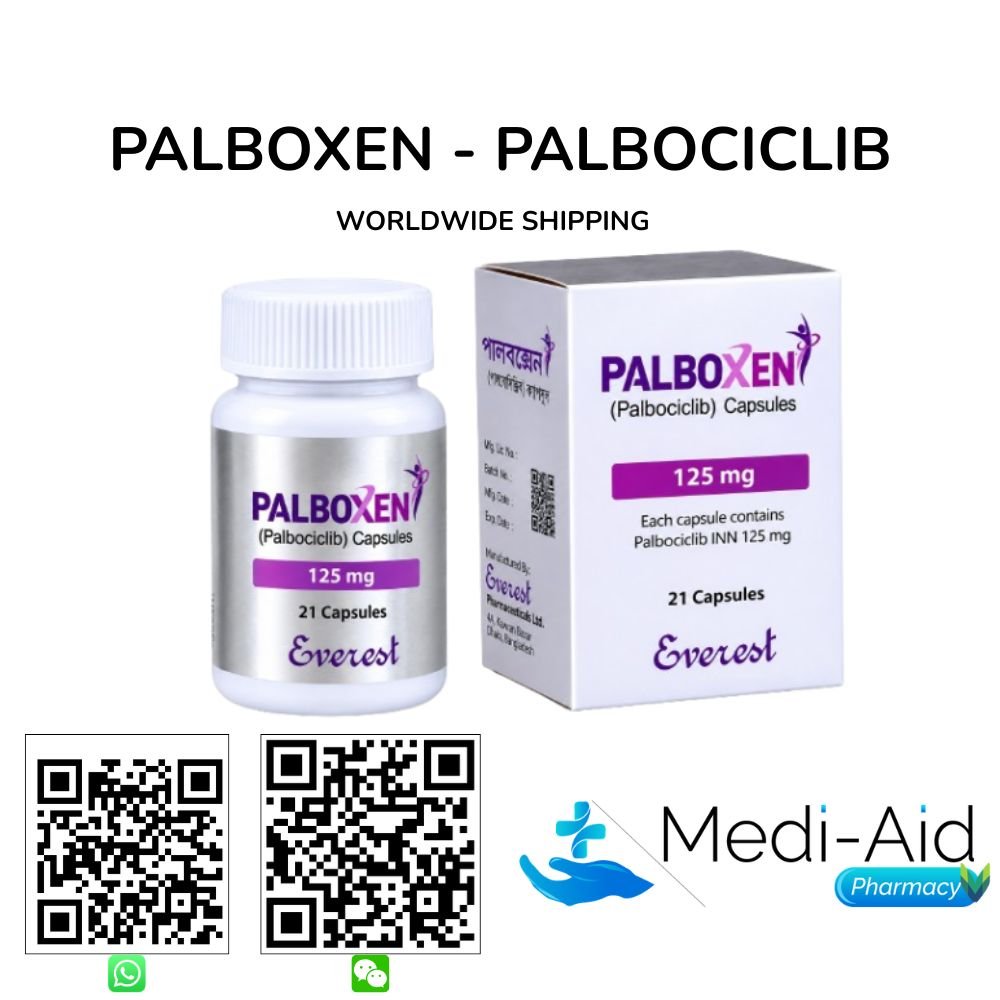
Palboxen 125 MG (Palbociclib) is an orally bioavailable, selective, small-molecule cyclin-dependent kinase 4 and 6 (CDK4/6) inhibitor a pyrido[2,3-d]pyrimidine-class ATP-competitive kinase inhibitor that selectively occupies the adenosine triphosphate (ATP)-binding pocket of CDK4 and CDK6, blocking CDK4/cyclin D1 and CDK6/cyclin D3 complex formation and thereby preventing phosphorylation of the retinoblastoma protein (Rb), maintaining Rb in its hypophosphorylated, transcriptionally repressive state, sequestering E2F transcription factors, and enforcing G1-to-S phase cell cycle arrest in hormone receptor-positive (HR+) breast cancer cells supplied as hard capsules, 125 mg strength, 21 capsules per pot, and manufactured by Everest Pharmaceuticals Ltd. in Bangladesh.
Palbociclib, the active pharmaceutical ingredient (API) of Palboxen, holds FDA-approved indications for hormone receptor-positive (HR+), human epidermal growth factor receptor 2-negative (HER2−) advanced or metastatic breast cancer in two distinct clinical settings: (1) in combination with an aromatase inhibitor (AI) as initial endocrine-based therapy for premenopausal, perimenopausal, or postmenopausal women and adult men with HR+/HER2− advanced or metastatic breast cancer (MBC); and (2) in combination with fulvestrant for HR+/HER2− advanced or metastatic breast cancer in women with disease progression following endocrine therapy.
The pivotal Phase 3 PALOMA-2 trial (NCT01740427) established first-line palbociclib plus letrozole as a standard-of-care regimen in postmenopausal HR+/HER2− MBC, demonstrating a median progression-free survival (PFS) of 24.8 months versus 14.5 months with placebo plus letrozole (HR 0.58; 95% CI 0.46–0.72; p<0.001) a 42% reduction in the risk of disease progression or death. The recommended dose of palbociclib is 125 mg (one Palboxen 125 MG hard capsule) once daily for 21 days followed by 7 days off (a 3-weeks-on/1-week-off schedule within a 28-day cycle); at this dose, one 21-capsule pot of Palboxen provides exactly one complete 21-day on-treatment period per cycle.
Important: Neutropenia is the primary and most frequent dose-limiting toxicity of palbociclib, with Grade 3 or 4 neutropenia occurring in approximately 66% of patients in the PALOMA-2 trial; complete blood count (CBC) with differential must be monitored before initiating therapy, before each cycle, on Day 14 of the first two cycles, and as clinically indicated. Additional serious risks include infections, interstitial lung disease (ILD)/non-infectious pneumonitis, and embryo-fetal toxicity. Strong CYP3A4 inhibitors increase palbociclib plasma exposure and must be avoided or, if unavoidable, the palbociclib dose must be reduced to 75 mg/day; strong CYP3A4 inducers must be avoided as they substantially reduce palbociclib efficacy.
Palbociclib must be taken with food to ensure adequate and consistent drug absorption. Searching for Palboxen 125 MG Palbociclib? Mediaid Pharmacy lists this product across its oncology medicines, breast cancer medicines, and Everest Pharmaceuticals medicines portfolios and ships it worldwide.
Basic Product Information of Palboxen 125 MG (Palbociclib)
| Brand Name | Palboxen 125 MG (Palbociclib) |
| Product Name | Palboxen |
| Generic Name | Palbociclib (developmental code PD-0332991; a selective, orally bioavailable, small-molecule CDK4/6 inhibitor and G1 cell cycle checkpoint enforcer belonging to the pyrido[2,3-d]pyrimidine class of cyclin-dependent kinase inhibitors; the originator brand is Ibrance, developed by Pfizer Inc. and commercialized globally by Pfizer; initial FDA accelerated approval for HR+/HER2− advanced breast cancer in combination with letrozole for postmenopausal women: 3 February 2015, based on PALOMA-1; subsequent regular FDA approval based on Phase 3 PALOMA-2 trial: 31 March 2017; expanded FDA approval in combination with fulvestrant for women with HR+/HER2− MBC with disease progression on endocrine therapy: 28 February 2016) |
| Drug Class | Selective CDK4/6 Inhibitor (Cyclin-Dependent Kinase 4 and 6 Inhibitor); Cell Cycle Inhibitor; G1/S Phase Cell Cycle Checkpoint Enforcer; Rb Phosphorylation Inhibitor; Pyrido[2,3-d]pyrimidine Derivative; Small-Molecule Kinase Inhibitor; Antineoplastic Agent; Targeted Oncology Agent; Oral Cancer Medicine; HR+/HER2− Breast Cancer Therapy; Endocrine Therapy Combination Partner; CDK Inhibitor |
| Formulation | Hard Capsule (oral administration; must be taken with food consistent administration with food is required to ensure adequate and reproducible plasma drug absorption; swallow capsules whole, do not crush, open, or chew; one 125 mg capsule is taken as a single once-daily dose on each of the 21 treatment days within each 28-day cycle; if vomiting occurs after a dose, do not take an additional dose on that day resume the next scheduled dose the following day) |
| Available Strengths | 125 mg per hard capsule (Palboxen 125 MG; this is the recommended starting dose of 125 mg/day one capsule taken once daily for 21 days; dose reductions for toxicity follow a stepwise protocol: first reduction to 100 mg/day, second reduction to 75 mg/day; permanently discontinue if 75 mg/day is not tolerated) |
| Available Pack Size | 21 capsules per pot (at the recommended starting dose of 125 mg once daily [one 125 mg capsule per day for 21 days], one pot provides one complete 21-day on-treatment period per 28-day cycle; each 28-day treatment cycle requires one pot of Palboxen 125 MG, with 7 days off treatment at the end of each cycle requiring no capsules; at the first dose-reduced level of 100 mg/day, one pot of Palboxen 125 MG is not applicable 100 mg and 75 mg strengths would be required for dose reduction steps) |
| Dosing Schedule | Recommended Starting Dose: Palbociclib 125 mg (one Palboxen 125 MG hard capsule) orally once daily on Days 1–21 of each 28-day cycle, followed by 7 days off treatment (Days 22–28). Must be taken with food at the same time each day. Combination Partners: Letrozole 2.5 mg/day continuously (throughout all 28 days) for the first-line AI combination; fulvestrant 500 mg IM on Days 1, 15, and 29, then once monthly for the fulvestrant combination (with LHRH agonist in pre/perimenopausal patients). Mandatory Safety Monitoring: CBC with differential before initiating, before each cycle, on Day 14 of Cycles 1 and 2, and as clinically indicated. Dose Reduction for Toxicity (First Reduction): 100 mg once daily on Days 1–21. Second Reduction: 75 mg once daily on Days 1–21. Permanently discontinue if unable to tolerate 75 mg/day. Duration: Until disease progression or unacceptable toxicity. Important Drug Interaction Guidance: Avoid concomitant strong CYP3A4 inhibitors; if unavoidable, reduce palbociclib dose to 75 mg/day; avoid all strong CYP3A4 inducers; avoid concomitant use with strong CYP3A4-sensitive substrates with a narrow therapeutic index. Consult the treating oncologist for all dose modification decisions. |
| Primary Indications | (1) HR+/HER2− Advanced or Metastatic Breast Cancer in Combination with an Aromatase Inhibitor First-Line (PALOMA-1 / PALOMA-2): Palbociclib 125 mg/day (3 weeks on/1 week off) plus an aromatase inhibitor (AI) as initial endocrine-based therapy for premenopausal, perimenopausal, or postmenopausal women and adult men with HR+/HER2− advanced or metastatic breast cancer. Based on Phase 3 PALOMA-2 (NCT01740427; n=666; postmenopausal): median PFS 24.8 months versus 14.5 months with placebo plus letrozole (HR 0.58; 95% CI 0.46–0.72; p<0.001) 42% risk reduction. Initial FDA accelerated approval: 3 February 2015 (based on PALOMA-1); regular approval: 31 March 2017 (based on PALOMA-2).
(2) HR+/HER2− Advanced or Metastatic Breast Cancer in Combination with Fulvestrant Following Disease Progression on Endocrine Therapy (PALOMA-3): Palbociclib 125 mg/day (3 weeks on/1 week off) plus fulvestrant 500 mg for women with HR+/HER2− advanced or metastatic breast cancer with disease progression following endocrine therapy. Based on Phase 3 PALOMA-3 (NCT01942135; n=521): median PFS 9.5 months versus 4.6 months with placebo plus fulvestrant (HR 0.46; 95% CI 0.36–0.59; p<0.0001) a 54% reduction in the risk of disease progression or death. FDA approval: 28 February 2016. |
| Mechanism of Action | Palbociclib is a selective, ATP-competitive inhibitor of CDK4 and CDK6 the cyclin-dependent kinases responsible for phosphorylating the retinoblastoma (Rb) protein and driving cells from the G1 phase into the S phase of the cell cycle. By occupying the ATP-binding pocket of CDK4 and CDK6, palbociclib prevents CDK4/cyclin D1 and CDK6/cyclin D3 complexes from phosphorylating Rb at critical serine and threonine residues, thereby maintaining Rb in its active, hypophosphorylated, transcriptionally repressive state. Hypophosphorylated Rb sequesters E2F transcription factors, blocks transcription of genes required for S-phase entry, and enforces a durable G1/S cell cycle arrest in HR+ breast cancer cells. In HR+ breast cancer cells, estrogen receptor (ER) signaling drives cyclin D1 overexpression, which amplifies CDK4/6 activity and accelerates G1 progression a dependency that palbociclib directly exploits. By adding CDK4/6 inhibition to endocrine therapy, palbociclib suppresses both ER-driven and growth factor receptor-driven pathways of Rb phosphorylation, producing synergistic antiproliferative activity and delaying the emergence of endocrine therapy resistance. |
| Key Contraindications & Warnings | Neutropenia: Grade 3 or 4 neutropenia in ~66% of patients (PALOMA-2); CBC with differential mandatory before therapy, before each cycle, Day 14 of Cycles 1 and 2, and as clinically indicated; hold palbociclib for Grade 3 neutropenia (ANC 500–999/mm³) and do not resume until ANC ≥1,000/mm³. Infections: Grade ≥3 infections reported in ~3% of patients; evaluate and treat promptly. ILD/Pneumonitis: Interstitial lung disease and non-infectious pneumonitis reported; permanently discontinue for Grade ≥3 ILD/pneumonitis. Embryo-Fetal Toxicity: Contraindicated in pregnancy; females of reproductive potential must use effective contraception during treatment and for at least 3 weeks after the last dose; males with female partners of reproductive potential should use contraception during treatment and for at least 3 months after the last dose. CYP3A4 Drug Interactions: Avoid strong CYP3A4 inhibitors; if co-administration is unavoidable, reduce palbociclib dose to 75 mg/day; avoid strong CYP3A4 inducers (may markedly reduce efficacy). Food Requirement: Palbociclib must be taken with food bioavailability is significantly reduced in the fasted state. All prescribing decisions must be supervised by an experienced oncologist. |
| Manufacturer / Brand | Everest Pharmaceuticals Ltd., Country of Origin: Bangladesh (originator molecule and brand Ibrance developed and commercialized globally by Pfizer Inc.; initial FDA accelerated approval for HR+/HER2− advanced breast cancer in combination with letrozole for postmenopausal women: 3 February 2015; regular FDA approval based on PALOMA-2: 31 March 2017; expanded FDA approval in combination with fulvestrant: 28 February 2016) |
| Global Supplier | Mediaid Pharmacy, Worldwide Shipping Available |
| Storage Conditions | Store below 30°C (86°F). Store in the original container with the lid tightly closed. Protect from moisture and direct light. Keep out of the reach of children. |
Who is Palboxen 125 MG (Palbociclib) Indicated For?
First, adult patients with HR+/HER2− advanced or metastatic breast cancer who have not received prior systemic therapy in the metastatic setting including both postmenopausal and premenopausal/perimenopausal patients (premenopausal and perimenopausal patients must receive concurrent ovarian suppression with an LHRH agonist such as goserelin or leuprolide) represent the PALOMA-2-defined first-line AI combination indication for Palboxen. The Phase 3 PALOMA-2 trial (NCT01740427) enrolled 666 postmenopausal women with HR+/HER2− advanced or metastatic breast cancer who had received no prior systemic therapy for advanced disease and randomized them 2:1 to palbociclib 125 mg/day (3 weeks on/1 week off) plus letrozole 2.5 mg/day continuously versus placebo plus letrozole.
The primary endpoint of investigator-assessed PFS was met with a median PFS of 24.8 months in the palbociclib arm versus 14.5 months in the placebo arm (HR 0.58; 95% CI 0.46–0.72; p<0.001), representing a 42% reduction in the risk of disease progression or death. Palbociclib plus letrozole became the first CDK4/6 inhibitor regimen to receive FDA approval in this setting, initially on the basis of the Phase 2 PALOMA-1 signal (median PFS 20.2 months vs 10.2 months; HR 0.488; p=0.0004) in February 2015, with regular approval confirmed by PALOMA-2 results in March 2017.
Second, women with HR+/HER2− advanced or metastatic breast cancer who have experienced disease progression on prior endocrine therapy both postmenopausal women and premenopausal/perimenopausal women receiving concurrent ovarian suppression are candidates for the PALOMA-3-defined palbociclib plus fulvestrant indication. The Phase 3 PALOMA-3 trial (NCT01942135) enrolled 521 women with HR+/HER2− advanced or metastatic breast cancer who had progressed on prior endocrine therapy and randomized them 2:1 to palbociclib 125 mg/day plus fulvestrant 500 mg versus placebo plus fulvestrant.
The primary endpoint of BICR-assessed PFS was met with a median PFS of 9.5 months in the palbociclib arm versus 4.6 months in the placebo arm (HR 0.46; 95% CI 0.36–0.59; p<0.0001) a 54% reduction in the risk of disease progression or death. The PFS benefit of palbociclib plus fulvestrant was consistent across both sensitive and resistant endocrine therapy subgroups, supporting the use of this combination across a range of prior endocrine therapy contexts in the advanced breast cancer setting. Premenopausal and perimenopausal patients enrolled in PALOMA-3 received concurrent goserelin ovarian suppression, confirming that the fulvestrant combination indication extends to pre- and perimenopausal women with appropriate ovarian suppression.
Palbociclib is not indicated for: patients with HER2-positive breast cancer (palbociclib has no established efficacy in HER2-positive disease); patients with HR-negative (triple-negative) breast cancer; patients with severe hepatic impairment without specialist supervision and dose modification; and patients who are pregnant. Palbociclib does not currently hold an adjuvant indication for early breast cancer. HR+/HER2− advanced breast cancer oncology departments managing first- or second-line CDK4/6 inhibitor programs, hospital pharmacies managing breast cancer treatment protocols, and individual patients and families accessing oral targeted oncology medicines can contact Mediaid Pharmacy directly for Palboxen 125 MG availability, pricing, and worldwide delivery.
Global Supplier: Mediaid Pharmacy Worldwide Shipping for Palboxen 125 MG (Palbociclib)
Mediaid Pharmacy is a Dhaka-based supplier of specialty targeted oncology, breast cancer, and rare disease medicines with worldwide shipping to patients, HR+/HER2− breast cancer oncology departments, CDK4/6 inhibitor treatment programs, metastatic breast cancer treatment units, hospital pharmacies, oncology day units, patient access programs, and international distributors across all regions. Palboxen 125 MG (Palbociclib), manufactured by Everest Pharmaceuticals Ltd. in Bangladesh, is supplied as 125 mg hard capsules in 21-capsule pots, with pricing quotations, stock confirmation, full product documentation, and end-to-end international delivery tracking for every order.
The clinical and procurement significance of the 21-capsule pot format is directly tied to palbociclib’s dosing architecture: at the recommended starting dose of 125 mg/day (one 125 mg capsule per day for 21 days), one pot of Palboxen 125 MG provides exactly one complete on-treatment period of a single 28-day treatment cycle, aligning the pot size with the standard 3-weeks-on/1-week-off treatment cycle used by all oncology pharmacies, hospital formularies, and patient access programs managing palbociclib therapy globally. HR+/HER2− advanced breast cancer oncology departments managing first- or second-line CDK4/6 inhibitor programs; hospital formulary procurement departments co-sourcing Palboxen with other oral targeted oncology medicines; and individual patients and families accessing palbociclib for HR+/HER2− breast cancer treatment can contact the Mediaid Pharmacy team through WhatsApp, phone, or WeChat for Palboxen 125 MG stock availability, current pricing, and international delivery timelines.
Why Choose Palboxen 125 MG (Palbociclib) from Mediaid Pharmacy?
Palboxen (Palbociclib) from Everest Pharmaceuticals Ltd. delivers the validated selective CDK4/6 inhibition mechanism of palbociclib a molecule with two distinct FDA-approved indications spanning first-line HR+/HER2− MBC in combination with an AI (PALOMA-1/PALOMA-2; FDA 2015/2017) and HR+/HER2− MBC in combination with fulvestrant after disease progression on endocrine therapy (PALOMA-3; FDA 2016) as a precisely formulated 125 mg oral hard capsule in a clinically aligned 21-capsule pot providing exactly one complete 21-day on-treatment period per 28-day cycle at the recommended 125 mg/day starting dose. Palboxen is pharmacologically and clinically distinguished within the CDK4/6 inhibitor class by several evidence-based attributes.
First, palbociclib was the first CDK4/6 inhibitor to receive FDA approval in HR+/HER2− breast cancer, establishing the clinical proof-of-concept for CDK4/6 inhibition as an effective strategy in combination with endocrine therapy for advanced breast cancer a distinction that validated the entire CDK4/6 inhibitor drug class. The Phase 2 PALOMA-1 signal (median PFS 20.2 months vs 10.2 months; HR 0.488; p=0.0004) was sufficiently compelling for the FDA to grant accelerated approval in February 2015, more than two years before any other CDK4/6 inhibitor received approval in this indication, giving palbociclib the longest real-world track record of safety and clinical use among all approved CDK4/6 inhibitors.
Second, palbociclib achieved a 54% reduction in the risk of disease progression or death in combination with fulvestrant in the PALOMA-3 trial (HR 0.46; p<0.0001) a clinically meaningful PFS benefit demonstrated across both endocrine-sensitive and endocrine-resistant subtypes, establishing palbociclib plus fulvestrant as a validated second-line CDK4/6 inhibitor regimen.
Third, palbociclib is an orally self-administered, once-daily capsule taken for 21 consecutive days within each 28-day cycle, enabling complete outpatient management with the structured 7-day treatment-free rest period serving as a tolerability safeguard for neutrophil recovery, allowing patients to manage and anticipate their treatment schedule at home and minimizing hospital attendance burden across the duration of therapy. The 125 mg starting dose (one Palboxen 125 MG capsule once daily on Days 1–21) and the 7-day rest interval are engineered into a clinical cycle that aligns naturally with standard oncology clinic visit schedules for toxicity monitoring and CBC assessment.
Fourth, Palboxen 125 MG is manufactured by Everest Pharmaceuticals Ltd. in Bangladesh, providing patients in emerging and access-limited markets with a reliably manufactured, affordable pathway to guideline-endorsed CDK4/6 inhibitor therapy for HR+/HER2− advanced breast cancer. To source the complete range of CDK4/6 inhibitor therapies, HR+ breast cancer medicines, and oncology medicines, visit the Mediaid Pharmacy breast cancer medicines portfolio, the oncology medicines collection, and the Everest Pharmaceuticals medicines range, and contact the team for a personalized quotation.
Frequently Asked Questions About Palboxen 125 MG (Palbociclib)
What is Palboxen 125 MG (Palbociclib) used for?
Palboxen 125 MG (Palbociclib) is an oral selective CDK4/6 (cyclin-dependent kinase 4 and 6) inhibitor with two FDA-approved indications in HR+/HER2− breast cancer: (1) in combination with an aromatase inhibitor (AI) as initial endocrine-based therapy for premenopausal, perimenopausal, or postmenopausal women and adult men with HR+/HER2− advanced or metastatic breast cancer based on Phase 3 PALOMA-2 (median PFS 24.8 months vs 14.5 months; HR 0.58; p<0.001; 42% risk reduction; FDA regular approval 31 March 2017) and the earlier Phase 2 PALOMA-1 (median PFS 20.2 months vs 10.2 months; HR 0.488; p=0.0004; FDA accelerated approval 3 February 2015); and (2) in combination with fulvestrant for HR+/HER2− advanced or metastatic breast cancer in women with disease progression following endocrine therapy based on Phase 3 PALOMA-3 (median PFS 9.5 months vs 4.6 months; HR 0.46; p<0.0001; 54% risk reduction; FDA approval 28 February 2016). The recommended starting dose is 125 mg (one Palboxen 125 MG hard capsule) once daily for 21 days followed by 7 days off (3 weeks on/1 week off within a 28-day cycle), taken with food. Palboxen 125 MG, 21 capsules per pot, is manufactured by Everest Pharmaceuticals Ltd. in Bangladesh and is available through Mediaid Pharmacy with worldwide shipping.
What is the generic name of Palboxen?
The generic name of Palboxen is palbociclib (developmental code PD-0332991). Palbociclib is an orally bioavailable, selective, small-molecule inhibitor of cyclin-dependent kinase 4 and 6 (CDK4/6), belonging to the pyrido[2,3-d]pyrimidine class of CDK inhibitors. Palbociclib prevents phosphorylation of the retinoblastoma protein (Rb) by CDK4/cyclin D1 and CDK6/cyclin D3 complexes, maintaining Rb in its active, transcriptionally repressive hypophosphorylated state, which sequesters E2F transcription factors and enforces G1 cell cycle arrest in HR+ breast cancer cells. Palbociclib is structurally and pharmacologically related to, but distinct from, ribociclib and abemaciclib the other approved CDK4/6 inhibitors by its pyrido[2,3-d]pyrimidine core scaffold, its specific kinase selectivity profile, and its clinical trial history. The originator brand of palbociclib is Ibrance, developed and commercialized globally by Pfizer Inc., with the first FDA accelerated approval on 3 February 2015 and regular approval on 31 March 2017. Palboxen is manufactured by Everest Pharmaceuticals Ltd. in Bangladesh and is available as 125 mg hard capsules in 21-capsule pots. Mediaid Pharmacy distributes Palboxen (Palbociclib) globally with worldwide shipping to patients, breast cancer oncology departments, hospital pharmacies, and HR+/HER2− breast cancer treatment programs worldwide.
What is the difference between palbociclib, ribociclib, and abemaciclib for HR+/HER2− breast cancer?
Palbociclib (Palboxen), ribociclib (Kisqali), and abemaciclib (Verzenio) are all oral CDK4/6 inhibitors approved for HR+/HER2− breast cancer but differ in molecular class, dosing schedule, clinical evidence for overall survival, adjuvant approvals, and tolerability profiles. Palbociclib is a selective CDK4/6 inhibitor (pyrido[2,3-d]pyrimidine) taken once daily for 21 days followed by 7 days off at 125 mg/day the first CDK4/6 inhibitor to receive FDA approval (February 2015); palbociclib demonstrated PFS benefits in PALOMA-2 (median PFS 24.8 months) and PALOMA-3 (median PFS 9.5 months) but has not demonstrated a statistically significant overall survival (OS) benefit in any of its Phase 3 trials and does not currently hold an adjuvant indication. Ribociclib (a pyrido[3,4-d]pyrimidine CDK4/6 inhibitor) is taken once daily for 21 days followed by 7 days off at 600 mg/day and is the only CDK4/6 inhibitor to demonstrate statistically significant OS in all three of its Phase 3 trials (MONALEESA-2, MONALEESA-3, and MONALEESA-7) and the only CDK4/6 inhibitor approved for adjuvant treatment of the broadest early breast cancer population (stage 2 and stage 3, including high-risk node-negative) in the NATALEE trial (FDA 2024). Abemaciclib (a benzimidazole CDK4/6 and CDK2 inhibitor) is taken twice daily continuously (without a scheduled rest week) at 150 mg twice daily and is the only CDK4/6 inhibitor approved as monotherapy in heavily pretreated HR+/HER2− MBC; it demonstrated a DFS benefit in the adjuvant monarchE trial in the node-positive early breast cancer population. The primary toxicity profiles also differ: neutropenia is dose-limiting for both palbociclib (Grade 3/4 ~66%) and ribociclib (Grade 3/4 ~59%); diarrhea is the primary toxicity for abemaciclib (Grade 3 ~11%). QTc prolongation monitoring is specifically required for ribociclib but not for palbociclib or abemaciclib. Visit the Mediaid Pharmacy breast cancer medicines collection for the complete HR+/HER2− targeted therapy portfolio.
What are the side effects of Palboxen (Palbociclib)?
The most clinically significant adverse effect of palbociclib is neutropenia. Neutropenia is the primary and most frequent dose-limiting toxicity, occurring as Grade 3 or 4 neutropenia in approximately 66% of patients in the PALOMA-2 trial; complete blood count (CBC) with differential must be monitored before initiating therapy, before each cycle, on Day 14 of the first two cycles, and as clinically indicated. Febrile neutropenia occurred in approximately 2% of patients; hold palbociclib for Grade 3 neutropenia (absolute neutrophil count [ANC] 500–999 cells/mm³) until ANC recovers to Grade 1 (≥1,000 cells/mm³) or higher. Leukopenia (Grade 3/4 ~28%), anemia, and thrombocytopenia are also reported. Infections of all grades occurred in approximately 55% of patients; Grade ≥3 infections in ~3% monitor for signs and symptoms and treat promptly. Fatigue (41%), nausea (35%), stomatitis (30%), diarrhea (26%), alopecia (33%), and decreased appetite (27%) are common and typically manageable with supportive care. Interstitial lung disease (ILD)/non-infectious pneumonitis has been reported; permanently discontinue palbociclib for Grade ≥3 ILD/pneumonitis. Rash occurred in approximately 18% of patients. Unlike ribociclib, palbociclib is not associated with clinically significant QTc prolongation and does not require routine ECG monitoring. All dose reductions and discontinuation decisions should be made by the treating oncologist following established toxicity management guidelines. Always establish baseline CBC with differential before initiating Palboxen under the supervision of an experienced oncologist.
How is Palboxen 125 MG (Palbociclib) administered?
Palboxen (Palbociclib) is administered orally, once daily, at the same time each day, with food taking palbociclib with food is mandatory to ensure adequate and consistent absorption, as bioavailability is significantly reduced in the fasted state. The recommended starting dose is 125 mg (one Palboxen 125 MG hard capsule) once daily on Days 1–21 of each 28-day cycle, followed by 7 days off treatment (Days 22–28). Swallow capsules whole; do not crush, open, or chew palbociclib capsules. If vomiting occurs after a dose, do not take an additional dose on the same day; resume the next scheduled dose the following day. Palbociclib is taken in combination with a continuously dosed endocrine therapy partner (aromatase inhibitor throughout all 28 days of the cycle; fulvestrant per standard IM injection schedule). Premenopausal and perimenopausal patients must receive concurrent ovarian suppression with an LHRH agonist throughout palbociclib treatment. Mandatory safety monitoring before initiating and during treatment includes: CBC with differential (baseline, before each cycle, Day 14 of Cycles 1 and 2). Dose reductions follow a stepwise protocol: first reduction to 100 mg/day, then 75 mg/day; permanently discontinue if 75 mg/day is not tolerated. When a strong CYP3A4 inhibitor cannot be avoided, reduce palbociclib dose to 75 mg/day; when the strong inhibitor is discontinued, resume the original palbociclib dose after 3–5 half-lives of the inhibitor have elapsed. All dosing modifications must be directed by the treating oncologist.
Is Palboxen (Palbociclib) safe during pregnancy or while breastfeeding?
Palboxen (Palbociclib) can cause fetal harm and is contraindicated during pregnancy based on its mechanism of action and animal reproductive toxicology findings. Inhibition of CDK4/6-mediated cell cycle progression by palbociclib disrupts the rapid cellular proliferation required for normal embryonic organogenesis, placental development, and fetal tissue growth; animal studies demonstrated embryo-fetal toxicity at exposures below the recommended human dose. Females of reproductive potential must use effective contraception during palbociclib treatment and for at least 3 weeks after the last dose. Males with female partners of reproductive potential should use effective contraception during palbociclib treatment and for at least 3 months after the last dose, as palbociclib may impair male fertility based on animal reproductive toxicology data showing testicular toxicity; advise male patients of this potential risk and discuss fertility preservation options including sperm banking with the treating oncologist before initiating therapy. There are no data on the presence of palbociclib or its metabolites in human breast milk; because of the potential for serious adverse reactions in a breastfed infant, breastfeeding is not recommended during palbociclib treatment and for at least 3 weeks after the last dose. Verify pregnancy status before initiating Palboxen in all females of reproductive potential. Discuss all aspects of reproductive planning, fertility counseling, and contraceptive requirements with the treating oncologist before starting palbociclib therapy.
Can I order Palboxen 125 MG (Palbociclib) online with worldwide shipping?
Yes. Mediaid Pharmacy supplies Palboxen 125 MG (Palbociclib), hard capsules, 21 capsules per pot, manufactured by Everest Pharmaceuticals Ltd. in Bangladesh, to patients, HR+/HER2− breast cancer oncology departments, CDK4/6 inhibitor therapy programs, metastatic breast cancer treatment units, hospital pharmacies, oncology day units, patient access programs, and healthcare providers globally. Contact Mediaid Pharmacy via WhatsApp, phone, or WeChat at +8801773428128, or email info@mediaidpharmacy.com for pricing, current stock availability, shipping options, and international delivery details for your country.
Order Palboxen 125 MG (Palbociclib) with Worldwide Shipping
Phone / WhatsApp / WeChat: +8801773428128 | Email: info@mediaidpharmacy.com

Reviews
There are no reviews yet.