
Description
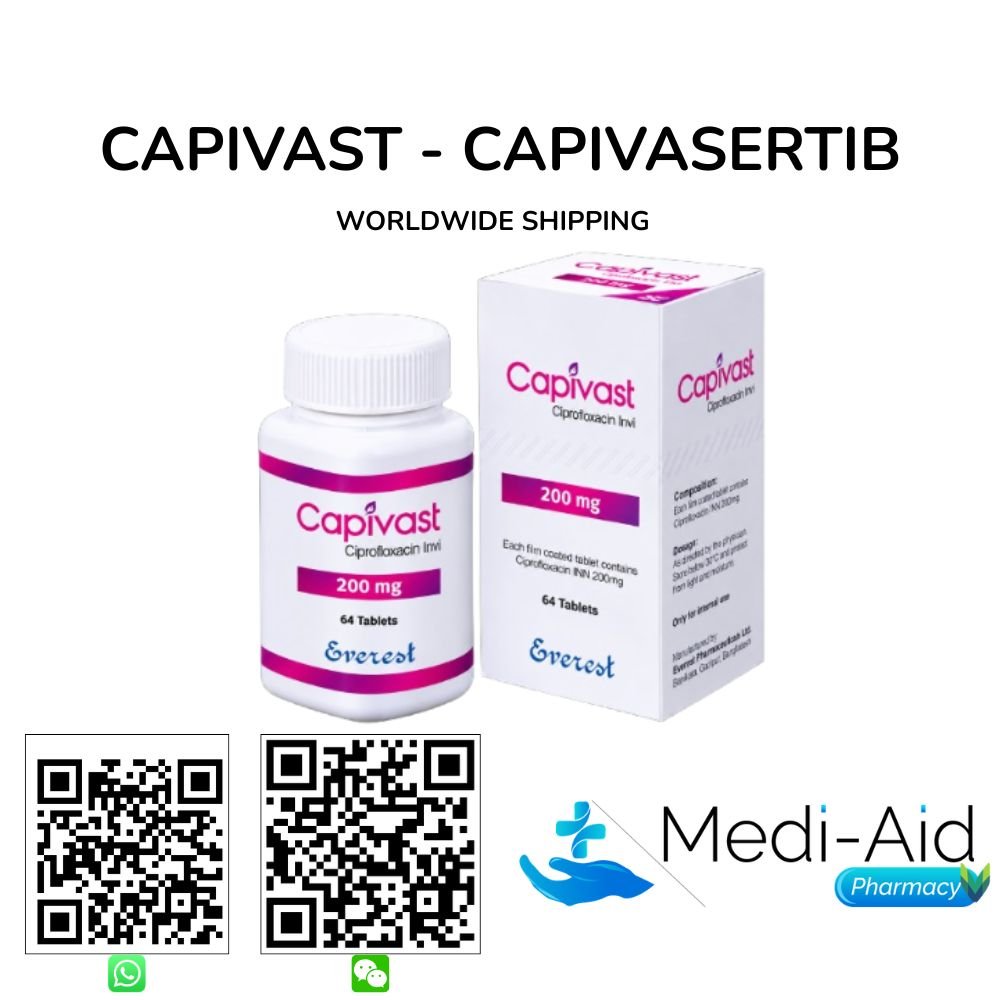
Capivast 200 MG (Capivasertib) is a first-in-class, potent, selective ATP-competitive pan-AKT (AKT1/AKT2/AKT3) serine/threonine kinase inhibitor film-coated tablet for the treatment of adult patients with HR-positive, HER2-negative locally advanced or metastatic breast cancer with PIK3CA/AKT1/PTEN alterations in combination with fulvestrant, manufactured by Everest Pharmaceuticals Ltd. in Bangladesh, supplied as 64 tablets per pot. In the pivotal Phase 3 CAPItello-291 trial (N=708), capivasertib plus fulvestrant achieved median PFS of 7.2 months versus 3.6 months in the overall population (HR 0.60; 95% CI: 0.51–0.71; p<0.001) and 7.3 months versus 3.1 months in the biomarker-altered population (HR 0.50; 95% CI: 0.38–0.65; p<0.001), establishing capivasertib as the first pan-AKT inhibitor to demonstrate Phase 3 efficacy in HR-positive breast cancer. Capivast is available through Mediaid Pharmacy with worldwide shipping.
| Brand Name | Capivast 200 MG (Capivasertib) |
| Product Name | Capivast |
| Generic Name | Capivasertib (International Nonproprietary Name, INN) |
| Drug Class | First-in-Class Potent Selective ATP-Competitive Pan-AKT Inhibitor (AKT1/AKT2/AKT3); Targeted Oral Oncology Agent; PIK3CA/AKT1/PTEN Alteration-Directed Breast Cancer Therapy; Serine/Threonine Kinase Inhibitor; PI3K/AKT/mTOR Pathway Inhibitor |
| Formulation | Film-Coated Tablet (Oral; taken with or without food; administered on an intermittent 4-days-on/3-days-off schedule twice daily in combination with fulvestrant until disease progression or unacceptable toxicity) |
| Available Strength | 200 mg Capivasertib per film-coated tablet |
| Available Pack Size | 64 Tablets per Pot. At the standard 400 mg twice-daily dose (2 Capivast 200 mg tablets per dose, administered morning and evening on Days 1–4 of each 7-day week), one complete 28-day treatment cycle requires exactly 64 tablets (4 tablets/day 4 days/week 4 weeks = 64 tablets) corresponding to 1 64-tablet pot of Capivast 200 MG per cycle. At reduced dosing per prescribing guidance, fewer tablets are required per cycle accordingly. |
| Therapeutic Category | Breast Cancer Medicines; Oncology Medicines; AKT Inhibitors; PIK3CA/AKT1/PTEN-Targeted HR+/HER2− Breast Cancer Therapies; Everest Pharmaceuticals Medicines |
| Approved Indication | PIK3CA/AKT1/PTEN-Altered, HR-Positive, HER2-Negative Locally Advanced or Metastatic Breast Cancer: In combination with fulvestrant for the treatment of adult patients with HR-positive, HER2-negative locally advanced or metastatic breast cancer with one or more PIK3CA/AKT1/PTEN alterations, as detected by an FDA-approved test, following progression on at least one endocrine-based regimen in the metastatic setting or recurrence on or within 12 months of completing adjuvant therapy. In the Phase 3 CAPItello-291 trial, capivasertib plus fulvestrant achieved PFS HR 0.60 (overall population) and HR 0.50 (biomarker-altered population) versus placebo plus fulvestrant. |
| Recommended Dose | Standard Dose: 400 mg orally twice daily (2 Capivast 200 mg tablets per dose, BID approximately 12 hours apart), taken with or without food, on Days 1–4 of each 7-day week (4 days on, 3 days off), in combination with fulvestrant 500 mg IM. Dose Reductions: Per prescribing guidance for adverse reactions; permanently discontinue if unable to tolerate the second dose reduction level. |
| Manufacturer | Everest Pharmaceuticals Ltd., Bangladesh |
| Country of Origin | Bangladesh |
| Originator Reference Brand | Truqap (Capivasertib tablets, AstraZeneca Pharmaceuticals LP), approved by the U.S. FDA on November 16, 2023, as the first pan-AKT inhibitor for HR-positive, HER2-negative, PIK3CA/AKT1/PTEN-altered locally advanced or metastatic breast cancer. Capivast contains Capivasertib INN at the clinically validated 200 mg oral film-coated tablet strength, manufactured by Everest Pharmaceuticals Ltd. in Bangladesh and supplied through Mediaid Pharmacy for international procurement. |
| Global Supplier | Mediaid Pharmacy, Worldwide Shipping Available |
| Storage Conditions | Store at controlled room temperature (20°C to 25°C); excursions permitted between 15°C and 30°C. Keep in the original pot with the closure tightly sealed. Protect from moisture and light. Keep out of the reach of children. |
What Is Capivast 200 MG (Capivasertib)?
Capivast 200 MG (Capivasertib) is a first-in-class, potent, selective adenosine triphosphate (ATP)-competitive pan-AKT serine/threonine kinase inhibitor film-coated tablet indicated in combination with fulvestrant for the treatment of adult patients with hormone receptor (HR)-positive, human epidermal growth factor receptor-2 (HER2)-negative locally advanced or metastatic breast cancer with one or more PIK3CA/AKT1/PTEN alterations, following progression on at least one endocrine-based regimen, manufactured by Everest Pharmaceuticals Ltd. in Bangladesh.
Each Capivast tablet contains 200 mg of Capivasertib a potent, highly selective small-molecule kinase inhibitor that competitively occupies the ATP-binding pocket of all three AKT isoforms (AKT1, AKT2, and AKT3) with low nanomolar IC50 values, inhibiting phosphorylation of downstream AKT substrates including glycogen synthase kinase-3 beta (GSK3β), PRAS40, and ribosomal protein S6, and suppressing constitutive PI3K/AKT/mTOR oncogenic signaling in AKT pathway-altered breast cancer cells.
This pan-AKT isoform coverage across AKT1, AKT2, and AKT3 is the defining pharmacological attribute of capivasertib and distinguishes it from upstream PI3K inhibitors by targeting AKT directly the shared convergence point of all AKT pathway activating alterations including PIK3CA gain-of-function mutations, AKT1 activating mutations, and PTEN loss of function.
Capivast 200 MG tablets represent the Everest Pharmaceuticals Ltd. formulation of capivasertib the same active ingredient as the originator brand Truqap (AstraZeneca, U.S. FDA approved November 16, 2023) at the same clinically validated 200 mg oral film-coated tablet strength. The recommended therapeutic dose is 400 mg orally twice daily (2 Capivast 200 mg tablets per dose, administered morning and evening approximately 12 hours apart) on an intermittent 4-days-on/3-days-off schedule in combination with fulvestrant: capivasertib is taken on Days 1 through 4 of each 7-day week and not taken on Days 5, 6, and 7.
Capivast may be taken with or without food at every dose the absence of a fasting or food requirement is a meaningful clinical advantage that simplifies adherence for breast cancer patients who often have variable appetite, nausea, and gastrointestinal symptoms from concurrent disease or treatment. The 4-days-on/3-days-off intermittent schedule was specifically designed and validated in Phase 1 pharmacokinetic studies to maintain therapeutic AKT inhibitory plasma concentrations during the on-days while providing a structured recovery period on the off-days that reduces cumulative toxicity compared to continuous daily dosing.
In the pivotal Phase 3 CAPItello-291 trial (N=708 total), capivasertib plus fulvestrant demonstrated dual primary endpoint success: median PFS of 7.2 months versus 3.6 months in the overall population (HR 0.60; 95% CI: 0.51–0.71; p<0.001) and 7.3 months versus 3.1 months in the biomarker-altered population (HR 0.50; 95% CI: 0.38–0.65; p<0.001) establishing capivasertib as the first and only pan-AKT inhibitor approved by the FDA for breast cancer and the only AKT inhibitor with positive Phase 3 data in HR+ advanced breast cancer. Capivast is available globally through Mediaid Pharmacy’s breast cancer medicines portfolio with worldwide shipping.
Mechanism of Action of Capivast: First-in-Class Pan-AKT Inhibition in PIK3CA/AKT1/PTEN-Altered Breast Cancer
Capivast (Capivasertib) exerts its antitumor activity through potent, highly selective competitive inhibition of all three isoforms of AKT (AKT1, AKT2, and AKT3) the central serine/threonine kinase of the PI3K/AKT/mTOR oncogenic signaling cascade with low nanomolar IC50 values across all three AKT isoforms, inhibiting phosphorylation of downstream AKT substrates and suppressing tumor cell proliferation, survival, and endocrine therapy resistance in PIK3CA/AKT1/PTEN-altered breast cancer cells. Capivasertib’s pan-AKT isoform coverage (AKT1/2/3) and its position at the convergence node of AKT pathway activation establish it as mechanistically superior to upstream PI3K inhibitors for addressing the full spectrum of AKT pathway alterations in HR+/HER2-negative breast cancer.
PI3K/AKT/mTOR Pathway Biology The Oncogenic Axis Targeted by Capivasertib: The PI3K/AKT/mTOR signaling pathway is a central intracellular transduction cascade governing tumor cell proliferation, survival, growth, metabolism, angiogenesis, and resistance to endocrine therapy in breast cancer. Class I phosphatidylinositol 3-kinases (PI3Ks) are activated downstream of receptor tyrosine kinases and G-protein-coupled receptors and phosphorylate phosphatidylinositol-4,5-bisphosphate (PIP2) to produce phosphatidylinositol-3,4,5-trisphosphate (PIP3). PIP3 recruits AKT (protein kinase B) to the plasma membrane, where AKT is activated by PDK1-mediated phosphorylation at Thr308 and by mTORC2-mediated phosphorylation at Ser473.
Fully activated AKT then phosphorylates and modulates a broad array of downstream substrates governing critical cellular functions: PRAS40 (mTORC1 activation), GSK3α/β (glycogen synthesis, cell cycle regulation), BAD (anti-apoptotic survival), FOXO1/3a (transcriptional reprogramming), and TSC2 (mTORC1 pathway activation leading to S6K and 4E-BP1 phosphorylation and enhanced protein translation). PTEN phosphatase the primary negative regulator of PIP3 and AKT activation converts PIP3 back to PIP2; PTEN loss is among the most common AKT pathway alterations co-occurring with PIK3CA mutations and AKT1 activating mutations in HR+/HER2-negative breast cancer.
In HR+ breast cancer, AKT pathway activation is a primary mechanism of acquired endocrine therapy resistance: constitutive AKT signaling phosphorylates ERα directly, activates mTORC1-driven ER-independent proliferative programs, and upregulates anti-apoptotic BCL-2 family proteins, reducing the efficacy of aromatase inhibitors, CDK4/6 inhibitors, and fulvestrant as single agents.
PIK3CA/AKT1/PTEN Alterations The Three Oncogenic Drivers Targeted by Capivast: Capivasertib (Capivast) is uniquely positioned to address AKT pathway activation arising from all three major alteration types in HR+/HER2-negative breast cancer, providing a broader targetable population than upstream PI3Kα-selective inhibitors. PIK3CA activating mutations (hotspot mutations E542K, E545K in the helical domain and H1047R, H1047L in the kinase domain, collectively approximately 75–80% of all PIK3CA mutations) constitutively activate the p110α PI3K catalytic subunit, generating excess PIP3 and continuous AKT recruitment and activation; PIK3CA mutations occur in approximately 40% of HR+/HER2-negative breast cancers.
AKT1 activating mutations (most commonly E17K in the pleckstrin homology [PH] domain, which directly and constitutively recruits and activates AKT1 at the plasma membrane independently of upstream PIP3 generation) occur in approximately 3–8% of HR+ breast cancers and are enriched in lobular histology; critically, AKT1 E17K mutation produces AKT1-driven oncogenic signaling that cannot be suppressed by PI3Kα inhibition alone, making capivasertib (which inhibits AKT1 directly) the appropriate targeted therapy.
PTEN loss (heterozygous or homozygous deletions, truncating mutations, or epigenetic silencing of the PTEN phosphatase gene) removes the primary negative regulator of PIP3 and AKT activation, allowing unrestricted AKT pathway signaling regardless of upstream PI3K activation status; PTEN loss occurs in approximately 15–30% of HR+/HER2-negative breast cancers and is associated with primary resistance to PI3Kα inhibitors that work upstream of AKT. Collectively, PIK3CA mutations, AKT1 mutations, and PTEN loss affect approximately 40–50% of HR+/HER2-negative advanced breast cancers, defining the mandatory PIK3CA/AKT1/PTEN biomarker-selected population for Capivast therapy.
Capivasertib’s ATP-Competitive Pan-AKT Binding Mechanism: Capivasertib is a diaminopyrimidine compound specifically engineered for high-affinity, isoform-broad binding to the ATP-binding cleft of AKT1, AKT2, and AKT3 kinase domains through optimized non-covalent interactions with conserved hinge region residues and hydrophobic contacts within the ATP-binding pocket common to all three AKT isoforms.
By occupying the AKT ATP-binding cleft, capivasertib competitively displaces ATP from all three AKT isoform catalytic sites and blocks the phosphoryl transfer reaction that initiates AKT-mediated substrate phosphorylation, suppressing phosphorylation of GSK3β, PRAS40, and other downstream AKT substrates, reducing mTORC1 activity, S6K and S6 ribosomal protein phosphorylation, and 4E-BP1 phosphorylation, thereby decreasing translational capacity for pro-tumorigenic proteins and inhibiting tumor cell proliferation and survival signaling.
Importantly, capivasertib inhibits all three AKT isoforms AKT1, AKT2, and AKT3 rather than a single isoform, preventing compensatory AKT isoform switching that may limit the activity of isoform-selective AKT inhibitors in tumors co-expressing multiple AKT isoforms.
Mechanistic Rationale for Capivasertib’s Combination with Fulvestrant and the 4-Days-On/3-Days-Off Dosing Schedule: In HR+/HER2-negative breast cancer, AKT pathway activation and estrogen receptor (ER) signaling interact through reciprocal cross-talk: AKT phosphorylates and activates ERα, enabling ligand-independent ER transcriptional activity; conversely, ER-driven gene expression programs upregulate PI3K/AKT pathway components (including INPP4B and IGF-1R), creating a co-dependent oncogenic circuit in which AKT inhibition and ER degradation have synergistic antiproliferative activity.
Fulvestrant, as a selective estrogen receptor degrader (SERD), eliminates ERα protein and blocks ER-dependent compensatory upregulation of AKT pathway genes induced by capivasertib AKT inhibition, providing the mechanistic basis for the synergistic combination of capivasertib plus fulvestrant demonstrated in both preclinical xenograft models and the CAPItello-291 Phase 3 clinical trial.
The 4-days-on/3-days-off intermittent dosing schedule was empirically optimized in Phase 1 pharmacokinetic and pharmacodynamic studies: on-dosing days 1–4, capivasertib achieves steady-state plasma concentrations (predicted to be attained on days 3 and 4 of each week starting from week 2) sufficient for near-complete AKT kinase occupancy; during the 3-day off-dosing period (Days 5–7), capivasertib plasma concentrations fall to approximately 0.5–15% of steady-state Cmax, providing a pharmacodynamic recovery interval that reduces cumulative on-target hyperglycemia and rash toxicity while maintaining therapeutic anti-tumor activity through the subsequent week’s dosing cycle.
Clinical Efficacy of Capivast (Capivasertib): CAPItello-291 Phase 3 Trial Results
The clinical efficacy of Capivast (Capivasertib) is established by the pivotal Phase 3 CAPItello-291 trial (NCT04305496) a randomized, double-blind, placebo-controlled trial that evaluated capivasertib 400 mg BID (4 days on/3 days off) plus fulvestrant versus placebo plus fulvestrant in 708 adults with histologically confirmed HR-positive, HER2-low or negative locally advanced or metastatic breast cancer who had received prior aromatase inhibitor-based endocrine therapy with or without a CDK4/6 inhibitor. CAPItello-291 is the registration trial for capivasertib’s U.S. FDA approval (November 16, 2023) as the first pan-AKT inhibitor approved in breast cancer.
The trial enrolled postmenopausal women and men whose disease had progressed on or after aromatase inhibitor therapy, with or without a CDK4/6 inhibitor (palbociclib, ribociclib, or abemaciclib), and permitted up to one prior line of chemotherapy for advanced disease. Patients were randomized 1:1 to capivasertib (n=355) or matched placebo (n=353), both in combination with fulvestrant 500 mg intramuscularly every 2 weeks for the first three injections and every 4 weeks thereafter. CAPItello-291 was designed with dual primary endpoints investigator-assessed PFS in both the overall population (N=708) and in the biomarker-altered population (approximately 41% of enrolled patients; N=289) defined by confirmed PIK3CA/AKT1/PTEN alterations on tumor tissue testing using FoundationOne CDx making it the only breast cancer registration trial for an AKT inhibitor with dual primary efficacy endpoints capturing both biomarker-selected and all-comer populations.
CAPItello-291 Primary Efficacy Results Overall Population (N=708): Capivasertib plus fulvestrant achieved a median PFS of 7.2 months (95% CI: 5.5–7.4) compared to 3.6 months (95% CI: 2.8–3.7) with placebo plus fulvestrant a statistically significant and clinically meaningful 3.6-month absolute improvement in median PFS and a 40% reduction in the hazard of progression or death (HR 0.60; 95% CI: 0.51–0.71; p<0.001). The ORR in the overall population was 22.9% with capivasertib-fulvestrant versus 12.2% with placebo-fulvestrant, more than doubling the response rate compared to endocrine therapy alone in this endocrine therapy-resistant population.
An important exploratory analysis in the non-biomarker-altered subgroup (approximately 59% of patients without confirmed PIK3CA/AKT1/PTEN alterations) demonstrated a maintained PFS benefit: median PFS 7.2 months versus 3.7 months (HR 0.70; 95% CI: 0.56–0.88) a clinically meaningful 30% risk reduction even in patients without identified AKT pathway alterations reflecting AKT pathway activation through mechanisms beyond the three assayed alterations (AKT pathway activation without detected gene-level alterations, pathway cross-talk, or alterations not covered by current companion diagnostics).
CAPItello-291 Primary Efficacy Results Biomarker-Altered Population (N=289): In the prespecified biomarker-defined population with confirmed PIK3CA/AKT1/PTEN alterations, capivasertib plus fulvestrant achieved a median PFS of 7.3 months (95% CI: 5.5–9.8) versus 3.1 months (95% CI: 2.0–3.7) with placebo plus fulvestrant a 4.2-month absolute PFS improvement and a 50% reduction in the hazard of disease progression or death (HR 0.50; 95% CI: 0.38–0.65; p<0.001). The ORR in the biomarker-altered population was 28.8% with capivasertib-fulvestrant versus 9.7% with placebo-fulvestrant nearly tripling the objective response rate in patients with confirmed AKT pathway gene alterations.
These results confirm that PIK3CA/AKT1/PTEN alteration status enriches the treatment effect magnitude, with a 50% risk reduction in the biomarker-altered population compared to a 40% risk reduction in the all-comer population, validating the dual-primary-endpoint design that supports both biomarker-selected prescribing and broader clinical use in all eligible HR+/HER2-negative endocrine-resistant breast cancer patients. The critical clinical insight from CAPItello-291 is that capivasertib plus fulvestrant delivers clinically meaningful PFS benefit in both biomarker-selected and unselected populations a finding not observed with PI3Kα inhibitors that show no PFS benefit in non-PIK3CA-mutated patients reflecting capivasertib’s position at the AKT convergence node of all PI3K pathway activation mechanisms. For the complete range of breast cancer targeted therapies available at Mediaid Pharmacy, explore the comprehensive breast cancer medicines portfolio.
Capivast 200 MG (Capivasertib) Dosing, Administration, and Dose Modification Guidelines
The recommended dose of Capivast (Capivasertib) is 400 mg orally twice daily (2 Capivast 200 mg tablets per dose, BID approximately 12 hours apart), with or without food, on an intermittent schedule of 4 days on followed by 3 days off each week, in combination with fulvestrant 500 mg administered intramuscularly on Days 1 and 15 of Cycle 1 (a loading regimen), then Day 1 of each subsequent 28-day cycle, until disease progression or unacceptable toxicity. The specific weekly dosing schedule is: take Capivast on Day 1 (morning and evening), Day 2 (morning and evening), Day 3 (morning and evening), and Day 4 (morning and evening) of each 7-day week then take no Capivast on Days 5, 6, and 7. At the standard 400 mg BID dose (4 tablets per day on dosing days 4 days per week 4 weeks), one 28-day treatment cycle requires exactly 64 tablets 1 64-tablet pot of Capivast 200 MG per cycle a pack size precisely aligned with the standard monthly supply requirement, ensuring no tablets are wasted and supply procurement is streamlined for patients and oncology programs.
Capivast may be taken with or without food at every dose; unlike some other oral kinase inhibitors, capivasertib does not require food for adequate systemic exposure, providing flexible administration for patients with variable appetite, nausea, or gastrointestinal symptoms from concurrent disease or treatment. Patients should take each Capivast dose at approximately the same times each day (morning and evening approximately 12 hours apart) to maintain consistent pharmacokinetic exposure and minimize peak-to-trough plasma concentration fluctuations. If a patient vomits after taking a Capivast dose, do not take an additional dose; take the next dose at the usual scheduled time. If a dose is missed, do not take a make-up dose; take the next scheduled dose at the usual time.
Pre-treatment evaluation before initiating Capivast includes: confirmation of PIK3CA/AKT1/PTEN alteration status by an FDA-approved companion diagnostic on tumor tissue (FoundationOne CDx); fasting plasma glucose (FPG) assessment to establish glycemic baseline; hepatic function tests; and evaluation for pre-existing skin conditions that may increase rash risk. Dose modification schedule for selected adverse reactions follows a structured reduction sequence per prescribing guidance reducing the twice-daily dose while maintaining the 4-days-on/3-days-off schedule; permanently discontinue Capivast if the patient cannot tolerate the second dose reduction level. The primary indications for dose interruption and reduction are Grade 3 or 4 rash (including palmar-plantar erythrodysesthesia, macular, or maculo-papular rash), Grade 3 or 4 diarrhea, and Grade 3 or 4 hyperglycemia. Always confirm the complete Capivasertib dosing schedule and dose modification guidelines with the treating oncologist before initiating Capivast.
Capivast 200 MG (Capivasertib) Safety Profile, Adverse Reactions, and Clinical Management
| Adverse Reaction / Safety Concern | Incidence, Mechanism, and Clinical Management |
|---|---|
| Rash and Severe Skin Toxicity | Rash (including macular rash, maculo-papular rash, palmar-plantar erythrodysesthesia [PPE/hand-foot syndrome], and erythema) is the most clinically significant Grade 3+ adverse reaction with Capivasertib (Capivast), occurring as an aggregated rash group term in approximately 36–40% of patients (all grades) and Grade 3 in approximately 12.1% the most frequent Grade 3+ toxicity in the CAPItello-291 trial. Rash reflects AKT pathway involvement in keratinocyte proliferation, differentiation, and skin barrier maintenance; capivasertib’s pan-AKT inhibition disrupts normal AKT-mediated keratinocyte signaling, producing diffuse cutaneous reactions that may involve the trunk, extremities (including palms and soles), and face. Palmar-plantar erythrodysesthesia (hand-foot syndrome), occurring as a component of the rash group term, presents as erythema, swelling, and painful blistering or desquamation of the palms and soles that can significantly impair daily functioning and walking if Grade 3+ events are not managed promptly. Management: before initiating Capivast, perform a baseline skin examination and identify pre-existing dermatologic conditions; instruct patients to use fragrance-free emollient moisturizers on hands, feet, and skin twice daily throughout treatment. For PPE: apply urea-based (10–20%) emollient creams to palms and soles twice daily before symptoms develop; use cushioned footwear and padded insoles; avoid friction, pressure, tight footwear, and prolonged heat exposure on palms and soles. For rash: initiate oral antihistamine (loratadine 10 mg daily) and apply topical mid-potency corticosteroid cream (betamethasone 0.1% or triamcinolone 0.1%) to affected areas twice daily at the first sign of Grade 1 rash; add oral prednisolone (0.5–1 mg/kg/day for 7–14 days, then taper) for Grade 2 rash with rapid progression or symptoms limiting activities. For Grade 3 rash (>30% BSA, limiting self-care activities, or Grade 3 PPE): withhold Capivast until improvement to ≤Grade 1, then resume at a reduced dose; obtain dermatology consultation. For Grade 4 rash or life-threatening cutaneous reactions: permanently discontinue Capivast and initiate emergency dermatologic management. Assess all rashes for features of severe cutaneous reactions (mucosal involvement, fever, rapid BSA progression) that would mandate immediate permanent discontinuation. |
| Diarrhea and GI Toxicity | Diarrhea is the most frequent adverse reaction of Capivast (Capivasertib), occurring in approximately 72.4% of patients (all grades) in the CAPItello-291 trial, with Grade 3 in approximately 9.3% reflecting AKT pathway involvement in intestinal epithelial ion transport, secretory function, and mucosal barrier maintenance. Capivasertib-related diarrhea typically manifests in the first 2–4 weeks of therapy and may be intermittent, correlating with the 4-days-on/3-days-off dosing cycle, with diarrhea symptoms often more frequent during the on-dosing days (Days 1–4) and partially resolving during the off-dosing days (Days 5–7). Despite its high all-grade frequency, diarrhea is generally manageable with prompt antidiarrheal initiation and leads to treatment discontinuation in only a subset of patients. Management: educate patients before initiating Capivast to begin loperamide self-management (4 mg at the first episode of loose stool, then 2 mg after each subsequent loose stool, not exceeding 16 mg/day) without waiting for Grade 2 escalation; early loperamide initiation is the single most effective intervention for preventing Grade 3+ diarrhea escalation. Maintain oral hydration of at least 2 L/day of non-caffeinated, non-alcoholic fluids during diarrhea episodes. Monitor and supplement electrolytes (potassium, sodium, magnesium) as clinically indicated. Adopt a low-fiber, low-fat, low-residue diet (BRAT diet: bananas, rice, applesauce, toast) during active diarrhea. Avoid laxatives, stool softeners, magnesium-containing antacids, and high-fiber supplements during active episodes. For Grade 2 diarrhea (4–6 stools/day above baseline; nocturnal stooling): optimize antidiarrheal therapy, add dietary modification, consider oral budesonide or cholestyramine if loperamide alone is insufficient; continue Capivast with close monitoring. For Grade 3 diarrhea (≥7 stools/day above baseline, hospitalization required, or incontinence): withhold Capivast until ≤Grade 1, then resume at a reduced dose. Nausea (approximately 34.6%) and vomiting are managed with scheduled antiemetics (ondansetron 8 mg 30 minutes before each Capivast dose) and administration with a light meal where appetite permits despite the absence of a mandatory food requirement. |
| Hyperglycemia | Hyperglycemia occurs in approximately 17–20% of patients receiving Capivasertib (Capivast) (all grades), with Grade 3 in approximately 2.3% a substantially lower incidence and severity compared to PI3Kα inhibitors such as alpelisib (Grade 3+ hyperglycemia approximately 32.7%), reflecting capivasertib’s positioning downstream of the insulin receptor signaling cascade. AKT inhibition by capivasertib disrupts insulin receptor substrate (IRS)-mediated AKT2-dependent GLUT4 translocation and glucose uptake in skeletal muscle and adipose tissue, and reduces hepatic AKT2-mediated inhibition of gluconeogenesis, producing fasting and postprandial hyperglycemia by an on-target mechanism shared with the entire PI3K/AKT inhibitor class. The 4-days-on/3-days-off intermittent dosing schedule contributes to the lower hyperglycemia severity compared to continuous daily dosing by allowing partial recovery of AKT-mediated insulin signaling during the 3 off-dosing days per week. Exclude patients with uncontrolled Type 2 diabetes or Type 1 diabetes at baseline (fasting plasma glucose >160 mg/dL or HbA1c ≥7.5%); evaluate glycemic status before initiating Capivast. Monitor fasting plasma glucose (FPG) at baseline, weekly for the first 2 months, and monthly thereafter; more frequent monitoring in patients with pre-existing diabetes, impaired fasting glucose, or concurrent corticosteroid use. Consider prophylactic or concurrent metformin initiation at Capivast start in patients at elevated hyperglycemia risk (pre-existing impaired fasting glucose, overweight/obese, strong family history of diabetes). For Grade 3 hyperglycemia (FPG >250 mg/dL): withhold Capivast, optimize antidiabetic therapy with endocrinology consultation, resume at a reduced dose when FPG returns to ≤160 mg/dL on stable antidiabetic regimen. For Grade 4 hyperglycemia (FPG >500 mg/dL): permanently discontinue Capivast. |
| Stomatitis and Oral Mucositis | Stomatitis (oral mucositis, mouth ulcers, and mucosal inflammation) occurs in a significant proportion of Capivast-treated patients, reflecting AKT pathway involvement in oral mucosal epithelial homeostasis and renewal. Capivasertib-related stomatitis typically presents as painful oral mucosal ulceration and erythema affecting the buccal mucosa, tongue, palate, and gingiva, and may impair oral intake, nutrition, and quality of life if not proactively managed. Management: perform dental evaluation and address pre-existing oral pathology before initiating Capivast; instruct patients to maintain rigorous oral hygiene with a soft-bristled toothbrush and non-alcohol-based mouthwash. Use chlorhexidine 0.12% mouthwash twice daily throughout the on-dosing days (Days 1–4) as prophylaxis. For Grade 1–2 stomatitis (mild to moderate pain, not limiting oral intake): apply topical corticosteroid mouthwash (dexamethasone 0.5 mg/5 mL swish and spit four times daily) or triamcinolone dental paste to ulcerated areas; apply topical mucosal analgesic (viscous lidocaine 2%) 15 minutes before meals to facilitate eating; maintain adequate oral hydration with cool, non-acidic fluids; avoid alcohol-based mouthwashes, spicy, acidic, and abrasive foods. For Grade 3 stomatitis (severe pain, significantly limiting oral intake): withhold Capivast until ≤Grade 1, then resume at a reduced dose. Systemic corticosteroid may be required for refractory Grade 3 stomatitis; involve oral medicine or dental oncology consultation for persistent cases. |
| Fatigue and Constitutional Symptoms | Fatigue and general malaise are common across all systemic oncology therapies and occur frequently in Capivast-treated patients, reflecting both AKT pathway inhibition in normal cellular energetics and the cumulative physical burden of advanced breast cancer treatment. Pyrexia (fever) without identified infectious etiology has been reported in Capivasertib-treated patients and may represent an immune-mediated or drug-related inflammatory response to AKT inhibition. Management: assess fatigue at every clinic visit using a standardized functional scale (ECOG or FACT-F); distinguish between treatment-related fatigue, anemia-related fatigue (check CBC), disease-related fatigue, and depression-related fatigue, as management strategies differ. Encourage moderate aerobic exercise (30 minutes of walking five days per week) where oncology performance status permits; structured exercise programs supervised by oncology physiotherapists significantly reduce cancer-related fatigue in metastatic breast cancer patients. Address sleep hygiene, nutritional optimization (adequate caloric and protein intake), and psychosocial support in all patients with Grade 2+ fatigue. For Grade 3 fatigue (limiting self-care, requiring medical intervention): withhold Capivast, evaluate for treatable contributing causes (anemia, hypothyroidism, depression, nutritional deficiency), and resume at a reduced dose once Grade ≤1. For fever without infectious etiology: evaluate temperature, perform clinical assessment, and withhold Capivast for temperatures ≥38.5°C; rule out neutropenic fever (CBC with differential); resume Capivast upon resolution. |
| Drug Interactions CYP3A and Other Pathways | Capivasertib (Capivast) is primarily metabolized by CYP3A4, making CYP3A modulator co-administration the most clinically significant drug interaction category. Strong CYP3A inhibitors (azole antifungals: itraconazole, voriconazole, posaconazole, ketoconazole; clarithromycin; ritonavir; cobicistat; grapefruit and Seville orange products) may substantially increase capivasertib systemic plasma exposure by inhibiting CYP3A4-mediated capivasertib metabolism if co-administration is unavoidable, reduce the Capivast dose per prescribing guidance and monitor closely for increased adverse reactions, particularly rash, diarrhea, and hyperglycemia. Moderate CYP3A inhibitors (fluconazole, diltiazem, verapamil, erythromycin) may also increase capivasertib exposure to a lesser degree use with caution and monitor for adverse reactions. Strong CYP3A inducers (rifampin, carbamazepine, phenytoin, phenobarbital, enzalutamide, apalutamide, St. John’s Wort, lumacaftor) may substantially reduce capivasertib plasma concentrations avoid co-administration and substitute non-inducing alternatives where clinically feasible. Moderate CYP3A inducers (bosentan, efavirenz, nafcillin, modafinil) may also reduce capivasertib exposure; avoid where possible. Because capivasertib affects AKT pathway-mediated insulin signaling, monitor antidiabetic medication regimens during Capivast therapy and adjust doses as clinically indicated for emerging hyperglycemia. Capivasertib may alter the pharmacokinetics of co-administered medications through CYP enzyme interactions; a comprehensive medication review, including prescription drugs, over-the-counter medications, supplements, and herbal products, is required before initiating Capivast. Disclose all medications and supplements to the treating oncologist. |
| Hepatotoxicity and Liver Function Monitoring | Elevations of liver transaminases (ALT, AST), alkaline phosphatase (ALP), and total bilirubin have been reported in patients receiving Capivast (Capivasertib), reflecting potential direct hepatocellular effects of AKT pathway inhibition or drug interactions with hepatically metabolized co-medications. Patients with HR+/HER2-negative advanced breast cancer are at elevated baseline hepatic risk from liver metastases, biliary involvement, and concurrent hepatotoxic medications, warranting systematic liver function monitoring throughout Capivast therapy. Monitor hepatic function tests (ALT, AST, total bilirubin, ALP, GGT) at baseline before initiating Capivast and at regular intervals during treatment; more frequent monitoring (every 2–4 weeks during the first cycle) is warranted in patients with pre-existing hepatic dysfunction, liver metastases, concurrent hepatotoxic medications, or active alcohol use. For Grade 3+ AST/ALT elevation (≥5 ULN): withhold Capivast, investigate and exclude alternative etiologies (viral hepatitis, disease progression with hepatic involvement, drug-induced liver injury from co-medications), and resume at a reduced dose level if elevation resolves and no alternative hepatotoxic cause is identified. For signs of drug-induced liver injury meeting Hy’s Law criteria (ALT or AST ≥3 ULN with total bilirubin ≥2 ULN in the absence of cholestasis or an alternative explanation): permanently discontinue Capivast and refer for hepatology consultation. Use with caution in patients with moderate hepatic impairment (Child-Pugh B); the effects of severe hepatic impairment on capivasertib pharmacokinetics have not been fully characterized, and use in severe hepatic impairment (Child-Pugh C) is not recommended. |
| Pregnancy and Contraception | Capivasertib (Capivast) can cause fetal harm when administered to a pregnant person. AKT signaling plays critical developmental roles in placental implantation, embryonic organogenesis, fetal growth, and metabolic programming; pan-AKT inhibition by capivasertib during pregnancy carries teratogenic risk supported by the essential developmental functions of the PI3K/AKT pathway across all three AKT isoforms in embryogenesis. Verify pregnancy status by serum or urine pregnancy test before initiating Capivast in patients of reproductive potential. Advise patients of reproductive potential to use effective contraception during Capivast treatment and for a clinically appropriate interval after the last dose; consult the treating oncologist for specific contraceptive guidance. Note that the Capivast combination partner fulvestrant has its own distinct embryo-fetal toxicity profile and contraception requirements refer to the fulvestrant prescribing information for detailed pregnancy and contraception guidance applicable to the combination regimen. Male patients with female partners of reproductive potential should use effective contraception during Capivast treatment and for a clinically appropriate period after the last dose. Whether capivasertib or its metabolites are present in human breast milk is unknown; given the potential for serious adverse reactions in nursing infants from pan-AKT inhibition, advise patients not to breastfeed during Capivast treatment and for a clinically appropriate interval after the last dose. Consult the treating oncologist and, where appropriate, a reproductive medicine specialist before initiating Capivast in any patient of reproductive potential. |
Who Should Use Capivast 200 MG (Capivasertib)?
Capivast 200 MG (Capivasertib) is indicated for adult patients with HR-positive, HER2-negative locally advanced or metastatic breast cancer with one or more PIK3CA/AKT1/PTEN alterations, in combination with fulvestrant, following progression on at least one endocrine-based regimen in the metastatic setting or recurrence on or within 12 months of completing adjuvant therapy. PIK3CA/AKT1/PTEN alterations collectively affect approximately 40–50% of HR+/HER2-negative advanced breast cancers, providing a significantly broader biomarker-eligible population than PI3Kα-selective inhibitors that target only PIK3CA mutations.
The CAPItello-291 Phase 3 data (overall population HR 0.60; biomarker-altered population HR 0.50) establishes capivasertib plus fulvestrant as the most extensively validated pan-AKT inhibitor combination in HR+/HER2-negative advanced breast cancer, demonstrating consistent efficacy in both biomarker-selected and all-comer populations across subgroups defined by metastatic site, CDK4/6 inhibitor history, and prior therapy lines.
Adult patients with PIK3CA/AKT1/PTEN-altered HR+/HER2-negative advanced breast cancer who have progressed on or after at least one endocrine-based regimen most commonly an aromatase inhibitor with or without a CDK4/6 inhibitor (palbociclib, ribociclib, or abemaciclib) represent the primary Capivast target population validated in CAPItello-291, where capivasertib plus fulvestrant nearly doubled PFS (7.3 versus 3.1 months) and tripled ORR (28.8% versus 9.7%) in the biomarker-altered subgroup compared to endocrine therapy alone.
Patients with AKT1 E17K-mutated HR+/HER2-negative breast cancer represent a unique population for whom Capivast is specifically appropriate and for whom PI3Kα-selective inhibitors are mechanistically insufficient: AKT1 E17K mutations activate AKT1 directly and independently of upstream PI3K signaling, meaning PI3Kα inhibition does not suppress AKT1 E17K-driven oncogenic activity, while capivasertib (as a direct AKT1/2/3 inhibitor) does. Patients with PTEN-loss HR+/HER2-negative breast cancer similarly benefit from direct AKT inhibition by capivasertib rather than upstream PI3K inhibition, as PTEN loss allows unrestricted AKT activation even when PI3Kα is inhibited.
Patients with HR+/HER2-negative advanced breast cancer without confirmed PIK3CA/AKT1/PTEN alterations may also benefit from Capivast, as CAPItello-291 demonstrated PFS HR 0.70 (p<0.01) even in the non-biomarker-altered subgroup reflecting AKT pathway activation through mechanisms beyond the three assayed gene-level alterations. Patients who are NOT appropriate for Capivast include those with uncontrolled Type 1 or Type 2 diabetes at baseline; those with severe renal impairment requiring capivasertib pharmacokinetic characterization; those requiring mandatory co-administration of strong CYP3A inducers that cannot be substituted; pregnant patients; and those with inflammatory breast cancer. Oncology centers and procurement programs sourcing Capivast for their patient population can explore the complete breast cancer medicines portfolio and the full Everest Pharmaceuticals medicines collection at Mediaid Pharmacy before requesting a consolidated supply quotation.
Global Supplier: Mediaid Pharmacy Worldwide Shipping for Capivast 200 MG (Capivasertib)
Mediaid Pharmacy is a Dhaka-based specialty oncology medicines supplier with worldwide shipping capability, serving patients, breast oncology centers, medical oncology programs, hospitals, NGO treatment programs, and international healthcare providers across all regions. Capivast 200 MG (Capivasertib), manufactured by Everest Pharmaceuticals Ltd. in Bangladesh, is supplied as 200 mg oral film-coated tablets in 64-tablet pots with each 28-day treatment cycle at the standard 400 mg BID dose requiring exactly 64 tablets (1 64-tablet pot per cycle), providing a clean, cycle-aligned supply unit that simplifies procurement planning for patients, oncology centers, and hospital pharmacy departments with pricing quotations, stock availability confirmation, full product documentation, certificate of analysis, and end-to-end international delivery tracking for every order.
Individual patients with PIK3CA/AKT1/PTEN-altered HR+/HER2-negative advanced breast cancer, breast oncologists and medical oncologists managing AKT pathway-altered metastatic breast cancer caseloads, hospital formulary and pharmacy departments, NGO oncology program procurement coordinators, and international distributors can contact Mediaid Pharmacy through WhatsApp, phone, or WeChat for all inquiries regarding Capivast 200 MG Capivasertib stock availability, current pricing, and international delivery timelines to specific destination countries. Procurement teams co-sourcing Capivast with other oncology medicines or the full range of Everest Pharmaceuticals medicines can browse both portfolios at Mediaid Pharmacy before requesting a combined quotation.
Why Choose Capivast 200 MG (Capivasertib) from Mediaid Pharmacy?
Capivast 200 MG (Capivasertib) gives breast oncologists, medical oncologists, and AKT pathway-altered HR+/HER2-negative advanced breast cancer patients access to the first and only FDA-approved pan-AKT inhibitor in breast cancer the most pharmacologically comprehensive AKT pathway-targeted therapy in HR+ advanced breast cancer an agent whose pan-AKT1/2/3 coverage, broader PIK3CA/AKT1/PTEN biomarker scope, food-independent intermittent 4-days-on/3-days-off dosing, and Phase 3 CAPItello-291 dual primary endpoint success (overall PFS HR 0.60; biomarker-altered PFS HR 0.50) establish it as the definitive AKT-targeted combination in endocrine-resistant HR+ advanced breast cancer manufactured by Everest Pharmaceuticals Ltd. in Bangladesh and available globally through Mediaid Pharmacy. The four clinical attributes that most distinguish Capivast (Capivasertib) from all other targeted treatment options in HR+/HER2-negative endocrine-resistant breast cancer are: its pan-AKT isoform coverage, its broader PIK3CA/AKT1/PTEN biomarker scope compared to PI3Kα-selective inhibitors, its all-comer efficacy demonstrated in CAPItello-291, and its cycle-aligned 64-tablet-per-pot pack design.
Pan-AKT1/2/3 inhibition at the convergence node of all AKT pathway activating alterations is the defining pharmacological advantage of capivasertib (Capivast). By targeting AKT directly rather than upstream PI3Kα, capivasertib suppresses AKT signaling regardless of the upstream mechanism of AKT activation whether from PIK3CA-mutant PI3Kα generating excess PIP3, from constitutively active AKT1 E17K mutation acting downstream of and independently of PI3K, or from PTEN loss removing AKT’s primary negative regulatory brake providing a mechanistically comprehensive AKT pathway-targeted therapy applicable to all three major AKT-activating alteration types in HR+ breast cancer.
Broader PIK3CA/AKT1/PTEN biomarker scope extends Capivast eligibility to approximately 40–50% of HR+/HER2-negative advanced breast cancer patients a significantly larger biomarker-eligible population than PI3Kα-selective inhibitors restricted to PIK3CA-mutated tumors only by incorporating patients with AKT1 mutations (approximately 3–8%) and PTEN loss (approximately 15–30%) who are not eligible for or do not benefit from PI3Kα-selective therapy. All-comer efficacy in the non-biomarker-altered population (CAPItello-291 non-altered subgroup PFS HR 0.70) distinguishes capivasertib from PI3Kα-selective inhibitors that show no PFS benefit in PIK3CA-non-mutated tumors, providing oncologists with evidence-based justification for Capivast use in patients whose companion diagnostic testing is unavailable, inconclusive, or who have tumors with AKT pathway activation through mechanisms beyond the currently assayed three alterations.
Cycle-aligned 64-tablet-per-pot pack design at the standard 400 mg BID dose (4 tablets/day 4 days/week 4 weeks = 64 tablets per 28-day cycle) ensures one pot of Capivast 200 MG corresponds exactly to one complete treatment cycle at full dose, eliminating tablet waste and simplifying supply chain procurement for patients, pharmacies, and oncology programs. Everest Pharmaceuticals Ltd. manufactures Capivast in Bangladesh at the clinically validated 200 mg oral film-coated tablet strength, and Capivast is available through Mediaid Pharmacy with full product documentation, specialist supply coordination, and worldwide shipping. To source additional Everest Pharmaceuticals oncology medicines or review the complete range of breast cancer treatment medicines at Mediaid Pharmacy, visit the Everest Pharmaceuticals oncology medicines collection and contact the Mediaid Pharmacy team for a personalized quotation.
Frequently Asked Questions About Capivast 200 MG (Capivasertib)
What is Capivast 200 MG (Capivasertib) used for?
Capivast 200 MG (Capivasertib) is a first-in-class, potent, selective ATP-competitive pan-AKT (AKT1/AKT2/AKT3) inhibitor film-coated tablet indicated in combination with fulvestrant for the treatment of adult patients with HR-positive, HER2-negative locally advanced or metastatic breast cancer with one or more PIK3CA/AKT1/PTEN alterations, as detected by an FDA-approved test, following progression on at least one endocrine-based regimen in the metastatic setting or recurrence within 12 months of completing adjuvant therapy. Capivasertib inhibits all three AKT isoforms (AKT1/2/3) with low nanomolar potency, suppressing phosphorylation of downstream AKT substrates and disrupting constitutive AKT/mTOR oncogenic signaling in AKT pathway-altered breast cancer cells. In the pivotal Phase 3 CAPItello-291 trial (N=708), capivasertib plus fulvestrant achieved median PFS of 7.2 months versus 3.6 months (HR 0.60; overall population; p<0.001) and 7.3 months versus 3.1 months (HR 0.50; biomarker-altered population; p<0.001). The recommended dose is 400 mg twice daily (2 Capivast 200 mg tablets BID) on a 4-days-on/3-days-off schedule. Capivast is manufactured by Everest Pharmaceuticals Ltd. in Bangladesh and is available through Mediaid Pharmacy with worldwide shipping.
What is the generic name of Capivast?
The generic name of Capivast is Capivasertib (International Nonproprietary Name, INN). Capivast is the brand name registered by Everest Pharmaceuticals Ltd. for the Capivasertib 200 mg film-coated tablet manufactured in Bangladesh, supplied as 64 tablets per pot. The originator reference brand is Truqap (Capivasertib tablets, AstraZeneca), approved by the U.S. FDA on November 16, 2023, as the first pan-AKT inhibitor for HR-positive, HER2-negative, PIK3CA/AKT1/PTEN-altered advanced breast cancer. Capivast contains Capivasertib INN at the same clinically validated 200 mg oral film-coated tablet strength as the Truqap originator formulation. For the complete range of Everest Pharmaceuticals medicines available at Mediaid Pharmacy, explore the Everest Pharmaceuticals product collection.
What is the recommended dose of Capivast 200 MG (Capivasertib)?
The recommended dose of Capivast (Capivasertib) is 400 mg orally twice daily taken as 2 Capivast 200 mg tablets per dose, approximately 12 hours apart (morning and evening) with or without food, on an intermittent 4-days-on/3-days-off schedule: taken on Days 1–4 of each 7-day week and not taken on Days 5, 6, and 7. In combination with fulvestrant 500 mg intramuscularly, every 2 weeks for the first three injections, then every 4 weeks. At the standard 400 mg BID dose (4 tablets per dosing day 4 days per week 4 weeks), each 28-day treatment cycle requires exactly 64 tablets 1 64-tablet pot of Capivast 200 MG per cycle. Dose reductions per prescribing guidance for adverse reactions maintain the 4-days-on/3-days-off schedule at a reduced twice-daily dose. Permanently discontinue if the second dose reduction level is not tolerated. Always confirm the complete Capivasertib dosing schedule with the treating oncologist before initiating Capivast. For the full range of breast cancer medicines at Mediaid Pharmacy, explore the complete breast cancer medicines collection.
What are the side effects of Capivast 200 MG (Capivasertib)?
The most common adverse reactions with Capivasertib (Capivast) from the CAPItello-291 trial include: diarrhea (approximately 72.4%; Grade 3 approximately 9.3%; the most frequent adverse event), rash (including macular, maculo-papular, and palmar-plantar erythrodysesthesia; approximately 36–40%; Grade 3 approximately 12.1% the most frequent Grade 3+ event), nausea (approximately 34.6%), fatigue, vomiting, stomatitis, decreased appetite, alopecia, and pyrexia. Hyperglycemia occurs in approximately 17–20% (Grade 3+ approximately 2.3%) substantially lower severity than with PI3Kα inhibitors, reflecting capivasertib’s downstream position relative to the insulin receptor. The two most clinically significant safety concerns requiring proactive monitoring are: (1) Rash and skin toxicity (Grade 3 in approximately 12.1%) managed with prophylactic emollient use, topical and systemic corticosteroids, antihistamines, and structured dose modification for Grade 3+ events; and (2) Diarrhea (Grade 3 in approximately 9.3%) managed with early loperamide self-initiation, oral hydration, and dietary modification. For the full range of oncology medicines available at Mediaid Pharmacy, explore the complete oncology medicines collection.
What are PIK3CA/AKT1/PTEN alterations and why are they required for Capivast (Capivasertib) eligibility?
PIK3CA/AKT1/PTEN alterations are molecular changes in three genes encoding critical components of the PI3K/AKT/mTOR oncogenic signaling pathway. PIK3CA activating mutations (most commonly E545K, E542K, H1047R) constitutively activate PI3Kα, producing excess PIP3 and continuous AKT recruitment and phosphorylation. AKT1 activating mutations (most commonly E17K in the pleckstrin homology domain) directly and constitutively activate AKT1 independently of upstream PI3K signaling a mechanism not addressed by PI3Kα-selective inhibitors, making capivasertib (which directly inhibits AKT1) the appropriate therapy for AKT1-mutated tumors. PTEN loss (mutations, deletions, or epigenetic silencing) removes the primary negative regulator of PIP3, allowing unrestricted AKT pathway activation regardless of PI3K activity. Collectively, these three alterations affect approximately 40–50% of HR+/HER2-negative advanced breast cancers and are primary drivers of endocrine therapy resistance. PIK3CA/AKT1/PTEN testing by an FDA-approved companion diagnostic (FoundationOne CDx on tumor tissue) is required before initiating Capivast in the biomarker-selected setting. Capivast additionally demonstrated PFS benefit in non-biomarker-altered patients in CAPItello-291 (HR 0.70). For PIK3CA/AKT1/PTEN-altered breast cancer treatment options, explore breast cancer medicines available at Mediaid Pharmacy.
What drugs interact with Capivast 200 MG (Capivasertib)?
Capivasertib (Capivast) is primarily metabolized by CYP3A4, making CYP3A modulators the most clinically significant drug interaction category. Strong CYP3A inhibitors (itraconazole, voriconazole, posaconazole, clarithromycin, ritonavir, cobicistat, grapefruit products) may substantially increase capivasertib plasma exposure reduce the Capivast dose per prescribing guidance when co-administration is unavoidable; monitor closely for increased adverse reactions. Moderate CYP3A inhibitors (fluconazole, diltiazem, verapamil, erythromycin) may also increase capivasertib exposure; use with caution. Strong or moderate CYP3A inducers (rifampin, carbamazepine, phenytoin, enzalutamide, St. John’s Wort, efavirenz) may significantly reduce capivasertib plasma concentrations, compromising therapeutic AKT inhibitory exposure avoid co-administration and substitute non-inducing alternatives. Capivasertib affects AKT-mediated insulin signaling; monitor antidiabetic medications and adjust doses for hyperglycemia during therapy. Disclose all medications, supplements, and herbal products to the treating oncologist before initiating Capivast. For additional Everest Pharmaceuticals oncology products, visit the Everest Pharmaceuticals medicines collection.
Can I order Capivast 200 MG (Capivasertib) online with worldwide shipping?
Yes. Mediaid Pharmacy supplies Capivasertib 200 mg tablets by Everest Pharmaceuticals Ltd. to patients, breast oncology centers, medical oncology programs, hospitals, NGO treatment programs, and healthcare providers globally. Contact Mediaid Pharmacy via WhatsApp, phone, or WeChat at +8801773428128, or email info@mediaidpharmacy.com for pricing, current stock availability, and international delivery details for your country.
Order Capivast 200 MG (Capivasertib) with Worldwide Shipping
Phone / WhatsApp / WeChat: +8801773428128 | Email: info@mediaidpharmacy.com
HTMLEOF
echo “File written successfully”

Reviews
There are no reviews yet.