
Description
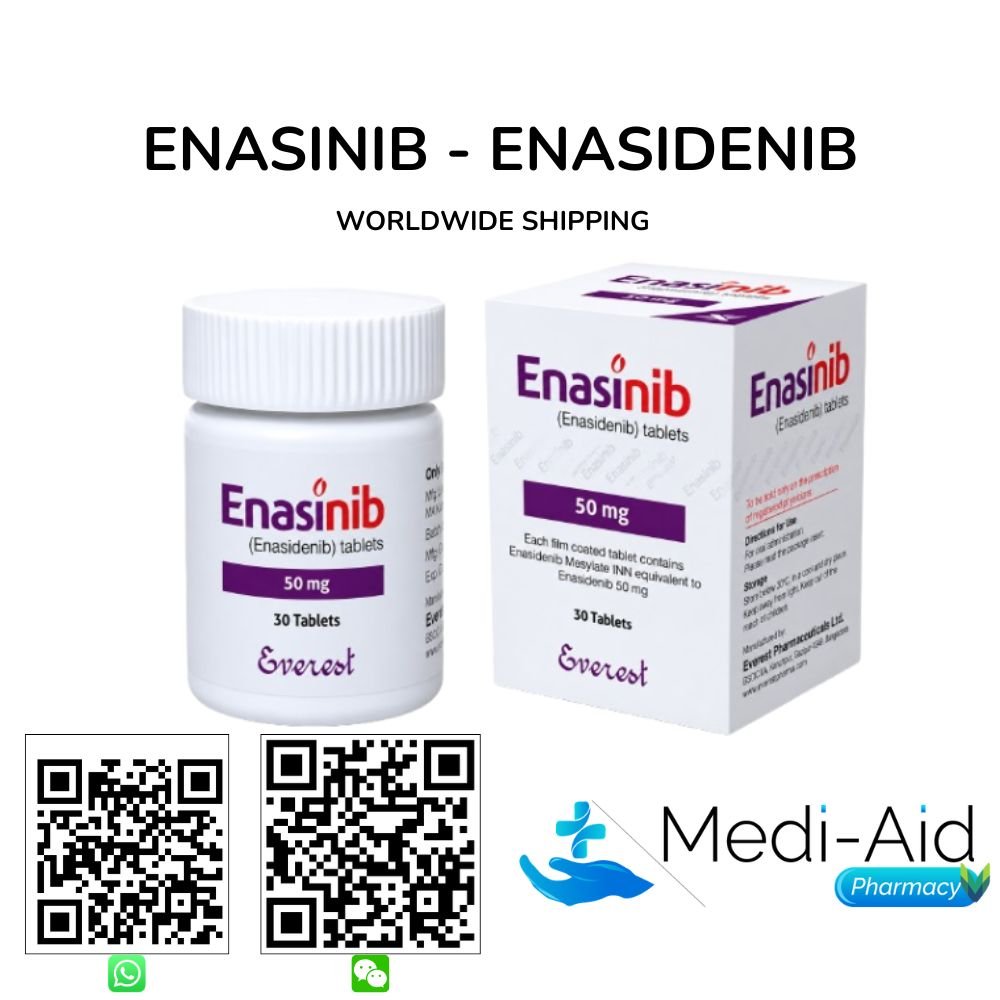
Enasinib 50 MG (Enasidenib) is an oral, first-in-class, selective mutant isocitrate dehydrogenase 2 (IDH2) inhibitor film-coated tablet available in a 50 mg strength, supplied in a pack of 30 tablets per pot, manufactured by Everest Pharmaceuticals Ltd. of Bangladesh. The active ingredient, enasidenib, is a small-molecule inhibitor that selectively targets mutant IDH2 variants specifically IDH2-R140Q, IDH2-R172S, and IDH2-R172K at approximately 40-fold lower concentrations than those required to inhibit wild-type IDH2, thereby preserving normal cellular metabolism.
By inhibiting these oncogenic IDH2 variants, enasidenib dramatically reduces the production of the oncometabolite 2-hydroxyglutarate (2-HG), which is produced by mutant IDH2 enzymes and drives DNA and histone hypermethylation, impaired hematopoietic differentiation, and leukemic transformation. The reference-label dose of enasidenib is 100 mg once daily (OD), achievable using 2 × Enasinib 50 MG tablets once daily; in the event of Grade 3 or higher indirect hyperbilirubinemia (total bilirubin >3 × upper limit of normal [ULN] sustained for ≥2 consecutive weeks without elevation of ALT or AST or other evidence of hepatic dysfunction), the dose is reduced to 50 mg once daily (1 × Enasinib 50 MG tablet once daily).
The 50 mg film-coated tablet formulation of Enasinib is therefore clinically essential for the complete reference-label enasidenib dose modification pathway, enabling precise dose reduction from 100 mg OD to 50 mg OD a dose level not achievable using 100 mg tablets alone. In the pivotal Phase I/II study AG221-C-001 (NCT01915498), enasidenib 100 mg OD achieved an overall response rate (ORR) of 40.3% (71 of 176 patients) in relapsed or refractory (R/R) AML with IDH2 mutation, including a complete remission (CR) rate of 19.3% (34 patients), with a median overall survival (OS) of 9.3 months (95% CI 8.2–10.9 months) and an estimated 1-year survival rate of 39%. For patients achieving CR or partial remission, median OS extended to 19.7 months and 14.4 months, respectively.
Searching for Enasinib 50 MG Enasidenib? Mediaid Pharmacy stocks this product within its comprehensive leukemia medicines portfolio and ships worldwide.
Basic Product Information of Enasinib 50 MG (Enasidenib)
| Brand Name | Enasinib 50 MG (Enasidenib) |
| Product Name | Enasinib |
| Generic Name | Enasidenib |
| Drug Class | Selective Mutant IDH2 Inhibitor; Isocitrate Dehydrogenase 2 (IDH2) Inhibitor; Non-Cytotoxic Differentiating Agent; Oral Small-Molecule Targeted Oncology Agent; AML Targeted Therapy |
| Formulation | Film-Coated Tablet |
| Available Strength | 50 mg per tablet (reference-label dose: 100 mg OD = 2 × Enasinib 50 MG tablets once daily; dose reduction: 50 mg OD = 1 × Enasinib 50 MG tablet once daily) |
| Available Pack Size | 30 Tablets per pot (15-day supply at 100 mg OD [2 tablets/day]; 30-day supply at 50 mg OD [1 tablet/day]) |
| Primary Indication | Relapsed or Refractory (R/R) Acute Myeloid Leukemia (AML) with an Isocitrate Dehydrogenase 2 (IDH2) Mutation (IDH2-R140Q, IDH2-R172S, IDH2-R172K), as detected by an FDA-approved diagnostic test |
| Reference-Label Starting Dose | 100 mg once daily (OD) = 2 × Enasinib 50 MG tablets per day; dose reduction for hyperbilirubinemia: 50 mg OD (1 × Enasinib 50 MG tablet per day); minimum treatment duration: 6 months to allow time for clinical response |
| Manufacturer / Brand | Everest Pharmaceuticals Ltd. (Everest Pharma), Bangladesh |
| Country of Origin | Bangladesh |
| SKU | everest-enasinib |
| Categories | Everest Pharmaceuticals Medicines, Leukemia Medicines, Oncology Medicines |
| Storage Conditions | Store below 30°C in a dry place, protected from light and moisture. Keep out of the reach of children. |
| Global Supplier | Mediaid Pharmacy Worldwide Shipping Available |
How Enasinib 50 MG (Enasidenib) Works: Selective Mutant IDH2 Inhibition and 2-HG Suppression-Driven Myeloid Differentiation
Enasidenib, the active ingredient in Enasinib 50 MG, is an orally bioavailable, first-in-class selective small-molecule inhibitor of mutant isocitrate dehydrogenase 2 (IDH2). A selective mutant IDH2 inhibitor refers to a compound that potently and selectively suppresses the neomorphic enzymatic activity of oncogenic IDH2 variants particularly IDH2-R140Q, IDH2-R172S, and IDH2-R172K at approximately 40-fold lower concentrations than those required to inhibit wild-type (normal) IDH2, thereby preserving physiological IDH2 function in non-malignant cells.
IDH2 mutations occur in approximately 12–15% of AML patients and confer a neomorphic enzymatic activity whereby the mutant enzyme catalyses the reduction of alpha-ketoglutarate (α-KG) to the oncometabolite 2-hydroxyglutarate (2-HG). 2-HG is a competitive inhibitor of α-KG-dependent dioxygenases, including TET2 DNA demethylases and Jumonji-C domain histone demethylases, driving aberrant DNA and histone hypermethylation, epigenetic silencing of differentiation genes, and a hematopoietic differentiation block that promotes and sustains the AML disease state. Each Enasinib 50 MG film-coated tablet contains enasidenib 50 mg, formulated by Everest Pharmaceuticals Ltd. of Bangladesh; the reference-label starting dose of 100 mg OD is achievable using 2 × Enasinib 50 MG tablets once daily.
By potently inhibiting mutant IDH2, enasidenib reduces serum and bone marrow 2-HG levels typically by >90% in responding patients which reverses the 2-HG-mediated epigenetic blockade, restores the activity of α-KG-dependent epigenetic enzymes, and re-enables the terminal myeloid differentiation programme. The principal oncological mechanism of enasidenib is therefore differentiation of leukemic blasts into mature myeloid cells, not cytotoxic cell killing, distinguishing enasidenib from conventional cytotoxic AML chemotherapy. In clinical studies, enasidenib induced progressive maturation of myeloblasts into functional neutrophils and other mature myeloid cell types with emergence of functional, IDH2-mutant neutrophils in peripheral blood confirming myeloid differentiation as the primary therapeutic mechanism.
Enasidenib oral bioavailability is approximately 57%, with peak plasma concentrations (Tmax) achieved within 4 hours of dosing and a terminal half-life of approximately 137 hours (approximately 5.7 days) a prolonged half-life that supports consistent once-daily dosing with predictable steady-state exposure. Protein binding of enasidenib is 98.5%, with a mean volume of distribution of 55.8 L and mean total body clearance of 0.74 L/h. Enasidenib is metabolised by multiple CYP450 isoenzymes (CYP1A2, CYP2B6, CYP2C8, CYP2C9, CYP2C19, CYP2D6, CYP3A4) to an active metabolite (AGI-16903), with elimination predominantly via feces (89%, of which 34% is unchanged drug) and urine (11%). Oncologists managing patients with IDH2-mutated AML can review the full range of IDH2-targeted AML medicines at Mediaid Pharmacy, including Enasinib 50 MG Enasidenib, for comprehensive leukemia treatment planning.
In the pivotal Phase I/II study AG221-C-001 239 patients with advanced hematologic malignancies receiving enasidenib at escalating doses from 50 mg to 650 mg daily, with 100 mg OD selected for the expansion phase based on pharmacokinetic and pharmacodynamic analyses enasidenib 100 mg OD achieved an ORR of 40.3% (71 of 176 R/R AML patients), including CR in 19.3% (34 patients). The maximum tolerated dose (MTD) was not reached at doses up to 650 mg daily. Median time to first response was 1.9 months (range 0.5–9.4 months), with 87.3% of responding patients achieving a response by cycle 5; critically, responses continued to improve with ongoing treatment, reflecting the progressive differentiation mechanism. Median overall survival was 9.3 months (95% CI 8.2–10.9 months); estimated 1-year survival was 39%.
In patients achieving CR or partial remission, median OS was 19.7 months and 14.4 months, respectively. Grade 3–4 adverse events occurring in >5% of patients included indirect hyperbilirubinemia (12%) and thrombocytopenia (6%); unlike cytotoxic chemotherapy, myelosuppression is uncommon with enasidenib. The dose for each patient must be determined and adjusted by the treating haematologist-oncologist; Enasinib 50 MG must be prescribed and used under the supervision of a qualified haematology-oncology specialist.
Approved Indications of Enasidenib Enasinib 50 MG Reference Label
Enasidenib is approved by the United States Food and Drug Administration (FDA) approval granted August 2017 and other major regulatory agencies for the treatment of adults with relapsed or refractory AML with an IDH2 mutation. IDH2 mutation status must be confirmed using an FDA-approved companion diagnostic test before initiating enasidenib therapy. The 50 mg film-coated tablet formulation of Enasinib, with its 30-tablet pack size, is clinically essential for both the standard reference-label dose (100 mg OD = 2 tablets/day) and the reference-label dose reduction pathway. Prescribers must confirm the exact locally approved indication on the enasidenib product label before initiating therapy, as specific label language may vary by regulatory jurisdiction.
|
Relapsed or Refractory AML with IDH2 Mutation Monotherapy Enasidenib is indicated as monotherapy for adult patients with relapsed or refractory (R/R) AML with an isocitrate dehydrogenase 2 (IDH2) mutation, as detected by an FDA-approved companion diagnostic test. IDH2 mutations specifically R140Q, R172S, and R172K variants occur in approximately 12–15% of AML patients. Reference-label dose: 100 mg once daily (OD) = 2 × Enasinib 50 MG tablets per day, taken orally without regard to food, until disease progression or unacceptable toxicity. Minimum treatment duration is 6 months. Pivotal AG221-C-001 Phase I/II data: ORR 40.3%; CR rate 19.3%; median OS 9.3 months. Haematology-oncology teams requiring comprehensive leukemia targeted agent support can review the full range of leukemia cancer medicines at Mediaid Pharmacy for consolidated AML programme planning. |
IDH2 Mutation Testing Requirement and Companion Diagnostics Enasidenib therapy requires confirmation of an IDH2 mutation by an FDA-approved companion diagnostic test before treatment initiation. This requirement reflects the biomarker-driven mechanism of enasidenib: the drug produces clinically meaningful responses only in IDH2-mutant AML. IDH2 mutations relevant to enasidenib therapy include R140Q (the most prevalent IDH2 AML variant) and R172 variants (R172S, R172K); these two distinct mutation subgroups have different comutational profiles and may have different clinical outcomes. In the pivotal AG221-C-001 study, enasidenib was therapeutically active across both R140 and R172 IDH2 mutation types, with an ORR of approximately 40% regardless of the type of IDH2 mutation present. Oncologists are advised to verify the companion diagnostic requirements specific to their regulatory jurisdiction before prescribing Enasinib 50 MG Enasidenib. |
Drug Interactions and Important Safety Information for Enasinib 50 MG (Enasidenib)
The most clinically significant pharmacokinetic and pharmacodynamic drug interaction risks for enasidenib involve its role as an inhibitor of multiple drug transporters and metabolic enzymes. Enasidenib and its active metabolite AGI-16903 are inhibitors of OATP1B1, OATP1B3, and BCRP (breast cancer resistance protein); co-administration of OATP1B1, OATP1B3, or BCRP substrates with enasidenib may increase their plasma concentrations and risk of toxicity. The most clinically important example is rosuvastatin (an OATP1B1/1B3/BCRP substrate): the enasidenib prescribing label recommends dose reduction of rosuvastatin when co-administered with enasidenib.
Enasidenib also inhibits P-glycoprotein (P-gp); co-administration of P-gp substrates with narrow therapeutic indices particularly digoxin requires close monitoring and dose reduction of the P-gp substrate as clinically appropriate. CYP1A2 substrates (including caffeine-containing medications and fluvoxamine) and CYP2C19 substrates (including omeprazole) may have increased plasma concentrations when co-administered with enasidenib due to enasidenib-mediated CYP1A2 and CYP2C19 inhibition; the prescribing information recommends avoiding concurrent use or reducing the dose of sensitive CYP1A2 and CYP2C19 substrates as appropriate. Patients should reduce caffeine intake from food and beverages during enasidenib treatment given its CYP1A2 inhibitory activity.
CYP3A substrates: enasidenib may decrease the levels and effectiveness of CYP3A substrates, including certain antifungal agents; concurrent use with sensitive CYP3A substrates should be avoided where clinically feasible. UGT1A1 inhibition: enasidenib inhibits UGT1A1, the primary enzyme responsible for bilirubin glucuronidation; this is the mechanistic basis for the high incidence of indirect (unconjugated) hyperbilirubinemia observed with enasidenib. All patients require periodic monitoring of serum bilirubin throughout enasidenib treatment; Grade 3 or higher indirect hyperbilirubinemia (total bilirubin >3 × ULN sustained for ≥2 consecutive weeks, without concurrent elevation of ALT, AST, or other signs of hepatic dysfunction) requires dose reduction from 100 mg OD to 50 mg OD (1 × Enasinib 50 MG tablet once daily); if bilirubin resolves to <2 × ULN, resumption of the 100 mg OD dose (2 × Enasinib 50 MG once daily) is recommended.
Hydroxyurea interactions: patients who develop non-infectious leukocytosis (WBC >30 × 10⁹/L) during enasidenib treatment may require hydroxyurea co-administration per institutional protocol; if leukocytosis does not improve with hydroxyurea, enasidenib dose interruption followed by resumption at 100 mg OD when WBC <30 × 10⁹/L is recommended. All patients must disclose their complete medication list including over-the-counter supplements and herbal preparations to their treating haematologist-oncologist before and during Enasinib 50 MG therapy. Teams requiring concurrent oncology agents alongside enasidenib-based leukemia regimens at Mediaid Pharmacy can contact the team for multi-medicine sourcing support.
Side Effects and Precautions of Enasinib 50 MG (Enasidenib)
|
Common Side Effects Indirect (unconjugated) hyperbilirubinemia (any grade: approximately 81%; Grade 3–4: approximately 12–15%; attributable to enasidenib-mediated UGT1A1 inhibition, impairing bilirubin glucuronidation; typically not accompanied by hepatotoxicity; requires periodic monitoring of serum bilirubin; dose reduction to 50 mg OD 1 × Enasinib 50 MG required for sustained Grade 3 or higher indirect hyperbilirubinemia) Nausea (approximately 50%; typically mild to moderate; manage with antiemetics and dose timing adjustments as directed by the oncologist) Diarrhoea (approximately 43%; manage with anti-diarrhoeal agents, hydration, and dietary modification; dose modification may be required for Grade 3 or higher diarrhoea) Vomiting (approximately 34%; manage with antiemetics; if vomiting occurs after a dose is taken, the dose should not be repeated the next dose is taken at the regularly scheduled time) Decreased appetite and anorexia (reported in clinical trials; monitor nutritional status throughout treatment; nutritional counselling may be required) Dysgeusia (altered taste perception; a characteristic IDH inhibitor-associated effect; does not typically require dose modification) Leukocytosis (non-infectious; a reflection of the enasidenib differentiation mechanism causing myeloid progenitor proliferation; manage with hydroxyurea per institutional protocol; monitor CBC at least every 2 weeks for the first 3 months of therapy) Electrolyte disturbances (hypocalcaemia, hypokalaemia, and hypophosphataemia reported; monitor blood chemistries regularly, particularly during the first 3 months; correct electrolyte abnormalities as clinically directed) |
Serious Warnings and Precautions Differentiation syndrome (IDH-inhibitor-associated differentiation syndrome [IDH-DS]): IDH-DS is the most critical safety warning for enasidenib it carries an FDA Boxed Warning and can be life-threatening or fatal if not identified and treated promptly. IDH-DS incidence is approximately 14% with enasidenib. It may occur as early as 1 day and up to 5 months after starting enasidenib. Symptoms include: fever, dyspnoea, acute respiratory distress, pulmonary infiltrates or effusions, pleural or pericardial effusions, rapid weight gain or peripheral oedema, lymphadenopathy, bone pain, and hepatic, renal, or multiorgan dysfunction. If IDH-DS is suspected, corticosteroid therapy (dexamethasone 10 mg IV every 12 hours) and haemodynamic monitoring must be initiated immediately. If severe pulmonary symptoms requiring intubation or ventilator support, or renal dysfunction persisting >48 hours after corticosteroid initiation occur, enasidenib must be interrupted until symptom resolution to ≤Grade 2. Tumour lysis syndrome (TLS): TLS has been reported with enasidenib. Monitor CBC and blood chemistries for signs of TLS at least every 2 weeks for the first 3 months of therapy; ensure adequate hydration before and during treatment initiation; use TLS prophylaxis as clinically appropriate per institutional protocol. Indirect hyperbilirubinemia: Grade 3 or higher indirect hyperbilirubinemia (total bilirubin >3 × ULN sustained for ≥2 consecutive weeks, without elevation of ALT/AST or other hepatic disorders) requires mandatory dose reduction to 50 mg OD (1 × Enasinib 50 MG tablet once daily). Monitor serum bilirubin periodically throughout treatment. Non-infectious leukocytosis: WBC elevation >30 × 10⁹/L (non-infectious) may occur as a consequence of the enasidenib differentiation mechanism. Treat with hydroxyurea using institutional protocol. Interrupt enasidenib if leukocytosis does not improve with hydroxyurea; resume at 100 mg OD when WBC <30 × 10⁹/L. Embryo-fetal toxicity: enasidenib can cause fetal harm based on its mechanism of action and animal reproductive toxicology data. Females of reproductive potential must use effective contraception during enasidenib treatment and for at least 2 months after the last dose. Males with female partners of reproductive potential must use effective contraception during treatment and for at least 2 months after the last dose. Breastfeeding must be discontinued during enasidenib treatment and for at least 2 months after the last dose. Enasidenib may also impair fertility in both male and female patients. |
Who Should Use Enasinib 50 MG (Enasidenib)?
Enasinib 50 MG (Enasidenib) is indicated for adult patients (aged ≥18 years) with relapsed or refractory (R/R) acute myeloid leukemia (AML) with a confirmed IDH2 mutation (IDH2-R140Q, IDH2-R172S, or IDH2-R172K), as detected by an FDA-approved companion diagnostic test. The Enasinib 50 MG tablet strength is specifically and indispensably required because: (1) the reference-label starting dose of 100 mg OD requires 2 × Enasinib 50 MG tablets once daily; and (2) the reference-label dose reduction pathway triggered by sustained Grade 3 or higher indirect hyperbilirubinemia requires reduction to 50 mg OD (1 × Enasinib 50 MG tablet once daily), a dose not achievable using 100 mg tablets alone.
Patients must continue treatment for a minimum of 6 months before an adequate clinical response assessment can be made, as responses to enasidenib may emerge progressively as the myeloid differentiation mechanism takes effect. Haematologist-oncologists must assess IDH2 mutation status (confirmed by companion diagnostic), baseline blood counts (CBC), liver function (bilirubin, ALT, AST), electrolytes (calcium, potassium, phosphate), pregnancy status (for females of reproductive potential), and all concomitant medications before prescribing any enasidenib dose level.
Patients with known or suspected differentiation syndrome symptoms at baseline require particular vigilance. Enasinib 50 MG is not indicated in patients with IDH1 mutations or wild-type IDH2 AML. Haematology-oncology teams seeking comprehensive targeted agent support across AML and leukemia programmes can review the full range of acute myeloid leukemia targeted therapy medicines at Mediaid Pharmacy, including Enasinib 50 MG Enasidenib for IDH2-mutated R/R AML therapy.
Global Supplier: Mediaid Pharmacy Worldwide Shipping for Enasinib 50 MG (Enasidenib)
Mediaid Pharmacy is a Dhaka-based supplier of oncology and specialty medicines with worldwide shipping capacity. Enasinib 50 MG (Enasidenib) manufactured by Everest Pharmaceuticals Ltd. of Bangladesh, formulated as film-coated tablets in 30-tablet pots is stocked and available for international supply. All orders are supported by pricing quotations, stock confirmation, and end-to-end delivery tracking. Hospitals, specialist haematology and oncology centres, cancer centres, distributors, and patients in countries where enasidenib is approved can contact the Mediaid Pharmacy team through WhatsApp, phone, or WeChat for all enquiries about generic enasidenib tablets for leukemia at Mediaid Pharmacy including current stock availability, pricing, and international delivery timelines. Institutions and distributors sourcing multiple oncology medicines in a single consolidated shipment can request a combined quotation from the Mediaid Pharmacy team after browsing the full catalogue.
Why Choose Enasinib 50 MG (Enasidenib) from Mediaid Pharmacy?
Enasinib 50 MG is manufactured by Everest Pharmaceuticals Ltd. of Bangladesh and delivers enasidenib the first-in-class selective mutant IDH2 inhibitor whose 100 mg OD dose anchored the Phase I/II AG221-C-001 trial (ORR 40.3%; CR rate 19.3%; median OS 9.3 months; 1-year survival 39% in relapsed or refractory IDH2-mutated AML), establishing enasidenib as a pivotal targeted therapy for a molecularly-defined AML subpopulation representing approximately 12–15% of all AML diagnoses.
The defining procurement advantage of sourcing Enasinib 50 MG from Mediaid Pharmacy is complete reference-label dose coverage from a single enasidenib supplier: the 50 mg film-coated tablet is the only Enasinib strength that enables both the standard 100 mg OD dose (2 tablets daily) and the mandatory dose reduction to 50 mg OD (1 tablet daily) required when managing enasidenib-associated Grade 3 or higher indirect hyperbilirubinemia. The 30-tablet pot of Enasinib 50 MG provides a 15-day supply at the standard 100 mg OD dose (2 tablets/day) and a 30-day supply at the reduced 50 mg OD dose (1 tablet/day), offering clinically aligned supply units for both dose levels in a single formulation. Unlike cytotoxic chemotherapy regimens requiring inpatient administration infrastructure, enasidenib’s oral, once-daily dosing schedule enables outpatient management for eligible AML patients, reducing institutional resource requirements while maintaining therapeutic continuity.
Mediaid Pharmacy supplies Enasinib 50 MG in its 30-tablet pot format with worldwide shipping, specialist supply support, and documentation for customs clearance as required. For haematology-oncology programmes requiring a broader panel of targeted and supportive agents, the full Mediaid Pharmacy oncology medicines catalogue is available to browse, and the team can be contacted directly for consolidated multi-medicine quotations.
Frequently Asked Questions About Enasinib 50 MG (Enasidenib)
What is Enasinib 50 MG and what is its generic name?
Enasinib 50 MG is a branded generic enasidenib film-coated tablet manufactured by Everest Pharmaceuticals Ltd. (Everest Pharma) of Bangladesh. The generic name of Enasinib 50 MG is enasidenib the same active ingredient as the originator medicine Idhifa (enasidenib), originally developed by Agios Pharmaceuticals and Celgene (now Bristol Myers Squibb) and approved by the FDA in August 2017 for relapsed or refractory AML with an IDH2 mutation. Each Enasinib 50 MG film-coated tablet contains enasidenib 50 mg. The reference-label dose of 100 mg once daily is achieved using 2 × Enasinib 50 MG tablets once daily; the dose reduction level of 50 mg OD is achieved using 1 × Enasinib 50 MG tablet once daily. The 30-tablet pot of Enasinib 50 MG provides a 15-day supply at the standard 100 mg OD dose (2 tablets/day) and a 30-day supply at the reduced 50 mg OD dose (1 tablet/day) making Enasinib 50 MG a clinically essential, cost-accessible generic enasidenib option for haematology-oncology programmes managing IDH2-mutated R/R AML patients worldwide.
How should Enasinib 50 MG (Enasidenib) tablets be taken?
Enasinib 50 MG (Enasidenib) tablets are taken orally at the dose and schedule prescribed by the treating haematologist-oncologist. The reference-label dose of enasidenib is 100 mg once daily (OD) 2 × Enasinib 50 MG tablets taken once per day at the same time each day. Enasidenib can be taken with or without food; tablets should be swallowed whole with 8 oz (approximately 240 mL) of water and must not be broken, crushed, or chewed. If a dose is missed or vomited, the dose should be taken as soon as possible on the same day, then return to the routine daily schedule; the missed or vomited dose must not be replaced or doubled on the following day. Patients should maintain a consistent time of daily dosing. The minimum recommended treatment duration is 6 months, as responses to enasidenib may emerge progressively as the myeloid differentiation mechanism takes effect patients may require several treatment cycles before responding, and responses can improve over time with continued treatment. All concerns about administration, dose adjustments, or side effects should be reported to the treating oncologist immediately.
What are the most common side effects of Enasinib 50 MG (Enasidenib)?
The most common side effects of enasidenib include indirect (unconjugated) hyperbilirubinemia (any grade approximately 81%; Grade 3–4 approximately 12–15% the most clinically significant laboratory adverse event, attributable to UGT1A1 inhibition), nausea (approximately 50%), diarrhoea (approximately 43%), vomiting (approximately 34%), decreased appetite and anorexia, dysgeusia (altered taste), and non-infectious leukocytosis (from myeloid differentiation). Electrolyte disturbances including hypocalcaemia, hypokalaemia, and hypophosphataemia are also reported. Grade 3–4 adverse events occurring in more than 5% of patients in the pivotal AG221-C-001 trial included hyperbilirubinemia (12%) and thrombocytopenia (6%). Unlike conventional cytotoxic chemotherapy, myelosuppression (neutropenia, anaemia) is uncommon with enasidenib given its non-cytotoxic differentiation mechanism. Critically, enasidenib carries a Boxed Warning for IDH-inhibitor-associated differentiation syndrome (IDH-DS) an incidence of approximately 14% which can be life-threatening or fatal if not identified and treated promptly with corticosteroids. Sustained Grade 3 or higher indirect hyperbilirubinemia requires dose reduction to 50 mg OD (1 × Enasinib 50 MG once daily). Consult your prescribing haematologist-oncologist regarding your individual risk profile before and during enasidenib treatment.
What is differentiation syndrome and how is it managed in patients taking Enasinib 50 MG (Enasidenib)?
IDH-inhibitor-associated differentiation syndrome (IDH-DS) is a potentially life-threatening complication that occurs when enasidenib’s mechanism of action rapid myeloid differentiation of leukemic cells drives an inflammatory state caused by the proliferation and systemic release of differentiating myeloid cells and associated cytokines. IDH-DS carries an FDA Boxed Warning for enasidenib and has an approximate incidence of 14% across clinical trial populations. It may develop as early as 1 day and up to 5 months after initiating enasidenib. Clinical signs and symptoms include: fever, dyspnoea, acute respiratory distress, pulmonary infiltrates or pleural effusions, pericardial effusions, rapid weight gain, peripheral oedema, lymphadenopathy, bone pain, and hepatic, renal, or multiorgan dysfunction. Management requires immediate initiation of corticosteroid therapy typically dexamethasone 10 mg IV every 12 hours and haemodynamic monitoring continued until symptom resolution. Enasidenib should be interrupted if severe pulmonary symptoms requiring intubation or ventilator support, or renal dysfunction, persist more than 48 hours after starting corticosteroids; it may be resumed at 50 mg OD (1 × Enasinib 50 MG once daily) when signs and symptoms improve to Grade 2 or lower, with oncologist assessment. Oncologists should educate all patients receiving Enasinib 50 MG to report any new or worsening fever, respiratory symptoms, or fluid retention symptoms immediately.
Why is the Enasinib 50 MG strength specifically important for enasidenib dose management?
The Enasinib 50 MG strength is clinically indispensable because the reference-label enasidenib dosing algorithm specifies two distinct dose levels: (a) the standard starting dose of 100 mg OD (= 2 × Enasinib 50 MG tablets once daily), which cannot be achieved using 50 mg tablets alone without combining two tablets; and (b) the mandatory dose reduction level of 50 mg OD (= 1 × Enasinib 50 MG tablet once daily), required when Grade 3 or higher indirect hyperbilirubinemia (total bilirubin >3 × ULN sustained ≥2 weeks without hepatotoxic aetiology) develops, or when signs and symptoms of IDH-DS have resolved to ≤Grade 2 following dose interruption. The 50 mg tablet is the only Enasinib strength that enables both the standard and reduced dose levels: (1) standard dose at 100 mg OD = 2 × Enasinib 50 MG once daily; (2) dose reduction to 50 mg OD = 1 × Enasinib 50 MG once daily; (3) resumption from 50 mg back to 100 mg OD when bilirubin resolves to <2 × ULN = returning to 2 × Enasinib 50 MG once daily. Oncology teams requiring Enasinib 50 MG to cover the complete enasidenib dose range can contact Mediaid Pharmacy’s leukemia medicines team for a supply quotation.
Is Enasinib 50 MG (Enasidenib) safe during pregnancy or while breastfeeding?
No. Enasidenib including in the Enasinib 50 MG film-coated tablet formulation can cause fetal harm based on its mechanism of action and confirmed animal reproductive toxicology data. Females of reproductive potential must verify a negative pregnancy test before initiating enasidenib therapy and must use effective contraception during treatment and for at least 2 months after the last dose. Males with female partners of reproductive potential must use effective contraception during treatment and for at least 2 months after the last dose, as enasidenib may also be present in semen. Breastfeeding must be discontinued during enasidenib treatment and for at least 2 months after the last dose; it is unknown whether enasidenib or its metabolites are excreted in human breast milk, and the potential for serious adverse reactions in a breastfed infant is considered clinically significant. Enasidenib may also impair fertility in both male and female patients. Patients who are pregnant, planning a pregnancy, or breastfeeding must discuss their individual circumstances with their treating haematologist-oncologist before initiating any enasidenib dose level.
Can I order Enasinib 50 MG (Enasidenib) online with worldwide shipping?
Yes. Mediaid Pharmacy supplies Enasinib 50 MG (Enasidenib) manufactured by Everest Pharmaceuticals Ltd. of Bangladesh, film-coated tablets, 30 tablets per pot to oncology centres, hospitals, distributors, and patients globally. Contact Mediaid Pharmacy via WhatsApp, phone, or WeChat at +8801773428128, or email info@mediaidpharmacy.com, for pricing on Enasinib 50 MG Enasidenib, current stock availability, and international delivery details for your country. Haematology-oncology teams sourcing Enasinib 50 MG Enasidenib alongside other targeted agents can browse the complete range of oncology medicines at Mediaid Pharmacy and request a consolidated multi-medicine quotation. All orders are supported by prescription verification, pricing documentation, and customs clearance support as required for international shipments.
Order Enasinib 50 MG (Enasidenib) with Worldwide Shipping
Phone / WhatsApp / WeChat: +8801773428128 | Email: info@mediaidpharmacy.com
Reviews
There are no reviews yet.