
Description
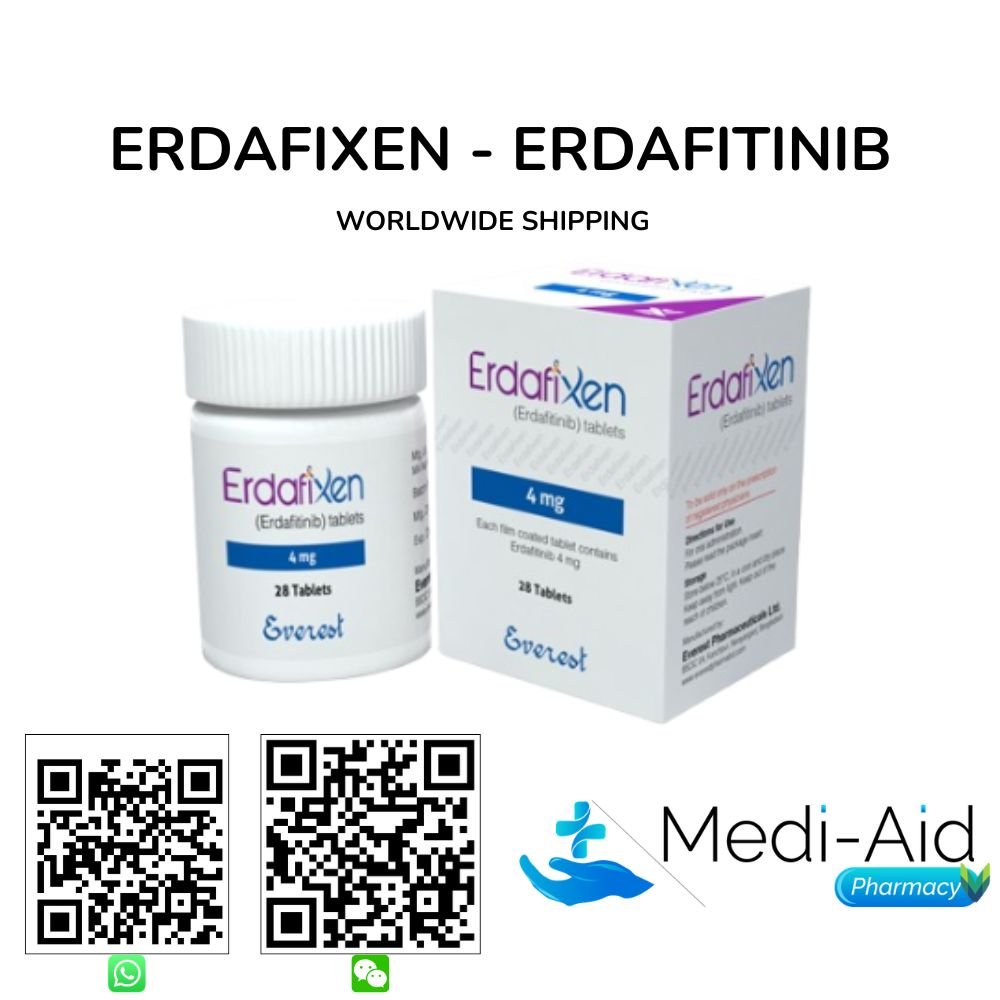
Erdafixen 4 MG (Erdafitinib) is an orally bioavailable pan-FGFR kinase inhibitor that selectively targets fibroblast growth factor receptors 1, 2, 3, and 4 (FGFR1/2/3/4) to suppress aberrant FGF/FGFR signaling in adults with locally advanced or metastatic urothelial carcinoma (bladder cancer) carrying susceptible FGFR2 or FGFR3 genetic alterations, supplied as film-coated tablets in 4 mg strength in 28-tablet pots and manufactured by Everest Pharmaceuticals Ltd. in Bangladesh.
Its active pharmaceutical ingredient, erdafitinib INN, inhibits FGFR1 through FGFR4 kinase activity, blocking FGF ligand-induced receptor autophosphorylation and the downstream RAS-MAPK and PI3K-AKT-mTOR signaling cascades that drive proliferation and survival of urothelial carcinoma cells carrying oncogenic FGFR alterations including point mutations such as FGFR3 S249C and FGFR3 R248C, and gene fusions such as FGFR3-TACC3 and FGFR2-BICC1.
Erdafixen is formulated as 4 mg film-coated tablets, with the standard starting dose of 8 mg once daily achieved by taking two tablets, each 28-tablet pot delivering a two-week supply for uninterrupted treatment cycles. In the pivotal Phase 2 BLC2001 trial (NCT02365597) the landmark single-arm, open-label study that supported FDA approval of erdafitinib 40% of 87 evaluable adults with FGFR-altered locally advanced or metastatic urothelial carcinoma achieved an objective response with erdafitinib once daily, including a complete response rate of 3.4%, establishing erdafitinib as the first FDA-approved targeted therapy for urothelial carcinoma (April 12, 2019) and the first precision oncology medicine for bladder cancer linked to a companion FGFR biomarker diagnostic.
Searching for Erdafixen 4 MG Erdafitinib? Mediaid Pharmacy lists this product across its bladder cancer medicines and Everest Pharmaceuticals portfolios and ships it worldwide.
Basic Product Information of Erdafixen 4 MG (Erdafitinib)
| Brand Name | Erdafixen 4 MG (Erdafitinib) |
| Product Name | Erdafixen |
| Generic Name | Erdafitinib INN |
| Drug Class | Kinase Inhibitor; Pan-FGFR Inhibitor (Fibroblast Growth Factor Receptor 1, 2, 3, and 4 Inhibitor); RAS-MAPK and PI3K-AKT-mTOR Pathway Inhibitor; Targeted Urothelial Carcinoma Therapy; Bladder Cancer Precision Oncology Agent; Biomarker-Selected FGFR-Directed Antineoplastic |
| Formulation | Film-Coated Tablet (Oral) |
| Available Strengths | 4 mg per tablet |
| Available Pack Size | 28 Tablets per pot (two-week supply at the standard 8 mg once-daily starting dose of two 4 mg tablets) |
| Dosing Schedule | Standard urothelial carcinoma dosing: 8 mg (two 4 mg Erdafixen tablets) orally once daily as the starting dose, with dose adjustment directed by the treating oncologist based on serum phosphate levels measured at cycle 1 day 14 to 17 and on individual tolerability. Erdafixen may be taken with or without food; however, avoid grapefruit and grapefruit juice throughout treatment. Swallow tablets whole. Dose modifications apply for ocular toxicity, hyperphosphatemia, hand-foot syndrome, and other adverse reactions; consult the treating oncologist for individualized dose adjustment schedules. |
| Primary Indication | Treatment of adults with locally advanced or metastatic urothelial carcinoma (bladder cancer) harboring susceptible FGFR3 or FGFR2 genetic alterations (including specific point mutations and gene fusions detectable by an FDA-approved companion diagnostic) that has progressed during or following at least one prior line of platinum-containing chemotherapy. Patient selection requires confirmed FGFR2 or FGFR3 susceptible alteration status before initiating Erdafixen. Erdafitinib is not indicated for urothelial carcinoma without susceptible FGFR alterations, for non-urothelial genitourinary malignancies, or for other tumor types regardless of FGFR status. |
| Manufacturer | Everest Pharmaceuticals Ltd., Bangladesh |
| Country of Origin | Bangladesh |
| Originator Reference Brand | Balversa (erdafitinib tablets, 3 mg, 4 mg, and 5 mg, by Janssen Pharmaceuticals, a Johnson and Johnson company approved by the FDA on April 12, 2019 for adults with locally advanced or metastatic urothelial carcinoma with susceptible FGFR2 or FGFR3 genetic alterations that have progressed during or following platinum-containing chemotherapy). Both Erdafixen and Balversa contain erdafitinib INN as the active pharmaceutical ingredient in the same pan-FGFR inhibitor drug class. Erdafixen is manufactured by Everest Pharmaceuticals Ltd. in Bangladesh and is supplied through Mediaid Pharmacy for international procurement. |
| Global Supplier | Mediaid Pharmacy, Worldwide Shipping Available |
| Storage Conditions | Store at room temperature (20 degrees C to 25 degrees C / 68 degrees F to 77 degrees F). Keep in the original pot with the lid tightly closed. Protect from moisture and light. Keep out of the reach of children. |
How Erdafixen (Erdafitinib) Works: Selective Pan-FGFR Inhibition of the FGF Signaling Pathway in Urothelial Carcinoma
Erdafitinib INN is an orally bioavailable, selective inhibitor of fibroblast growth factor receptors 1, 2, 3, and 4 (FGFR1/2/3/4), a family of receptor tyrosine kinases that regulate cellular proliferation, survival, angiogenesis, and differentiation through FGF ligand-induced receptor dimerization and kinase domain autophosphorylation. In urothelial carcinoma, activating mutations and gene fusions of FGFR3 (occurring in approximately 20% to 25% of locally advanced and metastatic cases) and FGFR2 drive constitutive, ligand-independent receptor activation and downstream oncogenic signaling through the RAS-MAPK and PI3K-AKT-mTOR cascades, promoting uncontrolled tumor cell proliferation, resistance to apoptosis, evasion of immune surveillance, and metastatic dissemination.
Erdafitinib binds competitively to the ATP-binding pocket of FGFR1, FGFR2, FGFR3, and FGFR4, blocking receptor autophosphorylation and suppressing the downstream signaling pathways that sustain FGFR-altered urothelial carcinoma cell growth and survival. The most clinically relevant FGFR3 hotspot mutations targeted by erdafitinib include S249C, R248C, G370C, S373C, Y373C, and A393E; targetable FGFR gene fusions include FGFR3-TACC3 (the most common FGFR3 fusion in bladder cancer) and FGFR2-BICC1, all detectable by FDA-approved companion diagnostic assays (the therascreen FGFR RGQ RT-PCR Kit or FoundationOne CDx) required for patient selection before initiating Erdafixen.
The pharmacokinetic profile of erdafitinib supports once-daily oral administration with sustained FGFR pathway suppression throughout each 24-hour dosing interval. Erdafitinib is well absorbed orally, with a median time to peak plasma concentration (Tmax) of approximately 2.5 hours under both fasted and fed conditions; food does not clinically meaningfully alter erdafitinib bioavailability, so Erdafixen may be administered with or without food. The mean terminal elimination half-life of erdafitinib is approximately 59 hours, supporting stable once-daily steady-state plasma concentrations that maintain continuous FGFR kinase inhibition.
A clinically important consequence of FGFR4 inhibition by erdafitinib is hyperphosphatemia, caused by suppression of the fibroblast growth factor 23 (FGF23) axis regulating renal phosphate reabsorption; serum phosphate monitoring and dietary phosphate restriction are mandatory components of Erdafixen treatment management throughout the treatment course. Erdafitinib is metabolized primarily by cytochrome P450 enzyme CYP2C9 and secondarily by CYP3A4; co-administration of strong or moderate CYP2C9 or CYP3A4 inhibitors (including azole antifungals such as fluconazole and voriconazole) substantially increases erdafitinib exposure and requires dose adjustment per prescribing guidance. For the complete range of targeted bladder cancer and oncology medicines at Mediaid Pharmacy, visit the bladder cancer medicines collection.
Erdafixen (Erdafitinib): Indications, Dosing, and Key Safety Information
| Approved Indication | Locally Advanced or Metastatic Urothelial Carcinoma (Bladder Cancer) with Susceptible FGFR2 or FGFR3 Genetic Alterations: Treatment of adults with locally advanced or metastatic urothelial carcinoma harboring susceptible FGFR3 or FGFR2 genetic alterations including specific point mutations (FGFR3 S249C, R248C, G370C, S373C, Y373C, A393E) and gene fusions (FGFR3-TACC3, FGFR2-BICC1, and others listed in the prescribing information) that has progressed during or following at least one prior line of platinum-containing chemotherapy. Patient selection requires confirmation of susceptible FGFR2 or FGFR3 alteration status using an FDA-approved companion diagnostic test before initiating Erdafixen. Erdafitinib is not indicated for urothelial carcinoma without susceptible FGFR alterations, for non-urothelial genitourinary malignancies, or for other solid tumor types regardless of FGFR alteration status. Confirm alteration status with a validated biomarker assay before prescribing Erdafixen. |
| Recommended Dose | Adults with FGFR-Altered Urothelial Carcinoma: 8 mg (two 4 mg Erdafixen tablets) orally once daily as the initial starting dose. Measure serum phosphate at cycle 1 day 14 to 17: if serum phosphate is below 5.5 mg/dL and no dose-limiting adverse reactions are present, the treating oncologist may direct dose up-titration per prescribing guidance using the appropriate tablet strength combination. Administer Erdafixen with or without food; avoid grapefruit and grapefruit juice. Swallow tablets whole; do not crush, split, or chew. Continue treatment until disease progression or unacceptable toxicity. Consult the treating oncologist for individualized dose adjustment schedules and titration guidance based on the available tablet strengths. |
| Missed Dose | If a dose of Erdafixen is missed and the next scheduled dose is more than 12 hours away, take the missed dose as soon as remembered. If the next scheduled dose is within 12 hours, skip the missed dose and resume the regular once-daily dosing schedule. Do not take two doses on the same day to compensate for a missed dose. Continue Erdafixen treatment without interruption unless instructed otherwise by the treating oncologist. |
| Special Populations | Renal Impairment: No dose adjustment is recommended for patients with mild or moderate renal impairment (creatinine clearance 30 to 89 mL/min). Limited data are available for severe renal impairment; use with caution. Hepatic Impairment: No dose adjustment is required for patients with mild hepatic impairment (Child-Pugh A). Erdafitinib has not been formally studied in patients with moderate or severe hepatic impairment; exercise caution and consult current prescribing information. Pediatric Patients: Safety and efficacy of Erdafixen in pediatric patients have not been established. Elderly Patients: No specific dose adjustment is recommended based on age alone; monitor closely for adverse reactions in older adults. Pregnancy: Erdafixen can cause fetal harm based on its mechanism of action; females of reproductive potential must use effective contraception during treatment and for one month after the final dose. |
| Key Warnings and Precautions | Ocular Toxicity (Central Serous Retinopathy / Retinal Detachment): Central serous retinopathy (CSR) and retinal pigment epithelial detachment (RPED) have been reported in patients receiving erdafitinib, with some cases requiring permanent treatment discontinuation. Obtain a baseline ophthalmologic assessment, including optical coherence tomography (OCT), before initiating Erdafixen; repeat at 1 month after starting treatment, every 3 months during treatment, and whenever new or worsening visual symptoms occur. Withhold Erdafixen for Grade 2 CSR/RPED and permanently discontinue for Grade 3 or 4 ocular events that do not resolve to Grade 1 or less within 4 weeks.
Hyperphosphatemia: Erdafitinib-induced FGFR4 inhibition suppresses renal and intestinal phosphate excretion, causing clinically significant hyperphosphatemia in the majority of patients (76% incidence in BLC2001). Monitor serum phosphate levels at baseline, on day 14 to 17 of cycle 1, monthly for the first 6 months, and as clinically indicated thereafter. Implement a low-phosphate diet when serum phosphate exceeds 5.5 mg/dL. Initiate phosphate-lowering therapy (e.g., sevelamer, aluminum hydroxide-based agents) for serum phosphate exceeding 7 mg/dL or when dietary phosphate restriction is insufficient. Withhold or reduce the Erdafixen dose for Grade 3 or 4 hyperphosphatemia that is uncontrolled by dietary modification and phosphate binders. Hand-Foot Syndrome (Palmar-Plantar Erythrodysesthesia): Hand-foot syndrome occurred in 27% of patients in BLC2001 and may require dose modification for Grade 2 or higher events. Institute prophylactic emollient use and manage with dose reduction based on severity grading per prescribing information. Embryo-Fetal Toxicity: Based on its mechanism of action and findings in animal reproductive toxicology studies, erdafitinib can cause fetal harm. Females of reproductive potential must use effective contraception during Erdafixen treatment and for one month after the last dose. Males with female partners of reproductive potential should use contraception during Erdafixen treatment and for one month after the last dose. Wound Healing Impairment: FGFR signaling is essential for normal wound healing; erdafitinib may impair wound healing in surgical patients. Withhold Erdafixen for at least one week prior to elective surgery. Resume Erdafixen based on clinical assessment of adequate wound healing as directed by the treating surgeon and oncologist. Nail Toxicity: Nail changes including onycholysis, nail bed discoloration, and paronychia occurred in 23% of patients in BLC2001. Preventive nail care and dose modification for Grade 3 or 4 nail toxicity should be implemented per standard oncology supportive care guidelines. |
| Common Adverse Reactions (Most Frequent) | Hyperphosphatemia (76%), stomatitis (58%), fatigue (40%), alopecia (38%), dysgeusia (37%), dry eye (35%), diarrhea (29%), decreased appetite (28%), hand-foot syndrome (27%), nail toxicity (23%), constipation (21%), dry mouth (21%), abdominal pain, nausea, and musculoskeletal pain. Serious adverse reactions reported in the BLC2001 trial included urinary tract infection, hematuria, and blood creatinine increase. Always discuss the complete safety profile with the treating oncologist and establish a comprehensive monitoring and dose-modification plan including ophthalmologic assessment and serum phosphate monitoring before initiating Erdafixen. |
| Drug Interactions | Erdafitinib is metabolized primarily by CYP2C9 and secondarily by CYP3A4. Strong or moderate CYP2C9 or CYP3A4 inhibitors (e.g., fluconazole, voriconazole, grapefruit juice) increase erdafitinib plasma concentrations and should be avoided; if unavoidable, reduce the Erdafixen dose per prescribing guidance. Strong CYP3A4 inducers (e.g., rifampin, carbamazepine, phenytoin, St. John’s Wort) reduce erdafitinib exposure and should be avoided throughout treatment. Erdafitinib inhibits OCT2 and MATE1/MATE2-K transporters, potentially increasing plasma concentrations of co-administered substrates such as metformin; monitor for substrate-related adverse effects or adjust substrate doses as clinically needed. Disclose all concurrent medications including antifungals, anticonvulsants, antidiabetic agents, and herbal supplements to the treating oncologist before initiating Erdafixen. |
| Pregnancy and Lactation | Erdafixen (Erdafitinib) can cause fetal harm based on its mechanism of action targeting FGFR signaling pathways essential for normal fetal skeletal and organ development and based on findings in animal reproductive toxicology studies. No adequate and well-controlled studies of erdafitinib in pregnant women are available. Females of reproductive potential must use effective contraception during Erdafixen treatment and for one month after the final dose. Males with female partners of reproductive potential should use contraception during Erdafixen treatment and for one month after the final dose. Breastfeeding is not recommended during Erdafixen treatment and for one month after the final dose, as the potential for serious adverse reactions in the breastfed infant cannot be excluded. The decision to administer Erdafixen in patients of reproductive potential requires a careful individualized benefit-risk assessment by the treating oncologist, who should counsel patients on the potential fetal risk. Consult the treating oncologist before starting Erdafixen in any patient of childbearing or reproductive potential. |
Who Should Use Erdafixen 4 MG (Erdafitinib)?
Erdafixen (Erdafitinib) is indicated for adult patients with locally advanced or metastatic urothelial carcinoma (bladder cancer) whose tumors harbor susceptible FGFR2 or FGFR3 genetic alterations confirmed by an FDA-approved companion diagnostic test, and who have experienced disease progression during or after at least one prior line of platinum-containing chemotherapy (cisplatin- or carboplatin-based regimens).
First, adult patients with FGFR3 mutation-positive metastatic urothelial carcinoma represent the primary benefiting population: in the pivotal BLC2001 Phase 2 trial (NCT02365597), which enrolled 87 evaluable adults with FGFR-altered locally advanced or metastatic urothelial carcinoma who had progressed on prior platinum-based therapy, 40% of patients achieved an objective response complete response in 3.4% and partial response in 36.8% with erdafitinib once daily, including confirmed responses in patients with FGFR3 point mutations (the most prevalent alteration subgroup, accounting for approximately 14% to 20% of all bladder cancer cases) and in patients with FGFR3 or FGFR2 gene fusions. The median overall survival of 13.8 months observed in BLC2001 was particularly notable against the historical benchmark of 6 to 9 months median overall survival associated with standard second-line taxane-based chemotherapy in platinum-refractory urothelial carcinoma, demonstrating that biomarker-selected FGFR inhibition substantially improves outcomes compared to non-targeted systemic therapy in this population.
Second, patients with FGFR2 gene fusion-positive urothelial carcinoma represent a smaller but molecularly defined eligible population in whom erdafitinib delivers the precision oncology rationale of matched-target therapy based on comprehensive genomic profiling ensuring Erdafixen is deployed in patients most likely to derive clinically meaningful benefit based on confirmed molecular tumor characterization rather than histologic diagnosis alone.
Third, patients with urothelial carcinoma of the renal pelvis, ureter, or bladder carrying confirmed FGFR alterations are all included within the eligible population, as the BLC2001 trial enrolled patients with urothelial carcinoma regardless of primary anatomic site within the urinary tract, and the FDA approval of erdafitinib covers urothelial carcinoma as an entity encompassing both lower and upper urinary tract primary sites. Erdafixen is not appropriate for patients with urothelial carcinoma without confirmed susceptible FGFR2 or FGFR3 alterations; for patients who have not received prior platinum-containing chemotherapy unless contraindicated; for pediatric patients (safety and efficacy not established); for patients with known hypersensitivity to erdafitinib or any component of the Erdafixen formulation; or for patients with other genitourinary or solid tumor histologies regardless of FGFR alteration status.
Oncology departments, urology-oncology clinics, and hospital pharmacy teams sourcing Erdafixen alongside complementary targeted agents can browse the Mediaid Pharmacy oncology medicines portfolio and the Everest Pharmaceuticals medicines collection for the full selection available for international delivery.
Global Supplier: Mediaid Pharmacy Worldwide Shipping for Erdafixen 4 MG (Erdafitinib)
Mediaid Pharmacy is a Dhaka-based supplier of specialty oncology, urology-oncology, and targeted-therapy medicines with worldwide shipping to patients, oncology clinics, urology-oncology departments, hospital pharmacies, cancer centers, and international distributors across all regions. Erdafixen (Erdafitinib), manufactured by Everest Pharmaceuticals Ltd. in Bangladesh, is supplied as film-coated tablets in 4 mg strength 28 tablets per pot with pricing quotations, current stock confirmation, full product documentation, and end-to-end international delivery tracking for every order.
The 4 mg tablet format supports the standard 8 mg starting once-daily dose (two tablets) and enables clinicians to manage individualized dose adjustment in accordance with the treating oncologist’s instructions and serum phosphate monitoring results from cycle 1 day 14 to 17 ensuring that oncology pharmacy teams can dispense precise patient-specific doses without capsule manipulation while maintaining the clinical integrity of the erdafitinib dosing protocol established in the BLC2001 trial.
Medical oncology departments managing FGFR-altered metastatic urothelial carcinoma; urology-oncology clinics coordinating biomarker-selected treatment for platinum-refractory bladder cancer patients; hospital pharmacy oncology programs; cancer center pharmacy benefit management programs; and individual patients and families navigating access to bladder cancer treatment options in regions where Balversa may be unavailable or cost-prohibitive can contact the Mediaid Pharmacy team through WhatsApp, phone, or WeChat for all inquiries regarding Erdafixen Erdafitinib 4 mg stock availability, current pricing, and international delivery timelines.
Procurement teams co-sourcing Erdafixen with other oncology or targeted therapy agents can browse the complete Mediaid Pharmacy bladder cancer medicines collection and the Everest Pharmaceuticals medicines portfolio before requesting a consolidated quotation.
Why Choose Erdafixen 4 MG (Erdafitinib) from Mediaid Pharmacy?
Erdafixen (Erdafitinib) provides medical oncologists, urology-oncologists, precision medicine teams, and hospital oncology pharmacy programs with a first-in-class, Phase 2 BLC2001-validated pan-FGFR kinase inhibitor whose clinical evidence base in FGFR-altered urothelial carcinoma represents the only FDA-approved targeted therapy matched to a companion FGFR biomarker diagnostic for bladder cancer addressing a population in which platinum-based chemotherapy has failed and in which conventional second-line cytotoxic agents deliver median overall survival of 6 to 9 months without any molecular patient selection.
The pivotal BLC2001 Phase 2 trial (NCT02365597; 87 evaluable adults with FGFR-altered locally advanced or metastatic urothelial carcinoma who had progressed on prior platinum therapy) established erdafitinib’s clinical landmark: an objective response rate of 40% (35/87 patients) including a 3.4% complete response rate, a median duration of response of 5.4 months, a median progression-free survival of 5.5 months, and a median overall survival of 13.8 months representing the most durable overall survival reported in any Phase 2 trial of a systemic agent in platinum-refractory urothelial carcinoma at the time of FDA approval, confirming that biomarker-selected FGFR inhibition translates the precision oncology hypothesis into clinically meaningful, durable antitumor activity in the biomarker-positive population.
The subsequent THOR Phase 3 randomized controlled trial (NCT03390504) further validated erdafitinib in a controlled comparison against chemotherapy (docetaxel or vinflunine) in patients with FGFR-altered urothelial carcinoma who had received prior immunotherapy, with erdafitinib demonstrating superior overall survival versus chemotherapy reinforcing the strength of the FGFR inhibition strategy across multiple lines of therapy in advanced bladder cancer management and across regulatory review standards globally.
The mechanistic differentiation of Erdafixen erdafitinib’s pan-FGFR selectivity spanning FGFR1, FGFR2, FGFR3, and FGFR4 enables therapeutic coverage of the full spectrum of clinically actionable FGFR alterations in urothelial carcinoma in a single once-daily oral tablet with a pharmacokinetic profile (half-life approximately 59 hours) that supports convenient outpatient oncology administration and consistent systemic drug exposure throughout each treatment cycle, without the scheduling burden of intravenous infusion-based regimens.
Erdafixen is manufactured by Everest Pharmaceuticals Ltd. in Bangladesh and is available through Mediaid Pharmacy in 4 mg film-coated tablets (28 tablets per pot) with full product documentation, specialist supply coordination, and worldwide shipping from Dhaka. To source additional Everest Pharmaceuticals oncology and specialty medicines, visit the Mediaid Pharmacy Everest Pharmaceuticals medicines section and the oncology medicines portfolio, and contact the team for a personalized quotation.
Frequently Asked Questions About Erdafixen 4 MG (Erdafitinib)
What is Erdafixen (Erdafitinib) used for?
Erdafixen (Erdafitinib) is a selective pan-FGFR inhibitor (fibroblast growth factor receptor 1, 2, 3, and 4 inhibitor) used for the treatment of adults with locally advanced or metastatic urothelial carcinoma (bladder cancer) harboring susceptible FGFR3 or FGFR2 genetic alterations including specific point mutations (such as FGFR3 S249C, R248C, G370C, Y373C) and gene fusions (such as FGFR3-TACC3, FGFR2-BICC1) that has progressed during or following platinum-containing chemotherapy. Urothelial carcinoma is the most common histologic type of bladder cancer, arising from the urothelial cells lining the bladder, renal pelvis, ureter, and urethra; FGFR3 alterations occur in approximately 20% to 25% of locally advanced and metastatic urothelial carcinomas and represent the primary biomarker-selected therapeutic target for erdafitinib. Erdafixen, manufactured by Everest Pharmaceuticals Ltd. in Bangladesh, is available through Mediaid Pharmacy with worldwide shipping.
What is the generic name of Erdafixen?
The generic name of Erdafixen is erdafitinib INN. Erdafixen is the brand name registered by Everest Pharmaceuticals Ltd. for erdafitinib manufactured in Bangladesh. Erdafixen is formulated as film-coated tablets in 4 mg strength, supplied in 28-tablet pots two tablets providing the standard 8 mg once-daily starting dose with dose adjustment guided by the treating oncologist based on serum phosphate monitoring and individual tolerability. The originator reference brand is Balversa (Janssen Pharmaceuticals, a Johnson and Johnson company). Mediaid Pharmacy distributes Erdafixen globally with worldwide shipping to patients, oncologists, urology-oncology clinics, hospital pharmacies, and cancer center pharmacy programs.
What is the difference between Erdafixen (Erdafitinib) and Balversa (Erdafitinib)?
Erdafixen and Balversa both contain erdafitinib INN as the active pharmaceutical ingredient and share the same pan-FGFR inhibitor mechanism of action targeting FGFR1, FGFR2, FGFR3, and FGFR4 in FGFR-altered urothelial carcinoma. Balversa is the originator brand developed by Janssen Pharmaceuticals (Johnson and Johnson), approved by the FDA on April 12, 2019, and available in 3 mg, 4 mg, and 5 mg tablet strengths for adults with locally advanced or metastatic urothelial carcinoma with susceptible FGFR2 or FGFR3 genetic alterations. Erdafixen is manufactured by Everest Pharmaceuticals Ltd. in Bangladesh in 4 mg tablets (28 per pot) and is available through Mediaid Pharmacy for international procurement by oncology departments, urology-oncology clinics, hospital pharmacies, cancer programs, and patients in regions where Balversa may be unavailable or cost-prohibitive. For the full range of bladder cancer medicines at Mediaid Pharmacy, visit the bladder cancer medicines collection.
How is Erdafixen 4 MG (Erdafitinib) administered?
Erdafixen (Erdafitinib) is administered orally as film-coated tablets once daily at a starting dose of 8 mg, taken as two 4 mg Erdafixen tablets. Erdafixen may be taken with or without food; however, grapefruit and grapefruit juice must be avoided throughout treatment, as they inhibit CYP3A4 and can increase erdafitinib plasma concentrations to potentially toxic levels. Swallow each Erdafixen tablet whole with water; do not crush, break, or chew the tablets, as this may alter the release profile and bioavailability. At cycle 1 day 14 to 17, measure serum phosphate: if serum phosphate is below 5.5 mg/dL and no dose-limiting adverse reactions are present, the treating oncologist will direct dose adjustment per prescribing guidance. Take Erdafixen at approximately the same time each day to maintain consistent plasma drug levels. Continue treatment until disease progression or unacceptable toxicity. Do not discontinue Erdafixen without consulting the treating oncologist; dose modifications for toxicity are managed through structured dose reduction schedules rather than treatment discontinuation where clinically feasible.
What are the side effects of Erdafixen (Erdafitinib)?
The most common adverse reactions of erdafitinib reported in the BLC2001 Phase 2 trial include hyperphosphatemia (76%), stomatitis (58%), fatigue (40%), alopecia (38%), dysgeusia or altered taste (37%), dry eye (35%), diarrhea (29%), decreased appetite (28%), hand-foot syndrome or palmar-plantar erythrodysesthesia (27%), nail toxicity including onycholysis (23%), constipation (21%), and dry mouth (21%). Clinically important safety signals requiring active monitoring include central serous retinopathy and retinal detachment (ocular toxicity requiring baseline and periodic ophthalmologic assessment with OCT), Grade 3 or 4 hyperphosphatemia requiring dietary phosphate restriction and phosphate binder therapy, and hand-foot syndrome requiring topical management and potential dose modification. Erdafixen can also cause embryo-fetal toxicity, necessitating effective contraception in patients of reproductive potential. Each adverse event is managed through structured dose modification algorithms withholding, dose reduction, or permanent discontinuation based on severity grade. Always establish a comprehensive monitoring plan with the treating oncologist before and throughout Erdafixen treatment.
How effective is Erdafitinib (Erdafixen) for bladder cancer?
Erdafitinib demonstrated landmark clinical efficacy in the BLC2001 Phase 2 trial the pivotal study supporting its FDA approval as the first approved targeted therapy for bladder cancer and the first FGFR-directed precision oncology agent for urothelial carcinoma. Among 87 evaluable adults with FGFR-altered locally advanced or metastatic urothelial carcinoma who had progressed on prior platinum-containing chemotherapy, 40% achieved an objective response including a 3.4% complete response rate, with a median duration of response of 5.4 months, a median progression-free survival of 5.5 months, and a median overall survival of 13.8 months data considered clinically meaningful against the historical platinum-refractory second-line benchmark. In the THOR Phase 3 randomized controlled trial (NCT03390504), erdafitinib demonstrated superior overall survival compared to investigator-choice chemotherapy (docetaxel or vinflunine) in patients with FGFR-altered urothelial carcinoma who had received prior immunotherapy, further validating the FGFR inhibitor approach in this biomarker-selected population. Erdafixen delivers the same active ingredient erdafitinib INN in 4 mg film-coated tablets, sourced through Mediaid Pharmacy with worldwide shipping. For the complete oncology medicines range at Mediaid Pharmacy, visit the oncology medicines collection.
Is Erdafixen (Erdafitinib) safe during pregnancy or while breastfeeding?
Erdafixen (Erdafitinib) can cause fetal harm based on its mechanism of action targeting FGFR signaling pathways essential for normal fetal skeletal development, organogenesis, and placental function, and based on findings in animal reproductive toxicology studies. No adequate and well-controlled studies of erdafitinib in pregnant women are available. Females of reproductive potential must use effective contraception during Erdafixen treatment and for one month after the final dose. Males with female partners of reproductive potential should also use contraception during Erdafixen treatment and for one month after the final dose. Breastfeeding is not recommended during Erdafixen treatment and for one month after the final dose, as the potential for serious adverse reactions in the breastfed infant cannot be excluded. The decision to administer Erdafixen during pregnancy or in patients of reproductive potential requires a careful individualized benefit-risk assessment by the treating oncologist, who should counsel patients on the potential fetal risk. Consult the treating oncologist or specialist before starting Erdafixen in any patient of childbearing or reproductive potential.
Can I order Erdafixen 4 MG (Erdafitinib) online with worldwide shipping?
Yes. Mediaid Pharmacy supplies Erdafitinib tablets for bladder cancer in the form of Erdafixen 4 mg film-coated tablets (28 tablets per pot) to patients, oncology departments, urology-oncology clinics, hospital pharmacy programs, cancer centers, and healthcare providers globally. Contact Mediaid Pharmacy via WhatsApp, phone, or WeChat at +8801773428128, or email info@mediaidpharmacy.com for pricing, current stock availability, and international delivery details for your country.
Order Erdafixen 4 MG (Erdafitinib) with Worldwide Shipping
Phone / WhatsApp / WeChat: +8801773428128 | Email: info@mediaidpharmacy.com

Reviews
There are no reviews yet.